Jenny Saville: The Anatomy of Painting @ the National Portrait Gallery

Very few exhibitions I’ve been to can match the storming impact of the famous 1997 Sensation exhibition which introduced a stunned world to the fantastically accomplished and diverse Young British Artists, including Jake and Dinos Chapman, Tracey Emin, Marcus Harvey, Damien Hirst, Sarah Lucas, Ron Mueck, Chris Ofili, Marc Quinn, Sam Taylor-Wood, Gavin Turk, Gillian Wearing and Rachel Whiteread. What a galaxy of talent!

One of the obvious standout artists was Jenny Saville, born in 1970, who was represented by five awesome pieces. I fell in love on the spot and have been a huge fan ever since.

Now the National Portrait Gallery is hosting the largest major museum exhibition of Jenny Saville’s huge and dazzling portraits ever to be held in the UK, bringing together 45 works made throughout her career. Did I mention they were big? They are enormous. And very, very visceral, filling the frame with giant blunt, sometimes brutal images, punk painting, in-your-face, no-holds-barred depictions of the physicality of being human, the overwhelming immediacy of flesh and blood.

A visitor observes Reverse, 2002-2003 by Jenny Saville. Private Collection courtesy Gagosian © Jenny Saville, displayed as part of ‘Jenny Saville: The Anatomy of Painting’ at the National Portrait Gallery © David Parry

The exhibition kicks off with a couple of her greatest hits from the Sensation show and then moves in chronological order up to the present, giving you a good sense of how her approach and style has changed over the past 30 years or so, with a couple of rooms dwelling on specific themes.

This isn’t the official gallery list but my subjective impression of the different spaces and what they contained. I won’t review them all, but this is my list:

  1. Sensation – immense female nudes (5 paintings)
  2. Corridor (4 works)
  3. Side room with big swathe portraits (7)
  4. Side room 2 with sketches and Rosetta II, a notable example of her paint splattering
  5. Mothers and babies (8 pictures)
  6. Charcoal naked group portraits (10)
  7. Final room – most recent works: 10 enormous heads, very bright dayglo colours, the images broken up by slabs of paint and some disintegrating into montage

Sensation

‘Propped’ is a good example of the kind of thing she made her name with. Absolutely immense images of naked women portrayed with unflattering super-realism, huge limbs, bellies, boobs, blotchy fleshtones. What was so exciting about the pieces in the Sensation show was her huge, in your-face approach to her naked women, filling the huge canvases to bursting, booming out at you, with tremendous energy and confidence. To a very ancient genre she seemed to have brought something utterly new.

Propped by Jenny Saville (1992) Private Collection © Jenny Saville, Courtesy Gagosian

‘Propped’ is one of the most famous of these early works, making the viewer step back from the size and imposition of such an enormous image. Only slowly do you register the details, such as the silk slippers tucked behind the implausibly slender black stool, or realise that her hands are almost like talons, cutting into the flesh of her thighs.

Pretty immediately you realise that there is text written across the image (something I always like in modern art) but, if you try to decipher it, realise that it’s mirror i.e. reversed writing. This is because, the painting was originally displayed facing a mirror in which you could read the text.

It is, apparently, a quote from the French feminist Luce Irigaray, and reads: ‘If we continue to speak in this sameness – speak as men have spoken for centuries, we will fail each other.’ Fair enough, I’m sure feminist theorists have by now worked out an alternative language to speak in so as not to be dominated by men.

My view is that human nature doesn’t really change – and why should anyone who understands biology and genetics expect it to – but the ways in which that nature is expressed – art and culture, discourse and ideology – are changing and shifting all the time, which is one of the things which makes contemporary art so exciting, even as the definition of what art even is, or is for, continually shifts and realigns as well. (For the last decade or so, the main purpose of art has been to act as a class of assets, alongside property and football clubs, purchased by Arab sobereign funds and Russian oligarchs.)

From a technical point of view, the two things I noticed are 1) the debt the portrait’s extremely patchwork flesh tones owed to the example of Lucien Freud, with his huge mottled naked portraits – only redone with Saville’s powerfully feminist, female point of view.

And 2) the finish of the images. What I mean is the outline of the figure is very clearly defined, and there are no blots or spots or splatters or swathes of paint. As we will see, all this changes as Saville’s work develops.

‘Propped’ is one of the works Saville displayed in her graduate show at the Glasgow School of Art (in 1992). Can you imagine being this talented and finished, at such a young age!

Rosetta II

Ten years later, in 2005, Rosetta II is a good example of her evolution towards splatter and flicks. The subject matter is very specific, the look of a blind person, hence the blued-out eyes. But what’s really obvious is the transformation in her technique.

Rosetta II by Jenny Saville (2005 to 2006) Private collection © Jenny Saville, Courtesy Gagosian

Gone are the perfect outlines of the figure and the finish of the flesh so dominant in her epic 1990s works, which so often featured the entire body imagined as a zeppelin bursting out of the frame. Here the focus is much, much more tightly on just the head and neck while at the same time, the finish is obviously much more rough and ready. The central image, and even more the background, is constructed of great swathes or blocks of paint, deliberately rough and dynamic…. while at the bottom of the work you can clearly see where she’s left in loads of splatters and dribbles to indicate the rough, unfinished vibe.

Most of the rest of the show is like this, rougher, looser, bigger splashes of colour, enormous swathes and strokes of bright colours overlapping and clashing.

3. Mothers and babies

In the 2010s Saville produced a series of works depicting the special relationship between mothers and babies, mothers and children, pregnant women with babies and toddlers.

There are eight or so of these works, mainly created using charcoal outlines, multiple outlines as if the figures are moving and, in cartoon style, leaving echoes of their outlines behind. Or, in a more art history way, echoing the cartoons and preparatory sketches of Old Masters, painters like Rubens or Rembrandt, and some of the titles reference Renaissance compositions by the like of Michelangelo.

They are mainly in black and white, against grey backgrounds, but with splashes of colour. The wall labels tell us that Saville worked by creating multiple impressions of each figure – drawing them, erasing them, then superimposing new versions. The result is a sense of movement but as in a strange, grey dream-world.

This is not necessarily the most representative example, because the title, Aleppo, suggests something to do Syrian civil war and so the patches of red are, maybe, something to do with blood. So this is the least intimate and motherly of the set. But you can see how different the style and technique are from what we’ve seen in either the Sensation-era paintings, or the big swathe-and-splatter brushstroke works.

Aleppo by Jenny Saville (2017 to 2018) Collection of the artist © Jenny Saville. Courtesy NGS

The curators claim the dynamic interplay of multiple outlines of the same figures create ‘a type of layering that helps embed memory into the paper and raw canvas’. What do you think?

Charcoal nude full-body group portraits

The next room extends the same technique beyond mothers and children, to groups of naked bodies strewn around on sofas and beds.

Compass by Jenny Saville (2013) Private collection © Jenny Saville. Courtesy Gagosian

Several things are noticeable about these. It feels like the first time we’ve seen fully naked bodies since the Sensation works of the early 1990s and the change wrought by 20 years is striking. Unlike the monumental distorted, frame-filling images of the early days, these charcoal and pastel studies are much more restrained and demure. Everything seems to be in proportion and a realistic size, including the sweet limp willy in the centre of the composition.

But the depictions of limbs, bellies, boobs and so on all feel calm and chaste, imbued with a photographic accuracy. In fact these could be examples from a textbook on How To Draw, the kind of you find in all the bookshops at Tate, the National, the Royal Academy etc.

Possibly there’s meant to be some erotic overtone but, as I say, once you’ve looked at scores of nude studies well, the excitement wears off and you become interested in the technique. This example, provided by the press office, is one of the clearest images – most of the others are heavily scored with lines drawn all over them, starting off from the original figure shapes but then going wild, as in this example.

Out of one, two (symposium) by Jenny Saville (2016)

5. Final room, recent works

The final room contains 10 paintings and what leaps out at you is how brightly coloured they are, how massive they are, and how they focus in on just the faces.

Drift by Jenny Saville (2020 to 2022) Private Collection courtesy Gagosian © Jenny Saville, Courtesy Gagosian

Wow, what a vibrant new dayglo palette she’s been using since about 2020, lurid, super-bright, acid or ecstasy trip brightness!

Compare Drift (2022) with Rosetta II (2006) and notice several things. Although Rosetta II uses huge wide brushstrokes, the colours are all from the same sort of palette, dominated by that turquoise or aquamarine blue, contrasted with cream of the flesh, with some darker highlights to mould it.

In Drift, though, what is immediately apparent is at least two things. One is that the outline and shape of the face is actually limned in with more precision than Rosetta II and others from that period. But far more obvious is the disruptive impact of the dayglo colours. Looked at from one angle, the head in Drift looks like a kind of science fiction image, like the images we see in movies or TV series where there’s some kind of digital glitch, where the face goes pixilated or shreds into patches of unrelated colour.

This thought arose primarily from the images themselves, but when I read the wall label for the room, it actually talked about bang up-to-date ideas about digital technology, about artificial intelligence, about the strange new spaces being opened up by digital techniques.

And while half of the images are traditional, whole portraits, three or four of them introduce a completely new element in her practice which is collage, cutting up aspects of the image – generally eyes – and pasting them in inappropriate positions.

Cascade by Jenny Saville (2020) © Jenny Saville/DACS/Prudence Cuming Associates

Montage

See what I mean? Three or four of the works in this final room are completely unlike the others in using what is (after all) the hundred-year-old technique of photomontage, taking key bits of a portrait and moving them around. Note how the backgrounds to these juxtaposed eyes have gone completely wild. There is, in fact, an upside-down face but it’s an effort to identify it through the blizzard of huge swathes and squiggles of super-saturated paint.

Twombly and de Kooning

Some previous works had referenced Rubens or Rembrandt but the curators point to the influence on these recent works of the abstract painters Willem de Kooning and Cy Twombly. You can see it in the big squiggles or pure paint, red, blue, green.

Digital

Of one painting here, Latent, the curators write that ‘latent space’ is a concept in artificial intelligence which refers to the analysis of hidden structural similarities between visual data. Thus these most recent portraits can be said to build forms by finding the structural similarities between portraits and colours.

This kind of talk, about AI, is obviously bang up to date.

Youth

Which brings us to another, related, point. All the people in this final room are young, young women. Youth, energy and vitality embodied in works of super-vibrant colourfulness. Walking back to the beginning you realise that those earliest works – the vast, bloated naked women – now feel, paradoxically, as if they are portraits of older or middle-aged people. Whereas her most recent works focus unremittingly on The Young, on super-colourful semi-abstraction, and on notions around the new digital age. As if as she’s grown older, Saville has in fact gotten younger, more energised and digitally savvy.

The Anatomy of Painting

The curators give one very revealing fact and quote. Apparently Saville has observed plastic surgery operations, which prompted the thought:

“Witnessing a surgeon makes you see how layered flesh is… I started to think about not just the anatomy of the body, but about the anatomy of painting: the layering, the pace and tempo of the painted surface, the viscosity of the paint.”

Hence the exhibition sub-title. Although the paintings start with enormous bodies, and then alternate between very sever close-up portraits and wider-angle depictions of bodies on sofas or beds – in the end it is very easy to see that her entire career has consisted of adventures with paint (and charcoal and pastel). Starting from basic, photographically accurate images, and then creating layer after layer of paint and resonance and implication, with ringing, ravishing results.

Genius at work

An awesome display of dazzling works by one of the most staggeringly gifted painters working anywhere. Must see.


Related links

Related reviews

Aaron’s Rod by D. H. Lawrence (1922)

He paid hardly any outward attention to his surroundings, but sat involved in himself.
(The D.H. Lawrence posture, Aaron Sisson riding a train across northern Italy in chapter 14)

‘What’s the good of running after life, when we’ve got it in us, if nobody prevents us and obstructs us?’
(Motto of the gnarly little writer, Rawdon Lilly, p.337)

‘Aaron’s Rod’ isn’t a very good book. Well down the D.H. Lawrence reading list. Richard Aldington’s introduction to the Penguin edition does a good job of putting you off reading it. He describes it as a confused pot-boiler, a minor work. This is for two reasons:

1. The books consists of two halves which were written at different times: Lawrence began writing ‘Aaron’s Rod’ early in 1918 but abandoned it after writing the first eleven chapters, and you can see why: it’s not really clear what it’s about or where it’s going: the lead character keeps changing, from Aaron, to Jim Bricknell, to Rawdon Lilly for a while and only at the end back to Aaron again. Three years later, in 1921, Lawrence picked it up again and wrote the remaining ten chapters, in which he abruptly whisks his English protagonist off to Italy. But it’s not to much that: the problem is not just the change of scene but the drastic change of atmosphere and, above all, of style. It abruptly switches from being thin social satire of the first half to something more long-winded and earnest like the densest parts of ‘Women in Love’.

2. In his biography of Lawrence, Anthony Burgess quotes a letter in which Lawrence described rewriting ‘Women in Love’ seven times. This effort shows in the novel’s astonishing depth of characterisation and in the densely written depictions of human beings stripped back to elemental level. The highly wrought nature of the prose completely matches the theme and aim. By contrast, ‘Aaron’s Rod’ is not only inconsistent in tone and details (the kind of thing you’d correct by rewriting) but, for the first 11 chapters, is much, much thinner in texture and effect.

It’s the first of Lawrence’s really satirical works. As the war was starting (1914), the success of ‘Sons and Lovers’ (1912) and the scandal of ‘The Rainbow’ (1915) gave Lawrence an entrée into London’s literary and artistic society, a far cry from the colliers and farmers of Eastwood where he grew up. Soon he was hobnobbing with Lady Ottoline Morell and Bertrand Russell, meeting lots of other writers, artists and poets, and discovering just how horribly competitive, mean and backbiting they could be.

There were two results: 1) satire, taking the mickey out of the new, posh people he was meeting, their empty lives, their boredom and superficiality; 2) but satire is itself a superficial medium, ridiculing people’s appearance, behaviour and speech; it generally doesn’t attempt to reach the depths of human experience.

So it’s not just the fact that it’s a novel of two distinct parts, or the lack of consistency in tone or details, it’s the almost complete abandonment, in the first 11 chapters, of the flayed, primeval depth which The Rainbow and Women in Love achieved so awesomely. Instead, the first half is closer to the silly, social satire of Lawrence’s friend, Aldous Huxley but – crucially – without the comedy.

Lawrence invents a small group of bored bourgeois – a couple of rich couples, an artist, a painter, their wives and mistresses – and then invents half a dozen scenes for them to display their shallow worthlessness and silly affairs. But maybe in doing so he discovered that this really wasn’t his metier and, by chapter 11, had gotten understandably bored of the whole thing and dropped it.

The finished published novel isn’t cast in two parts but because that’s what Aldington and Burgess say about it, and also because there’s such an obvious break in the reading, I’ve divided this summary of it into two parts.

The title

In the Old Testament Aaron is the older brother of Moses. Unlike Moses, Aaron had a place at Pharaoh’s court and acted as Moses’ spokesman. His rod features in several stories. It was a divine symbol of Aaron’s authority as the first high priest of the Israelites. When Moses called up the first three of the plagues he brought down upon Egypt, it was via Aaron’s use of his magic rod. Later, when free and wandering in the wilderness, there was argument among the different tribes as to who deserved primacy. To emphasize the validity of the Levites’ claim to the offerings and tithes of the Israelites, Moses collected a rod from the leaders of each tribe in Israel and laid the twelve rods overnight in the tent of meeting. The next morning, Aaron’s rod was found to have budded and blossomed and produced ripe almonds. The rod was then placed before the Ark of the Covenant to symbolize Aaron’s right to priesthood (Wikipedia).

All these overtones are contained in the novel’s title. Within Lawrence’s story, ‘Aaron’s rod’ refers to the flute played by the central character, Aaron Sisson. The comparison is made, explicitly, by the writer Rawdon Lilly, in chapter 10. Here is the exchange in full. As you can see, like a lot of things in the novel, it starts with the promise of wit and deep meaning but peters out into inconsequentiality.

Aaron suddenly took his flute, and began trying little passages from the opera on his knee. He had not played since his illness. The noise came out a little tremulous, but low and sweet. Lilly came forward with a plate and a cloth in his hand.
‘Aaron’s rod is putting forth again,’ he said, smiling.
‘What?’ said Aaron, looking up.
‘I said Aaron’s rod is putting forth again.’
‘What rod?’
‘Your flute, for the moment.’
‘It’s got to put forth my bread and butter.’
‘Is that all the buds it’s going to have?’
‘What else!’
‘Nay—that’s for you to show. What flowers do you imagine came out of the rod of Moses’s brother?’
‘Scarlet runners, I should think if he’d got to live on them.’
‘Scarlet enough, I’ll bet.’

It ought to mean something, shouldn’t it, but like a lot of things in the novel, is heavy on promising rhetoric but, in the end, means nothing. Periodically there are discussions of music in the novel but not as many as you might expect. Lady Williams prefers Bach and Beethoven. In his pensione in Florence, Aaron:

studied some music he had bought in Milan: some Pergolesi and the Scarlatti he liked, and some Corelli. He preferred frail, sensitive, abstract music, with not much feeling in it, but a certain limpidity and purity. Night fell as he sat reading the scores. He would have liked to try certain pieces on his flute. But his flute was too sensitive, it winced from the new strange surroundings, and would not blossom. (p.251)

But the term really comes into its own in chapter 18, where it comes to symbolise the flowering of Aaron’s lust for the Marchesa (see summary of chapter 18, below). Here it is equated with his maleness and transparently symbolises the male member.

Part one. Beldover, Hampshire and London

Chapter 1. The Blue Ball

It is Christmas Eve after the First World War. We are in an ugly little mining town of Beldover, in the small home of Aaron Sisson. Aaron is a ‘men’s checkweighman’ at the local coalmines mines. He is 33 and a noted amateur player of the flute. He is blonde with a fair moustache and quite handsome.

He watches his two girls playing and squabbling over Christmas tree decorations. One of them finds a glass blue ball which has been handed down to him as a family heirloom. In the way of children the two sisters wonder how strong it is, what would happen if you drop it (it survives), what would happen if you throw it in the air and let it fall on the tiled floor – it breaks, angering their father.

Chapter 2. The Royal Oak

The children want candles for their Christmas tree so when Aaron sets off for his nightly visit to the pub, his wife, Lottie, asks him to buy some, and this is an opportunity for Lawrence to describe Christmas Eve in the main shopping street of a miners’ town like Beldover. Lawrence makes a point of stating: ‘The war had killed the little market of the town.’ Aaron buys eight candles in a shop.

Then he goes on to the pub, the Royal Oak. It’s a small space with benches and a couple of tables. Conversation with the men. This morphs into conversation with the local doctor who is, surprisingly, an Indian. Discussion of Indian independence. Strong hint that Aaron is close to, has slept with, the pub landlady. But the Indian conversation puts him in a bad mood, to the landlady’s irritation. At 10pm, chucking out time, she invites him into the back parlour to share a mince pie but he refuses. Reluctant to go home, on an impulse Aaron sets off down Shottle Lane.

Chapter 3. The Lighted Tree

Scene cuts to Shottle House, owned by Alfred Bricknell, ‘one of the partners in the Colliery firm. His English was incorrect, his accent, broad Derbyshire, and he was not a gentleman in the snobbish sense of the word. Yet he was well-to-do, and very stuck-up.’ His son, 6-foot Jim Bricknell, almost bald, ugly, ‘a cavalry officer and fought in two wars’. Josephine Ford, the girl Jim was engaged to. Alfred’s daughter, Julia Bricknell. Julia’s husband, Robert Cunningham, a lieutenant about to be demobilised, when he would become a sculptor once more. House guest Cyril Scott,

They’re rich and bored. They decide to place live candles in a big tree outside and are in the middle of doing this when Sisson strolls up, wearing a bowler hat and buttoned-up greatcoat. They are surprised but pleased to have someone interrupt the tedium. they invite him back into the house, give him drink and fete him, all of which Aaron greets with surprising sang-froid and indifference.

For some reason Jim warms to him and offers to put him up on the couch in his room, leads him off to his room, everyone goes to bed.

Chapter 4. ‘The Pillar of Salt’

Aaron has run away and abandoned his wife, Lottie. He’s sent her letters giving her access to money. The chapter opens with him having returned to the house at night, and now watching it hidden in the garden. He sees the comings and goings of Lottie and children through the window. Finally he sneaks inside to retrieve his flute, piccolo and music, and their case. Hiding, he overhears the visit of the Indian doctor, because one of his daughter’s is sick in bed and Lottie is scared. Aaron overhears the doctor’s rather over-familiar reassurance of his wife. When the doctor leaves and his wife goes upstairs to the sick girl’s room, Aaron silently slips out of the house and over the low garden wall.

Chapter 5. At The Opera

The same group of bored posh people we met in chapter 3 are lolling in a box at the opera in London, bored and sniping at each other. In addition there’s Rawdon Lilly, a writer, a dark ugly man, ‘bare-headed wispy, unobtrusive Lilly’, married to Tanny. Tanny is half Norwegian. And Struther, a painter.

The big topic of conversation is whether Julia Bricknell will take up the invitation of Cyril Scott to run off and leave her husband of eight years, Robert Cunningham, to have an affair. Robert is there, present, while the others discuss it. they all encourage her to have an adventure, and Robert doesn’t much mind, but she just can’t decide.

Incidentally, they all loathe the opera itself, hate the music and despise the fat oafish singers. It’s hard to make out whether Lawrence is satirising them for a bunch of philistines, or this is Lawrence’s own attitude to the opera. Either way, Lawrence completely lacks the gift for comedy. Although the characters laugh a lot at each others’ jokes or behaviour.

Argyle was somewhat intoxicated. He spoke with a slight slur, and laughed, really tickled at his own jokes.

But none of it is actually funny, none. Instead of comedy, the best Lawrence can usually deliver is acidulous contempt, jeering., something which is unconsciously echoed in the way so many of his characters are described as jeering. It’s a favourite word of his.

Chapter 6. Talk

Jim spots Aaron playing in the orchestra. After the opera he finds Aaron and invites him along with the rest of his party to his rooms at the Albany, decorated in fashionably Bohemian style. They are joined by a Mrs Browning, Clariss. A lot of pointless banter. Jim is convinced he is dying because no-one will love him. He asks Aaron whether he believes in love. Lilly has the larky idea of writing down the Grand Truths they are discovering in marker pen on the fire mantlepiece, choice insights such as LOVE IS LIFE and LOVE IS THE SOUL’S RESPIRATION. Jim is a champagne socialist.

Jim had been an officer in the regular army, and still spent hours with his tailor. But instead of being a soldier he was a sort of socialist, and a red-hot revolutionary of a very ineffectual sort.

This partly explains why he’s attracted to Aaron who he imagines is a proletarian. When he finds him after the opera, Jim walks Aaron to his rooms ‘talking rather vaguely about Labour and Robert Smillie, and Bolshevism. He was all for revolution and the triumph of labour.’ Then again, several of the little group of posh wastrels share a laughable attraction to ‘revolution’, notably sad Josephine:

‘My, wouldn’t I love it if they’d make a bloody revolution!’
‘Must it be bloody, Josephine?’ said Robert.
‘Why, yes. I don’t believe in revolutions that aren’t bloody,’ said Josephine. ‘Wouldn’t I love it! I’d go in front with a red flag.’

Callow. The party breaks up, they all go to Embankment tube station and then head off in their different directions. Aaron is rooming in Bloomsbury.

Chapter 7. The Dark Square Garden

A while later Josephine Ford hosts Aaron to dinner in a Soho restaurant. She quizzes him about his background, his family and why he left them. Aaron comes over quite appealingly as a man who just wants to be left alone. They walks across the Charing Cross Road past the British Museum to a Bloomsbury Square. There’s a high wind in the trees. Josephine talks about marriage, wanting to be loved etc. She was engaged to Jim Bricknell but has gone off him. She starts crying though Aaron doesn’t notice partly because of the storm in the trees. Then she asks him to kiss her, but he refuses. He doesn’t want to be forced into caring. He just wants to be left alone. She’s understandably insulted. They walk out of the garden and he sees her to the door of her lodging in offended silence.

Chapter 8. A Punch in the Wind

Lilly and Tanny live in a labourer’s cottage in Hampshire. They are poor. One day Jim Bricknell cables that he’s coming to visit. He brings sausages and fish paste. They gossip. Julia did go off with Taylor, leaving Robert alone. He’ll probably have a pop at Josephine. Jim’s started seeing his divorced French wife again.

Jim’s work in town was merely nominal. He spent his time wavering about and going to various meetings, philandering and weeping. (p.93)

Jim is trying. He stuffs his face with food, takes a loaf of bread to bed, and argues with Lilly. They argue about Christianity, Lilly like a good modern writer finding it detestable, Jim declaring it’s ‘the finest thing humanity’s ever produced’ and saying he’s looking for the Christ-like in man. When he asks if he can stay the Saturday, Lilly bluntly says no, tells him he has to leave tomorrow (Thursday).

They send a telegram to a girlfriend of Jim’s (Lois) to meet him at a station en route back to London so they can walk together, walk through the woods. Jim’s thing is he needs to be falling in love otherwise he feels life is empty and drinks to fill the void.

Back at the cottage they consume the tea Tanny has prepared and sit round the fire. Tanny is exasperated that Jim can’t just lead his own life without needing a woman to hold his hand and Lilly continues his mockery of Jim’s attitudes, till the big man suddenly leaps at him and punches him several times in the torso, hard. The odd thing is this doesn’t lead to an argument, all the characters accept it as somehow natural, in fact Tanny regards this as a wake-up call to dark little Lilly for constantly criticising his friends. This has the true Lawrence weirdness.

Next day they walk Jim to the train station, he invites them to come and stay at his country place, but it’s the last time Lilly and Tanny ever see Jim.

Chapter 9. Low-Water Mark

Tanny goes off to see ‘her people’ in Norway and Lilly rents a flat in Covent Garden, spends days watching the comings and goings. Just as the focus of the novel seemed to be settling on Lilly, Aaron reappears. One day Lilly sees a posh gent cross through the busy market and then slip over. Running downstairs he arrives the same time as a policeman, recognises Aaron, gets the copper to help Aaron up the stairs to his flat. It’s cosy with a piano and bookshelves.

What emerges is Aaron ‘gave in’ to Josephine, allowed himself to have feelings for her, and as soon as he stopped being aloof, something in him snapped. He is ill and Lilly puts him in his spare bed and calls a doctor, but Aaron gets worse. The doctor diagnoses the flu. Days pass as Aaron declines. Suddenly, with Lawrentian irrationality, little Lilly decides to strip him and rub him all over with oil, which he does laboriously, then recovers him with blankets, and Aaron starts to slowly recover.

Meanwhile, Lilly is given an extended rant which sounds just like Lawrence, betting that Aaron will be ungrateful when he recovers, then wandering off to the principle that man must stick up for himself, be himself, not rely on women (like Jim), give into women (like Aaron). This morphs into a rant about the races of the world, which is worth quoting to give you the full Lawrence flavour of a serious point stifled by madness and bigotry.

‘I can’t do with folk who teem by the billion, like the Chinese and Japs and orientals altogether. Only vermin teem by the billion. Higher types breed slower. I would have loved the Aztecs and the Red Indians. I KNOW they hold the element in life which I am looking for—they had living pride. Not like the flea-bitten Asiatics – even niggers are better than Asiatics, though they are wallowers – the American races – and the South Sea Islanders – the Marquesans, the Maori blood. That was the true blood. It wasn’t frightened. All the rest are craven – Europeans, Asiatics, Africans – everyone at his own individual quick craven and cringing: only conceited in the mass, the mob. How I hate them: the mass-bullies, the individual Judases. Well, if one will be a Jesus he must expect his Judas. That’s why Abraham Lincoln gets shot. A Jesus makes a Judas inevitable. A man should remain himself, not try to spread himself over humanity. He should pivot himself on his own pride.’ (p.120)

Slowly Aaron recovers while Lilly goes about the household chores, making him tea and darning his socks, which he enjoys. The chapter ends with a joint rant against women, which is so weird / mad / entertaining that I’ve made it a separate post.

Chapter 10. The War Again

We’re still in Lilly’s flat. It’s a week or so later. Aaron is much better. They chat. Lilly tells Aaron he’s signed on a merchant vessel sailing to Malta as a ship’s cook. Aaron, sounding like Lawrence, says what’s the point going anywhere if you remain the same, to which Lilly replies the with equally Lawrentian argument, ‘There are lots of me’s. I’m not only just one proposition. A new place brings out a new thing in a man.’

Then Lilly explains his theory of male and femaleness, that one must be absolutely oneself, in a relationship, but that makes the unity all the more profound: anyway, he despises most couples who are just a queasy oneness. When he talks about this unity being achieved after much fighting and sensual fulfilment, you strongly suspect he’s describing Lawrence and Frieda’s stormy relationship.

The two men have been living together for a fortnight. They have discovered a close sympathy.

The two men had an almost uncanny understanding of one another—like brothers. They came from the same district, from the same class. Each might have been born into the other’s circumstance. Like brothers, there was a profound hostility between them. But hostility is not antipathy. (p.129)

Lots more bickering then a friend of Lilly’s turns up, Herbertson, a captain in the Guards, had been right through the war, 45 and getting stout, very posh (p.137). Turns out he has a compulsion to talk about the war, and has found Lilly a good listener.

It was the same thing here in this officer as it was with the privates, and the same with this Englishman as with a Frenchman or a German or an Italian. Lilly had sat in a cowshed listening to a youth in the north country: he had sat on the corn-straw that the oxen had been treading out, in Calabria, under the moon: he had sat in a farm-kitchen with a German prisoner: and every time it was the same thing, the same hot, blind, anguished voice of a man who has seen too much, experienced too much, and doesn’t know where to turn. None of the glamour of returned heroes, none of the romance of war: only a hot, blind, mesmerised voice, going on and on, mesmerised by a vision that the soul cannot bear.

In this officer, of course, there was a lightness and an appearance of bright diffidence and humour. But underneath it all was the same as in the common men of all the combatant nations: the hot, seared burn of unbearable experience, which did not heal nor cool, and whose irritation was not to be relieved. The experience gradually cooled on top: but only with a surface crust. The soul did not heal, did not recover.

Five pages of very intense war stories are given to Herbertson, some very gruesome indeed (headless bodies) all told in the posh pukka way of an officer on the edge of hysteria. Damning indictment of war. In amid the gore, Herbertson expresses his belief that all the men who were killed had a presentiment of their deaths.

Then he lifted his face, and went on in the same animated chatty fashion: ‘You see, he had a presentiment. I’m sure he had a presentiment. None of the men got killed unless they had a presentiment – like that, you know….’
Herbertson nodded keenly at Lilly, with his sharp, twinkling, yet obsessed eyes. Lilly wondered why he made the presentiment responsible for the death – which he obviously did – and not vice versa.
Herbertson implied every time, that you’d never get killed if you could keep yourself from having a presentiment. Perhaps there was something in it. Perhaps the soul issues its own ticket of death, when it can stand no more. Surely life controls life: and not accident.

It’s two in the morning before he leaves, leaving Lilly and Aaron depressed and arguing about the war. Lilly takes the Lawrence line that the war was, in some sense, false because it didn’t happen to him, it didn’t occur at the really deep level.

‘Damn all leagues. Damn all masses and groups, anyhow. All I want is to get MYSELF out of their horrible heap: to get out of the swarm. The swarm to me is nightmare and nullity—horrible helpless writhing in a dream. I want to get myself awake, out of it all—all that mass-consciousness, all that mass-activity—it’s the most horrible nightmare to me. No man is awake and himself. No man who was awake and in possession of himself would use poison gases: no man. His own awake self would scorn such a thing. It’s only when the ghastly mob-sleep, the dream helplessness of the mass-psyche overcomes him, that he becomes completely base and obscene.’

When Aaron demurs, Lilly tells him he (Aaron) has to leave tomorrow (in the same peremptory way he demanded that Jim Bricknell leave his Hampshire cottage ahead of time). He’s serious about it, and turfs Aaron out the next morning. When Aaron pops round a few days later to say a final goodbye before Lilly sails, Lilly makes sure to be out. It is a serious breach in their friendship.

Chapter 11. More Pillar of Salt

The opera season ended, Aaron was invited by Cyril Scott to join a group of musical people in a village by the sea. He accepted, and spent a pleasant month. It pleased the young men musically-inclined and bohemian by profession to patronise the flautist, whom they declared marvellous. Bohemians with well-to-do parents, they could already afford to squander a little spasmodic and self-gratifying patronage. And Aaron did not mind being patronised. He had nothing else to do.

The chapter is titled ‘More’ because Aaron returns to the Midlands, to his town, and to his house. First crouching in the garden at the night, then walking up the garden path and into the house to surprise and dismay his wife. She, obviously, is upset and hurls reproaches at him which he is too vague to formulate replies to. The style reverts to the ‘Women in Love’ style of lots of repetition of key phrases and the man and the woman conceived as primal archetypes, along with that fundamental Lawrentian characteristic, of conflicting and contradictory emotions. His wife berates him, but then gives way to floods of tears, comes, kneels by his side her head on his thigh, wailing.

Him it half overcame, and at the same time, horrified. He had a certain horror of her. The strange liquid sound of her appeal seemed to him like the swaying of a serpent which mesmerises the fated, fluttering, helpless bird. She clasped her arms round him, she drew him to her, she half roused his passion. At the same time she coldly horrified and repelled him. He had not the faintest feeling, at the moment, of his own wrong. But she wanted to win his own self-betrayal out of him. He could see himself as the fascinated victim, falling to this cajoling, awful woman, the wife of his bosom. But as well, he had a soul outside himself, which looked on the whole scene with cold revulsion. (p.154)

So this fraught scene receives the full Lawrence treatment but… it doesn’t really work. The satirical or light characters, the effusions of vapid dialogue which have filled the intervening chapters, have undermined the ‘Women in Love’ vibe, invalidated it. He can’t write 150 pages of thin, surface stuff then suddenly turn on the primeval style and expect the reader to fall in line. ‘Aaron’s Rod’ demonstrates how the Lawrentian style, when applied to an unworthy object (or undeveloped characters) fails.

Anyway, Aaron tears himself away from his weeping wife and simply walks out, down the garden, over the wall, across fields till he finds a hay rick and makes up a bed and lies on it under the September stars. And formulates the fundamental Lawrence theme:

Love was a battle in which each party strove for the mastery of the other’s soul. So far, man had yielded the mastery to woman. Now he was fighting for it back again. And too late, for the woman would never yield. But whether woman yielded or not, he would keep the mastery of his own soul and conscience and actions. He would never yield himself up to her judgment again. He would hold himself forever beyond her jurisdiction. Henceforth, life single, not life double.

Part two. Italy

Chapter 12. Novara

So Aaron goes back to London and gets gigs playing the flute. He plays for the famous socialist Artemis Hooper, in her boudoir, attended by various other high society guests. He becomes tired of being a plaything of the idle rich, one minute talking to the latest socialite at a posh reception, the next walking home to his shabby lodgings in the rain. So he does what many the hero of an Edwardian novel does, and leaves England for Italy.

Lilly had written saying he was staying with a Sir William Franks in a place in Italy called Novara. So Aaron travels there. When he finally manages to get a cab to take him to the grand estate of Sir William, he is met at the gates, is met at the door, is shown up the stairs to a palatial bedroom, Lawrence makes space for a little dig at the degrading impact of cinema.

He had fallen into country house parties before, but never into quite such a plushy sense of riches. He felt he ought to have his breath taken away. But alas, the cinema has taken our breath away so often, investing us in all the splendours of the splendidest American millionaire, or all the heroics and marvels of the Somme or the North Pole, that life has now no magnate richer than we, no hero nobler than we have been, on the film. Connu! Connu! Everything life has to offer is known to us, couldn’t be known better, from the film. (p.163)

It is a grand house and when Aaron arrives Sir William, the frail old man, is in the middle of holding a grand dinner, servants serving up posh food to half a dozen eminent guests, including a couple of officers in khaki, namely:

  • little Sir William
  • Lady Sibyl Franks
  • a young, slim woman with big blue eyes and dark hair like a photograph
  • a smaller rather colourless young woman with a large nose
  • a stout, rubicund, bald colonel, dressed in khaki
  • a tall, thin, Oxford-looking major, tall and slim with a black patch over his eye, dressed in khaki
  • a good-looking, well-nourished young man in a dinner-jacket

After dinner there is some fol-de-rol with pinning three medals he’s been awarded on to the old man’s chest. Then Sir William questions Aaron about his life, leaving his wife, having to earn a living and so on. He dwells on his and Lilly’s faith in a Providence to look after them, rather than have a job or career. Aaron takes it all with the same puzzling indifference he takes everything else in his life, a ‘fine, mischievous smile’ on his face.

Chapter 13. Wie Es Ihnen Gefällt

Which is German for ‘As you like it’. Next morning Aaron is woken in his plush guest bed by a servant bringing coffee, rolls and honey. He dresses, wanders through the mansion observing the servants doing their chores, then out into the garden and up the grape terraces behind the house to a bench where he can admire the breath-taking view over the valley, the river, the town of Novara to the majestic Alps beyond.

Aaron walks down to the town and Lawrence vividly describes the sight and sounds and feel of an Italian town. He goes to the train station and finds out about trains to Milan, then back up to the Franks’ house. There’s a formal tea but we don’t hear much about it. Instead the evening finds Aaron in the hall, before the vast fire, tired and depressed, thinking about his wife, Lottie. And Lawrence gives him a vast screed about the eternal female, about fighting against woman’s smothering, how during their ‘terrible and magnificent connubial deaths in his arms’ (sex) he had always held back, never gave himself.

In other words, the novel mutates from the dialogue-heavy satire of the first 11 chapters into the long-winded, primeval, elemental archetype writing of ‘The Rainbow’ and ‘Women in Love’. All this is combined with an unusually direct address to the reader, which feels rather clumsy. After pages and pages exploring Aaron’s coming-to-awareness of his own personality and limitations, the narrator says the man himself wouldn’t have put it into words like this, he would have expressed it as music.

The inaudible music of his conscious soul conveyed his meaning in him quite as clearly as I convey it in words: probably much more clearly. But in his own mode only: and it was in his own mode only he realised what I must put into words. These words are my own affair. His mind was music.

Don’t grumble at me then, gentle reader, and swear at me that this damned fellow wasn’t half clever enough to think all these smart things, and realise all these fine-drawn-out subtleties. You are quite right, he wasn’t, yet it all resolved itself in him as I say, and it is for you to prove that it didn’t. (p.199)

The thrust of this long delirious passage seems to be Lawrence’s latest belief, that, no matter how deeply in love you are, how deeply you commune with another person, you can give yourself, but you cannot and should not give yourself away. Something must remain indissolubly private. The best communion is of two people who, despite all the modern clichés about love, remain at the deepest level, rigorously separate.

The completion of the process of love is the arrival at a state of simple, pure self-possession, for man and woman… It is life-rootedness. It is being by oneself, life-living…

Then the tone cuts drastically back to social satire mode. Sunday evening dinner at Lord Franks’s house. Here Aaron gets into conversation with Lady Franks, who explains why she prefers old classical music to Strauss and Stravinsky: it has more depth and more religion. She’s also convinced she has a guardian spirit watching over her.

Dinner is described in excruciating detail, as the four men get drunk, then have a pointless conversation, then stagger drunkenly up the stairs. In the drawing room they have to submit to an agonisingly boring rendition of Schumann on the piano by Lady Frank and then Aaron is called on to perform on his flute, like a trained seal. Throughout he has the sense of licking the rich people’s boots.

Lawrence is slack about details. In part 1 the war had very obviously only just ended, was fresh. Here in part 2, is the sentence:

‘Now, Colonel,’ said the host, ‘send round the bottle.’ With a flourish of the elbow and shoulder, the Colonel sent on the port, actually port, in those bleak, post-war days!

Those bleak, post-war days – signalling that the author is now writing, or the book being published, at some remove from those days. A tiny indication of the later date at which Lawrence wrote the second half of the novel.

Chapter 14. XX Settembre

Next morning Aaron wakes into a scared feeling of heading into nothingness. All he knows is he has snapped his ties with the past, but he has no plan for the future. A servant brings in coffee and toast and he feels better. At 8am sharp Lady Franks’ car is ready to take him in upholstered luxury to the train station. He hates being in the car and is glad to climb out and into the busy, open air life of the common people.

He checks into the Hotel Britannia then goes wandering round the town giving a characteristically vivid but acidulous description of it, notably the famous cathedral with all its pointy bits. Lawrence doesn’t bother with history or scholarship, architectural knowledge or anything like that. Absolutely everything he encounters is described for the immediate impact it makes on his senses, senses stripped back. When he’s on form, these descriptions are amazingly vivid; when he’s not at the top of his game, they can sound repetitive and forced.

Back at his hotel he witnesses a big political march. There’s been a rally and now a march of workers is moving through the town and, for some reason, tearing the Italian flag – ‘the red, white and green tricolour, with the white cross of Savoy in the centre’ – down off buildings. the house bang opposite his hotel has the flag flying on the third floor. After arguing with the woman who keeps the shop on the ground floor but apparently has no access to higher floors, a young lad bravely climbs the outside of the building up to the third floor, tears the flag off and throws it to the crowd below, who cheer.

At that point a crowd of carabinieri (Italian police) charge into the square and start beating up and arresting anyone not quick enough to flee. The boy on the third floor is trapped and, with guns trained on him, meekly descends and is arrested.

Aaron becomes aware of two Englishmen looking out a nearby window of his hotel at the scene. He retreats into his room and plays the flute to calm down. At dinner he hears their posh voices discussing their holiday itinerary. Franz ‘Francis’ Dekker and Angus Guest (p.230). Remember how the snobbish English tourists in E.M. Forster’s Room With A View detested all the other English tourists? Twenty years later nothing has changed.

Said Francis, in a vehement whisper, ‘After all, we are the only three English people in the place.’
‘For the moment, apparently we are,’ said Angus. ‘But the English are all over the place wherever you go, like bits of orange peel in the street.’ (p.227)

Francis cross-questions Aaron about his origins. The two men are very camp in their speech, presumably gay. They simply adored his playing on the flute. Aaron explains he’s heading to Venice to meet up with Lilly but they’ve heard rumours that Lilly is in Munich being psychoanalysed. they ask him to come with them to Florence.

Chapter 15. A Railway Journey

I haven’t mentioned that the narrator voice is irritatingly intrusive and buttonholing – ‘ Behold our hero…’, ‘There sat our friend…’, ‘Our two young heroes…’, ‘our gypsy party…’, ‘Don’t grumble at me then, gentle reader…’

So Aaron goes with this gay couple to Florence. He rides in third class while they swank in first class, which triggers a long disquisition about class consciousness (see below). English versus Italian train passengers:

Sitting there in the third-class carriage, he became happy again. The presence of his fellow-passengers was not so hampering as in England. In England, everybody seems held tight and gripped, nothing is left free. Every passenger seems like a parcel holding his string as fast as he can about him, lest one corner of the wrapper should come undone and reveal what is inside. And every other passenger is forced, by the public will, to hold himself as tight-bound also. Which in the end becomes a sort of self-conscious madness. But here, in the third class carriage, there was no tight string round every man. They were not all trussed with self-conscious string as tight as capons. They had a sufficient amount of callousness and indifference and natural equanimity. True, one of them spat continually on the floor, in large spits. And another sat with his boots all unlaced and his collar off, and various important buttons undone. They did not seem to care if bits of themselves did show, through the gaps in the wrapping. Aaron winced – but he preferred it to English tightness. He was pleased, he was happy with the Italians. He thought how generous and natural they were

When he goes to have lunch with them, some peasant takes his seat, despite Francis’s outraged remonstrances, so he joins them in their first class compartment. When the train is delayed at Prato, they get water from the restaurant car, nip out for chestnuts and figs, and have themselves a tidy little picnic.

They arrive late in Florence and the two gays put up at a posh hotel, making it clear they’d prefer Aaron to push off. Next morning he’s up and exploring the great Florence, treading where hundreds of thousands of British and American tourists had oohed and aahed themselves. He finds a cheap pension, 10 francs a day, with wonderful views. A room with a ‘superb’ view (p.256).

Chapter 16. Florence

Life at the Pension Nardini which is cold and dreary, with a group of Scandinavian guests and a German family. Aaron likes being detached, solo. It is November and rainy. He tours Florence in the dark and wet and is inspired. The Palazzo Vecchio, the Piazza della Signoria, Michelangelo’s David, ‘the genius [in the sense of presiding spirit] of Florence’ (p.253). This triggers a bonkers paean to men and masculinity.

He went out, he found the Piazza della Signoria packed with men: but all, all men. And all farmers, land-owners and land-workers. The curious, fine-nosed Tuscan farmers, with their half-sardonic, amber-coloured eyes. Their curious individuality, their clothes worn so easy and reckless, their hats with the personal twist. Their curious full oval cheeks, their tendency to be too fat, to have a belly and heavy limbs. Their close-sitting dark hair. And above all, their sharp, almost acrid, mocking expression, the silent curl of the nose, the eternal challenge, the rock-bottom unbelief, and the subtle fearlessness. The dangerous, subtle, never-dying fearlessness, and the acrid unbelief. But men! Men! A town of men, in spite of everything. The one manly quality, undying, acrid fearlessness. The eternal challenge of the unquenched human soul. Perhaps too acrid and challenging today, when there is nothing left to challenge. But men – who existed without apology and without justification. Men who would neither justify themselves nor apologize for themselves. Just men. The rarest thing left in our sweet Christendom. (p.254)

The gays invite him to a posh dinner which consists of Francis and Angus, and a writer, James Argyle (‘a finely built, heavy man of fifty or more’), and little Algy Constable (‘small and frail, somewhat shaky,’), and tiny Louis Mee, and deaf (Jewish) Walter Rosen. They get drunk and talk rubbish. Lawrence is really bad at middle class dinner conversation. He takes to old Argyle.

Next day he goes to a group lunch at Algy’s, talks to some ancient Italian beau, Signor di Lanti, then the Marchesa del Torre, an American woman from the Southern States, who had lived most of her life in Europe, who seems to Aaron like a modern Cleopatra brooding, bereft of her Anthony, although her husband is there, Manfredi, the Marchese, a little intense Italian in a colonel’s grey uniform, he fought in the war the full four years. He and his wife are musicians (piano and singer) but when Algy asks the nervous Marchesa to play she refuses. Something to do with the war.

The tea party breaks up and the Marchesi and Marchesa invite Aaron to walk to their rented palazzo. it has a grand music room which used to be filled with Saturday mornings of classical music. The small, bosomy (‘a full-breasted, soft-skinned woman’), nervous, chainsmoking Marchesa confides in Aaron that music makes her feel sick: it’s the clutter of notes in chords, it feels like too much. At which point Aaron reveals that he has his flute in his coat pocket and she asks him to play. He goes into the big empty music room, tells the colonel to leave the lights off to continue the mystique, and plays. This is the only description of his playing in the book.

There, in the darkness of the big room, he put his flute to his lips, and began to play. It was a clear, sharp, lilted run-and-fall of notes, not a tune in any sense of the word, and yet a melody, a bright, quick sound of pure animation, a bright, quick, animate noise, running and pausing. It was like a bird’s singing, in that it had no human emotion or passion or intention or meaning—a ripple and poise of animate sound. But it was unlike a bird’s singing, in that the notes followed clear and single one after the other, in their subtle gallop… What Aaron was playing was not of his own invention. It was a bit of mediaeval phrasing written for the pipe and the viol. It made the piano seem a ponderous, nerve-wracking steam-roller of noise, and the violin, as we know it, a hateful wire-drawn nerve-torturer. (p.271)

All this melts something in the Marchesa and Aaron and she have an unspoken bond. Now we learn that she feels horribly trapped by her kind, rational husband and wants to escape from the dungeon of human conventions. Are she and Aaron going to have an affair?

Aaron takes his leave, promising to return another evening with his flute, and flies out into the dark town with a rush of excitement. He is jostled by mobs of soldiers and then realises someone has picked his pocket. Once back at his hotel room he double checks all his coats but it’s definitely gone, his wallet with some letters and personal things about £12 in sterling and lire, all his money. And it happened because he rushed out into the streets in a state of excitement, of emotion, having opened himself, exposed himself, let his guard down.

This reminds us of his ramblings back in part one, when Lilly found him collapsed in Covent Garden, where he blamed his fever not on the flu but on having given in to Josephine’s emotions. If this novel is anything it is (half-heartedly) about one man’s attempt to remain aloof, independent, and self contained.

And Aaron never forgot. After this, it became essential to him to feel that the sentinel stood guard in his own heart. He felt a strange unease the moment he was off his guard. Asleep or awake, in the midst of the deepest passion or the suddenest love, or in the throes of greatest excitement or bewilderment, somewhere, some corner of himself was awake to the fact that the sentinel of the soul must not sleep, no, never, not for one instant. (p.275)

Chapter 17. High Up Over The Cathedral Square

Still in Florence. With no explanation Rawdon Lilly the writer has appeared and the chapter opens with him and Aaron sitting on the balcony of Argyle’s loggia, in the autumn sunshine, rhapsodising over the beauty of Florence. Apparently they just bumped into each other in the street, in the Via Nationale. The little Marchese arrives and is shown through the low window onto the balcony. Argyle serves the last of his whiskey, then tea. They have a rubbish Lawrence conversation, for example when Aaron says he came to Florence by accident the others tut and say there is no such thing as accident: a man is drawn by his fate. Worse, the Marchese launches into a long, a really long, disquisition about the imbalance of male and female desire in marriage.

‘Our Catholic religion tried to keep the young girls in convents, and innocent, before marriage. So that with their minds they should not know, and should not start this terrible thing, this woman’s desire over a man, beforehand. This desire which starts in a woman’s head, when she knows, and which takes a man for her use, for her service. This is Eve. Ah, I hate Eve. I hate her, when she knows, and when she wills. I hate her when she will make of me that which serves her desire.—She may love me, she may be soft and kind to me, she may give her life for me. But why? Only because I am hers. I am that thing which does her most intimate service. She can see no other in me. And I may be no other to her…’

And much more in the same ilk.

‘You are quite right, my boy,’ said Argyle. ‘You are quite right. They’ve got the start of us, the women: and we’ve got to canter when they say gee-up. I—oh, I went through it all. But I broke the shafts and smashed the matrimonial cart, I can tell you, and I didn’t care whether I smashed her up along with it or not… And women oh, they are the very hottest hell once they get the start of you. There’s nothing they won’t do to you, once they’ve got you. Nothing they won’t do to you. Especially if they love you. Then you may as well give up the ghost: or smash the cart behind you, and her in it. Otherwise she will just harry you into submission, and make a dog of you, and cuckold you under your nose. And you’ll submit. Oh, you’ll submit, and go on calling her my darling. Or else, if you won’t submit, she’ll do for you. Your only chance is to smash the shafts, and the whole matrimonial cart. Or she’ll do for you. For a woman has an uncanny, hellish strength – she’s a she-bear and a wolf, is a woman when she’s got the start of you. Oh, it’s a terrible experience, if you’re not a bourgeois, and not one of the knuckling-under money-making sort.’ (p.286)

This is misogynist tripe, isn’t it? When something similar – the struggle between the sexes – is dramatised in ‘Women in Love’, it feels vital and penetrating to some archetypal depth. Here, in the mouths of a bunch of grumpy old men sitting round drinking whiskey, whining that ‘these days’ women are in charge and men come running like dogs, it sounds like sexist bullshit.

The Marchese goes on to explain that in the good old days a man could retreat from his bitch-wife and go after a younger woman, innocent, easier to dominate. But nowadays even the young women are ‘modern women’ – ‘Terrible thing, the modern woman,’ put in Argyle. Then Lilly repeats what we take to be Lawrence’s position, because it has recurred throughout the novel, is its central theme (insofar as it has one):

‘Can’t one live with one’s wife, and be fond of her: and with one’s friends, and enjoy their company: and with the world and everything, pleasantly: and yet know that one is alone? Essentially, at the very core of me, alone. Eternally alone. And choosing to be alone. Not sentimental or lonely. Alone, choosing to be alone, because by one’s own nature one is alone. The being with another person is secondary…’ (p.289)

Chapter 18. The Marchesa

Aaron goes for dinner with the Marchese and Marchesa. She is so made-up he is scared of her and her sexy outfit.

Her beautiful woman’s legs, slightly glistening, duskily. His one abiding instinct was to touch them, to kiss them. He had never known a woman to exercise such power over him. It was a bare, occult force, something he could not cope with.

Aaron says he’s been to the Uffizi Gallery and seen Botticelli’s The Birth of Venus which gives rise to (yet another) discussion about womanhood, specifically whether Venus is a type of the ‘modern woman’ in her fake innocence, pretending not to know too much. There is a heavy atmosphere of seduction and Aaron feels himself being seduced, no matter how hard he knows he needs to remain aloof, separate and independent.

After an exquisite dessert of persimmons, they go out onto the palazzo terrace. The Marchesa stands so close she is touching him as she points out the window of his apartment in the pensione, not too far away. ‘My window is always open,’ says Aaron as she stands so close they’re touching, and he knows they will become lovers. He goes into the music room and plays the flute again, which has a powerful physical impact on her.

And the music of the flute came quick, rather brilliant like a call-note, or like a long quick message, half command. To her it was like a pure male voice—as a blackbird’s when he calls: a pure male voice, not only calling, but telling her something, telling her something, and soothing her soul to sleep. It was like the fire-music putting Brunnhilde to sleep. But the pipe did not flicker and sink. It seemed to cause a natural relaxation in her soul, a peace. Perhaps it was more like waking to a sweet, morning awakening, after a night of tormented, painful tense sleep.

But when he asks the Marchesa to sing, she does a couple of verses of a French song, but with her voice faltering and then failing. So Aaron takes up the music and plays it on the flute and after a moment she joins in and is wafted on his notes, is liberated, experiences a wonderful creative elation. This is the song.

When the song is over there is an embarrassed silence. The Marchesa is liberated and exultant but there is tension between the men because the Marchese knows Aaron has achieved what he could never manage, and Aaron feels he now ‘owns’ the woman.

And Aaron said in his heart, what a goodly woman, what a woman to taste and enjoy. Ah, what a woman to enjoy! And was it not his privilege? Had he not gained it? His manhood, or rather his maleness, rose powerfully in him, in a sort of mastery. He felt his own power, he felt suddenly his own virile title to strength and reward. Suddenly, and newly flushed with his own male super-power, he was going to have his reward. The woman was his reward. (p.300)

Aaron is consumed with lust but the husband is sitting right there (like a wizened old monkey, in Aaron’s view) so he politely takes his leave. Back in his room, he regards his flute and humorously recalls Lilly calling it Aaron’s rod. Well, it’s about to flower alright!

He reflects that he has for so long been hard and unyielding but now is being melted. This would be more effective if we hadn’t observed him not really being hard and unyielding but just good-naturedly indifferent, floating and drifting from place to place.

And now came his desire back. But strong, fierce as iron. Like the strength of an eagle with the lightning in its talons. Something to glory in, something overweening, the powerful male passion, arrogant, royal, Jove’s thunderbolt. Aaron’s black rod of power, blossoming again with red Florentine lilies and fierce thorns. He moved about in the splendour of his own male lightning, invested in the thunder of the male passion-power. He had got it back, the male godliness, the male godhead.

Deeply in lust he goes back the next morning to see her, politely asking to see her book of chansons, and she stands close to him as he leafs through them, and he offers to play her one. But the connection of the day before isn’t there. He stops, they sit, the tension becomes unbearable and he asks straight out: Shall we be lovers? She says yes. Where? She says in her bedroom. She takes him upstairs and shows him the door then asks him to wait ten minutes. He gives her fifteen then opens the door and enters. She is in bed with her back to him.

But the sex isn’t as he’d hoped. In bed she isn’t full and womanly but clings to him like a child. And – the great issue which has resonated through the book – doesn’t surrender herself to him. Which explains why, after a doze, he wants to get away, to escape, to disentangle himself. She begs to see him again but he wants to flee. Silly man.

He gets out as quickly as he can and, in the classic Lawrence style, decides he hates her but, just as characteristically, tries to resist his impulse.

And in his male spirit he felt himself hating her: hating her deeply, damnably. But he said to himself: ‘No, I won’t hate her. I won’t hate her.’

He had received a wry letter from Sir William asking how his providence or fate was turning out. Aaron goes to the post office and writes a bitter reply.

‘I don’t want my Fate or my Providence to treat me well. I don’t want kindness or love. I don’t believe in harmony and people loving one another. I believe in the fight and in nothing else. I believe in the fight which is in everything. And if it is a question of women, I believe in the fight of love, even if it blinds me. And if it is a question of the world, I believe in fighting it and in having it hate me, even if it breaks my legs. I want the world to hate me, because I can’t bear the thought that it might love me. For of all things love is the most deadly to me, and especially from such a repulsive world as I think this is…’ (p.308)

And so dinner and to bed, alone, in blessed independence. If he didn’t want to feel like this, why did he cave in to lust? In the words of the song, ‘if you can’t do the time, don’t do the crime.’

Chapter 19. Cleopatra but not Anthony

Not knowing what to do, Aaron takes a train out to the countryside and has a vision.

He lay and watched tall cypresses breathing and communicating, faintly moving and as it were walking in the small wind. And his soul seemed to leave him and to go far away, far back, perhaps, to where life was all different and time passed otherwise than time passes now. As in clairvoyance he perceived it: that our life is only a fragment of the shell of life. That there has been and will be life, human life such as we do not begin to conceive. Much that is life has passed away from men, leaving us all mere bits. In the dark, mindful silence and inflection of the cypress trees, lost races, lost language, lost human ways of feeling and of knowing. Men have known as we can no more know, have felt as we can no more feel. Great life-realities gone into the darkness. But the cypresses commemorate. In the afternoon, Aaron felt the cypresses rising dark about him, like so many high visitants from an old, lost, lost subtle world, where men had the wonder of demons about them, the aura of demons, such as still clings to the cypresses, in Tuscany. (p.310)

Whether you like this goes a long way to answering whether you like Lawrence or not. It reminds me of the passages in St Mawr where its owners sense that the horse has seen more, known more, than they ever can; or again the opening of England, My England, where the old cottage has seen more traumatic events than the current occupants can hope to understand.

Anyway, there are pages of Aaron rationalising his feelings to himself, lengthy justifications that he is a husband, even if it’s to a woman who was trapping him (Lottie) and so cannot be a lover, and all women want nowadays is a lover, and so blethering on. He cannot see what is obvious to us which is that he was blinded by lust, seduced the woman, had one shag and, having achieved his aim, is happy to dump her. Standard male behaviour, in other words.

But next day he goes to see her, finds her with guests, is polite till they leave, and then asks if they can just be friends, not lovers. You see, he is married etc etc. And she says yes. Then they play some music together, the husband comes home and finds them, he joins in on the piano, then the men go through sheet music finding things to play at the next music Saturday.

The Lillys and many others are at the Saturday morning music and it irritates him to see her playing the hostess, treating him like everyone else. She invites him for dinner the next day, Sunday. It’s a week since they slept together and all his caution is being over-ridden by his loins. The old lust rises, hoping his ‘rod’ will blossom again.

So imagine his frustration when he arrives for dinner and discovers the guest of honour is the venerable old English authoress, Corrina Wade, talking of the old ideas and old ways as if no cataclysmic war had shattered them forever; plus an old English snob, Mr ffrench, fussy and precious like an old maid. These feel like caricatures of real people.

Eventually these old fossils leave our lovers alone and the Marchesa asks if he will stay. He says yes. Gives her 15 minutes to get ready. Sleeps with her. Once again is overcome by a desperate need to get away, to be alone.

Lawrence goes into detail on two points. She is scared of his penis.

Strange, she was afraid of him! Afraid of him as of a fetish! Fetish afraid, and fetish-fascinated! Or was her fear only a delightful game of cat and mouse? Or was the fear genuine, and the delight the greater: a sort of sacrilege? The fear, and the dangerous, sacrilegious power over that which she feared. (p.318)

I’ve slept with women who refused to acknowledge that the whole thing involved a penis, refused to touch it, mention it, or acknowledge what was going on, so I identify with Aaron’s perplexity. Second thing is that almost the best bit, for la Marchesa, is afterwards curling up on his chest, snuggling into his chest, like a child wanting to be protected. He speculates that maybe the sex is the means to what she really wants, which is this comfort and reassurance. Daddy.

In line with the book’s theme of women triumphing over men, Aaron feels she uses him and his rod to achieve her pleasure. He is a tool, a means, a ‘magic implement’. She uses him with the skill of a high priestess, sacrificing a victim. He associates himself with the many lovers Cleopatra was said to enjoy and then have killed in the morning.

Chapter 20. The Broken Rod

Next day it rains and he stays indoors copying out music. Well into the evening, 9pm, he ventures out towards the cafe in the Piazza Vittoria Emmanuele which is the centre of Florence’s nightlife. En route he sees three men crouching suspiciously over a dark form with a flaming torch. He avoids them but they come trotting up the ally he takes and he panics that he’s going to be mugged but they just trot by carrying a stretcher and, presumably, a body.

At the cafe he is spotted by 50-something Argyle, drunk, who hauls him over to a table where sit Lilly and a newcomer named Levison. Levison tells them there was a big socialist protest earlier in the day and when the head of the carabinieri told them not to go down a half-built road, someone shot him dead on his horse after which all hell broke loose.

This triggers Argyle to make the ludicrously drunken statement that what the world needs is the revival of slavery, for pretty much everyone in society. Earnest young Levison asks who would be these slaves?

‘Everybody, my dear chap: beginning with the idealists and the theorising Jews, and after them your nicely-bred gentlemen, and then perhaps, your profiteers and Rothschilds, and all politicians, and ending up with the proletariat,’ said Argyle.
‘Then who would be the masters? — the professional classes, doctors and lawyers and so on?’
‘What? Masters. They would be the sewerage slaves, as being those who had made most smells.’

You can see how, in a world shattered by war, where all traditional values have been overthrown, and where the huge experiment of Bolshevik communism in Russia was just commencing, all social theories are up for grabs and many of them would involve overthrowing the useless ‘democracy’ which triggered the war and instituting something more scientific, the rule of one really strong man. Out of this melee emerged Mussolini’s Fascism a few years later.

Levison cuts across this ludicrous suggestion and earnestly points out that ‘socialism is the inevitable next step…’ This also must have been a widespread belief among the kind of people who waste their time thinking about politics. This ‘discussion’ clearly only exists so that Lilly can ridicule both types of talk, in classically Lawrentian – that’s to say irrational and subjective – language.

LILLY: ‘The idea and the ideal has for me gone dead — dead as carrion —’
LEVISON: ‘Which idea, which ideal precisely?’
LILLY: ‘The ideal of love, the ideal that it is better to give than to receive, the ideal of liberty, the ideal of the brotherhood of man, the ideal of the sanctity of human life, the ideal of what we call goodness, charity, benevolence, public spiritedness, the ideal of sacrifice for a cause, the ideal of unity and unanimity — all the lot — all the whole beehive of ideals — has all got the modern bee-disease, and gone putrid, stinking. — And when the ideal is dead and putrid, the logical sequence is only stink. — Which, for me, is the truth concerning the ideal of good, peaceful, loving humanity and its logical sequence in socialism and equality, equal opportunity or whatever you like.’

Concepts like ‘stink’ and ‘slime’ were to appear more and more in Lawrence’s writing as he became more disgusted with the world and everyone’s turning away from what he saw as the real, primitive, pagan life forces.

Lilly goes on to say that people are insects and instruments and will, eventually, vote for their own slavery as a refuge from facing reality: inferior beings will elect their superior to rule them. This sounds mad but, arguably, is what the German nation did ten years later.

But then Lawrence pulls a trick by having Lilly say he doesn’t believe what he’s just said. He could easily say just the opposite. All he cares is about the primacy of the individual to himself.

‘I’ll tell you the real truth,’ said Lilly. ‘I think every man is a sacred and holy individual, never to be violated; I think there is only one thing I hate to the verge of madness, and that is bullying.’ (p.328)

Things are getting heated when a bomb goes off! That’s not something you expect in a Lawrence novel. The cafe is bombed, glass and chairs and clothes and blood flying everywhere. Stunned, Aaron staggers to his feet, sees men fighting over coats in a corner, finds his amid the pile and discovers the flute is smashed beyond repair.

He staggers out into the street with Lilly (no mention of Argyle or Levison) and they stagger away from the scene down to the river. Nothing in the book so far has effected Aaron like the loss of his flute. Lilly tells him to chuck it in the Arno, which he does. Lilly tells him he’ll grow a new one, until then he’ll have to do without a rod.

Chapter 21. Words

Aaron wakes from a long complicated dream. Over breakfast he realises he is done. The destruction of his flute-rod marks the end. He could call on numerous contacts (the gay painters, Sir William, the Marchese) and they would simply buy him a new one.

But instead he wants to make a new start in life. And this takes the form of realising he must submit to one man. And the man he chooses is the funny little, ugly, cantankerous Lilly. Not to ‘the quicksands of woman or the stinking bogs of society’, to one odd man.

Burgess and Aldington explain this dramatises the real-world situation in which, during the war, Lawrence lured John Middleton Murray and his wife Katherine Mansfield to live with them on a commune in Cornwall, and tried to persuade Murray to become blood brothers with him. It reflects the extremely intense notion of male camaraderie which Lawrence espoused, and dramatised more successfully in the very close relationship between Gerald Crich and Rupert Birkin in ‘Women in Love’.

At that moment Lilly pops round. He explains he’s going away. Screw society and politics, he can’t influence any of that. He has to be true to himself like a migrating bird. Maybe he’ll go to a different continent, he’s tired of this one.

He persuades Aaron to catch a train with him out to the country and they have lunch at a lovely rural inn by a stream where Italian boys are swimming. Aaron asks Lilly what he’s going to do and this is the trigger for Lawrence’s last great sermon of the book. Lilly tells him he can’t lose himself in a woman, in humanity or in God. At the end of the day you only have yourself.

‘You can’t lose yourself. You can try. But you might just as well try to swallow yourself. You’ll only bite your fingers off in the attempt. You can’t lose yourself, neither in woman nor humanity nor in God. You’ve always got yourself on your hands in the end: and a very raw and jaded and humiliated and nervous-neurasthenic self it is, too, in the end.

‘You can’t lose yourself, so stop trying. The responsibility is on your own shoulders all the time, and no God which man has ever struck can take it off. You ARE yourself and so BE yourself. Stick to it and abide by it. Passion or no passion, ecstasy or no ecstasy, urge or no urge, there’s no goal outside you, where you can consummate like an eagle flying into the sun, or a moth into a candle. There’s no goal outside you—and there’s no God outside you. No God, whom you can get to and rest in. None.

‘There is no goal outside you. None.

‘There is only one thing, your own very self. So you’d better stick to it. You can’t be any bigger than just yourself, so you needn’t drag God in. You’ve got one job, and no more. There inside you lies your own very self, like a germinating egg, your precious Easter egg of your own soul. There it is, developing bit by bit, from one single egg-cell which you were at your conception in your mother’s womb, on and on to the strange and peculiar complication in unity which never stops till you die—if then. You’ve got an innermost, integral unique self, and since it’s the only thing you have got or ever will have, don’t go trying to lose it. You’ve got to develop it, from the egg into the chicken, and from the chicken into the one-and-only phoenix, of which there can only be one at a time in the universe. There can only be one of you at a time in the universe—and one of me. So don’t forget it. Your own single oneness is your destiny. Your destiny comes from within, from your own self-form. And you can’t know it beforehand, neither your destiny nor your self-form. You can only develop it. You can only stick to your own very self, and never betray it. And by so sticking, you develop the one and only phoenix of your own self, and you unfold your own destiny.’

‘If your soul’s urge urges you to love, then love. But always know that what you are doing is the fulfilling of your own soul’s impulse. It’s no good trying to act by prescription: not a bit. And it’s no use getting into frenzies. If you’ve got to go in for love and passion, go in for them. But they aren’t the goal. They’re a mere means: a life-means, if you will. The only goal is the fulfilling of your own soul’s active desire and suggestion. Be passionate as much as ever it is your nature to be passionate, and deeply sensual as far as you can be. Small souls have a small sensuality, deep souls a deep one. But remember, all the time, the responsibility is upon your own head, it all rests with your own lonely soul, the responsibility for your own action.

‘Your soul inside you is your only Godhead. It develops your actions within you as a tree develops its own new cells. And the cells push on into buds and boughs and flowers. And these are your passion and your acts and your thoughts and expressions, your developing consciousness. You don’t know beforehand, and you can’t. You can only stick to your own soul through thick and thin.

‘You are your own Tree of Life, roots and limbs and trunk. Somewhere within the wholeness of the tree lies the very self, the quick: its own innate Holy Ghost. And this Holy Ghost puts forth new buds, and pushes past old limits, and shakes off a whole body of dying leaves. And the old limits hate being empassed, and the old leaves hate to fall. But they must, if the tree-soul says so…’

But this isn’t all. This is just the sermon about love. There’s an equal amount about the centrality of power. Lilly sees power not as a superficial will to power like Nietzsche’s, not as a conscious thing, but as a submission to the deep power urge in our core. And this power urge comes out of our deep core and we (men) must submit to it and then women, too, must submit to the man’s power urge.

‘Once the love-mode changes, as change it must, for we are worn out and becoming evil in its persistence, then the other mode will take place in us. And there will be profound, profound obedience in place of this love-crying, obedience to the incalculable power-urge. And men must submit to the greater soul in a man, for their guidance: and women must submit to the positive power-soul in man, for their being.’

Aaron the sceptic, says this will never happen. Lilly says oh yes it will. And the book ends on an ominous and cryptic note.

‘All men say, they want a leader. Then let them in their souls submit to some greater soul than theirs. At present, when they say they want a leader, they mean they want an instrument, like Lloyd George. A mere instrument for their use. But it’s more than that. It’s the reverse. It’s the deep, fathomless submission to the heroic soul in a greater man. You, Aaron, you too have the need to submit. You, too, have the need livingly to yield to a more heroic soul, to give yourself. You know you have. And you know it isn’t love. It is life-submission. And you know it. But you kick against the pricks. And perhaps you’d rather die than yield. And so, die you must. It is your affair.’
There was a long pause. Then Aaron looked up into Lilly’s face. It was dark and remote-seeming. It was like a Byzantine eikon at the moment.
‘And whom shall I submit to?’ he said.
‘Your soul will tell you,’ replied the other.

Thoughts on part 1

The thinness of satire

The first part feels like a try-out of Huxleyan social satire. Lawrence has the characters, alright, but he has completely the wrong temperament for satire, because Lawrence is rarely if ever humorous. Mostly he radiates seething contempt for the upper class types he portrays.

His dialogue is rarely acute, deft and skewering. All his characters tend to speak in the blunt, assertive tones of their author. Almost any other author I can think of is sharper, with the possible exception of Conrad. Instead of using dialogue for precise or witty digs, stabs and insights, Lawrence gives his characters endless arguments, which aren’t funny or particularly informative: take Josephine’s pointless vapourings about revolution, or Lilly and Jim’s squabbling about Christianity, or Lilly and Aaron’s argument about the ‘true’ meaning of the war. Or just works up the dialogue through pointless repetition and has characters laugh at their own non-existent jokes. In part two the dinner party conversation at Lord and Lady Franks feels heavy and contrived and absolutely unfunny.

Snobbishness

Alongside the supposed satire, Lawrence the miner’s son displays a rather shameful wish to be in-the-know with the fancy foreign tags and exaggerated slang of the upper middle classes. Burgess freely accuses him of snobbishness.

Thus Lawrence has not just his characters but the narrator himself drop into French: poupée, pas seul, de haut en bas, merde, amour, a la bonne heure, bonne bouche, coeur à coeur, dégagé, seul, moue, comble, eprise, maquereau, pis-aller, ebloui, littérateur – or, in the Italian half of the book, into Italian: natura morta, bella figura, milordo, signori, a riverderci, salota, niente – with some splashes of German thrown in.

And alongside all this, the jolly slang of the Edwardian posh: good egg, champion idea, I say, rather, and so on, which often sounds ludicrous alongside the primeval, hyperbolic passages.

Class consciousness

Connected with Lawrence’s social climbing impulse is his unremitting sense of class consciousness. With Jim Bricknell and his friends, with Sir William and his guests, with the two young gay artists, Aaron is never for a moment unaware of coming from a different class. It’s vivid the way he is deeply uncomfortable being driven in Sir William’s chauffeur-driven car and what a relief it is to get out into the piazza full of common people. Or entering the train:

Aaron got his seat, and the porter brought on his bags… Aaron gave the tip uneasily. He always hated tipping – it seemed humiliating both ways. (p.236)

The issue is then spelled out:

Aaron had lived long enough to know that as far as manhood and intellect went, nay, even education – he was not the inferior of the two young ‘gentlemen’. He knew quite well that, as far as intrinsic nature went, they did not imagine him an inferior: rather the contrary. They had rather an exaggerated respect for him and his life-power, and even his origin. And yet – they had the inestimable cash advantage – and they were going to keep it. They knew it was nothing more than an artificial cash superiority. But they gripped it all the more intensely. They were the upper middle classes. They were Eton and Oxford. And they were going to hang on to their privileges. In these days, it is a fool who abdicates before he’s forced to… They were being so awfully nice. And inwardly they were not condescending. But socially, they just had to be. The world is made like that. It wasn’t their own private fault. It was no fault at all. It was just the mode in which they were educated, the style of their living. (p.236)

References to the war

The First World War had only just finished and haunts the book which is peppered with references to its aftermath. The opening sentences of the novel are:

There was a large, brilliant evening star in the early twilight, and underfoot the earth was half frozen. It was Christmas Eve. Also the War was over, and there was a sense of relief that was almost a new menace. A man felt the violence of the nightmare released now into the general air.

Aaron feels everything has changed but nothing has changed.

To Aaron Sisson, this was home, this was Christmas: the unspeakably familiar. The war over, nothing was changed.

But the appearance and atmosphere have changed.

He crossed the fields towards the little town, which once more fumed its lights under the night. The country ran away, rising on his right hand. It was no longer a great bank of darkness. Lights twinkled freely here and there, though forlornly, now that the war-time restrictions were removed. It was no glitter of pre-war nights, pit-heads glittering far-off with electricity. Neither was it the black gulf of the war darkness: instead, this forlorn sporadic twinkling.

Here’s the impact on the town’s Christmas market.

The war had killed the little market of the town. As he passed the market place on the brow, Aaron noticed that there were only two miserable stalls. But people crowded just the same. There was a loud sound of voices, men’s voices. Men pressed round the doorways of the public-houses.

In the scene at Jim’s Albany apartments:

All the men, except Aaron, had been through the war in some way or other. But here they were, in the old setting exactly, the old bohemian routine.

Overall, there’s a sense the war has spoiled and degraded things and yet the people carry on in the same old routines, only shabbier. Like Vladimir and Estragon in part two of Waiting for Godot.

And then the character of Herbertson, the bluff, posh Guards officer who has been damaged by the war and has to talk to Lilly, five pages of genuinely harrowing war stories. (Like a lot of the book) this passage feels like it’s been arbitrarily shoe-horned into the narrative, but is harrowing nonetheless.

In Italy, something comparable.

At the little outdoor tables of the cafes a very few drinkers sat before empty coffee-cups. Most of the shops were shut. It was too soon after the war for life to be flowing very fast. The feeling of emptiness, of neglect, of lack of supplies was evident everywhere.

An Italian waiter asks:

‘What would you like to drink? Wine? Chianti? Or white wine? Or beer?’—The old-fashioned ‘Sir’ was dropped. It is too old-fashioned now, since the war. (p.226)

Angus:

‘Have a Grand Marnier,’ he said. ‘I don’t know how bad it is. Everything is bad now. They lay it down to the war as well. It used to be quite a decent drink. What the war had got to do with bad liqueurs, I don’t know.’ (p.230)

Aaron likes Florence because it is half empty:

Altogether Aaron was pleased with himself, for being in Florence. Those were early days after the war, when as yet very few foreigners had returned, and the place had the native sombreness and intensity. So that our friend did not mind being alone. (p.255)

The Marchesa del Torre refuses to sing at Algy’s tea party because the war has ended her ability to sing in a heartfelt carefree way – ‘another disaster added to the war list.’

Summary criticism

The character of Aaron Sisson is never properly developed. Through the first 11 chapters he is a kind of bumbling, well-meaning non-entity. His appeal is his smiling indifference to the people he meets and whatever they say to him, up to and including not caring much when Josephine asks him to kiss her, and not being very upset when Lilly kicks him out after his bout of flu.

In the second half everything changes and he is given pages of deep soul stuff like the male protagonists of the Rainbow and Women in Love but it fails to persuade. The light triviality of the satirical scenes undermines, renders implausible the would-be deep moments.

Beneath all this lurks the fundamental problem: the theme most frequently expressed, and so the ostensible theme of the book, seems to be this thing about men and women, consisting of two parts: 1) that modern women have the whip hand over men, who submit themselves like dogs; and 2) the best philosophy of life is to remain absolutely independent, free of ties, untrammelled – even if you have a sexual affair with a woman not to submit but to keep your essential core intact.

These are potentially interesting, if often garbled and sometimes laughable, themes but the book’s problem is that Aaron Sisson is too flimsy a character to bear them.

In his introduction, Richard Aldington says ‘Aaron’s Rod’ was a hastily written text, similar in this respect to Lawrence’s novels The Lost Girl (1920) and Kangaroo (1923). What these lesser novels demonstrate is the immense rewards achieved by Lawrence in the books he did rewrite, over and again – ‘Sons and Lovers’, ‘The Rainbow’ and ‘Women in Love’. In those books there is a great unity of characters and themes and scenes in which the themes are fully and deeply dramatised. By contrast, ‘Aaron’s Rod’ contains characters and scenes and themes which are fairly memorable but fall apart like pick-up sticks; remain fatally unintegrated and fragmentary.


Credit

‘Aaron’s Rod’ by D. H. Lawrence was first published in the UK by William Heinemann in 1922. Page references are to the 1972 Penguin Classics paperback edition.

Related links

Related reviews

Michelangelo, Leonardo, Raphael @ the Royal Academy

This is a tidy little exhibition bringing together works by the three giants of the High Renaissance, Michelangelo, Leonardo and Raphael. First I’ll explain the layout and contents of the exhibition, then explain why I didn’t like it very much.

The exhibition is hosted in the Gabrielle Jungels-Winkler Galleries, round the back of the Royal Academy (RA) building, on the first floor – the same space which until recently was hosting the surprisingly enjoyable exhibition of Ukrainian Modernism (which I much preferred).

Exhibition premise

The basic idea is that at the turn of the 16th century, the three titans of the Italian Renaissance – Michelangelo, Leonardo and Raphael – briefly crossed paths, competing for the attention of the most powerful patrons in Republican Florence.

To be more precise, on 25 January 1504 Florence’s most prominent artists gathered to advise on an appropriate location for Michelangelo’s nearly finished statue of David. Among them was Leonardo da Vinci (1452 to 1519) and Michelangelo di Buonarroti himself (1475 to 1564). Both had only recently returned to their native city of Florence. A little later that year there is some evidence that their younger contemporary, Raphael da Urbino (1483 to 1520) turned up in the city.

So by picking this date, the curators are able to cobble together a display of 40 or so paintings, pictures, sketches and drawings, books and notebooks made around the same time, in order to compare the work of the three Renaissance Big Cheeses at more or less the same moment in time (give or take a few years).

Room 1. The Taddei Tondo

The exhibition opens with Michelangelo’s only marble sculpture in the UK, his celebrated ‘Taddei Tondo’ from 1504 to 1505, which is owned by the RA. A tondo is a round painting or relief. By the end of the fifteenth century they had become extremely popular and were a common feature of many Florentine palazzos.

The ‘Taddei Tondo’ is one of the most important examples of its type. Michelangelo worked on around the time he was finished the David i.e. 1504 to 1505 and it is accompanied here by some of its related preparatory drawings. It was, characteristically, left unfinished, with the smooth bodies emerging from rough-hewn, pockmarked marble.

The Virgin and Child with the Infant Saint John (The ‘Taddei Tondo’) by Michelangelo Buonarroti (1504 to 1505) Royal Academy of Arts. Photo by Prudence Cuming Associates

The Raphael connection comes in when the curators claim that the relief made a big impact on Raphael, as can be seen in his Bridgewater Madonna (1507 to 1508) and the Esterházy Madonna (around 1508; see below), both of which are displayed nearby. The room also contains a tondo painting by Piero di Cosimo, The Virgin and Child with the Infant St John the Baptist, completed a few years before Michelangelo’s, by 1500.

Room 2. The Virgin and Child with St Anne and the Infant St John the Baptist

The central gallery is devoted to Leonardo’s ‘Burlington House Cartoon’, made around 1506 to 1508. This is a silly name for one of the most sublime images in Western art, which is more accurately titled ‘The Virgin and Child with St Anne and the Infant St John the Baptist’. It is deservedly given a room to itself, darkened and with a bench in front so you can sit and gaze in awe.

The Virgin and Child with St Anne and the Infant St John the Baptist (‘The Burlington House Cartoon’) by Leonardo da Vinci (1506 to 1508) The National Gallery, London

The only slight drawback to this setup is that you have been able to see the exact same picture any time for the last 60 years hanging at the National Gallery, half a mile down the road where it will doubtless be returned when this show closes in February next year.

All exhibitions have, to some extent, to justify themselves, to propose a particular theme, idea or interpretation. For this exhibition the curators claim to be putting forward an entirely new interpretation of this world-famous image, thus:

The purpose of the cartoon has puzzled scholars for generations. We propose here, for the first time, that Leonardo made it around 1506 to 1508 as a proposal for an altarpiece for the newly built Sala del Gran Consiglio in the Palazzo della Signoria, originally commissioned from Filippino Lippi (1457 to 1504). The altarpiece’s commission had not been reassigned following Filippino’s death in 1504. Having been summoned to Milan in 1506, Leonardo may have presented the ‘Burlington House Cartoon’ to the wondering gaze of the curious public upon his return to Florence in 1507. He eventually settled in Milan more permanently in 1508, after which the Signoria turned to Fra Bartolommeo (1472 to 1517). The latter began work on the panel but, following the return from exile of the Medici, formerly the most powerful family in Florence, never finished it; by 1513, he had completed only the monochrome underpainting.

Obviously none of us ordinary gallery goers has a clue whether is true or not but it’s symptomatic of the detailed academic minutiae which every scrap of Renaissance art is usually accompanied and stifled by.

Room 3. Battle murals

The two older Titans, Michelangelo and Leonardo, are most directly compared in the third and final room. In 1503 the Republican government of Florence had commissioned Leonardo to paint a monumental mural, ‘The Battle of Anghiari’ (fought between Florence and Milan in 1440), in the city’s newly constructed council hall, the Palazzo della Signoria (nowadays known as the Old Palace or Palazzo Vecchio).

In late August or early September 1504, around the time Michelangelo’s ‘David’ was being installed on the ringhiera in front of the Palazzo Vecchio, the Florentine authorities also asked Michelangelo to paint a battle scene, not just in the same building, but in the same room as the Leonardo one (the Salone dei Cinquecento), on the opposite wall. Michelangelo was to paint The Battle of Cascina (fought in July 1364 between troops of Florence and Pisa). Key fact: neither of the murals was ever finished.

An the end wall of this, the biggest of the three rooms, the curators have created a life-size outline of a central composition of the Michelangelo work, namely a group of soldiers who’d been swimming and bathing in a nearby river when the enemy forces attacked, and are now seen scrambling out of the river and donning their armour in a panic. Nearby there’s a painting by Bastiano da Sangallo which shows what Michaelangelo’s composition was aiming towards. Here’s the Sangallo:

The Battle of Cascina (‘The Bathers’) by Bastiano da Sangallo, after Michelangelo Buonarroti (1542) By kind permission of the Earl of Leicester and the Trustees of Holkham Estate

And here’s the curators’ wall-sized outline of it:

Diagram of The Battle of Cascina (‘The Bathers’) by Michelangelo Buonarroti (1504 to 1506) after the copy by Bastiano da Sangallo, reproduced to the wall-sized scale of the original cartoon (photo by the author)

Alas there doesn’t seem to be the same documentation for the Leonardo composition. If there had been, then a moment’s reflection suggests the curators missed a trick by not recreating the intended effect of the Salone dei Cinquecento and having white-lined schematic drawings of each of the compositions on facing walls, as the Florentine authorities intended.

What the room very much does have is more preparatory sketches and drawings by both masters, for their respective murals.

In fact this is very much the point or content of the exhibition: there may well be six or seven paintings (2 by Raphael, 1 by Piero di Cosimo, 1 by Bastiano da Sangallo), the massive marble Tondo and the huge Leonardo cartoon – but numerically, the majority of the exhibits are sketches and drawings. I counted 36 in total, 16 by Michelangelo, 11 by Leonardo and 9 by Raphael.

To put it another way, given that the Tondo is owned and displayed by the RA fairly often, given that the Leonardo cartoon is usually on display at the National Gallery anyway, then the really distinctive thing about this exhibition is the sketches and drawings many of which, was are told, were loaned by His Majesty The King from the Royal Collection.

They are all good, some of them are breath-taking, and yet… and yet… Well, I’ll explain below. Here’s an example from each of the tre formaggi:

Drawings

Raphael

According to the curators:

Raphael had come to Florence to learn. His copy of Michelangelo’s ‘David’ is remarkable not only for its unusual perspective – showing the sculpture from behind – but also its high degree of finish. To achieve a greater sense of natural proportion, Raphael slightly adjusted the size of David’s hands and feet, making them ever so slightly smaller than in Michelangelo’s sculpture.

‘David’ by Raphael, after Michelangelo Buonarroti (1505 to 1508) © The Trustees of the British Museum

Michelangelo

‘Male Nude’ by Michelangelo Buonarroti (1505 to 1506) Teylers Museum, Haarlem

Leonardo

According to the curators:

Leonardo made several drawings to develop the motif of the rearing horse of the captain of the Florentine forces, Piergiampaolo Orsini, seen on the right of the central scene of the ‘Battle of Anghiari’. While the horse’s pose echoes that of the horse seen on the left, Leonardo continued to experiment with the position of the horse’s head and legs.

‘A Rearing Horse’ by Leonardo da Vinci (1503 to 1505) © Royal Collection Enterprises Limited 2024 / Royal Collection Trust

Why I don’t like the Italian Renaissance

1. Bleak and arid The backgrounds of classic Italian renaissance paintings are more often than not rocky and arid, stony, hot and bleak (see ‘The Battle of Cascina’ or Raphael’s ‘Virgin and Child’, below). All this contrasts with the tenderness and charm of medieval or Northern Renaissance art which abounds with flowers, bushes, trees, wheatfields and verdure of all kinds. Late medieval and northern art is softer, gentler and contains sweet and charming natural elements. To put it simply, there is grass in northern landscapes, there are daisies and recognisable flowers, bunny rabbits and deer.

2. Nature The Italian Renaissance saw a great flowering of interest in the human mind and body. Fair enough, but this focus on people tended to come at the expense of their natural backgrounds and landscape. In Italian Renaissance art the background is often a very standardised backdrop to the human figures, which is where the interest lies. By contrast, in the Northern Renaissance Man is integrated into the natural world. Medieval and Northern Renaissance art teems with details and decoration, overflows with life, which humans are a part of. For some reason Pieter Bruegel’s Hunters in the Snow pops into my mind, where the dogs and the birds and the leafless bush in the foreground are just as important as the people. Italian Renaissance art radiates a sterile perfection.

3. Human Northern Renaissance art depicts people in all their human ugliness. Italian Renaissance art tends to deal in idealised human forms and faces. I know that Michelangelo and Leonardo did whole sketchbooks of gargoyles and grotesques (and some vivid human faces are on display here) but when it came to their finished paintings or sculptures they tended to depict ideals. The soldiers in ‘The Battle of Cascina’ (‘The Bathers’) aren’t individuals with individual quirkinesses, but depictions of types of emotion – fear, panic etc. Mary and Anne in Leonard’s huge cartoon have a seraphic, other-worldly beauty which is awe-inspiring and transcendental but not really human. The Virgin in the Raphael below is as empty and vapid as a portrait could possibly be. Compare and contrast, I don’t know, A Man and A Woman by the Early Netherlandish painter Robert Campin. The Campin is head and shoulders (pun intended) the more interesting work to look at.

4. Lols Which is why there is no humour in Italian Renaissance art. Everything is too perfect. Compare the humanity and humour in Breughel or Rogier van der Weyden, Hans Memling or Jan van Eyck.

5. Religiose Obviously medieval and northern Renaissance art is just as religious and as Catholic as Italian Renaissance art, but it manages to lend that belief a humanity. I find Italian Renaissance art too slick and perfect. You can see in it the beginning of hundreds of years and tens of thousands of religiose, sentimental Italian paintings, all fluttering angels and tearful saints.

6. Bambini and putti Nowhere is this more obvious than in the depictions of the pudgy baby Jesus. This exhibition includes a good example of the kind of thing I dislike, by that master of the vapid and empty, Raphael. The background is characteristically sterile. OK there are rows of trees but no flowers or signs of wildlife. It looks like a golf course with some purely decorative ruins thrown in for decorative effect. Mary’s face is a perfectly expressionless blank. And the baby Jesus is just one of the thousands and thousands of podgy infants which would, over the following centuries, come to infest so many Italian religious paintings and make them so intolerable.

‘The Virgin and Child with the Infant St John the Baptist’ (‘The Esterhazy Madonna’) by Raphael (1508) Museum of Fine Arts, Budapest

7. Snobbery For centuries a show-off knowledge of Renaissance art has been associated with upper-middle class pretentiousness. I’ve just read ‘A Room With A View’ by E.M. Forster which skewers the desperate snobbishness of a group of ghastly English tourists in Florence, competing like ferrets in a sack to demonstrate the fineness of their responses to Italian art, to name drop obscure Tuscan chapels which contain little-known but oh so influential masterpieces by Piero dell Something. Back to this exhibition, there is a strong vibe of one-up-manship and connoisseurship. It reminds me of wine tasting. You are just expected to know that this or that vineyard and this or that vintage are the right one, the approved one, the only one a gentleman would consider. I felt oppressed by the social pressure to rejoice in these Masterpieces of the Great Ones, whether or not I actually like them. Looking round it felt like the Sunday Times Rich List of exhibitions.

8. Reputations This is partly because it’s almost impossible to approach these works innocently. The reputations of Michelangelo, Leonardo, Raphael overshadow them. You know these guys are really Big Players and so feel intimidated into having The Correct Response to Great Art, and feel a failure if you don’t have some life-changing experience. But it’s precisely this weight of expectation which prevents you from being taken by surprise, gripped and thrilled in the way the best art can.

9. Academic This isn’t helped by the very art history and scholarly tone of the commentary on the works. This comes over at points as pretty pedantic, dwelling on minute and academic aspects of the characters’ poses or the history of the tondo which feels like it’s missing the whole point of a work of art. Take the wall label about the Bridgewater Madonna. It tells us that:

Raphael copied the motif of the twisting Christ Child from Michelangelo’s ‘Taddei Tondo’
and used it as a model for his ‘Bridgewater Madonna’. While slightly changing the poses of both the Virgin and Child, creating a cautious tenderness between them as they are now looking at each other, he preserved the sense of movement so crucial to Michelangelo’s composition.

This is the purest form of academic art criticism, concerned with the minutiae of specific poses. I suppose this is enlightening for those who really care about minute differences between all these treatments of basically the same subject, but doesn’t really help you understand or enjoy the picture as a work of art.

I kept comparing this arid display with the astonishing Van Gogh exhibition currently on at the National Gallery down the road. You may or may not read the curator labels at the Van Gogh, but the paintings themselves grip you by the throat with the extraordinary exuberance of their artistry and  technique, in a way which nothing here does.

Two conclusions

1. On its own terms, I didn’t find the show persuasive. The curators’ stated aim is to show us how Michelangelo, Leonardo and Raphael influenced each other. But somehow the two main displays – of the tondo and the battle murals – completely failed to do that. Was the influence on Raphael just to change the position of the Virgin’s arms? And I didn’t at all understand how the sketches by Michelangelo and Leonardo, despite being placed next to each other, demonstrated an actual influence, in either direction. They just looked like really good drawings done by two guys in two different styles.

Maybe it works better in the catalogue. The basic thesis of the show is very bookish and in a catalogue the curators can refer to numerous other works which they couldn’t get hold of for the physical exhibition.

To repeat myself, if the curators had selected a room with two big walls, and drawn life-sized diagrams of the two battle murals planned by Michelangelo and Leonardo on them, and then done a detailed comparison between them at all points – the different ways each artist chose their subject, set about the composition, depicted human faces and bodies and horses etc – I think I would have found that fascinating.

But, as I’ve mentioned, the Leonardo battle scene was conspicuous by its absence and I found all we did have – half a dozen Leonardo sketches for a composition I couldn’t see, mixed in with Michelangelo sketches for a composition which I could see – dissatisfying and even a bit confusing.

2. I dare say all the art on show here is, from an art scholarly point of view, top-of-the-range, Mayfair prices, Rich List masterpieces, but only the Leonardo cartoon and a handful of the drawings really cut through to me as works of art. Otherwise, objects like the paintings which are only included because Raphael had very subtly altered the angle of the arm of the Virgin compared to the Michelangelo original, or a tiny notebook in which Leonardo appears to have drawn a miniature copy of Michelangelo’s bathers, or a random tondo painting included simply to illuminate the influence of Michelangelo’s tondo sculpture – I can see how these would enthrall the scholars and, maybe, the really knowledgeable visitor – but I’m afraid it all left me cold.


Related links

Related reviews

Conclusion by Walter Pater

Walter Pater

Walter Pater was born in 1839 in the East End of London where his father was a doctor. At the age of 14 he was sent to private school in Canterbury where he was influenced by the soaring beauty of the cathedral and the stylish art criticism of John Ruskin. Aged 19 he went up to Oxford where he took a degree in Literae Humaniores in 1862. Within a few years he began writing essays about poets and artists, including ground-breaking essays about Leonardo da Vinci (1869), Sandro Botticelli (1870) and Michelangelo (1871). He gathered these in his 1873 volume, Studies in the History of the Renaissance.

The Renaissance had a big impact on the literary world because of 1) the length and thoroughness of the essays and 2) the exquisitely sensitive prose they were written in, prose which delicately describes the psychological impact of interacting with great works of art.

It is also a goldmine of literary quotes, for example the Leonardo essay contains the famous line that the Mona Lisa is ‘older than the rocks among which she sits’. The essay on ‘The School of Giorgione’, originally published in 1877 and added to the third edition of The Renaissance (in 1888), features Pater’s much-quoted saying that: ‘All art constantly aspires towards the condition of music.’

The Conclusion

Studies in the History of the Renaissance ended with a so-called Conclusion. As Pater’s biographer Michael Levey points out in his edition of Pater’s novel, ‘Marius the Epicurean’, the Conclusion is not really a conclusion at all, certainly not to a book of essays about the Renaissance. It is a free-standing essay in its own right.

The Conclusion is a miniature work of philosophy which takes as its starting point the swirl of impressions which make up the conscious mind: a drift of perceptions, feelings, thoughts and memories, reduced to impressions ‘unstable, flickering, inconstant’, ‘ringed round for each one of us by that thick wall of personality’ and ‘with the passage and dissolution of impressions…a continual vanishing away, that strange, perpetual weaving and unweaving of ourselves’.

Having described the weaving and unweaving of sensory information for a couple of paragraphs, Peter goes on to propose an ideal for living. Given the never-ending flux of sense data and the perceptions which they prompt in us and the impossibility of bursting through this flux to find any permanent structures or resting places, then it makes sense to live this life of sensations to the max: to seek to live where ‘the greatest number of vital forces unite in their purest energy’.

He uses half a dozen phrases to describe the same basic idea – the quest to live and experience the most vivid sensations possible, but the one that is most quoted is To burn always with this hard, gemlike flame, to maintain this ecstasy, is success in life.

We should seek to have a ‘quickened, multiplied consciousness’ and the best way to achieve this is through a life of artistic appreciation, ‘the desire of beauty, the love of art for its own sake‘.

Quite obviously this is a deeply amoral and asocial idea. For most of recorded history, art and literature have been created with deeply moral messages in mind, reinforcing the values and norms of the society which produced it. The literature of ancient Greece and ancient Rome was fiercely judged by critics in terms of its social and moral impact and so was every literature up to and including the Victorians.

Pater’s very short essay is proposing a radical alternative, that art has no moral or social message whatsoever, and that the best way to live is simply to enjoy art for its own sake, enjoy beauty for beauty’s sake alone.

Here’s the full text of the Conclusion. I have added to it my own numbered headings and the bold (neither are in Pater’s original text) mainly to help me remember the structure and key points of the argument.

The Conclusion by Walter Pater (1868)

1. The external life

To regard all things and principles of things as inconstant modes or fashions has more and more become the tendency of modern thought. Let us begin with that which is without – our physical life. Fix upon it in one of its more exquisite intervals, the moment, for instance, of delicious recoil from the flood of water in summer heat. What is the whole physical life in that moment but a combination of natural elements to which science gives their names? But those elements, phosphorus and lime and delicate fibres, are present not in the human body alone: we detect them in places most remote from it. Our physical life is a perpetual motion of them – the passage of the blood, the waste and repairing of the lenses of the eye, the modification of the tissues of the brain under every ray of light and sound – processes which science reduces to simpler and more elementary forces. Like the elements of which we are composed, the action of these forces extends beyond us: it rusts iron and ripens corn. Far out on every side of us those elements are broadcast, driven in many currents; and birth and gesture and death and the springing of violets from the grave are but a few out of ten thousand resultant combinations. That clear, perpetual outline of face and limb is but an image of ours, under which we group them – a design in a web, the actual threads of which pass out beyond it. This at least of flamelike our life has, that it is but the concurrence, renewed from moment to moment, of forces parting sooner or later on their ways.

2. The internal world

Or if we begin with the inward world of thought and feeling, the whirlpool is still more rapid, the flame more eager and devouring. There it is no longer the gradual darkening of the eye, the gradual fading of colour from the wall – movements of the shore-side, where the water flows down indeed, though in apparent rest – but the race of the mid-stream, a drift of momentary acts of sight and passion and thought. At first sight experience seems to bury us under a flood of external objects, pressing upon us with a sharp and importunate reality, calling us out of ourselves in a thousand forms of action. But when reflexion begins to play upon these objects they are dissipated under its influence; the cohesive force seems suspended like some trick of magic; each object is loosed into a group of impressions – colour, odour, texture – in the mind of the observer. And if we continue to dwell in thought on this world, not of objects in the solidity with which language invests them, but of impressions, unstable, flickering, inconsistent, which burn and are extinguished with our consciousness of them, it contracts still further: the whole scope of observation is dwarfed into the narrow chamber of the individual mind. Experience, already reduced to a group of impressions, is ringed round for each one of us by that thick wall of personality through which no real voice has ever pierced on its way to us, or from us to that which we can only conjecture to be without. Every one of those impressions is the impression of the individual in his isolation, each mind keeping as a solitary prisoner its own dream of a world. Analysis goes a step farther still, and assures us that those impressions of the individual mind to which, for each one of us, experience dwindles down, are in perpetual flight; that each of them is limited by time, and that as time is infinitely divisible, each of them is infinitely divisible also; all that is actual in it being a single moment, gone while we try to apprehend it, of which it may ever be more truly said that it has ceased to be than that it is. To such a tremulous wisp constantly re-forming itself on the stream, to a single sharp impression, with a sense in it, a relic more or less fleeting, of such moments gone by, what is real in our life fines itself down. It is with this movement, with the passage and dissolution of impressions, images, sensations, that analysis leaves off – that continual vanishing away, that strange, perpetual weaving and unweaving of ourselves.

3. Philosophy as observation

‘Philosophiren,’ says Novalis, ‘ist dephlegmatisiren, vivificiren.’ The service of philosophy, of speculative culture, towards the human spirit, is to rouse, to startle it to a life of constant and eager observation. Every moment some form grows perfect in hand or face; some tone on the hills or the sea is choicer than the rest; some mood of passion or insight or intellectual excitement is irresistibly real and attractive to us – for that moment only. Not the fruit of experience, but experience itself, is the end. A counted number of pulses only is given to us of a variegated, dramatic life. How may we see in them all that is to be seen in them by the finest senses? How shall we pass most swiftly from point to point, and be present always at the focus where the greatest number of vital forces unite in their purest energy?

4. Therefore, we must burn with ecstatic perceptions

To burn always with this hard, gemlike flame, to maintain this ecstasy, is success in life. In a sense it might even be said that our failure is to form habits: for, after all, habit is relative to a stereotyped world, and meantime it is only the roughness of the eye that makes any two persons, things, situations, seem alike. While all melts under our feet, we may well grasp at any exquisite passion, or any contribution to knowledge that seems by a lifted horizon to set the spirit free for a moment, or any stirring of the senses, strange dyes, strange colours, and curious odours, or work of the artist’s hands, or the face of one’s friend. Not to discriminate every moment some passionate attitude in those about us, and in the very brilliancy of their gifts some tragic dividing of forces on their ways, is, on this short day of frost and sun, to sleep before evening. With this sense of the splendour of our experience and of its awful brevity, gathering all we are into one desperate effort to see and touch, we shall hardly have time to make theories about the things we see and touch. What we have to do is to be for ever curiously testing new opinions and courting new impressions, never acquiescing in a facile orthodoxy of Comte, or of Hegel, or of our own. Philosophical theories or ideas, as points of view, instruments of criticism, may help us to gather up what might otherwise pass unregarded by us. ‘Philosophy is the microscope of thought.’ The theory or idea or system which requires of us the sacrifice of any part of this experience, in consideration of some interest into which we cannot enter, or some abstract theory we have not identified with ourselves, or of what is only conventional, has no real claim upon us.

5. The aim of life is not to ‘learn’ or ‘mature’ or find The Truth, but to cram as many sensations as possible into our short span, purely for their own sake

One of the most beautiful passages of Rousseau is that in the sixth book of the Confessions, where he describes the awakening in him of the literary sense. An undefinable taint of death had clung always about him, and now in early manhood he believed himself smitten by mortal disease. He asked himself how he might make as much as possible of the interval that remained; and he was not biased by anything in his previous life when he decided that it must be by intellectual excitement, which he found just then in the clear, fresh writings of Voltaire. Well! we are all condamnés, as Victor Hugo says: we are all under sentence of death but with a sort of indefinite reprieve – ‘les hommes sont tous condamnés a mort avec des sursis indefinis‘ – we have an interval, and then our place knows us no more. Some spend this interval in listlessness, some in high passions, the wisest, at least among ‘the children of this world’, in art and song. For our one chance lies in expanding that interval, in getting as many pulsations as possible into the given time. Great passions may give us this quickened sense of life, ecstasy and sorrow of love, the various forms of enthusiastic activity, disinterested or otherwise, which come naturally to many of us. Only be sure it is passion – that it does yield you this fruit of a quickened, multiplied consciousness. Of such wisdom, the poetic passion, the desire of beauty, the love of art for its own sake, has most. For art comes to you proposing frankly to give nothing but the highest quality to your moments as they pass, and simply for those moments’ sake.

******************

Upon the essay’s publication, four things happened:

1) Pater was a tutor at Oxford and this slender essay was adopted as a manifesto and a creed by some of his students and their friends and quickly ramified out into the doctrine and critical theory known as Art for Art’s Sake which was then also christened ‘Aestheticism’.

2) This produced a backlash in Oxford’s authorities and Pater was deprived of a promised position as proctor of Balliol (although more recent scholarship suggests this was as a result of a scandal caused when a student handed over to the authorities homosexual love letters between Pater and a student).

3) Pater himself was dismayed by the impact his essay had on the rising generation (and on his career) and adopted radio silence. For the next 12 years he published nothing except a few discreet essays. And in the second edition of Studies in the History of the Renaissance he quietly omitted the Conclusion altogether, hoping nobody would notice.

4) But, also, Pater grew up. He came to think of the fervid promotion of a life of sensations as immature. He calmed down. He came to see life more as a question of carefully perceiving and distinguishing between perceptions rather then feverishly cramming in as many sensations as you can manage. When you think about it this is rather a schoolboy-let-loose-in-a-sweetshop philosophy of life. This maturity and sobriety may have mirrored a movement in his personal beliefs from an apparent amoral epicureanism back towards the Christian faith of his pious boyhood.

Whatever precisely it was that prompted the long silence, Pater finally broke it when, in 1885 he published a long novel, ‘Marius the Epicurean’. In the same year he published a new, third edition of The Renaissance, as he now called his collection of essays, and this time he allowed the Conclusion to be reincluded, but with a note:

This brief ‘Conclusion’ was omitted in the second edition of this book, as I conceived it might possibly mislead some of those young men into whose hands it might fall. On the whole, I have thought it best to reprint it here, with some slight changes which bring it closer to my original meaning. I have dealt more fully in Marius the Epicurean with the thoughts suggested by it.

Does ‘Marius the Epicurean’ deal more fully with the issues raised in the Conclusion? Sounds like an A-level English question. Read my review of ‘Marius the Epicurean’ (which I’m publishing on Wednesday) to find out.


Related links

Angelica Kauffman @ the Royal Academy

Angelica Kauffman (1741 to 1807) was one of the most celebrated artists of the 18th century. She isn’t an obscure figure from the past who’s been dug up by revisionist feminist curators – she was genuinely a leading artistic and cultural figure of her time, one of the most successful portrait painters in Britain, celebrated here and across Europe, prints of whose works sold in the thousands, described by one of her contemporaries as ‘the most cultivated woman in Europe’.

Self-portrait with Bust of Minerva by Angelica Kauffman (1780 to 1781) Grisons Museum of Fine Arts, on deposit from the Gottfried Keller Foundation, Federal Office of Culture, Bern

This exhibition is not a blockbuster, it isn’t an encyclopedic overview of her career. Instead it’s staged in just three rooms in the Jillian and Arthur M. Sackler Wing of Galleries at the top of the Academy building, and contains just 30 or so works, including 20 or so paintings, 7 or 8 prints, some historical letters and her sales book.

It is, in other words, not an arduous ordeal of an exhibition like the vast ‘Entangled Pasts’ show in the main galleries downstairs – instead it is a light and airy overview, as calm and civilised, as interesting and undemanding as her Enlightenment-era portraits.

Potted biography

Angelica Kauffman was born in the Swiss town of Chur in 1741. She trained with her father, the Austrian painter Joseph Johann Kauffman, and was quickly recognised as a child prodigy.

The family moved between Austria, Switzerland and Italy and Kauffman trained as both a musician and as a painter. She eventually chose to pursue the latter career professionally, a decision she dramatised in one of her most famous paintings, ‘Self-portrait at the Crossroads between the Arts of Music and Painting’ (1794). (Note the three facial poses – half-turned, slightly turned, and profile – something we’ll come back to later.)

Self-portrait at the Crossroads between the Arts of Music and Painting by Angelica Kauffman (1794) National Trust Collections (Nostell Priory, The St. Oswald Collection) Photo: © National Trust Images/John Hammond

It was in Italy that she established a reputation as an artist and was elected a member of the Roman Accademia di San Luca at the age of just 23. Although, as a woman, Kauffman was not able to officially enrol at an art academy, she nevertheless studied the works of the Old Masters and classical sculpture at first hand.

In Italy, she mixed with neoclassical artists and scholars and also met many Britons undertaking the Grand Tour. Her popularity among the community of British visitors and expatriates encouraged her to move to London in 1766.

London

Soon after arriving in London, Kauffman established a close friendship with Joshua Reynolds, the leading portrait painted in Britain, a friendship commemorated in the portraits they painted of each other. Her friendship with Reynolds and other artists, along with Royal approval, helped to ensure that when the Royal Academy of Arts was established in December 1768, Kauffman was among the group of 36 founder members (along with one other woman, the painter Mary Moser).

The founding is commemorated in Johan Zoffany’s famous group portrait of the Royal Academy members, ‘The Academicians of the Royal Academy’ (1772). As women, Kauffman and Moser were not allowed into the Life Room, where the portrait is set (on account of the nude male models). Instead, their presence was signalled by their portraits on the wall on the right (Kauffman on the left, Moser on the right).

The Academicians of the Royal Academy by Johan Zoffany (1771 to 1772) © Royal Collection

For her part, Kauffman portrayed Reynolds in his studio seated at his easel with a desk full of books and a bust of Michelangelo, his artistic hero, by his side. Standing in front of Kauffman’s atmospheric portrait of Reynolds, and reflecting on his role on getting her elected a founder member, I couldn’t help remembering the old proverb, ‘It’s not what you know, it’s who you paint that counts’.

Portrait of Joshua Reynolds by Angelica Kauffman (1767) National Trust Collections, Saltram, The Morley Collection. Photo © National Trust Images/Rob Matheson

Kauffman became one of the most sought-after artists of the period. She was in great demand as a portraitist in London – as one contemporary commented, ‘the whole world is Angelica-mad.’ In London she enjoyed a prosperous career, earning significant fame, fortune and an influential circle of patrons, many of whom were women

Richard Samuel’s Muses

Her success was marked in many ways, not only by membership of the Academy but also inclusion in a painting of eminent women of the day by Richard Samuel.

‘Portraits in the Characters of the Muses in the Temple of Apollo’ by Richard Samuel (1778) National Portrait Gallery

The eminent women are, from left to right:

  • Elizabeth Carter, scholar and writer
  • Anna Letitia Barbauld, poet and writer
  • Angelica Kauffman (seated at the easel)
  • Elizabeth Ann Sheridan, singer and writer (in the middle, singing)
  • (sitting, left to right): Catharine Macaulay, historian and political polemicist
  • Elizabeth Montagu, writer and leader of the Bluestocking Society
  • Elizabeth Griffith, playwright and novelist
  • (standing at the back): Hannah More, religious writer
  • Charlotte Lennox, writer (holding the guitar)

Somerset House commission

In the late 1770s, at the time she was appearing in this painting, Kauffman was commissioned by the Royal Academy to paint a set of four ceiling paintings depicting the ‘Elements of Art’, to be displayed in the Council Room of New Somerset House which opened in 1780.

Again Reynolds was influential because she chose to depict the four stages of composition of a work of art, as described in Reynolds’ hugely influential ‘Discourses on Art’. The four oval paintings she produced represent the four stages of Invention, Composition, Design and Colour, as classically dressed female figures bearing a remarkable resemblance to herself. (The Royal Academy owns these works and all four of them are usually on display in the Front Hall of Burlington House.)

‘Design’ by Angelica Kauffman (1778 to 1780) © Royal Academy of Arts, London. Photo: John Hammond

The exhibition includes two of the four paintings (why only two if the RA owns all of them?) alongside four of her preparatory oil sketches (now owned by the V&A). ‘Design’, in particular, is a deeply impressive work in terms of composition, colour, shade, everything.

Rome

However, despite her success in London, in 1781 Kauffman decided to return to Rome. Returning to Italy at the height of her career, she established an international clientele and a famous salon which attracted celebrated visitors including Goethe and Canova. Her studio near the Spanish Steps became a hub for the cultural elite and her status and reputation continued to prosper. One contemporary described her as ‘the most cultivated woman in Europe.’ She continued to be popular among contemporary women who wanted themselves portrayed, such as:

Portrait of Emma, Lady Hamilton, as Muse of Comedy by Angelica Kauffman (1791) Private collection

Kauffman kept up her connections with her many British friends and patrons, continuing to exhibit at the Royal Academy, sending commissions back to the UK and painting British Grand Tourists visiting Rome. She continued to develop her practice as both a portraitist and a history painter in Rome, demonstrating ever greater confidence and skill in both genres.

Death

When Kauffman died in 1807, her grand funeral in Rome was arranged by the famous sculptor Antonio Canova and a bust of the artist, sculpted by her cousin Johann Peter Kauffmann, was subsequently placed in the Pantheon, beside that of Raphael. Recognition indeed. The funeral itself was described in a letter sent to the Royal Academicians in London and read out in their General Assembly and this, like several other letters from key moments in her career, is on display here.

Self portraits

Throughout her career Kauffman produced a series of self portraits, presenting herself in different costumes and guises. As a woman artist, portraying herself enabled Kauffman to define her identity and take control of how she was seen by others. Her many self portraits shape and cultivated her aesthetic identity and they are clearly among her best works. What comes over to the visitor is how consistent they are, the three or so really great portraits collected here are almost identical in shape and feature.

Self-portrait in all’antica Dress by Angelica Kauffman (1787) © Gallerie degli Uffizi, Florence

Portraits

Royalty

Kauffman painted some of the most influential figures of her day and who more influential than royalty? She started with a commission to paint Princess Augusta, sister of King George III, and subsequently painted Queen Charlotte herself in an allegorical attitude.

Her Majesty Queen Charlotte raising the Genius of the Fine Arts, published 19 May 1772 by Angelica Kauffman

As the curators explain:

Kauffman’s commissions from royal women were an important marker of her success in London and contributed to her inclusion as one of the founding members of the Royal Academy. In 1767 she painted Queen Charlotte with her eldest son, George (later King George IV), in the guise of the ‘Genius of the Fine Arts’. The painting is now lost but its appearance is recorded in this large
mezzotint. Prints after Kauffman’s paintings proved hugely popular and helped to make her famous throughout Europe.

Enlightenment men

There are a few lords and ladies on display but the best portraits on display here are not of royalty or aristocracy – in the true Enlightenment spirit, they are of men of intellect and character, namely Joshua Reynolds, actor David Garrick, architect and theatrical-set designer Michael Novosielski. All these portraits are astonishingly good, vividly conveying the sitter’s character. You feel Garrick is just about to tell a joke, you get a strong feel for Novosielski’s inventiveness and flair. Her portrait of classical scholar Johann Joachim Winckelmann, 1764, painted when she was just 22 years old, was celebrated for its exceptional likeness.

‘Portrait of Johann Joachim Winckelmann’ by Angelica Kauffman (1764) Kunsthaus Zurich © Kunsthaus Zurich

Classical history

And yet, despite her social and financial success as a portraitist, Kauffman identified herself primarily as a history painter, the genre Reynolds placed at the heart of the Royal Academy’s teaching. She exhibited history paintings each year at the Royal Academy’s influential annual exhibitions, displaying her erudition by depicting scenes from a wide range of mythological, literary and historical sources.

According to the curators, Kauffman reinvented the genre of history painting by focusing largely on female protagonists from classical history and mythology, as in:

Apparently, Kauffman regarded these works as the core of her achievement which is a shame because they’re generally the weakest. ‘The Death of Alcestis’ (1790) demonstrates why.

‘Death of Alcestis’ (1790), Angelica Kauffman. Voralberg Museum, Bregenz. Photo: Markus Tretter

Three things:

  1. the poses of the characters are absurdly histrionic, posed and theatrical – I imagine they conformed to theatrical conventions of the day which is why the ‘serious’ plays from this period haven’t survived
  2. as a result, the bodies are bent and contorted into uncomfortable and ungainly positions
  3. somehow, as a result of the first two, the faces are universally unconvincing – they are meant to be conveying extreme emotion and feeling but the faces themselves are curiously void and blank

Now the colour of the cloaks and fabrics and the realistic depiction of folds and shadows, are marvellous. But everything else is too staged and contrived for modern taste.

Bible history

Something else noticeable in the historical paintings is the ramrod straight Roman noses. Look at the woman third from the right in Alcestis. This is particularly obvious in the one Biblical painting in the exhibition, ‘Christ and the Samaritan Woman’, (1796). The curators tells us that this was one of two canvases carried in triumph at the artist’s funeral procession, organised by the sculptor, and her close friend, Antonio Canova, along with other contemporary artists and scholars. Yes, yes, very pious and impressive but…look at Jesus’s nose! The clothes, the fabrics, the colours, the folds, the copper basin all are done very well but…that nose!

Christ and the Samaritan Woman by Angelica Kauffman (1796) Bayerische Staatsgemäldesammlungen Munich – Neue Pinakothek

Alerted to the nose issue, I realised that The Roman Nose is a sort of symbol throughout her works of History and Seriousness. It features in all the history paintings (examine the noses of Odysseus and Cleopatra) and in the famous Crossroads painting, where the figure of Art has another razor-straight, Roman schnozz.

By contrast, compare the noses of the portraits – the noses of, say Reynolds or Novosielski. These are much more realistic i.e. generally soft and nobbly. It’s one of the reasons the portraits are warm, because they have realistic noses. And then I realised the straight noses are so noticeable because the History figures are often portrayed in profile.

In fact I realised there’s a spectrum at work here: at one extreme are the ruler-straight Roman noses of the Stern and Noble History Paintings. In the middle are the realistic noses of accurate portraits such as Reynolds, Garrick and Winckelman. And at the other end of the spectrum, she has a kind of bland and diffuse style where the faces are generic late-18th century, lacking the specificity of the best portraits.

And then I began to obsess about the eyes. In the best portraits and self portraits the eyes have colour and character. In her more perfunctory work, they eyes are just black, which tends to give the faces a generic, almost cartoon quality.

Portraits of Domenica Morghen and Maddalena Volpato as Muses of Tragedy and Comedy by Angelica Kauffman (1791) National Museum in Warsaw MNW. Photo © Collection of National Museum in Warsaw. Photo: Piotr Ligier

Although it’s not a blockbuster in size or ambition, nonetheless this is an interesting exhibition because the curators have assembled a various enough selection to allow to get to know Kauffman’s work, to see her addressing different genres, and to start to get a sense of her strong points and weak points.

Bad

I shouldn’t end before saying she could be actively bad. I disliked the contorted bodies and bad faces of the history paintings but could see their purpose and was impressed by the brightly coloured fabrics in many of them. But two or three paintings on display here are just bad: in ‘Penelope at her Loom’ (admittedly an early work) the folds of curtain on the left and the golden fabric Penelope’s wearing are tremendous – but look at the face! Disaster!

‘Penelope at her Loom’ by Angelica Kauffman (1764), Brighton & Hove Museums

Arguably, Poor Maria (1777) is even worse, one of her typical histrionic poses, a badly done face, but look at the dog in this one, the head far too small for the body.

Nathaniel Dance

The friend I went with really disliked the history paintings, grudgingly admired some the self portraits and the portraits of eminent men – but insisted that the only work she really liked in the whole show was in fact by someone else altogether, a tiny watercolour portrait of Kauffman by Nathaniel Dance. Still very much in the style of its day, this tiny work is a masterpiece of minute detail and, in its way, contains more feeling and precision than anything by Kauffman. A reproduction doesn’t do its shimmering, intricate detail justice.

‘Portrait of Angelica Kauffmann’ by Nathaniel Dance (1764 to 1766) National Galleries of Scotland

To my surprise, and not mentioned in the RA exhibition, the website of the National Galleries of Scotland (who own the painting) tells us that Dance spent a great deal of time in Italy, developing his inventive approach to drawing and painting and that, while in Rome in the 1760s, he had a love affair with fellow painter, Angelica Kauffman. Maybe that explains the extraordinary care and attention to detail which characterises this miniature masterpiece.

Invisible men

This raises a small but pertinent point. Only in the label to the case displaying the register of all her paintings kept by her second husband, Antonio Zucchi, do we learn that she married at all. With this sole exception, the exhibition very studiedly excludes all reference to Kauffman’s husbands, lovers, or children, if there were any. In other words if focuses entirely on her professional and artistic achievement, with no mention of her role as wife or mother or whatever. Which I admired.

Quality of reproductions

And just a note that all the images in this review are poor quality, even the ones supplied by the Royal Academy press office. The portrait of Reynolds and the Nathaniel Dance image are particularly disappointing and don’t convey at all the colour and liveliness of the originals. Without exception all the works I’ve included are much, much more vibrant, gripping and alive in the flesh. That’s why I choose to live in London, despite the expense, pollution and inconveniences – because with very little effort and relatively minimum expense, I get to see beautiful and exquisite, exciting and breath-taking art, on a weekly basis. And all of these art works, all of them, are infinitely better seen in the flesh.


Related links

Related reviews

Women’s art

Women’s art books

Rediscovering gems @ the British Museum

Room 3

As you enter the main entrance of the British Museum it’s easy, in the hurly burly of the crowd, to walk right past room 3, immediately on your right. This small, dark, wood-lined room features small but beautifully formed and always FREE exhibitions. My favourite was the one about mummified crocodiles from ancient Egypt.

The story of the stolen gems

Room 3 is currently hosting a small exhibition titled ‘Rediscovering gems.’ This needs a bit of background:

You may have heard about the scandal caused by the discovery that many items had been stolen from the British Museum’s collection. In August 2023 the Museum announced that a number of items had been stolen, were missing or damaged. One report estimates that over 1,500 objects have gone missing.

The Museum soon realised that a major target of the thefts was its collection of engraved gems, including the Townley and Blacas collections (see details below). Such was the scandal that it led, regrettably to the resignation of the Museum’s Director, Hartwig Fischer, who did the decent (and wise) thing and jumped before he was pushed.

Details of stolen gems

Such is the scope of the theft issue that the Museum has a web page devoted to it, Recovery of missing items. From this we learn that the vast majority of the missing items are from the Department of Greece and Rome and mainly fall into two categories: gems and jewellery.

Ancient glass cameo with a Nereid riding a sea horse, a cupid in the waves. Roman, late 1st century BC to 1st century AD © The Trustees of the British Museum

Tell me about these gems

Gems, cameos or intaglios are small objects, often set in rings or other settings, or left unmounted and unfinished. They may be made of semi-precious stone – for example, sard, sardonyx, amethyst – or glass. They may be cast from a mould or engraved by hand.

The majority of these antique gems are from the Hellenistic and Roman world, but some may were made in modern times in imitation of ancient gems. They may feature images of famous individuals from the Classical past, or mythological scenes, animals or objects.

The gems are of varied quality. Some are fragmentary and damaged.

Onyx cameo depicting a nude woman (perhaps Venus) before the statue of Priapus. Roman, 1st century AD. Collection: Charles Townley © The Trustees of the British Museum

Recovered gems

A dedicated team at the Museum is working with the Metropolitan Police and with an international group of experts in gems, collection history and art theft, to recover the missing items. So far the Museum has recovered 356 items and has identified more than 300 others.

One of the challenges with retrieving the missing items is that many of them had never been fully documented. So the Museum has embarked on an ambitious five-year plan to catalogue and photograph the entire gem collection and to make this information freely available online for everyone. Every cloud has a silver lining.

It is 20 or so of these recovered gems which have been put on display in room 3, providing the curators with an opportunity to go to town and really explain this particular type of art form. Thus this small display manages to describe different types of gems, made in different eras, from different materials, as well as explaining the role played by early modern collectors (in the 1700s) in saving and categorising them.

Ancient intaglio representing the head of Omphale, wearing the lion-skin of her lover Herakles. Roman, late 1st century BC to 1st century AD © The Trustees of the British Museum

Rediscovering gems: the exhibition

So, now to the display itself. Room 3 is a relatively small gallery so this is a relatively small display but, then again, these are tiny objects, very tiny, generally the size of one or two pound coin. It’s surprising how much information and beauty you can pack into one room.

Note: if you go to the Museum’s own large print guide (link below) you’ll see that I’ve relied very heavily on the curators’ explanatory text, albeit reordered and partly rewritten to make it flow better. Hopefully.

Tell me more about gems

Gems were the picture book of the ancient Mediterranean world. Carved from semi-precious stones or cast from glass, they depicted famous individuals, gods and goddesses, animals or objects and scenes from myth or daily life.

Used as seals, worn as jewellery, or collected as objects of beauty in their own right, these miniature designs required phenomenal skill to carve and became sought-after luxury objects and status symbols.

Ancient glass intaglio (waster) with Jupiter as an eagle abducting Ganymede. Roman, late 1st century BC to 1st century AD © The Trustees of the British Museum

Classical gems have been highly prized by collectors from the Renaissance onwards, but never more so than in 18th-century Europe. Cabinets of gems took up little room but held large collections of beautiful miniature artworks.

Gems tells us about the ancient world but gem collections offer deep insights into the personal tastes and aesthetic preferences of the people who assembled them.

Charles Townley, Enlightenment collector

The 18th century was a highpoint for interest in engraved gems. Recognized as key pieces of art and culture, they were collected and studied by royals, aristocrats, artists, and antiquarians such as Charles Townley (1737 to 1805).

A wealthy English country gentleman and insatiable collector of antiquities, Townley travelled to Italy on the Grand Tour and acquired important Roman marble statues, and many other ancient objects. The smallest pieces of classical art that caught his eye were engraved gems.

Townley’s wooden cabinets, with their distinctive shallow drawers, were specially designed to hold some of his glass gems and their impressions, made from ‘red sulphur’. Most of the drawers are labelled with strips of paper bearing notes in his handwriting, revealing his enthusiasm and scholarship.

One of Charles Townley’s cabinets containing 656 glass gems © The Trustees of the British Museum. Photo by the author

Townley became a trustee of the British Museum in 1791, and his collection of gems was purchased together with drawings, bronzes, and coins by the Museum in 1814.

Collections of gem impressions

Impressions of gems in wax, plaster and other materials had been known since the Renaissance. In the 18th and early 19th centuries, collections of impressions were commercially produced for connoisseurs and scholars, or as souvenirs of the ‘Grand Tour’. The Roman workshop of Tommaso Cades specialised in making plaster impressions of gems glued in boxes resembling books.

A gem box containing a set of plaster casts of engraved gems, made by Tommaso Cades. It is one of twelve boxes in book form. The book opens each side to reveal 2 trays of 25 casts so that there are 50 casts per volume, 600 casts in all. The casts are copies of gems arranged by date, ancient to modern, and subject matter © The Trustees of the British Museum

The availability of reproductions of gems from the ancient Mediterranean world encouraged generations of engravers to copy famous examples and to create new intaglios in the style of the best ancient artists.

Plaster casts and magnifying glasses

Engraved gems are small. Often set in rings, they need to be seen close-up and with ample light (which is why each display case is accompanied by a magnifying glass (attacked by a wire to the wall so they can’t be pinched; once bitten, twice shy).

A gem impression in plaster is generally more easily read than the original stone even though it is the same size. Townley had access to magnifying glasses but he also employed artists to draw his gems. The sharp eyes and the interpretations of these talented professionals helped to make fine details visible.

Precious fragments

Many cameos appear to be the work of the best artists, which is understandable since the materials employed were intrinsically valuable. The style of cutting closely matches that of major sculpture in stone and metal. In these miniature works we are even able to detect references to more familiar monumental works.

Fragments became particularly coveted among 18th-century collectors because their damaged state was seen as proof of their antiquity. They were mounted in gold to make them wearable again.

Fragment of a banded onyx cameo engraved with the head of a woman in profile. Rome 1st century BC to 1st century AD. Set in an 18th century gold ring by Charles Townley. Collection: Charles Townley © The Trustees of the British Museum

Art in miniature

Cameos, gems where the design has been carved in relief, were probably an invention of the royal Hellenistic court in Alexandria, Egypt. The most spectacular use layered stones (sardonyx). They were particularly popular from the 1st century BC onwards for secular and religious subjects, and they were worn as jewellery.

Cameos were also used for imperial portraiture and propaganda. These are often unusually large, such as the Blacas Cameo.

The Blacas Cameo

This spectacular ancient Roman gem is made from a layered sardonyx and shows the emperor Augustus (ruled 27 BC to AD 14). Augustus wears a headband, which is embellished with a fine assemblage of small cameos and precious stones, probably medieval additions.

The Blacas Cameo is named after a collector of ancient objects, Pierre Louis Jean Casimir, Duc de Blacas d’Aulps (1771 to 1839), who greatly increased the size and scope of his father’s collection. In 1866, his entire collection, 951 pieces in all, was purchased by the British Museum.

The so-called Blacas Cameo: sardonyx cameo, engraved with a portrait of Augustus wearing a headband embellished with small cameos and precious stones, likely a medieval addition. Roman AD 14 to 20. Collection Duc de Blacas d’Aulps © The Trustees of the British Museum

Renaissance and neoclassical engravers

From the Renaissance (about 1400 to 1600) onwards ancient gems became popular, imitated and collected. Set in fabulous mounts, they were widely reproduced and sometimes faked. Gem engravers used the visual language of the classical world to create new versions of popular subjects, such as the Hellenistic rulers of ancient Egypt depicted on this cameo.

These later gems were often difficult to distinguish from their ancient originals. Correctly identifying them can still be contentious, often requiring a laborious process of stylistic comparison and researching collection history.

Renaissance cameo depicting Hellenistic rulers of Egypt, set in a Renaissance enamelled mount. Late 16th to early 17th century. Collection: Dud de Blacas d’Aulps © The Trustees of the British Museum

Enter Michelangelo

The first publication devoted to describing precious gems was a set of engravings by Enea Vico (1523 to 1567) of the collection belonging to Cardinal Grimani (1461 to 1523). It has been claimed that the male pose in Grimani’s cameo of ‘Augustus on the Capricorn’ inspired the pose of Michelangelo Buonarroti’s figure of Adam in the Sistine Chapel, which is why the display shows them side by side.

Installation view of ‘Recovering gems’ at the British Museum showing (above) a cameo representing Augustus on the Capricorn, his chosen star sign (about 27 BC to AD 14) and (below) ‘The Creation of Adam’ from the Sistine Chapel ceiling (1508 to 1512) by Michelangelo. Photo by the author

Glass gems

Gems were usually engraved in semi-precious stones, such as colourful quartzes. In the later 1st century BC Roman workshops started manufacturing glass gems that imitated hardstone – a difficult process. Glass was pressed into a mould and the excess removed. Often small air holes remain visible in the surface of the glass. Many were unfinished or never set in a mount, such as the cameo depicting the three graces. Slightly different techniques suggest that there were several distinct workshops in antiquity.

Ancient glass cameo with the Three Graces. Roman, late 1st century BC to 1st century AD. Collection: Felix Slade © The Trustees of the British Museum

Nineteenth century fakes

Modern glass reproductions were made in workshops in the 18th and 19th centuries, providing sets and selections of impressions of ancient and neoclassical gems in a variety of materials, including glass. Sometimes these imitations were fraudulently sold as ancient antiques.

Fakes flooded the market in the 19th century, finding their way into many collections. The ubiquity of fakes and the difficulty of establishing provenance explains why generations of scholars shunned this class of object. Today, scientific analysis can successfully detect and date fakes by identifying additives in the glass. Hopefully…

Modern fake intaglio with Venus on two sea-horses. 18th to 19th century. Collection: Felix Slade © The Trustees of the British Museum

Wasters

Sometimes gems were damaged in the production process, especially when made in glass, which was tricky to handle. These were discarded which we know because they were never finished or set. However, surprisingly many of these abandoned pieces survive. The technical term for them is ‘wasters’. Here’s a typical waster.

Ancient glass intaglio (waster) with profile bust of helmeted Minerva. Roman, late 1st century BC to early 1st century AD © The Trustees of the British Museum

Summary

Small but beautifully formed exhibition. Surprising amount of information and huge historical range from the ancient Greeks via the Rome of Augustus, Michelangelo’s Renaissance and Townley’s Enlightenment, right up to the present day and the embarrassing pickle the Museum has found itself in.


Related links

Related reviews
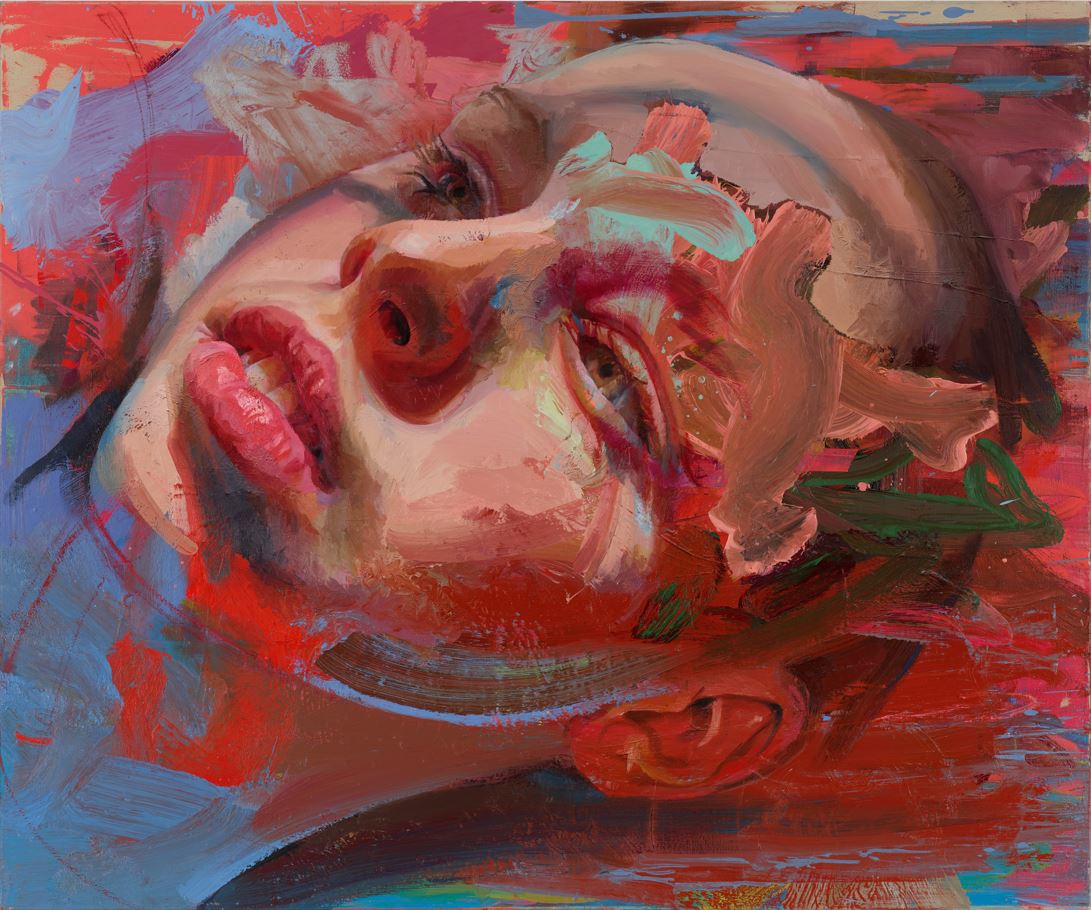
Rubens and Women @ Dulwich Picture Gallery

This is a stunning exhibition bringing together over 40 paintings by one of the most famous names from the classic period of western art, Peter Paul Rubens (1577 to 1640). It brings together masterpieces from international and private collections, many of which are appearing in the UK for the first time i.e. it represents a unique opportunity for lovers of classic Old Master art. There are some really stunning paintings and a suite of exquisitely crafted chalk drawings on display. It is a feast for the eyes and mind and imagination.

Questioning the Rubenesque

However, it cannot be emphasised too strongly that it is very much a themed exhibition. It really is about Rubens and women.

The stereotypical view of Rubens is as a painter of ample, fleshly, nude women, hence the adjective ‘Rubenesque’, which the Collins dictionary defines as:

‘of, characteristic of, or like the art of Rubens; colourful, sensual, opulent, etc. 2. full and shapely; voluptuous; said of a woman’s figure.’

This exhibition very much sets out to question that stereotype and to show that Rubens painted a much broader range of female characters, in a far greater range of postures, poses and compositions, than the stereotype suggests. Which explains why the poster for the show is very much not of a plump scantily clad woman but of the impeccably buttoned-up Marchesa Maria Serra Pallavicino (see below).

Strong independent women

Not only that but, in line with contemporary feminist ideology, the exhibition is keen to emphasise that many of these women were far from being passive victims of the male gaze, but in all kinds of ways were, in real life, and in the iconography of the paintings, strong independent women possessed of that key quality of feminist theory, agency.

Portrait of a Lady (about 1625) by Peter Paul Rubens. Courtesy Dulwich Picture Gallery

Thus almost all the 40 or so pictures here are of women, with men playing only peripheral or negligible roles, if they appear at all.

There are paintings of women members of his family, rich influential female patrons, lovely chalk sketches of naked women, key women figures from Christian iconography, and the show builds to a tremendous climax with a final room showing four enormous oil paintings of women figures from classical mythology.

There are some men in some of the paintings, but they are always playing a secondary or negligible role. In the words of the press release:

‘The exhibition will be the first to challenge the popular assumption that Rubens painted only one type of woman, providing instead a more nuanced view of the artist who painted more portraits of his wives and children than almost any other, even Rembrandt. The exhibition reveals the varied and important place occupied by women, both real and imagined, in his world.’

Rubens’ changing style

In a more specialist, art history kind of way:

‘A further theme follows the evolution of the female nude in Rubens’s art. It demonstrates how Rubens’s early nudes were quite different in style from those he became famous for, tracing how he arrived at his preferred form through an engagement with sculpture, careful study of antique models and observation from life.’

Room 1. Introduction

Room one contains eight wonderful oil paintings. One is an early self portrait to introduce the man himself, and then, in line with the exhibition theme, seven portraits of women. First, some historical background:

‘Early in his career Rubens realised that his extraordinary ability to paint portraits could open doors. In May 1600, aged 22, he left Antwerp for Italy, where he stayed until 1608, employed by Vincenzo I Gonzaga, Duke of Mantua. This position afforded him opportunities to travel to Spain, Venice, Florence, Rome and to Genoa, where his qualities as a portraitist became fully apparent. Rubens’s dazzling and innovative portraits of noblewomen revolutionised the genre and cemented his relationships with wealthy and powerful patrons.’

The first room is dominated by an enormous, sumptuous and commanding full-length portrait of the Marchesa Maria Serra Pallavicino. No reproduction can convey the scintillating, dazzling richness of the oil paint which makes up this awesome, luxury portrait. It is deliberately placed to dominate the first room and announce Rubens’s supreme skill as a painter of power, money and women.

Marchesa Maria Serra Pallavicino by Peter Paul Rubens (1606) National Trust Collections, Kingston Lacy (The Bankes Collection)

Once you’ve gotten over the visual shock of this huge masterpiece, you can move on to process the six other paintings of women. There’s a further portrait of a powerful woman, Isabel Clara Eugenia, Infanta of Spain, though depicted in the outfit of a nun, a member of the Order of Poor Clares, reminding us that this was the period of heightened Catholic religiosity referred to as the Counter Reformation.

There’s a series of portraits of ‘unknown women’, resplendent in 17th century dresses, whose luxury fabrics are depicted with loving precision, obviously well-off though not aristocrats.

But maybe the most affecting paintings is the set of ‘intimate’ portraits depicting Rubens’ family, namely his first wife Isabella Brant (1591 to 1626) and eldest daughter, Clara Serena (1611 to 1623), both of whom died relatively young, his daughter at just 12.

Clara Serena Rubens, the Artist’s Daughter by (1620 to 1623) Private Collection

Room 2. Figuring Faith

The second room is a long corridor shape and contains paintings and drawings of a religious nature. Working for the Catholic rulers of Antwerp, Rubens was commissioned to create works designed to promote the Counter-Reformation, the Europe-wide movement to revive and reinvigorate Catholic faith, theology, institutions, and project the power of the Catholic monarchs who defended it.

However, in line with the exhibition’s theme of women, the 20 or so works on display here are for the most part not huge, grand, overpowering and religiose images; most of them are relatively modest in scale but what they do have in common is the curators’ wish to foreground Rubens’s treatment of women in the Christian stories.

The Virgin in Adoration before the Christ Child by Peter Paul Rubens (1616 to 1619) KBC Bank, Antwerp, Museum Snyders & Rockox House

It is quite drily funny how, no matter what the subject depicted, the curators insist that the female figures in them are the real stars, the real centres of attention, exercising agency and power in the way every 21st century feminist would approve of.

There’s a wall-sized digital print of an adoration of the Virgin, printed out and plastered on the wall, in which the Virgin is quite obviously receiving her dues from an array of grovelling men.

In a depiction of the Flight into Egypt, it is Mary who taking the ‘heroic’ role of protecting the baby Jesus.

‘Despite the sense of foreboding, and the shadowy rider visible on the horizon, Mary radiates calm.’

There’s an Ascension of Mary which features lots of men in 17th century clerical dress (actually the apostles) but all they can do is stare upwards in amazement at the Virgin taking off into the sky.

There’s two long narrow portrayals of women accompanied by skinny clerics and these turn out to be portraits of two women saints, Walburga and Catherine of Alexandria, strong independent saints.

There’s a study of Saint Barbara fleeing from her father, who has his sword drawn ready to kill her. Typical toxic patriarchy.

By now seeing everything through the eyes of the curators what we notice in a depiction of the ‘The Lamentation’ is that:

‘it is the women who model how we are to respond to this heart-breaking sight. Gazing at Christ, Mary Magdalen pulls at her hair in distress. The Virgin cradles Christ’s body and tenderly closes his eyes. At his feet are The Three Maries (Holy Women from the Bible).’

And at the centre of all this fuss, a dead white man, the best kind.

The Lamentation by Peter Paul Rubens (1614) Kunsthistorisches Museum Vienna, Gemäldegalerie

Denying the Rubenesque

The curators are at pains to emphasise that Rubens’ women are no more voluptuous than those of his predecessors. They are simply more life-like, their skin more convincingly elastic and believably warm. Rubens’ nudes aren’t plumper or more fleshly, they insist, just better painted.

It’s an interesting claim, and I suppose you couldn’t assess it for yourself without reviewing hundreds more works by Rubens and as many by his contemporaries. But the evidence of your eyes tends to suggest that the most striking of Rubens’ women, the climax of his development as displayed in the stunning final room, are chubby, well covered, however you want to express it. See room 4, below.

Room 3. Stone Made Flesh

‘The female nude was a subject of fascination and constant evolution within Rubens’s art. In Italy, Rubens intensively studied ancient sculptures, memorising their forms and postures. He also drew on the Renaissance artist Michelangelo who was similarly informed by ancient art. Recording observations in his notebook, Rubens devised a new type of vigorous, monumental, female nude.’

This room is the most scholarly of the three, an exploration of how Rubens’ modelling of the female figure evolved, especially after a visit to Rome early in his career. This includes a series of studies, finished paintings, a classical marble sculpture, a silverware design, sketches of classical statues, and one large finished oil painting, of Adam and Eve, to demonstrate his early handling of the female nude – all demonstrating his changing approach.

‘Rubens’s nudes became increasingly dynamic and lifelike throughout the 1620s and 1630s.’

All of these works are relatively small and require quite a bit more study and historical knowledge than the bigger, more attractive, finished oil paintings, certainly for an amateur like me.

Alongside these scholarly specimens are eight or so lovely chalk studies of female nudes. I love chalk or charcoal sketches of nudes, male or female. After all these years I still find something magical in the way the human form and shape, the lifeliness of a human body, its warmth and shape, the beauty and pathos of the bare forked animal, can be conveyed by lines of chalk on flat paper when crafted by a master.

All of them were, obviously, really good, but one in particular stood out for me and, despite the blare of the bigger, finished paintings, might have been my favourite thing in the show. After I’ve finished walking slowly through an exhibition, weighed down by the duty of reading the wall captions, I always turn around and walk back, liberated from facts and figures and free to like whatever takes my fancy.

I often play a game where I ask myself, if I can choose just one work from each room, which would it be? This is the one work I’d want to own from the whole exhibition. Scholars think it might be a study for Mary Magdelene, maybe leaning down to wash the feet of Jesus.

What grabbed me is the immense skill of the shading and cross-hatching, the use of black and white chalk, leaving most of the surface untouched and so parchment colour standing in for fleshtone, and how this technique, this skill, can make a person of flesh and blood appear in front of you. The depiction of her lower back, the curve of her bottom, the shading of the thighs and the shadow where her calves are tucking up under her thighs, the creases in the sole of her foot, the five little pinkies. The delicacy, the skill and the exactitude never cease to pluck my heart, make me gasp.

Study for Mary Magdalen by Peter Paul Rubens (1610s) British Museum, London

Room 4. Goddesses of Peace and Plenty

In line with their feminist slant the curators emphasise that:

‘The women Rubens depicts are not simply passive figures to be observed but active agents of their own destiny. Nowhere is this clearer than in the dramatic mythological narratives that he loved to paint. Inspired by the Renaissance paintings of Titian and the ancient stories of Ovid and Virgil, in these scenes the goddesses Venus, Juno and Diana are presented as strong and intelligent. It is no coincidence that Rubens’s depictions of powerful, peace-making women were created at a time when his homeland was ravaged by the Eighty Years’ War (1568 to 1648).’

Hence it is that the fourth and final room contains four huge and awe-inspiring paintings with mythological themes and reputedly depicting these active agents of their own destiny, namely:

  • Venus, Mars and Cupid (c. 1614) from Dulwich Picture Gallery’s own collection
  • Diana Returning from the Hunt (1615) from Staatliche Kunstsammlungen Dresden
  • The Birth of the Milky Way (1636 to 1638) from the Museo del Prado, Madrid, on display in the UK for the first time
  • Three Nymphs with a Cornucopia (1625 to 1628) Museo Nacional del Prado, Madrid

The thing is that, although the curators try their best to claim that these women are not subject to the male gaze, but are strong independent women overflowing with agency, that’s not really how they actually look.

In my opinion this one, ‘Three Nymphs with a Cornucopia’ can be taken as a test case. It depicts the horn of plenty overflowing with the good things of life, namely a grocer’s shop full of ripe plump juicy fruit, so ripe and juicy that it has attracted the attention of scavenging parrots and a cheeky monkey, to add drama and narrative to a classical allegorical scene.

Is it just me or are the two naked women depicted as extensions of this vision of youthful fertile juicy fruitfulness?

I think they are. Far from asserting anyone’s agency, I’d have thought this picture epitomises the reverse: surely these women are totally objectified, depicted  in all their youthful sexiness as direct extensions of the world of fruit and fecundity.

This is one of eight paintings Rubens took to Spain as a gift from his patron, the Archduchess Isabel Clara Eugenia, to King Philip IV, to butter him up. Made by a man to flatter a king, far from being a rebuttal it strikes me as being a kind of triumph of the male gaze – sexy topless fruitful babes designed to decorate on the walls of the most powerful man in Europe.

Three Nymphs with a Cornucopia by Peter Paul Rubens (1625 to 1628) Museo Nacional del Prado, Madrid

More interesting to me, more persuasive and touching, is the information that Juno, in this huge representation of ‘The Birth of the Milky Way’ resembles Helena Fourment, Rubens’s second wife.

According to the curators, it is thought that his happy second marriage to Helene inspired his increasingly sensuous presentation of women during the 1630s. That seems to me a plausible and happy explanation of the plump sensuality of the nudes he painted in his final decade, just as Rembrandt’s love for his wife shine through his later paintings. I’m not sure anybody portrayed in a painting, male or female, has any ‘agency’. In my opinion they’re all trapped by composition, design, treatment, by the artist’s aims and whims, and all subject to the human gaze of us, centuries later, completely cut off from the value systems in which these works were created.

But paintings very much can convey tenderness and love. And that’s what I found in this small room full of magnificent works of art. The milk of human kindness. Motherly love. The pure, naked, redemptive love we all wish, deep down, we could recapture.

The Birth of the Milky Way by Peter Paul Rubens (1636 to 1638) © Photographic Archive, Museo Nacional del Prado, Madrid

Happily ever after

In fact this final wall caption made me realise that mention of Rubens’ second wife had been seeded throughout the show, starting with early mention of how, after the early death of his first wife, in 1630 Rubens married his second and much younger wife, Helena Fourment (1614 to 1673).

‘Their blissful marital state in the final decade of his life, during which time they had five children, provided a wellspring of love and an increased interest in sensual mythological themes.’

In a world afflicted with terrible pain and suffering it cheered me up to learn that this great artist was blessed with a long, happy, rewarding marriage. Good for him! And these images, painted late in his life, at the peak of his experience of art and life, however others may wish to interpret them, struck me as wonderfully accepting celebrations of beauty, humanity and love.

Rubens among his peers

I was struck by a quote from co-curator Dr Ben van Beneden which gives a pithy summary of three of Western Art’s Golden Greats:

‘If Raphael endowed his female figures with grace, and Titian with beauty, Rubens gave them veracity, energy and soul.’

Strong independent parrots

I noticed that one of the most powerful paintings in the final room, the Cornucopia, featured some beautifully vivid parrots pecking away at the fruit flowing from the horn, and this reminded me that the awesome painting of the Marchesa Maria Serra Pallavicino in the first room also features a parrot perched on her grand chair and bending down, twisting its neck in that inquisitive parrot way.

It occurred to me that maybe Dulwich’s next exhibition should be about ‘Parrots in Painting’. It could bring together depictions of a variety of strong, independent parrots who resist the human gaze to insist on their psittacine agency.

The video


Related links

Related reviews

The Rossettis @ Tate Britain

This is a spectacular exhibition, by turns absorbing, inspiring, fascinating and deeply educational about the individuals, their lives and their times. Not all the work on display is good, some is positively poor, but there are good things throughout, and it’s huge – featuring over 150 paintings and drawings as well as photography, design, wallpapers, furniture, rare books, printed and spoken poetry and more. And then, in the last few rooms, it turns into a spectacular celebration of Dante Gabriel Rossetti’s huge, sumptuous paintings of stunning pre-Raphaelite women, an orgy of masterpieces to leave you reeling. More than just an exhibition it feels like a sustained immersion in their lives and times.

I thought the exhibition might disintegrate into a general splurge about the extended network of artists and models which made up the Pre-Raphaelite Brotherhood – surely, the most written-about subject in British art – the gift shop is heaving with books about the Pre-Raphaelites.

But I was wrong. The exhibition remains very, very focused on the Rossetti family and, above all, on the favoured son, Gabriel. (Only in adult life did Gabriel move his middle name, Dante, to the front of his three names – maybe partly to catch up with triple-barrelled friends like John Everett Millais and William Holman Hunt – but the curators refer to him as Gabriel throughout and so shall I.)

Firsts

Tate owns a lot of Pre-Raphaelite paintings and drawings so it’s surprising to learn that this is the first retrospective of Rossetti ever held at Tate, and the largest exhibition of his iconic pictures in two decades. Less surprising to learn that this is also the most comprehensive exhibition of Elizabeth Siddal’s work for 30 years, featuring rare watercolours and important drawings, because most of us have never hear of her.

The rooms devoted to them show how Gabriel and Elizabeth’s relationship and works intertwined and reflected each other. If you like reading about the lives of great artists, then this deep dive into biographical minutiae will be right up your street.

Immigrants

First of all, they were immigrants. Gabriele Rossetti (1783 to 1854) arrived in London in 1824, as a political refugee from Italy. More than that he was an Italian nobleman, poet, constitutionalist, scholar, and founder of the secret society, the Carbonari. A noted Dante scholar he secured the post of Professor of Italian at King’s College London from 1831 as well as teaching Italian at King’s College School. He and his wife Frances Polidori Rossetti had four children, two sons and two daughters. Raised in a home drenched in poetry and literature, all four children went on to become artists or writers in their own right. They were: the writer Maria Francesca Rossetti (1827 to 76); poet, artist and designer Gabriel Charles Dante Rossetti (1828 to 1882); artist and critic William Michael Rossetti (1829 to 1919); and poet Christina Rossetti (1830 to 1894).

The curators add into this gang of four the figure of Elizabeth Siddal, model, artist and poet, who posed for many of the Pre-Raphaelites (most famously as Ophelia in the classic painting by John Everett Millais) but who enjoyed a lengthy relationship with Gabriel, in which they drew and painted the same subjects, copying and learning from each other. They married in 1860 at which point she became Elizabeth Rossetti and this, from a naming point of view, justifies her inclusion in the exhibition.

Christina Rossetti

The curators do something genuinely bold and interesting which is to start a major art exhibition with a room devoted almost entirely to poetry. Never seen that before. They are mostly by Christina Rossetti and are not only printed directly onto the walls in very large font size but, if you stand in places marked by signs on the floor, you can hear the poems being recited by what must be very cleverly focused loudspeakers, which seem to be addressing you and you alone.

Installation view of ‘The Rossettis’ at Tate Britain, showing Room One which features just three paintings because it is devoted to the poetry of Christina Rossetti, which are reproduced on all the walls. Photo by Madeleine Buddo © Tate

All four Rossetti children were artistic and wrote and drew from early ages, but it was Christina who had the earliest success, having a volume of 42 poems published when she was just 16, some of which were written when she was as young as 11!

Remember by Christina Rossetti

Remember me when I am gone away,
Gone far away into the silent land;
When you can no more hold me by the hand,
Nor I half turn to go yet turning stay.
Remember me when no more day by day
You tell me of our future that you plann’d:
Only remember me; you understand
It will be late to counsel then or pray.
Yet if you should forget me for a while
And afterwards remember, do not grieve:
For if the darkness and corruption leave
A vestige of the thoughts that once I had,
Better by far you should forget and smile
Than that you should remember and be sad.

This bold start does two things. One, it fulfils Tate’s feminist aims of promoting women, bringing women out from the shadow of more famous men, giving women more of a voice etc (as the promotion of Elizabeth Siddal later in the show also does). Two, it vividly demonstrates the extraordinary combination of sensitivity and sensuality which, arguably, were to be distinguishing features of the family, and especially the arch-sensualist, Gabriel.

Christina’s talent peaked with the volume containing her most famous poem, Goblin Market, of 1859. During her career she published over 900 poems, a phenomenal output. Taking five minutes to read all the works written on the walls here, and let them alter and direct your thoughts towards her strange combination of Victorian piety, with astonishing sensuality, is a rare and lovely experience.

Early sketches

The narrow but scholarly depth of the exhibition’s focus is established in the second room which contains 30 or so very early drawings and sketches by the boy Gabriel, alongside some by his sister, and two by his brother William. They demonstrate his precocious skill and his enthusiasm for original voices like William Blake and Edgar Allan Poe. Gabriel was an early devotee of the small cult of Blake, who didn’t become widely known until the 1860s. And he did numerous illustrations of Edgar Allen Poe stories and poems, notably The Raven.

The Raven by Dante Gabriel Rossetti (1848) © Victoria and Albert Museum, London

These are very uneven: some have great verve but many of them are cranky and cramped. So I suppose the idea of a progression of beautiful young girl ghosts, on the left, is well done, but nothing about the figure on the right is good, his tangled legs, the odd posture of his hands. But they’re all very interesting in a dry, scholarly way. You rarely get to see the early beginnings of a major painter in such detail and for this reason alone I found myself taking the time to study each of the sketches. I liked two sketches drawn with thick black lines which reminded me of Goya, but these were exceptions.

Man with a Woman Wearing Trousers by Dante Gabriel Rossetti (1844)

To buck the curators a bit, possibly the best things in this room are two marvellous charcoal and white chalk drawings by brother William, studies of Yarmouth beach. These far exceed in sophistication, depth and technique anything by Gabriel. And they are outdoors, giving them an airiness and lightness unlike anything by brother Gabriel. I can’t find them anywhere on the internet 😦

Gabriel’s unevenness

Maybe it’s worth making the point now, early on, that Gabriel Rossetti is strangely patchy or uneven as an artist. Many of these sketches are positively poor. What I mean is their depiction of the human frame is awkward and cranky. Gabriel’s figures are often bent at improbable or at least uncomfortable angles. His faces are sometimes smooth and angelic but sometimes angular and amateurish.

Later on there’s a room devoted to the period he spent living and working with Elizabeth Siddal, originally a model but, as this exhibition goes to great lengths to demonstrate, an artist in her own right. The curators place sketches, drawings and small paintings by Gabriel and Siddal alongside each other but I had the same experience as in Room 2 i.e. a lot of both of their work seemed to me poor, amateurish, ungainly, badly modeled figures and badly drawn faces.

The sketches introduce another theme which is how cramped and confined so much of Gabriel’s art is. At one point the curators point out that The Artist In His Study was a recurring theme of Gabriel’s work, but it’s not just the artist trapped indoors. In sketch after drawing after painting, the subject (always people, never landscapes or still lifes) has to bend over, lean in, wry their neck into the claustrophobic confines of the framing space. Almost all of his people are indoors and in a very cluttered, cramped and confined indoors at that.

All these qualities are on display in Ecce Ancilla Domini. It’s indoors; in a very cramped narrow room, emphasised by the vertical line of the narrow bed and, of course, the standing figure. Look how tightly frame it is with the picture edge right up against the left side of the angel’s gown and the red stand on the right, and the terrified woman pressed up tight against the hard cold whitewashed wall. I can barely breathe.

Ecce Ancilla Domini (The Annunciation) by Dante Gabriel Rossetti (1850)
© Tate

What’s so odd as to be barely believable is that the artist who produced these small cramped images, up to and beyond his Pre-Raphaelite phase in the late 1840s and 50s, then blossomed into the artist of the big, lush, sensual masterpieces of the 1870s and 1880s. It’s as if they were two completely different people.

The Pre-Raphaelite Brotherhood (the PRBs)

The exhibition has to cover Gabriel’s involvement with the Pre-Raphaelite Brotherhood which he founded in 1848 along with soul mates William Holman Hunt, John Everett Millais, James Collinson, Frederic George Stephens and Thomas Woolner, but it keeps it under control, as it were, not splurging but maintaining its focus on Gabriel (and to a lesser extent Christina).

This room is the one place where the curators bring in other works, by Millais and Hunt in particular, in order to explain the shared aims of the group. The idea was to reject the shadowy forms and stylised poses of the Italian Mannerist artists who succeeded Raphael and Michelangelo. The PRBs believed the classical poses and elegant compositions of Raphael, in particular, had been a corrupting influence on the academic teaching of art, hence their ambition to go back before Raphael to recapture the clean, detailed and precise style of artists who preceded the High Renaissance.

This led to a kind of super-realism where you can make out every hair on the head of the figures, where the background isn’t shady and blurred to indicate distance, but everything is seen in full detail, sparkling with a kind of universal light. This is one of the 3 or 4 paintings that the curators include as examples of the early, radical style of the Pre-Raphaelite Brotherhood, a typical selection of a medieval subject by William Holman Hunt. Note the hallucinatory clarity of every detail, of the flowers at bottom centre, the hair of the horseman on the right, the loving detail of the light reflecting on all the armour.

Rienzi vowing to obtain justice for the death of his young brother, slain in a skirmish between the Colonna and the Orsini factions by William Holman Hunt (1849) Private collection of Mrs E. M. Clarke

Realists and rebels – or inventors of a new form of escapism

A comment on the wall caption made me smile. The curators state that ‘The men and women in the Pre-Raphaelites’ circle wanted to express themselves authentically, with art and poetry based on lived experience and nature.’ Elsewhere they talk about the PRB’s commitment to depict the life of their times, and imply that this or that painting is a piercing critique of Victorian sexism, social inequality, poverty and so on. And indeed some, a very small number of paintings and drawings, can be interpreted in this way.

But a wider truth is conveyed in the wall label’s very next sentence: ‘Their paintings and writings explored stories from the Bible and medieval books that resonated with their modern lives.’ That’s closer to the mark because what comes over is the PRB’s commitment to flee the social realities of their time. The curators themselves point out how Gabriel, his family and friends sought inspiration in anything but their own time, in stories from the Bible, fairy tales, folk tales, Greek myths and legends and, above all, by escaping into a beautifully rendered and idealised version of the Middle Ages.

The Decameron, The Canterbury Tales, The Roman de la Rose, the Arthurian legends and, above all of them, a lifelong obsession the 14th century Dante Alighieri – all this was about as far away as you could possibly get from the political, economic or social life of their times.

The PRB’s speciality was escapism, and in this they followed the other poets of their day who mined John Keats’s lush sensuality to produce the medievalising monologues of Robert Browning but above all the tremulous emissions of the presiding poet of the era, Alfred Lord Tennyson. Take Browning’s poem ‘Pippa Passes’, allegedly written ‘to speak for the masses … cuffed and huffed from morn to midnight’. but whose subject, Pippa, is a silkworker who walks through the medieval Italian town of Asolo, singing and inspiring good. Or Tennyson’s log work the ‘Idylls of the King’, the king in question being King Arthur. While the British army subjugated more and more parts of the world, Britain’s poets vapoured about knights and damsels. And the Rossettis? Well, could they have made more drawings, sketches and paintings of knights in armour and damsels in distress?

Arthur’s Tomb by Dante Gabriel Rossetti (1860) © Tate

No, for actual lived experience of the mid-Victorian period the Rossettis and Pre-Raphaelites are the very last source you would consult. You would look in the novelists – the poet laureate of London, Dickens, to a lesser extent Thackeray, or the gritty novels of Mrs Gaskell with their harrowing accounts of working class life.

So taken at face value the notion that the PRBs were radicals who sought ‘authenticity’ and to depict life  with a new realism in defiance of the conventions of the society around them and of the artistic establishment represented by the Royal Academy seems nonsensical.

But maybe I’m missing the point. I think PRB fans would point out that the realism and authenticity they were seeking was an emotional and psychological realism. In the subjects of their art they fled the reality of their times to Greek legends and medieval stories in order to capture complex, fleeting, intense and evanescent emotions which the banality of day-to-day living in industrialising London seemed to crush and stifle.

Thus Gabriel’s very strange painting of Arthur’s Tomb, above, is radical in the sense that it rejects the entire tradition of Salon art, of the huge Grand Historical or Mythological Subjects promoted by the founder of the Royal Academy, Sir Joshua Reynolds, with their grand gestures and beautiful finish. Instead the characteristically cramped and claustrophobic composition, the sense that both figures are being squashed by the tee above, the awkward bending of Lancelot, Guinevere’s hand fending him off – the cramped awkwardness of the entire thing conveys a very modern, complex psychological moment, fraught with tensions.

So the flight into the Middle Ages which is enacted in painting after painting, was it a flight from contemporary reality – or was it the adoption of distant subjects the more easily to convey complex modern psychological states? Discuss.

Elizabeth Siddal

Following new research, Elizabeth Siddal’s surviving watercolours are shown in a two-way dialogue with contemporary works by Gabriel, exploring modern love in jewel-like medieval settings. As a working­ class artist who was largely self-taught, Elizabeth’s work was highly original and inventive, but has often been overshadowed by her mythologisation as a tragic muse (see, for example, this BBC article, The tragedy of art’s greatest supermodel).

According to the curators Siddal and Gabriel’s work together marks a turning point from Pre-Raphaelitism to the new, more imaginative and expressive Aesthetic style which emerged in the 1870s.

Lady Affixing Pennant to a Knight’s Spear by Elizabeth Eleanor Siddal (1856) © Tate

Aestheticism – Gabriel’s second revolution

There’s such a huge difference between Gabriel’s often clunky, cramped compositions of the 1850s and the huge, gorgeous flowing masterpieces of the 1870s that it’s as if they’re by two completely different people. The curators clarify that, a generation after helping found the Pre-Raphaelite Brotherhood, Rossetti was at the epicentre of a second great artistic revolution, this time the Aesthetic Movement with its credo ‘Art for Art’s Sake’.

He went on to lead a new avant-garde group even more influential than the Pre-Raphaelites: the aesthetic movement. This would change ideas, art and design around the world.

Already in 1864 the hazy light, colour and heavy symbolism of Beata Beatrix looked forward to the Aestheticism and the international Symbolist movement later in the century.

Gabriel’s portraits [in the later 1860s and 1870s] reflected the aesthetic movement’s ideals of ‘art for art’s sake’ and a new modern beauty. He adapted the likenesses of working-class women of unconventional appearance, notably model Alexa Wilding, into fantasies of enchanting femininity. Inspired by Renaissance portraiture and mythological texts, these sensual portraits suggested touch, sound and scent as well as vision. They emphasised the pleasure of form and colour, looking ahead to the abstract art of the following century.

This is the thinking behind the final two rooms which amount to an orgy of spectacular Rossetti classics.

Installation view of ‘The Rossettis’ at Tate Britain, showing Room Seven which features ten stunning paintings from Rossetti’s sensual prime. Photo by Madeleine Buddo © Tate

We learn about the art collector Frederick Leyland who owned the three paintings in the photo above plus two more which are hanging nearby. He displayed all five in the drawing room of his mansion at Princes Gate, London, and the exhibition features a contemporary photograph to prove it. Apparently it’s the first time all five paintings have been reunited in one space since Leyland’s heyday in the 1880s.

Originally from a modest background, Leyland rose to run one of the largest transatlantic shipping companies of his day. Because they see it as their job to take every opportunity to remind us of woke and feminist issues, the curators tell us that much of Leyland’s trade was based on the cotton that fed textile manufacturing in northern British towns and that the cotton came from the American South where exploitative labour continued long after the abolition of slavery.

Leyland used the money he made from his business to become a key figure in the aesthetic movement, transforming his Liverpool and London homes into palaces of modern art. It was Leyland who commissioned The Beguiling of Merlin by the Pre-Raphaelite painter Edward Burne-Jones and commissioned the architect Thomas Jeckyll and the American ‘aesthetic’ painter James McNeill Whistler to decorate his dining room, a commission which resulted in the Peacock Room, considered one of Whistler’s greatest works. A really key figure, then, and purchaser of some of Gabriel’s most stunning and sensuous portraits of beautiful, strong-jawed, thick-necked, frizzy-haired aesthetic beauties.

Monna Vanna by Dante Gabriel Rossetti (1866) © Tate

The femme fatale

Uneasy with these lush and opulent depictions of sensual, semi-erotic women, the curators take refuge in a familiar feminist trope. This is the notion that some of Gabriel’s paintings in his mature late style are of femmes fatales. This allows the curators to take refuge in familiar tropes about sexual objectifying of women and gender stereotyping and male anxiety about female sexuality, the usual shopping list.

Gabriel engaged with the idea of the dangerous, sexualised ‘fatal woman’ or the ‘femme fatale’. This usually negative figure of feminine power responded to Victorian anxieties about social change. It became a popular fantasy figure towards the end of the century, and persists in literature and art today.

Persists in literature and art today? Tut tut. And despite all the brave attempts of feminist curators to change the world. Shame. Sometimes I wonder how old art curators think their readers are. 10?

The kind of painting we’re talking about is Gabriel’s depiction of Lady Lilith. The ancient story has it that Lilith was Adam’s independent-minded first wife who he put away and replaced with Eve. In revenge, Lilith seduced and persuaded the serpent to tempt Eve which led to Adam and Eve’s expulsion from Eden’s bower and the fall of mankind. Naughty Lilith.

Lady Lilith by Dante Gabriel Rossetti (1866 to 1868) Delaware Art Museum, Samuel and Mary R. Bancroft Memorial, 1935

If you allow yourself to get worked up about millennia-old stories this is obviously a sexist trope designed to demean and blacken independent women everywhere. For those not so easily upset, it’s a pretext for a staggeringly sensual painting, rich in details of fabric, hair and flowers. Doesn’t look much like a denizen of prehistoric Mesopotamia, does she? Desert, snake, tree? The picture could, frankly, be given the name of almost any woman from myth and legend and make as much sense.

In fact, my view would be that this is a painting about money and luxury. These are the kind of extraordinarily richly coloured, beautifully detailed, dreamily luxurious images of extremely attractive women which Gabriel sold by the cartload to mega-rich patrons like Leyland. It is a luxurious depiction of luxury for those rich enough to live in luxury.

The magic of exhibitions like this is that we poor peasants, for the hour or so that we spend strolling round masterpieces like this, are also lifted into a realm of luxury, beauty, sensuality that has never existed with this kind of other-worldly perfection but which we, for a tenner, can for fleeting moments, enter and inhabit. The scent of the roses! The texture of that silk dress! The luxury of those endless tresses!

Lilith poem

As we’ve learned, Gabriel and many of his friends and lovers often wrote poems about the subjects they were painting or painted their poems, the two art forms interpenetrating. Thus next to this amazing painting there’s a striking sonnet by Gabriel. If you stand in the right spot (on one of the signs on the carpet) you magically trigger a reading of the poem in the lugubrious tones of actor Bill Nighy.

Lilith by Dante Gabriel Rossetti

Of Adam’s first wife, Lilith, it is told
(The witch he loved before the gift of Eve,)
That, ere the snake’s, her sweet tongue could deceive,
And her enchanted hair was the first gold.

And still she sits, young while the earth is old,
And, subtly of herself contemplative,
Draws men to watch the bright web she can weave,
Till heart and body and life are in its hold.

The rose and poppy are her flowers; for where
Is he not found, O Lilith, whom shed scent
And soft-shed kisses and soft sleep shall snare?

Lo! as that youth’s eyes burned at thine, so went
Thy spell through him, and left his straight neck bent
And round his heart one strangling golden hair.

The slightly knotty syntax takes a couple of readings to get quite straight (it took me a couple of goes to understand the importance od ‘not found in the 9th line) but then, wow. You could argue the slight entanglement of the lines deliberately mimics the strangling effect of Lilith’s golden hair.  Maybe. Presumably Lilith’s hair is golden in the poem because ‘golden’ sounds good, but orange-auburn in the painting because orange is such a dramatic and deeply luxurious colour as, for example, in Frederick Leighton’s famous painting, Flaming June.

Special attractions

Curators not only need a theme or pretext with which to concoct an art exhibitions but score extra points if they can come up with rare or unique or special features that make the show extra-special. The curators of this exhibition have excelled themselves with four or five of these ‘special features’ to look out for / be impressed by.

1. The wallpaper

Dante Gabriel Rossetti’s previously unrealised work as a designer is brought to life in The Rossettis. A wallpaper he designed 160 years ago has been created for the first time especially for Tate Britain’s exhibition. Intended to decorate the home that Dante Gabriel shared with Elizabeth Siddal after their marriage, the artist sketched and described the design for this unusual wallpaper in close detail but ever, it was never put into production and only existed as a drawing until now.

Now Tate Britain has worked with illustrator and designer llyanna Kerr to bring Rossetti’s design to life. The design depicts a grove of apple trees at dusk, with stars appearing in the deep blue sky above, in a style that looks forward to the Art Nouveau movement at the end of the 19th century.

Installation view of ‘The Rossettis’ at Tate Britain, showing Room Five which showcases a wallpaper designed by Gabriel but never produced in his lifetime. Photo by Madeleine Buddo © Tate

And it’s not just wallpaper. This room also includes some big bits of furniture, namely a Rossetti-related cabinet, chair, and sofa.

Installation view of ‘The Rossettis’ at Tate Britain, showing King René’s Honeymoon Cabinet (photo by the author)

King René’s Honeymoon Cabinet (1861)

J.P. Seddon (1827 to 1906) designed this architect’s desk, including the metalwork and inlay, in 1861 for his own use. Seddon had the desk made at his father’s cabinet-making firm. He also commissioned ten painted panels depicting the Fine and Applied Arts from Morris, Marshall, Faulkner & Co. Ford Madox Brown, who also designed the panel representing ‘Architecture’, suggested the overall theme. The ‘Painting’ and ‘Sculpture’ panels were by Edward Burne-Jones, while Gabriel was responsible for ‘Music’ and ‘Gardening’. Morris designed the decorative background for each panel. (Text from the V&A article about the cabinet.)

Installation view of ‘The Rossettis’ at Tate Britain, showing chair and sofa designed and decorated by Gabriel (photo by the author)

The chair and sofa

The conspicuous consumption that characterised fashionable Victorian interior design did not suit Elizabeth and Gabriel’s ideal of a more authentic life. They sought out and adapted furniture that was basic and true to its materials and methods of making. They found beauty in handcraft rather than elaborate ornamentation and liked open, gracefully turned wood.

Gabriel collaborated with William Morris’s design firm to create rush-seated chairs like the one on display here, and this early-19th-century style sofa for his and Elizabeth’s home. On the sofa backrests are insets representing Love, the Loving or Lover, and the Beloved, painted by Gabriel.

Honeysuckle wallpaper

The big blue wallpaper isn’t the only one created specially for this exhibition. Room 8 has a wall covered in honeysuckle wallpaper made specially for this exhibition. It’s based on an embroidered hanging designed by William Morris and sewn by Jane Morris. Jane, her sister Bessie and her daughters May and Jenny played a key creative role in the making of textiles and embroideries for the family firm Morris & Co. This collective approach makes it difficult to identify individuals’ work. We know Jane was embroidering Honeysuckle around the end of Gabriel’s life. The finished embroidery was exhibited at the first Arts and Crafts exhibition in 1888.

Installation view of ‘The Rossettis’ at Tate Britain, showing the honeysuckle wallpaper in Room Eight. Photo by Madeleine Buddo © Tate

The blue wallpaper, the closet and the sofa had one overwhelming impact on me which was to get rid of them. ‘Chuck out your chintz’ as the old Ikea ad had it. This was precisely the kind of heavy, dark, wooden, over-decorated clutter which the Modernist designers of the Bauhaus had to reject in order to create the modern, clean, simple design aesthetic of the twentieth century. It has great historical interest, and kudos to Tate for recreating it, but I cordially disliked all of it.

2. A handwritten poem

A handwritten poem by Gabriel is exhibited for the first time, on loan from the University of Delaware Library, Museums and Press. Entitled The Portrait, this is believed to be one of the pages which were buried with Elizabeth Siddal’s body in Highgate Cemetery in 1862. The coffin was later exhumed in October 1869 to retrieve the pages when Gabriel was preparing to publish his first collection of poetry. The manuscript shows his frantic revisions ahead of its publication, including editing out some of the more sensual lines like ‘our hair had to be untangled when we rose’.

The poem describes the ability of a portrait painting to inspire memories of an absent lover and bring her to life. It is closely associated with Gabriel’s iconic painting of Elizabeth, Beata Beatrix, which was created at the time of the poem’s retrieval, seven years after her death. The two are now brought together in this show, and their paring is typical of the way both Gabriel and Elizabeth conceived of poems accompanying paintings and paintings made to accompany poems.

Beata Beatrix by Dante Gabriel Rossetti (1864) © Tate

3. Three Proserpines brought together

Tate’s famous Rossetti painting of Jane Morris as the mythological figure Proserpine has been brought together with two later paintings of the same subject, both on loan from private collections. They reveal the artist’s obsessive attention to detail and his fondness for revision and experimentation, developed over multiple versions spanning many years. The languid yet studied pose, and the amazing finish of the dress, went on to influence many modern artists who wanted to express emotion in art through colour and shape.

Proserpine by Dante Gabriel Rossetti (1874) © Tate

Gabriel first began depicting Jane as Proserpine around the time they became lovers in 1870. Her sadness and longing for the summer months is perhaps intended to evoke the time Jane and Dante Gabriel are not able to be together. The painting is also a study in melancholy, a subject the two often spoke about. The exhibition includes a book on the subject, Robert Burton’s famous ‘Anatomy of Melancholy’, which Dante Gabriel gave to Jane as a Christmas present in 1873. An ink drawing of her, intended for her eyes only, was hidden inside.

4. Portrait of Fanny Eaton

The exhibition is a rare opportunity to see one of Gabriel’s finest drawings. On loan from Stanford University in California, this portrait of Fanny Eaton is one of a series of portrait studies of working-class professional models whose likenesses reappear in paintings throughout the exhibition. Eaton was one of the most successful and sought-after of these models, often shown by other artists in expressive and dramatic roles, but Rossetti here depicts her in a private moment of quiet thought. It is one of the finest images in the show.

Born in 1835 in Surrey, Jamaica, probably the daughter of an enslaved mother, Eaton came to Britain after abolition and set up home with James Eaton, a coach driver. She bore him 10 children who she continued to provide for on her own after James died in his 40s. Her grave in Margravine Cemetery, Hammersmith, was finally marked with a headstone 6 months ago, followed by a blue plaque on her last home near Shepherd’s Bush.

Head of a Young Woman [Mrs. Eaton?] by Dante Gabriel Rossetti (1863 to 1865) © Cantor Arts Center, Stanford University

The Eaton study appears in a fascinating room, Room Six, which is devoted to just one painting, The Beloved.

The Beloved (‘The Bride’) by Dante Gabriel Rossetti (1866) © Tate

To quote the curators:

Gabriel’s composition for ‘The Beloved’ was inspired by Renaissance artist Titian’s painting ‘Woman with a Mirror’ (1515) conceived as a Venus figure surrounded by many mirrors. He adapted this into an image inspired by the biblical ‘Song of Solomon’, about a young woman meeting her bridegroom, surrounded by attendants. In his eyes, the seven figures represented a universal vision of female beauty’. Created at a time when Britain was more connected to the globe through travel and colonial expansion, ‘The Beloved’ is Gabriel’s only oil painting to include models of colour. The work was conceived during the American Civil War (1861 to 1865) when newspapers debated universal freedom and the liberation of Black people enslaved in the Southern US states. The figures, flowers and accessories in the painting are appropriated from cultures around the world, particularly those from Asia and North Africa. They represent an ‘orientalist’ fantasy which mis-imagined these areas as archaic, exotic and interchangeable.

There you have a good example of the censorious, scolding tone of modern art scholarship. The purpose of devoting a room to this one painting is that the curators have assembled Gabriel’s preparatory sketches for each of the six heads which appear in the finished painting. It’s in this context that the stunning Head of a Young Woman appears a study of Mrs Eaton who appears in the final work as the third head from the left, with a completely different expression.

Thus there’s also a study of the black boy at the front of the painting. We don’t know his name but, as you can imagine, the Tate curators are super-alert to all the possible negative implications of his appearance:

Little is known of this boy, a visitor to London. Gabriel met him outside a hotel. Children had few rights in Victorian times. In this case, Gabriel negotiated the boy’s modelling work with an American described as his ‘master’, suggesting he was a student, servant or born into slavery. His gaze engages the viewer strongly, but Gabriel’s main intention was aesthetic. He wanted a model with what he described as ‘pure’ African heritage to add a different skin tone to the composition [giving him a] decorative and dehumanising role…

They go on to say something which slightly puzzled me:

Little is known of the boy’s experience of sitting. Gabriel is believed to have said he was both playful and tearful, and wondered whether he missed his mother. Where the girl models were drawn clothed, the boy was required to pose partly undressed. This may have contributed to his discomfort, expressed, perhaps, in the serious gaze. For the artist, the nudity objectified his appearance, displayed his dark skin and removed him from the present to the archaic fantasy space.

The bit that puzzles me is the idea that just this one boy, because he is black, has suffered a unique and grievous crime in being removed ‘from the present to the archaic fantasy space.’ Hang on. Haven’t the other four models been just as removed ‘from the present to the archaic fantasy space’? In fact, a moment’s reflection suggests that pretty much every model who ever posed for Gabriel and his friends was removed from the gritty realities of 1860s London and magically recreated in, the generally medieval, ‘fantasy space’.

I was genuinely puzzled why this ‘removal to fantasy space’ is absolutely fine and not worthy of comment on the hundreds and hundreds of occasions when it happens to white models, but troubles the curators so much that they comment on it in two separate captions, when the subject is black.

5. Rarely seen photographs of Elizabeth Siddal’s lost drawings

After Elizabeth Siddal’s death, Gabriel collected her drawings, had them photographed, printed and pasted into albums. Three pages of these albums are on display for the first time in this exhibition, on loan from the Ashmolean Museum in Oxford. Many of the original drawings have since been lost, such as her evocative depictions of the knight’s enchantment with the femme fatale from Keats’ poem ‘La Belle Dame Sans Merci’. New research into these drawings has revealed the ‘call and response’ of ideas between Elizabeth and Gabriel, with poses she used in her work reappearing in his later work.

The inclusion of these dozen or so photos of Siddal drawings is important to the curators because it furthers their deep aim of boosting women in art, in this particular instance adding just that bit more evidence to their case for the importance of Elizabeth Siddal, as an artist in her own right, and as a creative partner with Gabriel. They’re not, to be honest, anything special, but I appreciate where the curators are coming from.

Summary

I’m not a particular fan of the PRBs nor of Rossetti but, even as a semi-sceptic, I was blown away. This is a lovingly assembled, deeply intelligent and learned exhibition, beautifully designed and laid out, which includes many fascinating digressions and diversions, before leading up to the final rooms packed with staggering masterpieces. Wonderful. Amazing.

The video


Related links

Merchandise

More Tate Britain reviews

An Autobiographical Study by Sigmund Freud (1925)

Note: to avoid misunderstanding, I believe Freud is a figure of huge cultural and historical importance, and I sympathise with his project of trying to devise a completely secular psychology building on Darwinian premises. Many of his ideas about sexuality as a central motive force, about the role of the unconscious in every aspect of mental life, how repressing instinctual drives can lie behind certain types of mental illness, his development of the talking cure, these and numerous other ideas have become part of the culture and underlie the way many people live and think about themselves today. However, I strongly disapprove of Freud’s gender stereotyping of men and women, his systematic sexism, his occasional slurs against gays, lesbian or bisexuals and so on. Despite the revolutionary impact of his thought, Freud carried a lot of Victorian assumptions into his theory. He left a huge and complicated legacy which needs to be examined and picked through with care. My aim in these reviews is not to endorse his opinions but to summarise his writings, adding my own thoughts and comments as they arise.

***

This essay was one of 27 commissioned for a series called ‘Contemporary Medicine in Self-Portrayals’ i.e. less a strict autobiography than a ‘my life and my contribution to science’.

It comprises a sketchy historical review of the events leading up to Freud’s ‘discovery’ of psychoanalysis, then an exposition of psychoanalysis’s central tenets, an explanation of the technique, and a sketch of its applications to other spheres of human knowledge.

Early life

Sigmund Freud was born on 6 May 1856 in Freiberg in Moravia, in the modern Czech Republic, the youngest of 9 children of the bankrupt wool-trader Jacob Freud (facts also mentioned in The Interpretation of Dreams, page 284).

The family moves to Vienna when Freud is 4. He is consistently top of his class at the Gymnasium (junior school).

His father, Jacob, though poor, said, ‘Follow whatever career you wish, son’. Freud didn’t especially want to become a doctor:

I was moved rather by a sort of curiosity which was directed more towards human concerns than towards natural objects.

At higher school he was caught up in the intellectual excitement generated by the theories of Darwin and, after listening to a reading of an inspiring essay on Nature by Goethe, he decides to study medicine (as recounted in The Interpretation of Dreams, page 572).

1873: Starts attending University of Vienna. Encounters antisemitism for the first time. Unsure what to specialise in until he attends classes by Ernst Brucke, Professor of Physiology, who becomes his hero.

1876 to 1882: Researches physiology of the nervous system of fish and eels. Takes a long time to win his Degree as Doctor of Medicine, in 1881.

1882: Brucke tells him, ‘You are poor. There’s no money in pure research; best to take up the actual practice of medicine.’ So Sigmund enters the Vienna General Hospital but continues with his theoretical interests, now concentrating on disorders of the human nervous system.

From the anatomy of the brain – still a very theoretical subject, i.e. no cash – Freud moved on to study nervous diseases. Almost nothing was known about nervous diseases in the 1880s, there were no specialists and few texts in Vienna. Far away in Paris shone the beacon of Jean-Martin Charcot, a leading light in treating mental illness.

1885: Appointed Lecturer on Neuropathology due to his research. Soon afterwards awarded a bursary and set off to Paris to study under Charcot. Here Charcot had proved that hysteria existed as a definite  and distinct diagnosis. Contrary to received opinion it could be found in men as well as women. It resulted in physical symptoms. It could be brought on by hypnotic suggestion. But as to the psychological origins of hysteria – nothing.

1886: On the way back from his winter stay in Paris he stopped at Berlin to study the disorders of childhood. Via the prestigious Kassowitz Institute for Children Freud published a string of learned studies of cerebral palsy.

1883 to 1884: Freud experiments with the new drug cocaine as a possible anaesthetic, but others do the definitive work.

1886: Freud marries Martha Binnays, his fiancée for 4 long, frustrating years due to his lack of money or prospects. Now, aged 30, with no real achievements to his name, Freud really needs money to set up the kind of bourgeois household he wants.

1886: When Freud lectures in Vienna on Charcot’s discoveries he is largely ridiculed and excluded from research laboratories. So he sets up as a private consultant on nervous diseases. How does he treat people? With electrotherapy (which he soon drops) and with the method of hypnotism which he had witnessed in Paris.

1889: Freud visits Nancy in France, to watch the great Hippolyte Bernheim perform hypnosis. It was Bernheim who developed the notion of suggestibility under hypnosis. Freud had translated Bernheim’s On Suggestion and its Applications to Therapy in 1888. He took along some of his private patients. Pondering hypnosis hints that there are forces operating on the mind of which we are normally unconscious. But in practice it rarely cures real neurotics.

1880 to 1882: While all this went on Freud befriended Josef Breuer, a physician 14 years his elder, who lives and practices in Berlin. Breuer tells him about his treatment of Anna O. This clever young woman was afflicted with a colourful array of neurotic symptoms. Breuer discovered that if he hypnotised her, she was capable of explaining the origins of the symptoms in real-life events of which she was unaware in waking life. Not only that, but once she explained the cause, the symptom disappeared! Clearly neurotic symptoms have meaning; they are related to real life events, so they are memories but they are buried somewhere inaccessible to waking consciousness. Freud replicates Breuer’s results with many of his private patients.

1895: Freud publishes Studies On Hysteria, a list of case studies with some theory of the ‘cathartic’ method of cure i.e. hysteria is caused by suppressed memories but if these memories can be brought into the conscious minds, the symptom disappears. Breuer is happy to leave his findings at that.

1895 to 1900: The Heroic Period. Freud sets out on a voyage of discovery building on the insights gained so far. Above all, he begins to suspect a sexual factor in the aetiology of hysteria. He moves on to confirm a similar sexual motive lying beneath neuraesthenics. He realises that much of the success of hypnotism is due to the patient’s trust in the hypnotist. After a while he realises that he can get comparable results in his patients (i.e. the release of a flood of memories) by just asking the patient about their experiences. Slowly he evolves the technique of free association.

1896: Freud’s father dies and this triggers a pitiless self-analysis in which he reviews his whole life, his aims and achievements to date. He comes to realise the importance of little-suspected motives, of early fears and anxieties in his adult life, choices and behaviour. At the same time he is examining his patients for similar origins to their obsessions and symptoms.

All the thoughts of this turbulent period are recorded in his epic correspondence with Wilhelm Fliess, an ear-nose and throat specialist based 500 miles away in Berlin. Nowadays dismissed as a crank, Fliess nonetheless provided an invaluable sounding board for Freud’s experimental speculations at a time when respectable opinion in Vienna increasingly shunned him.

Psychoanalysis

1899: publishes The Interpretation of Dreams which contains all Freud’s major discoveries, either explicitly or in embryo:

  • Neurotic symptoms are the return of repressed memories of desires or feelings too shameful for the patient to cope with, which is why they are repressed.
  • The amount of effort needed to recall them to conscious thought is a measure of resistance.
  • Free association helps the patient approach the dangerous memory.
  • But a quicker way to get there is through dream interpretation.
  • Dreams are the disguised fulfilment of a repressed wish.
  • Dreams use the language of the unconscious in which everything is eternally present, persons are interchangeable, logic is forgotten and the vilest desires are expressed.
  • Desires are distorted by the dream-work which consists of condensation, overdetermination, displacement – so that a dream has two layers, the manifest content (what we remember and tell upon waking) and the latent content (the distorted wish).
  • ‘Dream interpretation is the royal road to the Unconscious.’

An instinctive wish wells up in us. The ego forbids it entrance to consciousness. It is repressed but it must have expression. So it emerges, disguised, in dreams and in neurotic symptoms. Therefore, mental illness is a message from the unconscious; when the painful message is deciphered by the common work of analysis, the wish is discharged with an ‘affective release’ i.e. emotion; the patient bursts into tears etc.

Following on the Release of Tension there is the Act of Judgement or Sublimation. You consciously come to terms with this shameful part of your personality; or, less consciously, you sublimate its energy into a new understanding of your life, your motives, your agenda, into higher goals.

The essence of the Psychoanalytical Revolution is this: Everything mental is in the first instance unconscious; the attribute of consciousness may be present or it may be absent. Consciousness, this precious mind and the clever thoughts we value so much, are, then, almost irrelevant to the truth about what we are and to how we actually behave as human animals.

This is a departure from all previous theories of the mind which, reasonably enough, had concentrated on asking how Reason and Intellect work, what is the role of language in thought etc etc? Two thousand years of philosophers worrying away at the nature of the links between sensations and concepts and the words we express them in.

Freud says this is all irrelevant. Consciousness is a puny, secondary, almost irrelevant secretion – a rationalisation, a justification – of decisions and wishes and desires and strategies which are fully worked out in a part of the mind which can by its nature never be accessible to us. We can only guess at its activities by inference, from the misshapen tip of the iceberg which is all we can see.

Human mental activity is almost entirely unconscious.

The sexuality of children

1905: Three Essays on Sexuality. The other major component of the theory is the sexuality of children. Through analysis, through dreams and free association, most of Freud’s patients traced their problems back to infantile sexual experiences. Though not sexual in the standard meaning (erection, ejaculation etc) Freud found that children are excited and gain pleasure – gratification – of the sexual instinct, through different parts of their bodies as they grow. He called these the erotogenic zones.

He hypothesised a developmental model:

  • Years 0 to 1: pleasure through the mouth, sucking on the breast, the oral phase
  • Years 1 to 3: pleasure in acquiring control over peeing and defecating, the anal-sadistic phase
  • Years 3 to 5: pleasure in playing with the little penis or clitoris, the phallic stage

At this point the sexual drives are clearly in approximately the right place for the purposes of reproduction to which they will be called at the onset of puberty.

The actual pleasure is derived from the operation of a whole number of instincts which steadily sort themselves out into their component parts as the child grows, often resulting in pairs of opposites: masochistic and sadistic urges; the urge to show and to look.

Small children’s play amounts to continuous experimentation with a steadily growing range of instinctual drives and satisfactions, applied to the child’s steadily growing awareness, first of parts of its body, then of their functions, then of the body’s relationship to the outside world, and finally to other people, to its siblings and parents.

The sexual impulse overall can be called the libido. The libido does not develop smoothly.

As a result either of the excessive strength of certain of the components or of experiences involving premature satisfaction, fixations of the libido may occur at various points in its development. If subsequently a repression takes place, the libido flows back to these points (a process described as regression) and it is from them that the [frustrated] energy bursts through in the form of a symptom.

The Three Essays set out to schematise all human sexual experience.

‘Normal’ heterosexual genital intercourse undertaken for the procreation of children – the only form of sex allowed by the Catholic Church of Freud’s time – is a product of the most strenuous repression of other desires and the pinnacle, the furthest highest peak, of socially acceptable sexual development. In reality, the overwhelming majority of the population are unable to adhere to this incredibly restricted target and indulge in various forms of ‘perversion’ (in the Catholic sense).

The Three Essays turn 2,000 years of theories about sex and our relationship with our bodies on their heads. In Freud’s model the gratification of physical instincts is the bedrock of human existence; in his view, children, far from being sexless innocents, from the earliest age are indulging these desires, and none of us ever really gives them up; they are merely repressed. They can be repressed in numerous ways, if the process is done badly, resulting in us becoming twisted or neurotic; or they can be sublimated into ‘higher’ activities acceptable to society.

The structures of society, the institutions of civilised life which we like to pride ourselves on – its laws and morality and religion and philosophy and art – are constructed in order to hide our true animal nature from ourselves.

Back to the theory of human development. The developing instincts must have an object: to begin with it is the infant’s own body, in a state of permanent auto-erotism (thus the small infant is said to be polymorphously perverse, simply meaning that it finds pleasure in every aspect of physicality).

Later, the infant develops an awareness of the breast it is suckling from and develops an image of the Good Mother (who suckles it) and the Bad Mother (who goes away).

Later still the child becomes aware of the complementary roles played by its mother and father, and the boy-child wants to take his father’s place and take possession of his mother. This is the Oedipus Complex, which Freud placed slap-bang at the centre of his theory of childhood development, of the aetiology of the neuroses, of the origins of culture and society, and of the way existing societies are run.

All a boy child’s puzzles about its little willy and about where it came from, everything becomes centred on this grand obsession: 1) terror of the all-powerful Father, and the reverse side of terror, aggression, the wish to kill him; and 2) love of the mother who suckled us and is affectionate.

Like Oedipus, we wish to kill our father and sleep with our mother. These are the only people in the child’s life; onto them he projects models of all the possible relations human beings can have. No surprise, then, that in later life so many of our attitudes to authority figures, love objects, other citizens, work-mates etc will be found to derive from the primitive stratum of emotional webs which are centred on the Oedipal Complex.

Once the child has overcome these feelings, he lapses into years of amnesia, the latency period from 5 to the onset of puberty at 11, 12, 13. The storm and stress of infancy are largely forgotten while the child’s faculties are concentrated outwards onto social activity, on learning from parents, teachers and other authorities, what rules to obey, how to read and write and judge, how to handle your peers: the vital work of acculturation, of learning the ancestral wisdom which separates us from the simple beasts who repeat in each generation their timeless instinctive activity.

The latency period seems to be a phenomenon of advanced societies. During this period the child develops reaction-formations (equal and opposite reactions against the sexually intense years), meaning emotions such as disgust and shame.

These, for Freud are the origins of morality. You are indoctrinated into thinking that the acts of defecating, peeing, playing with your genitals are ‘dirty’. You react with shame. Encouraged by your parents, your teachers and everything you read, you develop an idea that sex is ‘wrong’, ‘dirty’.

A strong body of tradition originating from the highest possible authority (God) goes to confirm all these feelings and to encourage you to sublimate them into socially-acceptable forms. Thus religious believers themselves display many interesting examples of perversions, neuroses and various types of abnormal behaviour but under the protection of piety.

The child introjects all of these injunctions from their parents and other authority figures, and constructs an ego-ideal, a model way to live and behave and think. They hero-worship idealised figures, from Jesus to Hollywood stars to the latest soccer players.

The naive child want to live up to their standard, to impress them with selflessness and devotion to an ideal. Thus the growing child lays down in their mind a superego or conscience, the internalised laws of their culture which now supersede the rules of the parents (who are, in any case, beginning to seem all-too-human and fallible).

Puberty

The onset of puberty with its rush of hormones and the development of primary and secondary sexual differentiation is a traditional time of turmoil in all societies and a time when the young have to be forcibly, sometimes painfully, initiated into full adult membership of society.

In more advanced cultures this means the early sexual patterns are revived but come into fierce conflict with the reaction-formations of disgust and shame and the powerful strictures of the introjected superego.

But the ideal, mature grown-up is as much of a myth as the ideal, model, married heterosexual. Freud’s theory helps to explain what a chaos of complexes and obsessions and instincts and desires and repressions and terrors and self-punishment we have to pass through to emerge as anything like the responsible grown-ups which society requires.

I hope it will be easy to gather the nature of my extension of the concept of sexuality. In the first place sexuality is divorced from its too close connection with the genitals and is regarded as a more comprehensive bodily function, having pleasure as its goal and only secondarily coming to serve the purposes of reproduction. In the second place the sexual impulses are regarded as including all those merely affectionate and friendly impulses to which usage applies the exceedingly ambiguous word ‘love’.

The detaching of sexuality from the genitals has the advantage of allowing us to bring the sexual activities of children and of perverts into the same scope as those of normal adults. The sexual activities of children have hitherto been entirely neglected and though those of perverts have been recognised it has been with moral indignation and without understanding. From the psychoanalytic standpoint, even the most eccentric and repellent perversions are explicable as manifestations of component instincts of sexuality which have freed themselves from the primacy of the genitals and are now in pursuit of pleasure on their own account as they were in the very early days of the libido’s development. The most important of these perversions, homosexuality, scarcely deserves the name. It can be traced back to the constitutional bisexuality of all human beings and to the after-effects of the phallic primacy. Psychoanalysis enables us to point to some trace or other of a homosexual object-choice in everyone…. Psychoanalysis has no concern whatever with any judgements of value.

The second of my alleged extensions of the concept of sexuality finds its justification in the fact revealed by psychoanalytic investigation that all of these affectionate impulses were originally of a completely sexual nature but have become inhibited in their aim or sublimated. The manner in which the sexual instincts can thus be influenced and diverted enables them to be employed for cultural activities of every kind.

Psychoanalytic therapy

Freud then moves on to explain the technique of analysis. This is based on the concept of transference. The typical psychoanalytic patient soon forgets the wish to be cured of unhappiness or troubling thoughts and symptoms. He begins to project onto the analyst his deepest feelings. These may be of love and affection for the great healer of souls – in which case the analyst can work with them to continue towards catharsis.

But transference may become entirely negative, the patient projecting aggression and defiance onto the analyst. This makes things difficult, sometimes impossible. The centrality and the limitation of transference explains why analysis works with some patients and not with others; and also why whole categories of patient are beyond its help, namely schizophrenics and paranoiacs, who are too detached from reality to form the realistic relationship with the analyst which transference requires in order to work.

The transference is made conscious to the patient by the analyst and it is resolved by convincing him that in his transference attitude he is re-experiencing emotional relationships which had their origin in his earliest object attachments during the repressed period of his childhood.

The history of the psychoanalytic movement

1900: Freud’s discoveries were either ignored or dismissed. Freud came to attribute this to the resistance of the wider world to the truth, resistance which is modelled on and derives from the original work of repression carried out during the latency period. The denial from the wider world  resembles the denial Freud encountered from individual patients who disbelieved his interpretations until they were finally persuaded and cured.

1902: Interested physicians begin to meet at Freud’s house.

1906: Interest in Freud stirs in Zurich, at the renowned Bergholzli Sanatorium run by Eugene Bleuler and his rising assistant Carl Gustav Jung.

1908: All interested parties, from Austria, Germany and Switzerland, meet at Salzburg for the first Psychoanalytic Congress.

1909: Freud and Jung are invited to America, to lecture at Clark University, Worcester, Massachussetts, at the invitation of President Stanley Hall. In the States Freud meets Harvard neurologist James J. Putnam and the ‘pragmatic’ philosopher William James. James in his classic text, The Varieties of Religious Experience (1902), had set out to draw a limit to the kind of scientific positivism espoused by Freud, and to reserve an exclusive area of experience open only to intuition: more or less corresponding to religious experience.

1910: The Second Psychoanalytical Congress in Nurenberg sets up an the International Psychoanalytical Society and appoints Jung the first President.

1911 to 1913: Two secessionist movements. Alfred Adler leaves to set up Individual Psychology based on the ‘masculine protest’, the idea that neuroses are formed by the drive to overcome perceived organ inferiorities. (This is the origin of the inferiority complex). Jung leaves to set up Analytical Psychology, emptying Freud’s libido of its sexual content, rejecting the Oedipus Complex and importing ideas like a ‘racial unconscious’, ‘the oceanic feeling’, ‘archetypes of behaviour’ – in every instance abandoning the specific discoveries of Freud for vaguer, more mystical interpretations of personality.

1914 to 1918: The Great War brings psychoanalytic practice and publications to a halt.

1920: Psychoanalytical Congress at the Hague. The War helped spread psychoanalysis by bringing home the reality of the psychogenesis of mental illness to the general population. Previously sceptical doctors, put off Freud’s theories by their sexual aspects, were forced to take into account ‘the flight from reality’, ‘the flight into illness’, in the form of the ‘shell-shock’ which had afflicted so many combatants.

Freud says the history of psychoanalysis breaks into two periods: the Heroic Period 1895 to 1906 when he was substantially alone; and the period from 1906 – when the Swiss came on board – to the time of writing (1925), when a body of analysts has grown in its own right and contributed many new ideas.

Narcissism

One major new addition to the theory made during the war was the theory of narcissism. Before the ego has identified external objects, it takes itself as an object and an element of narcissism never really leaves us.

All through the subject’s life his ego remains the great reservoir of his libido, from which object-cathexes are sent out and into which the libido can stream back again from the objects. Thus narcissistic libido is constantly being transformed into object-libido, and vice-versa. An excellent instance of the length to which this transformation can go is afforded by the state of being in love, whether in a sexual or a sublimated manner, which goes so far [in self-love] as involving a sacrifice of the self.

In 1925, at the period of writing this pamphlet, Freud had entered a new phase. The new concept of narcissism had disrupted the simplicity of the old theory. Previously Freud had divided the instincts into sex-instincts and ego-instincts; into a conflict between sex – operating on the Pleasure Principle – and the ego – working on the Reality Principle. The conflict between these two opposed forces explained repression, neurosis etc.

But if the ego could also be the object of libido, which is what narcissism amounts to, then the two supposedly antagonistic forces are closer together than was previously thought.

Second theory

In 1922 to 1923 Freud wrote Beyond The Pleasure Principle, The Ego and The Id, and Group Psychology and the Analysis of the Ego. Between them these works tried to resolve the contradictions  thrown up by the theory of narcissism with two further innovations:

First, a new topographic theory of the mind incorporated the unconscious drives and instincts into the new and bigger concept of the id; the id provides the energy for the ego, which grows out of it by a process of repression and having to come to grips with the external world i.e. the ego is formed by the clash between the inner Pleasure Principle of the human creature and the harsh unyielding world compressed into the Reality Principle; at a later stage, as we’ve seen above, the child develops the superego or conscience.

But Freud also posited a major new force, the Death Drive. He grouped together all the positive instincts of the earlier theory, all the drives towards satisfaction which seek unity and binding-together, the drives propelling us forwards through life, under the name Eros. In opposition to them, as the drive which seeks dissolution and a return to the inorganic, he posited the existence of a death drive or Thanatos.

The death drive wishes the organism to return to stasis, to achieve peace. The death drive is made up of components which include the wish to suicide – the death wish – a wish to return to the peaceful, unstrife-ridden world of the womb. That’s the death drive turned inwards, against the self. But it can also be directed outwards, sublimated and projected, in the form of aggression towards others.

Freud was well aware that these new developments were highly speculative but the impact of the Great War had shown everyone that as well as sexual or libidinal satisfactions a great deal of vicious violent barbarism made up a major part of the human animal. The death drive is Freud’s attempt to bring together all these anomalies under one roof.

These innovations proved fruitful for future developments in psychoanalysis. The new way of thinking of the ego as the zone of protection for the animal, the place where it learns to mediate between its wild lusts and the restrictions of outer reality, led to research which views many mental activities as essentially defensive.

These psychic mechanisms of defence which the human animal erects were to be investigated in detail by Freud’s daughter, Anna Freud. And the understanding of aggression, of the hate and rage which the tiny animal feels against its parents in the earliest years and which it later projects outwards onto society, these were to be investigated by Melanie Klein.

Social theory

Lastly, Freud turns to psychoanalysis’s applications to other spheres of knowledge. Here he refers to the way psychoanalysis has taken off in France mainly in the arts. (As Roy Porter among others has pointed out, in France many of Freud’s discoveries in the realm of the unconscious and developmental theory already existed in the work of Charcot and Janet and Piaget, so he was not seen as such a ground-breaking pioneer.)

1. Literature and myth

In the final sections of this essay Freud outlines how he applies the insights of psychoanalysis to other areas. Central is the Oedipus Myth which has haunted all the ages because it is a perfect representation of a universal law of the human mind. Hence the mystique of Shakespeare’s play, Hamlet, which is a more refined application of the same insight. Hamlet is unable to revenge his father because Claudius (his father’s murderer) has already acted out Hamlet’s own deepest (repressed) fantasy: he has killed his father and is sleeping with his mother.

Freud’s loyal English disciple Ernest Jones wrote a full-length study of Oedipus and Hamlet. Otto Rank, Freud’s loyal secretary, wrote a compendious book on the Incest Theme in literature and went on to compile an encyclopedic analytical interpretation of ‘The Myth of The Birth of The Hero’.

Thus was born a whole new way of relating to, thinking about and interpreting literary and artistic creations, a method of analysing out the hidden or repressed analytical material contained in a novel or painting, an academic tradition which continues to the present day. Freud in various works devised theories and insights into art, literature and the imagination, which gave them a special privileged place in his theory:

The realm of imagination is a ‘reservation’ made during the painful transition from the pleasure principle to the reality principle in order to provide a substitute for instinctual satisfactions which had to be given up in real life. The artist, like the neurotic, had withdrawn from an unsatisfying reality into this world of imagination; but, unlike the neurotic, he knew how to find a way back from it and once more to get a firm foothold in reality. His creations – works of art – were the imaginary satisfactions of unconscious wishes, just as dreams are; and like them they were in the nature of compromises, since they too were forced to avoid any open conflict with the forces of repression. But they differed from the narcissistic asocial forces of dreaming in that they were calculated to arouse sympathetic interest in other people and were able to invoke and satisfy the same unconscious wishful impulses in them too.

Freud himself applies these insights in his book-length studies of Leonardo and of Michelangelo’s famous statue of Moses.

2. Freudian slips and jokes

Freud had also expanded the application of psychoanalysis into ‘the psychopathology of everyday life’, clearly showing the continuity of the wish-principle in everyday slips of the tongue and accidents which, also, turn out to be messages from the unconscious realm, the so-called ‘return of the repressed’.

In addition, there was his study of jokes in Jokes and their Relationship to the Unconscious (1905) which similarly points to the return of embarrassing repressed material in the socially acceptable form of comedy.

3. Religion

Religion was a major obsession of Freud’s throughout his writing life. In the short early essay, Obsessive Actions and Religious Practices (1907) Freud showed that obsessive actions amount to a private religion and that religion amounts to ‘a universal obsessive neurosis’.

Freud then gives a useful summary of Totem and Taboo (1913) in which he had tried to show how the universal taboo on incest and the worship of taboo animals supposed to have fathered the tribe were reducible to primitive attempts to control the Oedipus Complex.

Bearing in mind that many of these tribes every year kill and eat the totem animal (which is otherwise feared and revered) in a special feast, Freud hypothesises:

The father of the primal horde, since he was an unlimited despot, had seized all the women for himself; his sons, being dangerous to him as rivals, had been killed or driven away. One day, however, the sons came together and united to overwhelm, kill and devour their father, who had been their enemy but also their ideal. After the deed they were unable to take over the father’s heritage since they stood in one another’s way.

Under the influence of failure and remorse the learned to come to an agreement among themselves; they banded themselves into a clan of brothers by the help of the ordinances of totemism, which aimed at preventing a repetition of such a deed [the Primal Parricide], and they jointly undertook to forgo the possession of the women on whose account they had killed their father.

They were then driven to finding strange women, and this was the origin of the exogamy which is so closely bound up with totemism. The totem meal was the festival commemorating the fearful deed from which sprang man’s sense of guilt (or ‘original sin’) and which was the beginning at once of social organisation, of religion and of ethical restrictions.

Now whether we suppose that such a possibility was a historical event or not, it brings the formation of religion within the circle of the father complex and bases it upon the ambivalence which dominates that complex.

After the totem animal had ceased to serve as a substitute for him, the primal father, at once feared and hated, revered and envied, became the prototype of God himself.

The son’s rebelliousness and his affection for his father struggled against each other through a constant succession of compromises, which sought on the one hand to atone for the act of parricide and on the other to consolidate the advantages it had brought.

This view of religion throws a particularly clear light upon the psychological basis of Christianity, in which, as we know, the ceremony of the totem meal still survives, with but little distortion, in the form of Communion.

Totem and Taboo is among the most discredited of Freud’s works, based on nineteenth century anthropology which has been superseded. Seen from another angle, it is among his most ambitious, and florid, attempts to apply his theory to every aspect of human society past and present.

Summary

Thus Freud has tried to show how psychoanalysis is able to throw light on the origin of everyday slips, dreams, jokes and humour, morality, art, religious belief and practice, myths and folktales, and shows them all to be different ways of dealing with the same psychological material.

Psychoanalysis has also led to investigations and clarifications of symbolism, building on the symbolism of dreams to look at symbolism in art and religion.

In the field of education Freud singles out Oskar Pfister, author of pedagogical books (and his great interlocutor on religious issues) and, for the analysis of children and greater theorisation of childhood, Freud refers to the work of his devotee, Melanie Klein, and of his daughter, Anna.

Postscript (1935)

Freud concludes that with the announcement of the topographical structure of the mind (id, ego and superego) and the division of instincts into classes (Eros and the death instinct) he has finished his theoretical contribution. Others are carrying on where he left off.

My interest, after making a lifelong detour through the natural sciences, medicine and psychotherapy, returned to the cultural problems which had fascinated me long before, when I was a youth scarcely old enough for thinking….

I perceived ever more clearly that the events of human history, the interactions between human nature, cultural development and the precipitates of primeval experiences (the most prominent example of which is religion) are no more than a reflection of the dynamic conflicts between the ego, id and the superego, which psychoanalysis studies in the individual – are the very same processes repeated on a wider stage.

Thoughts

Freud was a politician to his fingertips. In a letter to Fliess he described himself as a ‘conquistador’ and he wasn’t exaggerating. The word indicates the grandiose scale of his ambition and his self-image.

For example his late work, Moses and Monotheism, can be seen as an attempt to rewrite Jewish history the better to place himself as its logical conclusion. Freud is the new Moses leading the Chosen People of the new science, psychoanalysis, into the Promised Land of scientific understanding and psychological health.

Most of the dreams in The Interpretation of Dreams are analysed to reveal a mammoth ambition and self-confidence, clearly in part derived from the wish to overcome, to supersede, his weakling father Jacob.

Everything he wrote was written with a political aim. The History of the Psychoanalytical Movement (1914) is a case in point, containing as it does a fierce polemic against the acolytes who had recently seceded from the Movement: Alfred Adler who went on to found ‘Individual Psychology’ and Jung who founded ‘Analytical Psychology’.

Seen in this light i.e. as part of Freud’s relentless ‘political’ aim to publicise and establish his theories, The Autobiographical Study is interesting because:

  1. It goes to such great lengths to insist on the strictly scientific nature of his research before he conceived psychoanalysis, and to demonstrate the continuity of psychoanalysis with mainstream science.
  2. It seeks to put the record straight on his relations with Janet. Pierre Janet, a disciple of Charcot’s, was the founder of modern psychology in France and the French (with typical chauvinism) claimed that Freud had come to France, purloined all their ideas, then dressed it up in heavy Germanic philosophical terms.
  3. Freud reproves the entire profession of philosophy for not being capable of fitting his concepts into their intricate systems of words, which is why he had a lifelong indifference or dismissal of philosophy as irrelevant to his discoveries which he always, of course, were based on facts not mystifying word games.

Credit

All Freud’s works have complicated histories in translation. An Autobiographical Study was first translated into English in 1959 as part of The Standard Edition of the Complete Psychological Works of Sigmund Freud. References in this blog are to the revised version, published in 1986 as part of Volume 15 of the Pelican Freud Library, ‘Historical and Expository Works on Psychoanalysis’.

Related links

More Freud reviews

Feminine power: the divine to the demonic @ the British Museum

This is the first major exhibition ever held at the British Museum focusing solely on goddesses – on female spiritual beings from mythological traditions from around the world – and it is absolutely fabulous!

Queen of the night relief, c. 1750 BCE, Iraq, painted clay © The Trustees of the British Museum

Questions about women and femininity

The exhibition sets out to ask questions about images and ideas of the divine: How do different traditions view femininity? How has female authority been perceived in ancient cultures? Are sex and desire the foundations of civilisation or their disruptors? To what extent do female deities reinforce patriarchal social systems or subvert them? What relevance to goddess from ancient or remote cultures have for us, here, today?

To ‘answer and explore’ these questions the exhibition brings together female divine and demonic figures feared and revered for over 5,000 years from traditions all round the world. It includes painted scrolls from Tibet, Roman sculpture, intricate personal amulets from Egypt, Japanese prints, Indian relief carvings, statuettes and figurines, alongside contemporary sculptures.

Ancient and modern

It’s important to realise that the exhibition combines ancient and modern. It brings together historical artifacts – ancient sculptures and sacred objects relating to female goddesses from all around the world – but also includes modern and recent works of art by contemporary female artists such as the renowned American feminist artist Judy Chicago, and the creations of less well-known woman artists from various cultures, such as this fearsome headpiece from India.

Dance mask of Taraka, workshop of Sri Kajal Datta (1994) India, papier mâché © The Trustees of the British Museum

The aim is to explore the multitude of ways in which femininity has been perceived, conceived, created and depicted across the globe, from the ancient world to today. The exhibition explores the embodiment of feminine power in deities, goddesses, demons, saints and other spiritual beings, associated with the widest possible range of human experiences and attributes, from sex and fertility, through wisdom, passion and nature, to war, mercy and justice.

18th century Chinese porcelain of Guanyin, the Chinese translation of Avalokiteshvara, the bodhisattva of compassion, with child and attendants © The Trustees of the British Museum

Treasures

What makes the exhibition so enjoyable is not necessarily its feminist aims (although many visitors will, of course, identify with these) but a much simpler factor. Recent British Museum exhibitions about Nero or Stonehenge featured fabulous objects but also a lot of run-of-the-mill coins or skeletons or shards of pottery. These were important because they tell us about the subject’s archaeology and history, but sometimes they can get a bit, well, boring.

Here, by contrast, having selected 50 or so of the most interesting, relevant or thought-provoking goddesses from traditions around the world, the curators were free to pick only the very best objects to represent them. Almost all of the objects are from the museum’s own collection and they showcase its extraordinary breadth and range. But more importantly, lots and lots of them are really beautiful or, if not beautiful, then striking and fascinating.

Statue of Venus, 1st to 2nd century Rome © The Trustees of the British Museum

I studied the labels and read the extensive feminist commentary but then I have read the same kind of thing thousands of times, and read it every day in the papers and hear it every day on the radio and TV. Discussions of gender and sexuality and gender stereotyping and #metoo and the gender pay gap and female empowerment and strong independent women and women pioneers in culture and science and sport are now part of the permanent background hum of modern life.

What is not an everyday experience is to be able to take a walk through the mythologies of the world, to savour the beauty and force of a carefully curated selection of exquisite and surprising and fascinating historical and cultural artifacts.

Not all the objects on display are masterpieces, but many of them are really, really beautiful, and all of them have fascinating stories to tell and many of them shed lights on countries and cultures I knew little or nothing about. The exhibition amounts to a kind of David Attenborough odyssey through the weird and wonderful products of the human imagination.

Mami Wata headpiece, Nigeria, early 1900s, painted wood and metal © The Trustees of the British Museum

Five themes

One of the curators explained that they went out of their way to consult far and wide, with heads of departments across the museum, with stakeholders and members, in order to draw up a long list of themes and subjects relating to female power. Alongside this they drew up a long list of objects to illustrate the themes, at the same time drafting a list of feminist commentators who might be interested in commenting on them.

The outcome of this long process of consultation and consideration has been to divide the exhibition into five themes, each of which is introduced and explained by the curators – and then a leading contemporary feminist was invited to contribute thoughts on the theme and reflections on the objects.

The five themes are:

  • Passion and Desire, introduced and analysed by Classics Professor Mary Beard
  • Magic and Malice, commented on by writer and podcaster Elizabeth Day
  • Forces of Nature, commented on by psychotherapist and campaigner against violence against women, Dr Leyla Hussein
  • Justice and Defence commented on by human rights lawyer Rabia Siddique
  • Compassion and Salvation commented on by writer, comedian and podcaster Deborah Frances-White

Thus each section each of the individual exhibits has two panels, one a factual description by the curators and one a subjective and thoughtful comment by the contributors. There are also some standalone video ‘thought-pieces’ of the five commentators giving their thoughts about women and power.

Creation and nature

To give an idea of the sheer number and range of goddesses and deities involved, this is a list of some of the exhibits in just the first section, devoted to ‘Creation and nature’.

  • Pele, the Hawaiian goddess of volcanoes with flaming red hair and a fiery temper
  • Sedna, the Inuit mistress of the sea
  • Lashmi, the Hindu goddess of abundance
  • Oshun, the Yoruba orisha of water, coolness and healing
  • Mami Wata, the mother water of African spiritual traditions
  • Izarami-no-mikoto, a creator deity of both creation and death in Japanese Shinto mythology
  • sheela-na-gigs, the primitive stone figures found in the Middle Ages across Britain, France and Spain
  • Papatūānuku, the mother earth figure of In Māori tradition, who gives birth to all things, including people

You get the idea. Not so much about the goddesses as such, but the impressive range and diversity of cultures represented.

Kali

The exhibition includes a newly acquired icon of the Hindu goddess Kali by contemporary Bengali artist, Kaushik Ghosh, the first contemporary 3D representation of Kali in the collection.

As one of the most prominent and widely venerated goddesses in India, this devotional image of Kali reflects the living tradition of her worship, important for millions of Hindus around the world today.

The statuette was commissioned especially for the exhibition, together with the London Durgotsav Committee, who run the annual Kali Puja festival in Camden, in Kali’s honour.

According to the curators: ‘Loved and feared for her formidable power and aggression, Kali is the goddess of destruction and salvation, who transcends time and death, destroys ignorance and guides her followers to enlightenment. Although superficially terrifying, the bloodied heads that she wears and carries represent her power to destroy the ego, setting her followers free from worldly concerns, and the belt of severed arms signifies that she liberates them from the cycle of death and rebirth, by the many weapons she wields.’

Kali Murti, Kaushik Ghosh, India, 2022. Image © The Trustees of the British Museum

Ancient and modern

There’s a kind of doubled or paired approach to everything. I’ve mentioned the way many of the exhibits feature a panel giving the historical and cultural facts, as written by the curators, and next to it a panel giving the more subjective view and reflections of the guest commentator. Doubling. Two perspectives.

But I mean it in another way as well, which is the curators’ deliberate juxtaposition of the very old and the very contemporary. This is announced right at the beginning of the exhibition (although it was only when the curator pointed it out that I understood it).

Right at the beginning of the ‘Creation and nature’ section they have two exhibits, not quite next to each other, a bit more subtly placed than that. One is a trio of Cycladic figurines of women, those primitive, flat faced half-abstract figures which date from as long ago as 3,000 BC.

A figurine of a woman, from the Cyclades, over 4,000 years old.

These are so beautiful as objects and shapes that I could look at them all day. Anyway, just round the corner from them the curators have hung a print titled ‘The Creation’ by the American feminist artist, Judy Chicago (born in 1939 and still going strong).

I needee a bit of help deciphering this but it is an image of a woman giving birth, taken from between her parted thighs, with her two breasts as hills on the horizon, one a volcano exploding. Obviously it’s heavily stylised, and features strata of creation on the right including sea life and, above them, lizards and apes and humans.

The Creation, Judy Chicago, USA, 1985, coloured screen print in 45 colours on black paper. Image © The Trustees of the British Museum

In other words, it’s a stylised image of the creation of life on earth. An interview with Chicago is quoted in which she jokes that Michelangelo’s famous image of the ‘Creation’ depicts a man (Adam) lying lazily on his back while a complacent God reaches out and touches his finger. Chicago wanted to counterpoint this patriarchal fantasy with a depiction of the more effortful, bloody and seismic moment of creation in a woman giving birth, but at the same time give it modern mythic overtones, reflecting our knowledge of geology and evolution.

So far so interesting and both works are examples of what I meant by saying that all of the exhibition’s artefacts are powerful and beautiful. It also exemplifies the juxtaposition of ancient and modern I was talking about.

History and art

But it is a dichotomy or duality on another level, as well, which is that the Cycladic figures are conventionally thought of as being of predominantly archaeological and historical interest whereas the Chicago piece is clearly a modern ‘work of art’.

So the curators are enacting another form of doubling: they have deliberately mixed together works which come from the staid academic world of history and anthropology with living works of art.

So there are, arguably, three sets of pairing or doubling going on throughout the exhibition: ancient and modern, curator and commentator, history and art.

These juxtapositions set up forcefields of energy between ancient objects of worship and veneration whose purpose was clearly ‘religious’ and modern works of art whose purpose is, well, what?

In her speech the curator said she was explaining the difference between the consciously ‘sacred’ objects (depicting goddesses and ritual) and the modern ‘profane’ art works to an exhibition sponsor, and the sponsor asked: ‘Is there a difference?’

Good question, and the exhibition provides a fascinating field of study for similar questions and reflections, either prompted by our own impressions as we stroll among these weird and wonderful objects, or by the factual summaries of the curators, or by the reflections of the feminist commentators, or by the vibrant juxtaposition of objects from such different times, places and cultures.

The visitor strolls not only between beautiful objects but amidst a complex matrix of factual information, aesthetic experiences, and intellectual discourses, jangling and buzzing, prompting all manner of thoughts and feelings.

Lilith

Take the figure of Lilith. Since the late first millennium AD, Lilith has been known in Jewish demonology as the first wife of Adam and the consort of Satan. Her origins are thought to lie in Mesopotamian demons. The exhibition includes several representations of this talismanic figure, including a ceramic incantation bowl from Iraq (500 to 800 AD), featuring a rare early image of Lilith in female form. Buried upside down under the thresholds of houses these bowls were inscribed with charms to protect the owners (who are named in the text) from demonic forces. They regularly name Lilith as a demon to be warded off, sometimes as grammatically singular and feminine, but also masculine or plural, one among many indications of the gender fluidity found in many mythologies.

Ceramic incantation bowl from Iraq (500 to 800 AD) © The Trustees of the British Museum

So far, so historical or archaeological. But the exhibition also includes a very striking sculpture of Lilith by American artist Kiki Smith, made in 1994. Smith’s sculpture is cast from the body of a real woman and the striking thing is that this life-size black metal sculpture is attached half way up the gallery wall. This would be a striking installation in a gallery of contemporary art but in the staid world of the British Museum with its glass cases carefully spotlighting tiny coins and bits of pottery, it makes a huge statement, visually and physically. The artist herself writes of her work:

Lilith becomes this disembodied spirit that goes off and wreaks havoc and doesn’t want to be subjugated. Here she is transcending gravity and the constraints of her body.

Yes, the legends about Lilith and the havoc she wrought we may or may not be familiar with. But it’s the fact that she is a life-size sculpture hanging upside down on the gallery wall which makes the statement.

Lilith by Kiki Smith (1994) image © Pace Gallery

The exhibition poster

Of all the objects in the exhibition, the Lilith sculpture is the one the curators chose to go on the poster and promotional material. Personally, I think that was a mistake. I think it would have been better, more accurate, to use a montage of 3 or 4 of the most striking objects to give a true sense of the exhibition’s breadth and diversity. It’s also a bit boring that out of all the cultures of the big wide world, the curators have chosen an artist from America. Disappointing. As if we don’t hear enough about American artists already. Would have been more genuinely diverse to promote a work by a Hindu or Nigerian or Inuit artist.

But then again, it is a strange and disturbing object. Maybe it recaptures, in our blasé culture, some of the shock and mystery and weirdness that many of the more obviously ‘religious’ objects on display conveyed to their contemporaries, long ago and far away.

Lots of goddesses

If nothing else, the exhibition shows that there have been lots of goddesses and female spirits, in all societies, at all times. In the second half of the show I noted a fourth kind of doubling, which is where the curators have a panel describing an important goddess in a general sense, and then introduce a specific instance of the goddess, drawn from their vast collection.

So there’s a curator panel describing the figure of Eve, explaining her provenance and significance in Christian theology; the curators then give an example of the iconography of Eve in the form of a striking woodcut by Renaissance artist Cranach the Elder. Then one of the feminist commentators gives a more subjective assessment of the importance of Eve in shaping and projecting ideas of femininity in the Christian tradition.

A similar two-panel treatment (general explanation, then specific artifact) was meted out to (to name just the ones that really struck me):

  • Radha (Hindu)
  • Ishtar (Babylonia and Assyria)
  • Aphrodite (Greece)
  • Lilith (Jewish-Christian)
  • Tlazo Iteotl (Aztec)
  • Hekate (Greek)
  • Circe (Greek)
  • Cihuateteo (Aztec)
  • Rangda (Bali)
  • Taraka (Hindu)
  • Sekhmet (Egypt)
  • Athena (Greece)
  • Luba (Congo)
  • Mahadevi (Hindu)
  • Kali (Hindu) Isis (Egypt)
  • Maryam (Islam)
  • Mary (Christian)
  • Guanyin (China)
  • Tara (Tibet)
  • Medusa (Greece)
  • witches (Christendom)

Women and gender identity

The curators assert that the representation of feminine power in world belief and mythology has played – and continues to play – an important role in shaping global cultural attitudes towards women and gender identity.

I suppose this is true of many places, still, but…. there’s something not quite right with that statement. On reflection I think it’s that the curators are pushing it a bit far when they say the exhibition explores or investigates the role religion, and female deities, goddesses and spirits have played in representing, defining, limiting and empowering women through the ages. To really properly do that would require a library full of books and studies of religious sociology and anthropology. To be blunt the exhibition, big and broad though it is, only scratches the surface of a vast, global, pan-historical subject.

As an example, the exhibition includes a section devoted to the Virgin Mary who is (obviously) the most prominent female figure in Christianity, itself the most widespread religion on earth. This section contains five artefacts connected with her veneration, which is more than most of the other goddesses get, but, still… It would obviously need quite considerably more than that to amount to a proper ‘investigation’ or ‘exploration’ of the role of Mary in defining and limiting women’s roles in Western society over the past 2,000 years. Vastly more. Thousands of books and objects. A huge exhibition could be devoted to Mary alone. And that’s just one among the 50 or 60 female deities on display here.

And that thought brings out the exhibition’s weakness, which is that a lot of the very broad (and very familiar) generalisations which the feminist commentators make about gender and identity are not really supported by the exhibits.

The curators tell you the facts about Rangda (Bali) or Taraka (Hindu) or Sekhmet (ancient Egypt) and then the commentators shoehorn onto them one of the handful of familiar feminist concerns about gender stereotyping or gender fluidity or the power of desire or women as strong independent figures and so on. Sometimes it works, sometimes it’s spot on. But sometimes it feels…contrived. You feel the unknowable weirdness of some of these objects, the strange worlds they inhabit and the fearsome spirits they represent are being hijacked to pad out a Guardian editorial.

A friend of mine, a designer, goes to lots of exhibitions and makes a point of never reading the labels. She likes to engage directly with the objects on display, unmediated by the curators’ editorialising. The commentators opinions are over familiar and tend to drag you into the squabbling world of the modern media and culture wars and twitter and so on.

Whereas the exhibition’s great strength is the way the objects themselves open doors in your head to weird and wonderful otherplaces and otherminds, leading you through the looking glass, through the back of the wardrobe, into a huge range of times and places and cultures.

And the way these beautiful or fascinating objects have been carefully juxtaposed with notable works of contemporary art to set up all kinds of resonances and vibrations. This – the often strange, haunting beauty of the objects themselves, and resonances set off by their artful positioning – is what I responded to, what I found very stimulating and rewarding.

(To be fair, the exhibition is accompanied by a big heavy catalogue packed with essays by feminist academics, and this does go into considerably more detail about the issues around women and gender and sexuality which the exhibition references. Read the catalogue blurb to get the publishers’ summary of it. ‘The publication concludes with a discussion of contemporary feminism…’)

The curators speak

Here are the voices of two women closely involved with the exhibition. Belinda Crerar, curator, British Museum, writes:

This exhibition is a tour through history and around the world to see the different ways that female power and authority have been perceived in spiritual belief. The diversity of these goddesses, spirits, enlightened beings and saints, and their profound influence in people’s lives today and in the past, gives us pause to reflect on how femininity – and indeed masculinity – are defined and valued now and in the future.

Muriel Gray, Deputy Chair of Trustees of the British Museum, writes:

The Citi exhibition Feminine power: the divine to the demonic is brimming with magic, wisdom, fury and passion. I am very proud that through the breadth and depth of the British Museum’s collection, alongside special loans, we can tell such powerful and universal stories of faith and femininity from the most ancient cultures to living traditions around the world. I would like to thank Citi, whose ongoing support has allowed the Museum to realise this ground-breaking exhibition.

A word from our sponsor

The exhibition is sponsored by Citi. Citi is the swish new name of what used to be Citigroup Inc, an American multinational investment bank and financial services corporation headquartered in New York (where Kiki Smith lives and works). A spokesman for the bank writes:

As a global bank, our mission is to serve as a trusted partner to our clients by responsibly providing financial services that enable growth and economic progress. Success in our mission is only possible if we can continue to foster a culture of equality and inclusion that enables and encourages diversity of thinking. To drive that message of equality and the power and influence of women over time, we are delighted to see the Museum use its collection, along with some spectacular loans, to create a thought-provoking look at the diversity of representations and complex meanings of the divine female over time.

So the exhibition, which the curators and contributors like to see as ‘subverting’ the patriarchy and ‘questioning’ masculinity and ‘interrogating’ gender stereotypes etc – is wholeheartedly aligned with the values of American multinational investment banks and financial services corporations.

Whether you like it or not, ‘equality’ and ‘inclusion’ and ‘diversity’ are now fully integrated into the lexicon of international capitalism, and it is money from American capitalism which makes possible exhibitions like this, makes possible the curators’ good intentions and the feminist commentators’ ‘subversive’ comments. What do you think of that, O goddesses of fire and flood and fury?

Tiare Wahine, Tom Pico, Hawai’i, 2001, Ohi’a wood © The Trustees of the British Museum

I’m not especially singling out this exhibition. It’s the same kind of irony which meant that the huge sculpture lamenting the transatlantic slave trade made by the American artist Kara Walker (also based in New York) was hosted at Tate Modern, a gallery founded by sugar plantation owner Henry Tate who, although he never owned slaves, made a fortune out of black labourers descended from slave in the Caribbean, whose name the Tate organisation insists on retaining despite protests.

Or that until recently Tate, whose exhibitions routinely campaign for a better world, was funded by BP, the oil corporation, which is actively engaged in destroying the world.

Ditto the National Portrait Gallery, which is only ending its funding by BP this year, having only just noticed global warming and oil companies’ role in creating it.

Or that the Serpentine Gallery in London has only just (2021) dropped ‘Sackler’ from its name because of the Sackler family’s involvement in selling the opioid painkillers which have made large numbers of Americans into addicts, wrecking hundreds of thousands of lives. (A link I was making two and a half years ago, Patrick Staff: On Venus @ Serpentine Sackler Gallery.)

In fact I attended a press launch of an exhibition at the Serpentine Sackler Gallery which was addressed by its Chief Executive, Yana Peel, and I squirmed a bit as she imperiously lectured us about sexism and racism (it was the exhibition by African-American female artist Faith Ringgold). So I was all the more surprised and amused when Peel was then forced to step down from her post after the Guardian revealed her involvement in ‘the NSO Group, an Israeli cyber intelligence company whose software has allegedly been used by authoritarian regimes to spy on dissidents’.

And then, of course, there are the many, many art galleries and cultural institutions which have spent the last 30 years deeply entwining themselves with the money or support of Russian oligarchs. Russia. Oligarchs. Putin. Nice company to keep.

So I’m just adding this exhibition to the many which promote high-minded values about gender and race, and advocate for sweeping social change, while being funded by money from harmful or immoral or deeply reactionary sources. You’d have to have a heart of stone not to find this kind of irony hilarious. There’s no point getting upset, it’s the way of the modern world. But you are allowed to smile at the ironies.

For young readers

There is, of course, a sumptuous catalogue accompanying the exhibition, but a book has also been written for younger readers, what the press release describes as a ‘fascinating and empowering introduction to 50 female figures from around the globe’, entitled Goddess: 50 Goddesses, Spirits, Saints and Other Female Figures Who Have Shaped Belief, written by Janina Ramirez and illustrated by Sarah Walsh.


Related links

Other British Museum exhibitions