The more it changes, the worse it is.
(Mrs Norris’s considered opinion of Mexican politics)
Ye must be born again. Out of the fight with the octopus of life, the dragon of degenerate or of incomplete existence, one must win this soft bloom of being, that is damaged by a touch.
(The new philosophy of life)
So swiftly one’s moods changes!
(Key note of the ever-changing moods of Lawrence’s characters)
One cannot have one’s own way, and the way of the gods. It has to be one or the other.
(The stern demands of the leader of the new religion, Don Ramón Carrasco)
Lawrence’s Australian novel, Kangaroo, gives the main protagonist a great deal to say about unorthodox religious beliefs, about overthrowing the dead white religion of Christianity, about escaping the ‘octopus’ of humanity and penetrating deeper, to the nameless dark gods within each of us.
His next major novel, ‘The Plumed Serpent’, is set in Mexico and is in many ways a continuation of this quest, focusing on this idea of the need for a revival of the ‘dark gods’, except that in this book this abstract idea is associated with the old pre-Mexican Aztec gods, led by the snake god Quetzalcoatl whose name translates as the Plumed Serpent, hence the title.
Factual background
In 1922 Lawrence and Frieda arrived at the artists’ community at the pueblo town of Taos, New Mexico, in the south-west USA, at the invitation of its owner Mabel Dodge Luhan, the American socialite, who had read Lawrence’s poetry and thought he’d be a perfect fit. They were found a ranch fifteen or so miles from the town and endured a tough and demanding winter in its very primitive conditions, helped by a couple of Danish artists they sub-let some outhouses to. In spring 1923 they needed a break and Lawrence took Frieda to Mexico. Over the next few years they made three trips in all. Out of them came a long novel, ‘The Plumed Serpent’ (1926), an epic 462 pages in the Penguin edition, and the wonderfully vivid travel book, ‘Mornings in Mexico’ (1927).
Lawrence on Mexico
The first few chapters of the book introduce us to half a dozen characters of which the middle-aged Irish widow, Kate Leslie (née Forrester) emerges as the leading figure. But what comes over most powerfully is (surprisingly) Lawrence’s profoundly negative feelings about Mexico, expressed freely and regularly, and which become a running theme throughout the text..
She had been in many cities of the world, but Mexico had an underlying ugliness, a sort of squalid evil, which made Naples seem debonair in comparison.
‘I do think Mexico City is evil, underneath.’
Mexico, with its great under-drift of squalor and heavy reptile-like evil…
Through the night she could not sleep, but lay listening to the noises of Mexico City, then to the silence and the strange, grisly fear that so often creeps out on to the darkness of a Mexican night. Away inside her, she loathed Mexico City.
There are indeed so many shady people in Mexico that it is taken for granted, if you arrive unannounced and unexpected in the capital, that you are probably under an assumed name, and have some dirty game up your sleeve.
‘And how are you liking Mexico, Mrs Leslie?’
‘Not much,’ said Kate. ‘It strikes me as evil.’
Kate felt that bitter hopelessness that comes over people who know Mexico well. A bitter barren hopelessness.
The party sat in gloomy silence, that sense of doom and despair overcoming them as it seems to overcome all people who talk seriously about Mexico.
‘Whenever a Mexican cries Viva! he ends up with Muera! When he says Viva! he really means ‘Death for Somebody or Other!’ I think of all the Mexican revolutions, and I see a skeleton walking ahead of a great number of people, waving a black banner with ‘Viva la Muerte!’ written in large white letters. ‘Long live Death!’ Not ‘Viva Cristo Rey!’ but ‘Viva Muerte Rey! Vamos! Viva!’
(Don Ramón Carrasco)
‘Disgusting!’ cried the Judge. ‘A great deal is disgusting in this country, as you’ll learn if you stay here long.’
At greater length:
Superficially, Mexico might be all right: with its suburbs of villas, its central fine streets, its thousands of motor-cars, its tennis and its bridge-parties. The sun shone brilliantly every day, and big bright flowers stood out from the trees. It was a holiday. Until you were alone with it. And then the undertone was like the low angry, snarling purring of some jaguar spotted with night. There was a ponderous, down-pressing weight upon the spirit: the great folds of the dragon of the Aztecs, the dragon of the Toltecs winding around one and weighing down the soul. And on the bright sunshine was a dark steam of an angry, impotent blood, and the flowers seemed to have their roots in spilt blood. The spirit of place was cruel, down-dragging, destructive.
Kate could so well understand the Mexican who had said to her: El Grito mexicano es siempre el Grito del Odio – ‘The Mexicano shout is always a shout of hate’. The famous revolutions, as Don Ramón said, began with Viva! but ended always with Muera! Death to this, death to the other, it was all death! death! death! as insistent as the Aztec sacrifices. Something for ever gruesome and macabre.
And many descriptions of the cityscape of Mexico City and of the arid Mexican landscape, which are unremittingly negative and dark and yet, at the same time, wonderfully vivid and expressive:
It [the view over Mexico City from Kate’s hotel room] ought to have been all gay, allegro, allegretto, in that sparkle of bright air and old roof surfaces. But no! There was the dark undertone, the black, serpent-like fatality all the time.
Once, Mexico had had an elaborate ritual of death. Now it has death ragged, squalid, vulgar, without even the passion of its own mystery.
Never had she seen such faces of pure brutish evil, cold and insect-like, as in Mexico City.
And now again already the silence was of vacuity, arrest, and cruelty: the uncanny empty unbearableness of many Mexican mornings. Already she was uneasy, suffering from the malaise which tortures one inwardly in that country of cactuses.
In Mexico, at night, each little distance isolates itself absolutely, like a man in a black cloak turning his back.
He ate with a certain blind, rapid indifference, that also seems to be Mexican. They seem to eat even with a certain hostile reluctance, and have a strange indifference to what or when they eat.
On the right the hill rose precipitous, baked and yellowish, giving back the sun and the intense dryness, and exhaling the faint, dessicated, peculiar smell of Mexico, that smells as if the earth had sweated itself dry.
The terrible, terrible hot emptiness of the Mexican mornings, the weight of black ennui that hung in the air! It made Kate feel as if the bottom had fallen out of her soul.
In Mexico, the wind was a hard draught, the rain was a sluice of water, to be avoided, and the sun hit down on one with hostility, terrific and stunning. Stiff, dry, unreal land, with sunshine beating on it like metal. Or blackness and lightning and crashing violence of rain. No lovely fusion, no communion. No beautiful mingling of sun and mist, no softness in the air, never. Either hard heat or hard chill. Hard, straight lies and zigzags, wounding the breast.
[Of a Mexican market] Yet never a shout, hardly a voice to be heard. None of the animation and the frank wild clamour of a Mediterranean market. Always the heavy friction of the will; always, always, grinding upon the spirit, like the grey-black grind of lava-rock. (p.243)
‘The moonshine in America isn’t the same. It doesn’t make one feel glad as it does in Europe. One feels it would like to hurt one.’
The interior of almost any Mexican church gives the impression of cynical barrenness, cynical meaninglessness, an empty, cynical, mocking shell… The churches outside are impressive. Inside, and it is curious to define it, they are blatant; void of sound and yet with no hush, simple, and yet completely vulgar, barren, sterile. More barren than a bank or a schoolroom or an empty concert-hall, less mysterious than any of these.
Curious, the old gentle ceremonials of Europe, how trashy they seem in Mexico, just a cheap sort of charade.
The day of Corpus Christi came, with high mass and the church full to the doors with kneeling peons, from dawn till noon. Then a feeble little procession of children within the church, because the law forbids religious processions outside. But all, somehow, for nothing. Just so that the people could call it a fiesta, and so have an excuse to be more slack, more sloshy and uncontrolled than ever. The one Mexican desire; to let themselves go in sloppy inertia.
Kate, in these days in Mexico, felt that between the volcanic violence under the earth, and the electric violence of the air above, men walked dark and incalculable, like demons from another planet. (p.331)
Teresa was the youngest. Her two brothers had reverted to the usual wasteful, spendthrift, brutal Mexican way
Chapter 1. Beginnings Of A Bull-fight
Mrs Kate Leslie is Irish, she is going to be 40 next week. All the commentary I’ve read on the book says her feisty character is based on Frieda Lawrence. She is visiting Mexico City with her cousin, Owen Rhys, an American, a poet, also approaching 40, and Villiers, American, 20, young and enthusiastic.
They go to see a bullfight and are appalled at the brutality and squalor, Kate leaves early. She is helped through the crowd to a car by the chivalrous General Viedma aka Don Cipriano, ‘a little officer in uniform, wearing a big, pale-blue cape… short, dark, and had a little black beard like an imperial.’
Chapter 2. Tea-party In Tlacolula
The trio are invited to another tea party by Mrs Norris, widow of an English ambassador of thirty years ago who has a big, ponderous old house out in the village of Tlacolula. She is a historian with a taste for Aztec memorabilia:
Some of the black-grey look of the lava rock, and some of the experience of the Aztec idols, with sharp nose and slightly prominent eyes and an expression of tomb-like mockery, had passed into her face.
Guests include:
- Don Ramón Carrasco (‘a tall, big, handsome man who gave the effect of bigness. He was middle aged, with a large black moustache and large, rather haughty eyes under straight brows’) – he is going to become the other leading figure in the novel, the chief reviver of the old Aztec religion
- General Viedma aka Don Cipriano, general of the army of the west, close friend and supporter of Ramón, ‘a dark, grave, small, handsome man’
- Judge and Mrs Burlap who turn out to be unbearably xenophobic, philistine American mid-westerners
- young Major Law, American military attaché to Mexico
- Mr and Mrs Henry, also Americans
Chapter 3. Fortieth Birthday
Kate turns 40 and reviews her life. Two marriages (she left her first husband to run off with Joachim Leslie, who then died), two grown-up children, what to do next? (Mr Leslie wore himself out in the service of nationalist Ireland which had, of course, only just become independent of Britain and endured a bloody civil war.)
She, Owen and Villiers go to dinner at the house of Don Ramón out at Tlalpam. His wife was away in the United States with her two boys so Don Ramón’s aunt plays hostess. Guests include:
- Doña Isabel, Don Ramón’s aunt
- Don Ramón again
- Don Cipriano (General Viedma, ‘a dark, grave, small, handsome man’, who will also become a major character
- young Garcia
- a pale young man called Mirabal
- an elderly man in a black cravat, named Toussaint
This dinner, like the tea-party in Tlacolula, is dominated by ‘political’ conversation about the ongoing confusion of the Mexican Revolution. This started in 1910 and was staggering on when Lawrence first visited in 1923. The guests argue about the upcoming elections, the merits of the candidates, exchange stories about corruption and incompetence, pontificate about how to ‘save’ Mexico. Some support socialism, the overthrow of capitalism, killing the rich and so on; but sceptics say doing that won’t improve the lot of the poor, will only result in a new ruling class.
Toussaint expounds a race-based argument about Mexico’s plight i.e. its difficulties result from the hodge-podge of races which have interbred to create a defeated mongrel race, which is a familiar enough idea. But he then goes on to develop a bonkers theory that a man’s character is set at the moment of coition and points out that most Mexicans in their modern history were the result of imperial conquest and rape. Is it any wonder the race as a whole feels defeated and cowed?
Back at the hotel, Kate reads a newspaper story, reported as a humorous oddity, ‘The Gods of Antiquity Return to Mexico’, about washerwomen by the Lake of Sayula who see a naked man emerge from the water, take one of the pairs of trousers lying drying in the sun, and announce that the old gods are ready to return. She is intrigued.
She wanted to go to Sayula. She wanted to see the big lake where the gods had once lived, and whence they were due to emerge. Amid all the bitterness that Mexico produced in her spirit, there was still a strange beam of wonder and mystery, almost like hope. A strange darkly-iridescent beam of wonder, of magic.
One of the few Mexicans she’s met so far, Don Ramón Carrasco, historian and archaeologist, lives in his hacienda on the same lake near where the incident took place, so you can begin to feel which way the narrative is going to go. And the article is an opportunity for Lawrence to give the reader their first extended bits of information about the Aztec gods.
The name Quetzalcoatl, too, fascinated her. She had read bits about the god. Quetzal is the name of a bird that lives high up in the mists of tropical mountains, and has very beautiful tail-feathers, precious to the Aztecs. Coatl is a serpent. Quetzalcoatl is the Plumed Serpent, so hideous in the fanged, feathered, writhing stone of the National Museum.
The trio visit the university to see the work of political fresco painters. Lawrence gives an interesting critique of the super-famous muralist Diego Rivera, namely that his figures are stock, generic types and lack individuality.
They were interesting: the man knew his craft. But the impulse was the impulse of the artist’s hate. In the many frescoes of the Indians, there was sympathy with the Indian, but always from the ideal, social point of view. Never the spontaneous answer of the blood. These flat Indians were symbols in the great script of modern socialism, they were figures of the pathos of the victims of modern industry and capitalism. That was all they were used for: symbols in the weary script of socialism and anarchy.
The flatness, the purely surface appeal of all politics is, of course, contrasted with ‘the spontaneous answer of the blood’, the revival of the old religion in a new form, which the novel is going to be all about.
Chapter 4. To Stay Or Not To Stay
Owen is going back to the States, should Kate stay on in Mexico? She has a long conversation with Don Ramón about the old gods and true manhood, the first of many.
There is then a very long meditation on the landscape and people and character of Mexico, developing into her wondering whether America, in the largest sense, all of North America, is the great negating continent, hollowing all the people from other continents who come there? Or is Don Ramón right that despite all the efforts of the settlers the old pagan roots are still there waiting to burst free?
Chapter 5. The Lake
Villiers stays on long enough to escort Kate to Lake Sayula. Conversation with Cipriano who supports her idea of going to visit the lake. This is the lake mentioned in the newspaper cutting about the gods. He explains how to get a train there, stay at the hotel at Orilla with a German manager.
She decides to go to Sayula which prompts one of Lawrence’s great railways journeys, from Mexico City to Ixtlahuacan, compare and contrast Aaron’s railway journey across north Italy in ‘Aaron’s Rod’. After sleeping overnight in a Pullman carriage, they arrive at Ixtlahuacan, walk through the town to a river where they find a man to row them up the river and across the lake to the hotel.
There’s an odd moment when they pull over into shallows to avoid the current, and an almost naked local comes over to the boat to tell them they have to pay a tribute to Quetzalcoatl because the lake belongs to him. In fact after a little bickering he backs off and lets them proceed. As the boatman deposits them, he gives Kate a little earthenware pot, crusted by the lake deposit, which represents ‘Ollitta of the old dead gods’.
Chapter 6. The Move Down The Lake
Next day the German hotel manager is free with his opinions about Mexico, specifically how many Mexicans secretly want America to annex their country and run it for them. All this makes Kate sick to death of politics, just wanting to be alone. She takes a motorboat 30 miles across the lake to the town of Sayula. Here she rents a house with a maid, a patio surrounded by exotic plants.
Chapter 7. The Plaza
Splendid description of the main square in Sayula which boils down to Lawrence’s chagrin that this strolling ground for the Edwardian bourgeoisie has been taken over by peons and surly members of the working classes.
The band played no more in Sayula, and the elegancia strolled no more on the inner pavement around the plaza, under the trees… Oh Don Porfirio’s day!… now it was the peons and Indians, in their blankets and white clothes, who filled the benches and monopolised the square.
Carloads of flappers and fifis (‘the male young elegants who are supposed to equate the flappers’) arrive but are soon daunted and cowed by the dark-eyed peons and silent Indians. It is replaced by the drums and flutes of the natives, ‘that timeless, primeval passion of the prehistoric races, with their intense and complicated religious significance, spreading on the air.’
On old men from the troupe of drummers tells a long folk tale about the people neglecting Quetzalcoatl so he was taken away from them and the pale dead god of the white men came from the East. but now Quetzalcoatl is going to return.
The Indian musicians start playing, and singing, and the men and women form themselves into a circle and start dancing, and one of the silent strong Indian men comes to invite Kate to dance. She is terrified but the maid Juana encourages her and she finds herself joining in this primeval celebration of life, the men dancing into their greater manhood, Kate dancing into her greater womanhood.
Chapter 8. Night In The House
Banditry breaks out. People are ambushed or murdered in their houses. Kate is scared and the chapter gives a super-vivid description of her mounting terror one dark night which crystallises when she thinks she sees an arm coming through her window to undo the lock on her door. She screams and the arm disappears. or was it a cat? Then an outburst of thunder scares her even more. Next morning Juana insists one of her two sons, Ezequiel, shall sleep nights in her porch with his rackety old pistol to protect her. In the event, his epic snoring keeps her awake.
Chapter 9. Casa De La Cuentas
Portrait of Kate’s maid, Juana, and her family of two teenage boys, Jesús and Ezequiel, and two girls, Maria and Concha, so packed with racist and gender stereotypes you wouldn’t know where to begin. They all regard Kate as a kind of goddess, love to watch everything she does, including having a bath or eating. Lawrence explains what tortillas are. the time they all sat deliberately in view when Kate had a guest to tea, picking nits out of each other’s hair till Kate angrily told them to go to their shack.
Juana’s love of reckoning up her tiny accounts. Kate’s failed attempts to give the girls lessons in anything. Their indefatigable Indian indifference to anything. All of which branches out into broader observations of the Indian men and women of the town, the courting couples, the way the sexes separated at the lake to wash, their incredible strength when required, but the more usual apathy, indifference. Standing around in the piazzas doing nothing, for hours.
Out of the blue relatives of Juana’s come to stay, a very young married couple, a beautiful ox-eyed girl of about fifteen named Maria del Carmen, and Julio, a straight and fierce young man of twenty-two. Julio was Juana’s cousin. Kate is astonished by their poverty and how Maria puts up with Jose’s bossiness, and how he, for his part, keeps aloof from her. Lawrence generalises that Mexican women seek their men and their men always hold themselves apart.
Chapter 10. Don Ramón And Doña Carlota
From a boat Kate sees the hacienda of Don Ramón on the shore of the lake, much depleted since the revolution and the government confiscated half his land to give to dirt-poor peons. After a few weeks of her stay, Don Ramón asks if he may visit and bring his wife, Doña Carlota, ‘a thin, gentle, wide-eyed woman with a slightly startled expression’, with a Spanish father and French mother, and independently wealthy. She is an intense Catholic and runs a home for foundlings. The two women get on. they invite Kate back to their place in a few days’ time.
To Juana’s horror, Kate insists on walking the four miles along the lakeshore to Don Ramón’s hacienda. She is show through the main gates, onto the terrace with a view, is greeted by Doña Carlota. Somewhere a drum is throbbing. After the usual pleasantries, Doña Carlota breaks down and says her husband is obsessed, obsessed with reviving the old gods. They both agree on the stupid pride and obstinacy of men.
‘Don’t you think, Señora, that the beginning and the end of a man is his vanity? Don’t you think it was just against this danger that Christ came, to teach men a proper humility. To teach them the sin of pride. But that is why they hate Christ so much, and His teaching. First and last, they want their own vanity.’
Kate had often thought so herself. Her own final conclusion about men was that they were the vanity of vanities, nothing but vanity. They must be flattered and made to feel great: Nothing else.
‘And now, my husband wants to go to the other extreme of Jesus. He wants to exalt pride and vanity higher than God. Ah, it is terrible, terrible! And foolish like a little boy! Ah, what is a man but a little boy who needs a nurse and a mother!’ (p.176)
When Don Ramón appears he doesn’t deny it but withdraws almost completely from the two women who are united in their blame of him.
Chapter 11. Lords Of The Day And Night
Don Ramón wakes from his siesta then visits his workers: a metal-worker who is making a small statue of a bird standing in the middle of metal lozenges: women weaving serangs with the same stylised design; a sculptor who is doing a head of Don Ramón in wood, with whom he shares what appears to be a fascist salute. Then he assembles six of his followers on a terrace, they play the drums and sing ancient Indian chants. Long liturgy in which he declares them ‘Lords of the day and night. Sons of the Morning Star, sons of the Evening Star. Men of the Morning and the Evening Star.’
Chapter 12. The First Waters
Don Ramón’s friend Don Cipriano arrives. Don Ramón is reluctant to end the trance and re-enter the everyday world. He runs down to the terrace, still shirtless, and greets the other man. The two women are shocked. Cipriano flirts with Kate. He tells her man has two spirits. He says, if she ever were to marry again, he would like to marry her which throws her off-kilter. The men stroll off together leaving Doña Carlota and Kate to agree how insufferably proud men are, Doña Carlota the devout Catholic, lamenting that her husband is in mortal sin.
Chapter 13. The First Rain
It is the end of the dry season. Everyone’s expecting the first rain. Continuing straight from the scene before, Cipriano tells Ramón he’s spoken to Mexico’s president, Montes, who respects Ramón but says they have different aims, Montes to feed the people’s bodies, Ramón more concerned about their souls. Here’s a flavour of his reasoning:
‘Politics, and all this social religion that Montes has got is like washing the outside of the egg, to make it look clean. But I, myself, I want to get inside the egg, right to the middle, to start it growing into a new bird. Ay! Cipriano! Mexico is like an old, old egg that the bird of Time laid long ago; and she has been sitting on it for centuries, till it looks foul in the nest of the world. But still, Cipriano, it is a good egg. It is not addled. Only the spark of fire has never gone into the middle of it, to start it.—Montes wants to clean the nest and wash the egg. But meanwhile, the egg will go cold and die. The more you save these people from poverty and ignorance, the quicker they will die: like a dirty egg that you take from under the hen-eagle, to wash it. While you wash the egg, it chills and dies. Poor old Montes, all his ideas are American and European. And the old Dove of Europe will never hatch the egg of dark-skinned America.’
And:
‘We’ve got to open the oyster of the cosmos, and get our manhood out of it. Till we’ve got the pearl, we are only gnats on the surface of the ocean,’ said Ramón.
Ramón walks away and has the latest of the many, many, many mystical experiences which are described in vivid and poetic detail but which, I’m afraid, left me cold.
He thrust up and reached down in the invisible dark, convulsed with passion. Till the black waves began to wash over his consciousness, over his mind, waves of darkness broke over his memory, over his being, like an incoming tide, till at last it was full tide, and he trembled, and fell to rest. Invisible in the darkness, he stood soft and relaxed, staring with wide eyes at the dark, and feeling the dark fecundity of the inner tide washing over his heart, over his belly, his mind dissolved away in the greater, dark mind, which is undisturbed by thoughts. (p.205)
Combined with myths and legend, which reminded me of Tolkien. Here is Ramón addressing his small group of followers:
‘I tell you,’ he said, ‘and I tell you truly. At the heart of this earth sleeps a great serpent, in the midst of fire. Those that go down in mines feel the heat and the sweat of him, they feel him move. It is the living fire of the earth, for the earth is alive. The snake of the world is huge, and the rocks are his scales, trees grow between them. I tell you the earth you dig is alive as a snake that sleeps. So vast a serpent you walk on, this lake lies between his folds as a drop of rain in the folds of a sleeping rattlesnake. Yet he none the less lives. The earth is alive.’ (p.209)
They hold a ceremony of sorts mostly consisting of Ramón reciting and chanting, while the wind picks up and the first rain arrives with a storm and sudden explosions of thunder and lightning. Back inside , a conversation where Cipriano tells Kate she has been taught to think American thoughts, instrumental, empty mechanical American thoughts. Part of this is her feminism, her insistence on a woman being strong, independent etc. She mocks that he’d rather she were a Mexican women, kept in ignorance and servitude.
Chapter 14. Home To Sayula
Ramón and Carlota have a bitter argument, she saying he’s throwing himself away, he saying she and her faith and charity works belong to the old, white, external worldview.
It is time for Kate to leave, to be rowed back across the lake to the house she’s renting. She is depressed to be flung back into the endless uneducated Juana and her poor family.
Her anger and frustration are crystallised by the incident of the horrid boys who’ve caught a water fowl, tether it with a string and throw stones at it. She chases them away, and frees the bird which is too stunned to move, slowly drifts back to the shore where it is captured all over again by one of the boys’ older brother, they both mocking Kate’s attempts to change anything in this cruel, brutal country.
Chapter 15. The Written Hymns Of Quetzalcoatl
One night Kate is trying to read on the patio when she becomes aware of a small group down by Juana’s kitchen hole. They are listening to Julio read the hymns of Quetzalcoatl. Basically, the hymns tell of Quetzalcoatl relinquishing his godhead to make way for the Christ and his mother Maria from the East, and telling the people to listen to the priests and learn the new religion, and Quetzalcoatl ascended into heaven. But in the second hymn he hears the voice of Jesus and it is the Christ who passes him, small as a star ascending into heaven, while Quetzalcoatl has awoken and is needed back on earth. At some point it becomes clear that it is Ramón who writes these hymns.
Chapter 16. Cipriano And Kate
On Saturdays vendors come into the town for the market and Lawrence brilliantly describes the boats arriving over the lake packed with produce, the varieties of foodstuff and the atmosphere. Day progresses to night and on the night in question everyone is alarmed when a drunk starts firing off his pistol. While everyone else ducks and hides an army officer strolls over, seizes the pistol from the drunk and slaps him around the face. It is our old friend, Don Cipriano.
He gallantly accompanies Kate back to her house. On the patio he asks her to marry her. He doesn’t browbeat her into it, just says that it is the logical thing, he and Ramón need a woman goddess among the gods they’re reviving. How about August, shall they get married in August? Kate says no but for the first time she sees it as a real possibility. She is, after all, bored to death. It would be something to do. He invites her come to Jamiltepec to see Ramón the following day and she agrees.
Next morning dawns, with rural sights and sounds, peasants driving their cattle to pasture, cars somewhere, a hawker flogs them a scrawny chicken. Juana announces a new hymn of Quetzalcoatl has arrived. Obviously they’re like newsheets or pamphlets and have a fanbase which anticipate each new issue. It is a very long hymn in which Quetzalcoatl supplants Jesus and warns the people he is coming.
Marvellous description of bustling life in the town by the lake. This is the morning she’ll take a motorboat back to Jamiltepec to see Ramón.
Chapter 17. Fourth Hymn And The Bishop
So Kate goes to Ramon’s villa and they have a typically long, intense conversation. What comes over is her deep disgust with people. She hates people.
Underneath it all was the unconquerable dislike, almost disgust of people. More than hate, it was disgust. Whoever it was, wherever it was, however it was, after a little while this disgust overcame her. Her mother, her father, her sisters, her first husband, even her children whom she loved, and Joachim, for whom she had felt such passionate love, even these, being near her, filled her with a certain disgust and repulsion after a little while, and she longed to fling them down the great and final oubliette.
In both Aaron’s Rod and Kangaroo I noticed Lawrence using the Latin phrase Noli me tangere, ‘Don’t touch me’, which comes from the Bible, the New Testament, in the scene after the crucifixion where where the resurrected Jesus meets Mary Magedelen. It also occurs, logically enough, in Lawrence’s own retelling of that scene in his novella ‘The Man Who Died’. My point is that this theme of disgust, of not wanting to be dragged down into other people’s lives, of wishing to escape from the octopus tentacles (a metaphor which occurs in all three novels), is new in the novels of the 1920s. The protagonists of ‘The Rainbow’ and ‘Women in Love’ wanted to reach a psychosexual fulfilment and completion in each other; the protagonists of the 1920s novels want to rise above that, regarding sexual engagement as a kind of entanglement. They want to spurn all external entanglements in order to push deeper inside themselves in quest of the dark gods.
And this is also Ramón’s view:
‘It is no good. One must be able to disentangle oneself from persons, from people. If I go to a rose-bush, to be intimate with it, it is a nasty thing that hurts me. One must disentangle oneself from persons and personalities, and see people as one sees the trees in the landscape. People in some way dominate you. In some way, humanity dominates your consciousness. So you must hate people and humanity, and you want to escape. But there is only one way of escape: to turn beyond them, to the greater life.’ (p.263)
He has become antisex: ‘But women would not have this. They wanted intimacy—and intimacy means disgust.’ Instead:
There is only one thing that a man really wants to do, all his life; and that is, to find his way to his God, his Morning Star, and be alone there. Then afterwards, in the Morning Star, salute his fellow man, and enjoy the woman who has come the long way with him.
Kate, Ramón and Cipriano have an argument. Ramón storms off and writes the fourth hymn, titled ‘What Quetzalcoatl Saw in Mexico.’
The narrator for the first time explains how Ramón takes these hymns to be printed, then hands them in batches of 100 to give to Cipriano to give to his men, who then depart by train and distribute them to all the regions of Mexico. (Remember that Cipriano is a General, the General of the western army.) In every town and city there is a reader who gives public readings and so the message is spread.
But the authorities fight back. The archbishop becomes aware of this preaching and instructs all priests to shut down these public readings. So Ramón arranged for him and Cipriano to have an interview with the Bishop of the West. Ramón quite candidly explains that he is going to remove the statues of Christ from the church at Sayula and replace them with images of Quetzalcoatl. His broader point is that the Catholic Church doesn’t touch the soul of the people. The Catholic Church needs to be truly catholic, in the sense of a church for everyone, and allow worship of the old gods.
The bishop says all this is illegal but is limited in what he can do because, in the years since the Mexican Revolution broke out (1910) the Catholic Church has been increasingly limited and persecuted by the secular authorities. Although he commands a band of elite Catholics known as the Knights of Cortes: rumour has it these have taken a vow to crush the Quetzalcoatl cult and kill Ramón. Cipriano tells him not to be afraid, they are cowards.
Chapter 18. Auto Da Fe
According to Wikipedia:
An auto-da-fé (‘act of faith’) was the ritual of public penance, carried out between the 15th and 19th centuries, of condemned heretics and apostates imposed by the Spanish, Portuguese, or Mexican Inquisition as punishment and enforced by civil authorities. Its most extreme form was death by burning.
Ramón’s sons are ashamed of the reputation he is acquiring. In another long conversation with Kate, Ramón elaborates on his dislike of sex: it is either a man ravishing his woman or the woman ravishing her man and both in the end cause ‘revulsions’. To fulfil his mission, Ramón now has to keep himself aloof from that, he must keep himself ‘within the middle place, where I am still’, in what he calls his ‘Morning Star’.
Lawrence editorialises against the church and explains that each man needs to ‘collect his own soul’:
Oh, if there is one thing men need to learn, but the Mexican Indians especially, it is to collect each man his own soul together deep inside him, and to abide by it. The Church, instead of helping men to this, pushes them more and more into a soft, emotional helplessness, with the unpleasant sensuous gratification of feeling themselves victims, victimised, victimised, but at the same time with the lurking sardonic consciousness that in the end a victim is stronger than the victimiser. In the end, the victims pull down their victimiser, like a pack of hyænas on an unwary lion. They know it. Cursed are the falsely meek, for they are inheriting the earth. (p.289)
Steadily the narrative ratchets up the pressure. the Bishop orders instructions but when priests preach sermons against Quetzalcoatl they are threatened and intimidated. That Saturday the Sayuna church remains shut. On the Sunday morning men arrive by boat across the lake, march to the closed church, strip off their tops, wearing the blue-and-black sashes of Quetzalcoatl round their waists, one banging the tell-tale drum. A man sings the song of Jesus’ Farewell.
Then arrives Ramón, in a second boat, and marches in procession to the church with his followers and, bizarrely, a priest. The priest unlocks the church and announces to the crowd which has gathered that Christ has left Mexico. Then Ramón’s party go in to the church and come out with every single statue, Jesus, Mary, umpteen saints, carrying them with reverence down to the boat Ramón came in, carefully laying them down. Then the boat casts off, surrounded by a flotilla of interested dinghies and motor boats, and sails out to a distant island, the Island of Scorpions. Here has been prepared an enormous pyre made of iron grills. The devotees pile the statues high and set fire to it. The resulting flames can be seen from the shore. The ‘priest’ who oversaw that strips off his cassock and throws it on the fire, changing to the wide-brimmed hat and white sarape with blue ends of the Quetzalcoatl cult.
from the shore the bewildered villagers cheer, though some lament the departure of the Christ. Those brave enough to venture inside find the church stripped bare. Jesus has left the town.
Chapter 19. The Attack On Jamiltepec
The town clock stops, symbolically. Now the town is living in old pagan time. Weeks pass and a new rebellion somewhere calls all the soldiers away to quell it.
Kate takes a Ford motor car taxi round the lake to Ramón’s hacienda at Jamiltepec. Cipriano’s soldiers who had been guarding it are all gone. The cab driver is keen to drop Kate and head back for the village. Ramón closes and bars the iron gates to the compound then takes Kate up to the balcony. He explains that whenever there’s a ‘rebellion’ it’s the trigger for outbreaks of ‘banditry’ and anyone can be a bandit.
She is congratulating him on removing the statues from the church when there are shots. What follows is extraordinary for a D.H. Lawrence novel, it reminded me of a John Buchan adventure. Ramón and Kate rush up to the roof which is strafed with shots. Ramón has little pill boxes prepared and shoots through slits down into the hacienda courtyard which the raiders have broken into. Betweentimes he has time to fire off a couple of firework rockets as distress flares.
Kate is cowering by the stairwell when she sees a head appear round the bend in the stairs and screams. Ramón comes running, jumps down the stairs at the big brute coming up and there is a highly cinematic struggle with the two men locked together, each trying to draw their daggers, while Kate retrieves a fallen revolver and tries to get a clean shot.
The attacker stabs Ramón in the back as another man emerges onto the rooftop. Kate fires blindly at him twice, winging him, and looks back at the stairwell to see Ramón on top stabbing the big guy in the throat. Then he stumbles back up onto the roof and throws a knife which hits attacker number two in the guts, Ramón leaning over and cutting his throat.
At this point there’s the sound of a car approaching. Ramón stumbles down the stairs with Kate following. In the courtyard she finds he has collapsed from loss of blood and she has to lift the heavy iron bars across the gates to the courtyard, and the car sweeps in along with soldiers on horseback. they’ve come to rescue them. A doctor is called, they strip Ramón’s bloody clothes off and clean his wound as it starts to rain. As you can imagine, Kate is thoroughly shocked.
The lieutenant of soldiers escorts her to a room to rest, and then shows her the bodies of the seven men who died in total, including Ramón’s beloved servant Martin. He explains that these weren’t bandits; it was an assassination attempt, most likely by the feared Knights of Cortes. Then back to see Ramón who has been bandaged and put to bed. he thanks her for saving his life and their souls somehow meet.
Then, shaken, Kate is invited into the car by the lieutenant who leaves a squad of soldiers at the hacienda and drives her back through the by-now-dark landscape back Sayula.
Chapter 20. Marriage By Quetzalcoatl
Days pass as Kate tries to process what she’s experienced. Cipriano drops by to take her to Ramón’s. In the car she has a vision of Cipriano’s rearing masculinity and her soul swoons.
As he sat in silence, casting the old, twilit Pan-power over her, she felt herself submitting, succumbing. He was once more the old dominant male, shadowy, intangible, looming suddenly tall, and covering the sky, making a darkness that was himself and nothing but himself, the Pan male. And she was swooned prone beneath, perfect in her proneness.
It was the ancient phallic mystery, the ancient god-devil of the male Pan. Cipriano unyielding forever, in the ancient twilight, keeping the ancient twilight around him. She understood now his power with his soldiers. He had the old gift of demon-power.
He would never woo; she saw this. When the power of his blood rose in him, the dark aura streamed from him like a cloud pregnant with power, like thunder, and rose like a whirlwind that rises suddenly in the twilight and raises a great pliant column, swaying and leaning with power, clear between heaven and earth.
Ah! and what a mystery of prone submission, on her part, this huge erection would imply! Submission absolute, like the earth under the sky. Beneath an over-arching absolute.
Anthony Burgess tells us that Lawrence developed a kind of cult of submission, demanding that Frieda submit to his pagan masculinity, which she richly ridiculed. But in his novels he could invent a version of Frieda who he could talk round to submission to the great pagan erection, to the dark god Pan etc.
Ramón explains that he is to be the living Quetzalcoatl, while Cipriano will be the living Huitzilopochtli. They need a female goddess to make up the trinity. Will Kate be the living Itzpapalotl? She doesn’t know what to answer.
Cipriano invites her to accompany her, with some soldiers, by boat across the lake to the dusty village of Jaramay. The slow journey across the milky white lake by sailing boat, the landing on a shore of big round stones, the walk into Jaramay are all described with lustrous beauty.
Jaramay was hot as a lava oven. Black low hut-houses with tiled roofs lined the broken, long, delapidated street. Broken houses. Blazing sun. (p.333)
They have lunch at a local place then Cipriano shows her the small workshop where peasants are carding wool and spinning clothes with the Aztec gods’ colours, to be given to Ramón to give to his followers.
Their departure is described just as vividly and on the sail back to Ramón’s, Kate feels for the first time as if she could become a goddess. She sleeps on cushions in the boat and wakes and feels new. When they dock at Ramon’s little harbour, she finds herself ready to marry Cipriano, to be married by Ramón. All three agree.
The sky gathers to a rainstorm. After dark Ramón sends a servant with a native linen chemise to Kate. She is to remove all her old clothes and wear only this. Then he takes her down to the garden where Cipriano is stripped to the waist and in the pouring rain, he marries them, using pagan marriage rites which, presumably, Lawrence invented.
Then Kate goes to her room, strips and is bathed in hot water, then anoints her body with oil. She goes down for dinner where, under Ramón’s guidance, they exchange further pieces of clothing and symbols of marriage.
Chapter 21. The Opening Of The Church
Despite this marriage, Kate insists on going back to her house in Sayula and her fauning, scary old maid, Juana, and her wretched family. In the real world she’ll live as before – only in Ramón’s world will she be married to Cipriano.
One day she hears the familiar pagan drumming which wakes ancient stirrings in the blood. Juana explains that they’ve taken the bells out of the church and replaced it with the pagan drums. The church of Christ has become the temple of Quetzalcoatl. Kate’s given an invitation for a service at the new temple.
There’s a perimeter of guards – the Guard of Quetzalcoatl – who let Kate through. She joins Cipriano on the steps, torn between trying to live up to her role as a goddess, and feeling, in front of those ranks of jet black eyes, like a sacrifice.
Ramón comes out of the church and recites his new liturgy, very much in the style of poetry by D.H. Lawrence, key words of which his followers repeat and the crowd takes up. He and they raise their right arms in an emphatic salute, a gesture which was to become radioactively repellent within a few years and the rise of the Nazis.
Cipriano explains the new rules for the temple i.e. women must be covered and kneel, men must remain erect. The Guard of Quetzalcoatl wears white, there’s a separate guard of Huitzilopochtli who wear scarlet. There follows a long description of the long ceremony Lawrence has invented for his reborn Aztec gods.
In a dramatic moment the whole ceremony is interrupted by a woman in black crawling on her knees along what use to the be aisle of the church, denouncing the whole thing as blasphemy and calling on Jesus to strike Ramón dead in order to save his soul. It is Carlota, Ramón’s wife. Again and again she cries out, while Ramón stands unflinching. Carlota has several convulsions and falls to the floor.
Kate runs to her and Cipriano comes, wraps Carlota in his serape and carries her back out into the sun, while Ramón carries on with another long prayer or piece of liturgy. They carry her to a nearby hotel, call a doctor and priest, and Kate sits with her. She sits with her all day and into the evening as Ramón teaches his followers the dance of the Welcome of Quetzalcoatl, and some of them sail to an island in the lake to perform more rituals.
Ramón arrives to look at his dying wife. Cipriano takes Kate by boat to Jamiltepec where, it is strongly hinted, they will consummate their marriage. Carlota dies at dawn.
Chapter 22. The Living Huitzilopochtli
Carlita’s funeral, then a scene between Ramón and his two sons. Usually away being educated in America, they are brought back to Mexico for the funeral by their aunt. They blame Ramón for murdering their mother, say she is a saint who’s gone to heaven, and criticise him for claiming to be the Living Quetzalcoatl. Ramón is portrayed as a kind of saint of wisdom and understanding.
Kate spends days sitting by the lake. The narrator explains that under the new regime, drums from the old church sound and a pagan prayer is said at dawn, half way through the morning, at noon, half way through the afternoon, and at dusk. It’s easy to be lulled into accepting the idea that the entire population of this Mexican village calmly and completely accepts overthrowing the religion of centuries and accepting a completely new religion with obviously human gods and an entirely new liturgy and set of hymns. But surely this is preposterous? Conventional time i.e. 60-minute-long hours, is abandoned. Instead:
And there were no hours. Dawn and noon and sunset, mid-morning, or the up-slope middle, and mid-afternoon, or the downslope middle, this was the day, with the watches of the night. They began to call the four watches of the day the watch of the rabbit, the watch of the hawk, the watch of the turkey-buzzard and the watch of the deer. And the four quarters of the night were the watch of the frog, the watch of the firefly, the watch of the fish, the watch of the squirrel. (p.374)
The new religion starts to spread to the cities where the blue serapes of Quetzalcoatl are seen and the drums roll in the alternative divisions of the day. General Cipriano wants to recruit the Mexican president, Montes, to declare the Religion of Quetzalcoatl the new state religion of Mexico and impose it by force, but Ramón says no, it must spread organically and by belief.
Ramón writes to various groups trying get acceptance: to the Church authorities saying each people needs its own religion; to socialists rejecting their materialism. Cipriano addresses his soldiers. Lawrence works to make his trio seem as if they actually are metamorphosing into the ancient feathered gods.
When Cipriano was roused, his eyes flashed, and it was as if dark feathers, like pinions, were starting out of him, out of his shoulders and back, as if these dark pinions clashed and flashed like a roused eagle. His men seemed to see him, as by second sight, with the demonish clashing and dashing of wings, like an old god.
This reminded me of J.G. Ballard, a surprisingly large number of whose protagonists wanted to become, or actually turned themselves into birds. As to the morality Ramon and Cipriano preach, it is laughable because it is just a version of Lawrence’s own puritanism and self-discipline.
Cipriano was determined to get some discipline into them. Discipline is what Mexico needs, and what the whole world needs. But it is the discipline from the inside that matters.
Political reformers from Jesus’s time to the present day have wanted everyone to be high-minded, pure in heart, hard working, honest, blah blah. Lawrence goes into detail about how Cipriano reforms his army, starting with stripping almost naked and performing the various dances of Huitzilopochtli for them. That’ll work. They perform a ritual together designed to take them into the dark beyond. You can tell that Lawrence is letting rip all the fantasies about setting up a commune and awakening the dark god within which he had nurtured since he moved to Cornwall in 1916.
Cipriano rows over the lake to see Kate. Asks her to join him in a big ceremony happening the following Thursday. Out of nowhere addresses her by a new name, Malintzi. But Kate refuses. She is rebelling against the whole thing in a little passage important for the overall theme (do you accept the new gods?) and also for the huge, related theme of men and women.
He went away, leaving her rocking in anger on her terrace, in love again with her old self, and hostile to the new thing. She was thinking of London and Paris and New York, and all the people there. ‘Oh!’ she cried to herself, stifling. ‘For heaven’s sake let me get out of this, and back to simple human people. I loathe the very sound of Quetzalcoatl and Huitzilopochtli. I would die rather than be mixed up in it any more. Horrible, really, both Ramón and Cipriano. And they want to put it over me, with their high-flown bunk, and their Malintzi. Malintzi! I am Kate Forrester, really. I am neither Kate Leslie nor Kate Tylor. I am sick of these men putting names over me. I was born Kate Forrester, and I shall die Kate Forrester. I want to go home.’ (p.387)
Chapter 23. Huitzilopochtli’s Night
The Huitzilopochtli ceremony is held one night, in the wide yard in front of the church. Described in very great detail as we get to page 400 of this huge book, it’s hard to pay attention or care very much to these long repetitive liturgies and hymns.
‘Man that is man is more than a man.
No man is man till he is more than a man.
Till the power is in him
Which is not his own.’
And much, much more in the same ilk. By this stage, I just wanted to know whether Ramón and Cipriano get killed or not, which seems the likeliest and inevitable outcome.
In a shocking passage, the leader of the assassins who we saw attacking Ramón’s estate, and the woman who helped him, are led out in front of the celebrants, there’s some religious hocus pocus, then their necks are broken! The reader’s interest sinks even lower. Like just about every revolution and new beginning and utopia ever described or promoted, it starts with killing off all the baddies and people who disagree with it i.e. is a recipe for killing. Lawrence knew this earlier in the novel, where he had people cynically point out that:
‘Whenever a Mexican cries Viva! he ends up with Muera! When he says Viva! he really means ‘Death for Somebody or Other!”
Now, 350 pages later, he seems to have forgotten his own nostrum. Then three more peons involved in the attack are brought forward, condemned, and Cipriano quickly stabs all three in the heart. Oh dear.
Then a procession into the church, now a temple, to a statue of the feathered god, where Ramón and Cipriano act out the roles of Quetzalcoatl and Huitzilopochtli in interminable ceremonies. In the middle of all this we learn that the blood on Huitzilopochtli/Cipriano’s hands can only be washed off by Malintzi, ‘Till green-robed Malintzi brings her water-bowl.’ And as we saw, Malintzi is the new name Cipriano gave Kate.
Chapter 24. Malintzi
At the risk of driving any readers away, here’s an extended quote from the start of the next chapter. It’s important because it 1) speaks to the issue of men and women i.e Kate identifies the executions as horribly male and 2) for its continuation of the geopolitical theme i.e. some behaviour seems appropriate to the more ‘savage’ Mexicans, 3) articulating Lawrence’s theory that the entire continent of America has a history and culture all its own, which is distinctively brutal. And 4) back in terms of the fiction, of the novel, it shows Kate’s reluctance, as a 1) European 2) woman, to buy into the brutal male cult.
When the women were shut out of the church, Kate went home gloomy and uneasy. The executions shocked and depressed her. She knew that Ramón and Cipriano did deliberately what they did: they believed in their deeds, they acted with all their conscience. And as men, probably they were right.
But they seemed nothing but men. When Cipriano said: Man that is man is more than a man, he seemed to be driving the male significance to its utmost, and beyond, with a sort of demonism. It seemed to her all terrible will, the exertion of pure, awful will.
And deep in her soul came a revulsion against this manifestation of pure will. It was fascinating also. There was something dark and lustrous and fascinating to her in Cipriano, and in Ramón. The black, relentless power, even passion of the will in men! The strange, sombre, lustrous beauty of it! She knew herself under the spell.
At the same time, as is so often the case with any spell, it did not bind her completely. She was spell-bound, but not utterly acquiescent. In one corner of her soul was revulsion and a touch of nausea.
Ramón and Cipriano no doubt were right for themselves, for their people and country. But for herself, ultimately, ultimately she belonged elsewhere. Not to this terrible, natural will which seemed to beat its wings in the very air of the American continent. Always will, will, will, without remorse or relenting. This was America to her: all the Americas. Sheer will! (p.402)
She draws a schematic distinction between her second husband, Leslie, who wore himself out and died, who effectively sacrificed his life for the cause of Irish independence; and Cipriano who is the opposite, who is all male assertion and will.
Lawrence goes on, via Kate’s thoughts, to develop the idea that none of us are individuals. Individuality is an illusion created by the mechanical world, the capitalist world of jobs and functions. In that world everyone has a specific task and role. But it’s not the same as their soul. In ‘the vivid world’, almost nobody is a soul, we are all fragments, at best only half a soul.
Now, must she admit that the individual was an illusion and a falsification? There was no such animal. Except in the mechanical world. In the world of machines, the individual machine is effectual. The individual, like the perfect being, does not and cannot exist, in the vivid world. We are all fragments. And at the best, halves. The only whole thing is the Morning Star. Which can only rise between two: or between many. (p.405)
But all Kate’s (justified) reservations are thrown out when Cipriano knocks on her door, tells her he cannot be the living Huitzilopochtli without his bride, without his Malintzi and, despite the pages of reservations we just read, she says yes! And allows herself to be taken to the church, into the vestry, shown new green clothes to put on, emerging to find Cipriano naked and painted with coloured stripes, in front of the statue of Huitzilopochtli. He teaches her the special ‘salute’ to the god and so on.
She sits on the throne next to his throne and suddenly she feels they really are reborn: he is 15 and she is 14 and they are both virgins. I think they have sex.
She pressed him to her breast, convulsively. His innermost flame was always virginal, it was always the first time. And it made her again always a virgin girl. She could feel their two flames flowing together.
She has put off her old identity. Who cares what Cipriano Viedma does as Cipriano. It is as Huitzilopochtli that his acts count. Who even cares what Kate Leslie does?
Chapter 25. Teresa
Ramón marries a new wife, Teresa, aged 28, and brings her home to his compound at Jamiltepec. This leads to an orgy of old-style Lawrence, giving an extended impressionistic account of Kate’s perceptions of Teresa and the not-so-subtle rivalry between them for Ramón, love rivalry which harks back to ‘The Rainbow’ and ‘Women in Love’.
Ramón brings Teresa visiting to Kate’s house. Teresa is dazzled by the air of independence, of a free, educated women surrounded by her own possessions. She isn’t like this at all. She is almost a prostitute to Ramón’s glory.
Which makes it all the more of a surprise when they invite Kate to come and stay with them, she does, and she and Teresa become sort of friends, Kate showing her how to make dresses which suit her thin figure.
Ramón has become a name in the land but he is resisted by the sullen, resentful Mexicans and their ‘devilish malevolence’, as is the secular president, Montes. Ramón travels widely to promote his cult. Teresa is often left alone with Kate. The Mexican autumn comes, with a burst of colourful flowers.
A very extended passage as the two women discuss Ramón, Teresa makes it clear she is not in love, Ramón owns her soul, Kate in her western modern way asking if it isn’t better to keep your soul. Culture clash. Kate is a paradigm of the older, strong, independently wealthy, well-read, well-travelled western woman. But Teresa’s primitive devotion daunts her.
In November Ramón returns from a long trip away, exhausted. Kate realises Teresa is good for him. She wants to go home. Next morning Teresa accompanies Kate as she is rowed across the lake back to Sayula.
Chapter 26. Kate Is A Wife
Back in her (rented) house in Sayula, Kate has a vision of the world way back before the glaciers melted, the cold world where the seas were land and you could walk freely around the world. And Lawrence expresses again his key point, the notion that we still have in us very ancient, pre-modern modes of feeling and being.
Sometimes, in America, the shadow of that old pre-Flood world was so strong, that the day of historic humanity would melt out of Kate’s consciousness, and she would begin to approximate to the old mode of consciousness, the old, dark will, the unconcern for death, the subtle, dark consciousness, non-cerebral, but vertebrate. When the mind and the power of man was in his blood and his backbone, and there was the strange, dark inter-communication between man and man and man and beast, from the powerful spine. (p.431)
Kate is of Germanic-English descent and has always like an aristocrat, that her blood is better, superior to the common ruck. But here in Mexico everyone is of one blood, everyone is on the same level, and she is scared of the looks and resentment she senses in all the Mexicans to the high-handed ways which come so naturally to her.
Which is why she feels she must go back to Europe, and soon. But Cipriano pops up again, renting the best villa on the lake and asks her to undergo a legal civil marriage with him. She says yes because it doesn’t matter to her.
Meanwhile the Quetzalcoatl movement had spread through the country but made enemies. Ramón, Cipriano and their followers were excommunicated. Someone tries to assassinate the president (who is sympathetic to the movement). Abruptly, with a delirious sense of a loss of scale, the narrator tells us that the movement triggers a civil war. The Catholic authorities unleash the Knights of Cortes, there are pitched battles, some generals declare for the church, Cipriano leads his army into battle and defeats them, great loss of life. President Montes declares Quetzalcoatl the official religion of Mexico and exiles the Catholic hierarchy. The armies of Huitzilopochtli and the white and blue sarapes of Quetzalcoatl appeared in all the towns and villages of the Republic.
In the midst of this chaos she is formally married to Cipriano. She has agreed with him that a month later she will sail back to Ireland. But the marriage changes her her. She feels calm. At some weird level she feels her blood changing as she becomes a new person. She feels ‘the death in her of the Aphrodite of the foam: the seething, frictional, ecstatic Aphrodite’.
A passage seems to describe, in very flowery language, a change in her experience of sex. Her former husband, Joachim, was mechanically effective and made her cry out, ‘the final love-cry’. Cipriano’s loving is completely different, something darker and much deeper.
What she had with Cipriano was curiously beyond her knowing: so deep and hot and flowing, as it were subterranean. She had to yield before it. She could not grip it into one final spasm of white ecstasy which was like sheer knowing. (p.440)
More importantly, they remain surprisingly separate. He is his own man and goes his own way. This has been a theme over the past few books, especially in ‘Kangaroo’ – the notion of escaping the clutches even of your partner, the closest person to you in the world, in order to remain independent, discrete, separate.
She has a beautiful epiphany watching Cipriano walk down to the villa’s little harbour, stripping off and getting into the water at the exact moment when the sun breaks over the nearby mountains and the whole surface of the lake turned a miraculous red colour!
Cipriano leaves, riding off on horseback for yet another campaign. That’s fine. Kate likes being by herself. She has a symbolic encounter with a snake which she startles sunning itself on a boulder, and quickly slithers into its hole where it sits watching her. That’s the kind of moment Lawrence is outstanding at.
Chapter 27. Here!
The mood is calm and serene. Ramón and Teresa come to visit in a row boat. Ramón tries to persuade her not to leave. They need her. He is exhausted. Kate sympathises but is deeply torn. Being torn, mixed emotions, ambiguous and contradictory feelings, this is one of Lawrence’s key themes, and this is a good expression of it.
It was as if she had two selves: one, a new one, which belonged to Cipriano and to Ramón, and which was her sensitive, desirous self: the other hard and finished, accomplished, belonging to her mother, her children, England, her whole past. This old accomplished self was curiously invulnerable and insentient, curiously hard and ‘free’. In it, she was an individual and her own mistress. The other self was vulnerable, and organically connected with Cipriano, even with Ramón and Teresa, and so was not ‘free’ at all. She was aware of a duality in herself, and she suffered from it. She could not definitely commit herself, either to the old way of life, or to the new. She reacted from both. The old was a prison, and she loathed it. But in the new way she was not her own mistress at all, and her egoistic will recoiled. (p.446)
Kate is powerfully homesick for Christmas in London. When she refuses to reconsider, Ramón gets up and walks away. She is replaced by Teresa. They walk into Sayula and sit under a tree on the beach watching the quay. There’s a quite brilliant description of them both watching a bunch of peons trying to load a cow and then a reluctant bull up a rickety set of planks and into a boat.
Teresa says Ramón wants her to become one of the gods and when Kate deprecates these men and their bossiness Teresa corrects her and says, when they’re alone, Ramón is the gentlest of men. There are some more descriptions and observations, of a peon repairing a chair, and of an old peasant who is proud of the new-born foal of an ass, whose astonished wonder at the world Lawrence describes with genius. She has a moment of tremendous connection with the black-eyed peasant who owns it.
The midday drums sound as Ramón arrives back down at the beach, having been away on some errand. He and Teresa and Kate get back into the boat. Ramón warns her that these people will worship her for a while and let her queen over them; but eventually there will be a backlash and they will murder her or worse.
Kate doesn’t believe him but brings forward her plans to leave. She books a berth on a boat leaving for Southampton on 30 November. Cipriano returns and she tells him. She watches the waves of emotion pass over his expressionless face from real anger to detachment, to resignation, to indifference. OK. He goes to see Ramón, leaving her by herself. Again. But that’s how she likes it because that’s how her creator likes it.
She was alone, as usual. It occurred to her, that she herself willed this aloneness. She could not relax and be with these people. She could not relax and be with anybody. She always had to recoil upon her own individuality, as a cat does.
It’s at this point that the entire novel reaches its
Turning point:
For Kate is given a series of thoughts which change her mind. She starts out by angrily thinking she wants her independence, she wants to be free, she wants to go home to her people. Lawrence makes her think of the many wealthy independent women who take lovers, toy with them and spit them out.
But then into her mind comes the thought of what invariably becomes of that sort of woman as she enters her 50s and the menopause, how she becomes grey. Lawrence has her call these women grimalkins meaning haggard old women. And she is filled with horror.
And so it is this thought, the prospect of becoming a sad, lonely, single menopausal woman, dried-up with a screechy voice, that terrifies her into thinking that maybe, after all, she should accept the limitations of life and she should submit to Ciprione and to the new cult. Only by submitting to Ciprione can she avoid this horrible fate.
And so she takes a rowboat across the quiet lake, soaking in the beauty of the Mexican landscape on the way.
And when she reaches the jetty of Ramón’s hacienda, she waits in the courtyard because she hears Ramón teaching a new hymn to a singer. First he sings it, then the (much better) singer sings it in full. Kate is enchanted. The servant takes her up to the terrace where Ramón and Cipriano are waiting, in their usual top nakedness.
And there is an uneasy conversation, because both the men know she isn’t really, fully committing herself. Even at this moment when she’s trying to, part of her is holding back. Ramón leaves Kate and Cipriano to sort it out and the last sentences of the novel are:
‘You don’t want me to go, do you?’ she pleaded.
A slow, almost foolish smile came over his face, and his body was slightly convulsed. Then came his soft-tongued Indian speech, as if all his mouth were soft, saying in Spanish, but with the ‘r’ sound almost lost:
‘Yo! Yo!’ — his eyebrows lifted with queer mock surprise, and a little convulsion went through his body again. ‘Te quiero mucho! Mucho te quiero! Mucho! Mucho! I like you very much! Very much!’
It sounded so soft, so soft-tongued, of the soft, wet, hot blood, that she shivered a little.
‘You won’t let me go!’ she said to him.
So it ends not with a bang at all – I felt certain either Ramón or Cipriano would be killed by enemies. No, it ends on this much more ambiguous note: that Kate desperately wants to go back to England, and yet is terrified of the fate of ageing into a sad lonely old woman which awaits her there. So she goes to see the boys to ask to stay and join their movement and yet, even as she does it, she is conflicted about this, too.
You don’t really feel it’s a conclusion at all because you know damn well, from the 461 pages which have preceded this ending, that Kate will continue to feel ambivalent, change her mind, love the new religion, hate it, love Cipriano, hate Cipriano, because that’s what she does, because that’s how all human beings behave in Lawrence.
Note: striking that after 460 pages the fate of the central character is determined by her fear of becoming an unattractive, grey, post-menopausal woman. I’ve written a separate short blog post about this.
Is America (meaning all of North America including Mexico) the death continent?
How would you describe the following passage? Is it philosophy? Or politics? Or speculation? Or cultural theory? Or tripe?
And sometimes she wondered whether America really was the great death-continent, the great No! to the European and Asiatic and even African Yes! Was it really the great melting pot, where men from the creative continents were smelted back again, not to a new creation, but down into the homogeneity of death? Was it the great continent of the undoing, and all its peoples the agents of the mystic destruction! Plucking, plucking at the created soul in a man, till at last it plucked out the growing germ, and left him a creature of mechanism and automatic reaction, with only one inspiration, the desire to pluck the quick out of every living spontaneous creature.
Was that the clue to America, she sometimes wondered. Was it the great death-continent, the continent that destroyed again what the other continents had built up. The continent whose spirit of place fought purely to pick the eyes out of the face of God. Was that America?
And all the people who went there, Europeans, negroes, Japanese, Chinese, all the colours and the races, were they the spent people, in whom the God impulse had collapsed, so they crossed to the great continent of the negation, where the human will declares itself ‘free’, to pull down the soul of the world? Was it so? And did this account for the great drift to the New World, the drift of spent souls passing over to the side of Godless democracy, energetic negation? The negation which is the life-breath of materialism. And would the great negative pull of the Americans at last break the heart of the world?
Like so much Lawrence, it is powerful rhetoric, very pleasurable to submit to and let the waves of argumentation roll over your mind and indulge in wild ideas you find nowhere else? Is American the peak of the mechanical, capitalist, materialist way of living? Does it extinguish the life force, the vibrancy and originality of all the races and ethnicities which settle there? Do they all become clones of the burgers and barbecues way of life? Instead of being the hope of the world, is it the death of the world?
The roll of the rhetoric and argumentation, and something in the idea itself, is plausible and carries you with it, until you put the book down and the illusion evaporates. And if you try to summarise the argument to anyone else you find it comes out absurdly exaggerated and implausible.
Lawrence’s problem was he wanted to be a prophet and a preacher, he wanted to preach a new life of the instincts and the dark gods, but that his preaching only lives in the cadences of his works. Take them out of his texts and words and the ideas, such as they are, flounder and expire. This is why all that so many people remember of him is the sex, thinking of him as the prophet of sex because sex is memorable, sex sticks in people’s minds, sex isn’t very complicated.
Whereas, having read five of his big fat novels, especially ‘Aaron’s Rod’, ‘Kangaroo’ and ‘The Plumed Serpent’, there’s surprisingly little or no sex. Instead they’re packed with hundreds of pages about the soul and the dark gods. The trouble is that, taken out of the roll and flow of Lawrence’s own words, it’s often quite hard to remember exactly what he was saying.
Anyway. He hated America alright, as representing more or less the opposite of everything he valued.
She was weary to death of American automatism and American flippant toughness. It gave her a feeling of nausea.
O tempora, o mores!
In the last few novels Lawrence starts to sound like a grumpy old man. Like all conservatives he laments the fallen standards of his own day, the world is going to the dogs etc. (Worth remembering that he was 16, a teenager, when Queen Victoria died and the Boer War was still raging.) In particular he starts to resent the energy and enthusiasm of the new young post-war generation in a quite amusing way.
‘I think it’s thrilling!’ she said. Like most modern people, she had a will-to-happiness. ‘Isn’t it thrilling,’ cried Owen, whose will-to-happiness was almost a mania.
The younger generation calculates its ‘happiness’ in a more business-like fashion. Villiers was out after a thrill, but he wasn’t going to say he’d got one till he’d got it. Kate and Owen – Kate was also nearly forty – must enthuse a thrill, out of a sort of politeness to the great Show-man, Providence.
In the corridors of the University, young misses in bobbed hair and boys’ jumpers were going around, their chins pushed forward with the characteristic, deliberate youth-and-eagerness of our day. Very much aware of their own youth and eagerness. And very American.
She thought again of going back to Europe. But what was the good? She knew it! It was all politics or jazzing or slushy mysticism or sordid spiritualism. And the magic had gone. The younger generation, so smart and interesting, but so without any mystery, any background. The younger the generation, the flatter and more jazzy, more and more devoid of wonder. (p.112)
This was the beauty of John, that he had had; like a pomegranate on a dark tree in the distance, naked, but not undressed! Forever still and clothe-less, and with another light about it, of a richer day than our paltry, prying, sneak-thieving day.
All echoed or repeated in the rhetoric about the empty-headed youth of today, the car-driving party-loving young friends, of the two daughters in ‘The Virgin and the Gypsy’, written in 1926.
The mechanical world
These grumpy moans feed into the powerful feeling Lawrence expresses in ‘Kangaroo’ and in this novel as well, of wanting to escape a world which has lost its soul in the name of industrialism, production, external factors. His favourite negative adjective is ‘mechanical’ alongside related terms like machine, cogs and so on.
Every one of them, like Villiers, was like a cog-wheel in contact with which all one’s workings were reversed… She made up her mind to be alone and to cut herself off from all the mechanical widdershin contacts. Villiers must go back to his United States. She would be alone in her own milieu. Not to be touched by any of the mechanical cog-wheel people… To turn one’s back on the cog-wheel world. Not to look out any more onto that horrible machine of the world. To look at one’s own quiet little fountain and one’s own little orange trees, with only heaven above… Give me the mystery and let the world live again for me! Kate cried to her own soul. And deliver me from man’s automatism.
Nothing worse than mechanical people.
Kate remembered her English servants in the English kitchens: so mechanical and somehow inhuman.
Or so sad as to have your individuality, your spark, squeezed out of you by the world of machines.
The only thing which is supreme above all power in a man, and at the same time, is power; which far transcends knowledge; the strange star between the sky and the waters of the first cosmos: this is man’s divinity. And some men are not divine at all. They have only faculties. They are slaves, or they should be slaves. But many a man has his own spark of divinity, and has it quenched, blown out by the winds of force or ground out of him by machines. (p.435)
The mechanical world of American machine capitalism.
Cars
And the epitome of the wicked ‘mechanical’ is, of course, the Motor Car. In his novel Howards End, E.M. Forster makes quite plain his loathing of the newfangled motor car which was just embarking on its career of polluting and ruining the English countryside and represented, for Forster, a new shallowness and arrogance. Lawrence feels the same.
Sayula also had that real insanity of America, the automobile. As men used to want a horse and a sword, now they want a car. As women used to pine for a home and a box at the theatre, now it is a ‘machine’. And the poor follow the middle class. There was a perpetual rush of ‘machines’, motor-cars and motor-buses – called camions – along the one forlorn road coming to Sayula from Guadalajara. One hope, one faith, one destiny; to ride in a camion, to own a car.
I agree. Cars should be banned. Motor traffic ruined England decades ago, destroyed childhood (no more carefree playing in the street), destroyed every town and village, covered everything in a film of oily black dust, pollutes and poisons the entire population, quite apart from the 5 people killed and 75 or so seriously injured in road accidents every day. After discussing the souls of the Indians, Lawrence goes on:
White people are becoming soulless too. But they have conquered the lower worlds of metal and energy, so they whizz around in machines, circling the void of their own emptiness.
And people are faster, shinier and emptier than ever in our own times. Hard to disagree with Lawrence on this one.
Clothes
Lawrence has carefully studied the local native Spanish terms for the items of clothing worn by Mexicans.
- huarache – a type of Mexican sandal, Pre-Columbian in origin
- huipil – a traditional, loose-fitting tunic worn by indigenous women in Mexico and Central America
- rebozo – a long straight piece of cloth which looks like a cross between a scarf and a shawl
- poncho – a single large sheet of fabric with an opening in the center for the head
- sarape – shawl or blanket worn as a cloak by people from Latin America: sarapes are designed to wrap around you, ponchos go over you with a slit in the middle that to put your head through
A small selection of passing remarks
It is a very long novel and packed with Lawrence’s impressions of Mexico and opinions. The core subject, the spiritual message about the old religion, the new gods and so on, gets pretty tiresome. But the book is thronged with wonderful descriptions of landscape, scenery, towns and villages, from the hugeness of Mexico City to the bleakest abandoned village.
Jaramay was hot as a lava oven. Black low hut-houses with tiled roofs lined the broken, long, delapidated street. Broken houses. Blazing sun. A brick pavement all smashed and sun-worn. A dog leading a blind man along the little black walls, on the broken pavement. A few goats. And unspeakable lifelessness, emptiness. They came to the broken plaza, with sun-decayed church and ragged palm trees. Emptiness, sun, sun-decay, sun-delapidation. One man on a dainty Arab horse trotting lightly over the stones, gun behind, big hat making a dark face. For the rest, the waste space of the centre of life.
To wonderful, wonderful nature descriptions.
Now and again she saw the oleanders and the papaya in the patio garden, by the blue gleam of lightning that fell with a noiseless splash into the pitch darkness. There was a distant noise of thunders, several storms prowling round like hungry jaguars, above the lake.
In her room, like someone striking a match, came the greenish light of a firefly, intermittent, now here, now there.
And hundreds of not-silly, wonderful insights.
Animals are complete in their isolation and their insouciance. With them it is not indifference. It is completeness in themselves.
Life was a more terrible issue even than death. One could die and have done. But living was never done, it could never be finished, and the responsibility could never be shifted.
Lawrence overflowed with breath-taking beauty, wisdom and silliness all mixed together.
Races
Lawrence was writing at a time when it was perfectly acceptable to make sweeping generalisations about ‘races’ which make any modern reader shake with shock.
The dark races belong to a bygone cycle of humanity. They are left behind in a gulf out of which they have never been able to climb. And on to the particular white man’s levels they never will be able to climb. They can only follow as servants. While the white man keeps the impetus of his own proud, onward march, the dark races will yield and serve, perforce. But let the white man once have a misgiving about his own leadership, and the dark races will at once attack him, to pull him down into the old gulfs. To engulf him again. Which is what is happening. For the white man, let him bluster as he may, is hollow with misgiving about his own supremacy. Full speed ahead, then, for the débâcle.
Passages like this reek of the same racial anxiety / paranoia we saw some of the characters in ‘Kangaroo’ express. Alongside it goes Lawrence’s immense, novel-length condescension to the entire Mexican people. I wonder what Mexican intellectuals at the time (or since) made of the book’s relentless criticism of their ‘race’ and culture.
A people without the energy of getting on, how could they fail to be hopelessly exploited. They had been hopelessly and cruelly exploited, for centuries. And their backbones were locked in malevolent resistance.
Above all, beside the primeval and fundamental dichotomy between Male and Female, Lawrence places an even more impassable divide between white and black, in this case white European and Indian or what we’d nowadays (I think) call native peoples.
Kate caught the other woman’s black, reptilian eyes unexpectedly. Usually, she forgot that Juana was dark, and different. For days she would not realise it. Till suddenly she met that black, void look with the glint in it, and she started inwardly, involuntarily asking herself: ‘Does she hate me?’ Or was it only the unspeakable difference in blood? Now, in the dark glitter which Juana showed her for one moment, Kate read fear, and triumph, and a slow, savage, nonchalant defiance. Something very inhuman. (p.349)
Kate’s ‘marriage’ to Cipriano represents a union across both these divides, although all it really does is emphasise them even more. Male and Female. Black and White. Pagan and Christian. Of the three binaries, the latter is what the novel is meant to be about and yet is, arguably, the weakest.
Men and women
There are hundreds of passages about men and women, the entire book is based on primeval gender stereotyping, so ubiquitous, so drenching Lawrence’s thinking and writing as to overwhelm this reader. But some passages stood out as being especially bonkers. Here is Kate sitting at the bedside of the dying Carlota and waiting for the doctor and the priest to arrive.
Kate, too, was a modern woman and a woman in her own rights. So she sat on with Carlota. And when the doctor came, she accepted the obsequiousness of the man as part of her rights. And when the priest came, she accepted the obsequiousness from him, just the same, as part of her woman’s rights. These two ministers of love, what were they for, but to be obsequious to her? As for herself, she could hardly be called a thief, and a sneak-thief of the world’s virility, when these men came forcing their obsequiousness upon her, whining to her to take it and relieve them of the responsibility of their own manhood. No, if women are thieves, it is only because men want to be thieved from. If women thieve the world’s virility, it is only because men want to have it thieved, since for men to be responsible for their own manhood seems to be the last thing men want.
? Is this of a piece with his criticism of the shallowness of the mechanical modern world and the deep acknowledgement of their masculinity which Ramón and Cipriano seem to be on about?
Criticising men
‘Don’t you think, Señora, that the beginning and the end of a man is his vanity? Don’t you think it was just against this danger that Christ came, to teach men a proper humility. To teach them the sin of pride. But that is why they hate Christ so much, and His teaching. First and last, they want their own vanity.’ Kate had often thought so herself. Her own final conclusion about men was that they were the vanity of vanities, nothing but vanity. They must be flattered and made to feel great: Nothing else.’
Just one of many, many passages criticising men and their stupid pride and obstinacy and obsession with sex and wilfulness and addiction tom violence etc etc. But these are matched and maybe exceeded by the hundreds of passages generalising about women, stereotyping women, sweeping gender generalisations. If you’re thinking about reading Lawrence, be prepared for countless passages describing the genders as part of what is his main, central theme – the differences, and chances of reconciliation, between the eternal partners and enemies, men and women.
The intrinsic elitism of the novel
Anthony Burgess points out that the novel is and always has been a bourgeois art form, mostly writing about middle class characters for a middle class audience, and designed to reaffirm middle class values. Even when it’s ‘transgressing’ these values that’s because it assumed their existence and importance in the first place. Reassuring, comforting, underpinning what the young people call our ‘privilege’.
E.M. Forster’s novels do this in spades, telling you that Lucy Honeychurch is ‘sensitive’ or that Helen and Margaret Schlegel are ‘special’ and so, by implication, flattering the reader into thinking they, too, must be especially sensitive and special in order to appreciate these sensitive narratives.
Early on in ‘The Plumed Serpent’ Lawrence, also, makes a throwaway remark which confirmed my hunch about the way the classic novel flatters its bourgeois readers by associating them with special characters.
The world is made up of a mass of people and a few individuals. Mrs Norris was one of the few individuals.
And we readers, the novel suggests by implication, are also among the few individuals, we are special, too. We are able to understand Lawrence’s message, can feel the thumping of the drums stirring our primeval souls, are ready to become gods! The entire activity of reading novels associates us with people special enough to appear in significant narratives, and so implies that we, too, are special.
Credit
‘The Plumed Serpent’ by D.H. Lawrence was published by Martin Secker in 1926. Page references are to the 1978 Penguin paperback edition.
Related links
Related reviews


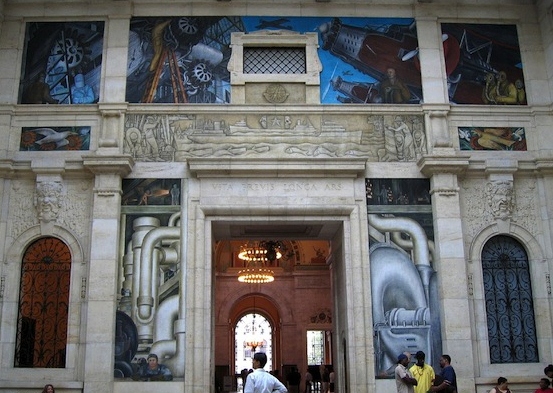

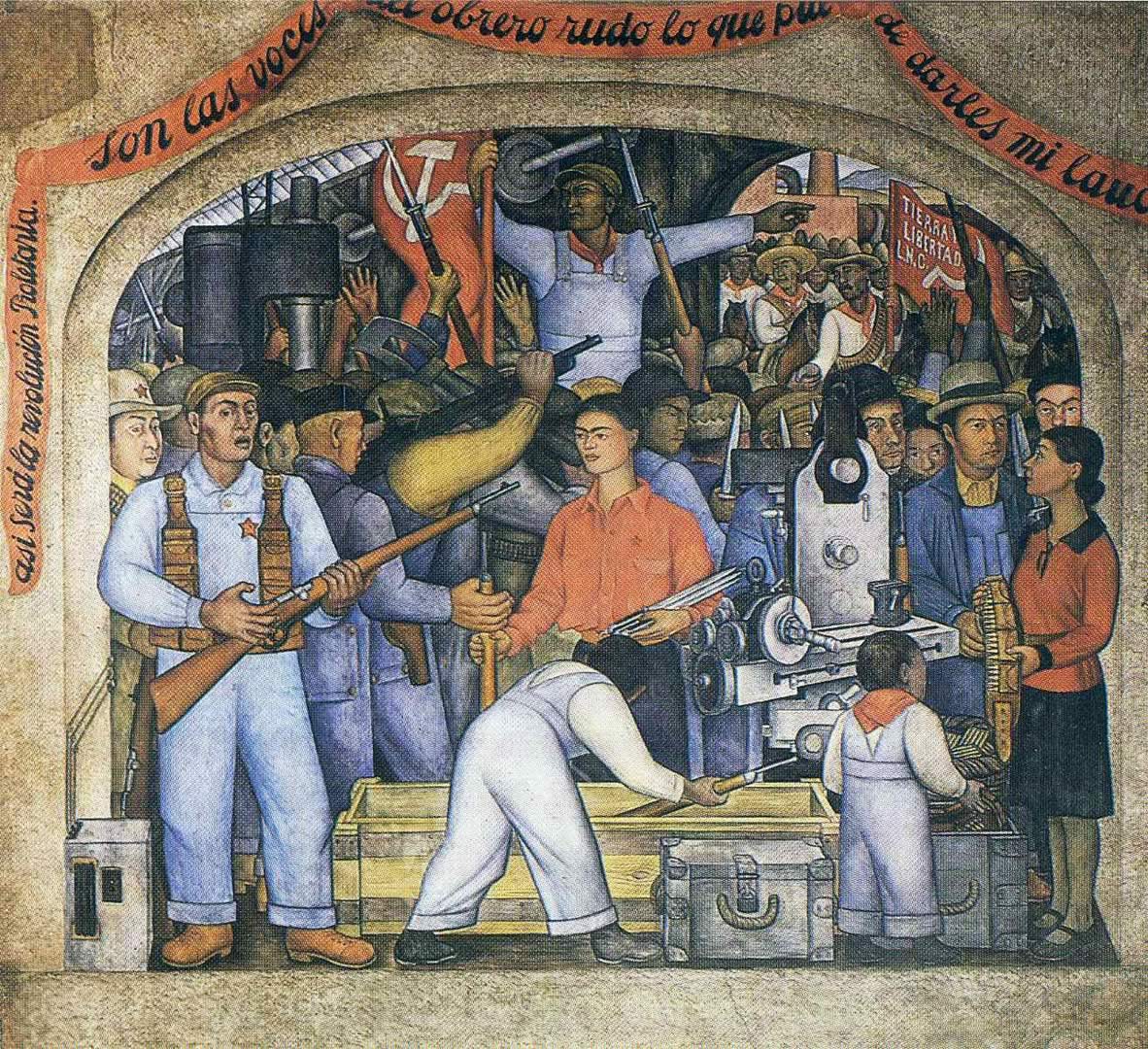


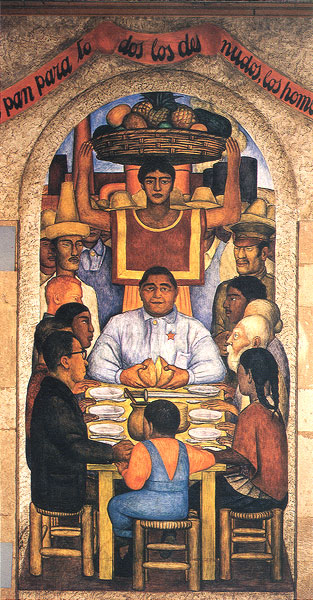


 Books & Boots