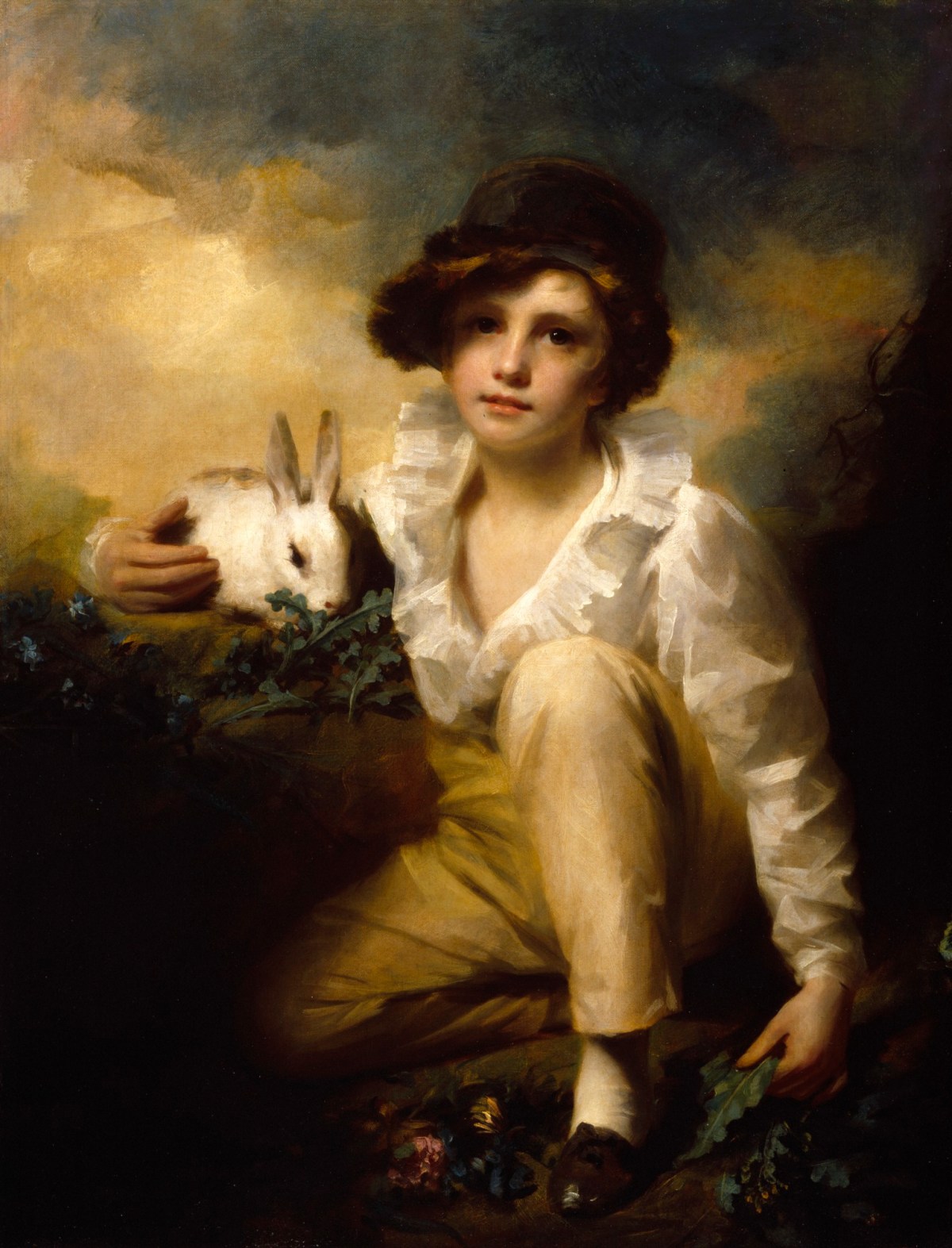
Between the Acts by Virginia Woolf (1941)

She was given to increasing the bounds of the moment by flights into past or future; or sidelong down corridors and alley.
(Old Mrs Swithin, describing Woolf’s own technique, page 8)

She gave him an arch roguish twinkle, as if to say—but the end of that sentence was cut short.
(One of many instances of interruption and incompletion which characterise the novel at every level, p.182)

‘Bless my soul, what a dither!’
(An unknown member of the audience as it disperses at the end of the pageant which forms the centrepiece of the narrative, p.180)

Virginia Woolf killed herself before her last novel, Between the Acts, was published. She drowned herself in the River Ouse on 28 March 1941 and the novel was published on 17 July 1941.

According to her biographer, after the long, gruelling process of writing and rewriting her previous work, the long novel The Years, which covers 55 years in the lives of the extended Pargiter family, the writing of Between The Acts flowed much more easily. It stems from one simple concept: all the events are set on just one day in the summer of 1939 (p.48), on the day of the annual village pageant at Pointz Hall, at the heart of a remote and idyllic rural community in the south of England.

As usual, the narrative describes not only of events, but the thoughts and memories of half a dozen of the central characters. And the pageant itself reviews and celebrates English history just at the moment when the nation was poised on the brink of another world war, which would rewrite or even obliterate much of that history.

Shadows

Born in 1882, Woolf was approaching 50 when she wrote Between The Acts. She had been a prolific author, but had also lived a life plagued with mental illness and periodic collapses into complete madness. So the idea of a rural village pageant sounds as idyllic as can be, but the book is darkened by multiple shadows, details and themes.

So, for example, Isabella (Isa) dawdling in the library of the big house at the centre of the novel, picks up a copy of The Times and starts idly reading it. What could be more privileged and tony? Except that she finds herself reading the account of what seems to be an assault or rape case, of some British soldiers accused of luring a women into their barracks, throwing her on a bed and tearing off some of her clothing, at which point she started to slap the soldier…

This upsetting image recurs to Isa throughout the book, only a few times but enough to add a very dark thread to the fabric. Also regarding Isa, she is very obviously unhappily married to Giles, son of the village’s posh landowner, and her day is punctuated by thoughts of not just unhappiness, but active hatred for him. She tries to counter these by repeating the mantra that he is ‘the father to my children’ but it doesn’t really help.

As I say, dark shadows…

Threads and themes

So there’s this ancient house, Pointz Hall, sitting in a dip in remote and unspoilt English countryside. In it live old Mr Oliver who’s accompanied everywhere by his big Afghan hound, and his widowed sister, Mrs Swithin, who he calls Sindy though her given name was Lucy. They’re both in their 70s.

Old Oliver doesn’t understand how his sister, like him in so many ways, can believe in God, wears a big crucifix, is always off to church. a) Woolf herself, in either her novels or essays, gives no indication of understanding religion: this is another massive gap in her sense of human nature and experience, along with her timidity about sex and her inability to grasp most aspects of masculinity. b) But Oliver’s incomprehension doesn’t affect the deep affection of brother and sister. c) Which reminds me of the deep affection between the 70-something brother and sister, Eleanor and Edward, in The Years, one of the many ways that themes from the previous book spill over into this one.

Lucy / Mrs Swithin is the classic Woolfian absent-minded and dreamy older woman cf Eleanor in The Years.

Was it that she had no body? Up in the clouds, like an air ball, her mind touched ground now and then with a shock of surprise.

With Bart and Lucy lives Bart’s son, Giles Oliver, who is a stockbroker in London, and his wife, Isabella, generally called Isa. Isa is identified from the start as another typically dreamy Woolf woman, not interested in details, drifting off when people talk, preferring her dream world of disconnected thoughts and perceptions. Isa writes poetry but does so in a book disguised as an accounts book so as to hide it from her husband.

Isa is not a slip of a thing. When she takes Dodge to see the greenhouses, the narrative tells us she is ‘broad’ and ‘fairly filled the path’ (p.101).

At one point there’s a really pure expression of the dream aesthetic underlying Woolf’s entire approach, the non-human stasis and timelessness she aspires to.

Empty, empty, empty; silent, silent, silent. The room was a shell, singing of what was before time was; a vase stood in the heart of the house, alabaster, smooth, cold, holding the still, distilled essence of emptiness, silence. (p.33)

If only life, or art, could have that perfection. but things keep changing, moving on, everything is in flux, and so no record of it can be perfect.

The young people of the village – Jim, Iris, David, Jessica – are busy decorating the old stone barn where the pageant will be held. A stage has been erected at one end. They call Mrs Swithin ‘Old Flimsy’.

Enter Mrs Manresa and William Dodge

Uninvited, two people show up at the house, Mrs Manresa, 45, and her friend, William Dodge. Through Isa’s eyes we learn that Mrs Manresa is a well-known local eccentric, married to a well-off City financier, with homes in London and down here, well known for playing jazz, roaming round in unusual clothes, insisting on teaching the village girls basket weaving.

Isa affectionately mocks Mrs Manresa as ‘the wild child of nature’ but she represents enjoyment of life, what Woolf mockingly refers to as the importance of ‘the jolly human heart’. She stirs some sugar into her coffee and:

She looked before she drank. Looking was part of drinking. Why waste sensation, she seemed to ask, why waste a single drop that can be pressed out of this ripe, this melting, this adorable world? (p.51)

It is identical to the sentiment expressed several times in Mrs Dalloway, about the sheer delight in living, in being live and sensitive to everything around you, no matter how small.

The stories that never are

It was in Orlando that I realised something distinctive about Woolf: given that her characters hardly ever do anything except drift from house to house, stroll through the streets, catch buses or cabs, and attend luncheons and dinner parties – for action, for interest, to liven up conversations, they often refer to ‘stories’, are described as telling ‘stories’, remind each other of the old ‘story’ about so-and-so.

But here’s my point: we never get to hear these stories. The promised stories are never told.

This was most flagrant in Orlando where we are repeatedly told about the months Orlando spent with buccaneers and whores in the East End and the stories they told! How the knackered old playwright Nicholas Green told him story after story about his contemporaries Shakespeare and Marlowe! About his time with the Turkish gypsies who told many a fine yarn round their campfires! And here’s the point: we never hear one of these stories.

In her big long novel, The Years, characters threaten to tell each other ‘stories’ about the old days, but never do.

Partly this has a modernist feel, a deliberate strategy of indirection, reminiscent of The Waste Land or The Cantos, which are made of unfinished fragments. But it’s also, I think, because Woolf couldn’t actually tell a story; she was one of those people who doesn’t remember stories, isn’t really interested in stories; her thing is moments of being, her characters noticing luminous details, dreams. Each of her novels features a leading woman protagonist who is the first to admit how forgetful they are: Mrs Dalloway, Mrs Ramsay, Eleanor Pargiter and here’s inattentive old Mrs Swithin.

‘A bishop; a traveller;—I’ve forgotten even their names. I ignore. I forget.’ (p.64)

The never-told stories are closely connected to another phenomenon, which is something to do with incompletion. Characters start to say something that may be a story, but are interrupted, shouted down, talked over, or someone laughs and the character listening doesn’t hear the crucial part. Woolf’s narratives revel in incompletion and frustration. The classic instance is at the end of The Years when Nicholas attempts to cap the big party which forms the final section of the book with a speech, but he is interrupted once, tries again and is interrupted again, tries a third time but other people walk by, talk over him, suggest someone else makes a speech, and so it never happens.

That sense of an action, generally a narrative, of someone trying to tell a story or a speech but not being completed, left hanging, frustrated, is a fundamental aspect of Woolf’s fictions, and the same happens here in Between The Acts. Here is a typical Woolf anecdote, Mrs Manresa rattling on to the Oliver family:

On she went to offer them a sample of her life; a few gobbets of gossip; mere trash; but she gave it for what it was worth; how last Tuesday she had been sitting next so and so; and she added, very casually a Christian name; then a nickname; and he’d said—for, as a mere nobody they didn’t mind what they said to her—and ‘in strict confidence, I needn’t tell you,’ she told them. And they all pricked their ears. And then, with a gesture of her hands as if tossing overboard that odious crackling-under-the-pot London life—so—she exclaimed ‘There!…And what’s the first thing I do when I come down here?’ They had only come last night, driving through June lanes… (p.38)

What happened to the ‘story’? We are not told it. I think Mrs Manresa actually does tell it and Woolf simply doesn’t report it, though it’s not very clear. What is certainly clear is that Woolf doesn’t share it. She never does. In all these novels we never get to hear any ancillary or subsidiary stories.

Here’s another typical moment. Old Bart is telling the unexpected lunch guests, Mrs Manresa and William, about the paintings hanging in the dining room.

Dodge [said] ‘I like that picture.’
‘And you’re right,’ said Bartholomew. ‘A man—I forget his name—a man connected with some Institute, a man who goes about giving advice, gratis, to descendants like ourselves, degenerate descendants, said…said…’ He paused. They all looked at the lady. But she looked over their heads, looking at nothing. She led them down green glades into the heart of silence.
‘Said it was by Sir Joshua?’ Mrs. Manresa broke the silence abruptly.
‘No, no,’ William Dodge said hastily, but under his breath. (p.45)

And that’s it. Things move on to Mrs Manresa counting out the stones from the cherries in her tart. In other words the story, or anecdote, about the expert who assessed the Oliver paintings, is never completed.

Later, in the interval of the pageant, Mrs Manresa is tempted to tell an off-colour story, but, of course, doesn’t.

Mrs. Manresa laughed. She remembered. An anecdote was on the tip of her tongue, about a public lavatory built to celebrate the same occasion, and how the Mayor… Could she tell it? No.

No, we never get to hear this as we never get to hear hundreds of other ‘stories’ referred to but never told. Woolf conversations are full of these interruptions and incompletions, it’s her trademark move. Thus at the very end of this book, the vicar starts to make a speech but is interrupted in mid-word by a flight of airplanes overhead.

‘But there is still a deficit’ (he consulted his paper) ‘of one hundred and seventy-five pounds odd. So that each of us who has enjoyed this pageant has still an opp…’ The word was cut in two. A zoom severed it. Twelve aeroplanes in perfect formation like a flight of wild duck came overhead. That was the music. The audience gaped; the audience gazed. Then zoom became drone. The planes had passed. ‘…portunity,’ Mr. Streatfield continued, ‘to make a contribution.’

We, like the author, want things to form a unity, to be whole. But life is never whole, life is really a litany of interruptions and distractions.

‘One thing follows another’

Giles Oliver, Isa’s husband, arrives by train from London. He is nettled that they have unexpected guests i.e. Mrs Manresa has imposed on them. Giles bolts his lunch (the fish) to catch up with the others, then they take their coffee on the terrace with a view.

If his wife is a Woolfian dreamer, Giles represents a type of the Angry Man. He is angry that Mrs Manresa is breaking the family mood he came down to enjoy. This spills over into his acute awareness that war is coming and his seething frustration that all these old fogies just sit around in their deckchairs admiring the view as if nothing’s up. He instantly forms a bad opinion of Dodge and, as the coffee conversation wears on, decides he is a ****, a word he cannot say. Presumably he means gay.

The narrative meanders on. On the face of it Old Bart commences an inconsequential conversation asking why the British are so indifferent to their painters but so much more devoted to their writers (because the writers are better is the short answer). But while these middle-class types noodle on their inconsequential conversation, other things go on. The narrative ponders the subtle affiliation between cross Giles and self-professed wild child Mrs Manresa.

A thread united them—visible, invisible, like those threads, now seen, now not, that unite trembling grass blades in autumn before the sun rises. She had met him once only, at a cricket match. And then had been spun between them an early morning thread before the twigs and leaves of real friendship emerge.

Woolf isn’t interested in ‘stories’ and her novels have next to no plot because this is what interests her: the invisible threads that link people, places, memories…

Miss La Trobe

Only now, a quarter into the text, are we introduced to a figure who’s going to dominate it, Miss La Trobe, the impresario who stages the village pageant every year.

Outwardly she was swarthy, sturdy and thick set; strode about the fields in a smock frock; sometimes with a cigarette in her mouth; often with a whip in her hand; and used rather strong language…

This commanding figure has decided that the country house’s terrace would be the ideal place to perform the play. Now the lunch party (the Olivers, Giles and Isa, Mrs M etc) hear voices coming from the dip beyond the lily pond because it is here that Miss La Trobe is organising her troops for the day ahead. (Her nickname among the village actors is ‘Bossy’.)

Mr Streatfield the vicar arrives, with his ‘handsome, grizzled head’.

Rhymes

Isa is a poet so we see her continually versifying and looking for rhymes. It’s her shtick, her identifier.

‘Where we know not, where we go not, neither know nor care,’ she hummed. ‘Flying, rushing through the ambient, incandescent, summer silent…’ The rhyme was ‘air’. She put down her brush. She took up the telephone.

But somewhere, this cloud, this crust, this doubt, this dust—She waited for a rhyme, it failed her…

Here she is, taking Dodge to see the greenhouses:

‘Fly then, follow,’ she hummed, ‘the dappled herds in the cedar grove, who, sporting, play, the red with the roe, the stag with the doe. Fly, away. I grieving stay. Alone I linger, I pluck the bitter herb by the ruined wall, the churchyard wall, and press its sour, its sweet, its sour, long grey leaf, so, twixt thumb and finger…’

This fondness for rhymes is occasionally present not just in Isa but in the narrator themselves. In the first third of the book it occasionally spills over into the narrative text but once the pageant gets going, it becomes far more present (see below).

A tour of the house

There’s an odd jump cut from Miss La Trobe fussing with props to the narrative suddenly showing us Mrs Swithin showing young Mr Dodge round their house. For some reason this tour by the 70-year-old lady becomes freighted with an almost symbolical weight:

‘The nursery,’ said Mrs. Swithin. Words raised themselves and became symbolical. ‘The cradle of our race,’ she seemed to say. (p.66)

And for his part Dodge feels a sudden urge to confess his life story, to tell her he was bullied at school and that, yes, he is a **** (the word which Giles thinks can’t be mentioned, presumably poof or some such slur meaning gay) and so describes himself as a ‘half-man’.

The sound of cars in the drive reminds them that guests are arriving to watch the pageant. It is half past three on a June day in 1939.

Rows of chairs, deck chairs, gilt chairs, hired cane chairs, and indigenous garden seats had been drawn up on the terrace.

Into these the guests start fumbling and sitting. And then, without any preparation from the narrator, a child steps onstage and starts reciting, meaning the pageant has started.

The pageant 1. Elizabethan age

The pageant is surprisingly incoherent and confusing. Woolf deliberately makes it so. Thus a child comes onto the terrace/stage and starts declaiming but half the audience can’t hear. A chorus of villages comes on and sings but the audience can’t hear the words etc. It’s a continuation of the non-stories and interrupted speech theme. Nothing can get finished or completely understood. In a way, it’s like a nightmare where you’re running full pelt but not moving.

Anyway it appears to be a pageant overview of English history, starting with Chaucer and people in medieval garb miming the Canterbury pilgrims. Then a local figure, Mrs Clark, who runs the local shops (‘licensed to sell tobacco’) comes on impressively made up as Queen Elizabeth.

First play with the play

She recites some (bad) verse describing herself but is interrupted and mocked by the village idiot, Albert, skipping around, mocking her and the audience. Elizabeth introduces a play within a play. This appears to be a pastiche of an Elizabethan play with lost relatives and far-fetched coincidences but the real point is that, characteristically, it is badly explained and we don’t see it all acted out.

She bawled. They bawled. All together they bawled, and so loud that it was difficult to make out what they were saying.

First interval: tea in the barn

The play with a play is interrupted and incomplete when the Interval arrives, much to the chagrin of Miss La Trobe, yet another example of incompletion. Here is Isa’s confused response:

There was such a medley of things going on, what with the beldame’s deafness, the bawling of the youths, and the confusion of the plot that she could make nothing of it. Did the plot matter?… Don’t bother about the plot: the plot’s nothing.

You can’t help reading that as Woolf’s instructions about her own novels: ‘the plot’s nothing’.

But the other thing about the pageants is the way format of poetry, rhyme and repetition infects the narrative. At the interval all the characters and the narrator have picked up the habit of rhyming, repeating short phrases, poetic diction, as if it’s catching. Here’s how the narrative describes the audience returning to their seats. See how it’s become… what exactly? Impressionistic? Certainly with fanciful rhymes.

Feet crunched the gravel. Voices chattered. The inner voice, the other voice was saying: How can we deny that this brave music, wafted from the bushes, is expressive of some inner harmony? “When we wake” (some were thinking) “the day breaks us with its hard mallet blows.” “The office” (some were thinking) “compels disparity. Scattered, shattered, hither thither summoned by the bell. ‘Ping-ping-ping’ that’s the phone. ‘Forward!’ ‘Serving!’—that’s the shop.” So we answer to the infernal, agelong and eternal order issued from on high. And obey. “Working, serving, pushing, striving, earning wages—to be spent—here? Oh dear no. Now? No, by and by. When ears are deaf and the heart is dry.” (p.107)

At the interval everyone crowds into the ancient barn where tea and cakes are being served. Woolf takes the time to emphasise that both are disgusting, the tea tasting like ‘rust boiled in water’. There’s a great press of people all talking at the same time, overhearing each other’s fragments of speech, never finishing their sentences, a festival of inconsequentiality.

Symbolical voices they seemed to her, half hearing…. feeling invisible threads connecting the bodiless voices.

Woolf likes this kind of thing, mocking but also enjoying the hubbub and sustained inconsequentiality of banal conversation, an atmosphere of ‘scraps and fragments’ (a phrase she repeats six times). She staged the same sort of thing in Mrs Dalloway’s party which forms the climax to the novel of the same name, in the Ramsay family dinner in To The Lighthouse and in Delia’s party which forms the climax of The Years.

Thus Mrs Swithin rambles on to Mrs Manresa about the swallows which nest in the barn every year, someone comments on the King and Queen’s upcoming trip to India, someone else points out it’s actually Canada they’re going to, random voices interrupt asking for a splash more milk or another slice of cake. Isa and Dodge find themselves in a corner and jokingly quote bits of the play to each other. Dodge is an alienated outsider, the role played by North at Delia’s party. He is just thinking he’s made a bit of connection with poetry-quoting Isa when here whole expression changes and her little boy George comes running over to her, while Dodge catches sight of her husband, Giles, by the door, virile and still angry about everything.

New faces at the pageant

  • Albert, the village idiot
  • old Cobbet of Cobbs Corner, who worked out East for a while
  • Lady Haslip, of Haslip Manor
  • Mrs Parker
  • Mrs Neale who runs the village post office
  • Mrs Moore the keeper’s wife
  • Mr Pinsent with his bad leg
  • Mabel Hopkins
  • Major and Mrs Mayhew
  • Mrs Lynn-Jones who shares a house with Etty Springett, both being widows
  • Mr Page the village reporter, who is used to point out many of the above

On being gay

On a whim, Isa offers to show Dodge the greenhouses and off they wander. He knows she’s realised he’s gay.

‘And you—married?’ she asked. From her tone he knew she guessed, as women always guessed, everything. They knew at once they had nothing to fear, nothing to hope. At first they resented—serving as statues in a greenhouse. Then they liked it. For then they could say—as she did—whatever came into their heads…. ‘I’m William,’ he said, taking the furry leaf and pressing it between thumb and finger. ‘I’m Isa,’ she answered. Then they talked as if they had known each other all their lives; which was odd, she said, as they always did, considering she’d known him perhaps one hour. (p.102),

The pageant part 2. Restoration comedy

The audience drifts back to the seating in front of the terrace-stage, with much fragmented and inconsequential chatter, many of them repeating an irritatingly catchy line from the first half:

‘O sister swallow, O sister swallow,
How can thy heart be full of the spring?’

Out onto the stage steps Mabel Hodges, one of the family nannies, in costume with make-up and starts to recite more poetry about Reason but, in the classic style, the audience doesn’t catch many of her words. Behind her a troupe of villages pass to and fro among the trees chanting something which also cannot be heard, for ‘the wind blew their words away’, which itself becomes a catchphrase, repeated three times, even though Miss la Trobe furiously yells at them to chat the words louder.

Then the wind rose, and in the rustle of the leaves even the great words became inaudible; and the audience sat staring at the villagers, whose mouths opened, but no sound came.

Second play within a play: a restoration comedy

If the play within a play in the first half was from the Elizabethan era, this one is from the age of reason, and so is a Restoration comedy. It is a very bad pastiche. The point of Restoration comedy is the rapier wit, the cut and thrust of dialogue. Woolf is useless at this, as she showed in Orlando. The characters keep drifting off into Woolfian reverie, dreaming, free association. Also Restoration comedy is funny. Woolf is rarely funny.

It’s actually quite long this pastiche play, consisting of four scenes, between which we see some members of the audience clapping, shouting ‘hear hear’, commenting on the action, or Mrs Elmhurst reading out the plot summary in the programme to her deaf husband.

It’s a pastiche of a Restoration comedy in which Lady Harraden, the aunt of a pretty young virgin, Flavinda, conspires with an old gent, Sir Spaniel Lilyliver, for him to marry the virgin so that she will inherit a fortune which the old couple can divide between them, when all the time young Flavinda is, of course, in love with handsome young Valentine.

Cast of the Restoration comedy

  • Lady Asphodilla Harraden, played by Mrs Otter from the End House
  • Deb, her maid: ?
  • Sir Spaniel Lilyliver: ?
  • Flavinda, played by Millie Loder, shop assistant at Messrs. Hunt and Dicksons, drapery emporium
  • Valentine: ?

In the characteristic Woolfian way which I’ve been emphasising, one of the four scenes is missing, was never written, and the programme gives a short prose summary of it (it’s the key scene in the plot). As I’m said quite a few times, Woolf is all about incompletion and absence.

Second interval

Mrs Swithin breaks convention by going into the bushes where Miss La Trobe is supervising the actors getting dress, to congratulate her, for activating invisible strings, for waking the sense of history in her. Miss La Trobe hastily dresses Mrs Rogers and Hammond in Victorian clothes.

The pageant part 3. Victorian age

Mr Budge the publican steps on stage in the costume of a Victorian policeman directing the traffic. In his speech Woolf mocks the Victorian age, its racist assumption of white superiority, the white man’s burden to rule the world etc. Then:

There was a pause. The voices of the pilgrims singing, as they wound in and out between the trees, could be heard; but the words were inaudible. The audience sat waiting.

Inaudibility. Fragments. Incompletion.

Third play within the play

The Picnic Party. About 1860. Scene: A Lake.

Quite a few actors in Victorian dress perform the creation of a large picnic party. There’s a young couple, Edgar and Eleanor, who very earnestly discuss getting married and going out to Africa to convert the heathen. There’s a chorus of young men and a chorus of young women. It’s as big as an opera! Ladies sing a song. Mr Hardcastle leads Victorian prayers.

The picnic party pack up and leave, as Budge-as-constable returns and stands on his dais, painting a picture of the hard-working Victorian bourgeois returning to the bosom of his family, while the gramophone, offstage, plays Home Sweet Home.

Third interval

Mrs Swithin, Mrs Manresa, William, Isa and Giles witter on.

The pageant part 4. The present day

The program tells the audience that the last part of the pageant represents ‘the present day’. Obviously the use of that phrase, ‘the present day’, recalls the end of her previous novel, The Waves, the long final section of which was titled ‘Present Day’. It brings out the way the structure of all her mature novels reuse a handful of the same themes, settings or ideas.

Tick tick

I haven’t mentioned yet that during the interludes and a bit during the performances, the audience can hear the sound of the gramophone turning but not playing anything and that this sound is a ‘tick tick tick’. Obviously this is the sound of time, and the more the phrase is repeated, the more ominous and oppressive it becomes…

Only the tick of the gramophone needle was heard. The tick, tick, tick seemed to hold them together, tranced… Tick, tick, tick the machine continued…

Tick, tick, tick, the machine continued. Time was passing. The audience was wandering, dispersing. Only the tick tick of the gramophone held them together…

Tick, tick, tick, went the machine in the bushes… Tick tick tick the machine reiterated.

What is time? Why are we trapped in time? How is it that we vividly remember events from our childhood but can’t remember what we did this morning? Can we ever recapture lost time? Time is a trap.

They were all caught and caged; prisoners; watching a spectacle. Nothing happened. The tick of the machine was maddening. (p.158)

The audience becomes restive, grumbling among themselves. Cut away to Miss La Trobe and it is a deliberate strategy: nothing happens for ten minutes so the audience can experience the present moment.

After ten minutes of this, something happens. The cast come onstage holding a variety of mirrors, large and small and silver surfaces, moving around to reflect an image of the audience back at themselves, but in shimmering fragments. Hmm. Could Virginia be saying something about art? Or the novelist’s art?

Then a scene is quickly concocted, a backdrop showing a ruined wall, and some workers in front rebuilding it. It symbolises our civilisation (ruined by the Great War?) and the endless labour needed to maintain it.

Suddenly an unseen voice sets off on a long surreal and bracing accusation of the audience declaimed through a megaphone, which reminded me of W.H. Auden’s many minatory verses from the 1930s.

Let’s break the rhythm and forget the rhyme. And calmly consider ourselves. Ourselves. Some bony. Some fat. Liars most of us. Thieves too. The poor are as bad as the rich are. Perhaps worse. Don’t hide among rags. Or let our cloth protect us. Or for the matter of that book learning; or skilful practice on pianos; or laying on of paint. Or presume there’s innocency in childhood.

Then the vicar, the Reverend G. W. Streatfield, appears and delivers a speech. Characteristically, his first words are inaudible. Life, Woolf insists, is a thing of fragments and incompletion.

He says he is speaking simply as a member of the audience, as puzzled as everyone else, but he thinks one of the pageant’s meanings was that we are all one, that one person plays many parts, that there is a spirit which pervades all things. His speech is interrupted mid-word by the roaring of a flight of airplanes flying overhead, the machine, the modern world intruding into this idyll. Interruptions and fragments.

Moving on, the Reverend congratulates everyone because the pageant has raised thirty-six pounds ten shillings and eightpence towards the fund for installing electric light in the church. But a hundred and seventy-five pounds is still required so he asks everyone to give to the collection tins which come round.

Lastly he goes to offer a vote of thanks to the impresario of the afternoon’s entertainment but Miss La Trobe is nowhere to be seen. This is very like the climax of Delia’s party in The Waves, which Nicholas repeatedly tries to make a speech to provide a climax to the evening but is repeatedly interrupted and shouted down and eventually gives up. Fragments and frustration.

Similitudes

And it’s not the only repetition or echo of earlier works. Some of the characters are so similar to ones in this novel’s predecessor, The Years, as to be virtually identical.

Old Lucy Swithin, in her good-natured vagueness, is very like good-natured, vague Eleanor Pargiter.

Isa’s sharp observations remind me of critical young North. But her habit of misquoting long streams of poetry, or making up long streams of verse in more or less every situation she finds herself in, reminded me very much of the eccentric Sara or Sally, who does exactly the same in The Years.

In the event his puzzlement is ended when someone puts the National Anthem on the gramophone and everyone stands and sings along. Then that’s it. The actors are still onstage chatting to each other and the audience, a bit puzzled, start to disperse. The gramophone plays a song, first heard earlier, with the refrain ‘Dispersed are we’, and the audience disperse with four pages of what Woolf enjoys, scraps and fragments of random conversation.

Coda

The audience packs up, gets into their cars, and leaves, leaving the family as in the first quarter: old Bart, Lucy / Mrs Swithin, Mrs Manresa and William, Giles and Isa.

Lucy asks whether they oughtn’t to go and thank Miss La Trobe. Bart gruffly says she doesn’t need thanks, she’ll go to the pub with the actors and stumps off with his dog. Thank God the bloody thing’s over for another year. Lucy stays to watch the fish in the big pool and reflect on God and the unity of all things.

William Dodge casts a shadow on the fish pool as he finds Lucy and thanks her and shakes her hand.

Isa listens to the bells in the nearby church, the one the pageant has raised money to illuminate. When they stop she knows the service is starting. So presumably it’s a Sunday. She notices William Dodge making for the car park and hastening thither, discovers her husband talking up close to Mrs Manresa. She has entranced him. But at that moment (gay) William arrives, Mrs Manresa flirtatiously tells him to jump in and the car roars off.

Miss La Trobe

She avoided everyone, refused to go forward to take the vicar’s thanks, waited until everyone left, and then packed up the gramophone and records. She is an emblem of the artist, of Woolf herself and the creative agony. if only she had had more time, more money, more resources, she might have said the thing she wanted to but instead… hurry, imperfection, incompletion. She is haunted by her failure.

For what it’s worth we learn that she shares her bed with an actress and is shunned by the village women.

She was an outcast. Nature had somehow set her apart from her kind.

So I think that pretty much confirms she is a lesbian, as William Dodge is gay. Interesting that Woolf made these queer identities not exactly prominent but just notable, in her last novel.

She goes to the local pub where the talk stops when she enters because they’d been talking about her, using her nickname ‘Bossy’. She doesn’t care and doesn’t hear, orders a drink and the whole world fades out as the nurses a vision, two figures onstage by a rock at midnight, and the shape of her next project starts to come to her. She is moving onto the next work. Which we imagine is how Woolf felt as each new project began to take shape in her (troubled) mind.

The Oliver family

Everyone has gone leaving the Oliver family to have dinner (prepared, served and cleared away by the unknown servants). Bartholomew, Lucy, Giles and Isa. They discuss the play and its meaning without any great ideas, for example Bartholomew simply thinks it was too ambitious. Isa regards her husband, dressed in formal evening wear and reflects that she loves and hates him. The second post of the day is handed into the drawing room by the butler Candish. The reader is a little awed at how flat and boring their lives are.

Darkness falls deeper and deeper. The flowers close up. The windows are closed. Lucy draws her shawl tighter as she resumes reading H.G. Wells’s Outline of History (a book which also crops up in D.H. Lawrence’s novella, St Mawr).

The end

The ending may be the best thing about it. All day long there had been barely suppressed tension between Giles and Isa. Old Bart and Lucy go to bed leaving them alone and they both know a fight is coming, but after the fight what we nowadays call ‘make-up sex’. The last three paragraphs are really powerful.

The old people had gone up to bed. Giles crumpled the newspaper and turned out the light. Left alone together for the first time that day, they were silent. Alone, enmity was bared; also love. Before they slept, they must fight; after they had fought, they would embrace. From that embrace another life might be born. But first they must fight, as the dog fox fights with the vixen, in the heart of darkness, in the fields of night.

Isa let her sewing drop. The great hooded chairs had become enormous. And Giles too. And Isa too against the window. The window was all sky without colour. The house had lost its shelter. It was night before roads were made, or houses. It was the night that dwellers in caves had watched from some high place among rocks.

Then the curtain rose. They spoke.

‘As the dog fox fights with the vixen’ sounds like D.H. Lawrence, and for the only time in the seven Woolf novels I’ve read, you get a real sense of the human depths, not polite and glossed over with dreams and memories and vivid impressions, but hard and dark and brutal. Wow.

Last thought

On the subject of thematic repetitions and echoes (or the very limited plot elements that Woolf chose to work with), Mrs Dalloway follows the lives of half a dozen characters during one day in London, whereas Between The Acts follows the lives of half a dozen characters during one day in the heart of the countryside. Town and country.

Make of this what you will but my interpretation is that High Modernism was an urban phenomenon which describes the fragmentation of experience and mentality in the modern (1920s) city: The Waste LandUlyssesBerlin Alexanderplatz, these are all intensely urban works.

But 20 years later, at the end of the 1930s, the modernist wave had retreated and there was a revival of interest in life in the country: T.S. Eliot transitioned from the intense alienation of The Waste Land (1922) to the powerfully rural descriptions of Burnt Norton (1936), and Virginia Woolf transitioned from the intensely London setting of Mrs Dalloway (1925) to the intensely rural setting of Between The Acts (1941) i.e. these two great modernists travelled in the same direction.

But it was also part of a broader cultural shift. In art the movement is called Neo-romanticism which turned against the city and revived interest in depicting an idealised, stylised (sometimes nightmarish) English countryside. In her own understated way, I think Woolf’s novel was part of that general cultural shift as the bitter end of the 1930s turned into the catastrophe of the 1940s.


Cast

Posh people

Mr Rupert Haines, the old gentleman farmer, his face ravaged by time and work

Mrs Haines, the wife of the gentleman farmer

Isabella, generally called Isa, the wife of their son – she is a dreamer, a quoter of poetry, haunting the library wondering which book to read

Mr Bartholomew Oliver, of the Indian Service, retired, who owns Pointz Hall, ‘A very tall old man, with gleaming eyes, wrinkled cheeks, and a head with no hair on it.’ Referred to by servants as The Master, or when no-one’s around, ‘Bartie’.

Mr Giles Oliver, a stockbroker, Old Bartholomew’s son, Isa’s husband. They met salmon fishing in Scotland.

Mrs Giles Oliver, daughter of Sir Richard ?, wife of old Oliver’s son, herself the mother of toddler George.

Old Mrs Cindy Swithin, sister of old Mr Oliver, Cindy is a nickname for Lucy. She married a squire, now dead, and two children, one in Canada, the other, married, in Birmingham. The staff call her ‘old mother Swithin’. The young people of the village call her ‘Old Flimsy’.

Sunny the cat, nickname of Sung-Yen.

Mrs Manresa, married to Ralph Manresa, a Jew who works in City finance.

Miss La Trobe, organiser of the pageant.

Servants and suppliers

Bates the dentist (up in London)

Mitchell the fishmonger and Mitchell’s boy who delivers orders on a motorbike.

Candish, the butler, fond of ‘gambling and drinking’.

Mrs Sands the Olivers’ cook, known to friends as Trixie, ‘the thin, acid woman, red-haired, sharp and clean, who never dashed off masterpieces, it was true; but then never dropped hairpins in the soup’ as her predecessor, Jessie Pook, had done.

Jane the kitchenmaid

Unnamed ‘girls’, maids and kitchen staff e.g. ‘the scullery maid’, dismissed as silly and superstitious, believers in ghosts etc.

Gardeners.

Billy, Mrs. Sands’s nephew, apprenticed to the butcher.

Bond the cowman

The future shadowed their present, like the sun coming through the many-veined transparent vine leaf; a criss-cross of lines making no pattern.


Credit

‘Between the Acts’ by Virginia Woolf was first published by the Hogarth Press in 1941. Page references are to the 1992 Oxford World Classics paperback edition, although the text is easily available online.

Related links

Related reviews

The Critic as Artist, with some remarks upon The Importance of Doing Nothing by Oscar Wilde (1891)

‘The Critic as Artist’ is Oscar Wilde’s longest essay and most extensive statement of his aesthetic philosophy. It is a dialogue in two parts and was one of the four long essays included in the collection titled ‘Intentions’, published on 1 May 1891. It is a revised version of two articles that first appeared in the July and September 1890 issues of ‘The Nineteenth Century’ magazine, which were originally entitled ‘The True Function and Value of Criticism’ which is, arguably, a more accurate and useful title.

When I say ‘essay’ in fact this, like the other works in ‘Intentions’, is consciously experimental in format. It is not an essay in the conventional sense but a dialogue conducted by two well-developed characters, namely Gilbert – who delivers long dogmatic statements about the nature of The Critic and Criticism – to Ernest who asks follow-up questions and generally keeps the narrative moving.

In fact the slow and leisurely opening, with chat about Dvorak and gossip and sharing cigarettes, is more like a novel than a critical essay and it has a setting described as in the stage directions for a play:

Persons: Gilbert and Ernest.
Scene: the library of a house in Piccadilly, overlooking the Green Park.

This long essay moves through a succession of assertions about the central role played by criticism and the critical spirit in society, in culture, in art and life. It could probably be made into a set of bullet points, which it briefly crossed my mind to attempt. Instead in what follows I’m going to try and indicate the flow of the argument via brief summaries, sometimes just a sentence long, of the key points, accompanied by quotations. Wilde states his ideas infinitely better than I could.

Unless otherwise stated, the speaker of each of the quotes is Gilbert, who does the lion’s share of the talking.

Part 1

Victorian artists and critics such as James Abbott McNeill Whistler and Matthew Arnold made a firm distinction between fine art and criticism in which criticism played a subservient and secondary role. Arnold was maybe the first English writer to lay out a comprehensive theory of literature and criticism in the late 1860s and 70s, most notable in his book ‘Culture and Anarchy’ published in 1869.

Wilde sets out not only to question this key distinction but to turn it on its head, proposing that: 1) criticism is itself an art form every bit as valid as the others, and that 2) art in any medium cannot be created without critical intelligence.

Only the critical faculty enables any artistic creation at all.

To put it more fully:

The antithesis between them is entirely arbitrary. Without the critical faculty, there is no artistic creation at all, worthy of the name. You spoke a little while ago of that fine spirit of choice and delicate instinct of selection by which the artist realises life for us, and gives to it a momentary perfection. Well, that spirit of choice, that subtle tact of omission, is really the critical faculty in one of its most characteristic moods, and no one who does not possess this critical faculty can create anything at all in art…

Every century that produces poetry is, so far, an artificial century, and the work that seems to us to be the most natural and simple product of its time is always the result of the most self-conscious effort. Believe me, Ernest, there is no fine art without self-consciousness, and self-consciousness and the critical spirit are one…

And:

An age that has no criticism is either an age in which art is immobile, hieratic, and confined to the reproduction of formal types, or an age that possesses no art at all.

Innovation It is the critical spirit which drives change and innovation in the arts:

There has never been a creative age that has not been critical also. For it is the critical faculty that invents fresh forms. The tendency of creation is to repeat itself. It is to the critical instinct that we owe each new school that springs up, each new mould that art finds ready to its hand.

The artists reproduce either themselves or each other, with wearisome iteration. But criticism is always moving on, and the critic is always developing.

The Greeks had no art critics Ernest (the pedestrian one) is made to deliver the tired old cliché that back in the good old days of the Greeks there were no literary journals and Sunday supplements full of hacks scribbling criticism and this was because the ancients created ab ovo, fresh and new, in the dawn of the world, as the inspiration took them. ‘In the best days of art there were no art-critics” and ‘Why should the artist be troubled by the shrill clamour of criticism?’

The Greeks overflowed with art critics Gilbert replies that this is ignorant rubbish. It was the Greeks who invented the critical spirit. Their entire legacy is one of the critical mind, critically enquiring into philosophy, science, ethics and so on. He gives, as a shining example, the ‘Poetics’ of Aristotle, a masterpiece of critical enquiry. And he associates it especially with the later centuries in Alexandria which was overflowing with critics of all the arts, which:

devoted itself so largely to art-criticism, and [where] we find the artistic temperaments of the day investigating every question of style and manner, discussing the great Academic schools of painting, for instance, such as the school of Sicyon, that sought to preserve the dignified traditions of the antique mode, or the realistic and impressionist schools, that aimed at reproducing actual life, or the elements of ideality in portraiture, or the artistic value of the epic form in an age so modern as theirs, or the proper subject-matter for the artist.

The Greeks invented every form In literature we owe the Greeks everything:

The forms of art have been due to the Greek critical spirit. To it we owe the epic, the lyric, the entire drama in every one of its developments, including burlesque, the idyll, the romantic novel, the novel of adventure, the essay, the dialogue, the oration, the lecture (for which perhaps we should not forgive them) and the epigram, in all the wide meaning of that word.

And:

It is the Greeks who have given us the whole system of art-criticism. Whatever, in fact, is modern in our life we owe to the Greeks. Whatever is an anachronism is due to mediævalism.

Literature is the highest art As that list of genres suggests, Wilde unambiguously considers literature the highest art:

It is the Greeks who have given us the whole system of art-criticism, and how fine their critical instinct was, may be seen from the fact that the material they criticised with most care was, as I have already said, language. For the material that painter or sculptor uses is meagre in comparison with that of words. Words have not merely music as sweet as that of viol and lute, colour as rich and vivid as any that makes lovely for us the canvas of the Venetian or the Spaniard, and plastic form no less sure and certain than that which reveals itself in marble or in bronze, but thought and passion and spirituality are theirs also, are theirs indeed alone. If the Greeks had criticised nothing but language, they would still have been the great art-critics of the world. To know the principles of the highest art is to know the principles of all the arts.

He asserts the superiority of literature over all the arts in a couple of pages which are, indeed, very persuasive. Painting and sculpture can only capture a moment whereas literature captures an entire action and the world of thoughts which accompany it. Which is why all the great characters are primarily literary (he gives an extended summary of the action of The Iliad and then a two-page summary of the entire plot of The Divine Comedy) and painting, sculpture and all the other arts in essence merely illustrate the depth of character which literature alone can capture.

Movement, that problem of the visible arts, can be truly realised by Literature alone. It is Literature that shows us the body in its swiftness and the soul in its unrest.

The artist as individual Echoes of his essay ‘The Soul of Man under Socialism’ which is, in fact, a very extended hymn of praise to the importance of Individualism.

There is no art where there is no style, and no style where there is no unity, and unity is of the individual. No doubt Homer had old ballads and stories to deal with, as Shakespeare had chronicles and plays and novels from which to work, but they were merely his rough material. He took them, and shaped them into song. They become his, because he made them lovely.

The longer one studies life and literature, the more strongly one feels that behind everything that is wonderful stands the individual, and that it is not the moment that makes the man, but the man who creates the age.

Criticism demands infinitely more cultivation than creation does.

As a rule, the critics — I speak, of course, of the higher class, of those in fact who write for the sixpenny papers — are far more cultured than the people whose work they are called upon to review. This is, indeed, only what one would expect, for criticism demands infinitely more cultivation than creation does.

In order to really appreciate something you need to understand the entire history and range of the genre, plus all recent developments. True criticism is extremely demanding.

The second rate are correct to decry criticism because their work, being mediocre, doesn’t merit it.

I am aware that there are many honest workers in painting as well as in literature who object to criticism entirely. They are quite right. Their work stands in no intellectual relation to their age. It brings us no new element of pleasure. It suggests no fresh departure of thought, or passion, or beauty. It should not be spoken of. It should be left to the oblivion that it deserves.

Harder to talk than to do Ernest voices the received accusation against criticism, that it is harder to do – to create art – than it is to talk about art. But in a typically Wildean reversal of received opinion, Gilbert insists the opposite is the case:

More difficult to do a thing than to talk about it? Not at all. That is a gross popular error. It is very much more difficult to talk about a thing than to do it. In the sphere of actual life that is of course obvious. Anybody can make history. Only a great man can write it.

Action is instinctive and stupid Flying in the face of the philistine promotion of instinctive action in, for example, the imperial discourse of the time, Wilde says any fool can act, animals are acting all the time, it is instinctive and requires no intelligence.

There is no mode of action, no form of emotion, that we do not share with the lower animals. It is only by language that we rise above them, or above each other — by language, which is the parent, and not the child, of thought. Action, indeed, is always easy, and when presented to us in its most aggravated, because most continuous form, which I take to be that of real industry, becomes simply the refuge of people who have nothing whatsoever to do. No, Ernest, don’t talk about action. It is a blind thing dependent on external influences, and moved by an impulse of whose nature it is unconscious. It is a thing incomplete in its essence, because limited by accident, and ignorant of its direction, being always at variance with its aim. Its basis is the lack of imagination. It is the last resource of those who know not how to dream.

Against the claims of ‘action’ he sets the aesthetic values of passivity and dream.

Action! What is action? It dies at the moment of its energy. It is a base concession to fact. The world is made by the singer for the dreamer.

To summarise:

When man acts he is a puppet. When he describes he is a poet.

A defence of ‘sin’

What is termed Sin is an essential element of progress. Without it the world would stagnate, or grow old, or become colourless. By its curiosity Sin increases the experience of the race. Through its intensified assertion of individualism, it saves us from monotony of type. In its rejection of the current notions about morality, it is one with the higher ethics.

Attack on the ‘virtues’

Charity, as even those of whose religion it makes a formal part have been compelled to acknowledge, creates a multitude of evils. The mere existence of conscience, that faculty of which people prate so much nowadays, and are so ignorantly proud, is a sign of our imperfect development. It must be merged in instinct before we become fine.

Self-denial is simply a method by which man arrests his progress, and self-sacrifice a survival of the mutilation of the savage, part of that old worship of pain which is so terrible a factor in the history of the world, and which even now makes its victims day by day, and has its altars in the land.

He says the none of us know the full results of our actions and it may be that the saint’s actions lead, ultimately to catastrophe while the acts of the criminal, unexpectedly lead to good. In which case life is a kind of moral chaos.

You can imagine the reaction of the average Victorian bourgeois to seeing his system of values and morality being so comprehensively rubbished.

Criticism is an art

Criticism is itself an art. And just as artistic creation implies the working of the critical faculty, and, indeed, without it cannot be said to exist at all, so Criticism is really creative in the highest sense of the word.

Criticism is independent. It is independent because critical intelligence can be applied to any topic. The critic takes the work he’s criticising and makes something new of it in his criticism.

Criticism is no more to be judged by any low standard of imitation or resemblance than is the work of poet or sculptor. The critic occupies the same relation to the work of art that he criticises as the artist does to the visible world of form and colour, or the unseen world of passion and of thought. He does not even require for the perfection of his art the finest materials. Anything will serve his purpose.

In this respect, its complete freedom from being tied to subject matter as art and literature are, you could argue that criticism is the highest art:

I would say that the highest Criticism, being the purest form of personal impression, is in its way more creative than creation, as it has least reference to any standard external to itself, and is, in fact, its own reason for existing, and, as the Greeks would put it, in itself, and to itself, an end.

Criticism is the quintessence of personality

That is what the highest criticism really is, the record of one’s own soul. It is more fascinating than history, as it is concerned simply with oneself. It is more delightful than philosophy, as its subject is concrete and not abstract, real and not vague. It is the only civilised form of autobiography, as it deals not with the events, but with the thoughts of one’s life; not with life’s physical accidents of deed or circumstance, but with the spiritual moods and imaginative passions of the mind.

[The critic’s] sole aim is to chronicle his own impressions. It is for him that pictures are painted, books written, and marble hewn into form.

Contra Arnold Wilde takes Matthew Arnold to task. Among Arnold’s numerous critical nostrums is the famous line that ‘the proper aim of Criticism is to see the object as in itself it really is’. For Wilde this is 180 degrees wrong.

But this is a very serious error, and takes no cognisance of Criticism’s most perfect form, which is in its essence purely subjective, and seeks to reveal its own secret and not the secret of another.

On the other hand, Arnold wrote that art is ‘a criticism of life’:

Arnold’s definition of literature as a criticism of life was not very felicitous in form, but it showed how keenly he recognised the importance of the critical element in all creative work.

The critic is creative In this scenario, the role of the artist or writer is merely to provide subject matter or fodder for the critic, thus giving the critic ‘a suggestion for some new mood of thought and feeling which he can realise with equal, or perhaps greater, distinction of form’ than the original.

Ruskin and Pater Wilde gives two examples: 1) Ruskin’s sonorous critical writings about Turner which, he says, are at least as much works of art as Turner’s actual paintings. And 2) Walter Pater’s well-known paragraph describing the Mona Lisa which he calls a piece of literature more timeless and full of meaning than the painting itself.

It is for this very reason that the criticism which I have quoted is criticism of the highest kind. It treats the work of art simply as a starting-point for a new creation.

The work is just a trigger for the critic

The meaning of any beautiful created thing is, at least, as much in the soul of him who looks at it, as it was in his soul who wrought it. Nay, it is rather the beholder who lends to the beautiful thing its myriad meanings, and makes it marvellous for us, and sets it in some new relation to the age, so that it becomes a vital portion of our lives…

In fact it’s almost the definition of a work of art, a thing of beauty, that it provides this kind of pretext for the critic to exercise his imagination:

The one characteristic of a beautiful form is that one can put into it whatever one wishes, and see in it whatever one chooses to see; and the Beauty, that gives to creation its universal and æsthetic element, makes the critic a creator in his turn, and whispers of a thousand different things which were not present in the mind of him who carved the statue or painted the panel or graved the gem.

To recap:

ERNEST: But is such work as you have talked about really criticism?
GILBERT: It is the highest Criticism, for it criticises not merely the individual work of art, but Beauty itself, and fills with wonder a form which the artist may have left void, or not understood, or understood incompletely.
ERNEST: The highest Criticism, then, is more creative than creation, and the primary aim of the critic is to see the object as in itself it really is not; that is your theory, I believe?
GILBERT: Yes, that is my theory. To the critic the work of art is simply a suggestion for a new work of his own that need not necessarily bear any obvious resemblance to the thing it criticises.

Coda: criticism of Victorian painting Wilde devotes the final page of part 2 to criticising contemporary Victorian painting for its feeble attempts to match literature in telling a story. Too many Victorian paintings are merely anecdotal and so barely rises above the level of illustrations.

Pictures of this kind are far too intelligible. As a class, they rank with illustrations, and, even considered from this point of view are failures, as they do not stir the imagination, but set definite bounds to it.

He uses it as another opportunity to elevate literature above all the other arts for its ability to capture psychology and development.

The domain of the painter is, as I suggested before, widely different from that of the poet. To the latter belongs life in its full and absolute entirety; not merely the beauty that men look at, but the beauty that men listen to also; not merely the momentary grace of form or the transient gladness of colour, but the whole sphere of feeling, the perfect cycle of thought.

The painter is so far limited that it is only through the mask of the body that he can show us the mystery of the soul; only through conventional images that he can handle ideas; only through its physical equivalents that he can deal with psychology.

And:

Most of our elderly English painters spend their wicked and wasted lives in poaching upon the domain of the poets, marring their motives by clumsy treatment, and striving to render, by visible form or colour, the marvel of what is invisible, the splendour of what is not seen. Their pictures are, as a natural consequence, insufferably tedious. They have degraded the invisible arts into the obvious arts, and the one thing not worth looking at is the obvious.

Wilde doesn’t say it but you can see this as part of the reason so much Victorian art is sentimental. It’s because it provides a quick hit. A sad little girl crying, or a pair of sad lovers moping, this is easy to read and respond to. They are appallingly obvious and therefore, in Wilde’s words, ‘ insufferably tedious’.

Against anecdotal Victorian painting the Critic will:

turn from them to such works as make him brood and dream and fancy, to works that possess the subtle quality of suggestion, and seem to tell one that even from them there is an escape into a wider world.

Instead:

The æsthetic critic rejects these obvious modes of art that have but one message to deliver, and having delivered it become dumb and sterile, and seeks rather for such modes as suggest reverie and mood, and by their imaginative beauty make all interpretations true, and no interpretation final.

So that:

The critic reproduces the work that he criticises in a mode that is never imitative, and part of whose charm may really consist in the rejection of resemblance, and shows us in this way not merely the meaning but also the mystery of Beauty, and, by transforming each art into literature, solves once for all the problem of Art’s unity.

At which point the pair break off for dinner (I told you it opens and closes with the circumstantial details you’d expect of a novella or short story).

Part 2

After dinner Gilbert resumes his long exposition of the role of the Critic. The critic’s role is not to passively ‘explain’ the work, it is to emphasise their own interpretation of the work in order to make the work live, which he explains in unusually florid, gaseous terms.

Yet his object will not always be to explain the work of art. He may seek rather to deepen its mystery, to raise round it, and round its maker, that mist of wonder which is dear to both gods and worshippers alike…He will look upon Art as a goddess whose mystery it is his province to intensify, and whose majesty his privilege to make more marvellous in the eyes of men.

The role of the interpreter He gives the example of a great pianist. Their performance is, of course, of a work by Beethoven or Bach but what everyone freely admits to enjoying is their interpretation of the work, and this leads on to a paradox.

When Rubinstein plays to us the Sonata Appassionata of Beethoven, he gives us not merely Beethoven, but also himself, and so gives us Beethoven absolutely — Beethoven re-interpreted through a rich artistic nature, and made vivid and wonderful to us by a new and intense personality.

Same with actors. If a play is a real work of art there is scope for countless interpretations, all revealing something new and ‘true’ about it.

When a great actor plays Shakespeare we have the same experience. His own individuality becomes a vital part of the interpretation. People sometimes say that actors give us their own Hamlets, and not Shakespeare’s but this is a fallacy… In point of fact, there is no such thing as Shakespeare’s Hamlet. If Hamlet has something of the definiteness of a work of art, he has also all the obscurity that belongs to life. There are as many Hamlets as there are melancholies.

Just like the pianist and actor, in order to bring out the truth of the work, the critic must express themselves.

It is only by intensifying his own personality that the critic can interpret the personality and work of others, and the more strongly this personality enters into the interpretation the more real the interpretation becomes, the more satisfying, the more convincing, and the more true.

The more individual the interpretation, the more ‘true’ To better understand and ‘explain’ others, you must work on yourself.

If you wish to understand others you must intensify your own individualism.

So the stronger and more individual the criticism, the more it brings out the truths, sometimes new truths, about the work.

The necessity of scholarship But don’t think this is easy. It requires deep scholarship, for example:

He who desires to understand Shakespeare truly must understand the relations in which Shakespeare stood to the Renaissance and the Reformation, to the age of Elizabeth and the age of James; he must be familiar with the history of the struggle for supremacy between the old classical forms and the new spirit of romance, between the school of Sidney, and Daniel, and Johnson, and the school of Marlowe and Marlowe’s greater son; he must know the materials that were at Shakespeare’s disposal, and the method in which he used them, and the conditions of theatric presentation in the sixteenth and seventeenth century, their limitations and their opportunities for freedom, and the literary criticism of Shakespeare’s day, its aims and modes and canons; he must study the English language in its progress, and blank or rhymed verse in its various developments; he must study the Greek drama, and the connection between the art of the creator of the Agamemnon and the art of the creator of Macbeth; in a word, he must be able to bind Elizabethan London to the Athens of Pericles, and to learn Shakespeare’s true position in the history of European drama and the drama of the world.

The shortcomings of life Philistines go on about the importance of life, true to life, criticism of life, derived from life, a true life story etc etc. But life is appallingly inartistic.

Life is terribly deficient in form. Its catastrophes happen in the wrong way and to the wrong people. There is a grotesque horror about its comedies, and its tragedies seem to culminate in farce. One is always wounded when one approaches it. Things last either too long, or not long enough.

When one looks back upon the life that was so vivid in its emotional intensity, and filled with such fervent moments of ecstasy or of joy, it all seems to be a dream and an illusion. What are the unreal things, but the passions that once burned one like fire? What are the incredible things, but the things that one has faithfully believed? What are the improbable things? The things that one has done oneself. No, Ernest; life cheats us with shadows, like a puppet-master.

Whereas ‘There is no mood or passion that Art cannot give us’ and ‘are there not books that can make us live more in one single hour than life can make us live in a score of shameful years?’

Dante And to prove it, he gives a page-long summary of Dante’s Divine Comedy.

Art evokes sterile emotions He makes the striking claim that the reason Art is such a refuge for so many people is that it evokes sterile emotions. They aren’t like the destructive emotions of real life. They don’t cripple us. On the contrary we return to ‘King Lear’ of the ‘Divine Comedy’ over and over again for pleasure. Art may evoke emotions in us but they are, in the end, very tame.

Art does not hurt us. The tears that we shed at a play are a type of the exquisite sterile emotions that it is the function of Art to awaken. We weep, but we are not wounded. We grieve, but our grief is not bitter… The sorrow with which Art fills us both purifies and initiates…

All art is immoral He then goes on to make a characteristically provocative claim:

All art is immoral.

Elaborated by mention of the aesthete in his ivory tower:

Is such a mode of life immoral? Yes: all the arts are immoral.

How so? Because society and its needs are the basis of ‘morality’ and society’s most elementary need is for all its members to be productive and homogeneous – whereas art requires 1) a great deal of idle time and 2) to fully understand it, you must cultivate your individuality, your difference, your separateness. Both of which society deprecates.

Society often forgives the criminal; it never forgives the dreamer. The beautiful sterile emotions that art excites in us are hateful in its eyes, and people are completely dominated by the tyranny of this dreadful social ideal…

So he doesn’t mean that art encourages people to murder and adultery: he simply means it is against the cult of business and hard work so (officially) beloved of the Victorians.

In the opinion of society, Contemplation is the gravest sin of which any citizen can be guilty, in the opinion of the highest culture it is the proper occupation of man.

The collective life of the race Rather surprisingly, Wilde has Gilbert assert that the ‘soul’ is the accumulated experiences of the race, the ‘transmission of racial experiences’. Which is why, in the imagination, we can travel so freely to other times and places, as captured in their literature. Because our ‘souls’ contain the library of our ‘racial experiences’ and, the right encouragement i.e. art work, can reveal them to us. Which is why a piece of music, a poem opens doors in our minds to memories and feelings we didn’t even know we had.

Wilde’s definition of the soul Highly influenced by the scientific view of heredity, Wilde’s idea of the soul is wildly at odds with the conventional Victorian Christian ideal:

It is not our own life that we live, but the lives of the dead, and the soul that dwells within us is no single spiritual entity, making us personal and individual, created for our service, and entering into us for our joy. It is something that has dwelt in fearful places, and in ancient sepulchres has made its abode. It is sick with many maladies, and has memories of curious sins. It is wiser than we are, and its wisdom is bitter. It fills us with impossible desires, and makes us follow what we know we cannot gain. One thing, however, Ernest, it can do for us. It can lead us away from surroundings whose beauty is dimmed to us by the mist of familiarity, or whose ignoble ugliness and sordid claims are marring the perfection of our development. It can help us to leave the age in which we were born, and to pass into other ages, and find ourselves not exiled from their air. It can teach us how to escape from our experience, and to realise the experiences of those who are greater than we are.

Which is why we can enter into the experiences described by writers such as Leopardi, Theocritus, Pierre Vidal, of Villon and Shakespeare, Shelley and Keats.

Do you think that it is the imagination that enables us to live these countless lives? Yes: it is the imagination; and the imagination is the result of heredity. It is simply concentrated race-experience.

The race experience contained in the critic

The culture that this transmission of racial experiences makes possible can be made perfect by the critical spirit alone, and indeed may be said to be one with it. For who is the true critic but he who bears within himself the dreams, and ideas, and feelings of myriad generations, and to whom no form of thought is alien, no emotional impulse obscure?

Contemplation

ERNEST: the contemplative life, the life that has for its aim not doing but being, and not being merely, but becoming — that is what the critical spirit can give us. The gods live thus: either brooding over their own perfection, as Aristotle tells us, or, as Epicurus fancied, watching with the calm eyes of the spectator the tragicomedy of the world that they have made. We, too, might live like them, and set ourselves to witness with appropriate emotions the varied scenes that man and nature afford.

What the age calls ‘immoral’

Is such a mode of life immoral? Yes: all the arts are immoral, except those baser forms of sensual or didactic art that seek to excite to action of evil or of good. For action of every kind belongs to the sphere of ethics. The aim of art is simply to create a mood.

England is drowning in men of action and business. It needs more ‘immoral’ dreamers who can see beyond the immediate present and its problems, ‘For the development of the race depends on the development of the individual.’ Thus, the so-called ‘immoral’ artist is the most important man in a society, in terms of moving it forwards.

How philistinism derives from conservative society

The security of society lies in custom and unconscious instinct, and the basis of the stability of society, as a healthy organism, is the complete absence of any intelligence amongst its members. The great majority of people being fully aware of this, rank themselves naturally on the side of that splendid system that elevates them to the dignity of machines, and rage wildly against the intrusion of the intellectual faculty into any question that concerns life…

Subjective and objective He articulates another basic Wilde premise which is that we are most subjective when striving to be at our most objective and vice versa.

Man is least himself when he talks in his own person. Give him a mask, and he will tell you the truth.

Which, of course, links to the long essay about masks in the same volume. He goes on to deliver a devastating abolition of the possibility of objective knowledge, subsuming even science and religion into his cult of the subjective:

To arrive at what one really believes, one must speak through lips different from one’s own. To know the truth one must imagine myriads of falsehoods. For what is Truth? In matters of religion, it is simply the opinion that has survived. In matters of science, it is the ultimate sensation. In matters of art, it is one’s last mood.

Dialogue as a medium for the critic Gilbert gives an extended defence of dialogue as a format or genre, the very format this essay is cast in:

Dialogue, certainly, that wonderful literary form which, from Plato to Lucian, and from Lucian to Giordano Bruno, and from Bruno to that grand old Pagan in whom Carlyle took such delight, the creative critics of the world have always employed, can never lose for the thinker its attraction as a mode of expression.

By its means he can both reveal and conceal himself, and give form to every fancy, and reality to every mood. By its means he can exhibit the object from each point of view, and show it to us in the round, as a sculptor shows us things, gaining in this manner all the richness and reality of effect that comes from those side issues that are suddenly suggested by the central idea in its progress, and really illumine the idea more completely, or from those felicitous after-thoughts that give a fuller completeness to the central scheme, and yet convey something of the delicate charm of chance.

He repeats the notion that Literature, if this wasn’t clear already, is the greatest of the arts:

The ultimate art is literature, and the finest and fullest medium that of words.

Surrendering to the work And reiterates the importance of surrendering to an art work, which had been an important theme in The Soul of Man Under Socialism:

Each form of Art with which we come in contact dominates us for the moment to the exclusion of every other form. We must surrender ourselves absolutely to the work in question, whatever it may be, if we wish to gain its secret. For the time, we must think of nothing else, can think of nothing else, indeed.

The ideal critic What qualities does the true critic require? Ernest suggests some characteristics of the ideal critic which Gilbert enjoys demolishing.

1. Fair? No, the ideal critic is a passionate advocate of whichever work and school he is submitting his mind to at the moment.

2. Sincere? No, ‘Art is a passion, and, in matters of art, Thought is inevitably coloured by emotion, and so is fluid rather than fixed’ and so is continually ‘insincere’.

The true critic will, indeed, always be sincere in his devotion to the principle of beauty, but he will seek for beauty in every age and in each school, and will never suffer himself to be limited to any settled custom of thought or stereotyped mode of looking at things. He will realise himself in many forms, and by a thousand different ways, and will ever be curious of new sensations and fresh points of view. Through constant change, and through constant change alone, he will find his true unity. He will not consent to be the slave of his own opinions.

3. Rational? No, art is, as Plato perceived 2,500 years ago, a form of madness and mania.

A dig at journalism In The Soul of Man Under Socialism Wilde made extensive attacks on contemporary journalism and here repeats his criticism.

I regret it because there is much to be said in favour of modern journalism. 1) By giving us the opinions of the uneducated, it keeps us in touch with the ignorance of the community. 2) By carefully chronicling the current events of contemporary life, it shows us of what very little importance such events really are. 3) By invariably discussing the unnecessary it makes us understand what things are requisite for culture, and what are not.

The artistic qualifications necessary for the true critic ‘A temperament exquisitely susceptible to beauty, and to the various impressions that beauty gives us.’ He cites the passage in Plato which describes the ideal education of Greek youth and summarises that:

The true aim of education was the love of beauty, and that the methods by which education should work were the development of temperament, the cultivation of taste, and the creation of the critical spirit.

Current art Wilde approves of Finally the essay turns to positives and Wilde describes various actual beautiful things. The buildings of Oxford and Cambridge. In art, the Impressionists and a newer school he calls the Archaicistes.

The importance of form rather than ‘inspiration’

He gains his inspiration from form, and from form purely, as an artist should. A real passion would ruin him. Whatever actually occurs is spoiled for art. All bad poetry springs from genuine feeling. To be natural is to be obvious, and to be obvious is to be inartistic.

Yes: Form is everything. It is the secret of life…Start with the worship of form, and there is no secret in art that will not be revealed to you.

Will any artist be influenced by Gilbert’s idea of criticism? Doesn’t matter.

1) The influence of the critic will be the mere fact of his own existence. He will represent the flawless type. In him the culture of the century will see itself realised. You must not ask of him to have any aim other than the perfecting of himself. The demand of the intellect, as has been well said, is simply to feel itself alive.

2) The critic may, indeed, desire to exercise influence; but, if so, he will concern himself not with the individual, but with the age, which he will seek to wake into consciousness, and to make responsive, creating in it new desires and appetites, and lending it his larger vision and his nobler moods.

Surely an artist is the best judge of other artists? No, the reverse.

Indeed, so far from its being true that the artist is the best judge of art, a really great artist can never judge of other people’s work at all, and can hardly, in fact, judge of his own. That very concentration of vision that makes a man an artist, limits by its sheer intensity his faculty of fine appreciation. The energy of creation hurries him blindly on to his own goal.

Characteristically, he uses examples from literature to make the point, the way that Wordsworth, Shelley and Byron all disliked each other’s work and they all disliked Keats.

A truly great artist cannot conceive of life being shown, or beauty fashioned, under any conditions other than those that he has selected.

So, no, artists or writers are not the best judges of other artists or writers. By contrast, only the man who can’t do these things, can appreciate them.

Technique is really personality. That is the reason why the artist cannot teach it, why the pupil cannot learn it, and why the æsthetic critic can understand it. To the great poet, there is only one method of music — his own. To the great painter, there is only one manner of painting — that which he himself employs. The æsthetic critic, and the æsthetic critic alone, can appreciate all forms and modes. It is to him that Art makes her appeal.

The future of criticism In Gilbert’s rather messianic view, the future belongs to criticism. He feels original creative channels are nearly exhausted (a surprisingly suburban bourgeois cliché).

I myself am inclined to think that creation is doomed. It springs from too primitive, too natural an impulse. However this may be, it is certain that the subject-matter at the disposal of creation is always diminishing, while the subject-matter of criticism increases daily.

Surprisingly, he singles out Rudyard Kipling who was, in 1891, the new kid on the block:

As one turns over the pages of his Plain Tales from the Hills [published 1888], one feels as if one were seated under a palm-tree reading life by superb flashes of vulgarity. The bright colours of the bazaars dazzle one’s eyes. The jaded, second-rate Anglo-Indians are in exquisite incongruity with their surroundings. The mere lack of style in the story-teller gives an odd journalistic realism to what he tells us. From the point of view of literature Mr. Kipling is a genius who drops his aspirates. From the point of view of life, he is a reporter who knows vulgarity better than any one has ever known it.

Criticism guides us through the monstrous overload of published books.

Criticism can recreate fragments an entire lost culture from the past.

Only criticism can make us cosmopolitan. All kinds of schemes to achieve peace through sympathy and sentiment have failed.

Criticism will annihilate race-prejudices by insisting upon the unity of the human mind in the variety of its forms. If we are tempted to make war upon another nation, we shall remember that we are seeking to destroy an element of our own culture, and possibly its most important element. As long as war is regarded as wicked, it will always have its fascination. When it is looked upon as vulgar, it will cease to be popular…Intellectual criticism will bind Europe together in bonds far closer than those that can be forged by shopman or sentimentalist. It will give us the peace that springs from understanding.

Darwin Wilde mentions Darwin several times. In The Soul of Man under Socialism Darwin is selected as one of the only three or four people in the entire nineteenth century who have ‘realised the perfection of what was in him’. Here he is singled out as one of the few intellectuals who raised themselves above the squabbling of the age:

The intellect of the race is wasted in the sordid and stupid quarrels of second-rate politicians or third-rate theologians. It was reserved for a man of science to show us the supreme example of that ‘sweet reasonableness’ of which Arnold spoke so wisely, and, alas! to so little effect. The author of The Origin of Species had, at any rate, the philosophic temper.

Sin versus stupidity In a move similar to his reversal of the usual meaning of immorality, Wilde insists:

People cry out against the sinner, yet it is not the sinful, but the stupid, who are our shame. There is no sin except stupidity.

Echoing the famous line from the preface to Dorian Gray that:

There is no such thing as a moral or an immoral book. Books are well written, or badly written.

Aesthetics higher than ethics He was playing with fire, bating such a dogmatically philistine ferociously Christian establishment. But he goes on, giving his enemies more ammunition:

To be good, according to the vulgar standard of goodness, is obviously quite easy. It merely requires a certain amount of sordid terror, a certain lack of imaginative thought, and a certain low passion for middle-class respectability. Æsthetics are higher than ethics. They belong to a more spiritual sphere. To discern the beauty of a thing is the finest point to which we can arrive. Even a colour-sense is more important, in the development of the individual, than a sense of right and wrong. Æsthetics, in fact, are to Ethics in the sphere of conscious civilisation, what, in the sphere of the external world, sexual is to natural selection. Ethics, like natural selection, make existence possible. Æsthetics, like sexual selection, make life lovely and wonderful, fill it with new forms, and give it progress, and variety and change.

To the perfect critic sin is impossible He reaches the threshold of blasphemy and charges through it.

And when we reach the true culture that is our aim, we attain to that perfection of which the saints have dreamed, the perfection of those to whom sin is impossible, not because they make the renunciations of the ascetic, but because they can do everything they wish without hurt to the soul, and can wish for nothing that can do the soul harm, the soul being an entity so divine that it is able to transform into elements of a richer experience, or a finer susceptibility, or a newer mode of thought, acts or passions that with the common would be commonplace, or with the uneducated ignoble, or with the shameful vile.

And then he rises to a kind of Hegelian climax, invoking the ‘World Spirit’.

You have spoken against Criticism as being a sterile thing. The nineteenth century is a turning point in history, simply on account of the work of two men, Darwin and Renan, the one the critic of the Book of Nature, the other the critic of the books of God. Not to recognise this is to miss the meaning of one of the most important eras in the progress of the world. Creation is always behind the age. It is Criticism that leads us. The Critical Spirit and the World-Spirit are one.

Wilde’s own summary

On the last page Wilde has Ernest, Gilbert’s exhausted interlocutor, give his own summary of the long night’s lecture:

ERNEST: You have told me many strange things to-night, Gilbert. You have told me that: 1) it is more difficult to talk about a thing than to do it and that 2) to do nothing at all is the most difficult thing in the world; you have told me that 3) all Art is immoral, and 4) all thought dangerous; that 5) criticism is more creative than creation, and that 6) the highest criticism is that which reveals in the work of Art what the artist had not put there; that it is 7) exactly because a man cannot do a thing that he is the proper judge of it; and 8) that the true critic is unfair, insincere, and not rational. My friend, you are a dreamer.

Completely exhausted, the pair open the curtains of Gilbert’s flat to see that dawn is coming up and the dialogue ends with another moment of fictional colour:

Gilbert: Piccadilly lies at our feet like a long riband of silver. A faint purple mist hangs over the Park, and the shadows of the white houses are purple…

Thoughts

Since at least the expansion of universities and the huge growth in courses teaching literature in the 1950s and 60s, the profession of academic criticism has also exploded. There are nowadays scores of schools of criticism, not least the newcomers feminist theory, post-colonial theory and queer theory, and hundreds of thousands of applications of each critical theory to every available work of literature (and film and TV and everything else) often using the difficult or impenetrable jargon of the trade.

Way back before the great tsunami of critical theory darkened the horizon, Wilde’s essay strikes me as an extremely impressive attempt to convey an entire critical worldview. What impresses is its coherence. It sets out to overturn received opinion on just about everything and so doesn’t make a few hits in a few places, but mounts an impressive attempt to create a total worldview.

Quotable quotes

The English public always feels perfectly at its ease when a mediocrity is talking to it.

Every great man nowadays has his disciples, and it is always Judas who writes the biography.

Meredith is a prose Browning, and so is Browning. He used poetry as a medium for writing in prose.

Even the work of Mr Pater, who is, on the whole, the most perfect master of English prose now creating amongst us, is often far more like a piece of mosaic than a passage in music, and seems, here and there, to lack the true rhythmical life of words and the fine freedom and richness of effect that such rhythmical life produces.

ERNEST: But what is the difference between literature and journalism?
GILBERT: Oh! journalism is unreadable, and literature is not read.

We are born in an age when only the dull are treated seriously, and I live in terror of not being misunderstood.

Education is an admirable thing, but it is well to remember from time to time that nothing that is worth knowing can be taught.

And:

Calm, and self-centred, and complete, the æsthetic critic contemplates life, and no arrow drawn at a venture can pierce between the joints of his harness. He at least is safe. He has discovered how to live.


Related links

Related reviews

Salisbury: Victorian Titan by Andrew Roberts (1999) part 2

‘Whatever happens will be for the worse and therefore it is in our interest that as little should happen as possible.’
(Salisbury writing about the Balkan crisis of 1887 in a sentence which sums up his political philosophy)

‘Salisbury: Victorian Titan’ is divided into two equal parts of about 430 pages each:

  1. Tory Tribune, 1830 to 1885 (pages 5 to 422)
  2. Tory Titan, 1885 to 1903 (pages 425 to 852)

By the second half I thought I had a good handle on the book’s strengths and weaknesses. Its obvious strength is the way it examines all the major political events and issues in British and international politics between about 1865 and 1902 in fantastic detail, as seen from the point of view of the hero of this enormous biography, Robert Cecil, 3rd Marquess of Salisbury.

Using extensive quotes from Salisbury’s correspondence and speeches, plus citations from the letters or reported remarks of those around him (principally his political colleagues, occasionally his family) we get day-by-day, sometimes hour-by-hour recreations of how it seemed to Salisbury, what his thoughts and strategems were, how he manoeuvred those around him or attacked those on the opposition party, how he managed the relentless, hyper-complex task of managing British domestic, international, and imperial challenges.

So: amazing insights into a figure who really does emerge as a giant of his times, Prime Minister from 1885 to 1902, with only a three year gap. And yet the book’s strength is also, I think, its weakness, which is that the focus is so unrelentingly on Salisbury, what he said and thought and wrote, his speeches around the country and in the House of Lords, his comments over dinner or at parties, what family and confidantes recorded him saying to them – that, although the book covers an amazing number of issues, I began to realise that you fail to get a well-rounded presentation of those issues.

One example stands for many: only as much of the ill-fated expedition of General Gordon to Khartoum is explained and described as is necessary to understand what a political opportunity it presented to Salisbury to attack Gladstone for failing to relieved besieged Gordon in time. But the full background to the Mahdi’s rising, explaining the context of his rise, his appeal, and previous military engagements, and the subsequent history of British involvement in the Sudan are mostly missing. The topic swims into view as it affects Salisbury then, when it ceases to be relevant to him, disappears.

A bigger, more dominant and recurring theme is Ireland and Irish nationalism. Again, it initially feels like you’re getting a lot of information but, after a while, I realised it was a lot of information only about Salisbury’s day-to-day management of the way successive Irish crises impinged on British politics. So Roberts mentions agrarian disturbances, the regular murders and atrocities, and he mentions that this is mostly caused by inequalities to do with land and rents – BUT you don’t get a clear explanation of why. There’s no stopping to give a broader explanation of the context of Irish discontent, the rise of nationalism, the background to rural violence and so on. Roberts mentions a number of organisations, such as the Irish Brotherhood, but without any background on their formation and activities.

The great tragic Irish leader Charles Stewart Parnell appears in the narrative mainly in a very detailed account of his trial which Salisbury helped to organise and provided evidence for. Yet after reading pages and pages about this I was still left feeling unclear what the distinctive thing about Parnell and his party was. And Roberts throws away the event that ruined Parnell, his being mentioned in a divorce case, which led his puritanical supporters to abandon him, in a few phrases. So I didn’t get a full, rounded, thorough explanation of Parnell’s success and rise, just a few episodes as they impinged on Salisbury’s concerns to manage the Irish Problem.

I hope by now you’ve got my drift: this is an awesomely huge, thoroughly researched, insightful, clever and beautifully written biography of Salisbury BUT it is not a good history of Britain during his times. Every page is plastered with quotes and citations from his letters and speeches but these focus entirely on how Salisbury used events to manipulate the politics around him.

It is an extraordinarily detailed view of what politics is actually like i.e. the ceaseless calculating of what is to your own or your party’s advantage, the constant jostling and politicking against the opposition party and just as much with enemies within your own party. Reading about Salisbury’s Machiavellian manipulations is wonderfully insightful and entertaining. But time and again I felt I was being short-changed on the issues themselves. It’s perfectly logical and entirely sensible that we only see events or issues insofar as they impinge on our man Salisbury. But as page 400 turned to page 500, and then on to page 600, I became a little irked at a sense that I was missing out on the actual history of the period.

Contents

Roberts gives sub-titles to his chapters which summarise the issues each one covers, so an effective way of conveying its scope is simply to copy that:

Chapter 26: Reconstruction at home and abroad (January to April 1887)

  • 1887: Salisbury reshuffles his cabinet, coming to rely on George Joachim Goschen, 1st Viscount Goschen, a former Liberal, then Liberal Unionist, who he makes Chancellor of the Exchequer; Sir Michael Hicks Beach as the Chief Secretary for Ireland
  • death of Stafford Henry Northcote, 1st Earl of Iddesleigh, formerly Lord Northcote, Salisbury’s challenger in the Commons to leadership of the Tories
  • 1887: The Mediterranean Agreements, a series of treaties with Italy, Austria-Hungary and Spain
  • Bulgaria: Alexander of Battenberg, prince of Bulgaria, abdicated in 1886 after a pro-Russian coup, triggering a Balkan crisis about who to replace him: the constant worry was that Russia would interfere, prompting Austria to retaliate, triggering a general European war
  • 1888 June: Kaiser Wilhelm II ascends the throne of the German Empire, worrying everyone with his impetuous outbursts and lack of understanding of the intricate skeins of European diplomacy
  • Egypt: ‘I heartily wish we had never gone into Egypt’, Salisbury wrote. British influence was necessary to safeguard the Suez Canal but upset the Ottoman Sultan, the rival Power, France, and the people of Egypt who resented British influence
  • The French were afflicted by a permanent ‘inferiority complex’ and so behaved badly at every opportunity, in a dispute about the Newfoundland fisheries, in the New Hebrides in the Pacific, obstructive in Egypt, planting a flag in the empty wastes of Somalia

Chapter 27: ‘Bloody Balfour’ (March 1887 to July 1891)

  • March 1887 Salisbury appointed his nephew Arthur Balfour the Chief Secretary for Ireland. An aloof, philosophical man, commentators thought he would be a soft touch but he implemented Salisbury’s strategy of cracking down on lawlessness that, in the wake of the Mitchelstown Massacre when Irish police opened fire on protesters killing 3 (9 September 1887) and Balfour gave them his full support, he was nicknamed ‘Bloody Balfour’. Conversely, Balfour’s sternness impressed the future defender of Ulster, Edward Carson.
  • (It speaks volumes about this society and this ruling class, that the Irish Viceroy, the 6th Marquess of Londonderry, had been Balfour’s fag at Eton.)
  • July 1887: Balfour steered the passage of the ‘Perpetual Crimes Act’, a Coercion Act to prevent boycotting, intimidation, unlawful assembly and the organisation of conspiracies against the payment of agreed rents which led to the imprisonment of hundreds of people including over twenty MPs
  • March and April 1887: The Times newspaper published letters they claimed proved Parnell’s association with the Phoenix Park murders and violent crimes. Parnell sued the newspaper whereupon it emerged that the letters were all forged by a notorious crook. Salisbury backed the Times and the prosecution i.e. Tories talk about ‘honour’ and ‘the law’ when it suits them, but break it or ignore it when it suits them

28: ‘The genie of imperialism’ (May 1887 to January 1888)

  • June 1887: Queen Victoria’s Golden Jubilee; interesting to learn what a struggle the authorities had to know how to mark it appropriately; in the end it was the template or trial run for the much bigger Diamond Jubilee ten years later; of course a cartload of ‘honours’ were doled out, usually as a reward to the Unionist cause (p.461)
  • The Colonial Conference: Salisbury was not a doctrinaire imperialist and was against the idea of forging a closer union or federation with the (mostly white) colonies i.e. Canada, the Cape Colony, Australia and New Zealand; but the Colonial Secretary Sir Henry Holland took advantage of all the premiers being in London for the Jubilee to stage one anyway
  • In the 1880s Britain took control of Bechuanaland, Burma, Nigeria, Somaliland, Zululand, Kenya, Sarawak, Rhodesian and Zanzibar
  • 13 November 1887 ‘Bloody Sunday’: a crowd of marchers protesting about unemployment and the Irish Coercion Acts, and demanding the release of Irish Nationalist MP William O’Brien, clashed with the Metropolitan Police, with 400, 75 badly injured, two policemen were stabbed and one protester was bayonetted
  • Tithes: an example of Salisbury’s defence of the Church of England, his Tithe Rent-Charge Bill was wrangled over for 4 years, from 1887 to 1891; it aimed to get non-payers of tithes to the Church subject to County Court judgements which would make it easier for the clergy to obtain their money
  • Allotments: Salisbury strongly objected to a Bill brought to allow local councils to compulsorily purchase land in order to create allotments for the poor;
  • Fiscal retaliation: this was another phrase for protectionism which Salisbury was also vehemently against; the issue was to grow and grow, reflecting the fact that sometime in the 1880s Britain lost the industrial and economic lead she had enjoyed for most of the century; protectionism was raised at party conferences again and again but Salisbury managed to stave it off; after his retirement the policy of imperial protectionism would tear the party apart and contribute to the Tories’ catastrophic defeat in 1906

Chapter 29: Rumours of Wars (February to July 1888)

  • A reshuffle:
  • ‘Pom’ Macdonnell: Salisbury appointed as his personal private secretary Schomberg ‘Pom’ McDonnell, fifth son of the Earl of Antrim who turned out to be an outstanding administrator and confidante
  • The Vienna Incident: the new young touchy Kaiser thought that his diplomatic overtures had been snubbed and so made it known that he planned to ‘cut’ his uncle, the Prince of Wales, when they were both on visits to Vienna; diplomatic panic; chancelleries and embassies go into overdrive; children
  • General Boulanger’s war scare: Georges Ernest Jean-Marie Boulanger, nicknamed ‘General Revenge’, was a French general and politician, an enormously popular public figure who won multiple elections in the 1880s, vowing revenge for the defeat of 1870, taking on not only Germany but Britain if necessary, causing many sleepless nights in the Foreign Office; at the height of his popularity in 1889 it was widely was feared that he might make himself a dictator; as usual with French bluster, it came to nothing
  • Newfoundland and Bering Sea disputes: diplomatic fracas with France about fishing rights off Newfoundland and then with America about ownership of the sea around the Bering Straits; the point of all these quarrels is the way Salisbury managed them down, without letting them escalating into fighting talk
  • House of Lords reform: surprisingly, Salisbury supported reform of the House of Lords (mainly to kick out crooks) but was predictably against professionalising it; he defended the House of Lords not for its members’ achievements or intelligence but because simply by dint of being wealthier and better educated than most people, they were less likely to be influenced by ‘sordid greed’ (p.493); this of course sits at odds with the reams of evidence throughout the book that those who sought ‘honours’ were precisely the ambitious and greedy
  • February to July 1888: Sir Garnet Wolseley, hero of the (unsuccessful) march to relieve Gordon at Khartoum (1885), was promoted to Adjutant-General to the Forces in the War Office from where he issued a series of alarmist warnings about the threat of a sudden invasion from France and cuts to the army budget, all of which an irritated Salisbury had to manage down

Chapter 30: The Business of Government (August to December 1888)

  • County councils: the most important piece of domestic legislation of 1888 was the creation of County Councils as the primary instruments of local government replacing the previous ad hoc and regionally varying procedures (p.499)
  • The Drinks trade: the nonconformist and Temperance interest among the Liberal Unionists tried to add to the local government bill provisions to limit pub opening hours and cut back on the drinks trade; Salisbury opposed this, believing every Englishman should be free to go to hell his own way
  • Votes for women: in the County Council elections which were held in 1889 women candidates were elected for the first time (p.502); Salisbury wasn’t against women having the vote, and is cited as saying he had no problem with educated women having it; he was against extending the franchise to the lower classes; in the event, like lots of other pressing issues he managed to block and delay it so women’s suffrage became an issue which damaged the Edwardian Liberal governments
  • In 1888 Sir Lionel Sackville-West, British minister at the Washington legation, made a rookie error by replying to a letter, ostensibly from an Englishman in America, asking who he should support in the presidential election; Sackville-West wrote back suggesting Grover Cleveland would be better for Britain; the letter was a ruse, written by an American, Sackville-West’s reply was published in the newspapers and the US government kicked him out for this undiplomatic faux pas i.e. an ambassador expressing about an election in a foreign country; Salisbury was furious; during the fracas Sackville-West succeeded to his father’s title and went back to the huge Knole Park estate with a state pension
  • A ‘black man’: in 1885 a Tory colonel had won the Holborn by-election against an Indian, Dadabhai Naoroji; in 1888 Salisbury made a speech in which he referred to this event and made the remark that ‘I doubt if we have yet got to the point where a British constituency will elect a black man to represent them’; not only the Liberals but many commentators came down on him like a ton of bricks; interestingly, the Queen wrote to criticise him; Dadabhai Naoroji was elected MP for Finsbury Central in 1895, becoming Britain’s second ethnic minority MP; he enjoyed referring to himself as ‘Lord Salisbury’s black man’
  • The Viceroy’s India proposals: before Frederick Temple Hamilton-Temple-Blackwood, 1st Marquess of Dufferin and Ava, was sent off to India to be viceroy (in 1884) he had drawn up proposals to extend the powers of viceregal and local legislative councils, including an element of direct voting; Salisbury quashed these as all other hints at Indian self-rule
  • This leads Roberts into a consideration of Salisbury’s diplomatic style which was highly secretive; he often didn’t inform cabinet colleagues about initiatives; this was partly because he considered the Foreign Office ‘a nest of Whiggery’ and the level of ambassadorial competence generally very low (p.514); Roberts discusses the basis of his diplomatic thinking which was utterly pragmatic – most treaties, he admitted, are based on force or the threat of force (p.512) or, as he put it somewhere else, bluster and bluff; 15 years later, as the world entered the new century, that bluster and bluff would no longer do – big armies, big navies and heavy industry increasingly became key to international affairs
  • Fascinating fact: before 1914 Britain only had 9 ambassadors (compared to 149 in 1997) and just 125 diplomatic posts abroad

Chapter 31: Africa (1885 to 1892)

When Salisbury left the Foreign Office in 1880, nobody talked about Africa. When he returned in 1885, everyone was talking about Africa, and the quarrels it was causing between the Powers (p.518).

Between 1885 and 1900 most of the borders of modern Africa were set by European statesmen who’d never been there. To this day, this is one of the root causes of the chronic instability, political and economic backwardness of Africa. But at the time the various deals the nations of Europe struck, and the straight lines they drew through jungles and deserts, represented a triumph because the primary aim was never fairness or the interests of Africans, it was to prevent European nations going to war.

The lines on the map weren’t drawn in accordance with the logic of geography or tribes, traditional territory, language or commerce. The aim was to stop Europeans going to war.

‘We have been engaged in drawing lines upon maps where no white man’s foot has ever trod. We have been giving away mountains and rivers and lakes to each other, only hindered by the small impediment that we never knew exactly where the mountains and rivers and lakes were.’ (p.529)

(Some) reasons the European colonisation of Africa accelerated in the last decades of the nineteenth century:

  • the discovery of gold and diamonds in South Africa
  • the opening up of East Africa by the Suez Canal
  • the evangelical impulse to eliminate the slave trade and convert the heathen
  • France’s lust for la gloire after her ignominious defeat in the Prussian War
  • private adventurism and entrepreneurship (Rhodes)
  • the quests of each nation’s industry to sources of raw materials and markets
  • the evil greed of Belgian’s King Leopold II
  • Britain’s need for a safe route to India
  • the invention of steamships and advanced weaponry (the Gatling gun)
  • the development of medicines for tropical diseases (p.518)

African issues:

  • Bullying Portugal: ‘a tiresome little Power’ (p.520) I was surprised how much trouble it was to negotiate a treaty with Portugal to stop their incursions into what we called Nyasaland, thus preventing the Portuguese owning a belt right across the middle of Africa, from Angola in the west to Mozambique in the East
  • Zanzibar: managing German attempts to overthrow the Sultan of Zanzibar and to establish Uganda as a German protectorate; Salisbury was appalled at the Germans’ brutality to Africans; acquiring Zanzibar involved a trade-off whereby we accepted France’s acquisition of Madagascar (p.529)
  • March 1890 the Kaiser abruptly sacked Bismarck (p.525); Salisbury negotiated a deal to hand Germany Heligoland in the Baltic in exchange for sole protectorate over Zanzibar
  • Britain acquired the future Uganda and Kenya, Germany kept Tanganyika, Rwanda and Burundi;
  • 1890 The Sahara: Salisbury agreed Conventions with France whereby we backed the Royal Niger Company’s claim to the Niger valley in exchange for agreeing French control of the western Sahara and the Algerian hinterland as far as Lake Chad
  • Italian ambitions: in exchange for British control of the Nile valley Salisbury let the Italians stake the Red Sea coast i.e. Eritrea and Somalia
  • Cecil Rhodes: Salisbury though Rhodes a chancer but backed his request for a royal charter to develop the huge area in south-central Africa which would develop into Rhodesia; in thanks for his support Rhodes named the dusty capital of his new territory Salisbury (which would become the city of Harare, capital of modern Zimbabwe) (p.534)

During a seven year period Salisbury laid down the outlines of colonial Africa which were to last well into the twentieth century.

Chapter 32: Mid-Term Crises (January 1889 to December 1890)

  • The Kaiser pays Victoria a visit, potentially embarrassing because he had been rude to the Prince of Wales the previous year
  • General Boulanger, a bellicose right-winger who had threatened a coup in Paris, in the event fled to Brussels
  • Royal grants: Salisbury became very close to the Queen, they thought alike on many matters, and so he tried to move the question of grants to minor royals out of the Commons, where it had become a regular peg for Liberals and Radicals to make republican remarks
  • The two-power standard: Salisbury secured cabinet support to greatly increase spending on the navy and invented a new rule of thumb, that the Royal Navy should be as big as the next two largest navies (of France and Russia) combined
  • The Paris Exhibition: Salisbury refused to let the British ambassador attend the centenary celebrations of the French Revolution, an event which haunted Salisbury and informed his reactionary Toryism
  • The Shah’s visit: after initial reluctance Salisbury hosted Nasr-el-Din in London and at his Hatfield home
  • The ‘socialist’ current: the London dock strike from August to September 1889 and the huge marches to support it worried gloomy Salisbury that socialism was on its way; he thought it represented an attack on property and law (of contracts, rents etc)
  • The Cleveland Street Scandal: scandal about a male brothel just north of Oxford Street, frequented by members of the royal household and some posh army officers
  • A mid-term crisis: objections to a slew of domestic bills bring his government close to losing a vote and having to quit
  • Prince Eddy in love: Eddy being Prince Edward’s eldest son, second in line to the throne; when he fell in love with a French princess it threatened the delicate balance of European power because Salisbury’s general aim was to keep in with the central powers (Germany and Austria) as protection against France and Russia; having a potential French queen-in-waiting would wreck his whole strategy so he moved heaven and earth to get Victoria to forbid the marriage
  • Trouble at Barings bank which faced bankruptcy until the ruling class rallied round to refund it

Chapter 33: Alliance Politics (January to October 1891)

  • Visitors at Hatfield: the Kaiser visits; Salisbury thinks he is mad and dangerous; and then Crown Prince Victor Emmanuel of Italy
  • Free education: a policy of Chamberlain and the Radical Unionists to which Salisbury acquiesces, creating an Education Bill which passed in August 1891
  • The Prince of Wales in difficulties: Salisbury negotiates peace in a bitter row between the prince and some offended aristocrats
  • The death of W.H. Smith, a steadfast and loyal supporter of Salisbury as Leader of the House of Commons; after careful politicking Salisbury has the post filled y his nephew Arthur Balfour
  • Party organisation: the importance of chief agent of the conservative party, Richard Middleton, and Chief Whip, Aretas Akers-Douglas
  • The Liberal Unionist alliance: the importance of the good working relationship with the super-posh Marquess of Hartington, 8th Duke of Devonshire, leader of the Liberal Unionists

Chapter 34: Leaving Office (November 1891 to August 1892)

  • The general election: friends and colleagues die; the Tory government finds it hard to pass bills; by-elections go against them; much debate whether to call an election for the end of the year (Salisbury’s preference) or June; July 1892 it was and although the Conservatives and Liberal Unionists won 314 seats and the Liberals 272, the balance of power was held by the Irish Nationalist MPs who won 72, and who went into alliance with the Liberals on the understanding that Gladstone would introduce a Home Rule bill
  • Gladstone: Salisbury considered Eton and Christ Church-educated, Anglican Gladstone a traitor to his class in the long bloodless civil war which is how he saw British politics
  • Cabinet style: Salisbury accepted the result and in August tendered his resignation to the Queen, who was very upset; she loathed Gladstone; his cabinet colleagues testify to Salisbury’s calm and cheerful collegiate style; once they got rid of Randolph Churchill, it had been a successful and good tempered cabinet

Chapter 35: Opposition (August 1892 to June 1895)

  • The Second Irish Home Rule bill: Gladstone lost no time in forming an administration, then moving his Home Rule Bill on 13 February 1893; Salisbury’s calculations about the best strategy to block it, his effectiveness because it was defeated by 10 to 1 in the House of Lords
  • Gladstone resigns: Gladstone found himself increasingly at odds with his own cabinet, in particular opposing the ongoing increase of the Royal Navy; he was the oldest person ever to be Prime Minister, aged 84, and on 2 March resigned
  • Lord Rosebery: the Queen couldn’t call for her favourite, Salisbury, because the Liberals still had a majority in the Commons, so Gladstone was replaced by the Liberal Imperialist Archibald Philip Primrose, 5th Earl of Rosebery, who was Prime Minister from March 1894 to June 1895 when he called, and lost, a general election; Rosebery was naive and fell into Parliamentary traps Salisbury laid for him, undermining confidence in his government
  • Evolution: Salisbury was sympathetic to science and Roberts describes a major speech he gave at Oxford about Darwin’s theory of evolution which, however, basing itself on Lord Kelvin’s completely erroneous theory about the age of the earth, claimed there wasn’t enough time for Darwin’s theory to have taken place; all completely wrong, as Kelvin’s theories were utterly wrong: Kelvin thought the sun about 20 million years old, whereas we now know it is about 4.5 billion years old, and that the earliest life on earth probably developed about 3.5 billion years ago
  • Dissolution: The Spectator called Lord Rosebery ‘the butterfly Premier’ and he couldn’t heal the widening divide between his form of Liberal Imperialism, aggressive abroad, radical at home, with the Liberal core; his cabinet split on all its policies, namely the annexation of Uganda, the increased navy budget and appointing Lord Kimberley foreign minister, and Home Rule and the introduction of a graduated death duty at home
  • 21 June 1895 Rosebery lost a minor vote, when his war minister was censured for a supposed lack of cordite for the army, and chose to take the opportunity to resign; the Queen called for Salisbury who agreed to take office and prepare a general election for July
  • Chamberlain: though he disagreed with some of his Radical policies Salisbury came to respect Chamberlain for his forthright character and that, not having gone to public school or university, he didn’t give himself airs

Chapter 36: Problems with Non-Alignment (June to December 1895)

  • A landslide: oddly, to us, Salisbury formed his government before holding the election; it was a landslide, the Tories taking 340 seats, their allies the Liberal Unionists 71, with the Liberals on 177, and 82 Irish Nationalists; the cabinet numbered 19, compared to 1886’s 15 (today it is 22)
  • The Hamidian massacres: series of atrocities carried out by Ottoman forces and Kurdish irregulars against Armenians in the Ottoman Empire between 1894 and 1896, named after the Ottoman Sultan Abdülhamid II, up to 100,000 died; Salisbury wanted to send the fleet to the Dardanelles but was over-ruled by his cabinet and the reluctant Royal Navy, infuriating him, and then he was castigated in the press and by the opposition for being weak

I was particularly interested in the fervid debate about this because lots of well-meaning liberals and churchmen insisted that ‘something must be done’, just as they do nowadays when there are atrocities in the Arab/Muslim world, but Salisbury’s objections remind me of the modern debate I’ve followed in the pages of Michael Ignatieff, Frank Ledwidge and so on, which is, there’s only so much we can do? Exasperated, Salisbury asked one correspondent would he have us invade Turkey and take on the Sultan’s army of 200,000? And then other European powers come in on Turkey’s side thus triggering a European war? No.

  • The signing of a Franco-Russian Entente led to the setting up of a Joint Naval and Military Defence Committee
  • Walmer Castle: his other nominees crying off because of the cost, Salisbury ended up appointing himself Warden of the Cinque Ports
  • Venezuela: the problem – America takes a very tough line about a border dispute between Venezuela and British colony, British Guiana, with President Cleveland seeking re-election, populists and the yellow press calling for war; Salisbury loftily ignores the fuss

Chapter 37: ‘Splendid Isolation’ (December 1895 to January 1896)

  • The Jameson Raid: the foolishness and failure is dealt with in my review of The Boer War by Thomas Packenham
  • The Kruger telegram: the Kaiser congratulated the Boer president, Paul Kruger, for snuffing out the Jameson Raid before it got started; the British press went mad with anti-German hysteria; rumour had it Germany was sending marines to help the Boers; Britain responded by sending battleships; it knocked British trust in German good faith
  • The poet laureate: Tennyson died in 1892. In 1895 Salisbury appointed his sometime all, the small poet and pamphleteer Alfred Austen to the job; Roberts thinks was a joke at the expense of the literary establishment
  • ‘Splendid isolation’: Roberts is at pains to show that Salisbury was never a splendid isolationist, a phrase coined by a Canadian politician and which he rejected; on the contrary he had signed various treaties and deals which allied us with various European powers, but his belief was that the country should act independently of treaties, in response to ever-changing events
  • Venezuela: the solution – the Americans continued very belligerent and Canada made plans to repel an American attack and Salisbury asked the war office to make plans to send Canada help, but after months of bombast an international tribunal resolved the Venezuela question

Chapter 38: Great Power Politics (February 1896 to May 1897)

  • The Jameson aftermath: i.e. the raiders were handed back over to the British authorities who brought them back to Britain for trial, as well as setting up a Royal Commission which, as usual, exonerated the senior political figures (most notably Chamberlain who almost certainly encouraged the raid) while sending to prison some small fry
  • The march on Dongola: on 1 March 1896 the army of the Emperor Menelik II of Ethiopia defeated the Italian army of Eritrea at Adowa. This raised fears that he might incurse into Sudan and so threaten southern Egypt. This was the pretext Salisbury needed to send an army south into Sudan to retake it from the Dervishes also known as the Mahdi Army, who had held it ever since the killing of Gordon at Khartoum in 1885
  • September 1896: The Balmoral Conversations: against the backdrop of another pogrom against Armenians, with Tsar Nicholas II about Turkey in which Salisbury raised his hobby horse that the Powers partition the Ottoman Empire while the Tsar said his country wanted control of the Dardanelles
  • The ‘wrong horse’ speech: Salisbury’s speech to the House of Lords on 19 January 1897 announcing an end to support for Turkey and its bloody Sultan, saying British policy since Lord Palmerston (the 1850s) and the Crimean War (1853 to 1856) had been mistaken; ‘we put all our money the wrong horse’ (p.646); British Near Eastern policy had shifted from Turkey to Egypt (p.703); a major foreign policy rethink; into the vacuum left by Britain’s rescinded support stepped Germany, as described in The Berlin-Baghdad Express: The Ottoman Empire and Germany’s Bid for World Power, 1898 to 1918 by Sean McMeekin
  • Crisis on Crete: Christian Greeks outnumbered Muslim Turks 7 to 1 and wanted to be united with Greece; Salisbury thought it ridiculous that the territory or policy of a modern nation ought to be based on its literary history; he blockaded Crete ports to try and enforce peace but representatives of Greek Prince George landed and acclaimed him leader of liberated Crete at which point both Greece and Turkey started preparing for a major land war. Salisbury cajoled the cabinet into blockading Greece but war broke out in April 1897 with Turkey quickly invading northern Greece who promptly begged the Powers to intervene for peace: ‘The Greeks are a contemptible race’
  • Gerald Balfour: Salisbury appointed another nephew, Gerald Balfour, Chief Secretary for Ireland, and he promptly brought out an Irish Land Bill which Salisbury thought contemptible and worked to defeat in the Lords; then the idea of a permanent royal residence in Ireland, like Sandringham, except none of the royal family approved; then the 1898 Irish Local Government Bill
  • The Transvaal: the economic and political build-up to the Boer War, namely that British experts predicted that the Transvaal’s mineral wealth would soon make it the pre-eminent power in South Africa to which the Cape Colony would defer; Salisbury appointed Lord Milner as Governor of the Cape Colony and High Commissioner for Southern Africa; Salisbury himself wanted to avoid a conflict with the Boers, but in his first official meeting with British officials in SA, Milner made it clear he was determined to engineer one

Chapter 39: Apogee of Empire (June 1897)

  • The Diamond Jubilee: detailed description
  • Jingoism: Salisbury was against extreme patriotism and sabre rattling in speeches and articles; in practice he believed all international affairs derived from physical force but a permanent aggressive imperialist stance hemmed in a foreign policy which he believed had to remain agile and adaptive; scornful of the two Jingo pipe-dreams of 1) a Cape to Cairo railway entirely through British territory, 2) an Imperial Federation behind protective tariffs
  • The three high points of Jingoism were the Diamond Jubilee, Mafeking Night and the Khaki Election (p.835)
  • Honours: Roberts gives a sustained consideration of Salisbury’s attitude to, and record of, giving ‘honours’ (see section below)
  • Bishop-making: as with the honours, an assessment of his policy of bishop making which was pragmatic i.e. he tried to make equal appointments from the Low, Broad and High church traditions in order to keep the Church of England together, something he believed vital for the nation
  • The Munshi: Victoria became irrationally attached to an Indian Muslim named Abdul Karim, aka the Munshi, meaning ‘teacher’, who came to represent all her Indian subjects to her; unfortunately, pretty much the entire Royal household hated him and Salisbury was called in on several occasions to calm arguments

(It’s worth noting Queen Victoria’s striking lack of racism, the reverse, her active wish to promote and encourage subjects of all races from across the empire. Thus she repeatedly demanded that the army in South Africa be supplemented by Sikhs, Gurkhas and Zulus, only to be met by obstructiveness from the War Office, Cabinet and Salisbury himself. Their arguments were 1) distributing arms to coloured subjects set a bad precedent and 2) in a tight spot, English squaddies might refuse to take orders from a person of colour; p.756.)

Chapter 40: Choosing his ground (July 1897 to September 1898)

  • Imperial Federation: pipe-dream Salisbury pooh-poohed; thought Britain stood to lose out economically and, if every citizen in the Federation got a vote, politically, too
  • A French convention:
  • Port Arthur: the Russians seized Port Arthur on the coast of China forcing British ships to vacate the area, signalling a ramping up of the scramble for China; newspapers, politicians and even his own cabinet saw this as a humiliation and claimed Salisbury’s policy of splendid isolation had failed, but Salisbury’s mild response was because he saw trouble brewing with France
  • Anglo-German relations: when Salisbury was off sick his Secretary for the Colonies, Chamberlain, suggested to the German ambassador that Britain and Germany sign a non-aggression pact
  • 4 May 1898 the ‘dying nations’ speech: to a packed audience of the Primrose League at the Royal Albert Hall describing a Darwinian vision of nation states, that weak states become weaker whilst strong states become stronger; “The nations of the earth are divided into the sheep and the wolves – the fat and defenceless against the hungry and strong”; as a comment on the rise and fall of nations it was banal enough; its real purpose was to justify Realpolitik
  • The death of Gladstone: Salisbury was one of the coffin bearers and was genuinely upset which is strange given his deep-seated loathing of Gladstone as a traitor to his class, not least in Ireland (p.693)
  • Curzon as Viceroy: January 1899, Salisbury appointed George Nathaniel Curzon, aged just 40, Viceroy of India; he was to be an inspired choice (p.694)
  • Secret Convention with Germany (‘the Delagoa Bay agreement’, p.719) agreeing no other Power allowed to intervene in Angola or Mozambique the two huge colonies of the weak Power, Portugal, and how the 2 colonies would be divided if Portugal collapsed
  • 2 September 1898 The Battle of Omdurman: part of General Kitchener’s campaign to retake Sudan from the Mahdist Islamic State, revenge for the death of Gordon, a disciplined Anglo-Egyptian force let 50,000 or so Mahdists charge their lines and massacred them with machine guns; around 12,000 Muslim warriors were killed, 13,000 wounded and 5,000 taken prisoner while Kitchener’s force lost 47 men killed and 382 wounded (p.697); journalists present with the British force, and young Winston Churchill in his account of it, were critical of Kitchener for allowing the wounded Sudanese to be murdered; Kitchener was rewarded by being made Baron Kitchener of Khartoum
  • 1898: Winston Churchill published his first book, aged 24

Chapter 41: The Fashoda Crisis (September to November 1898)

  • The Fashoda Crisis was the biggest international crisis since 1878. The intrepid Captain Marchand of the French army marched across the Sahara and planted the French flag at the abandoned mud-brick fort on the banks of the White Nile named Fashoda. A week later General Kitchener, fresh from the victory of Omdurman, arrived with his army and insisted that Fashoda, like all of the Sudan, belonged to Britain. There was a real risk Britain and France would go to war. Salisbury wasn’t fussed about places in mosquito-ridden West Africa (about which we signed Conventions with France) but was insistent that British control of the Nile valley was a sacrosanct principle of British foreign policy
  • France was being disputatious over colonies around the world including Siam (Thailand), Tunis, Madagascar, Niger; ‘They [the French] are so unreasonable and have so much incurable hatred of England’ (p.480)
  • It’s worth remembering how rubbish France was; a century of revolutions, not least the 1871 Commune, had left its society riven by religious and class hatred which had been revived by the bitter Dreyfus Affair – Émile Zola published his famous letter ‘J’Accuse…!’ on 13 January 1898 – and France was on her seventh government since 1893; that’s why its governments and ruling class were so touchy about Britain’s apparently effortless superiority; that’s why populist press and politicians whipped up patriotic feeling against Britain – to try to paper over the large cracks in French society
  • The Marchand expedition: the impressive achievement of Captain Marchand who led 20 French officers and NCOs and 130 French Senegalese over 2,000 miles on a 24-month trek on foot and by boat from Loango at the mouth of the Congo to the Nile
  • When Kitchener met up with Marchand at Fashoda the two men raised their respective flags, denied each other’s right to occupy it, then settled down into a cordial friendship while they let the politicians back in Europe sort things out
  • Parisian politics: the British ambassador worried that war fever was running so high there might be a military coup in Paris led by generals who would use a war with Britain to smother the ongoing Dreyfus scandal; while her populist press ranted for war, ministers were uneasily aware of Germany’s ongoing animosity, and when the Tsar explicitly proclaimed the Franco-Russian entente didn’t apply outside Europe France’s position got steadily weaker; the French government looked like collapsing (again)
  • Triumph: realising they couldn’t win, the French backed down, covering their pusillanimity with vaunting rhetoric; Marchand was ordered to make his way to the Red Sea through Abyssinia (he didn’t have enough provisions to return the way he’d come and returning down the Nile under British supervision would have been humiliated)
  • In February 1899 a Convention was signed with a new French ambassador laying out clear demarcation between the zone of French influence in west Africa and the Maghreb, giving Britain exclusive influence over Egypt and Sudan

Chapter 42: The Outbreak of the Boer War (December 1898 to October 1899)

  • grossly overweight Salisbury had a tricycle with raised handlebars made for him and cycle paths laid out in the grounds of Hatfield House
  • like many grandees back in London, Salisbury had a low opinion of the Boers who he had met on his travels 30 years earlier and thought rough, ignorant slave drivers of the native Africans;

Background: Britain had annexed the Cape Colony, the band of territory right at the bottom of Africa, with the results that the Boer population, descendants of the original Dutch settlers, undertook their ‘Great Trek’ into the interior and set up what developed into two states, the Orange Free State and, to its north, the much larger Transvaal, so called because it was on the other side of the River Vaal. Their descendants called themselves the voortrekkers.

In the 1880s diamonds and gold were discovered which promised to make the Boer government rich. In 1882 the Boers elected as president Paul Kruger, a hard-core, unrepentant Boer nationalist.

The issue was that tens of thousands of migrants had moved into the Transvaal, to work in the ever-growing mines. The Boers referred to them as ‘Uitlanders’ and subjected them to an array of discriminatory laws: they were heavily taxed but in return had worse schools, poor accommodation, were subject to high prices, police brutality, arbitrary arrest, biased legal decisions, censorship of the press and so on. Above all, although they paid taxes, they were forbidden from voting. In Roberts’ opinion the Boers ran little less than ‘a tight, tough, quasi police state’ (p.717). Most of these Uitlanders were ‘freeborn’ Britons so that when the British Uitlanders petitioned the Queen to intervene on their behalf, the war party could claim that lack of help undermined the prestige and authority of Britons throughout her empire.

So British men of the war party, such as Cecil Rhodes, Joe Chamberlain and Lord Milner, kept up a steady barrage of propaganda back to their masters in London, claiming the Boers subjected their black workers to slave-like tyranny, were backward and uneducated, were liable to declare war on friendly black tribes, as well as all the injustices meted out to the Uitlanders.

The fundamental argument was that the ongoing existence of two troublesome, unjust, unpredictable colonies disturbed Britain’s settled rule in South Africa and would only get worse. The war party argued that conflict was inevitable, and so helped to create the expectation, in Parliament and the press, for war. Milner sent Salisbury a note comparing the British workers were treated like ‘helots’ (p.721), Salisbury said they were treated like serfs.

The Boer view was it was their country which they had founded by the sweat of their brows in the face of native reprisals, and that they had their own, highly puritanical ultra-protestant belief and culture, all of which were being swamped by tens of thousands of incomers, and also by the booming immigrant population in the Cape. In other words, they felt their entire identity and heritage was being threatened (p.726).

  • Sir Alfred Milner: High Commissioner of the Cape Colony, was instructed to negotiate better rights for Britons at the so-called Bloemfontein Conference, but found Kruger unmoveable and called him ‘a frock-coated neanderthal’ (p.722)
  • Appeasing Germany: Britain and Germany had been haggling about possession of the islands of Samoa; Salisbury didn’t care tuppence about Samoa so happily gave them all to Germany with a view to mollifying the ever-aggrieved Kaiser
  • Lady Salisbury’s illness: she suffered a stroke and showed signs of dementia, partly distracting Salisbury from his duties; you wonder whether Roberts inserts this as an extenuating factor, softening Salisbury’s responsibility for the war
  • Exasperation with the Transvaal: Kruger offers to give Uitlanders the vote once they had been resident for 7 years, plus guaranteed seats in the small Transvaal parliament; some in the cabinet thought the crisis was over
  • (The Aliens Bill: Roberts points out that at the same time as Salisbury et al were supporting unlimited emigration to the Cape and were compelling it on the Boers, his cabinet passed an Aliens Bill designed to severely restrict immigration into Britain; this was to address the flood of Jewish immigrants who were fleeing antisemitic pogroms in Poland and Russia)
  • Both sides arm: British intelligence reported that both the Transvaal and Orange Free State were buying arms in Europe and importing it via Delagoa Bay, the major port right at the bottom of Mozambique, only 30 or so miles from the border with Transvaal (p.724); for their part the British government moved troops into Natal
  • The Smuts Proposals: Transvaal’s Attorney General Jan Smuts contacts the ambassador to make a series of proposals which represent significant concessions around offering Uitlanders the vote and representation in parliament, but premised on the Transvaal remaining independent and outside British suzerainty
  • The Boer Ultimatum: the British government ramped the pressure up on the Boers, with a series of demands which the Boers, initially, acceded to; so it was a surprise when it was the Boers who issued the set of demands or ultimatum which finally triggered the conflict, setting out a list of demands which must be met by 5pm on Wednesday 11 October

Chapter 43: ‘The Possibilities of Defeat’ (October 1899 to May 1900)

I was wrong about Roberts mentioning Lady Salisbury’s illness in a bid to exonerate his hero because he does the opposite; he heavily blames Salisbury for the Boer War. He cites AJP Taylor who apparently said that Milner dragged Chamberlain who dragged Salisbury into the conflict – but in order to flatly contradict him (Taylor).

No, Salisbury had masterminded British foreign policy for over a decade, was a master of far-seeing strategy; he personally approved every dispatch sent to the Boers, and Roberts cites memos and messages between the key ministers which show Salisbury approving the escalation of Britain’s demands, approving the sending of troops to Natal, and manipulating the presentation of the issues so as to ensure the casus belli (cause of war) was one which would rouse and unite the widest number of the population, or politicians and the press (p.736).

Salisbury should have known better. He should have accepted Kruger’s very fair offers to address the issue of the Uitlanders and worked to extend British suzerainty slowly, by economic means maybe. He should have thought of a clever solution.

Instead he let himself and the British government be painted into a corner where the only two options were fight or have British prestige around the world undermined (p.734). This was an epic failure of statecraft. It was Salisbury’s war and, although he proved remarkably phlegmatic about its initial reverses (so-called ‘Black Week’, Sunday 10 December to Sunday 17 December, when the British Army suffered three devastating defeats) its length, bitterness, cost, the way it divided the nation, the enmity it raised in the other Powers, especially Germany, and the sheer cost of death and misery, all are down to Salisbury.

As Britain’s powerful and long-serving Prime Minister and Foreign Secretary, Salisbury must bear overall responsibility for the situation. (p.732)

Moreover, it was entirely his responsibility that the War Office and the British Army were so poorly prepared to fight such a war (p.756).

  • The death of Lady Salisbury: Salisbury was devastated and never the same again
  • ‘Black week’: Sunday 10 December to Sunday 17 December (p.749): the British army began its war the same way it had begun every one since Waterloo, led by useless generals to a series of disastrous defeats
  • A peace offer: the presidents of the two Boer republics (the Transvaal and the Orange Free State) offered peace, so long as they retained sovereignty, which Salisbury contemptuously refused, claiming they had started the war
  • In the first weeks of the war the Boers surrounded and besieged three major towns, Ladysmith, Kimberley and Mafeking. The military turning point probably came when Ladysmith was relieved on 28 February 1900 but the psychological breakthrough came with the relief of Mafeking on 17 May 1900 after 217 days (p.761) though not before 478 people had died of starvation

Chapter 44: Resolution (May to October 1900)

  • Curzon: Curzon was an outstanding Viceroy in India but was obsessed with the idea that Russia was extending its influence into Persia and that we must fight back; Salisbury put up with Curzon’s criticisms but complained that he spoke as if Salisbury had an army of 500,000 at his back (as the Czar did) when a) there weren’t that many British troops in the whole world and b) the most active forces were tied up in South Africa
  • The Boxer Rebellion: see my review of The Boxer Rebellion and the Great Game in China by David J. Silbey (2012)
  • On 3 September General Frederick Roberts formally annexed the Transvaal
  • Social policy: Liberal Unionist Joe Chamberlain bombarded Salisbury with proposals for social reform bills almost all of which Salisbury managed to reject; they did manage:
    • 1897 Workmen’s Compensation Act
    • 1899 Small Dwellings Acquisition Act
  • The ‘Khaki’ election: held between 26 September and 24 October 1900, when popular opinion believed the Boer War was won, the Boer president Kruger had fled to Holland and all their regular forces had surrendered; result: the Conservative and Liberal Unionist Party 402, Liberal Party 183
  • The Unionist alliance: a short review of the effectiveness of Salisbury’s coalition of Conservatives with Liberal Unionists; Chamberlain said he was treated with more respect as a Liberal Unionist in a Conservative cabinet than he had been as a Radical in Gladstone’s Liberal cabinet

Chapter 45: Reconstruction (October 1900 to January 1901)

The ‘Hotel Cecil’: Salisbury handed out so many official positions to members of his extended family that he prompted widespread accusations of nepotism and croneyism (pages 789 to 790), something he himself acknowledged (p.825). Conservative MP Sir George C. T. Bartley wrote to Salisbury in 1898 complaining that in the Tory Party:

‘all honours, emoluments and places are reserved for the friends and relations of the favoured few’ (p.788)

It says it all that, when he finally resigned as Prime Minister, on 11 July 1902, he was succeeded by his nephew, Arthur Balfour.

The death of Queen Victoria: they had become very close, and even if they disagreed, the Queen was always a fixed point of reference to navigate by, so Salisbury took her sudden death (on 22 January 1901) very hard. Late in her life her eyesight was failing and notes to her had to be written in letters one inch high, often only ten words to a page. In return she sent replies written in a handwriting which had become so indecipherable that special experts were called on to explicate it (p.794).

What this kind of anecdote displays is not so much something about Victoria, but about Roberts and the kind of book he wants to write, namely popular, unacademic, accessible, strewn with humorous anecdotes and so, very readable.

Chapter 46: ‘Methods of Barbarism’ (January to December 1901)

  • King Edward VII: Salisbury had had some professional encounters with the new king, when they sat on committees, but he generally ignored his suggestions and limited what government papers he saw; but to his own surprise they quickly formed an effective working relationship
  • The Boer War, the second phase: the main fighting ended but the Boers upset everyone by mounting a scattered guerrilla war; when you consider that they were fighting for the land they had settled and called their own, for land they and their forefathers had worked for generations, it’s entirely understandable
  • Anglo-German relations: after victory in the Khaki election of 1900, Salisbury reshuffled his cabinet but the biggest change was him giving into cabinet pressure and relinquishing the dual role he had had of Prime Minister and Foreign Secretary; he was replaced by Lord Lansdowne, a Liberal Unionist, who had had a poor reputation at the War Office (but then, everyone did); Lansdowne’s arrival marked a break with what had come to be regarded, rightly or wrongly, as Salisbury’s policy of ‘Splendid Isolation’ i.e. refusing to commit to alliances with any of the major European Powers (France, Germany, Austria, Russia)
  • The concentration camps: Roberts seeks to set the record straight: the concentration camp was not invented by the British but by the Spanish in the war against America 2 years earlier; the camps came about because thousands of Boer women and children, left undefended when their men went off to join commando unit, were at the mercy of the Blacks and/or unable to fend for themselves; plus the deliberate British policy of deliberately burning homesteads anywhere near where a commando attack took place rendered them homeless; but the British were completely unprepared for the scale of the immigration and coralling all underfed people in barbed wire encampments quickly led to the spread of epidemic disease; at their peak the numerous camps held some 118,000 white and 43,000 coloured inmates; the Royal Army Medical Corps had planned to serve 40,000 soldiers – in the event they had to cater to 200,000 soldiers and over 200,000 refugees; some 20,000 women and children died (4,000 adults, 16,000 women); these were obviously not extermination camps like the Nazi ones, but British incompetence led to a holocaust of innocents which is held against us to this day; Roberts lists all the possible extenuating circumstances (a handy list) but is robust regarding his hero: Salisbury ‘must bear the ultimate responsibility for what happened’ (p.806) campaigner Emma Hobhouse blamed it on ‘crass male ignorance’ i.e of the hygiene and accommodation required by women and children

It’s worth pointing out that even in Roberts’s broadly sympathetic account, Salisbury, as I understand it, habituates himself to lying about the causes of the war; its origins were all about redressing the injustices suffered by the Uitlanders; once the fighting started, some Boer units mounted incursions over the border into the Cape Colony; and this allowed Salisbury to completely change his rhetoric and claim that the British were acting in self defence against a dastardly invasion. He took to repeating this in public speeches, in private correspondence and diplomatic replies to the Powers, for example in a note to the new king, advising him how to reply to a personal communication from Tsar Nicholas:

‘The war was begun and elaborately prepared for many previous years by the Boers and was unprovoked by any single act of England’ (p.808)

Obviously, he is presenting the strongest, most unambiguous case possible to one of the great Powers, and during a time of war but it was a line he peddled in a variety of contexts, including private correspondence. Here he is writing to his son:

‘This unhappy war has lasted much longer than we expected…but I have no doubt that it was forced upon us and that we had no choice in regard to it.’ (p.810)

This strikes me as being a very Big Lie. Moreover, if Salisbury and his ilk based their claim to rule the country on the idea that they represented a disinterested values of honour and legality, then bare-faced lies and distortions like this undermined that claim, and showed them up to be just another special interest group protecting their own interests (and grotesque mistakes).

The cost of the Boer War

Salisbury spent a lifetime castigating the Liberals for the costs of their policies and claimed to run a fiscally responsible administration. Roberts shows how the Boer War blew that claim out of the water. It ended up costing some £223 million, led to increases in income and other taxes, and a vast increase in government borrowing. Salisbury left his successor (Balfour) a fiscal disaster.

  • The Taff Vale judgement: on 22 July 1901 the House of Lords handed down a judgement that a trade union could be sued (by employers who suffered from a strike). Superficially a victory for the forces of Reaction, this decision single-handedly galvanised working class movements and activists to realise they needed organised representation in Parliament and led to the setting up of the Labour Party.

Chapter 47: A Weary Victory (January 1902 to August 1903)

  • The Anglo-Japanese alliance: 30 January 1902 Britain departed the splendid isolation she had enjoyed for decades by making a defensive pact with Japan to last 5 years; this was to counter relentless Russian expansion into decaying China and the worry that the Russian and French fleets combined outnumbered the British one and so could, potentially, disrupt Britain’s Pacific trade
  • Coronation honours: Salisbury strongly opposed some of the names the new King Edward put forward for his coronation honours, particularly Thomas Lipton who he thought entirely unworthy of entering the House of Lords
  • The Education Bill: English education policy was stymied because the core of the system was so-called Voluntary schools which were run by the Church of England and taught Anglican religion; many of these schools were poorly funded and so Salisbury wanted to give them government support; however, ratepayers from other religions, some Catholic but many non-conformists, refused to pay rates if they were going to support their children being taught a different religion; the solution was, obviously, to increase the provision of non-denominational state schools but Salisbury blocked this because a) of his deep attachment to defending the Church of England and b) because of his scepticism about teaching the children of the working classes, anyway; Roberts digs up some scandalous comments from his journalism period, in which Salisbury says what’s the point of educating working class kids if they’re just going to return to the plough or the factory; this was not only a scandalously snobbish, privileged point of view, but economically stupid; while Britain wasted a huge amount of political time and money fussing about these issues, the Germans and Americans were instituting practical educational systems appropriate to the needs of a modern industrial economy i.e. technical and engineering apprenticeships and colleges; Salisbury embodied the kind of ‘principled’ and ‘honourable’ Reaction which condemned Britain to slow economic decline
  • Peace at Vereeniging: 31 May, after prolonged negotiations, a peace was signed ending the Boer War; Milner had wanted to fight on until every Boer combatant was killed but head of the army Kitchener thought enough had been done, a difference of opinion reflected in fierce arguments in the cabinet; the treaty terms were surprisingly lenient, amnestying most Boer fighters and letting them return to their farms (the ones that hadn’t been burned down) and families (the ones who hadn’t died in the British camps)
  • Retirement: Salisbury had said he would go when the war ended; with his wife dead and Queen Victoria dead and the war over, he began to feel his age and infirmities, nodding off in cabinet meetings;

‘I thought I had much better resign and get out of the way; especially as, since the death of the last Queen, politics have lost their zest for me.’ (p.829)

  • Salisbury prepared the way for his retirement with his cabinet colleagues; he rejected the plan to have his nephew, Balfour, replace him on the same day as smacking too much nepotism; and went to see the King to hand over the seals of office on 11 July 1902; the King was prepared for the visit and handed him the Grand Cross of the Royal Victorian Order; within 24 hours his nephew was appointed Prime Minister, to much mocking from the Liberal and Irish Nationalist benches; allegedly, this is the origin of the phrase ‘Bob’s your uncle’, though that is disputed; Balfour found it difficult to fill his uncle’s giant shoes, the coalition began losing by-elections, and was eventually massacred in the landslide Liberal victory at the 1906 election
  • Death: he went steadily downhill after retiring, suffering a series of ailments (ulcers, kidney problems) then a heart attack which led to the final decline and he died on 22 August 1903

The legacy

What an enormous biography this is, overflowing with facts and insights, completely achieving its goal of persuading the reader that Salisbury was one of the titans of the Victorian age. Roberts makes a sustained case for his hero but the more he defends him, the more negative the final impression one has, of a big reactionary buffalo who set his face against all change in any aspect of British society, and solidly, intransigently in defence of his class, the landed aristocracy, its wealth, privileges and power.

The nature of the Conservative Party

‘Hostility to Radicalism, incessant, implacable hostility, is the essential definition of conservatism.’

‘The use of Conservatism is to delay changes till they become harmless.’ (writing to Lady Raleigh after the 1892 election defeat; p.841)

Salisbury engaged in a lifelong struggle against what he saw as the forces of atheism and political progressivism, becoming a master of patient obstructionism. (p.841)

The Conservative Party opposed the extension of the franchise, votes for women, reform of the voting system, home rule let alone independence for Ireland or any of the other colonies, opposed trade unions and workers’ rights, opposed universal education, opposed old age pensions, opposed the welfare state, opposed the National Health System, opposed the abolition of the death penalty, equal rights for women, gay liberation, opposed the expansion of universities and every new artistic movement for the past 200 years. In other words, the Conservative Party opposed every political measure and social achievement which most modern people would describe the hallmarks of a civilised society. They defended the privileges of the aristocracy and the bigoted Church of England, hanging, fox hunting, the brutal administration of Britain’s colonies, and corrupt nepotism. In international affairs they gave us the Boer War, Munich and the Suez Crisis. In every argument, on every issue, they have been the enemy of enlightenment, peace and civilisation.

And what kind of people are attracted to this small-minded, snobbish, xenophobic party of reaction? Admittedly he was writing in a private letter to the Radical Liberal Unionist Joe Chamberlain, but in 1900 Salisbury described the Conservative Party as:

‘a party shackled by tradition; all the cautious people, all the timid, all the unimaginative, belong to it. It stumbles slowly and painfully from precedent to precedent with its eyes fixed on the ground.’ (p.800)

Roberts reports this all quite candidly. It’s for the reader to decide how much this description still applies to the Conservative Party of today.

No policies

To explain, or put the case for the defence, Salisbury’s was a strong disbeliever in theories, manifestos and policies. He distrusted all such claptrap. He despised continental philosophy and was proud of being a philistine in the arts. 1) He thought general theories (such as everything the Liberals espoused) led to unintended consequences, and tended to overthrow the established practices he was so attached to (see the French Revolution, proclaiming brotherhood and ending in tyranny). And 2) he thought a politician needed to be free of pre-commitments in order to react to each issue or crisis as it arose, with the maximum of flexibility, without having his hands tied by promises made to get elected years previously. Epitome of pragmatism.

‘I believe that freedom from the self-imposed trammels of particular theories is necessary if you want to deal with the world as it is.’ (p.475)

He could barely be persuaded to issue any kind of manifesto or platform before the general elections he fought. He thought it sufficed to say the government of the country would be in safe, conservative hands.

Foreign policy

The case is stronger for Salisbury’s foreign policy. Here his dislike of prior commitments was (arguably) a virtue, as it led him to reject every suggestion by his cabinet colleagues to form alliances with this or that of the Powers (France, Germany, Austria or Russia). The central portion of the book makes it clear that this was important as it allowed Salisbury maximum freedom of manoeuvre in handling the many crises which kept coming up, especially in the decaying Ottoman Empire. In fact the major learning from the diplomacy of the 1880s and 90s was how close Europe repeatedly came to a general conflagration, and Roberts shows that Salisbury’s adept diplomacy often prevented that coming about.

Roberts calls the period from Salisbury’s becoming Foreign Secretary to his retirement the Pax Saliburiana. On the face of it the Boer War is a massive, disastrous stain on that claim but from Salisbury’s point of view the single most important thing about it was that none of the major Powers got involved. They complained but the crisis didn’t trigger a general European war.

Same with the Scramble for Africa. In most modern books this is viewed from a woke perspective as a scandal, a historic crime. But seen in context, the thing is not that Africa was arbitrarily carved up with no consultation of the people who lived there, but that none of the potential conflicts between the Powers led to actual war. At the back of his mind was fear of a vast European conflict and he was 100% successful in avoiding this. As Roberts pithily puts it, one of the most remarkable things about the First World War was not that it occurred, but that it didn’t break out earlier.

Everything changed as soon as he retired, and the Entente Cordiale of 1904, far from securing Britain’s security and the peace of Europe, was just the first of the web of alliances which was to plunge Europe into the catastrophic World War ten years later. Would the war have occurred if Britain had stuck to Salisbury’s policy of splendid isolation? Discuss.

Salisbury sayings

‘I was delighted to see you had run Wilfred Blunt in. The great heart of the people always chuckles when a gentleman gets into the clutches of the law.’ (p.448)

The Pope is ‘to be looked upon in the light of a big gun, to be kept in good order and turned the right way.’ (p.449)

‘Always tell the Queen everything.’ (p.515)

Salisbury cynicism

Salisbury was brutally honest about imperialism. He didn’t waste his time with fancy ideas of civilising and morality and whatnot. He really disliked colonial adventurers and chancers. He saw imperialism as an extension of the precarious balance of power between the ‘powers’ or main countries of Europe (Britain, France, Germany, Austria, Russia). Thus he was under no illusion that empire was anything other than the imposition of force to maintain Britain’s interests. Thus Egypt and Sudan had to be held in order to secure the Suez Canal as the conduit to India (p.519), whereas he frankly rubbished the fantasy the fantasy of Cecil Rhodes and the Jingoists of building a railway running from Cairo to the Cape without leaving British territory (p.534).

Thus Britain installed a new pliable ruler of Zanzibar who was installed:

as soon as British warships had bombarded the palace and ousted the pretender. (p.52)

Overthrowing the Ottoman Sultan for a more biddable alternative; overthrowing the king of Burma; overthrowing the Khedive of Egypt; overthrowing the Amir of Afghanistan; overthrowing the heir to the Zanzibar throne, and so it goes on, Britain bringing ‘civilisation’ to the rest of the world and then lecturing everyone about rights and duties and law and honour. No wonder the French despised the British establishment for its deep-dyed hypocrisy.

Imperialism

Poor Lord Curzon saw all his grand schemes for India and beyond (winning influence in Persia, building railways lines across the Middle East) stymied by Salisbury’s basic principle of not alienating Russia and then, when the Boer War drained Britain’s finances, by chronic lack of money. In one of his many letters to Curzon Salisbury gives a (maybe exaggerated) insight into imperial policy earlier in the century:

‘In the last generation we did much what we liked in the East by force or threats, by squadrons and tall talk. But we now have “allies” – French, German, Russian: and the day of free, individual, coercive action is almost passed by. For years to come, Eastern advance must depend largely on payment: and I fear that in this race England will seldom win.’ (p.809)

Salisbury was always gloomy about the present, but this suggests the interesting idea that the empire was created during a unique ‘window’ when force and bluster won huge territories but, by 1900, that era had ended. (Cf taking colonies by force, p.511)

Manipulating the legal system

One of the things that comes across powerfully is the way the ruling class of all flavours (Tory, Liberal, Liberal Unionist) blithely manipulated the legal system, throwing their weight behind prosecutions or releasing individuals early, as it suited them, for example, releasing Irish MP John Dillon early from prison because he was ill, to ensure he didn’t die behind bars and become a martyr (p.451). In the case of the Cleveland Street scandal, Roberts casually mentions that his hero ‘technically’ conspired to pervert the course of justice and committed misprision of a felony, but he did it in a good cause so that’s alright (p.546).

The rotten ‘honours’ system

And the way politicians treated the ‘honours’ system as a simple set of partisan rewards. There was absolutely nothing ‘honourable’ about them, as there isn’t to this day. ‘Honours’ were used to reward loyal service to the government or big financial donors or, frequently, to get rid of unwanted colleagues, ‘kicking them upstairs’ to the House of Lords. Talking of the Liberal Unionists, Robert remarks:

although they refused the rewards of office Salisbury ensured that they were liberally sprayed by the fountain of honours. (p.427)

Home Secretary Henry Matthews was considered to have performed badly during the Jack the Ripper crisis (3 April 1888 to 13 February 1891):

and in 1895 he was awarded a viscountcy as a consolation for not being asked to return to office. (p.507)

The Duke of Beaufort, an important Tory magnate:

corresponded with Salisbury over twenty-five years on the usual aristocratic subjects of cadging arch-deaconries for friends, baronetcies for neighbours and honours for the mayors of towns on his estate. (p.546)

The only reason the Lord Mayor was keen on the visit of Kaiser William was that he thought ‘he might cadge a baronetcy out of it’ (p.555). In 1890 some Tories planned to lure the Liberal Lord Bernard over to their party with the offer of an earldom (p.569). Salisbury himself turned down the Queen’s offer of a dukedom not once but twice, but allowed his son (already Lord Cranbrook) to be raised from a viscount to an earl (p.579).

When forming his 1895 cabinet Salisbury did not appoint Henry Holland, Lord Knutsford, and so gave him a ‘consolation’ viscountcy; Matthews was no reappointed but made Viscount Llandaff; Ellis Ashmead-Bartlett wasn’t given a job, but ‘picked up a consolation knighthood’ (p.602).

Thomas Lipton the tea magnate brown-nosed the queen by donating a huge £25,000 to the Princess of Wales’s project to give London’s poor a banquet at the Diamond Jubilee. Salisbury considered him ‘worthless’ (p.796) but he was a friend of the Prince of Wales and so ‘duly received his knighthood the next year’ (p.661). Basically, you can buy these ‘honours’ if you pay enough and put in enough brown-nosing.

Salisbury despised ‘the rage for distinctions’ but used it as cynically as any other prime minister (pages 668 to 673). In fact in the 6 months of his short caretaker government, he doled out no fewer than 13 peerages, 17 baronetcies, and 23 privy councillors. As Roberts says, not a bad haul for party hacks the party faithful (p.670).

The man more responsible than anybody else for the self-defeating fiasco of the Boer War, Lord Milner, was, of course, given a barony as reward (p.800). Then, as now, colossal failure was rewarded by corrupt politicians.

(Roberts uses the verb ‘cadge’ so many times to describe pushy officials grubbing for honours that I looked it up. ‘Cadge’ is defined, formally, as: ‘to ask for or obtain something to which one is not strictly entitled’, less formally as: ‘to get (food, money, etc) by sponging or begging.’ So you can think of all those Victorians jostling and bothering the Prime Minister for honours as well-heeled beggars and pompous spongers.)

The endless queue of people in the worlds of politics, the church or local government relentlessly pestering him for awards and honours made Salisbury’s view of human nature even more cynical and jaded:

‘Directly a man has satisfied his most elementary material wants, the first aspiration of his amiable heart is for the privilege of being able to look down upon his neighbours.’ (p.668)

And yet he continued to hand them out like smarties, as politicians have continued to do right down to the present day.


Credit

Salisbury: Victorian Titan by Andrew Roberts was published in hardback by Weidenfeld and Nicholson in 1999. References are to the 2000 Phoenix paperback edition.

Related reviews

Three Essays on Sexuality by Sigmund Freud (1905)

Note: to avoid misunderstanding, I believe Freud is a figure of huge cultural and historical importance, and I sympathise with his project of trying to devise a completely secular psychology building on Darwinian premises. Many of his ideas about sexuality as a central motive force, about the role of the unconscious in every aspect of mental life, how repressing instinctual drives can lie behind certain types of mental illness, his development of the talking cure, these and numerous other ideas have become part of the culture and underlie the way many people live and think about themselves today. However, I strongly disapprove of Freud’s gender stereotyping of men and women, his systematic sexism, his occasional slurs against gays, lesbian or bisexuals and so on. Despite the revolutionary impact of his thought, Freud carried a lot of Victorian assumptions into his theory. He left a huge and complicated legacy which needs to be examined and picked through with care. My aim in these reviews is not to endorse his opinions but to summarise his writings, adding my own thoughts and comments as they arise.

***

Introduction and overview

Freud’s aim was to show the ubiquity and the strangeness of sex and use the sex instinct, massively expanded and redefined, as the basis of an entire new theory of human psychology.

According to historian of psychoanalysis Frank Sulloway, Freud found the sex instinct most suitable as the central vehicle or basis for the new and emphatically physiological type of psychology he wanted to devise, because it is a) so strong and b) so flexible.

In these three ground-breaking essays on sexuality, Freud set out to widen the concepts of sexuality, the sex instinct, libido, so as to encompass a much broader sphere of activity than ever previously imagined in order to make them underpin almost every aspect of human nature.

In Freud’s psychology people’s characters are like complicated family trees, all descended from the same one huge fountain of libido which is channelled and rechannelled into ever-smaller rivers and streams.

It is these rechannellings, the repressions and redirections and reaction-formations and sublimations and so on which come to make up your character – a collection of habits based on infantile pleasures, of disgust or shame (reaction-formations) or heroic ambition (sublimation) or guilts and anxieties (the neuroses).

Thus the Three Essays On The Theory of Sexuality (1905) is Freud’s second most important book after The Interpretation of Dreams (1900).

Essay 1 begins with a detailed look at the state of Victorian knowledge about homosexuality and perversions, because they reveal:

  1. the infinite malleability of the sex instinct
  2. how easily the sex instinct can be rerouted away from its ‘proper’ channel of ‘normal’ sexuality
  3. how even ‘normal’ sexuality is in fact built up of a network of pretty weird behaviour (Freud’s most striking example is kissing, which doesn’t make any sense the more you look at it)

In Essay 2 Freud shows that sexuality is not only present but vitally important in the life of infants and children. This idea was the biggest single cause of opposition to Freud’s theories in his lifetime, from Church and State, from commentators and populist politicians, and from decent people everywhere. It still is.

Freud is not very much interested in ‘love’. Love is the psychological effect of the ‘overvaluation of the sexual object common to almost all manifestations of the libido’:

It is only in the rarest instances that the psychical value set on the object as being the goal of the sexual instinct stops short at the genitals. The appreciation extends to the whole body of the sexual object and tends to involve every sensation derived from it. The same overvaluation spills over into the psychological sphere: the subject becomes, as it were, intellectually infatuated (that is, his powers of judgment are weakened) by the mental achievements and perfections of the sexual object and he submits to the latter’s judgments with credulity.

For Freud sex and love are interchangeable terms. He contrasts the overvaluation of the love-object found in the Western tradition with the more relaxed approach of the ancient world:

The most striking distinction between the erotic life of antiquity and our own no doubt lies in the fact that the ancients laid the stress upon the instinct itself, whereas we emphasise its object. The ancients glorified the instinct and were prepared on its account to honour even an inferior object; while we despise the instinctual activity in itself, and find excuses for it only in the merits of the object.

The Greeks held Bacchic orgies and had a god, Priapus, dedicated to the male organ; by contrast we in our time appear to fear the penis more than ever and instead reverence the idealised object of libido, the dream partner of the opposite sex (or the same sex), and the institution of Marriage.

And despite all the rhetoric from feminists and LGBTQ+ activists about interrogating and subverting this, that or the other stereotype and convention, we still appear to be in thrall to the narrow concept of finding ‘love’ in a faithful, monogamous, committed relationship, every bit as much as our Victorian forebears – very narrow and limited compared to the polymorphous, open and pluralistic attitudes of the 30 or so ancient Roman authors I read last year.

THREE ESSAYS ON THE THEORY OF SEXUALITY (1905)

This long work sets out to show the importance of sexuality in all human achievements, to establish a wider-than-usual definition of sexuality, and to prove the existence of infantile sexuality.

Freud’s recurring tactic is to make the ordinary, the everyday, look strange; to look again without conventional blinkers at things we think we know, and to show that our attitudes are complacent, superficial and contradictory.

1. The sexual aberrations

Popular opinion credits two universal instincts, Hunger and Sexuality. Sex is supposed to set in at the time of puberty and manifest itself in irresistible attractions between adults of the opposite sex with the ultimate end of genital sex, itself with the purpose of reproduction (as taught in Christianity and most of the other world religions).

Let us call the desired one the sexual object, the act towards which the instinct tends, the sexual aim.

(1) Deviations in respect of the sexual object

If popular opinion is true and God made sex solely for reproduction, how do we account for homosexuals?

(A) Inversion

Behaviour of ‘inverts’. For a start there are different types:

  • a) absolute inverts, totally repelled by the opposite sex
  • b) amphigenic inverts i.e. bisexuals
  • c) contingent inverts, depending on circumstances

Some inverts accept their condition as natural; others feel it a torment. Some were gay as far back as they remember; for others, homosexuality cropped up at puberty; others only ‘come out’ as adults, sometimes after they’ve followed a straight career with wife and kids.

Nature of Inversion

The first observers thought inversion the result of nervous degeneracy because it was first found among mental patients studied in asylums.

Degeneracy

But then it was late-Victorian fashion to blame anything you didn’t understand on ‘degeneracy’: criminals are degenerate, the working class is degenerate, Africans are degenerate etc.

Freud defines degeneracy in rigorous Darwinian terms as the actual impairment of an organism’s efficiency and survival probability. In these, practical, terms inversion is not degenerate. Not only is it found in people otherwise perfectly normal, but it is found in people ‘who are indeed distinguished by specially high intellectual development and ethical culture.’

Innate character

Some gays insist homosexuality is absolutely innate. But the existence of the late-developers or of contingent homosexuals argues against this. Far from being innate, much evidence suggests that homosexuality is acquired:

  • the case of many ‘inverts’ in whom an early impression left a permanent gay after-effect
  • later influences and life experiences which have fixed contingent gayness e.g. the army, prison, monastery etc

Almost all ‘inverts’ will be found to have been subjected to some experience like this (for example, public school). But on the other hand, so were many people who went on to be perfectly hetero. So it remains hard to say whether homosexuality is acquired or innate.

Bisexuality

Havelock Ellis says a clue might be that homosexuality is a form of psychical hermaphroditism, a mental equivalent of having the organs of both sexes.

Richard von Kraft-Ebing says that the brain contains female and male brain centres which are activated by a ‘sex gland’. (It wasn’t only Freud who was having batty, speculative ideas at this time.)

Whoever is right, it seems that most authorities accept the idea of an innate bisexuality in everyone, and that ‘inversion’ owes something to early disruption of development.

Later, Freud would write:

It is well known that at all times there have been, as there still are, human beings who can take as their sexual objects persons of either sex without the one trend interfering with the other. We call these people bisexual and accept the fact of their existence without wondering much at it … But we [psychoanalysts] have come to know that all human beings are bisexual in this sense and their libido is distributed between objects of both sexes, either in a manifest or a latent form.

Sexual object of inverts

Popular opinion holds that ‘inverts’ simply desire the qualities of the opposite sex. An inverted man is like a woman in desiring the qualities of the opposite sex, of masculinity, in his sex object.

But what about gays who love pretty boys, boys who demonstrate all the qualities of a girl, being beautiful, hairless, young and coquettish?

What about transvestites who do a good trade dressing up as women for gay clients? In ancient Greece older men regularly looked after shy, young, girlish boys.

So the sex object is a compromise between an impulse that seeks for a man and one for a woman (in the same way that a symptom is a compromise between a wish and reality).

Psychoanalysis’s explanation is thus: in his childhood the future ‘invert’ passes through a brief but intense attachment to a woman (normally his mother). After leaving this behind he identifies himself with this woman and take himself as his sexual object. Invoking infantile narcissism, ‘inverts’ identify themselves with a woman and set out to find a boy whom they can mother and love as their mother loved them.

The situation will be exacerbated by the absence of a strong father. Think of Oscar Wilde and his imperious mother; of W.H. Auden’s father away at the Front while his mother dressed him in girl’s clothing; of the plays of Joe Orton.

So, says Freud, being gay is being in endless flight from women.

But, Freud emphasises, this isn’t weird. Psychoanalysis has established that everyone makes homosexual object choices in their unconscious mind; that the freedom to range wide over male or female objects is found in childhood, in primitive societies, in early history and in the ancient world, and is the original basis of sexuality.

It is only as a result of later, Victorian social restrictions that people are forced into one fixed, standardised and regimented mould, heterosexual or homosexual, or their modern equivalent which demands that people be in monogamous committed couple relationships.

In reality a person’s final sexual orientation is not decided until after puberty, and then only as the result of innumerable obscure influences. That there is a multiplicity of determining factors is indicated by the extraordinary range of sexual practices and attitudes to be found in mankind.

Thus psychoanalysis regards so-called ‘normal’ sexuality as achieved only under intense pressure and great restriction of the original wider options for pleasure. In fact it’s so-called ‘normal’ sexuality, the genital attraction between man and woman, which is historically problematic and just as much in need of explanation as any other form.

Sexual aim of ‘inverts’

No one single aim can be laid down for the sexuality of ‘inverts’, as it can for the ‘normal’ behaviour of straights; there is too great a variety.

Conclusion

We have been in the habit of regarding the link between the sexual aim and the sexual object as more solid than it is. In fact the object appears to be no more than soldered onto the instinct, and which aim takes which object is a great deal more problematical than previously thought, because the sexual instinct is more free-flowing and independent than we previously suspected.

(B) Sexually immature person and animals as sexual objects

Light is thrown on the sexual instinct by the fact that it permits of so much variation in its objects and such a cheapening of them.

That children can be the objects of sex, or even animals, tells us about the vicissitudes of the sex instinct (along with rapes, sexual assaults and perverse murders). It seems as if the sex instinct will do almost anything to achieve satisfaction.

The impulses of sexual life are among those which, even normally, are the least controlled by the higher activities of the mind… In the process of human cultural development, sexuality is the weak spot.

(2) Deviations in respect of the sexual aim i.e. perversions

Popular opinion says the sexual aim is the union of the genitals in copulation which leads to the release of sexual tension. But a moment’s reflection tells you that, even in ‘normal’ sexuality, people kiss – bringing together two parts of the digestive system – for pleasure. And most people linger to some extent over intermediate stages, such as looking and touching. So the seeds of ‘perversity’ are all around us.

Perversions are sexual activities which either:

  • extend in an anatomical sense beyond the parts of the body designed for sexual union
  • linger or halt at the intermediate stages on the path to sexual union

(A) Anatomical extensions

Overvaluation of the sexual object

The first and prime perversion of sex from its object is the overvaluation of the object i.e. ‘love’. For all practical purposes ‘love’, for Freud, is this (potentially pathological) overvaluation of the love object.

It is only in the rarest instances that the psychical value set on the object as being the goal of the sexual instinct stops short at the genitals. The appreciation extends to the whole body of the sexual object and tends to involve every sensation derived from it. The same overvaluation spills over into the psychological sphere: the subject becomes, as it were, intellectually infatuated with (that is, his powers of judgment are weakened) by the mental achievements and perfections of the sexual object and he submits to the latter’s judgments with credulity.

This sexual overvaluation is something that cannot easily be reconciled with [society’s] restriction of the sexual aim to union of the actual genitals and it helps to turn activities connected with other parts of the body into sexual aims.

Once a sexual object has been chosen, the ordinarily effective higher activities of the mind – judgment and civilised restraint – all too often go out of the window. In most people this results in crushes, infatuations, sometimes in grands amours: once the libido sees an opening, it tends to pour forth like a flood.

How the subject (carried away by powerful libido) and the (perhaps reluctant) object cope with the situation is the theme of most of Western literature from Hero and Leander to Madame Bovary.

(I can see an evolutionary explanation for all this which Freud doesn’t mention, which is that: having made a sexual choice, overvaluation follows from a) opening the floodgates of an instinct otherwise fiercely repressed b) to ensure a strong libidinal attachment to the woman who you’re planning to impregnate – so it is a blind Darwinian instinct designed to make the impregnator bond with their mate  and remain to look after their offspring; but, as all of human history tells us, this often clashes with the other biological imperative affecting men which is impregnating as many women as possible, hence the many men who eat, shoot and leave.)

Sexual use of the mucous membrane of the lips and mouth

Freud proceeds with his agenda of making everything about sex and love look strange and uncanny.

The use of the mouth as a sexual organ is regarded as a perversion if the lips (or tongue) of one person are brought into contact with the genitals of another, but not if the mucous membranes of the lips of both of them come together.

Why do people find kissing acceptable and cunnilingus or fellatio disgusting? Freud here points to the purely conventional, culturally-determined nature of our feelings.

Has ‘disgust’ (a powerful reaction-formation) played a large part in forming our cultural conventions – or is it simply a product of the increasing self-repression which characterises us in the West (unlike other contemporary civilisations, primitive cultures and the cultures of the ancient world, which were and are much more liberal in their sexual practices)?

Freud seems to think the ancients were more honest in this, as in so much else.

The most striking distinction between the erotic life of antiquity and our own no doubt lies in the fact that the ancients laid the stress upon the instinct itself, whereas we emphasise its object. The ancients glorified the instinct and were prepared on its account to honour even an inferior object; while we despise the instinctual activity in itself, and find excuses for it only in the merits of the object.

The progress of civilisation seems to require a steadily increasing restriction of the sexual instinct, bought at the price of a growing sense of disgust. Hence the genitals of men and women, worshipped by the Greeks as holy, are now banned as dangerously corrupting.

There is no doubt that the genitals of the opposite sex can in themselves be an object of disgust and that such an attitude is one of the characteristics of all hysterics.

One thinks of John Ruskin (allegedly) driven into paroxysms by the discovery on his wedding night that, unlike the Greek statues which he adored, his wife had pubic hair. Or, more up to date:

Indecent exposure, sometimes known as ‘flashing’, is a serious sexual criminal offence, which carries a custodial sentence of up to 2-years at its most severe. (Old Bailey solicitors)

Does ‘disgust’ drive the repression of sexuality i.e. is disgust natural, a ‘God-given’ reaction of the ‘God-given’ conscience to the spectacle of fallen sexuality? A question related to: is conscience ‘God-given’ and so universal? Or is ‘conscience’ created by culture and therefore morally relative across different cultures? Morality and disgust on the one side, pragmatism and sexual libertarianism on the other.

Or is disgust an entirely material, biological reaction-formation to the compulsory repression of sexuality enforced by a coercive society, no God or morality required?

Sexual use of the anal orifice

People who think sodomy is disgusting because we defecate through the anus are as correct as women who say the penis is disgusting because men urinate through it or men who think the vulva is disgusting because women menstruate through it.

Which is to say, all these opinions are correct in their own terms, but missing the point. These organs can (clearly) be put to various uses. Should they be? Or should they be restricted to their ‘God-given’ purposes? But then who is to say what their correct usage is? A bunch of old men wearing purple dresses in the House of Lords? Imams and rabbis? Agony aunts? TV shows. Gender studies lecturers? Where is the authority for this?

Significance of other regions of the body

What seems to be common to all human sexuality is:

  1. overvaluation of the sexual object
  2. a versatile ability on the part of the sexual aim to use any part of the body as the sexual object for gratification

Unsuitable substitutes for the sexual object: fetishism

In fetishism the sexual instinct replaces the primary object (the genitals) and the overvalued secondary object (the person attached to the genitals) with unlikely tertiary objects – parts of the body, locks of hair, feet – or linked objects, such as underwear or other items of clothing.

A certain amount of fetishism is habitually present in normal love, especially of those stages of it in which the normal sexual aim seems unattainable or its fulfilment prevented.

A lock of your true love’s hair. Or as Goethe put it in Faust:

‘Get me a kerchief from her breast,
A garter that her knee has pressed.’

These objects can justifiably be likened to the fetishes of primitive peoples. Inscribed in fetishes is a primitive symbology, comparable with the symbolism of dreams. For example, the foot is an age-old symbol for the penis. Fur is linked to the hair of the mons Veneris. The shoe or slipper is a symbol of the female genitals (as in Cinderella) into which the male foot neatly slips, and so on.

(B) Fixations of preliminary sexual aims

Appearance of new aims

External factors (danger, unavailability of a sexual object, risk of disease) tend to fix libido at the preparatory activities. Truly, every normal aspect of ‘love’ carries the seeds of a perversion.

Touching and looking

Seeing is an evolutionary derivative of touching. A look can be as exciting as a touch.

Both seeing and touching are ‘ordinary’ parts of ‘normal’ sexual activity – unless lingered over, or unless they become ends in themselves, in which case we have voyeurism/exhibitionism and various types of masturbation.

Freud thought exhibitionism the result of either wishing for a reciprocal showing of the other person’s genitals; or a triumphant assertion against the Castration Complex: ‘Look, I’ve still got my willy!’

He doesn’t seem to take into account the sadistic urge to offend or scare women, a kind of sublimated form of rape, visual rather than physical rape.

The power of vision is shown by just how upset some women can feel, how physically defiled, just because a strange man showed them his penis. I’m not downplaying the offence or upset caused.

The concealment and revelation of the sexual parts of the body go hand in hand with the rise of civilisation and progressive sexual repression. It is unlikely that the Greeks had strip clubs; instead they had orgies, the real thing. We have strip clubs because of the immense repression to which our sexuality has been subjected.

For Freud the concept of ‘beauty’ itself originates in sexual excitement but is sublimated away from the genitals onto the body as a whole, which is perceived as ‘beautiful’, a concept or feeling which can then  be transferred onto other types of object, and then onto objects created and enjoyed for their ‘beauty’ alone i.e. works of art.

This explains why women are more often the object of art than men – even in women painter’s paintings – because men are more sexually predatory than women. And why the sight of the genitals themselves is rarely ‘beautiful’; all pleasure has been sublimated out of them leaving only the reaction-formation of ‘disgust’.

Sadism and masochism

These were given their names by Richard von Kraft-Ebing (Viennese) in the 1890s, after the Marquis de Sade (French) and Leopold von Sacher-Masoch (Viennese) As with the other perversions, a moderate amount of sado-masochism is generally regarded as ‘normal’:

The sexuality of most male human beings contains an element of aggressiveness – a desire to subjugate. The biological significance of it seems to lie in the need for overcoming the resistance of the sexual object by means other than the process of wooing. Thus sadism would correspond to an aggressive component of the sexual instinct which has become independent and exaggerated and, by displacement, has usurped the leading position.

Many types of sexual relationship which are regarded as ‘normal’ contain a high amount of aggression; sadism becomes an actual perversion when pleasure is derived from violence alone.

Masochism is sexual excitement aroused purely by receiving pain or humiliation. Later in his career, after he’d outlined the new theory of the superego, Freud distinguished between purely physical masochism and moral masochism, the desire to be found guilty of sins, to be punished for them and so on, an internal submission of the ego to the overbearing superego which plays such a large part in religious life.

Freud thinks masochism is secondary, a deflection of primary sadism – which the subject is too weak to inflict onto others – back onto the self. Masochism is for weaklings; or for the weakling part of even strong people.

The history of human civilisation shows beyond any doubt that there is an intimate connection between cruelty and the sexual instinct.

But nobody really knows why. Some people think aggression is a development of the primal desire to eat, to master objects by putting them in the mouth – an instinct seen in children and in the holy meals at the centre of many religions. Others think there is some intimate biochemical link between pleasure and pain.

Suggestive for Freud’s bisexual thesis – the mingling of the ‘feminine’ and the ‘masculine’ in all of us – is Havelock Ellis and Kraft-Ebing’s agreement that masochism and sadism are often found in the same person.

(3) The perversions in general

Variation and disease

Medical men first identified perversions in the insane and perversion was blamed (like homosexuality) on ‘degeneracy’. What Freud has shown is that the perversions are implicit in even ‘normal’ love.

No healthy person, it appears, can fail to make some addition that might be called perverse to the normal sexual aim; and the universality of this finding is enough to show how inappropriate it is to use the word ‘perversion’ as a term of reproach. In the sphere of sexual life we are brought up against peculiar and, indeed, insoluble problems as soon as we try to draw a sharp line to distinguish mere variations within the range of what is physiological from pathological symptoms.

On one side the liberal Freud, on the other a vast army of censorious Christians, trying to draw precisely that line, trying to tell people exactly just which type and forms of ‘love’ are permissible and which aren’t, from the Pope to Mary Whitehouse.

For the Moral Majority it is always other people who are degenerate, other people who are the helpless prey of, for example, homosexual men in the homosexual age of consent debate.

Freud is saying, if you only look at the acts themselves you may be tempted to define them as unchristian or degenerate, pathological or perverted etc. But if you look at the instinct which carries so many people to such lengths, it is the same instinct and it is in all of us – it is what our minds are made of.

The mental factor in perversions

Despite the sometimes disgusting ends to which the love instinct is put, all these behaviours are to some extent idealisations of the libido, in the sense of abstractions of it away from its normal role.

The omnipotence of love is perhaps never more strongly proved than in such of its aberrations as these. The highest and the lowest are always closest to each other in the sphere of sexuality.

Two conclusions

Every individual plays a double existential role:

  1. to reproduce, to pass on its genes and preserve the species
  2. to preserve itself while it does this

Sometimes the two purposes clash and this is the basis of Freud’s psychology, the clash between the unconscious libidinal drive to have sex, all the time, with everyone and everything; and the rational ego’s struggle to redirect this blind drive into socially acceptable forms which help the individual survive and help it be at peace with itself. So the origins of any person’s sexuality must be looked for in two places: in the history of the species and the accidents of the individual.

Our study of the perversions has shown us that the sexual instinct has to struggle against certain mental forces which act as resistances, and of which shame and disgust are the most prominent. It is permissible to suppose that these forces play a part in restraining that instinct within the limits that are regarded as normal; and if they develop within the individual before the sexual instinct has reached its full strength, no doubt they then determine the course of its development.

These forces, which act like dams upon sexual development – disgust, shame and morality – must also be regarded as historical precipitates of the external inhibitions to which the sexual instinct has been subjected during the psychogenesis of the human race. We can observe the way in which, in the development of individuals, they arise at the appropriate moment, as though spontaneously, when upbringing and external influence give the signal.

In the second place we have found that some of the perversions are only made intelligible if we assume the convergence of several motive forces. If such perversions admit of analysis, that is, if they can be taken to pieces, then they must be of a composite nature. This gives us a hint that perhaps the sexual instinct itself is no simple thing but put together from components which have come apart again in the perversions.

(4) The sexual instincts in neurotics

Psychoanalysis

Here Freud reiterates his belief that all the psychoneuroses are based on sexual instinctual forces and that the psychoneuroses can only be investigated using the method perfected by Josef Breuer and himself – psychoanalysis. He gives a useful summary of the famous cathartic method:

By this I do not merely mean that the energy of the sexual instinct makes a contribution to the forces that maintain the pathological manifestations (the symptoms). I mean expressly to assert that that contribution is the most important and only constant source of energy of the neurosis and that in consequence the sexual life of the persons in question is expressed in these symptoms. The symptoms constitute the sexual activity of the patient!

The removal of the symptoms of hysterical patients by psychoanalysis proceeds on the supposition that those symptoms are substitutes – transcriptions, as it were – for a number of emotionally cathected mental processes, wishes and desires which, by the operation of a special psychical procedure (repression) have been prevented from obtaining discharge in psychical activity that is admissible to consciousness.

These mental processes, being held back in a state of unconsciousness, strive to obtain an expression that shall be appropriate to their emotional importance – to obtain discharge; and in the case of hysteria they find such an expression (by means of the process called conversion) in somatic or bodily phenomena, that is, in hysterical symptoms [cf Anna O’s inability to drink water, choking sensation etc].

By systematically turning those symptoms back (with the help of psychoanalysis) into emotionally cathected ideas – ideas that can now become conscious – it is possible to obtain the most accurate knowledge of the nature and origin of these formerly unconscious psychical structures.

Findings of psychoanalysis

Psychoanalysis has shown that:

Symptoms represent a substitute for impulses the source of whose strength is derived from the sexual instinct… The character of hysterics shows a degree of sexual repression in excess of the normal quantity, an intensification of resistance against the sexual instinct (which we have already met with in the form of shame, disgust and morality), and what seems like an instinctive aversion on their part to any intellectual consideration of sexual problems.

In the case of someone predisposed to hysteria, the onset of his illness is precipitated when, either as a result of his own progressive maturity or of the external circumstances of his life, he finds himself faced by the demands of a real sexual situations. Between the pressure of the instinct and his antagonism to sexuality, illness offers him a way of escape. It does not solve his conflict but seeks to evade it by transforming his libidinal impulses into symptoms.

(See Jensen’s Gradiva, written two years later, which is a textbook example of hysteria as the self-deluding flight into illness. The archaeologist Norbert’s escape from the reality of an emotionally demanding sexual situation – his awakening love for Zoe – into delusions about the light-tripping woman on the antique frieze whom he names ‘Gradiva’, and then Norbert’s actual fleeing to Italy, to Pompeii, to escape the sexual situation, only to meet Zoe magically transformed into the woman in the frieze –– from the heart of the reaction-formation returns the repressed. In the novel Norbert is then cured through love, by the redirecting of his libido – unhealthily cathected onto the Gradiva-delusion – back to the reality of his flesh-and-blood love, Zoe, by the love object herself.)

Neurosis and perversion

Moreover, neurotics’ symptoms, upon psychoanalysis, often turn out to be conversions not just of ‘normal’ sexuality, but to include what are called the perversions i.e. neurotics’ unconsciousnesses are often raging with perverse wishes deflected into symptoms. Hence Dora’s persistent cough is a (transmuted) wish for oral sex with Herr K.

a) The unconscious life of all neurotics shows inverted impulses, fixation of the libido on persons of their own sex.

b) The unconsciouses of neurotics show tendencies to every kind of anatomical extension of sexual activity, particularly oral and anal.

c) An especially prominent part is played by the fact that the instincts involved are component instincts. Thus the perversions often come in opposing pairs: exhibitionism and voyeurism; the active and passive forms of the instinct for cruelty.

It is through such an opposition, a component tying together of libido and cruelty, that the transformation from love into hate takes place, the transformation from affectionate into hostile impulses.

(You can see here the embryonic shape of Freud’s later division of all the instincts into Sex instincts and Death instincts, Eros and Thanatos which would formulate nearly 20 years late, in Beyond the Pleasure Principle.)

(5) Component instincts and erotogenic zones

If we trace back the positive and negative aspects of the perversions (masochism/sadism, voyeurism/exhibitionism) they appear to derive from component instincts which themselves admit of further analysis.

When sexual excitement derives from a particular organ or area of the body we refer to that as the erotogenic zone.

Thus, under the right circumstances, the anus or the mouth can become an erotogenic zone. Or the surface of the skin in touching. Or the eye itself in voyeurism where, through the eye alone is felt excitement comparable to that of sex in a ‘normal’ person.

(6) Reasons for the apparent preponderance of perverse sexuality in the psychoneuroses

But just because neurotic symptoms often contain a perverse wish doesn’t mean that neurotics are closer to perverts than to ‘normal’ people. Neurotics are normal people whose libido, either because of innate predisposition or due to accident, has been dammed up.

Most psychoneurotics fall ill after the age of puberty as a result of the demands made upon them by normal sexual life. Or else illnesses of this kind set in later, when the libido fails to obtain satisfaction along normal lines. In both these cases the libido behaves like a stream whose main bed has become blocked. It proceeds to fill up collateral channels which may hitherto have been empty.

Where the constitution is predisposed to illness maybe no external factor will be required. On the other hand, a great shock in real life may tip a robust constitution into neurotic illness.

Might there be a link between the perversions wished for by the neurotic’s unconscious, between the erotogenic zone it highlights, and innate constitution?

In a word, can you define personality types by predisposition to a particular perversion/erotogenic zone? (This is what Freud does in the following essay, about childhood sexuality, defining and describing the oral, anal types and so on.)

(7) Intimations of the infantile character of sexuality

“By demonstrating the part played by perverse impulses in the formation of symptoms in the psychoneuroses, we have quite remarkably increased the number of people who might be regarded as perverts. It is not only that neurotics in themselves constitute a very numerous class, but it must also be considered that an unbroken chain bridges the gap between the neuroses in all their manifestations and ‘normality’….

Thus the extraordinarily wide dissemination of the perversions forces us to suppose that the disposition to perversions is itself of no great rarity but must form a part of what passes as the ‘normal’ constitution…

There is indeed something innate lying behind the perversions but it is something innate in everyone, though as a disposition it may vary in its intensity and may be increased by the influences of actual life. What is in question are the innate constitutional roots of the sexual instinct. In one class of cases (the perversions) these roots may grow into the actual vehicles of sexual activity; in others they may be submitted to an insufficient suppression (repression) and thus be able in a roundabout way to attract a considerable portion of sexual energy to themselves as neurotic symptoms; while in the most favourable cases, which lie between these two extremes, they may by means of effective restriction and other kinds of modification bring about what is known as ‘normal’ sexual life.

Thus the germs of our character, the way our sexual instincts will be channelled, are probably laid down in childhood. In the next essay Freud looks at the play of influences which govern the evolution of infantile sexuality until its outcome in perversion, neurosis or normal sexual life.

Essay 2. Infantile sexuality

Neglect of the infantile factor

In Essay 2 Freud sets out to smash the popular opinion that children have no sexual feelings; that sexual feelings only set in with puberty. On the contrary, all the literature, and a chat with any nurse, will tell you that many babies play with their willies or fannies and suck various bits of themselves, but these stories are generally only mentioned as exceptions and monstrosities.

Why do we not remember our sexual feelings from our own childhood years?

Infantile amnesia

We definitely behave lively in every respect during childhood, giving every evidence of feeling joy, love, rage, delight. Why do we forget so much of this? Freud says that under analysis patients often remember events from their earliest years. Therefore the memories are stored somewhere – but are repressed from everyday access. Why? Nobody knows.

(1) The period of sexual latency in childhood and its interruptions

Based on a) scattered reports of the so-called exceptional behaviour of infants in the literature and b) the memories of neurotics revealed by psychoanalysis, Freud will sketch out a theory of infantile sexuality.

Freud thinks of the sex instinct as being innate in the child; that it grows as the child grows; that it is overtaken by suppression at the age of 5 or 6; then it revives and develops further at puberty, developing in a pattern of fits and starts. Childhood sexuality only emerges into the light of observable day in the third or fourth year of life.

Sexual inhibitions

It is during this same period that the mental forces are built up which are later to impede and block the flow of the sexual instinct – feelings of disgust (at an object), feelings of shame (at oneself) and moral and aesthetic ideals (as it were, objective guidelines we build for ourselves).

Reaction formation and sublimation

These are the two methods by which these dams are erected to prevent the return of repressed material into the conscious mind.

Sublimation is a widely reported phenomenon, the diverting of instinctual sexual energies into ‘higher’, more socially acceptable ones.

A reaction formation is:

a defence mechanism in which emotions and impulses which are anxiety-producing or perceived to be unacceptable are mastered by exaggeration of the directly opposing tendency

Freud thinks that reaction formations are the result of a series of unpleasurable experiences, either of internal unpleasure (excessive playing with the genitals leads to unpleasure) or external tellings-off, which create, as it were, a psychological allergic reaction to the erotogenic zone and experiences in question. Told off for touching his winkle enough times and the small boy genuinely come to believe it is dirty and disgusting.

[A digression on Freud’s final theory of sexual development

A lot later, Freud was to elaborate and fine-tune the notion that the human infants evolve through a set number of stages, namely:

  • polymorphous perversity – undifferentiated pleasure in the whole body
  • oral phase (0 to 1 year) – the infant gets most of their pleasure from their mouth, for example eating and thumb-sucking: if an infant’s oral needs aren’t met it can develop an develop oral fixation which continues into adult life
  • anal phase (1 to 3 years) – controlling bladder and bowel movements, potty training, when successfully accomplished leads to praise from parents and a sense of achievement and independence; but if parents take an approach that is too lenient, Freud suggested that an ‘anal-expulsive personality‘ – could develop whereby the adult has a messy, wasteful, or destructive personality, while if parents are too strict, he believed this could lead to an ‘anal-retentive‘ personality which is over-strict, rigid, and obsessive.
  • phallic stage (3 to 5 years) – focus of the libido is on the genitals and children begin to discover the difference between boys and girls
    • in boys this gives rise to the Oedipus complex as boys view their fathers as a rival for the mother’s affections: the Oedipus complex describes these feelings of wanting to possess the mother and replace the father. But at the same time the little boy worries that his father will punish him for having these feelings, a fear Freud termed castration anxiety
    • other Freudians suggested the term Electra complex to describe a similar but mirror set of feelings experienced by small girls, namely the wish to be possessed by their father and rid of their mother, accompanied by parallel feelings of guilt and anxiety
    • Freud, however, believed that instead of the Electra complex, girls experience what he notoriously called penis envy i.e. the wish to be a boy, the lack of a penis forever leaving girls feeling inadequate. Even in Freud’s own day female psychoanalysts deplored this idea, and female followers have denied it and overwritten it ever since]
  • latency phase (6 to puberty) – the superego or conscience gains in power, the libido and memories of all those early physical pleasures are suppressed; instead boys or girls enter school and become more concerned with peer relationships, hobbies, and other interests; a time of exploration in which the sexual energy repressed or dormant, still present but sublimated into other areas such as intellectual pursuits and social interactions
  • genital stage (11, 12, 13 onwards) – at puberty the libido becomes active again and teens develop a strong sexual interest in the opposite sex: if all the previous stages have been successfully navigated, the person becomes a rounded, balanced individual]

Freud therefore thinks that the development through the oral, anal and phallic stages is partly achieved by the erection of these reaction formations which act as ‘dams’ or road blocks saying ‘No Going Back’.

That this may be the origin of feelings of ‘shame’ and ‘disgust’ is an interesting theory to ponder; that this process is the basis of all civilised morality, as Freud claims, was clearly a provocative thing to say, and which sparked much outraged opposition to him and his theories.

Interruptions of the latency period

Not all children’s sexuality goes underground at about five years old. There may be all sorts of exceptions, single strands of sexual pleasure continuing into the latent period.

(2) The manifestations of infantile sexuality

Thumb-sucking

This emerges early and often persists into adolescence. Sometimes accompanied by the rubbing of an erotogenic zone it can act as an introduction to masturbation. Because it is accompanied by pleasurable rubbing, and sometimes even by orgasm-type physical reactions, Freud makes thumb-sucking the prototype of infantile sexuality.

Auto-erotism (coined by Havelock Ellis in 1898)

Infants initially derive pleasure from their own bodies. Sucking thumbs or lips or any other part of the body is a repetition of the initial oral activity, sucking at the breast.

No-one who has seen a baby sinking back satiated from the breast and falling asleep with flushed cheeks and a blissful smile can escape the reflection that this picture persists as the prototype of the expression of sexual satisfaction in later life.

As the child grows it experiments with enacting the sexual pleasure of sucking when the breast is absent: sucking any part of its own body, taking itself as a source of pleasure. In later life the pleasures of lingering kissing re-enact this primal sexual experience. In some children there is a constitutional intensification of the labial region (lips):

If that significance persists, these same children will grow up to become epicures in kissing, will be inclined to perverse kissing or, if males, will have a powerful motive for drinking and smoking. If, however, repression ensues, they will feel disgust at food and will produce hysterical vomiting.

Thus, for Freud, entire character types and types of adult behaviour can be traced right back to earliest childhood behaviour.

(3) The sexual aim of infantile sexuality

Characteristics of erotogenic zones

Erotogenic zones are a moveable feast. Particular parts of the body seem predisposed to resonate with sexual pleasure (the genitals, lips, nipples, anus, the surface of the skin generally) and if an infant, in its auto-erotic stage, chances on one of these to suck or play with, that part easily becomes the model of sexual pleasure, of reassurance etc in later life.

Any part of the body can acquire the same susceptibility to stimulation as is possessed by the genitals and can become an erotogenic zone.

It is hard to think of a view more contrary to the popular, conventional view that a) infants have no sex life and that b) sex appears only at puberty and is exclusively confined to the genitals.

The infantile sexual aim

Although all the body is susceptible to sexualisation, certain zones seem predisposed to be especially erotogenic, generally zones which are physiologically designed for other activities and pleasures which the child can then repeat by auto-erotic stimulation: the lips for eating, the penis for peeing, the anus for defecating can all be co-opted by the libido.

(4) Masturbatory sexual manifestations

Activity of the anal zone

Psychoanalysis of patients has revealed the surprising extent to which the anus is not only a source of pleasure in infancy but retains its pleasurable power throughout life.

Children who are making use of the susceptibility to erotogenic stimulation of the anal zone betray themselves by holding back their stool till its accumulation brings about violent muscular contractions and, as it passes through the anus, is able to produce powerful stimulation of the mucous membrane. In so doing it must no doubt cause not only painful but highly pleasurable sensations.

One of the clearest signs of subsequent eccentricity or nervousness is to be seen when a baby obstinately refuses to empty its bowels when he is put on the pot and holds back that function till he himself chooses to exercise it. He is naturally not concerned with dirtying the bed, he is only anxious not to miss the subsidiary pleasure attached to defecating.

Faeces come to have another important meaning for the child.

They are clearly treated as part of the infant’s own body and represent his first ‘gift’: by producing them he can express his active compliance with his environment and, by withholding them, his disobedience…

The retention of the faecal mass, which is thus carried out by the child intentionally to begin with, in order to serve, as it were, a masturbatory stimulus upon the anal zone or to be employed as a weapon in his relation to the people looking after him, is also one of the roots of the constipation which is so common among neuropaths.

Activity of the genital zone

The glans of the penis in boys and the clitoris in girls:

The anatomical situation of this region, the secretions in which it is bathed, the washing and rubbing to which it is subjected in the course of a child’s toilet, as well as accidental stimulation, make it inevitable that the pleasurable feeling which this part of the body is capable of producing should be noticed by children even during their earliest infancy, and should give rise to a need for its repetition.

Girls often masturbate simply by rubbing their thighs together. Boys tend to use hands.

The preference for the hand which is shown by boys is already evidence of the important contribution which the instinct for mastery is destined to make to masculine sexual activity.

Second phase of infantile masturbation

In this early essay Freud posits three periods of sexual activity: a first phase of infantile sexuality; a second phase flourishing around the fourth year; then the eruptions of puberty.

The second phase of infantile sexual activity may assume a variety of different forms which can only be determined by a precise analysis of individual cases. But all its details leave behind the deepest unconscious impressions in the subject’s memory, determine the development of his later character, if he is to remain healthy, and the symptomatology of his neurosis, if he is to fall ill after puberty.

Return of early infantile masturbation

The return of infantile sexuality at around 4 and 5 years is determined by all sorts of factors, internal and external. But Freud is careful to mention the external factor of infantile seduction (or child abuse, as we would say) as a way many of his patients recall being jolted, as it were, into sexual life, and made aware of the erotogenicity of the genitals.

Polymorphously perverse disposition

In and as a result of sexual abuse, children can be induced to all manner of perversions thus revealing, for Freud, an innate disposition to polymorphous perversion.

The same, he asserts, is true of many women, as witness the large number of prostitutes who can accommodate any type of sexual taste for their clients.

It becomes impossible not to recognise that this same disposition to perversions of every kind is a general and fundamental human characteristic.

[At one and the same time this notion is typical of Freud’s throwaway sexism, but also of the immense tolerance and acceptance of a huge variety of sexual predilections implicit in his theory.]

Component instincts

Exhibitionism, voyeurism and cruelty are all apparent as perversions in potentia in children. Small boys proudly display the thing which gives them so much pleasure and which they pee through, their penis, which thus symbolises at least two types of infantile ‘mastery’.

Looking is the child’s earliest way of relating to the world. Once it has established its own erotogenic zones it is curious to see them in others: voyeurism.

Cruelty comes relatively easily to the childish nature, since the obstacle that brings the instinct for mastery to a halt at other people’s pain – namely a capacity for pity – is developed relatively late…

It may be assumed that the impulse of cruelty arises from the instinct for mastery and appears at a period of sexual life at which the genitals have not yet taken over their later role…

Children who distinguish themselves by special cruelty towards animals and playmates usually give rise to a just suspicion of an intense and precocious sexual activity arising from erotogenic zones…

The absence of the barrier of pity brings with it a danger that the connection between the cruel and the erotogenic instincts, thus established in childhood, may prove unbreakable in later life.

Jean-Jacques Rousseau’s Confessions show that early beating on the buttocks can easily be linked with erotogenic pleasure and form the basis of a fusion of the instincts of sex and cruelty in later life.

(5) The sexual researches of childhood

The instinct for knowledge

At the same time as children reach an early peak of sexuality (3 to 5 years) they display an instinct for knowledge. For Freud this is a sublimated form of the instincts for mastery and of seeing, voyeurism.

Psychoanalysis has shown that the first problem to awaken the childish thirst for knowledge are sexual problems, where do I come from? why does my wee-wee make give me pleasure?

The Riddle of the Sphinx

Freud gave this typically grandiose title to the core question of infancy: where do babies come from?

Sex differences aren’t important at this stage since boys assume all babies have penises.

Castration complex and penis envy [this section was added in 1915]

Only painfully do boys realise there’s a whole category of person who doesn’t have a penis and become petrified that they too might lose their mighty weapon. This he calls the castration complex.

The discovery that girls don’t have one gives many boys an enduringly low opinion of girls. For girls, the discovery that boys have this toy which they can play with induces in them penis envy and an enduring sense of being second-rate. Penis envy culminates in the girl’s wish to be a boy.

[The whole concept of ‘penis envy’ is probably the single most outrageous example of Freud, despite being a revolutionary on one level, nonetheless often reinscribing the sexist prejudices of his Victorian times in a new language.]

Theories of birth

All children speculate about where babies come from, especially if their mother is pregnant again. The central feature of most theories is that the baby is got by eating something (as in many fairy tales) and delivered through the anus.

Sadistic view of sexual intercourse

Many children see or overhear their parents making love. Children feel intense curiosity about it. It seems to have to do with some joint activity involving peeing or defecating. But many children pick up on the apparent violence involved (hard physical movements, screaming) and this is another way in which cruelty may attach itself to a child’s fantasy world and resurface in a person’s adult attitudes to sex.

Typical failure of infantile sexual researches

No matter how subtle the sexual theories of children they are invariably wrong; for how could they know about semen and ovaries? But the whole attempt is important to Freud as a symbol of the growing independence of the child. These researches:

constitute a first step towards taking an independent attitude in the world, and they imply a high degree of alienation of the child from the people in his environment who formerly enjoyed his complete confidence.

(6) The phases of development of the sexual organisation

Infantile sexual pleasure is the opposite in every way of ‘normal’ adult sexuality. It is essentially auto-erotic, and its component instincts are generally disconnected and scattered over all manner of activities: this is the meaning of polymorphous perversity.

Compare and contrast with adult sexuality aims at genital contact with some external object.

Pregenital organisations

I.e. sexual patterns before the instinct settles on the genitals:

1. The oral or cannibalistic phase: the aim is the incorporation of the sexual object, to eat it, to master it by ingesting it and stimulating the mucous membranes of the lips at the same time.

This is the origin of cannibalism in primitive peoples; of the primitive relic of a holy meal found in most religions; and of the higher intellectual activity of identification with a hero figure.

The primitive and intellectual functions are brought together in the Eucharist where we eat the body of Christ at the same time as we acknowledge Him lord and master.

2. The sadistic-anal phase: it is at this early stage that the sex instinct can be seen dividing into the active-passive division which characterises all later sexuality: the masculine drive to mastery, of defecating at our own time and pleasure; and the feminine pleasure derived from the anus; a sadistic and a passive pleasure intermingle.

Ambivalence

This duality is the basis of later ambivalence, a word coined by the Swiss psychiatrist Paul Eugen Bleuler (Bleuler was a prolific coiner of neologisms; he also invented the terms ‘schizophrenia’, ‘schizoid’ and ‘autism’).

Ambivalence became central to Freudian theory. It describes the holding of contradictory feelings, classically love and hate, towards the same object. Thus the child can both love but be terrified by their father.

Phallic phase

Freud distinguishes one last phase of infantile sexuality, where a love-object has emerged but the instinct in both boys and girls focuses on the penis alone, when boys develop pride in their penis and girls develop a painful sense of lack of penis, giving rise to penis envy (see comments above).

Diphasic choice of object

To summarise, Freud can claim that, completely contrary to the popular view, the distinctive thing about human sexuality is:

  • that it is present, in various forms, in infants from the earliest time
  • that it develops through a series of stages
  • that each of these stages carries the risk of arrest or error which deforms the child’s feelings and emotions around libido
  • that infantile sexual choices and activity are progressively repressed by reaction-formations (guilt, shame) by the age of about 5
  • that the entire set of experiences goes underground during the latency period (5 or 6 to puberty), is repressed and forgotten
  • that it resurfaces in a more explicitly sexual mode at puberty but with shapes and flavours conditioned by those earliest experiences

These infantile longings become the basis of later ‘affectionate’ feelings:

Their sexual aims have become mitigated and they now represent what may be described as the ‘affectionate current’ of sexual life. Only psychoanalytic investigation can show that behind this affection, admiration and respect there lie concealed the old sexual longings of the infantile component instincts which have now become unserviceable.

(7) The sources of infantile sexuality

These conclusions have been reached by the psychoanalysis of adult patients and the observation of children. Sexual excitation in children seems to arise from:

a) repetition of satisfaction achieved in normal organic processes (sucking, defecating)
b) through external stimulation of erotogenic zones
c) as the expression of fundamental instincts

Mechanical excitations

Children love swinging and being thrown and caught. Psychoanalysis has shown the recurrence of these sensations in adult dreams i.e. that they lay down patterns of the earliest pleasures, for example, fantasies of flying, air blowing against the skin and genitals.

It is well known that rocking is habitually used to induce sleep in restless children. The shaking produced by driving in carriages and later by railway travel exercises such a fascinating effect upon older children that every boy, at any rate, has at one time or another in his life wanted to be an engine driver.

It is a puzzling fact that boys take such an extraordinarily intense interest in things connected with railways and, at the age at which the production of fantasies is most active (shortly before puberty), use those things as the nucleus of a symbolism that is peculiarly sexual. A compulsive link of this kind between railway travel and sexuality is clearly derived from the pleasurable character of the sensations of movement.

In the event of repression, which turns so many childish preferences into their opposite, these same individuals, when they are adolescents or adults, will react to rocking or swinging with a feeling of nausea, will be terribly exhausted by a railway journey, or will be subject to attacks of anxiety on the journey.

Muscular activity

Many patients report their first memories of sexual excitation when romping, fighting and playing with playmates. Organised games are done at school to keep the body healthy and divert adolescent attention away from sexuality: Freud says what this is doing is channel sexuality back into one of its specific components.

Affective process

Powerful emotions have sexual effects. Terrified or anxious children may touch their genitals for reassurance. The erotic aspect of terror, fright and so on may become intimately associated with sexuality so that adults find fear and terror thrilling; either in real life, in fantasies of rape or masochistic punishment; or in imaginary worlds of books or the cinema.

Pathways of mutual influence

If the taking in of food gives rise to sexual pleasure then the reverse may be true. If healthy sexuality accompanies healthy eating, then disturbance of sexuality may lead to disturbance of nourishment. Thus a sexually disturbed hysteric may cease eating.

We can speculate about a whole network of pathways by which sexual instincts may be channeled both towards basic organic functions (for example, eating) and also rerouted towards higher functions (that is, sublimated, into thinking, planning, deciding).

Essay 3. The transformations of puberty

Infantile sexuality is polymorphously perverse and auto-erotic, finding pleasure as it learns to control and play with its own body.

The latency period sees the repression of sexuality in the name of various reaction-formations and sexuality’s sublimation into all kinds of games and fantasies.

With puberty the genitals become active and the subject actively seeks a love object outside itself. The new sexual aim of genital union appears and all the scattered erotogenic zones with their sex impulses become focused on, and subordinate to, genital union. Hopefully.

‘Normal’ sexuality consists of the uniting of the affectionate current (the sublimated remains of childhood sexuality) and the sensual current (mainstream libido).

So proper human sexual development is the coming together of affection/love and sex/pleasure, focussed on the genitals, to produce the ‘normal’ healthy adult. But, as always, there can be all kinds of hiccups along the way.

(1) The primacy of the genital zones and fore-pleasure

At puberty the sex organs grow and become ready for use. They can be excited in three ways:

  1. excitation of the erotogenic zones from outside
  2. from the organic interior
  3. from mental life, the storehouse of impressions and ideas

Sexual excitement is felt in two ways:

  1. perception of a mental tension of an extremely compelling type
  2. physical preparation: erection of the penis, lubrication of the vagina

Sexual tension

How come sexual excitation is perceived as both pleasurable but also as an unpleasurable tension?

The mechanism of fore-pleasure

Touching or seeing clearly give rise to a) pleasure in themselves b) a perceived raising of sexual tension.

It is as if the fore-pleasure derived from stimulating the erotogenic zones is designed to increase the incentive to move onto the act of sexual union.

Initial pleasure thus disguises increasing tension (unpleasure) so you are led relentlessly on towards copulation, the aim of the entire organism.

The whole pattern leads up to orgasm and the release of the appropriate sexual substances. It would seem that orgasms are designed to extinguish libido, if only temporarily. They are the height of pleasure, the abrupt release of tension by the blood thronging the penis or clitoris rushing back into the body as the scrotum or vagina undergoes a series of muscular contractions perceived as pleasurable.

And this release of tension takes you right the way back to square one i.e. normal bodily function; the overwhelming compulsion towards sex evaporates, the rational mind returns to full control.

Freud divides the two stages into fore-pleasure and end-pleasure.

A distinction similar to the fore-pleasure offered by the telling of jokes which prepare you for the greater release of libidinal pressure (laughing).

[He uses the same division in his essay Creative Writers and Daydreaming to describe the fore-pleasure afforded by aesthetic or formal literary techniques which prepare the way for the deeper pleasure of sharing unconscious fantasies (tales of damnation and salvation, risk and adventure, Ian Fleming and Barbara Cartland).]

Dangers of fore-pleasure

But fore-pleasures are clearly yet another balancing act; the incentive of pleasure must be balanced by an increase of tension which successfully propels you towards sex. If the yield of orgasmic pleasure doesn’t live up to the growth in tension, you may become stuck at the fore-pleasure stage.

Obviously enough, you may be predisposed to this through any number of accidents which emerge in infancy. Extreme attachment to various types of fore-pleasure, to a particular erotogenic zone or to the mental equivalents of them (stimulation of the anus – masochism/inversion) may develop into full-blown perversion.

But these very complex combinations will have some influence over the shape of even the most healthy adult sexuality.

Not only the deviations from normal sexual life but its normal form as well are determined by the infantile manifestations of sexuality.

Again, if this is an accurate account of the growth of sexuality, it shows that it will be very hard to police, to draw a hard and fast line between ‘normal’ and perverse.

Freud is making the controversial claim that ‘the normal’ is built on ‘the perverse’ and most of its activities contain the seeds of perversity.

(2) The problem of sexual excitation

Part played by the sexual substances

Maybe sexual tension is produced, in men, by the accumulation of semen in the testicles? Kraft-Ebing thought so. But if so, how can this account for sexual excitation in children and women?

Importance of the internal sexual organs

Arguing against that theory, observation of castrated men shows that sexual excitement continues to operate with no semen at all.

Chemical theory

Freud speculates that the key role is played by substances released by the sex glands. In his day there was no convincing biological theory of sex.

The discovery of the class of chemicals called ‘hormones’ (at around this time, 1905, in England) paved the way to our present understanding of how sex works.

It’s worth pointing out, though, that even today one of the great mysteries is: Why Sex? And, as Steve Jones says, If Sex, why only two sexes?

(3) The libido theory

Libido is:

a quantitively variable force which serves as a measure of processes and transformations occurring in the field of sexual excitation

A kind of electricity. Freud imagines that libido is distinguished from the other main instinct, hunger, chemically. Libido is a chemically unique force. Psychoanalysis has shown that libido is derived not just from the genitals but from all sorts of organs, including the skin.

We thus reach the idea of a quantity of libido, to the mental representation of which we give the name of ego-libido, and whose production, increase or diminution, distribution and displacement should afford us possibilities for explaining the psychosexual phenomena observed.

Psychoanalysis can only observe ego-libido as it becomes attached to objects i.e. becomes object-libido, as it is attached to, detached from, swapped around various objects (for example, images, fixations, words and ideas) directing the subject’s activity towards sex. For the act of sex, in particular orgasm, results in the temporary extinction of libido.

Psychoanalysis observes the outflowing of libido from the ego and its return thereto.

The ego acts as a psychic reservoir for libido.

In the earliest phases every ego is narcissistic, that is, focusses libido on itself (during the auro-erotic stages of infantile sexuality). Only later does the ego develop the ability to project energy onto external objects and Freud (or his English translators) label these object-cathexes.

The slightest damage to the organism (for example, illness) results in a return to infantile narcissism, as do psychic wounds.

Narcissism is also evoked by particularly self-contained objects, by aloof women, by cats, and by babies (see Freud’s 1914 essay On Narcissism).

In later editions of the Three Essays Freud attacks Jung for watering down libido to make it mean psychical instinctive forces in general.

But the whole point of having a distinct sexual instinct, chemically differentiated from all other instincts, whose special operations can be studied through observation and analysis, in fact all Freud’s efforts and theories, are destroyed if you thus throw out the distinguishing sexual element of libido theory.

(4) The differentiation between men and women

Libido is masculine i.e. active, in character.

In levels of autoerotism and masturbation boys and girls are similar, though girls develop the reaction-formations of shame and disgust more easily than boys (i.e. mental forces which damp down their libido).

Freud suggests three meanings of masculine and feminine:

  • passive versus active personalities
  • biological i.e. defined by sex organs
  • sociological i.e. observing the actual behaviour of men and women

Freud uses masculine and feminine to denote active and passive. To say libido is masculine means it is, in this value system, always active. As to the sociological aspect:

Such observation shows that in human beings pure masculinity or femininity is not to be found either in a psychological or biological sense. Every individual, on the contrary, displays a mixture of the character-traits belonging to their own and to the opposite sex and shows a combination of activity and passivity…

Without the fundamental idea of innate bisexuality I think it would scarcely be possible to arrive at an understanding of the sexual manifestations that are actually to be observed in men and women.

Leading zones in men and women

The clitoris is what little girls masturbate, as boys the penis. Both become erect i.e. engorged with blood during excitation. But Freud thinks that at puberty, whereas boys receive a fresh wave of sexual excitement, girls undergo a profound sexual repression; this takes the form of moving their chief erotogenic zone from the clitoris to the vagina.

The ‘normal’ woman has thus repressed her masculine active organ (the clitoris) in the name of vaginal excitation designed for sex and procreation:

The fact that women change their leading erotogenic zone in this way, together with the wave of repression at puberty which, as it were, puts away their childish masculinity, are the chief determinants of the greater proneness of women to neurosis and especially to hysteria.

[This is, of course, complete rubbish. Women retain their chief sexual excitation through the clitoris. The rediscovery and widespread publicisation of clitoridal sexuality was one of the great achievements of the feminists in the 1960s and 1970s. By the 1980s I was well aware that many women cannot orgasm through vaginal stimulation alone but need clitoral stimulation as well and I think (I hope) this has now become common knowledge. Thus Freud’s theorising away of the clitoris, along with all his theories about the inevitable inferiority of women, are the grossest example of his simply recasting the patriarchal prejudices of his time in a new language.]

(5) The finding of an object

[Expanded in the 1915 essay On Narcissism.]

A person may love:

1. according to the anaclitic (attachment) type:

  • the woman who feeds him
  • the man who protects him

2. according to the narcissistic type:

  • what he himself is
  • what he himself was
  • what he himself would like to be i.e. an idol
  • someone who was once part of themselves i.e. a baby

Suckling at the breast is the prototype of all pleasure and love.

From 1915 Freud introduces the idea of narcissism into his theory. The physical pleasure of suckling at the breast is now accompanied by the psychic pleasure of self-love, the earliest attachment of libido to the ego, the ego to itself, as it grows and comes to consciousness.

After puberty all love objects will partake of these two earliest loves; all love objects will have an element of narcissism and of attachment (cupboard) love.

The finding of a love-object is always a refinding of this original pleasure. A recapturing of what we once had. Falling in love is always a return to lost happiness.

The sexual object during early infancy

Everyone’s first love is for their mother. Freud goes further to say everyone’s first sexual object is their mother. Mothers stroke and kiss and caress babies, thus awaking the erotogenic zones and sex instincts. There is nothing perverse in this. The mother is only fulfilling her task in teaching the child how to love. Later in life, the former baby will itself stroke and kiss and caress a love object. How else does it learn to do this except by unconscious recall of its own childhood caresses?

Infantile anxiety

Infantile anxiety is caused by the loss of the person the infant loves. They are afraid of the dark because in the dark they cannot see the person they love. An infant who turns his love/libido into anxiety when it cannot be satisfied is behaving exactly like an adult neurotic.

The barrier against incest

‘Normal’ development means the transmutation of the early sexual attachment to the mother into ‘affection’ i.e. aim-inhibited libido. One of life’s great tasks is overcoming this love and learning to reattach it to socially acceptable objects.

This happens partly due to internal psychic development but is hugely reinforced by social and moral pressures. In Totem and Taboo (1913) Freud writes about the fundamental taboo against incest which is, in his view, the beginnings of society and morality.

Nonetheless, incest remains a possibility in the unconscious mind, in dreams and fantasies.

Puberty is particularly rich in fantasies as the adolescent tries out various combinations of object and experiments with its new strong feelings obsessively in the mind, before attempting to put them into practice.

Some fantasies are particularly common: the adolescent’s fantasies of overhearing his parents having sex; of having been seduced in infancy; of having been threatened with castration; fantasies of life in the womb; and the so-called Family Romance, the fantasy of being the abandoned child of rich beautiful parents – a rationalisation of infantile perception of parental omnipotence.

In overcoming renewed childhood sexual fantasies about his parents the adolescent also has to make the crucial break with them; to rebel against parental authority, particularly the father.

Some people never make it and remain in thrall to their parents. Many women never properly escape and remain as loving and passive as they were in childhood. Girls have a tendency to rebel against their sexual destiny, against sexuality itself and to flee into exaggerated affection for siblings or parents. To become virgin carers.

It falls to some men to become the complete rebels against authority which are required by the furtherance of the race.

After-effects of infantile object-choice

These powerful loves of childhood cast a pall over the rest of our lives. Women often look for older, more mature, authoritative husbands who are quite obviously father-substitutes. Men, even more often, are looking for the unconditional love of their mothers.

Prevention of inversion

It seems that the presence in our childhood of the same sex parent as a figure of a) resented authority and b) sexual rivalry, contributes to our early love for the opposite sex parent, all of which is motivated by the hormones at puberty.

But if the family unit is disturbed, if one of the parents is lacking, this is a powerful accidental stimulus to homosexuality (innate predispositions aside).

SUMMARY

* Neuroses are the mirror image of perversions: both represent aberrations from normal sexuality. Neurotic symptoms are generally a reinvoking of infantile perversions, at least in fantasy and transferred symptoms, as libido flees an unbearable sexual situation.

* Perversions are the fixation of the libido onto particular components of sexuality at the expense of normal heterosexual genital union.

A disposition to perversions is an original and universal disposition of the human sexual instinct and ‘normal’ sexual behaviour is developed out of it as a result of organic changes and psychical inhibitions occurring in the course of maturation.

* Any departure from established sexuality is therefore an instance of developmental inhibition and infantilism, a regression.

* The sexual instinct is put together from various factors and, in the perversions, these components fall apart.

* ‘Normal’ sexuality integrates these instincts and submits them to socially-condoned genital aims.

* Children bring sexuality into the world with them. After an efflorescence of sexuality from ages 2 to 5 the sex instinct undergoes a repression, entering the latency period. Sexual feelings continue during this period but rerouted:

a) to develop secondary characteristics such as affection and friendship (aim-inhibited libido)
b) into ‘reaction-formations’ to sexual activities, which are now perceived as dirty, shameful, disgusting and so on, into a predisposition to receive moral education. These reaction-formations will be critical in establishing the channels along which libido can flow after puberty; too strong and they will react badly to the arrival of puberty and real sexual situations, causing all sorts of havoc, not least the flight into illness which characterises neurosis.

* Children develop through three phases: oral (breastfeeding), anal-sadistic in which ambivalence emerges, and phallic, part of which is the Oedipus complex. Then it is all buried in the latency period.

* The diphasic onset of sexuality i.e. in two stages, allowing for a latency period during which the socialising process can get going, seems to be a precondition for humanity’s civilised achievements. But, being so long and precarious, the latency period also explains mankind’s predisposition to neurosis and mental illness, and to the various failures and perversions of the sex instinct.

* The perversions of infancy, the finding of pleasure in erotogenic zones, returns with puberty but subordinated, as fore-pleasures, to the great act of copulation itself.

* Children find their first sex object in the opposite sex parent but this lust is repressed and redirected by the primeval psychological taboo against incest.

Factors interfering with development:

Every step on this long path of development can become a point of fixation, every juncture in this involved combination can be an occasion for a dissociation of the sexual instinct.

Constitution and heredity

Nature/nurture, which comes first? Imponderable. Except to say that in families with a predisposition to sexual failure, the men will tend to be perverts, the women, “true to the tendency of their sex to repression”, will become negative perverts i.e. hysterics.

Further modification

Whatever the hereditary predisposition, it is clear the sex instincts undergo further modifications:

Perversion: at puberty the libido may find the genital zone too weak for the tasks asked of it, and so revert to fixation on earlier infantile perverse zones.

Repression: the instincts in question are repressed and travel underground until they can find their expression disguised as hysterical symptoms. They can have perfectly normal sex lives but accompanied by psychological problems.

Sublimation: excessive sexual dispositions can be redirected into socially acceptable fields, thus yielding greater psychic efficiency and providing a strong evolutionary advantage. Maybe this is the reason why sublimation is the basis of much human mental life.

Reaction-formation: the building up during the latency period of strong counter-forces to perverse instincts, abetted by education which is designed to channel sexuality into ‘normal’ ends.

What we describe as a person’s character is built up to a considerable extent from the material of sexual excitations and is composed of instincts that have been fixed since childhood, of constructions achieved by means of sublimation, and of other constructions, employed for effectively holding in check perverse impulses which have been recognised as unutilisable.


Credit

All Freud’s works have complicated histories in translation. The Three Essays on the Theory of Sexuality were first translated into English in 1953 as part of The Standard Edition of the Complete Psychological Works of Sigmund Freud. References in this blog are to the revised version, published in 1977 as part of ‘On Sexuality’, Volume 7 of the Pelican Freud Library.

More Freud reviews

Seen and Heard: Victorian Children in the Frame @ Guildhall Art Gallery

This is an exhibition of artworks on a subject which is so straightforward, so hidden in plain sight, that it is easily overlooked – children.

To be precise, children in Victorian art.

Victorian Children in the Frame

Guildhall Art Gallery has brought together nearly fifty paintings from the long nineteenth century – approximately 1810 to 1910 – which demonstrate some of the ways in which children were depicted by artists during this long period of tumultuous social change.

The exhibition space consists of two large rooms divided into ‘alcoves’ or sections, each devoted to a different aspect of the painted imagery of children 1810 to 1910. At the start there is a timeline showing the major legal and educational reforms which affected children through the nineteenth century.

Timeline for Seen and Heard at the Guildhall

Timeline for Seen and Heard at the Guildhall

Introduction

Before the 19th century children were depicted in art works as miniature adults. By the time Victoria came to the throne in 1837 children were being depicted more realistically, shown playing with toys or pets. Childhood began to be seen as a distinct and particularly valuable period of life, and children – middle and upper-class children, anyway – as needing coddling and protecting.

It should be mentioned early on that the majority of the 46 or so paintings on display are of a quite mind-boggling soppy sentimentality. The commentary doesn’t mention it but the Cult of Sentiment which had arisen in aristocratic circles in the late 18th century carried on and came to full bloom in some extraordinarily sickly paintings during the 19th century. Chocolate box doesn’t begin to describe them. They may be too sickly sweet for many modern tastes.

That said the exhibition includes a large number of artists, most of whom will be unknown and, since every picture has a useful and informative label, reading them all gives you a good sense of the range and diversity (or lack of it) during the period.

And it’s really interesting to see what inhabitants of distant historical periods liked, commissioned and paid for. Sharpens your sense of the enormous cultural changes which took place during this period, and which separate us from that distant time.

This first section includes:

  • John Strange and Sarah Ann Williams (1830) by John R. Wildman
  • The Artist’s son (1820) by Martin Archer Shee
  • Boy and Rabbit (1814) by Sir Henry Raeburn
Boy and Rabbit (1814) by Sir Henry Raeburn

Boy and Rabbit (1814) by Sir Henry Raeburn © the Royal Academy

Children in poverty

There is a slight disconnect in the exhibition between its wall labels and the actual content. The labels emphasise that throughout the period tens of thousands of children suffered from malnutrition, illness, abuse and overwork. And right at the start of the show there is a big display panel listing the major legislation passed during the 19th century with the twin aims of:

  1. protecting protect children from exploitation and
  2. educating them

This explains that free state education for the under-10s wasn’t available until 1870, while it was only in 1874 that children under the age of ten were forbidden from working in factories. These and other basic historical facts make for startling reading.

However, when you turn from the information texts to the pictures you discover that the exhibition itself has almost no paintings of working children, apart from a handful showing romanticised road sweeps and shoe polishers.

There is no depiction whatsoever of children working in coalmines or in any of the hundreds of thousands of factories which sprang up across the land, in any trades or of the thousands of under-age girls who worked as prostitutes.

There’s no depiction of the kind of workhouse described in Oliver Twist or the bullying junior schools shown in Nicholas Nickleby or David Copperfield.

Instead this section contains some more chocolate-boxy images:

  • Cottage children (1804) by William Owen
  • The Pet Lamb (1813) by William Collins
  • Orphans (1885) by Thomas Benjamin Kennington
Orphans (1885) by Thomas Benjamin Kennington

Orphans (1885) by Thomas Benjamin Kennington © Tate

Compare this painting by Thomas Kennington with the Raeburn above. It is interesting to observe the difference in technique between the early and later part of the century (Raeburn 1814, Kennington 1885), the way a Thomas Lawrence-type softness has given way to a style more roughly painted and with more realistic details (the ragged trousers, the hole in the floor).

But it’s still desperately sentimental, though, isn’t it? Still the same rosy red cheeks and catchlights in the eyes.

Children and animals

The commentary suggests that the British public was sentimental about animals long before it cared about poor children, pointing out that the Society for the Prevention of Cruelty to Animals was founded in England in 1824, whereas the National Society for the Prevention of Cruelty to Children wasn’t founded till 1884.

The commentary claims that children and animals became increasingly associated as the sentimental Victorian era progressed, but I personally wasn’t convinced of that. One of my all time favourite paintings is Gainsborough’s depiction of his two daughters with a cat, on show at the National Portrait Gallery’s recent exhibition of Gainsborough portraits – and this dates from 1760.

Mary and Margaret Gainsborough, the artist's daughter, with a cat by Thomas Gainsborough (1760-61) © The National Gallery, London

Mary and Margaret Gainsborough, the artist’s daughter, with a cat by Thomas Gainsborough (1760 to 1761) © The National Gallery, London

Maybe it would be more accurate to say that the association of sweet little children and sweet little animals became more mass produced, a shameless catering to the sentimentalism of the new Victorian mass public. In this show it is exemplified in Millais’s couple of paintings, My First Sermon and My Second Sermon, showing the sweetest of innocent little Victorian girls sitting in her smart Sunday best. This was a madly successful painting which was widely distributed in the form of prints and reproductions.

My First Sermon (1863) oil on canvas by John Everett Millais (1829-1896) Image courtesy Guildhall Art Gallery, City of London

My First Sermon (1863) oil on canvas by John Everett Millais (1829 to 1896) Courtesy Guildhall Art Gallery, City of London

Also in this section are:

  • The First Leap (1829) by Sir Edwin Landseer
  • Portrait of a Young Girl (1891) by William Powell Frith
  • The Music Lesson (1877) by Frederick Leighton
  • Sun and Moonflowers (1889) by George Dunlop Leslie
  • Sympathy (1878) by Briton Riviere
Sympathy (1878) by Briton Riviere

Sympathy (1878) by Briton Riviere © Tate

Children at play

What more nostalgic and anodyne image could you conceive than the innocent children of unspoilt crofters fishing by a clear crystal stream or playing harmless games in a rural garden, as depicted here.

But as the century progressed the notion of ‘play’ became commercialised and integrated into a capitalist economy. Playrooms were built in posh houses, playgrounds were built in new housing developments, the Bank Holidays Act of 1871 gave parents special days to spend with their children.

A further development was the invention of seaside resorts, in the first half of the century only for the rich but leading to the development of increasingly popular resorts like Blackpool, Scarborough and Brighton. The paintings in this section capture all phases of this development but with the emphasis mostly on some really cheesy scenes of innocent rural play.

  • The Nutting Party (1831) by William Collins
  • Borrowdale, Cumbria (1821) by William Collins
  • the Kitten Deceived (1816) by William Collins
  • Try This Pair (1864) by Frederick Daniel Hardy
  • Gran’s Treasures (1866) by George Bernard O’Neill
  • The Playground (1852) by Thomas Webster
  • The Swing (1865) by Myles Birket Foster
  • The Hillside (gathering foxgloves) by Myles Birket Foster

Foster was a skilled watercolourist who painted scenery around his Surrey home of Witley. Looks wonderfully idyllic, doesn’t it, but not much to do with the themes of the commercialisation of holidays and recreation time mentioned in the wall labels.

The Hillside (gathering foxgloves) by Myles Birket Foster

The Hillside (gathering foxgloves) by Myles Birket Foster

Children of city, country and coast

The commentary points out the population explosion which characterised the 19th century, and that most of it took place in new towns and cities. This big increase in population gave rise to hair-raising infant mortality statistics as newborns and toddlers fell prey to the diseases of humans crushed together in cramped, insanitary conditions – typhoid, cholera and the like.

However – counter-intuitively – instead of showing paintings of this squalor and disease, the commentary uses these facts to explain a section depicting children at the seaside, including:

  • Children at the Seaside (1910) by Frank Gascoigne Heath
  • John, Everard and Cecil Baring (1872) by James Sant
  • 3rd Lord Evelstoke as a Boy (1871) by E. Tayleur
  • The Bonxie, Shetland (1873) by James Clarke Hook
  • Word from the Missing (1877) by James Clarke Hook
  • Shrimp Boys at Cromer (1815) by William Collins
  • Ruby, Gold and Malachite (1902) by Henry Scott Tuke
  • Georgie and Richard Fouracre (1889) by Henry Scott Tuke
  • Two Children on Deck (1894) Henry Scott Tuke

This latter trio of works makes Tuke, a leading member of the Newlyn School, with his strongly homoerotic portrayals of teenage boys, possibly the most represented artist here.

Ruby, Gold and Malachite was one of the handful of paintings here which really stood out as serious masterpieces which hold their own today. But then it is debatable whether it is about childhood at all. The naked boys are no longer toddlers but on the verge of manhood and that, surely, is part of its appeal.

Pondering the difference between childhood and adolescence made me realise that the exhibition doesn’t actually give a working definition of ‘childhood’ which is, in fact, a problematic category. There is a vast difference between 6 and 16.

Ruby, Gold and Malachite (1902) by Henry Scott Tuke

Ruby, Gold and Malachite (1902) by Henry Scott Tuke © City of London Corporation

I was really struck by this work, An October Morning (1885) by Walter Frederick Osborne, an artist who studied in France in the 1870s and 1880s and brought the plein air approach back to Britain. 

An October Morning (1885) by Walter Frederick Osborne

An October Morning (1885) by Walter Frederick Osborne. Image courtesy Guildhall Art Gallery, City of London

Really looking at this painting I realised that what it has in common with the Tuke painting is that both have a matt finish, very unlike the shiny and slickly finished super-gloss finish of a Millais or Riviere.

This alone helps to account for the mournful atmosphere of the painting, although it is obviously also due the artfully sombre palettes of browns and greys. In its own way it may be Victorian chocolate box, but I felt it had more soul than most of the other paintings on display.

One-offs

Off to one side, not part of any particular topic, are a couple of monster large paintings including the beautiful landscape titled The Thames From Richmond Hill, London (1905) by Ernest Albert Waterlow. This appeared to be in the exhibition chiefly here because it has been subjected to recent restoration, which is thoroughly explained by a lengthy wall label.

Nearby was an altogether darker and morbid painting, The Man with the Scythe (1896) by Henry Herbert La Thangue.

 The Man with the Scythe (1896) by Henry Herbert La Thangue

The Man with the Scythe (1896) by Henry Herbert La Thangue © Tate

La Thangue was, apparently, famous for the realism of his late-Victorian rustic scenes, mostly of workaday life. This one has an unusual symbolism about it. It’s not easy to see in this reproduction, and was hard to see in the lowered light of the gallery, but at the end of the path, on the right, is a man with a scythe, and the assumption is that the little girl in the chair has just died.

The emphasis on death and the whiteness of the girl’s dress and pillow link it with a number of European Symbolist painters of the time.

Children at school

In 1851 fewer than 50% of children in Britain attended school. In fact the provision of education was incredibly haphazard until the end of the century. Until then there was no system, instead each region had highly localised and overlapping education facilities which might include factory schools (which provided two hours a day education but only after the end of the eight-hour working day), Dame Schools run by spinster women, Ragged schools for the very poorest which taught survival-level writing and reading, private day schools with low fees and notoriously low standards, and a wide range of schools run by local charities, by the Church of England, the Quakers and so on.

Only the middle and upper classes bothered to educate their children beyond the age of 11 and were able to afford the fees for governesses or private tutors, grammar schools, preparatory and public schools. In Victorian society, the well educated were, then, in a tiny majority.

Only with the Education Act of 1870 were local authorities finally put under the obligation to provide free education for every child under 10. Only in 1880 was attendance at school between the ages of five and 13 made compulsory, and it was not until 1891 that education was provided free for all.

Fascinating stuff but, once again, the paintings which ‘illustrate’ these facts are mawkishly twee and sentimental.

  • A Dame’s School (1845) by Daniel Webster
  • Alone (1902) by Theophile Duverger
  • Two Children at Drawing Lessons (1850s) by Daniel Pasmore
  • The Smile (1841) by Thomas Webster
  • The Frown (1841) by Thomas Webster

In the first of this pair of paintings the children are happily smiling and pleasing their teacher. The second shows the same row of little tinkers in various stages of frowning and looking unhappy. Aaaah. Sweet.

The Smile (1841) by Thomas Webster

The Smile (1841) by Thomas Webster

Children at work

Though the birth rate declined during the 19th century as a result of improvements in medicine and education, nonetheless at one point about a third of the population was under the age of 15.

Victorian England was the first developing country. In the early part of the Industrial Revolution children as young as five were sent to work in city streets, country fields, docks, factories and mines. Legislation slowly raised the age at which children could be put to work and limited their working hours, but it’s still a shock to learn how slowly this came about. In 1842 the Mines Act banned the use of boys under the age of ten down coalmines. So 11-year-olds could go, then. It wasn’t until 1878 that children under the age of 10 were forbidden to work in factories.

But regardless of legislation, city street were full of street Arabs, homeless waifs and strays scraping a living. Henry Mayhew’s astonishing multi-volumed enquiry into the lives and work and economics of street labour, London Labour and the London Poor, revealed to middle-class Victorians an astonishing proliferation of street employment and the precise demarcations and hierarchies among, for example, coster-mongers (who sold fresh fruit), mud larks (who searched for valuable scraps in the Thames mud) match girls (who sold match boxes at pitiful rates), and crossing sweepers, who swept the mud and horse poo out of the way of gentleman and ladies who wished to cross the road, for a penny a go.

The paintings on display here completely fail to capture the real misery of poverty and homelessness. Instead the painters are generally hypnotised by the sentimental notion of solitary or abandoned children, and the paintings are vehicles for tear-jerking sentiment. They may be well-intentioned but all-too-often have all the depth of a Christmas card.

  • The Crossing Sweeper (1858) by William Powell Frith
  • Shaftesbury, Lost and Found (1862) by William MacDuff
  • The General Post Office, one minute to six (1860) by George Elgar Hicks
  • A Crossing Sweeper and a Flower Girl (1884) by Augustus E. Mulready
  • Remembering Joys that Have Passed Away (1873) by Augustus E. Mulready
Remembering Joys that Have Passed Away (1873) by Augustus E. Mulready

Remembering Joys that Have Passed Away (1873) by Augustus E. Mulready © Guildhall Art Gallery

Drawings and prints

Off to one side of the main two exhibition rooms is a space obviously set aside for children and school visits, with tiny tables and chair set with paper and crayons and colouring pens.

But what struck me about this space was that it didn’t have any paintings in, it had prints. And the interesting thing about the prints is that they were vastly more realistic than any of the paintings in the main exhibition. Maybe realistic isn’t exactly the word, since since several of them were the cartoon-style illustrations of George Cruickshank, who illustrated Charles Dickens’s early novels.

Field Lane Ragged School, London, c1850 by George Cruikshank

Field Lane Ragged School, London, c1850 by George Cruikshank

What I mean is that, although quite a few of the wall labels in the main exhibition described at length the awful conditions for children in the cramped, crowded, filthy squalid new cities thrown up by the Industrial Revolution, none of the paintings really show this, none of them show children working in factories, down the mines, up chimneys etc.

Presumably this is because Art, Fine Art, the Fine Art of Painting, was required by Victorian critics and theorists to show morally and spiritually and religiously uplifting scenes. Hence the glut of happy children in idyllic rural scenes and, even when a painting does show street sweepers, it’s under a melancholy moon on the empty Blackfriars bridge with a view of the romantic Thames in the background i.e. sweetened and sentimentalised.

So it was left to the illustrators and lithographers and print-makers, the cartoonists and illustrators, of Dickens and numerous other mid-Victorian novelists, to actually show what conditions were like in the crowded streets, in bare attics and crowded workhouses and schools which permanently bordered on bedlam, as in the Cruikshank illustration above.

Thoughts

In other words, it was only when I’d finished going round the exhibition a couple of times, and examined the prints in the children’s activity room a few times, that it dawned on me that paintings might not be a very good medium in which to explore the social history of children during the Victorian era.

In fact, society and critics’ and artists’ views about a) what childhood ought to be and b) what a good painting ought to be, actively prevented painting from being an accurate record of the times.

It is a good record of the (to us, largely false and sentimental) taste of the Victorians. But as to what conditions were actually like for the working poor, it may well be that the illustrators tell us more than any painter ever could.

Meditations in Monmouth Street (1839) by George Cruikshank

Meditations in Monmouth Street, 1839, by George Cruikshank

For me these prints linked directly to the acute depictions of London’s street children made by the woman artist Edith Farmiloe nearly sixty years later, and as recently featured in a fascinating exhibition at the Heath Robinson Museum. Prints and illustrations – that’s where the social historian should be looking, rather than at sickly sweet paintings.

A Make believe Margate by Edith Farmiloe

A Make-Believe Margate by Edith Farmiloe (1902)


Related links

Other Guildhall Art Gallery reviews