Moonfleet by J. Meade Falkner (1898)

Classic children’s adventure tropes

John Trenchard is 15 years old, the classic age for a hero of an adventure story – no longer a helpless child (‘a stout lad for my age’, p.76) but not yet an adult tied down with responsibilities of job, wife, or even a sweetheart. He is still attending the village school led by Parson Glennie in the dilapidated old village almshouse, who tells them many folk stories and legends of the surrounding area, not least about the notorious smuggler ‘Captain’ John Mohune otherwise known as Blackbeard.

Also classic is the fact that his parents are both long dead, which means he is free, unconstrained by parental supervision. He is in the care of his aunt, Miss Arnold who is, in the classic style, a church-going disapprover of all things to do with boys though with little legal or moral control over him, so she can be easily ignored when adventure comes along.

Also classic is the way the narrator drops broad hints throughout the story that it all happened a long time ago, when he was young, and that now he is older, tireder and wiser now, looking back.

I remember the place well though I have not seen it for so long… (p.191)

…yet in the overrulings of Providence it was ordered that this note in Mr. Aldobrand’s book should hereafter change the issue of my life. (p.193)

And it is set in a classic era: the adventure starts in October 1757. The 18th century was the classic setting for stories of pirates and smuggling and buccaneers – Treasure Island is set in the mid-1700s, Kidnapped in 1751. It was a period when Britain was still struggling against the navies of France and to some extent Spain, well before victory in the Napoleonic Wars and the rise of industrial capitalism set Britain on the path to global ascendancy. You could still have adventures in the British imperial era (see Rider Haggard) but they were somehow less innocent.

All in all, ‘Moonfleet’ is consciously a book for boys, with no pretence of seeking an adult readership as the semi-adult stories of Rider Haggard and Conan Doyle did, something emphasised by the sweet epigraph from Shakespeare:

We thought there was no more behind
But such a day tomorrow as today
And to be a boy eternal.
(The Winter’s Tale. Act 1, scene 2, line 80)

Moonfleet

So it’s 1757 and Moonfleet is the name of the Cornish village where 15-year-old John Trenchard lives. One day he accidentally discovers that the crypt of the local church is being used as a storage space for contraband booze being smuggled in from France.

The secret passage

After a particularly strong storm hits the village, he is curious about a hole which has opened up at the foot of an ancient tomb and wriggles down to go exploring. The crypt is the burial chamber of the Mohune family. It is widely thought to be haunted, in particular by the ghost of Colonel John ‘Blackbeard’ Mohune, a notorious pirate who is said to have stolen a diamond from King Charles I and hidden it somewhere, as detailed in Parson Glennie’s many stories on the subject. (Fuller account of Blackbeard on page 149.) Note that Glennie always emphasised that Blackbeard had a bad conscience from his evil deeds and was said to have wanted to use the diamond for charitable purposes, maybe building a poorhouse in Moonfleet etc.

Anyway, it was partly with thoughts of trying to find this legendary diamond that John follows a tunnel down into the crypt and is in the middle of exploring the place when he hears voices coming and quickly hides behind one of the ancient coffins arranged on shelves around the dank underground space.

The smugglers, the locket

From here he overhears a meeting of the smugglers and their plans. Only when they’ve long gone and disappeared back up the tunnel does he dare come out. In doing so he leans on the coffin which breaks and he realises his hand is touching the beard of the corpse and he whips it away but it has also caught hold of a silver locket, which snaps and comes off in his hand. For a moment he excitedly thinks it might contain the famous diamond, but all it has inside is a folded-up scrap of paper with excerpts from the Psalms written on it.

Trapped

Now, when he goes back up the passage he discovers the smugglers have leaned heavy slate slabs against the hole he came in by and he can’t get out. He tries digging with his fingers. He tries shouting for help. Hours pass and he begins to panic and shout more. Then falls asleep. At least a day and a half pass with him getting into more of a state, hungry and dehydrated. Desperate, he breaks open some of the casks in the crypt and drinks deeply from them, getting drunk, shouting helplessly, then passing out.

Elzevir Block

To his surprise, John wakes up nice and clean in a bed which turns out to be above the inn run by a man named Elzevir Block. This Block is landlord of the ‘Why Not?’ inn and one of the leaders of the smugglers. (The name of the village inn, ‘Why Not?’, is a pun on the Mohune coat of arms, which includes a cross-pall in the shape of the letter ‘Y’.)

To my great surprise Elzevir turns out to be not at all the baddie you’d expect but a thoughtful and kind man, despite being ‘a grim and grizzled giant’ (p.129) with a ‘jaw and deep chin…firm and powerful’ (p.152). A passerby heard muffled shouts in the churchyard and said he thought it was ghosts when he mentioned it to Elzevir. But the latter immediately realised the calls must have come from the tunnel and went late at night with colleagues to dig poor John, who had by this time passed out, out of the hole, brought him to his house etc.

Elzevir invites him to stay and John accepts. His aunt doesn’t mind him leaving, thinks he’s a trouble-maker, thinks he was gone for two days because he’s a gadabout and a drunk.

John becomes a contrabandier

And so without much effort, John is recruited into the gang of smugglers and starts helping them out. We learn the different roles and responsibilities involved in managing the illegal landing of contraband, a surprisingly complex business. He gets on well with Elzevir and many’s the evening they spend in front of the inn fire playing backgammon.

How Mr Maskew shot Davey Block

I haven’t mentioned a key bit of background which is that, before the narrative opens, Elzevir’s teenage son, David Block, had been shot by the local magistrate, Mr. Maskew, when the patrol boat Maskew was aboard closed with a smuggling vessel off the coast. There is, therefore, deep animosity between Maskew and Elzevir. John speculates that this may also be why Elzevir took him in, as a kind of replacement for his dead son.

The auction for the Why Not?

Which is why it is a tense scene when the lease of the Why Not? is renewed, a purely formal process whereby Elzevir is the only bidder for the lease, as overseen by a local bailiff. However, on this occasion it is interrupted when Maskew arrives at the inn and makes a counter-bid, way in excess of what Elzevir can afford (£200 compared to the £12 it previously cost) and wins the auction, with the result that Elzevir and young John have to move out. John notices that Maskew had a silver-hafted pistol tucked under his coat in case things turned nasty.

Word also gets around that Maskew is becoming very pally with Revenue officials in local towns, and is general becoming the Main Enemy of the smugglers. All of which makes it awkward that John is falling in love with his daughter, Grace Maskew, about his own age, who also attends the village school. He confides in her that he is one of the smugglers, knowing she will keep his secret (‘I told Grace all my secrets, not even excepting the doings of the contraband, and the Mohune vault and Blackbeard’s locket, knowing all was as safe with her as with me.’ page 92).

At Hoar Head

By now it is the spring of the following year, 1758. It is on 16 April (p.93) that John accompanies Elzevir to a location up the coast, Hoar Head, to a beach below steep cliffs, for the next smuggling date.

Here, in the middle of the night, they meet a crew of other contrabandiers. The rowboat comes ashore and the men unload it, loading some onto a carthorse, carrying the other kegs individually. In the middle of operations there’s a kerfuffle and a group of the smugglers keeping watch come down onto the beach pushing the cowed figure of Mr Maskew who they’ve caught spying on them. They’ve already torn his coat off and smacked him about a bit, and tied his hands. They’ve also discovered the silver-hafted pistol Maskew always carries.

Death of Mr Maskew

They’re all for lynching him there and then but Elzevir, with the authority of the gang leader, tells them Maskew is his. Reluctantly the rest of the crew load up with the final kegs and set off tramping the bridle path beside the cliffs, leaving the deserted midnight beach to Maskew, Elzevir and John.

So within ten minutes all were winding up the bridle-path, horses and men, all except three; for there were left upon the brambly greensward of the under-cliff Maskew and Elzevir and I, and the pistol lay at Elzevir’s feet. (p.100)

I thought Elzevir might have wanted the others to leave because he was going to display noble forbearance and let Maskew go, but not a bit of it, he squares up to Maskew and prepares to shoot him in the head. John does three things: he launches an impassioned plea to Elzevir to spare Maskew’s life; when this doesn’t work he at first covers his ears and closes his eyes so as not to see the murder. But then, on an impulse, he leaps at Elzevir as he’s preparing to shoot, they struggle and the gun fires harmlessly into the air.

The soldiers

They’re both still recovering from this fight when they notice activity on the clifftop. It is no longer the dead of night and dawn is approaching. Someone shouts down from the clifftop (‘Yield at the King’s command!’) and they realise it is soldiers! Then there’s a rattle of musket fire and the sound of bullets hitting the turf ‘fut, fut, fut’. In this first volley Maskew is himself shot in the head, drilled with a neat hole.

This is a super-common trope of the thriller genre, whereby the ‘good’ guys try to bring themselves to kill an obvious enemy, and while they are agonising about it, the enemy is conveniently killed by a third party.

John is stricken because he is in love with Maskew’s daughter and realises she has now lost her father and become an orphan.

Cliffside ascent

Also John is shot in the foot. As the soldiers reload Elzevir carried him over the cliff where they’re safe for the moment. But they can be sure the soldiers will now come running down the bridlepath off to the side of the cliff so Elzevir embarks on a desperate expedient. For up the cliff itself runs a very narrow ‘track’, in a zigzag pattern, sometimes just a foot wide, in fact the shepherds who use it call it The Zigzag (p.109).

The next few pages describe their nailbiting progress as Elzevir has to carry John up this incredibly dangerous ‘track, and how half way up John looks down at the dizzying height they are above the pebbly beach, gets vertigo (a ‘cursed giddy fit’) and nearly falls (p.113).

A plan

Anyway, they finally make it to the top of the cliff and rest on the turf. They’re in a pretty pickle but can see the soldiers have moved to some rocks on the beach so they have a breather before they come back up the bridlepath. Elzevir’s plan is to head north along the coast and rest up in a secret place, a hiding hole in Purbeck known as Jacob’s Pit.

The boy

It’s seven miles away and Elzevir sets off carrying John with the result that, by soon after noon he is exhausted and they rest behind an old stone wall. They both fall asleep but are awoken by a shot. it’s still daylight and it’s just a farm boy scaring rooks with a blunderbuss for his farmer master. But he climbs over the wall and thus discovers them. Elzevir very confidently tells the boy he and John have come hunting for rabbit but he’s lost his powder flask. In quick succession he buys the boy’s powder, then bullets, then gun, for a princely guinea. But John knows the boy has noticed his own bloody boot and bandaged leg and will run off to alert the authorities.

The sea-cave

Finally they arrive in the country of abandoned quarries (whose history Falkner explains) and Elzevir carefully goes down the slippery steps into one of these, then along pitch black corridors, arriving at a big cave lit by cracks in the rocks.

The trouble with injuring your hero is it immediately introduces delay and wait. When John was shot in the leg on the beach my heart sank. Aware of the problem he’s created for himself, Falkner has John sink into a hazy sickness so he can get a lot of days to pass quickly. John sinks into delirium as Elzevir cares for him, foraging at night, making a splint for his leg, stealing cooking utensils and a pot to boil water.

News

He gets word to the most loyal of his band of smugglers, Ratsey the sexton, who leaves food for them at an abandoned cottage, where Elzevir can collect it at night. They hear that the boy who sold them the gun grassed them up, that’s there’s debate about who shot Maskew, and there’s a reward of £50 on Elzevir’s head, £20 on John’s (p.126).

By mid-May John has recovered his strength and can limp. Elzevir carries him out into the sunshine on a sort of ledge beyond the cave, where men used to winch slabs of marble down to waiting boats. Elzevir has been extraordinarily kind and caring to John who has come to love him like the father he never had.

A scary scene

One dark and stormy night Elzevir has left on a journey to Poole leaving John alone in the cave as daylight fades to pitch black and he begins to remember the stories Elzevir sold him about these abandoned workings being haunted. Folk say that St Aldhelm drove the old pagan gods down into these black depths which they haunt to this day, in particular a violent demon named the Mandrive which jumps out to strangle the unwary. And Falkner describes John becoming more and more scared and then his heart stops when he hears a shuffling coming closer towards him in the darkness.

It is revealed to be Ratsey the sexton, but not before John has nearly died of fright and the reader along with him.

Two months have passed

Tatsey’s first words reveal that two months have passed since the fateful night of Maskew’s death on Hoar Head beach (p.134). Ratsey confirms the story of the price on their heads. The smuggling gang is all broken up. Elzevir and John will never be able to go back to Moonfleet. The Why Not? stands empty. Maskew’s daughter watched her father’s body brought back to Moonfleet, loudly jeered by the mob, some of them spitting on the coffin. But Ratsey testifies that Grace refused to sign papers condemning Elzevir or him for her father’s murder, saying she knows John ‘for a trusty lad, who would not do such things himself, nor yet stand by whilst others did them.’ He tells John how sad Maskew’s funeral was with only his thin wasted daughter following the coffin to the churchyard and then no man offering to carry it into the cemetery until Ratsey himself took pity and roused some of the others.

The secret message

But Ratsey’s visit is important because John had been rereading the parchment he found inside Blackbeard’s locket all those months ago. On it are written excerpts from the Psalms said to ward off evil spirits. When he heard Ratsey creeping into the cave John dropped it in his fear. Now Ratsey picks it up and reads it and immediately spots an anomaly. As a sexton who hears or himself reads bits of the Psalms, he immediately spots that the quotes are correct but the line attribution is wrong.

Thus ‘The days of our age are three-score years and ten…’ is certainly from Psalm 90 as the parchment says, but not line 21; it only has 20 lines and this is line 10.

Ratsey suggests other Bible verses John might want to learn then passes on to the general idea that he and Elzevir need to escape England altogether and suggests names of smuggling ships which might take them to France.

When Ratsey finally leaves, John rereads the verses and suddenly the penny drops. He realises it’s a code. The erroneous line number for each quote in fact stands for the number of the key word in each quote. In the quote from Psalm 21, he is to take the twenty-first word. Quickly he applies this to all five quotes and comes up with: ‘Fourscore—feet—deep—well—north’.

A few hours later Elzevir returns from his overnight trip to Poole and John can’t wait to share his discovery with him. He has interpreted it to mean Blackbeard’s diamond is buried in a well somewhere in Moonfleet but he’s been racking his brains in vain to think what well it could be.

Now Elzevir puts him straight; there isn’t a well in Moonfleet but there is one at Carisbrooke, the castle where Blackbeard served as head of the guard imprisoning King Charles I. (‘For just over a year from 13 November 1647, the king was held captive on the Isle of Wight, primarily at Carisbrooke Castle. From there, he took part in numerous negotiations with the English and Scottish parliaments, failed in several escape attempts, and only heard afterwards about the uprisings of the Second Civil War in the summer of 1648.’ English Heritage)

Elzevir knows there’s a well at Carisbrooke and moreover that it is of a legendary deepness. He interprets the code to mean that the treasure – presumably the diamond stole off the king – is buried 80 feet deep on the north side of the inside of the well.

He now announces that instead of taking ship to France he’ll organise transport to the Isle of Wight for them to find the buried treasure. He knows the owners of the ship who will take him wherever he wants, and he knows of a good smuggling inn at Newport which will hide them.

Moonfleet one last time

They have to wait 8 days till the ship arrives that will take them from their hiding place. A few days before the date John asks Elzevir for permission to go back to Moonfleet one last time. Elzevir rightly discerns that he wants to see someone and John tells him about his puppy love for Grace Maskew. Elzevir gives him his blessing. They have already had Ratsey supply them disguises, the kind of smocks worn by drovers, and John has rubbed walnut juice onto his face to make it appear darker.

After a long night’s walk he arrives above Moonfleet, then walks down to the Manor House, knocks and Grace herself opens the door. She doesn’t recognise him till he reveals his identity, then the clasp hands before she leads him to the garden at the back. Walking through the house John glimpses the old magistrate’s study untouched since Maskew died and his heart is tugged by the sorrow felt by Grace.

In the garden he reveals the secret of the treasure but Grace reminds him of the legend that Blackbeard meant to sell it and give the money to the poor i.e. the diamond is cursed if the money is spent on self.

In former days she had kept a candle in her bedroom which could be seen out at sea (the Manor house is on the hill sloping up out of Moonfleet) and now she says she will light one every night as a token of her love for him. The reader can only imagine this is noted because John will, indeed, return by sea. She gives him a little food, brings a pillow and he sleeps in the summer house, safe and loved. When he wakes she gives him food for the journey back and kisses him goodbye.

The Isle of Wight

So he arrives back at the cave, finding Elzevir safely there. The following day they see the smuggling ship the Bonaventure lying off the coast and come nightfall it sends a boat to carry them away from the cave they’ve been hiding in for over two months. They are greeted like old friends by fellow smugglers they have helped many a time. The wind conveys them up Channel and they put shore at Cowes, walking to Newport. Here the landlord of the Bugle recognises Elzevir, puts them up and treats him like a prince, because it turns out he is the mastermind of smuggling along the whole coast.

Elzevir works on a plan to gain access to the well at Carisbrooke Castle but, alas, it is being used as a prison for French prisoners in the ongoing Seven Years War. In the end he does a deal with the well keeper who is let in on the plan and agrees to provide cover for a third of the booty. So they set out from the inn one day dressed as plasterers with the story that they’ve come to plaster up the sides of the well.

The well-keeper is a shifty, untrustworthy man, who admits them to the castle, takes them across a courtyard, through the former banqueting hall which is now a prison, out into another court to the well-house which is an actual building around the well.

There is some quibbling about who will go down in the bucket at the end of a rope into the well, with the turnkey wanting Elzevir to go but John strongly wanting Elzevir to stay above so he can deal with the situation if the well-man turns treacherous.

The well

The descent deep into the dark narrow slimy well is vividly described. This is more a book about vivid descriptions or descriptions of tight spots than of action. For some reason the scene on the smuggling beach which leads up to the shoulders shooting down at them didn’t really stir me. The stirring scenes all happen underground being 1) John being trapped in the lightless tunnel and underground crypt, 2) the dark and stormy night when John hears someone shuffling in the darkness of the cave, and now this, 3) the tremendously atmospheric descent into the deep dank well.

Anyway, after some false starts, John sees a Y roughly carved into one of the small bricks lining the well and realises it is the cross-pall sign of the Mohunes. He chips away at the mortar surrounding it, extracts the brick, reveals a hole behind it in which sits a bag, tears open the bag and discovers a diamond as big as a walnut (p.177).

He calls and the others winch him but the Well-man stops it just before it gets to ground level, insisting that John hand over the gem. At which point the presence of the Arabian Nights, behind so many classic adventure stories, bursts into the open.

There was a look in his face that brought back to me the memory of an autumn evening, when I sat in my aunt’s parlour reading the book called the Arabian Nights; and how, in the story of the Wonderful Lamp, Aladdin’s wicked uncle stands at the top of the stairs when the boy is coming up out of the underground cavern, and will not let him out, unless he first gives up the treasure. But Aladdin refused to give up his lamp until he should stand safe on the ground again, because he guessed that if he did, his uncle would shut him up in the cavern and leave him to die there; and the look in the turnkey’s eyes made me refuse to hand him the jewel till I was safe out of the well, for a horrible fear seized me that, as soon as he had taken it from me, he meant to let me fall down and drown below. (p.179)

It turns into a standoff, then the turnkey shouts that he knows who they are, he knows there’s a price of £50 on Elzevir’s head and £20 on John’s, and demands the whole value of the diamond, and then whips out his pistol and fires at Elzevir. But the latter being on the other side of the wide well, and the hoisting machinery in between, the bullet hits the chain supporting the bucket and then the turnkey throws himself onto Elzevir in a life or death struggle.

John hastily shimmies up the last few feet of the chain and swings onto dry land but Elzevir, ‘wonderfully strong, and seasoned as a salted thong’ was winning the wrestling match. In fact it turns out (a bit late to tell us) that Elzevir was a famous wrestler in his youth and now flings his man to the floor in a move known, apparently, as ‘the Compton toss’. Except it isn’t a full fall and instead the turnkey staggers back a few paces and, with enjoyable predictability, teeters on the edge of the deep well.

Elzevir (in order to exonerate him, just as he was exonerated on the beach) grabs at the man’s belt and they are suspended as in a photo like that for a moment. But then the belt snaps and the man plunges backwards and they hear several sickening cracks as his head smashes against the brick lining before a crack and splash as his body hits the water at the very bottom. Oops.

Elzevir jumps in the bucket and is lowered and stays at the bottom but when he comes up he is alone. The turnkey’s body has sunk. John is now convinced the diamond carries an evil curse and is all for throwing it into the well, but Elzevir puts him off and asks to look after it. John hands it over (p.184).

Cursed

John is haunted by an illustration of Cain from his aunt’s edition of the Bible, a terrifying image of eternal loss. The narrative repeats the warnings about Blackbeard’s wicked behaviour which Parson Glennie told at the start of the story, which Grace Maskew repeated, which John himself has brooded over. In the well-house, while Elzevir was at the bottom, John had a powerful intuition of a tall bearded figure pacing impatiently, the ghost of the accursed Blackbeard.

Escape

The turnkey’s belt is there with all its keys. they find the one to the well-house itself to let themselves out but throw the rest down the well. The guards to the banquet hall and then the castle gates let them out, remembering them coming in, though grumbling at lazy Ephraim (name of the dead turnkey) for not accompanying them.

Back at the Bugle Inn, Elzevir consults with the landlord about fleeing, though he hasn’t told him anything about the diamond, instead saying he thinks the Revenue have got wind of them. They clean up and put on new disguises as sailors and set off for Cowes with a letter from the landlord to the skipper of a Dutch ship which brought smuggled gin over but is now returning to Holland with a legitimate cargo of wool (p.187).

Holland

So they arrive at Scheveningen, then move on to the Hague which, conveniently enough, Elzevir has learned is the premier diamond-trading town in Europe. It turns out, also with great convenience, that Elzevir speaks Dutch because ‘he comes of Dutch blood’ on his mother’s side, hence his unusual Christian name, which is Dutch (p.189).

After making enquiries they settle on dealing with a diamond merchant named Krispijn Aldobrand. This is a wizened old man, his expression one of craftiness and greed. The narrative tells us he is Jewish and if you wanted, you could take exception to his depiction as being an antisemitic stereotype. Or you could say he is just one among the many stereotypes which populate the entire narrative, with its heroic smugglers, its strong, silent, kindly father figure (Elzevir), its naive boy protagonist in love with a virtuous sweetheart (Grace), the treacherous turnkey, the over-officious magistrate (Maskew) and so on.

Women!

If you want to be offended by old literature there’s more scope for taking offence in the gender stereotyping of a nineteenth century author pretending to be an eighteenth century boy:

  • Thus a sick dread got hold of me, and had I been a woman or a girl I think I should have swooned; but being only a boy, and not knowing how to swoon, did the next best thing [which was to grab the locket]
  • It was ten days or more before youth and health had their way, and I was strong again; and all that time Elzevir Block sat by my bed, and nursed me tenderly as a woman…
  • It was not for want of money that Maskew let things remain thus, for men said that he was rich enough, only that his mood was miserly; and perhaps, also, it was the lack of woman’s company that made him think so little of neatness and order…
  • Then Elzevir spoke. “John,” he said, “there is no time to play the woman; another minute of this and we are lost. Pluck up thy courage…”
  • He put his hand upon my shoulder gently, and spoke with such an earnestness and pleading in his voice that one would have thought it was a woman rather than a great rough giant…
  • “I had rather drown on Moonfleet Beach than live in prison any more, and drown we must within an hour. Yet we will play the man, and make a fight for life.”

Associating femininity with fainting, nursing, a tendency to keep living paces clean and tidy, being weak and afraid, gentleness and pleading, masculinity with strength and fight and endurance? I wonder whether, on account of what culture warriors might take to be its antisemitism and its misogyny, Moonfleet might eventually be banned. Well, let’s enjoy it while we can.

Throwing away the diamond

Anyway, back in the story, the old merchant asks John his name and before he has the wit to make up a false one, John declares himself John Trenchard of Moonfleet village in the Country of Dorset, which the merchant showily writes in his ledger while Elzevir glares at him for this elementary error.

Then Aldobrand performs a handful of showy and sham tests on the stone before grandly declaring to them it is only ‘paste’ and not the great treasure they thought and he will offer them ten crowns for their trouble. Elzevir is so outraged he grabs the stone from the man and throws it out the open French windows into his garden below. The jeweller shrieks but Elzevir has already taken John by the arm and leads him out the room, down the stairs, out the front door, into the street and along to an inn where they order dinner and brood.

Here John has a eureka moment and realises the old merchant was lying. All his tests were blarney to conceal the fact the diamond is immensely valuable. Elzevir admits he had the same thought but threw it away chiefly because he also has come to believe it is cursed. He has been a smuggler all his life yet only when talk of the diamond entered it, has he become associated with two grim deaths, become outlawed a price on his head. (This isn’t strictly true; nobody knew the treasure might be findable till after Maskew’s death on the beach and they had hidden in the cavern, but to go along with the melodramatic mood you have to elide this inconvenient fact.)

Elzevir argues strongly that even if it is a real diamond, they’d be better off without it, but John has fallen in love with the shiny thing and persuades Elzevir, late that night, to accompany him back to the jeweller’s house and break into his back garden.

At Aldobrand’s

They climb over the wall. John thoroughly searches the flowerbed where he saw the diamond land. It isn’t there. By now in the grip of an obsession, John impulsively climbs a pear tree espaliered against the house to the first floor balcony of the room they were in earlier. Peering through the shutters he sees Aldobrand sat at his work table with the diamond on it, his diamond, his precious (p.205). Yet again Elzevir tries to restrain him, whispering that it is an evil accursed stone. Come away. Let’s leave.

But John bursts through the French windows and in a few steps is at the desk, wrestling the merchant for the diamond. But breaking through the glass set off alarm bells (in 1758?) all round the house and in seconds six toughs armed with cudgels burst through the door and knock John and Elzevir out.

Prison

They are thrown into a cold dank prison where they remain for months. Eventually they are hauled out to stand trial and Aldobrand testifies that they came touting a fake diamond merely in order to case his house then broke in and assaulted him with a view to stealing real diamonds. They are condemned to the chain gang for life, though not before John has had chance to curse Aldobrand to hell.

They are manacled with scores of other convicts and marched in the January rain and mud to a fortress which they are set to help building. Labouring on the fortress by day, sleeping on straw in a foul barracks alongside fifty other convicts by night. He is branded with a red hot iron like a sheep, with a Y on his cheek. This stands for Ymeguen, the place they’re at, but in his mind John of course associates it with the Y coat of arms of the Mohunes.

And it comes back to him that Parson Glennie used to tell his young pupils that the Y stood for the dividing place in the path of life, that the way of virtue and honesty was off to one side, narrow and difficult but rewarded by heaven, while the other one was broad and easy to descend and led to hell. As they brand him John realises which path he has taken.

Ten years later

Ten years later John is 26, hale and strong from outdoor labour. Finally the fortress is nearly complete and they are lined up and marched back to the Hague. Rumour gets round that they are to be shipped to Java to work as forced labour on the sugar plantations. He sees Elzevir for the first time in two years since he had worked out outworks and Elzevir inside the great tower. Even now it is only a brief sighting and a few words. How desperately ill his destiny has proved to be.

The prison ship

He and Elzevir are chained close together in the lowest decks of the slave ship. A week into the voyage they hit very heavy weather and the ship starts to founder. The hatch is removed and to their amazement their jailer throws down the key to their chains and tells them to make haste. In a flash Elzevir has undone the padlocks and freed all the convicts.

The shipwreck

Up on deck they discover all the sailors have abandoned ship, all the sails are ripped to shreds, and the ship is being propelled backwards towards a rocky shore. In a flash of lighting they both recognise a spur of rock descending into the sea. They are off the English coast not far from Moonfleet, they are in Moonfleet Bay!

In a very exciting scene Falkner describes their desperate struggle to turn the ship towards the rocks and deliberately wreck her. The other convicts launch the one remaining boat but Elzevil knows a wild sea like this will only overturn it, as indeed happens, with all drowned.

Falkner gives a completely convincing description of the two men waiting till the last moment to leap into the huge surf between the beached ship and the clear shore and moving up the pebbles as fast as they can before the next wave hits with its treacherous undertow. There are rescuers on the beach, stretching down in a chain with ropes thrown into the surf. Elzevir reaches the rope first but John is plucked backwards by the undertow and, seeing this, Elzevir lets go the rope, comes back to him and, as the next big wave hits, throws John forward with all his might and John grabs the rope and the next wave pummels Elzevir then drags him back into the sea.

Waking

John regains consciousness by a fire, wrapped in blankets. He is alive! And home! And free! He hears men talking by the fire and starts to talk, amazing them by revealing that his is none other than the John Trenchard they all knew from ten years ago, for the men are Ratsy and another Moonfleet man. But when he asks about Elzevir they say they saw a strong man throw him forwards to safety then be swept back into the pounding surf and that no other man escaped alive.

Elzevir gave his life to save him.

Stunned, John puts on the dry clothes they offer and emerges from what he now realises is the Why Not? inn where they had brought him and goes down to the still storm-ridden beach, still dark, hoping against hope. There’s a really brilliant passage where the narrator considers the many, many men who have died in storms at sea and in particular describes the terrible fate of those who jump ashore with hope in their faces, within sight of their potential rescuers, only to be swept backwards off the steep beach by the surf and drowned, ‘all come to the beach at last’ (p.235).

The power of these descriptions, along with the archetypal self sacrifice of Elzevir, life the novel to a whole new level of intensity and emotion. It is characteristic of Falkner’s strengths and weaknesses that this isn’t a piece of plotting or dialogue so much as a tremendous set-piece scene.

Elzevir’s body

Finally, amid all the other flotsam and jetsam, Elzevir’s corpse is brought up by the waves and John wades in to grab it and haul it ashore. The other men are surprised to see him handle it so tenderly, as John leans down to kiss Elzevir’s face but then word starts getting round that this is the giant who saved the young man’s life, and then that these are the long-lost Moonfleet native sons, Elzevir and Trenchard. And then the men come forward and shake his hand and touch Elzevir’s cold white hand out of respect and I’m afraid I burst into tears. God, the dead, the dead, the power and futility of human love.

They stood for a little while looking in silence at the old lander who had run his last cargo on Moonfleet beach, and then they laid his arms down by his side, and slung him in a sail, and carried him away. (p.237)

At the Why Not?

Falkner wrings the maximum from the heartstrings by having the men place Elzevir’s body on the same table in the Why Not? as they laid his dead son Davey all those years ago, then leave John by himself, to look at all the relics of his happy life there with Elzevir before Maskew took it away and his life began its downward spiral.

Grace

And really piles on the agony when Grace silently appears by his side, no longer a girl but a stately dignified woman. She asks why he didn’t come to see her? She has waited these long years. Then he breaks down and tells her his entire story and calls himself a broken wretch. But she amazes him with the power of a woman’s love and constancy and declares she still loves him and she is rich so his poverty doesn’t matter, and she will be waiting for him, and she silently departs, leaving John with a world of confused memories and emotions, a-wonder:

to find how constant is the love of woman, and how she could still find a place in her heart for so poor a thing as I. (p.241)

John makes a fire in the dusty abandoned inn. Ratsey comes and tells him that Grace refused to sign the order for his arrest, asserting that the death of her father was an accident. Then Parson Glennie comes, much aged. He reads the burial of the dead over Elzevir’s body, tells him a few things about deaths in the village.

But then comes the genuinely surprising climax of the book. Parson Glennie takes out and reads a letter he received eight years ago. It is a long letter from a Dutch attorney summarising the last will and testament of Krispijn Aldobrand. The merchant wished to make amends for the wrong he did John by stealing his diamond, which was a real diamond and vastly precious. In the event, as soon as he sold it, Aldobrand’s fortune and health went into a decline and in his last months he raved that John had laid a curse on it with his few whispered words as John was being dragged out of the court where Aldobrand secured his conviction.

So the story goes that the Dutch lawyer wrote to John, the letter was returned, being a lawyer he was advised to write to the village priest and that’s why Glennie ended up getting a letter from him. But this was all eight years ago, will the legacy still exist? Glennie says another prayer over Elzevir’s body and repeats the kind of sermon he delivered to him as a boy, that Blackbeard’s treasure must be used for good, all riches should be used for good, whereas ‘a good woman’s love is worth far more than all the gold and jewels of the world’, obviously referring to Grace.

Coda

What need to tell this tale at any more length, since you may know, by my telling it, that all went well? for what man would sit down to write a history that ended in his own discomfiture? All that great wealth came to my hands, and if I do not say how great it was, ’tis that I may not wake envy, for it was far more than ever I could have thought. And of that money I never touched penny piece, having learnt a bitter lesson in the past, but laid it out in good works, with Mr. Glennie and Grace to help me.

He rebuilds the almshouse to be a rest for weary sailors. He builds a lighthouse to guide sailors away from the rocks. He heavily restores the church. He marries Grace and has three beautiful little children. He becomes Lord of the Manor and Justice of the Peace. He becomes a pillar of Christian rectitude, morality and justice.

It is a moving monument. The last thirty pages of the book transfigure it into something deep and moving and the final paragraph, describing his eternal gratitude to the man who saved him from the power of the sea, made me cry all over again. Wow.

Falkner’s biography

Although he wrote two other novels, ‘The Lost Stradivarius’ (1895) and ‘The Nebuly Coat’ (1903), as well as guides to the counties of Oxfordshire and Berkshire, John Meade Falkner is mainly remembered for Moonfleet, a classic adventure story for boys – but he was never actually a writer by trade. Born in 1858, Falkner went to Marlborough public school and Oxford before getting a job at Armstrong Whitworth, one of the largest arms manufacturers in the world. Falkner worked his way up through the business to become the firm’s chairman in 1915. During a lifetime of travelling to sell arms he also collected antiquarian treasures. On his retirement in 1921 he became Honorary Librarian to the Dean and Chapter Library of Durham Cathedral, where he could indulge his interest in ecclesiastical and antiquarian history. Sounds like a charmed life.

Vocabulary

Falkner was an antiquarian. He certainly rams his text with 18th century vocabulary. A fair amount of this appears to be West Country dialect terms or ‘our round Dorset speech, such as they talk it out in the vale,’ (p.158). Since the Penguin Children’s edition I read had no notes, I had to look them up online.

  • an askew – (meaning unknown) ‘the way of making a marble quarry is to sink a tunnel, slanting very steeply down into the earth, like a well turned askew’
  • to bait – of horses, hay or feed: ‘ the horses being led away to bait’
  • a bedesman – a pensioner or almsman whose duty was to pray for his benefactor and, I think, to look after almshouses: ‘there were now no bedesmen, and the houses themselves were fallen to decay’
  • bit and sup – food, refreshment: ‘the shippers would give us bit and sup, and glad to, as long as we had need of them’
  • blue vinny – traditional blue cheese made near Sturminster Newton in Dorset, England, from cows’ milk; a hard, crumbly cheese: ‘with hot rabbit pie and cold round of brawn, and a piece of blue vinny’
  • brawn – meat from a pig’s or calf’s head that is cooked and pressed in a pot with jelly
  • to case – put a corpse in a coffin: ‘[I] had helped Ratsey to case some poor bodies that had died in their beds’
  • to chaffer – to buy and sell at a market: ‘he had been chaffering with the fishwives this very day’
  • a chin-band – strap for binding shut the jaw of a corpse: ‘The clutch which I had made to save myself in falling had torn away this chin-band and let the lower jaw drop on the breast’
  • contrabandiers – smugglers: Elzevir ‘was indeed a prince among the contrabandiers’
  • doited – having the faculties impaired, especially by age but here something more like rotted: ‘Cracky Jones, a poor doited body, was found there one summer morning, lying dead on the grass’
  • founds – foundations: ‘I was looking at the founds to see if they wanted underpinning from the floods’
  • a fugleman – a soldier who stands in front of a regiment or company to demonstrate and maintain time in drilling exercises; a leader, organiser or spokesman: ‘a minute later fugleman Ratsey spoke again’
  • gaugers – an exciseman who inspects dutiable bulk goods: ‘we should have the gaugers in, and our store ransacked twenty times.’
  • grizzle – mixed white and black hairs, from which ‘grizzled’: ‘seeing Elzevir’s white hair and bowed shoulders trudging in front of me, [I] remembered when that head had scarce a grizzle on it’
  • a horse-leech – vet: ‘”for the Duchy, whose servant I am,” and he raised his hat, “is no daughter of the horse-leech.”‘
  • a lander – man who organised ponies, horses and carts for transport, or in particularly difficult areas, tub carriers to carry the barrels of liquor and bales of tobacco quickly away from the beach where it’s been landed: ‘a strong posse was to be held in readiness to take the landers in the act the next time they should try to run a cargo’
  • a lipper – a small wave, the kind of low weak wave like a wash creeping over your feet: ‘I could catch the rustle of the water on the beach—not of any waves, for the bay was smooth as glass, but just a lipper at the fringe.’
  • a lugger – a sailing vessel defined by its rig, using the lug sail on all of its one or more masts: ‘more than one dark night I was in the landing-boats that unburdened the lugger’
  • a mort – an amount: ‘it takes a mort of knowledge to make it rattle kindly on the coffin-lid’
  • a messuage – a dwelling house with outbuildings and land assigned to its use: ‘the Mohune Arms, an excellent messuage or tenement now used as a tavern’
  • a plumb – clump: ‘I saw something moving behind one of the plumbs of bramble’
  • a postillion – a person who rides the leading nearside (left-hand side) horse of a team or pair drawing a coach or carriage, especially when there is no coachman: ‘I went up to the top end of the village to watch for the bailiff’s postchaise, and about eleven of the forenoon saw it coming down the hill with four horses and two postillions’
  • the Preventive men – I think this means officers of the Revenue: ‘the Preventive men mark all the footpaths on the cliff with whitewashed stones, so that one can pick up the way without risk on a dark night’
  • a quarantine – type of fruit; apple? ‘many a sunny afternoon have I sat on the terrace edge looking down over the village, and munching red quarantines from the ruined fruit gardens’
  • to roister – celebrate in a noisy or boisterous way: ‘”Are you Revenue-men that you dare shout and roister?”‘
  • to run a cargo – bring contraband ashore; ‘ ’twas thought little sin at Moonfleet to run a cargo’
  • a sennight – week; ‘they should lie underneath this ledge tomorrow sennight’
  • shagreen – a kind of untanned leather with a rough granulated surface
  • to sodden – to soak or soften in water or make damp; ‘the salt damps of the place had soddened it in the night’
  • shrammed – shriveled and benumbed with cold: ‘”I was shrammed with wet and cold, and half-dead with this baffling wind”‘
  • a spile – a small wooden peg or spigot for stopping a cask; ‘my hand struck on the spile of a keg’
  • a steep – cliff side
  • stackyard – a yard or field containing straw or grain in stacks: ‘and so came to a square building of stone with a high roof like the large dovecots that you may see in old stackyards’
  • a thumb-nick – indent in a locket to allow a fingernail to pry or click it open
  • touch – affair, ruckus: ‘”This is a well-licked whelp,” replied Elzevir, “who got a bullet in the leg two months ago in that touch under Hoar Head”‘
  • wide-bitten – large, ‘ It was a bleak wide-bitten place’

Observations on life

Novelists often make generalisations about life or situations or character types etc, it is one of the appeals of the genre, the ability to sound off without requiring any proof or authority apart from the story you’re telling. Falkner’s narrative makes several pleasant observations which I give in the original form:

I did not know then, but have learnt since, that where there is a loud noise, such as the roaring of a cascade, the churning of a mill, or, as here, the rage and bluster of a storm—if there arise some different sound, even though it be as slight as the whistle of a bird, ’twill strike the ear clear above the general din. And so it was this night, for I caught that stumbling tread even when the gale blew loudest, and sat motionless and breathless, in my eagerness of listening, and then the gale lulled an instant, and I heard the slow beat of footsteps as of one groping his way down the passage in the dark… (p.132)

Now, however lightly a man may glance through a book, yet if his own name, or even only one nice it, should be printed on the page, his eyes will instantly be stopped by it; so too, if his name be mentioned by others in their speech, though it should be whispered never so low, his ears will catch it. Thus it was with this mark, for though it was very slight, so that I think not one in a thousand would ever have noticed it at all, yet it stopped my eyes and brought up my thoughts suddenly, because I knew by instinct that it had something to do with me and what I sought… (p.174)

I have found then and at other times that in such moments, though the mind be occupied entirely by one overwhelming thought, yet the eyes take in, as it were unwittingly, all that lies before them, so that we can afterwards recall a face or landscape of which at the time we took no note. (p.194)

Thoughts

Slow moving

Moonstone is OK but for most of its length isn’t a patch on Robert Louis Stevenson. The narrative moves very slowly, there aren’t really any vivid characters (Elzevir Block isn’t in the same league as Long John Silver) and something about Falkner’s prose felt clogged and delaying. Falkner lacks the quality of celerity which makes Stevenson’s best narratives so breathlessly exciting.

Stodgy prose

I kept having to reread paragraphs only to find they didn’t really say much. For example, here’s just one sentence:

Then I resolved that come what might I would make my way once more to Moonfleet, before we fled from England, and see Grace; so that I might tell her all that happened about her father’s death, saving only that Elzevir had meant himself to put Maskew away; for it was no use to tell her this when she had said that he could never think to do such a thing, and besides, for all I knew, he never did mean to shoot, but only to frighten him.

Maybe you read that straightaway with no problems, but coming in the context of hundreds of other sentences of similar length and complexity, I kept realising my eyes had skimmed over entire passages without knowing what they said. Sometimes Falkner’s prose is lovely in the straightforward but evocative way of children’s books from a simpler age:

The day was still young, and far below us was stretched the moving floor of the Channel, with a silver-grey film of night-mists not yet lifted in the offing. A hummocky up-and-down line of cliffs, all projections, dents, bays, and hollows, trended southward till it ended in the great bluff of St. Alban’s Head, ten miles away. The cliff-face was gleaming white, the sea tawny inshore, but purest blue outside, with the straight sunpath across it, spangled and gleaming like a mackerel’s back. (p.115)

But more often it’s like this:

It was a bleak wide-bitten place enough, looking as if ‘twould never pay for turning, and instead of hedges there were dreary walls built of dry stone without mortar. Behind one of these walls, broken down in places, but held together with straggling ivy, and buttressed here and there with a bramble-bush, Elzevir put me down at length and said, ‘I am beat, and can carry thee no farther for this present, though there is not now much farther to go. We have passed Purbeck Gates, and these walls will screen us from prying eyes if any chance comer pass along the down. And as for the soldiers, they are not like to come this way so soon, and if they come I cannot help it; for weariness and the sun’s heat have made my feet like lead. A score of years ago I would have laughed at such a task, but now ’tis different, and I must take a little sleep and rest till the air is cooler. So sit thee here and lean thy shoulder up against the wall, and thus thou canst look through this broken place and watch both ways. Then, if thou see aught moving, wake me up.—I wish I had a thimbleful of powder to make this whistle sound’—and he took Maskew’s silver-butted pistol again from his bosom, and handled it lovingly,—’tis like my evil luck to carry fire-arms thirty years, and leave them at home at a pinch like this.’ With that he flung himself down where there was a narrow shadow close against the bottom of the wall, and in a minute I knew from his heavy breathing that he was asleep. (p.117)

There’s nothing wrong with any individual sentence, there’s just rather a lot of them and they go on a bit. Maybe all I’m saying is that Falkner’s style, both in his narrative and his dialogue, is long-winded. He’s just a bit too wordy to be really enjoyable, which is a deep flaw in an adventure story.

That said, sometimes his descriptions of nature, especially of the ever-changing sea, turn the wordiness which is a weakness in adventure writing to advantage.

The wind had blown fresh all the morning from south-west, and after Elzevir had left, strengthened to a gale. My leg was now so strong that I could walk across the cave with the help of a stout blackthorn that Elzevir had cut me: and so I went out that afternoon on to the ledge to watch the growing sea. There I sat down, with my back against a protecting rock, in such a place that I could see up-Channel and yet shelter from the rushing wind. The sky was overcast, and the long wall of rock showed grey with orange-brown patches and a darker line of sea-weed at the base like the under strake of a boat’s belly, for the tide was but beginning to make. There was a mist, half-fog, half-spray, scudding before the wind, and through it I could see the white-backed rollers lifting over Peveril Point; while all along the cliff-face the sea-birds thronged the ledges, and sat huddled in snowy lines, knowing the mischief that was brewing in the elements. (p.130)

Split subject matter

But the actual plot seemed to limp along as slowly as John with his broken leg. And it was during the ‘descent into the well’ passage that I realised something important. All the blurbs and summaries you read about this book describe it as a classic adventure about smuggling and yet it isn’t. It is about buried or concealed treasure. Sure, there’s smuggling in it, but the main interest from the plot doesn’t derive from the activity of smuggling; John and Elzevir could have been carpenters or masons fixing up the Mohune crypt and stumbling across the locket and its secret message.

There is nothing at all about smuggling in the main core interest of the narrative; for example, they don’t find the secret message in a cask of brandy or on board a ship or anything like that. It’s as if the treasure hunt trope has been grafted onto a smuggling setting. It’s as if two completely different genres have been glued together. And I found that a profound flaw with the structure of the entire book.

Magnificent climax

But, as I’ve made clear in my summary (above) all these faults are forgiven, swept away, by the tremendous power of the final scene of disastrous shipwreck, by the nobility of Elzevir’s self-sacrifice, and by John’s reconciliation with the sweetheart who has waited for him through all the long bitter years; by his complete transformation and by his charity.

But it is also an artistically brilliant move to end the narrative not with this goody two-shoes stuff but with a bittersweet memory of the cruel sea. As so often earlier in the book, it is in vivid description where Falkner triumphs and which the novel ends with.

But as for us, for Grace and me, we never leave this our happy Moonfleet, being well content to see the dawn tipping the long cliff-line with gold, and the night walking in dew across the meadows; to watch the spring clothe the beech boughs with green, or the figs ripen on the southern wall: while behind all, is spread as a curtain the eternal sea, ever the same and ever changing. Yet I love to see it best when it is lashed to madness in the autumn gale, and to hear the grinding roar and churn of the pebbles like a great organ playing all the night. ‘Tis then I turn in bed and thank God, more from the heart, perhaps, than, any other living man, that I am not fighting for my life on Moonfleet Beach. And more than once I have stood rope in hand in that same awful place, and tried to save a struggling wretch; but never saw one come through the surf alive, in such a night as he saved me.


Related link

Related reviews

Shakespeare and War @ the National Army Museum

A tale of two Henries

In 1944 Laurence Olivier produced, directed and starred in a movie version of Shakespeare’s play ‘Henry V’. Shot in bright primary colours it dealt in bright primary patriotic emotions and 30 years later my Dad and his best friend could remember seeing it in the cinema as 12-year-old kids and being stirred by its patriotic fervour, its stirring invocation of England’s valour and fortitude, at a time when German V rockets were falling on London and the south-east. (A V2 rocket fell on the house next door to my Dad’s, killing the occupants. The one time he mentioned it was the only time I ever saw him cry. Britain needed all the patriotism and determination it could muster.)

Installation view of ‘Shakespeare and War’ at the National Army Museum showing posters, cartoons, photos and programmes from the Second World War including a poster for Olivier’s Henry V

Those ardent schoolboys will have noticed that the film was ‘dedicated to the ‘Commandos and Airborne Troops of Great Britain the spirit of whose ancestors it has been humbly attempted to recapture’ because this appears as a caption at the start of the film, but won’t have known that the production was partly funded by the British government as a form of soft propaganda.

Forty five years later, in 1989, the actor widely seen as inheriting Olivier’s mantle, Kenneth Branagh, directed and starred in a new movie version of ‘Henry V’. Much was made of the fact that, instead of stylised sunny sets, the play went for a darker, grittier look, most notably in the battle of Agincourt scenes, filmed on a lovely sunny day in the Olivier version, but in a downpour of rain in the Branagh, which turns the battlefield into a quagmire, spattering all the characters with mud and also gore from the countless bodies which have been hacked and stabbed. Critics weren’t slow to point out that it was made in the aftermath of the Falklands War and so carried a strong message against war and warmongering.

Poster for the original 1984 Royal Shakespeare Company production of Henry V directed by Adrian Noble and starring Kenneth Branagh, as featured in ‘Shakespeare and War’ at the National Army Museum

The same play, the same author, the same plot, the same characters, the same stage directions and the same words – and yet supporting two very different productions, reflecting very different societies, mindsets and values.

These are just two examples of the way Shakespeare’s plays about war – the causes of war, the preparations for war, the experience of war, wartime emotions from terror to exhilaration – and the greatly varying opinions of his many different characters about war and warfare, have been quoted, adapted, distorted, illustrated and recycled, used both to support and attack Britain’s wars, in the 400 years since his death.

Shakespeare and War

The National Army Museum in Chelsea is currently holding a FREE exhibition titled ‘Shakespeare and War’ which sets out to review the huge history of the national playwright’s role in Britain’s many wars and conflicts and how his words, stories, characters and scenes have been used in widely different times and situations.

The exhibition sets out to document how the plays, characters and speeches have been excerpted and exploited propagandists, governments, commentators, satirists and anti-war activists, soldiers and civilians – during the turbulent 400 years since Shakespeare’s death, in 1616. As the curators put it:

The plays have been used to rally the nation at times of crisis and to reflect on the human cost of conflict. But they have also been used to critique war and to consider the more challenging aspects of the military experience. They have inspired soldiers and civilians alike, helping people face adversity on the battlefield and at home.

After Shakespeare

Thus the exhibition starts after Shakespeare’s death. There’s none of the usual fol-de-rol about his biography or the Globe Theatre or the parabola of his career, just the blunt facts that he was a very successful actor-dramatist-manager, who died in 1616, before the British Army even existed.

Instead we are thrown straight into the first major conflict which occurred after his lifetime, the civil war or wars of three kingdoms which broke out 23 years after his death, in 1639, and lasted until Cromwell’s pacification of Scotland in 1653.

The exhibition is divided into six broad historical sections, each of which is introduced by a wall label and then features all sorts of bric-a-brac from the period in question – broadsheets, posters, cartoons, pamphlets which cite or reference, quote or parody scenes, characters or speeches from the plays to suit the purpose of polemicists and propagandists of the moment, paintings or photos of Shakespearian actors or patrons, posters for productions through the ages, and then – in the modern era – recordings of radio and TV productions and so on. At the most basic level, it’s a curiosity shop of historical Shakespeariana.

1. Royal Shakespeare: The Civil War and Beyond

During the English Civil War Shakespeare was often associated with the monarchy. While in prison awaiting trial, King Charles I read Shakespeare’s (Second) Folio (the First and Second Folios were the first attempts to publish all Shakespeare’s works in one volume). The King made notes on its pages and the exhibition has his copy on show. This did not go unnoticed by the great poet and Puritan propagandist, John Milton, who is represented here by a first edition of his pamphlet, Eikonoklastes.

Installation view of the civil war part of ‘Shakespeare and War’, showing, on the left, engravings of Charles I (above) and Cromwell (below) along with Charles’s copy of the Second Folio beneath an English mortuary sword (photo by the author)

This little collocation of objects overflows with meanings. Eikonoklastes was written and published late in 1649 to justify the execution of King Charles which took place on 30 January 1649. It was a point-by-point rebuttal of a pamphlet titled Eikon Basilike, a Royalist propaganda work, which purported to be a spiritual autobiography of the saintly king. The Basilike set Charles up as the type of a perfect enlightened monarch who ruled by the Divine Right of Kings and through the ancient constitution. Milton refuted all these points and more, claiming that Charles’s rule had degenerated to a tyranny over a people who could only be free by executing him and abolishing the monarchy altogether.

Where does Shakespeare come in all this? Well, he was part of the culture wars between the two sides. Theatre was encouraged and sponsored by the King, the Court and aristocrats. Shakespeare’s younger contemporary, Ben Jonson, ended up writing masques – elaborate ritualistic performances, accompanied by music – for the King and Court, which reinforced the ideology of royalty and monarchical rule and in some of which the king himself took part.

In the eyes of radical Puritans all this was blasphemy. Representing people on stage came close to breaking the commandment about not worshipping images. Plays diverted people’s minds away from the only thing they should be contemplating, the glory of God. Playhouses were notorious sites of crime and prostitution. Shakespeare’s plays, even the sternest tragedies, are littered with outrageously rude puns and euphemisms, the kind of thing Parliamentary Puritans had in mind when they accused the theatre of staging ‘spectacles of pleasure, too commonly expressing lascivious mirth and levity.’

For all these reasons and more the Puritans protested against the theatre in the years leading up to the war, and this explains why, when Parliament took control of the capital in September 1642, they promptly shut down all the playhouses. Which explains why there’s an engraving of Cromwell in this exhibition showing him wearing a suit of armour above a pile of discarded theatrical bric-a-brac, such as masks and disguises. For 18 long years the theatres were dark. Shakespeare’s Globe was torn down in 1644 and turned into ‘tenements’.

The Restoration

In 1660 the monarchy was restored and Charles II assumed the Crown. His 25-year reign was troubled by political and religious issues along the old civil war schism, at its most fundamental the clash between devotees of the Protestant cause and Charles’s Court which became tainted with accusations of Catholic sympathy, especially after he married the Catholic princess Catherine of Braganza in 1662.

Like his father Charles was a great patron of the arts, including theatre, and his rule saw the flourishing of the movement referred to as Restoration Comedy. The theatre once again became associated with all the vices of Londoners at play, and this, like the theatre of his father, became the target of religious criticism. The ongoing schism between Catholic-leaning court and Protestant nobles came to a head during the three-year reign of Charles’s brother, James II, who with typical Stuart arrogance, not only took a Catholic wife but made it clear that the new infant son she bore him would be raised a Catholic. The Protestant aristocracy rebelled and overthrew him in what their propagandists named The Glorious Revolution, inviting the Protestant Prince of Orange (in modern Holland) to come and be our king.

The curators skimp a bit on this period, displaying just one work, a copy of a book by the playwright John Crowne adapting Henry VI parts 2 and 3 and titled ‘Misery of Civil War’.

Shakespeare’s history plays

The thing is, Shakespeare’s history plays amount to a sustained investigation of the nature of authority and ‘good’ rule. All of them are named after the English king they focus on and ask questions like, What makes a good king? What makes a bad king? Are nobles, or ‘the people’, ever justified in overthrowing a king? If two noble houses fight for the crown, what are ordinary people to do? Follow their conscience, try to avoid the conflict, or fight for their local lord and master? Is there such a thing as a ‘just’ war in which case, how do you define one?

Questions like these echo throughout the obvious plays i.e. the ones about English history, but are also central to the Roman plays and three of the four great tragedies.

The history plays are usually divided into three groups:

  • the series depicting the Wars of the Roses, being: Henry VI parts 1, 2 and 3, and Richard III (4 plays)
  • the second tetralogy – including Richard II, Henry IV parts 1 and 2, and Henry V
  • the standalone plays King John, Edward III and Henry VIII

The Roman plays which discuss the nature of authority and leadership focus on Julius Caesar and its sequel, Antony and Cleopatra. Both cover wars and include battle scenes.

The tragedies all feature war, in different ways. Macbeth is about a successful soldier and includes actual battle scenes. King Lear and Hamlet feature the invasion of their respective countries (England by the French and Denmark by the Swedes) but no actual fighting. And Othello is all about a highly successful mercenary general, which features no battles but is drenched in reminiscences of fighting and the rhetoric of battle.

What I’m trying to convey is that these 17 or so plays are rarely about war as such, but but are far more about the nature of power and authority and what happens when authority collapses.

The eight classic history plays are about the collapse of authority in one country and civil war among the English. The two Roman plays are the same: in both the Romans aren’t fighting any external enemy, but among themselves. Similarly, the three tragedies (excluding Othello) are about the collapse of royal authority in one country – the French only invade England in Lear and the Swedes invade Denmark in Hamlet once the native rulers have made a complete horlicks of trying to rule themselves.

And again, although the English come to the aid of the rightful heir to the throne at the end of Macbeth, they only have to do so because, yet again, the ruling class of the country in question (this time Scotland) have made a total mess of ruling themselves, as a result of all the murders Macbeth finds himself voodooed into committing.

Thus, the seventeen or so plays about history are almost entirely about the collapse of political authority in one country leading to civil war. The fifty years from the collapse of Charles I’s power in the 1630s through to the Glorious Revolution in 1688 are, therefore, the most relevant or applicable to Shakespeare’s concerns. It is, therefore, strange and intriguing that contemporaries, apparently, according to this exhibition, made so little application of the huge amount Shakespeare wrote on this subject to the one era in the past 400 years which most suited it.

This little survey of Shakespeare’s history plays also explains something else. Henry V is the only one in which is not about a civil war. Henry V is the only one in which we are not fighting among ourselves, but go abroad and fight somebody else. This explains why Henry V crops up in this exhibition as the spearhead for patriotic fervour more times than the ten other history plays put together – because once we’d sorted out our own political problems via the civil wars and rebellions of the seventeenth century, we turned our warlike energies against foreigners.

2. Revolutionary Shakespeare: Change and Political Debate

The late eighteenth century saw a major global war (against France) and two revolutions (in America and France) which changed the world. In each of these conflicts Shakespeare’s plays, characters and the Shakespeare brand were used to define, critique and support both a patriotic war and new political movements.

The Seven Years War

By the start of the eighteenth century Shakespeare had become established by numerous writers, critics and commentators as a national icon. The exhibition skips over the wars of the early 18th century, in Europe and India:

  • War of the Spanish Succession 1701 to 1714
  • Great Northern War 1717 to 1720
  • War of the Austrian Succession 1740
  • Carnatic Wars 1744 to 1763

Instead it jumps to the Seven Years’ War (1756 to 1763), the war against France which saw British victories on the Continent, in India, in the Caribbean and North America. The exhibition includes a number of interesting mementoes from the war.

David Garrick, the leading figure in London theatre by the mid-century, wrote a Dialogue to preface a 1756 production of The Tempest, in which two characters debate the rights and wrongs of the new war. It reminds us that for hundreds of years actors, managers and playwrights felt perfectly free to preface Shakespeare productions with prologues like this, tailoring the play to the issues of the day, or even cutting and rewriting bits of the plays to reflect current concerns.

In 1768 Edward Capell produced an edition of the plays in which he states what had, by then, become orthodoxy, that the 38 or so plays amount to ‘a part of the kingdom’s riches’. Not only this, but Britain’s standing ‘in the world’ depended on ‘the esteem within which these are held.’

The fact that Shakespeare’s one play which takes a foreign enemy is directed against the French did not escape numerous writers and commentators as Britain embarked on a global struggle against…the French. There’s a playbill for a production of Henry V staged in Covent Garden in 1761 which has two significant aspects. 1) For this occasion, the play was unsubtly subtitled ‘the Conquest of France’ and 2) each of the 23 productions were followed by a lavish recreation of the coronation of King George III which had just taken place (22 September 1761).

If Shakespeare’s association with kingship had been deeply problematic for Milton in the 1640s, long before a century had passed the name of Shakespeare, the Shakespeare brand, had become indissolubly linked to celebration of the solidly Protestant and anti-French monarchy.

The American War of Independence (1775 to 1783)

Following on from, and partly a result of, the Seven Years War, came the American War of Independence. Unsurprisingly, American patriots seeking to break from Britain drew on Shakespeare’s classical histories. Plays like ‘Julius Caesar’ and ‘Coriolanus’ helped support the idea of republican government and liberation from imperial rule.

The two sides (British and American) both staged plays and the curators display playbills from both sides, which use Shakespeare texts to propagandise for their cause. So there’s a playbill for an American production of Julius Caesar which applauds the ‘noble struggles for Liberty by that renowned patriot Marcus Brutus.’

There are rather more relics from the British side and the curators display pictures focusing on New York. This is because early on in the war, the British Army under the command of Lieutenant-Colonel Henry Clinton occupied New York City and turned it into a garrison town. Members of the Army staged regular productions of Shakespeare at the newly-renamed Theatre Royal, confirming the by-now well-established link between drama and royalty. the performances were staged ‘with permission’ of Clinton, who was also a patron of the performances. Plays were staged to raise funds for wounded soldiers. The British tended to favour Shakespeare’s monarchical plays, whilst American Patriots used plays with a republican ethos (such as Julius Caesar and Coriolanus) in their satirical prints and posters.

Lieutenant-Colonel Henry Clinton, 1st Regiment of Foot Guards, 1758 (National Army Museum)

The French Revolutionary and Napoleonic wars (1789 to 1802, 1805 to 1815)

As explained above, Shakespeare’s plays can be used to provide examples of resistance to oppression and corrupt politics and so justify insurrection against corrupt rulers. The French Revolution amounted to a massive ideological upheaval in the thinking of all Europe. In the three years after the initial overthrow of the monarchy in 1789, politicians and intellectuals all across Europe took the sides of either the revolutionary liberators or the rule of monarchy, hierarchy and order. But in 1792 revolutionary France declared war on Austria and Prussia and the conflict became military in nature. Many former sympathisers retracted their support, especially after the situation in Paris descended into The Terror of 1793 to 1794.

The French Revolutionary War lasted from 1792 to 1802, when it was terminated by the Treaty of Amiens. Fighting broke out a year later in what came to be called the Napoleonic Wars which were to last from 1803 to 1815.

During this long period of ideological and military conflict, Shakespeare plays, characters and lines were mobilised to justify both sides of the ideological and military divide. In Britain, politicians, public figures, actors, and the Army drew on the playwright’s characters and speeches to justify their reasons for going to war, and to criticize rebellions against royalty.

This 25-year period also happened to be a golden age of political satire, featuring two of the greatest British caricaturists and cartoonists, James Gillray (1756 to 1815) and Isaac Cruikshank (1764 to 1811). Amid the many visual jokes and references they and many cartoonists and commentators like them used to pillory the politics of the day, Shakespearian references loomed large.

So the exhibition has some excellent cartoons by both men, which invoke Shakespearian references for the purposes of mockery and exaggeration. This print by Cruikshank uses The Tempest to praise the patriotic Tory Prime Minister William Pitt and ridicule his chief political opponent, Charles James Fox, an opponent of the British monarchy who was an initial supporter of the French Revolution.

Prospero and Caliban in the Enchanted Island by Isaac Cruikshank (1798)

Smoothly dressed Pitt is depicted as the wonder-working magician Prospero, telling his creature:

Hence! – fetch us fewel and be quick
Thou wert best – shrugst thou malice?
If thou dost unwillingly what I command
I’ll rack thee with old cramps –

While Fox, portrayed as big ugly Caliban, and wearing a tricolour scarf (symbol of the revolution) shrugs with savage disgust, saying:

I must obey! his art is of such power
It would control a Setebos,
And make a vassal of him.

There’s a brilliantly vivid print by Gillray titled ‘A phantasmagoria – conjuring up an armed skeleton’ which depicts contemporary politicians as the three witches from Macbeth. The print criticises the Treaty of Amiens which was widely seen as a capitulation to France. In the picture the witches are replaced by three leading supporters of the treaty, Henry Addington, Lord Hawkesbury and William Wilberforce and their magic spells for peace have, it is implied, reduced Britannia to a skeleton. Note the sack of gold at bottom left implying that these ‘traitors’ were bribed to betray their country and the French cockerel at bottom right, mockingly standing astride a skinned British lion.

‘A Phantasmagoria; — Scene – Conjuring-Up an Armed-Skeleton’ by James Gillray (1803)

The exhibition includes probably Gillray’s most famous image, ‘The Plumb-pudding in danger; – or – State Epicures taking un Petit Souper’. The image depicts British Prime Minister William Pitt and French Emperor Napoleon carving up the world between them. I’ve seen it many times but didn’t realise that the epigraph directly under the title, at top right, is an adapted quote from The Tempest, namely ‘”The great globe itself and all that it inherits” is too small to satisfy such insatiable appetites’.

The Plumb-pudding in danger; – or – State Epicures taking un Petit Souper by James Gillray (1805)

In these cartoons you see something interesting happening. Many of the previous objects (from the Seven Years or American Revolutionary Wars) indicated that Shakespeare was best promulgated via productions of entire plays. Here, in these cartoons, you can see the way that Shakespearian tags and clichés now lend themselves to much more pithy and succinct visual media.

Satirical prints had been around all through the 18th century, in fact they go back to Shakespeare’s day and even earlier. But somehow the Gillray and Cruikshank feel new. They demonstrate how Shakespeare, as well as representing the ‘the kingdom’s riches, according to high-minded editors such as Edward Capell, could also be the source of popular jokes and gags.

From now on, alongside all the stirring patriotic stuff, the exhibition features a strand of often very funny works using Shakespeare for comic purposes.

3. Imperial Shakespeare: The Victorian Army

After Napoleon’s defeat at Waterloo in 1815, the British Army’s role began to change. Rather than fighting major campaigns on the Continent, it was regularly used to protect and expand Britain’s imperial possessions, to fight Queen Victoria’s ‘small wars‘. But further to what I just mentioned about comedy, my favourite bits from what amounts to the Victorian section of the exhibition, were comic.

It must be said that some of the exhibits in the show seem to bear a pretty slender relationship with its supposed subject, Shakespeare and War. For example, the eighteenth century section has a set of images around the death of General James Wolfe at the 1759 Battle of Quebec which have no direct relation to Shakespeare, don’t quote or cite Shakespeare, seem to have no relationship except that Wolfe’s death was made the subject of ‘patriotic plays’.

Less utterly irrelevant is this entertaining print. In 1823 British aristocrats still carried out duels and this print mocks the practice by having the duellers and their seconds portrayed as monkeys. Apparently the title derives from a quote from ‘The Merchant of Venice’ but it’s a pretty flimsy pretext for including it in an exhibition about Shakespeare and War.

Awful Moments or Monkeys of Honour, colour print by John Lewis Marks after an unknown artist (1823)

More directly relevant if irreverent are the excellent prints taken from a later book, the Military Misreadings of Shakespere by Major Thomas Seccombe. It contains 31 beautifully delineated cartoons of military cockups, clumsiness and pratfalls, each offset by an ironically serious Shakespeare quotation. In this one a beautifully dressed member of the Life Guards has just been thrown by his horse to the accompaniment of a grand quote from Titus Andronicus: ‘That what you cannot, as you would, achieve, you must perforce accomplish as you may’ which thus acquires a completely comic meaning.

‘That what you cannot, as you would, achieve, you must perforce accomplish as you may’ from Military Misreadings of Shakespere (1880)

The Crimean War (1853 to 1856)

It wasn’t all lolz. The great exception to the century of generally small colonial wars which the British Army fought was the Crimean War, the one major conflict we were involved in in the century between the end of the Napoleonic Wars (1815) and the start of the Great War (1914). This famously highlighted significant problems with the Army’s organization, notably in the famous and futile Charge of the Light Brigade. Newspapers reported on the poor conditions in which soldiers found themselves, leading to demands for improvements and reforms to the Army’s culture and structure.

Only one exhibit relates to this badly managed and bitter war, a watercolour done by the Swedish artist Egron Sellif Lungren which depicts a kind of cinematic reimagining of a production of Henry V (what else?) staged by Charles Kean at the Princess’s Theatre in 1859 i.e. a few years after the war ended. Queen Victoria attended the play and commissioned Lundgren to do a watercolour version of it for her Theatre Album. Of all the scenes in the play Lundgren chose to depict the siege of Honfleur which is not only the setting for Henry’s famous speech ‘Once more unto the breach dear friends’, but will have reminded many people of the long and gruelling British siege of Sebastapol.

Installation view of ‘Shakespeare and War’ at the National Army Museum showing Egron Sellif Lungren’s watercolour plastered across one wall, with Gillray and Cruikshank cartoons on the left

Imperial Shakespeare

Obviously the nineteenth century was the one in which Britain cemented its grasp over the largest land empire the world has ever known, as well as almost total control of the world’s oceans. This is a very big subject indeed and it is not really properly explored. Take just India. Were there no British theatres in India, Shakespeare productions in India? Did the growing Indian middle class every stage Shakespeare productions with Indian casts? Was Shakespeare’s name, plays or quotes never invoked to justify British rule in India? Were there comic or satirical pamphlets or prints using Shakespeare quotes to mock British rule in India? Not in this exhibition, nor anything about the British Army’s involvement in Africa, the Caribbean, the Middle East or Far East.

Instead, as I’ve already pointed out, some of the exhibits have only a tenuous or oblique connection to the exhibition topic. For example, a picture caption tells us that amateur theatricals were often staged by regiments and soldiers as peacetime entertainments, which we might well have guessed. And that’s the fairly flimsy pretext for sharing a photo of members of the East Yorkshire regiment staging a production of Hamlet at their barracks in Cheltenham in 1895.

The Cast of Hamlet, Winter Gardens, Cheltenham, 1895 (National Army Museum)

Meanwhile, there’s nothing about the second war of the period which shook British confidence, the Boer War of 1899 to 1902. Were there no Shakespeare productions mounted here in England to raise funds or stir patriotic fervour? Did the besieged populations of Ladysmith, Mafeking or Kimberley put on productions to keep their spirits up? Didn’t domestic commentators or cartoonists use Shakespeare quotes or characters as material? If so, none of it is displayed here.

4. Patriotic Shakespeare: The First World War (1914 to 1918)

During the First World War great service and sacrifice were required of both the Army and the civilian population. As in the last great campaign in Europe a century before, Shakespeare was used in Britain to rally the troops and the country behind a sense of national duty.

As mentioned above, some exhibits are included on pretty flimsy grounds: for example, there’s no real reason to include some of Lord Kitchener’s recruitment posters (Your country needs You) except for the fact that, after Kitchener drowned when the ship he was sailing in hit a German mine (HMS Hampshire, 5 June 1916) the League of the Empire started publishing and presenting special editions of the ‘Complete Works of Shakespeare’ to wounded and disabled soldiers in his name, an edition which quickly became known as ‘the Kitchener Shakespeare’ – but there’s nothing at all about Shakespeare in the famous posters.

‘Lord Kitchener’s Appeal’, recruiting poster, 1914 (National Army Museum)

More tenuous examples include: a sketchbook by a John Henry Jenkins, a front line soldier, which depicted not only trench life but the watercolours of amateur theatricals which the soldiers put on, although Shakespeare is nowhere mentioned; or a 1915 recruitment poster which includes the image of St George and the dragon and so, the curators suggest, might have reminded some viewers of Henry V’s famous call, ‘God for Harry, England, and Saint George!’ Pretty tenuous.

Much more relevant is a book of Shakespeare quotations arranged under themes or headings relevant to the war and distributed to soldiers, ‘Shakespeare in Time of War: Excerpts from the Plays arranged with Topical Allusions’, edited by the artist Francis Colmer and published in 1916.

Another apparently random object is this photo of Women’s Army Auxiliary Corps personnel packing boxes in a factory in 1918. Spot the Shakespeare connection? No, because there isn’t one…

Women’s Army Auxiliary Corps personnel packing boxes in factory, 1918

…until you look at the photo beneath it, which is a photo of Maggie Smale’s all-women production of Henry V, staged in a munitions factory in Leeds which had been operated by the ‘Barnbow Lasses’ during the Great War. Is this to do with feminism? Or pacifism? Or a celebrating of provincial grit? I wasn’t sure.

Still from Maggie Smale’s all-female production of Henry V as featured in ‘Shakespeare and War’ at the National Army Museum. Photo by Mike Oakes

Amateur productions of Shakespeare were mounted across the country, sometimes to raise morale, to entertain wounded soldiers, for the benefit of the public. Three hundred years after his death Shakespeare was not only a well-known brand but possibly the only literary writer a lot of working class people had heard of. As in his own time, he catered for an audience of elite intellectuals, the educated middle classes, and illiterate workers. You can see why Shakespeare productions abounded because he was 1) possibly the only playwright everyone had heard of and 2) safe –unlike more recent troubling playwrights of the previous generation (Shaw, Ibsen etc).

There’s a clip from an official film showing wounded soldiers watching open air production of A Midsummer Night’s Dream. Scenes like this 1) the British heritage which the soldiers were fighting for 2) to a wider audience demonstrated the care the government was taking of its fighting men. This clip appeared alongside footage of scenes of artillery and war preparation, thus dovetailing Britain’s cultural heritage into the war effort.

in my own life I’ve met plenty of people who don’t give a toss about official culture, art or theatre. You’ve got to wonder how many of the sock and maimed soldiers forced to watch this kind of thing actually enjoyed it or even understood it. Because that’s a thing about Shakespeare – unless you’re pretty familiar with the play beforehand, it’s impossible to get the most out of a theatrical production, in fact it’s often impossible to understand what’s going on and especially difficult to get any of the comedy in his plays.

It’s fascinating to learn about the Shakespeare Hut. In February 1916, to commemorate 300 years since his death, this mock-Tudor retreat was opened on a plot of land in Bloomsbury. The hut was built on a site cleared for a planned Shakespeare Memorial Theatre, which was abandoned because of the war.

The aim was to provide shelter for wounded Australian or New Zealand troops. Over the next two years it would welcome in more than 100,000 soldiers far from their New Zealand homes. Queen Mary visited in 1917, took up her post behind the tea counter, and poured cups for all the men.

The troops were subjected to regular Shakespeare productions, including an all-female Henry V starring Ellen Terry, one of the most famous actors of her day. Hah! So the Maggie Smale production was following in venerable footsteps.

The exhibition features photographs and playlists from the Hut and you can read more and see photos in an interesting Guardian article about it. Interesting to learn that it the site is now occupied by the London School of Hygiene and Tropical Medicine.

One of the most interesting learnings from the exhibition is about the role of theatricals among British prisoners of war held in Germany. The exhibition focuses on the Ruhleben Camp in Germany which housed some 5,000 POWs. Prisoners were allowed to construct a theatre and, for the same tercentenary which prompted the Shakespeare Hut, staged a series of productions, including Twelfth Night and Othello. The exhibition features photos and a programme from a 1915 production of As You Like It.

In a similar spirit, the British Red Cross mounted a Shakespeare Exhibition at the Grafton Galleries in 1917. Quite clearly, if you go looking for Shakespeariana during the First World War, you’ll find it.

Installation view of ‘Shakespeare and War’ at the National Army Museum, showing a poster for the Red Cross Shakespeare Exhibition of 1917 (photo by the author)

5. Democratizing Shakespeare: The Second World War

Same goes for the Second war. Once again Shakespeare was trotted out as the exemplar of the culture and values that were under attack from Nazi Germany, that we were fighting to preserve. The motives and means were very similar to the first war – am dram productions across the country to entertain wounded troops or raise money, leading actors of the day giving patriotic productions in London to stir patriotic fervour, footage of productions shot to be show in cinemas and raise morale.

With the new angle of radio. For the first time productions could be broadcast, to a large radio audience which steadily grew throughout the six war years. As part of the government’s attempt to mobilize society to support the war effort, British theatre was sponsored by the state for the first time in its history.

The Council for the Encouragement of Music and the Arts (CEMA) was created to promote and maintain the fine arts and British cultural life. It later became the Arts Council of Great Britain. The Entertainment National Services Association (ENSA) provided for the forces, organising shows and performances by well-known actors, singers, and comedians.

Photo of an ENSA production staged in a London underground station in 1942 (National Army Museum)

Despite the challenges of wartime, both theatre and Shakespeare thrived. Once again, his words helped to frame the experience of conflict both in Britain and across the world. The exhibition features a recording of a radio programme originally broadcast by the BBC Overseas Services on Shakespeare’s birthday on 23 April 1942. It included extracts from ‘As You Like it’, Henry IV part 1 and, of course, Henry V. It was introduced and performed by leading Shakespearean actors Peggy Ashcroft, Robert Donat, Edith Evans and Ralph Richardson. You can listen to it on headphones and marvel at their phenomenally posh plummy English voices.

There’s a section devoted to the Laurence Olivier production of Henry V described at the start of this review.

And once again there’s a section devoted to British prisoners of war staging Shakespeare productions in camps in Germany. The exhibition includes a list of plays staged at Stalag 383 in Hohenfels, which included ‘The Merchant of Venice’.

6. Just Shakespeare: Adapting After 1945

After the Second World War the patriotic tone of Laurence Olivier’s Henry V lingered throughout the 1950s. But the second half of the 1960s saw radical changes in all aspects of art and culture, with a variety of new approaches to all the arts including theatre. This included the anti-war movements triggered by Vietnam, as well as new attitudes to sex and nudity, which now began to appear in Shakespeare productions.

For 200 years the name and plays of Shakespeare had acted as a kind of recruiting sergeant for the British Army and rallying point for the nation in times of real threat (particularly during the Napoleonic, First and Second World Wars). From the late 60s onwards, Shakespeare’s relationship with the state, the Establishment and the Army came under increasing critical scrutiny. Not in every production, but in an increasing number.

Hence Kenneth Branagh’s 1984 RSC production. Unlike earlier productions it shows the execution of French prisoners onstage and then left the bodies and corpses from the Battle of Agincourt at the back of the stage, behind a gauze curtain, for the later, supposedly reconciling scenes between the English king and his French bride-to-be.

The last section of the exhibition, in the central booth of the (fairly small) exhibition space, takes the Branagh production as setting the tone for productions which followed the Falklands War (1982), the Gulf War (1990 to 1991), and the Iraq War (2003 to 2011).

It includes video clips of stage productions including:

  • a 2013 production of ‘Othello’ which depicts the characters in the modern-day Army uniform used during the Iraq War
  • a 2015 production of ‘Othello’ which features graphic scenes of waterboarding Iraqi suspects
  • ‘Days of Significance’, a play by Roy Williams based on ‘Much Ado About Nothing’ which looks at the impact of British troops who fought in the Iraq War

The strong anti-war flavour of these productions and the pretty intense criticism of the British Army and its techniques, could hardly be more unlike the innocent patriotism of the Shakespeare Hut or the brightly colours optimism of Olivier’s Henry V. If we go to war with Russia I wonder if Shakespeare will be trotted out to inspire patriotic spirit as it was 100 and 70 years ago. I doubt it. Shakespeare hasn’t changed, that’s to say the texts remain pretty much what they were 400 years ago. But our understanding of war, gained in the brutal conflicts in Iraq and Afghanistan, has made any thoughts about the glamour or heroism of war impossible to modern Brits.

Availability bias

This is a fascinating premise for an exhibition and I thoroughly enjoyed working my way through the wealth of objects and their captions. It proves that Shakespeare is like the Bible, so compendious and diverse that you can find words to justify more or less any opinion on any subject (as demonstrated by the opposing sides in the American War of Independence using Shakespeare to bolster their arguments).

However, it throws up an obvious issue which is to do with the availability of objects to display. The exhibition was curated by – and is based on the scholarly books by – two Shakespeare scholars, Amy Lidster and Sonia Massai, namely Wartime Shakespeare: Performing Narratives of Conflict. Just from the synopsis on Amazon you can see how a book-length work like this is free to range over all and any productions it likes because words are easy. On the other hand, an exhibition in a museum is severely limited by the objects it can get its hands on.

In fact, like every exhibition at every gallery or museum, this one is an exercise in the art of the possible. Objects which denote important productions or topics may not be available (or may not even exist) while other topics throw up a glut of barely relevant artefacts.

In addition, it’s difficult and expensive to get objects on loan from other collections whereas it’s cheap and easy to get them from your own storeroom, so all exhibitions in all galleries are biased towards the host institution and its collection.

Plus there’s the common problem with any historical overview which is that objects from three or four hundred years ago are rare whereas, as you get closer to the present day, the number of objects rapidly increases, until you are drowning in a surfeit of stuff.

These imbalances in the real world threaten to unbalance or distort the picture painted by any exhibition, an imbalance which is easily managed in books and articles where issues and ideas can be easily conveyed by text alone.

So, at various points, I couldn’t help feeling that the curators had included some objects more because they were just related to one of the conflicts during the period in question than for their Shakespearian relevance. As mentioned above I couldn’t see any Shakespeare connection to the three or four pictures of General Wolfe and the capture of Quebec except that the event was turned into patriotic plays and prints. To put it another way, some of the links between specific conflicts and Shakespeare were pretty tenuous. I still don’t understand why there was an English mortuary sword in the Civil War section except that maybe the curators felt they just needed a physical object, any object, to go alongside the half dozen books and pamphlets.

All the objects (photos, pamphlets, diaries and whatnot) are interesting, it’s just that I was left scratching my head why some of them were included.

Shakespeare and conflict

There’s another, more scholarly, issue. This, as I touched on earlier, is that taken together, Shakespeare’s dozen or so history plays, plus the relevant Roman plays and the tragedies, build up into a subtle, sophisticated, multifaceted meditation on the themes of power, authority, legitimacy, insurrection, rebellion, revolt and overthrow.

Arguably, to really address the topic which this exhibition sets out to explore, you would need a really sound grasp of how all these issues are dramatised and explored in the 20 or so relevant plays, before you even started your review of how they’ve been applied to Britain’s wars and Britain’s Army.

But this, of course, is a massive task – after a lifetime reading Shakespeare I still haven’t read all the history plays and have nothing like a complete grasp of the issues of legitimacy and political power which they raise.

And an exhibition like this has to be practical, finite and manageable. This one achieves what it sets out to do, in a relatively small space, as well as it probably could do. But, in my opinion, the ghost of the larger political, social and cultural issues raised by the plays hover over it, unmentioned and undiscussed.

To take just one aspect of what I’m driving at, many of the characters in the history plays (the ones I’m familiar with) describe and discuss the horror of war, the fear experienced by soldiers, the terror of innocent civilians, the horrific injuries, killing and massacres involved, the fields strewn with bodies, the devastated landscapes and ruined economies. Descriptions of these kinds of things are commonplace in the plays and yet, somehow, hardly occur anywhere in this exhibition.

At some point I realised that this is not an exhibition about Shakespeare and War as about Shakespeare and the British Army. This explains why it’s divided into chronological periods based entirely around conflicts the British Army engaged in right up to the present day, rather than the themes of war encountered in the plays which I have just listed. And this is why, although it’s a very enjoyable trot through British military history, with an emphasis on how Shakespeare’s name, characters and words have been exploited in times of war – it feels, ultimately, despite being packed with shiny objects, intellectually thin.

You can see how an exhibition about Shakespeare and war would actually be something quite different: instead of taking a chronological approach it would take the topics I’ve mentioned several times now – the collapse of authority, civil war, rebellion, interstate war – and then the aspects of war – recruitment, training, fighting, sieges, inspirational rhetoric, the exhilaration of fighting, the horror of wounding, the devastation of the countryside, the mourning of widows – and explore how all of these are described and critiqued in Shakespeare’s multifaceted dramas. It would be something completely different from this exhibition. But then again, maybe what I’ve got in mind would be so wordy and text-heavy that it couldn’t be staged as an exhibition at all.

What this exhibition does, it does very well. It is small but beautifully staged and is FREE.


Related link

Related books

Shakespeare reviews

National Army Museum reviews

Entangled Pasts, 1768 to Now: Art, Colonialism and Change @ the Royal Academy

The Royal Academy has discovered that Britain used to have an empire, and that this empire and many other aspects of British culture and economy were deeply indebted to the Atlantic slave trade and wants to tell everyone about it! Those of us who have known, read and written about the British Empire and the Atlantic slave trade for a quite a long time are not quite as excited about these great discoveries as the curators of this exhibition are.

But then we don’t work for an organisation like the Royal Academy which, like a growing number of British institutions (banks, insurance companies, the Church of England, the National Trust) are coming under pressure to uncover, publish and apologise for all their institutional connections with slavery and imperialism.

Installation view showing ‘The First Supper (Galaxy Black)’ by Tavares Strachan (2023), commissioned specially for this exhibition

So that’s what this exhibition is about. It is a huge, dazzling and quite exhausting exhibition about the links between Slavery and the Royal Academy, ‘informed by our ongoing research of the RA and its colonial past.’ Featuring over a hundred works by around 50 artists connected to the RA, it is designed:

‘to explore themes of migration, exchange, artistic traditions, identity and belonging.’

A theme of our times

These, as anyone who reads my blog knows, are the same kinds of themes which dominate most contemporary art exhibition. Notable recent examples which focus on empire, slavery or the Black experience include:

‘no world’ from ‘An Unpeopled Land in Uncharted Waters’ by Kara Walker, Hon RA (2010) British Museum, London © Kara Walker, courtesy of Sikkema Jenkins & Co. and Sprüth Magers

Mixing ancient and modern

Of all of these shows Entangled Pasts most resembles the 2016 Tate show which took a very straightforward view of the British Empire and colonial guilt, and mixed up classical works from the 18th and 19th centuries with bang up-to-date pieces by contemporary Black artists. Same here. Maybe the most striking thing about this huge show is the way that it deliberately mixes up past and present, into a sometimes confusing, a-chronological, thematic display.

Portrait of a Man, probably Francis Barber by Sir Joshua Reynolds PRA (around 1770) The Menil Collection, Houston Photo © Hickey-Robertson, Houston

So paintings by old masters like Royal Academy founding president Joshua Reynolds, John Singleton Copley and J.M.W. Turner are presented alongside works by what the curators call ‘leading contemporary British artists of the African, Caribbean and South Asian diasporas’, including by Ellen Gallagher, Yinka Shonibare and Hew Locke, Sonia Boyce, Frank Bowling and Mohini Chandra.

Installation view of ‘Woman Moving Up’ by showing Yinka Shonibare (2023) Courtesy the artist and James Cohan Gallery, New York. Photo © Royal Academy of Arts, London / David Parry © Yinka Shonibare CBE RA

Exhibition premise

The exhibition starts from the fact that the Royal Academy was founded in 1768, at more or less the peak of the transatlantic slave trade. Some of its early members actually owned slaves, but most of them certainly painted portraits of rich people who derived their wealth from sugar or tobacco plantations which were worked by slave labour, generally painting their portraits in England or, occasionally, painting life on slave plantations in the colonies.

Britain banned the slave trade in 1807, although the legal condition of slavehood wasn’t abolished until much later, in 1833. So for the fifty years or so between the founding of the Academy (1768) and the final abolition of slavery in the British colonies (1833) people at all levels of British society continued to benefit from slave labour – at the low end of the social scale, workers in factories using raw cotton from American plantations, at the high end, rich plantation owners, merchants and companies which benefited from the profits of the slave triangle.

So the early part of the exhibition brings together lots of work by Royal Academicians which:

  • portray rich slave owners and their plantations
  • portray families in Britain who benefited directly or indirectly from slave labour
  • more generally portray Black people in the 18th and 19th centuries, many of whom have a backstory involving slavery and liberation

These early works provide an impressive and interesting range of paintings to look at, enjoy, and read picture captions about. In addition there are display cases containing relevant relics, such as early editions of memoirs by freed slaves such as Olaudah Equiano or Frederick Douglass, and correspondence about them with various members of the Academy.

As it happens, I’ve written for this blog a detailed summary of Douglass’s most famous work:

But right from the first room, mixed up with all these classical works are a variety of much more modern pieces by predominantly Black artists, including bang up-to-date pieces and some works commissioned specially for the exhibition.

I was expecting to mostly like the classical pieces but was impressed by a lot of the contemporary work. Some was super-memorable, like Hew Locke’s installation of a fleet of model boats, created with loving attention to detail, and suspended from the ceiling to create an ‘armada’. As a keen model-maker, I really loved these.

Installation view of ‘Armada’ by Hew Locke (2017 to 2019) Photo by the author

The videos

What nothing I’d read had prepared me for was the impact of the two enormous videos. An entire room has been hung with thick red velvet curtains to create a heavy Victorian flavour and onto a big wall-sized screen is projected a nicely-shot and powerful 26 minute film by Isaac Julien about the African-American abolitionist Frederick Douglass who, during his active years in the 1840s and 50s, was ‘the most photographed person in the USA’ and a tireless campaigner against slavery. Here’s a clip:

In my opinion moving pictures quite eclipse static ones in interest and imaginative power which is why I am prejudiced against films and movies – their appeal is too immediate and visceral and flashy. Watching a movie and then returning to a book or painting is like staring at the sun and then looking back at trees or flowers, you are too dazzled to register their much weaker but more profound content. In this exhibition the two videos were beautifully made, with powerful polemical messages but, in my opinion, tended to drain the impact of the paintings.

This was even more true of the second video piece, an enormous installation towards the end of the exhibition. This is ‘Vertigo Sea’ by John Akomfrah, which involves the projection of immaculate, high definition videos onto three enormous screens. The piece dates from 2015 and lasts a whopping 48 minutes.

The 3 or 4 minutes I watched contained awesome footage of whales cavorting in the southern seas (according to the wall label, the film incorporates footage from the legendary BBC Natural History unit) before introducing old black and white footage of whales being harpooned by whaling ships, dragged aboard and their carcases eviscerated. This was unpleasant enough but was intercut with shots of Black people in chains washed up on a beach, presumably intended to depict victims of the vast evil of the slave trade, so I could sort of see a connection, how an instrumental view of others – whether people or animals – leads us to brutality. But then, suddenly, there was black and white footage of an atom bomb going off in the Pacific, and this cut to footage of Japanese survivors of Hiroshima, looking very sick indeed.

So it felt like the whole 48-minute video was turning into a review of humanity’s worst actions and activities (after all, countries like Norway and Japan still pursue commercial whaling). It felt like a long powerful Feel Bad movie and, as someone who reads the daily news headlines, I really don’t need any more bad news to tip me over the edge.

Responses

This brings me to my responses to the exhibition. Well, I can see that the basic premise – a review of the involvement of the Royal Academy and leading individual academicians to the issues of slavery and empire and then, by extension, attitudes to race and ethnicity, from its founding to the present day – is valid and interesting. And many of the works from the classic period (18th and 19th centuries) had interesting wall labels which highlighted direct links between the grand, beautifully dressed sitters for various portraits and their involvement in the slave trade, members or the aristocracy and royal family, portraits of plantation life, and much more.

But when art curators write about history you start to get into difficulties. Art curators are not historians. They are paid to keep up with developments in art studies, they are not trained to undertake historical research or to assess new evidence and ideas in historical studies.

It is this, I think, which accounts for the way that this and all the exhibitions about slavery and imperialism I’ve been to feel – no matter how thorough their selection of works of art and how scrupulous the art historical research has been – from a purely historical perspective, shallow and superficial.

If we take ‘history’ to be the record of all human activity, then you can’t just take an enormously long period, from the start of the European slave trade around 1500 until the cessation of slave trading to places like Brazil in the 1900s – and make it all about just one issue.

1. A simplistic view of imperialism

It may be true to say that a good deal of the history of the European nations from the 1500s to the 1960s was affected by or heavily involved in, imperial and colonial activities, but the more you simplify that huge and multifarious history down to the two ‘issues’ of slavery and imperialism, the more you realise you are missing out on all the multiple complexities which make it ‘history’.

To take an obvious aspect, for most of that period, the European nations were at one another’s throats with an enormous number of wars, on mainland Europe and at sites around the world. If we focus on the period from the founding of the Academy, you have the Seven Years War, then the American War of Independence, and then the gargantuan Napoleonic wars between Britain and France. At the end of the period you have the two great conflicts of the twentieth century.

So both the trade and the broader activity of imperialism must be set against the complex, troubled conflicts between the colonial powers and the permanently shifting web of alliances they created, other people’s battles which the populations of Africa, in particular, found themselves caught up in (resentment against fighting in the white man’s wars is a recurring theme of the three novels by Kenyan author Ngũgĩ wa Thiong’o which I recently reviewed).

Presenting ‘imperialism’ as just the One Bad Thing which characterises the history of Western Europe misses out on all the multitudinous complexity of imperialism in practice, and its complex embedding in a host of other historical, economic, social and military realms. The best introduction to this complexity that I know of are John Darwin’s brilliant books:

The first one, in particular, goes into great detail about the many types of imperial enterprise which came under the heading imperialism (commercial, military, territorial, legal and so on) and the more you read, the more vastly complicated and confusing the subject becomes.

It also makes the staggeringly obvious but often forgotten point that, for most of history, most human beings have lived under empires. Empires have been the usual way in which societies have been organised for as long as we have written records. Therefore, the European empire builders were simply expanding a mode of social organisation which can be found in the Chinese Empire, the Assyrian Empire, the Egyptian Empire, the Roman Empire, the Persian Empire, the Aztec Empire, the Inca Empire, the Mongol Empire, the Ottoman Empire, the Russian Empire, and many others.

One of the interesting questions, from an intellectual or historical point of view, is how the European empires differed from the many, many empires which preceded them or existed alongside them. And that is the kind of question, triggering detailed and sophisticated analysis, which makes studying the concept of empire, as explained by professional historians, so rewarding – but visiting simple-minded, dumbed-down exhibitions like this so shallow and frustrating.

It’s not that an exhibition like this one which presents ‘imperialism’ as one thing, carried out by one group of people – ‘white people’ or ‘Europeans’ – with one sole aim in mind, which was the exploitation of all non-white peoples, is wrong, exactly – it’s just that it’s so simplistic. It doesn’t begin to capture the multi-layered complexity of everything that happened over such a long period of time.

2. A simplistic view of slavery

Similarly, the exhibition takes a very simple view of slavery, which is that it was something done exclusively to Black Africans by white European nations who were all as bad as each other and had no redeeming features. There are, of course, numerous caveats to this naive idea.

1. Slavery is a universal human institution. It existed in all the empires I listed above. The Romans exported slaves from Britain. the Vikings captured Saxons as slaves. When William of Normandy conquered Britain in 1066 an estimated 10% of the population were slaves. But there’s not much here about the Roman slave trade, the Viking slave trade or Saxon slavery because they’re the wrong kinds of slaves, white slaves.

2. About a million white Europeans were carried off into slavery by Arab raiders:

Many historical studies exist but you won’t find them mentioned in exhibitions like this. Wrong kind of slaves.

3. Slavery existed in Africa before Europeans ever arrived.

4. Slavery existed between Black people who. Before the advent of Europeans with their binary notions of ‘black’ and ‘white’, Africans divided themselves into numerous tribes, all of which were continually fighting and jockeying for power with their neighbours, some of which rose to becomes ’empires’, such as the Empire of Mali (1226 to 1670) or Greater Zimbabwe (1220 to 1450). But the history of Black imperialism and of Black-on-Black slavery are rarely if ever mentioned in exhibitions like this.

5. Long before Europeans arrived, there was a thriving Arab slave trade, the systematic kidnapping of Black Africans by Arab slavers who shipped them across the Sahara or up the East coast to the slave-hungry markets of the Arab heartlands. For a comprehensive description see Islam’s Black Slaves: The Other Black Diaspora by Ronald Segal (2001). Segal cites scholars Ralph Austen, Paul Lovejoy and Raymond Mauvey who estimate the total number of black Africans trafficked into the Islamic world between 650 and the twentieth century was between 11 and 14 million i.e. directly comparable to the number trafficked in the transatlantic slave trade we hear so much about. None of this alleviates the guilt and responsibility for the Atlantic slave trade, it just puts it in wider, fuller historical context – but it is rarely if ever mentioned in exhibitions like this because the enslavers weren’t white, and this is an exhibition about white guilt.

6. Once the Europeans arrived, Black Africans conspired to capture and sell their African ‘brothers and sisters’ to the slavers. The full extent of the complicity of Black tribes and leaders in capturing and selling into captivity other Blacks is rarely if ever mentioned in exhibitions, nor how it continued long after the British banned slavery and tried to stamp out slave trading at its source in Africa.

All these omissions are glossed over and suppressed because exhibitions like this, and entire subject of imperialism and slavery in broader cultural discourse, in the media, in education, is less about these messy complexities and more about emphasising white guilt, British guilt.

Taken together, all these omissions build up an impression that only white Europeans are capable of evil and exploitation. The implication throughout, in every wall label, video and caption, is that no Africans or non-white groups ever did anything wrong, that all Black people were always and everywhere only the innocent victims of the appalling trade. It’s an impression encouraged by the complete omission of any reference to the Arab slave trade.

I’m not saying the Atlantic slave trade wasn’t a monstrous evil, a crime against humanity, a scar on European history, a scandal whose damning legacy we may well never escape from. I’m just making the fairly obvious point that like any other historical event which took place over hundreds of years, across two or three continents and involved scores of millions of people, it was a very complicated phenomenon, which breaks down into countless millions of smaller actions and events. The interest, for me at any rate, is precisely in the full historical complexity, not in simplistic naming and shaming.

To someone like me the interest of history is in the complexity of human affairs and the often counter-intuitive nature of people and events. That’s one of the things which I would have thought make art and literature valuable – their capacity to surprise us in the same way that people we know, even the ones we think we know well, sometimes surprise us. Unexpected twists. Strange ironies. Moments of humanity amid the darkness.

But in an exhibition like this there are no surprises. Empire bad. Slavery bad. White people bad. Britain bad. Anyone who disagrees with these uninflected sentiments runs the risk of being ostracised or cancelled because the conflation of empire and slavery, and a uniform, unquestioned condemnation of  both, have become the new cultural orthodoxy, and nuance, complexity and contradiction, questioning and curiosity, are not welcome.

7. One last point, the guilt of the British (traders, businessmen, plantation owners, politicians, army, artists) is hammered home in wall label after label, caption after caption, for running this wicked, evil thing the British Empire. But something you rarely if ever see referred to is that, once the wicked British Empire had gotten round to banning the slave trade in 1807, the Royal Navy, the British Army, countless British missionaries and a good deal of British diplomatic activity was deployed to get other countries to follow suit – to ban slavery, to end the Arab slave trade in Africa, and to intercept ships carrying slaves across the Atlantic and set them free.

The naval campaign against slavery is documented in books such as:

But none of the slavery and empire exhibitions I’ve visited ever mention the huge cost in men, resources, time, money and effort which Britain devoted to trying to end the slave trade. Why not? Because these exhibitions aren’t about presenting a complete review of all the historical evidence, in its vast and confusing complexity – they are about making the simple-minded political points relevant to our present cultural concerns and anxieties.

After a while the systematic erasure and suppression of all these other strands and of the broader context starts to look more like propaganda than history.

Installation view of ‘I’ll bend but I will not break’ by Betye Saar (1998) which combines a white sheet as worn by the Ku Klux Klan with an ironing board showing the famous image of slaves packed into a slave ship (for the importance of this iconic image see Bury the Chains: The British Struggle to Abolish Slavery by Adam Hochschild). Photo by the author

Labels or works?

As I’ve mentioned lots of times, my friend Andrew the designer long ago stopped reading the wall labels at art exhibitions. He just strolls around responding to the art works as contemporary artefacts, reacting to shapes and designs, patterns and poses, colours and textures, as he finds them.

Unfortunately, I had a lot more of a literary education than him and am addicted to texts, so I’m the kind of visitor who reads every single wall label, sometimes several times, in order to orientate myself within the curators’ worldview and claims.

Very often I end up disagreeing with these labels because curators have only one job, which is to write just enough to justify their exhibition and their selection of works but nowhere near enough to deeply analyse and work through the issues which they routinely raise, name-check, and then leave hanging.

Art curators’ grasp of history is generally superficial and is always selective, carefully selected to make the kinds of points that will justify, market and promote exhibitions which are themselves responding to contemporary times and trends.

Art galleries (surprise surprise) have to make money. They need visitors and so have to wait until they think a blockbuster exhibition like this will be commercially viable i.e. until pretty much all the ideas in it have become common currency and widely accepted, in this case, by the kind of people who visit Royal Academy exhibitions. This is why so many of the big exhibitions tend to be on trend but rarely ahead of it.

And what could be more on trend, what is dominating the news and the political agenda these days more than issues of race and ethnicity, what with politicians and businessmen accusing each other of racism, and making outrageous slurs against Black and Asian people? (I am, of course, referring to the scandalous remarks allegedly made by businessman and Conservative Party donor Frank Hester about former Labour MP Diane Abbott, coming hot on the heels of former Conservative Party deputy chairman Lee Anderson’s outrageous comments about London mayor Sadiq Khan)

And these recent controversies involving (Conservative) politicians’ views about Black and Asian people come against the grim backdrop of the 7 October Hamas attack into Israel and Israel’s subsequent invasion of Gaza, which have, apparently, triggered an alarming rise in incidents of both antisemitism and Islamophobia.

Political, social and cultural problems or issues around race, and the role of the British Empire whose legacy, in the form of a deeply multicultural society we now live in, could hardly be more topical.

The way this kind of exhibition is following public opinion, not leading it, is clearly indicated by the press release for the show. This explicitly states that the curators were reacting to events and responding to public opinion, not shaping it.

The exhibition was programmed in 2021 in response to the urgent public debates about the relationship between artistic representation and imperial histories. These debates were prompted by the Black Lives Matter protests and the toppling of the statue of Edward Colston in Bristol in 2020.

All of this, the responsive nature of the thinking behind this exhibition and the fraught nature of recent headlines about race and racism, all explain why the show feels in many places more like an extension of the news – illustrated by a selection of works from the Royal Academy archives – than an exhibition in its own right – because that’s, in a sense, what it is.

Then again, maybe I’m wrong. Maybe the omission of the more complex perspectives I mentioned above (Darwin, Segal) rubbed me up the wrong way and gave me an unduly negative view of the whole thing.

Maybe I should be more like Andrew the gay designer, who strolls around the same exhibitions as me, but never gets cross or confused because he never reads the curators’ wall labels and so never takes issue with them. Instead he simply delights in the wonderful things that he encounters – an armada of model boats hanging from the ceiling (Hew Locke), a sculpture of a woman with a globe for ahead struggling up some broken stairs (Yinka Shonibare), beautifully realistic portraits of Black men, women and children from the 18th century (Reynolds, Copley), not one but two rooms full of life-sized cartoon cut-out figures of Black people in colourful costumes (Lubaina Himid), two enormous immersive film installations (Isaac Julien, John Akomfreh), and the many other visual and artistic delights this huge and dazzling exhibition has to offer.

Installation view of ‘Naming the Money’ by Lubaina Himid RA (2004) © Lubaina Himid. Photo by the author.

Warning

As the topics of race, imperialism, immigration, identity and gender become ever more dominant in the art world as in the so-called ‘real’ world, so, apparently, does the need to warn people about some of the exhibits found in these exhibitions.

Long ago in the 1960s and 70s the aim of radical art was to shock the staid bourgeoisie. Nowadays, the exact opposite is the case. Anything which might possibly shock or trigger any possibly type of visitor has to be flagged up in advance with multiple warnings.

Tate did it in their exhibition about the British Baroque because it contained some paintings of Black slaves in chains. This exhibition also comes with a general warning:

This exhibition contains themes of slavery and racism. Some works include historical racial language and violent imagery.

Accompanied by warnings at the entrances to individual rooms that you are about to be confronted with upsetting imagery depicting racism and slavery. We didn’t use to need these kinds of warnings. Now we do. They are straws in the wind indicating the huge social and cultural changes which we are all living through.

P.S.

I got chatting to Lee, one half of the gay couple who live opposite, just as I was heading off to the Summer Exhibition, which prompted him to tell me that he has cancelled his friendship of the Royal Academy because he’s so fed up up of being lectured and harangued about race. As he said half a dozen times, ‘OK, I get it, yes, I get it, I get it, slavery was bad, I get it’. When he goes to an exhibition he wants to see good works and be given enough useful context to enjoy them, not be presented with rooms of mediocre or bad art whose sole purpose is to hit the visitor over the head with the same points about the British Empire and the slave trade.

Interesting. He’s young. He’s gay. Part of the ‘diverse and inclusive’ audience the RA and other galleries loudly claim to be attracting. Yet he was so turned off by the incessant lecturing about race that he cancelled his membership. So it’s not just middle-aged straight men like me then.


Related links

Related reviews

Other posts about slavery and racism

Origins

The Islamic slave trade

The Atlantic slave trade

The American civil war and slavery

Slave accounts

Industry and Empire: From 1750 to the Present Day by Eric Hobsbawm (1968)

Eric Hobsbawm (1917 to 2012) was one of Britain’s leading Marxist historians. Of Jewish parentage he spent his boyhood in Vienna and Berlin during the rise of the Nazis. With Hitler’s accession to power in 1933, the family moved to Britain in 1933, although his Wikipedia page is at pains to point out that, because his father was originally from London’s East End, he had always had British citizenship. Hobsbawm excelled at school and went to Cambridge where he joined the communist party in 1936.

Twenty-two when the Second World War broke out, Hobsbawm served in the Royal Engineers and the Army Educational Corps, though he was prevented from serving overseas due to his communist beliefs. In 1947 he got his first job as a lecturer in history at Birkbeck College, University of London, the start of a long and very successful career as a historian, which included stints teaching in America at Stanford and MIT.

As a Marxist Hobsbawm had a special interest in what he called the ‘dual revolutions’ i.e. the political revolution in France in 1789 and the parallel industrial revolution in Britain. His most famous books are the trilogy describing what he himself termed ‘the long 19th century’, i.e. from the outbreak of the French Revolution in 1789 to the Great War in 1914. These three books are:

  • The Age of Revolution: Europe 1789 to 1848 (1962)
  • The Age of Capital: 1848 to 1875 (1975)
  • The Age of Empire: 1875 to 1914 (1987)

A series he completed with a fourth volume, his account of the ‘short’ 20th century, The Age of Extremes (1994).

Industry and Empire was commissioned by the high-minded Pelican books back in the mid-1960s, as the third and concluding volume in a series about economic history (part 1 being The Medieval Economy and Society by M.M. Postan, part 2 Reformation to Industrial Revolution by Hobsbawm’s fellow Marxist historian, Christopher Hill).

I read it as a student and had a vague memory of finding it rather boring, but on rereading I found it riveting. Setting out to cover such a huge period of just over 200 years means that individual chapters are relatively brief at around 20 pages long and highly focused on their subjects.

State of England 1750

Arguably the most interesting section is the opening 50 pages where Hobsbawm sets the scene for the industrial revolution which is to come, describing the state of England (the book focuses overwhelmingly on England with only occasional remarks about the other three nations of the UK) around 1750, and making a number of interesting observations.

The most interesting is that, although England was ruled by an oligarchy of a relatively small number of mighty families – maybe as few as 200 – who owned most of the land, the key thing about them was that they were a post-revolutionary elite (p.32). Their equivalents in France or the German or Italian states were genuinely hidebound reactionaries obsessed with aping the accoutrements and etiquette of kings and princes. By sharp contrast England’s elite had survived not one but two revolutions (the execution of Charles I in 1649, then the Glorious Revolution of 1688). As a result they did not submit to their monarch but had reached a position of constitutional ascendancy over their king in the form of a dominating Parliament. They were powerful and independent.

Above all, England’s elite were devoted to commerce and profit. One of the motive forces of the civil war of the 1640s had been King Charles’s insistence on granting monopolies of trade to favoured courtiers and spurning genuine entrepreneurs who came to form a powerful bloc against him. But all that had been sorted out a century ago. Now this politically independent oligarchy was interested in trade and profit of all sorts.

But these were only one of the many differences which distinguished 1750s England from the continent. Foreign visitors also remarked on the well-tended, well-organised state of the land and the thoroughness of its agriculture. They commented on the flourishing of trade: England was noted as a very business-like nation, with well-developed markets for domestic goods of all kinds.

Multiple origins of the Industrial Revolution

Hobsbawm points out that the industrial revolution is one of the most over-determined and over-explained events in history. He amusingly rattles off a list of reasons which have been given by countless historians over the years for why the industrial revolution first occurred in Britain, for why Britain was for several generations the unique workshop of the world and pioneer of revolutionary new ways of working, new industrial machinery, new ways of producing and distributing goods. Historians have attributed it to:

  • Protestantism and the Protestant work ethic
  • the ‘scientific revolution’ of the 1660s
  • Britain’s political maturity compared with Europe (i.e. the Glorious Revolution)
  • the availability of large sources of coal
  • the presence of numerous fast-flowing streams to provide water power
  • a run of good harvests in mid-18th century
  • Britain’s better road and canal infrastructure

And many more. The full list is on page 37.

Hobsbawm’s explanation: colonies and colonial trade

Hobsbawm lists all these putative causes in order to dismiss them and attribute Britain’s primariness to one reason. The first wave of the industrial revolution was based on the mass processing of raw cotton into textiles. 100% of Britain’s cotton was imported from the slave plantations of the American South and a huge percentage of it was then exported to foreign markets, in Africa and then to India where, in time, the authorities found it necessary to stifle the native cloth-making trade in order to preserve the profits of Lancashire factory owners. The facts are astonishing: Between 1750 and 1770 Britain’s cotton exports multiplied ten times over (p.57). In the post-Napoleonic decades something like one half of the value of all British exports consisted or cotton products, and at their peak (in the 1830s), raw cotton made up twenty per cent of total net imports (p.69). So the industrial revolution in Britain was driven by innovations in textile manufacturing and these utterly relied on the web of international trade, on importing raw materials from America and then exporting them in huge quantities to captive markets in British colonies.

Cotton manufacture, the first to be industrialised, was essentially tied to overseas trade. (p.48)

If Britain had had to rely on a) domestic sources of raw materials and b) its domestic market to sell the finished product to, although the native population was growing during the 1700s it wasn’t growing that fast. What provided the crucial incentive to the cloth manufacturers of Lancashire to invest and innovate was the certainty of a vast overseas market for manufactured cloth in the British Empire, which was finally made safe for British control after the Seven Years War (1756 to 1763).

Britain had established itself as master of the world’s seas as a result of the Seven Years War and already had a thriving trade infrastructure at ports like Glasgow, Liverpool, Bristol and London. What kick-started things, in Hobsbawm’s view, was the opening up of overseas markets. It was the ability to send ships full of cloth products to India and other colonial markets, to make large profits and then reinvest the profits in further innovations that led a generation of Lancashire entrepreneurs to experiment with new devices and machines and ways of working.

So, Hobsbawm’s thesis rests on a set of linked propositions, that:

  • Britain had a uniquely warlike series of governments through the 18th century (pp.49 to 50)
  • Britain was able to rely on a far more advanced and sizeable navy than its nearest rival, France, which was always distracted by wars on the continent and so preferred to spend resources on its army, thus, in effect, handing rule of the oceans over to Britain
  • in the mid-1700s a series of foreign wars conquered all of north America, most of the Caribbean and India for Britain
  • and it was the complex web of international trading thus established by its a) warlike government and b) its world-dominating navy which provided the economic framework which motivated the technological and business innovations which led to the Industrial Revolution (pages 48 to 51)

This vast and growing circulation of goods…provided a limitless horizon of sales and profit for merchant and manufacturer. And it was the British – who by their policy and force as much as by their enterprise and inventive skill – captured these markets. (p.54)

And again:

Behind our industrial revolution there lies this concentration on the colonial and underdeveloped markets overseas, the successful battle to deny them to anyone else…the exchange of overseas primary products for British manufactures was to be the foundation of our international economy. (p.54)

And:

The Industrial Revolution was generated in these decades – after the 1740s, when this massive but slow growth in the domestic economies combined with the rapid – after 1750 extremely rapid – expansion of the international economy; and it occurred in the country which seized its international opportunities to corner a major share of the overseas market. (p.54)

1. Manufacturers in a pre-industrial country, in agriculture and artisans in trade, have to wait fairly passively on market requirements. But an aggressive foreign policy which seizes territory overseas creates new markets, potentially huge markets with massive opportunities for rapid and massive expansion (p.42).

2. Hobsbawm makes the interesting point that it wasn’t the inventions per se that accelerated and automated cotton manufacture. The level of engineering skill required to start the industrial revolution was very low. Most of the technology and ideas already existed or had been lying around for decades (pages 59 to 60). It was the guarantee of tasty profits by exporting finished goods to captive colonial markets which gave individual entrepreneurs the certainty of profit and so the incentive to experiment and innovate. One factory owner’s innovation was copied by all his rivals, and so an ever-accelerating cycle of innovation was created.

All the other conditions historians have suggested (listed above) were present and many were important contributors. But it was the spur of guaranteed profits abroad which, in Hobsbawm’s opinion, provided the vital spark.

Is British industrialisation a model for the developing world?

It is an odd feature of the book that Hobsbawm has barely articulated his thesis before he is worrying about the plight of the developing world. He keeps asking, particularly in the opening ‘Origins’ chapters, whether Britain’s experience of industrialisation could be a model for the newly industrialising and newly independent post-colonial nations of the 1960s to emulate?

The short answer is an emphatic No and in answering it, Hobsbawm makes clearer than ever the uniqueness of Britain’s history. Britain was unique in being able to fumble its way towards industrialisation slowly and piecemeal and on a very small scale, one factory owner here trying out a new machine, another, there, devising a more efficient way of organising his factory hands and so on.

There was no ‘barrier to entry’ into the industrialised state for Britain because it was the first nation ever to do so, and so had the luxury of making it up as it went along. It started from 0. A little bit of tinkering could produce surprising rewards. There were no leaps but a series of pragmatic steps. And there was no competition and no pressure from anyone else.

Obviously, 150 years later, any nation trying to industrialise in the 1960s (or now) is in a totally different situation in at least two obvious ways: the shift from non-industrial to modern industrial production now represents an enormous leap. The technology and scale and infrastructure required for industrialisation is huge and can only begin to be achieved by dint of enormous planning (to create a co-ordinated energy and transport and distribution infrastructure) and huge investment, money which by definition a non-industrialised country does not have, and so has to go cap-in-hand to international banks which themselves dictate all kinds of terms and conditions.

Above all, a newly industrialising nation will be entering a very crowded marketplace where over a hundred nations are already fighting tooth and claw to maintain competitive advantage in a multitude of areas and practices, not least trade and tariff and tax and financial arrangements which a country with few financial resources will find difficult to match.

At first I found Hobsbawm’s adversions to this question of whether Britain’s history and example could be useful to developing nations a modish digression (it occurs on pages 38, 39, 61 to 62 and many more). But in fact placing British history in this contemporary frame turns out to be very thought-provoking. It not only sheds light on the challenges developing nations face, still, today – but also highlights the huge advantage Britain enjoyed back in the later 18th century by virtue of being the pioneer.

Because it industrialised and developed a transport infrastructure and financial systems first, Britain could afford to do them pretty badly and still triumph. Nobody, nowadays, could industrialise as amateurishly as Britain did.

To contemporaries who didn’t understand economics (pretty much everyone) the transformation and inexorable rise of Britain seemed inexplicable, miraculous, and it was this that gave rise to the simplistic, non-economic, cultural explanations for Britain’s success – all those explanations which foreground the anti-authoritarian, Protestant spirit of free enquiry, the independence of thought and action guaranteed by the Glorious Revolution, the nonconformist values of thrift and discipline and hard work espoused by dissenting tradesmen and factory owners excluded from politics or the professions by the Test Acts and so forced to make their way in the world through business, innovation and investment. And so on.

All these are aspects of the truth but are, ultimately, non-economists’ ways of trying to explain economics. And Hobsbawm is first and foremost an economic historian and proposing a Marxist thesis – Britain’s industrial primacy was based on a) her aggressive control of the seas and b) the huge and complex web of transoceanic trading arrangements which linked foreign suppliers with endless marketing opportunities in her foreign colonies.

The second industrial revolution

The second industrial revolution is the term commonly applied to the second wave of industrialisation associated with the rise of the new capital goods industries of coal, iron and steel, generally credited with starting in the 1840s.

Hobsbawm pauses to consider the teasing counter-factual notion that the industrial revolution based on textiles alone might conceivably have fizzled out in the 1830s, for the 15 years after the end of the Napoleonic Wars saw a catastrophic depression with much rural poverty. If nothing new had come along, it is conceivable that industrial development might have stalled or even stopped and the world remained at the level of having highly efficient machines to turn out cloth and no more.

But the railways came along. Hobsbawm explains that the great railway ‘mania’ of the 1840s was the result of the huge accumulation of capital derived from textiles looking for something to invest in (p.112). This explains the hysterical tone of wild investment and speculative mania which surrounded the early railways, and the irrationality of many of the lines which were opened with great fanfare only to go bust within years. To quote Wikipedia:

The mania reached its zenith in 1846, when 263 Acts of Parliament setting up new railway companies were passed, with the proposed routes totalling 9,500 miles (15,300 km). About a third of the railways authorised were never built — the companies either collapsed due to poor financial planning, were bought out by larger competitors before they could build their line, or turned out to be fraudulent enterprises to channel investors’ money into other businesses.

Between 1830 and 1850 6,000 miles of railways were opened in Britain (p.110) soaking up an investment of £240 million of capital (p.112), most of them during the intensest period of railway mania in between 1844 and 1846. By way of comparison, the total mileage of the modern UK railway network is around 11,000 miles.

Social historians dwell on the immense cultural changes the coming of the railways created. I remember being struck as a student when I learned that the standardisation of time and clocks across the UK required for railway timetables to work, was a huge innovation which dragged even the remotest locations into a modern, synchronised timeframe. If you visit any of the seaside towns of Britain you’ll discover their fortunes were transformed with the coming of the railways which allowed large numbers of visitors to travel cheaply to the coast, causing a building boom in hotels. And so on.

But as an economic historian, Hobsbawm makes the more obvious point that the building of all these railways required a vast expansion in the production of iron and then, quickly, of the more durable material, steel.

The railways acted as an immense spur to technical innovations in all aspects of metal manufacture, which in turn created a huge increase in demand for the coal to fuel all this industrial production, which in its turn created a need for quicker, more cost-effective bulk transportation, and so commercial motivation for yet more railways, and for trains which were more powerful, more cost effective, and so on. Innovation in one field spurred innovation all down the line.

British investors were able to invest because the act of investing in business speculations was itself a fast-growing area of business activity, creating cadres of stockbrokers and financial lawyers, jobs which didn’t exist 50 years earlier.

And this matrix of industries and professions spread abroad, with a huge growth of British investment in foreign companies, especially in the USA and South America. Profits from these foreign holdings gave rise to an entirely new class of rentiers, people able to afford a moneyed middle-class lifestyle without doing a day’s work, solely off the profit of shrewd investments.

By 1870 Britain had about 170,000 people of rank and property, living lives of luxury without any visible occupation. Hobsbawm emphasises that most of them were women (p.119). These were the ladies of independent means swanning off to spa resorts in Switzerland or villas in Italy who festoon the pages of late Victorian and Edwardian novels, like the Italophiles of E.M. Foster, like the continent-trotting Aunt Mary in Somerset Maugham’s novel Mrs Craddock. These comfortably-off parasites were still living a wonderful life between the wars, floating around Tuscany vapouring about Art and Life, as documented in the early novels of Aldous Huxley, living lives of luxury off the sweat and labour of working men in three continents.

Competitors and the long decline

The scale and speed of development, particularly of the second wave of the industrial revolution, with entire cities mushrooming into existence stuffed with factories, and a country swiftly criss-crossed by the loud, noisy new technology of the railways, awed contemporaries and again and again gave rise to essays and books and speeches extolling the miraculous qualities of the British nation.

It was only when competitor nations such as America and Germany began to harness the new technologies of the second industrial revolution, the ones which rotated around the production of coal, iron and the new material of steel, taking and improving techniques in the area of metal and machine production which rotated around the great boom in railways from the 1840s onwards, that the shortcomings of British production methods and efficiency began, very slowly, to be revealed.

The entire developed world entered a prolonged agricultural depression in the 1870s which lasted a decade or more (different historians give different start and end points but contemporaries thought it lasted from about 1873 into the 1890s) and when Britain emerged from this depression in the 1890s, she had been decisively overtaken in all measures of industrial production by Germany and America.

Between 1890 and 1895 both the USA and Germany passed Britain in the production of steel. During the ‘Great Depression’ Britain ceased to be ‘the workshop of the world’ and became merely one if its three greatest industrial powers; and, in some crucial respects, the weakest of them. (p.127)

The wealth pouring in from protected imperial trade with an empire was now vastly bigger than it had been in 1750 and so hid our industrial shortcomings from the unintelligent (which included most of the ruling class) and the Daily Mail-reading middle classes. But even the rousing jingoism of Kipling the imperialist poet and Joseph Chamberlain the imperialist politician during the 1890s couldn’t conceal Britain’s relative decline. The pomp and circumstance of the turn of the century was a fool’s paradise.

After the middle of the nineteenth century [the British cotton trade] found its staple outlet in India and the Far East. The British cotton industry was certainly in its time the best in the world, but it ended as it had begun by relying not on its competitive superiority but on a monopoly of the colonial, and underdeveloped markets which the British Empire, the British Navy and British commercial supremacy gave it. (p.58)

While the Germans and Americans developed new ways of organising industrial concerns, with huge cartels and monopolies, developed ever-better methods of mass production, invested heavily in technical education and pioneered new ways of selling high quality products to their domestic markets, Britain was still expending its time and energy expanding its already huge empire and trying to create a global imperial market with preferential treatment of what slowly came to be seen as inferior British goods. This remained the case into the period between the wars and even into the 1940s and 50s.

Imperialism, which reached its peak of rivalry and competition in the 1890s and 1900s, concealed the deep structural reasons for Britain’s long decline, which were already well established by 1900 (p.131).


Related reviews

Joshua Reynolds: The Creation of Celebrity (2005)

This is the catalogue of a major exhibition of Sir Joshua Reynolds’s portraits held at Tate Britain back in 2005. I went, loved the exhibition and bought this catalogue. In my opinion the written content of the catalogue is poor, but the colour reproductions of 100 or so of Reynolds’s best paintings are spectacular.

The catalogue contains a biography of Reynolds by Martin Postle and four essays by Reynolds scholars:

  • ‘The Modern Apelles’: Joshua Reynolds and the Creation of Celebrity by Martin Postle
  • Reynolds, Celebrity and The Exhibition Space by Mark Hallett
  • ‘Figures of Fame’: Reynolds and the printed Image by Tim Clayton
  • ‘Paths of Glory’: Fame and the Public in Eighteenth-Century London by Stella Tillyard

The essays are followed by some 100 full-colour reproductions, divided into the following sections:

  • Reynolds and the Self-Portrait
  • Heroes
  • Aristocrats
  • The Temple of Fame
  • The Streatham Worthies
  • Painted Women
  • The Theatre of Life

With separate sections of images devoted to:

  • Reynolds and the Reproductive Print
  • Reynolds and the Sculpted Image

The concept of celebrity

As the title suggests, the idea is somehow to tie Reynolds’s 18th century art and career to 21st century ideas of ‘celebrity’. In my opinion all four essays fail to do this. Despite frequently using sentences with the word ‘celebrity’ in them, the catalogue nowhere really explains what ‘celebrity’ is.

The authors have a hard time really distinguishing it from the notion of ‘fame’ and the pursuit of ‘fame’ and the risks of ‘fame’ – subjects which have been thoroughly discussed since ancient Greek times.

In Greek mythology Pheme was the personification of fame and renown, her favour being notability, her wrath being scandalous rumors… She was described as ‘she who initiates and furthers communication’… A tremendous gossip, Pheme was said to have pried into the affairs of mortals and gods, then repeated what she learned, starting off at first with just a dull whisper, but repeating it louder each time, until everyone knew. In art, she was usually depicted with wings and a trumpet… In Roman mythology, Fama was described as having multiple tongues, eyes, ears and feathers by Virgil (in Aeneid IV line 180 ff.) and other authors.

In other words, the concept of ‘fame’ and the way it unavoidably attracts a spectrum of public comment, from dignified praise at one end through to scurrilous rumour at the other end – is as old as Western civilisation.

In my opinion the authors struggle to establish a really clear distinction between these multiple and time-honoured notions of fame with all its consequences, and their attempt to shoe-horn modern-day ‘celebrity’ into the picture.

The whole thing is obviously an attempt by Tate to make Reynolds and his paintings more ‘relevant’ to a ‘modern’ audience, maybe to attract in those elusive ‘younger’ visitors which all arts venues need to attract to sustain their grants. Or to open a new perspective from our time back to his, which makes his society, his aims and his paintings more understandable in terms of modern concepts.

I can see what they’re trying to do, and it is obvious that the four authors have been told to make as many snappy comparisons between the society of Reynolds’s day and our own times as possible – but flashy references to the eighteenth-century ‘media’ or to Reynolds’s sitters getting their ‘fifteen minutes of fame’, aren’t enough, by themselves, to give any insight. In fact, these flashy comparisons tend to obscure the complexity of 18th century society by railroading complex facts and anecdotes into narrow 21st notions and catchphrases.

Being modish risks becoming dated

The authors’ comparisons have themselves become dated in at least two ways:

  1. the ‘modern’ celebrities they invoke have dated quickly (David Beckham is given as a current example)
  2. it was written in 2005, before the advent of social media, Instagram, twitter etc, so has itself become completely out of date about the workings of ‘modern celebrity’

There is a third aspect which is: Who would you trust to give you a better understanding of social media, contemporary fame, celebrity, influencers, tik tok and so on – a social media marketing manager, a celebrity journalist or… a starchy, middle-aged, white English academic?

There is a humorous aspect to listening to posh academics trying to get down wiv da kids, and elaborately explaining to their posh white readership how such things as ‘the media’ work, what ‘the glitterati’ are, and showing off their familiarity with ‘the media spotlight’ – things which, one suspects, library-bound academics are not, in fact, all that familiar with.

The authors’ definitions of celebrity

The authors attempt numerous definitions of celebrity:

Reynolds’s attitude towards fame, and how it was inextricably bound up with a concern for his public persona, or what we today would call his ‘celebrity‘ status.

So Reynolds was concerned about his fame, about building a professional reputation and then defending it, but wasn’t every other painter, craftsman and indeed notable figure of the time? As Postle concedes:

In this respect he was not untypical of a whole range of writers, actors and artists  who regarded fame as the standard for judging the worthiness of their own performance against the achievements of the past.

Postle goes on to try and distinguish fame from celebrity:

However, Reynolds [achieved fame] by using the mechanisms associated with what has become known as ‘celebrity‘, a hybrid of fame driven by commerce and the cult of personality.

Hmm. Is he saying no public figures prior to Joshua Reynolds cultivated a ‘cult of personality’ or that no public figures tried to cash in on their fame? Because that is clearly nonsense. And putting the word celebrity in scare quotes doesn’t help much:

Reynolds pandered to the Prince [of Wales]’s thirst for ‘celebrity‘ and fuelled his narcissistic fantasies.

The author doesn’t explain what he means by ‘celebrity’ in this context or why the prince thirsted for it and how he was different in this respect from any other 18th century aristocrat who ‘thirsted’ for fame and respect.

Through portraits such as these [of the Duc d’Orleans], Reynolds openly identified with fashionable Whig society; the Georgian ‘glitterati’ – liberal in the politics, liberated in their social attitudes, and libidinous in their sexual behaviour.

Does use of the word ‘glitterati’ add anything to our understanding?

He was also the first artist to pursue his career in the media spotlight.

‘Media spotlight’? Simply using modern clichés like ‘media spotlight’ and ‘celebrity’ and ‘glitterati’ didn’t seem to me to shed much light on anything. The reader wants to ask a) what do you understand by ‘media spotlight’? b) in what way did Reynolds pursue his career in a media spotlight?

As experience of the modern media tells us, a sure sign that an individual’s fame has been transmuted into ‘celebrity’ is when press interest in his or her professional achievements extends to their private and social life.

I’m struggling to think of a time when there hasn’t been intrusive interest in the lives of the rich and famous, and when it hasn’t been recorded in scurrilous satires, squibs, poems.

People gossiped about Julius Caesar, about all the Caesars. We have written records of the way Athenians gossiped about Socrates and his wife. Prurient interest in the personal lives of anyone notable in an urban environment go back as far as we have written records.

Here’s another definition:

In a process that seems to prefigure the ephemeral dynamics of heroism and redundancy found in today’s celebrity culture, the exploitation of celebrity typified by Reynolds’s representation of [the famous soldier, the Marquess of] Granby depended not only on the glorification, in portrait form, of individuals who had already gained a certain kind of renown within the wider realms of urban culture, but also on a continual replenishment – from one year to the next – of this hyperbolic imagery of bravery, beauty and fame.

I think he’s saying that visitors to the annual exhibitions liked to see new pictures – or, as he puts it with typical art scholar grandiosity, ‘a continual replenishment of this hyperbolic imagery’.

‘The ephemeral dynamics of heroism and redundancy found in today’s celebrity culture’? Does that tortuous definition have any relevance to Kim Kardashian, Beyonce, Taylor Swift, Rihanna et al?

What these authors are all struggling to express is that Reynolds made a fabulously successful career by painting the well-known and eminent people of his day, making sure to paint army or naval heroes as soon as they returned from famous victories, making sure he painted portraits of the latest author after a hit novel or play, painting well-known courtesans, carefully associating his own name (or brand) with success and fame.

It was a dialectical process in which Reynolds’s portraits, often hung at the annual Royal Academy exhibition – which was itself the talk of the town while it lasted – promoted both the sitter and their fame, but also kept Sir Joshua’s name and reputation as Top Painter Of The Famous continually in the public eye.

That’s what the essay writers are trying to say. But you have to wade through a lot of academic rhetoric to get there. Take this questionable generalisation thrown out by Stella Tillyard, which sounds reasonable, until you start to think about it.

Like so much else that defines us in Europe and America now, celebrity appears to have been made in the eighteenth century and in particular in eighteenth century London, with its dozens of newspapers and print shops, its crowds and coffee houses, theatres, exhibitions, spectacles, pleasure gardens and teeming pavements. (Stella Tillyard, p.61)

‘Like so much else that defines us in Europe and America now’? What would you say defines modern society in 2020? I’d guess the list would include the internet, mobile phones, social media, webcams and digital technology generally, big cars, long-haul flights, cheap foreign holidays, mass immigration, multi-cultural societies, foreign food… things like that.

Quite obviously none of these originated in eighteenth century London.

Tillyard’s essay is the best of the four but it still contains highly questionable assertions. She thinks there is a basic ‘narrative’ of ‘celebrity’ which is one of rise, stardom, fall and rise again. The examples she gives are Bill Clinton getting into trouble because of Monica Lewinsky, and the footballers Francesco Totti and David Beckham. She thinks this basic narrative arc echoes the story of Jesus Christ, rising from obscurity, gaining fame, being executed, and rising from the dead. You have to wonder what drugs she is on.

Nonetheless, Tillyard’s is the best essay of the four because she’s an actual historian and so has a wide enough grasp of the facts to make some sensible points. She also gives the one and only good definition of celebrity in the book when she writes that:

Celebrity was born at the moment private life became a tradeable public commodity. (p.62)

Aha. Right at the end of the four essays we get the first solid, testable and genuinely insightful definition of celebrity.

According to Tillyard’s definition, the really new thing about celebrity is not the interest in gossip about the rich and famous – that, as pointed out, has been with us forever – it is that this kind of fame can be packaged into new formats and sold. It has become part of the newly mercantile society of the 18th century.

Celebrity, among other things, is about the commodification of fame, about the dissemination of images representing the individual celebrity, and about the collective conversations and fantasies generated by these processes. (p.37)

The assertion is that Reynolds was able to capitalise on his reputation. He made money out of it. He was able to exploit the new aspects of mid-18th century fame in order to build up a successful business and make a fortune.

He developed a process for making his portraits well known. The lead element in this was ensuring they were prominently hung at the annual exhibition of paintings by members of the new Royal Academy and so became the subject of the enormous amount of comment the exhibition attracted in the scores of newspapers, magazines, cartoons, lampoons, caricatures, poems and plays which infested Georgian London.

Deftly riding this tide of gossip and talk and critical comment, Reynolds was able to assure his sitters that he would make them famous – and he made himself famous in the process. And, as a result, he was able to charge a lot of money for his portraits.

He was able to turn the insubstantial, social quality of ‘fame’ into hard cash. That’s how the argument goes. I’ve put it far more plainly than any of these four writers do, and it’s an interesting point, but still begs a lot of questions…

Robert Orme’s 15 minutes of fame

When Postle says that the soldier Robert Orme got his ‘fifteen minutes of fame’ (p.27) it strikes me as being a flashy but misleading reference.

Andy Warhol’s expression, ‘in the future everyone will be famous for 15 minutes’, refers very specifically to the 15-minute time slots allocated on the kind of American TV programmes which are punctuated every 15 minutes or so with ad breaks. Its merit derives from its source in a very specific technology and at a very specific moment in that technology (the later 1960s).

Whereas Robert Orme took part in an important battle of the Seven Years War (surviving the massacre of General Edward Braddock’s forces by French and Indians in July 1755), returned to England and was for a while feted and invited to dinners to give first-hand accounts of the massacre.

OK, so interest in Orme petered out after a while, but his story hardly conforms to the ‘fifteen minutes of fame’ description in the very precise, TV-age way Warhol had intended.

It’s an example of the way the authors are prepared to twist the historical record in order to shoehorn in their strained comparisons with modern ‘celebrity’ or the ‘glitterati’ or ‘the media spotlight’.

My point is that just chucking modern buzzwords at historical events doesn’t help us understand the historical events and doesn’t shed much light on the buzzwords or the ideas behind them, either. Not without a much more detailed analysis, anyway.

What was new about 18th century ‘media’

The one place in the four essays which comes alive i.e. presents new facts or insights, is in historian Stella Tillyard’s essay, where she explains that a new concept of ‘fame’ was being driven by some genuinely new developments in mass publication. She suggests four factors which account for the rise of a new type of fame in the mid-18th century:

1. A limited monarchy – the mystique surrounding the Divine Right of Kings which had clung to the Stuart Monarchy (1660-1714) drained away from the stolid Hanoverian monarchs who replaced them after 1714. Their powers were circumscribed from the start by Parliament and this made them much more human, much more worldly and, well, sometimes boring figures, for example. George III, widely known as Farmer George.

2. Royal glamour migrated – instead of surrounding the monarch in a nimbus of glory the human desire to have glamorous figures to look up to and gossip about migrated to new categories of ‘star’ or ‘celebrity’, namely top military figures, successful actors and even writers.

3. The lapse of the Licensing Act left the press a huge amount of freedom. By 1770 there were 60 newspapers printed in London every week, all looking for gossip and tittle tattle to market. Combined with a very weak libel law which allowed almost any rumour and speculation to be printed. Well before the tabloids were invented, the taste for an endless diet of celebrity tittle tattle was being catered to.

4. A public interested in new ways of thinking about themselves or others. This is the tricksiest notion, but Tillyard argues that this huge influx of new printed matter, combined with shops full of cheap prints, to make literate urban populations think about themselves and their roles as citizens of a busy city, and as consumers, in new ways.

Now all this chimes very well with the picture painted in Ian McIntyre’s brilliant biography of Reynolds, which clearly shows how almost every incident, not only from his personal life but of the lives of all his famous friends (for example, the writer Dr Johnson, the actor David Garrick, the historian Edmund Gibbon, the poet Oliver Goldsmith) was quickly leaked to scurrilous journalists, who reported them in their scandal sheets, or made cartoons or comic poems about them.

Reynolds’s world was infested with gossip and rumour.

By contrast with Tillyard’s authoritative historian’s-eye view, Postle’s art critic assertions are less precise and less persuasive:

Reynolds grew up in an age that witnessed the birth of modern journalism.

Did he, though? ‘Modern’ journalism?

Googling ‘birth of modern journalism’ you discover that ‘modern journalism’ began with a piece written by Defoe in 1703. Or was it during the American Civil War in the 1860s? Or maybe it was with Walter Lippmann, writing in the 1920s, often referred to as the ‘father of modern journalism’?

In other words, the birth of ‘modern’ journalism happened more or less any time you want it to have done, any time you need to add this cliché into your essay to prop up your argument. And that little bit of googling suggests how risky it is making these kinds of sweeping assertions.

In fact it suggests that any generalisation which contains the word ‘modern’ is dodgy because the term ‘modern’ itself is so elastic as to be almost meaningless. Historians themselves date ‘the modern period’ to the 1500s. Do you think of the Elizabethan era as ‘modern’?

The modern era of history is usually defined as the time after the Middle Ages. This is divided into the early modern era and the late modern era. (Define modern era in history)

Postle’s assertion that there was something uniquely and newly journalistic about Reynolds’s era sounds fine until you think of earlier periods – take the turn-of-the 18th century and the reign of Queen Anne (1702-1714) which was packed with coffee house publications and scurrilous poems written against each other by leading figures. Alexander Pope’s entire career exemplifies a world of literary gossip and animosity.

Going further back, wasn’t the court of Charles II the subject of all kinds of cartoons, pictures, scurrilous paintings and poems and plays? Lots of John Dryden’s poems only make sense if you realise they’re about leading figures of the day, either praising or blaming them. During the British civil wars (1637-51) there was an explosion of pamphlets and leaflets and poems and manifestos denouncing the actions of more or less every notable figure, and giving a running commentary on the political developments of the day. Wasn’t Shakespeare’s time (1590 to 1615) one of rumour and gossip and pamphlet wars?

And in fact I’ve just come across the same idea, on page 4 of Peter H. Wilson’s vast history of the Thirty Years War, where he writes:

From the outset, the conflict attracted wide interest across Europe, accelerating the early seventeenth-century ‘media revolution’ that saw the birth of the modern newspaper.
(Europe’s Tragedy by Peter H. Wilson, page 4)

So surely the widespread availability of gossip sheets and scandal mongering publications was a matter of degree not kind. Artists of the late-17th century (van Dyck, Peter Lely, Godfrey Kneller) had earned types of ‘fame’ and certainly tried to capitalise on it. By Reynolds’s day there were just more outlets for it, more magazines, newspapers, journals – reflecting a steadily growing urban population and market for all things gossip-related. Between 1650 and 1750 the British population increased, the population of London increased, the number of literate people increased, and so the market for reading matter increased.

So when Postle asserts that newspapers played an increasingly important part in the critical reception of art, well, they played an increasingly important role in the critical reception of everything, such as war and politics and religion, such as the Seven Years War, the American War of Independence, the French Revolution and every other kind of debate and issue.

1. That is what newspapers do – tell people what’s going on and editorialise about it – and 2. there were more and more of them, because the population was growing, and the number of literate consumers was steadily growing with it.

Reynolds didn’t invent any of this. He just took advantage of it very effectively.

Reynolds’s strategies for success

  • Reynolds was apprenticed to a fellow Devonian, Thomas Hudson, who not only taught him how to paint portraits but introduced him to important patrons
  • Hudson introduced Reynolds to leading gentlemen’s clubs of the time (the 1740s)
  • Reynolds took care to keep a large table i.e. to invite notable people to dinner, specially if they had had a recent ‘hit’ with a novel or play or work of art
  • Reynolds took dancing lessons, attended balls and masquerades, cultivated a man about town persona
  • as Reynolds became well known he was invited to join top clubs and societies e.g. the Royal Society and the Society of Dilettanti
  • he helped to found the blandly named The Club, with a small number of very eminent figures in literature, theatre and politics, including Garrick, Goldsmith, Johnson and Edmund Burke, later to include Charles James Fox and Richard Brinsley Sheridan
  • in the 1770s Reynolds painted portraits of the friends to be met at the Streatham house of his friend Mrs Hester Thrale (who became nicknamed ‘the Streatham Worthies‘)
  • during the 1770s and 80s there was a growth in a new genre, ‘intimate biographies’ told by authors who knew the subjects well, such as Johnsons Lives of the Poets (1781) and Boswell’s The Journal of a Tour to the Hebrides with Samuel Johnson (1785) – the intimate portraits of the Streatham Worthies tied into this taste, in fact Boswell considered writing an intimate biography of Reynolds
  • the point of having a cohort of friends like this was that they provided a mutual admiration and mutual support society, promoting each others’ work – for example, Oliver Goldsmith dedicated his famous poem, The Deserted Village to Reynolds, James Boswell’s vast ‘intimate biography’ The Life of Samuel Johnson (1791) was dedicated to Reynolds, as was Sheridan’s The School for Scandal (1777)
  • in former times, getting an appointment to work for the king had been crucial to artists’ careers – by Reynolds’s day, however, it was no longer vital because 1. the monarch no longer had the absolute powers of the Stuarts – the Hanoverian kings’ powers and patronage were much more limited and often determined by Parliament 2. there was a well enough developed domestic market for art for a painter to make a career and livelihood without explicit royal patronage
  • Reynolds very consciously bought a large house in fashionable Leicester Fields; the Prince of Wales owned a big house in the same square
  • Reynolds bought an expensive coach that had formerly belonged to the Lord Mayor of London, renovated it and encouraged his sister Fanny to drive round in it in order to prompt gossip and awe

But was Reynolds unique?

As mentioned above, the four essayists have clearly received a brief to make Reynolds sound as modern and edgy and contemporary and down with the kids as possible.

But the tendency of the essays is also to try and make Reynolds sound unique – in his painterly ambition, in the way he used connections and pulled strings to paint famous sitters, promoted himself socially (by being a member of many clubs and inviting all the famous men and women of the time to large dinners), promoted his work through public exhibitions, tried to wangle key painting positions to the royal family, and by having prints made of his portraits which could be sold on to a wider audience.

The trouble is that – having just read Ian McIntyre’s brilliant biography of Reynolds which presents an encyclopedic overview of his times, its clubs, newspapers, magazines, his colleagues and rivals, of the mechanisms of a career in art and an in-depth overview of all Georgian society – I realise these were the standard procedures of the day.

For example, the authors point out that Reynolds was keen to paint portraits of famous people to boost his career – but what portrait painter of the day wasn’t? Allan Ramsay and Thomas Gainsborough, to name just two contemporary painters, lobbied hard to win aristocratic patrons, to promote their portraits to other potential clients, to expand their client base, and so on. It was a highly competitive and commercial world.

The catalogue contains sections on the portraits of aristocratic ladies, military heroes and courtesans as if Reynolds had invented the idea of painting these kinds of figures – but paintings of aristocrats go back at least as far as the Renaissance, and statues of emperors, notable figures and military leaders go back through the ancient Romans to the Greeks.

There’s a section devoted to showing how Reynolds used prints extensively to promote his career, not only here but abroad, where British art prints commanded good prices. (One of the few new things I learned from the essays was that British mezzotinting was so highly regarded as to become known as la maniere anglaise, p.51)

But all his rivals and colleagues did just the same, too – otherwise there wouldn’t have been a thriving community of printmakers and of printbuyers.

And the authors strain to prove that the kind of high-profile aristocrats, military leaders, and top artists-writers-actors of the day that Reynolds portrayed were often discussed, profiled, ridiculed and lampooned in London’s countless scurrilous newspapers, magazines, pamphlets, poems, broadsides, gossip columns and so on.

But this was just as true of all the notable figures that all the other portrait painters of his day painted. It was an extremely gossipy society.

In other words, none of the activities the authors attribute to Reynolds was unique to him – they were being energetically carried out by scores of rivals and colleagues in the swarming ant hill of rivalry and competition that was Georgian London. What is interesting, is the extent to which Reynolds did all these things best (when he did), or where he failed, or where he pioneered a new aspect of this or that activity.

Unfortunately, the four authors don’t really have much space to make their cases. The four essays are relatively short. They have nowhere like the 550 closely-typed pages that Ian McIntyre has in his masterful biography of Reynolds. Therefore, to anyone who’s read McIntyre, the four essays come over as fleeting and superficial sketches of subjects and issues which deserve to be dealt with in much, much greater detail if you want to understand why Reynolds was the towering figure that he was.

It wasn’t that he did all these activities listed above – it’s that he did many of them better, more comprehensively, and more systematically than his rivals.

And also that he just worked harder at it. He was extremely disciplined and professional, working a solid 6 or 7 hour days, every day, often on Sundays. He produced, on average, well over one hundred commissions a year, an extraordinary workrate. This isn’t mentioned anywhere in the essays, but it is a key reason for his success.

Or the even more obvious fact that a his success was down to the fact that he was, quite simply, the best portrait painter of his time. He may well have adopted the canny career strategies listed above, but they’d have been meaningless if he hadn’t also been a painter of genius.


Art scholarship prose style

This section contains no facts and is devoted to an analysis and skewering of pretentious artspeak. Art scholar prose is very identifiable. It has at least three elements:

  1. use of fashionable, pretentious buzzwords such as ‘subvert’, ‘interrogate’, ‘engage’, ‘gendered’, ‘identity’, ‘desire’, ‘site’, ‘gaze’, ‘other’
  2. combined with a curiously starchy, old-fashioned locutions such as ‘whilst’, ‘amongst’
  3. thin content

1. Buzzwords

In terms of his desire to associate himself with the celebrity of others, the most compelling paintings by Reynolds are surely his portraits of prostitutes… (p.29)

‘Wish’ wouldn’t be a better word?

When the ancient philosopher, Socrates, visited the artist’s house with friends, the courtesan was to be found under the gaze of the painter (p.29)

The word ‘gaze’ now has the adjective ‘male’ attached to it in all contexts, and is always a bad thing.

[At the new public exhibitions of the 1760s] the visitor’s encounter with the painted images of celebrities was crucially informed by those other burgeoning cultural sites of the period, the newspaper and the periodical. (p.35)

Do you think of a newspaper or magazine you read as a cultural site? Alliteration is always good, makes your ideas sound grander and more important.

In arranging that his pictures of such women [the royal bridesmaids at the wedding of George III and Queen Charlotte]… Reynolds… was contributing to, and trading upon, a burgeoning cult of aristocratic celebrity within the sites and spaces of urban culture. (p.39)

Tillyard in particular likes the word and idea of the ‘site’:

In response to the overwhelming attention of the London public [Jean-Jacques Rousseau] took himself off to the wilds of Derbyshire and began to write his Confessions, in which he demanded the right to be heard on his own terms rather than to become the site for others’ imaginings. (p.66)

Omai [a South Sea islander Reynolds painted] is both sophisticate and innocent, celebrity and savage, an eloquent but mute subject whose lack of the English language and inability to write allowed his audience and the picture’s viewers to make him a site for their own imaginings. (p.69)

It is surprising that Omai isn’t taken as an example of The Other, an almost meaningless word commonly used to describe anyone who isn’t a privileged white male.

The press functioned as one vital counterpart to the exhibition space in terms of what was emerging as a recognisably modern economy of celebrity… (p.37)

The ‘modern economy of celebrity’ sounds impressive but what does it mean, what is an ‘economy of celebrity’ (and remember the warning about using the word ‘modern’ which is generally an empty adjective used solely for its sound, to make the text sound grand and knowledgeable).

Reynolds painted a number of portraits of aristocratic patrons such as Maria, Countess Waldegrave and Elizabeth Keppel. This allows art scholar Mark Hallett to write:

In being invited to track the shifting imagery of such women as Keppel, Bunbury and Waldegrave, attentive visitors to the London exhibition rooms thus became witness to an extended process of pictorial and narrative transformation, choreographed by Reynolds himself, in which his sitters became part of a gendered, role-playing theatre of aristocratic celebrity that was acted out on an annual basis in the public spaces of the exhibition room. (p.39)

If you read and reread it, I think you realise that this long pretentious sentence doesn’t actually tell you anything. It is prose poetry in the tradition of the mellifluous aesthete, Walter Pater, just using a different jargon.

‘Narrative’, ‘gendered’, ‘theatre’, ‘spaces’ are all modish critical buzzwords. What does ‘gendered’ even mean? That some portraits were of women and some of men? Hmm. And a gallery isn’t really a theatre, no matter how hard art scholars wish their working environment was more jazzy and exciting. It’s a gallery. It consists of pictures hung on a wall. Therefore to say a gallery is a ‘role-playing theatre’ is simply a literary analogy, it is a type of literary artifice which makes absolutely no factual addition to our knowledge.

Translated, that sentence means that regular visitors to the Royal Academy exhibition often saw portraits of the same famous sitters and so could judge different artists’ treatment of them, or gossip about how their appearance changed from year to year. That’s what ‘pictorial and narrative transformation’ means.

The artist’s portrait of Granby can now be understood as just one element within an unfolding iconography of military celebrity that was being articulated by the artist in the exhibition space during the 1760s.

Translated, this means that Reynolds painted many portraits of successful military heroes. As did lots and lots of other portrait painters of the time. But it sounds more impressive the way Hallett expresses it using key buzzwords.

We can even suggest that such details as the Duchess [of Devonshire]’s ‘antique’ dress and rural surroundings… transform her into a figure of pastoral fantasy, a delicately classicised icon of aristocratic otherness… (p.43)

Ah, ‘the Other’ and ‘otherness’, it was the last empty space on my bullshit bingo card. What does ‘otherness’ mean here? That aristocrats aren’t like you and me? That, dressed up in fake Greek robes, leaning against a classical pillar in a broad landscape, they seem like visions from another world? Better to say ‘otherness’. Makes it sound as if you understand complex and only-hinted-at deeply intellectual ideas (taken, in fact, from Jacques Lacan and other French theorists).

2. Starchy prose style

It’s peculiar the way art scholars combine these flashy buzzwords from Critical Theory (interrogate, subvert, gender, identity, The Other) with creaky old phrases which sound as if they’ve come from the mouth of a dowager duchess.

It’s as if Lady Bracknell had read a dummy’s guide to Critical Theory and was trying to incorporate the latest buzzwords into her plummy, old-fashioned idiolect. For example, art scholars always prefer ‘within’ to ‘in’, ‘amongst’ to among, and ‘whilst’ to while – versions of common English words which help them sound grander.

Some contemporary critics thought Reynolds’s experiments with oil and painting techniques meant his works would eventually decay and disintegrate. Mark Hallett says:

The fact that an exhibition including paintings such as these is now taking place, more than two hundred years after Reynolds’s death, helps put paid to such aspersions.

‘Helps put paid to such aspersions’? Isn’t that the voice of Lady Bracknell? ‘I should certainly hope, Mr Moncrieff, that in future you shall keep your aspersions and animadversions to yourself.’

3. Thin content

See above where I’ve highlighted the relative lack of new or interesting insights in the four critical essays, which can’t be concealed by tarting them up with references to the eighteenth century ‘glitterati’ or Andy Warhol.

Sometimes the essays descend to the bathetic. When we read that scholar Richard Wendorf has written a paper in which he observes that

Reynolds was adept at cultivating patrons through observing the rules of polite society

we are straying close to the University of the Bleeding Obvious.

When we learn that Reynolds sometimes flouted these rules in order to create a Bohemian effect, in order to copy the more raffish end of the aristocratic spectrum of behaviour, it feels like a variation on the obvious, and hardly something which required an entire essay to ‘explain’.

Conclusion

Having read the four essays twice, what you take away is that Reynolds specialised in painting portraits of famous people, that this ensured the portraits were much talked about, written about and commented on by the larger-than-ever number of daily newspapers and magazines, and encouraged other famous people to commission their portraits from him, all of which boosted his professional career.

And that he was canny in using the means available to him – aristocratic patrons, choosing famous people to paint – famous soldiers, sailors, aristocrats, courtesans, writers and fellow artists – socialising and hosting grand dinners, joining top clubs, getting supporters to talk him up in the press, and encouraging the distribution of prints of his work – to build a successful and profitable career.

All of these were strategies adopted by most of his contemporaries were doing. He just did it better.

I’m confident making a statement like that because I’ve just read Ian McIntyre’s brilliant biography of Reynolds which places the great man in the incredibly busy, buzzing, competitive, dog-eat-dog environment of Georgian London, and  gives extended portraits of scores and scores of his peers, rivals, colleagues and competitors.

It shows how British society changed during Reynolds’s long career, from his earliest paintings in the 1740s to his last ones in 1790. He changed, art changed, society changed.

None of the essays in this catalogue have much space to play with and so these art scholars play very fast and loose with the historical record, yanking together quotes and events which were actually far separated in time, in order to impose on the people and culture of a very different society the modish contemporary art scholar concerns of ‘gender’, ‘identity’ and ‘celebrity’.

The point being: these essays are actually quite an unreliable introduction to the life and career of Joshua Reynolds, written at the behest of a gallery with an agenda and a marketing plan. By all means buy or borrow this book for its wonderful reproductions of the paintings. But read the McIntyre biography to understand the man and his times.

Unanswered questions

Having read both MacIntyre’s book and this catalogue, I still have a couple of unanswered questions:

1. They both tell me that History Painting was meant to be the highest and most prestigious genre of the day. In which case, how come the greatest painter of the age, Reynolds, didn’t paint any history paintings, and neither did his closest rivals, Allan Ramsay or Thomas Gainsborough?

2. Why are there so many black servants in 18th century portraits?


Related links

More eighteenth century reviews

A Line In The Sand: Britain, France and the Struggle That Shaped the Middle East by James Barr

‘I had no idea the French were behaving so tyrannically’
(Winston Churchill, when informed how the French were planning to rig the supposedly ‘free’ elections to be held in Syria in 1943, quoted in ‘A Line In The Sand’, page 249)

‘One should kill the British wherever one finds them. They are pathological liars and that is how they have ruled the whole world.’
(French policeman chatting with a released Jewish terrorist, quoted on page 342)

This is a really shocking book about the long-running rivalry between the British and French in the Middle East, from the outbreak of the First World War through to Britain’s ignominious withdrawal from Palestine in 1947. It makes you really despise, and even hate, the French for their corruption, cowardice, brutality and pomposity.

The book’s last part is a detailed account of Jewish terrorist campaigns against the British, not only in Palestine but in London, where clubs, government buildings and even cabinet members were targeted. I hadn’t realised how extensive it was – Churchill and young Princess Elizabeth were among targets considered for assassination. The terrorist plans of the Jewish Irgun and Stern Gangs put al-Qaeda to shame.

And the murder of hundreds of British soldiers and officials in Palestine (not to mention hundreds of innocent Arabs) and the bomb attacks and letter bomb campaign in mainland Britain were aided and supported by France. Barr has the documentary evidence to prove it.

Imagine if the British secret service had given money and guns to the Islamic terrorists who carried out the Bataclan nightclub massacre. Same thing. The Jewish gangs convinced themselves that terrorism was a valid method of freeing their people from imperialist rule, just like Islamic terrorists want to overthrow the West, liberate the Holy Places and re-establish the Caliphate etc. And you do that by machine-gunning kids in nightclubs. Genius.

It’s not often a book leaves me feeling physically sick and revolted by the moral bankruptcy of the people described, but this one did. The pompous prick de Gaulle, the French diplomatic corp and security services, or the murdering Jewish terrorists – it’s hard to decide which are the more disgusting.

French failure

The French education system tells its citizens that France is home to a unique civilisation and a tradition of unparalleled military gloire. When you look closely, however, you realise it’s a lie. The French were soundly beaten by the British throughout the 18th century, when we seized both Canada and India from useless French forces in the 1750s.

After causing 25 years of mayhem across Europe in the Napoleonic Wars, the French were finally crushed at Waterloo in 1815, and went on to suffer a series of political revolutions in 1830 and 1848.

The failed 1848 revolution in France evolved, through three years of tortuous political shenanigans, into the rule of the characteristically French, jumped-up, pompous ‘Emperor’ Napoleon III.

The rule of this ‘grotesque mediocrity’ (in Marx’s words) came to an inglorious end when Napoleon was suckered by the clever Bismarck into the Franco-Prussian War of 1870 in which the useless French were crushingly defeated and Paris collapsed into a blood-thirsty civil war.

The French came off second best in the Scramble for Africa and were constantly irritated by the feeling that somehow the British had beaten them unfairly, had seized India, Canada and their African colonies using ‘underhand’ tactics.

Running beneath everything is France’s sulky inferiority complex to the British; forever seeking to restore the mythical gloire they fondly associated with Napoleon, and failing time after time, most glaringly at the Fashoda Crisis of 1898, when they rattled sabres and then were forced to ignominiously back down.
(‘The Scramble For Africa’ by Thomas Pakenham)

France’s most notable social achievement at the turn of the century was the Dreyfus Affair which revealed the vast extent of French anti-semitism and just how culturally polarised a nation it was.

Battle lines were drawn between secular liberals and Catholic reactionaries, deep hatreds revised, Frenchmen murdered each other on the issue, and the far-right proto-Fascist Action Française movement was founded.

Although nationalist politics were confined to the margins in France, the ideas at their heart – a nation defined by the exclusion of those deemed not fit to belong to it, Jews quite specifically – remained undiluted as one part of a divided French culture.
(‘To Hell and Back: Europe 1914 to 1949’ by Ian Kershaw, p.18)

At the outbreak of the First World War the French only managed to stem the German attack in 1914 with the help of a British Army. While the British Army (amazingly) held its morale throughout the war, the French army experienced widespread mutinies in 1917.

As this quick review of the history indicates, educated French people suffer from cultural schizophrenia: everything in their tradition tells them that France is unique, a beacon of civilised values, a nation of unparalleled military genius – and yet their actual historical record is one of defeat, division and civil war. The French Revolution developed into a civil war, the revolutions of 1830 and 1848 split the nation, the Commune of 1870 left enduring scars, the Dreyfus Affair revealed how divided the country was.

This schizophrenia continued after the First World War. The French people were told they had won the war and yet France experienced a profound economic slump, mass unemployment and a succession of short-lived governments. Something was wrong. Something was undermining French gloire. Someone was conspiring against them. Who could it be? Of course! The British! The old enemy.

Even before the First World War there were tensions between Britain and France. We managed to sign an Entente Cordiale in 1904 but this was less a sign of friendship than a way to try and limit and control their ongoing imperial rivalry, which had led to clashes in Sudan (which the British claimed) and Morocco (which the French claimed).

Britain and France worked reasonably well together in managing the Western front during the First World War, despite recriminations and blame about the various catastrophic military initiatives. But away from the fields of Flanders, the two nations continued their fierce competition. One of the flashpoints was in what we now call the Middle East but which was still, right through the Great War and up until 1923, called the Ottoman Empire.

The sick man of Europe

Throughout the second half of the 19th century the Ottoman Empire was thought to be on its last legs, staggering from one crisis to another in each of which it tended to lose another bit of territory, from the 1878 Russo-Turkish War when the Russians yet again tried to advance as far as Constantinople, through the British annexation of the theoretically Ottoman territory of Egypt in 1882, to the two Balkan Wars of 1912 and 1913 which saw bits of the formerly Ottoman Balkans handed over to Serbia and Bulgaria, and the Turco-Italian War of 1912 to 1913 in which Italy seized the Ottoman provinces to the west of Egypt which were eventually consolidated into Italian Libya.

The Ottoman Empire attacks Russia; Russia vows revenge

After some reluctance, and only on the basis of the promise of arms, ammunition, lots of money and German military aid, the ‘Young Turk’ rulers of the Ottoman Empire entered the First World War on the side of Germany and Austria-Hungary (in October 1914).

They signaled their entry by a surprise attack on the Russian Black Sea fleet. From that point onwards, an angry Russia was determined to grab big chunks of Ottoman territory, namely Constantinople and its environs in the West, and an extended bite into Anatolia from the Russian-controlled territory of the Caucasus, in the East.

Italians, Greeks, Bulgarians and Russians all had their eyes on seizing more Ottoman territory.

The Sykes-Picot plan

This was the context in which two civil servants, Mark Sykes and François Georges-Picot, one British, one French, drew up a map of how the Ottoman Middle East would be divided by the two countries (assuming the Allies won the war). The plan allotted a French sphere of influence in the north and a British sphere of influence in the south, with the dividing line running from Acre on the Mediterranean coast to Kirkuk in northern Iraq, near the border with Persia.

This map has four colours because the diplomats made a distinction between areas of ‘direct control’ and areas merely of ‘influence’. The yellow area roughly corresponding to modern Israel, was left open subject to further discussion.

The Sykes-Picot plan for the Ottoman Middle East (Source: The Institute for Curriculum Services)

A Line In the Sand

This is the starting point of James Barr’s history, A Line In The Sand, which is notable not so much for its coverage of the wartime context of the plan (which is thin) as for his very detailed survey of what came afterwards i.e. the consequences of the plan over the next 30 years.

This is where the book feels like it adds new and fascinating information. It’s divided into four parts, and the titles give you a good feel of the content:

  1. The Carve-Up, 1915 to 1919
  2. Interwar Tensions, 1920 to 1939
  3. The Secret War, 1940 to 1945
  4. Exit, 1945 to 1949

The Sykes-Picot agreement is portrayed in conventional liberal historiography as a wicked imperialist ‘land grab’ which took no account of the wishes of the native peoples of these areas. But like all such agreements, it can also be seen as an attempt to prevent conflict between rival powers.

In fact, to gain even a basic understanding you need to realise it was just one among many post-war agreements between numerous states, all of which had to do with drawing lines on maps in an attempt to be fair to people’s nationalist aspirations while also reconciling the conflicting wishes of rival governments. Thus the treaties of:

  • Brest-Litovsk, March 1918
  • Versailles, June 1919
  • Saint-Germain-en-Laye, September 1919
  • Neuilly, November 1919
  • Trianon, June 1920
  • Sevres, August 1920
  • Rapallo, November 1920
  • Riga, March 1921
  • Lausanne, July 1923

All of these consisted of drawing lines on maps and trying to get warring parties to agree to them, and all of them ignored the interests of numerous national and ethnic groups on the ground: for example, the Poles and Ruthenians left on the wrong side of the new Polish border with Ukraine, or the three million Germans who found themselves stuck inside the newly invented nation of Czechoslovakia, the Germans isolated in the newly ‘free’ city of Danzig, the Romanians caught inside Bulgaria, the Bulgarians caught inside the new Hungary. And so on and so on.

It was an era of bad maps, of diplomats trying their best to create viable states out of the enormous chaos left by the collapse of the German Empire, the Austro-Hungarian Empire, the Russian Empire and the Ottoman Empire.

To single out Sykes-Picot for special opprobrium seems silly to me. Bad maps pregnant with all kinds of future problems were being created all over Europe.

Post-war rivals

The 1920s in Syria

Barr doesn’t mention any of these other treaties or situate Syke-Picot in the broader post-war settlement (which is, admittedly, huge and horribly complex). For a really sophisticated account of the agreement (and of the key role played in it by Russia, who Barr doesn’t mention at all) I strongly recommend Sean McMeekin’s brilliant account of the period:

Instead Barr focuses very narrowly on the rivalry between Britain and France in the Middle East which followed the Great War and it’s here that his detailed account of the politicking between the two supposed allies is genuinely eye-opening.

Broadly speaking the French, acting on the Sykes-Picot deal, moved into Syria and Lebanon, where they had long-standing cultural links, with French schools and institutions etc, although it is a mark of French arrogance, insensitivity and stupidity that they also based their claim on the legacy of the crusaders (!), the majority of whom had been French and had only been kicked out of the region as recently as 1291. French premier Clemenceau claimed that France had:

a centuries-old Protectorate, the origins of which date back to the Crusades.’ (quoted page 75)

In fact it was British forces who had first entered Damascus at war’s end (General Edmund Allenby captured Damascus on September 30, 1918) and allowed a political body set up by Syrian intellectuals and politicians, the Syrian Congress, to elect Faisal, son of the Sherif of Mecca, first King of Syria in 1919 and to set up an independent Syrian parliament. The French were furious and insisted that the British bring pressure to bear on Faisal to allow the French to take over Syria in the form of a ‘mandate’.

As so often the French liked to think of themselves as ‘a great power’ and yet somehow, yet again, found themselves beholden to the damn British.

The sequence of events is complex, but basically the Syrians proclaimed an independent state under King Faisal and this triggered the French to a) assert their rights at the international San Remo conference of April 1920, armed with which they b) issued an ultimatum to Faisal to stand down as king and disband his forces. Reluctantly, Faisal did so and fled south into British-controlled Palestine (p.103). King Faisal’s defense minister Yusuf al-‘Azma, ignored the king and led the poorly armed Syrian army to Maysalun where it was crushed by superior French forces, who went on to enter Damascus and assert full French political control.

The first thing the French general who crushed the Syrian army, General Gouraud, did when he entered devastated Damascus was go straight to the tomb of the the great warrior Saladin who fought the Christian crusaders, to tell him: ‘Saladin! We’re back!’ (quoted page 103). The French mandate over Syria ran from 1920 to 1946.

All through this tortuous series of events the French felt the British hadn’t adequately supported them, a feeling which was crystallised by the next event. British forces occupying ‘Iraq’ had been troubled with their own violent uprisings but took a different strategy; rather than impose military rule, the British cast around for someone to make a nominal Arab figurehead of an Iraqi government and settled on… Faisal, the very same Faisal who the French had just run out of Syria. Thus in August 1921, Faisal was crowned Faisal I, king of Iraq (at what was, by all accounts, a sad and miserly ceremony: p.126).

The story of Faisal’s changing fortunes is colourful enough, as is Barr’s account of the initial French and British losses to well-armed and motivated Arab rebels against both their ‘mandates’. But for Barr’s purposes the point of the story is that the French felt that the British choice of Faisal was, yet again, a deliberate snub and insult to them. Touchy bastards.

French rule in Syria proved to be distinctly different from Britain’s rule in Iraq and Palestine, and quickly acquired a reputation for corruption and brutality. This sparked successive Arab risings and armed insurrections. It didn’t help that France herself was undergoing a severe economic crisis in the early 1920s, reflected in political instability as one short-lived administration followed another, creating a national sense of paranoia and bewilderment (p.142). They had supposedly won the war but seemed to be badly losing the peace.

Barr gives a detailed account of the Great Druze Revolt of 1925 to 1927 by the obstinately independent Druze Muslims who lived in the region south of Damascus, sparked by ‘French mistreatment of the Druze population’ (pages 128 to 152). At its climax the French High Commissioner Maurice Sarrail ordered the shelling of the capital city Damascus to flush out rebels, which led to the destruction of much of the Old City. A good example of French civilisation and gloire.

(In fact the French were to shell and bomb Damascus again, in May 1945, after refusing the Syrian government’s request to hand over the French troupes speciales. Instead de Gaulle sent French army reinforcements and then used them to mount a major attack on all the offices of the Syrian government, bombing the parliament building, shooting up Syrian and British offices. The shooting went on for days. One Russian holed up in Damascus’s main hotel said it was worse than Stalingrad. It was described as a ‘reign of terror’, in line with the Terror of the French Revolution, and the Terror unleashed during the 1870 Commune. Some 800 Syrians were killed. Syrian gendarmes were found buried in a mass grave, some of them having been mutilated by the French troops. The Parliament building was left a smoking shell. Eventually, the British government announced they would intervene militarily unless the French desisted. The Syrian authorities were livid and wanted the French officers in command to be tried for war crimes. And de Gaulle? De Gaulle blamed the British and their secret agents for everything. The man was a colossal turd. pp.303-310)

But why were the Arab population of Syria rebelling against them, the French, with their wonderful civilisation and poetry and art? Just because they hanged the natives and used them for forced labour and taxed them to the hilt to run their corrupt administration and displayed the corpses of dead Arabs in the town square? No. Natives love that kind of treatment. There must be something else behind it. Yes! It must be the British aiding the Syrian rebels! (p.152)

French soldiers, administrators and diplomats at all levels came to believe that the Arab insurgents were being funded by the British. Some of the Druze warriors confirmed these suspicions – but they were only repeating propaganda put around by their own leaders to hearten them (p.150).

This wasn’t true – it was not British policy to support Arab insurgents against the French. But, on the other hand, the British had to consider Arab opinion in their area – stretching from the Sinai Peninsula, across the bare desert north of Arabia and then down into the region then known as Mesopotamia, making up the inhabited centres of the Tigris and Euphrates river valleys, modern Iraq. The British wanted to distinguish liberal British rule from what quickly became known as the corrupt and very brutal French rule in their zone.

To take a small but symbolic example, the British refused to hand over the terrorist leader Muhammed al-Ashmar who the French thought was behind atrocities in Syria, when he crossed over into British territory. This understandably infuriated the French. A host of little issues like this crystallised the French sense that the British were doing everything in their power to undermine their rule.

The Mosul oil pipeline

Another issue which caused bad feeling between the so-called allies was oil. At the very end of the war Britain campaigned hard to seize Mosul in the far north of Iraq, in fact British troops only took possession of the city the day after the armistice of Mudros with the Ottoman Empire took force, and it remained contested territory until the League of Nations confirmed its inclusion in the British mandate in 1926 (p.145).

But that was a trivial detail compared to the long, drawn-out wrangling about who should share the proceeds of the vast oil reserves which were finally discovered around Mosul in 1927 (p.153). A joint venture was set up with American and French companies under the aegis of the Turkish Petroleum Company, around which a great deal of haggling, arguing and threatening took place, gleefully recorded by Barr.

All sides agreed that the pipeline carrying the oil should run west to the Mediterranean coast. It was much cheaper than running the shorter distance south to the Persian Gulf because then it would have to be shipped around Arabia and through the Suez Canal. But should the pipeline run directly west from Mosul, in which case it would pass through French-controlled Syria to a French-controlled port – or take a more southerly route through the empty deserts of north Arabia and hit the coast at Haifa, in British-controlled Palestine. Obviously the Brits preferred this option, but it cost a lot more and was an obvious snub to the French. Barr details the convoluted political, strategic and financial arguments which dogged the project until it finally opened in a bifurcated route, with spurs heading off to British Haifa and French Tripoli, in 1934. The French resented the fact that, yet again, they’d been ganged up on (p.163).

The 1930s in Palestine

Rancour between the two countries came back to bite the British as the crisis in Palestine bubbled up during the 1930s. Small-scale Jewish immigration had been allowed throughout the 1920s not least as a consequence of the notorious Balfour Declaration of 1917, in which a hard-pressed British government tried to rally Jewish support for the Allies by promising the world’s Jews – especially the rich and influential Jews in the United States – a homeland in Palestine. But it was relatively small, in fact it’s surprising to learn that there was net emigration of Jews out of Palestine in 1927.

Still, there was a steady low-level hum of Arab-Jew antagonism, which occasionally flared into serious incidents such as the riots in 1929 which left 271 dead and 580 wounded (p.160).

What changed everything was the rise of the Nazis. The number of Jewish immigrants began to grow as the Nazis seized power of Germany (1933). Although they were often desperate, the Jews nonetheless tended to have more resources than the dirt-poor peasants of Palestine, were much better educated and organised, and so began to buy up extensive tracts of land (p.167). This soon led to resentment, petty disagreements escalated into shooting, then both Arabs and Jews took to carrying out terrorist atrocities, chucking hand grenades into marketplaces, and so on.

Initially a lot of this violence was committed by Arabs, under the supervision of the Arab Higher Committee led by Hajj Mohammed Amin al-Husayni, Grand Mufti of Jerusalem. When assassins shot the British assistant district commissioner for north Palestine, the British authorities moved to arrest members of the Higher Committee but it’s military leadership fled to nearby Damascus in French territory, where they were received… like heroes. And when the British turned to the French for help the latter, with a characteristic Gallic shrug, refused (p.175). This period of well organised Arab attacks on British soldiers and locations is known as The Great Arab Revolt, 1936-39.

The British authorities recruited Jews as special constables to go on increasingly illicit ‘night raids’ against suspected Arab terrorist strongholds. One such was Moshe Dayan, future leader of the Israeli Army. But in 1938 a Jew who had shot at an Arab bus, Schlomo Yusef, was hanged by the British – the first Jew to be hanged by the British in Palestine – and this crystallised the opposition of hard-line Jews, specifically the Hagana, to abandon their sympathetic attitude to the Brits and to mount full-blown attacks. On 6 July 1938 two bombs were thrown into a Haifa marketplace killing 21 Arabs (and 6 Jews). On 15 July a bomb in Jerusalem killed ten Arabs. And we’re off on a rollercoaster ride of non-stop killings and atrocities by both Jews and Arabs, with the British authorities haplessly trying to keep order.

Vichy France

The final part of the book turns away from Syria and Iraq to focus on the long, tortured story of the conflict in Palestine. I found the accounts of Jewish terrorism upsetting and the revelation that the French security services aided and abetted Jewish terrorists targeting British soldiers in Palestine and British civilians in London absolutely disgusting.

De Gaulle comes over as an arrogant, lying prick. The British gave him home, shelter, broadcast facilities in London and helped the French Resistance, often at the cost of British lives, so it was disgusting beyond words to read again and again and again and again, the recorded statements of De Gaulle’s haughty contempt for Britain, his disdain of Britain, and the rampant anglophobia which ran right through the French political and military establishment.

In his memoirs de Gaulle recalled with relish how Britain’s Foreign Secretary, Anthony Eden, once asked him whether he realised that he had caused “more trouble than all our other European allies put together.” “I don’t doubt it,” de Gaulle replied. “France is a great power.” (p.206)

It is worth remembering that, once Hitler attacked, the cheese-eating surrender monkeys (the ones who were defeated in 1870 and then only survived in 1914 because of British help) capitulated in just five weeks (the Battle of France lasted from 10 May to 25 June 1940).

This was due not least to the profound divisions among the French themselves.

France [in 1936] remained a completely divided country. The hatred of the nationalist Right for the Popular Front went far beyond conventional political opposition. Special vitriol was directed at its leader, Léon Blum, a Jewish intellectual who had been an early supporter of Dreyfus. Blum had been physically assaulted by a nationalist mob in February 1936. And the previous spring, the leader of the far-right Action Française, Charles Maurras, had appallingly denounced Blum as ‘a man to be shot – in the back.’ (To Hell and Back: Europe 1914 to 1949 by Ian Kershaw, page 298)

A popular right-wing slogan was ‘Hitler rather than Blum’. Many – many – French people preferred to be ruled by Hitler than by a Jew. Ponder that fact.

The French political scene [in the 1930s] was notoriously venal and corrupt. (To Hell and Back: Europe 1914-49 by Ian Kershaw, page 237)

The opening part of this episode of The World At War gives a summary of just how chaotic and divided France and its governments were during the build-up to the Second World War.

After their defeat, the French set up the Vichy regime, a right-wing semi-fascist government which enthusiastically co-operated with the Nazis to round up French Jews and send them off to concentration camps (75,000 French Jews were deported to Nazi death camps). Blum was sent to Buchenwald concentration camp where, luckily, he survived.

Yes, proud France! That is how to treat your Jewish politicians! Liberty, Equality, Fraternity indeed. La gloire. La mission civilisatrice.

Somehow de Gaulle blamed all this on the British. Why? Because whenever anything bad happens in France, it isn’t France’s fault – it must be Britain’s fault.

The Vichy government inherited control of Syria and Lebanon. The British led a campaign to oust the Vichy forces – the Syria-Lebanon Campaign of July 1941 – because Vichy had signed an agreement with the Nazis to let them use Syria and Lebanon’s airfields, for possible attacks on Greece or Crete.

The British (and Australian) forces were accompanied by Free French forces supplied by de Gaulle, who assured us that the Vichy army would quickly collapse. He was confident they would rally to him, the Greatest Frenchman in the Word. But they didn’t. They fought back very fiercely. When shown the evidence that he was completely wrong in his military estimate, de Gaulle characteristically said it showed how valiantly Frenchmen fought for any cause and went on to blame Britain’s lack of resources and commitment for the setbacks. It’s always the British fault (p.221).

When the Free French (backed by the British) eventually did succeed in overthrowing the Vichy regime in Syria, they discovered they didn’t have enough personnel to administer it, so a lot of French personnel swapped sides (as they do so easily) and discovered a new-found love of de Gaulle. ‘Ah, mon brave, mon cher, mon ami‘ is the sound of self-serving hypocrisy (p.225).

The British had publicised their campaign to the Arab world by saying they were going to overthrow the brutal Vichy administration. Then de Gaulle kept almost all the Vichy administration in place, thus placing the British in the position of appearing to have lied.

De Gaulle’s unbearable ingratitude and arrogance make reading anything about him difficult. He cultivated a strategy of ‘bad manners and a foul temper’. He gave interviews to American newspapers blaming all setbacks on the British (the same British who were fighting and dying to establish a Free French regime in Syria) (p.228).

When the British tried to make good on the promises they’d made to the Syrian Arabs during the Syria-Lebanon Campaign, to hold free and fair elections, de Gaulle, characteristically, refused. He said it was out of the question for Glorious France to diminish her Glory. He and Churchill had a bitter shouting match about his refusal, after which the British simply cut off de Gaulle’s telegraph links with the outside world for a week to show him that he wasn’t a Great Power, he was just a man in an office with a phone which didn’t work (p.242).

Re. de Gaulle, it’s worth recalling from Alliance: The Inside Story of How Roosevelt, Stalin and Churchill Won One War and Began Another by Jonathan Fenby, that American President Roosevelt really, really, really despised de Gaulle, as did most of the American administration. They saw him for the jumped-up boaster he was, refused to allow him to attend meetings of the Big Three, and tried to manoeuvre a rival candidate, General Giraud, to replace de Gaulle as leader of the French Committee for National Liberation (p.257).

In November 1943 the French army staged a coup against the democratically elected Arab government of Syria, rounding up the President, the Prime Minister, Faris al-Khoury, and most of the cabinet, throwing them in prison, and letting their Senegalese troops run riot through the streets of Damascus.

It was incidents like this which convinced Roosevelt that de Gaulle had authoritarian, if not actual fascist tendencies, and didn’t deserve to be present at meetings of the Big Three (p.261). Syrian rebels began assembling forces in the hills. The situation threatened to descend into anarchy. And to solve it all…. de Gaulle blamed the whole situation on the British for interfering in French affairs, and threatened to resign (p.261).

Eventually Churchill threatened to use superior British forces to declare martial law in Syria and so de Gaulle, his man on the spot, The General Delegate to the Levant, the alcoholic Jean Helleu, was recalled to Paris along with all of his team responsible for the coup, the Syrian President, Prime Minister and his cabinet were restored to power and France’s name, very gratifyingly, was mud (p.263).

Jewish terrorism and Israel

What makes the last part of the story – from 1943 to 1948 – really weird was the way these formerly very right-wing Vichy French allied with the Jewish resistance against the common enemy, the British. After reading over 100 pages documenting the virulent anglophobia and Brit-hatred of all the senior French politicians, from de Gaulle downwards, the sensible assumption just becomes, If they’re French, they hate the British and, if they’re in a position of power, almost certainly funding anti-British terrorism.

Thus we arrive at the devastating final section in which we learn that, Anglo-French rivalry became so venomous that, in the last days of World War Two, even as British soldiers were fighting and dying to liberate France, the French government was financing and arming Jewish terrorists who were attacking and killing British soldiers in Palestine. What a bunch of bastards.

With the war years and the growth of the Jewish resistance forces, you enter a surreal world of unlikely alliances.

Lehi [often known pejoratively as the Stern Gang] initially sought an alliance with Fascist Italy and Nazi Germany, offering to fight alongside them against the British in return for the transfer of all Jews from Nazi-occupied Europe to Palestine. Believing that Nazi Germany was a lesser enemy of the Jews than Britain, Lehi twice attempted to form an alliance with the Nazis. (Wikipedia)

Jewish freedom fighters seeking an alliance with the Nazis? (p.268) You can see how real history, the real record of human affairs, like human beings themselves, is faaar more complex, contradictory and irrational than the baby morality of political correctness and identity politics allows.

The British had been forced to make a strategic decision. They were at war with Hitler who controlled the entire continent of Europe. Meanwhile, along with a host of other responsibilities around the world, they were theoretically in charge of Palestine. If more Jews immigrated into Palestine it would inflame the low-level conflict between Arabs and Jews which was already burning there. Arabs or Jews, which side do you want to alienate? Well, the Arab world stretches from the Atlantic to Persia, so the answer is simple: keep the Arabs onside, specially as they populated the lands around the Suez Canal, which was the carotid artery of the British Empire.

Thus, in order to try and keep the Arabs onside, the British government issued a White Paper in 1939 which restricted both Jewish immigration and Jewish land purchases in Palestine. This one step turned the Jews into fierce enemies, and as the war went on and the Holocaust began to be enacted, Jewish anger at the perceived anti-Jewish bias of the British soured into military operations carried out by gangs of terrorists. Helped by the French.

  • The Haganah put its intelligence network in Syria at the disposal of the Free French (p.267)
  • When the Allied attack on the Levant took place the Haganah provided members of its elite units to serve as guides
  • British police trailing suspected members of the Stern Gang saw them get a taxi to the Syrian border, cross the border, and be welcome by a French officer (p.269)
  • In his memoirs a member of the Stern Gang confirmed that the gang was supplied with arms and ammunition by the French regime in Syria, knowing they would be used to kill British soldiers and officials (p.271)
  • A Stern Gang member on trial stated that if Palestine was under a French mandate he was sure the British (who were trying him) would instead be giving him arms (the implication being… like the French were doing) (p.272)
  • A Hebrew-language publication of the gang admitted they were getting arms from the French (p.272)
  • In November 1944 MI6 uncovered proof that the French secret service was supplying money and guns to the Haganah and the Stern Gang – who had, that month, assassinated Britain’s Minister-Resident for the Middle East, Lord Moyne (p.289)
  • The French secret service was sharing with the Zionists information sourced from a French spy inside the British legation (p.290)
  • ‘The French are in collusion with right-wing Jews and known terrorists have lunched with Alessandri [top French security service official]’, (Jewish Agency liaison officer and future mayor of Jerusalem, Teddy Kollek, quoted page 292)
  • ‘The British government, beset by French-sponsored Jewish terrorism in the Levant…’ (p.298)
  • ‘Now, deeply alarmed at the prospect that France going to be thrown out of the Levant, both the Jewish Agency and the terrorist organisations made contact with the French government to offer their services, (p.309)

France helps the Jewish terrorist campaign in Britain

‘The British government had known for some time that the Irgun and the Stern Gang were planning to use Paris as a base for assassinations of key British politicians including Churchill and Bevin… (p.337)

Barr describes the extensive contacts and meetings between members of the Irgun and Stern Gang with French officials in Paris who supported them in their plans to carry out terrorist attacks in Britain. Lawyer and advisor to Léon Blum, André Blumel, hoped the LEHI would get all the assistance it needed to launch attacks on Britain. (p.338). Senior French lawyer helps terrorists attack Britain.

The first attack was carried out by a student of Jean-Paul Sartre’s, Robert Misrahi, who left a bomb in a raincoat at the Officers Club off Trafalgar Square (p.339).

When a Zionist shipment of arms was impounded by French police in south-west France, the minister of the Interior intervened to ensure that they were sent on to the Zionists in Palestine. When five members of the Stern Gang broke out of a British prison in Eritrea and managed to reach the French colony of Djibouti, the French offered them asylum in France (p.340).

A young woman terrorist, Betty Knout, left a bomb in the toilets of the Colonial Office in Whitehall, which failed to go off and fingerprints and equipment indicated its manufacture by Stern Gang members. When British Special Branch tried to track her down in Paris, the French security services did what they could to block the hunt (p.340).

They launched a letter bomb campaign, sending letter bombs to the Chancellor of the Exchequer and Anthony Eden among others.

When a new Zionist point man arrived in Paris, he discovered his predecessor had reached an understanding with the French government: the Irgun and Stern Gang could use Paris as their base providing they didn’t carry out any attacks on British targets on French soil. When Princess Elizabeth paid a visit to France, the French police met the Irgun face to face to make sure they didn’t have a plan to assassinate her. Nice of them, don’t you think (p.343).

Semi-fascist views of the Zionist terrorists

It’s important not to be under the illusion that these were ‘nice’ or sympathetic people:

According to Yaacov Shavit, professor at the Department of Jewish History, Tel Aviv University, articles Lehi publications wrote about Jewish ‘master race’, contrasting them with Arabs who were seen as a ‘nation of slaves’. Sasha Polakow-Suransky writes: ‘Lehi was also unabashedly racist towards Arabs. Their publications described Jews as a master race and Arabs as a slave race.’ Lehi advocated mass expulsion of all Arabs from Palestine and Transjordan or even their physical annihilation. (Wikipedia)

Timeline of violence in Palestine

Jewish terrorism, and British attempts to stop it, only intensified once the Germans were defeated and peace was declared in Europe on May 1945. Wikipedia has a timeline:

Note how Jewish attacks on British forces are interspersed with British Army attacks on terrorists, the handling of prison breakouts, issues with immigrant ships trying to dock.

Reading this sorry story, the puzzle is why the British government persisted as long as it did. Remember, this was the government of Clement Attlee and Nye Bevan which is routinely remembered in folklore as founding the National Health Service (as memorialised at the opening ceremony of the Olympic Games).

It’s easy to say they screwed this up, but what choice did they have? A government’s first responsibility is to try and maintain peace and security by enforcing law and order. This becomes difficult to do in any insurgency situation, and the British authorities made the same mistakes as they had during the Black and Tan period in Ireland 1920 to 1922 and with the same generally negative effects, i.e they often targeted innocent civilians, missing the real culprits but managing to alienate the wider population. Which is what your insurgents want (p.185).

The British just give up

The British unilaterally terminated their Palestine ‘mandate’ on 15 May 1948. The Zionist leadership announced the Israeli Declaration of Independence and Arab armies attacked from north and south.

The role of the Americans

In the later stages of the war and the post-war years America plays a bigger and bigger role. The American administration and American public strongly supported the Jews and raised millions of dollars for them. Jewish intellectuals and businessmen lobbied President Truman very hard. Barr gives a fascinating account of the very effective work of the American league for a Free Palestine run by Hillel Kook, which took out full-page ads in the newspapers, got celebrity endorsement, organised all kinds of publicity campaigns – with texts written by Hollywood scriptwriter Ben Hecht – and significantly influenced American public opinion in favour of the Jewish cause.

All those dollars and all that moral support made a big difference to the Zionists, gave them confidence that they wouldn’t be abandoned or left in the lurch, and the moral encouragement to fight on.

No solution

And finally, the obvious observation that – nobody could come up with a solution. It wasn’t like there was an easy solution to hand and the British stupidly ignored it. All the best diplomats and politicians on the planet had plenty of time and motivation to think up a solution. The Peel Commission, the Woodhead Commission, the Anglo-American Committee of Enquiry, the United Nations Commission On Palestine, all tried to find a solution.

But nobody could. They still can’t, to this day, because there is no solution.


My view of the book

I knew nothing about this era (Middle East in the 1920, 30s and 40s) and so was fascinated by everything Barr had to tell.

His book is notable for the immense attention he pays to specific meetings and conversations between key figures on both sides. We are introduced to a large cast of diplomats, soldiers and politicians, with quick pen-portraits of each of them, before Barr, typically, gives us precise exchanges and conversations.

Much of this must be sourced from the minutes of all these meetings, because they often describe the exact words used by, for example, French premier Clemenceau and British Prime Minister Lloyd George, to give one example from hundreds. Barr is strong on the exact words used in crucial meetings, diplomatic notes, letters and diaries and also recently declassified documents, both in the UK and in France.

The book’s weakness is that sometimes this deep immersion in the precise sequence of meetings and notes and memos and speeches and diaries obscures the real significance of key issues or turning points. Big things get buried. Sometimes I had to reread sections to understand what just happened.

The other obvious shortcoming is Barr’s neglect of the wider geopolitical context. I felt this most acutely in the first section about Sykes-Picot which completely ignores the role played by Tsarist Russia, by Germany and, of course, by the Ottoman rulers themselves because I just happened to have read Sean McMeekin’s excellently thorough and insightful account of the same period.

For example, Barr doesn’t mention the Russian Foreign Minister Sergei Sazonov, who co-signed the Sykes-Picot Agreement because, in addition to the carve up of Syria/Palestine/Iraq, the deal allotted Tsarist Russia a big chunk of Eastern Anatolia, and also gave her her long-cherished dream of Constantinople and the territory around it. Because of the Russians’ heavy involvement, McMeekin thinks the agreement should be known as the Sazonov-Sykes-Picot agreement.

And nowhere does Barr mention the extraordinary fact that one of the baits the Allies dangled in front of Italy while she dithered whether to join the war or not (Italy didn’t enter the war, on the Allies side, until May 1915) was a big slice out of southern Anatolia.

Therefore, a full picture of the Sasonov-Sykes-Picot map looks like this. Note the flesh-coloured patch on the right which was to be given to Russia, along with the city of Constantinople and the territory north and south of it (at the top left), and the extraordinary amount of territory which was going to be handed over to Italy.

Sykes-Picot map showing the territory promised to Russia and Italy

None of this is in Barr’s account, which therefore comes close to being seriously misleading about this period.

It is symptomatic of Barr’s Anglocentrism that instead of all this vital context involving other major powers, he devotes entire chapters (chapters 2 and 3, Enter TE Lawrence and Allenby’s Man, pp.37-64) to Lawrence of Arabia, the pukka English hero, who in fact comes to dominate the whole of the first part of the book. We get a blow-by-blow account of Lawrence’s (rather feeble) military exploits as well as quotes from his letters, diaries, newspaper articles and quotes from his friends.

By ‘Anglocentric’ I mean we get 100-pages about Lawrence and his influence, but nowhere does Barr mention the names of the last two Ottoman sultans who ruled during and after the war (Mehmed V 1909 to 1918, Mehmed VI 1918 to 1922) nor does he name the three Turkish politicians who ruled the Ottoman Empire during the war, Enver, Talaat, and Cerman. The great military and political leader who dominated the final 1923 settlement of the Ottoman Empire at the Treaty of Lausanne, Mustafa Kemal, later to be given the title Ataturk, is mentioned just once.

It’s as if the Ottoman Empire, whose territory the entire book is about, barely exists or matters.

The book’s strength is its weakness. It isn’t interested in the broader geopolitical implications. It is a narrow and very deep dive into the diplomatic minutiae of the troubled relations between Britain and France in the Middle East 1916 to 1946. Barr goes into extreme detail – apparently writing from the minutes and notes taken at specific meetings of various French and British civil servants, ambassadors and leaders – to give you a memo-by-memo account of the behind the scenes conversations and decisions.

But sometimes so detailed, you lose the thread of what’s actually happening. And always, so focused on just Britain and France, that you get no sense at all of the wider geopolitical situation, of events in Turkey, the Caucasus or neighbouring Russia or Persia. Silence.


My view of the two key issues

I think received liberal opinion about Sykes-Picot and the Balfour declaration is too simple-minded.

1. Sykes-Picot

I’m no expert but it seems to me simplistic to attribute all the conflicts in the Middle East to just one agreement out of scores and scores of similar treaties and a whole sequence of very complex events, which flowed before and after it.

If you read Barr, with his exclusive focus on the British and French governments, you get the impression they were responsible for everything bad that ever happened. But if you read McMeekin’s much more comprehensive account, you are immediately plunged into the maze of ethnic tensions and rivalries which plagued the region, from the poisonous enmities all across the Balkans (Serbs, Bulgarians, Croats, Bosnians, Greeks, they all hated each other) to the huge divides which split the Middle East, from the conflict between Shia and Sunni Muslims, to that between ethnic Turks and all their subject peoples – the squabbling tribes of desert bedouin, the Christian Armenians in the East, the Kurds in south-east Anatolia, and so on and on.

Barr doesn’t, for example, even mention the Armenian Genocide of 1915 to 1917, a prime example of the extreme ethnic violence which had roots far back in the 19th century way before the British and French started planning their ‘carve-up’ – or the horrifying ethnic cleansing surrounding the Greco-Turkish war of 1919 to 1923.

When you read McMeekin on the other hand, you reach a really good understanding of why the entire region was a powder keg which had, in fact, already exploded several times before the Great War broke out. The Ottomans had repressed Armenian and Bulgarian uprisings with great brutality and bloodshed throughout the later 19th century.

That’s why the ante-penultimate sultan, Abdul Hamid II (reigned 1876 to 1909) was nicknamed ‘the bloody sultan’ or ‘the red sultan’. It was the historical track record of pogroms, ethnic cleansing and massacres which gave liberals like David Lloyd George such a deeply engrained antipathy to the Ottoman Empire (and, as it turned out, an inclination to give the Greeks deeply misplaced encouragement in their ambitions to invade Anatolia).

Whoever ended up ruling over these regions was going to inherit a very poisoned chalice of ethnic rivalries and enmities. Indeed it’s one of the many strengths of McMeekin’s book that he makes you realise how very astute Mustafa Kemal was, the man who rose to become Turkey’s post-war ruler, when he allowed most of the former empire to be hived off to the British and French by the 1923 Treaty of Lausanne. All these bickering minorities were their problem now, the fools.

Attributing all the problems of the entire region to one agreement just strikes me as foolish. The Sykes-Picot agreement was merely the formal recognition of at least four nations’ claims on Ottoman territory, was provisional and was soon superseded by a whole raft of other agreements such as:

  • the Anglo-French Declaration promising to establish independent states in the Middle East with freely chosen governments (November 1918)
  • the Agreement of San Remo (April 1920) which defined three ‘class-A’ mandates, ‘Palestine’, ‘Syria’ and ‘Mesopotamia’
  • the Treaty of Sèvres (August 1920) which was a first attempt to ‘carve up’ the Ottoman Empire including Anatolia and its European territory
  • the Treaty of Lausanne (1923), which marked the official end of the Allies war against the Ottoman Empire and established the borders of modern Turkey

Why not blame those treaties too? They all contributed to what was, in fact, a continuous flux of conflict, resolution, treaties and agreements which continued throughout the Mandate period and afterwards, right up to the present day.

2. The Balfour Declaration

Similarly, a lot of people blame the Arab-Israeli Conflict on the British government’s Balfour Declaration of 1917. But Zionism existed well before the declaration. Wikipedia defines Zionism as:

the nationalist movement of the Jewish people that espouses the re-establishment of and support for a Jewish state in the territory defined as the historic Land of Israel (roughly corresponding to Canaan, the Holy Land, or the region of Palestine)

And points out that it originated ‘in the late 19th century’ and in Austria and Germany not Britain.

Jews were already emigrating from Europe, and especially anti-semitic Russia, into Palestine well before the Balfour Declaration. To ponder a counter-factual, do people think that, if there had been no Balfour Declaration, Jews would not have emigrated to Palestine? Of course not. A Jewish homeland in Palestine was a central plank of Zionism for decades before Balfour, whether the British government supported it or not, in fact whether any Western government supported or tried to block it.

We shall migrate to Palestine in order to constitute a majority here. If there be need we shall take by force; if the country be too small – we shall expand the boundaries. (speech by David ben-Gurion, quoted page 274)

The fact that net Jewish migration to Palestine was negative in 1927 – ten years after the declaration – shows that the declaration in itself had a negligible effect, it certainly didn’t open any ‘floodgates’.

The most important cause of modern Arab-Israeli conflict was Hitler. The Nazis not only caused the trickle of migration to Palestine to turn into a flood, they – and the experience of the Holocaust – made an entire generation of Jews absolutely determined to establish a Jewish state come what may, no matter who they had to assassinate, murder, letter bomb, massacre and hang to achieve it.

That wasn’t Balfour’s doing. That was Hitler. Hitler made the creation of the state of Israel inevitable.

France’s great 20th century military achievements

  • Syria
  • Indochina
  • Algeria

La gloire!


Credit

A Line In The Sand: Britain, France and the Struggle That Shaped the Middle East by James Barr was published by Simon & Schuster UK in 2011. All references are to the Simon & Schuster paperback edition of 2012.

After Tamerlane: The Rise and Fall of Global Empires 1400 – 2000 by John Darwin (2007)

Empires exist to accumulate power on an extensive scale…
(After Tamerlane: The Rise and Fall of Global Empires 1400 – 2000 page 483)

Questions

Why did the nations of Western Europe rise through the 18th and 19th centuries to create empires which stretched around the world, how did they manage to subjugate ancient nations like China and Japan, to turn vast India into a colonial possession, to carve up Africa between them?

How did white European cultures come to dominate not only the territories and peoples who they colonised, but to create the modern mindset – a vast mental framework which encompasses capitalist economics, science and technology and engineering, which dominates the world right down to the present day?

Why did the maritime states of Europe (Britain, France, the Dutch, Spanish and Portuguese) end up either settling from scratch the relatively empty places of the world (America, Australia), or bringing all the other cultures of the world (the Ottoman Empire, Hindu India, Confucian China and Shinto Japan) under their domination?

Answers

For at least two hundred years politicians, historians, economists and all kinds of academics and theoreticians have been writing books trying to explain ‘the rise of the West’.

Some attribute it to the superiority of the Protestant religion (some explicitly said it was God’s plan). Some that it was something to do with the highly fragmented nature of Europe, full of squabbling nations vying to outdo each other, and that this rivalry spilled out into unceasing competition for trade, at first across the Atlantic, then along new routes to India and the Far East, eventually encompassing the entire globe.

Some credit the Scientific Revolution, with its proliferation of new technologies from compasses to cannons, an unprecedented explosion of discoveries and inventions. Some credit the slave trade and the enormous profits made from working to death millions and millions of African slaves which fuelled the industrial revolution and paid for the armies which subjugated India.

Lenin thought it was the unique way European capitalism had first perfected techniques to exploit the proletariat in the home countries and then applied the same techniques to subjugate less advanced nations, and that the process would inevitably lead to a global capitalist war once the whole world was colonised.

John Darwin

So John Darwin’s book, which sets out to answer all these questions and many more, is hardly a pioneering work; it is following an extremely well-trodden path. BUT it does so in a way which feels wonderfully new, refreshing and exciting. This is a brilliant book. If you were only going to read one book about imperialism, this is probably The One.

For at least three reasons:

1. Darwin appears to have mastered the enormous revisionist literature generated over the past thirty years or more, which rubbishes any idea of innate European superiority, which looks for far more subtle and persuasive reasons – so that reading this book means you can feel yourself reaping the benefits of hundreds of other more detailed & specific studies. He is not himself oppressively politically correct, but he is on the right side of all the modern trends in historical thought (i.e. is aware of feminist, BAME and post-colonial studies).

2. Darwin pays a lot more attention than is usual to all the other cultures which co-existed alongside Europe for so long (Islam, the Ottoman Empire, the Mughal Empire, the Safavid Empire, the Chinese Empire, Japan, all are treated in fascinating detail and given almost as much space as Europe, more, in the earlier chapters) so that reading this book you learn an immense amount about the history of these other cultures over the same period.

3. Above all, Darwin paints a far more believable and plausible picture than the traditional legend of one smooth, consistent and inevitable ‘Rise of the West’. On the contrary, in Darwin’s version:

the passage from Tamerlane’s times to our own has been far more contested, confused and chance-ridden than the legend suggests – an obvious enough point. But [this book places] Europe (and the West) in a much larger context: amid the empire-, state- and culture-building projects of other parts of Eurasia. Only thus, it is argued, can the course, nature, scale and limits of Europe’s expansion be properly grasped, and the jumbled origins of our contemporary world become a little clearer.

‘Jumbled origins’, my God yes. And what a jumble!

Why start with Tamerlane?

Tamerlane the Eurasian conqueror died in 1405. Darwin takes his death as marking the end of an epoch, an era inaugurated by the vast wave of conquest led across central Asia by Genghis Khan starting around 1200, an era in which one ruler could, potentially, aspire to rule the entire Eurasian landmass.

When Tamerlane was born the ‘known world’ still stretched from China in the East, across central Asia, through the Middle East, along the north African shore and including Europe. Domination of all of China, central Asia, northern India, the Middle East and Europe was, at least in theory, possible, had been achieved by Genghis Khan and his successors, and was the dream which had inspired Tamerlane.

Map of the Mongol Empire created by Genghis Khan

But by the death of Tamerlane the political situation across Eurasia had changed. The growth in organisation, power and sophistication of the Ottoman Empire, the Mamluk state in Egypt and Syria, the Muslim sultanate in north India and above all the resilience of the new Ming dynasty in China, meant this kind of ‘global’ domination was no longer possible. For centuries nomadic tribes had ravaged through Eurasia (before the Mongols it had been the Turks who emerged out of Asia to seize the Middle East and found the Ottoman Dynasty). Now that era was ending.

It was no longer possible to rule the sown from the steppe (p.5)

Moreover, within a few decades of Tamerlane’s demise, Portuguese mariners had begun to explore westwards, first on a small scale colonising the Azores and Canary Islands, but with the long-term result that the Eurasian landmass would never again constitute the ‘entire world’.

What was different about European empires?

Empires are the oldest and most widespread form of government. They are by far the commonest way that human societies have organised themselves: the Assyrians, Babylonians, Egyptians, Persians, the Greek and Roman Empires, the Aztec Empire, the Inca Empire, the Mali Empire, Great Zimbabwe, the Chinese empire, the Nguyễn empire in Vietnam, the Japanese Empire, the Ottoman empire, the Mughal empire, the Russian empire, the Austro-Hungarian empire, to name just a few.

Given this elementary fact about history, why do the west European empires come in for such fierce criticism these days?

Because, Darwin explains, they were qualitatively different.

  1. Because they affected far more parts of the world across far more widespread areas than ever before, and so ‘the constituency of the aggrieved’ is simply larger – much larger – than ever before.
  2. Because they were much more systematic in their rapaciousness. The worst example was surely the Belgian Empire in the Congo, European imperialism stripped of all pretence and exposed as naked greed backed up by appalling brutality. But arguably all the European empires mulcted their colonies of raw materials, treasures and of people more efficiently (brutally) than any others in history.

The result is that it is going to take some time, maybe a lot of time, for the trauma of the impact of the European empires to die down and become what Darwin calls ‘the past’ i.e. the realm of shadowy past events which we don’t think of as affecting us any more.

The imperial legacy is going to affect lots of people, in lots of post-colonial nations, for a long time to come, and they are not going to let us in the old European colonial countries forget it.

Structure

After Tamerlane is divided into nine chapters:

  1. Orientations
  2. Eurasia and the Age of Discovery
  3. The Early Modern Equilibrium (1750s – 1800)
  4. The Eurasian Revolution (1800 – 1830)
  5. The Race Against Time (1830 – 1880)
  6. The Limits of Empire (1880 – 1914)
  7. Towards The Crisis of The World (1914 – 42)
  8. Empire Denied (1945 – 2000)
  9. Tamerlane’s Shadow

A flood of insights

It sounds like reviewer hyperbole but there really is a burst of insights on every page of this book.

It’s awe-inspiring, dazzling, how Darwin can take the elements of tremendously well-known stories (Columbus and the discovery of America, or the Portuguese finding a sea route to India, the first trading stations on the coasts of India or the unequal treaties imposed on China, or the real consequences of the American Revolution) and present them from an entirely new perspective. Again and again on every page he unveils insight after insight. For example:

American

Take the fact – which I knew but had never seen stated so baldly – that the American War of Independence wasn’t about ‘liberty’, it was about land. In the aftermath of the Seven Years War (1756 – 63) the British government had banned the colonists from migrating across the Appalachians into the Mississippi valley (so as to protect the Native Americans and because policing this huge area would be ruinously expensive). The colonists simply wanted to overthrow these restrictions and, as soon as the War of Independence was over (i.e. after the British gave up struggling to retain the rebel colonies in 1783), the rebels set about opening the floodgates to colonising westward.

India

Victorian apologists claimed the British were able to colonise huge India relatively easily because of the superiority of British organisation and energy compared with Oriental sloth and backwardness. In actual fact, Darwin explains it was in part the opposite: it was because the Indians had a relatively advanced agrarian economy, with good routes of communication, business hubs and merchants – an open and well-organised economy, which the British just barged their way into (p.264).

(This reminds me of the case made in The Penguin History of Latin America by Edwin Williamson that Cortés was able to conquer the Aztec and Pissarro the Incas, not because the Indians were backward but precisely because they were the most advanced, centralised and well organised states in Central and South America. The Spanish just installed themselves at the top of a well-ordered and effective administrative system. Against genuinely backward people, like the tribes who lived in the arid Arizona desert or the swamps of Florida or hid in the impenetrable Amazon jungle, the Spanish were helpless, because there was no one emperor to take hostage, or huge administrative bureaucracy to take over – which explains why those areas remained uncolonised for centuries.)

Cultural conservatism

Until about 1830 there was still a theoretical possibility that a resurgent Ottoman or Persian empire, China or Japan, might have reorganised and repelled European colonisers. But a decisive factor which in the end prevented them was the intrinsic conservatism of these cultures. For example, both Chinese and Muslim culture venerated wisdom set down by a wise man (Mohammed, Confucius) at least a millennium earlier, and teachers, professors, civil servants were promoted insofar as they endorsed and parroted these conservative values. At key moments, when they could have adopted more forward-looking ideologies of change, all the other Eurasian cultures plumped for conservatism and sticking to the Old.

Thus, even as it dawned on both China and Japan that they needed to react to the encroachments of the Europeans in the mid-nineteenth century, both countries did so by undertaking not innovations but what they called restorations – the T’ung-chih (‘Union for Order’) restoration in China and the Meiji (‘Enlightened rule’) restoration in Japan (p.270). (Darwin’s description of the background and enactment of both these restorations is riveting.)

The Western concept of Time

Darwin has a fascinating passage about how the Europeans developed a completely new theory of Time (p.208). It was the exploration of America which did this (p.209) because here Europeans encountered, traded and warred with Stone Age people who used bows and arrows and (to start with) had no horses or wheeled vehicles and had never developed anything like a technology. This led European intellectuals to reflect that maybe these people came from an earlier phase of historical development, to develop the new notion that maybe societies evolve and develop and change.

European thinkers quickly invented numerous ‘systems’ suggesting the various ‘stages of development’ which societies progressed through, from the X Age to the Y Age and then on to the Z Age – but they all agreed that the native Americans (and even more so, the Australian aborigines when they were discovered in the 1760s) represented the very earliest stages of society, and that, by contrast, Western society had evolved through all the intervening stages to reach its present state of highly evolved ‘perfection’.

Once you have created mental models like this, it is easy to categorise all the other cultures you encounter (Ottomans, Hindus, China, Japan, Siam, Annamite etc) as somewhere lower or backward on these paths or stages of development.

And being at the top of the tree, why, naturally that gave white Europeans the right to intervene, invade, conquer and administer all the other people of the world in order to ‘raise’ them to the same wonderful level of civilisation as themselves.

18th and 19th

I’ve always been a bit puzzled by the way that, if you read accounts of the European empires, there is this huge difference between the rather amateurish 18th century and the fiercely efficient 19th century. Darwin explains why: in the eighteenth century there were still multiple European players in the imperial game: France was the strongest power on the continent, but she was balanced out by Prussia, Austria and also Spain and Portugal and the Dutch. France’s position as top dog in Europe was admittedly damaged by the Seven Years War but it wasn’t this, it was the Napoleonic Wars which in the end abolished the 18th century balance of power in Europe. Britain emerged from the Napoleonic Wars as the new top dog, with a navy which could beat all-comers, which had hammered the French at the Battle of the Nile and Trafalgar, and which now ruled the waves.

The nineteenth century feels different because Britain’s world-encompassing dominance was different in kind from any empire which ever preceded it.

The absence of Africa

If I have one quibble it’s that I’d like to have learned more about Africa. I take the point that his book is focused on Eurasia and the Eurasian empires (and I did learn a huge amount about Persia, the Moghul empire, China and Japan) and that all sub-Saharan Africa was cut off from Eurasia by the Sahara, but still… it feels like an omission.

And a woke reader might well object to the relative rareness of Darwin’s references to the African slave trade. He refers to it a few times, but his interest is not there; it’s in identifying exactly where Europe was like or unlike the rival empires of Eurasia, in culture and science and social organisation and economics. That’s his focus.

The expansion of the Russian empire

If Africa is disappointingly absent, an unexpected emphasis is placed in each chapter on the imperial growth of Russia. I knew next to nothing about this. A quick surf on Amazon suggests that almost all the books you can get about the Russian ’empire’ are about the fall of the Romanovs and the Bolshevik Revolution and then Lenin or Stalin’s creation of a Bolshevik empire which expanded into Eastern Europe after the war. That’s to say it’s almost all about twentieth century Russia (with the exception of a crop of ad hoc biographies of Peter the Great or Catherine the Great).

So it was thrilling to read Darwin give what amounts to a sustained account and explanation of the growth of the Kingdom of Muscovy from the 1400s onwards, describing how it expanded west (against Poland, the Baltic states, Sweden), south towards the Black Sea, south-west into the Balkans – but most of all how Russian power was steadily expanded East across the vast inhospitable tundra of Siberia until Russian power reached the Pacific.

It is odd, isn’t it, bizarre, uncanny, that a nation that likes to think of itself as ‘European’ has a huge coastline on the Pacific Ocean and to this day squabbles about the ownership of small islands with Japan!

The process of Russian expansion involved just as much conquering of the ‘primitive’ tribal peoples who hunted and trapped in the huge landmass of Siberia as the conquest of, say, Canada or America, but you never read about it, do you? Can you name any of the many native tribes the Russians fought and conquered? No. Are there any books about the Settling of the East as there are thousands and thousands about the conquest of the American West? Nope. It is a historical black hole.

But Darwin’s account of the growth of the Russian Empire is not only interesting as filling in what – for me at any rate – is a big hole in my knowledge. It is also fascinating because of the role Russian expansion played again and again in the game of Eurasian Risk which his book describes. At key moments Russian pressure from the North distracted the attention of the Ottoman Empire from making more offensive thrusts into Europe (the Ottomans famously encroached right up to the walls of Vienna in 1526 and then again in 1683).

When the Russians finally achieved one of their territorial goals and seized the Crimea in 1783, as a result of the Russo-Turkish War, it had the effect, Darwin explains, of cracking the Ottoman Empire open ‘like an oyster’. For centuries the Black Sea had been an Ottoman lake and a cheaply defensible frontier. Now, at a stroke, it became a massive vulnerability which needed costly defence (p.175).

And suddenly, seeing it all from the Russian perspective, this sheds new light on the timeworn story of the decline of the Ottoman Empire which I only know about from the later 19th century and from the British perspective. For Darwin the role of Russian expansionism was vital not only in itself, but for the hemming in and attritional impact it had on the other Eurasian empires – undermining the Ottomans, making the Chinese paranoid because Russian expansion around its northern borders added to China’s sense of being encircled and endangered, a sense that contributed even more to its risk-averse policy of doubling down on its traditional cultural and political and economic traditions, and refusing to see anything of merit in the Westerners’ technology or crude diplomacy. A policy which eventually led to the Chinese empire’s complete collapse in 1911.

And of course the Russians actually went to war with imperial Japan in 1905.

Numbered lists

Darwin likes making numbered lists. There’s one on almost every page. They rarely go higher than three. Here are some examples to give a flavour of his careful, forensic and yet thrillingly insightful way of explaining things.

The 18th century geopolitical equilibrium

The geopolitical revolution which ended the long equilibrium of the 18th century had three major effects:

  1. The North American interior and the new lands in the Pacific would soon become huge extensions of European territory, the ‘new Europes’.
  2. As a result of the Napoleonic war, the mercantile ‘zoning’ system which had reflected the delicate balance of power among European powers was swept away and replaced with almost complete control of the world’s oceans by the British Navy.
  3. Darwin gives a detailed description of why Mughal control of North India was disrupted by invasions by conquerors from the north, first Iran then Afghanistan, who weakened central Indian power at just the moment the British started expanding from their base in Bengal. Complex geopolitical interactions.

The so-called stagnation of the other Eurasian powers can be characterised by:

  1. In both China and the Islamic world classical, literary cultures dominated the intellectual and administrative elites – the test of intellectual acumen was fitting all new observations into the existing mindset, prizes went to those who could do so with the least disruption possible.
  2. Cultural and intellectual authority was vested in scribal elites backed up by political power, both valuing stasis.
  3. Both China and the Islamic world were profoundly indifferent and incurious about the outside world.

The knowledge revolution

Compare and contrast the East’s incuriosity with the ‘West’, which underwent a cognitive and scientific revolution in which merit went to the most disruptive inventors of new theories and technologies, and where Darwin describes an almost obsessive fascination with maps. This was supercharged by Captain Cook’s three huge expeditions around the Pacific, resulting in books and maps which were widely bought and discussed, and which formed the basis of the trade routes which followed in his wake, and then the transportation of large numbers of convicts to populate Australia’s big empty spaces (about 164,000 convicts were transported to the Australian colonies between 1788 and 1868).

Traumatic impact of the Napoleonic Wars

I hadn’t quite realised that the Napoleonic Wars had such a traumatising effect on the governments of the main European powers who emerged in its aftermath: Britain, France, Prussia, Austria and Russia. Very broadly speaking there was peace between the European powers between the 1830s and 1880s. Of course there was the Crimean War (Britain, France and Turkey containing Russia’s imperial expansion), war between Austria and Prussia (1866) and the Franco-Prussian War. But all these were contained by the system, were mostly of short duration and never threatened to unravel into the kind of general conflict which ravaged Europe under Napoleon.

Thus, from the imperial point of view, the long peace had four results:

  1. The Royal Navy’s policing of all trade routes across the Atlantic and between Europe and Asia kept trade routes open throughout the era and kept costs down for everyone.
  2. The balance of power which the European powers maintained among themselves discouraged intervention in either North or South America and allowed America to develop economically as if it had no enemies – a rare occurrence for any nation in history.
  3. The post-Napoleonic balance of power in Europe encouraged everyone to tread carefully in their imperial rivalries.
  4. Geo-political stability in Europe allowed the growth across the continent of something like a European ideology. This was ‘liberalism’ – a nexus of beliefs involving the need for old-style autocratic power to be tempered by the advice of representatives of the new middle class, and the importance of that middle class in the new technologies and economics unleashed by the industrial revolution and in founding and administering the growing colonies abroad.

Emigration

Emigration from Europe to the New World was a trickle in the 1830s but had become a flood by the 1850s. Between 1850 and 1880 over eight million people left Europe, mostly for America.

  1. This mass emigration relieved the Old World of its rural overcrowding and transferred people to an environment where they could be much more productive.
  2. Many of the emigrants were in fact skilled artisans. Moving to an exceptionally benign environment, a vast empty continent rich in resources, turbo-charged the American economy with the result that by the 1880s it was the largest in the world.

Fast

His chapter The Race Against Time brings out a whole area, an entire concept, I’ve never come across before, which is that part of the reason European colonisation was successful was it was so fast. Not just that Western advances in military technology – the lightning advances in ships and artillery and guns – ran far ahead of anything the other empires could come up with – but that the entire package of international finance, trade routes, complex webs sending raw materials back home and re-exporting manufactured goods, the sudden flinging of railways all across the world’s landmasses, the erection of telegraphs to flash knowledge of markets, prices of goods, or political turmoil back from colonies to the European centre – all of this happened too quickly for the rival empires (Ottoman, Japan, China etc) to stand any chance of catching up.

Gold rushes

This sense of leaping, hurtling speed was turbo-charged by literal gold rushes, whether in the American West in the 1840s or in South Africa where it was first gold then diamonds. Suddenly tens of thousands of white men turned up, quickly followed by townships full of traders and artisans, then the railway, the telegraph, the sheriffs with their guns – all far faster than any native American or South African cultures could hope to match or even understand.

Shallow

And this leads onto another massive idea which reverberates through the rest of the book and which really changed my understanding. This is that, as the spread of empire became faster and faster, reaching a kind of hysterical speed in the so-called Scramble For Africa in the 1880s (the phrase was, apparently, coined by the London Times in 1884) it meant that there was something increasingly shallow about its rule, especially in Africa.

The Scramble for Africa

Darwin says that most radical woke historians take the quick division of Africa in the 1880s and 1890s as a kind of epitome of European imperialism, but that it was in fact the opposite, and extremely unrepresentative of the development of the European imperialisms.

The Scramble happened very quickly, markedly unlike the piecemeal conquest of Central, Southern of North America, or India, which took centuries.

The Scramble took place with almost no conflict between the European powers – in fact they agreed to partitions and drew up lines in a very equable way at the Congress of Berlin in 1885. Other colonies (from the Incas to India) were colonised because there were organised civilisations which could be co-opted, whereas a distinctive feature about Africa (‘historians broadly agree about one vital fact’ p.314) was that people were in short supply. Africa was undermanned or underpeopled. There were few organised states or kingdoms because there simply wasn’t the density of population which lends itself to trading routes, settled farmers and merchants – all the groups who can be taxed to create a king and aristocracy.

Africans hadn’t progressed to centralised states as humans had in Eurasia or central America because there weren’t enough of them. Hence the poverty and the lack of resistance which most of the conquerors encountered in most of Africa.

In fact the result of all this was that most of the European governments weren’t that keen on colonising Africa. It was going to cost a lot of money and there weren’t the obvious revenue streams that they had found in a well-established economy like India.

What drove the Scramble for Africa more than anything else was adventurers on the ground – dreamers and fantasists and ambitious army officers and business men and empire builders who kept on taking unilateral action which then pitched the home government into a quandary – deny their adventurers and pass up the opportunity to win territory to a rival, or reluctantly support them and get enmeshed in all kinds of messy responsibilities.

For example, in the mid-1880s a huge swathe of West Africa between the desert and the forest was seized by a buccaneering group of French marine officers under Commandant Louis Archinard, and their black rank and file. In a few years these adventurers brought some two million square miles into France’s empire. The government back in Paris felt compelled to back them up which meant sending out more troops, police and so on, which would cost money.

Meanwhile, modern communications had been invented, the era of mass media had arrived, and the adventuring soldiers and privateers had friends and boosters in the popular press who could be counted on to write leading articles about ‘the white man’s burden’ and the torch of civilisation and ask: ‘Isn’t the government going to defend our brave boys?’, until reluctant democratic governments were forced to cough up support. Modern-day liberals often forget that imperialism was wildly popular. It often wasn’t imperialist or rapacious governments or the ruling class which prompted conquest, but popular sentiment, jingoism, which couldn’t be ignored in modern democracies.

Darwin on every page, describes and explains the deep economic, trade and financial structures which the West put in place during the nineteenth century and which eventually underpinned an unstoppable steamroller of annexation, protectorates, short colonial wars and long-term occupation.

The Congress of Berlin

The Congress of Berlin helped to formalise the carving up of Africa, and so it has come to be thought of as evil and iniquitous, particularly by BAME and woke historians. But once again Darwin makes you stop and think when he compares the success of the congress at reaching peaceful agreements between the squabbling European powers – and what happened in 1914 over a flare-up in the Balkans.

If only Bismarck had been around in 1914 to suggest that, instead of rapidly mobilising to confront each other, the powers of Europe had once again been invited for tea and cake at the Reichstag to discuss their differences like gentlemen and come to an equable agreement.

Seen from this perspective, the Berlin Congress is not so much an evil colonialist conspiracy, but an extremely successful event which avoided any wars between the European powers for nearly thirty years. Africa was going to be colonised anyway because human events have a logic of their own: the success was in doing so without sparking a European conflagration.

The Scramble for China

The Scramble for China is not as well known as its African counterpart,  the competition to gain ‘treaty ports’ on the Chinese coast, impose unfair trading terms on the Chinese and so on.

As usual, though, Darwin comes at it from a much wider angle and makes one massive point I hadn’t registered before, which is that Russia very much wanted to seize the northern part of China to add to its far eastern domains; Russia really wanted to carve China up, but Britain didn’t. And if Britain, the greatest trading, economic and naval power in the world, wasn’t onside, then it wouldn’t happen. There wasn’t a genuine Scramble for China because Britain didn’t want one.

Why not? Darwin quotes a Foreign Office official simply saying, ‘We don’t want another India.’ One enormous third world country to try and administer with its hundreds of ethnic groups and parties growing more restive by the year, was quite enough.

Also, by the turn of the century, the Brits had become paranoid about Russia’s intentions to conquer Afghanistan and march into North India. If they partitioned China with Russia, that would mean policing an even longer frontier even further way against an aggressive imperialist power ready to pounce the moment our guard was down.

Summary

This is an absolutely brilliant book. I don’t think I’ve ever come across so many dazzling insights and revelations and entirely new ways of thinking about a time-worn subject in one volume.
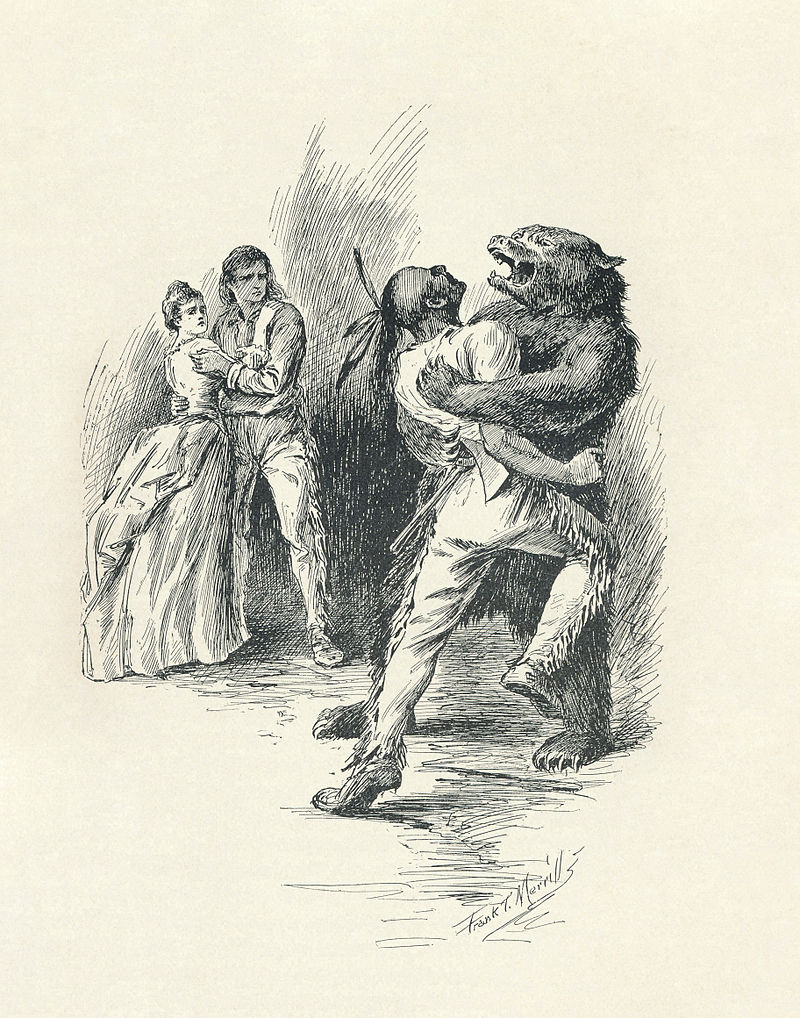
This is the book to give anyone who’s interested not just in ‘the rise of the West’ but how the whole concept of ‘the West’ emerged, for a fascinating description not just of the European empires but of all the empires across Eurasia – Ottoman, Persian, Moghul, Chinese and Japanese – and how history – at this level – consists of the endless juggling for power of these enduring power blocs, the endless and endlessly

complex history of empire-, state- and culture-building. (p.490)

And of course it all leads up to where we are today: a resurgent Russia flexing its muscles in Ukraine and Crimea; China wielding its vast economic power and brutally oppressing its colonial subjects in Tibet and Xinkiang, while buying land, resources and influence across Africa. And both Russia and China using social media and the internet in ways we don’t yet fully understand in order to undermine the West.

And Turkey, keen as its rulers of all colours have been since the Ottoman days, to keep the Kurds down. And Iran, as its rulers have done for a thousand years, continually seeking new ways to extend its influence around the Gulf, across Syria and to the Mediterranean, in eternal rivalry with the Arab world which, in our time, means Saudi Arabia, against whom Iran is fighting a proxy war in the Yemen.

Darwin’s books really drives home the way the faces and the ideologies may change, but the fundamental geopolitical realities endure, and with them the crudeness and brutality of the tools each empire employs.

If you let ‘morality’, especially modern woke morality, interfere with your analysis of this level of geopolitics, you will understand nothing. At this level it always has and always will be about power and influence, dominating trade and ensuring raw resources, and behind it all the never-ending quest for ‘security’.

At this level, it isn’t about following narrow, English notions of morality. Getting hung up on that only gets in the way of grasping the utterly amoral forces at play everywhere in the world today, just as they’ve always been.

Darwin stands up for intelligence and insight, for careful analysis and, above all, for a realistic grasp of human nature and human society – deeply, profoundly flawed and sometimes pitiful and wretched though both routinely are. He takes an adult view. It is absolutely thrilling and a privilege to be at his side as he explains and analysis this enormous history with such confidence and with so many brilliant ideas and insights.


Related reviews

Exhibitions

History

Imperial fiction

American Revolutions: A Continental History 1750 to 1804 by Alan Taylor (2016)

The picture which you have drawn, & the accts which are published, of the commotions & temper of numerous bodies in the Eastern States, are equally to be lamented and deprecated. They exhibit a melancholy proof of what our transatlantic foe have predicted; and of another thing perhaps, which is still more to be regretted, and is yet more unaccountable; that mankind left to themselves are unfit for their own government.
(George Washington letter to Henry Lee, 31 October 1786)

Debunking myths

In his blurb on the back of American Revolutions, historian Eric Foner makes the Big Point that it was during the Cold War that a particular version of American history was defined and taught across America’s schools, a version which made the American revolution an exception, distinct and different from the later French and Russian revolutions – by contrast with their chaos and violence the American Revolution was portrayed as ‘good, orderly, restrained and successful’ (p.3), a squeaky-clean Disney version of history designed to underpin America’s claim to an Exceptional Destiny, to being a beacon of reason and light, the leader of the free world.

In this version, whereas they (the French and Russian revolts) had been led by radical ideologues and resulted in appallingly violence, the American Revolution was fought by gentleman-farmers who just happened to be wise and benevolent philosophers in their spare time. They rallied the whole nation behind them with ringing declarations of human rights, to combat a corrupt and greedy British Empire.

‘We hold these truths to be self-evident: that all men are created equal; that they are endowed by their Creator with certain unalienable rights; that among these are life, liberty, and the pursuit of happiness.’
(Second sentence of the 1776 Declaration of Independence)

Taylor’s history sets out to blow the Disney version of American history sky high in any number of ways.

For a start his text sets the American War of Independence in a far broader time period, and much wider geographical frame of reference, than is traditional.

But it is the core American myths and legends about the heroic men who left their simple life as farmers to stand up to British tyranny, to defy British demands for outrageous taxes, and to forge a new nation out of the thirteen disparate colonies, which take a colossal battering.

Not only is the reality neither as simple nor as high-minded as that, but Taylor regularly takes the reader’s breath away with the blunt, matter-of-fact way in which he debunks so many myths, so comprehensively.

A Series of Unfortunate Events

The dates Taylor endstops his account with – 1750 and 1804 – sound fairly innocent and anodyne, until you realise that this period covers:

  • the build-up, course and outcome of the Seven Years War (1756 to 1763)
  • the slow, incendiary build-up to the War of Independence (1775 to 1783) with its bloody, anarchic eight year duration – during which it metastasised into a world war involving Britain against France, Spain and Holland
  • and, the period I found most interesting, the aftermath of the American War of Independence – 1783 to 1804 – during which the newly liberated ‘Patriots’ struggled with
    • a major economic depression
    • a huge increase in public and private indebtedness and the taxes required to pay them off
    • violent (riots, lynchings) disagreements about how to pull the new nation together

Taylor’s account of the creation of the American Constitution is as riveting as it is eye-opening. I had no idea that the chaos, confusion and violently different goals of post-war Americans led many eminent figures (Adams, Washington, Jefferson) to worry that, following ‘victory’ in the war of independence, there might be a civil war between the southern slave-owning states and the northern anti-slave states.

It is a little staggering to realise that the seeds of the great Civil War (1861 to 1865) were evident, and were a real threat, in the 1780s. The question then becomes not ‘Why did the Civil War break out in 1861?’ but ‘How did the Americans manage to delay the inevitable Civil War for so long?’

Such was the suspicion and hatred between the victorious states and their various political leaders that many commentators feared that the new nation might end up fragmented between the European empires which still surrounded it (Britain in the north [Canada], France in the west, Spain in the south).

And – mind-bogglingly – Taylor quotes many who thought that the only way to restore order and deference to authority (as opposed to jostling anarchy) was a return to a monarchy. To institute an American royal family!

For not only was there a division between slave-owning south and slave-free north, but, throughout the thirteen states, huge conflict between those who represented money and property and wanted a strong central government to defend them (who came in time to be called the ‘Federalists’) and those who wanted only a weak central government, and power to remain with the thirteen states, who became known as ‘Republicans’.

The Republicans felt keeping power close to the states ensured a better democracy, each state knowing its own special interests best and its leaders being accountable to an electorate who knew them best.

Taylor’s account of the lengthy debates among the fifty or so representatives from each state who met in Philadelphia in 1787 to create a new constitution is among the most interesting things I’ve ever read.

a) Because if you’re interested in politics, his explanation of the numerous compromises that had to be made to please various factions is a real eye-opener about the realities of power and power-brokering.
b) Because the constitution has remained the subject of intense debate and conflicting interpretation right down to the present day, invoked all sides in the constitutional battles raging around President Trump.

It is really eye-opening to realise that the American Constitution grew out of tumultuous and vituperative disagreement among men so incensed against each other that key players in the framing (Jefferson, John Adams, James Madison, Alexander Hamilton) often despaired of reaching any agreement.

In fact I was reminded, as I read Taylor’s clinical account of the Americans’ ferocious squabbles, of the Magna Carta of England, signed in 1215, which was also not, as most people think, some high-minded declaration of human rights, but a peace treaty, the minimum requirements the barons demanded from dictatorial King John. It also came at the end of a ruinous war and was an attempt to reconcile warring parties, and so has much in common with the American Constitution.

The delegates came to Philadelphia seeking a peace pact to avert civil wars within the fragile union, but their rancour seemed more likely to hasten that bloody collapse. (p.378)

In Taylor’s account the American constitution is just such a compromise, designed to heal rifts and bring together fiercely opposed factions, namely:

  • the slave-based south and slave-free north (in 1780 slaves comprised less than 4% of the northern population compared to 40% of the south)
  • believers that only a strong federal government could hold the ramshackle union together as opposed to believers that only strong independent states guaranteed liberty
  • and laid across these rifts a third one, a class conflict between supporters of the rural interest – of farmers and settlers who had been screwed by the Depression which followed the war and wanted a fairer distribution of land and wealth – and the well-educated, urban elite who owned big plantations, or were lawyers and bankers who made their money from big landowners and their wealth

The drafting was a long and acrimonious process which is absolutely fascinating to read about.

The Founding Fathers of America, from top left clockwise: Benjamin Franklin, George Washington, John Adams, John Jay, Alexander Hamilton, James Madison, Thomas Jefferson

The Founding Fathers of America, from top left clockwise: Benjamin Franklin, George Washington, John Adams, John Jay, Alexander Hamilton, James Madison, Thomas Jefferson

After months of horse-trading final agreement on a text was followed by even more trouble when the framers tried to get it ratified by the thirteen states, some of whom flatly refused.

Taylor brings out the importance of the control of the media, the press and the existence of good, well-educated writers and speakers on the Federalist side, which loaded the scales for in their favour, as opposed to illiterate and badly organised opposition from poor farmers and settlers who lived a thousand miles away from the urban centres of power.

This political and rhetorical power helped most of the states ratify the thing, and the ratifiers and drafters then were able to coerce the last few holdouts, like little Rhode Island, until they too capitulated.

It’s a thrilling read which completely alters your view about the origins of the United States and, on almost every page, sheds light on the origins of the economic, political and social problems which it faces to this day.

Americans often romanticise the founders of the nation as united and resolute and then present them as a rebuke to our current political divisions. Pundits insist that Americans should return to the ideal vision set by the founders. That begs the question, however, which founders and what vision? Far from being united they fought over what the revolution meant… Instead of offering a single, cohesive, and enduring plan, the diverse founders generated contradictions that continue to divide Americans. (p.434)

Myth-busting

The American revolutionaries were simple farmers

Well, they certainly derived their money from the land, but both George Washington and Thomas Jefferson were masters of large estates worked, of course, by slaves. Washington had a very keen eye for a bargain and was an accomplished land speculator. He was one of the Virginia landowners angered by the British refusal in the 1770s to allow enterprising colonists (i.e. land speculators) to expand westwards into Indian territory.

The war was fought by patriots

Taylor emphasises what John Ferling’s book had already made clear to me, that after the first flush of revolutionary fervour in 1775 and 1776, as the war of independence ground on, all the Americans who could manage to do so, evaded military service and conscription by paying to have someone poorer replace them. By 1788 the Continental Army consisted almost entirely of ‘apprentices, transients, beggars, drunks, slaves, and indentured immigrants’ (p.195) All those gentleman farmers which the legends talk about, had skedaddled back to the safety of their farms.

American greed

Nobody made noble sacrifices. All the Yanks who possibly could, bought their way out of military service. The officer class fought like ferrets in a sack for promotion and for more money. The issue of pensions for officers became such an issue that significant numbers of officers quit the services, or organised strikes while the war was still in progress, so that Congress was eventually forced to promise all officers five-year pensions.

Government support

The British took better care of their soldiers than the Americans took of theirs. Congress could never raise adequate money to feed or clothe their own troops, and had to rely on massive loans from France to continue the war. In the depths of winter 1777, while his Patriot army was dispersed in winter quarters around Pennsylvania – in the freezing snow, often without tents or even blankets to huddle under, without food and without boots or shoes – Washington was disgusted to visit Philadelphia and discover it a city of fashionable balls and feasts and revelries celebrated by an urban élite dressed up in the latest fashions from London and eating fancy French delicacies.

American soldiers making the most of the appalling conditions at Washington's retreat at Valley Forge in the winter of 1777-8

American soldiers making the most of the appalling conditions at Washington’s retreat at Valley Forge in the winter of 1777 to 1778

There was, in other words, as Ferling’s book also makes clear, almost no solidarity between the colonial rich and the poorest of the colonial poor who they conscripted and sent off to be blown up and bayoneted to death in the scores of inconclusive but brutal military encounters which made up the ‘revolutionary war’.

American ‘liberty’ always tainted by slavery

Any slave who could make it to British lines was promised their freedom. Many freed slaves fought for British and a lucky few chose to sail to Britain when ships were evacuating or fleeing American attacks (an unlucky few ending up in Canada, where they were completely unprepared for the freezing weather).

Thus, to many rich Americans, especially in the middle and southern states where slavery was economically vital, the British represented a threat to slavery and, very simply, to their wealth. Whenever any American of the period writes about ‘freedom’, the entire concept, in American mouths, is intimately linked with – and hopelessly compromised by – the enslavement of about half a million Africans, (a fifth of the 1770s population of 2.5 million).

An American slave

American slaves

American ‘freedom’

British politicians and propagandists spotted this straight away and Taylor has a wry smile on his lips as he quotes a steady stream of British politicians and propagandists pointing out the wretched hypocrisy of white American men bickering from morning to night about the precise definition of ‘liberty’, while keeping a fifth of the population of America in chains – and all the while hell-bent on breaking through the barrier of the Appalachian Mountains to the west in order to seize and steal Indian land.

The Indians

It was news to me that one of the complaints that enterprising Americans had in the 1760s against the British authorities was that the latter tried to protect the Indians by limiting the colonists’ right to seize and trade land west of the Appalachian mountain chain, in the vast valleys of the river Ohio and Mississippi.

In 1774 the British passed the Quebec Act, designed to bring order and consistency to their rule in Canada. One of its many provisions was to extend Crown control over a huge swathe of land south of the Great Lakes – southern Ontario, Illinois, Indiana, Michigan, Ohio, Wisconsin, and parts of Minnesota – areas which American land speculators considered theirs to buy, develop and sell on (at immense profit).

Thus the ‘freedom’ which the Patriots proclaimed was the freedom to continue exploiting black slaves and to expand westwards and conquer the native Americans.

Punishing opponents

With typically unanswerable bluntness, Taylor declares that: ‘Revolutions breed civil wars’. The Patriots, utterly convinced of their own rectitude, couldn’t credit conservatives and Loyalists (who wanted to remain in the British Empire) with sensible arguments or ideas; they thought they must be brainwashed, blinded or – worse – bribed into opposing the cause of ‘Truth and Virtue’.

It is striking that 250 years ago ‘progressives’ displayed the same intolerant mind-set that they show today. Anybody who opposes the call for ‘revolution’ cannot be someone with a sensible or cautious approach; they must be a traitor, an outcast, a non-person.

Thus a recurrent theme in the history of the American Revolution is the whipping-up of mobs to attack and burn the houses of anyone who opposed the Patriotic line (compare and contrast the not-very-different mob rule in the French and Russian revolutions).

Naming and shaming and tarring and feathering

Hence the extensive examples Taylor gives of the way Patriot communities sought out British governors or anyone else in the British power structure who didn’t have the sense to scarper as soon hostilities broke out.

Anybody who collaborated or expressed ongoing loyalty to King George III, or was just too slow to respond enthusiastically to the latest Patriot declarations, risked being rounded up by a vengeful mob, stripped naked, having boiling tar (boiling, so it melted their skin) poured over them, feathers sprinkled onto the cooling tar, then placed on a beam of wood and paraded round town.

Some courts had Loyalists branded on the face or had their ears cut off, just so everyone could see who ‘the enemy’ was.

So much for the American revolution being some kind of ‘exception’ to the notion that revolutions breed civil wars and civil violence. And Taylor shows how, once established as a valid way of expressing political views and uniting communities, mob attacks, lynchings, the tarring and feathering of opponents, continued  long after the cessation of the War of Independence, well into the era of disputes about the Constitution and beyond.

Lynching a Loyalist, 1773

Lynching a Loyalist, 1773. Note the Liberty Tree, in American mythology a symbol of freedom but also handy for hanging dissidents from

The civilian violence engendered by the War of Independence established the kind of raucous and aggressively violent tone of public debate which visitors like Dickens and Trollope were so surprised by 50 years later – with lynchings, particular, going on to have a long career in the southern slave-owning states until well into the twentieth century.

Taylor’s style and approach

Taylor’s style is crisp, blunt and forthright.

  • Rendered arrogant by their larger population, British colonists mistreated their Indian neighbours, and colonial juries would rarely convict settlers for murdering natives. (p.40)
  • [Benjamin Franklin argued for toleration of people with different coloured skin.] Most colonists rejected his logic, preferring their racism. (p.60)
  • [The framers of the Constitution] wanted to redesign republican governments to weaken the many and empower the few. (p.371)

I’ve just finished reading John Ferling’s epic account of the American War of Independence, which deploys a leisurely, poetic prose style, and lengthy biographical sketches of key politicians and military leaders, to seek to understand the character, psychology and motivation of the men who made the big decisions and fought the battles of the Revolutionary War.

Taylor’s prose style is the opposite of rich and poetic. Pithy and to the point, many passages sound as if they’ve barely been expanded from a lecturer’s PowerPoint presentation.

  • The Glorious Revolution plunged Britain into prolonged warfare with the French Empire.
  • After 1700, British America imported 1,500,000 slaves: more than four times the number of white immigrants. (p.20)
  • The culture taught women to define their lives by motherhood and domesticity. (p.27)
  • Natives exploited the competition between rival empires to procure presents from both. (p.41)

Individuals – and entire cultures – are briskly dismissed for not sharing our modern enlightened views about race and gender, or for just generally being bad. Taylor takes no prisoners on either side.

  • [British commissioner for Indians] Johnson acted selfishly and cynically
  • In the name of liberty, Patriots suppressed free speech, broke into private mail, and terrorised their critics. (p.108)

His factual statements are sweeping and nervelessly confident.

  • Patriot women felt pride in their enhanced political awareness. (p.112)
  • British critics cast Americans as canting hypocrites who preached liberty while practicing slavery. (p.116)

Moderation, doubt, qualifications, don’t seem to exist in Taylor’s mind. Softening words which might qualify his judgments, words like ‘some’, ‘many’, ‘most’, aren’t in his vocabulary.

  • Eighteenth-century Britons celebrated their mixed constitution as the surest foundation for liberty in history and on earth. (p.91)

Really? Absolutely every Briton who lived between 1700 and 1800 believed this? There were no British critics of the British constitution at all in that entire hundred year period?

No. There is no room for equivocation, doubt or shades of grey in Taylor’s brisk, dismissive prose.

Taylor’s revolutionary aim

But then Taylor’s aim is not to equivocate but to overthrow accepted opinion in its entirety, to subvert reputations, to make us completely and utterly rethink what we thought we knew about the origins, course and meaning of the American War of Independence. (I say us: his book is mostly, one imagines, aimed at an American audience – Taylor is a professor of history at Virginia University, and this book is published by an American publisher.)

The sub-title, A continental history, is the key. As in the prequel to this book, the stunningly eye-opening American Colonies, Taylor’s avowed aim is not just to broaden our thinking about early American history, but to smash the bonds which have held it in prison for generations.

For two hundred years research, thinking and writing about America have been conducted in terms of white European men, focusing on the ‘Pilgrim Fathers’ who settled New England, and following a lineage of Protestant dissent through to the ‘Founding Fathers’, who created the noble Constitution.

Taylor’s books aim to show this tradition up for the travesty it is, and to utterly transform it.

The earlier book, American Colonies, starts with the first people to cross the Barents Strait from Siberia around 15,000 years ago, and describes how they spread across the continent, developing differing cultures to cope with the huge variation of ecosystem they encountered, until the southernmost tip of Tierra del Fuego was reached some 8,000 years ago.

He then describes how the Norse settled Greenland and then reached Newfoundland around 1,000 AD.

Then Columbus came in 1492, bringing with him the brutal system of slave plantations which the Spanish had perfected on the Canary Islands.

The conquistadors first colonised the West Indian islands, then attacked mainland Mexico, destroying empires and enslaving peoples wherever they went. The Spanish explored up into Florida, where they spread diseases which ravaged the civilisations of the Mississippi basin, and also sent explorers and Christian missionaries across the arid deserts of New Mexico and up the California coast.

In other words, an absolutely vast amount of human activity had been taking place on the American continent for millennia before the English Pilgrim Fathers ever arrived. American history did not start with the Pilgrim Fathers.

And to think so is to submit, acquiesce and accept the very narrow, blinkered myth of America as a land of high-minded white Protestant farmers – that myth of ‘American exceptionalism’ which Eric Foner claims was fostered and crystallised during the Cold War.

Even once the white English settlers arrive in New England, they remain only a part, a tiny fragment, of the vastly wider network of human activities which comprise American history. It is impossible to understand how American developed unless you grasp:

Geography

How the different geography and ecosystems of the Atlantic coast determined what could be grown in each region and therefore what kind of social systems developed there. Thus the West Indies turned out to be ideal for growing sugar, which requires enormous amount of physical effort and so it was these islands that saw the rise of vast plantations worked by enormous workforces of slaves brought over from Africa, and the rise of a relatively small network of rich plantation owners.

Sugar grew less well in the land surrounding the big Chesapeake Bay (which became Virginia) but tobacco did. Again requiring intensive labour, and so big plantations of enslaved Africans.

But from New York northwards the climate was more like Europe and so farms for livestock or crops were more suitable, which tended to remain smaller, mostly family-run affairs. Hence there was never any need for slaves in the north and, though there were some, the slave population was always small.

The Atlantic economy

The intricacy of the Atlantic economy, whereby British ships bought slaves on the west African coast, shipped them to the Indies and Virginia, picked up sugar, rum and tobacco, carried these north to New England where they picked up grain and raw materials, and then sailed back to Britain, or swapped them for foodstuffs and linen which could also be taken across the sea to Britain, or sailed back south to feed the ever-hungry slave populations.

All parts of this triangle of trade became wealthy, and Taylor is brilliant at conveying the unremitting interlockedness of so many different peoples and cultures, towns and nations, agricultures and technologies, all around the Atlantic coastline.

Background to the American Revolution

This – the gist of American Colonies – is all recapped at speed in the first 50 or so pages of American Revolutions, the context for the series of conflicts between Britain and France which took place in Europe and around the world throughout the 18th century: to be precise, from 1689 to 1763.

The last of these conflicts took place from 1756 to 1763. The British called it the Seven Years War, although the colonists called it the French and Indian War, as that was who they were fighting.

The British won the Seven Years War, making massive gains in India, and in north America, seizing all of Canada from the French (along with some smaller West Indian islands and Louisiana).

But it had been a costly war, and when Britain began to raise taxes on the colonists to pay for the British soldiery and the new forts built to protect them, the colonists balked at the new taxes.

At least, that’s the conventional story – but, as usual, Taylor goes way beyond this, to describe another, previously overlooked and far less creditable source of conflict – the colonists’ relentless thirst for new land which brought them into conflict with the Indians, and with the British Imperial authorities who had pledged to protect the Indians and limit the colonists’ westward expansion.

In other words, there was more to the American rebellion than the high-minded rhetoric about taxation and representation would suggest. Characteristically, Taylor points out that Benjamin Franklin who represented himself as an honest man of simple tastes, was himself involved in some breath-taking land speculations just before war broke out. Taylor also chooses to debunk Daniel Boone – for generations painted as a true-hearted son of the soil – revealing that he also was in it for the money.

A veteran hunter, Boone knew the best routes over the mountains to the finest lands in Kentucky. Folklore casts Boone as a nature-loving refugee from settled civilisation; in fact, he helped land speculators fill the forest with farmers. (p.81)

Thus Taylor proceeds, in his short sharp prose larded with unforgiving judgements, as detached from his subject as a Martian examining an alien species.

Patronising

Sometimes Taylor’s explanations seem patronising – as when he explains that a society based on deference meant that the ‘common’ people were expected to defer to their ‘betters’ – as if these were ideas nobody had heard of till his book.

Similarly, he explains that colonial high society was based on status, part of which was being seen to wear the latest fashions from London – as if the rich trying to outdo each other was a practice unheard of anywhere else, at any other period.

Elsewhere, he explains that ‘Christians’ spurned the rewards of this world because they believed in a place called ‘heaven’ where all their good behaviour would be rewarded for ‘eternity’ – as if nobody had ever heard of these ideas before.

In fact, he often sounds precisely like a politically correct American university professor lecturing 18 year-old American students who appear to have no idea what an ‘aristocracy’ or ‘status symbols’ or ‘deference’ are, what Christianity or any other belief system is, until they step into his lecture hall. He takes absolutely no prior knowledge for granted. Sometimes it grates on those of us who do know what a society based on deference means, and have read a bit about Christianity.

Clean slate

But then this is all part of his strategy – which is to step right back from the period, from all the well-established narratives, legends and myths, and from the blinkered traditions of seeing the story only in terms of heroic, white, male Patriots striving for ‘liberty’ – to step right back, to reconsider all the sources, and to tell what actually happened, across the entire continent, to all of its inhabitants – not just to the handful of rich, white men who have usually dominated the story, but to all the different Indian nations, to the half of the population which was female, to the enslaved blacks, free blacks, and even black leaders, and also to the other European nations – specifically France and Spain – who are generally kept out of the story.

American Revolutions is a sweeping, brisk and often blunt account which debunks every conceivable legend about the origins of the United States, giving clear-eyed, unillusioned portraits of all the so-called Founding Fathers, setting all the events in the widest possible economic, social and political context right across the continent to include considerations of the Spanish rulers and French generals who played a role in shaping the new nation even after the War of Independence was concluded – of the Indians who shaped policy throughout the period, fighting on one side then the other – and of the important role played by slaves, primarily as forced labour, but also as freedmen fighting for one side or the other and, periodically, rising up in slave rebellions to seize ‘liberty’ for themselves…

The Haitian rebellion

To give an example, Taylor describes the slave rebellion which started in 1791 in the French colony of Haiti. This uprising forced the French revolutionary government to decoy troops away from the European front to sail half way round the world to put down the revolt.

But the French troops were badly mauled by the black freedom fighters over a series of engagements which dragged on for a decade, while governments came and went in Paris. Eventually, having lost over half their forces to disease and finding it impossible to stamp out the rebels guerrilla tactics, the French abandoned the effort to recapture Haiti in 1803.

Taylor then produces a great coup d’imagination by showing that it was this experience of having his forces pinned down and worn down in the Americas, which prompted the new French ruler, Napoleon, to also dispense with his other territory in the continent, the vast territory known as Louisiana, which he knew he would never have the resources, money or manpower to defend. So Napoleon sold it to President Jefferson in 1804, doubling the size of America at a stroke.

In traditional tellings, this development comes from left field, as an unexpected bonus. But it is the main purpose of Taylor’s account to present a fully integrated history of early America and all its peoples, across the entire region, showing how America was never a land apart, but always intimately linked to the three major European empires and the extraordinarily tangled network of trade in raw materials, goods and people which criss-crossed the Atlantic Ocean in the centuries leading up to Independence.

So that Taylor presents the wide perspective which allows us to understand that it was the slave rebellion in Haiti which persuaded Napoleon to sell Louisiana to the Americans – to put it another way, it was the efforts of black rebel slaves which enabled America to more than double its territory in 1804.

Again and again Taylor’s broad views and panoramic understanding allows him to shed drastic, and exciting, new light on familiar events.

America is not exceptional

Above all American Revolutions makes you realise that – as per Foner’s insight quoted at the start of this review – America is just another country like any other – and that even in its founding period it was characterised by the same kind of poverty, exploitation, corruption, hypocrisy and violence as was to be found in the very European nations it claimed to be superior to.

Except that it also carried the additional burden of bearing, from birth, the twin Original Sins of

  1. the mass enslavement of black Africans
  2. the calculated wiping-out of the native American peoples

Sins which will dog American politics and culture for as long as there is an America.


Related links

More eighteenth century reviews

The Last of the Mohicans by James Fenimore Cooper (1826)

The Indian [Magua] laughed tauntingly, as he held up his reeking hand, and answered: “It is red, but it comes from white veins!”
“Monster! there is blood, oceans of blood, upon thy soul; thy spirit has moved this scene.” [said Cora]
“Magua is a great chief!” returned the exulting savage, “will the dark-hair go to his tribe?”
“Never! strike if thou wilt, and complete thy revenge.” He hesitated a moment, and then catching the light and senseless form of Alice in his arms, the subtle Indian moved swiftly across the plain toward the woods.
“Hold!” shrieked Cora, following wildly on his footsteps; “release the child! wretch! what is’t you do?” (Chapter 17)

The Last of The Mohicans is the second in James Fenimore Cooper’s series of ‘Leatherstocking’ novels, so called because they all feature the tall, honest frontiersman and friend of the Indians, Nathaniel ‘Natty’ Bumppo, also known as Leatherstocking, Hawkeye and the Deerslayer, among other nicknames.

The first in the series, The Pioneers, is an essentially comic novel set in a small settler village in upstate New York at Christmas 1793 and then through the year of 1794. In it we meet a cross-section of the settlement’s comic characters and Leatherstocking, the wizened 70-year-old who lives apart from society in a hut in the woods with his devoted Indian friend, Chingachgook, now known as ‘Indian John’, also 70 or so years old and feeling his age. At the end of The Pioneers Chingachgook dies and Leatherstocking ups sticks and heads west into the wilderness.

In this review I will give:

  • a detailed account of the historical background to the novel
  •  a summary of the plot, which also contains digressions about:
    • Cooper’s treatment of Native Americans
    • Cooper’s melodramatic style and use of comedy
The last of the Mohicans by N.C. Wyeth (1919)

The last of the Mohicans by N.C. Wyeth (1919)

Historical background

Last of the Mohicans takes us back forty years before The Pioneers, to the 1750s. It is a true ‘historical novel’ in the sense that it is set against actual historical events. As the 1750s opened the French possessed the territory they called ‘New France’, roughly all of present day Eastern Canada, centred on the long St Lawrence Waterway which penetrates the continent from the Atlantic at Newfoundland towards the Great Lakes. Along the St Lawrence they had built the towns of Quebec and Montreal.

The French lived mostly as hunters and traders and got on well with the Indians of the area. During the 1750s the French government of King Louis XV asked their military forces to penetrate into the area of the River Ohio with a view to connecting up to the Mississippi and the vast territories bordering the river as it flows south towards the Gulf of Mexico, the huge expanse the French called Louisiana.

The British owned the Thirteen Colonies which lined the Atlantic seaboard. These settlers were mostly farmers who had carved out great swathes of agricultural land, with the focal points of towns and even cities  – such as New York, Boston, Philadelphia, Baltimore – where goods were traded and the usual urban trades practised. The British regions were much more densely populated than the French, with a settled population of maybe 1 million compared to Canada’s 100,000. During the 1750s British settlers were pushing westwards and north from the seaboard and this brought them into regular contact with French forces – militias, settlers, allied Indians – in the woods of upstate New York.

The French claimed possession of Lake Champlain which runs north-south towards the Lawrence river; at its southern end, beyond narrow rapids, Champlain broadens out into a smaller lake the British named Lake George. At the north end of the lake the French built Fort Carillon, the southernmost limit of their official influence. At the southern tip of Lake George, the British built Fort William Henry. Fifteen or so miles south of the lake runs the River Hudson, the river which flows south to eventually form one side of Manhattan Island, New York, one of Britain’s main towns. At the nearest point of the river to the lake, the British built Fort Edward.

On 13 July 1755, a force of British regular soldiers, irregular colonial militia and friendly Indians, marching into the interior to attack a French fort called Fort Duquesne and led by General Braddock, was ambushed and massacred by French soldiers and Indians. From that moment on hostilities between the two countries intensified, with the French ordering their Indian allies to carry out savage attacks on isolated farmsteads, killing all the settlers unless they needed to carry off some of the women to become slaves.

Formal war between the two opposing forces’ national governments was only declared on 17 May 1756. This was to become known as the ‘Seven Years War’ and was fought not only in North America, but in the West Indies, India and in central Europe. In America it is known by historians as the ‘French and Indian Wars’, since these were the opponents of the British and the colonists.

It was a year before French forces decided to go on the offensive. In August 1757 the French General Louis-Joseph de Montcalm led a massive force of 6,200 regulars and militia and 1,800 allied Indians south from his base at Fort Carillon to besiege Fort William Henry. The fort’s British (actually Scottish) commander, Lieutenant Colonel George Munro, had some 2,500 regulars and militia under his command. As the fort was surrounded, he sent a messenger to Fort Edward, a day’s march south, to ask Brigadier General Daniel Webb for reinforcements.

It is at this point that the narrative of Last of the Mohicans begins.

Major Heyward, David Gamut, Cora and Alice taken prisoner by the Indians after the fight at Glenn's Falls, illustration by N.C. Wyeth

Major Heyward (in redcoat), Cora and Alice and David Gamut (in the front of the canoe) after they’ve been taken prisoner by the Indians after the fight at Glenn’s Falls. Illustration by N.C. Wyeth (1919)

The plot

Though there is a lot of incident, the basic idea of this 400-page novel is Maidens in Peril. Bluff old Colonel Munro is made to have two nubile daughters, Alice and Cora, and through all the twists and turns of the plot, Cooper contrives to put them both in harm’s way again and again, in order to thrill, excite and scarify the reader.

Since the main danger to the maidens comes from ‘savage’ Indians, the threat combines the basic male one against any woman i.e. assault and rape – with the added ‘horror’ of miscegenation and unspeakable degradation by ‘primitives’. It is like a silent black-and-white movie, where the baddy ties the blonde heroine to the railroad tracks and the camera cuts away to the train steaming towards the helpless maiden. ‘Oh my God! Help help the poor woman!!’ More or less that scene occurs again and again, as Cooper milks the basic scenario for all he can.

The two sisters start the story at Fort Edward. Colonel Munro has requested (rather foolishly) that they be sent to him at Fort William Henry, so they set off north accompanied by dashing young Major Heyward of the British army. They are accompanied by a comic character, the gangling David Gamut, who is a caricature of a psalm-singing New England Puritan. (The first thing any adaptation of the book does, is lose this uncomfortable and not very effective comic figure.) They are guided by a fierce-looking Indian named Magua, known to the French as ‘le Renard Subtil’ i.e the Sly Fox. Magua recommends they travel by back paths through the woods and Heyward slowly begins to suspect he is taking them into danger…

The treacherous Magua leading Major Heyward, Cora and Alice through the forest. Illustration by Karl Mühlmeister (1920)

The treacherous Magua leading Major Heyward, Cora and Alice through the forest. Illustration by Karl Mühlmeister (1920)

Suddenly, by complete accident, the group comes to a stream where they encounter the hero of the novel, the tall rugged frontiersman, Nathaniel ‘Natty’ Bumppo, known throughout this book as Hawkeye, but who we know from The Pioneers as Leatherstocking. He is in the company of a Mohican Indian, Chingachgook, and his son, Uncas. After Hawkeye confronts him, Magua flees into the forest and Hawkeye takes over charge of the party.

Native Americans 

The nature of the Native Americans, their alliances and enmities, as well as many aspects of their culture(s), are dwelt on at length throughout the book, but remain quite confusing; in fact, a reading of any essay about the book quickly reveals that Cooper was wrong about many of his Indian facts. For a start, it is striking to learn that he even gets the name of the key tribe wrong: there were no ‘Mohicans’; there was a Mohawk tribe, but Cooper is presumably referring to the tribe usually called the ‘Mohegans’. (The Oxford University Press edition I read includes a 25-page essay about the novel’s historical context which seeks to unravel many of Cooper’s confusions.)

For the fictional purposes of the novel, Chingachgook and Uncas are ‘Mohicans’, which is a tribe of the larger Delaware ‘nation’. The Delaware nation is perceived as good, although, on closer examination, they seem to be divided among themselves. Broadly, though, the Delawares are allied to the British. The opponents of the Delaware are variously referred to as the Iroquois (a French term covering the nations which inhabited most of New York state), which Cooper (inaccurately) makes include tribes he calls the Mingos, the Mohawks or Maquas, as well as the quite separate Hurons. In the 1670s the Delaware had been defeated by the aggressive and well-organised Iroquois and degenerated to become a serving nation. This explains why Uncas and Chingachgooks are routinely insulted as ‘women’ by boastful Magua, one of the commonest insults the Indians use among themselves.

Whereas the Mohicans are portrayed as good savages i.e noble, dignified, courteous and considerate of women (the manly young Uncas developing quite a romantic attachment for the maidenly young Cora), their opponents, epitomised by the rapacious Magua, are bad savages, violent, careless of death, happy to slaughter children or drag women off to their camps to become slave squaws.

1. The notes to the OUP edition tell us that Cooper took a lot of his knowledge about Indians from a contemporary book by the Reverend John Heckewelder, An Account of the History, Manners and Customs of the Indian Nations published in 1819, which was misleadingly favourable to the Delawares – a bias reflected throughout the novel and in later books in the series.

2. But Cooper added his own misunderstandings about names to Heckwelder’s distortions and it requires quite a lot of study to disentangle the confusions he added. 3. The OUP essay then adds another layer of complexity by pointing out that Cooper was projecting back into the 1750s the allegiances of Indian tribes during the American Revolutionary War, over twenty years later (1777-83). In that time the situation had changed a lot and the Indian alliances (i.e. who the British as friend and foe) were complex and different from those of the Seven Years War. 4. A fourth layer is added because Cooper is writing half a century or more after both those events and, in many ways, the novel uses Indian characters and situations to reflect the interest and issues of his own time, the 1820s, which was itself deeply mired in controversy about how the young American government should handle the surviving Indian tribes.

Cooper’s Indian novels have at least four levels of knowledge, nomenclature and interpretation laid over each other in the text, quite apart from basic errors of fact. So unravelling the ‘true’ historical situation of the Native Americans from Cooper’s often deliberately vague or plain wrong depictions is tricky and probably pointless. For the purposes of enjoying the book as an adventure story, we really only need to know that Uncas and Chingachgook are Mohicans and (along with most of the Delawares) are good, while Magua and his Huron tribe are bad.

Glens Falls

Realising the woods are full of Magua’s allies, Hawkeye leads the party to a complex of caves and islands in the middle of spectacular waterfalls on the Hudson river, Glen’s Falls (an actual place you can still visit). Here the party hide out but are discovered by Magua and his fellow Indians who besiege our heroes and the terrified maidens, who are cowering in the back of the cave. There’s an extended shootout but when our guys realise they are surrounded, Hawkeye is reluctantly persuaded to take his two Mohican friends, slip into the river and swim away to safety, leaving Heyward, Gamut and the maidens at the mercy of the Hurons.

Magua and his Indians find the foursome hiding in their cave, take them in a canoe downriver and then by horseback across country for miles towards a hilltop. Here Magua explains his plans, which is to torture them all to death. He explains the reason for his unflinching malevolence is that, although he once was once one of the Indians allied to Colonel Munro, he allowed himself to get drunk and as punishment the Colonel order him to be publicly flogged. Now he has Munro’s daughters in his power and he is going to kill them and thus let the world know that he is a real man!

Appalled, Major Heyward bursts free of his bonds and begins fighting with the nearest Indian when – bang! a shot rings out and the savage falls dead. Hawkeye and his two Mohicans burst into the clearing shooting and swinging tomahawks, quickly despatching most of the savages until the fight concentrates on the two figures of Chingachgook and Magua rolling on the ground.

Fighting Indians by N.C. Wyeth

Magua and Chingachgook fighting, after Leatherstocking (standing) and Uncas (next to him) have come to the rescue of Major Heyward (in the redcoat) and the two ladies (not pictured). Illustration by N.C. Wyeth (1919)

Magua manages to wriggle free and throws himself off the edge of the small plateau they’re on, and bounds off into the woodland before the others can lift a rifle. Hawkeye now takes charge of the team and leads them by secret forest paths to a spooky and deserted homestead in a clearing. Once again, they have barely hidden themselves when, in the dead of night, Heyward, the Indians and Hawkeye hear Magua and the baddies creeping closer. Luckily – in a spectral and effective scene – the Hurons come across burial mounds of Indians who had died in an earlier battle for the building and they, superstitiously, retreat back into the forest.

Next morning Hawkeye leads the party safely north to Fort William Henry. It is, by this stage, completely surrounded by the French forces of General Montcalm, but Cooper conjures up a convenient mist which allows our heroes to evade the French patrols and enter the fort (though not without some exciting shouting and shooting in the dense fog). There is a tearful reunion between the craggy old Colonel and his two lassies.

Next day Heyward parleys with General Montcalm, portrayed as civilised and urbane. Montcalm shows a letter his scouts have intercepted, sent by Webb back at Fort Edward, saying he daren’t risk sending reinforcements against such a superior French force – in other words, Webb has abandoned Munro. There is nothing to be done: Munro himself comes out under a white flag to tender the surrender of the fort to his French adversary.

The massacre at Fort William Henry

There follows the centrepiece of the novel and one of the most notorious incidents of the French and Indian Wars, a true event which reverberates down the ages to our time. Montcalm generously allowed the British soldiers, American militia and Indian allies to leave the fort, with their flags and unloaded weapons. Among the 2,300 who surrendered were some 300 women and children. But Montcalm’s many Indian allies were only fighting for scalps i.e. honour and for plunder, not for obscure French strategic and geographical advantage. They didn’t understand the idea of surrender, let alone allowing the enemy to walk away with his guns.

On the morning when the British were due to leave the fort, the Indians first attacked the hospital full of British wounded, which was outside the fort, killing and scalping all its inhabitants. Then as the long column of surrendering and unarmed soldiers departed from the fort, menacing Indians moved in on either side until they began to intimidate, then attack the column. There are several eye-witness accounts that the first victim was a baby, plucked from its mother’s arms and then smashed against a rock, so the Indian could secure its brightly coloured blanket. At that point all hell broke loose and the Indians began a general massacre of the refugees. Some of the French soldiers intervened but not very effectively. When the Indians desisted, sated with scalps and booty, maybe 200 of the column had been murdered and scalped, and nearly 300 were taken away as hostages, only to be ransomed much later by the colonial authorities.

v

Montcalm trying to stop Native Americans from attacking British soldiers and civilians as they leave Fort William Henry. Wood engraving by Alfred Bobbett after a painting of Felix Octavius Carr Darley (late 19th century, and looking very much like an illustration of Dickens)

Cooper uses this atrocity as the focal point and axis of the novel. In the first half Hawkeye, Heyward, Gamut and the ladies are travelling (unwittingly) towards it and what they think is safety in numbers; in the second half they are fleeing the scene amid heightened dangers all around them, and are now very much on their own.

Conveniently, he has Hawkeye and the two Mohicans off scouting away from the fort when the surrender is signed and the defeated Brits exit to the fort to be massacred. This means the imaginative/emotional focus is on the defenceless maidens, Cora and Alice, cowering together amid the general mayhem. At which point Magua, like the devil himself, springs up before them, seizes young Cora and runs off with Alice in pursuit. As Hawkeye later points out:

“Ha! that rampaging devil again! there will never be an end of his loping till ‘killdeer’ has said a friendly word to him.” (Chapter 18)

‘Killdeer’ being Hawkeye’s name for his especially long rifle. Thus the most important result of the massacre at Fort William Henry, for the novel, is that Cora and Alice are abducted by the wicked Magua: they are a) spared from being murdered, but only b) to be threatened with a fate worse than death i.e. becoming slave squaws to a ‘savage beast’.

Melodrama

How many hundreds of thousand of narratives, in novels, plays, poems, magazines, short stories and movies, depend on the pretty, nubile young woman/women being held hostage by the baddy (and the more ‘primitive’, ‘savage’, base and cruel the baddy the better, whether they have black, red or yellow skins), preferably leering and leching over the pure, virginal body of the chaste, white woman, half of whose clothes have fallen off in the struggle!

Well, this is a classic early specimen of the genre. Almost as hard to take as the cheesy action, is the often very stagey, melodramatic, over-the-top tone & diction Cooper uses throughout the book and which rises to histrionic heights at the (frequent) moment of high emotion and jeopardy. As an example of the prose style, here are the maidens at a later point of the story, when they’ve been rescued from yet another fate-worse-than-death.

We shall not attempt to describe the gratitude to the Almighty Disposer of Events which glowed in the bosoms of the sisters, who were thus unexpectedly restored to life and to each other. Their thanksgivings were deep and silent; the offerings of their gentle spirits burning brightest and purest on the secret altars of their hearts; and their renovated and more earthly feelings exhibiting themselves in long and fervent though speechless caresses. As Alice rose from her knees, where she had sunk by the side of Cora, she threw herself on the bosom of the latter, and sobbed aloud the name of their aged father, while her soft, dove-like eyes, sparkled with the rays of hope.
“We are saved! we are saved!” she murmured; “to return to the arms of our dear, dear father, and his heart will not be broken with grief. And you, too, Cora, my sister, my more than sister, my mother; you, too, are spared. And Duncan,” she added, looking round upon the youth with a smile of ineffable innocence, “even our own brave and noble Duncan has escaped without a hurt.”
To these ardent and nearly innocent words Cora made no other answer than by straining the youthful speaker to her heart, as she bent over her in melting tenderness. The manhood of Heyward felt no shame in dropping tears over this spectacle of affectionate rapture; and Uncas stood, fresh and blood-stained from the combat, a calm, and, apparently, an unmoved looker-on, it is true, but with eyes that had already lost their fierceness, and were beaming with a sympathy that elevated him far above the intelligence, and advanced him probably centuries before, the practises of his nation. (Chapter 12)

In the introduction to the Oxford University Press edition, John McWilliams makes the point that Cooper’s subject matter and his style are often distinctly at odds. On the one hand, his style is sometimes so very high-falutin’ and sanctimonious, so crammed with expressions of piety and high-minded sentimentality, that it’s difficult to make out what’s actually happening. On other occasions he suddenly, out of nowhere, as it were, vividly describes the most brutal and bloody scenes. For example:

  • As our heroes sneak towards the fort they encounter an isolated French sentry: Heyward successfully speaks to him in French and the white men pass on but then they hear a groan and realise that Uncas has killed and scalped the sentry, unnecessarily – except by the ‘honour’ of his own Indian code.
  • After our heroes have massacred the Indians on the hillside as they were about to start torturing their captives, Hawkeye goes round each of the Indian bodies thrusting his knife deep into their chests, just to make sure.
  • Worst of all, is the sudden eruption in the generally gaseous prose of the all-too-vivid description of the baby being torn from its mother’s arms and having its head smashed to a pulp by the attacking Indian at the start of the massacre scene.

There is a permanent incongruity about this novel, between the would-be European civilised prose, and the backwoods brutality moments it depicts.

Something as effortful is going on with two other notable features of the text: 1. the extensive footnotes and 2. the epigraphs to each chapter.

Each chapter opens with a few lines quoted from Shakespeare or Pope or Byron or some other luminary of English Literature. It is hard to see what purpose these serve except to borrow their authority while at the same time flattering the reader, that they are keeping company with such high-toned classics.

Similarly, the text is studded with notes Cooper added to the 1831 edition of the book and all later editions include, footnotes which give distracting factual commentary on random aspects of the book. For example, in the middle of the gripping canoe chase across Lake George Cooper inserts a factual note describing the number and shape of lakes in New York State. Elsewhere he gives us paragraphs about the American mocking-bird, or explaining that the spot where our heroes rest to drink fresh springwater is now the location of the pleasant village of Ballston. And so on.

Cooper knows he is playing to a European readership, that for most of them his books are the only ones about America they will read, and so he is at pains both to raise the tone of his story – with literary references and the highest of high styles – as well as bolstering it, giving it extra kudos and a veneer of factual authority, with (generally irrelevant and distracting) footnotes.

Rescuing the maidens

Most of the second half of the novel consists of the attempts by the five men – Hawkeye, old Colonel Munro, Major Heyward, and the two Mohicans, Chingachgook and Uncas – to rescue the virginal white women from the clutches of the wicked Mingos or Hurons or whichever Magua is the leader of (the names change). A few days after the massacre, the five men return to the field of corpses and to the charred ruins of the fort (which had been torched then abandoned by the French, who set off back north to their base in Canada, mission accomplished). After Uncas kills a stray Huron Indian who was spying on them in the night, next morning the five set off by canoe up Lake George heading in the direction they think Magua will have taken. On the lake they are spotted by enemy Indians and an exciting canoe chase ensues.

Hawkeye takes a shot by N.C.Wyeth

Hawkeye shoots at pursuing Indians. Illustration by N.C.Wyeth (1919)

Our heroes get away, not least because Hawkeye shoots one of the pursuers. They beach the canoe and head for the main trail heading north to Canada. Here they pick up the trail of the Indians carrying Cora, Lucy and Gamut (displaying their ace Indian tracking skills) in scenes which allow Cooper to show off his understanding of the woodcraft of Native Americans.

Comedy in the Indian village

Heyward and Hawkeye come across what they think is an Indian in the woods, but then realise is only the innocent Gamut. He is looking out over a plain by a dammed lake, covered in habitations in and out of which objects are popping. Is it the Indian village? Nope; Hawkeye, Heyward and Gamut all realise at the same moment that it is a camp of beaver dens by a lake they’ve created. Comedy!

More seriously, Gamut brings Hawkeye and Heyward up to date: they are near Magua’s Indians’ camp; the Indians divided their captives, Cora being kept at the nearby Indian village, Alice being sent to a neighbouring tribe over the hills; Magua’s Indians have allowed Gamut to live, clothed him in Indian garb and let him roam free because they regard him as a sort of holy innocent because of his spirited singing of psalms.

Heyward decides on the spot to go and rescue Cora. He comes up with a cockamamie idea of getting himself painted up as an Indian medicine man, Hawkeye tries to talk him out of it, Heyward is adamant and so Chingachgook paints him with Indian paints. Then Heyward accompanies Gamut into the Indian village. This commences a long and intense description of an Indian village, complete with bawling children, intimidating elders, fiery warriors and wizened old squaws. Surprisingly, improbably, Heyward is accepted as a French doctor sent by their ‘father’, Montcalm, to treat the villagers.

Doubt about him is superseded, when Magua enters (as he regularly does whenever the novel needs a kick of adrenalin) with a captive, none other than Uncas, who has been lured into an ambush after a brief fight. Uncas is tried by the elders and condemned to be executed the next morning. In the general rowdiness surrounding his arrival, Heyward-as-medicine-man is shown up a hillside into a cave where a sick woman of the tribe is lying and told to cure her. The Indians leave. Gamut (who has accompanied him) now tells Heyward that Cora is lying in an adjacent cave. There is a tearful reunion. But he has barely clasped the panting maiden to his manly bosom before there is a tap on his shoulder and… It is Magua (again) laughing at catching him red-handed.

Except that (and this is a glaring example of Cooper’s odd use of comedy; in the overwhelmingly comic novel The Pioneers it was at home but here, in an adventure story, it often rings very strangely – no wonder the whole Gamut character and these kinds of scenes were dropped from the movie) Heyward and the Indian who took him there were both followed into the cave by a bear. A bear. Or, as it turns out, a man wearing a bear outfit. For Magua has no sooner confronted Heyward than the ‘bear’ taps him on the shoulder and then grapples him in an arm lock while the astonished Heyward leaps into action and ties Magua up with twenty types of cord and binding. The ‘bear’ takes its false head off to reveal… Hawkeye! He came across the Indians’ medicine man climbing into this bear outfit ready for some Indian ceremony, at a remote part of the village, and knocked him out and stole the costume. Handy!

Hawkeye, dressed as a bear, wrestles with Magua, while Heyward and Cora look on. 1896 illustration by F.T. Merrill

Hawkeye, dressed as a bear, wrestles with Magua, while Major Heyward and Cora look on. 1896 illustration by F.T. Merrill

Heyward picks up the swooning Cora and they and the bear-man make their way outside. Hawkeye gives them directions to a neutral Indian village over the hill, where they’ll be safe, and then returns to the village to rescue Uncas. He is still wearing his bear costume. He collects Gamut from his teepee, and together they approach the lodge where Uncas is being kept.

How do you help a captive of the bad guys to escape? This is a problem which has been presented & solved in thousands and thousands of thrillers, comics, movies and TV shows. Cooper’s solution is you get the Indian guards to wait outside by persuading them that the medicine man dressed as a bear is going to go in and cast a cowardice spell on the Mohican captive. The Hurons stand aside. Hawkeye and Gamut enter. They identify themselves to the relieved Uncas and persuade him to step into the bear outfit, while Hawkeye swaps clothes with Gamut. (Now the existence of Gamut as a character, and the fact that he’s so tall and gangly – just like Hawkeye – finally make sense! His existence in the novel and his appearance have all been to allow this rather cheesy escape plan!)

Hawkeye and Uncas-as-a-bear emerge and pass by the suspicious guards and past several other Indians who confront them in the darkness of the Indian village night; but (more comedy) Hawkeye does a (dreadful) impersonation of Gamut singing his holy psalms and the Indians – used to the mad white man – let them pass. Once beyond the village, Uncas wriggles out of the bear suit, they pick up the guns Hawkeye hid under a bush, and are free!

Doesn’t take long for the Indians to go back into the lodge and discover that Gamut has been left in place of Uncas who has escaped! The bear man is implicated. So the Indians go up to the cave where the bear man was meant to cure the sick squaw, only to discover a) she is dead b) Cora is gone c) Magua tied up and gagged.

They cut Magua free and he is not happy at all. Back in the council tent he harangues the tribe about vengeance and death and then goes to lower in his own tent, explicitly compared to Milton’s Satan, brooding on the wrongs done him. At dawn he leads a troop of warriors to kill or capture Hawkeye and Uncas. On the way they pass the beaver colony mentioned above. Since one of the Indians belongs to the ‘beaver clan’ he stops to say a prayer to them. The Indians notice one particularly intelligent-looking beaver observing them, then run on. This beaver emerges from its hide, stands and shakes off its beaver pelt to reveal – none other than Chingachgook in disguise!

This is like a Christmas panto! It is easy to criticise Cooper for his ‘racist’ stereotyping of Native Americans or his ‘sexist’ stereotyping of swooning women – but those were just the values of his day, and maybe we should accept that people living and writing 200 years ago had different values from us: in fact, that’s a good part of the reason to read old, ‘classic’ books – to understand the differences between past and present, and how we got where we are, and how human values change and evolve.

Such criticisms miss the real problem with this book, which is the use of farcical contrivances as central elements of the plot – the incongruous mixing of brutal historical tragedy (the massacre at Fort William Henry) with childish pantomime comedy (“he’s in the bear suit!”). Surely it is this clumsiness, the often cack-handed combination of high diction with low farce, which made later American novelists disown and distance themselves from Cooper, for all that he was a pioneering voice in their literature, a recorder of frontier and Indian customs and an early environmentalist – these achievements are weakened by his artistic gaucheness.

In the Delaware village

In the concluding scenes Magua (for it is him again) travels over the hill to the village of the Delaware tribe which a) had been guarding Alice all this time b) whither Heyward, Cora and Hawkeye have fled. Magua’s arrival leads to an assembly of the tribe’s elders (as we’ve become used to seeing) at which Magua tells the Delawares that none other than the feared ‘Carabine Longue’ or Long Rifle has come among them.

Never having seen ‘La Longue Carbine’/Hawkeye before, the Delawares institute a shooting contest to establish whether it really is him – which Hawkeye easily wins. Then a very old Indian, the venerable and legendary Tamenund, is wheeled out. Magua makes a persuasive speech that the Delawares must hand over the captives to him, including the Mohican, Uncas. The revelation that Uncas is a Mohican causes all the Delawares to hiss with hatred (though the reader may not necessarily have followed Cooper’s convoluted Indian anthropology to understand why) and the Delawares strip him to drag him to a stake – despite the maidenly pleas of Cora —- when they suddenly notice that Uncas has the tattoo of a tortoise on his chest. As a body the Indians step back and Tamenund is stunned. He is Uncas, son of many other Uncases (apparently, Uncas was a name which became synonymous with ‘leader for the Mohicans) and therefore a hereditary leader of their nation.

The young Indian has gone at a leap from being dragged around by the Delaware braves to overawing them as a natural leader. The reader is a little perplexed but goes along with this sudden reversal, since it’s what the adventure requires. But even the newly-mighty Uncas can’t prevent Magua leaving in peace and taking with ‘the squaw he brought’, namely Cora, along with him. Hawkeye, laying on the frontiersman nobility with a trowel, offers to give himself in exchange for the girl and Magua hesitates – having the Longue Carabine’s scalp would restore his reputation as a mighty warrior – but then plumps for the virginal girl. And since he came in peace, Indian rules dictate that Magua can leave (with Cora) in peace.

These pages float into a stratosphere of the hammiest Victorian melodrama, all fine sentiments, noble patriarchs, heroic warriors, honest frontiersman and the indomitable virtue of the fairer sex. Hundreds of sentences like this:

The maiden drew back in lofty womanly reserve, and her dark eye kindled, while the rich blood shot, like the passing brightness of the sun, into her very temples, at the indignity. (Chapter 30)

Although, by chapter 30, the reader is acclimatised to this heady prose and should be able to read through the fog of words to figure out what’s actually happening.

The final battle

In accordance with their customs, the Delaware do nothing until the sun has set because that is the limit of their customary ‘hospitality’ for Magua. But as soon as it does, they put together a large hunting party to be led by their new leader Uncas. Hawkeye takes one cohort and they go gingerly into the woods towards the Huron village, where they soon meet with resistance from Magua’s whole tribe, firing from positions in the trees. But then Magua’s men are attacked on the flank by Uncas’s main force of some 200 Delawares. From following the fortunes of our small band of heroes, suddenly the novel has developed into a full-blown pitched battle between hundreds of Indian fighters.

‘Our’ Indians push the bad guys back into their camp – not without casualties – and learn that Magua is heading for the caves where Cora was originally imprisoned. Uncas leads the way in a wild chase after the fugitive, till they can see Magua and Cora fleeing ahead of them into the dimly illuminated passageways. Run run run – shadows, candles, caves, cowering squaws… Then the running Indians emerge into the outside, onto rocky terraces on the side of the mountain and continue a hectic chase along its sides, the fleet Uncas far out in front, followed by Hawkeye, Heyward and friendly Delawares.

At the climax of the novel, and with abrupt and appalling suddennes, Cora refuses to go any further and sinks on her knees to pray to her Maker. Magua goes to stab her, hesitates, but one of his accomplices promptly stabs Cora to the heart (killing her), just as Uncas arrives, stabbing the fiend who did this, but himself being abruptly stabbed to death by Magua. After hundreds of pages of waffle two of the key characters are killed off in a few sentences.

Magua then turns and leaps over a gap in the rocky terrace, but doesn’t quite make it onto the other side, and while he’s hanging perilously from a bush growing on the edge of the precipice, Hawkeye kneels, draws a bead, and kills him with one shot, the Evil One’s body plunging without a sound into the abyss below. It’s all over.

Aftermath and funerals

The funerals. The Delawares (our Indians) appear to have massacred everyone in Magua’s camp. Now, back at their village, Cooper gives a lengthy description of the Indian funeral rites given to the dead leader, Uncas, and then to the cruelly murdered virgin, Cora. Indian maidens strew their graves with flowers. (We learn from an inserted postscript, that Colonel Munro never recovers from the loss of his daughter and dies soon afterwards, of a broken heart; but that Alice, after prolonged mourning, eventually marries and is happy.)

Chingachgook, after mourning his dead son, makes a stoical speech, saying Uncas is now happy, he has gone to the great Hunting Ground in the sky, although he has left his sad father alone… But Hawkeye interrupts him: No, not alone. The two of them will travel life’s road together. And so this establishes the unspoken bond between the pair, whose conclusion we see nearly 40 years later in the events chronicled in The Pioneers. Despite so many elements of cheesiness or confusion in the story, moments like this are genuinely moving.

The last word is given to the venerable patriarch of the Delawares, Tamenund. Maybe modern readers can find Cooper’s depiction of Native Americans patronising, simplistic, stereotyped and racist, but there’s no doubting that the book contains a lot about their customs, appearance, rituals, religious beliefs, social customs and practices, and dwells at length on their strength, courage, physical prowess, knowledge and skills.

And Cooper insists again and again on their respect for the elderly, for the acquired wisdom of the tribal elders, and indeed himself respects and admires their nobility and dignity of bearing. Giving the last speech to the venerable Tamenund feels right:

a) Because it fufils the requirements of ‘romance’ – it is like Prospero giving the last speech in The Tempest, it fits the conventions of the genre that the patriarchal father figure closes the text with his (mournful) benediction.
b) Because the forest, the wilderness and the Indians who live in it and – spiritually, imaginatively – ‘own’ it, have been at the heart of this very uneven and improbable story. It is fitting that they are given the last word.


N.C. Wyeth’s illustrations

The Last of the Mohicans was an instant bestseller on both sides of the Atlantic and its profits allowed Cooper to fulfil a dream and travel to Europe, where he was lionised. He was the first American writer to describe the authentic scenery and recent history of his country in persuasive fiction. But he wasn’t the last American to rush out a sequel while the market was hot, and so Cooper knocked out the next in the series, The Prairie, in under a year.

Over the past two hundred years the Last of the Mohicans has been reprinted countless times and its wild scenery and exciting storyline have inspired countless illustrators. Maybe the most notable was Newell Convers Wyeth (1882-1945), the prolific American illustrator of magazines and classic books, who produced a full set of splendid illustrations for an edition of Last of the Mohicans published in 1919. They are masterpieces of strong clear lineation,and the capturing of fit, handsome masculinity.

Hawkeye and his Indians by N.C. Wyeth

Hawkeye and the last of the Mohicans by N.C. Wyeth

Credit

I read The Last of the Mohicans in the 1990 Oxford University Press edition with useful maps (there’s a map of Lake Champlain and of Fort William Henry, but these only really feature in a handful of chapters; it would have been useful to have a map describing the two Indian villages which form the setting of the novel’s finale). It has a very useful 25-page essay by John McWilliams which clarifies Cooper’s treatment of Native Americans, and sets the novel in the context of the Indian Removal Act which the American government was debating in the late 1820s and 1830s.

Related links

The five Leatherstocking novels

1823 The Pioneers – The Sources of the Susquehanna: A Descriptive Tale
1826 The Last of the Mohicans: A Narrative of 1757
1827 The Prairie – A Tale
1840 The Pathfinder – The Inland Sea
1841 The Deerslayer – The First War Path

1759: The Year Britain Became Master of the World by Frank McLynn (2004)

The war in the wilderness of North America was a nasty, brutal, vicious war, fought without quarter on both sides.
(‘1759: The Year Britain Became Master of the World’, page 352)

The basic idea is simple. The Seven Years War (1756 to 1763) was a major European conflict which was of critical importance in world history. It had two components:

The European War

Six years of fighting on the continent of Europe which involved the armies of France, Prussia, Austria, Sweden, Poland and Russia responding to the tortuous diplomatic manoeuvres of those nations’ rulers – Louis XIV (France), Czarina Elizabeth (Russia), Frederick the Great (Prussia), the Empress Maria Theresa (Austria) and so on. In many ways the conflict was a continuation of the War of Austrian Succession (1740-48) and to really understand what was at stake you would have to read hundreds of pages about each of the different combatant countries and the complexity of their territorial ambitions.

The World War

By contrast the global dimension was much simpler: during these years France and Britain battled for world domination in two major cockpits, East India and North America – with additional conflict in the Caribbean and the Philippines when, towards the end (in 1762), Spain got dragged into the fighting.

Although British armies fought on the continent – not least because King George II of England was also king of Hanover, one of the many minor states in Germany – British historians have been less interested in the bewilderingly complex diplomatic manoeuvring of the Europeans than in the life-or-death struggles for control of India and North America which we fought with the French. The European situation established by the Peace of Paris in 1863 was to go on changing through another 150 years of warfare i.e. is only part of a continuous and complicated narrative – whereas it was this war which saw the decisive emergence of Britain as the dominant global power.

Louis XV, by Maurice Quentin de La Tour (1748)

King Louis XV of France painted by Maurice Quentin de La Tour (1748) ‘neurotic, weak and indecisive… vindictive and vengeful’ (p.71)

Pocock and McLynn

This explains why Tom Pocock’s popular account, Battle for Empire, which I read recently, barely even mentions Europe or its numerous bloody battles, instead giving vivid accounts of the campaigns in Bengal, Canada, the Caribbean (the British siege of Havana) and the Philippines (the British siege of Manila).

This book, by popular historian and biographer Frank McLynn, focuses on just one year of the war, arguably the key year, of 1759 – the year the British won decisive victories in India and Canada, expelling the French from both and opening the way to the dominance of the British Empire. Hence the blurb on the back which claims that 1759 ought to be as well-known a date in British history as 1066 or 1588 or 1815.

Between this and the Pocock, I prefer Pocock. McLynn is a lot longer – some 400 pages of small print versus Pocock’s 300 of larger print. But the Pocock is very tightly focused. At first I was put off by the way he opens each section with thumbnail sketches of leading personalities, generally admirals and key naval officers. But as the book progressed, this approach helped me to grasp the connections between the relatively small number of senior military and naval personnel involved and who pop up i different theatres of the war. Pocock’s method allows the reader to follow careers, promotions, demotions, deaths and injuries in battle – to get a flavour of the jostling for power, ambition and often quite crass stupidity, which determined the outcome of key battles.

Pocock also describes the fights in quite bloodthirsty detail – I am still reeling from the appalling butchery at the Battle of Ticonderoga on 8 July 1758 where, misled by faulty intelligence and his own apparent stupidity, General James Abercromby ordered British forces to charge uphill towards a powerfully built timber stockade manned by French and Indian forces who cut down the Brits like wheat, turning the hillside into an abattoir (Battle For Empire pages 100 to 112). McLynn only mentions this harrowing disaster in a passing sentence:

His [Pitt]’s 1758 strategy had worked in the Ohio Valley and on Lake Ontario but came to grief at Fort Carillon (Ticonderoga) when General Abercromby foolishly sent his much larger army on a frontal assault on Montcalm’s entrenchments, where it was shot to pieces. (p.138)

Portrait of a year

But then McLynn is aiming for something quite different. He is not aiming for a military or diplomatic history, but for a ‘portrait’ of the whole year in all its cultural, literary, artistic and philosophical aspects as well as battles – to give you a feel of everything that was going on in this fateful year.

Which explains why McLynn’s book is massively and deliberately digressive. There is more about Dr Johnson and David Hume, about Casanova’s love life, the plays of Goldoni, Madame de Pompadour’s early years, about the alcoholic Bonny Prince Charlie or the brutal Duke of Cumberland – than there is about some of the crucial military encounters earlier in the war. McLynn is setting out to give the broadest possible social, cultural and biographical context for the whole year.

Madame de Pompadour by François Boucher (1756)

Madame de Pompadour painted by François Boucher (1756) ‘a multi-talented woman with many different gifts and charms’ (p.72)

It is an immensely gossipy book, wandering off to give us a five-page description of Venice in the 1750s, complete with profiles of the city’s leading composers and painters and playwrights, or a pen portrait of the founder of Methodism, John Wesley (p.56), and his (surprisingly) unhappy marriage. 1759, we learn, was the year that Arthur Guinness bought a brewery in Dublin (p.34), James Watt opened a shop in Glasgow (p.23), the Duke of Bridgewater got the first Canal Act through Parliament (p.23), John Smeaton built the Eddystone Lighthouse (p.35), Kew Bridge – designed by John Barnard – was opened and the British Museum opened to the public. You get the picture. George Washington got married (p.27). So did Tom Paine (p.22). Thomas Arne (composer of ‘Rule Britannia’) received an honorary degree (p.49). As did Benjamin Franklin (p.53). And so on.

Even when we come to the actual history being described, it is pre-eminently history seen through the personalities and biographies of powerful people, with all their quirks and oddities, their feuds and obsessions, their endless scheming, bickering, gossiping and bitching behind each other’s backs.

Thus the ultimate failure of the French to keep New France (or Canada, as ‘we’ called it) is seen as a failure of the indecisive French King Louis XV, his former mistress and primary adviser Madame de Pompadour, and his bickering Conseil d’en Haut, to realise Canada’s importance and keep it properly supplied or armed.

This strategic failure was exacerbated by the bitter rivalry of the two men on the ground, head of the army Louis-Joseph Montcalm and the Governor General of the colony, Pierre de Rigaud, Marquis de Vaudreuil-Cavagnial. Montcalm despatched an ambassador to Versailles to plead his case. (This was the noted mathematician, Antoine Comte de Bougainville, who had joined the army and risen to be Montcalm’s aide-de-camp. In a typically diverting aside McLynn describes his later career as a noted explorer, in fact the first french officer to circumnavigate the globe, claiming Tahiti for France and getting plants and part of Papua New Guinea named after him). But Vaudreuil sent his own representative and the two gave conflicting accounts and lobbied rival camps of supporters back in France. It was a viper’s nest of intrigue.

Louis Antoine de Bougainville

Louis Antoine de Bougainville, award-winning mathematician who became aide-de-camp to Montcalm and was sent by him to lobby Versailles for more resources in Canada. In the 1760s Bougainville undertook the first voyage round the world by a French officer, claiming Tahiti for France, getting an island off Papua New Guinea and the genus of plant named after him.

Why the French were doomed

Amid the lengthy descriptions of the Canadian landscape and the potted biographies of all the key players, there emerges some analysis of the challenges the French faced and which, set down in black and white, seem insuperable. They were:

  • outnumbered by British forces five to one
  • poorly supplied and paid by France, which was erratic in its support compared to Britain’s commitment of large resources, arms and men to its colonies
  • hampered by France’s chaotic and failing finances which was administered by nobles who themselves refused to pay taxes, compared with Britain’s much more effective tax system backed up by the lending capacity of the Bank of England
  • crippled by the vast ‘pyramid of corruption and defalcation’ created in New France by world-class embezzler and swindler, the Finance Minister, François Bigot – McLynn’s account of his swindles and scams is breath-taking
  • restricted by the British navy’s control of the Atlantic which amounted to a blockade of French traffic
  • daunted by the British ability to recruit American colonists from the densely populated Thirteen Colonies with their settled farming communities and towns (total population maybe 1 million), compared to the very thin, scattered nature of French settlers, often itinerant trappers (population maybe 70,000)

The more you read about the situation in Canada the more inevitable the French defeat and expulsion seems. The French commander in the field, Montcalm, knew it, writing to the Minister of War, Belle-Isle, that Canada would inevitably fall to the British in the next fighting season because:

  • The British have 60,000 men, the French have only 11,000
  • The British are well organised, the French government of Canada was ‘worthless’
  • The British had food and supplies; the French had none (p.135)

But it is characteristic of McLynn’s book that the first few pages of his Canada section are devoted not to an analysis of the economic, social or military situation – but to an exposition of Edmund Burke’s landmark treatise on ‘the Sublime’, which distinguished between Beauty (symmetrical, pleasurable) and the Sublime (huge, overpowering and containing elements of fear and/or pain). McLynn goes on to relate this idea of the Sublime to the grandeur of the North American landscape as described by 18th century travellers and tourists, quoting diaries and letters which describe the mountains, the Great Lakes and, of course, Niagara Falls, in term of their size and majesty.

This leads naturally to a consideration of the Canadian climate – especially the biting cold endured by both sides in the conflict, stories of frostbite and amputated toes among both armies – before leading on to the structure of the Indian nations, with profiles of the various Indian leaders and their complex treaties and alliances with either the French or British. All very interesting, often fascinating & thought provoking – but if you don’t already have quite a good grasp of the key political and military events, eventually quite confusing.

Étienne-François, comte de Stainville, duc de Choiseul, Foreign Minister of France 1758-1761

Étienne-François, comte de Stainville, duc de Choiseul, Foreign Minister of France 1758 to 1761,  apparently ‘a compulsive and frenzied womaniser’

In defence of McLynn’s personality-based approach, it does seem to have been an age where the quirks and characters of leading figures were hugely important. In Europe the Austrian Queen Maria Theresa pulled off a diplomatic coup by making flattering overtures to Madame de Pompadour who in turn persuaded Louis XV to completely reverse French policy – and astonish Europe – by making a pact with France’s traditional enemy, Austria. Direct personal contact between rulers could change the course of history – in this case, badly for France, since I’ve read that French soldiers were dragged into Austria’s continental campaign which would have been much more effectively deployed in either India or Canada. Another example of the importance of personality is the rivalry between Montcalm and Vaudreuil which does seem to have been particularly poisonous and helped weaken New France.

Pitt and Newcastle

Compare and contrast the disunity in the French camp with McLynn’s account of the famously close and effective partnership between Britain’s Prime Minister, the master strategist William Pitt (Pitt the Elder), and his one-time political opponent and temperamental opposite, Thomas Pelham-Holles, 1st Duke of Newcastle, ‘an amoral, cowardly, unprincipled, vacuous man’ (p.96) who ended up becoming one of the great ‘odd couples’ of political history.

So in some ways, McLynn’s chatty, gossipy approach is appropriate for a chatty, gossipy age which was dominated by powerful personalities, their alliances, feuds, friendships and enmities. But some of his digressions stray so far beyond the political and military sphere, off into remote regions of culture and art and topography that, interesting though they all are, these excursions ultimately, I think, rather muddle the central thesis. In among the welter of general knowledge and historical trivia, it’s easy to lose track of which events directly impacted the war – and therefore of the book’s central thesis i.e. just why 1759 was so important.

India

Thus (relatively brief) chapter on the Anglo-French conflict in India (the majority of the book is about Canada) is introduced by a long excursus into the work of Samuel Johnson whose popular short novel, Rasselas, was published in 1759, part of the fashion for tales and accounts of exotic far-off countries (Persia, Canada, India). This leads into the role played by exotic animals in the popular imaginary of India, specifically elephants and tigers; of the role of the elephant in classical Hinduism; the efforts of the famous horse painter, George Stubbs, to paint exotic animals; and the way later British imperialists took over the Mughal tradition of hunting tigers on elephant-back. All very interesting, but quite a while before we arrive at the political and military situation in India.

The India chapter highlights the other, fairly obvious, drawback with concentrating so much on one year, which is that, no matter how momentous it is, key geopolitical and military events happen either side of it. Thus the decisive battle which secured Bengal for the British East India Company was fought at Plassey in 1757. Pocock’s account of the build-up and the battle itself are a revelation to someone like me, who didn’t know much about it beforehand. Whereas in McLynn’s account it is briefly mentioned in order – fair enough, according to his own prospectus – to concentrate on the events of his magic year 1759. Here we are given detailed (and withering) portraits of the two key French military figures –

  • Thomas Arthur Lally, comte de Lally-Tollendal, in charge of the French army in India, failed to capture Madras, lost the Battle of Wandiwash, then surrendered the remaining French post at Pondicherry. After time as a prisoner of war in Britain, Lally voluntarily returned to France to face treason charges for which he was eventually beheaded. McLynn accuses him of ‘stupidity and incompetence’ (p.178)
  • Anne Antoine, Comte d’Aché, in charge of the French fleet, a timid and indecisive man who fought a series of inconclusive battles with his aggressive British counterpart Admiral Sir George Pocock, failed to provide adequate naval support to French troops trying to capture Madras in 1759 and failed to support the French forces defending Pondicherry, the French capital in India, which was subsequently surrendered to the British. ‘A prickly, difficult individual’ (p.179)

It was more complex than this, as McLynn explains how Lally’s high-handed approach to Indian princes lost him alliances and territory in the interior and alienated all his subordinates and colleagues, before ending in complete failure. He gives a gossipy profile of Lally the (very flawed) man – ‘imperious, short-tempered and despotic’ (p.167) – as well as a detailed account of the plans and marches and sieges and retreats and battles and skirmishes which took place throughout the year. But ultimately, this account of the Anglo-French conflict in India suffers rather than benefits for concentrating so much on one year, without placing the events of 1759 in the continuum of what came before or after, a drawback for which no amount of entertaining digressions about Johnson or Voltaire can really compensate.

Admiral Sir George Pocock (1706–1792) by Thomas Hudson

Admiral Sir George Pocock (1706 to 1792) though never winning a decisive sea battle, his aggressive tactics eventually forced his French rival, Admiral D’Aché, to abandon the East Coast of India to British control.

The Battle of the Plains of Abraham 13 September 1759

On 13 September 1759 General James Wolfe won the Battle of the Plains of Abraham. This was high ground to the west of Quebec, the capital of New France i.e. Canada. He had been sent there by Pitt with a large naval force and plenty of soldiers, irregulars and Indians. The problem he faced was breaking through the French defences to the east of the city and McLynn shows in detail how he failed to do this, with many casualties, in a frontal assault and then resorted to terrorising the neighbourhood of the city, systematically burning remote settlements to the ground in order to demoralise the French. His own officers objected to this policy and, predictably, it stiffened French resolve.

It was only after months of stalemate that he acted on what some historians take to be more or less impulse – and there is a great deal of controversy about who gave him the idea – a renegade Indian, a deserting Frenchman, a Brit who had been held prisoner in Quebec and escaped; but someone suggested landing on the narrow shingly beach upstream of Quebec and that there was a path up the 300 foot cliffs to the plain above. Wolfe had good luck all the way, with the flood tide being just right to carry his ships upstream but not too much to cover the beach; the French sentries had been told to expect a flotilla of supplies going upstream and so mistook the British for that; French sentries on the heights were palmed off by a Scot who happened to speak fluent French – until enough British forces had scrambled up the track to the top, overpowered the scanty French forces and to allow Wolfe’s army to come up, bringing artillery with them.

Thus the commander of the French forces awoke to discover to his horror that a full British Army was drawn up in battle ranks on the sloping plain above the city. He transferred his troops from the eastern approaches which they’d been defending for months and battle commenced. Even now it was a close run thing, with British forces mauled on the east and west flanks by Indian and irregular forces, until the British eventually broke the French army and forced them to retreat beyond the city to the east. At the height of the battle Wolfe was shot in the wrist and groin and bled to death. Coincidentally, the leader of the French forces, Montcalm, was also killed. Their deputies acted according to the book, Townshend lining up his guns above the town ready to blast it to pieces, the French withdrawing the remainder of their forces to a distance to regroup and await reinforcements from the north.

Battle of the Plains of Abraham based on a sketch made by Hervey Smyth, General Wolfe's aide-de-camp

Battle of the Plains of Abraham based on a sketch made by Hervey Smyth, General Wolfe’s aide-de-camp

What I didn’t know is that the actual surrender hung by a thread. A relief force under Major-General François de Gaston (aka the Chevalier de Lévis) was appalled at the cowardly Governor de Vaudreuil’s decision to withdraw. Lévis regrouped all his forces and marched back towards the city. But delay in assembling all the logistics for the march allowed the governor of Quebec, Jean-Baptiste Nicolas Roch de Ramezay, to believe the army had abandoned him. Stuck in charge of a large number of sick and wounded, his already heavily bombarded town thronged with women and children and seeing the British lining their guns up to pound the city to oblivion, Ramezay took the decision to hand over the city. Thus on 18 September British forces entered Quebec and took control. There was, as McLynn emphasises, no looting or pillage, the French were guaranteed security, freedom of religion etc; all comparatively civilised. But Lévis’ force arrived one day later. If Ramezay had held out for one more day the history of North America might have been completely different.

The Battle of Quiberon Bay 20 November 1759 part one

The seizure of Quebec wasn’t decisive in itself. A French army remained in the field and, as McLynn points out, in some ways it was a relief for the French not to be responsible for feeding the civilian population, including all the sick and wounded, during the harsh Canadian winter. In fact the British forces in Quebec suffered badly during the winter, not least from scurvy caused by their poor diet, and were considerably weakened when the French returned to give fight in the spring.

But although fighting continued up until the end of the war in 1763, the British never relinquished the city and the strategic advantage it gave them. An important reason they could hang on was the Royal Navy’s great victory at Quiberon Bay off the French coast on 20 November 1759. All through the year the French had been planning to mount an ambitious amphibious invasion of Britain, landing some 100,000 troops, defeating the Brits and marching on London.

This theme threads throughout the book and McLynn is good on the continual vacillations among the French high command for this huge project, which saw the site of the invasion being switched from the South Coast of England to Ireland or Scotland. At one point the French tried to persuade the Swedes to lend them ships to ferry troops to the east coast of England. It is against the backdrop of this ambitious if ever-changing plan that McLynn threads his descriptions of Bonny Prince Charlie.

Bonny Prince Charlie and the Jacobite rebellions

Charles Edward Stuart was the grandson of King James II of Britain. In 1688 James was expelled by a coup of leading British aristocrats, because he was a Catholic and had had his baby son christened as a Catholic. The coup leaders invited the Protestant William, Prince of Orange (part of Holland) to come and be Britain’s king, because he was married to James II’s (Protestant) daughter, Mary. Mary died comparatively young in 1694. When William died in 1702 he was succeeded by Mary’s sister i.e. another daughter of James II, Anne. She reigned until 1714 and died without children. Parliament had planned for this contingency and decreed that the crown should then go to Sophia, Electress of Hanover, the granddaughter of James VI and I through his daughter Elizabeth. As it happened, Sophia had died earlier the same year, and so the law decreed the British throne should then pass to her son, George, Elector of Hanover, who became King George I of Great Britain. His son would be George II, his grandson George III, his son George IV, collectively giving their name to the Georgian era, Georgian architecture etc.

These elaborate machinations obviously made a mockery of any notion of the ‘divine right of kings, and there were many in England who pined for the ‘true’ line of descent to be followed, and for King James (and later on his son) to be restored to their ‘rightful’ throne. This feeling was even stronger in Scotland, where many felt that the English could do what they wanted, but Scotland deserved to have her ‘rightful’ Stuart dynasty restored, instead of some preposterous German prince.

Collectively the cause of restoring the Stuart king was called Jacobitism (from Jacobus, the Latin for James, the name of the deposed king, and his heirs) and its followers were Jacobites. In 1715 there was a major Jacobite rising beginning in Scotland, in which armed forces captured a lot of the country, and coinciding with a rising of English Jacobites in Northumberland and the West Country. The Hanoverian government (as it had become known) successfully quashed this, only after months of manoeuvring and several major battles, in 1716. James (the Old Pretender) returned to France a disappointed man.

In 1745 his son, Charles Edward Stuart (the Young Pretender also known as Bonny Prince Charlie) led a much more substantial rising. The collective Jacobite forces took the Hanoverian army by surprise and marched as far south as Derby, only 120 miles from London, before losing their nerve, halting and then withdrawing. This turned into an increasingly desperate retreat all the way back into Scotland and then into the Highlands where, at the notorious Battle of Culloden on 16 April 1746, the Jacobite forces were decimated, survivors being hunted down and killed. The rising led to a brutal backlash in which vast areas of the Highlands were cleared of their suspected treacherous inhabitants, the kilt and other signs of the clan system were banned, all the ringleaders were arrested and many hanged, drawn and quartered.

It was this smouldering resentful Jacobite cause which the French government hoped to revive in 1759. Hence repeated bad-tempered meetings between the Young Pretender and Louis XV’s exasperated ministers: they wanted him to land in Scotland and spark a Highland rebellion to distract Hanoverian forces from the south of England, where the invasion would then take place. Charlie knew from bitter experience where that led (Culloden), suspected most of the surviving Highland chiefs would be reluctant to support him, and realised he was, in any case, only being used as a pawn. He insisted on significant French forces to support him and that he lead an assault on England. London or nothing. Repeated suggestions that he lead an assault on Scotland, Ireland or (bizarrely) Canada, were swept aside.

In the event, Charlie played no part in the decisive events of 1759, but McLynn is fascinating about his character (he had become a grumpy alcoholic), the collapse of the Jacobite cause in England and Scotland (when Charlie took a mistress he lost many of his Puritanical followers), and the intense and frustrating negotiations, as seen from both sides.

Charles Edward Louis John Casimir Sylvester Severino Maria Stuart (1720 – 1788) known as The Young Pretender and Bonnie Prince Charlie

Charles Edward Louis John Casimir Sylvester Severino Maria Stuart (1720 to 1788) also known as ‘The Young Pretender’ and ‘Bonnie Prince Charlie’. By 1759 an embittered alcoholic.

The Battle of Quiberon Bay 20 November 1759 part two

Preliminary to the victory at Quiberon Bay, was the Battle of Lagos Bay on 18 and 19 August 1759. McLynn devotes a chapter to this battle where the Royal Navy defeated the French Mediterranean fleet in a running fight coming out around the south coast of Spain, which ended with the French survivors limping into Lagos Bay, Portugal. This ended all hopes of a Grand Invasion plan (which required multiple French naval forces to fend off the Royal Navy in the English Channel) and forced the French to lower their ambitions. Still, they had built hundreds of flat-bottomed barges in the Channel ports and just needed the Atlantic fleet to protect them. Pitt and his cabinet knew there was a plan to invade and the location of the barges, and so he ordered the Navy to enforce a blockade on the key Atlantic port of Brest.

McLynn is full of admiration for Admiral Edward Hawke, who spent months itching for a fight, compared to his timid opposite number, the Comte de Conflans. Finally the French were sighted exiting the port, word got back to Hawke in Torbay and he gathered as many ships as possible to sail south. Both fleets struggled to manage stormy Atlantic weather, but Hawke chased the French back towards their port in the Gulf of Morbihan, attacking the stragglers first then engaging with the main fleet.

24 British ships of the line engaged a fleet of 21 French ships of the line under Marshal de Conflans. McLynn gives a vivid and terrifying account of the battle, which amounted to huge ships firing at virtually point blank range into other huge ships, destroying rigging, obliterating human bodies, turning the decks into bloody slaughterhouses. Result: the British fleet sank or ran aground six ships, captured one and scattered the rest, giving the Royal Navy one of its greatest ever victories.

The Battle of Quiberon Bay a) led the French to abandon any plans for an invasion, b) established the Royal Navy as the most powerful in the world c) meant the French were from that point onwards hampered in trying to send provisions and troops to the other theatres of war, namely Canada. Although French forces fought on in Canada for another few years, they were never able to receive the reinforcements of troops or provisions which they British did, which was weakening in itself but also demoralising. The Peace of Paris in 1763 falls outside McLynn’s remit, and was a complex deal in itself, whereby various territories seized by one side or the other were returned or exchanged. But the key element was French ceding of almost all their North American territory to the British. And in many ways the treaty merely reflected the reality on the ground: the Royal Navy ruled the seas and so made much easier, or maybe inevitable, British overlordship of America and India.

Britain won

So we won and, as the Wikipedia entry on Madame de Pompadour puts it, ‘France emerged from the war diminished and virtually bankrupt.’ Weakening the prestige of the monarchy, allowing the revival of the great and reactionary aristocrats, and crippling France’s finances, the Seven Years War in many ways sowed the seeds for the French Revolution of 1789.

But, paradoxically, it also sowed the seeds of the American War of Independence and the loss of Britain’s American colonies, as is made clear in Tom Pocock’s account. The weakening of the American armies which the British used in the Caribbean, where they were decimated by disease, was one of the reasons the Pontiac Indian rebellion of 1763 was able to take hold, causing many colonists to complain about the lack of protection from ‘their’ government. The British beat Pontiac and his forces after a long struggle and proceeded to build forts to protect the frontier with the Indians, but then made the fateful decision of taxing the colonists to pay for their own defence. The Stamp Act of 1765 was the seed around which all kinds of grievances and complaints against the mother country crystallised, leading to riots alongside the formation of corresponding societies to co-ordinate the new demands for ‘independence’.

These events occur well past McLynn’s set year of 1759, but they – as well as the decisive victory of the British on the world stage – are its important legacy.

William Pitt, 1st Earl of Chatham by William Hoare

William Pitt, 1st Earl of Chatham, the strategic genius who led Britain to victory in the Seven Years War. The American town of Pittsburgh is named after him. ‘He could not understand friendship and had no real friends’ (p.282)

Punishing profiles

McLynn has more of a writerly sensibility than a scholar’s concern for references and theories, and his prose often slips into gushing novelette style. This is particularly noticeable in his enthusiastic criticisms of almost all the main characters:

  • Choiseul was a ‘compulsive and frenzied womaniser’ (p.60)
  • Benedict XIV was ‘undoubtedly one of the great popes of the ages’ (p.61)
  • Louis XV was ‘a great ditherer and prevaricator’ (p.61) as well as being ‘neurotic, weak and indecisive… vindictive and vengeful’ (p.71)
  • King Ferdinand of Spain was ‘under the thumb of his termagant queen’ (p.65)
  • In the 1750s the high aristocracy began to reassert the powers they’d lost under Louis XIV, with the result that ‘patronage-hungry great families crowded to the trough, snouts a-quivering’ (p.70)
  • ‘The classic bull in a china shop, Lally was a hopeless politician’ (p.167)
  • D’Aché ‘was a stickler for protocol and paranoid about imaginary slights…a malcontent who groused eternally about the lack of support given him by the Ministry of Marine’ (p.173)
  • Georges Duval de Leyrit, Governor General of Pondicherry between 1754 and 1758 was’ cold, bureaucratic and venal’ (p.176)
  • ‘One of the most striking things about Wolfe was his physical ugliness.’ (p.201)
  • Townshend, one of Wolfe’s three brigadiers, was ‘aloof, quarrelsome, malicious, pompous and generally dislikeable’ (p.207)
  • The Duc de Richelieu, ‘hero of a thousand bedroom conquests’ was a ‘lazy, sybaritic commander’ (p.260)

And so on… After a while I looked forward to the introduction of new characters to the narrative purely in order to enjoy McLynn’s ‘acidulous’ (a favourite word of his) character assassinations of them. The parade of backstabbing buffoons threatens to turn into Monty Python’s Upper Class Twit of the Year, 1759 edition.

  • The 3rd Duke of Marlborough was ‘ignorant, careless and insouciant’ (p.262)
  • Lord George Sackville, commander of British forces on the Continent, was ‘sharp-tongued, arrogant, ambitious, unsure of himself, depressive and hyper-sensitive to criticism.’ (p.262) After his disgraceful behaviour at the Battle of Minden he was court-martialled and expelled from the army. ‘Probably more stupid and incompetent than cowardly in the normal sense.’ (p.283)
  • Charles de Rohan, Prince de Soubise, was ‘a nonentity, timid and indecisive as a commander, possessing no military talent’ (p.263)
  • General Freiherr von Spörcken was ‘an unspectacular plodder’ (p.274)
  • The Comte de Conflans ‘vain and self-regarding’ (p.357), ‘a true prima donna’ (p.358)

Thomas Arthur, comte de Lally at the siege of Pondicherry - guilty of 'egregious stupidity'

Thomas Arthur, comte de Lally at the siege of Pondicherry – ‘pigheaded’ (p.181), ‘a martinet and petty disciplinarian… [guilty of] egregious stupidity’ (p.176)

When he’s not being wonderfully bitchy about these long dead heroes and villains, much of McLynn’s phraseology slips into thriller-ese or cliché:

  • Native Indians ‘presented an awesome military spectacle, armed with musket or rifle, tomahawk, powder-horn, shot-pouch and scalping knife, seemingly the perfect killing machine’ (p.133)
  • The umpteen forts which are besieged by one side or the other are generally ‘tough nuts to crack’
  • Embattled forces fight ‘tigerishly’
  • ‘Morale in Lally’s forces plummeted alarmingly; confidence was at rock-bottom… [Lally is] not a white abashed…The French were now in a parlous state…’ (pp.182-183)

His long descriptions of landscape often read like adventure fiction. There are several extended descriptions of the Canadian landscape, lush and verdant in summer, turning to a white inferno of snowdrifts and frostbite in winter.

After leaving the northern end of Missisquoi Lake, the Rangers entered a spruce bog, with water at least a foot deep and sometimes deeper, where the current had carved brook-like channels. For nine days they splashed through mud and icy water, often stumbling and sometimes falling full-length into the noisome tarn. There was no firm ground anywhere, and the entire area was plashy marsh, with water everywhere between the trees, concealing irregularities in the ground. Young and choked trees of every height provided invisible tripwires; huge trunks lay rotting in the water with small spruces sprouting thickly along them; there were dead branches sharp as razors concealed in the water and if a man trod on them, he would be raked from ankle to thigh on jagged points. It seemed as if living malevolent branches clutched and tore at their clothes, gored them through the holes, plucked the caps from their heads and tried to scratch their eyes out. (p.339)

In many places this long work feels more like a novel than a work of history, and certainly has more of a writerly sensibility than a scholarly, historical one. Compared with the tremendous intelligence, the sheer force of ideas and analysis present on every page of John Darwin’s brilliant book Unfinished Empire, McLynn’s work reads like a series of entertaining magazine articles.

An enjoyable symptom of his writerly approach is McLynn’s attraction to out of-the-way vocabulary, his fondness for rarely-used words:

  • adipose – fat
  • contumacity – wilfully and obstinately disobedient
  • defalcation – misappropriation of funds by a person trusted with its charge
  • escalade – the scaling of fortified walls using ladders, as a form of military attack
  • feculent – of or containing dirt, sediment, or waste matter
  • fetch – the length of water over which a given wind has blown (part of a long explanation of the origin of monster waves in the North Atlantic)
  • gallimaufry – a confused jumble or medley of things
  • hellion – a rowdy or mischievous person, especially a child
  • lacustrine – relating to or associated with lakes
  • Manitou – the spiritual and fundamental life force understood by Algonquian groups of Native Americans
  • persiflage – light and slightly contemptuous mockery or banter
  • phratry – a descent group or kinship group in some tribal societies
  • sept – a division of a family or clan
  • tourbillion – a vortex especially of a whirlwind or whirlpool

The book is not only an interesting conspectus of the 18th century as seen through the prism of one year, but an entertaining tour of the English language as well.

The death of Wolfe by Benjamin West

The Death of Wolfe by Benjamin West. Wolfe is not such a hero to McLynn, who sees him as ‘impetuous, headstrong and brave to the point of folly’ (p.202) and, incidentally, guilty of war crimes.

Further reading

In the sections about Quebec and Wolfe, McLynn often disagrees with someone he refers to as ‘Parkman’, accusing him of naivety and propaganda. It took a bit of research to find out he’s referring to Francis Parkman, a Harvard-educated American historian, who published a seven-volume history of ‘France and England in North America’ in 1884, the sixth volume of which is titled ‘Montcalm and Wolfe’. The whole thing is available online at Project Gutenberg, and just reading through the chapter headings and summary of contents gives you a good sense of the story and issues.

Both McLynn and Pocock’s accounts, though long, are deliberately narrow in scope. For a comprehensive scholarly account I’ll need to read something like The Global Seven Years War 1754 to 1763: Britain and France in a Great Power Contest by Daniel Baugh. Even this only focuses on the global Anglo-French rivalry i.e ignores the European conflict, but still manages to be a whopping 750 pages long!

The book Amazon pairs it with, The Seven Years War in Europe: 1756 to 1763 by Franz A.J. Szabo, which does focus on the European theatre of war, is over 500 pages long. Just this one war feels like it could easily become a lifetime’s study.


Credit

1759: The Year Britain Became Master of the World by Frank McLynn was published by Jonathan Cape in 2004. All references are to the 2005 Pimlico paperback edition.

Related links

More eighteenth century reviews