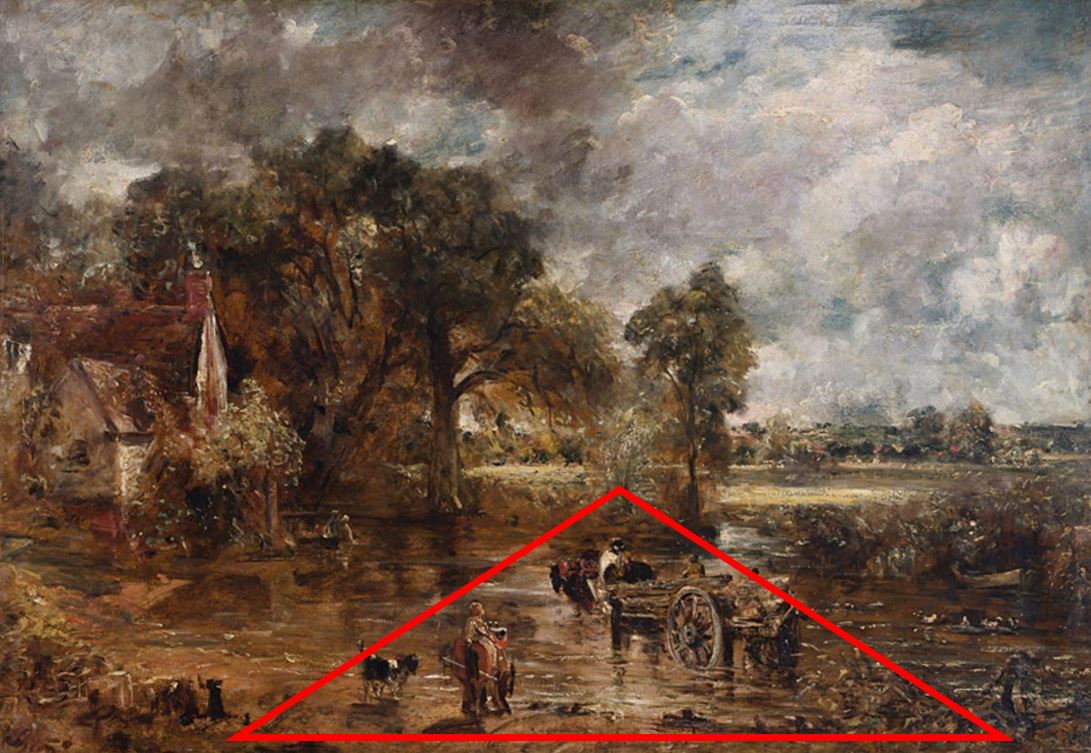
Frederick Forsyth reviews

Frederick Forsyth (1938 to 2025) was an English novelist and journalist. He’s best known for the string of meticulously researched popular thrillers he wrote in a 30-year career between the early 70s and the early Noughties. He wrote 14 novels in total, none of them as good as the debut, his first and best novel ‘The Day of the Jackal’. By 2006 he had sold more than 70 million books in more than 30 languages and a dozen of his works had been adapted to film, again none as atmospheric and iconic as the brilliant movie version of ‘Day of the Jackal’, starring Edward Fox.

Before becoming a novelist Forsyth was a journalist for Reuters, then the BBC, and did important coverage of the Biafra War in Nigeria. This journalistic training meant that even when his novels suffer from ridiculous plots and paper-thin characters, they still contain a lot of fascinating information, partly about guns and hardware, but mostly about the security services, armies or terrorist groups (for example, al-Qaeda) that they’re set among.

1971 The Day of the Jackal It is 1963. An international assassin is hired by right-wing paramilitary organisation, the OAS, to assassinate French President, Charles de Gaulle. The novel follows the meticulous preparations of the assassin, code-name Chacal, and the equally thorough attempts of the ‘best detective in France’, Commissaire Lebel, to track him down. Surely one of the most thoroughly researched and gripping thrillers ever written.

1972 The Odessa File It is 1963. German journalist Peter Miller goes on a quest to track down an evil former SS commandant and gets caught up in a high-level Nazi plot to help Egypt manufacture long-range missiles to attack and destroy Israel.

1974 The Dogs of War City magnate Sir James Manson hires seasoned mercenary Cat Shannon to overthrow the dictator of the (fictional) West African country of Zangaro, so that Manson’s mining company can get its hands on a mountain virtually made of platinum. This very long novel almost entirely amounts to a mind-bogglingly detailed manual on how to organise and fund a military coup.

1975 The Shepherd A neat, slick Christmas ghost story about a post-war RAF pilot whose instruments black out over the North Sea but who is guided to safety by an apparently phantom Mosquito, flown by a pilot who disappeared without trace during the war.

1979 The Devil’s Alternative A Cold War, geopolitical thriller confidently describing machinations at the highest levels of the White House, Downing Street and a Soviet Politburo riven by murderous factions and which is plunged into emergency by a looming grain shortage in Russia. A plot to overthrow the reforming leader of the Soviet Union evolves into a nailbiting crisis when the unexpected hijacking of an oil supertanker by fanatical Ukrainian terrorists looks like it might lead to the victory of the hawks in the Politburo, who are seeking a Russian invasion of Western Europe.

1984 The Fourth Protocol Handsome, former public schoolboy, Paratroop Regiment soldier and MI5 agent John Preston, first of all uncovers the ‘mole’ working in MI5, and then tracks down the fiendish Soviet swine who is assembling a tactical nuclear device in Suffolk with a view to vaporising a nearby US Air Force base. the baddies’ plan is to rally anti-nuclear opinion against the Conservatives in the forthcoming General Election, ensuring a Labour Party victory and then (part two of the plan) replace the moderate Labour leader with an (unspecified) hard-Left figure who would leave NATO and effectively hand the UK over to the Russians. A lunatic, right-wing fantasy turned into a ‘novel’.

1989 The Negotiator Taciturn Clint Eastwood-lookalike Quinn (no first name, just ‘Quinn’) is the best negotiator in the business, so when the President’s son is kidnapped Quinn is pulled out of quiet retirement in a Spanish village and sent to negotiate his release. What he doesn’t realise is the kidnap is just the start of a bigger conspiracy to overthrow the President himself!

1994 The Fist of God A journalistic account of Saddam Hussein’s 1990 invasion of Kuwait and the ensuing US-led ‘Desert Storm’ operation to throw him out, complete with insider accounts of the Western military and intelligence services and lavish descriptions of scores of hi-tech weaponry. Against this backdrop is set the story of one man – dark-skinned, Arabic-speaking Mike Martin who goes undercover posing as an Arab, first in occupied Kuwait, then – even more perilously – in Baghdad itself, before undertaking a final mission to locate and assist the destruction of Saddam’s atom bomb (!) and the Supergun designed to fire it at the Allies. Simultaneously gripping in detail and preposterous in outline.

1996 Icon Hot shot CIA agent Jason Monk is brought out of retirement to foil a fascist coup in post-communist Russia in a novel which starts out embedded in fascinating contemporary history of Russia but quickly escalates to heights of absurdity, capped by an ending in which the Russian people are persuaded to install a distant cousin of our very own Queen as the new Tsar of All The Russias! Sure.

2003 Avenger A multi-stranded narrative which weaves together the Battle of Britain, the murder of a young American aid worker in Bosnia, the death of a young woman in America, before setting the tracking down of a Serbian war criminal to South America against a desperate plot to assassinate Osama bin Laden. The least far-fetched and most gripping Forsyth thriller for years.

2006 The Afghan Ex-SAS man Colonel Mike Martin, hero of The Fist of God, is called out of retirement to impersonate an Afghan inmate of Guantanamo Bay in order to infiltrate Al Qaeda and prevent their next terrorist attack. Quite a gripping thriller with an amazing amount of detailed background information about Afghanistan, the Taliban, Al Qaeda, Islamic terrorism and so on.

2010 The Cobra Two lead characters from Avenger, Paul Devereaux and Cal Dexter, are handed the task of wiping out the illegal cocaine trade on the authority of Barack Obama himself. Which leads to an awesome display of Forsyth’s trademark factual research, scores of pages building up a comprehensive picture of the drugs industry, and to the detailed description of the multi-stranded operation which almost succeeds, until lily-livered politicians step in to halt it.

2013 The Kill List Another one about Islamic terrorism. The Preacher, who has been posting jihadi sermons online and inspiring a wave of terrorist assassinations, is tracked down and terminated by US marine Christopher Carson, aka The Tracker, with a fascinating side plot about Somali piracy thrown in. Like all Forsyth’s novels it’s packed with interesting background information but unlike many of his later novels, this one becomes genuinely gripping at the end.

Short stories

1982 No Comebacks Ten short stories combining Forsyth’s strengths of gripping technical description and clear fluent prose alongside his weaknesses of cardboard characters and improbable plots – but the big surprise is how many of them are clearly comic and satirical in intention.

1991 The Deceiver A set of four self-contained, long short stories relating exciting incidents in the career of Sam McCready, senior officer in the British Intelligence Service, as he approaches retirement. More gripping than the previous two novels, with the fourth and final story being genuinely funny, in the style of an Ealing comedy starring Alec Guinness.

2001 The Veteran Five very readable short stories: The Veteran, The Art of the Matter, The Miracle, The Citizen, and Whispering Wind – well engineered, sleek and almost completely devoid of real human psychology. Nonetheless, the vigilante twist of The Veteran is imaginatively powerful, and the long final story about a cowboy who wakes from a century-long magic sleep to be reunited with a reincarnation of his lost love has the eerie, primal power of a yarn by Rider Haggard.

Autobiography

2015 The Outsider – At age 76 Forsyth writes his autobiography in the form of a series of vignettes, anecdotes and tall tales displaying his characteristic briskness and dry humour. What an extraordinary life he’s led, and what simple, boyish fun this book is.

Turner and Constable at Tate Britain

Joseph and John

Joseph Turner was born in 1775, John Constable in 1776. In other words, it’s just about 250 years since their joint births. Tate owns big holdings of paintings, watercolours, sketches and related paraphernalia (paintboxes, journals, letters, sketchbooks) by both of them, so they’ve used the anniversaries to bring lots of this up out of the archives – plus substantial loans from other collections – in order to create a blockbuster exhibition placing two of England’s most popular painters side by side. The aim is to compare Turner and Constable’s differing origins, styles, subject matters and careers, and the way that, even during their lifetimes, they were pitted against each other as rivals, with rival visions of art.

Turner versus Constable: ‘The Golden Bough’ (left) by Turner, faces off against ‘Dedham Lock’ (right) by Constable, in ‘Turner and Constable’ at Tate Britain (photo by the author)

Obviously, it’s full of lot and lots of good stuff but I confess I didn’t really enjoy it. I finished it with a great sense of relief and couldn’t wait to escape.

Massive exhibition

I expected the exhibition to be packed and it was, but I hadn’t anticipated it being quite so big, thorough and exhaustive. It contains some 190 oil paintings, watercolours and sketches, as well as seven or eight display cases containing everything from their paintboxes and brushes to Turner’s dismantled fishing rod (!).

Four outdoor sketches by Turner along with his dismantlable fishing rod, in ‘Turner and Constable’ at Tate Britain (photo by the author)

Most exhibitions are in 7 or 8 rooms but this one stretches to 12, concluding with a set of videos by contemporary artists (Bridget Riley, George Shaw, Emma Stibbon and Frank Bowling) describing aspects of Joseph or John which inspire their own practice.

The wall labels are admirably thorough in introducing each of the 11 or so major themes which each room addresses, plus detailed captions for many of the paintings, watercolours, sketches and objects – but there are just so many that by the end I was full, I couldn’t read anything more, and I was relieved to give up the effort.

Also, heretical though it is to admit it, I don’t really like Turner, I never have; and I like Constable in small doses but here, faced with 80 or more works, the brilliantly glorious works are diluted by a lot of much more humdrum stuff. Exposed at such length, over so many works, the weaknesses of both artists become more and more glaring and – for me – began to drown out their strengths.

For example whereas Turner arguably came into his own in his later years, from 1830 onwards, the final room shows four of Constable’s last works from 1835 to 37, and I thought they were really dire: they look like his Hay Wain-style landscapes but put through a blender or painted by someone with serious eyesight problems (details below).

In the end I found myself equally put off Turner’s huge shimmering light experiments and Constable’s sometimes lovely but often very scrappy Suffolk landscapes, and found relief in the much smaller, lighter watercolours and sketches by both artists, although Turner was generally better at these (see below).

To put it another way, I came away from the National Gallery’s small, thoughtful, very focused exhibition about the Hay Wain liking and appreciating Constable more. Whereas I left this exhibition with a measurably lower opinion of him, and hoping I don’t see another Constable for a long time.

Main points

Constable focused largely on the English countryside, especially the Stour Valley in Suffolk, developing a distinctive practice of outdoor oil sketching to capture natural light, weather, and atmosphere with unprecedented immediacy. His textured brushwork, bright colours, and close study of skies challenged academic conventions and gradually earned critical recognition.

Turner, by contrast, was a prolific traveller whose work ranged across Britain and Europe. He explored dramatic subjects from the sublime forces of nature to modern technology, working across oil, watercolour, and print. His radical handling of colour and light, particularly in watercolour, pushed the medium to new artistic heights.

So Constable was, on the whole, a homebody, whereas there’s an entire room devoted to Turner’s extensive trip to Italy, displaying his sketchbooks, explaining the detailed preparations he made, showing preparatory sketches and some of the huge oils he did of dramatic Alpine scenery. For the rest of his life was liable at the drop of a hat to produce another enormous work set in Venice or Rome or the Alps.

Still, the early works produced soon after that trip can be breath-taking.

The Passage of Mount St Gothard from the centre of Teufels Broch (Devil’s Bridge) by JMW Turner (1804) © Abbot Hall, Kendal (Lakeland Arts Trust)

Room summary

Room 1. Starting out (8 prints, 10 paintings)

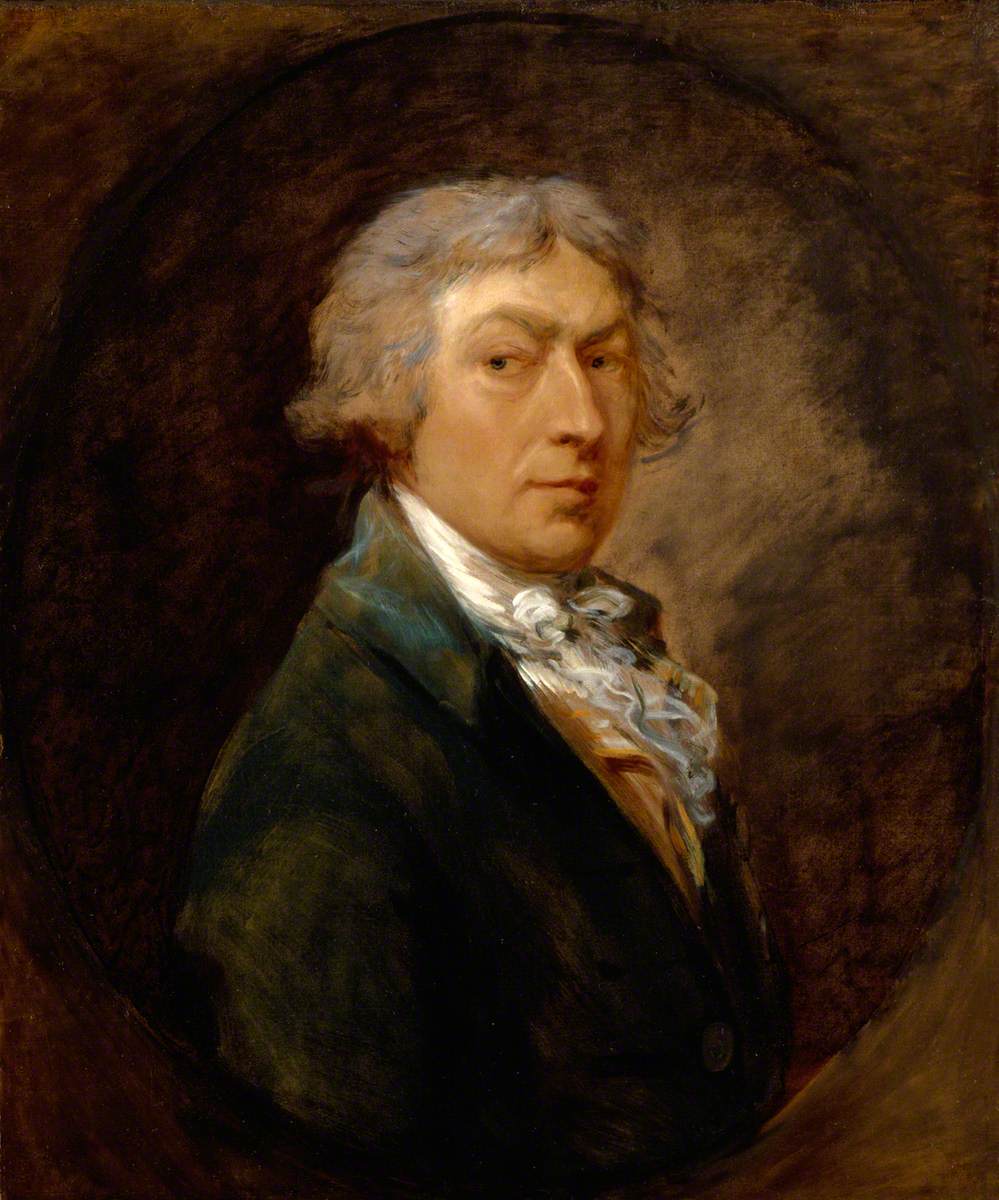
Eight paintings including Turner’s self portrait and two portraits of Constable.

Turner was born in London, the son of a Covent Garden barber, Constable to a prosperous family in the Suffolk village of East Bergholt.

As a teenager, Turner earned money alongside his art studies at the Royal Academy. He worked as an architectural draughtsman’s assistant and a watercolour copyist, which introduced him to a wide range of art. He was a commercially minded, fast-rising young star who first exhibited at the Royal Academy in 1790 aged just 15.

By contrast, Constable was largely self-taught and undertook extensive sketching tours in order to perfect is artistic technique, not exhibiting at the Royal Academy until 12 years after turner, in 1802.

Both trained at the Royal Academy. Training at the Royal Academy centred on drawing the human figure. It aimed to produce painters of grand historical and mythological subjects. Landscape was far down its artistic hierarchy – so the main way both artists were innovators was in proclaiming landscape painting as a high genre in its own right.

It’s odd that the Academy focused on figure drawing when both Turner and Constable are dreadful, awful painters of human beings. It’s one of the things I dislike about them both. Any Turner painting with people in is going to be embarrassingly bad (see below). Constable’s figures are more superficially attractive until you go up close and see how gawkily the bodies are composed and how terrible the faces are, if he’s bothered with them at all. Constable’s clouds, ten out of ten. His faces, nil.

Room 2. Constable sketching outdoors (14 sketches, display case, chair)

Fourteen sketches and a display case showing his paintbox and palette. My wife and I both thought the most interesting thing in this room was Constable’s sketching chair.

Constable’s outdoor sketching chair in ‘Turner and Constable’ at Tate Britain (photo by the author)

Room 3. Turner in the Alps and Italy (4 big paintings, 7 sketches, 5 sketchbooks, display case)

A pause in the long war with France in 1802 allowed the 27-year-old Turner to travel to Paris, then on south to the Alps, Switzerland and the Val d’Aosta. Thirteen years later, when the wars finally ended in 1815, he went again. His extensive preparations for the six-month trip included reading guidebooks and making sketches of other artists’ views of key sites to visit. Turner was hungry for Italy’s scenic riches. He filled 23 sketchbooks five of which are on display here and came home with imagery that would underpin decades of finished paintings.

One of Turner’s extravagant fantasias from Italian history – Caligula’s Palace and Bridge by J.M.W. Turner (1831) Tate

Remember I was saying how poor Turner’s human figures are? From a distance they pass, they appear to fit in with the blurry mode of the paintings. But go up close and they’re embarrassing. Here’s a close-up of the most prominent two figures in this work.

Detail of Caligula’s Palace and Bridge by J.M.W. Turner (1831) Tate

The basket and hula hoop and kettle and the blue cloak at bottom right, yes. The two goats at top right, yes. But the two human figures on the left? The bloke’s legs, yes, but their faces? They look like Punch and Judy.

Room 4. Turner’s watercolours (6 watercolours, 10 sketchbooks)

Going back and forth through the rooms, slowly overcoming the sheer scale of some of the enormous paintings here, it takes the mind a little while to adjust to the scale of the smaller, more delicate sketches and watercolours. Eventually I came to think these were the works I liked best.

Turner at his most attractive: four (relatively) small watercolours, in ‘Turner and Constable’ at Tate Britain (photo by the author)

A contemporary critic wrote: ‘Another mused: ‘blended and sometimes delicately contrasted as [Turner’s] colours are – the effects are exquisitely tender, but not without sufficient force, from a certain magic arrangement, a graphic secret of his own’ and in many of them, you can see what he meant.

Room 5. Turner’s studio (9 paintings, 10 cloud studies)

Turner’s studio was a chaotic shambles. His landlady owned seven Manx cats and these are allowed to roam over wet paintings; we know this because their paw prints have been found. At his death it was discovered that he’d used his own paintings to block up gaps in the roof and had cut a catflap into one of them.

Room 6. Constable fields and sky (9 paintings, 10 cloud studies)

Most contemporary artists made extensive sketches on location then took them back to their studios to work up into finished compositions under controlled indoor conditions. In 1814 Constable began completing entire paintings on location, out of doors, and there are plenty of examples in the Hay Wain / Dedham Lock manner, as well as numerous preparatory sketches.

Taking this a step further, in 1819, Constable rented a house in Hampstead, then a village outside London where he started making rapid oil sketches of clouds, a practice he called ‘skying’. These works reflect Constable’s keen interest in weather.

Some of Constable’s cloud studies in ‘Turner and Constable’ at Tate Britain (photo by the author)

His preoccupation with the sky is evident in his dramatic 1823 depiction of Salisbury Cathedral, which became another recurring subject and is given the full Mona Lisa treatment in this show, complete with visitor bench to sit and gaze in awe.

Constable’s painting of Salisbury cathedral given the full treatment in ‘Turner and Constable’ at Tate Britain (photo by the author)

Room 7. Big is beautiful (5 Turner, 4 Constable huge paintings)

Both artists struggled to get noticed and one easy way to do this was to make their paintings big, really big, ginormous. Turner was already doing his huge classical and mythological paintings. In 1819 Constable joined him by exhibiting the first of his huge canvases (what he called his ‘6-footers’) ‘The White Horse’, and its appearance for the first time triggered comparisons with Turner. They were both now competing in sheer size – but what a complete difference in subject matter and style.

The White Horse by John Constable (1819) © The Frick Collection, New York (photo by Joseph Coscia Jr)

This feels like a great painting. If there had been just 4 or 5 works like this you’d have gone away inspired. It’s the fact that it’s accompanied by about 80 others, sketches, scraps and some decidedly bad works, which dilutes its effect.

Room 8. Fire and water (4 massive paintings: 3 JC, 1 T)

The rivalry was real. By the late 1820s Turner was the well-established master in all forms of landscape (oil, watercolour, prints). Constable only achieved official recognition in 1829 when he was finally made a member of the Royal Academy. To quote the curators:

Two years later, they came to blows. Artists hated being hung next to Turner in the Royal Academy’s annual exhibition because his paintings ‘caught your eye the instant you entered the room’. In 1831, Constable took up the challenge. As a member of the committee responsible for placement of works in the exhibition, he hung his Salisbury Cathedral from the Meadows next to Turner’s Caligula’s Palace and Bridge. The arrangement gave Constable’s own painting prime position. At a dinner party, Turner apparently came ‘down upon him like a sledge-hammer’. One onlooker recalled dramatically that Constable ‘wriggled… like a detected criminal’.

Room 9. Late Constable: ‘beyond Constable country’ (9 sketches, 3 big paintings)

With election to the Academy in 1829, Constable moved to expand his subject matter, producing works set in Brighton and London, away from his home turf in the Stour Valley. He tackled coastal storms and grand neoclassical architecture. I didn’t like his Brighton paintings but some of the sketches of the beach were appealing.

Rainstorm over the Sea by John Constable (1824-1828) © Photo Royal Academy of Art (photo by John Hammond)

I was tickled to read that Constable didn’t like Brighton and dismissed it as ‘Piccadilly by the seaside’. Plus ça change, eh?

In this room the curators are showing a clip from Mike Leigh’s 2014 movie, Mr Turner, dramatising another famous moment in their rivalry, when both painters had work hung in the 1832 Academy exhibition and Turner (played by Timothy Spall) adds a last-minute red buoy to his painting Helvoetsluys: Fishermen at Sea in order to catch the viewer’s eye and distract it from Constable’s long-laboured over piece, The Opening of Waterloo Bridge – which triggered Constable (played by the stalwart character actor James Fleet) to walk out in a huff. At least it’s all very dramatic in movieland.

Room 10. Late Turner (9 paintings, 8 sketches)

Turning 60 in 1835, Turner could have rested on his financial position and slowed down but he kept up the pace. 1835 saw him take one of his most extensive and taxing European sketching tours and he continued to travel abroad for another decade. He made topical paintings of contemporary subjects, including the fire that destroyed the Houses of Parliament.

The Burning of the Houses of Lords and Commons, 16 October 1834 by JMW Turner (1835) Cleveland Museum of Art

Favourite locations like Venice and the Swiss Alps came back into focus with repeat visits. There’s a really dreadful giant monster of a painting depicting Juliet and her nurse in a typically gauzy, highly romanticised Venice when, of course, the play is set in Verona, 120 kilometres away.

On the other hand, some of these late watercolours are truly visionary, and the curators are right to single out The Blue Rigi, Sunrise (1842) as awe inspiring.

The Blue Rigi, Sunrise by Joseph Mallord William Turner (1842) Tate

Room 11. Landscape and memory (3 Turner, 4 Constable, 4 prints)

Constable died in 1837, by now accepted as a classic. But his last years were saddened by the absence of his dead wife. The curators suggest his late paintings are clouded by melancholy but optimistically claim they reverberate with energy. Well, the four they hang in the final room are awful. They revert to the Suffolk subject matter but as if someone had thrown a bucket of mud over them. The palette has lost all its brightness and sparkle, everything is black and grey and mud. A couple of them have sets of diagonal white slashes across them as if someone had repeatedly stabbed them with a knife. They’re so horrible I made a list to show you:

My wife wondered whether he must have been suffering from some eye problem, cataracts or something, which would explain their dirgelike darkness, their fevered, cluttered, murky feeling. But that can’t be true because alongside it the curators hang a marvellously limpid and detailed drawing of fir trees on Hampstead Heath.

Fir Trees by John Constable (c. 1833) The Higgins Art Gallery & Museum, Bedford, UK/Bridgeman Images

(Incidentally,  you can see the join three-quarters of the way down the work; this is because Constable had originally drawn just the upper part of the tree but ended up devoting so much time and effort to it, that he glued on an extra strip of paper at the bottom so he could continue it down to the roots.)

Anyway, the point is that, if he could produce extremely clear, detailed and lucid drawings like this, then the dire appearance of a late painting like On the river Stour (1834) was an artistic choice.

By contrast with the murky Constable, this final room contains arguably the best Turner in the exhibition, certainly the one I liked best, Norham Castle, a work of pure luminousness, almost completely untainted by worldly subject matter.

Norham Castle, Sunrise by Joseph Mallord William Turner (c.1845) Tate

Room 12

This room is devoted to a big video screen onto which is projected an 11-minute-long film featuring interviews of contemporary artists Bridget Riley, George Shaw, Emma Stibbon and Frank Bowling, giving their opinions about T and C.

What’s really striking about this video is that it contains many tasteful close-ups of T and C’s works and these often make the paintings seem much more interesting and exciting and innovative than the complete, wider works do. It was a revelation to think of both their paintings like this, as collections of good bits which frequently impress more as inventive and wonderful details than they do as often contrived and stagey wholes.


Related links

Related reviews

The Crime at Black Dudley by Margery Allingham (1929)

‘How thrilling!’ she said. ‘It sounds just like a play!’
(Welcome to Posh World)

‘It means, Michael,’ he said…’ that we are up against the most dangerous and notorious criminal of modern times.’
(As usual)

‘You just ’aven’t realized, you and your lot downstairs, what you’re playing about wiv,’ he said. ‘This ’ere isn’t no Sunday School hunt-the-thimble-set-out. There’s nine of us, we’re armed, and he isn’t jokin’.’ The hand round Abbershaw’s throat tightened as the thug thrust his face close against his victim’s.
(A baddie with a baddie’s ghastly working class accent)

Abbershaw turned on him furiously, only to find a revolver pressed against his ribs.
(Ooops)

‘But how terrible!’ Meggie burst out suddenly. ‘I didn’t believe that people like this were allowed to exist. I thought we were civilized. I thought this sort of thing couldn’t happen.’
(Eternal cry of the pampered bourgeoisie on encountering reality)

This is a ludicrously over-the-top international spy melodrama. It was the first outing for Allingham’s absurdly posh and mysterious sleuth, Albert Campion, who would go on to appear in 17 further novels. This is a bad book. I wouldn’t bother reading it. I struggled to finish it.

The setting: Black Dudley is a great grey building, bare and ugly as a fortress, isolated in a thousand acres of parkland which stretch out to the Suffolk coast. It’s owned by old Colonel Gordon Coombe, now wheelchair bound and with a plate masking a horrific facial injury from the war (nearly ten years earlier). The colonel encourages his young nephew, Wyatt Petrie, to host weekend house parties there, half a dozen times a year. Wyatt is the last in a long, long line of the Petrie family who have owned the land and house for nearly a thousand years.

The narrator: Dr Abbershaw The building, and the novel, have a strong Gothic, spooky atmosphere. It’s a third-person narrative but seen very much through the eyes of one of the guests, no-longer-young Dr George Abbershaw, author of a standard book on pathology, adviser to Scotland Yard – ‘a smallish man, chubby and solemn, with a choir-boy expression and a head of ridiculous bright-red curls’. He has a shy passion for similarly red-haired Margaret ‘Meggie’ Oliphant, which blossoms through the course of the adventure, as boy-girl romances do in popcorn thrillers through to this day.

House party guests Allingham briskly introduces us to the other half dozen house-party guests, all bright young things down from London or Oxbridge, as well as to the three sinister companions of the old Colonel, being: his physician Dr White Whitby, the slimy Englishman Jesse Gideon, and the big fat foreigner with the improbably English name, Benjamin Dawlish.

Albert Campion One of the guests, a ludicrously posh chap with a receding chin and a mouthful of teeth, is introduced as Albert Campion. Allingham didn’t know it when she wrote this first novel, but Campion would go on to feature in another 18 novels and over 20 short stories and become the character she’s most associated with.

The plot

So in the early chapters we meet all the young chaps and chapesses gathered for the weekend. It leads up to a big dinner at which the young people are disconcerted by the two creepy men who never leave the side of crippled old Colonel Coombe.

The Black Dudley Dagger After dinner the young people go through to the big hall and are impressed by the arrangement of spears and whatnot on the wall which centre on a sparkling dagger. Wyatt explains that the dagger is the focus of the so-called ritual of the Black Dudley Dagger. The idea is to turn the lights out and pass the dagger on to whoever you bump into in the dark until a set period of time has passed and the lights are turned back on.

Murder As you might expect, during the ritual there is a murder. The Colonel’s companions give out that he has been taken ill with a heart attack and spirited off to his rooms. Later we discover that he was stabbed to death.

Eberhard von Faber Now the narrative embarks on a long, long series of narrative twists and turns, but the basic idea is this: so-called Benjamin Dawlish is none other than Eberhard Von Faber, the international criminal mastermind: ‘a leader of one of the most skilful criminal organizations in the world’.

Stolen During the lights out of the ritual, somebody got their hands on something which really matters to Von Faber and he announces to the amazed young guests that none of them will leave the house until it is returned to him. They shouldn’t even think about using their cars which have been drained of petrol.

Kennedy tries his luck One of the young chaps, Chris Kennedy the rugby blue, has a brainwave and takes some spirits down to the garage, fills up his tank and his car is pottering and banging away when someone in the castle shoots at it, hitting Kennedy in the arm (a conveniently non-fatal wound as in silly thrillers), puncturing a tyre and overturning it. Yes. It becomes clear that the entire staff (of nine) all work for Von Faber and most of them are armed tough guys.

Campion in the garage Now earlier, during the blackout and ritual, Dr Abbershaw had left the building to wander down to the garage and check out the cars. Here he had been disturbed by the mysterious Albert Campion, who comes over as a facetious simpleton but – is he hiding something?

The bloody dagger When they go back into the castle they discover a) that the Colonel has been whisked away and b) that Abbershaw’s girlfriend, Meggie, is in hysteria because someone handed her the dagger and then whisked it away ,but not before she’d realised it was covered in blood!

Campion fighting Later that night, the house is woken by loud noises and find Campion fighting wildly with one of the servants, he seems to be drunk.

Abbershaw finds the secret After they’ve separated the combatants and Campion has been led away, Abbershaw finds a leather case on the ground near the scrap, and takes it back to his room. We aren’t really told what it contains except for papers, instead the narrative jumps to him agonising about what to do with its contents which, on reflection, he decides to burn in the fireplace.

A discussion Abbershaw invites Meggie and her friend Anne out into the garden to discuss events and they discover that Campion had met Anne in London, informed her he was invited to the party and got a lift down in her car. In other words, nobody really knows who he is.

Disposing of the colonel’s body Next morning Abbershaw sees Dr Whitby and the chauffeur take Colonel Coombe’s body off to the nearest crematorium; before the situation had fully unfolded, they had called Dr Abbershaw in to sign the cremation certificate. They didn’t want him to see the body but he sneaked a quick look, enough to tell him death wasn’t from a heart attack but from loss of blood as per stabbing.

No-one can leave At breakfast Dawlish-Von Faber makes a stark announcement – the cars have been drained of fuel, and no-one is to leave the house until something he has lost is returned to him. As described, Chris Kennedy, the gung-ho rugby player, attempts to escape in a car powered by alcohol, but is shot and wounded.

Interrogations Von Faber announces he’s going to call each of the guests one by one into an interrogation room until he gets what he wants. It must be the documents Abbershaw found on the floor near the fight between Campion and one of the goons.

Secret passageways Maybe I had a bad week at work but I found it very hard indeed to care about any of this. Abbershaw and Meggie and Campion emerge as the central figures. The old castle is riddled with secret passages, hidden entries, concealed staircases and whatnot. When Von Faber is interrogating Meggie Abbershaw, enraged and fearful for her safety, finds a series of secret passages which allow him to burst into the room where the questioning is taking place. After which point, he turns out to be completely ineffectual and he and Meggie are bundled into a locked room, to be dealt with later.

Disappointments It feels like the story is full of moments like this, moments which ought to be climaxes and revelations, but which consistently fizzle out and disappoint.

Mrs Meade Meggie and Abbershaw discover there’s a mad old lady, Mrs Meade, in the adjacent room. She is a Christian zealot and tells them they are all doomed to burn in hell-fire etc.

Blocked They hope to escape when they’re given their food by a serving girl, but she is accompanied by one of the toughs with a revolver. After hours and hours of imprisonment, they are starting to despair when Campion suddenly stumbles into their room, having found a secret passage through the back of fireplaces (!)

Escape Campion leads them out of the locked room, and down secret passageways back to the main part of the building where the other young people are still at liberty, and they cook up a plan to ‘take’ the armed goons at the next mealtime.

The organisation Why is all this happening? Well, it’s not immediately obvious, and it comes out in dribs and drabs, but eventually we discover that Von Faber implements criminal plans drawn up in detail by someone else. I think that’s the Colonel.

Campion was a spy At some point Campion reveals to Meggie and Abbershaw that there’s a lot more to him than meets the eye because he was sent to the castle to talk to Colonel Coombes, to give him a codeword and receive a secret something from him to take back to his masters (in British intelligence?) in London.

‘This little affair, of course, was perfectly simple. I had only to join this house-party, take a packet of letters from the old gentleman, toddle back to the Savoy, and my client would be waiting for me. A hundred guineas, and all clean fun – no brain-work required.’

Campion got then lost the secret So during the blackout for the ritual, Campion did in fact have a chance to whisper the codeword in Coombes’s ear and Coombes did slip him the packet of documents and it was these documents which fell out of his pocket when he was having his inexplicable fight with a goon, and which Abbershaw found and proceeded to burn. So we never have the psychological pleasure of relief of finding out what they were plans for. This is typical of the narratives many blocks and frustrations. In fact, at one stage one of the characters comments on the air of permanent frustration which hangs over the narrative.

‘Let’s catch ’em up,’ said Martin. ‘It’s time something definite happened.’

Whodunnit? And then Coombes was murdered. But why? And by whom? Not the baddies because he was a key part of their organisation: at one point Abbershaw, hiding outside the baddies’ room, overhears that they themselves are mystified by the Colonel’s murder.

John Buchan Anyway, the plot rambles on with more twists and turns and escapes through hidden passages etc. As you can see, three things are obvious: 1) It is not a country house murder mystery at all but something much more like the adventure thrillers of John Buchan, centring as it does on a criminal mastermind at the apex of a secret criminal organisation.

2) It is bad. It is badly done. It contains all the elements of a John Buchan thriller but somehow none of them gell. The way they’re confined to the castle doesn’t really work, why don’t some of them just slip out at night and walk to freedom? Each new chapter introduces another secret passage or false door until it becomes a bit ridiculous.

3) And in the middle of this farrago we are meant to care about Abbershaw’s feelings for young Meggie, which lead up to him declaring that he’s passionately in love with her and being thrilled to discover she feels the same and they agree to get married ‘as soon as this is all over’.

Rebellion Back to the narrative, the gang of young people successfully attack and overwhelm the couple of goons who serve them dinner at dinner time (odd, strange, that all the formalities of a country house weekend still continue). There’s a lot of fol-de-rol trying to find the rest of the gang, scattered fights, our chaps knocked out in random corridors and what-not, until they finally overpower and lock up the baddies, and walk out a side entrance towards the cars. Hooray! Free at last!

But not so fast! Von Faber is waiting in a car outside and turns on the headlights, dazzling our chaps and telling them he and Gideon have the two girls in their sights: hands up or the girls get it!

Burned alive So the young people, so close to freedom, hand over their guns, the goons are released, and they are all packed into a secure sealed room upstairs. Here they are warned that Von Faber has loaded the fort with wood and kerosene and will set it on fire and burn them alive unless they reveal the whereabouts of the missing belongings, which Campion long ago explained to all the young people was a wallet full of documents and Abbershaw explained that he burned in his fireplace.

The hunt arrives There follows what is meant to be a tense countdown and maybe it was to readers in 1929. Just in the last few minutes before Gideon says they’re going to start the fire, chaps looking out the window notice the local fox hunt galloping into view. They start yelling out the window that they are being held prisoner but Von Faber is quick to take command of the situation and tell the leaders of the hunt, which has now gathered below the castle walls, that he runs a lunatic asylum and not to believe the inmates shouting for release.

Good old ‘Guffy’ Until Campion (and he does emerge as the leader in so many of the situations) recognises a posh buddy of his, old ‘Guffy’ Randall, among the hunt. He yells down to Guffy who recognises him and Von Faber’s game is up. He draws a gun and tries to threaten the hunt but there are too many of them and when he fires it and narrowly misses a hunt leader, the hunt round on him.

Von Faber’s failed escape Amid the resulting confusion he and Gideon bolt for the only car with gas in it, start it up and head down the drive. The hunt on horseback cut across the grounds and block the road but that doesn’t stop Von Faber hurtling towards them at to speed. At the last minute the horses leap out of the way but Guffy leans down and whips the driver round the face, with the result that the car careers into a ditch and overturns, badly injuring Von Faber.

The cops Cut to the local cops who have been called and interviewed everyone and recovered the bodies from the overturned car and after a few final bits of clearing up, allow everyone to leave.

Who is Campion? Abbershaw drives back to London and gives Campion a lift. Only as they reach Piccadilly does he ask the question he’s been burning to ask: who is Campion, and Campion bends over and whispers his parentage in Abbershaw’s ear, to his astonishment. As far as I can tell, Allingham never reveals Campion’s parentage; it is left a deliberately teasing secret.

Who killed Colonel Coombs? I hope this would be the end, but oh no. There are four gruelling chapters left to go. Because back in London Abbershaw invites a couple of the chaps who survived the ordeal round for drinks and to try and decide who killed Colonel Coombs? Theories are divided between Campion himself (who was implicated by the statements of mad Mrs Meades – but why would he?); Von Faber (but why was he overheard himself wondering who killed him?); or Martin Watt’s theory, that it was his physician, Dr White.

Car news The situation is transformed when Michael Prenderby walks in and announces that he has seen the very distinctive car they had all noticed in the Black Dudley garage, an innocuous seeming banger with the chassis and engine of a Rolls Royce. Prenderby noticed it at a garage when he recently took his own car in for a service.

Stake-out So a gang of our chaps head out to this garage (‘half-way down the Lea Bridge Road’). the owner, Mr Haywhistle, is surly and threatening because the car’s owner has been threatening him, but a small bribe softens him up. So the three chaps (Abbershaw, Martin Watts and Prenderby) wait in their car opposite the garage until the mystery owner arrives. And it does, indeed, turn out to the Von Faber’s physician, Dr White.

All-night chase The disguised Rolls pulls out of the garage and heads East, eventually going through Chelmsford, Colchester, off the main road and along endless country lanes. The little Riley car driven by our plucky trio of chaps keeps pace with it, just about, losing it at a few places, then catching up again. Finally it rolls to a halt as dawn is coming up over fields in the middle of nowhere, somewhere towards the Essex coast.

Dr White explains After they’ve taken a few pot shots at each other (both sides have revolvers) Dr White waves a white hankie and our chaps close with him. In the event this is yet another delay, block and red herring. After a good deal of verbiage the doctor finally claims that Coombe was murdered by one of the young chaps who is secretly a member of the Simister gang which are a gang to Von Faber’s mob. But as he pads out this explanation they all hear a big Fokker airplane circling overhead which lands in the field near them. White warns them not to come closer as the pilot has a machine gun trained on them and so, as frustrated and blocked as the reader (again) our trio watch White (and his butler) climb into the German plane and take off. On the drive back to London they are still no closer to really knowing who murdered Colonel Coombe or why.

Back in London Six weeks pass. The other survivors get on with their lives but Abbershaw only becomes more obsessed. Eventually, after doing research of his own he reluctantly drives to Wyatt Petrie’s apartment overlooking St James’s. Here he confronts Wyatt with murdering his uncle, Colonel Coomb and is surprised when he readily confesses. What surprises him is his motivation.

Joy Love Wyatt shows him the photo of a sweet and innocent 17-year-old girl and tells the surprised Abbershaw that he fell in love with her when he was 27, the only woman he’s ever cared for. He loved her despite the fact that she was stupid and ignorant and worked in the kind of bar where you have to pay money to talk to the girls.

But slowly Wyatt learned that Joy’s ignorance wasn’t accidental. She along with a cohort of girls like her had been born and bred and raised to lives of cattle-like ignorance and compliance by a criminal gang. And his researches led him to realise that at the apex of the gang was his despicable uncle. And so he planned the Perfect Crime, inviting guests he knew would have good alibis, inventing the so-called Dudley Dagger Ritual as a cover for his plan – and then stabbing his uncle in the back.

What he hadn’t anticipated at all was the coincidence of Campion having been sent on a mission to secure the secret documents from his uncle which led to the enormous hue and cry, to everyone being locked up and to the melodramatic series of events. He shows no remorse about committing murder, just about the fact that it was not the Perfect crime he had hoped to achieve.

He announces that he is going to leave the country, he is going into a religious retreat in Spain. Caught on the hop, Abbershaw finds himself shaking his hand and wishing him good luck.

End Abbershaw reels out of the apartment building not knowing whether Wyatt was justified in his behaviour or is a dangerous lunatic, completely confused about what is right or wrong. Luckily a beefy constable is waiting to tell him that his bad parking has brought him a parking ticket and this snaps Abbershaw out of his confusion. Of course there is a right and wrong, and officers of the law who define and maintain it.

‘It’s people like you,’ [the constable] explained, as Abbershaw climbed into the driving seat, ‘wot gives us officers all our work. But we’re not goin’ to have these offences, I can tell you. We’re making a clean sweep. Persons offending against the Law are not going to be tolerated.’
He paused suspiciously. The slightly dazed expression upon the face of the little red-haired man in the car had suddenly given place to a smile.
‘Splendid!’ he said, and there was unmistakable enthusiasm in his tone. ‘Really, really splendid, Officer! You don’t know how comforting that sounds. My fervent wishes for your success.’

As in so many of these golden age detective stories, it ends with comedy.

Cast

  • Dr George Abbershaw – author of a standard book on pathology, an expert upon external wounds and abrasions with especial regard to their causes – advises the police, respected at Scotland Yard – ‘a smallish man, chubby and solemn, with a choir-boy expression and a head of ridiculous bright-red curls which gave him a somewhat fantastic appearance. He was fastidiously tidy in his dress and there was an air of precision in everything he did or said which betrayed an amazingly orderly mind’
  • Wyatt Petrie – ‘the last of the Petries’ – ‘a scholar of the new type. There was a little careful disarrangement in his dress, his brown hair was not quite so sleek as his guests’, but he was obviously a cultured, fastidious man: every shadow on his face, every line and crease of his clothes indicated as much in a subtle and elusive way’ – ‘Head of a great public school, a First in Classics at Oxford, a recognized position as a minor poet, and above all a good fellow. He was a rich man’
  • Colonel Gordon Coombe – Wyatt’s uncle and owner of Black Dudley – ‘a little man who sat huddled in his high-backed chair as if his backbone was not strong enough to support his frame upright. His crop of faded yellow hair was now almost white, and stood up like a hedge above a narrow forehead. But by far the most striking thing about him was the flesh-coloured plate with which clever doctors had repaired a war-mutilated face’
  • Dr White Whitby – the Colonel’s private attendant, a grey-haired, sallow-faced man, a ‘harassed, scared-looking little man’
  • Margaret ‘Meggie’ Oliphant – ‘one of those modern young women who manage to be fashionable without being ordinary in any way. She was a tall, slender youngster with a clean-cut white face, which was more interesting than pretty, and dark-brown eyes, slightly almond-shaped, which turned into slits of brilliance when she laughed. Her hair was her chief beauty, copper-coloured and very sleek; she wore it cut in a severe ‘John’ bob, a straight thick fringe across her forehead’
  • Michael Prenderby – young, newly qualified MD – ‘a fair, slight young man, with a sense of humour entirely unexpected, to the casual observer he was an inoffensive, colourless individual, and his extraordinary spirit and strength of character were known only to his friends’
  • Jeanne Dacre – Prenderby’s girlfriend
  • Anne Edgeware – a ‘Stage-cum-Society person’
  • Martin Watt – a ‘black-haired beaky youngster’ who Meggie describes as ‘Just a stray young man’ – ‘he was, in point of fact, a chartered accountant in his father’s office, a pleasing youth with more brains than energy’
  • Chris Kennedy – gung-ho Cambridge rugger blue (a ‘blue’ denotes the highest levels of sporting success, particularly in competition against Oxford in rowing, rugby etc)
  • Albert Campion – ‘the fresh-faced young man with the tow-coloured hair and the foolish, pale-blue eyes behind tortoiseshell-rimmed spectacles’ – in Maggie’s opinion ‘just a silly ass’ – possessor of an ‘absurd falsetto drawl’
  • Jesse Gideon – ‘white-haired, very small and delicately made, with long graceful hands which he used a great deal in his conversation, making gestures, swaying his long, pale fingers gracefully, easily. Under the sleek white hair which waved straight back from a high forehead his face was grey, vivacious, and peculiarly wicked’
  • Benjamin Dawlish – ‘a foreigner, grossly fat, and heavily jowled, and there was something absurdly familiar about him. Suddenly it dawned upon George what it was. The man was the living image of the little busts of Beethoven which are sold at music shops. There were the same heavy-lidded eyes, the same broad nose, and to cap it all the same shock of hair, worn long and brushed straight back from the amazingly high forehead’ – ‘was fat to the point of grossness, but tall with it, and powerfully built. The shock of long grey hair, brushed straight back from the forehead, hung almost to his shoulders, and the eyes, which seemed to be the only live thing in his face, were bright now and peculiarly arresting’ – cover for Eberhard von Faber – ‘He is, without exception, the most notorious, unsavoury villain this era has produced’ – ‘his ponderous form and long grey hair…’
  • the man-servant – ‘a big man with a chest like a prize-fighter and a heavy florid face with enormous pale-blue eyes which had in them an innately sullen expression’
  • Mrs Daisy May Meade – ‘a striking old woman, tall and incredibly gaunt, with a great bony frame on which her clothes hung skimpily. She had a brown puckered face in which her small eyes, black and quick as a bird’s, glowed out at the world with a religious satisfaction at the coming punishment of the wicked. She was clothed in a black dress, green with age, and a stiff white apron starched like a board, which gave her a rotundity of appearance wholly false’
  • Mrs Browning – Black Dudley’s housekeeper
  • Lizzie Tiddy – a ‘natural’, helps Mrs Browning, washes up etc
  • Detective-Inspector Pillow, of the County Police – ‘a sturdy, red-faced man with close-cropped yellow hair, and a slow-smiling blue eye’
  • Inspector Deadwood – friend of Abbershaw
  • Mr Haywhistle – garage owner in Shoreditch
  • Sir Dorrington Wynne – Abbershaw’s uncle, one-time Professor of Archaeology in the University of Oxford

Campion as satire on Lord Peter Wimsey

According to Allingham’s Wikipedia article, the protagonist she was to become most associated with, Edward Campion, was originally conceived as a parody of Dorothy L. Sayers’ extraordinarily posh, upper-class twit of a wealthy private detective, Lord Peter Wimsey. Therefore he is loaded with aristocratic insouciance, and an unsinkably facetious attitude, all expressed in the poshest of upper-class slang. He never goes, he always ‘toddles’.

Then I toddled off down the passage, out of the side door, across the garden, and arrived all girlish with triumph at the garage and walked slap-bang into our Georgie…

I think we’d better toddle downstairs to see how the little ones progress

The poshness is relentlessly emphasised.

The slightly receding chin and mouth so unnecessarily full of teeth was distinctly familiar. ‘Albert Campion?’ he repeated under his breath.

The words, uttered in an inoffensively idiotic voice, made Abbershaw glance up to find Albert Campion smiling fatuously in upon him.

…the absurd young man with the horn-rimmed spectacles

Mr Campion’s personality was a difficult one to take seriously; it was not easy, for instance, to decide when he was lying and when he was not.

Abbershaw turned to where the young man with the tow-coloured hair and the unintelligent smile sat beaming at them through his glasses.

He said, with more gravity than was usual in his falsetto voice… Campion’s somewhat foolish voice and fatuous expression… the pleasant vacuous face,

He delivers one particularly memorable bit of posh slang:

‘If the man who calls himself Dawlish doesn’t get what he wants, I think we are all of us for a pretty parroty time.’

Campion and Wimsey

In one respect Campion is really notably like Wimsey, which is his habit of quoting advertising slogans, at length, as a kind of facetious nervous banter. One of the baddies jumps Abbershaw when the latter isn’t paying attention. Campion rescues him, knocks the baddie out and promptly lectures Abbershaw:

‘My dear old bird, don’t lose your Organizing Power, Directive Ability, Self-Confidence, Driving Force, Salesmanship, and Business Acumen,’ chattered Mr Campion cheerfully. ‘In other words, look on the bright side of things.’

This is also how Wimsey speaks, in an unstoppable tsunami of gibberish.

‘A very pretty tale of love and war,’ murmured Mr Campion, some of his old inanity returning. ‘ “Featuring Our Boys. Positively for One Night Only.”

‘While you’re gathering up the wreckage I’ll toddle round to find Poppa von Faber, and on my way back after the argument I’ll call in for the girls, and we’ll all make our final exit en masse. Dignity, Gentlemen, and British Boyhood’s Well-known Bravery, Coolness, and Distinction are the passwords of the hour.’

This rubbish-speak is so noticeable that Allingham has a character comment on it.

Martin looked at him wonderingly. ‘Do you always talk bilge?’ he said.
‘No,’ said Mr Campion lightly, ‘but I learnt the language reading advertisements. Come on.’

Campion and P.G. Wodehouse

Maybe it’s not specifically Wodehouse, maybe there was lots of fiction floating around mocking young, posh Bertie Wooster types, but at the climax of the novel Campion shouts out the window of the fortress at a chap who’s riding by as part of a fox hunt.

Mr Campion’s slightly falsetto voice interrupted him. He was very excited. ‘I know that voice,’ he said wildly. ‘That’s old “Guffy” Randall. Half a moment.’
On the last word he leapt up behind Martin and thrust his head in through the bars above the boy’s.
‘Guffy!’ he shouted. ‘Guffy Randall! Your own little Bertie is behind these prison bars in desperate need of succour. The old gentleman on your right is a fly bird – look out for him.’

Several heavy blows outside followed. Then there was the grating of bolts and the heavy door swung open.
On the threshold stood Guffy Randall, a pleasant, horsy young man with a broken nose and an engaging smile. He was backed by half a dozen or so eager and bewildered horsemen.
‘I say, Bertie,’ he said, without further introduction, ‘what’s up?’

Campion’s real name

Early on in the narrative Abbershaw realises that he’s met Campion before.

Abbershaw threw out his hand, indicating Mr Albert Campion.
‘That gentleman,’ he said, ‘is Mornington Dodd.’
Albert Campion smiled modestly. In spite of his obvious pain he was still lively.
‘In a way yes, and in a way no,’ he said, fixing his eyes on Abbershaw. ‘Mornington Dodd is one of my names. I have also been called the “Honourable Tootles Ash”, which I thought was rather neat when it occurred to me. Then there was a girl who used to call me “Cuddles” and a man at the Guards Club called me something quite different –’
‘Campion, this is not a joke.’ Abbershaw spoke sternly. ‘However many and varied your aliases have been, now isn’t the time to boast of them. We are up against something pretty serious now.’
‘My dear man, don’t I know it?’ said Mr Campion peevishly, indicating the state of his shoulders. ‘Even better than you do, I should think,’ he said dryly.
‘Now look here,’ said Abbershaw, whose animosity could not but be mollified by this extraordinary naïveté, ‘you know something about this business, Campion – that is your name, I suppose?’
‘Well – er – no,’ said the irrepressible young man. ‘But,’ he added, dropping his voice a tone, ‘my own is rather aristocratic, and I never use it in business. Campion will do quite well.’

Campion’s mother

After they’ve been released from the castle, at the end of driving Campion back up to London, Abbershaw finally gets to pop the question:

Campion held out his hand as he spoke, and Abbershaw, overcome by an impulse, shook it warmly, and the question that had been on his lips all the drive suddenly escaped him.
‘I say, Campion,’ he said, ‘who the hell are you?’
Mr Campion paused on the running-board and there was a faintly puckish expression behind his enormous glasses.
‘Ah,’ he said. ‘Shall I tell you? Listen – do you know who my mother is?’
‘No,’ said Abbershaw, with great curiosity.
Mr Campion leaned over the side of the car until his mouth was an inch or two from the other man’s ear, and murmured a name, a name so illustrious that Abbershaw started back and stared at him in astonishment.
‘Good God!’ he said. ‘You don’t mean that?’
‘No,’ said Mr Campion cheerfully, and went off striding jauntily down the street until, to Abbershaw’s amazement, he disappeared through the portals of one of the most famous and exclusive clubs in the world.

Campion takes over

I’ll quote the Wikipedia article:

Apparently, Allingham intended Abbershaw to be the hero/sleuth of this book and any future mysteries. He is, after all, a pathologist, and that would have led to many interesting stories. Campion got in the way and manages to become a far more memorable character, so much so that the American publishers strongly encouraged Allingham to focus on Campion.

And so that’s what happened and the rest is Allingham’s career, 18 novels and over 20 short stories about the preposterous upper-class twit with hidden depths.

Sherlock

I’ve noted how pretty much every Agatha Christie novel contains at least one reference to Sherlock Holmes, and then how surprised I was that the novels of Dorothy L. Sayers do the same. Well so does Margery Allingham. What Harold Bloom called The Anxiety of Influence.

‘One moment,’ he said, ‘let us do a spot of neat detective work. What the German gentleman with no manners has lost must be very small. “And why, my dear Sherlock?” you ask. Because, my little Watsons, when our obliging young comrade, Campion, offered them an egg wrapped up in a table napkin they thought they’d holed in one.’


Credit

‘The Crime at Black Dudley’ by Margery Allingham was first published in the UK by Jarrolds Publishing in 1929.

Related links

The Secret Adversary by Agatha Christie (1922)

‘If that draft treaty turns up—we’re done. England will be plunged in anarchy!’
(Mr Carter, not stinting on the melodrama)

‘Neither of you will leave this room alive!’
(Mwah ha ha, laughed the fiendish baddie, twirling his moustaches)

Certainly Mr Brown’s organization was a far-reaching concern. The common criminal, the well-bred Irish gentleman, the pale Russian, and the efficient German master of the ceremonies! Truly a strange and sinister gathering!
(Yes, it’s the cosmopolitan members of a secret international organisation devoted to sowing anarchy and revolution!)

‘We’ve tried all the orthodox ways, yes. But suppose we try the unorthodox. Tommy – let’s be adventurers!’
(Tuppence coming up with the starting premise of the story)

Christie’s second novel

Published in 1922, ‘The Secret Adversary’ was Agatha Christie’s second novel. Her husband, Archie Christie, playfully encouraged her to write another one after the first one had been published to moderate success in 1920. That debut, The Mysterious Affair at Styles, had been a straightforward detective story and introduced what nobody yet suspected would become the phenomenally successful figure of Hercule Poirot.

By contrast, Christie’s publisher, John Lane, weren’t at all keen on the new one and the way it represented such a drastic switch of genres. Because ‘The Secret Adversary’ is a full-on, John Buchanesque thriller, a spy story, all about a sinister international organisation planning to overthrow the government and spread anarchy on the streets of England, complete with secret meetings, kidnap, fake identities, frantic car chases and shoot-outs. To call it melodrama is to understate the preposterousness of the plot. But it is also very funny.

Setup

Prologue aboard a doomed ship

It was 2pm on the afternoon of May 7, 1915. The American ocean liner Lusitania had been struck by two German torpedoes in succession and was sinking rapidly. A young woman stands by the lifeboats when she is approached by a man who gets talking to her then asks a desperate favour. He hands her a bundle of papers and says they are vital to the safety of Britain. If he doesn’t make it, she must hand it in to the American embassy. She gets into a lifeboat. The ship sinks. The mysterious prologue ends…

Enter Tommy and Tuppence

The scene cuts to a London tea rooms and a completely different tone, as we are introduced to two spiffing young people, Tommy Beresford and Prudence ‘Tuppence‘ Cowley. They knew each other before the War and have now made an arrangement to lunch together.

Here’s Tuppence:

They were an essentially modern-looking couple as they sat there. Tuppence had no claim to beauty, but there was character and charm in the elfin lines of her little face, with its determined chin and large, wide-apart grey eyes that looked mistily out from under straight, black brows. She wore a small bright green toque over her black bobbed hair, and her extremely short and rather shabby skirt revealed a pair of uncommonly dainty ankles.

Later on:

‘Where’s this young lady I’ve been hearing such a lot about?’
Tommy introduced Tuppence.
‘Ha!’ said Sir William, eyeing her. ‘Girls aren’t what they used to be in my young days.’
‘Yes, they are,’ said Tuppence. ‘Their clothes are different, perhaps, but they themselves are just the same.’
‘Well, perhaps you’re right. Minxes then—minxes now!’
‘That’s it,’ said Tuppence. ‘I’m a frightful minx myself.’
‘I believe you,’ said the old gentleman, chuckling, and pinched her ear in high good-humour. Most young women were terrified of the ‘old bear’, as they termed him. Tuppence’s pertness delighted the old misogynist.
(Chapter 27)

Here’s Tommy:

His bared head revealed a shock of exquisitely slicked-back red hair. His face was pleasantly ugly—nondescript, yet unmistakably the face of a gentleman and a sportsman. His brown suit was well cut, but perilously near the end of its tether.

And later on, Mr Carter describes Tommy to no less a personage than the Prime Minister, who is (impressively) kept informed of their investigations:

‘Outwardly, he’s an ordinary clean-limbed, rather block-headed young Englishman. Slow in his mental processes. On the other hand, it’s quite impossible to lead him astray through his imagination. He hasn’t got any—so he’s difficult to deceive. He worries things out slowly, and once he’s got hold of anything he doesn’t let go. The little lady’s quite different. More intuition and less common sense. They make a pretty pair working together. Pace and stamina.’

Let’s be adventurers!

So here Tommy and Tuppence are together in this tea room and they quickly discover that neither of them can get a job and so they are both broke. Tommy had hopes of inheriting from his rich uncle but they’ve had a falling out and he can’t get a job no matter how hard he tries.

There was a silence, and then Tuppence burst out:
‘Money, money, money! I think about money morning, noon and night! I dare say it’s mercenary of me, but there it is!’
‘Same here,’ agreed Tommy with feeling.

Bantering conversation leads them to cook up the idea of forming a company – The Young Adventurers, Ltd – offering to hire themselves out, so they put an ad in The Times.

‘Two young adventurers for hire. Willing to do anything, go anywhere. Pay must be good. No unreasonable offer refused.’

High-speed summary

Whittington The plot is full of yawning holes from the beginning. Their first client, a Mr Whittington, approaches after overhearing them. He gives them his card and Tuppence goes to see him in his office at The Esthonia Glassware Co. Whittington offers her a large sum to impersonate someone in Paris but when he asks her name, on a whim she replies with the name ‘Jane Finn’, a name Tommy causally mentions having heard someone mention in the street on the way to his tea with Tuppence. She repeats it now as a lark and is astonished at the result, for it completely startles Whittington. It’s the first inkling we have that this Jane Finn is at the centre of the plot.

Advertising for leads Clearly perturbed, Whittington offers Tuppence £50. She realises that he thinks she’s blackmailing him. He asks her to return the next day for details of the job, but when she goes back, his office has been closed. Clearly there’s something in this woman’s name so Tommy and Tuppence advertise for information about Jane Finn and receive two replies, from a Mr Carter and a Mr Julius Hersheimmer.

Carter’s briefing When they go to meet Carter Tommy recognizes him from his wartime service in British Intelligence and also that it isn’t his real name. ‘Carter’ describes the story of the Lusitania, confirming our suspicion that in the scene in the Prologue, the girl who received the vital documents was this Jane Finn and the man who gave it to her, a British agent.

The secret treaty Carter explains that the document is a top secret diplomatic treaty and, if its terms were revealed, it would trigger widespread protests, a general strike and the fall of the government. As such, it is gold dust to enemies of Britain and any secret organisations devoted to sowing chaos and revolution! In fact, he goes on to explain, there is exactly such a secret organisation in operation, led by a fiendish mastermind known only by the name… Mr Brown! (Shame Christie couldn’t think up something more operatic, more James Bondish.)

‘Here is a certain man, a man whose real name is unknown to us, who is working in the dark for his own ends. The Bolshevists are behind the Labour unrest—but this man is behind the Bolshevists. Who is he? We do not know. He is always spoken of by the unassuming title of ‘Mr Brown.’ But one thing is certain, he is the master criminal of this age. He controls a marvellous organization. Most of the Peace propaganda during the war was originated and financed by him. His spies are everywhere. (Chapter 4)

Having explained all this, Carter hires Tommy and Tuppence to find her and, if possible, reveal the identity of the mysterious Mr Brown. But they must beware!

Those people are absolutely desperate and incapable of either mercy or pity. I feel that you probably underestimate the danger, and therefore warn you again that I can promise you no protection. (Chapter 9)

The first thing Tuppence does with the advance Carter gives them, is check into the Ritz Hotel and treat herself to a blowout meal.

Hersheimmer They then get in touch with the second replier, Julius Hersheimmer. He turns out to be a rangy, confident American multimillionaire, the kind of guy you want on your team. He replied to their ad because he’s none other than Jane Finn’s cousin.

If you think about it the Lusitania sank in 1915 and it is 1920…. hmmm… Where has Jane got to in the intervening years?

Rita Vandemeyer Tommy and Tuppence’s investigating leads them to the home of Mrs Marguerite ‘Rita’ Vandemeyer. She is a smooth, classy woman.

A woman was standing by the fireplace. She was no longer in her first youth, and the beauty she undeniably possessed was hardened and coarsened. In her youth she must have been dazzling. Her pale gold hair, owing a slight assistance to art, was coiled low on her neck, her eyes, of a piercing electric blue, seemed to possess a faculty of boring into the very soul of the person she was looking at. Her exquisite figure was enhanced by a wonderful gown of indigo charmeuse. And yet, despite her swaying grace, and the almost ethereal beauty of her face, you felt instinctively the presence of something hard and menacing, a kind of metallic strength that found expression in the tones of her voice and in that gimlet-like quality of her eyes.

Vandemeyer has powerful connections, including Whittington and Sir James Peel Edgerton, the famous King’s Counsellor i.e. lawyer.

Convinced she’s something to do with the missing girl, Tuppence (improbably enough) gets a job as Mrs Vandemeyer’s maid. She discovers a young lad hanging round Vandemeyer’s block of flats who earns money as a runner and fetcher, and persuades him to help her out, something he’s eager to do once he realises it’s all like something from the movies.

‘Lumme!’ came ecstatically from Albert. ‘It sounds more like the pictures every minute.’
(Chapter 9)

Edgerton is a frequent visitor to Mrs Vandemeyer’s apartment and realises Tuppence is more than she seems. He cryptically suggests that Tuppence might be better off working for someone else, which none of us understand but leads T&T to visit Edgerton at his office for a longer talk.

Found out But when Tuppence goes back to work at Vandemeyer’s apartment, the latter discovers she’s a fake and pulls a gun on her, until Tuppence, plucky gal that she is, wrests the gun away.

Locked up but murdered Tuppence offers Vandemeyer a large bribe to spill the whereabouts of Jane Finn, but when Hersheimmer and Edgerton arrive at the apartment, she screams and faints. They leave her in her bedroom but lock her in, because of their fear of Mr Brown. But when they return in the morning, Vandemeyer is dead! Someone got to her somehow, through a locked door!

Hersheimmer and Tuppence? In the middle of this mayhem, Hersheimmer is attracted to Tuppence and even makes a proposal of sorts, which throws her into confusion.

‘What about marriage?’ inquired Julius. ‘Got any views on the subject?’
‘I intend to marry, of course,’ replied Tuppence. ‘That is, if’—she paused, knew a momentary longing to draw back, and then stuck to her guns bravely—’I can find some one rich enough to make it worth my while. That’s frank, isn’t it? I dare say you despise me for it.’
‘I never despise business instinct,’ said Julius. ‘What particular figure have you in mind?’
‘Figure?’ asked Tuppence, puzzled. ‘Do you mean tall or short?’
‘No. Sum—income.’
‘Oh, I—I haven’t quite worked that out.’ (Chapter 15)

Boris The pair had learned that another of Mrs Vendemeyer’s contacts is a man named Boris Ivanovitch. Tommy tails Boris to a house in Soho but here the tables are turned. He smuggles himself in past the guard on the door, then hides himself so as to listen in on a meeting of the famous secret organisation, learning that the members assembled amount to ‘the Inner Ring’! Tommy overhears just enough to hint at large plans for chaos and disruption, when someone from behind coshes him and knocks him out. When he comes to, he’s in a windowless room like a cell. He’s been taken prisoner!

Annette helps Tommy Tommy’s incarceration in this windowless, lightless cell goes on for a surprising amount for time, for several days. Periodically he is served a meal by a French serving girl who he eventually discovers is called Annette. As you might expect, she develops a soft spot for handsome Tommy until, in a convoluted scene, she helps him to escape but, as they get to the door out into the London street, her nerve fails her and she refuses to leave. She’s obviously petrified of the gang. She’ll go back into the house and tell them that he (Tommy) overpowered her.

Tommy at liberty Surreally Tommy emerges from the incarceration which had become to feel genuinely claustrophobic to the reader into the cool night air of Soho. He walks back to the Ritz hoping to share everything he overheard in the Soho house, only to find that Tuppence has just left in a hurry.

Off to Yorkshire Tommy and Hersheimmer find the telegram that caused Tuppence to leave so hastily. It’s a note claiming to have been written by Tommy, although he’s never seen it before.

‘Come at once, Moat House, Ebury, Yorkshire, great developments—TOMMY.’

So she’s gone to get the first train to Yorkshire, so Tommy and Hersheimmer take a taxi to King’s Cross and catch the next train. From this point onwards they are on the trail of Tuppence, trying to find her. The boys get off at Ebury station and trudge out to the address in the message Tuppence was acting on only to find it a spooky, old abandoned house. The locals haven’t seen hide nor hair of Tuppence, despite the boys ransacking the locality. They waste a week looking. Obviously it was a decoy.

Jane discovered Back in London after all this, it is Edgerton who discovers Jane Finn, who is in hospital, recovering from losing her memory after an accident. So that’s how the five years since the Lusitania incident passed – Jane had an accident which gave her amnesia! Convenient.

Now she tells Edgerton, Tommy and Julius where she hid the treaty – in a picture frame back at the Soho house – but when they go there they find instead an ironic message from Mr Brown.

Earlier, While, searching for writing paper in Julius’s drawer, Tommy had found a photograph of Annette. Tommy concluded that Annette is the real Jane Finn and the Jane Finn they met was a plant to stop their investigation. He gets an original copy of the telegram which was sent to Tuppence and sees that her destination was altered on the copy he read, to the place in Yorkshire. Originally it read ‘Astley Priors, Gatehouse, Kent’. So, without Julius, Tommy and Albert proceed to the correct destination.

Comrade Kramenin Meanwhile Hersheimmer had pursued his own leads and discovered the arrival in London of a Russian conspirator, Kramenin who they know is associated with the secret organisation. Hersheimmer inveigles his way into Kramenin’s suite of rooms at Claridge’s (another grand London hotel) then pulls a revolver in the best American style (a gun, he later tells the girls, that he calls ‘Little Willy’ – paging Dr Freud!).

She’s in Kent So Hersheimmer terrifies Kramenin into revealing that Jane is being held at this place in Kent, Astley Priors, Gatehouse, Kent. It is a rest home or sanatorium. Jane is being housed there because she has severe amnesia. He forces Kramenin at gunpoint down through the hotel and into his car which he gets his chauffeur, George, to drive down to Gatehouse in Kent. So both Tommy and Julius are heading to Kent, separately.

At Gatehouse Julius forces Kramenin to knock on the door of the house in Kent, which is opened by none other than Whittington. Kramenin tells him there’s a big panic on and he needs both the young women he’s holding i.e. Finn and Tuppence. Whittington demands to know whether these are ‘his’ orders, before sending an orderly to fetch the two girls who emerge wrapped in cloaks. As Julius comes forward to help them some of Whittington’s gang suddenly recognise him. He pushes the girls into the car and tells George to floor it as one of the goons draws a gun and fire as the car screeches down the drive, with Julius standing up in the back and firing off shots at the baddies. All very cinematic!

Car chase The drive back to London is hairy, with the baddies’ car trying to head them off and a shootout, with shots only missing out heroes by a hair’s breadth, one of them nicking Julius – ‘Shucks, ladies, it’s only a scratch’ etc. When the car slows down at a crossroads, to everyone’s amazement, Tommy climbs in over the back. He had been hiding in the bushes at Astley wondering what to do when Julius’s car drew up. He watched the girls being brought out and, as the car pulled away, jumped on the back. He’s been clinging on for dear life for the last half an hour!

So the goodies are all reunited: Tommy and Tuppence and Julius and Jane, and you don’t need to be clairvoyant to see them pairing off very nicely. But things take an odd turn when Tommy forces the girls out of the car at gunpoint, tells them to go to the nearest train station and catch a train to London and make their way to Sir James’s house. He has a bone to pick with Hersheimmer, namely confronting him with the accusation that he is a fake and Mr Brown…

Jane’s story The girls’ journey to London is quite exciting as they become convinced someone on the train is tailing them, then that someone has spotted them at Charing Cross station, and then that the taxi they’re in is deliberately rammed, and then that a supposed drunk is in fact following them as they arrive at Sir James’s.

But they make it to Sir James’s door, knock and are admitted by the suave old lawyer and it’s here that Jane tells her story: after receiving the packet, she became suspicious. Mrs Vandemeyer had been on the Lusitania and took a suspiciously close interest in Jane in the lifeboats and then on the ship which took them to Ireland. So she placed blank sheets in the original packet which the spy had given her, and hid  the treaty inside a magazine. Travelling from Ireland, Jane was mugged and taken to the house in Soho. To fool her captors, Jane faked amnesia and took to speaking only in French. She hid the treaty in the frame of a picture in her room, a scene from Faust, and has maintained her role as ‘Annette’ ever since.

Is Hersheimmer the baddy? The photo of Annette in Hersheimmer’s drawer and some deliberately suspicious behaviour Christie gives him, persuade Tuppence that maybe the nice, friendly American is the mysterious Mr Brown. When she runs her suspicious past the impeccably trustworthy Sir James, the latter agrees, adding the revelation that the real Hersheimmer was killed back in America, that they’ve been taken in by an imposter, and it was this imposter who killed Mrs Vandemeyer before she could spill the beans about the Secret Organisation.

So the narrative is pushing us with all its might towards suspecting Hersheimmer.

Mr Brown revealed! Tuppence and Sir James rush to the Soho house where they find the treaty where Jane said it would be, in the frame of the picture depicting a scene from Faust. But it is here, in the cell where Tommy was incarcerated, that Sir James identifies himself as the true Mr Brown! He had befriended them and lulled them into a complete sense of security.

Threats and suicide Now Sir James announces his plan to kill them, wound himself, and then blame it on the elusive Mr Brown. But unbeknown to him, Julius and Tommy are hiding in the room (!) and they now jump out and overpower Sir James! The big talking they had on the drive back from Kent had confirmed for Tommy that Hersheimmer was not Mr Brown and is who he claims to be. Hooray.

Thus caught in the act and condemned by his own confession, before they can stop him, Sir James commits suicide using poison concealed in his ring. Carter arrives shortly afterwards on the scene of the suicide and is saddened to learn that his old friend was also his bitterest foe.

He had entered the squalid room to find that great man, the friend of a lifetime, dead—betrayed out of his own mouth. From the dead man’s pocket-book he had retrieved the ill-omened draft treaty, and then and there, in the presence of the other three, it had been reduced to ashes…. England was saved! (Chapter 27)

The revolution that never happened A week or so later, Labour Day, which the conspirators had intended to be a day of revolution and chaos triggered by the publication of the incriminating treaty, passes off peacefully. And the papers are full of obituaries for the great lawyer and potential political leader, Sir James Peel Edgerton. As so often in thrillers, the real truth is carefully concealed from a credulous public.

Wedding bells The novel ends with a slap-up dinner at the Savoy Hotel, both Hersheimmer and Jane, and Tommy and Tuppence, engaged to be married. Carter arrives for the dinner accompanied by Tommy’s uncle who has been informed what a patriotic deed he has performed, and who heals their breach, announcing he is formally making Tommy heir to his country estate and fortune. Which is nice.

Money Remember how they were both stony broke when the novel ended. Well, after their sterling work for king and country, Mr Carter informs them they’ll both received very nice cheques. Plus Tommy being made heir apparent to his rich uncle. And as to work, Tuppence asks him:

‘What are you going to do, accept Mr Carter’s offer of a Government job, or accept Julius’s invitation and take a richly remunerated post in America on his ranch?’

To which Tommy replies, Neither. He’s going to stay in London and marry Tuppence!

Summary

What a ridiculous farrago. It makes Enid Blyton’s Famous Five books look like War and Peace.

I can’t help thinking that the best part of these early comic espionage novels is the first chapter while the characters are full of brio and humour and you feel anything could happen, before the long, convoluted plots get going.

Cast

Goodies

  • Lieutenant Thomas ‘Tommy’ Beresford – early 20s – young redheaded Englishman who fought in the Great War, wounded twice – slow but steady type
  • Prudence L. Cowley – known as ‘Tuppence’ – young woman with black bobbed hair, fifth daughter of Archdeacon Cowley of Little Missendell, Suffolk – like Christie, served in the Voluntary Aid Detachment (VAD) during the War – clever, quick and funny – ‘And as I’ve said before, and shall doubtless say again, little Tuppence can look after herself, thank you!’
  • Julius P. Hersheimmer, 35 – millionaire from America, seeking his first cousin Jane Finn, a girl he never met in America due to a family quarrel – ‘He was of middle height, and squarely built to match his jaw. His face was pugnacious but pleasant. No one could have mistaken him for anything but an American’
  • Jane Finn – 18, American woman we meet on the Lusitania being handed the packet of vital papers
  • Mr Carter – Englishman high up in the intelligence service and connected with the highest political powers – Carter is an alias
  • Sir James Peel Edgerton – MP and prominent London defence lawyer – socially and politically well connected, touted as a future prime minister – ”just a shade over average height, he nevertheless conveyed the impression of a big man. His face, clean-shaven and exquisitely mobile, was stamped with an expression of power and force far beyond the ordinary. Magnetism seemed to radiate from him’
  • Albert – lift boy at the building where Rita Vandemeyer lives, becomes helper to Tuppence (when she’s working undercover as a maid), then to Tommy (on his journey down to Kent)

Baddies

  • Mr Edward Whittington of the Esthonia Glassware Company – member of the conspirators who first encounters Tommy and Tuppence as they plan their joint venture over lunch in a restaurant – ‘a big man, clean shaven, with a heavy jowl. His eyes were small and cunning, and shifted their glance under her direct gaze’
  • ‘Mr Brown’ – the anonymous leader of the conspirators
  • Mr Kramenin – Russian Bolshevik agent in London, one of the conspirators, called Number One
  • Boris Ivanovitch, Count Stepanov – leading member of ‘the conspiracy’, who keeps in touch with Whittington and Rita
  • Mrs Marguerite Vandemeyer – a beautiful woman in society who followed Danvers on the Lusitania – the ‘Ruth’ referred to in a conversation between Winterton and Boris – takes her orders direct from ‘Mr Brown’
  • Dr Hall – runs the nursing home in Bournemouth where he took in the amnesia patient claimed to be a niece of Rita Vandemeyer, under the name Janet, for several years, where Hersheimmer goes to investigate and falls out of a tree (in a scene I haven’t included in my summary – of which there are many)
  • Conrad – the evil-faced doorkeeper of the house in Soho

Americans

Christie’s father was American – a wealthy stockbroker from New York – so she had a whole American side to her family and this explains why so many of her stories feature Americans, or have American connections. So it is here, where the imperilled heroine Jane Finn, and her handsome rescuer Hersheimmer, are true-blue Americans.

‘We’ll ask Miss Jane Finn to tell us the story that only Miss Tuppence has heard so far—but before we do so we’ll drink her health. The health of one of the bravest of America’s daughters, to whom is due the thanks and gratitude of two great countries!’

‘I love you now, Julius,’ said Jane Finn. ‘I loved you that first moment in the car when the bullet grazed your cheek…’

Bookishness

As I unfailingly point out, all Christie’s novels contain numerous ‘meta’ moments where the characters stop and comment that events, or thoughts or conversations are just the kind of thing that happen or are said in detective novels (or movies).

For the moment this paralysed the Young Adventurers, but Tuppence, recovering herself, plunged boldly into the breach with a reminiscence culled from detective fiction. (Chapter 5)

The sport was a new one to him. Though familiar with the technicalities from a course of novel reading, he had never before attempted to ‘follow’ anyone, and it appeared to him at once that, in actual practice, the proceeding was fraught with difficulties. Supposing, for instance, that they should suddenly hail a taxi? In books, you simply leapt into another, promised the driver a sovereign – or its modern equivalent – and there you were. In actual fact, Tommy foresaw that it was extremely likely there would be no second taxi. (Chapter 7)

But Tuppence had sharp eyes, and had noted the corner of a threepenny detective novel protruding from Albert’s pocket, and the immediate enlargement of his eyes told her that her tactics were good, and that the fish would rise to the bait. (Chapter 9)

Ten minutes later the lady was ensconced comfortably on her bed, smoking cigarettes and deep in the perusal of Garnaby Williams, the Boy Detective, which, with other threepenny works of lurid fiction, she had sent out to purchase. (Chapter 9)

Julius listened spellbound. Half the dishes that were placed before him he forgot to eat. At the end he heaved a long sigh. ‘Bully for you. Reads like a dime novel!’ (Chapter 18)

‘By the way, Julius,’ she remarked demurely, ‘I – haven’t given you my answer yet.’
‘Answer?’ said Julius. His face paled.
‘You know – when you asked me to – marry you,’ faltered Tuppence, her eyes downcast in the true manner of the early Victorian heroine. (Chapter 27)

Or the movies:

‘A crook?’ he queried eagerly.
‘A crook? I should say so. Ready Rita they call her in the States.’
‘Ready Rita,’ repeated Albert deliriously. ‘Oh, ain’t it just like the pictures!’
It was. Tuppence was a great frequenter of the cinema. (Chapter 9)

Dr Hall looked at Julius. Everything that he was for the moment incapable of saying was eloquent in that look.
‘No,’ said Julius, in answer to it, ‘I’m not crazy. The thing’s perfectly possible. It’s done every day in the States for the movies. Haven’t you seen trains in collision on the screen?’ (Chapter 14)

‘Because for the last two months I’ve been making a sentimental idiot of myself over Jane! First moment I clapped eyes on her photograph my heart did all the usual stunts you read about in novels.’ (Chapter 20)

You don’t mean as the crooks have got her?’
‘They have.’
‘In the Underworld?’
‘No, dash it all, in this world!’
‘It’s a h’expression, sir,’ explained Albert. ‘At the pictures the crooks always have a restoorant in the Underworld.’ (Chapter 23)

As well as at least one reference to the greatest fictional detective of them all:

‘Now, obviously this woman, whoever she was, was saved.’
‘How do you make that out?’
‘If she wasn’t, how would they have known Jane Finn had got the papers?’
‘Correct. Proceed, O Sherlock!’ (Chapter 6)

Two, in this case.

‘What have we for lunch? Stew? How did I know? Elementary, my dear Watson – the smell of onions is unmistakable.’ (Chapter 17)

Cunning stunts

Obviously ‘stunt’ was an active part of 1920s slang.

‘I did the usual stunt. Said: ‘What’s happened?’ And ‘Where am I?’
(Chapter 9)

‘I guess I’m a mutt,’ said Julius with unusual humility. ‘I ought to have thought of the false name stunt.’ (Chapter 13)

‘How about some high-class thought transference stunt? The way I reason is this: as a last chance they’ll let Jane Finn escape in the hope that she’s been shamming this memory stunt, and that once she thinks she’s free she’ll go right away to the cache.’ (Chapter 18)

As a last chance they’ll let Jane Finn escape in the hope that she’s been shamming this memory stunt. (Chapter 22)

I left a note for Julius, in case he was Mr Brown, saying I was off to the Argentine, and I dropped Sir James’s letter with the offer of the job by the desk so that he would see it was a genuine stunt. (Chapter 27)

Envoi

‘It has been fun, hasn’t it, Tommy? I do hope we shall have lots more adventures.’
‘You’re insatiable, Tuppence. I’ve had quite enough adventures for the present.’
‘Well, shopping is almost as good,’ said Tuppence dreamily.
(Chapter 28)


Credit

‘The Secret Adversary’ by Agatha Christie was published by the Bodley Head in January 1922.

Related links

Related reviews
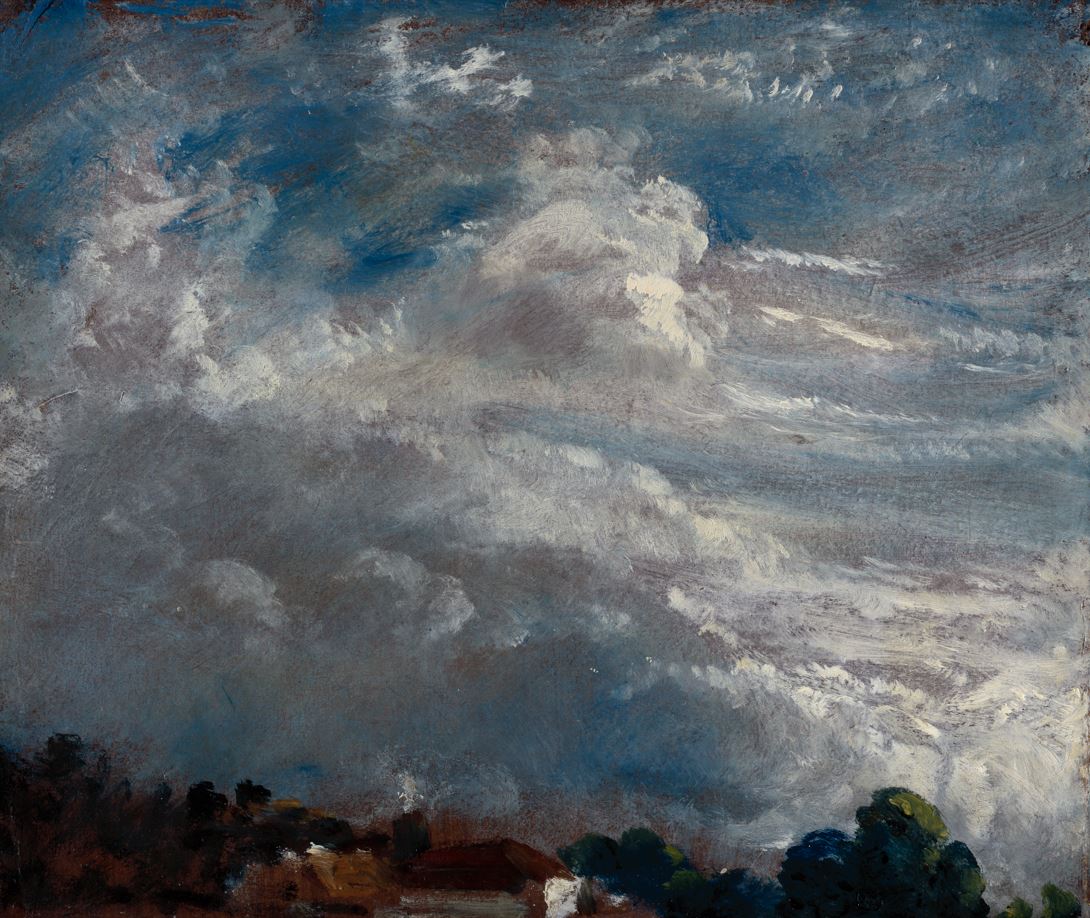
Discover Constable and The Hay Wain @ the National Gallery

Six footers

In 1818 at the age of 42, the well-established English landscape painter John Constable made a conscious decision to start painting bigger works and so began the first of what became known as his ‘six footers’.

The first one, ‘The White Horse’, exhibited in 1820, was so successful that Constable was elected an Associate of the Royal Academy on the strength of it, so he knew he was on to a good thing. The ‘Hay Wain’ was the third in the series. Constable painted it under pressure to make the deadline for submissions to the Royal Academy’s 1821 exhibition and, maybe surprisingly, it was painted entirely at his home in London. But he was able to do this because of the countless sketches and previous paintings he’d made of the same location and setting.

The Hay Wain by John Constable (1821) © The National Gallery, London

Constable knew this place so well because his father, Golding Constable, owned it. Golding was a wealthy mill owner and corn merchant so John had grown up surrounded by the appurtenances of the trade and knowing exactly what went into growing, harvesting and processing wheat. The house on the left of the picture belonged to Willy Lott, a tenant farmer, but behind the painter, behind us as we look at the painting, stood Flatford Mill which belonged to Constable’s father. Both stood on the east bank of the River Stour which, at this point, forms the border between Essex and Suffolk.

Map showing location of the buildings in Constables paintings of Flatford Mill and Willy Lott’s cottage

The Hay Wain, like much of Constable’s best work, came to symbolise a certain type of innocent rural scene, eventually becoming iconic of an innocent way of life which industrialising Victorian Britain knew it was losing.

The bicentenary connection

The National Gallery was founded in 2024 so this is its bicentenary year. It’s using the occasion to re-explore favourite items in the collection. It was around Van Gogh’s much-loved painting of sunflowers that the gallery created the brilliant Van Gogh: Poets and Lovers show which you must go and see.

In a similar way, they’ve used the opportunity to take John Constable’s super-famous painting The Hay Wain (1821), and make it the centrepiece of an exhibition in its own right. The bicentenary connection comes in because 1824 was the year when The Hay Wain was displayed at the Paris Salon to great acclaim and was awarded a gold medal, which Constable received from the French King, Charles X, in person.

The medal is here, on display, and is just part of this fascinating and FREE exhibition at the National Gallery, which brings together 50 or so paintings, sketches, drawings, models, contemporary and modern cartoons, photomontages as well as the artist’s own palette (!) to place this super well-known and well-loved image in its full artistic, political, cultural, geographical, agricultural and biographical context. It’s full of beautiful, relaxing rural paintings and fascinating facts.

Political context

To begin with, the socio-political context of the 1810s is dealt with in a fairly small section. At the end of the Napoleonic Wars, after the victory at Waterloo on 18 June 1815, the British Army was rapidly demobilised, with no provision or thought for hundreds of thousands of demobbed men dumped back in their rural communities.

In the same year the Tory administration passed the first of many Corn Laws. These blocked the import of cheap corn from abroad, thus creating a monopoly for British wheat-growers i.e. the landowning aristocracy. But while it guaranteed these landowners a good price for their product it raised the price of bread and related foodstuffs very sharply for ordinary people, leading to hunger and hardship.

Since the landowning class was in the majority in the House of Commons and dominated the House of Lords, it was a very naked form of class war: a few thousand aristocratic landowners arranged the law and economy to their immense benefit and to the starvation of millions of rural workers and the increasing urban proletariat. The corn laws weren’t abolished until 1846 and only after a generation of protests, agitation, riots and criticism.

This cruel and oppressive law doesn’t have much traction in the exhibition. It is dramatised in four or so contemporary political cartoons, by the likes of James Gillray and Joseph Rowlandson. The fiercest is this one by Charles Williams and titled ‘Political Balance’ (1816).

Political balance, An unexpected inspection, or A Good Old Master Taking a Peep Into the State of Things Himself by Charles Williams (1816) © British Museum

The only contemporary artists who spoke out against exploitation, poverty and despoliation of the countryside was the great William Blake but none of his political work is included here, just a couple of tiny illustrations from the Songs of Innocence and Experience.

Interesting though all this is to those of us with a taste for history, none of this rural poverty or agitation is visible in any of the actual paintings by Constable or Gainsborough, Turner or Mulready, Stubbs or Combes which are included here. The subject is raised by the curators only to be quietly forgotten.

The Hay Wain’s radicalness

Landscape painting

At the time in Britain, landscape painting was still considered an ‘inferior’ genre compared to history painting. Among other goals, Constable was determined to raise its prestige and this was part of his motivation for creating the six footers.

‘En plein air’

The Hay Wain was painted in the artist’s London studio over five months in preparation for the Royal Academy annual exhibition which Constable had entered numerous times before. He painted it from several preliminary sketches, probably created ‘en plein air’, a revolutionary approach for the period which Constable eagerly adopted in his quest to represent ‘truth to nature’. It was considered revolutionary in other ways.

Brown

The exhibition includes works by slightly earlier painters including George Stubbs and especially Thomas Gainsborough to show what the traditional approach looks like. In this Gainsborough painting the dominant hue is brown and the play of light is suggested by lighter and darker shades of the relevant colour.

Smooth

Above all the brushwork is invisible and the surface of the painting is flat and smooth.

Cornard Wood, near Sudbury, Suffolk by Thomas Gainsborough (1748)

The Stubbs painting, like the Gainsborough, is dominated by brown, and is as smooth as a horse’s bottom, all slick and shiny surface. Go up close, peer right into the painting, and its surface is as smooth as a piece of porcelain.

Reapers by George Stubbs (1785) © Tate

By contrast 1) Constable boldly used a much brighter shade of green but 2) much more noticeable is his looser, expressive handling of the paint with noticeable brushstrokes which you can see even from a distance. When you go up close you can see countless details which completely lack the consummate finish of a Gainsborough or Stubbs, loads of places where the paint gestures at what it is depicting.

He used a range of marks, surfaces and textures to reflect the variety that he saw in nature and to add to the mood of the painting. He used a palette knife and brushes to create expressive surfaces which are surprisingly varied – scuffed and scored and smeared, lumpy or rasped across the canvas, with small ripples and waves, surfs of impasto. The closer you get, the more varied and dramatic you realise the paintwork is.

Detail of the Hay Wain by John Constable showing the washerwoman by Willy Lott’s cottage (photo by the author)

Smooth when he wants to be

What makes this really striking is that, when he wanted to be, Constable could easily be as smooth as his predecessors. The exhibition includes two paintings of the view from the first floor of his family home which, the curators tell us, he made shortly after the death of his beloved mother, Ann.

Golding Constables Kitchen Garden by John Constable (July 1815) © Ipswich Borough Council Collections: Colchester + Ipswich Museum Service

It’s a quietly beautiful picture in its own right. It has deep biographical resonance not only because of the poignant dating of it, but also because it shows, in the foreground, the garden which was his mother’s pride and joy. But, for our current purposes, the chief thing about it is that the finish is immaculately smooth. If you go right up and peer closely, and from the side, you can see how smooth and finished the paintwork is, completely unlike the ridged and rasped and sprawling brushstrokes of The Hay Wain. He could do it when he wanted to. Not doing it was a very conscious statement of artistic intent.

Constable snow

I was mighty pleased with myself for noticing and then becoming obsessed with Constable’s use of white paint to create a kind of silvery chrome effect all over the Hay Wain. The more you look, the more you see it, not just highlighting the water but iridescent along the tops of the wain itself, dusting spars of wood and brickwork, suggesting the flickering light across the landscape and its reflection off multiple surfaces.

Detail of the Hay Wain showing the silver highlighting

However, I was deflated to read in the curators’ labels that this liberal use of flecks of white paint to represent the sparkling or reflection of sunlight, was noticed and criticised at the time, some smart aleck nicknaming it ‘Constable’s snow’.

Alongside the visible brushwork, the rasps of paint on canvas, and the ridges of paint, this silvery snow was used in the general criticism that Constable’s paintings were unfinished. Constable, of course, considered the plein air approach, the loose brushstrokes and the use of silver slicks of sunlight central to his aim of creating a realistic effect of being there and seeing the landscape, of conveying the shimmering, ever-changing light and shade effects of a real English day, with its everchanging drama of clouds and light.

Clouds

Constable was particularly interested in the study of clouds. The exhibition includes numerous paintings, sketches and drawings he made of cloudscapes. A man named Alexander Cozens wrote a book titled ‘A New Method of Assisting the Invention in Drawing Original Compositions of Landscape’ which included different types of cloud shape and the exhibition includes some of the 20 drawings he made from the book as well as oil sketches.

Cloud Study: Horizon of Trees, 27 September 1821 by John Constable © Royal Academy of Arts, London; photographer: John Hammond

What Salisbury tells us

The show includes the splendid ‘Salisbury Cathedral from the Bishop’s Ground’ (1823) and it is a deep pleasure to sit on the bench in front of it and just drink it in. What sumptuous, sensual beauty of composition, colour and light.

Salisbury Cathedral from the Bishops Ground by John Constable (1823) © V&A Images / Victoria and Albert Museum, London

Slowly several points emerge, namely around the use of light and shade and clouds. The dark cloud rising from behind the cathedral gives the composition a sense of drama (it’s interesting to learn that the Bishop of Salisbury actively didn’t like this dark cloud).

It also indicates the kind of day it is, one of those days when the sun comes in and out between clouds, and this explains the radiance of the cathedral facade: it’s one of those moments when the sun comes out from between clouds and makes whatever it shines on appear radiant. Once you notice this, you realise it also applies to the meadow in front of the cathedral, up to and including the cow, whereas the field and trees further towards the viewer are still in shadow.

With this in mind, if we go back to the Hay Wain, I suggest part of its popularity is down to its use of cloud and light as design features. On the face of it, it’s a painting of a cart in a pond but if you focus just on the play of light, and light on clouds, several things become obvious.

The Hay Wain by John Constable (1821) © The National Gallery, London

The spiral

In the West we read from top left to right. I suggest that one of the reasons the painting feels so satisfactory and pleasing is the way its design plays to this deep way of ‘reading’ visual elements. So if you start at the top left the cloud is very dark which leads your eye to the right, towards the nice light cloud, and your eye continues on round and down into the meadow which stretches off into the distance and is dappled with sunlight, before swinging down into the water and round to the cart in the pond.

So my suggestion is that we don’t just perceive it as a complex composition and pick out details at random but enjoy this sense of sweep and progression.

Comparing the sketch

A bit more evidence for this us supplied by the full-sized sketch of the Hay Wain which the exhibition also includes. Comparing the sketch and the finished painting suggest quite a few points from which I’d emphasise two.

Full-scale study for The Hay Wain by John Constable (about 1821) © V&A Images / Victoria and Albert Museum, London

1. Brown and green

Remember the idea that older landscape artists used a tastefully subdued palette of brown when painting outdoors? Well, the sketch clearly shows that this is how Constable began, using a far more sombre, brown and rather lifeless palette. Comparing the sketch and the finished painting shows how powerful adding in the vibrant shades of green transforms the finished product. They bring it to life; they make it zing with life, foliage, fertility.

The Hay Wain by John Constable (1821) © The National Gallery, London

2. Decluttering the composition

But back to the issue of composition, look at the one big, obvious difference between the sketch and the finished work. The figure of a horse and rider between the dog and the cart has been deleted. Why? Because including it crystallises the dog and cart from being light and almost random elements into becoming a strong central ensemble which dominates the picture. With it in your eye tends to go straight to it and you get distracted into peering closer to make out the precise nature of the figure on a horse (in fact, you have to peer quite closely to realise it’s a horse at all). And all this supersedes or obliterates the sweeping curve, the spiral I’ve described above.

Full-scale study for The Hay Wain by John Constable (about 1821) with added triangle © V&A Images / Victoria and Albert Museum, London

Keep it in and the eye goes straight to these central figures and tries to identify them / make them out, making you tend to overlook the wider composition. Remove it and your eye is freed to step back, to take in the larger compositional sweep, from dark cloud to light, round and down to the meadow, and only slowly and leisurely coming round to the cart. The picture becomes lighter and airier. It breathes.

History of an icon

It’s interesting to learn that John Ruskin, the godfather of mid-Victorian art criticism, really disliked Constable and helped depress his reputation for a generation. It was only later in the nineteenth century that Constable’s reputation bounced back and has remained high ever since.

The curators claim a major aim of the exhibition was to chronicle the rise of Constable from the kind of criticism he received in his lifetime and the active dislike of cultural arbiters in the mid-nineteenth century his current unassailable position as one of Britain’s classic painters. This is a fine ambition so it’s regrettable that the exhibition doesn’t really achieve it.

There are a few wall labels explaining that this or that painting was given to the National Gallery by supporters or, in one case, by his daughter, in this or that year, as if that tells us very much and that’s about it.

There’s a glaring absence of any explanation of what changed in aesthetic theory, in the practice of art, in social attitudes to the landscape, in artistic taste through the middle and later Victorian era to explain Constable’s rise and canonisation. I’d really like to have read this but didn’t see it anywhere.

So in the opening section there’s a 1920s black-and-white photo of Willy Lott’s cottage and we are told that it was extensively restored in the 1920s after a revival of interest in Constable’s paintings – but not why there was a revival of interest in Constable’s paintings. What was sufficiently different in the 1920s from the 1880s or 1860s to spark the investment? What changed and why?

Spoofs and parodies

To end on a lighter note, right at the start of the show, while they’re telling us how The Hay Wain has become an iconic image of the English countryside, the curators include half a dozen examples of how it’s been parodied and pastiched, used in cartoons and adverts for railways (‘Explore Constable country!’).

A striking one is this use of The Hay Wain in a 1929 cartoon bewailing the despoliation of the English countryside by cars and advertising hoardings. People tend to think this is a modern problem but here’s proof that it goes back at least a hundred years!

‘Had Constable lived today’ cartoon in the Daily Express, 2 March 1929, created by the Campaign for the Protection of Rural England © CPRE

There’s the satirical anti-war photomontage by radical anti-war artist Peter Kennard.

More up to date is this photomontage by Cold War Steve, where he’s cut and pasted leading political figures from 2019 into the scene. I like the truck full of dead washing machines but the killer detail is the image of Wayne Rooney riding a jet ski just to its left, so the joke is that this version of the picture should be titled ‘Hey, Wayne!’

The Hay Wain by Cold War Steve (2019) © Cold War Steve


Related links

Related reviews

Gainsborough: A Portrait by James Hamilton (2017)

Executive summary

Born in 1727, eighteenth century portrait and landscape artist Thomas Gainsborough was far less ambitious and canny than his main rival and the dominating artist of the day, Sir Joshua Reynolds.

Early in his career Gainsborough was fairly happy churning out portraits of local worthies in his nearest large town, Ipswich until he was encouraged to go to Bath to seek a higher class of client. Unlike Reynolds (a lifelong bachelor) Gainsborough married young – aged just 19 – the illegitimate daughter of an aristocrat who had settled a £200 annuity on her for life. The earnings from his portraits supplemented this basic family income.

  1. Suffolk (1727 to 1740) childhood in Sudbury
  2. London (1740 to 1748) apprenticeship, prints, acquaintance with Hogarth, marries Margaret Burr
  3. Suffolk again (1748 to 1758) first Sudbury, then the more profitable town of Ipswich
  4. Bath (1759 to 1773: 14 years, first in Abbey Street, from 1767 at 17 King’s Circus)
  5. London again (1774 to 1788)

In his letters we have Gainsborough’s own testimony that he didn’t really like painting portraits, and he actively disliked the ‘ugly’ aristocrats who were his clients. But he was good at it and by the 1760s found himself renting a big town house in Bath, with a coach and horses and servants to run, and paying for tutors for his two beautiful daughters. By 1769 he calculated his annual expenses at £1,000. He didn’t like his clients, he would have preferred to spend his life painting idyllic landscapes. But he was trapped.

By the 1760s Gainsborough was established as one of the best portrait artists of the day and so was invited to join the new Royal Academy of Art set up in 1768, but he repeatedly argued with the hanging committee about the placing of his works in the annual exhibitions, and in other ways kept his distance from the kind of elite London circles which his frenemy, Reynolds, moved in.

Handsome and attractive, Gainsborough had a reputation among his friends as a womaniser and party animal, which he acknowledged in his letters. His wife had to put up with a lot. But the real sadness of his biography is that, although he lavished love and attention on his two beautiful daughters things didn’t turn out as he hoped – one divorced within weeks of her wedding and the other suffering premature dementia.

Detailed review

Far less authoritative and comprehensive than Ian McIntyre’s life of Joshua Reynolds, for at least two reasons. The main one is Gainsborough’s life was far more fleeting and elusive. Reynolds led an active social life among leading figures of the day who all kept records of their dinners and conversations, dedicated their books to him, plus one of his pupils kept notes and wrote a detailed biography soon after his death, plus the minutes and accounts of the clubs and societies he was a member of, not least the Royal Academy of the Arts which he helped found and was the first president of. Reynolds kept a detailed appointments book which recorded all his sitters, the dates and times of their appointments. In other words the biographer if Reynolds has a mass of paperwork and evidence to work with.

Gainsborough is an altogether more fleeting character. He left relatively few letters (150 in all), no diary or journal or accounts book. He didn’t even own many books at his death. He didn’t cultivate the best circles or make sure he was mentioned in their books by the best writers. He painted the rich and famous but didn’t like them very much, unlike super-sociable Reynolds.

For the biographer who requires a constellation of dates to steer by, Gainsborough supplies thin pickings. (p.6)

Thomas Gainsborough

Thomas Gainsborough was born in 1727 into a large extended family based in the Suffolk town of Sudbury. His father was a weaver with ambitions to be a businessman, which got him into financial trouble – he only escaped debtors’ prison because of a family whip-round. A benevolent uncle – also named Thomas – left some money to help young Tom to pursue ‘some light handy craft trade’, and the family decided to send him to London at the tender age of 13 in 1740,

Here he trained under engraver Hubert Gravelot, of Huguenot extraction. Hamilton goes into some detail about the expanding print market of the mid-eighteenth century and the dominating figure of William Hogarth, whose moralised pictures had created a sensation in the 1730s – A Harlot’s Progress (1732), A Midnight Modern Conversation (1733), A Rake’s Progress (1735), Four Times of Day (1738). Gainsborough probably came into contact with Hogarth, but mainly worked for an established painter named Francis Hayman, although details about the period are sketchy.

[During his early years in London] whoever it was that nurtured him, Hayman or Hogarth or Canaletto or Hudson or other painters such as Arthur Devis who took assistants and apprentices, they all gave him something of what follows. (p.59)

The second reason this is not such a compelling book as McIntyre’s is that Hamilton makes an editorial decision to roll with the relative lack of information about Gainsborough and to make his approach a bit more impressionistic. Thus the opening sentences don’t tell us much about Gainsborough, but tell us everything about Hamilton’s style:

Thomas Gainsborough lived as though electricity shot through his sinews and crackled at his finger tips. There is a fire in Gainsborough: it lights up his paintings…

He is going to embroider and speculate – based on facts for sure, but a fairly thin picking of facts meringued up with many a fluffy turn of phrase.

Landscape, however, hovered around him like an old flame (p.84)

Like a family of cats jumping off a ledge, the Gainsboroughs had landed on their feet (p.160)

Whole pages pass wherein we learn a lot about mid-century Sudbury or Ipswich or Bath, embroidered and elaborated from contemporary accounts by diarists and commentators – but where Gainsborough himself doesn’t make an appearance. Other pages pass in speculation and guesswork and Hamilton is fond of drawing comparisons between aspects of Gainsborough’s society and our own.

Just as a salesman or marketing person or builder must drive an expensive car in the twenty-first century to reassure the world that he or she is doing all right, so in the eighteenth century a portrait painter had to look neat, confident and successful to attract the custom he needed. Fine clothes were very expensive indeed, and much aspired to: flash car and flash waistcoat are probably equivalent as status signifiers, if not in monetary terms. (p.120)

Or he quotes a letter where Gainsborough brags about owning 5 viola da gambas, three Jayes and two Barak Normans:

Today, a star of the art world might tell a friend, My comfort is I have 5 Lamborghinis, 3 Ferraris and two Aston Martins’ Their value as status symbols is roughly similar. (p.262)

Hamilton’s relentless urge to give eighteenth century people and customs a 21st century comparison can get pretty annoying, and sometimes offensive. After half a page giving a reasonable enough analysis of Gainsborough’s great portrait of the young women musician Ann Ford, Hamilton concludes:

With Ann Ford, Gainsborough added extra titty to the fluctuating city. (p.188)

Key learnings

Jack the Lad

The biggest surprise, which Hamilton announces early and then refers repeatedly is that Thomas Gainsborough was a bit of a lad, a roaring boy, one for wine and the ladies. Hamilton routinely refers to Gainsborough as a lad, to his laddish behaviour, and to his ‘mates’.

There are distinct Jack-the-Lad tendencies about Gainsborough the young man… The 19th century song about Jack-the-Lad ‘swigging, gigging, kissing, drinking, fighting’ had echoes in the young Gainsborough…(p.133)

The idea is that although Gainsborough mixed professionally with numerous aristocratic sitters – ‘the Quality’, in the contemporary term – his tastes remained those of a country boy who came to London in his teens and was introduced to a dizzying world of booze and broads (Hamilton has a section describing the delights of Vauxhall Pleasure Gardens) and what letters we have contain rather oblique references to regretting being led astray, particularly on his visits to London.

This is a striking claim but I don’t think he actually backs it up with that much evidence, mostly hearsay collected after his death, for example Joseph Farington quoting the artist’s daughter as saying he ‘was passionately fond of music… and this led him much into company with musicians, with whom he often exceeded the bounds of temperance & his health suffered from it, being occasionally unable to work for a week after’ (quoted page 111). Fine, but she was a small girl at the time and this report comes from decades later. Reliable?

Hamilton asserts that one his visits to London from Bath he had ‘the casual sexual encounters that punctuated his life’ but immediately goes on to say:

How many or how regular these were is impossible to tell. (p.199)

Well, if it is ‘impossible’ to tell how many ‘casual sexual encounters’ Gainsborough had, how come Hamilton is confidently telling us that they ‘punctuated his life’? Throughout the book I had the uneasy feeling that Hamilton was bending or interpreting the evidence to suit his vision of a freewheeling Jack the Lad. The more he asserted it, the more reluctant I felt to acquiesce, the more doubtful I felt of Hamilton’s opinions.

Hamilton quotes the daughter of an Ipswich friend describing him as ‘very lively, gay and dissipated’ (p.118) which fits his Jack the Lad thesis, but then goes on to explain that ‘dissipated’ might have its 18th century meaning of ‘spendthrift, an simply indicated that he spent beyond his means in order to dress his wife and growing daughters appropriately.

In autumn 1763 Gainsborough was very ill, laid up for three months unable to work, and a Bath newspaper even reported that he had died! Hamilton interprets the handful of letters we have to mean the illness was associated with a sexually transmitted disease because Gainsborough describes feeling guilt and regret. But then, to my surprise, Hamilton concedes:

It may be the case that Gainsborough’s long near-fatal illness had nothing to do with his sex life… (p.200)

So Hamilton’s entire speculation about the illness being related to an STD is just that – speculation. This kind of building castles in the sky and then, reluctantly, admitting the castles may all speculation, slowly and steadily undermined my trust in Hamilton as a guide and interpreter to Gainsborough’s life.

Making it up

It’s a feeling compounded by the amount of sheer invention which appears on every page.

Now, in his late thirties, he was active, busy, in demand. His sitters’ book in Bath, assuming he had one, would have bulged with the names of old clients, new clients, their friends and relations and their various requirements. (p.203)

‘Assuming he had one’. Hamilton did warn us in his introduction that he would be weaving a certain amount of fantasia around the very thin documentary evidence which survives, and I wouldn’t mind if I thought his spinning were justified, but… his relentless habit of inventing things and then commenting on them didn’t agree with me and I came to dislike reading this book.

Destroyed letters

We learn that part of the reason that so few of Gainsborough’s letters survive is because a surprising number were in Hamilton’s view ‘filthy’ – presumably sexually explicit – and so Gainsborough’s executors destroyed them – for example, the cache of letters sent to his friend Samuel Kilderbee and destroyed by Samuel’s heirs because of their ‘obscenity’.

But if they have been destroyed… how can we know what they contained? The generations after Gainsborough’s were not only more puritanical about sex but about religion too, and about family values. I.e. there could be a number of grounds why the letters gave offence to later generations and it was considered best to destroy them.

Spirited

What is believable – because we can read it in the letters and in many diary accounts and memoirs of the period – is that Gainsborough was very high spirited. Good-looking, cutting a graceful figure, lively and talkative, he said whatever was on his mind, a fountain of lively observations, so much so that surviving letters and memoirs agree that, next morning, on sober reflection, he often regretted things he said. But being over-talkative and shooting from the hip is very different from being sexually promiscuous.

This high-spiritedness is a quality Gainsborough readily admits in himself, indeed actively promotes in some of his letters, writing:

I am the most inconsistent, changeable being, so full of fitts and starts… (quoted p.257)

or describing himself as:

a Long cross made fellow [who] only flings his arms about like threshing-flails without half an Idea what he would be at. (p.258)

Joshua Reynolds

Later memoirists, notably Ephraim Hardcastle, give colourful accounts comparing and contrasting Gainsborough and Joshua Reynolds. Hardcastle paints Reynolds in conversation as pursuing ‘a steady philosophic course’, while

the lively Gainsborough was a skipping and gambolling backwards and forwards from side to side… none for enthusiasm and vivacity could compare with he. (p.199)

Now this is the aspect of Gainsborough which is most consistently reported – his unbuttoned liveliness and spontaneity.

Margaret

Aged 19, Thomas married a local woman Margaret Burr. She was the illegitimate daughter of the Duke of Beaufort, who acknowledged her and had settled a £200 annuity on her. Thus Thomas was marrying into what counted, in Sudbury, for money. It was to be a difficult marriage. Both were faithful, there was no divorce, Thomas had no mistresses, but Margaret owned and managed her own money, and there is plenty of evidence that she took a strong-willed approach to Thomas’s income, too (from his own letters and the accounts of others). He sometimes felt too much under her thumb. It was an effective working relationship but he writes on a couple of occasions that he didn’t feel worthy of her and the cumulative sense is that it was not a very loving marriage.

A life in five acts

The trajectory of his life is indicated by the five parts of Hamilton’s account:

  1. Suffolk (1727 to 1740) childhood in Sudbury
  2. London (1740 to 1748) apprenticeship, prints, acquaintance with Hogarth, marries Margaret Burr
  3. Suffolk again (1748 to 1758) first Sudbury, then the more profitable town of Ipswich
  4. Bath (1759 to 1773: 14 years, first in Abbey Street, from 1767 at 17 King’s Circus)
  5. London again (1774to 1778)

Landscapes

He knew he was better at landscape than at portraits, and enjoyed painting landscapes more, but portraits paid the bills (in fact, Hamilton tells us that during his time in Ipswich 1752 – 1759, Gainsborough painted so many landscapes that he ended up giving them away, p.108).

Gainsborough’s landscapes are indebted to the style of Dutch landscape painting crossed with his own immersion of the Suffolk countryside around Sudbury. His early landscapes are already a joy to look at. This one was painted when he was only 20 years old. Pretty impressive.

Cornard Wood by Thomas Gainsborough (1748)

Doll paintings

Whereas most of his portraits before the 1750s are embarrassingly bad. They look like skinny children’s doll’s with empty dolls’ faces plonked in lovely landscapes. In fact, Hamilton explains that the bodies really were painted from so-called ‘lay dolls’, wooden mannekins with jointed bodies which could be arranged in  different postures. Later, from the 1760s, he pained bodies and clothes from life, but not from the actual sitters, from much cheaper models brought in and made to wear the sitters’ clothes (p.218).

Sarah Kirby and Joshua Kirby by Thomas Gainsborough (1751-1752)

Music

Gainsborough was very musical, unlike Reynolds. He was proficient on the violin and a member of the Ipswich Music Club which held regular concerts. He was easily distracted by invitations to play music, and portrayed musicians, with their instruments e.g. Johann Christian Fischer, Carl Friedrich Abel, Ann Ford,

Hamilton quotes the letter to William Jackson, well-known to Gainsborough buffs, in which the artist declares he is sick of painting portraits and wishes he could go off somewhere quiet in the country, just him and his viola da gamba, and live a quiet life of music and paint Landskips (p.260). However, Hamilton marshals the evidence of friends that he wasn’t, actually, that good at music and also that he was very impulsive, taking up a string of different instruments each time he heard one being played, and never becoming proficient on any of them (p.266-270).

Style transformed

Hamilton doesn’t really identify how and why Gainsbrough’s depiction of human figures and faces changed, but change it did, drastically, between the early 1750s (when, to be fair, he was still only 23, 24, 25) and the later 1750s. But it amounts to a revolution in style, which allowed him to create depictions of human faces and figures of transcendent grace and beauty, such as this, the famous unfinished portrait of his two young daughters, Mary and Margaret.

The Painter’s Daughters with a Cat by Thomas Gainsborough (1760-1761)

Bath

Bath was hectic with social life and also with artistic competition. Over the 18th century as a whole some 160 artists worked in Bath, the majority portrait miniaturists. The most successful, like Gainborough, provided life-size portraits in oil on canvas and had a permanent show room as well as a ‘painting room’ (the Italian word studio was only introduced in the 19th-century).

Until Gainsborough arrived the most successful portrait painter in Bath was William Hoare (1707 – 1792) who Gainsborough quickly eclipsed, though the two men became friends. A flick through his work shows that it is very capable at catching a likeness, but a bit dead and, above all, set inside.

People in landscapes

A glance at one of the largest and most ambitious (double portraits) Gainsborough painted at Bath, The Byam Family (1764) instantly shows you how placing his sitters outside, in a kind of generic gentle south-of-England wooded countryside immediately transforms the subjects, giving them a lordly sense of style and movement as well as a sense of ownership of the land they walk through. And gives the viewer a similar sense of breadth and ease

Gainsborough’s painting method

The younger painter Ozias Humphrey observed Gainsborough painting on numerous occasions and left detailed descriptions (pp.217-218).

  1. Surprisingly, Gainsborough painted by candlight in a room kept perpetually dark.
  2. He painted the sitter’s face in chalk and arranged the canvas so it was only inches from the sitter’s face.
  3. He was very restless, stepping back from the canvas to size it up, then quickly right back up to it to paint more, in an endless round of fidgety movement.
  4. All he needed was the face; the costume was painted afterwards, worn by a model (often his wife or one of his by-now grown-up daughters was dragooned in).
  5. He painted for 5 or 6 hours a day continuously, quite a physically demanding regimen (although this is from the account of the unreliable witness, Philip Thicknesse, quoted page 339).

Contempt for sitters

Gainsborough was fairly open about not liking most of his sitters: he described portrait painting as ‘my dam’d business’ and a ‘curs’d face business’, of the clients as ‘damn gentlemen’ and ‘confounded ugly creatures’ (quoted page 275).

Royalty

Ironically, for all his focused ambition, Joshua Reynolds had a troubled relationship with King George III (ascended the throne in 1760) not least because Reynolds associated with writers and politicians associated with the Whig i.e. anti-royal faction. Whereas Gainsborough who was far less professionally and socially ambitious than Reynolds, was asked to do portraits of the king and queen in 1780 and ended up getting on famously with both of them, invited back to do portraits of their large brood of children and individual portraits.

Models

No, not that sort. Later in his career, Gainsborough enjoyed making models for landscapes which could fit on a table and were constructed from broccoli, moss and stones.

Prices

At the height of his fame, in the 1780s, Gainsborough charged for a three-quarters portrait 40 guineas, for half-length 80 guineas, and for a full-length 160 guineas.

Religion

Hamilton describes Gainsborough as ‘a devout Anglican’, though there are almost no references to him going to church and only the most generic religious references in his letters, which are strewn with swearing (lots of ‘Damns’). It was a religiously tolerant family. His older brother, Humphrey, was a non-conformist minister, and his sister Mary, was a Methodist.

Kew

Gainsborough is buried, not back home in Suffolk, in fashionable Bath, or in mercantile London, but in the graveyard of St Anne’s Church, Kew. I used to go and sit by his tomb and eat my sandwich lunch, when I worked at Kew.

Concluding image

There are a lot of Society ladies and gentlemen to choose from, but I think one of Gainsborough’s greatest paintings is this portrait of his wife, Margaret, done in the late 1770s. It is an extremely subtle, sensitive, sensuous depiction of his spouse of 25 years, a brilliant portrait of any middle-aged woman, honest and frank and a universe away – not only in terms of art, but of experience – from the silly doll-figures of the 1740s. It is a triumph of technique but also of human wisdom.

Portrait of Mrs Gainsborough by Thomas Gainsborough (1778) @ The Samuel Courtauld Trust, The Courtauld Gallery, London


Related reviews

More eighteenth century reviews

Gainsborough’s Family Album @ the National Portrait Gallery

This exhibition is pure visual, intellectual and emotional pleasure. It is beautifully hung and really informatively labelled and guided. In particular the American scholar who curated it, David Solkin, is pitch perfect in his audioguide commentary, telling you exactly what you need to know about each key painting, and about Gainsborough’s wider family background.

It’s a simple enough idea: Thomas Gainsborough (1727 to 1788) was one of the 18th century’s most successful portrait painters, rising from modest beginnings in Sudbury Suffolk, to owning a mansion on Pall Mall and being painter to Britain’s aristocracy, rivalled only by the towering figure of his contemporary, Sir Joshua Reynolds.

But alongside his formal commissions he painted an unusual number of portraits of his immediate and extended family. This exhibition brings together some 50 of these paintings and a few drawings, some familiar from national collections, some never before publicly displayed, to tell the story of his changing and evolving painterly style, as well as the biographies of himself, his wife and daughters, parents, brothers and sisters, and other members of the extended family.

It’s not quite a portrait of the age but it’s certainly a portrait of a charming, sometimes tragic, often comic and endearing family, told via sketches, drawings and paintings which are sometimes breath-takingly beautiful.

The two Gainsboroughs

It’s always seemed to me there are two Gainsboroughs: the early paintings from the 1740s feature beanpole figures with Woodentop faces which I personally find difficult to take seriously.

the artist with his wife Margaret and eldest daughter Mary by Thomas gainsborough (1748)© The National Gallery, London

‘The artist with his wife Margaret and eldest daughter Mary’ by Thomas Gainsborough (1748) © The National Gallery, London

Then something seismic happened to his technique during the 1750s, so that within a decade his handling of the human face had become marvellously expressive, and his handling of the volume and shape of the human body, masterful.

The following is one of my all-time favourite paintings, one of the best depictions of love and affection and innocence I know of. it looks and feels as if by a completely different artist from the painting above.

Mary and Margaret Gainsborough, the artist's daughter, with a cat by Thomas Gainsborough (1760-61) © The National Gallery, London

‘Mary and Margaret Gainsborough, the artist’s daughter, with a cat’ by Thomas Gainsborough (1760 to 1761) © The National Gallery, London

It demonstrates several of Gainsborough’s qualities. One is the characteristic ‘feathering’ of the trees and clouds in the background. Another is that it is unfinished – a lot of the paintings in this exhibition are unfinished. They demonstrate his sprezzatura, his ability to rough out an image at astonishing speed.

And for me, personally, I love the way you can see the artist at work. I almost like the rough sketching of the arms and hands as much as the smooth finish of the seraphic faces. They remind me of the quick evocative charcoal sketches by Degas which were exhibited next door at the National Gallery earlier this year. I love draughtsmanship, outlines, the miraculous way a few lines on a flat surface can conjure up the look and feel of warm human bodies, and many of even the most mature paintings on display here have an unfinished quality, which allows you to enjoy Gainsborough’s terrific verve and confidence.

Gainsborough’s speed

In fact Gainsborough’s legendary speed often caused him problems. One was that, even once he was famous, his clients regularly complained that he’d left his paintings unfinished. There’s an example here of his wife, done in sumptuous silks but, when you look closer, lacking hands, as if he was in too much of a hurry to bother.

As to sheer speed the commentary tells us that he made this painting of his nephew and protégé, Gainsborough Dupont, in one hour. One hour. It is riveting to be able to examine this painting really closely and observe the nerveless precision of his draughtsmanship and the dash and confidence of his brushstrokes. The eyes and eyebrows in particular dazzled me. Note the ‘feathering’ effect of the background and the quick, dashed-off impression of the boy’s ‘cavalier’ costume.

Gainsborough Dupont, the artist's nephew by Thomas Gainsborough (1773) Waddesdon (the Rothschild family)

‘Gainsborough Dupont, the artist’s nephew’ by Thomas Gainsborough (1773) Waddesdon (the Rothschild family)

The influence of van Dyck

As he became more successful the young painter moved from his Suffolk home to the fashionable spa resort of Bath. Here he made important contacts with rich clients and also got the opportunity, when visiting the aristocracy, to see their collections of Old Masters.

Of all the past masters, the one that struck him most was Sir Anthony van Dyck, the Flemish painter who came over to work at the court of Charles I in the 1630s. I’d love to know whether it was the deliberate attempt to copy van Dyck which led to the revolution in his work which I indicated above. Certainly Gainsborough revered van Dyck till his dying day. In fact the exhibition tells us that, as his death from terminal cancer approached, he told those around him he wanted to be measured against van Dyck, and apparently his very last words were ‘Van Dyck is right’.

The commentary on the Gainsborough Dupont portrait mentions that van Dyck used flicks of red to create depth of colouring of human skin and then points out just such red flecks which you can see if look closely above the figure’s left eye. It’s the type of opportunity to lean right into the real paintings, and to really appreciate their subtle technique – to see at first hand exactly how paint is laid onto the canvas – which makes visiting exhibitions like this so worthwhile.

Gainsborough’s daughters

The exhibition brings together all twelve surviving portraits Gainsborough made of his beloved daughters. The ones of them as children are wonderful (see above) but the portraits follow them through into young womanhood and then maturity. We learn at one point that he taught them both how to paint landscapes so that they would have a trade to fall back on in case he should be struck down. Later on we learn that the younger sister married but the marriage broke down after just two years. She suffered mental illness and moved in with her older sister who never married and cared for her for the rest of her life.

In this painting I was drawn to the peripheral details, to Gainsborough’s ‘feathery’ treatment of the trees’ foliage, and to the shaggy dog, a symbol, we are told, of fidelity, to the extraordinary finish on the shimmering silk of the daughter on the left. But keep returning to the faces, especially of the daughter on the right, which seems to frank and open and candid.

Mary and Margaret Gainsborough, the artist's daughters by Thomas Gainsborough (1770-74) Private collection

‘Mary and Margaret Gainsborough, the artist’s daughters’ by Thomas Gainsborough (1770 to 1774) Private collection

Gainsborough’s wife

Family tradition had it that Gainsborough painted a portrait of his wife every year and gave it to her as a present on their wedding anniversary.

The commentary doesn’t make a meal of it but strongly hints that Gainsborough was serially unfaithful to his wife who was well known for having a fierce temper. Maybe the paintings were a form of atonement.

Rather beautifully, their relationship is discussed in terms of their dogs because Thomas owned a brisk alert collie which he called Fox (maybe because it looked a bit fox-like but also in humorous reference to the fat radical politician of the day, Charles James Fox). His wife owned a spaniel, which she named Tristram after the hero of the wildly popular contemporary novel, Tristram Shandy. Moreover:

‘Whenever [Gainsborough] spoke crossly to his wife …he would write a note of repentance, sign it with the name of his favourite dog, ‘Fox’, and address it to his Margaret’s pet spaniel, ‘Tristram’. Fox would take the note in his mouth and duly deliver it…’

In 1746, aged just 19, Gainsborough had married Margaret Burr, an illegitimate daughter of the Duke of Beaufort, who settled a £200 annuity on the couple. The commentary points out that at various tight moments in the 1750s and before he became successful, the couple had to borrow extensively against the promise of this annuity.

Apparently, Margaret was the tough-minded, business-minded person in the relationship, with Gainsborough being the more slothful and phlegmatic. He casually had affairs. She went mad with anger.

None of this is present in the later portraits of her, quite a few of which are gathered here, which really beautifully capture the flavour of mature married love, of mutual forgiveness and affection. Next to the daughters with the invisible cat, this painting of Margaret Gainsborough was my favourite work in the show. It is marvellous how he has captured (or invented or created) the impression of deep and affectionate character in her face, in the deep calm accepting maturity of her gaze.

Margaret Gainsborough, the artist's wife by Thomas Gainsborough (1777) The Courtauld Gallery, London

‘Margaret Gainsborough, the artist’s wife’ by Thomas Gainsborough (1777) The Courtauld Gallery, London

Other points

The exhibition has other themes. Although he made his living as a Society portrait painter, throughout his life Gainsborough’s first love was landscape painting, and the exhibition contains a massive unfinished landscape, included on the pretext that two of the figures in its central incident of a farm cart pulled by unruly horses are based on his two daughters (the white-chested figure looking up, and the woman being pulled up into the cart).

The Harvest Wagon by Thomas Gainsborough. (1767) the Barber Institute of Fine Arts

‘The Harvest Wagon’ by Thomas Gainsborough. (1767) The Barber Institute of Fine Arts

We learn an awful lot about Gainsborough’s extended family and there is a big family tree at the start of the show showing just how extensive it was. The wall labels give us interesting anecdotes about his father and mother (he went bankrupt) about his sisters (one was a milliner which gave him a lifelong interest in fabrics and women’s dresses) about one brother, Humphrey, who became a non-conformist minister and was also a noted inventor, while the other one, John, became known in the family as ‘Scheming Jack’ because of his endless moneymaking plans and schemes all of which came to nothing with the result that Scheming Jack and his family lived on handouts from his siblings.

In other words, there’s a lot of fascinating gossip-cum-social history mixed in with the art appreciation.

And then there is the steady sequence of self-portraits, not quite as profound and searching as, say, Rembrandt’s, but stretching from his earliest works in the 1740s right to the end of his life in 1788, which take you on a fascinating journey from ambitious neophyte, to proud father, to accomplished craftsman, to ageing husband.

The exhibition tells us that he wanted this self-portrait to be the approved one, with (as the commentary points out) its rather quizzical raised eyebrow, and the air of a calm mature man, confident in his powers and conscious of a life well lived (and note the jazzy, unfinished squiggles which depict his neckerchief. Dazzling sprezzatura and confidence right to the end!)

Self Portrait by Thomas Gainsborough (1787) Royal Academy of Arts, London

Self Portrait by Thomas Gainsborough (1787) Royal Academy of Arts, London

This is a wonderful, gossipy, beautiful and life-affirming exhibition.

Battle of the videos

NPG have commissioned an official video of the show:

But there’s also an informal review by Visiting London Guide which shows more pictures and gives more information.


Related links

More eighteenth century reviews

More National Portrait Gallery reviews

Our Betters by Somerset Maugham (1923)

This is another of Maugham’s well-made comedies. Apparently it was written during the Great War, in 1915, but not staged in England until 1923 because it was thought that it might alienate American public opinion, which we were trying to persuade to enter the war.

It is set in the cynical but stylish High Society we are used to from Maugham, but this time concerns a group of Americans, not posh Brits – Americans who have married into British or European ‘Society’.

The characters

There is a sort of chorus of three mature American matrons who have married British, French or Italian aristocrats:

  1. Pearl, Lady Grayston who married George Grayston, a baronet
  2. Minnie Hodges who married and then divorced the Duc de Surennes and now is always in love with some beautiful young man or other, currently the gorgeous pouting young Tony Paxton
  3. Flora van Hoog, who married an Italian aristocrat to become the Princess della Cercola but, when he began taking mistresses, abandoned him to come and live in London and now pursues philanthropic causes and charities which she pesters her friends about.

There is also a couple of older American men who have made their way in British society: the brash, loud and over-dressed Thornton Clay, and the corrupt 70-year-old American Arthur Fenwick who made his fortune selling poor quality food to the American working classes and is now opening stores to do the same here in London.

Together these five represent a variety of ways older Americans have integrated and exploited their position. Set against them are the Younger Generation who are trying to make their life decisions, namely whether to marry for love or money (a dilemma which would have been familiar to Jane Austen a century earlier).

Young Bessie Saunders is heiress to an American fortune staying with her older sister, Pearl. Pearl’s husband, Lord George Grayston, very conveniently doesn’t live with her, allowing her to conduct her gay social life and numerous flirtations in London’s High Society without hindrance. All three acts are set in her houses – Act One in her grand town house in Grosvenor Square Mayfair, and Acts Two and Three in Pearl’s country retreat at Abbots Kenton, Suffolk.

Bessie has only recently arrived from America and been swept off her feet by the giddy whirl of London society. Back in the States she was engaged to a nice, unspoilt, young American gentleman, Fleming Harvey when she was 16 and he 18. Soon after arriving in London and seeing the wider world she wrote him a letter breaking off the engagement. She is being wooed by an English aristocrat, Lord Harry Bleane. Now Harvey has arrived in London and, understandably, commences trying to woo her back.

Meanwhile Act One introduces the love triangle between the good looking, slender, immaculately dressed but poor young Brit, Tony Paxton, with whom the ‘Duchesse’ (original name Minnie Hodgson, daughter of a Chicago millionaire who made his money in pork) is besottedly in love. It only slowly emerges that Tony is revolted by the desperation of the Duchesse’s passion and has become smitten with Pearl, precisely because she is so playfully unavailable.

Comedy

Comedy is extracted from the interaction of all these types – the three cynical ladies, the earnest and easily shocked young American boy Harvey, the sincere English Lord Bleane, the spoilt brat Tony Paxton, with Bessie playing her part: only slowly does it emerge that the play hinges on Bessie’s choice of whether to stay in England and marry an English lord in order to join the kind of amoral if stiflingly ‘correct’ lifestyle the three ladies live – or whether to reject European corruption and return to pure and innocent America (the subject of many of Henry James’s novels).

And there is something deeply comic about the way all these amoral characters pursue their cynical schemes against the backdrop of the impeccable formality of the grand house in Grosvenor Square Mayfair and at Pearl’s country retreat at Abbots Kenton, Suffolk, with their silent servants, especially the butler, Pole.

Just the existence of a dutiful and obedient butler, overhearing all their selfish schemes with complete discretion, is itself funny. ‘Very good, m’lady.’

Speaking of Funny, Maugham isn’t Oscar Wilde. His bon mots don’t ring and dazzle. But the play does have quite a few moments of brightly comic dialogue.

Bessie: Does George know?
Pearl: Who is George?
Bessie: Don’t be absurd, Pearl. George – your husband.

Or:

Fleming: Has it occurred to you that he wants to marry you for your money?
Bessie: You could put it more prettily. You could say that he wants to marry me with my money.

Or:

Clay: Some of these American women are strangely sexless.
Fleming: I have an idea that some of them are even virtuous.
Pearl [with a smile]: It takes all sorts to make a world.

Or:

Duchesse: I know he’s lying to me, there’s not a word of truth in anything he says. But he’s so slim I can never catch him out.

Or:

Pearl: You’re the very person we want, Thornton. An entirely strange young man has suddenly appeared on my doorstep and says he is my cousin.
Clay: My dear Pearl, that is a calamity which we Americans must always be prepared for.

And:

Duchesse: He makes me so miserable but I love him… He wants to marry me, Pearl.
Pearl: You’re not going to!
Duchesse: No, I won’t be such a fool as that. If I married him I’d have no hold over him at all.

Act Two

In Act Two, at Pearl’s country house, various interactions give us a deeper sense of the characters – of the three older women’s American backgrounds, the men they married, how they’ve coped with divorce and separation and so on.

Fleming is still really sweet on Bessie but she is agonising over whether to accept Lord Bleane. Fleming would like to hate Bleane but is disappointed to discover that he’s actually a good guy who tells Bessie he was originally attracted to her money (the fact that she was rich being broadcast all over London by her elder sister, Pearl) but that now he really is in love with her.

Their story is, for this middle part of the play, eclipsed by the passion with which pretty young Tony Paxton a) is revolted by the cloying over-attention the lurid Duchesse lavishes on him b) is powerfully attracted to Pearl. Against the latter’s better judgement Paxton persuades her to accompany him to the tea-house in the garden. Duchesse, in her violent jealousy, suspecting something is up, despatches innocent little Bessie to fetch her handbag from the same tea-house where Bessie sees… something so horrible that she rushes back into the drawing room where all the other characters are playing cards (are the couple having just a snog or actually having sex??). When Minnie provocatively asks what on earth is wrong with her, it prompts the tear-filled admission that she has seen Pearl and Tony… together!

When Pearl and Paxton make a nonchalant entrance to the drawing room it is to discover that everybody knows (know what? were they having a snog? a grope? full-on sex? it is never explained).

Tony has blown his relationship with Duchesse. More fatally, the doting old millionaire Fenwick has all his fond illusions about Pearl being pure and romantic utterly burst. ‘The slut, the slut’ he repeats, in angry despair. Given that he substantially funds her lifestyle this is a major blow.

Act Three

Act Three takes place in the same drawing room on the afternoon of the following day. The atmosphere is very strained, Pearl didn’t come down from her bedroom for either breakfast or lunch, the innocent menfolk (Clay and Fleming) and women (the Princess) tiptoed around the furious fuming Duchess while Fenwick was purple with rage. Their conversation informs us that the previous evening turned into a blazing row with words exiting the dementedly angry Duchess’s mouth that none of them had ever heard before, as she screamed her rage at Tony and Pearl.

The Duchess is pouring her heart out to the Princess when Tony sidles in looking for cigarettes. There is a comic scene where she turns on him, all outraged pride and anger, insisting he leave the house immediately and will be booted out of the flat in London which she pays for him to live in, while Tony is all sullen pouting. But the comedy is in the slow insinuating way in which their positions shift until the Duchesse is begging Tony to be nice to her and, eventually, she makes the Grand Concession of relenting and saying she will marry him – to which Tony’s only response is ‘Does that mean I’ll be able to drive the Rolls-Royce?’ By this stage we have grasped the depths of the Duchess’s helpless infatuation and the true extent of Paxton’s shallow selfishness.

The remaining scenes showcase Pearl’s brilliantly scheming to redeem a tricky situation: it will take all her wiles and cunning.

First she makes an entrance looking fabulous. Then she holds tete-a-tetes with Bessie, Clay, the Duchess and Fenwick. She reveals all her cunning ploys to Clay (and thus, to us, the audience).

1. To the Duchess she reveals that she has been phoning all her contacts that morning and has managed to get Tony a job in the government, nothing too demanding. Over the course of feline dialogue she is slowly able to win the Duchess back round to being her friend.

2. Then she explains to Clay how she is going to play the little-girl-lost for Fenwick whose self-image is of a Strong Masterly Man; she will play weak to encourage his narcissistic sense of his own masculine resilience, and so it pans out. After five minutes she has him back eating out the palm of her hand under the delusion that he is magnanimously forgiving her.

Only Bessie, her sister, sees straight through her and indeed through the lifestyle of all these Americans-in-Europe.

She has a big scene where she begs Lord Blaine to release her from their engagement. At the centre of the scene is the Author’s Message: Bessie has seen that English girls are bred up to responsibility and dignity and so know how to handle and manage their wealth; whereas the American women who marry into the British aristocracy have no sense of noblesse oblige or duty, but simply see it as an opportunity for frivolous pleasure, hence their silly flirting and superficial romances. It is not them, it is the niche they move into, which turns them into monsters. As Bessie has seen at close quarters how her beloved elder sister Pearl has become a monster of manipulation. Bessie is determined not to become like that.

The play ends with her witnessing her sister’s pièce de resistance – first thing that morning Pearl had sent her Rolls to London to collect the most fashionable dancing teacher in London and beg him to come down and stay the night. When he enters all the guests who swore they would leave in disgust at her behaviour (Fenwick, the Princess, but especially the Duchesse and Paxton) all confirm that they will stay for dinner and dancing. Despite committing just about the worst social crime imaginable (being caught red-handed being unfaithful to her elderly lover and stealing her best friend’s lover) Pearl has manipulated everyone into forgiving and forgetting.

Bessie watches all this with disgust and, in the last line of the play, vows she will be returning to America at the first opportunity.

So it’s a brittle social comedy of comically amoral, upper-class behaviour among rich American title-hunters in England – with just enough of a sting in the tail to elude the censorship but have the more high-minded critics admitting that it does have a sound moral message. It is, in other words, a clever and entertaining theatrical confection perfectly suited for its times.

Adaptations

The play was turned into a Hollywood movie in 1933, directed by George Cukor. Here’s a clip.

It was adapted for BBC radio in 1998.

It had previously been revived at the Chichester Theatre in 1997, with the throaty American actress Kathleen Turner playing Pearl and Rula Lenska as the Duchesse. The fact that Turner plays the same role in the radio broadcast suggests that one led on to the other. The Daily Telegraph reviewed the stage play. I am puzzled why Patrick O’Connor casually calls Maugham misogynist since a) all the strongest characters are women, the men being just foils and pretexts b) the women themselves cover a wide range from the strong, clever, scheming Pearl to the genuinely innocent but, ultimately decisive, Bessie.


Related links

Somerset Maugham’s books

This is nowhere near a complete bibliography. Maugham also wrote countless articles and reviews, quite a few travel books, two books of reminiscence, as well as some 25 successful stage plays and editing numerous anthologies. This is a list of the novels, short story collections, and the five plays in the Pan Selected Plays volume.

1897 Liza of Lambeth
1898 The Making of a Saint (historical novel)
1899 Orientations (short story collection)
1901 The Hero
1902 Mrs Craddock
1904 The Merry-go-round
1906 The Bishop’s Apron
1908 The Explorer
1908 The Magician (horror novel)
1915 Of Human Bondage
1919 The Moon and Sixpence

1921 The Trembling of a Leaf: Little Stories of the South Sea Islands (short story collection)
1921 The Circle (play)
1922 On a Chinese Screen (travel book)
1923 Our Betters (play)
1925 The Painted Veil (novel)
1926 The Casuarina Tree: Six Stories
1927 The Constant Wife (play)
1928 Ashenden: Or the British Agent (short story collection)
1929 The Sacred Flame (play)

1930 Cakes and Ale: or, the Skeleton in the Cupboard
1930 The Gentleman in the Parlour: A Record of a Journey From Rangoon to Haiphong
1931 Six Stories Written in the First Person Singular (short story collection)
1932 The Narrow Corner
1933 Ah King (short story collection)
1933 Sheppey (play)
1935 Don Fernando (travel book)
1936 Cosmopolitans (29 x two-page-long short stories)
1937 Theatre (romantic novel)
1938 The Summing Up (autobiography)
1939 Christmas Holiday (novel)

1940 The Mixture as Before (short story collection)
1941 Up at the Villa (crime novella)
1942 The Hour Before the Dawn (novel)
1944 The Razor’s Edge (novel)
1946 Then and Now (historical novel)
1947 Creatures of Circumstance (short story collection)
1948 Catalina (historical novel)
1948 Quartet (portmanteau film using four short stories –The Facts of Life, The Alien Corn, The Kite and The Colonel’s Lady)
1949 A Writer’s Notebook

1950 Trio (film follow-up to Quartet, featuring The Verger, Mr. Know-All and Sanatorium)
1951 The Complete Short Stories in three volumes
1952 Encore (film follow-up to Quartet and Trio featuring The Ant and the GrasshopperWinter Cruise and Gigolo and Gigolette)

1963 Collected short stories volume one (30 stories: Rain, The Fall of Edward Barnard, Honolulu, The Luncheon, The Ant and the Grasshopper, Home, The Pool, Mackintosh, Appearance and Reality, The Three Fat Women of Antibes, The Facts of Life, Gigolo and Gigolette, The Happy Couple, The Voice of the Turtle, The Lion’s Skin, The Unconquered, The Escape, The Judgement Seat, Mr. Know-All, The Happy Man, The Romantic Young Lady, The Point of Honour, The Poet, The Mother, A Man from Glasgow, Before the Party, Louise, The Promise, A String of Beads, The Yellow Streak)
1963 Collected short stories volume two (24 stories: The Vessel of Wrath, The Force of Circumstance, Flotsam and Jetsam, The Alien Corn, The Creative Impulse, The Man with the Scar, Virtue, The Closed Shop, The Bum, The Dream, The Treasure, The Colonel’s Lady, Lord Mountdrago, The Social Sense, The Verger, In A Strange Land, The Taipan, The Consul, A Friend in Need, The Round Dozen, The Human Element, Jane, Footprints in the Jungle, The Door of Opportunity)
1963 Collected short stories volume three (17 stories: A Domiciliary Visit, Miss King, The Hairless Mexican, The Dark Woman, The Greek, A Trip to Paris, Giulia Lazzari, The Traitor, Gustav, His Excellency, Behind the Scenes, Mr Harrington’s Washing, A Chance Acquaintance, Love and Russian Literature, Sanatorium)
1963 Collected short stories volume four (30 stories: The Book-Bag, French Joe, German Harry, The Four Dutchmen, The Back Of Beyond, P. & O., Episode, The Kite, A Woman Of Fifty, Mayhew, The Lotus Eater, Salvatore, The Wash-Tub, A Man With A Conscience, An Official Position, Winter Cruise, Mabel, Masterson, Princess September, A Marriage Of Convenience, Mirage, The Letter, The Outstation, The Portrait Of A Gentleman, Raw Material, Straight Flush, The End Of The Flight, A Casual Affair, Red, Neil Macadam)

2009 The Secret Lives of Somerset Maugham by Selina Hastings

A Clergyman’s Daughter by George Orwell (1935)

She did not reflect, consciously, that the solution to her difficulty lay in accepting the fact that there was no solution; that if one gets on with the job that lies to hand, the ultimate purpose of the job fades into insignificance; that faith and no faith are very much the same provided that one is doing what is customary, useful, and acceptable. (p.295)

Orwell’s second novel, published in March 1935, is an oddity. A decade later he wrote it off as a potboiler and he even prevented it from being republished when the original print run sold out.

Along with its fellows Keep the Aspidistra Flying (1936) and Coming Up For Air (1939), A Clergyman’s Daughter is generally overlooked because readers in a hurry prioritise his world-class classics, Animal Farm and Nineteen Eighty-Four, and the reportage of Down and Out in Paris and London, The Road to Wigan Pier, and Homage to Catalonia, and the brisk, no-nonsense clarity of his numerous political and literary essays.

Are these neglected novels worth reading?

A Clergyman’s Daughter

A Clergyman’s Daughter is divided into five distinct parts and, once you’ve finished the book, you realise they don’t fully hang together, both stylistically and in terms of plot.

Part one

Introduces us to Dorothy Hare, the only child of the Reverend Charles Hare, Rector of St Athelstan’s Church, Knype Hill, a large village in Suffolk. Dorothy is pushing 28, plain and honest, wakes up every morning around 6am to light the kitchen fire and heat the water for her father to shave in, and makes breakfast for him. They have a lacklustre live-in servant, Ellen, but the atmosphere is of extremely run-down, shabby-genteel poverty. Dorothy is continually berating herself for failing her own religious ideals – exemplified by her habit of sticking her hat pin into her forearm every time her mind wanders off during Holy Communion or she has a wicked thought. Consequently, her arm is a rash of little red marks.

In among a detailed account of her daily routine (visiting the rural poor, shopping with her meagre allowance and trying to manage the rector’s debts with the numerous town merchants) we learn she is sort of friends with the shamelessly immoral local ‘artist’ (who never paints anything), Warburton, who has a mistress and three illegitimate children. Warburton invites Dorothy to dinner to meet a novelist friend and his wife.

The novelist couple never turn up. In fact, they don’t even exist: fat (always the worst crime for tall, skinny Orwell), bald (another no-no) middle-aged Warburton invented them solely to lure Dorothy to his house under a false sense of security so he can seduce her. This consists of standing behind the after-dinner chair she’s sitting in, placing his hands on her shoulders and then running them up and down her bare arms. Dorothy leaps to her feet and tells him to stop, insists on putting on her coat and leaving. At the gate to his garden he tries to kiss her but she averts her mouth, wriggles free of his grasp and walks home to the rectory. Here, as chastisement to herself for getting into such a ridiculous situation, Dorothy carries on preparing costumes for the children’s village play, though it’s midnight and she keeps dozing off…

Part two 

Opens with a surprising piece of experimental prose describing a human being slowly waking to consciousness of themselves, as a mind, as a series of sensations, as a body and then of a unified person. It is the nearest Orwell gets to acknowledging the influence of James Joyce or Virginia Woolf among the many other modernist novelists who were experimenting with stream of consciousness prose and other attempts to describe non-normal states of mind.

Dorothy has lost her memory. She slowly comes to awareness, standing on a street in London dressed in shabby black outfit, with no idea who she is or how she got there. If a sympathetic helper had taken her to a police station she might have quickly regained her past, but instead she is almost immediately taken up by three street people, two young lads and a girl, who are off to Kent to pick hops.

Confused and dazzled by their patter (specially when they discover she is the proud owner of half a crown), she finds herself inveigled into the shattering process of walking the thirty or more miles into Kent, which takes three days of hunger and begging. This ordeal is followed by even more penurious traipsing round Kent farms looking for work. Finally they get ‘lucky’ and Dorothy spends a month or so in the extremely demanding and badly-paid work of picking hops by hand, alongside a community of other hop pickers, beggars from London, and bands of gypsies.

The introduction to the modern Penguin edition I’m reading refers to the fact that in Orwell’s original conception of the novel, at the end of part one Warburton successfully seduces or rapes Dorothy, before bundling her into a car and driving her to London, there – presumably – to dump her and abandon her on the street, as we find her in part two. This is in fact the account given to everybody, including the press, by the village gossip, Mrs Semprill, who claims to have seen Warburton driving off at speed in his car, with a scantily-clad woman in the passenger seat. However, apparently due to the risk of prosecution, the whole rape scene had to be dropped and replaced with the weird non-sequitur we now have – in the text as we have it Dorothy resists the seduction and goes safely home to the rectory where she dozes off and then… mysteriously appears in London.

Eventually, right at the end of the hop-picking sequence she comes across a newspaper giving salacious account of ‘Scandal of Rector’s Daughter’, complete with photo, which repeats Mrs Semprill’s salacious account – and Dorothy undergoes the physical shock of realising it is her in the newspaper – this is her name and identity and story!

But even with her memory back, she can’t make sense of the account the newspaper gives of her being seen sitting in a car being driven by Warburton. Did he get her drunk and persuade her to elope with him? That’s certainly not what happens at the end of part one as we have it. Of course, Dorothy’s version – resisting seduction, cycling home, falling asleep – could be explained away as a kind of ‘fake memory’ she concocts to repress the brutal truth, as sometimes happens to trauma victims. But then the third-person narrator who described her cycling home would have been deliberately misleading us, which seems unlikely because part one is narrated in Orwell’s sensible, matter-of-fact voice.

If in doubt, I simply go with what is in the text – so many novels, plays, and especially movies and TV series, have mucked about with time and consecutive narrative, with shock reversals, ‘it was all a dream’ scenarios, that we 21st century readers are very used to all kinds of tricks and sleights of hand. She fell asleep in her rectory. She wakes up in London nine days later having lost her memory. OK. I’ll buy that.

Meanwhile, the detailed description of going ‘on the tramp’ down to Kent, of begging and scrounging on the road, and then of the hard outdoors life of the hop picker, are quite obviously straight from Orwell’s personal experience. It has the scrupulous attention to detail of his other works of reportage, right down to the appearance of individual pickers, details of conditions on the farm, the disadvantages of sleeping in straw as opposed to hay, the slang of the various tramps and beggars, the songs sung by the pickers and the gypsies, and much much more. If you skip part two’s ‘experimental’ woman-with-amnesia opening section, this long passage of reportage could easily have been added into Down and Out in Paris and London.

So: by the end of part two Dorothy has remembered her identity and quit the hop-picking (which was drawing to its end anyway). She makes her way back to London where she pawns her last belongings and spends the money rooming for a week in a filthy, damp room in a run-down lodging house for prostitutes off the Cut, behind Waterloo Bridge. She had written to her father from the hop camp hoping he’d reply, forgive her and take her back. But no reply comes. She writes again from London, but no reply.

Dorothy spends her one week with a roof over her head in public libraries copying out adverts for servants and then traipsing all over London to apply for them. But she finds that a single woman, with an educated accent and no luggage, is instantly perceived as what she in fact is (is she?) – a woman who’s been seduced and dumped. An immoral woman. Her predicament is an opportunity for a characteristic outburst of Orwell’s love of social ‘types’ (and studied dislike of health cranks).

She trudged enormous distances all through the southern suburbs: Clapham, Brixton, Dulwich, Penge, Sydenham, Beckenham, Norwood – even as far as Croydon on one occasion. She was was haled into neat suburban drawing-rooms and interviewed by women of every conceivable type – large, chubby, bullying women, thin, acid, catty women, alert, frigid women in gold pince-nez, vague rambling women who looked as though they practised vegetarianism or attended spiritualist seances. (p.147)

Dorothy can find no work. At the end of the week she is forced out of the lodging house and onto the street.

Part three

Continues the vein of stylistic experimentation – confirming the sense from the opening of part two that Orwell is dipping his toe into contemporary modernist techniques. For part three is written entirely in script format, giving brief location settings and then extended passages of the dialogue of various characters. He uses the format to convey the incessant and inane chatter of the down-and-outs, hobos and tramps among whom Dorothy has fallen, congregated one bitter night in Trafalgar Square – namely Charlie, Snouter, Mr Tallboys, Deafie, Mrs Wayne, Mrs Bendigo, Ginger and The Kike.

I find scripts difficult and boring to read and Orwell seems to agree. This is by far the shortest section, making up only 30 pages of this 300-page novel, with a few passages of prose scattered in it to explain the few bits of action, and it soon gets tiresome. I can, however, see that the script format emphasises the way that:

a) Nothing happens; the tramps mostly just lie or sit around near benches in Trafalgar Square in a kind of Samuel Beckett-like stasis.
b) Also, they are each stuck within their own stories and so don’t converse, don’t talk to each other: each one is like a robot or the proverbial cracked gramophone record – the old lady cursing her husband for kicking her out, mad Deafie singing an obscene song over and over, Ginger complaining about how he was set up to organise a robbery where he was caught and sent to prison. Each one is a prisoner of their own consciousness and life story.

Around midnight, Charlie starts stamps up and down giving a rousing performance of the bawdy ballad, ‘Rollicking Bill The Sailor’, evidently a song Orwell has heard, and which I tracked down on YouTube. It certainly is as bawdy as Orwell claims (again, due to publishing law, Orwell doesn’t include any of the lyrics):

Thus we are to imagine the chaste and devout rector’s daughter among this company of obscene automatons, a picture of human misery.

DOROTHY [starting up]: Oh, this cold, this cold! I don’t know whether it’s worse when you’re sitting down or when you’re standing up. Oh, how can you all stand it? Surely you don’t have to do this every night of your lives?
MRS WAYNE: You mustn’t think, dearie, as there isn’t SOME of us wasn’t brought up respectable.
CHARLIE [singing]: Cheer up, cully, you’ll soon be dead! Brrh! Perishing Jesus! Ain’t my fish-hooks blue! [Double marks time and beats his arms against his sides.]
DOROTHY: Oh, but how can you stand it? How can you go on like this, night after night, year after year? It’s not possible that people can live so! It’s so absurd that one wouldn’t believe it if one didn’t know it was true. It’s impossible!

In the end, she is arrested for vagrancy by the – it must be said – not unfriendly policeman who patrols the Square.

Part four

After these experimental episodes the narrative reverts to a traditional third-person voice for a refreshingly humorous passage going back to Knype Hill and describing how the rector was awoken by Ellen the servant, on the morning of Dorothy’s disappearance, and was more shocked by the fact that he had to prepare his own breakfast than by the news that his daughter had eloped.

Being completely hopeless, the rector hands the task of tracking Dorothy down over to his cousin, Sir Thomas Hare, from the moneyed part of the family, who lives in London and so is assumed to have ‘contacts’.

The Sir Thomas sections are done in broad humour for he is a caricature of a Sir Bufton-Tufton type, all ‘what what’ and tugging on his moustachios, while continually forgetting what he is saying.

Sir Thomas Hare was a widower, a good-hearted, chuckle-headed man of about sixty-five, with an obtuse rosy face and curling moustaches. He dressed by preference in checked overcoats and curly brimmed bowler hats that were at once dashingly smart and four decades out of date. At a first glance he gave the impression of having carefully disguised himself as a cavalry major of the ‘nineties, so that you could hardly look at him without thinking of devilled bones with a b and s, and the tinkle of hansom bells, and the Pink ‘Un in its great ‘Pitcher’ days, and Lottie Collins and ‘Tarara-BOOM-deay’. But his chief characteristic was an abysmal mental vagueness. He was one of those people who say ‘Don’t you know?’ and ‘What! What!’ and lose themselves in the middle of their sentences. When he was puzzled or in difficulties, his moustaches seemed to bristle forward, giving him the appearance of a well-meaning but exceptionally brainless prawn. (Chapter 4.1)

He has a manservant, Blyth, who speaks so softly you have to watch his lips carefully to make out what he is saying. This character feels directly descended from Dickens, as Sir Thomas descends from a long line of titled buffoons sprinkled throughout English fiction. The rector sends Sir Thomas some money and asks him to find out Dorothy’s whereabouts. Sir Thomas passes this request onto the silkily efficient Blyth (reminiscent, maybe, of the legendary Jeeves and a thousand other silently capable butlers of popular fiction) who commences his task the day after Dorothy had been arrested and bailed for vagrancy. Blyth swiftly locates Dorothy, approaches her in the street and invites her back to Sir Thomas’s Mayfair house. Astonished at this turn of events, Dorothy goes with him, washes, buys a new outfit of clothes and is transformed.

Kindly Sir Thomas is flabbergasted by how impressive she looks and speaks. What to do next? Somehow it is assumed by everyone that she can’t go back to Knype Hill – ‘the shame my dear’ – and so Sir Thomas’s solicitor suggests she gets a job as teacher in a suburban prep school. Within days it is arranged and she departs for Ringwood House Academy for Girls in Southbridge, ‘a repellent suburb ten or a dozen miles from London’.

There follows a long chapter satirising the shortcomings of minor private schools in the 1930s, reminiscent of Evelyn Waugh’s debut, Decline and Fall (1930). Most of the public school authors of this generation (Auden, Waugh, Greene, Orwell himself) did a spot of private school teaching, Orwell in 1932 and 1932 at a private school in Hayes, West London – an experience this chapter is very much indebted to.

Ringwood House turns out to be a scandalous scam, run by the scheming, bitter, joyless Mrs Creevy who’s made a living dunning money from the uneducated local shopkeeper parents of fifteen or so girls from age 8 or so to 15, who have remained scandalously uneducated. The previous teacher had been sacked for getting paralytically drunk in class. Initially daunted at the responsibility of being ‘a teacher’, Dorothy finds out on the first morning that the children know nothing, have been taught nothing. Their lessons consisted solely of hours practicing their hand-writing – forced to write out over and over a trite ‘essay’ about the joys of spring – of learning a handful of French phrases, and the bare minimum of ‘sums’ i.e. some adding and subtracting.

We remember from part one the love and attention Dorothy lavished on the school play back at Knype Hill and so are not surprised that, first chance she gets, she goes into London to buy a decent atlas, some mathematical tools, some plasticine and a bunch of copies of Macbeth. She sets the girls to building a map of the world out of the plasticine, pins up a frieze of paper round the wall to create a timeline of British history onto which they pin pictures cut out from magazines of historical characters, and so on. The children love her.

But, ‘of course’, it can’t last. The children love their daily joint reading of Macbeth but in the last scene, when MacDuff explains that he was from his mother’s womb untimely ripped, many of the children end up going back home that night and ask their puritanical non-conformist parents what a ‘womb’ is. This causes a rebellion of outraged parents who the next day storm into Ringwood House and subject Dorothy to a humiliating inquisition which brings her close to tears.

That isn’t all. Even when they’ve left, Mrs Creevy starts on Dorothy in her own right, carefully and cynically explaining the situation: the children are not to be educated; they are to be rote taught to perform the basic tricks which their parents expect of them – fancy handwriting, a handful of French phrases, enough maths to be able to help out in the shop. Mrs Creevy throws away the plasticine map of the world, burns the timeline of British history and sells the copies of Macbeth.

Dorothy, in complete misery, has to abandon any hope of genuinely teaching her children: she needs this job; the memory of the nights in Trafalgar Square rises up before her; she has no choice but to obey wretched Mrs Creevy. When the new Dorothy appears before them, the children’s attitude turns from disbelief to devastation to sullen bitter resentment. They taunt her, play up, act rebellious. She has abandoned them; they take every opportunity to rub it in. In the climax of her humiliation, Dorothy finds herself taunted one step too far by the most vicious child and hits her. She has become her own worst nightmare.

She submits to Mrs Creevy’s every whim. She completely abases herself up to and including faking the children’s end-of-year school reports. They have all made ‘outstanding progress’. Dorothy receives small indicators from frosty old Mrs Creevy that she is warming to her. It is a recurrent joke that Mrs Creevy half starves Dorothy but in the last weeks before the end of term she allows her slightly more food and – in a solemnly comic moment – even (reluctantly) allows her access to the marmalade jar at breakfast.

However, it is only the more effectively to trick her. On the very last day of term, when Dorothy expects to have her contract renewed, Mrs Creevy summarily sacks her. A wizened old crone from another wretched private school has agreed to decamp to Mrs Creevy’s establishment, bringing with her half a dozen paying pupils. This is a financial boost Mrs Creevy cannot ignore and so – despite having humiliated herself and stomped all over her better nature and principles in order to please her – Dorothy finds herself out on her ear again. Mrs Creevy turns the screw by promising to forward her luggage once Dorothy is established somewhere – but for a fee of five shillings!

Part five

BUT there is to be a fairy-tale ending, worthy of Charles Dickens whose spirit hovers over so much of Orwell’s writing.

Just as Oliver Twist spends 400 pages enduring life among thieves and beggars on the streets of London, only to be magically revealed as the heir to a fortune in the final pages – so Dorothy is walking down the street when who should draw up in a taxi but – a beaming chuckling Warburton!

Immediately we are swept out of the world of powerless poverty and into the calm confidence of the amiable man-of-the-world. When he hears that Mrs Creevy has gouged the five shillings out of Dorothy, he turns the cab round and he and the cabman go and retrieve the money – just like that. ‘What a hole’, Warburton comments of the school, calmly and confidently, and away he whisks her.

For the reader, who has accompanied Dorothy on her knees through so many valleys of humiliation, it is an astonishing psychological transformation to be lifted into the bright sunlight. It is also striking that it is effected by a man. There is a sense of re-entering a kind of virile world of power and activity. Warburton, in his way, is every bit as nonchalantly confident and effective as the equally caddish Verrall, in the previous novel, Burmese Days. Maybe this is:

  1. an unconscious prejudice on Orwell’s part – that the feminine is helpless victim and the masculine bold and decisive
  2. or is a deliberate piece of feminist satire, highlighting how helpless and downtrodden a woman can be by patriarchal society
  3. or is simply the structural requirement that there had to be some kind of ‘salvation’ from Dorothy’s apparently endless plight, and ‘poetic justice’ makes it come from the very man who apparently caused it all in the first place
  4. or a combination of all the above

In short order Warburton tells Dorothy that Mrs Semprill’s salacious account of their elopement has been disproved, she is redeemed not only with the good gossips of Knype Hill but with her father, who wants her to return home immediately. He takes her for a slap-up meal and then they catch a train to Suffolk. The topic of conversation turns to Dorothy’s ‘loss of faith’, Warburton disputes that she was ever a Christian, but could never actually face it. Hence her loss of memory  -it was a psychological route out of an impossible situation:

He saw that she did not understand, and explained to her that loss of memory is only a device, unconsciously used, to escape from an impossible situation. The mind, he said, will play curious tricks when it is in a tight corner. Dorothy had never heard of anything of this kind before, and she could not at first accept his explanation.

Neither can we. Why did this tight corner suddenly occur on that night rather than any other? And how did she get to London?

Meanwhile, the train journey turns into a long discussion of faith and its absence i.e. living in a meaningless universe. This is no problem for Warburton, who is an amused hedonist: everything boils down to pleasure. But Dorothy tries to express the strangeness of the feeling she’s experiencing, living in a world newly devoid of faith. Imperceptibly, by steps, Warburton manoeuvres Dorothy into a mood wherein he suddenly takes off his hat (revealing his pink bald head) and proposes marriage to her. The reader is as startled as Dorothy. He follows up by spending two pages painting an extremely biting portrait of what the rest of her life will be like as a skivvy to her increasingly impoverished and gaga father, and then how she’ll be left penniless at his death and have to take a job as a governess or return to school-teaching. This is the fate of the spinster woman in the 1930s.

It is a hypnotically awful prospect and allows Warburton to take Dorothy’s hand, lift her to her feet, and then he’s begun to embrace her and is moving to kiss her before the spell is broken. Dorothy realises it was all yet another attempt of the revolting bald fat old man to seduce her.

a) It’s a strikingly slow-building scene b) It tends, yet again, to completely refute the rape notion.

Dorothy leaps back, revolted. Warburton subsides into his seat, amused and cynical: oh well, it was worth a try. The rest of the journey continues in trivial chat.

Dorothy is delivered back to her father who is delighted that his breakfasts will now be served on time. He accepts her explanation that she ‘lost her memory’ though she sees that he doesn’t really believe her. The final section of the book is a fairly long meditation on Dorothy’s loss of faith. What does it mean to live in a world without God? How can she continue to go through the motions of helping out at communion and other services, of officiating over semi-religious works with the Girl Guides and so on? She is back in the scullery making fancy dress costumes, this time for the big pageant she is organising, on her knees cutting and pasting just as she did when she ‘fell asleep’ in part one. She prays for help, for guidance in her Unbelief – and is suddenly brought back to the present by the smell of the glue heating on a pot on the stove. The glue brings her back to the world of projects and tasks. She really must get on with the costumes. Then there are the village bills to be paid. Dinner tonight to organise. And so on.

She has discovered one of the great truths – that happiness or contentment, ‘meaning’ or ‘purpose’ aren’t things in themselves – they are the by-products of absorption in a task.

She did not know this. She did not reflect, consciously, that the solution to her difficulty lay in accepting the fact that there was no solution; that if one gets on with the job that lies to hand, the ultimate purpose of the job fades into insignificance; that faith and no faith are very much the same provided that one is doing what is customary, useful, and acceptable. She could not formulate these thoughts as yet, she could only live them. Much later, perhaps, she would formulate them and draw comfort from them. (p.295)

And this makes sense of the epigraph to the book, a quote from Hymns Ancient and Modern:

The trivial round, the common task

from the hymn New every morning is the love written by John Keble in 1827. Read as autobiography, the opening and especially the close of the book suggest Orwell’s strong, unbreakable roots within the Anglican tradition.

Conclusion

Rape or memory loss?

There’s a lot to consider and mull over in this book: the biting portraits of poverty among the down-and-outs and the back-breaking work of the hop-pickers; the long section exposing the scandal of fourth-rate private schools; the decision to use ‘experimental’ techniques; the final meditation on the meaning of life. But the central question is, How effective or believable is the character of the clergyman’s daughter – Dorothy – herself?

Certainly Orwell’s aim is to be sympathetic to women. The book is a sort of rake’s progress through 1930s England except the central character is deliberately a woman in order to show the hundred small humiliations as well as a couple of huge central injustices, to which women of his day were liable to be victim.

Nonetheless, there are scores of problems. The whole novel is predicated on the notion that Dorothy is hopelessly shamed by being seduced and dumped – exactly as in the cheesiest Victorian melodrama. But in this bowdlerised/confused narrative, she isn’t raped or seduced, she went home to work on the school play costumes and then… then what? We never really find out why she ends up a week later in London in strange clothes with no memory. In chapter 5 Dorothy herself appears to give the reason to Warburton:

‘And do you think that’s really the end of it? Do you think they honestly believe that it was all an accident — that I only lost my memory and didn’t elope with anybody?’

As to why she lost her memory, there’s Warburton’s explanation that it was something to do with mental conflict, with her realising she was not a Christian — but there had been absolutely no indication of that in the previous text. And anyway, none of this explains how she came to be standing in a London street in someone else’s clothes eight days later.

Lacking this central motor for the plot, all the ancillary circumstances seem forced and gratuitous. Why can’t she go back to her father? Why doesn’t she contact the police and ask them to intervene? Or any other family members? Why doesn’t she go to the nearest church and explain the situation?

It’s hard to work out, but she fails to take any of these steps due to her sense of shame. Isn’t this all a very Victorian motivation for an entire novel? Isn’t it a bit out of place in a woman of the 1930s? It’s difficult to judge.

It is traditional to expect some kind of psychological ‘development’ in a literary novel. It’s not really clear that Dorothy changes at all. For example, if she had been raped or even seduced, lost her virginity and dumped, you’d have expected this to have left quite a psychological mark, but it doesn’t. Maybe Orwell dropped the rape idea not only because it might have led to prosecution, but because he knew he wasn’t up to imagining or describing the psychological consequences.

2. Loss of faith

Similarly, Dorothy is described as ‘having lost her faith’ during her trials and tribulations. A reasonable enough development and Orwell describes it in persuasive terms which probably apply to lots of people throughout the long decline of the Church of England:

There was never a moment when the power of worship returned to her. Indeed, the whole concept of worship was meaningless to her now; her faith had vanished, utterly and irrevocably. It is a mysterious thing, the loss of faith – as mysterious as faith itself. Like faith, it is ultimately not rooted in logic; it is a change in the climate of the mind. But however little the church services might mean to her, she did not regret the hours she spent in church. On the contrary, she looked forward to her Sunday mornings as blessed interludes of peace; and that not only because Sunday morning meant a respite from Mrs Creevy’s prying eye and nagging voice. In another and deeper sense the atmosphere of the church was soothing and reassuring to her. For she perceived that in all that happens in church, however absurd and cowardly its supposed purpose may be, there is something — it is hard to define, but something of decency, of spiritual comeliness — that is not easily found in the world outside. It seemed to her that even though you no longer believe, it is better to go to church than not; better to follow in the ancient ways, than to drift in rootless freedom. She knew very well that she would never again be able to utter a prayer and mean it; but she knew also that for the rest of her life she must continue with the observances to which she had been bred. Just this much remained to her of the faith that had once, like the bones in a living frame, held all her life together.

Good, eh? Insightful into the feel of losing religious faith – but he doesn’t really show its impact on her personality. There’s no real change in perception or thought between the woman who pricked herself with pins for having the slightest unreligious thought and the woman who doesn’t think about God for weeks on end and has completely stopped praying. She’s just a bit sadder, that’s all (as described on page 273).

Something had happened in her heart, and the world was a little emptier, a little poorer from that minute. On such a day as this, last spring or any earlier spring, how joyfully, and how unthinkingly, she would have thanked God for the first blue skies and the first flowers of the reviving year! And now, seemingly, there was no God to thank, and nothing — not a flower or a stone or a blade of grass — nothing in the universe would ever be the same again.

Maybe that’s enough. Maybe this is what ‘loss of faith’ amounts to. Warburton and Dorothy discuss what ‘loss of faith’ means to her on the train to Suffolk but it’s an oddly inconsequential conversation with no real outcome. There’s plenty more at the end of the book, but the whole theme seems very dated, very Victorian.

The meaningless of life in a world without God was exercising many continental writers, of whom Albert Camus (whose first work Christian Metaphysics and Neoplatonism was published the same year as Orwell’s book) and Jean-Paul Sartre (whose first novel Nausea, was published in 1938) spring to mind as the most obvious.

But they were starting from emptiness and then trying to build meaning. Orwell starts from deep within the comforting bosom of the Church of England and, although his heroine goes far beyond its bounds in her physical adventures, the novel shows that she never really leaves its imaginative realm in her mind.

This may or may not present a persuasive imaginative journey, depending on your temperament. I was certainly glad that she didn’t marry Warburton, but chose a life of integrity to herself and of service to religious customs, even if her faith had died. More interesting.

3. Sexual coldness

Another ‘issue’ is the way Dorothy is described early on as being averse to men. After Warburton has met her in the street and managed to kiss her cheek, Dorothy finds a quiet corner and wipes it off so fiercely she draws blood. She hates being mauled and pawed. She is repulsed by the touch of men, ‘like some large furry beast that rubs itself against you’ (p.81), and nauseated at the thought of sex (the word sex appears nowhere in the book, Dorothy refers to it as ‘all that’).

Orwell goes out of  his way to explain that her revulsion was due to witnessing, at age eight, certain scenes between her mother and father. Later, still a child, she was horrified by prints of nymphs and hairy goatish satyrs. For months afterwards she was terrified of going through the woods in case a satyr leaped out on her. Now, on the one hand this seems to me a sympathetic imagining into the mind of a child and then into the mind of the woman the scared child has become. Where Orwell crosses a line which we nowadays would consider reprehensible is where he judges her ‘sexual coldness’ to be ‘abnormal’.

It was her especial secret, the especial, incurable disability that she carried through life. (p.80)

This may or may not have been the way women of the 1930s thought about their aversion to sex, as some kind of ‘abnormality’. It is plausible in the context of the book and the general setting. It echoes how my mother, born in 1932, talked about the attitude to sex of her mother, aunts and other relations.

Then Orwell takes the matter further and makes one of the many generalisations-cum-jibes which litter the book. He concludes of Dorothy’s sexual coldness that the psychological impact of her childhood experiences is too deep to be changed:

It was a thing not to be altered, not to be argued away. It is, moreover, a thing too common nowadays, among educated women, to occasion any sort of surprise. (p.83)

Is Orwell saying that many of the educated women of his day are ‘frigid’? Controversial. (And see my point about Orwell’s sweeping generalisations, below.)

At the end of the book, when Warburton proposes marriage, Dorothy recoils.

She took it for granted that he ‘knew why she couldn’t’, though she had never explained to him, or to anyone else, why it was impossible for her to marry. Very probably, even if she had explained, he would not have understood her.

I don’t understand her. Is this is a continuation of her sexual coldness or – as hovers over the whole subject – is Orwell hinting that she’s a lesbian? Or is that too crude and too modern an interpretation? Discuss…

Recap

To recap: I think the lack of Dorothy’s psychological development – or the way it is described but not really dramatised – is tied up with the massive hole at the centre of the plot i.e. the motivation for her flight and descent into the netherworld. Both undermine the book’s claim to literature or even coherence. However, neither problem prevented me in the slightest from really enjoying reading it.

The hop-picking section is a brilliant piece of reportage which will record for all time in fascinating detail the exact nature of this type of work. My next-door-neighbour in London is an old man, just turned 80, who several times has talked about going hop-picking in Kent as a boy. He loved it. Obviously, if you were a penniless adult and it was your only source of income it was different, and this long section deserves to go into any collection of sociological reporting from the era.

Same for the script-format account of One Night In Trafalgar Square, which really conveys the cold, lack of sleep and insistent presence of other smelly, half-mad humans, the sense of abasement and humiliation, horribly well.

Sitting down, with one’s hands under one’s armpits, it is possible to get into a kind of sleep, or doze, for two or three minutes on end. In this state, enormous ages seem to pass. One sinks into a complex, troubling dreams which leave one conscious of one’s surroundings and of the bitter cold. The night is growing clearer and colder every minute. There is a chorus of varying sound–groans, curses, bursts of laughter, and singing, and through them all the uncontrollable chattering of teeth. (Chapter 3)

And also, although looking at the big picture, the character of Dorothy doesn’t quite add up, there are literally hundreds of details which Orwell describes very persuasively about Dorothy’s thoughts and hopes and feelings and experiences, which do make for very compelling reading. Her daily round in the Suffolk village is extremely believable and so is her sense of daily misery and failure in the school.

So, despite its ‘failure’ as a coherent work of literature (if you like to judge novels in those terms) it is still a brilliant and compelling read. As usual with Orwell, the vividness and immediacy of his prose makes you want to reread entire sections for the pure pleasure of their accuracy and incisiveness.

Some stylistic features

Of course and etc

Orwell often gives the impression of being too impatient to be a novelist. By the 1930s he had very settled opinions and these involved very much seeing people as types, who all conform to type and speak according to type. An Anglican vicar will of course say X, a non-conformist will say Y, a Socialist will reply with Z. Mrs Creevey is the type of head mistress, the philistine parent who criticises Dorothy is the type of half-educated blustering bully, Ellen is the type of the feeble live-in servant. Orwell’s text is full of descriptions of ‘one of those sort of people or schools or days…’

  • Like every Anglo-Catholic, Victor had an abysmal contempt for bishops. (p.66)
  • He was one of those people who say ‘Don’t you know?’ and ‘What! What!’ and lose themselves in the middle of their sentences.
  • She was one of those people who experience a kind of spiritual orgasm when they manage to do somebody else a bad turn. (p.218)
  • It was one of those schools that are aimed at the type of parent who blathers about ‘up-to-date business training’, and its watch-word was Efficiency; meaning a tremendous parade of hustling, and the banishment of all humane studies.
  • It was one of those bright cold days which are spring or winter according as you are indoors or out. (p.271)

This reduction of people (and situations) to types who always say the same kind of thing explains Orwell’s frequent usage of the phrase ‘of course’ and ‘etc etc’.

‘Of course’ indicates that, yes, of course and predictably enough, this is the same old situation and the same old thing happens and the same old person does the same old kind of thing.

And Orwell’s use of ‘etc etc’ at the end of people’s dialogue indicates that he is bored, and he expects the reader to be bored, by listening to the same old predictable rigmarole.

It is an odd attitude for a novelist to take towards his own creations.

Etc

The constant singing round the bins was pierced by shrill cries from the costerwoman of, ‘Go on, Rose, you lazy little cat! Pick them ‘ops up! I’ll warm your a– for you!’ etc., etc.

Some mornings he had orders to ‘take them heavy’, and would shovel them in so that he got a couple of bushels at each scoop, whereat there were angry yells of, ‘Look how the b–‘s ramming them down! Why don’t you bloody well stamp on them?’ etc.

THE POLICEMAN [shaking the sleepers on the next bench]: Now then, wake up, wake up! Rouse up, you! Got to go home if you want to sleep. This isn’t a common lodging house. Get up, there! [etc., etc.]

YOUTHS VOICES FROM THE REAR: Why can’t he —- open before five? We’re starving for our —- tea! Ram the —- door in! [etc., etc.]
MR WILKINS: Get out! Get out, the lot of you! Or by God not one of you comes in this morning!
GIRLS’ VOICES FROM THE REAR: Mis-ter Wil-kins! Mis-ter Wil-kins! BE a sport and let us in! I’ll give y’a kiss all free for nothing. BE a sport now! [etc., etc.]

There was an essay entitled ‘Spring’ which recurred in all the older girls’ books, and which began, ‘Now, when girlish April is tripping through the land, when the birds are chanting gaily on the boughs and the dainty flowerets bursting from their buds’, etc., etc.

Various of the coffee-ladies, of course, had stopped Dorothy in the street with ‘My dear, how VERY
nice to see you back again! You HAVE been away a long time! And you know, dear, we all thought it such a SHAME when that horrible woman was going round telling those stories about you. But I do hope you’ll understand, dear, that whatever anyone else may have thought, I never believed a word of them’, etc., etc., etc.

Of course

The tell-tale phrase ‘of course’ is liberally scattered throughout the text, indicating the author’s rather tired sense of the inevitability of his own story and the predictability of his own characters.

  • After that, of course, his heart was hardened against Dorothy for ever.
  • Of course, the Rector denied it violently, but in his heart he had a sneaking suspicion that it might be true.
  • But several more days passed before this letter was posted, because the Rector had qualms about addressing a letter to ‘Ellen Millborough’ – he dimly imagined that it was against the law to use false names – and, of course, he had delayed far too long. Dorothy was already in the streets when the letter reached ‘Mary’s’.
  • It was very little use, of course, telling him that she had NOT eloped. She had given him her version of the story, and he had accepted it.
  • Mrs Creevy watched Dorothy’s innovations with a jealous eye, but she did not interfere actively at first. She was not going to show it, of course, but she was secretly amazed and delighted to find that she had got hold of an assistant who was actually willing to work.

But the instance which made me stop and really notice this mannerism comes in the middle of the private school section. After describing at length the steps Dorothy takes to genuinely educate her charges, the text reads:

But of course, it could not last.

Why ‘of course’? Why write ‘of course’? Only if you assume you are sharing with your readers a fatalistic sense that things always turn out for the worse. ‘Of course’ used like this assumes a kind of matey familiarity with stories of this type. I can’t quite put it into words but it is more the approach of a journalist in a newspaper who assumes that everyone shares his or her prejudices. ‘Of course the sexists did this or the racists did that or the wicked imperialists did the other’, if you’re reading the Guardian. Or ‘Of course health and safety did this, or red tape stifled the other, or EU bureaucrats imposed the other’, if you’re reading The Daily Mail. It evinces a long-suffering exasperation at the sheer bloody predictability of most people.

Orwell describes the scene where Dorothy reluctantly explains to the girls who’ve asked her, what a ‘womb’ is, and then editorialises:

And after that, of course, the fun began.

You feel the author coercing your responses. He assumes the odds are stacked against his heroine and expects you simply to fall in with his prejudices about people and life in general. Sometimes the reader bridles at being pushed.

Generalisations

Orwell’s prose is dotted with sweeping generalisations, which I thoroughly enjoy for their air of man-of-the-world confidence, even if I don’t in the slightest agree with them or sometimes even understand them.

  • It is a curious fact that the lure of a ‘good investment’ seems to haunt clergymen more persistently than any other class of man. Perhaps it is the modern equivalent of the demons in female shape who used to haunt the anchorites of the Dark Ages. (Chapter 1.2)
  • It is a fact – you only have to look about you to verify it – that the pious and the immoral drift naturally together. The best brothel-scenes in literature have been written, without exception, by pious believers or impious unbelievers…
  • It is fatal to flatter the wicked by letting them see that they have shocked you. (Chapter 1.3)
  • Like all abnormal people, she was not fully aware that she was abnormal. (p.82)
  • No job is more fascinating than teaching if you have a free hand at it.
  • It was the fourth of April, a bright blowy day, too cold to stand about in, with a sky as blue as a hedgesparrow’s egg, and one of those spiteful spring winds that come tearing along the pavement in sudden gusts and blow dry, stinging dust into your face.
  • Nothing in the world is quite so irritating as dealing with mutinous children.

The generalisations are linked to the ‘of courses’ and ‘etcs’. They all indicate how much the novelist understands and comprehends human nature: he is familiar with all human types and the boring predictability with which they come out with the same old kind of speeches and arguments, and from this lofty vantage point he is able to dispense weighty-sounding generalisations about human nature and the world at large.

  • There are two kinds of avaricious person – the bold, grasping type who will ruin you if he can, but who never looks twice at twopence, and the petty miser who has not the enterprise actually to make money, but who will always, as the saying goes, take a farthing from a dunghill with his teeth. (Chapter 4)
  • Like most ‘educated’ people , she knew virtually no history. (p.207)
  • In these country places there’s always a certain amount of suspicion knocking about. Not suspicion of anything in particular, you know; just generalized suspicion. A sort of instinctive rustic dirty-mindedness.
  • Do you know that type of bright — too bright — spinster who says “topping” and “ripping” and “right-ho”, and prides herself on being such a good sport, and she’s such a good sport that she makes everyone feel a little unwell? And she’s so splendidly hearty at tennis and so handy at amateur theatricals, and she throws herself with a kind of desperation into her Girl Guide work and her parish visiting, and she’s the life and soul of Church socials, and always, year after year, she thinks of herself as a young girl still and never realizes that behind her back everyone laughs at her for a poor, disappointed old maid? (p.281)
  • The fact is that people who live in small country towns have only a very dim conception of anything that happens more than ten miles from their own front door. (p.288)

Although Orwell overtly and explicitly in his writings describes himself as a Socialist and takes every opportunity to ridicule the rich, the exploiters etc, although in other words the content of all his writing is left-wing – its manner and tone are the result of intensive training at Britain’s premier school for its managerial elite, Eton, and then of five years as an officer in the British Empire’s Military Police.

The sweeping generalisations, the bored descriptions of every social type and their oh-so-predictable speeches, all indicate the supreme confidence of the classic public school product. And it is this essentially patrician manner which, ironically, partly accounts for his popularity among his many left-wing fans.

Comedy

Orwell can be very funny, specially when in broad, humorous Dickensian mode. Take the description of Sir Thomas as an ‘exceptionally brainless prawn’. The long section about Dorothy’s humiliations in the school is essentially downbeat and grim but contains comic touches which prevent it being really despairing.

The district pullulated with small private schools; there were four of them in Brough Road alone. Mrs Creevy, the Principal of Ringwood House, and Mr Boulger, the Principal of Rushington Grange, were in a state of warfare, though their interests in no way clashed with one another. Nobody knew what the feud was about, not even Mrs Creevy or Mr Boulger themselves; it was a feud that they had inherited from earlier proprietors of the two schools. In the mornings after breakfast they would stalk up and down their respective back gardens, beside the very low wall that separated them, pretending not to see one another and grinning with hatred. (Chapter 4)

Comedy is itself often rooted in the predictability of social ‘types’. This bitter feud is funny because it is in fact a familiar trope – the embittered neighbours feuding over long-forgotten trivialities. Similarly, Sir Thomas waffling on for so long that he constantly forgets what he set out to say. Or the sly, almost silent man-servant, Blyth. Or Dorothy’s own father’s immense selfishness, more concerned about his late breakfasts than his missing daughter. These are all stock types with expected attributes, which could almost come from a Restoration comedy, certainly from an 18th century comic novel. What lifts them above the level of stereotype is Orwell’s genuinely imaginative turns of phrase.

Mrs Creevy got up from the table and banged the breakfast things together on the tray. She was one of those women who can never move anything without banging it about; she was as full of thumps and raps as a poltergeist. (page 204)

Even in small details Orwell reveals his debt to Dickens’s genius for anthropomorphising objects and giving them a character which slyly contributes to the scene or story. At Mrs Creevy’s penny-pinching school:

In honour of the parents’ visit, a fire composed of three large coals was sulking in the grate.

Pinching

An oddity in Orwell’s novels is the ubiquity of pinching. Apparently men signalled their sexual overtures to a woman by pinching her, particularly her arms and elbow. Thus Elizabeth, in Burmese Days, has to fight off the unwanted attentions of her employer.

  • The bank manager whose children Elizabeth taught was a man of fifty, with a fat, worn face and a bald, dark yellow crown resembling an ostrich’s egg. The second day after her arrival he came into the room where the children were at their lessons, sat down beside Elizabeth and immediately pinched her elbow. The third day he pinched her on the calf, the fourth day behind the knee, the fifth day above the knee. Thereafter, every evening, it was a silent battle between the two of them, her hand under the table, struggling and struggling to keep that ferret-like hand away from her. (Chapter 7)
  • She had come out of her bath and was half-way through dressing for dinner when her uncle had suddenly appeared in her room – pretext, to hear some more about the day’s shooting – and begun pinching her leg in a way that simply could not be misunderstood. Elizabeth was horrified. This was her first introduction to the fact that some men are capable of making love to their nieces. (Chapter 15)
  • Mr Lackersteen was now pestering Elizabeth unceasingly. He had become quite reckless. Almost under the eyes of the servants he would waylay her, catch hold of her and begin pinching and fondling her in the most revolting way. (Chapter 23)
  • Her aunt would be furious when she heard that she had refused Flory. And there was her uncle and his leg-pinching – between the two of them, life here would become impossible. (Chapter 24)

Pinching bums I heard of in the 1960s and ’70s but pinching a woman’s legs or arms or elbow? Anyway, the practice crops up here again, when the cad Warburton, supposed artist and bohemian, bumps into Dorothy in the village High Street.

  • He pinched Dorothy’s bare elbow – she had changed, after breakfast, into a sleeveless gingham frock. Dorothy stepped hurriedly backwards to get out of his reach – she hated being pinched or otherwise ‘mauled about’. (Chapter 1.3)
  • Dorothy was all too used to it – all too used to the fattish middle-aged men, with their fishily hopeful eyes, who slowed down their cars when you passed them on the road, or who manoeuvred an introduction and then began pinching your elbow about ten minutes later. (Chapter 3.6)

Pinching your elbow?

Social history

So this is the kind of shabby genteel squalor in which a 1930s vicar lived – big cold empty church, a dwindling congregation, a sprawling vicarage he can’t afford to heat or run, gloomy rooms lined with mouldering wallpaper and rickety furniture. So this is what a flophouse in the Cut looked and smelt like – peeling wallpaper, damp sheets, unspeakable toilets. So this is what rural poverty looked like, 70-year-old men and women still having to labour for money, living in small filthy cottages whose windows and doors don’t close, drawing water by hand from a deep well.

Lots of the detail reminds us how very long ago 1935 was. The rectory has no hot water, no electricity, no radio or TV, no shower, no fridge or freezer, washing machine, tumble dryer or dishwasher. All household chores are hard, bloody work which have to be done by hand. Early in the morning and after dark the house is lit only by candlelight. What a life! In many, many ways Orwell’s world is closer to Dickens’s than to ours, and this helps explain the lingering influence of Dickens in his writing, not least in the juxtaposition of brutal social realism with broad humour.

Beauty

And yet, in the midst of all the squalor and poverty, the down-trodden humiliation of shabby-genteel life or plain beggary, Orwell is also capable of noticing and describing beauty.

Dorothy caught sight of a wild rose, flowerless of course, growing beyond the hedge, and climbed over the gate with the intention of discovering whether it were not sweetbriar. She knelt down among the tall weeds beneath the hedge. It was very hot down there, close to the ground. The humming of many unseen insects sounded in her ears, and the hot summery fume from the tangled swathes of vegetation flowed up and enveloped her. Near by, tall stalks of fennel were growing, with trailing fronds of foliage like the tails of sea-green horses. Dorothy pulled a frond of the fennel against her face and breathed in the strong sweet scent. Its richness overwhelmed her, almost dizzied her for a moment. She drank it in, filling her lungs with it. Lovely, lovely scent — scent of summer days, scent of childhood joys, scent of spice-drenched islands in the warm foam of Oriental seas!

Her heart swelled with sudden joy. It was that mystical joy in the beauty of the earth and the very nature of things that she recognized, perhaps mistakenly, as the love of God. As she knelt there in the heat, the sweet odour and the drowsy hum of insects, it seemed to her that she could momentarily hear the mighty anthem of praise that the earth and all created things send up everlastingly to their maker. All vegetation, leaves, flowers, grass, shining, vibrating, crying out in their joy. Larks also chanting, choirs of larks invisible, dripping music from the sky. All the riches of summer, the warmth of the earth, the song of birds, the fume of cows, the droning of countless bees, mingling and ascending like the smoke of ever-burning altars. Therefore with Angels and Archangels! She began to pray, and for a moment she prayed ardently, blissfully, forgetting herself in the joy of her worship. Then, less than a minute later, she discovered that she was kissing the frond of the fennel that was still against her face. (Chapter 1)

This celebration of the natural world is not what most people associate with Orwell, but it is there, along with lots of other unexpected qualities in this strange, uneven, unfinished, wildly uneven but compellingly readable book.

To answer the question I asked myself at the start, Yes, I think it is definitely worth reading, for all sorts of reasons.


Credit

‘A Clergyman’s Daughter’ was published by Victor Gollancz in 1935. All quotes are from the Penguin Classics paperback edition of 2000.

Related links

All Orwell’s major works are available online on a range of websites. Although it’s not completely comprehensive, I like the layout of the texts provided by the University of Adelaide Orwell website.

Related reviews