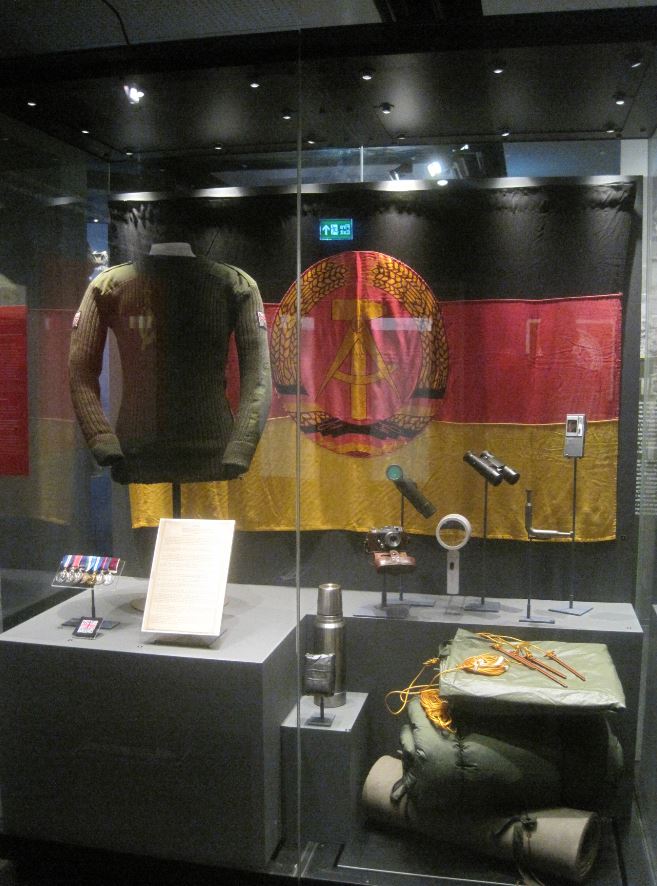
A War of Choice: Honour, Hubris and Sacrifice: The British in Iraq by Jack Fairweather (2012)

This is an outstandingly thorough, factual and authoritative account of the British Army’s involvement in the wars in Iraq and Afghanistan, maybe the most comprehensive, detailed and balanced account available.

Jack Fairweather

Jack Fairweather covered the Iraq War as the Daily Telegraph‘s Baghdad and Gulf correspondent for five years. He and his team won a British Press Award for their coverage. He went on to be the Washington Post‘s Islamic World correspondent. By the time this book was published he had become a fellow at the Centre for Middle Eastern Studies.

It’s a solid work of 430 pages, consisting of 32 chapters with good maps, thorough notes, a list of key players, a useful bibliography, index and so on. Well done to the publishers, Vintage, for such a professional package.

However, something (obviously) beyond their control is that, having been published in 2012 means the narrative does not include the rise of ISIS and the chaos that ensued. Fairweather’s narrative is now over ten years out of date, a factor I’m coming to realise is vitally important when reading about this disastrous part of the world (Iraq-Iran-Afghanistan-Pakistan) and, in particular, putting the entire conflict in Afghanistan into context, given the swift collapse of the Afghan government and return to power of the Taliban in 2021.

Companion piece to Thomas Ricks’s Fiasco

Having read Fiasco, Thomas E. Ricks’s highly detailed accounts of the US decision making and planning leading up to the war, it’s fascinating to follow the same storyline from the British government point of view. For example, how the UK government made the same mistake of failing to consider or plan for the aftermath of the war, but for different reasons.

Tony Blair was the first British premier to be fully aware of modern media and how to use them. He and Alistair Campbell were all about focus groups, opinion polling and managing the news cycle and this is all short term thinking. Fixated as he and his team were on the media, they were obsessed that concrete proof the UK was planning for war shouldn’t leak out. Therefore Blair forbade the Department for International Development from officially commissioning post-invasion planning (the kind of thing it specialises in) in case someone leaked it (p.13). Similarly, Blair forbade the Army from placing orders for the kind of kit it would need for a large-scale deployment abroad (p.14). So Blair’s obsession with media management prevented him from properly, fully considering the post-conquest management of Iraq, from commissioning adequate plans for reconstruction, and from planning for the post-invasion policing by the British Army. Inexcusable.

Key points

Fairweather covers every detail, every aspect of the story, in calm, measured, authoritative chronological order. This really feels like the account to read.

1997 Tony Blair elected Prime Minister.

1998 Blair supports the Operation Desert Fox bombing campaign against Saddam. New Labour make the first increase to the military budget after a decade of Tory cuts.

March 1999 Blair succeeds in pushing the US and NATO to intervene in Kosovo with a bombing campaign against Serbia (with mixed results; see Michael Ignatieff’s book on the subject).

April 1999 Blair makes his Chicago speech making the case for intervention/invasion of countries on a humanitarian basis if dictators are massacring their people.

The 9/11 attacks change everything. President George W. Bush immediately starts planning an attack on Al Qaeda in Afghanistan. In October 2001 US forces began their attack, supporting the Northern Alliance against the Taliban government. The Taliban overthrown by December 2001. George Bush phones Tony Blair to sound him out about attacking Saddam Hussein.

The long tortuous process whereby the US tries to bamboozle the UN Security Council into agreeing a resolution allowing the invasion, and the New Labour government began its campaign of lies and deception, resulting in the dodgy dossier of fake intelligence, cobbled-together scraps from a PhD thesis including the ludicrous claim that Saddam could launch ‘weapons of mass destruction’ in 45 minutes. It was indicative of the way New Labour were obsessed by media and presentation and paid little attention to substance.

20 March 2003 The ‘coalition’ invasion of Iraq began. During the build-up, a variety of figures in the military and civil service discovered there was no plan for what to do after the invasion. It was mainly the Americans’ fault, Bush only set up an Office for Post-War Iraq a few weeks before the invasion and ignored advice contained in documents like Tom Warrick’s ‘the Future of Iraq’ project (p.15). Reconstruction was handed to retired general Jay Garner who rang round his pals to ask if any of them knew how to rebuild a country. Planning was ‘shambolic’ (p.21).

In London, Attorney General Peter Goldsmith had to be cajoled into reluctantly agreeing that invasion was legal without a second, specific UN resolution stating as much. How much he must regret that now (p.19). Alastair Campbell bullied ministers into kowtowing to Blair’s determination to march alongside the Americans i.e. be Bush’s poodle (p.19). Claire Short, Secretary at the Department for International Development, let herself be persuaded not to quit, something she regretted ever after.

Haider Samad and Iraqi stories

It’s worth highlighting that unlike most other books I’ve read on the shambles, Fairweather goes out of his way to include the stories of actual Iraqis. The first we meet is a man named Haider Samad. We hear about his family background, his wish to marry, intertwined with the history of Shiite religion in the southern part of Iraq. Samad will volunteer to become an interpreter for the British Army with ruinous consequences for himself and his family and Fairweather will return to his story at various points during the narrative as a kind of indicator of the British occupation’s broken promises and failures.

Names

Another distinctive feature of the book is the extraordinary number of named individuals Fairweather introduces us to, on every page, and their extraordinary range. Chapter 3 opens with Major Chris Parker patrolling Basra six weeks after the successful invasion has overthrown Saddam, to his commanding officer, Brigadier Graham Binns, a Scots Dragoon Officer Captain James Fenmore, Lieutenant Colonel Nick Ashmore, paymaster Ian Jaggard-Hawkins, Lieutenant Colonel Gil Baldwin of the Queen’s Royal Dragoons, the army’s top lawyer in Iraq Lieutenant Colonel Nicholas Mercer, SAS commander Baghdad Richard Williams and hundreds and hundreds more.

On one level the book is a blizzard of individual names and stories of soldiers engaged in this or that aspect of the occupation, which is what makes his nine-page list of Dramatis personae at the end of the book invaluable.

Back to the narrative

Defence Minister Geoff Hoon made as light of the epidemic of looting which broke out in the aftermath of the invasion as Donald Rumsfeld did, claiming the looters were ‘redistributing wealth’, which was a good idea. What an idiot (p.29).

The thing is, the British had invaded Basra before, back during the Great War when we were seeking to defeat the Ottoman Empire which had allied with Germany and Austria. Hence the Commonwealth War Cemetery which Sniper One Dan Mills discovered in al-Amarah and gave him a fully justified sense of ‘What are we doing back here a hundred years later’?

Now, as then, after overthrowing the ruling elite, the British discovered there weren’t many capable native Iraqis to run anything, even to form a town council. Eventually, they picked on a Sunni tribal leader to run a majority Shia town, Basra, an error of judgement which, of course, immediately triggered widespread protests (p.31). Ignorance.

Fairweather details how, struggling with the number of detainees and ‘suspected terrorists’ they were being sent, British military police and soldiers came to abuse and intimidate the rapidly increasing number of ‘terrorist’ detainees, set up kangaroo courts and deliver summary justice (p.33). This led to the scandal surrounding Corporal Daniel Kenyon and colleagues who took photos of themselves abusing Iraqi prisoners at ‘Camp Breadbasket’, which leaked out, led to their arrests and trial and conviction (pages 46 to 48). The British version of the Abu Ghraib scandal. All the politicians’ claims about the moral superiority of the West went up in smoke.

After less than 2 months flailing to run an office of reconstruction, Jay Garner was fired and replaced by L. Paul Bremer who was the ‘right kind’ of Republican i.e. a devout Christian and neo-conservative (p.40). He was put in charge of the newly created Coalition Provisional Authority. He was to prove a relentless, impatient workaholic who took catastrophic decisions and plunged Iraq into a civil war and vicious ethnic cleansing.

Fairweather chronicles the key role played by Douglas Feith (under secretary of Defense for Policy from July 2001 until August 2005) in persuading Bremer to completely disband the Iraqi army and remove everyone with high or mid-level membership of Saddam’s ruling Ba’ath Party from their jobs. At a stroke this threw half a million well-trained young men (the army) onto the dole queue and a hundred thousand people with managerial experience (Ba’ath) ditto. Bremer refused to listen to the argument that most Ba’ath Party members cared nothing about the party’s ideology, that being a member was simply a requirement of holding senior posts like hospital consultant or head of the power or water systems. Bremer didn’t listen. They were all fired. Chaos ensued.

From these angry men whose lives were ruined by L. Paul Bremer sprang the insurgency. Tim Cross, a British logistics expert who worked with Garner till he quit in disgust called American efforts ‘chaotic’ and a ‘shambles’ (p.41).

Britain contributed 40,000 troops to the initial invasion. By mid-summer 2003 half had returned to Blighty. General Sir Mike Jackson became head of the British Army.

September 2003 the BBC Today programme quoted an anonymous source claiming that New Labour officials ‘sexed up’ the ‘dodgy dossier’ which we went to war on, infuriating Alastair Campbell. The label was to stick to this day (p.50).

A section about the history of the Marsh Arabs, going back to the first occupation of Iraq by the British during and after the Great War. The exploits of Gertrude Bell, who crops up repeatedly in Emma Sky’s account of her time in Iraq (p.52). The Marsh Arabs’ history of independence and revolt against central authority. The disastrous way they were encouraged to rise up against Saddam by President George Bush who then failed to provide any support so that tens of thousands were slaughtered by Saddam’s forces. Then Saddam’s decade long project to drain the marshes altogether and destroy their way of life, which he had just about achieved by the time of the 2003 invasion.

Maysan was the only Iraqi province to liberate itself from Saddam’s security forces and had no intention of kowtowing to the foreign invaders. Into Maysan province, came the Third Battalion the Parachute Regiment, famous for their gung-ho approach. Fairweather quotes Patrick Bishop’s description of the paras from his book ‘3 Para’ (2007) which I’ve reviewed.

Angry protests against the occupying forces started straight away, with stones being thrown, and then the first shots being fired. It was Northern Ireland all over again, but without the half a dozen crucial elements which made Northern Ireland, in the end, manageable (itemised in Frank Ledwidge’s outstanding book on the subject). In Basra, unlike Ulster, there was a lack of clear government authority, and the lack of a reliable police force to work alongside, the lack of a shared culture and language, and the lack of enough men to do the job.

In a series of incidents which he described in great detail (‘From the rooftop Robinson shouted, “Remember lads, you’re fucking paratroopers”‘), Fairweather traces the quick degeneration of the ‘peacekeeping’ mission into a fight for survival against hostile crowds and growing numbers of highly motivated, highly armed local ‘insurgents’.

The soldiers of 1 Para were only faintly familiar with the region’s history and how it had bred a culture of suspicion of outsiders. (p.55)

Fairweather gives a detailed forensic account of the killing of six military police by an enraged crowd after they got trapped in the police station of Majar al-Kabir on 24 June (pages 55 to 63). Critics focused on the lack of equipment, specifically a satellite phone to call for help, and their insufficient ammunition. Having read Lewidge’s book, though, I understand how the soldiers had been put into a completely untenable position by the naive over-optimism of the politicians (Blair) and the failure of the army general staff either to stand up to the politicians (to say no) and then to provide adequate intelligence, adequate equipment but, above all, a clear strategy to deal with the worsening situation.

Fairweather describes the arrival of a new British civil servant, Miles Pennett, sent to work with the Coalition Provisional Authority (CPA) in Baghdad and the chaos he found there created by teeming hordes of graduates all fresh out of American universities and selected solely for their adherence to right-wing neo-conservative Republican values (p.69).

(In his book ‘Imperial Life in the Emerald City: Inside Baghdad’s Green Zone’ , American journalist Rajiv Chandrasekaran tells us candidates for the CPA were interviewed about their views on abortion or neo-liberal economics rather than any technical qualifications or experience whatsoever. This explains the CPA’s reputation for chaos and incompetence.)

While things fell apart in Iraq, Tony Blair flew to the States to receive a Congressional Gold Medal and make a grandstanding speech to the Congress. It shifted a complete change in the aims of the occupation. Gone was mention of the weapons of mass destruction which had so feverishly justified the invasion. Now, it turned out, the occupation was about bringing universal values of democracy, human rights and liberty to ‘the darkest corners of the earth’ (p.70).

In other words a) indistinguishable from Victorian rhetoric about civilising India or Africa which justified control and occupation; and b) bullshit, because i) quite a few ‘places’ don’t particularly want ‘democracy, human rights and liberty’, they want food and water so they don’t starve to death and, next above that, security: maintenance of law and order so it’s safe to walk the streets. That – basic security – comes a million miles before Western values and, in the event, the occupying forces in both Iraq and Afghanistan turned out to be unable to provide them.

And ii) because as explained at the start of this review, Western-style democracy was never an option for Iraq, with its complex and corrupt matrix of tribal, ethnic and religious allegiances; and never, ever a possibility in Afghanistan.

Pride comes before a fall. The day after Balir received his congressional medal the body of David Kelly, the weapons expert, was found in a wood. He had committed suicide. He had been the source for BBC journalist Andrew Gilligan’s story about the ‘sexed up’ dossier about WMDs the government used to deceive MPs into voting for the war. Hoon and Campbell had pressed for Kelly’s name to be leaked to the press in order to discredit him. It never actually was leaked but enough information was provided for the press to be able to identify him. Snared in a political mesh he could see no way out of without ruining his reputation, Kelly took his own life. Alastair Campbell was forced to resign. The New Labour government was snared in scandal (pages 70 to 73).

All this distracted from the worsening situation in Baghdad. Fairweather’s account is super-detailed. He gives precise names, careers, quotes for hundreds of the personnel deployed to the CPA in Baghdad and to run Basra Province. It was the usual cobbled-together, last minute list of candidates as had characterised the hurried creation of Jay Garner’s short-lived Office for Reconstruction and Humanitarian Assistance: a former director at a merchant bank was appointed finance minister, a public schoolmaster was appointed minister of education, an internet entrepreneur was made minister for trade and industry (p.67).

The advent of Sir Jeremy Greenstock, UK ambassador to the UN, now despatched to the court of Paul Bremer at the Coalition Provisional Authority and the difficulties he encountered, namely the Americans steamed ahead doing whatever they wanted to (dissolved the 500,000 strong Iraqi army, sacked 100,000 Ba’ath Party members from their jobs, delayed elections) and ignored him.

The Anglo-American relationship that Blair had gone to war to strengthen was coming under serious pressure. In fact it was increasingly difficult to find areas where British and American views matched. (p.79)

America’s disastrous early efforts to ‘train’ a new Iraqi police force, handed to Bernie Kerik, a former New York City police commissioner (p.79). Rumsfeld tries to reduce the budget required to train a new army. Fairweather strikingly calls Rumsfeld ‘a bully’ (p.80).

Typical neo con plans to privatise Iraq’s hundreds of state-own industries in one fell swoop, to be masterminded by former venture capitalist at Citicorp, Tom Foley (p.80). Chandrasekaran is very funny about the complete lunacy of this ideas and its ruinous impact on an economy already on its knees.

As a presidential election year approaches, the politicking in the US, Bush reshuffles his team.

Rumsfeld, whose grasp on the chaos he had created was tenuous, was removed (p.83)

Condoleeza Rice takes over. Arguments about the new Iraqi constitution, when it should be drawn up, who it should be drawn up by, whether or not it could form the legal basis for elections, when those elections should be held, what kind of form they take (Bremer preferred US-style electoral colleges rather than a simple poll).

By the end of 2003 Iraq fatigue had set in in London. Blair’s entire personality was built around can-do optimism and so found it difficult to cope with the relentless bad news from Iraq. And he’d lost Campbell, his key advisor and media manipulator.

By October 2003 the British administration in Basra accepted the fact that it was, in effect, an imperial occupation, and moved into Saddam’s palace. Fairweather shows us how it worked through the eyes of Sir Hilary Synnott, Regional Coordinator of the Coalition Provisional Authority in Southern Iraq from 2003 to 2004.

The problem of the UK Department for International development, populated by progressives who strongly opposed the war, and the occupation, were desperate to escape accusations of imperialism, but were entirely dependent on the military pacifying the place before they could do a stroke of ‘development’ work.

When development minister Hilary Benn and permanent undersecretary Suma Chakrabarti flew into Basra it was to discover the army commander, Major General Graeme Lamb, mired in controversy because some squaddies from the Queen’s Lancashire Regiment had just arrested seven Iraqis, took them back to base, hooded them, abused and beat and tortured them, till one of them, Baha Mousa, died (p.86). What was it Tony Blair was saying about bringing universal values of democracy, human rights and liberty to ‘the darkest corners of the earth’?

Meanwhile the other provinces of southern Iraq needed governing. Fairweather introduces us to the men selected for the job, being: Mark Etherington, former paratrooper; old Etonian Rory Stewart, whose account of his time in the role I’ve reviewed; old Etonian John Bourne; Emma Sky, former British Council worker, whose account I’ve also reviewed (p.89).

Fairweather makes the simple but penetrating point that a certain type of posh Englishman has always ‘loved’ and identified with the Arab way of life because it echoes the primitive hierarchy and independence (for tribal leaders) which used to exist in Britain, in medieval to early modern times. They instinctively identified with the feudal setup which reminded them of their own country estates and venerable lineages.

Anyway, these Brits were handed entire provinces to run, exactly as in the high days of empire when jolly good chaps ruled provinces the size of France or more. Their efforts were so amateurish it’s funny. Adrian Weale was handed the task of organising elections in Nasariyah. He had no idea how to do this so emailed his wife, a borough councillor in Kensington and Chelsea (of course), and asked her to send him guidelines for local elections in Britain, to be adapted for Iraq. Making it up as they went along.

None of this stopped Stewart, in Maysan, having problems with the self-styled ‘Prince of the Marshes’, Abu Hatem, while Etherington, 100 miles north, appointed governor of Wasit, whose northern border touched Baghdad, was beginning to have trouble from the followers of Shia cleric Muqtada al-Sadr and his devoted followers. In a telling sentence, Fairweather says: ‘Sadr was organising faster than the British’ (p.91). Sadr established his own parallel provisional government for Iraq and declared any government created by the British or Americans illegitimate (p.91).

In November Etherington attended a conference of US business donors in Baghdad and was astonished at how out of touch the CPA was. Even the US military was surprised at being kept out of the loop by Bremer and his secretive cabal of advisers.

Back in Amara Stewart was involved in a complicated sequence of events which led to rioters looting the office of the local governor, who had been inserted into the job by the egregious Abu Hatem. British troops found it hard to contain brick-throwing mobs. Stewart reflected that his Victorian forebears believed in their mission and were committed to the long-term development of their countries. Deep down Stewart knew that wasn’t true of Britain.

2004 uprisings

All the allies had growing misgivings about the growing power of Muqtada al-Sadr. In March 2004 Bremer took the publication of a series of articles lambasting the Coalition Provisional Authority in Sadr’s newspaper, Al-Hawzat as a pretext to shut it down. On 3 April US troops arrested the editor, sparking protests. On 4 April fighting broke out in Najaf, Sadr City and Basra. Sadr’s Mahdi Army took over several points and attacked coalition soldiers, killing dozens of foreign soldiers. This was the start of the Sadr Uprising in the south of Iraq.

What made the situation ten times worse was that on 31 March gunmen ambushed four American contractors outside Falluja to the west of Baghdad, beat them to death, burned their bodies and hung them from a bridge over the river Euphrates. Footage was beamed round the world. Bush was horrified and vowed revenge.

Suddenly the occupying forces were faced with a Sunni uprising in the so-called Sunni Triangle to the West of Baghdad, and a parallel but separate uprising by violent forces loyal to Sadr in every town in the south.

Fairweather details the experience of Mark Etherington in the Cimic compound at Kut as fierce fighting breaks out between the Shia militia and the Ukrainian UN troops. Here and in all the other towns of south Iraq, the UN and CPA compounds came under intense fire. The Americans’ actions against Sadr in Baghdad effectively plunged southern Iraq into war. Etherington knew all about the catastrophic defeat of a sizeable British Army at Kut by Ottoman troops during the First World War one hundred years earlier (p.109). Fairweather gives a brilliantly vivid and nail-biting description of Etherington and his staff abandoning the compound at Kut. The same kind of thing was happening at Nasariyah under its Italian governor, Barbara Contini.

Meanwhile, the President had ordered the US army to enter the town of Fallujah and find the people responsible for the murder of the civilian contracts. This ridiculously impossible task of course led to all out war and the First Battle of Fallujah. All round the world were beamed footage of houses being destroyed, terrified civilians being rounded up, and thousands of refugees fleeing the city as the civilian casualties grew into the hundreds. All round the Arab world young men decided they had to go to Iraq to fight these genocidal invaders.

Fairweather quotes part of a George Bush speech which epitomises one of the American’s conceptual stupidities, where Bush says: ‘the American people want to know that we’re going after the bad guys’ (p.111). These simple-minded dichotomies, the binary polarities of a thousand Hollywood movies, which divide people up into the Good Guys (John Wayne, Bruce Willis) and the Bad Guys (wearing black hats), governed US policy throughout the twentieth century. This worked fine when there really were Bad Guys, like the Nazis, but not so well in societies riven with complex ethnic, religious, social and political divides, such as Vietnam or Iraq where there’s a wide variety of bad actors and it becomes impossible to figure out who the ‘good’ ones are, if any.

Obviously, in order to bring the ‘murderers to justice’ many times more US troops were killed and injured than the original 4 contractors. In the end 37 American soldiers were killed and over 600 Iraqi civilians. Huge parts of a major city were devastated. Inevitably, the supposed murderers of the contractors were never found.

Apart from the obvious security issues, it caused a political issue because the entire Sunni membership of the provisional Iraqi government which Bremer was trying to cobble together threatened to quit, and could only be made to support coalition forces with an extreme of arm-twisting and promises of money and influence.

Meanwhile, in the south of Iraq, US forces retook the CPA compounds in Kut, Amarah and Nasariyah, but the British consuls who returned to their posts had abandoned all thoughts of reconstruction and development. Not getting killed became their number one priority (p.113).

Bremer was strongly critical of the British failure to secure the south, exacerbated by negative coverage of the American butchery in Fallujah in the British press, plunging American-British relations to a new low and this led to a significant outcome. Bremer banned British representatives from the ongoing discussions with local politicians about the forthcoming constitution and elections.

Britain’s effective involvement in shaping Iraq’s political future was over. (p.114)

In late April the photos of American abuse of Iraqi prisoners at the notorious prison at Abu Ghraib to the west of Baghdad emerged. I’ve described it elsewhere. Bringing ‘universal values of democracy, human rights and liberty’ eh?

For a spell Fairweather’s text overlaps the narrative of Sergeant Dan Mills, sniper with the Princess of Wales’s Royal Regiment, in his bestselling book, Sniper One. Mills describes how, on the very first patrol on the very first morning of the very first day of their deployment, Danny and his patrol parked up outside the local headquarters of Sadr’s Mahdi Army or Jaish al-Mahdi as it was properly called, JAM as the Brits called it. Mills’s patrol did this in complete and utter ignorance of the local geography, town layout, and local sense of bitter resentment of the infidel occupiers.

The JAM attacked, using machine guns, rocket propelled grenades and mortars, and Danny and his mates found themselves in the middle of a series of intense firefights and attacks which continued on a daily basis until their eventual withdrawal from the Amarah government compound four months later.

The Americans had now surrounded al-Sadr who was holed up in the Imam Ali Shrine in the holy city of Najaf where their attempts to break in had damaged some parts of the shrine. Shia anger was off the scale. Danny and his mates and all UK forces across the south of the country had to deal with the consequences. Fairweather gives a series of absolutely gripping, vivid, terrifying eye witness accounts of the running battles and firefights which followed.

The Prince of the Marshes, Abu Hatem, threw in his lot with the Sadrists. When the Brits made a raid to capture insurgents and took prisoners back to their prison, the detainees were subject to abuse and heard screams and torture sounds from other cells. When eventually released these stories helped recruit more insurgents and incentivise existing ones into a life or death struggle against the invader. Public relations catastrophe (p.123).

Escape to Afghanistan

In January 2004 the Hutton Inquiry into David Kelly’s death acquitted the government of blame and BBC Director General Greg Dyke resigned, but much of the media accused the report of being a whitewash. Fairweather quotes cabinet colleagues who noticed the impact the strain was having on Blair’s face. Hs hair started to turn grey.

In June 2004 a NATO conference decided the US-led mission had languished because of the focus on Iraq and volunteered NATO forces to take a more active role in Afghanistan. Why? Use it or lose it. NATO had big budgets from member countries who periodically wondered why they were spending so much. This would give the organisation the sense of purpose it needed.

In London Blair and his team saw it as an opportunity to regain the initiative. In Iraq we were not only visibly losing but being sidelined in every way imaginable by the Yanks. Deployment to Afghanistan offered the British Army a chance to redeem its damaged reputation and Tony Blair a way of restoring his reputation as an international statesman.

In fact the Americans had specifically asked the Brits to relocate NATO’s Allied Rapid Reaction Corps to the south of Iraq. It was crunch time. Fairweather describes the nitty gritty of discussions, with pros and cons on both sides. But the Brits decided to cut and run. Iraq was a swamp where the Americans disrespected us. Afghanistan offered a second chance. But could we fight a war on two fronts? The decisive view was given by director of operations at the Ministry of Defence, Lieutenant General Robert Fry. He argued that troop deployments to Afghanistan would be ramped up as troops in Iraq were drawn down. This was ratified by Chief of the Defence Staff Michael Walker. They’re the men to blame.

Fairweather gives a detailed analysis of the politics around successive Defence Reviews, with the Treasury constantly trying to cut the military budget and the top brass looking for any arguments to increase it. This in turn was meshed with the bitter rivalry between Blair the international grandstander and Gordon Brown, morosely hunkered down as Chancellor of the Exchequer. So another reason for the Afghan Adventure was entirely due to Whitehall politicis, in that the deployment forced a reluctant Treasury to release more money to the Ministry of Defence.

Chapter 13

Cut to a fascinating chapter about dismal attempts to train a new Iraqi police force, told through the eyes of Brit trainer William Kearney, 12 years in the Special Branch and now manager of ArmorGroup security, one of the many contractors who worked in Iraq. Compare and contrast with the American approach which was to flood the streets with poorly trained ‘police’ provided with uniforms, guns and ammunition which they quite regularly sold onto the insurgents.

We meet up again with Iraqi Haider Samad who is working for the Brits in Basra as an interpreter and the time he was beaten to the ground by four strangers who tell him next time they’ll kill him if he carries on working for the infidel. Haider’s experience is a peg to introduce the wider issue that many, many of the new ‘police’ being recruited at such speed in order to make Western politicians happy, were themselves members of the Shia militias.

Chapter 14

Introduction to the leader of Jaish al-Mahdi in Basra, Ahmed al-Fartosi, and his aim to utterly destroy the British occupation. He was convinced the Brits wanted to extend their occupation forever because their real aim was to steal Iraq’s oil. He had spent some time in exile in Lebanon and so on return to Basra reorganised the militia along the lines of the Iranian-backed Hezbollah. That said, Fartosi was no fan of the Iranians who had fought Iraqis in a bitter eight-year-long war. Half a million Iraqis died in that war and Iran came close to capturing Basra.

Another one of Fairweather’s gripping descriptions of a firefight which broke out on 9 August in Basra between British forces and the Shia militia led by Fartosi who ambushed a patrol forcing them to take refuge in nearby houses and call for backup etc.

Amara Fairweather cuts to the similar situation in Amara where sniper Mills and his buddies were included in the 150 or so coalition troops defending the Cimic House compound from daily attacks and hourly mortar bombs. After a particular intense firefight all the Iraqi cooks and ancillary staff leave, taking as much loot with them as they could carry. Fairweather then gives his version of the siege of Cimic House, the intense battle which forms the centrepiece of Mill’s book, Sniper One (pages 155 to 158).

Soon afterwards al-Sadr caved to majority Shia opinion and called off his insurgency. The far more influential cleric Grand Ayatollah Sistani had returned to the country, gone to Najaf and seen the damage to the shrine which he, and moderate Shia opinion, blamed on Sadr. Hence his climbdown.

Fairweather switches from his intense description of combat right up to the highest level of politics and the scheming by Iraqi exile Ayad Allawi to curry favour with the Americans and get himself appointed new president of Iraq. All the accounts I’ve read describe Allawi as a plausible swindler who promised Bush and Rumsfeld whatever they wanted to hear, thus materially aiding the misconceptions and lack of planning on which the invasion was launched.

Fairweather drolly explains that this plausible chancer was put on the payroll of MI6 and ‘supplied the British government with some of the most flagrantly misleading intelligence before the war, namely the completely bogus claim that Saddam could launch weapons of mass destruction in 45 minutes (p.131). This crook had Bush and Blair’s enthusiastic personal support.

In November the Americans launched the Second Battle of Fallujah with a view to exterminating Sunni insurgents and establishing the rule of law. The battle saw some of the heaviest urban combat the American army had been involved in since the ill-fated Battle of Hue City in Vietnam in 1968. 95 American and 4 British soldiers were killed, along with up to 2,000 ‘insurgents’. Over a fifth of the city was destroyed.

2005 election A general election for the interim Iraqi parliament was held on 30 January 2005. Sunni Muslims, despite being a minority in Iraq (64% Shia, 34% Sunni, 2% Christian and other) had historically held power. Saddam and his clique were Sunnis. Now, in protest against the battle of Fallujah and the perceived bias of the occupying force towards Shias, large numbers of Sunnis boycotted the elections. This was self-defeating as it gave sweeping victory to Shia parties backed by Grand Ayatollah Sistani. Allawi’s parties polled just 14%.

Both Americans and Brits now had to deal with an ‘elected’ Iraqi government dominated by Shias who, far from being grateful to their liberators, were deeply suspicious and resentful of them.

Chapter 16

Fairweather switches focus to a new location, the south of Afghanistan, giving us a potted history of Britain’s ill-fated military adventures here during the nineteenth century, notably the swingeing defeat at the Battle of Maiwand, 27 July 1880, heaviest defeat of a Western power by an Asian power until the prolonged Ottoman siege and massacre of the British at Kut in southern Iraq in the winter of 1915/16

Cut to 2004 as the British Army staff begin to plan a deployment to Afghanistan. Now that elections had taken place, British planners and politicians looked for a way to extract the army from Iraq. The task fell to Major general Jonathon Riley who adopted the formula of the Americans: as the Iraqi police force ‘stepped up’, the British forces would ‘step down’. Sounded good but conveniently ignored the fact that the so-called ‘police’ were very poor quality, corrupt if you were lucky, at worst – during many of the clashes of the Sadr Uprising – joining the insurgents in shooting at British troops. When the police were objective and reasonably independent, they were themselves liable to attack. In the first half of 2005 350 police officers were killed in attacks on police stations and recruiting centres.

We remeet the Brits handed the challenging job of training Iraqi police, namely William Kearney and Charlie MacCartney, police mentor of the Jamiat; SIS station chief Kevin Landers. Fairweather details the process whereby all these guys come to realise that the head of the Serious Crimes Unit (SCU) Captain Jaffar, was deeply in league with the insurgents. In fact the SCU was to become a growing bugbear in the Brits’ side, and establish itself as a centre of criminality and extortion against the civilian population.

Elections are all very well but the January 2005 ones put Sadr party members into Basra’s provincial council and into the governor’s seat. But the Brits didn’t want to stir up a hornet’s nest. They were now planning to withdraw all but 1,000 British troops from Iraq by end of 2005, with a view to redeploying them to Afghanistan at the start of 2006.

How did the Brits get deployed to Helmand, right next to the historic battlefield of Maiwand, home of the fiercest, most invader-resistant traditions in all Afghanistan? Well, remember the whole thing was a NATO operation. The Canadians had lobbied hard to have overall control of the deployment to south Afghanistan and called first dibs on the biggest town, Kandahar. Considering the alternatives, the Brits learned that Helmand Province had now become the biggest single source of heroin, which would please the army’s civilian master, Tony Blair. And it was also the historical homeland of the Taliban, so combatting them would also give political brownie points to Blair, keen to rehabilitate his ailing reputation.

Chapter 17

At this point Fairweather cuts away to catch up on the career of interpreter Haider who was now working for a private security firm. His boss was William Kearney who we’ve seen trying to train the Iraqi police. Haider has saved up enough money to propose to his childhood sweetheart, Nora, whose family previously banned the match due to his lack of money.

Chapter 18

Reg Keys’s son, Tom, was one of the six military policemen murdered by the mob at Majar al-Kabir police station in June 2003. Fairweather devotes some time to chronicling Keys’s campaign to get to the bottom of his son’s death but his increasing frustration with MoD prevarication. The army board of enquiry published its findings nine months later. The families of the dead were not invited to contribute or to attend. They asked for advance copies on the eve of publication but were refused. They were given just an hour to read the 90-page report ahead of a meeting with Defence Secretary Geoff Hoons. Despicable.

Arguably the limited and obviously parti pris ‘enquiries’ into the launching of the war, the David Kelly affair and the red caps’ deaths went a long way to discrediting the entire idea of a government enquiry.

The angered parents set up a support group, Military Families Against the War (p.253). But they went further and funded Keys to stand in Tony Blair’s constituency of Sedgemoor in the 2005 general election. Fairweather gives a characteristically thorough and fascinating description of how what started as a jokey suggestion over a coffee was turned into a serious political reality, giving us lots of information about the working of modern British political parties and the media.

Just before the election Channel 4 News leaked a March 2003 memo from Attorney General Peter Goldsmith giving his opinion that he didn’t think the case for war would stand up in a court of law. Only days later a soldier in Amarah was hit by a roadside bomb and killed. The war wouldn’t leave Tony Bair alone. You broke it; you own it.

In the general election Blair’s share of the vote went from 65 to 59% and Reg won 10%. Labour’s majority in the House of Commons was cut from 200 to 66 MPs. So not a defeat. In fact pollsters considered the Iraq war a minor issue. The economy was booming and lots of people didn’t care all that much (as, arguably, most sensible people don’t care about any form of politics).

(Page 197 quote from Ibn Saud, future king of Saudi Arabia, on the irredeemably rebellious nature of the Iraqi tribes who can only be governed by ‘strong measures and military force’.)

Chapter 19. Iran

Rocky relations between the Brits in Amarah tasked with patrolling the porous border with Iran, just 50k away, and the newly elected governor, Adel Muhoder al-Maliki. More descriptions of firefights and attacks the latest troop of British soldiers come under within minutes of leaving the heavily defended Amarah air base. The point is that the incredibly brave bomb disposal officer, Captain Simon Bratcher, not only neutralised a clutch of roadside bombs but provided the first evidence that they were being supplied by Iran.

The Shia government It’s all very well organising ‘free and fair elections’ until they end up voting in people you strongly disapprove of. Two months after the January 2005 elections, Ibrahim Jaafari, the leader of Dawa, one of the two main Shia parties, was announced as the next Iraqi Prime Minister. The Interior Ministry was handed to Bayan Jabr, a former commander of a Badr Brigade i.e. one of the main Shia militias. These men continued to further Iran’s influence at every level of the Iraqi administration. The Interior Ministry was said to have set up death squads to kidnap, torture and execute former Ba’ath Party members and Sunni leaders.

Jack Straw learns of an American plan to set up death squads to ‘take out’ leading Iranian agents working in Iraq militia leaders, but vetoes it (p.. (Did they go ahead anyway?) Straw’s objections were about not upsetting the Iranians at a difficult time of negotiations with the West about Iran’s nuclear power programme. But it’s one example among hundreds of how Iraqi politics became steadily more entangled with Iranian.

Fairweather makes an interesting point. Iranian policy in Iraq often seemed contradictory – at the same time supporting the Shia-led government but also backing anti-government militias. But why shouldn’t Iran be like Western countries, with conflicting parties and factions jostling for power and implementing different, sometimes conflicting strategies? Also: why not make it a conscious strategy to back different parties and factions while it was unclear who would win (p.204). In the end, of course, Iran won.

Chapter 20. Jamiat

This was the name of the police station in Basra which had become the focal point of corruption, extortion, kidnapping, torture and militia influence. Major Rupert Jones of the newly arrived 12 Mechanised Brigade decided to do something about it and asked for a list of possibly corrupt policemen. It became an uncomfortably long list. The Brits asked for them to be removed. Nothing happened. Then they asked for Fartosi to be arrested but learned that Fartosi had been put on a ‘no lift’ list because the prime Minister didn’t want to antagonise the Sadrists on whose support his government rested.

Kidnap of two SAS officers

Then three British soldiers were killed by roadside bombs and Brigadier John Lorimer, the eighth brigade commander in Basra in two years, decided to act. On 17 September an SAS detachment infiltrated Fartosi’s home and arrested him. Two days later two SAS officers on patrol were kidnapped. Fairweather describes in detail the complex standoff which then followed as several sets of British officials ascertained that the two soldiers had been taken to the notorious Jamiat police station. When British officials went to the station they were themselves promptly arrested and detained. Negotiations involved an Iraqi judge, and an increasing battery of coalition lawyers and officers. The negotiators were themselves hustled at gunpoint to the cells where the two soldiers were being kept, as fighting broke out at the front of the police station, with Iraqi police officers who the British had spent time and money training now opening fire on British forces. British relief forces were surrounded by angry crowds throwing bricks and a succession of Warrior vehicles were set on fire.

Sergeant Long escaping from his Warrior armoured vehicle after a petrol bomb was thrown down the gun turret (source: Reuters)

Eventually the SAS men and the other Brit hostages were rescued by an attack by SAS men who were brought all the way from the regiment’s HQ at Herefordshire to help them. The political fallout was threefold. 1) Pictures of George Long on fire escaping from his Warrior tank covered the front pages of British newspapers alongside articles claiming the British softly-softly police in Basra was a shambles. 2) More specifically, it revealed that the entire concept of training the Iraqi police force which politicians from Blair downwards had put such emphasis on, was in fact a sham. 3) The Shia governor, Muhammed al-Waeli, forced to take sides, came down on the side of his Shia constituency, accused the Brits of terrorism, led a tour of the now devastated police station, and declared he would never have anything to do with the Brits again.

Fairweather is outstanding at giving detailed forensic accounts of this kind of event (compare his description of the murder of the military police at Majar al-Kabir).

Chapter 21. Helmand

7/7 suicide bombers

On 7 July 2005 four British Muslims carrying backpacks full of explosives detonated them on London Underground trains and a bus. These were the first suicide bombs on British soil. They killed 52 and injured over 700. In a pre-recorded video one of the bombers described his motivation as revenge for all the innocent Muslims the British Army was killing in Iraq and Afghanistan. So much for our invasions of Iraq and Afghanistan making Britain safer. The exact opposite.

But when news came out that the men had been trained at terrorist training camps on the Pakistan-Afghan border, government spin doctors turned it into a justification for deploying British troops to Afghanistan.

In September 2005 Lieutenant General Rob Fry, the individual most responsible for the plan to deploy to Helmand, presented John Reid with the MoD’s plans to deploy 3,150 troops, mostly drawn from the Parachute Regiment. British forces would take over an American base named Camp Bastion in the desert north-west of the province’s capital, Lashkar Gah. He promised that Taliban fighters crossing from Pakistan would be easy to identify and eliminate. ‘The senior SIS men in the room rolled their eyes’ (p.225). Brigadier Ed Butler was chosen to command the force.

Fairweather shows the gulf between the top of the army (Fry and Chief of the General Staff Sir Mike Jackson) who assured sceptical politicians that it could be managed as long as the Brits withdrew their forces from southern Iraq at the same speed that they deployed them to Helmand – and many of the officers on the ground who thought it was madness. Defence Secretary John Reid was sceptical. ‘Won’t British troops be isolated and exposed?’ he asked (p.225). Fry assured him not. Reid was right. Fry was way wrong.

Split command

Right from the start it was ballsed up. The British formed part of a NATO force commanded by the Canadians. Because the Canadian force was being commanded by a brigadier, army etiquette demanded that Butler step aside to allow a more junior officer to command his men, and so Colonel Charlie Knaggs became commander of the British deployment. This meant Butler would have to oversee operations from Kabul. Then he discovered his headquarters would not be doing the operational planning but that a staff officer from army headquarters in Northwood would be drawing up the crucial operational plan.

Crucially, Butler would only have four Chinook helicopters at his disposal, barely enough to support one offensive mission a month and, it would prove, not nearly enough to extract British soldiers from the umpteen dangerous contact situations they were going to get into.

After the Jamiat police station siege, senior officers considered advising against the deployment, realising that the situation in south Iraq was far worse than previously understood, and would entail a much slower withdrawal than planned but they never made their opposition clear enough.

Sher Mohammed Akhundzada

Before the troops arrived the Brits made another mistake. UK ambassador to Kabul, Rosalind Marsden, persuaded president Hamid Karzai, to remove the province’s long-time governor, Sher Mohammed Akhundzada. He was notorious for rape, murder and involvement in the drugs trade, so getting rid of him played to press releases about Tony Blair’s counter narcotics policy. Unfortunately, Muhammed may have been a criminal but he was the only person with the contacts and authority to keep a lid on the province. Later, he cheerfully told British officers that, removed from his position of influence and no longer able to pay them, he let his 3,000-strong fighting force defect en masse to the Taliban. At a stroke the Brits made violent conflict inevitable and created a huge opposition force. The road to hell is paved with good intentions. That motto should be carved on Tony Blair’s tombstone.

Fairweather describes the efforts of the chief planner Gordon Messenger and development experts to assess the province, their dismay at the illiteracy and corruption of the Afghan administrators and police they met, and their equal dismay at the ignorance about Helmand displayed by British politicians and army staff. The politicians had assigned the army a three-year deployment. Development expert Minna Jarvenpaa said it would take ten years, probably longer, to begin to develop such a place (p.233). Politicians didn’t want to hear. No-one listened.

Details of the deployment were announced in January 2006, just in time for a conference of Afghan donors’ which Tony Blair was chairing. John Reid declared we were going to spend three years in the south of Afghanistan, bringing peace and security and helping the locals reconstruct their country. None of this was to happen.

Gil Baldwin, head of the Post Conflict Reconstruction Unit resigned in disgust, saying it beggared belief that Britain was preparing to go into Afghanistan even worse prepared then it had been for Iraq (p.234).

Chapter 22

Introduces us to the first soldiers to deploy to Afghanistan including Will Pike and Harvey Pynn of the Third Parachute regiment, 3 Para. This part of the narrative exactly matches the account of 3 Para’s time in Helmand (April to October 2006) given by Patrick Bishop in his rip-roaring soldier’s eye view of endless firefights in ‘3 Para’.

Fairweather repeats the surprising fact that, of the 3,500 British troops being deployed, all but 600 were support staff, engineers, cooks, drivers, quartermasters, ammunition handlers and so on. Governor Daoud wanted the Brits to deploy to protect towns in the north of the province from the Taliban. Butler was reluctant but agreed to support local Afghan army units. Development consultant Minna Jarvenpaa knew the tribal situation around Sangin was complicated with the town divided between two tribes, and both involved in rival drug operations.

In May 2006 Daoud sent the British commander, Charlie Knaggs, a desperate message that the district centre in the town of Naw Zad was being attacked by Taliban forces. A force of Paras is despatched, who were later replaced by Gurkhas. Soon Daoud was asking British troops to protect other towns and the Americans asked them to bolster the small force protecting the important Kajaki Dam. Step by step the Brits were forced into abandoning the initial plan of securing a relatively small area bounded by Camp Bastion, Geresh and Lashkar Gah in the south, and instead found their forces scattered thinly across half a dozen outposts which came under increasingly fierce attack.

Far from being a gentle peacekeeping and reconstruction exercise, the deployment was turning into a full scale war against the Taliban. Fairweather is brilliant at conveying the complex political cross-currents which led to the decisions, and the shambolic last-minute way they were carried out.

Will Pike led the deployment to the northern outpost of Sangin. As the Paras set about fortifying the district centre a delegation of town elders came and asked them to leave. They knew the Taliban would attack. They knew it would develop into a siege of attrition. They knew their town would be badly damaged. They were right on all three counts, but Pike had to turn them down. So much for listening to the locals, democracy etc. Instead of peace, the Brits brought war and destruction wherever they went.

Days later the Sangin district centre was hit, 3 killed 3 badly injured. If Butler had been in Camp Bastion maybe he’d have changed his mind but he was in Kabul where his job had evolved into trying to manage Governor Daoud and his master, Afghan president Karzai. So he overruled his junior officers’ concerns and the troops remained in Sangin in what developed into a relentless, daily barrage from the surrounding Taliban.

Already it was clear the critics had been right: a) the deployment to Afghanistan was too small; b) it had truckled to political pressure and spread its forces too thinly; c) it wasn’t going to be a peacekeeping deployment but a full-on conflict.

Chapter 23. Counterinsurgency in Iraq

Fairweather’s account of the revolution in military doctrine brought about by General David Petraeus who tries to re-orient the US Army approach from a ‘capture and kill the bad guys’ approach to a more imaginative deployment of counterinsurgency doctrine. The Americans referred to the British Army’s experience in the Malaya ’emergency’ i.e. how it handled an insurgency by revolutionary communist guerrillas. The main thing is to shift the goal from capturing or killing insurgents to winning over the general population by ensuring security. This shift in thinking is the central theme of Thomas E Ricks’s two books, Fiasco and The Gamble.

I believed all this until I read Frank Ledwidge’s devastating book, Losing Small Wars. There he points out two fundamental factors which the counterinsurgency proponents didn’t take into account. In Malaya, as later in Northern Ireland, a) there was one government whose fundamental legitimacy the majority of the population didn’t question; and there was b) an effective, impartial, well trained police force. Neither of these factors was present in Iraq or Afghanistan. On the contrary the ‘governments’ of both countries were deeply contested by large parts of the population, were widely seen as corrupt and parti pris; and the police forces in both countries were bywords for corruption and backsliding i.e. running away or turning their guns on their supposed Western allies whenever it came to a fight.

As the redeployment to Helmand began to be thought through, officers in Basra came under pressure to speed up the process of handing over responsibility to the Iraqi police and army. Only problem being, they were often corrupt and ineffective. Didn’t matter:

The army leadership was preparing to dispense with its commitment to create a competent Iraqi security force in the name of political expediency. (p.251)

Security in Basra was collapsing. The News of the World published a video of British soldiers beating detainees which triggered 48 rocket and mortars fired at the Abu Naji camp. Sectarian strife increased. A Sunni cleric was killed and new corpses turned up every day.

In January 2006 a further round of elections were held. Now, after weeks of horse trading, following the elections, Shia politician Nouri al-Maliki was finally appointed Prime Minister. He hated the British. British forces had arrested his grandfather in a 1920 Shia uprising. He saw the British presence as a continuation of its old imperial ambitions. On his first visit to Basra he told the British authorities he didn’t want to meet them.

Fairweather gives an illuminating account of the Ministry of Defence and army’s notorious problems with commissioning the right kit and equipment. While the army spent hundreds of millions on hi-tech, computerised gewgaws to fight the next world war, it neglected basic transport vehicles solid enough to resist improvised explosive devices.

Six month rotations ensured that just as each set of officers and men was coming to know the people and the job, it was rotated back to the UK and a completely new set came in. These were often led by a commanding officer determined to ignore everything his predecessor had done and implement his own pet theories. This was a recipe for inconsistency and incoherence. Fairweather cites the replacement of the bullish General Shireff with the scholarly General Jonathan Shaw in January 2007 (p.302).

He has an upsetting passage about post-traumatic stress disorder and the inadequate care the army takes of its psychiatrically damaged veterans. American studies suggest that 15% of veterans will suffer PTSD (p.256). The poor care for the physically wounded veterans at the Selly Oak hospital in Birmingham caused a scandal in the media (p.281). The scandal was to lead to the establishment of the extremely successful Help for Heroes charity (note, p.393).

The entire policy of withdrawing from south Iraq in order to redeploy to Afghanistan was thrown into doubt when the Brits handed over the main base in Muthanna province to the local security services then, a few days later, a crowd of several hundred assembled and stormed the base, the Iraqi security forces melting away as they were wont to do, whereupon the mob stripped the base of all the expensive equipment, looting all the arms and equipment the Americans had stocked it with. Farce (p.270).

In August British forces handed over Camp Abu Naji outside Amarah to local security forces. Within an hour word had spread, a few hours later a mob had assembled, and a few hours after that the crowd entered the base and comprehensively sacked and looted it. After spending £80 million trying to reconstruct the province the British were leaving it in the worst possible state. A ‘debacle’ and ‘fiasco’, the loss of Abu Naji brought the British army’s reputation among the Americans to a new low.

6 September 2006

The dreadful day when four Paras defending the Kajaki Dam in Helmand got caught in a minefield, one fatality, three terrible injuries and the heroism of Chinook pilot Mark Hammond who flew sorties not only to the dam, but to Sangin and Musa Qaleh, too (p.275). In fact it was only a week later that the elders of Musa Qaleh came to Butler and brokered a ceasefire deal between him and the Taliban. Both sides would withdraw and fighting would cease. An eerie quiet descended over the battletorn town which had been badly damaged during 6 months of fighting. The British talked about reconstruction but brought only destruction.

Meanwhile in Basra new commander, Genera Richard Shireff proposed a bold new plan of increasing his force and embarking on a policy of clearing the city neighbourhood by neighbourhood of the JAM, handing it over to Iraqi police to hold and then civilian experts to deliver high impact development projects. Of course none of this ever happened. He could never get enough British troops and the Iraqi police were useless. After some civilian contractors were killed Margaret Beckett ordered the entire DFID contingent to leave Basra Palace base and be evacuated to Kuwait.

Back to the story of Haider the interpreter. He has married his sweetheart, Nora, and had a baby. Now he is thunderstruck to be told by his sympathetic boss, William Kearney, that the security firm is pulling out of Basra. Haider is going to lose his job and become more exposed to the JAM thugs who want to kill him for working with the infidel.

Chapter 28 The Surge, 2007

General Petraeus and retired general Jack Keane lobbied and persuaded president Bush not to quit and withdraw from a ruined Iraq but to take a gamble and increase troop numbers, by 30,000, the famous ‘surge’. General Casey was replaced by Petraeus as commander in chief.

The so-called Surge coincided with the so-called Sunni Awakening which was when Sunni tribes finally sickened of being threatened and dominated by al Qaeda militias. Delicate negotiations persuaded many Sunni tribes to accept American money and support to take on the terrorist group.

Baghdad had now become the epicentre of the civil war between Sunni and Shia, with mass ethnic cleansing, 200 deaths a week, and concrete walls separating ethnic neighbourhoods. Fairweather mentions the role of British civilian and pacifist Emma Sky as an unlikely adviser to hulking American general Ray Ordieno (pages 292 to 296).

Detailed description of the negotiations initiated by British General Graeme Lamb and James Simonds to convert Sunni militia leader Abu Azzam over to the Coalition side, with a mixture of flattery, promises of jobs and money for his 1,000-strong militia. The central achievement of Emma Sky in making friends with a female member of Maliki’s cabinet, Basima al-Jadiri and from then onwards keeping lines of communication open between the coalition commander and stroppy Maliki (p.298).

The Brits had been working through the latter half of 2006 towards finally withdrawing from Basra, deceiving themselves about the readiness of the Iraqi security forces to take over, or that Shireff’s policy of clearing neighbourhoods was working. But just as the withdrawal began to be implemented the Americans were embarking on the exact opposite policy, bringing in more troops as part of their Surge. In this context British policy looked more than ever like running away.

The British were under pressure to look tough and so undertook daring missions, including seizing Jaish al-Mahdi leaders. At the same time they sought interlocutors to negotiate a peace with. Most important was to be the leader of Jaish al-Mahdi in Basra, Ahmed al-Fartosi, who they had arrested and imprisoned three years before, and whose arrest led to the reprisal kidnapping of the two SAS men.

The British made him a simple offer: call off militia attacks and in return the British would cease patrolling the city and release his imprisoned cadres on cohorts. The clincher was telling Fartosi he had to take the deal in order to get his men freed and enrolled in the security services before Iranian agents and politicians took over. Fartosi was Shia, fanatical Shia, he had taken money and arms from Iran – but drew the line at letting Iran take over his patch.

These are the kinds of subtleties or complexities created by ethnic, religious, tribal, warlord and gangland allegiances which the coalition failed to get to terms with. Emma Sky is described trying to persuade Ray Ordieno that he needed to stop lumping all opposition groups as al Qaeda or Ba’athists or ‘insurgents’ and learn to distinguish between them. Only then could the coalition figure out what they wanted and even start to find negotiated, political solutions to the chaos.

June 2007

Gordon Brown became Prime Minister after Tony Blair stepped down as Labour Party leader. According to Fairweather everyone in Whitehall and the military knew that Brown regarded Iraq as Blair’s folly and had no interest in throwing good money after bad. He wanted all British troops withdrawn as soon as reasonably possible. As always, politics. When the army staff told Brown cutting and running would infuriate the Americans Brown said ‘good’. In Britain, and further afield (in the European countries which were always against the war) it would draw a stark line between Brown and his predecessor, and win him kudos for standing up to the Yanks. Army planners at the British military command centre in Northwood drew up five withdrawal scenarios. Brown unhesitatingly chose the quickest (p.315).

Some top brass thought a rapid withdrawal would make the British public question the sacrifice made so far. But in the three months during which Blair had extended the British occupation to mollify the Americans, 11 more British soldiers had been killed. The opposite line was that the British had fought shoulder to shoulder with the Americans for four bloody years and enough was enough.

The Brits released Fartosi’s deputy, other detainees and complied with their side of the bargain to halt all patrols in Basra. However violent attacks continued, with relentless bombarding of the British HQ in Basra Palace. American command in Baghdad gave the British senior officers who came to explain their withdrawal timetable short shrift. As the Brits claimed that Basra’s police force was ready to enforce security, American officers laughed.

In August 2007 the deal with Fartosi began and he was given a small office in the the base prison complete with phone and fax machine. From here he organised a complete ceasefire and an uneasy calm fell over Basra. On 3 September the British commander handed over security governance to the Iraqi government general assigned the job, and 600 soldiers left Basra Palace in a convoy of Warriors, armoured cars, lorries piled high with office furniture. They drove the ten miles to Basra airport. The idea is a residual force would stay there for up to a year to continue to train Iraqi army and police force. The JAM militia held wild celebrations at the ‘liberation’ of their city.

Story of Haider the interpreter, continued

Since the start of the year a number of interpreters had been executed by the militias. Terrifying story of him attending his brother-in-law’s wedding procession of twenty or so cars when it was intercepted by trucks with no plates, armed men leapt out, ran across to the car which contained Haider and his wife but grabbed Nora’s cousin by mistake, hauled him out of the car, threw him in the trucks, and roared off while the women screamed and wept. Next day the cousin’s corpse is found with a scrap of paper telling Haider to ring a mobile phone number. Haider’s wife’s uncle, Ali, arranges for him to flee to Iran with a fake passport and a little money. Then the militiamen kidnap Ali and call Haider, saying he must return or Ali will be murdered.

Haider makes a plan, to return to Basra, collect his family and go to the British base. Gordon Brown had announced a fast track visa process for Iraqi interpreters. He takes a minivan cab and collects his wife, mother, sister and three brothers but when they get to the British base, security won’t let them through.

Anyway, it turns into a real odyssey. They walk to a gas station where an old geezer has a taxi. Haider tells them they’re refugees and the old guy takes them home and lets them sleep in his apartment. But next morning he starts getting suspicious. Haider’s contact inside the British base tells him the precise paperwork he needs, but it involves getting an old style Iraqi passport which will take ages.

Haider has a brainwave and rings up a doctor he knew at medical school. Reluctantly, the doctor agrees to house them all in a spare room in his clinic, knowing he’s risking reprisals from the militia. Haider has a phone so he rings his old boss and friend William Kearney. Kearney jumps into action ringing round contacts to get Haider’s paperwork approved asap. He commissions a journalist to write a piece about the plight of interpreters and he even – and at this point we start to realise why we’ve been hearing so much about this poor man – arranges for Haider to do an interview with Radio 4’s Today programme, from the spare room at the clinic where he’s in hiding. Atmosphere of Anne Frank’s loft. Every time they heard footsteps in the corridor they froze in fear.

There are more hurdles to jump through, judges to be bribed, paperwork to be secured, relations pressed into running round the city getting the right documents. After a week they take another cab to the British base but Haider is now told that his brothers and sister aren’t eligible. He loses his rag.

When the British had needed him he had risked his life, but when he needed their help all he got was red tape. (p.326)

And now, 16 years later, the same treatment dished out to Afghan interpreters fleeing the Taliban. What a disgraceful, disgusting country Britain is.

Abandoning Basra

So the British abandoned Basra and the Shia militia took over, quickly intimidating the Iraqi police into staying in their stations, while black hooded armed men patrolled the streets, hitting women who weren’t properly covered and embarking on a campaign of murder and extortion. The Iraqi Way. A British officer, Colonel Andy Bristow, helps the new Iraqi governor of Basra, General Mohan al-Faraji, but quickly realises the deal with Fartosi to allow us to leave in peace, effectively undermined the police i.e. bankrupted the whole reason for us being there in the first place. When Mohan found out the British had gone behind his back to do a deal with the head of the militia to release back onto the streets over 1,000 criminal detainees, he was apoplectic.

It was just the sort of double-dealing the British were infamous for during their colonial days. (p.330)

On 31 December 2007 Fartosi himself was finally released from prison and within days (January 2008) war broke out between Jaish al-Mahdi and Mohan’s police force. The British base itself came under sustained mortar attack. The deal with Fartosi had failed. Not only that but the situation in Helmand was deteriorating, Ceasefires with local Taliban commanders had failed and the fighting was fiercer than ever. The army desperately needed to move its Basra forces to Helmand.

Fairweather then gives a typically detailed account of the way the new advisor to General Mohan, the Brit Colonel Richard Iron, conceives a plan to deliver a US-style surge but just to Basra. As mentor to Mohan he is outside the British chain of command and so a) gets Mohan to present it as a request to the Basra commander, something the Brits are meant to help with, b) schmoozes with the Americans in Baghdad who love it. Petraeus is won over and the Yanks begin making plans to send troops to help the meagre British presence from the air base.

BUT. At one of these co-ordination meetings everyone is stunned to learn that Prime Minister Nouri al-Malaki, having been briefed about it some weeks before, has taken the bull by the horns, and ordered his own surge in Basra, using native Iraqi troops!

Long story short: the Iraqi army took on the Jaish al-Mahdi in Basra and won! Over 6,000 Iraqi troops marched on Basra and Maliki himself flew in to supervise. To begin with it was chaos, with Iraqi units disintegrating or being blown to pieces by the heavily armed and motivated JAMsters. But the Americans couldn’t allow this to fail and so diverted troops and planes south to join the fight. The British administrator on the ground was humiliatingly denied entrance to meetings between Maliki and the American commander in chief. Maliki blamed the British for letting Basra sink to this level. The American military no longer trusted the Brits to do anything. Anyway, bureaucracy and reluctance to overturn the withdrawal plans meant only a handful of British officers were available. The Iraqis and Americans got on without them. National embarrassment. Humiliation.

Meanwhile Mohan was sacked and a new Iraqi commander put in place. American General Flynn told British brigade headquarters he’d flown in to stop the Brits failing again. Fairweather calls it ‘a damning indictment’ and laments ‘Britain’s battered reputation’. The senior British officers hung their heads in shame (p.337).

Then, to everyone’s surprise, there was a ceasefire. Unknown to the Brits or Yanks Maliki had sent delegations to the Iranian city of Qom to ask al-Sadr and the commander of the Iranian al-Quds Force to broker a ceasefire. Maliki knew that the Iranians had a vested interest in seeing him re-elected, as a moderate Shia Prime Minister, whereas defeat in Basra risked plunging the south into chaos and also triggering a resurgence of Sunni resistance. On balance it was in Iranian interests to rein in their proxies. So The message came back to Fartosi to cease fire. The guns fell silent. The Jaish al-Mahdi forces disappeared. Fartosi and other notorious leaders left Iraq altogether.

A few days later Iraqi forces occupied all the Jaish al-Mahdi strongholds. The insurgency in Basra was over and it had nothing to do with the Brits or the Americans but backroom deals between Middle Eastern players. In an ironic way it was a triumph because it showed that normal Middle Eastern politics, with all its corruption and sectarian horsetrading, had been restored.

But there was nothing the British C-in-C, Brigadier Julian Free, could do ‘to restore American faith in British competence’ (p.339).

Epilogue: summer 2011

In Fairweather’s view the retaking of Basra was a watershed. The Iraqi army then retook Amara (where Sergeant Danny Mills and his sniper platoon had such a torrid time in 2006) and routed Jaish al-Mahdi from Baghdad.

In the January 2009 provincial elections Maliki’s party defeated Sadrist politicians (i.e. politicians loyal to Muqtada al-Sadr). Maybe it was even some kind of democracy. A very corrupt form of democracy, Iraq sits on the fourth largest oil reserves in the world. Fortunes are made by politicians with fingers in the pie. Leaked documents and other evidence show the Iraqi police force settling back into old Saddam methods of arbitrary arrest and gruesome torture.

In Iraq’s March 2010 elections the slippery old chancer Ayad Allawi won the popular vote, with the backing of Saudi Arabia, because he is a Sunni Muslim. (On a simple geopolitical level, Iraqi politics are riddled with the rivalry between Sunni Saudi Arabia to the south and Shia Iran to the east). However, in the backroom horsetrading Iran leaned on Muqtada al-Sadr to get his supporters to support Maliki who therefore re-emerged as Prime Minister in November 2010 (serving till 2014).

Through the summer of 2009 the British troops left Basra airbase. In total more than 120,000 British soldiers served in Iraq. As many as 15% of them might be expected to suffer mental illness as a consequence i.e. 18,000. 179 British personnel died, 5,970 were injured. Best guesses are that in the region of 100,000 Iraqis lost their lives.

Fairweather’s figures are that the war cost roughly £1 billion a year, total about £8 billion. Fairweather injects a political note (remember he wrote for the Daily Telegraph, what is now a very right-wing newspaper):

As schools go unbuilt in the UK, hospitals close, and tens of thousands of teachers, nurses, soldiers and policemen lose their jobs, the Iraq war has become a symbol of the profligacy and waste of the New Labour government. (p.344)

As to Afghanistan, in 2009 the Americans were forced to intervene as the British, yet again, lost control of the situation, sending a surge of 30,000 US troops to retake the province from the resurgent Taliban. The economy is still dirt poor. And there is no educated middle class to provide administrators and politicians.

As of summer 2011, 374 British service personnel had died in Helmand, 1,608 had been injured, 493 seriously. More than 10,000 Afghans had died. Gordon Brown estimated the war cost Britain £10 billion.

And Haider the interpreter, the Iraqi who Fairweather uses as a kind of barometer of Britain’s failing efforts in Basra? At the time of writing he lived in Hull, in accommodation provided by the British government, with his wife and two children. He’d like to return to Iraq but is still scared to.

The blame

As you’d expect, Fairweather holds Tony Blair chiefly to account for committing Britain to two wars it couldn’t win – but he’s harsher on the army. Senior generals gave consistently poor advice and the army as a whole was guilty of institutional failings, most importantly it’s continually over-optimistic predictions, its wrong assessments of the situation in both Iraq and Afghanistan, its insistence it could carry out both deployments with what quickly became clear were inadequate men and resources. In both places they ignored the well-informed warnings of experts in the field.

Most tellingly, senior officials at the MoD and armed services have come to see war as a way of maintaining their budgets. Fairweather wonders if the fact that this is the only way the MoD can secure adequate funding explains why Britain’s armed forces have been in conflict almost continuously for the past 15 years.

Short-termism. All kinds of delusions led planners to think a 3-year deployment to Helmand would be enough. The average length of a counter-insurgency campaign is 14 years. Proper state building takes even longer. Either commit, or don’t intervene.

Summary

This is an outstanding chronological history of Britain’s deployment to Iraq and Afghanistan. Fairweather not only explains the complex political and financial realities at work in the British government and the fraught relationship with our American ‘allies’, but switches scene and focus with extraordinary confidence.

He gives what must surely be definitive accounts of specific firefights and battles (his 5 pages describing the murder of the six military police is exemplary) but he is just as confident describing conversations between the top power players, be they Yanks like Rumsfeld, Rice and Bremer, or Brits like Blair, Brown and Campbell.

And his narrative introduces us to an extraordinarily wide range of named individuals through whose stories and eyes we get really insider insights into every aspect of the situation, from Brits appalled at decisions in Whitehall or the chaos of the CPA, through the civilian governors struggling to control their provinces, to the experiences of scores of officers and men involved in fierce firefights on the ground.

It’s a panoramic, encyclopedic account. It really is outstanding.


P.S. A study in ignorance

Seen from another angle, this excellent book a study in several types of stupidity and ignorance.

The obvious, easy-to-see kind of ignorance, is how everyone involved in the planning and implementation of the quick invasion of Iraq in March 2003 and then the painfully slow, ineffective ‘reconstruction’ of the ruined country, had poor-to-zero grasp of the reality of Iraqi society, politics and culture. That was obvious to anyone with a brain before the war started, and became obvious to people without a brain, eventually even to the American neoconservatives who had planned and launched the war, as the years went by and their efforts became evermore expensive and futile.

The less obvious kind of ignorance is a fundamental premise of this blog and my worldview, which is that we don’t understand our own society or our selves. In his 2015 book, ‘The Soul of the Marionette’, John Gray explains that there will never be true artificial intelligence because nobody understands what human intelligence is. Sure, we can define and measure numerous aspects of intelligence like solving complex maths problems or winning at chess, but the full package of what makes a human being human, the complex interplay of calculation, hunch, guesswork, emotion and intuition – nobody understands it, how it works, let alone how it is produced by the brain.

So if we don’t understand what intelligence is, how can we artificially create it? We may be able to produce computer programs which solve problems faster than any human, and are able to teach themselves better and better techniques etc, and can answer any question plausibly, but it will never be anything like human intelligence, and those who think so are fools.

Same with democracy. Simpletons like George W Bush and Tony Blair thought all you had to do was overthrow a dictator and organise some cobbled-together elections, and you’d have yourself a functioning democracy. What this imbecile level of naivety shows is not so much that neither of them had a clue about Arab or Muslim societies, and about Iraq in particular (which they didn’t, and which this book demonstrates at humiliating and embarrassing length) – what it showed is they hadn’t a clue about how our own democratic societies work.

1. The civic basis of democracy

They didn’t have a clue about their own political evolution: about the very long history, the centuries-long evolution, through trial and error and revolutions and civil wars, and the taming of religion and the controlling of aristocracies and oligarchies, and the campaigns of working class parties and trade unions and then the long struggle for women’s suffrage – which lie behind the present form of the far-from-perfect, so-called ‘democracies’ which operate in the USA and UK.

2. The Christian basis of democracy

And that’s without going into the huge part of the story derived from religion: the slow evolution of Christianity with its emphasis on the value of the individual, through the overthrow of Catholic ideology at the Reformation, and the Protestant Revolution which ushered in new ideas about the individual, about individual agency, responsibility, rights and duties, which had to be painfully thrashed out during centuries of civil war and political turmoil, the overthrow of kings, the grudging allowance of limited forms of religious tolerance in Britain the late 17th century, which struggled against the odds throughout the 18th and inspired the American revolutionaries to their clear statement of principles in the American constitution. There’s no evidence of this kind of huge, conceptual, long-term evolution taking place in the political-religious ideology of modern Islam. The opposite: reactionary forms of Islam have been on the rise throughout the Middle East since the Iranian revolution of 1979.

3. The economic basis of democracy

And all that is without going into the economic history which lies behind our democratic societies, whose development paralleled the political, religious and philosophical strands. Modern progressives are keen to attribute the rise of the West to ruthless exploitation, to the profits from the Atlantic slave trade and the rapacity of European imperialism. The older, traditional school of history attributed ‘the rise of the West’ to a huge range of intellectual inventions, from the establishment of the Bank of England and a national debt, through the invention of copyright and business law which created incentives for innovators and inventors, to the inventors themselves who devised the seed drill or the steam engine among thousands of other world-changing technologies (ideas handily summarised in Niall Ferguson’s Civilization: The West and the Rest).

However you combine these and other elements to explain ‘the Rise of the West’, there’s no denying that Britain, most of the other European nations, and then America and Japan, represent a level of legal, social and technological achievement which far outranks the other 180 or so nations on earth.

Neo-con delusions

Now do you get a sense of the depth of the ignorance of the American neo-cons and their poodle, Tony? They thought overthrowing a dictator and getting his dazed population to line up at voting booths would be it, job done, creation of ‘democracy’. They thought creating an unstable government and holding a few phoney elections amounted to ‘nation building’ and stood any chance at all of transforming Iraq in a few short months into a beacon of peace, plenty and democracy for the rest of the Middle East to follow.

That’s what George Bush, Dick Cheney, Donald Rumsfeld, Douglas Feith and their supporters thought would happen. Surely the word ‘imbecile’ isn’t forceful enough to describe this level of fatuous ignorance – not only about what Iraqi society was like, but about what makes their own country tick – about what makes the 20 or so developed western nations what they are, and why this unique religious, philosophical, legal, cultural, social, economic and technological history can’t just be bundled up into vacuum packs, flown into a developing country in the holds of Hercules transport planes and handed out to cheering crowds like bottled water. What morons!


Credit

A War of Choice: Honour, Hubris and Sacrifice: The British in Iraq by Jack Fairweather was published by Jonathan Cape in 2012. References are to the 2012 paperback edition.

Related links

New world disorder reviews

Against Therapy by Jeffrey Masson (1988)

‘Psychiatry, in my opinion, has always been intrusive, destructive, and vicious.’
(Against Therapy, Introduction, page 39)

Why? because:
‘The therapeutic relationship always involves an imbalance of power.’ (p.290)

This is less a book than a sustained polemic – an impassioned, one-sided, take-no-prisoners exposé of the historical and modern abuses of psychiatry and psychotherapy, designed to support Masson’s simple, drastic proposition: that all forms of psychotherapy must necessarily be abuses of power and should be banned.

In Masson’s view, all forms of psychotherapy, no matter how cuddly and collaborative they make themselves appear, eventually boil down to the same basic power dynamic which is that – the therapist claims to know best.

Most of us who’ve been in therapy really want this to be true. We want the therapist to be wise and all-knowing and more experienced than us, a qualified professional, an expert in their field, who will sensitively tease out of us our life story and identify the problem points and help us understand our issues and resolve them so that we emerge from therapy less troubled, less depressed, less anxious, more able to cope with life.

BUT, says Masson, therapists are NOT superhumanly gifted magi, they are just people like you or me and they’re as prone as you or me to be bored, impatient, imperceptive, to let their own prejudices and assumptions cloud their judgement and so on. Moreover, psychotherapy, and the profession of psychiatry which preceded it, have historically been marked and limited by hair-raisingly anti-patient assumptions.

His book then sets out on a selective historical review of the professions (psychiatry and psychotherapy) to smack you in the face with examples of the appallingly cruel and inhumane ways they’ve treated their patients.

Introduction by Dorothy Rowe

The book kicks off with an introduction by the Australian psychologist and author Dr. Dorothy Rowe who puts the boot into the profession of psychiatry and psychology as she first encountered them on coming to Britain in the late 1960s. Dismayed at the male chauvinism, strict hierarchy and snobbishness of the professions she encountered, she was then appalled to discover the way poor suffering vulnerable people were treated at every level of the system.

She describes the way psychotherapy slowly entered the profession of psychiatry (long resistant to it as ‘unscientific’) and has proliferated during her time so that nowadays (at the time of writing, 1988) society is overrun with therapists and counsellors offering marriage counselling, grief counselling, family counselling, group therapy, depth therapy. But the fundamental fact has not changed – which is that psychiatry doesn’t cure people. In Rowe’s opinion, psychiatry is about managing people with mental problems. It is about power. One group of people set themselves up as experts and then try to impose their version of reality on the ill and unhappy and vulnerable. At which point she ends her introduction and so, over to Masson…

Chapter 1. The prehistory of psychotherapy

Masson starts his sustained flaying of psychiatry by going back to the nineteenth century and the treatment of women patients who were supposedly mentally ill, ‘hysterical’ and so on. Specifically, he considers the stories of two women patients who were consigned to mental institutions in the late nineteenth century and are rarities, because they left such thorough records of their treatment, being: Hersilie Rouy in France and Julie La Roche in Switzerland.

Masson shows that these women were incarcerated for the crimes of being strong-willed and independent, contradicting the wishes of their husbands or fathers, and how a sequence of male ‘doctors’, ‘psychiatrists’, ‘inspectors’ and ‘judges’ back each other up, even when they were obviously at fault.

If you doubted the existence of the ‘patriarchy’ in Western societies these are the kinds of howling historical injustices which will change your mind. (In fact, these two stories are by way of being extracts from Masson’s previous book, a study of the horrors of nineteenth century psychiatry, ‘A Dark Science: Women, Sexuality and Psychiatry in the Nineteenth Century’ 1986.) Time and again Masson finds that:

women were branded as ‘morally insane’ merely because they did not conform to what their parents or society or medicine expected of them. (p.78)

Masson uses the Hersilie Rouy and Julie La Roche stories to establish his principle that any form of treatment of mental illness is always, by its nature, coercive and controlling. The two young women in question had their own truths, their opinions and characters and behaviours, and a whole litany of male ‘experts’ lined up to deny their version of reality and to impose the male doctors’ version of reality upon them.

It is in the nature of therapy to distort another person’s reality. (p.247)

This, claims Masson, is what all therapy must always be like. Even if we go to the most liberal, fair-minded, progressive and feminist therapy imaginable, the therapist is still only human. They are subject to institutional pressures (NHS waiting lists and turnaround times and budget cuts) or, even if working privately, still need to manage their time and their cases in a cost-effective way.

They are shaped by the training they’ve had – if American, they’ll have had psychiatric training and be heirs to the terrible tradition of coercion, electroshock therapy, indiscriminate use of drugs which scar psychiatry as a profession; if European, they might only have had psychoanalytic training, which Masson then proceeds to demolish and excoriate in the following chapters.

Chapter 2. Dora and Freud

Freud published his case study of the patient he named ‘Dora’ (real name Ida Bauer) in 1905. Ida had been referred to Freud at the age of 16 by her parents because she had become depressed, moody, often silent and, in particular, had taken violently against close family friends of her parents, referred to in the case study as Herr and Frau K. Freud diagnosed Ida with hysteria and treated for about eleven weeks in 1900.

This was Freud’s first, longest and most detailed case study and has been pored over hundreds of thousands of analysts and scholars. It features in tens of thousands of scholarly papers and books. On account of its incredible detail and the subtlety of Freud’s interpretations it marked a complete departure in psychiatric practice. Masson calls it ‘a turning point in the history of Western man’ (p.112). It has been almost as pored over as the Bible and has given rise to radical criticism, most obviously from feminists outraged at Freud’s patriarchal assumptions and suggestions.

To summarise: Dora discovered her father was having an affair with Frau K and lying to her mother about it. When she was 14 and alone with him in his office, Herr K grabbed her and kissed her. Two years later, on a walk by the lake, again alone, Herr K grabbed her, kissed her and asked her to be his mistress. When Dora told her parents they both vehemently denied any such thing could have taken place. Among many other feelings, this left Dora speculating that her father, instead of protecting her, had offered her to Frau K as a quid pro quo for being allowed to continue his affair with Frau K. During Dora’s visits to Freud it further came out that Dora had learned that Herr K had also propositioned his family’s governess. This made her feel even more worthless, as if she was just an object to be seduced and discarded. And then she made another discovery. Dora’s family had a much beloved governess, who read to the children, loved them etc. One day Dora discovered that this governess was deeply in love with her father and that her ostensible affection for the children was merely a pretext to get closer to the father.

Thus Dora, a bright intelligent upper-middle-class Jewish 18-year-old woman had been profoundly betrayed by all the important figures in her life. Her father dragging her along to see Freud was yet another betrayal. At first Freud listened and was the first person to take the two seduction moments, in the office and by the lake as true. But in a way Freud’s betrayal was worse, because he then interpreted Dora’s disgust at being grabbed and snogged by a family friend, and then propositioned for heartless sex as signs of Dora’s hysteria. He actually writes in the case study, what healthy young woman would not be thrilled to be approached in such a manner by Herr K – who he happens to know and who he tells Wilhelm Fliess in one of his letters about the case, is a fine figure of a man?

Freud then went to town, combining his early ideas about infant sexuality with his theory of the unconscious. He told Dora that her problem was that she was in love with too many people. She loved her father, as all good girls should. But she also, despite all protestations to the contrary, loved Herr K as well. The most Freudian i.e. far-fetched and counter-intuitive interpretation, was the Dora was, deep in her unconscious, in love with Frau K! The cure for her nervous symptoms was simple. She must offer herself to Herr K on condition that he leave his wife. Then everyone would live happily ever after.

As all commentators and scholars remark, Freud’s case studies are more like short stories or novellas than scientific write-ups. His fans say this with awe, but there is another interpretation which is that Freud used the subtlety of his theory and ‘insights’ to do a more subtle kind of damage. Traditional nineteenth century psychiatry locked recalcitrant young women up in mental institutes. Freud is not as brutal; he locks recalcitrant young women up in subtle matrices of his theory, using concepts like the unconscious and the fundamental bisexuality of human beings, to produce interpretations which are every bit as controlling as the psychiatrists he sought to supersede.

And this, says Masson, is because psychotherapy is always a warzone between conflicting interpretations of reality where one side has all the power. As Freud himself put it in ‘On The History of the Psychoanalytic Movement’, psychotherapy:

‘is a situation in which there is a superior and a subordinate’ (quoted p.41)

The expert’s ‘reality’ always trumps the patient’s reality. It is a power dynamic. Right from its inception Freud’s psychoanalysis created an atmosphere of ‘denial and disbelief’, in the words of Judith Herman (cited p.265). Freud used Dora to flesh out evidence for his new theories, just as she thought Herr K wanted to use her body, and her father used her as a bargaining token in his own affair with Frau K. One more middle-aged man refusing to listen, talking over her, mansplaining her own motivations and feelings to her, denying her personhood.

This explains why Dora cut short the analysis before Freud thought he was finished. Freud gives this rejection a typically clever-clever interpretation, noting it as a prime example of patient transference, meaning that Dora was projecting onto Freud the feelings she had for Herr K which were, above all, revenge. By breaking off the therapy Dora was, in Freud’s terms, ‘acting out’ what she wished she could do in real life i.e. snub and spurn Herr K. A clever interpretation and one which gave rise to the concept of transference which is still used in many kinds of psychotherapy. But maybe just wrong. Maybe this plucky 18-year-old had had enough of being used and lied to by creepy old men.

I understand what Masson is aiming to do by going into the Dora case at such length – to prove that therapy is always one-sided and always provides the therapist with endless opportunities to abuse that power, that therapy allows the therapist to project their personal prejudices onto the patient, or force them to conform to conservative social norms, or both.

But as I read on, my heart sank. Part of Masson’s technique is a very close reading of the original German and thus he plays into Freud’s hands. This is just one more interpretation of Freud’s words, one more reading or misreading of a canonic text to be added to the vast pile of similar readings and interpretations which have accumulated over the past century. What would impress me a lot more in a book seeking to undermine the validity of psychotherapy would be facts, data and statistics.

Chapter 3. Ferenczi’s secret diary and the experiment in mutual analysis

Sandor Frenczi was a golden boy of psychoanalysis, one of Freud’s favourites, generally considered the best, most intuitive analyst/therapist among the first generation. But, in full-on debunking mode, Masson reveals that Ferenczi kept a diary in the last year of his life, from 7 January to 2 October 1932 (he died on 22 May 1933) in which he confided radical doubts about the whole idea of analysis. He recorded several recent occasions on which he had made snide or sarcastic remarks to patients or, worse, jumped to impose psychoanalytic interpretations onto patient admissions and confessions which he later came to realise were totally inappropriate. Thus he becomes increasingly worried with the temptation for the therapist to ‘entice, seduce and infantilise the patient because it can lead to abuse’ (p.171). He is the only one of Freud’s disciples to glimpse what Masson sees as the essential truth of therapy.

Chapter 4. Jung among the Nazis

Part 1. Jung and the Nazis

Masson dwells on Carl Jung’s involvement with the Nazis, namely that when the Nazis came to power Jung accepted the presidency of the International Medical Society for Psychotherapy, at the same time that Matthias Göring, cousin of the leading Nazi Hermann Göring, became president of the German branch. The main function of the society was to publish an academic journal and Jung became editor in chief of it, in December 1933, a post he was to hold until 1939.

At the time and for decades afterwards, when Jung came to justify this step, his argument was that the Nazis were on the verge of banning psychotherapy altogether, throughout Germany, and that the intervention of a Gentile with a good international reputation allowed him to save it.

Masson piles on the accusations by citing Jung’s equally contentious statements from this period, distinguishing between a ‘Jewish psychology’ and an ‘Aryan psychology’, as well as making very badly phrased references to ‘the Jewish problem’. He finds it impossible to believe that Jung didn’t know something about the acquiescence of the entire German psychiatric profession with the mass murder of up to 350,000 mental patients. And he goes on to quote Jung’s hair-raisingly racist comments on black people dragging down every culture they come into contact with (pages 155 and 156).

Colonialism:

‘The savage inhabitants of a country have to be mastered. In attempt to master, brutality rises in the master.’ (quoted p.156)

Black people:

‘…the American Complex, namely living together with lower races, especially with Negroes. Living together with barbaric races exerts a suggestive effect on the laboriously tamed instincts of the white race and tends to pull it down.’ (quoted p.156)

Obviously this looks catastrophic for Jung’s reputation, but, as it happens, I’ve just been reading the same subject, as covered in Paul Roazen’s book, ‘Freud and His Followers’ (1975). Roazen’s account is better because he puts Jung’s statements in a broader context, namely Jung’s beliefs about deep racial archetypes. Roazen makes the point that Jung also commented on the French or Spanish or Italian ‘races’, in other words he wasn’t focused solely on antisemitism, and his antisemitic statements were part of a wider theory of human nature.

It still sounds like attempts to ‘explain away’ his Jewish/Aryan remarks but Roazen comes over as more fair-minded. He doesn’t have the very obvious axe to grind that Masson does. In all these chapters, Masson’s narrative is continually undermined by his evident straining to get to the punchline. Every other paragraph seizes the reader by the throat and yells: ‘See? I told you! Therapy is evil!’

(Incidentally, Masson appears to have studied the subject of the Nazis and psychiatry in some detail and mentions having read over 25 books on the subject. He singles out, and so I’m passing on to interested readers, ‘Psychotherapy in the Third Reich: The Göring Institute’ by Geoffrey Cocks, 1985, and ‘Mass Murderers in White Coats: Psychiatric Genocide in Nazi Germany and the United States’ by Lenny Lapon, 1984.)

Part 2. Jung’s therapeutic technique

Doubts about Masson’s entire approach are revived when he makes a massive swerve from the huge panorama of the Nazi genocide and switches to part two of the essay on Jung, which is a detailed look at Jung’s practice as a therapist. The key fact, according to the witnesses Masson has lined up, is that Jung spent the therapeutic hour yakking on about his own bizarre hobby horses (Tantric sex, the racial archetypes, telepathy, UFOs and much more) while showing next to no interest in the details of the patient’s actual life story and problems.

If we skip the details the punchline is the same one Masson is at pains to make throughout the book, which is that therapy is always and everywhere a power struggle in which the therapist assumes the right to impose their version of reality on the patient’s version of reality.

Chapter 5. John Rosen and Direct Psychoanalysis

A 30-page chapter about John Rosen, a ‘pioneer’ of a technique he called ‘direct psychoanalysis’.

Direct analysis was based on the notion that serious disorders such as schizophrenia were the result of deficient, inadequate or harmful mothering. Therefore, the patient was to be treated like a baby, and given ‘the gift of unconditional love’. Contrary to the impression that gives, in practice Rosen’s treatment often included threats, threats of violence, and actual physical assault. In the late 70s patients began coming forward with horror stories which eventually led him to be hand in his medical license in 1983.

Masson then describes the appalling abuse Rosen subjected patients to, including threatening them, beating them, slapping and punching, and forcing them to have sex with him and others. Several long-term patients at his psychiatric facility were found dead. One was able to prove with eye witnesses, that she had on one occasion been stripped to her panties and held down by his associates while Rosen punched her in the face and breasts. One patient, Claudia Ehrman, was found dead with severe bruising to the face and lacerations of the liver caused by sustained punching and kneeing, and witnesses testified to seeing her being held down by Rosen’s associates and repeatedly beaten.

Only when one of the patients, Sally Zinman, many years later, hired a private detective to investigate Rosen, did evidence of the squalor and violence carried out at his ‘clinic’ come to light.

But Masson’s point is that the psychiatric and psychotherapeutic professions had known about him for 30 years. Rosen had published his most influential paper as far back as 1947. In 1959 he was made an Associate Professor of Psychiatry. In 1971 he won the Man of the Year Award of the American Academy of Psychotherapy. Masson cites numerous ‘experts’ and notable analysts who praised Rosen’s theory and practice.

Masson recounts a phone conversation with the ‘reputable’ psychiatrist who hired Rosen to teach at the Temple University Medical School, and then with another colleague at the same institution. They wrote books and papers about Rosen’s practice and still defended him to Masson, even after the full story of his therapy had come out and the man forced to give up his licence. (Rosen was never charged with an offence so none of these events ever came to trial.)

All this is shocking but Masson is alert to the obvious criticism of his position – that Rosen was obviously an extreme outlier, a rarity in the intensity of his abuse and brutality and that you can’t discredit an entire profession by picking on one crook.

Masson rebuts this criticism and tries to make Rosen stand for the entire profession of psychotherapy by pointing to 1) the many awards and plaudits Rosen won right up to the moment he was forced to quit; 2) the large number of fellow therapists who wrote admiring references and tributes; and 3) the phone calls Masson has with two university colleagues who, despite all the evidence of his barbarity, still refuse to condemn him or his techniques. I.e Masson tries to show that Rosen is not an outlier but a respected and admired theorist and practitioner from the heart of the profession.

I take the point but, as with his account of Jung and the Nazis, it feels as if Masson is cherrypicking the worst cases he can find to try and tar the entire profession.

Chapter 6. Sex and battering in psychoanalysis

Part 1. Another example of Rosen-style therapeutic brutality

Anyway, Masson refutes the claim that Rosen was a one-off, bad apple and outlier by describing the equally outrageous, scandalous, violent and sexually abusive treatment of patients at a mental institute in Pennsylvania run by colleagues and devotees of Rosen. At this place, severely schizophrenic patients were threatened, shouted at, repeatedly electrocuted with cattle prods. Their genitals were exposed to patients of the opposite sex, often in ‘group therapy’ sessions. The behaviour recorded and testified to by ex-patients beggars belief.

The most scandalous incident was when one of the supervising ‘psychotherapists’ forced one of the severely ill patients to eat the contents of several ashtrays. When she vomited it all back up, he ordered her to eat the vomit. Now Masson concedes that, in the investigation which followed, the ‘ashtray incident’ was described as unusual and the institute manager claimed to have reprimanded the therapist responsible.

What’s so hard to believe is that this level of abuse was not only be permitted but that, when it eventually came to light via various affadavits to police and state authorities, and increasing flow of newspaper articles, nobody seems to have been prosecuted, in fact the county district attorney’s office produced a critical 10-page report but allowed the institute to continue to function.

It is so incredible that you wonder whether, here as in the Rosen case, there’s more to it than Masson is telling us. Anyway, he uses the gobsmacking revelations to ram home his central point:

As Thomas Szasz has so often and so cogently argued, once somebody is declared ‘mentally ill’, you can do anything you want to them, including torture, as long as you claim that you are doing it for their own good. (p.204)

Part 2. Sabina Spielrein

Masson describes the three-way relationship between Jung, one of his earliest patients – Sabina Speilrein, who went on to become a noted psychoanalyst in her own right – and Freud. Basically Jung fell in love with Spielrein (despite being married), pestered her to have sex, and both of them wrote to Freud to intervene or explain or help. Both men come over as self-serving, sexist hypocrites and Sabina, like the women in almost all these stories, as the hapless victim of manipulating men, who make up the most preposterous lies, and use the most pompous psychoanalytical language, to justify crudely selfish behaviour.

It’s a bit of a puzzle why this passage about Jung and Freud didn’t come in the Jung chapter and had to wait until after Rosen, whose story goes up to the 1980s. Gives the impression that Masson struggles a bit to order his material

Part 3. Therapists and sex

Maybe it’s because he uses the Sabina story to introduce this section, about therapists having sexual contact with their patients.

A review of the literature about psychiatrists and psychotherapists who have sex with their patients. Although the official bodies disapprove, maybe 1 in 10 therapists have erotic contact with their patients (p.222). A 1984 survey said the number was higher, at 15%, and bear in mind that that’s the number who are prepared to admit it (p.224). Masson cites a number of critical books by feminists which have increasingly raised the issue of the power imbalance implicit in the psychotherapeutic situation and described cases of inappropriate sex between therapist and patient – and makes the general point that the statistics cited above are based on the admissions of practitioners. If someone did a big survey of patients, almost certainly the figures would be higher.

Part 4. The outcomes of psychotherapy

A bit of a shift of subject, again, as Masson tries to address the fairly fundamental question of whether therapy actually works.

There appear to be no studies of the outcomes of therapy which have produced knock-down, statistically significant, clear-cut, indisputable statistics on whether it works, whether it’s worth the time and money, at least when Masson was writing in the late 1980s. Instead there appear to be a multitude of small studies and papers which express a variety of views, all the way from crediting therapy with complete cures to the claim that it can contribute to a deterioration in mental health and, in extreme cases, suicide.

Masson enjoys citing the work of psychotherapy researcher Hans Strupp who, in one study, showed that friendly engagement with a college professor showed as much improvement in mental state as costly sessions with a ‘professional’ therapist. As if all people really need is an intelligent listener (p.227).

According to Strupp’s Wikipedia entry, he was ‘a prolific scholar and researcher who published 16 books and over 300 papers.’ All the odder, then, that the outcome of all this effort was the unsurprising conclusion that:

the attitude of the therapist toward the patient was the most significant ingredient for a successful psychotherapy; therapists who were supportive and empathetic were the most likely to have success.

A quick Google search of the subject shows that there appears to be a consensus that therapy helps patients to some extent in up to 75% of cases. This page cites specific research papers to that effect. The most noteworthy fact is that ‘the differences between established models of psychotherapy do not significantly alter outcomes’. It really does seem to be the mere fact of finding someone intelligent to listen to you, that works.

Chapter 7. The problem with benevolence: Carl Rogers and humanistic psychology

To address the criticism that he is only focusing on the most extreme and outrageous examples of psychotherapeutic abuse, Masson devotes a chapter to considering the good guy of American psychotherapy, the immensely popular and influential Carl Rogers.

Masson cites 18 quotes from Rogers’ teachings and subjects them to a systematic critique, pointing out how utopian it is to expect every therapist to have the kind of genuine and authentic empathy for every one of his clients which Rogers calls for, that 100% of the clients are capable of engaging fully in the therapeutic process, through to the more woolly utopianism of imagining that a ‘new America’ was being born at the end of the 1960s. Fifty years later we know better.

Masson then has a go at Rogers’ book, The Therapeutic Relationship and Its Impact: A Study of Psychotherapy with Schizophrenics, published in 1967. A cohort of psychiatrists descended on Mendota State Hospital in Wisconsin and subjected 32 chronic and acute schizophrenics to a barrage of tests and treatments over a five-year period. Masson quotes key passages which show that, far from being Mr Empathy as he liked to think of himself, Rogers in fact subjected patients to tests even when they hated it, even when it was visibly psychologically damaging to them.

At a deeper level, Rogers and some of his students carrying out the work were depressed by the patients’ apathy. Masson points out that there was a simple explanation: the patients knew very well that Rogers and his colleagues couldn’t get them released from the mental hospital, so had every reason to be unexcited and cynical about the whole exercise (p.242).

Masson uses quotes to demonstrate that even Mr Nice Guy worked to the same basically abusive, corrupting power imbalance implicit in all psychiatry and psychotherapy.

Once again, you get the sense that Masson is cherry picking the evidence and straining to make his case. A skim through Carl Rogers’ Wikipedia page suggests a figure who was really consciously humanistic and hugely influential. The book Masson so objects to, The Therapeutic Relationship and Its Impact, isn’t even mentioned in Rogers’s long Wiki article. Masson is cherry picking.

Chapter 8. And furthermore

The chapter about Rogers felt pretty dated, with Masson ganging up on a book from 1967. This chapter feels even worse, with him saying that psychotherapy has only ‘recently’ admitted the existence of child sex abuse and wife-beating, topics which have, from the perspective of 2023, received a growing drumroll of attention in the past 30 years or so. Masson appears to have been writing at a time when they were only just breaking through as subjects of discussion in the media.

Family therapy

In family therapy a large number of culturally sanctioned assumptions are brought into play as if they were brand-new insights. These assumptions are rarely more than prejudices of the time. (p.250)

On the one hand family therapy at least goes beyond Freud. Freud attributes everything to the individual and their fantasy life. Family therapy at least realises the individual exists within a family unit, with a number of psyches jostling for attention, power, love etc. But family therapy, in Masson’s view, is just a theatre where psychotherapists can come out of the closet and start bossing people around. Analysis needs to go one step further up the scale and look at society and its values. A different kind of analysis is required, a political analysis.

Gestalt therapy

An entertaining character assassination of Fritz Perls, the inventor and guru of Gestalt therapy. Masson makes him sound like a self-important ass. He freely admitted sleeping with many of his women patients (p.256).

Feminist therapy

For all that Masson is a feminist and conspicuously stands up for the many women who have been denied and diminished and mocked through the long sorry history of psychiatry – in the Dora case, in Ferenzi’s diary, in Jung’s behaviour with Sabina Spielrein, in the despicable behaviour of John Rosen, and so on – nonetheless, he makes the point that even feminist psychotherapy – well-meaning, intelligent and aware though it may be – is still psychotherapy and so imports the same corrupt power relationship implicit in all therapy, that between an arrogantly all-knowing therapist and a patient or ‘client’ whose reality and truth the analyst denies and overwrites.

He is upset that some ‘feminist’ therapists have changed the gender and are more sensitive to women’s issues or have foregrounded the importance of ‘mothering’ (Helene Deutsch, Melanie Klein) but have kept the fundamental power imbalance which Masson sees at the heart of psychotherapy. It may have feminist tweaks, but at bottom:

Most of the ideas of feminist therapy per se derive from traditional psychotherapy. (p.260)

Thus he agrees with the feminist writer Mary Daly that ‘feminist therapy’ is a contradiction in terms.

Incest-survivor therapy

Only very recently has therapy and counselling for incest survivors been developed. For the middle years of the 20th century the scale of incest and child sex abuse was denied, not least because of the baleful influence of psychoanalysis and Freud’s insistence that it was all fantasy and infantile wish fulfilment. Masson is dismayed that the very profession which denied and covered up child sex abuse has, in a very few years, made a 180 degree turnaround and now claims to be shiny experts.

Ericksonian hypnotherapy

Not the Freudian, Erik Erikson, but a figure much more mainstream and influential, Milton Erickson. Masson first cites authorities claiming Erickson to be a central figure and then does his usual schtick of lining up quotes from Erickson’s theory and case studies which demonstrate a hair-raisingly sexist attitude to women. An example of Erikson’s therapy is to tell a young woman to go home, strip off, and examine ‘the pretty patch of fur between her legs’. His aim is to help troubled young women meet a man, get married, have children and be fulfilled (p.272).

Erickson is, in other words, yet another example of stereotypical social values being imposed on troubled and vulnerable people in the name of ‘medicine’. The accounts of his treatments of young women have to be read to be believed. It is another amazing indictment. And yet the editor of his papers, Jeffrey Zeig, claims that Erickson was ‘the premier psychotherapist of the century’ (p.278). These aren’t freaks. Masson cites numerous authorities to claim they are central to the tradition.

Eclecticism

In the early 1980s about half of American therapists described themselves as ‘eclectic’. Masson cites Sol Garfield, editor of the Journal of Consulting and Clinical Psychology that all the evidence is it doesn’t matter what type of therapy is used, they all have comparable outcome rates – apparently backing up Hans Strupps’ findings.

Objections

Long before the end of the book the reader has thought of several objections to Masson’s approach.

The most obvious one is that each of the chapters, though they might be 100% accurate as far as they go, have clearly been cherry-picked and chosen to provide the most damning evidence possible.

Thus as early as the chapter about Dora I was thinking, you know what I’d like to read: a really solid statistic study which simply attempted to show whether psychoanalysis or any other flavour of depth therapy actually works. Just another semi-literary interpretation of Freud’s most famous case study – no matter how damning it becomes in Masson’s hands – feels a bit lame. It’s tackling Freud on his home ground, it’s giving the enemy the choice of battlefield. Taking down psychoanalysis as a theory and practice needs more than the demolition of one case study.

In the event, Masson’s book amounts to about eight case studies (Dora, Ferenczi, Jung, Sabina, Rosen and a few others). In each chapter he tries to generalise out from the therapist under discussion a general indictment of psychotherapy but, for me, doesn’t really succeed.

Insofar as any of this is meant to be scientific, I would have preferred a data-driven approach in which he proved his points statistically, which gave hard statistics about the number of abusive therapists, about court cases and lost licences, about the success and failure rates of therapy and so on. For me, Masson’s essentially ad hominem approach of rubbishing half a dozen famous therapists ends up feeling anecdotal, patchy and gossipy, rather than the sweeping demolition he obviously intends it to be.

What’s the alternative?

Quite early in the book, in fact in the introduction, Masson addresses the most obvious issue which arises from his polemical opposition to psychotherapy which is, very simply: If you abolish therapy – what would you put in its place?

First of all Masson says he doesn’t feel any obligation to propose an alternative. He’s reporting on abuses, not putting the world to rights. He quotes a woman friend who says the question is as silly as asking, ‘What would you replace misogyny with?’ The aim is not to replace it, but to abolish it.

But the question is not not that silly. After all, there really are mentally ill people, in fact an ever-growing number of them – on a spectrum from the florid conditions associated with hallucinations and severe dysfunction termed schizophrenia’, through a variety of specific mental problems and issues, from the obsessions and neuroses which Freud set out to treat, on to the mild depression or unhappiness which so many people seem to suffer from.

Something has to be done about them but, if Masson’s argument against therapy is taken literally, what? His tentative solution is worth quoting in full:

I have some ideas about how people could live without psychotherapy or psychiatry. I am thinking of self-help groups that are leaderless and avoid authoritarian structures, in which no money is exchanged, that are not grounded on religious principles (a difficulty with Alcoholics Anonymous and similar groups, since not all members share spiritual or religious interests), and in which all participants have experienced the problem they have come to discuss. I know that some women who have been sexually abused have been helped by getting together with other sexually abused women to share experiences, survival strategies, political analysis, and just their own outrage. What we need are more kindly friends and fewer professionals. (p.30)

Uh-huh. Reads OK till you start thinking about it. Where are these kindly friends going to come from, then? Are they available on Amazon? Not enough, is it? People go to therapists as they went to priests in the past, because they need help with big life problems from someone they can talk to in confidence. And this may explain why, despite its surplus of excoriating evidence, Against Therapy appears not to have had the slightest impact on the twin professions of psychiatry or psychotherapy. Masson’s argufying is an entertaining droplet in the vast oceans of unhappiness and need all around us.

Because in the final analysis, psychiatry and psychotherapy may be flawed in all kinds of ways, and implicated in terrible attitudes and behaviours in their pasts. They may be rotten. But they’re all we have.

Gurus and John Lennon

From time to time Masson repeats the assertion that ‘there are no gurus‘ (p.29). It helps to understand his insistence if you know that he was raised in an odd family whose parents were both in thrall to a literal guru, a self-proclaimed magi named Paul Brunton, and that Masson had to painfully extract himself from his parents’ unquestioning faith in this ‘wise man’, a process he only managed when he was a student living apart his family. The whole painful process was documented in a book that came out after this one, ‘My Father’s Guru: A Journey Through Spirituality and Disillusion’ (1993).

Seen from this biographical perspective, it’s easy to dismiss Masson’s attack on psychotherapy as a repetition of the intellectual and emotional rebellion he had to go through as a teenager and young man. As a man addicted to hero worshipping Great Men for a while, only to angrily reject them and rubbish them.

The connection is made explicit at one point, more than a connection, more of a template; beneath Masson’s rubbishing of psychotherapists he admits that his act of critique and rejection is based on his own, earlier rejection of his father’s guru:

How does a role model differ from the guru/seer model, the wise person who is part and parcel of all traditional psychotherapies? (p.260)

This would explain why his book is so focused on individual ‘name’ therapists (Freud, Jung, Ferenczi, Rosen, Rogers, Perls et al) rather than taking a more statistical, data-driven approach, and exudes a tone of disappointment; it’s because the book is, in a deep sense, about his own disappointment and disillusion with the whole idea of Great Men. As he writes, more than once, ‘there are no gurus’ And every time he I read the word, I heard in my mind the John Lennon line, ‘There ain’t no guru who can see through your eyes.’ All very 1970s, all very dated.

And today?

Obviously this book is 35 years old. I wonder what the state of current thinking is about psychotherapy? Did Masson’s polemic have the slightest effect? My sense is that there is more psychotherapy, especially in the form of counselling for every conceivable situation and crisis, than every before in history. Is that right? How do I find out? Where are the statistics?

Would reading this book stop me having therapy? No. If I felt I needed it, I’d still consider it. This book would just make me much more aware of the risks involved in the therapeutic relationship and more alert to the clash of ‘realities’ Masson sees at the heart of it. But then I’m reasonably sane and compos mentis; I’m not one of the legions of damaged, distressed people who so desperately need help and whose predecessors have been so horribly abused and exploited in the past, as this distressing book records..


Credit

Against Therapy by Jeffrey Masson was published in Britain by Collins in 1989. References are to the 1992 Fontana paperback edition.

More Freud reviews

  • More Freud reviews

Freud and His Followers by Paul Roazen (1975)

Paul Roazen (1936 to 2005) was a political scientist who became a leading historian of psychoanalysis. I first read this history of Freud and the psychoanalytic movement back in the early 1990s when it was only 15 or so years old. Now it’s getting on for 50 years old and, as I set off to read it again, I wondered about its value and relevance. Hasn’t it been superseded by more recent accounts with more modern perspectives?

Interviews

But, as I read on I discovered that this book has one really unique and enduring selling point which keeps it relevant. In 1964 Roazen set out to interview as many people as possible who had had direct experience and knowledge of Sigmund Freud. He managed to interview over 70 people who knew Freud personally; 40 or so who had taken part in the early movement or had a professional interest in its history; 25 of Freud’s actual patients; Freud’s sister-in-law, two daughters-in-law and three of Freud’s children.

(Roazen gives a full list of all those interviewed in an appendix. He also gives an extensive account of his interviewing methodology in the opening chapter.)

So even though this book is almost 50 years old, and the project itself began almost 60 years ago, the number and range of people he interviewed makes the book itself a unique historical record. While he was doing his research a steady stream of the interviewees, many in their 70s or 80s, passed away, slowly converting the book into a unique source of opinions from people who were patients of, trained under, or were directly related to Freud.

Having established his methodology, Roazen goes on to compare himself with the leading Freud biography of his day. From 1953 to 1957 Freud’s most loyal English disciple, Ernest Jones, wrote his epic three-volume biography of Freud. In this, as in all his other assessments and judgements, Roazen gives the impression of being thorough and balanced and fair. His view is that Jones was immensely thorough but, at many points, erred on the side of caution and discretion, not least to please Freud’s daughter Anna who, as early as the 1920s, had emerged as Freud’s heir and keeper of the flame and was to live on, protecting her father’s archive and reputation, until 1982.

So Roazen’s aim was to go beyond Jones, not by doing more work in the Freud archives (although he did gain unique access to the archive, as well as to the papers Jones acquired in researching his biography); but by using the method outlined above, by undertaking the most comprehensive possible set of interviews with people who knew Freud.

Context

This means that the book has much more context than a straight biography, in at least three distinct ways.

1. The followers

The most obvious way is indicated in the title of the book, which declares that it will treat Freud’s followers as thoroughly as the master. Hence, after spending 200 pages retelling the story of Freud’s early life, family, student days, tentative steps as a medical researcher, then covering the breakthrough into the invention of psychoanalysis and his development of it up to about 1910 – Roazen then devotes the remainder of this long book to a series of lengthy, in-depth chapters about ‘the followers’. These are:

  • Alfred Adler and Wilhelm Stekel (pages 187 to 233)
  • Jung (pages 235 to 300)
  • the followers who remained ‘loyal’, being Victor Tausk, Lou-Andreas-Salomé, Ernest Jones, Sandor Ferenczi, JJ Putnam, HW Frink, AA Brill (pages 304 to 386)
  • another rebel, Otto Rank (pages 389 to 413)
  • a chapter devoted to women followers: Ruth Mack Brunswick, Anna Freud, Helene Deutsch, Melanie Klein (pages 415 to 478)
  • a short section about Erikson and Hartmann (pages 499 to 505)

All this before finally returning to the man himself in the final chapter to describe Freud’s decline, flight to England, and death. Well over half the book’s 520 or so pages of text are devoted to ‘the followers’.

2. Using the interview material

Early on, when dealing with Freud’s parents and birth and boyhood and so on, all the interview material Roazen goes to some trouble to explain right at the start of the book, isn’t used very much. Even when we get to the time Freud spent in Paris studying under Jean-Martin Charcot (October 1885 to January 1886), or his ten-year collaboration studying the origins of neuroses with Josef Breuer (1890 to 1900), or his intense correspondence with sounding board Wilhelm Fliess (1887 to 1904) – Roazen gives some quotes and opinions from his interview material but not enough to change the already established stories.

The benefit of the interview project really kicks in when Roazen starts to explain the theory and practice of psychoanalytical therapy itself, the famous talking cure. This is because he now quotes extensively from many of the actual patients Freud treated, and so you he starts to depart from all the official, stiff and often pompous descriptions which Freud and his followers gave in their writings, and depicts actual practice which is far more irregular, ad hoc, unpredictable than you would have imagined. Suddenly the narrative becomes really gripping, and really human. Roazen’s interviewees’ testimonies build up a vivid picture of a flawed and deeply complicated person.

This account feeds off in two directions. It links up with the idea of the ‘followers’ because many of the patients not only describe their therapy with Freud himself, but were farmed out to what, by the 1920s, had become a sizeable number of disciples in what was now an international Psychoanalytical Movement. My point being you don’t have to wait till the later chapters to hear about the followers, you begin to get a sense of which patients Freud assigned to which of his followers, and why, and how they fared, and sometimes the conversations which went on between, say Ferenczi or Deutsch, about a patient he’d given them.

There’s a fascinating section about how long an analysis should last, with a wild variation, from one or two months to 3 or 4 or 5 years, with some patients requiring top-ups for the rest of their lives (p.145). He even admitted, on a rare occasion, that analysis could in fact, last a lifetime (p.146).

It’s here, about page 140, that the book suddenly opens up and starts giving you all kinds of insights and information you don’t get from a standard biography.

If Freud allowed himself privileges which were not for younger and more inexperienced analysts, it was because he was above all an investigator and would try almost anything once. (p.139)

Suddenly, you start seeing Freud in the wider context of the broad Psychoanalytic Movement, at first regarding treatment of patients, then other issues, and this prepares you for what’s coming up, which is the major disagreements which caused the schisms.

3. The American context

Lastly, Roazen is an American academic living on the East Coast familiar with New York and New York psychoanalysts. So a thread running through the book (once it gets warmed up about page 140) is continual comparisons between Freud’s official writings and the (sometimes wild variation in his actual) therapeutic practice on the one hand – and the staid, dull, conformist practice of the American psychoanalysts Roazen appears to know or writes confidently about.

In a nutshell, the early psychoanalytic movement included quite a few madly inventive, not to say screwed-up, individuals who rang all possible changes on Freud’s original ideas, from modifying them, to introducing new concepts, to rejecting the entire thing and walking away to set up their own movements (Adler, Jung, Rank).

But when the founding fathers and mothers fled Europe with the rise of the Nazis and then the Second World War, they found themselves in a completely different culture, far less anarchic and individualistic, far more intensely capitalist and professionalised than the old world. And so the next generation of analysts, American-born, tended to be much more professional and regular and strict and boring.

Psychoanalysis grew so fast as a movement that it has sometimes oversold itself as therapy; Americans in particular have been guilty of this. (p.186)

This decline was part of the general disappointment which came to characterise the movement, and which Roazen mentions again and again:

Psychoanalysis began with the bold hope of freeing us from mental conflicts. Its history, however, records a series of retreats in its claims for therapeutic efficacy. Originally Freud proposed to apply depth psychology to all the human sciences. But by now psychoanalysts are largely content to restrict their profession to a medical specialty. Whereas Freud and his immediate followers were radical in their expectations and their promises, and considered themselves at odds with conventional society, success has now bred a very different group of psychoanalysts … Psychoanalysis as a field is now incapable of attracting people as original and, it should be said, as undisciplined as those who joined it half a century ago. (p.32)

Compare with the repeated criticism of contemporary (1975) New York analysts for being cold and distant (p.147). But the real criticism of American psychoanalysis is that it lost its theoretical energy, its radical charge, and became just one depth therapy among many others (p.388).

(Compare with Helene Deutsch’s disappointment, in later life, at the relative failure of analysis as a therapy, p.465.)

A lot later, Roazen summarises that the trend in American psychoanalysis has been towards emphasising the ego and the healthy-minded aspects of Freud’s work. It ‘hinges on Heinz Hartmann’s concept of the “autonomous” ego to resist regressions’ (p.473)

Recap

To recap, then, this is far superior to a standard biography because it a) quite quickly places Freud amid the burgeoning, squabbling world of his followers; b) Roazen’s unique interview material provides amazing insights into the actual practice of therapy in the 1920s and 30s, as well as the complex network of therapists and patients which surrounded the great man; and c) Roazen is viewing the whole thing from 30 or so years later, when the initial, explosive creativity of the movement has fizzled out (in America, anyway) into professional conformity. It went from being a radical revolution to a conservative profession. Freud unhappily anticipated this and tried to prevent it:

‘Because of the rarity of such a combination of qualities as are needed to form the true master of mental healing by the psychoanalytic method, psychoanalysis should always remain a vocation, a mission, and should never become (as unhappily it often does today) a mere occupation or business.’ (Freud quoted on page 143)

Topics

Rather than summarise the whole book, I’ll highlight interesting topics.

The roles of Charcot and Breuer

Charcot discovered that by implanting an idea into the unconscious mind, via hypnotism, he could trigger hysterical symptoms in a patient.

Breuer discovered that if you extracted a pathological idea from the unconscious by making it conscious, then a pathological symptom disappeared.

Is psychoanalysis a Jewish invention or profession?

Personally, I think it’s obvious that psychoanalysis was a Jewish invention, something to do with:

  • close scrutiny of the self
  • a Talmudic attention to texts and words for hidden meanings
  • the outsiderness of Jews in antisemitic central Europe made it easier for them to take unorthodox risks
  • a certain type of neurotic intensity which seems to be part of Jewish culture (this may be wrong, but my views are based on the novels of Saul Bellow, Philip Roth and the movies of Woody Allen, all of which tend to ridicule goyim for being so much simpler, cruder and less obsessively reflective than Jews)

But because its founder and earliest adherents were all Jewish doesn’t make it a ‘Jewish science’. Obviously, its teachings have been taken up and developed by plenty of non-Jews and it works as a therapy for all kinds of people. In the same way that soul music is indisputably the invention of Black people, comes out of black social and musical culture, but can be enjoyed by anyone and has led plenty of white people to develop their own variations.

For what it’s worth, here are some of Roazen’s references to Jews and Jewishness in the book:

  • Freud could be suspicious of non-Jews. (p.36)
  • A Viennese Jewish analyst, Hanns Sachs, on moving to America and treating more gentile patients than he had in Europe, was worried how he could continue to analyse without Jewish stories. (p.42)
  • Freud remained sensitive to antisemitism and wary of all gentiles. He believed that basically there was no-one who was not antisemitic. (p.49)
  • To accomplish a great intellectual (rather than military) achievement was not only far more in accord with Jewish culture but was also in itself enough to establish the superiority of the Jewish spirit over the philistine Gentile world. (p.55)
  • Freud founded a great movement by which, in a sense, he sought to undermine Gentile values. (p.55)
  • As a Jew, Freud felt keenly the need for the help of the Gentile Jung. The Viennese psychoanalytic group was made up almost entirely of Jews, and Freud wanted psychoanalysis to be something more than a Jewish sect. (p.238)
  • ‘It is really easier for you than it is for Jung to follow my ideas, for in the first place you are completely independent, and then you are closer to my intellectual constitution because of racial kinship, while he as a Christian and a pastor’s son finds his way to me only against great inner resistances. His association with us is the more valuable for that. I nearly said that it was only by his appearance on the scene that psychoanalysis escaped the danger of becoming a Jewish national affair.’ Freud writing to Abraham (quoted page 239)
  • As a Jew trying to subvert and overcome Christian standards of morality, Freud had to break out of the constricting confines of Jewish circles in Vienna. (p.239)
  • Others in the movement regarded Freud’s reliance on Jung as currying favour with the Gentile world. (p.259)
  • Freud as a Jew sought Jung for the sake of breaking out of the constricting milieu of Viennese Jewry. (p.261)
  • In Freud’s movement Ernest Jones stood out as one of the few notable Gentiles. (p.347)
  • [Freud was] a master of Jewish anecdotes. (p.405)
  • Like Jung, [Heinz] Hartmann represented the world of academic psychiatry and was the Gentile Freud could rely on to keep analysis from being a completely Jewish affair. (p.505)

Why did psychoanalysis take off so quickly in America?

Roazen lists possible reasons:

  • core aspects of American culture – optimism and belief in individualism – chimed with a therapy which promised that the individual can cure themselves, through their own efforts
  • a child-centred culture liked the idea that all problems can be traced to childhood traumas or, to put it another way, we can develop new types of education to prevent those traumas ever taking place
  • a childish culture took to the idea of idealising child-like spontaneity over stifling ‘society’
  • America contained many rich people, specially in New York where the fleeing analysts arrived; before they knew it, they were treating the neuroses of the very, very rich
  • the rich like fashions and fads; psychoanalysis became steadily more and more fashionable in the 1920s and 30s
  • America, as a young nation, had a young unformed, malleable culture which this ‘radical’ new therapy could penetrate more easily than in hidebound European societies
  • America is a nation of immigrants who must carve out their own identities – psychoanalysis promises to help you do that, get in touch with your inner child, work through your problems, become successful etc
  • America, unlike France, Germany, Britain, lacked a psychiatric tradition of their own, so they, in effect, imported one and adopted it

In 1921 Freud had nine patients in analysis: 6 were new, of which 5 were Americans (p.145). By 1928 the majority of Freud’s patients were Americans (p.137).

American analysts in particular tended to be more orthodox than Freud, since European analysts were likely to have more regular contact with him. (p.142)

Later, discussing the influence of Putnam, Frink and Brill in America, Roazen suggests the US has an odd schizophrenia because its public rhetoric is all about individualism and self expression and yet in many ways it’s a deeply conformist society (shaped, although he doesn’t say this, by the all-pervasive effect of consumer capitalism).

American psychoanalysis quickly became professionalised, and well paid, talking among themselves the rhetoric of rebellion and radicalism, but in practice helping the mentally ill fit better into their society’s needs.

Although Freud loathed America…

Freud visited America along with Jung in 1909. He was quietly appalled at the lack of manners and ceremony surrounding, for example, barbecues, the lack of culture, the frenetic pace of life. Throughout the 1910s and 20s Freud’s dislike of America steadily grew. He called America ‘a gigantic mistake’. He denied ‘hating’ America, merely ‘regretted’ it.

America offended Freud ‘by its deference to numerical superiority, its belief in statistics, and its worship of brash wealth’. He called Americans ‘savages (p.406).

Roazen shrewdly points out this was partly due to Freud’s aversion to feeling dependent and, by the later 1920s, most of his patients were American i.e. he had become financially dependent on the Yankee dollar (p.382 ff.) Well into the 1930s his American patients paid Freud $20 an hour (p.419).

Is psychoanalysis based around Freud’s own personality?

Yes and no. If you’re not expecting it, it comes as a surprise to read Freud and discover just how much he refers to his own experiences and dreams and intuitions on every page. His collected writings are more like literary works than scientific papers, and literary works which are, moreover, continually, insistently autobiographical. As he himself wrote in his Autobiographical Study:

Two themes run through these pages: the story of my life and the history of psychoanalysis. They are intimately interwoven. (quoted p.507)

Or as Roazen puts it:

It would be impossible to overestimate how much of himself Freud put into his work. (p.103)

His founding text, the Interpretation of Dreams, is one of the most autobiographical works ever written, the general principles he writes about being extrapolated from an apparently endless stream of Freud’s own dreams – many, many dreams from other sources, historical, from literature, from patients or friends; buy many of Freud’s own personal ones, too. And this feels like a fundamentally literary strategy:

As with other great writers, it required a rich self to enable him to recreate a version of human experience out of his autobiography. (p.44)

Freud was aware this was a very weak spot for his theory, and touchy about suggestions that the entire theory was a huge extrapolation of his personal neuroses (p.150), so there’s weight to the attack.

But you can’t dismiss psychoanalysis as being the extrapolation of one man’s personality for two obvious reasons: one, Freud developed and evolved his ideas, quite drastically, over the 40 years he wrote on the subject; sure, these were based on his own changing beliefs, but they also reflected changes in the evidence: some the result of long analyses over decades with scores or patients; some from the evidence of other analysts in the growing movement; but the biggest change coming as a result of the First World War and the epidemic of shell shock it created.

And the second rebuttal is the way psychoanalysis was taken up and developed and fine-tuned by plenty of other people, initially in the shadow of Freud (from which some rebelled), but then, in the next generation, among analysts who’d never met him and took his teachings in whole new directions.

Especially the women analysts. Yes, you can critique some aspects of the original teachings as reflecting his personality and obsession, for example, his persistent denigration of women:

  • He thought that shame was a specifically feminine trait (p.49)
  • Freud tended in an old-fashioned manner to idealise and yet also denigrate women…In Freud’s world women are treated as objects, rarely as subjects. (p.67)

And the way his entire model of the mind privileged the experience and development of boys and men, and placed the son’s alleged struggle with his father (the Oedipus complex, p.119) dead centre of his first model of the mind. Yes, his theory had far less to say about girls and women, and when it did, was of a consistently insulting nature:

Freud’s resistance to religious ideas as akin to his more general rejection of dependence and passivity, which he associated with femininity. (p.260)

But his followers a) included leading women figures, such as Anna Freud, Helene Deutsch, Melanie Klein  and b) they developed, rejected, improved and changed his teachings in all sorts of ways, especially regarding the role of mothers in the child’s development (see below).

Above all, psychoanalysis survived, as a theory and a practice, down to the present day, which it could never have done if it had just been an elaboration of just one man’s idiosyncrasies.

Psychoanalysis eventually became something quite different from Freud personally. As the movement expanded, changes were introduced into psychoanalytic thinking which would have been utterly alien to Freud himself. Working with the method he gave them, later investigators revised some of his most cherished positions. (p.46)

Prophet of doom

An interesting aspect which ties together the issues of Freud personality and success in America was his strong personal sense that civilisation was doomed (p.53). He was a pessimistic old so-and-so. He took a ‘characteristically harsh view of human nature’ (p.162).

Freud was inclined to think that not much could help improve mankind. (p.311)

Personally, I find his gloomy pessimism about human nature appealing about his work – as opposed to the happy, smiley, religiosity of Jung, which I find off-putting.

But there are two points: in his gloomy sense that civilisation was going down the tubes, Freud was very much of his time and place. Central European thinkers had been lamenting The End of Western Civilisation since the 1890s, a process crystallised in Oswald Spengler’s famous book, ‘The Decline of the West’ (1918). Freud’s own, late work, ‘Civilisation and Its Discontents’, published in 1930, took its place in this tradition of hand-wringing lament.

But it goes to show how little his personal opinions were stamped onto psychoanalysis that, in America, this gloomy old European defeatism was completely rejected in favour of the shiny can-do positivism mentioned above.

How important was the practice of psychotherapy to Freud?

The answer which emerges very clearly is ‘not very much’. Roazen’s account quotes sometimes shocking passages from Freud’s own letters to highlight two running themes:

1. Freud quite frequently refers to his patients as scum and riff-raff.

  • ‘I do not break my head very much about good and evil, but I have found little that is ‘good’ about human beings on the whole. In my experience most of them are trash…’ (quoted p.161)
  • ‘In the depths of my heart I can’t help being convinced that my dear fellow men, with a few exceptions, are worthless.’ (quoted p.161)

2. Freud thought psychoanalysis could only really work with patients who were a) mature and b) well educated enough for the ego to be able to make sense of the revelations therapy throws up (p.152); he preferred patients from ‘the more educated classes’ (p.153). In fact he went so far as stating that the ‘optimum conditions for psychoanalysis exist where it is not needed – among the healthy’ (p.175). He hoped for far more than palliating the anxieties of the well-off.

  • He had in mind something more cultured and more elevated than the treatment of psychotics; he wanted people to be higher and better. (p.158)
  • He demanded that people grow up; he expected more of mankind. (p.178)

And anyway: ‘No one has ever been fully satisfied with therapeutic results, analytic or otherwise’ (p.363).

3. He increasingly thought the hard labour of spending years trying to help people with obstinate mental problems was for ‘the theoretical yield’. In other words, he thought treating patients was only really justified by the new theoretical insights it could give you.

Freud the wordsmith

It’s extremely obvious that Freud was one of the great writers of the 20th century, that he based his theory and practice on a very close attention to words (in free association, slips of the tongue, as they transmuted into images in dreams, the acting out of transference in the analytical situation) and spread his teachings very successfully through his charming and persuasive writings.

An interesting light is shed by the fact that he didn’t like music because there are no words for the rational mind to latch onto.

  • Of all the arts music is perhaps closest to the id, and without a guide from the more rational part of his mind Freud felt uneasy. Unable to analyse the effects of music on himself, Freud could not enjoy it. (p.57)
  • ‘Music did not interest him because he regarded it as an unintelligible language.’ (Edward Hitschmann, quoted p.270)
  • ‘I feel no need for a higher moral synthesis in the same way that I have no ear for music.’ (Freud, quoted p.377)

The limits of psychoanalysis

Among the most interesting passages in the book is Roazen’s discussion of whether psychoanalysis can help mental illness beyond mild neurosis. Can it help with the more severe mental illnesses such as schizophrenia, manic-depression, multiple personality disorder? Short answer: No.

Tellingly, Roazen digresses from Freud to point out that psychiatry as a profession still (well, in 1975) had no hard and fast method of distinguishing between neurosis and psychosis, and only a poor understanding of the combined organic and psychological causes of severe mental illness; and a limited range of treatments, which often don’t really work.

That is the biggest context of all. Psychoanalysis evolved into a system of hermeneutics or interpretation – of signs, symbols, literature, art, film etc – in the essentially well. That’s where it has ended up having the longest life and biggest significance.

In the real world of psychology, it takes its place among a range of other talking therapies, strategies and medical treatment, of mild disorders such as neuroses and depression. It has turned out not to be the complete revolution in psychiatry which Freud and the early disciples hoped for.

Transference

The key criterion for deciding whether a patient was treatable was whether they could establish transference to the analyst. Yes, and the patient can project stifled feelings and act out smothered wishes onto the figure of the analyst and both can use these to dig down and unearth the roots of the neurosis. But if no transference can be established, no treatment is possible (p.165).

Darwin

Paul Robinson implies that describing Freud’s theory as an outcrop of Darwin’s theory of evolution was errant or scandalous, but that’s how I’ve always approached Freud. If there is no God, no plan, no teleology, if we have evolved by accident through a vast series of untold contingencies, if we are just another type of animal, but admittedly with this astonishing ability of reflection and thought – how would this ‘thought’ develop in the infant, how would its developmental stages linger in adult thinking; what is thinking? I like Freud because he situates us firmly in the animal kingdom where we belong, with no special dispensation.

It may be difficult for many of us to abandon the belief that there is an instinct towards perfection at work in human beings, which has brought them to their present high level of intellectual achievement and ethical sublimation and which may be expected to watch over their development into supermen. I…cannot see how this benevolent illusion is to be preserved. The present development of human beings requires, as it seems to me, no different explanation from that of animals. (p.261)

Its main legacy

Psychoanalysis has left a legacy too pervasive on twentieth century culture to be measured. But Roazen has a very simple paragraph which says that Freud’s greatest and indisputable discovery in psychology is the persistence of infantile remnants in the adult mind, to a greater extent and of a vastly more complex nature than anyone had ever realised before. (Mind you, he has Erik Erikson saying a sentence later that Freud’s ‘greatest contribution’ was the importance of psychosexuality, p.200).

Looked at another way, Freud’s main legacy is the widespread availability of depth psychological therapy in every country in the world. The basic idea that psychological problems and symptoms in any of us may have their roots in early infant experiences and that these can be recovered, remembered and resolved, may not be the universally recommended treatment of mental ailments, but is universally accepted as at least one of the main therapeutic strategies.

Titbits

Height

Freud was only just about five foot seven in height, whereas Jung, 19 years younger, was a strapping six foot two. If we adopt a heightist theory of history, trouble was inevitable.

The schism with Jung

After seven years of correspondence, during which Freud had adopted Jung as the Crown Prince of psychoanalysis, their relationship ended. On a lecture tour of America in 1912 Jung made his differences from Freud quite clear and throughout 1913 they argued, leading up to the Psychoanalytic Congress of September 1913 where battle lines were decisively drawn. Jung rejected the primacy of sexuality. He rejected the notion that children were in any sense sexual. He had the insight that the fact that so many patients in analysis brought up infantile sexual memories was in fact a screening device, a projection back into earliest memory, of problems the patient was facing in the present. That psychoanalysis presented many patients with the easy option of dwelling endlessly on the past rather than confront the difficult future. According to Roazen this insight is now generally accepted among contemporary psychoanalysts. In 1913 Jung delivered his paper announcing his concepts of introversion and extroversion, with Freudian psychoanalysis seen as merely a subset of the former.

He was, in short, developing an entirely different model of the psyche and Freud felt he had to make an absolute break in order to protect the integrity of his model and his movement.

Jung thought he was making common-sense adaptations to the evidence continually being thrown up by actual treatment of patient. But Freud thought the sexuality of children was the absolute bedrock of his theory and saw in Jung the same pattern he’d seen in Adler and, indeed, in most western medicine and psychiatry, which was inability to face the fact of childhood sexuality which was itself based on repression among the deniers. In a typically Freudian manoeuvre, he thought the more everyone around him denied the existence of childhood sexuality, the more true it must be.

Jung resigned his editorship of the movement’s magazine in late 1913 but hung on until April 1914 before resigning as president of the International Psychoanalytical Association.

Freud had to see things in embattled oppositions, a dialectic; at first the conflict between conscious and unconscious, after the Great War the conflict between the Life Drive and the Death Drive. Above all Freud had a strict requirement to make everything rational and clear and understandable; anything which couldn’t be clearly explained was a neurosis which had to be brought into the light of explanation.

Jung had a different temperament: he saw unity in the human mind, which could incorporate these other elements. He thought the mystical and unexplained needed to be experienced and healing, wholing properties. Freud thought only the unhappy neurotic man has fantasies. Jung saw fantasy as an aspect of creativity, as a positive component in a healthy mind.

Freud was obsessed with the impact of the earliest infant and childhood experiences on the adult. Jung became increasingly interested in the problems of the elderly. Older people are less concerned about the vicissitudes of sexuality, but by a search for meaning in life.

Jung had much more clinical experience working with the seriously mentally ill. This opened him up to a far greater range of ideas of what therapy could consist of and what ‘well’ looked like. Freud had a far narrower view and thought therapy could only work with neuroses and obsessions, in other words with relatively minor mental illness. This was because Freud’s model relied on the patient’s ego or rational self being relatively intact. Once the repressed traumas of childhood sexuality were dragged into the light of day and accepted, the patient could be relied on to integrate these insights and get on with life.

Whereas Jung treated patients whose egos were splintered and needed help just getting out of bed or getting dressed. So his model of therapy was far more interventionist. Freud advocated an aloof detachment, giving rise to a tradition of cold and antiseptic therapists. Jung thought therapy should more like a collaboration and a journey.

  • ‘The therapist is no longer the agent of treatment but a fellow participant in a process of individual development.’ (p.282)
  • ‘The psychotherapist should be absolutely clear in his own mind that the psychological treatment of the sick is a relationship in which the doctor is involved quite as much as the patient.’ (p.283)

Mind you Jung was a bigot, too. He was notoriously intolerant of male homosexuality. And he thought university education had a disastrous impact on women’s personalities (p.278).

Science

It was very characteristic of Freud not to define ‘science’ in terms of methodology, hypotheses, experiments and data, but solely in terms of his own model of the mind. Thus:

To Freud, the essence of science was that it represented ‘the most complete renunciation of the pleasure principle of which our mental activity is capable.’ (p.245)

But Roazen points out that this metaphor is immensely autobiographical. It simply described Freud’s personality – tight-lipped, stoical, immensely self-contained, aloof. An entirely subjective autobiographical model which every other analyst and therapist has been free to ignore, not least Jung with his emphasis on a more humane therapeutic engagement.

According to Roazen, it was in the 1920s that Freud moved away the often literary basis of his writings in a bid to emphasise the scientific nature of psychoanalysis.

Superstition

Superstition derives from suppressed hostile and cruel impulses. Superstition is in large part the expectation of trouble; and a person who has harboured frequent evil wishes against others, but has been brought up to be good and has therefore repressed such wishes into the unconscious, will be especially ready to expect punishment for his unconscious wickedness in the form of trouble threatening him from without. (Psychopathology of Everyday Life, 1901.)

Totem and Taboo

Roazen rubbishes Totem and Taboo as do all modern commentators. Freud projected his fairy tale ‘discovery’ of the Oedipus Complex back onto ‘primitive’ societies claiming that every society passed through the same developmental phase (just as he insisted all toddlers do), namely when the horde is dominated by a great Father who hogs all the nubile women, the young generation of men (all his sons) band together to kill and eat him, then are overcome with guilt and so institute a new religion around a great sacrificed god alongside complex taboos regarding incest and exogamy.

No anthropologist has ever found any evidence to support this story which amounts to a fairy tale, a projection by Freud of his pet developmental theory back into an invented prehistory. Totem and Taboo is Freud’s silliest book, though it has steep competition in the equally ludicrous Moses and Monotheism (Freud had the grace to describe Totem as a ‘novel’, though it is really the fantastical farrago of a very old man working out his obsessions in public) (p.301).

Famous analysands

‘Analysand’ means ‘someone undergoing psychoanalysis’. The most famous analysands would include composer Gustav Mahler, poet Rainer Maria Rilke, and novelist Herman Broch.

Ego psychology

Freud’s emphasis was on decoding the repressed wishes of the unconscious via dreams, slips and free association. His focus was on the unconscious and repressed drives. From the 1930s the younger generation of analysts began to switch the focus to the conscious mind, the ego, specifically to understand the mechanisms of coping and defence which the ego deployed.

In 1936 Freud’s daughter, Anna, who had followed him into analysis, published ‘The Ego and the Mechanisms of Defence’, a study of the ‘ways and means by which the ego wards off depression, displeasure and anxiety’. It became a founding work of ego psychology. By the 1950s this focus on ego psychology had become the main stream of psychoanalysis.

Two paradoxes

Calvinism, Marxism and Psychoanalysis are all deterministic ideologies, propounding iron laws of causation, and yet all relied very heavily on the achievements of zealous and energetic individuals (p.350).

Marx loathed Russia, its backwardness and brutality, and yet it was in Russia, of all the European countries, that his followers seized power and he was set up as a god. Similarly, Freud came to deeply loathe America and all it stood for (fake egalitarianism, lack of culture, surplus money) and yet it was in the single nation he hated most that Freud’s invention became most successful and lucrative (p.384).

A fine figure

Ernest Jones, the only Gentile in Freud’s close circle, a feisty defender of the Master, and very energetic organiser, the man who wrote the magisterial three-volume biography of Freud – was also an excellent figure skater and actually wrote a book about figure skating. (p.353)

Freud’s followers

  • Paul Federn (1871 to 1950)
  • Edward Hitschmann (1871 to 1957)
  • Victor Tausk (1879 to 1919) suicide after Freud told Helene Deutsch to stop analysing him
  • Lou Andreas-Salome (1861 to 1937)
  • Hanns Sachs (1881 to 1947)
  • Theodor Reik (1888 to 1969)
  • Herman Nunberg (1883 to 1970)
  • Karl Abraham (1877 to 1925) solid, reliable
  • Max Eitingon (1881 to 1943) Russian with enough private fortune to fund the Berlin Psychoanalytic Institute; analysed by Freud on evening strolls
  • Georg Groddeck (1866 to 1934) disorganised, Freud stole the word das Es for the unconscious, Groddeck believed organic illnesses were the product of thwarted desires, he specialised in applying psychoanalysis to organically sick patients
  • Paul Schilder (1886 to 1940) as professor of psychiatry at University of Vienna did more than any other man to promote psychoanalysis
  • Herbert Silberer (1882 to 1923) suicide
  • Ernest Jones (1879 to 1958)
  • Sandor Ferenczi (1873 to 1933) delightful, popular; Freud wrote more letters to Ferenczi than anyone else (2,500); diverged from Freud in later years by thinking patients needed the parenting and motherly love they often lacked in childhood
  • James Jackson Putnam (1846 to 1918) a Gentile, professor at Harvard and early American adopter of psychoanalysis; disagreed with Freud’s emphasis on conflict and the dark side of the unconscious
  • Horace W. Frink (1883 to 1935) a Gentile, had 2 analyses with Freud but then suffered a complete mental breakdown
  • Abraham A. Brill (1884 to 1948) by end of the Great War the acknowledged head of psychoanalysis in America (p.380)
  • Sandor Rado (1890 to 1972) brilliant pupil who was sent to direct training at the New York Institute but the faithful felt he had deviated in some of his books and led attacks which ended in him being expelled
  • Franz Alexander (1891 to 1964)
  • Erich Fromm (1900 to 1980) politically committed (Marxist) Fromm tried to integrate psychoanalysis with contemporary social thought. Together with Karen Horney and Harry Stack Sullivan, Fromm belongs to a Neo-Freudian school of psychoanalytical thought which is outside the scope of Roazen’s book
  • Erik Erikson (1902 to 1994) an intuitive child analyst with no medical or university training, Erikson was spotted and encouraged to become an analyst by Anna Freud. He found the atmosphere of the Vienna group stifling; after he fled the Nazis to America, Erikson worked on the formation of identity, postulating a sequence of identities which the developing must create in order to achieve ‘ego strength. Erikson coined the term ‘identity crisis’

Otto Rank

Otto Rank (1884 to 1939) from a very lowly background, was mentored and supported by Freud, became his indispensable secretary, expert on mythology, wrote The Myth of the Birth of the Hero which, in offering psychoanalytic interpretations of literature, was right up Freud’s street.

When the breach came it was about the role of the mother, and the aims of therapy. Up till the 1920s Freud’s theory focused almost entirely on the role of the father, specifically the boy child’s resentment and efforts to overthrow him, named the Oedipus complex. Mothers existed, but as the source of the succouring breasts or as objects of infantile sexual fantasy, rarely for themselves.

Rank greatly expanded the importance of the mother, the closeness of the mother-infant bond, and the importance of separation anxiety. Rank then sought the deep origin of that anxiety in the experience of the trauma of being born, a horrifying experience laid down in the unconscious and triggered by all kinds of later experiences. Therefore, he developed the idea that the patient relive the experience of being born; or at least act out the anxieties and terrors it gave rise to.

This was in flat contradiction to Freud’s notion that therapy be an entirely rational process whereby infantile issues were dragged into the light of day and calmly examined by the detached, clinical adult. Freud’s therapy was all about intellectual insight. Rank was suggesting emotional release. Insight was not enough; the patient needed active emotional support (something Jung had suggested before the war). All this was expressed in his 1924 book, The Trauma of Birth.

Wilhelm Reich (1897 to 1957)

Reich was one of the most extreme and radical analysts and Freud disliked him from the start. Where Freud thought therapy was predominantly about memory i.e. dredging up specific repressed memories which lay behind specific neurotic symptoms, Reich (like Jung and Adler) thought therapy should address the whole person.

He took a literalistic definition of sexuality as genital gratification, which Freud thought a massive step backwards to the traditional view of sex which his theory of libido was meant to expand and deepen. Reich thought mental illness was caused by sexual repression and therefore he promoted free expression of sexuality. In the 1960s this fed into the notion of ‘free love’ i.e. having sex whenever you wanted with whoever you fancied, leaving no sexual urge unexpressed.

Reich thought the family was the institution whereby each generation’s sexuality was defined, controlled, monitored and repressed and so he recommended abolishing the nuclear family, and having children raised by communities of adults (as later practiced in Israeli kibbutzim).

Finally, he was a Marxist, a rare political radical among the bourgeois analysts, who linked the overthrow of bourgeois society and taking ownership of the means of production, as cognate with overthrowing the nuclear family so that every individual could take ownership of their own sexuality.

In the late 1920s Reich went on a lecture tour of Bolshevik Russia where he claimed that without a full sexual revolution the Soviet state would degenerate into a repressive bureaucracy, the net effect of which was, amusingly, to prompt the Soviet authorities to shut down the until-then thriving Russian Psychoanalytic Society (p.493).

Reich was kicked out of the International Psychoanalytical Society in 1934. Reich moved to Norway where he carried out investigations into the nature of the orgasm (trying to measure electrical activity in the brain during sex). With the outbreak of war he fled to America.

Shortly after he arrived in New York in 1939 that Reich first said he had discovered a biological or cosmic energy, an extension of Freud’s idea of the libido. He called it ‘orgone energy’ or ‘orgone radiation’, and the study of it ‘orgonomy. (Wikipedia)

His increasingly wild experiments with orgone and erratic behaviour drew the attention of the authorities and, after a sequence of legal problems, he was sent to prison in Pennsylvania where he died of heart failure in 1957.

Women psychoanalysts

The penultimate chapter, chapter 9, (pages 415 to 478), is devoted to the key women in the movement, namely:

Ruth Mack Brunswick née Blumgart (1897 to 1946)

Brunswick worked closely with Freud to flesh out his theories, subtly bringing out the importance of the mother in the development of the child, and the importance of the pre-oedipal period, especially in women, which Freud admitted he had been unable to get at because his women patients always projected memories of their fathers onto him (p.424). Brilliant theorist but Roazen depicts her as working too closely with Freud, her extended analysis with him (1922 to 1938) turning into a psychological addiction. She became addicted to painkillers and died miserably.

Anna Freud (1895 to 1982)

Freud’s youngest child, an unwanted pregnancy, ended up becoming his primary carer after he was diagnosed with jaw cancer in 1923, and then jealous protector of the family archive, letters and so on. Nowhere near as intellectually brilliant or as good a writer as her father, she nonetheless developed into a leading figure in the next generation of the movement for her pioneering work with children. For five years before she thought about becoming an analyst, she worked as a schoolteacher with small children, and this experience fed into her therapeutic practice and then theoretical writing (p.433). She set up the Anna Freud Clinic which continues to this day.

Anna said that children couldn’t be directly analysed because their chief transference remained onto their parents. Therefore the analyst had to a) develop an educative relationship with the child i.e. stand in the relationship of teacher but also b) work through the parents. Often, changing the family situation was enough to cure a child’s symptoms (p.438).

But her key theoretical work was to pioneer the new focus from the 1930s onwards on ego psychology (see above). Her most famous book, ‘The Ego and the Mechanisms of Defence’, listed these mechanisms: regression, repression, reaction-formation, isolation, undoing, projection, introjection, turning against the self, denial, identification with the aggressor – all strategies to help the ego cope, manage, survive.

With Dorothy Burlingham she set up a hostel for parentless children during the Second World War and noticed that if one of the women carers succeeded in forming a mothering bond with a child, the child’s halted development could resume. The importance of mothering. During the 1950s and 60s it became more obvious that relationships with the good or bad mother played as much or a greater role in child development as with the threatening father depicted in Freud’s version of analysis.

Helene Deutsch (1884 to 1982)

Pioneer of female psychology. Published The Psychology of Women (1945). Despite her emphasis on the importance of the mother in the child’s development, many of Deutsch’s views were, echoing Freud’s sexism, surprisingly conservative, and she has come in for criticism from feminists. For example, Deutsch’s belief that a woman only becomes fully a woman by transferring her agency onto a strong man to whom she willingly becomes a dependent. She must leave the initiative to the man; she must renounce her originality, etc. Roazen cites a critique by Germaine Greer. (Roazen gives a jaw-dropping compilation of Freud’s sexist assumptions, pages 462 to 465).

She was Freud’s golden girl in the early 1920s but they had a falling out and she never regained his trust, which hurt her for the rest of the life. She played a key role in setting up and running the Vienna Psychoanalytic Society, but spotted the looming threat of the Nazis and emigrated to America in 1935, where she continued practicing and was held in high esteem.

Melanie Klein (1882 to 1960)

Klein was one of the next generation of women who emphasised the importance of the Mother in a child’s development, in Freudian terms focusing on ‘pre-oedipal’ layers of child development.

Freud, in his rationalist patriarchal way, had emphasised the importance of words and reason: the repressed material has to be dragged into the light of day in the form of words. The female psychoanalysts highlighted the pre-verbal communication of the really young infant.

Klein caused a lot of controversy because she moved a lot of Freud’s developmental schema much earlier, into the life of the pre-verbal baby. She sees the baby as seething with the rage and jealousies which Freud had attributed to the Oedipus complex about age 5.

Klein was a zealot. She believed that children responded to the same therapeutic environment as adults. She thought the child playing with toys as the exact equivalent of the adult’s free association with words, and both as direct channels into the unconscious. She thought every child without exception should be given analytic therapy as a prophylactic against later neurosis. Roazen calls Klein’s approach ‘crusading’ and ‘utopian’ (p.478).

In this stern inflexibility she was the opposite of Anna Freud’s more nurturing, mothering supportiveness. The differences between the two women were made explicit when they both gave papers on child psychoanalysis at a psychoanalytical congress in 1927, and remained the source of sometimes bitter enmity. Freud was prepared to leave a patient with some neuroses if they helped him or her cope. Klein was ferocious to pursue every single neurosis in order to effect a complete ‘cure’.

Freud came to disapprove of Klein as the 1920s went on but was wanted to avoid an open break as he had with the big male schismatics: partly because the big three schisms were with men he had overloaded with oedipal significance and seen as his ‘son and heir’, Crown Prince etc, whereas he never gave any female analyst the same significance; partly because Klein’s theory came from a place doubly removed from his own experience, analysing children and deep consideration of the female psyche, neither of which Freud had a feel for.

When, in 1926, Ernest Jones offered Klein a job at the British Psychoanalytic Institute in London in a bid to beef up its intellectual level, she accepted the offer, moved to London and lived there for the rest of her life. Her fierce character and intense convictions strongly influenced British psychoanalysis and Roazen speculates that the British wing might, eventually have been forced to secede from the international movement if it hadn’t been for the Nazis.

The advent of the Second World War brought a wave of Viennese analysts to London along, of course, with the Master himself and her daughter. The newcomers thought Klein’s focus on pre-oedipal experiences was yet another denial of and resistance to the centrality of the Oedipus Complex – the same crux which had forced out Jung, Adler and Rank.

This town ain’t big enough for the both of us describes the daggers drawn atmosphere that developed between the well-established Kleinians and the newly arrived, orthodox Freudians.

Reading about the way Freudian psychoanalysis developed, evolved and splintered, creating divergent heretics and sects, gives exactly the same pleasure as reading about the first few hundred years of Christian history. There are multiple levels of pleasure. One is watching the way a fundamental idea can be reinterpreted, expanded, followed to its logical conclusions in ways its founders never dreamed of – like watching a game of chess unfold, like watching the plot of a good novel develop in ways you never expected but seem logical as soon as they’re explained.

And the other pleasure is a soap opera-level enjoyment of watching very clever people fight like ferrets in a sack. Roazen’s descriptions of Ernest Jones’s political manoeuvrings are entertaining, but not as funny as his account of the way Jones’s number two in London, Edward Glover, was conducting an analysis on Klein’s daughter, Melitta Schmideberg, and used material thrown up by this to attack Klein in the name of orthodoxy and Anna.

In a phrase, these very clever, very subtle people, who liked to imagine they held the key to solving all the psychological problems of mankind, turn out to be just as underhand, devious, manipulative and vicious as a cellarful of rats.

Thus Roazen speculates the way Melanie Klein’s writings emphasise the goodness of the mother but the child’s vicious, negative emotions, its possessiveness and anger, can plausibly be mapped onto the way her own daughter, Melitta, attacked her, in writing and in public forums.

The war of words really broke out at the end of the bigger world war, in 1944 and 45. A compromise was proposed whereby two groups would have separate facilities, the B group (Anna and followers) and the B group (everyone else). Some members joined the A group, some the B group, but at least half rejected the idea of a split, and wanted peace.

These became known as the Middle Group or Independents, and it’s from their number that the most influential British theorists emerged, namely John Bowlby, Michael Balint and Donald Winnicott.

Other notable women in the movement included:

  • Dorothy Burlingham, American who left her disturbed husband to move to Vienna with her four children; worked closely with Anna
  • Marianne Kris
  • Jeanne Lampl-de Groot
  • Eva Rosenfeld
  • Hermine von Hug-Hellmuth
  • Princess Marie Bonaparte (1882 to 1962)

Thoughts – the widest impact

Reading this book through to the bitter end (Roazen’s apparently never-ending list of Freud’s followers eventually becomes quite exhausting) makes you realise it’s getting on for pointless to try and assess ‘the legacy of Freud’ because his biggest legacy was that he created an entire new field of human enquiry and medical practice, which has spawned scores, maybe hundreds, of followers, acolytes and heretics who have themselves gone on to develop or invent whole new sub-domains and new channels of investigation.

Without Freud an Adler, Jung, Rank or Erikson and some of his umpteen other followers might have gone into psychiatry, but many wouldn’t have because they didn’t have the strict medical training required. So Roazen’s book teaches us that alongside a consideration of Freud’s achievement in terms of his writings and theory, must go the obvious fact that just as important was his creation of such a league of followers.

And that it is often through the followers that major ideas have emerged which have percolated into popular consciousness and popular culture. The concepts of the inferiority complex, identity crisis, separation anxiety, are all products of the intellectual framework Freud created.

*****

Great men

The most dated thing about the book is that Roazen comes from a time and place where he still believes in ‘Great Men’ and ‘Great Thinkers’. Although he critiques multiple aspects of Freud’s character and theory, nonetheless his basic instinct is to place Freud firmly in the pantheon of Great Men.

  • ‘Freud’s genius’ (p.13)
  • ‘a revolutionary in the world of ideas’ (p.29)
  • ‘Freud deserves to be a hero of our time’ (p.40)
  • Jones interpreted Freud’s credulity as part of the receptivity and open-mindedness that accompanies genius. (p.108)

He carries a 1940s/50s mental model of Great Men who Made the Modern World and are Heroes of Thought, Intellectual Giants etc. I don’t know exactly when this model died off – sometime in the 1980s? – giving way to a far more complex model which, for a start, includes lots more women, but more generally opened up the world of the mind to thousands more creative thinkers, across the full range of the arts and humanities and sciences, and also opened the doors to non-white people beyond the Anglosphere – till you arrive at the jostling, thronged, progressive and often dangerous, sometimes bewildering, multicultural intellectual world we live in today.

Americanisation

The second aspect I found odd was how conventional and conservative his view of psychoanalysis is. This might partly be because he’s American. Americans are (or were) notorious for their positive, upbeat, can-do attitude. Businesslike, have-nice-a-day consumer capitalism. It’s fairly well known that most of the first generation psychoanalysts, being Jewish, fled Europe with the rise of the Nazis and settled in America, especially in New York with its large Jewish population.

In America the questing, experimental, tentative, the Middle European and often quite bleak, pessimistic tone of Freud and his first followers, refugees from the land of Kafka and Musil, was converted into a positive, upbeat, we-can-fix-you procedure for the land of Walt Disney and Oprah Winfrey. You can achieve your dreams! You can be happy and healthy! You can have it all! Just sign up here for your starter course of psychotherapy at the very reasonable price of 25 bucks an hour and we’ll have you back on your feet and back in the office in no time.

So although Roazen pays lip service to Freud as discoverer of the unconscious blah blah, along with all the other stuff about libido, repression, transference and so on, it doesn’t really worry him. He doesn’t seem to take on board what is truly revolutionary about Freud which is that he destroyed the rationale of two and a half thousand years of philosophy, theology, legal and political theory which were all based on the notion that human beings have a capacity for objective reason.

No they don’t. We are terrified animals which, in the course of our infant development, develop a set of psychic defence mechanisms to mediate between the inner world of our raging drives/desires and the cold, brutal outside world which doesn’t give a damn about us. No wonder so many people are damaged and betray odd compulsions, obsessions and anxieties. It’s a very anxious position to be in!

But deeper and more subversive than that, Freud asserts that the rational mind isn’t a shining Greek god, isn’t a gleaming repository of reason and morality, but is made out of the same dark chaotic stuff as the unconscious. The so-called ego is just bits of the unconscious which are split off by the human organism, which can’t help itself developing strategies to try and cope with the ongoing frustration of nearly all its instinctual drives and fantasies.

This is a complete, radical and devastating break with the age-old tradition that all humans contain a fragment of the divine reason in their minds, are mostly capable of rational self-interest (as the economists ridiculously claim), of rational debate and political decisions (as political theorists absurdly claim). No. We are petrified animals subject to a bewildering variety of psychic mechanisms and strategies designed first and foremost to allow us to fulfil psychic wishes and desires, albeit often sublimated into socially acceptable forms.

Thus all the social labels and categories dished out by traditional psychology, ‘neurotic’, ‘obsessive’, ‘degenerate’ and so on, are all relative. We are all on the spectrums of weird behaviour. People don’t just have quirks and anomalies which are basically additions to a reliable core of common sense and reason. There is no common sense and reason. We are all made entirely out of quirks and weirdness. Freud hoped his therapy might, a little, ameliorate and lessen the quirks and weirdnesses which afflict all of us, which humans are, in fact, made of.


Credit

Freud and His Followers by Paul Roazen was published by Alfred Knopf in the USA in 1975, and by Allen Lane in the UK in 1976. References are to the 1979 Peregrine paperback edition.

More Freud reviews

An Outline of Psychoanalysis by Sigmund Freud (1940)

Note: to avoid misunderstanding, I believe Freud is a figure of huge cultural and historical importance, and I sympathise with his project of trying to devise a completely secular psychology building on Darwinian premises. Many of his ideas about sexuality as a central motive force, about the role of the unconscious in every aspect of mental life, how repressing instinctual drives can lie behind certain types of mental illness, his development of the talking cure, these and numerous other concepts have become part of the culture and underlie the way many people live and think about themselves today. However, I strongly disapprove of Freud’s gender stereotyping of men and women, his systematic sexism, his assumption of Western superiority over ‘primitive’ peoples, and so on. Despite the revolutionary impact of his thought, Freud carried a lot of Victorian assumptions over into his theory. He left a huge and complicated legacy which needs to be examined and picked through with care. My aim in these reviews is not to endorse his opinions but to summarise his writings, adding my own thoughts and comments as they arise.

***

Background

Freud was allowed to leave Austria by the newly installed Nazi authorities in early June 1938. The unfinished manuscript of ‘An Outline of Psychoanalysis’ bears the date July 1938, so scholars think that he began to write it either while waiting for permission to leave Austria or soon after his arrival in England. By early September he had written 63 sheets of notepaper but broke off to undergo a serious operation for the spreading cancer of his jaw and he never resumed work on it.

The manuscript was discovered among his papers after his death in September 1939. The editors of the Pelican Freud Library point out that although it might be unfinished, it is not incomplete. The final chapter is shorter than the others but appears to complete the prospectus laid out in the preface.

Almost all Freud’s previous works (for example, the Introductory and New Introductory Lectures) were aimed at the general public. The Outline, the editors explain, is not. It is more like a refresher course for established students of psychoanalysis with the result that the style is clipped and many matters alluded to only briefly, on the assumption that the reader is already familiar with sometimes quite detailed aspects of the theory.

The work is in three parts. Part one describes the structure of the mind, its division into id, ego and superego, and the pressure of the external world. It lays out the nature of the two great categories of primal drive – the sexual urge to procreate (Eros) and the organism’s wish to cease stimuli and excitation (the death drive or Thanatos).

In part two, Freud discusses the technique of psychoanalysis, what its aims are, how it works.

In part three, Freud (briefly) situates psychoanalysis within the broader realms of philosophy and psychology, before recapping the theory.

Preface

The teachings of psychoanalysis are based on an incalculable number of observations and experiences and only someone who has repeated these observations on himself and on others is in a position to arrive at a judgement of his own upon it.

Part 1. The mind and its workings

Chapter 1. The psychical apparatus

The oldest part of the psyche is the id. It contains everything inherited at birth, which means the instincts. The id develops an outer layer to mediate with the external world, the ego. The ego has the task of self-preservation. As regards external events it does this:

  • by storing up stimuli in the memory
  • by avoiding excessively strong stimuli (through flight)
  • dealing with moderate stimuli (through adaptation)
  • learning to bring about change in the external world to its own advantage (activity)

As regards the internal world the ego performs its task of self-preservation by gaining mastery of the instincts, deciding which ones will gain satisfaction and when, or vetoing them altogether.

It is guided in these decisions by tensions caused by (internal and external) stimuli: raised tension is experienced as unpleasure, lowered tension is experienced as pleasure. The ego strives after pleasure and to avoid displeasure. A foreseeable increase in unpleasure leads to anxiety. From time to time the ego retires from its job of mediation into sleep, which appears to be necessary to rest the body and brain.

The long period of human childhood leaves behind a precipitate of parental strictures, the superego. The ego has to satisfy the demands of 1) the superego, 2) the id and 3) external reality. The superego is formed not only from the strictures of the specific parents but from the family, national and racial demands, as well as the demands of the immediate social milieu; and then, along the way, incorporates material from teachers and other authority figures.

The id is the forces of nature, of heredity; the superego, the broad forces of culture and environment; the ego is formed as a result of the accidental experiences of the individual.

Chapter 2. The theory of the instincts

The general theory of instincts is not well understood. Insofar as instincts replace each other and displace energy onto each other there may be thousands of instincts. To be simple, psychoanalysis discriminates two basic instincts, Eros and the destructive instinct, elsewhere referred to as Thanatos. (Contrasting instincts of self-preservation and preservation of the species, between ego-love and object-love, fall within the realm of Eros).

Eros sets out to bind things together and preserve them; Thanatos seeks to tear things apart and destroy them. Thanatos tends ultimately to an inorganic state, hence it is also known as the Death Drive.

The two instincts can combine or oppose. Thus eating is an act of killing something for our satisfaction; sex incorporates aggression with reproduction. A surplus of the destructive instinct turns the lover into Jack the Ripper; a deficit, into a peeping Tom.

The two instincts exist alongside each other in the childish ego-id. The death instinct is easily detected when directed outwards in aggression; when the superego is constructed, the death instinct is attached to it and can operate self-destructively against the organism itself. Holding back aggressiveness can be just as detrimental as restraining sexual desire.

The libido is detectable in the primary infant state of pure narcissism when the ego takes itself as object. As the child develops it projects libido onto external objects. Throughout life the ego remains the reservoir of the libido from which libido is sent out to cathect (or charge) objects and to which it returns. Only when the subject is completely in love is the majority of the libido cathected onto the object which takes the place of the ego.

The nature of the libido has been deduced from its behaviour in the form of the sex instinct. This aspect of the libido develops out of the contributions of a succession of component instincts which are variously attached to different erotogenic zones.

Chapter 3. The development of the sexual function

The traditional view has it that human sexual life consists in bringing your genitals into contact with the genitals of someone of the opposite sex, with accompanying phenomena such as like kissing and touching. This activity is supposed to start at puberty. How does the traditional view then deal with the fact that:

a) some people are attracted to people of their own sex with similar genitals?
b) some people seek sexual satisfaction but ignore the genitals or other people altogether (called ‘perverts’)?
c) some children take an early interest in their own genitals (called ‘degenerate’)?

In contrast to the evident failure of the traditional theory, psychoanalysis has discovered that:

a) sexual life doesn’t begin at puberty but soon after birth
b) it is necessary to distinguish between sexuality and genitality, the former vastly outcompassing the latter
c) sexual pleasure can be obtained from many zones of the body and that these often only imperfectly overlap with the organs of reproduction

Childhood sexuality develops to a peak in the fifth year and thereafter falls into a lull during which much is forgotten: the latency period.

The onset of sexuality in man is therefore diphasic, first occurring in infancy, falling into latency, and re-efflorescing in puberty. The latency period seems to play a vital role in the process of acculturation unique to man, the passing on of traditional wisdom and knowledge to the next generation.

The first stage of childish development is the oral phase of suckling; the continuation of sucking after the baby is fed is evidence of the separation of pleasure-seeking and physiological need. This – the separation of strict physical need from the enjoyment of physical pleasure – is the justification for describing the baby as ‘sexual’.

Elements of sadism are present in the baby biting the nipple. This sadism is expanded in the next stage, the anal-sadistic phase, where biting and defecation become sources of pleasure.

Finally comes the phallic period when the child detaches sexual pleasure from bodily functions altogether and associates it with playing with its penis or clitoris. The little boy playing with his penis obscurely associates this pleasure with his mother; he wants to be the sole object of its mother’s attention and to do away with the father who keeps taking her away. This is the Oedipus Complex. The little girl, as and when she comes to see or hear about a boy’s genitalia, perceives the absence of a penis as a loss and conceives penis envy. The childish turning away from sexuality which this produces in women often lasts a lifetime.

These developmental phases do not develop in a simple pattern but overlap, often becoming fixated at particular levels. With the onset of puberty these earlier patterns return to influence sexual behaviour. Some early pleasures become focussed on traditional genital activity; some remain in residue as types of foreplay; some become the object of perverted sexual practice; some are repressed, or employed by the ego in forming character traits, and the energy of still others are sublimated into higher and socially acceptable cultural activity.

These discoveries mean that:

a) the phenomenology of the subject has to be examined from a dynamic or economic point of view
b) the aetiology of later mental illness is to be found in the patient’s early life

Chapter 4. Psychical qualities

What is the psyche? Behaviourism says there isn’t one, that we observe and quantify each other like machines.

Traditional psychology says there is a psyche and that it is synonymous with consciousness. Consciousness is hard to define but we all know what we mean by it. A psychology which confines itself to consciousness studies the difference between perceptions, feelings, thought-processes and wishes. But it is clear to self-reflection that these processes are not as continual, as transparent or sequential as earlier philosophers, for example John Locke, thought.

What are we to make of the gaps, the blanks, the dysjunctions in attempts to describe our mental life which trouble the ‘continuous consciousness’ model of the old view?

Psychoanalysis shifts the whole playing field by saying that the overwhelming bulk of psychic life is unconscious. It cannot be known (as the workings of chemistry or physics in the brain cannot be experienced) but its activity can be deduced and general laws governing its behaviour worked out by observation.

Some things out of consciousness become conscious easily; they originate in the pre-conscious, a kind of ante-chamber to consciousness and can be readily accessed. But the lion’s share of mental activity is unconscious and therefore can only ever be inferred or deduced from other evidence

Preconscious material makes its way into our conscious mind with little effort, but unconscious material can only be reclaimed for consciousness by a great effort. One is aware of resistance to its extraction. Sometimes unconscious material forces its way into consciousness and dominates it – as in psychotic illness. Sometimes preconscious material can be subject to repression and become inaccessible – as when we lose our memory.

Animals may well function with just an ego-unconscious. In men this happy state is complicated by the existence of speech which links perceptions to mnemic images and residues of perception, or memory. We don’t operate in a permanent present; we accumulate a huge weight of experiences.

In human beings, since the invention of language, internal events, thanks to being verbalised, can acquire a kind of reality which rivals outer perceptions. To test which is coming from where the ego develops methods for reality-testing. Errors which easily arise due to the new situation – where we mistake internal psychic experiences for ‘reality’ – are called hallucinations or dreams.

The inside of the ego is largely preconscious, with a thin layer of consciousness monitoring outside perceptions and an inner stream of consciousness. The id is entirely unconscious. What the nature of the physical processes are which make the biochemical changes which the mind is capable of perceiving remain a mystery.

Chapter 5. Dream interpretation as an illustration

A model mind is one in which the frontiers of the ego are safeguarded from the encroachments of the id by effective repression, and in which the superego and the ego work together as one. To find out how these forces work together we should see them malfunctioning and an easy way to begin is with dreams.

Everyone dreams. In dreams our experiences are hallucinatory, surreal, bizarre, nonsensical – everything we believe the unconscious to be. Dream interpretation distinguishes between the manifest content, what we remember of the dream upon waking, and the latent content, the real message of the dreams.

In a dram unconscious material has forced its way past the slumbering defences of repression into the preconscious; here it is scrambled by the Censor in such a way as not to disturb the sleep which the human organism requires. In other words, dreams enable refreshing sleep to occur because, although we are more vulnerable to raids from the unconscious, the censor steps in to distort the latent content of the impulse.

Dreams can originate from either suppressed wishes deep in the unconscious or from preconscious traces of the day’s activities to which deeper unconscious urges attach themselves.

Evidence that dreams are indeed the irruption of the repressed are:

a) dreams contain a high degree of material forgotten or inaccessible to waking consciousness
b) dreams partake of linguistic symbols derived from earlier stages in the subject’s development
c) dreams often repeat scenes from childhood which are repressed in waking life
d) dreams incorporate memories not accessible to the individual, possibly memories from the origins of the race

But Freud has called dream interpretation ‘the royal road to the unconscious’ because dreams make accessible to us the bizarre laws to which unconscious life is subject. These include processes of distortion called condensation and displacement.

The deduction from dreams is that the unconscious is desirous of expending its energy regardless of object. The dream is the guardian of sleep because it fulfils this rude instinct, this pressing unconscious wish, in the shape of a fantasy.

Anxiety dreams, which seem to disprove the thesis that dreams are fulfilments of wishes, happen when the instinct overpowers the Censor and is threatening to storm the ego in the full ugliness of its naked lust. The only option open to the ego is to wake up, switch defences up to full, and stuff the repressed material back into oblivion – but at the cost of an all too palpable effort (sweats, adrenalin, anxiety etc).

Part 2. The practical task

Chapter 6. The technique of psychoanalysis

A dream, then, is a psychosis which remains under our control. By contrast other mental illnesses are less controllable. They may come about when the urgings of the id unbalance the ego, or when the superego makes impossible demands, or when both gang up on the poor ego.

In analysis the analyst comes to the ego’s aid with a promise to reinforce his mechanism of defence in return for the subject giving us the complete honesty and candour we need to examine the unconscious. [N.B. it is this bolstering of defences which was pursued in the work of ego psychology developed by Freud’s daughter, Anna Freud].

Psychotics who have completely abandoned contact with reality are beyond the terms of this pact and cannot be treated by psychoanalysis. But there is another class of psychiatric patient who still has enough contact with reality to undertake the pact required to carry out therapy – ‘the vast number of people suffering severely from neuroses.’

The therapeutic pact If the neurotic gives us his full story in full candour we will help rebuild his ego. Sounds like the role of the master-confessor from the olden days of religion? Yes, except for the all-important distinction that a psychoanalyst can learn from the patient what he does not know himself, which Christian confession can never do.

In order to do this the psychoanalyst must extract everything whatever that comes to the patient’s mind, no matter how trivial. It is from this material that the analyst deduces the unconscious urges which are dominating the patient.

But the analyst will meet resistance. And after resistance, transference. The patient will begin to project onto the analyst all the feelings evoked by their memories of childhood, for example, the ambivalent love-hate feelings which every child projects onto its first authority figure, the Father.

Transference has the advantage that the analyst can then act with the authority of the father and the patient may make great efforts to please Daddy. Plus, the analyst has the advantage of seeing a key period from the patient’s life acted out in front of them rather than inconclusively reported by a confused patient.

Unfortunately, transference has a negative side as the repressed anger and defiance of the patient, also, can be projected onto the analyst. Worse, the repressed erotic wish for the parent of the opposite sex can emerge in the shape of the patient falling in love with the analyst.

If the patient thinks these are real experiences, it’s tricky; the analyst has to disabuse them and make them see that these are just repetitions of childhood feelings. Once transference is acknowledged, the patient can begin the process of rebuilding, of broadening the area of control of, the ego.

The second part of the cure is the overcoming of resistances. The ego, threatened from within and without, expends a lot of energy clinging to certain anti-cathexes, resistances to repressed material. It is the job of analysis to embolden the ego, to give it the power to regain mastery over its whole domain and not to feel threatened and embattled (anxious, hysterical, neurotic or obsessive).

As resistances to the expression of forbidden material are overcome, welcome mental energy is liberated for the ego to redeploy across its kingdom. When the analysis has progressed this far, two factors now become evident. The first is Guilt, which is the shape taken by resistance in the superego, which expends energy punishing the ego. The superego insists that:

The patient must not become well but must remain ill because they deserve no better.

The analyst has to make the unreasonableness of this self-punishment clear to the patient. The second factor is a complete takeover of the ego by the will to destruction, the death wish, which often leads to suicide.

Chapter 7. An example of psychoanalytic work

One fundamental discovery of psychoanalysis has been that neurotics have the same pathology as normal people, they have the same innate disposition as normal people, the same experiences, the same problems to solve. They are simply people who find this framework of requirements too much, resulting in misery, anxiety, symptoms.

On closer investigation, it appears that almost all these neuroses have their origin in childhood. Hardly surprising when you consider the primal power of the id and the vulnerability of the still-developing ego, feeble, immature and incapable of resistance.

The ego copes with excess stimuli from the external world with flight; with excess stimuli from the internal world with repression, attempts at mental flight, denial and rejection. It later turns out that these have been paid for at the cost of full development, and that the libidinal energy devoted to holding these instincts back, permanently cripples and disables the ego; stunts its proper development.

Why has evolution permitted such an apparently costly mechanism to afflict the young animal? Because it’s a small price to pay compared to the epic task which the ego has to achieve in its first five years:

In the space of a few years the little primitive creature must turn into a civilized human being; he must pass through an immensely long stretch of human cultural development in an almost uncannily abbreviated form. This is made possible by hereditary disposition; but it can never be achieved without the additional help of upbringing, of parental influence which, as a precursor to the superego, restricts the ego’s activities by prohibitions and punishments and encourages the setting-up of repressions.

Thus, the influence of civilisation is among the determinants of neurosis. It is easy for a barbarian to be happy – he gives way to all his basest desires, represses nothing and so has no neuroses. For a civilised man it is a long strenuous journey, with many pitfalls.

The central role of sexuality in this developmental journey has been proved by psychoanalysis time after time:

The symptoms of neuroses are either a substitutive satisfaction of some sexual urge or measures to prevent such a satisfaction; usually some kind of compromise between the two.

Why should this be so surprising? The one essential role of every organism is to reproduce; preparation for reproduction is crucial; and yet in the rise of civilisation no instinct is more thoroughly repressed than sexuality. Given such strong opposing forces why be surprised that so many people fall victim in one way or another to illness caused by the repression of their innermost desires?

Central to the child’s experience is the Oedipus Complex. Freud approaches it via a developmental history of the child.

The child’s first erotic experience is sucking at the breast, the primary model of gratification (‘Love and hunger meet at a woman’s breast’, The Interpretation of Dreams, page 295). Initially breast and baby are one polymorphously perverse substance.

Soon the breast is differentiated and becomes cathected (i.e. charged) with conflicting feelings of love and hate (tiny aggression is shown by biting the nipple) in the oral phase. Soon the breast forms itself into the whole of the mother who pampers and plays with the child, prompting a galaxy of feelings, gratifications and frustrations, pleasures and rages.

Thus the mother is the first seducer, the prototype of all later love-relations.

At three and four, in the phallic stage, the baby boy is aware of the pleasure given by playing with his penis and shows it off proudly to his mother. He associates this pleasure with her and wants to possess her, according to the prompting of obscure feelings. If the child shares the Mother’s bed and then Daddy comes home and he is returned to his cot, the feelings of little Oedipus can be imagined. Rage and hatred and lust and desire seethe in the toddler mind. Eventually the mother or father tell little Johnny to stop playing with himself or being so stubborn or bad tempered and all these injunctions are accompanied by the explicit or implicit threat to deprive the boy of the source of his greatest pride and pleasure, his penis.

This is the castration complex and is the most terrifying experience of a small boy’s life. It echoes down the ages in the Greek myths where successive gods castrate their father, and in the age-old practice of circumcision by which pubescent boys submit to authority, in both Judaism and Islam.

In response to this terrifying fear the child suppresses its masturbatory activities and sublimates them into fantasies. It fosters resentment, defiance and fear of the father and practices a total renunciation of the mother or slavish identification with her, in order to be spared by the Father.

It is precisely because this ‘nuclear complex’ paves the way for so many strategies of defence that psychoanalysis calls it the founding moment in the development of human character. All these seething feelings are repressed in childhood, go underground during the latent phase. But then they return in new guises at puberty that explosive period of sexual and egoistic efflorescence, with the arrival of full-blown sexual awareness. The revival of repressed material with the onset of puberty plays a large role in determining character.

On this model girls are born inferior. Their lack of a penis leads to penis envy. Their attempts at masturbation are failures, hence a general turning away from sexual life in girls and women.

They may try to introject the masculinity they lack and become lesbians. They may turn to hatred of the mother who brought them into the world without a penis and so turn their love toward the father. In this narrative the girl’s attempt to be like their father and to incorporate his penis-authority is finally sublimated into the wish to take the mother’s place, to bear Daddy a baby. Once formulated, this wish may, like the boy’s forbidden fantasies, be repressed into the unconscious but, with the onset of puberty, the wish is revived but directed outwards, so that the young woman goes off to attach herself to the first suitable male who reminds her of Daddy.

Part 3. The theoretical yield

Chapter 8. The psychical apparatus and the external world

Ultimate reality is itself unknowable. All we can know is reality as mediated by our sense perceptions and ‘known’ as it is perceived by our organ of knowledge, the mind.

Thus, in describing the workings of the mind most psychology, and most ordinary people, have to work with concepts which are largely metaphorical, concepts like height, depth, width or more advanced concepts like time, like cause and effect, which have no physical, tangible ‘reality’. We have imposed them on ‘reality’ because they provide us with a working model, a way of getting on with the real world.

Psychoanalysis is no different. It invokes metaphorical concepts like the unconscious, the repressed, the libido and so on. We can never know exactly what these things ‘are’. Possibly, we will one day be able to correlate them to specific physical, biochemical changes in the brain. In the meantime we use them because they provide a workable explanation of the many other phenomena we observe in the mind.

To recapitulate: the id is the realm of unconscious drives; it is ruled by two broad instincts 1) the desire to fulfil every instinctual wish 2) the equal and opposite drive to reduce tension. Ultimately, the second wish is pushing for the cessation of all tension and stimuli (‘Nirvana’). The two broad streams of instincts are assigned to two broad categories: the desire for pleasure, of which sexual pleasure is a subset, fall under the heading of Eros; and the wishes for all stimuli to cease fall under the death instinct.

Mediating between the id and external reality is the ego. The ego attempts to control the instincts of the id such that they can be fulfilled at the most propitious moments in the external world. Sometimes desires which threaten the ego’s function have to be entirely repressed and the ego has to expend energy doing this. The id is driven exclusively by desire for pleasure, the Pleasure Principle, while the ego is driven by a desire for safety, the Reality Principle.

Most of the ego is preconscious. Occasional strands of association, images and verbal residues, drift across the part of the psyche which is capable of self-reflection, often puzzling or even bewildering us.

The ego develops and separates itself off from the primal id at a price. Its autonomy is always contingent and subject to disruptive incursions from ‘below’, from the unconscious, and to a constant stream of punitive demands from ‘above’, from the superego. And the ego is constantly under attack from the terrifying forces of external reality.

No wonder the ego often cracks under the strain and has a ‘breakdown’. It is at this stage that psychoanalysis sets out to trace the fissures, the cracks of the breakdown, back to their earliest origins in childhood. And, once the repressed material has been dragged into the light of consciousness, the patient can acknowledge the long buried childhood experiences which are at the root of the problem and begin rebuilding new, better ego defences with which to face the world.

Chapter 9. The external world

Guilt is the punitive action of the superego upon the ego. The superego is the concentrate of injunctions laid upon us by our first objects, the parents. Thus the psyche has three parts:

  1. the deep inner world – the id
  2. a special part of the outside world introjected or brought inside – the superego
  3. a bit that mediates between outer and inner – the ego

The superego is the heir to the Oedipus Complex. Its intensity has nothing to do with the actual strictness of the real-life parents, but is a function of the intensity of the Oedipal feelings which the child had to repress.

It is a dim perception of this sense of a planting-from-outside which has led theologians to account for conscience as being implanted in us by a higher cause, God.

The superego is initially based on the residue of the Oedipus Complex, but attracts to itself all the teachings of the parents, of teachers and authority figures, general social morality and the accumulated wisdom of the past…

[Here the manuscript breaks off in mid-sentence. The editors of the Pelican edition end the text with ellipses…Quite poignant.]

Comment

This is Freud’s most concentrated theoretical exposition of psychoanalysis, rich in new insights and cross-connections and very persuasive, especially where he gives a bit of wider context, mentioning (albeit briefly) psychoanalysis’s position vis-a-vis philosophy and other psychological theories i.e. it goes deeper than both, far, far deeper.

The passage describing the actual process of psychotherapy is the clearest, most persuasive summary of how the analytic therapy works which I have read.

Possibly it is so effective because he largely eschews the florid metaphors he is so prone to in the rest of his work (analysis as archaeology etc) and also because he doesn’t waste time going off on one of his rants against religion or into a long digression on a literary text (Gradiva, Hamlet etc).

Instead, he bases the theory on the basis of a materialist, biological interpretation of the human organism and human mind,  stopping to consider what the evolutionary reason or advantage for this or that mental strategy might be – and this gives it more scientific weight and authority than almost anything else I’ve read by him.

If you were going to read one work by Freud, maybe this is the one; it’s barely 70 pages long in the Pelican Freud Library paperback.


Credit

The history of the translation of Freud’s many works into English forms a complicated subject in its own right. ‘An Outline of Psychoanalysis’ was first translated into English by James Strachey in 1964 as part of The Standard Edition of the Complete Psychological Works of Sigmund Freud. My quotes are from the version included in volume 15 of the Pelican Freud Library, published in the 1986.

More Freud reviews

Future of an Illusion and other writings on religion by Sigmund Freud

Note: to avoid misunderstanding, I believe Freud is a figure of huge cultural and historical importance, and I sympathise with his project of trying to devise a completely secular psychology building on Darwinian premises. Many of his ideas about sexuality as a central motive force, about the role of the unconscious in every aspect of mental life, how repressing instinctual drives can lie behind certain types of mental illness, his development of the talking cure, these and numerous other ideas have become part of the culture and underlie the way many people live and think about themselves today. However, I strongly disapprove of Freud’s gender stereotyping of men and women, his systematic sexism, his assumption of Western superiority over ‘primitive’ peoples, and so on. Despite the revolutionary impact of his thought, Freud carried a lot of Victorian assumptions into his theory. He left a huge and complicated legacy which needs to be examined and picked through with care. My aim in these reviews is not to endorse his opinions but to summarise his writings, adding my own thoughts and comments as they arise.

***

1. The Future of An Illusion (1927)

Freud posits a parallel between the development of a child and the development of civilisation. In individuals you get a progression through helpless infant, wilful adolescent and mature adult. By an analogous evolution society can be said to develop through stages, from savage tribes with beliefs in all kinds of spirits; to semi-civilised societies who believe in one God; then onto modern society, rational, scientific and atheist.

1. Civilisation is based on, indeed, is to some extent defined as, the amount of instinctual repression it can achieve. Some people (i.e. communists) may wish for a redistribution of wealth so that everyone will work joyfully and creatively together. Unlikely. People don’t like work; people prefer indulging their instincts in pleasurable pursuits. Civilisation means coercing people into wealth-creating work and making them repress their instinctual desires.

2. Society organises instinctual repression. The upper classes repress their instincts in order to provide a ‘moral’ role-model for the workers. The workers are ambivalent towards this model of rational self-repression, partly resenting it because they are clearly not getting as much wealth and power as the upper classes; but allying with their rulers if the latter identify threats from outsiders, for example, the ‘barbarians’ for ancient Greece or Rome, or ‘outsider’ groups such as Jews in 20th century societies (or refugees and immigrants in contemporary Britain). But all sectors of society can be united by certain artistic ideals (in the sense that art is a sublimation of our instinctual wishes). A shared art can help unite people in their ideal.

(N.B. Freud wrote this during the heroic age of Bolshevik propaganda – 1927 – and anticipated many of the aesthetic theories of the Nazis, namely to unite the Volk in worship of high ideals while focusing anti-social energy onto outsider groups like the Jews.)

3. Primitive man is paralysed with fear in face of the horrors of existence, the arbitrariness of disease, famine, catastrophe, death and so on. He peoples the world with spirits who he tries to relate to in the same way he relates to those around him i.e. family, chief, slaves etc. As mankind develops, so does this primitive pantheism, so that the many spirits and their functions become concentrated into a king of the gods and, eventually, into one figure, one God, ruler of a totally controlled Providence, in charge of divine justice, deciding who has been good and will be rewarded etc. Naturally, whoever thought up this monotheism consider themselves to be The One People, the Chosen People (i.e. the Jews).

4. Freud reminds the reader of the theory he outlined in Totem and Taboo 15 years earlier. There he took a hint from Darwin about the possibility that early man lived in hordes, a band of brothers borne by a harem of mothers owned and inseminated by one semi-divine Father. In Freud’s fantasy of ‘primitive’ society the brothers rose up in rebellion, overthrew the ruling Father, killed him and ate him in a communal meal deliberately designed to implicate everyone in the guilt. This ‘historical’ fact is what lies behind the practice found among so many cultures – the worship of a totem animal which is superstitiously revered all year round, except for the one holy day when it is executed and ritually eaten. (In fact, no history or anthropology has come anywhere near confirming Freud’s fantasy of this primal parricide, which is generally discredited.)

Freud then highlights the continuity between his explanation of religion as a protection for the helpless savage from the cruel forces which surround him, and modern-day religious belief.

5. Freud lists the reasons our parents and priests give for believing religion:

  1. it is handed down from time immemorial
  2. there are many proofs
  3. in any case, you’re forbidden to discuss it

In fact 2) is demolished because religious belief is so riddled with contradictions and falsehoods, for example, the contradictions in the Bible, the explosion of the Genesis myths by archaeology and geology and so on. Some Christians say, ‘I believe precisely because it is absurd’ but if that is the case, why not believe any old absurdity and fantasy? The fact is that religious people may differ in details of theology or ritual but overlap considerably in their basic, primeval wishes – to be consoled, protected, assured of life after death.

Spiritualists try and persuade us of the immortality of the soul but how pitiful is the transparent egotism of such a wish, the wish to live forever, to deny the upsetting reality of death and extinction.

6. Religion is an illusion: an illusion is a belief incorporating a large amount of wish-fulfillment. We all want a Big Daddy to hide from us the desolation and heartbreak of reality, to pick us up and dust us off and make things better. Religious beliefs cannot be proved or refuted, and this is clearly what gets Freud’s goat about religious people – they are so dishonest. They have no intellectual discipline but use whatever tools lie to hand – logic till that runs out, absurdity till that won’t serve, the strength of tradition till that is proved to be largely false, and then the testimony of personal experience which can’t be proved or disproved – they will do anything to cling onto their pitifully childish wishes: Yes, I will live forever; Yes, Daddy loves me, totally, completely; Yes, all the injustices I suffer now are recorded and will be set right in the Afterlife.

Even a bunch of ‘savages’ ought to be embarrassed by the childishness of all this, let alone so-called ‘civilised’ men.

7. ‘Ah but’ (says The Voice of The Believer, which Freud invents to play Devil’s advocate), ‘it is:

  1. dangerous to undermine religion since this will lead to anarchy
  2. cruel to deprive people of the illusions that sustain them

Now these are good points which Freud doesn’t really rebut. He concedes that that religion has achieved much, historically, by making civilization possible (i.e. focussing people’s anarchic wishes and fears onto one controllable God) but moves on swiftly to point out how, after thousands of years of its hegemony, just look around at the misery, injustice and inhumanity which still plague us. Far from ensuring moral behaviour, religion has in fact made many scandalous concessions to the weakness of human nature, for example, the rigmarole of confession and penance and masses for dead relatives, and so on.

But fortunately, in Freud’s view, the spirit of Science is now abroad: we live in dangerous times and pretty soon the repressed masses are going to realise that the sanctions against rebellion underpinned by religion have evaporated. So if we want to keep order in society, we have to do something about the fact that religion is collapsing and have to establish a firmer foundation for law and morality than this dying system – solid, secular ethics.

8. By basing the undoubtedly wise injunction ‘Thou Shalt Not Kill’ exclusively on God’s authority, along with a host of other restrictions and laws, we risk the collapse of these injunctions so vital to civilisation when religion itself collapses, as it inevitably will, before the onslaught of science.

Better to be honest. Religion is ‘true’ (just like dreams and neurotic symptoms) insofar as it tells us a psychologically true story in symbolic terms (for example, the central event of the sacrifice and cannibalism of the Father as depicted in Totem and Taboo is psychologically true depiction of the Oedipus Complex which Freud claims every male human experiences). But now, says Freud, it’s time to cast symbols aside and face the facts, to move into the scientific – or adult – phase of civilization.

9. The Voice of the Believer says this is dangerous talk because it is naive to think that Reason can replace Religion as the glue binding Society together. Look at the French Revolution which tried just this and catastrophically failed.

Once again, Freud doesn’t quite refute this good point. Instead he says the reason to be sceptical about any triumph of Reason is because so many people’s adult intellects are weakened, and this is because:

  1. their instinctual sex life is so repressed that they become obsessed and/or ill
  2. as children they are force-fed so much illogical nonsense under threat of hellfire

No, says Freud, we must take the risk, we must draw up a plan for modern education which omits religion. It may take a while for the reform to take affect (he cites the slow progress of Prohibition in the USA, 1920 to 1933) but it will be worth it to build the just, unrepressed, scientific society of the future.

Instead of wasting our energy on vain hopes of an afterlife, let’s build a New Jerusalem on earth ‘by concentrating all our liberated energies into life on earth.’ Freud expresses the ‘hope that in the future science will go beyond religion, and reason will replace faith in God’.

10. The Voice of Religion says:

  1. you are trying to replace a tried and tested illusion with an untried one, and
  2. religion unites all levels of society from labourer to intellectual. What else can do this?

Once again Freud answers his own question unconvincingly by resorting to the relatively small example of the help he has been able to give individual patients in coming to terms with their illnesses. Freud hopes that psychoanalysis can extend that help to society at large.

This is, to put it mildly, quite a big hope…

Thoughts

Given Freud’s lifelong animus against religion, it’s surprising that, when he finally got round to writing a complete book on the subject, it turned out to be such a surprisingly bad and unsystematic text. It trots through various arguments for atheism, buttressed by bits of psychoanalytic theory, but is surprisingly ramshackle and unconvincing.

For me, the Voice of the Believer which he creates in order to dramatise the text, is much more persuasive, especially when you consider that, as Freud was writing, some European nations stood poised to experiment with just the sort of non-religious, ‘scientific’ ideologies to bind society together which Freud appears to recommend: Stalin’s Russia and Nazi Germany.

Obviously, Freud wasn’t a Nazi or a Bolshevik, but both those ideologies claimed to have ‘scientific’ solutions to society’s problems, circa 1927, which just goes to show what a slippery term ‘science’ is, just as liable to ideological manipulation and distortion as the ‘religion’ he so simple-mindedly attacks.

And then, looking back with the benefit of hindsight from 2023, it’s clear that, despite with all the gee whizz technology we in the West have invented, if you look at the world as a whole, religious fundamentalism (Muslim and Hindu, in particular) and irrational nationalisms (Russia, Turkey, Brazil), are on the rise almost everywhere.

It is Freud’s hopes for a rational, secular and scientific future which seem naive and superficial.

2. Oskar Pfister’s The Illusion of A Future: A Friendly Disagreement with Professor Sigmund Freud (1928)

Freud wrote The Future of an Illusion in 1927 partly with his friend and devout Christian, Oskar Pfister, in mind. The following year Pfister wrote a pamphlet refuting Freud’s points, The Illusion of a Future, which Freud welcomed (dissent was OK as long as fundamental allegiance to The Movement remained unquestioned).

Pfister summarises Freud’s critique of religion in The Future of an Illusion, thus:

  1. Religion is a universal obsessional neurosis based on the Oedipus Complex.
  2. Religion comprises a system of wishful illusions together with a disavowal of reality.
  3. Religion is hostile to free thought.
  4. Religion has failed as a guardian of civilisation.

Pfister’s rebuttals

1. Undoubtedly religious belief can include a neurotic component. Undoubtedly early religious systems were based on ‘primitive’ mental states. Undoubtedly religious belief in its earliest phase was bound up with the repression of instinctual drives accompanied by neurotic components. But that doesn’t disprove the validity of belief itself.

Freud oversimplifies to say the same Oedipal complex lies at the bottom of all religious belief. Can such a simple explanation really explain the religion of the totemists, the social-ethical monotheism of the Israelites, the Aten-belief of the Egyptians, the piety of the conquistadors, and so on?

In contrast to the many repressive elements of primitive religious belief, Pfister sets the uniquely unrepressed and liberating belief of reformed Christianity, and above all, the ethical achievement of Jesus’s commandment of Love.

Jesus overcame the collective neurosis of his people according to good psychoanalytic practice in that he introduced love – morally complete love – into the centre of life.

For Pfister, Jesus was the first psychoanalyst. Therefore Freud, insofar as he is following in Jesus’s footsteps, is a good Christian!

Whoever has fought with such immense achievements for the truth and argues for the salvation of love, as you have [Pfister’s book is directly addressed to Freud], is a true servant of God according to Protestant standards.

For Pfister Protestantism is the reverse of Freud’s neurotic, repressed illusion: it is the blossoming of man into his full biological destiny of love.

It is misleading of Freud to write his natural history of the development of religion in such a way as to tar Christian belief with the brush of primitive animism etc. The entire point of Christianity is that Jesus represents a triumph over the irrational compulsions of the Old Law, the superstitious repressions of the Old Testament, and its replacement with a new dispensation of brotherly love and love of God.

2. Undoubtedly there is a large element of wish-fulfilment in much religious experience. Pfister points out that Freud is indebted to the pioneering ideas of Ludwig Feuerbach (1804 to 1872) and his psychologising of religion; it was Feuerbach who first demonstrated that much theology is disguised anthropology and religion a dream.

But, for a start, many atheists are governed just as much by wish-fulfilment as believers; and their compulsion to disbelief, their atheism, is no more than their Oedipal wish to do away with the Father. Wishes are common to all mankind, as psychoanalysis shows. Pfister agrees with Freud that the moral progress of mankind consists of the overcoming of egotistical wishes: where he differs is in insisting that Jesus enjoins the highest form of overcoming egotism.

The gentleness and humility, the self-denial and rejection of the hoarding of wealth, the surrender of one’s life for the highest moral values, in short the whole way of living that he who was crucified at Golgotha demanded of the apostles, is diametrically opposed to the appetites of human nature.

Consider the Lord’s prayer. It embodies the overcoming of everything egotistical. Freud, by implication, is attacking a Judaic, a Mosaic religion, based on the jealous God of the Old Testament and operating through fear. Not Pfister’s God of liberation through love.

Pfister goes onto the attack to say that there is in fact a huge element of wish-fulfilment in science. The history of science is an unceasing struggle against anthropomorphisms. This was being highlighted at the time these books were being written by quantum physics and the splitting of the atom. Now we know that reality is textured and fissured in complicated, sometimes incomprehensible ways: to continue to see colours as colours not frequencies, to see this table as solid and not a buzzing mass of particles, these could be said to be wishes for the world to remain stable and meaningful despite the strict testimony of science.

Science and philosophy have to take into account the experiential, the phenomenological. In order to function in the world we make leaps beyond what science can now prove: this is not wish-fulfilment, it is being human.

Nor is Religion inflexible. After some resistance (and hasn’t psychoanalysis shown that resistance is a common human quality?) religion has adapted to Copernicus and Evolution. And so it will assimilate Freud’s insights as easily.

3. Is religion hostile to thought? No, says Pfister. On the contrary, his brand of Protestantism encourages freedom of thought whenever possible.

We calm frightened persons who are experiencing a crisis of belief with the assurance that God loves the sincere doubter and that a belief made more secure through thought is more valuable than one which has simply been taken over and taught.

Contrary to Freud’s claim that religion has stifled thought, consider the great thinkers who were Christians. Descartes, Newton, Faraday, Pasteur, Leibnitz, Pascal, Lincoln, Gladstone, Bismarck, Kant, Hegel, Goethe et al were all Christians; did belief stop them from thinking new and original thoughts? No. Look at Einstein who, through brilliant scientific achievement, has come to believe that the universe has a design.

4. Freud claims that religion has held the field for thousands of years as a civiliser of mankind and look at the mess we’re still in, so now – says Freud – it’s Science’s turn. Pfister agrees that there is much to abhor in the contemporary world. But it is just silly to blame religion for this. Religion is and always has been: ‘not a police force that conserves, but a leader and beacon toward true civilization from our sham civilization.’

Religion should bring forth the greatest achievements in art and science; should fill the lives of all people, even the poorest, with the greatest treasures of truth, beauty and love; should help to overcome the real stresses of life; should pave the way for new, more substantive and genuine forms of social life, and thus call into being a higher, inwardly richer humanity, which corresponds more closely to the true claims of human nature and of ethics than our much-praised uncivilisation.

Pfister then moves on to the offensive to attack Freud’s scientism (defined as ‘the belief that science and the scientific method are the best or only way to render truth about the world and reality’). Freud (optimistically) writes that Science will steadily reveal the truth of the world to us and that the advance of intellect will in time reconcile us to the hard facts of existence.

We believe that it is possible for scientific work to gain some knowledge about the reality of the world by means of which we can increase our power and in accordance with which we can arrange our life.
(The Future of an Illusion)

Pfister replies that this vision is breath-takingly naive. Freud sidesteps all the epistemological questions which have dogged science, questions about the ‘reality’ of the outside world on which we conduct our experiments, and the nature of the knowledge we acquire about it.

On the one hand Freud’s naive faith in the reality of external appearances has been hugely undermined by recent (1920s) science, which has consisted precisely in dissolving appearances: optics dissolves colour into frequencies, physics dissolves solids into whirling worlds of atoms, and atoms themselves disappear into smaller entities which are both particles and waves, at the same time. So Pfister accuses Freud of being a philosophical novice:

Natural science without metaphysics doesn’t exist. The world is accessible to us only through our intellectual make-up and not through the senses alone. Our categories of thought, whether one considers them according to Kant’s method or some other way, always play a part. Therefore we must engage in criticism of knowledge. We need concepts like cause and effect, although they have been discovered to have their origins in anthropomorphisms, we need molecules and atoms [though they are now realised to be artificial constructs]. Even the measuring and weighing has to do with abstractions for numerical concepts are, like all concepts, abstract. Philosophy, which begins as soon as experience ends, extends into the empirical sciences and whoever doesn’t seriously come to grips with philosophical problems will do so in an amateur confused way.

So, according to Pfister: 1) Freud’s deliberate ignorance of philosophy seriously undermines his understanding of what science is and how it proceeds. But 2) given that Freud’s ‘science’ is a rather simple-minded, uncritical concept, how can we believe Freud’s predictions of a future world ruled by it?

Thus I don’t know through Freud’s generally accessible concept of science how far knowledge extends, what degree of reliability it can establish and what opportunities are allotted to it. How can I know if the extension of power through knowledge means an increase in happiness for humanity?….

Is it unthinkable that a civilisation that is guided only by science will succumb to wild passions after the World War has revealed to us the barbarism lurking in the depths of nations? Has it been settled so definitely that progress in the sciences until now has increased the sum total of human joy in life? Is it certain that we are happier than we were 100 years ago? What will become of the most beautiful characteristics of technology when they are forced into the service of the inhuman hunger for money, of human cruelty, of inhuman dissipation?

(Very prophetic in the light of the uses science was shortly to be put to in the Soviet Union, in Nazi Germany, and in the countries who developed and dropped the atomic bomb.)

Pfister then delivers a sustained assault on the implications of Freud’s narrow scientism: human beings are not just thinking machines, they make and feel and judge. Setting up rational Science as the great shibboleth is throwing out everything which makes human existence glorious and humane: the great achievements in art, in poetry, in philosophy, in architecture; the entire realm of aesthetics and the judgement of beauty; the realm of ethics which must guide us through all the decisions of a lifetime.

Freud seems to think that knowing something gives us control over it and that therefore Science will provide the rational mind with everything it needs to rule its life. This is a demonstrably silly idea. What’s more, it is subverted by the very discoveries Freud himself has made about the vast amount of human behaviour which is subject to irrational determination, to unconscious motivation.

For Pfister Religion, not Science, offers the best means of overcoming these instinctual drives and determinants, of arriving at the full freedom and self-determination offered by Jesus.

A positivistic Science such as Freud promotes cannot begin to offer the foundations for morality, for art, for any sensible guidance on how to live our lives. Psychoanalysis can restore the overdetermined subject to his or her proper autonomy, but the big decisions in life still lay all before them and science alone is nowhere nearly enough of a guide.

Conclusion

Pfister summarises his case: Isn’t Freud’s scientism every bit as much of a wish-fulfilment, of an illusion, as the simple-minded version of faith he ascribes to religious believers?

Freud’s airy visions of the future triumph of his vague, ill-defined ‘Science’ are a limp wish next to the solidity of the science of the human heart which he has developed. And Pfister delivers his punchline: In his social and religious writings, then, Freud is labouring under ‘the illusion of a future’ i.e. a naive, utopian belief in a future where human beings are governed by reason and science – as obvious a wish-fantasy as anything Freud attributes to believers.

3. Psychoanalysis and Faith: The Letters of Sigmund Freud and Oskar Pfister

Oskar Pfister was a Swiss pastor who was introduced to Freud’s writings by Jung in 1909. Freud and Pfister exchanged letters between 1909 and 1937.

Pfister – born in 1873, the same year Freud entered University – was the youngest of four sons of a Swiss pastor. His father died when Pfister was three and he was afflicted with a lifelong sense of loss and a search for love. After attending university he trained in theology and took charge of his first congregation in 1902. Repelled by the word-spinning of traditional theology Pfister looked for a more practical way of helping the souls in his charge. When Jung introduced him to Freud’s work in 1909 he became a convert and from that moment never wavered in his belief in the insights and usefulness of psychoanalysis, writing books on technique, pastoral care and pedagogy up to his death in 1956.

When Jung left Freud in 1913 and then the Swiss psychoanalysts rebelled against the founder, Pfister stayed loyal. But Pfister never wavered either from his Christian faith, and in the letters and in the two pamphlets, Future of an Illusion and Illusion of a Future Freud and Pfister carried out a private and public debate about psychoanalysis’s implications for religion. Only some of their correspondence has been published. In among a good deal of chat about books, congresses and the spread of the Psychoanalytic Movement there are exchanges on religion. Here are some highlights:

Pfister sends Freud an outline of how he treats adolescents. Freud says analysis consists in two stages: the release of tension and the sublimation of instinctual drives. To release tension in his patients is relatively easy and helped, Freud says, by their irreligion and by the analyst’s openness to sexuality. Freud says Pfister is lucky to have religion to help him with the second part of the process.

Freud: ‘In itself, psychoanalysis is neither religious nor non-religious but an impartial tool which both priest and layman can use in the service of the sufferer.’

Pfister says there’s little difference between them in views on sexual morality. The Reformation was, after all, an analysis of Catholic sexual repression, imperfectly carried through. Pfister sees himself now at the forefront of a further evangelical movement towards the liberation of love. He is working for better education, better social conditions, a healthier moral outlook.

Freud agrees with the description of himself as ‘a sexual protestant’.

Freud ironically asks why none of the pious discovered psychoanalysis, why was it left to a godless Jew? Pfister replies that he doesn’t regard Freud as a Jew at all, but in his emphasis on the healing power of love, says of Freud, ‘A truer Christian never was.’ Anna Freud interpreted this as Pfister’s inability to accept Freud’s militant atheism. But then, Anna would say that. You can read Pfister’s Illusion of a Future as a (persuasive) attempt to incorporate Freud into a Christian tradition of love.

Pfister quotes Plato to Freud: ‘The art of healing is knowledge of the body’s loves and he who is able to distinguish between the good and bad kinds, and is able to bring about a change, so that the body acquires one kind of love instead of the other, and is able to impart love to those in whom there is none is the best physicians.’

Freud perceptively points out that psychoanalysis can only catch on in Protestant countries. No surprise that its first foreign conquest was Protestant Switzerland, with son-of-a-pastor Jung and son-of-a-pastor Pfister. Whereas it had hardly made any headway in arch-Catholic Austria. Cf Protestant England where it caught on up to a point, and Puritan America, where it became wildly popular.

Pfister critiques The Future of an Illusion by saying it is too simplistic. If there are contradictions in the religious world-view, why doesn’t Freud refer to the many theologians who have attempted new syntheses?

‘Your substitute for religion is basically the idea of 18th century Enlightenment in proud modern guise.’

How awful if the aim of Freud’s therapy is to bring people into ‘the dreadful icy desolation’ of a godless stoicism. Pfister, by contrast, tries to bring people through therapy to a love of life, a life of love.

Freud replies by saying that he wrote Future of an Illusion as his own opinion; his personal views on religion form no essential part of psychoanalysis (shrewd politics here, from Freud). The book only really contains one argument: religion is a means of sublimating instinctual drives; it is wish-fulfilment.

Freud regards the icy waste of atheism as beyond the reach of most analysands; most will have to sublimate their needs into higher forms – art, religion etc. (Note the implication that Freud’s atheism is in some sense heroic, beyond the reach of most mortals).

Pfister suggests that Freud’s militant atheism is due to his having been brought up round arch-Catholics (not least his Catholic nurse, who terrified the infant Freud with visions of hell and was then sacked for theft, leaving him with an indelibly poor opinion of Catholics).

Pfister assures Freud that Freud’s great god Science is just as full of contradictions as Religion and, what’s worse, it’s continually changing. Moreover, look at the great minds who have been believers – a counterthrust to Freud who had said, ‘Look at the great minds who have been twisted and distorted by religious repression’.

Freud says his one big argument against religion is, ‘How the devil do you reconcile all that we experience and have to expect in this world with your assumption of a moral world order?’ It is a restatement of the age-old, single biggest objection to belief in a caring God, the so-called Problem of Pain. Freud writes:

I do not know if you have detected the secret link between the Lay Analysis and the Illusion. In the former I wish to protect analysis from the doctors and in the latter from the priests. I should like to hand it over to a profession which does not yet exist, a profession of lay curers of souls who need not be doctors and should not be priests.

Pfister replies that it’s wrong to forbid priests to practice psychoanalysis. Psychoanalysis purifies and refines art, philosophy and religion.

Freud: The essence of religion is the pious illusion of a providence and a moral world order, which are in conflict with reason. It becomes clear that Freud’s Number One problem is with the idea of a divine Providence ruling over everything and ensuring its followers peace, health and happiness. For him, this simply does not exist and people who pretend it does are giving in to infantile wishes. Ethics are not based on an external world order but on the inescapable exigencies of human existence.

On receiving a copy of Civilisation and its Discontents Pfister says: Freud is a biological conservative, Pfister a biological progressive. In the biological theory of evolution Pfister sees a progression upwards. Pfister reads Freud’s concept of the Death Drive, Thanatos, as not an instinct but a slackening of the master life-force, Eros. Civilisation aspires upwards.

Freud thinks Mind is special. But, at the end of the day, it is only an infinitesimally small part of Nature. Would Nature really miss ‘Mind’ if it was snuffed out? Only if you argue that Mind is the point, the purpose of Nature i.e. that the world was created as a garden for mankind, either in Christian or Jewish or Muslim belief. Freud looks coldly at the evidence and thinks such a belief is childish.

Pfister tells Freud that just because the ego-ideal (i.e. the ‘conscience’) may be based on an introjection of parental demands doesn’t diminish its value. Just because Freud demonstrates how even the highest products of the mind develop from the basest instincts doesn’t invalidate those highest products – art, religion, morality – in their own terms.

Morality is vital to physical and psychological health. Immoralism leads to anarchy and unhappiness. Morality is a kind of mental hygiene; it seems designed to keep mankind well. Pfister tries to persuade Freud that he himself lives a deeply moral, kind and loving life, despite all his attempts to deny it.

Right to the end of their correspondence, Pfister and Freud seem to be talking at cross-purposes, arguing past each other.

Thoughts

The difference between the two thinkers is they start from different premises. Freud has the panoramic view and Pfister the humanistic. Freud’s imagination roams across all of human history and across all the modern world. Makes you suspect that there is something in the panoramic imagination which predisposes a person to finding the miserable and the wretched aspects of human existence.

On the other hand Pfister, starting from the wishes and desires of the individual, our need for love, our creativity and imagination, produces a far more optimistic world-view.

Maybe all people who view human beings sub specie aeternitatis – possibly the great majority of scholars and intellectuals – are drawn to a pessimistic view,  whereas particularists, people interested in the trials and triumphs of the individual, tend towards a more optimistic view of life. Take the striking example of Bruno Bettelheim who went through Auschwitz but retained a faith in the improvability of ‘the informed heart’.

4. A religious experience (1927)

This an exchange of letters between Freud and an American doctor in 1927.

In the autumn of 1927 G.S Viereck, a German-American journalist who had paid me a welcome visit, published an account of a conversation with me, in the course of which he mentioned my lack of religious faith and my indifference on the subject of survival after death. This ‘interview’ as it was called, was widely read and brought me, among others, the following letter from an American physician:

“… What struck me most was your answer to the question whether you believe in a survival of the personality after death. You are reported as having said: I give no thought to the matter. I am writing now to tell you of an experience that I had in the year I graduated at the university of X.

“One afternoon while I was passing through the dissecting room my attention was attracted to a sweet-faced dear old woman who was being carried to the dissecting-table. This sweet-faced woman made such an impression on me that a thought flashed up in my mind: There is no God; if there were a God he would not have allowed this dear old woman to be brought into the dissecting room.

“When I got home that afternoon the feeling I had had at the sight in the dissecting-room had determined me to discontinue going to church. The doctrines of Christianity had before this been the subject of doubts in my mind. While I was meditating on this matter a voice spoke to my soul that ‘I should consider the step I was about to take’. My spirit replied to this inner voice by saying, ‘If I knew of a certainty that Christianity was truth and the Bible was the Word of God, then I should accept it.’

“In the course of the next few days God made it clear to my soul that the Bible was His Word, that the teachings about Jesus Christ were true, and that Jesus was our only hope. After such a clear revelation I accepted the Bible as God’s Word and Jesus Christ as my personal Saviour. Since then God has revealed Himself to me by many infallible proofs. I beg you as a brother physician to give thought to this most important matter, and I can assure you, if you look into this subject with an open mind, God will reveal the truth to your soul, as He did to me and to multitudes of others.”

I sent a polite answer, saying that I was glad to hear that this experience had enabled him to retain his faith. As for myself, God had not done so much for me. He had never allowed me to hear an inner voice; and if, in view of my age, he did not make haste, it would not be my fault if I remained to the end of my life what I now was – an infidel Jew.

In the course of a friendly reply, my colleague gave me an assurance that being a Jew was not an obstacle in the pathway to true faith and proved this by several instances. His letter culminated in the information that prayers were being earnestly addressed to God that he might grant me faith to believe.

I am still awaiting the outcome of this intercession. In the meantime my colleague’s religious experience provides food for thought. It seems to me to demand some attempt at an interpretation based upon emotional motives; for his experience is puzzling in itself and is based on particularly bad logic. God, as we know, allows horrors to take place of a kind very different from the removal to a dissecting-room of the dead body of a pleasant-looking old woman. This has been true at all times and it must have been so while my American colleague was pursuing his studies. Nor, as a medical student, can he have been so sheltered from the world as to have known nothing of such evils. Why was it, then, that his indignation against God broke out precisely when he received this particular impression in the dissecting-room?

For anyone who is accustomed to regard men’s internal experiences and actions analytically the explanation is very obvious – so obvious that it actually crept into my recollections of the facts themselves. Once, when I was referring to my pious colleague’s letter in the course of a discussion, I spoke of his having written that the dead woman’s face had reminded him of his own mother. In fact these words were not in the letter, and a moment’s reflection will show that they could not possibly have been. But that is the explanation irresistibly forced on us by his affectionately phrased description of the ‘sweet-faced dear old woman’. Thus the weakness of judgement displayed by the young doctor is to be accounted for by the emotion roused in him by the memory of his mother. It is difficult to escape from the bad psychoanalytic habit of bringing forward as evidence details which also allow of more superficial explanations – and I am tempted to recall the fact that my colleague addressed me as a ‘brother-physician’.

We may suppose, therefore, that this was the way in which things happened. The sight of a woman’s dead body, naked or on the point of being stripped, reminded the young man of his mother. It roused in him a longing for his mother which sprang from his Oedipus Complex, and this was immediately completed by a feeling of indignation against his father. His ideas of ‘father’ and ‘God’ had not yet become widely separated; so that his desire to destroy his father could become conscious as doubt in the existence of God and could seek to justify itself in the eyes of reason as indignation about the ill-treatment of a mother-object. It is, of course, very natural for a child to regard what his father does to his mother in sexual intercourse as ill-treatment. The new impulse, which was displaced into the sphere of religion, was only a repetition of the Oedipus situation and consequently soon met with a similar fate. It succumbed to a powerful opposing current. During the actual conflict the level of displacement was not maintained: there is no mention of arguments in justification of God, nor are we told what the infallible signs were by which God proved his existence to the doubter. The conflict seems to have been unfolded in the form of a hallucinatory psychosis: inner voices were heard which uttered warnings against resistance to God. But the outcome of the struggle was displayed once again in the sphere of religion and it was of a kind predetermined by the outcome of the Oedipus complex: complete submission to the will of God the Father. The young man became a believer and accepted everything he had been taught since his childhood about God and Jesus Christ. He had had a religious experience and had undergone a conversion.

All of this is so straightforward that we wonder whether this case throws any light on the psychology of conversion in general. Our case does not contradict the views arrived at on the subject by modern research. The point it throws into relief is the manner in which the conversion was attached to a particular determining event, which caused the subject’s scepticism to flare up for a last time before being finally extinguished.

This is an excellent example of Freud’s technique of rewriting or over-writing other people’s experiences and beliefs in terms of his own theory. Some patients found and still find it liberating. Others have found it authoritarian and oppressive.


Credit

The history of the translation of Freud’s many works into English forms a complicated subject in its own right. Freud’s works quoted here were translated into English as part of The Standard Edition of the Complete Psychological Works of Sigmund Freud, published throughout the 1950s and into the early 1960s. My quotes are taken from the versions which were included in the relevant volumes of the Pelican Freud Library, published in the 1980s. ‘The Future of an Illusion’ is in volume 12.

I read ‘The Illusion of a Future’ in The International Journal of Psychoanalysis, Volume 74, part 3 (1993), in a translation by Susan Abrams, as edited by Paul Roazen. I can’t remember where the short text ‘A religious experience’ comes from. I’ll add an update when I find the source.

Freud and religion reading list

  • Three Essays on the Theory of Sexuality (1905)
  • Obsessive Actions and Religious Practices (1907)
  • Totem and Taboo (1913)
  • On Transience (1915)
  • A Seventeenth Century Demonological Neurosis (1923)
  • The Future of An Illusion (1927)
  • Civilisation and Its Discontents (1930)
  • Group Psychology (1930)
  • Question of a Weltanschauung (1933)
  • Moses and Monotheism (1939)
  • Freud, A Life For Our Times by Peter Gay (1988)

More Freud reviews

Freud’s Antiquity: Object, Idea, Desire @ the Freud Museum

The Freud Museum

The Freud Museum is located at 20 Maresfield Gardens, London NW3 5SX, a six or seven minute walk from Finchley Road tube station.

It’s the house which Freud’s English colleagues and supporters bought for him and his family to come to after the Nazis annexed Austria and Freud’s lifelong home town of Vienna in March 1938, forcing him to flee the country.

Freud himself was already very ill with the throat cancer which would kill him 18 months later in September 1939. But after his death Maresfield Gardens remained the Freud family home until his daughter, Anna Freud, herself a pioneer of child psychoanalysis, died in 1982. The house opened as a museum four years later.

It’s a fascinating place to visit at any time, light and clean and airy, with a comprehensive bookshop at the back, opening into a modest, leafy London garden.

But the centrepiece of the museum is the ground floor where Freud recreated the study from his house in Vienna and which has been lovingly restored to how it was in his time. You can see the desk where he wrote so many great works, his bookshelves packed with leather-bound volumes of psychology, history and literature.

Freud’s desk at the Freud Museum, London (photo by the author)

You can see the famous couch, smothered in dark patterned rugs, where his patients came and lay and free associated their thoughts, projecting their hopes and fears and fantasies onto the inventor of psychoanalysis, who sat quietly listening.

Freud’s couch at the Freud Museum (photo by the author)

So far, so Victorian, in décor and furnishings.

But maybe the most striking and unexpected aspect of the room is the astonishing number of antiquities scattered everywhere. There are half a dozen or more glass cases packed with ancient statuettes and figurines, vases and jugs, there are busts on platforms and stands, lined up along shelves all round the room, and a double row of small antique figurines on his desk right in front of him, in his field of vision every day as he either wrote or listened to his patients.

Freud was an obsessive collector of ancient figures and antiquities all his life, building up a collection of several thousand by the time he died, and literally hundreds are stacked on shelves, in cases, on mantlepieces and stands. Everywhere you look, in every direction, hundreds of ancestral presences sit silently, looking out at you with a cold timeless regard, from very angle.

Another view of Freud’s study, showing desk (in the foreground), shelves and glass cases packed with antiquities

And that’s what this exhibition is about. It’s a small but powerful exploration of Freud’s lifelong fascination with archaeology and antiquity and the role they played in his writings, his practice, in his deepest formulations of the new ‘science’ of psychoanalysis which he invented and developed through 40 intensely productive years, and in the successive models of the human mind which he developed, refined and publicised.

Freudian reservations

Let me explain my position regarding Freud. Very like the other two world-shattering geniuses, Karl Marx and Charles Darwin, Freud’s influence is so enormous and all-pervasive, so underpins almost everybody’s modern notions of human nature and our behaviour in the world, that it’s more or less irrelevant whether most or all of it is ‘true’ or not.

The various versions of his theories and the hundreds of insights they generate have provided mental maps, sociological constructs amounting to an entire worldview which we all now inhabit, thronged with insights, phrases and terminology (Freudian slip, the unconscious, the ego, being repressed, ‘anal’ behaviour, Oedipal conflict) which are freely used in newspapers, magazines and conversation.

With regard to the psychoanalytical method – the talking cure – my understanding is that many scientific trials have been undertaken to assess the efficacy of psychoanalytical therapy compared with other depth psychologies, with more orthodox psychiatric treatment, with cognitive behavioural therapy (CBT), and with drugs. But the attempt is problematic for quite a few reasons. For a start no two people are alike so what works for one patient might simply not work for another. It’s impossible or very challenging to set up a double-blind, controlled study.

For another thing, Freudian psychoanalysis doesn’t necessarily aim at a fixed outcome. CBT may cure a symptom which is preventing you from living your life happily, but Freudians would say it’s only addressed a symptom, not the underlying cause. Freudian psychoanalysis can be open-ended, can indeed last the whole of the rest of your life – which leads cynics and critics to attack it as a money-making scam, hooking the vulnerable into an endless sequence of sessions, at an exorbitant fee.

I was offered and took depth therapy on the NHS in my 20s, and know lots of people who’ve had extended psychotherapy of one sort or another. It didn’t cure me of anything but it certainly helped to be listened to, at length, discussing issues and memories which became quite painful to recall.

Nut even then, in the 1980s, there were lots of varieties and schools and flavours of psychotherapy and my understanding is that the range of practices and theories underlining them has continued to grow. But my understanding is that Freud invented the paradigm of counselling, of extended therapy which aims to dig deep to resolve deep psychological problems, on which all other schools of therapy are based.

Another line of attack is the number of scandals which have come to light about abusive analysts, drunk analysts, power-mad analysts, and so on. The analyst-analysand (therapist-patient) relationship does give the therapist an unprecedented amount of power to steer and control the emotional lives of the very vulnerable. But my understanding is that this kind of thing, like the abuse of power in many other positions (in the church, in sports coaching) can be reported and handled by the relevant professional bodies as well as the police and legal system.

Another line of attack comes from feminists who, right from the start, pointed out the hair-raisingly sexist nature of almost everything Freud wrote and protested his engrained view of women as biologically, physically and mentally inferior to men. You can’t deny it, it’s there on almost every page, along with entire essays dedicated to proving women’s inferiority. Feminist Freudians have tried to overwrite concepts like the notorious ‘penis envy’ which he thought girls and women suffered from, but  in this and many other concepts and assumptions, Freud remains rebarbatively sexist.

Then there’s the earliest and most unimaginative argument against Freud, that his obsession with sex, sexual drives, libido, anal eroticism, fetishism and so on prove that he himself was a sex maniac, a pervert, and so discredit the theory. You can see why a one-sided reading of his earlier theory, especially the early focus on the sexuality of children, would trigger this attack. But, for me, it betrays ignorance of the wider context of the theory which, especially in its later, expanded form, is just as interested in aggression, anger, depression, group psychology, and spends a lot of time exploring the idea of the conscience, the part of the mind which holds us to high standards and punishes us for our failures.

And most powerful of all is the accusation that, although many of his patients in the 1890s told him they had suffered real, physical sexual abuse as children, he was so disturbed by its apparent ubiquity that he couldn’t countenance it, couldn’t accept it; and that one of his central claims – that children fantasise about sexual activity (sex with the parent of the opposite sex, while hating the parent of the same sex, the insight he named the Oedipus complex) – was a denial of the reality of child abuse; that  Freud made what we now regard as the cardinal sin when treating child abuse, which is to refuse to listen and refuse to believe what his patients were telling him.

If true, this was obviously shameful for a physician, sworn to help his patients; but, more powerfully, successive critics have argued that this rejection of actual real-world abuse compromises his entire theory, leading to the accusation that the entire theory is based on a self-serving lie. His rejection of the fact of child abuse and transformation of it into the realm of infantile fantasy may be the most difficult accusation to counter and one which resonates to this day.

So I hope I’m aware of the battery of arguments which can be brought against Freud the man, against his theories, against his personal attitudes, against the inefficacy and/or luxury nature of his type of therapy, of the disproveability of the efficacy of the talking cure, along with plentiful historical examples of its abuse.

But, in my opinion, although many of these attacks deserve to be taken seriously, especially the final one, none of them can really dent the incalculable impact, for good or ill, which Freud has had on the vast shared set of values, ideas, concepts, phrases and ideas which we call Western culture.

Ancient figurine of the sphinx, central player in the legend of Oedipus, symbolising for Freud, as for generations of thinkers before him, the riddle of human existence, but which Freud boldly (arrogantly) thought he had solved

Until Freud’s time most psychologists, most philosophers and lawyers and, following them, most people thought of the human mind as basically Rational, a thinking machine which is aware of its own thoughts, can order and control them, home to Reason which guides our behaviour to rational, definable ends.

If people behaved irrationally then experts directly involved with human nature, such as philosophers or theologians or lawyers, developed explanations and excuses for this falling away from Ideal reason, ideas of possession by outside forces, or temporary madness and so on, notions which explained away people’s irrational behaviour in such a way as to preserve the basic premise that man is the Rational Animal.

In the Christian tradition which dominated western thought for a thousand years, and which in fact predates Christianity, going back through Stoic philosophy for centuries before Christ (cf Cicero and Seneca) – in this immense tradition, human beings have been endowed with reason by the Creator of the universe and, although this spark of Divine Reason may sometimes be clouded by ‘passions’ or frenzy or extreme emotion or drink or drugs, these are temporary aberrations from the basically rational soul which God has given each of us.

Freud’s theory blasts this model to smithereens. By the 1890s there had been plenty of secular thinkers, especially in the life sciences which were swiftly converted to Darwin’s revolutionary theory of evolution by natural selection, but no-one who undermined the old models of a God-given, rational mind so completely.

For Freud the mind is a battlefield, a site of endless conflict between conflicting psychological forces, drives, urges, instincts, wishes, dreams, fantasies, angers, anxieties and many more. His fundamental insight was that the human mind, far from growing into a stable, mature and reliable tool for managing our way through the world, is a dynamic, ever-changing site of tremendous psychic conflict.

Because – second big idea – the majority of mental activity is unconscious. We are only dimly aware or not aware at all, of the tremendous forces, urges, drives and so on which motivate us every waking moment and haunt us in our dreams. Why do so many people behave so irrationally? Why are so many people in the grip of compulsive behaviour which they know is self-destructive (smoking, alcohol, over-eating, drugs, risk-taking, outbursts of psychopathic anger or helpless despair) yet feel powerless to change?

Because we are driven by tremendously powerful unconscious forces which we repress and prevent ever emerging into full consciousness.

As Freud stumbled deeper into these discoveries in the 1980s, trying to make sense of what his clinical patients were telling him, engaging in the slightly dubious ‘self analysis’ of his own dreams and memories and feelings, and corresponding with his friend and intellectual confidant Wilhelm Fliess, he threw again and again used metaphors around the idea of having to dig down below the level of conscious thought, having to excavate layer after layer to get down to the basic fears, anxieties and so on which seemed to be driving his patients.

“Thus it came about that in this, the first full-length analysis of a hysteria undertaken by me, I arrived at a procedure which I later developed into a regular method and employed deliberately. This procedure was one of clearing away the pathogenic psychical material layer by layer, and we liked to compare it with the technique of excavating a buried city.”
(Studies on Hysteria, 1895)

Again and again Freud referred to the work he was doing with his patients to try and rediscover their childhood memories in order to free them of their adult illnesses, and the parallel work he was doing on himself, digging deeper and deeper into his own repressed memories, as forms of archaeology.

And it’s this, the meeting place between Freud’s continua use of the metaphor of excavation and archaeology, and the ancient objects derived from the actual practice of real world archaeology which Freud obsessively collected and packed into his study and invoked in his writings from the start to the end of his career as a thinker and writer – which this exhibition addresses and explores. Which it excavates.

The exhibition

The exhibition space is upstairs. It’s only one room but, considering the ideas whose origin it describes and investigates went on to transform all human culture and to underpin how almost everyone alive today conceives of human nature and of themselves, it feels like it contains an entire world. An atom bomb of ideas.

Installation view of ‘Freud’s Antiquity: Object, Idea, Desire’ at the Freud Museum, showing three of the six themes and their display cases, being Oedipus, Charcot and Dreams. Note the small number of items on display. But it isn’t the number of artefacts, it’s the ideas behind them that fill the room.

Exhibition structure

The exhibition selects twenty-five key objects – antiquities, figurines and statuettes, books and prints – each normally hidden from view, extracted from the clutter of Freud’s study for special attention and investigation at close range, to illustrate how Freud’s collecting was bound up with his development of the concepts and methods of psychoanalysis.

The exhibition is divided into six themes, which I’ll briefly list here then explore in greater detail:

  1. Oedipus:
  2. Charcot
  3. Dreams
  4. Gradiva
  5. Totem and Taboo
  6. Moses

1. Oedipus: the riddle of desire

Inevitably the narrative must start with Oedipus who gave his name to Freud’s notion of the Oedipus Complex. This is in fact just one part of the process of growth and maturing which Freud thought all boys go through. At around the age of 5 all boys have grown enough, and experienced enough pre-pubescent sexual feeling, to sense that they want to be very close to their mother and come to resent their father’s possession of her. In the unconscious mind, the boy wants to have sex with his mother and kill his father. Freud introduced the idea in The Interpretation of Dreams (1899) and coined the term in his paper A Special Type of Choice of Object made by Men (1910).

The Oedipus story is super well-known ad previous thinkers had interpreted it and its symbolism. Freud used it to dramatise what he saw as a universal condition, a universal experience of all growing boys which they have to completely suppress in order to mature properly, but whose repression leaves its marks on the adult and, in some men, is constantly threatening to return, so that it has to be staved off with harsh mental defences which sometimes result in florid mental beliefs, patterns and behaviour.

But early on in the myth of Oedipus he has to solve the riddle put to him by the sphinx and so the story had another significance for Freud: for trying to excavate down into the psyche of each patient could also be described as solving their riddle.

Objects on display

On display from Freud’s collection are six objects connected with Oedipus, three vases, a statuette, an amulet and a print of Ingres’ classic painting of Oedipus and the Sphinx.

2. Charcot: from iconography to archaeology

Jean-Martin Charcot was a French neurologist and professor of anatomical pathology. Freud went to study with him in Paris in 1885 (when Freud, born in 1856, was 29). Charcot used hypnosis to treat patients who displayed physical symptoms with no organic cause, a class of patients categorised as ‘hysterics’. His work made the subject of ‘hysteria’ a popular one for doctors interested in psychology across Europe. A book was published containing comprehensive descriptions of Charcot’s work and numerous prints of his hypnosis of hundreds of patients.

A Clinical Lesson at the Salp​etri​ere​. Print of engraving by E. Pirodon after the oil painting by Andre Brouillet​ (​1888​)

But this stuff about Charcot is really here because Charcot was about the surface. There was a fair amount of showmanship in Charcot’s demonstrations, made to auditoriums full of admiring students, and Freud came to dislike the way Charcot exaggerated the patient’s superficial symptoms in order to cure them.

In reaction against Charcot, Freud set off in the opposite direction. His cures would be conducted not in public but in private; they would not be wonder cures achieved in one flashy demonstration, but the result of sustained engagement over a prolonged period of time. And above all they would not work by bringing florid symptoms (hysteria, weeping, sobbing, moaning, screaming) to the surface of the human mind, but quite the opposite, entail a systematic, extended, and ever-deeper excavation down through layer after layer of the human psyche.

Which is why the exhibition places next to the Charcot print a copy of the big leather-bound volume of Ilios, the huge work in which the German archaeologist Heinrich Schliemann described his discovery of the legendary city of Troy (in western Turkey). Freud was going to be an archaeologist of the human psyche.

3. Dreams: decoding the way to the wish

From ancient times through the Middle Ages and Renaissance, dreams were given a special place as omens, as warnings from the gods, as indicators of good or bad fortune for the dreamer, and thousands of books had been written interpreting the universal symbolism of dreams. In 1880s and 1890s scientific circles the view was the opposite: that dreams are the meaningless by-products of physiological processes of the mind.

In his breakthrough book, The Interpretation of Dreams, Freud proposed a middle way: that dreams do have a meaning, a symbolic purpose, but that they are not universal to mankind. Each dream has a meaning which is specific to the dreamer. Each dreamer’s mind selects images which symbolise individual and specific hopes, fears etc.

Each dream is a wish fulfilment but what exactly the wish is, and how it is converted into particular images, can only be established by lengthy, in-depth excavation down through the layers of the conscious mind and into each patient’s unconscious.

The display case shows an ancient wine jug, a bust and a warrior figurine. The Interpretation of Dreams includes scores of Freud’s own dreams. In one of them his wife Martha gives him a drink from an Etruscan cinerary urn like the one on display here. The urn represents satisfaction of a basic instinct (thirst) but also symbolises the wished-for return of an object like it which he had given away then regretted.

It’s a fairly simple demonstration of the way we humans give objects multiple everyday or conscious meanings, and then how images of the objects are recombined in the unconscious to emerge in strange combinations, accompanied by sometimes haunting, sometimes terrifying, sometimes blissful emotional feelings, in our dreamlife.

4. Gradiva: tracing the pathways of archaeological desire

Gradiva plays a special role in the history of Freud’s writing about writing i.e. about literature, which he was to come to have such a seismic influence on. In 1907 he published his first full-length analysis of a literary text, a novel by the German writer and poet Wilhelm Jensen titled Gradiva: A Pompeian Fantasy which had been published in Vienna in 1902, so it was quite a current work.

Straightaway the word Pompeii should alert us to the fact that the book is going to play straight into Freud’s fascination with ancient ruins. Freud refers to the relevance of Pompeii, where secrets had been long buried and were now being excavated and restored to the light, to his own concepts of psychoanalytical therapy, in his letters to Fliess in the mid-1890s, and he actually visited Pompeii itself in 1902.

In this novel the hero, Norbert Hanold, who is studying archaeology, ‘falls in love with’ (becomes obsessed with) an ancient bas-relief of a young woman striding along in a Roman toga.

Cast relief of ‘Gradiva’​ (​1908​)

Since the relief was found as part of the excavation of the buried city of Pompeii (just recently being unearthed) the hero decides to travel to Italy, and to the archaeological site, to find this woman, or her spirit, or her reincarnation.

So you can straightaway see how the novel is about a man in the grip of a delusion and a compulsion, psychological territory Freud was striving to make his own during the later 1890s and early 1900s.

In the end, after failing to find the modern avatar of the beautiful statue anywhere in the real world and after some painful self-analysis, Hanold comes to realise that who the woman reminds him of is a childhood friend who lives opposite him back home, returns, tells her of his love etc.

For Freud the novel is rich in confirmations of his theories. The hero had youthful erotic feelings for this neighbour but his strict upbringing forbade him from acknowledging them. Instead he repressed them and sublimated them i.e. redirected his psychic energy into the socially acceptable medium of studying archaeology and ancient history.

When he came across the bas relief as part of his studies, he was seized, possessed by something about it which he couldn’t define. Well, that’s because he had completely repressed his childhood longing for his sweetheart. the feeling remained but divorced from its source. So the bas relief became what Freud calls a compromise formation i.e. a real-world object which can ‘satisfy’ his libidinal drive and desire, but in a socially acceptable mode (i.e. a perfectly natural part of his adult studies).

The obsession he develops with it, however, obviously goes beyond the bounds of the ‘normal’ and this is like the patients who came to see Freud, people in the grip of obsessive, compulsive, neurotic thoughts or behaviour which they couldn’t explain and couldn’t shake off.

It also plays right into Freud’s hands that the hero is depicted as having numerous florid and bizarre dreams, thus allowing Freud to apply the insights he’d recorded in The Interpretation of Dreams to show how Hanold’s dreams were continually urging acknowledgement of his real-world love, but were blocked from doing so by the forces of repression and so emerged in complex combinations of symbols and imagery.

And the way the heroine, Zoe, cares for Hanold after his breakdown, slowly coaxing him back to health and to accept his love for her, is comparable to the psychoanalytic method Freud had devised, the famous listening cure.

Objects on display

On another level, the novel is about the journey of a repressed north European to the warm south which has, for centuries, symbolised release into and acceptance a world of sensual pleasures which we uptight northerners deny ourselves in order to function in our advanced capitalist economies.

The excavations of Herculaneum and Pompeii had unearthed a surprising number of explicitly sexual objects, specifically depictions of the erect penis, often with wings, a magical object worthy of veneration or kept as a lucky charm or amulet. The fact that this is still regarded as shocking or bizarre shows you how far we are from the ancient world’s frank acceptance of the facts of sex.

Six phallic objects and amulets from various cultures of antiquity, part of Freud’s collection. You are free to regard these as sinister, sexually suggestive, funny (as I do), or as examples of the ancient world’s frank acknowledgement of the importance of sexuality in human life, which had to be censored, suppressed and policed in industrialised, capitalist societies. At the same time, this or any other view you have is quite obviously a projection of your own personal ideas, memories, associations and patterns of thought onto simple, cold, inanimate objects, and it is this power of mental projection onto objects which it is part of the aim of the exhibition to both explore and to demonstrate.

5. Totem and Taboo: the search for origins

Another criticism of Freud is that he quite early on strayed beyond his area of supposed expertise i.e. psychology (theory of the mind) and psychiatry (practical cure of mental illness) into subjects quite beyond his speciality. And it’s true. He not only produced a substantial body of literary and art criticism (essays and book-length studies) but did the same in anthropology and theology.

In 1913 he published Totem and Taboo. It was partly a response to his protegé Carl Jung who was rebelling against Freud’s insistence on the centrality of repressed sexuality and the Oedipus Complex in all human development. Therefore it ups the stakes by asserting that the Oedipus Complex is not only a part of the normal development of every boy, but explains a founding event in actual, real-world history.

Freud asserted that the founding event of ancient societies was an actual parricide, where the sons of the chief rose up and killed him, then claimed access to the queen or women of the harem. A sexual rebellion. But, crippled by guilt at murdering their father, the sons then set about repressing all memory of it, denying and blocking anything which would indicate their great crime. And this is the origin of the compulsive taboos which contemporary anthropologists observed in so many ‘primitive’ societies.

Freud then goes on to make the grandiose claim that this Primal Event was the foundation stone of all religion, morality, society and related art.

Objects on display

On display are copies of ‘The Golden Bough: A Study in Comparative Religion’, the hugely influential compendium of myths, legends gathered from all round the world by the Scottish anthropologist Sir James George Frazer, which influenced a generation of writers and thinkers. A two-volume edition had been published in 1890 but Freud owned the twelve volumes of the third edition, published serially from 1906 to 1915. His copies, some of which are on display here, are covered with pencilled notes and he incorporated much material from the book into Totem.

Amusingly, Freud sent a copy of Totem and Taboo to Fraser, who didn’t deign to reply.

The curators don’t mention this but my understanding is that almost every aspect of Totem and Taboo has been disproved. It very obviously represents a kind of imperial ambition by Freud to move his theory out of the world of private practice and discreet papers written for specialist journals, and stake a claim to making major discoveries in history, anthropology, the origins of religion, morality and so on.

Although the specific claims made about ‘primitive’ societies being comprehensively rejected by actual anthropologists, Freud successfully made a new myth about himself and his role as explainer of everything. It was the kind of grandiose ambition which drove one-time followers like Jung, and others like Adler and Rank, to secede from the official psychoanalytic movement and set up their own variations.

A digression on Freud’s sociological writings

This world-claiming ambition, this tendency to stray way beyond his area of expertise and set himself up as a master explainer of society is evident in many of Freud’s later works. In The Future of An Illusion (1927) he sets out to disprove religious belief by rewriting every religious belief and practice in terms of psychoanalytic terminology (repression of sexual urges, ‘sublimated’ into love of an all-powerful father, accompanied by a world of obsessive-compulsive rituals and ceremonies).

In 1930’s Civilization and Its Discontents Freud applies psychoanalysis to sociology, arguing that modern, mass, industrial, capitalist societies need to enforce widespread suppression and control of people’s libidinal urges, not just to sex but to express other needs and drives, and it is this systematic repression of human needs which makes so many people unhappy in modern society. In many ways this turned out to be Freud’s most influential work, because it influenced social reformers and would-be revolutionaries, especially in the utopian 1960s.

Anyway, this final display is about Freud’s deepest foray into myth, legend and so on as he took on the roots of Christianity and, behind it, of Christianity’s parent, Judaism.

Freud was a Jew who accepted his secular inheritance but rejected the religious aspects of Judaism. Running alongside the obsessive references to archaeology throughout his writing career, which this exhibition focuses on, was Freud’s parallel obsession with denying and debunking religious belief and practice at every opportunity.

There are quite a few Freudian explanations of this noticeable obsession. One is that he was guilty about rejecting the religion of his forefathers and so spent his entire life trying to deny its reality. A subtler one is that Freud didn’t so much deny the reality of the Jewish religion as attempt to rewrite it in his own terms. In his imperial way, he attempted to overwrite religion, to write it away. Coming from a different angle, you could say that this ‘obsession’ was a response to the lifelong anti-semitism which he and his family and Jewish friends and colleagues suffered on an almost daily basis, in personal encounters but also in the press and culture of turn of the century Vienna.

Everyone mentions the fact that from 1897 to 1910 Vienna was run by the unusually powerful mayor, Karl Lueger, who oversaw the transformation of the city into a modern metropolis but at the same time exploited populist and anti-semitic feeling, legitimising widespread and semi-official antisemitism which some historians think established a model for the psychotic racism promoted by Adolf Hitler who was, of course, Austrian and an impressionable teenager during Lueger’s time in office.

You can take your pick of interpretations or mix and match all of them and this, also, is a Freudian idea which he called over-determination. In The Interpretation of Dreams Freud speculated that individual dream images or narratives can operate on multiple levels or be representing more than one wish or drive. Same with the symptoms his patients presented with. Overdetermination occurs when a single-observed effect is determined by multiple causes any one of which alone would be sufficient to account for the effect.

Thus I routinely describe historical events as ‘over determined’, such as the First World War, for which historians have proposed a vast number of causes. The Freudian notion of over-determination i.e. multiple cause for one event, frees you up, allows you to accept a number of different explanations, allows you to experiment with apportioning different levels of responsibility for different events.

It’s an example of the way Freud’s theory gives conceptual definition to the complexity of life, motivation, simple and complex events which we all know are multi-levelled and multi-motivated. Freud’s theory provides a theoretical underpinning for this multiplicity of viewpoints, about anything.

6. Moses: the return of the repressed

Freud’s last published work was not a grand summary of his theory (although he was working on one, which remained unfinished). It was the long, densely argued and eccentric work of religious sociology, Moses and Monotheism. In it he applies the Oedipus story to the entire history of the Jewish people, his people, in an attempt to dethrone the founder of Judaism, Moses. It was itself a nakedly Oedipal attempt to overthrow the father and assert his (Freud’s) moral and intellectual independence.

For Freud makes the scandalous assertion that Moses was not himself Jewish. Freud argues that Moses was in fact an Egyptian prince, but one who followed the heretical teachings of the pharaoh Akhenaten. From what we can tell, Akhenaten, the tenth pharaoh of the 18th dynasty, who ruled from 1353 to 1336 BC, attempted to overthrow the Egyptians’ traditional polytheism i.e. belief in a large and florid pantheon of gods, and replace it with worship of the One True God.

Tasked with overseeing the Israelite captives in their slave tasks, this Egyptian prince, Moses, tried to impose Akhenaten’s strict monotheism on them but they rose up and, as in the classic Oedipal narrative, murdered their father figure. But, like all good Oedipal actors, they then couldn’t cope with the guilt of their deed and repressed it, wiping out all memory of the historical event, and instead reinventing Moses as one of their own and a wise and good teacher.

Following the basic model of the mind he had postulated as long ago as 1897, Freud speculated that knowledge of their collective murder kept threatening to leak out and so the Jews, as a people, instituted a comprehensive system of taboos and restrictions, the most famous being not to eat pork, but there are hundreds of others. As time went by these taboos were expanded and elaborated until they dictated almost every aspect of everyday life, as well as a host of religious rituals.

This last display takes Moses and Monotheism to be not only the climax of Freud’s career as a writer but of his vaulting ambition to establish a psychoanalytical version of human history, society, and the origins of religion and morality. Like Totem and Taboo there’s something slightly mad about this book, disreputable about its theories and the interpretations which Freud applies to history and strain to breaking point. It’s absurd. But there’s also something awe inspiring about the man’s grandiose ambition.

If you stop thinking about it as a serious piece of archaeology or sociology and consider it as simply a piece of imaginative writing, the ambition and the ingenuity with which Freud attaches his theory to every aspect of Jewish history, theology and practice are dizzying.

Objects on display

A small statuette of the Egyptian god Amon-Ra, who Akhenaten promoted as the one true God. A print of Rembrandt’s famous painting of Moses coming down from the mountain holding the tablets of the law. An edition of the Philippson edition of the German Bible. And a small hannukah lamp, associated with domestic Jewish ritual.

The end wall and right-hand wall of the exhibition, showing the section about Gradiva (at the end) and Totem and Moses, on the right

Objects and meanings

The title of the exhibition includes the word ‘objects’ because among Freud’s many insights is the way all of us project wishes, desires, anxieties onto all the objects around us all the time. We not only relentlessly anthropomorphise the world – that’s level one psychology; we also personalise the world by investing all manner of objects around us with value and meaning. And these meanings alter over time, over very short periods as our moods or memories change, as events invest them with new auras of meaning, some of them over lifetimes.

In other words, all the objects around us are invested with some measure of significance, we can’t stop ourselves. And so the exhibition’s attention to the objects which Freud a) collected obsessively b) positioned all around him in his working environment c) described, discussed, referred to and invoked endlessly in all his writings from start to finish is both an ‘exploration’ of the significance of some of the objects, but also the evocation of all kinds of associations and feelings in us, the visitors.

H.D.’s interpretation

Freud arrived in London before his belongings. When these arrived, especially the crates containing his carefully wrapped antiquities, his friend and former patient, the American poet H.D., sent Freud a bunch of gardenias with a note ‘to greet the return of the Gods’.

HD is also represented by a short but powerful quote on the main introductory wall label. Here she is recorded as noting, in her memoir of Freud and her psychoanalytical treatment, what we’ve already observed, that his rather staggering array of figurines, statuettes and antiquities were intimately bound up with his development of the concepts and methods of psychoanalysis. But she goes on to say something more. She has the insight that they helped Freud to ‘stabilise the evanescent thought’ that was continually at risk of dissipation.

This is a new and powerful insight. I’ve already mentioned the idea of ambivalence, which follows from Freud’s dual structure of the mind (conscious mind struggling to repress all kinds of unconscious urges). Once developed, this explains how we can all have ambivalent or contradictory feelings about objects, because there is so much going on in the unconscious which we’re not aware of, and because the human psyche’s tendency to project these feelings, moods, anxieties, desires onto all manner of inanimate objects around us.

So much for ambivalence. And so much for the notion that Freud used the antiquities to inspire his ideas about excavating and archaeology. It’s a typically voodoo, Freudian, psychoanalytical insight, one which appears absurd on the surface but slowly makes more sense the more you ponder it, that the figurines littering his desk and study, also in some sense, limited and controlled his thought.

Because if there’s one thing about Freud’s achievement as a writer, it’s that he was so very fecund with ideas. From the initial insights around 1900 were to spring an exploding, ever-ramifying, ever-more complex system or network or matrix of ideas and insights and categories and theories and terminology which he never ceased developing and refining, and which he consciously amplified and spread beyond psychology into disciplines far removed from his area of expertise, as this exhibition makes abundantly clear.

So maybe the figurines not only inspired his writing (and his treatment) but also brought him back to the thing he started writing about, focused things back on the project in hand. They were instruments of inspiration and control.

Who’s to say whether this is ‘true’ or not, but by this stage, hopefully, you have joined me in not being so concerned about the truth of a lot of this so much as its interpretive and, above all discursive power. It enables the imagination. Psychoanalysis’s uncanny combination of scientific phraseology applied to ideas which sometimes seem acute, sometimes way off beam, sometimes suck you in and make you see the world in a completely different way, this all leaves the pragmatic world of truth values far behind as we go romping through a wild and shaggy, dense and huge, huge and fascinating imaginative realm.

Three figurines from Freud’s collection. Which one – smooth elegant Egyptian, primitive fertility figure, or happy dancer – do you identify with, and why?

Digital archive

The exhibition is accompanied by a digital multimedia resource, containing video recordings, podcasts, photos of rarely seen objects from the collection, and a list of suggested reading.


Related links

The Freud Museum has had a previous exhibition specifically on the theme of archaeology:

Related books

The Museum has produced a comprehensive catalogue for the exhibition, with essays expanding the themes raised in the wall labels. But, unsurprisingly, there also turn out to be quite a few book-length academic studies of Freud’s fascination with antiquity and obsession with collecting:

My War Gone By, I Miss It So by Anthony Loyd (1999)

[The Bosnian War] was a playground of the mind where the worst and most fantastic excesses of the human mind were acted out.
(My War Gone By, I Miss It So, page 172)

‘Do not chase the war. Wait, and it will come to you.’ (Croatian saying, p.220)

You can only argue so far with armed men. (p.27)

This is a gripping, searing, addictive book, a record of the three years (1993 to 1995) which the author spent covering the civil wars in the former Yugoslavia, first in Croatia, then in Bosnia. Loyd gives the reader a hundred and one insights into the nature of modern warfare, into brutality and ethnic cleansing, along with explanations of the political and sociological causes of the wars, the terrible descent into internecine conflict which spread like a zombie plague across Bosnia, and descriptions of the horrific barbarities the Balkan peoples carried out against each other. Some of it will give you nightmares.

All this I expected from reviews and summaries. What I hadn’t expected was the depth and power of the autobiographical content which is woven into the narrative. This comes in two flavours. 1) First, there is a lot about Loyd’s heroin addiction, snippets and interludes woven in between the war scenes which describe the start and slow growth and then heavy weight of a serious smack habit, and his numerous attempts to go cold turkey.

2) The second autobiographical strand is the surprisingly candid and detailed descriptions (‘black childhood memories’, p.135) of his miserable childhood and seriously dysfunctional family. These only crop up a couple of times and make up only 5% of the text, but in a sense they are key to the whole narrative. Both the heroin and the compulsion to travel to the worst war scenes he could find – ‘the sensation of continuous exile’ which he’s constantly trying to escape (p.57) – stem from the deep misery of his broken family and, above all, his appalling relationship with his controlling, vindictive father.

I feel sane as anything in war, the only one there earthed to rational thought and emotion. It is peace I’ve got a problem with. (p.186)

War and heroin, in their different ways, were both for Loyd what another depressive posh man, Graham Greene, called ‘ways of escape’, refuges from his sense of unbearable unhappiness.

War and smack: I always hope for some kind of epiphany in each to lead me out, but it never happens. (p.58)

Poshness

I started off disliking Loyd because of his privileged, posh background. He comes from a posh cosmopolitan family (his great-grandfather was Lieutenant General Sir Adrian Carton de Wiart who was not only a highly decorated British soldier but also one of the most wounded. p.60). Loyd was sent to prep school, then Eton (p.64), then on to the poshest army training available, at Sandhurst Military Academy. This was followed by five years in the Army, mostly in Northern Ireland, and then his freelance trips to Bosnia during which he wangled a gig as war correspondent with the poshest newspaper in Britain, The Times, a job he still holds. As the cherry on the cake, in 2002 Loyd married Lady Sophia Hamilton, daughter of James Hamilton, 5th Duke of Abercorn, at Baronscourt, the Duke’s 5,500 acre ancestral estate, near Omagh, County Tyrone, Northern Ireland. Peak posh.

Why am I bringing this up? Well, because everything I’ve mentioned (bar the marriage, which took place after this book was published) is described in the book itself, which contains a surprising amount of autobiographical material. For example, Loyd tells us a lot about his great-great-grandfather the war hero (p.60-61), about his grandfather who was a navigator in an RAF bomber (p.62), and his great-uncle who died leading a British offensive during the Great War (p.66). He comes from a family of war heroes.

But he goes to great pains to tell us he doesn’t come from a posh, successful and happy background. No. Almost everything from his boyhood and teenage years is misery and unhappiness. He describes the very negative impact of his parents splitting up when he was six (p.60). He tells us that he was miserable and lonely at prep school, and then really miserable at Eton, where he was one of the youngest in his year and felt bullied and subject to cruelty and humiliation.

Escaping poshness

How do you escape from this kind of stifling background? By being naughty. Loyd tells us that in one of the half-yearly drug sweeps through Eton the authorities found some hashish in his possession (p.65). He was sent down for a month during which he pleaded with his mother and estranged father (who was paying the bills) not to be sent back. His parents acceded to his wishes and sent him to a 6th form college in Guildford (p.65).

Here he managed to disappoint again by being determinedly unacademic and leaving with poor A-levels. Having hated the entire education system up to this point the last thing he wanted to do was go on to university so he bummed around a bit, as posh 18-year-olds confidently can, in his case working for a spell as a ‘jackaroo’ in the Australian outback, before travelling back through South-East Asia, where he had the standard adventures i.e. smoked dope in exotic settings and tried to get laid (p.65).

But the weight of family tradition began to bear down. His great-grandfather, grandfather and numerous great-uncles and cousins had all served in the military, so… He joined up. Being posh (solid family, Eton) he was readily accepted for officer training at the Royal Military Academy Sandhurst.

My own path was obvious: I wanted to go to war so I joined the army. There had never been any family pressure upon me to sign up. There never had to be. From my earliest recall I had wanted only to be a soldier. The legends of my own ancestors were motivation enough. (p.63)

Loyd joined the Light Division and deployed to Northern Ireland. He doesn’t say a lot about the four years he spent there, but does have a couple of vivid pages about his relatively brief time in Iraq. Basically, he was just about to leave the army at the expiration of his five year contract, when Saddam Hussein invaded Kuwait in August 1990. Wanting to see action, Loyd extended his contract for the duration, underwent quick desert training and then was shipped off to Kuwait, joining the 700,000 or so troops of the 35-country military coalition which was assembled in the desert and then swiftly expelled Saddam during Operation Desert Sabre in February 1991 (pages 131 to 133).

His experience was disappointing. He never saw any action, never fired a shot in anger. The Iraqi troops just surrendered, in their tens of thousands, without a hint of a fight. Saddam’s threat to unleash ‘the mother of all wars’ turned into ‘the mother of all surrenders’.

I had left my beloved Light Division and come a very long way for a war that did not happen, not to me anyway. The closest I got to killing anybody was a moment when I considered killing one of our own sergeants in a fit of rage at his ineptitude. (p.132)

Disillusioned, Loyd returned to London and quit the Army for good. But he didn’t know what to do next. He became depressed. He drank all day, barely bothering to open the curtains. He became suicidal (p.133). Eventually he went into therapy and found the discipline of turning up, once a week, looking reasonably presentable, at the therapist’s, was the start of recovery (p.134).

He signed up for a post-graduate course in photojournalism at the London College of Printing, located in the Elephant and Castle, and completed it in the summer of 1992 (p.135). It was during these months, in the spring of 1992, that the political situation in Yugoslavia began to unravel. Slowly the idea formed of heading off for this new war, using his experience as a soldier to understand the situation, hopefully using his recently acquired photography qualification as some kind of ‘in’ into journalism. For months he sent off his CV to newspapers and magazines but this led to exactly zero replies, so he decided, ‘fuck it’ (p.14) – to head off for the Balkans anyway, to see the war for himself and see what happened. His therapy had helped to some extent but also:

in many ways only fuelled an appetite for destruction. I wanted to throw myself into a war, hoping for either a metamorphosis or an exit. I wanted to reach a human extreme in order to cleanse myself of my sense of fear, and saw war as the ultimate frontier of human experience. (p.136)

Structure

Loyd’s narrative has been very carefully chopped up and rearranged to create maximum dramatic and psychological impact. If it had started the way I have, with the autobiography of his life up to the moment he decided to go to the Balkans, it would have been pretty boring. Prep school, Eton, screwing up his A-levels, Sandhurst – makes him sound like tens of thousands of nice but dim sons of the aristocracy who ended up in the Army for lack of any other career options and were packed off to run some remote province of the Empire. A time-honoured story.

Instead, the text opens with a preface of eight pages describing the scene and, more importantly, the very spooky atmosphere, inside the forest outside the Bosnian town of Srebrenica, a year after Serbian paramilitaries carried out the genocidal killing of more than 8,000 Bosniak Muslim men and boys there in July 1995.

In other words, the reader is thrown right into the heart of darkness, and to the end of Loyd’s odyssey through the Balkan Wars, a moment of grim reflection which allows him to reminisce about the people he’s met, the horrors he’s seen, the things he’s learned about human nature and himself – and then we’re off into a sequence of places and dates which have been very cannily arranged so as to build up an immensely powerful, persuasive and addictive collage.

It’s these vivid impressions and experiences, first in Sarajevo and then at villages close to the front line of the three-way Bosnian war between Croats, Muslims and Serbs, which make up the bulk of the narrative.

Sarajevo, spring 1993

While he was planning his trip, Loyd rang the Serbian restaurant in Notting Hill asking if anyone could teach him Serbo-Croatian. A woman called Mima replied and gave him lessons. She also introduced him to her friends Omar and Isidora. They had fled to London from Sarajevo, leaving Isidora’s parents behind in the besieged city. Loyd offered to take them a parcel of food and letters. He hitched a ride with two friends who were driving to Moldova and dropped him in Budapest. Then he took trains and buses to Split on the Dalmatian coast. Here he flashed an official-looking letter from a well-placed friend (posh connections) claiming he was a photojournalist and so managed to blag a UN press pass, and then onto the next flight into Sarajevo. After finding a hotel room and acclimatising himself to the siege conditions (map of danger areas, which streets not to cross), he made his way to the flat of Isidora’s parents, delivered the parcel and letters, and was welcomed into their extended social circle. He was in.

He begins to make local friends – Momcilo, Endre – and get to understand the realities of modern militia war. The eerie way you never see enemy. The first thing you know there’s a deafening racket of the shellburst or ‘the fluttering zings, smacks and whistles’ of machine gun fire (p.23). The anecdote of two old ladies pulling a trolley of potatoes across a gap between buildings, who are shelled but, miraculously, survive. ‘Fuck your mother,’ seems to be the universal expletive.

His first encounter with what passes for authority in the chaos of war. The key point is how erratic and unpredictable ‘authority’ has become in a war zone. He’s getting on well with the soldiers hunkered down in the Bosnian parliament building when some fat guy in a pink t-shirt and slippers starts throwing his weight around and comes up and confronts Loyd. When Loyd tells him to ‘fuck off’, he finds himself being escorted by reluctant soldiers to the local police station.

For a start the route takes them via sniper alley, which they have to run across as bullets zing around then. After surviving this few seconds of madness, the soldiers and Loyd break out in hysterical laughter of relief, hand round fags and are all very pally. When they arrive at the police station the head cop turns out to have a daughter in Islington so they chat about London for a bit until he’s told he’s free to go. When he asks for some kind of document authenticating his release or which he can use against future fat men in pink t-shirts, the cop laughs out loud. Loyd still hasn’t grasped the logic of a war zone.

It is amazing how quickly you get accustomed to saying nothing when dealing with Bosnian authority. Very soon you realise that it is a waste of time trying to explain anything. (p.45)

Mafia groups had been quick to grasp the new realities of life in a war zone. As the Bosnian police chief tells him, ‘Some of today’s heroes were yesterday’s criminals’ (p.28). The black market, smuggling, illegal channels – all these are now good things which enable ordinary citizens and even the state, to carry on.

We meet Darko the 24-year-old sniper, smart, well educated and a slick assassin, member of the HOS, the extremist Croatian militia. Darko takes Loyd with him on a night-time excursion to a ridge overlooking Serb positions. Darko lets him look through the rifle’s night sight where sees human shapes moving and feels an overwhelming urge to pull the trigger – not to kill, exactly, but to complete the process, ‘to achieve a conclusion to the trigger-bullet-body equation’ (p.34).

From now on the narrative is full of descriptions of corpses in all kinds of postures and conditions. He sees civilians killed, shot, eviscerated by shrapnel. The recently killed. A mother wailing over the body of her beautiful daughter, shot dead only moments earlier. The sense of universal randomness and pointlessness.

Herzegovina, summer 1993 (p.38)

Feeling too much like a tourist, bereft of a really defined role (he was neither a soldier, nor a journalist, nor a photographer – what was he?) Loyd decides to leave Sarajevo. Word is coming in that the war in wider Bosnia is taking a new direction. Three months after he left London, he takes the UN flight out of Sarajevo, and another plane which lands him in the coastal city of Split which, after Sarajevo, seems ‘a lotus fruit to the senses’ (p.42).

He meets Eric, deserted from the French Foreign Legion’s parachute regiment and a mercenary (p.49). He learns about the HVO, the Bosnian Croat army. In 1991 the Bosnian Croats and Muslims fought side by side against the nationalist Serbians. But in 1992 this alliance began to fall apart and Croats and Muslims turned against each other, creating a three-way conflict. He sees a platoon of HVO back from a sortie, lounging in the sun, swigging plum brandy.

Their leering faces and swaggering shoulders were the first examples of the porcine brutishness I was to see so much of in the months ahead. (p.46)

Central Bosnia, summer 1993 (p.69)

In Tomislavgrad he meets a soldier who is unashamedly Ustashe i.e. invokes the name of the Second World War Croat fascist party backed by the Nazis. This soldier calmly tells Loyd that he cuts the ears off dead Muslims.

Loyd hitchhikes to a place called Prozor and then beyond, till it’s dark and he’s walking along a scary road and comes to an outhouse which contains HVO troops. They welcome him and it’s all fags and plum brandy till their commander turns up and insists on interrogating Loyd, cocking a pistol in his face, convinced he’s a spy. Rather bathetically, Loyd says, deep down, it wasn’t much different from the grilling he got at Eton when he was caught in possession of drugs (p.79).

In Stara Bila he rents a room in a house owned by Viktoria and Milan, which was to turn out to be his home for the next two years. The barbecues, the parties, his mates, including a pair called Boris and Wayne.

The Bosnian war, a brief introduction

In June 1991 the Croatian government declared independence from Yugoslavia. But the eastern parts of the country had large Serb minorities which promptly rose up to defend themselves from what they feared might be a revival of the wartime fascist Croatian rule. In particular, they feared their language and positions in society would be threatened. And so towns and villages all across eastern Croatia were rent by ethnic division. They were backed by the predominantly Serb Yugoslav national army and the Serb government in Belgrade.

In 1992 the Serbs in neighbouring Bosnia also rose up to defend their communities and then went on the offensive against what they saw as the threat from the Bosnian government. The Yugoslav National Army, predominantly Serb, surrounded the Bosnian capital, Sarajevo, for a siege which turned out to last for nearly four years, from 5 April 1992 to 29 February 1996.

Inside Sarajevo many Croats and Muslims still believed in the liberal multi-ethnic state that Yugoslavia had once been and believed it was what they were fighting for. But outside the city, in the towns and villages of Bosnia, the fragile alliance between Croats and Muslims began to crumble. This was the cause of the Bosnian War – that Croats and Muslims, initially united in opposition to the Serbs, began to fall out among themselves.

Loyd paints the breakdown in relations between Croats and Bosnian Muslims as coming from the Croat side. War in Croatia against the Serb insurgents had hardened Croat hearts and led to a flourishing of take-no-prisoners Croatian nationalism. Loyd describes the process whereby paramilitary emissaries of this new, crude and violent nationalism were sent into Bosnia where they set about terrorising the Muslim population.

Time and again Loyd hears of villages where Croat and Muslim had lived alongside each other as friends and neighbours for centuries, but then the militias arrived – outsiders, merciless and cruel – and set about massacring the Muslims, and everyone in the community was forced to take sides. Whether you wanted to or not, you were forced back on your ethnic ‘identity’. It was like a plague that spread from valley to valley, from village to village.

Loyd meets Croatian nationalist fanatics who want to annex all of Bosnia as far as the border with Serbia, in order to create a Greater Croatia. To do that they have to either exterminate the Muslims or so terrorise them with exemplary massacres that they voluntarily flee the country.

Central Bosnia, autumn 1993 (p.137)

Brutal description of the rape of a young woman while her incapacitated father watched, in Vares, an ugly mining town north-west of Sarajevo. The Serb warrior who had the skull of an imam mounted on his jeep. Back to the Middle Ages, back to the Mongol hordes.

Swedes operating as UN soldiers try to force a confrontation with murderous HVO troops in Vares but are forced to back down. The UN prevents them shooting unless definitely fired upon, which means they have to stand by passively while atrocities are carried out under their noses.

He, Corinne and others go to Stupni Do to survey the scene of a massacre, the entire civilian population of the village having been executed, tortured, burned to death. Some very upsetting sights, the work of Kresimir Bozic and the Bobovac Brigade, themselves under the control of Ivaca Rajic. Loyd uses it as a case study of the complexity of the Bosnian War, the conflicting motivations of many on all sides, the brutality of the most brutal, and the complete inability of the UN to stop it.

Central Bosnia, winter 1993 (p.164)

Novi Travnik. The disgusting story of the three Muslim soldiers who are mined by the HVO and then forced to walk back towards their lines as human booby traps until they were close enough for the Croats to detonate them, leaving nothing but stumps of legs in boots. This introduces a chapter about the tides of war in the small area known as ‘the Vitez pocket’.

The Fish-Head Gang, lawless guardians of the long narrow ravine leading from Gornji Vakuf to Vitez (p.175). Why the name? They were based on the corner of the main road through the valley where it came close to a ruined fish farm in a lake. Loyd and Corinne survive an encounter with them, but other journalists weren’t so lucky.

Back in Sarajevo for a visit, Loyd is reunited with local friends only to find them all more impoverished, stressed and desperate. The story of his friend Momcilo who is desperate to be reunited with his wife and child in Croatia and so pays people smugglers to get him out, with predictably dire consequences.

In the spring Croat authority in the pocket collapses and the area disintegrates into firefights between rival warlords, little more than gangsters fighting for control of the black market. Darko, who had risen to become a crime boss, is victim of an assassination attempt, shot three times in the stomach, helicoptered out and disappears.

Weeks later Loyd needs a break and flies back to London. He is astonished to meet Darko at the airport (p.199). By the time he arrives back in Bosnia peace has been imposed on Croats and Muslims by outsiders, mainly America, via the Drayton Accords. The fighting stops (p.197).

But peace between Croats and Bosniaks didn’t mean the joint conflict against the Serbs was over, it was merely in abeyance. In the spring of 1994 the war against the Serbs stagnated. The Croats used the time to re-arm. He’s back in Bosnia, touring quiescent front lines when he gets a letter from his mother telling him his father’s dying. Comparison of what one personal death means amid so many slaughters.

Everything I had seen and experienced confirmed my views about the pointlessness of existence, the basic brutality of human life and the godlessness of the universe. (p.207)

An extended description of the garbled messages he receives in Bosnia, his hasty flight back to England, but too late, his father’s dead. His rage, his well of resentments, he attends the funeral but finds no peace. His unassuaged anger fuels his determination to return to the war, suck deep of its horrors, and blast them in his readers’ faces.

Western Bosnia, summer 1994 (p.214)

After all the bitter emotions stirred by his last communications with his dying his father, and his alienated, unwanted attendance at his father’s funeral, Loyd finds solace in the fact ‘that at least I had a war to go home to’ (p.214). War is his cure. War is his solution to his intractable personal demons.

He travels to Bihac, jumping off point for Velika Kladusa, capital of a self-styled statelet set up by Fikret Abdic, known as ‘Babo’. Loyd calls his followers ‘the autonomists’. Insight into how quickly and totally a society breaks up into warlord-led fragments. Against him is General Atid Dudakovic, known as Dudo, commander of the 5th Corp, who was to become the most renowned Bosnian government commander. Assisted by the Bosnian 502 brigade, known as the ‘Tigers’, led by Hamdu Abdic.

Loyd arrives in Bihac, with two colleagues, Robby and Bob, seeking an interview with Dudo which they eventually carry out. Then they wangle their way into Velika Kladusa, just a day or so before Dudo’s 5th Corp attack. In the attack Loyd and colleagues see a carful of civilians raked with machine gun fire and discover a three-year-old, Dina, who has somehow survived a bullet wound to the head. With considerable bravery, he and his colleagues drive the injured child and distraught mother through the fighting to a French UN camp on the outskirts of town.

Chechnya, new year 1995 (p.234)

The thirty pages describing his weeks in Chechnya reporting on the Russian invasion are a kind of interlude in the mostly Yugoslav setting of the book, and require such a long complicated prehistory, such a completely different setting with different rules, causes and consequences from Bosnia, that to summarise it would confuse this review. Suffice to say that the destructiveness and barbarism of the Russian army put what he saw in Bosnia in the shade.

Northern Bosnia, spring 1995 (p.278)

The absolutely disgusting story of the lone Serbian shell which landed in Tuzla old town square on 25 May 1995, leaving 71 people killed and 240 wounded. The experience of two freelance friends of Loyd’s, Wayne and Boris, who get spat on and kicked when they arrive at the square soon after the disaster to film the blood and guts and bone and brain splatted all over. Loyd attends the funeral and is awed by the dignity of the coffin bearers and relatives.

How Loyd learns through hints and tips that the Bosnian army in Sarajevo is finally going to attempt to break the 3-year-long siege, agonises about whether to report it to his newspaper but decides he needs to sit on it, to prevent the Serbs preparing – only to watch a puffed-up Canadian press officer spill the beans at a press conference. Didn’t matter. The Bosnian offensive quickly bogged down. Now as for the previous 3 years, because of the arms embargo enforced by the West, the Bosnians lacked the heavy heavy weaponry and ammunition available to the Serbs.

Zagreb, autumn 1995 (p.289)

Description of going cold turkey in the Hotel Esplanade in Zagreb, the dreams of corpses coming to life and talking, the sweats, the diarrhoea.

July 1995 the Srebrenica Massacre: more than 8,000 Bosniak Muslim men and boys were rounded up and murdered by units of the Bosnian Serb Army of Republika Srpska (VRS) under the command of Ratko Mladić, alongside the ‘Scorpions’, a paramilitary unit from Serbia. Loyd doesn’t see it, none of the press see it because the town was hermetically sealed by the Serb forces.

The international community’s patience finally snaps. NATO launches co-ordinated attacks against Serb infrastructure and supplies. Loyd checks out of the Esplanade and drives to Bihac where he hooks up with the 5th Corps of the Bosnian army, and with the 502 Tiger Brigade, led by Hamdu Abdic, ‘the Tiger’ who we met at the siege of Velika Kladusa.

Bosnians are sweeping back through Serb-held areas but Loyd dwells on the failed offensive at Sanski Most which he observed at first hand.

What does a man want?

‘Every man thinks meanly of himself for not having been a soldier.’ (Samuel Johnson)

Loyd’s account contains blistering scenes. He is frequently disgusted, sometimes traumatised, has a whole, gripping, passage about being possessed by sudden panic fear in the midst of battle. When he flies back to London he finds he can’t connect with his old friends, his relationship with his girlfriend falls apart. He is caught between ‘irreconcilable worlds’ (p.44). He feels burned-out, jaded. He cannot convey what he’s seen, even to his closest friends.

What is really, really obvious is that this is what he wants. His ostensible aim is to ‘see the war for himself’ but it is blatantly obvious that his deeper aim is to achieve precisely this cynical, world-weary, war-torn position/feeling/character. This is how he wants to end up, jaded, cynical and burnt out.

Why war?

Why do men want to fight? Pacifists and progressives the world over ponder this question as if it is a deep mystery, but it isn’t deep at all. Back when he applied for Sandhurst Loyd wanted to tell the recruiting officer the simple truth that he just wants to go to a war, any war, anywhere. 1) He wants to see what it is like. And once he joined up he discovered that most of his fellow officers felt the same. As one of them tells him, ‘We want to know what killing is like.’ (p.67)

So there’s one positive motive, to see and find out what war and killing are like. There’s a second incentive: 2) to get your kicks, because it looks like a laugh. For the lolz.

I had come to Bosnia partially as an adventure. But after a while I got into the infinite death trip. I was not unhappy. Quite the opposite. I was delighted with most of what the war had offered me: chicks, kicks and chaos; teenage punk dreams turned real and wreathed in gunsmoke. It was an environment to which I had adapted better than most, and I could really get off on it. I could leer and posture as much as anyone else, roll my shoulders and swagger through stories of megadeath, murder and mayhem… (p.207)

In other passages he describes how incredibly cool it is to be driving with buddies wearing leather jackets and aviator shades yelling your head off as mortar shells explode all around and the bullets zing and chatter. Early on he visits an underground nightclub in Sarajevo where all the men are festooned with guns and ammo and the chicks are hot and sexy. Teen punk fantasies indeed. Later he makes it through heavy incoming fire to the wrecked Hotel Ero in Mostar:

The scene was chaotic. The floor was a skidpan of congealing blood, broken glass and spent bullet casings, while through a haze of smoke and dust HVO troops fired Kalashnikovs in random bursts from the edge of windows on the other side of the foyer to unseen targets beyond. Every few seconds a round would smack back through the windows into one of the walls around us, sending everybody ducking in unison. It was obviously the place to be. (p.51)

In another passage he speculates that this is what unites all the outsiders who, these days, flock to war zones.

Men and women who venture to someone else’s war through choice do so in a variety of guises. UN general, BBC correspondent, aid worker, mercenary: in the final analysis they all want the same thing, a hit off the action, a walk on the dark side. It’s just a question of how slick a cover you give yourself, and how far you want to go. (p.54)

Arguably, he is here expanding his own personal motivation out to fit quite a wide range of people (war correspondents). But then again, he’s been there and he’s met these types. Is this a fair summary?

Anyway, matching the positive incentives to go to war, there’s a pair of distinct and negative motivations as well. 1) The first, overarching one is to escape from normal civilian life. Repeatedly, Loyd believes he is expressing the feelings of all bored, frustrated young men who can’t find a place in the dull routines of civilian life.

… If you are a young man of combat age frustrated by the tedium and meaninglessness of life in twentieth-century Europe, you may understand them [his fellow officers at Sandhurst]. (p.67)

So on the one hand, the quest for the extreme edge of human experience; on the other, the obsessive need to escape the humdrum boredom of bourgeois existence.

The oppressive stagnation of peacetime, growing older, of domestic tragedy and trivial routine. Could I accept what to me seemed the drudgery of everyday existence, the life we endure without so much as a glimpse of an angel’s wing. Fuck that. Sometimes I pray for another war just to save me (p.186)

He despises and wants to escape from:

the complacency of Western societies whose children, like me, are corrupted by meaningless choice, material wealth and spiritual emptiness. (p.261)

This sounds fine but, on reflection, is surely a very immature attitude. Loyd’s descriptions of the scenes he witnessed in Bosnia are almost all handled brilliantly and written in a vivid, sometimes florid style. But when he comes to consider his motivation and psychology, he risks slumping into cliché. For example, this talk about ‘spiritual emptiness’ sounds like some Anglican bishop or the padre at Eton; it’s the kind of pompous waffle a certain kind of pundit has been spouting for half a century or more about the ‘moral decline of the West’.

Also, seeing the world as a place of ‘meaningless choice, material wealth and spiritual emptiness’ hugely signposts his own privilege. It is (as he acknowledges) the view of a comfortably off, middle-class person, as he is well aware:

We were all consumerist children of the Sixties with an appetite for quick kicks without complications. (p.123)

Back in the real world, there are over 2,800 food banks in the UK and about 2.2 million people use them. In 2021/22 over 1.89 million schoolchildren were eligible for free school meals in England. According to the Rowntree Foundation, in 2020/21 around one in five of of the UK population, some 13.4 million people, were living in poverty.

Loyd’s is the voice of a particular type of posh waster. He may have gone through a few periods without a job or much money, but his posh family, his posh friends and his posh contacts, meant he was never in much danger of going hungry. (His friends being, as he writes with typical self-dramatisation:

a talented, incestuous band of West London hedonists with leanings towards self-destruction. (p.120))

He got on well with his colleagues at Sandhurst because they were all Ruperts like him (my understanding is that ‘Rupert’ is working class squaddie slang for the officer class in the British Army, populated as it apparently is by chinless wonders named Rupert and Jeremy and Sebastian.)

He got the gig of war correspondent with The Times, not because of any qualifications or experience (which he conspicuously didn’t have), but because Eton and Sandhurst meant that he understood the tone of voice, the attitude and the good manners required for the job. He fit right in. ‘Good to have you aboard, old chap.’

If the first negative motivation is to escape the ennui of being a posh waster, the second negative motive is 2) to escape from his family.

Loyd’s family romance

Early on we learned that his parents divorced when he was just 6, he was sent to boarding school etc. It’s only a lot later, two-thirds of the way through the 321-page text, that we are given a second, far deeper and more disturbing portrait of his family. His father moved some distance away and lived on a farm with his new wife and her son. We hear in some detail how awful young Anthony’s visits to his father were, how everything was regimented and controlled, of his ‘abusive and intimidating behaviour’ (p.190). So awful that on one occasion young Anthony threw himself down the stairs of his mother’s house in Berkshire in a bid to injure himself so he wouldn’t have to go.

Most of the time I hated him. He was a selfish and damaging bastard. (p.213)

As he became a teenager he rebelled against the visits and his conversations with his cold father became more and more cruel and damaging. But the situation held two secrets which his vindictive stepmother enjoyed skewering him with. One was that his beloved younger sister might not have been his father’s child at all; that his mother had an adulterous affair way before his parents split up. And a lot later, when his father was seriously ill and dying, he’s told that he has an older sister he’s never met; that his mother had by a relationship before her father, and who she was forced to give up for adoption.

There’s an extended passage describing his father’s illness and death (pages 206 to 213). He was in Bosnia when he learned of this, and there’s an agonising tap dance of whether he should return immediately, there are exchanges of letters, but his father continues in the same style, insisting that Anthony ask for forgiveness before he grants him a visit. Messages back and forth and the spiteful interferences of his stepmother, what a snakepit of poisonous emotions. And then came the news that his father had died. And his reaction?

I had wondered whether his death would end the anger inside me, so much of which was responsible for motivating me in war. But I had nothing to fear there. The embers of resentment glowed with a new intensity…I went back to war wanting to suck deeply on the pain out there and blow it back in the faces of people like my father: the complacent, the smug, the sardonic. (p.213)

Doesn’t need much interpretation or analysis. Loyd lays out his motives as clinically as a post mortem dissection.

Not rocket science, is it? Probably most men do not want to fight in a war, but some do, and the ones that do, really really want to – and, in generation after generation, they are enough to bring down death and destruction on all around them. Middle-aged men in power want more power and glory (for example, Vladimir Putin) and enough young men want to see and experience war for themselves, to make it happen – and this explains why wars will never end.

Peace? It was a hideous thought. (p.198)

So, that’s about 4 reasons, two positive, two negative, why Loyd himself was motivated to go and suck on the tit of war. That’s what it means to be a highly educated Englishman, raised in the bosom of a liberal democracy, pampered and bored and seeking out the most extreme environment imaginable.

But the book also mentions the motivations of the actual warriors for going to war, and the chief reason is that some people do very well out of war. Some people make a terrific living. It suits some men down to the ground. Take Darko the sniper. He has found his vocation:

Darko exuded a hypnotic charisma common among those who have found their vocation in killing…Darko was one of the many in Bosnia who had tapped into their own darkness and found there bountiful power. (pages 169 to 170)

War has helped Darko find his vocation, his purpose in life. Some men are born to kill, most never get to express this side of themselves, but in war, many, many of them can. Thus:

The war with the Muslims had given him power, freedom and prestige. While it continued he had been a hero… (p.199)

And the book is sprinkled with descriptions of the various other gangsters, crooks and petty criminals who seized the opportunity to raise themselves to positions of power, power over life and death, for example, the notorious Arkan, a one-time petty criminal who war empowered to become head of the Serb paramilitary force called the Serb Volunteer Guard and then an influential politician.

And then there are the mercenaries, people who’ve travelled from all over the world to take part in the fighting. He meets quite a few of these and Peter the Dutchman speaks for all of them when he says:

‘We don’t fight for the money and we’re not in it for the killing. It’s about camaraderie and, sure, it’s about excitement’. (p.54)

Clichés of the genre

Alongside these extensive meditations on his own motivations and other people’s, for going to war, there are passages describing classic wartime experiences and the emotions they trigger. These are covered so systematically that I wondered whether he had a bucket list of must-have war experiences and then ticked them off, one by one, in the course of the narrative. They include:

  • the first time you see a dead body, fascinated, repulsed – then, the more you see, the more numb you become – until eventually the sight of corpses loses all emotional impact and it becomes a subject of purely intellectual interest, a collector and connoisseur’s interest
  • the first time you’re under fire you don’t even realise it – the next few times you wet yourself or freeze – eventually you learn to control your panic
  • the sensation of powerlessness when you see the wounded and dying
  • the first time you look through a sniper rifle sight at an enemy and feel a tremendous urge to pull the trigger
  • trying to reason with the fighters, discuss the issues, enquire into their motivation – but it is a chilling discovery to learn that some people just enjoy killing – that’s all there is to it
  • being pulled over by local police / militia, hauled off to jail, interviewed by suspicious cops, scary the first time it happens and then settles down to become part of the black pantomime of a disintegrated society

Eventually he becomes so detached from his own feelings that he can’t begin to communicate with his girl at home and his family. But, as I said above, all of this has a studied, practiced feel to it. It isn’t happening to a naive ingenu, a wide-eyed innocent out of All Quiet on the Western Front; it’s happening to an educated young man who’s read his Graham Greene and his Michael Herr (Herr is namechecked on page 66), and wants it. He actively wants to achieve this state of jaded numbness.

When the likes of Martin Bell and John Nichol queue up to load the book with praise with blurbs on the cover, it is partly because it is a most excellent book and contains searing descriptions and penetrating insights. But it’s also because it’s all so recognisable. The tough guy who’s also really sensitive and carries deep hurt (his miserable childhood) inside is as clichéd a literary figure as the hooker with a heart of gold.

It’s as if the actual chaos and the bestial atrocities Loyd witnessed can only be contained within a straitjacket of clichés. As if, if one part of your life is completely deranged, all the other parts must be sentimental stereotypes. In many ways the book is an interesting reflection on the nature of writing itself, or of this kind of writing.

Tall, beautiful, unobtainable women

Take the way that all the women he knows or meets are stunningly beautiful:

  • After Sarajevo, Split seemed like a lotus fruit to the senses, a blast of waterfront restaurants, light, space, wine and beautiful, unobtainable Dalmatian women. (p.42)
  • I was with Corinne at the time. An American a few years older than me, she combined feminine compassion with a high tolerance for violence and a fine temper. (p.95)
  • Alex’s beautiful honey-blonde wife, Lela, tempered his excesses with an often intuitive insight and gentleness. (p.121)
  • Stella was one of the most striking women in West London, an actress with a gymnast’s body. (p.121)
  • I spotted a small buzz of activity in the square…two Europeans heading towards the hotel….The first was a girl of exceptional beauty…She must have been close to six foot, moving fast with the swivel-hipped arm-swinging assurance of the very beautiful. (p.129)
  • Sandra paid us a visit, stepping shyly into the flat on the finest pair of legs in central Sarajevo. (p.180)
  • We enjoyed half a party with the attractive Red Cross girls before a Bosnian soldier walked in and stole the sound system at gunpoint… (p.220)
  • A Red Cross girl who had heard of the incident with the wounded children approached me…She looked good, smelled good; I had just come out of the war and could have done with a fuck. (p.232)
  • I looked around. A very tall, very beautiful girl stood at the reception desk (p.295)

This roll-call of tall, attractive women comes direct from the conventions of the airport novel, from paperback thriller territory, more worthy of Frederick Forsyth than the alert perception Loyd shows whenever he describes the actual fighting or his encounters with swaggering militias or weeping civilians. As I mentioned above, it’s as if the fresh and insightful parts of the text need the foil of cliché and stereotype to set them off.

The United Nations

It’s worth recording the view of someone who’s seen the UN in action on the ground. Suffice to say  that Loyd expresses repeated contempt for the cowardice and inaction of the UN at all levels, failures which, in his view, only prolonged the war:

  • the impotent moral cowardice of an organisation that only perpetuated the war with its hamfisted ineptitude and indecision [shaming] officers of every nationality on whom the UN’s blue beret was forced. (p.92)
  • The blame lay with the organisation that put them [peacekeeping troops] in that situation – the UN. (p.100)
  • [The UN] could not decide if the troops it sent to Bosnia were part of a trucking company or a fighting force, and was prepared to go to almost any length to preserving inaction at the cost of lives. (p.205)

Mind you, the UN are merely reflecting the criminal inaction of the Western powers in general.

What good did reporting in Bosnia ever do anyway? By that stage of the war it was obvious that, despite our initial optimistic presumptions to the contrary, West European powers were prepared to tolerate the mass slaughter and purging of Muslims regardless of the reporting. (p.228)

By contrast, Loyd celebrates and praises the values of the British Army who he sees doing the best job possible of safekeeping unarmed villagers (p.195). Some people might say he is biased, but obviously he’s aware of this and consciously reflects on his own attitude.

Writing as therapy

Maybe Loyd’s therapist suggested he write this powerful and emotional autobiography as therapy. It would make sense of the extended passages of autobiography, which go into unnecessarily bitter detail about the terrible relationship he had with his father.

Although the majority of the content and the eye-catching descriptions are all of war, and that’s how the book is packaged and marketed, the personal, family bleugh is, in one way, the core of the narrative. It explains Loyd’s near death wish, his need to escape the unbearable tedium of the workaday world of peacetime Britain. He has to force himself to travel to wherever there’s news of atrocities and horrors, because he is on an unending mission to blot out his own psychological pain with even greater, maximal, real-world horrors.

He thinks about suicide a lot, has ‘narcissistic death dreams’ (p.194) but he keeps to this side of them by always having somewhere even worse to travel to, and a ready supply of colleagues to accompany him in the endless quest to spend the days recording atrocities and the nights getting off his face. But try as he might, he can never escape himself. Hence his deep sense of the endless recurrence of the ‘goldfish bowl war’ he finds himself in (p.194).

And writing? Not only is writing a form of therapy, an exorcism, meant to get it all ‘out of your system’. It’s also a reliving and a memento and a tribute. This is one of the deep pleasures of the book, that so much is going on in it, at so many levels.


Credit

My War Gone By, I Miss It So by Anthony Loyd was published by Doubleday in 1999. References are to the 2000 Anchor paperback.

New world disorder reviews

Foe to Friend: The British Army in Germany since 1945 @ the National Army Museum

The main exhibition space at the National Army Museum in Chelsea is currently hosting an exhibition titled ‘Foe to Friend: The British Army in Germany since 1945’. It is premised on one core fact: Germany has been at the heart of the British Army’s story since 1945.

Installation view of ‘Foe to Friend’ at the National Army Museum

Overview

The exhibition does what it says on the tin, giving a straightforward chronological account of the British Army’s time in Germany, from the closing battles of the Second World War (Germany unconditionally surrendered on 8 May 1945( through to the present day. It covers:

  • the British Army’s role in helping to rebuild a completely shattered and broken Germany
  • how this quickly evolved into providing protection and defence against possible attack by Russia during the long period of the Cold War (1945 to 1990)
  • how the well-trained battle-ready forces in Germany then became a base from which to deploy troops across the world, specifically during the first Gulf War (1990), the civil wars in Yugoslavia (1991 to 2001), then the wars in Iraq (2003 to 2011) and Afghanistan (2001 to 2021)
  • finally, the drawdown in British forces in Germany, whose presence officially ended in 2019

Movement Forwarding Office boxes

Dotted through the exhibition are replica Movement Forwarding Office boxes. These were the wooden boxes personnel’s belongings were sent to Germany in. Here they are stamped with information panels but are also the site of recordings of ordinary people’s voices from each of the five sections of the exhibition (see below). In other words, the exhibition isn’t silent but, as you move through it, you hear a whole range of voices describing their experiences, from the occupying soldiers of 1945 onwards.

Two aspects

The British Army had a significant presence in Germany from the country’s defeat in 1945 to its final departure in 2019, near enough 75 years. During that time more than two million British service personnel and their families called Germany home. Many were posted for significant periods of time, got married and lived with spouses and children

The exhibition has two aspects: one is to give a detailed account of the changing military situation, describing all aspects of what was at first a military operation and then changed into a defence function as part of NATO. The second aspect looks at the social history of these people and this period, at what it was like to serve and live in Germany, at the impact it had on those two million service personnel and their families, and at the many traditions and institutions which rose between Brits and locals.

The exhibition is divided into five themes:

1. Winning the Peace

On 8 May German forces surrendered unconditionally to the Allies. These nations – Britain, France, the USA, the USSR – divided the defeated nation into Zones of Occupation which they administered. The British forces were christened the British Army of the Rhine (BAOR).

German map of the occupation zones (1945)

The BAOR was confronted with enormous problems. They had to feed the impoverished population. They had to deal with the revelations of the Holocaust. They had to manage the millions of refugees and homeless people. They literally had to set about rebuilding roads, houses, factories, the entire infrastructure of a modern nation. The display includes:

  • maps of the zones of influence
  • a hand-written statistical record compiled by a British soldier detailing the state of inmates, numbers of deaths, burials and evacuations at the Belsen concentration camp
  • the BAOR supervised the rebuilding of the Volkswagen factory at Wolfsburg

In 1946 families were allowed to join the soldiers of the BOAR. Barracks were created. The British remained entirely segregated from the local population, using their own schools, their own currency, forbidden to fraternise with the enemy. The scale of the devastation and the task ahead were detailed in this 1946 documentary film.

Field Marshall Montgomery and Churchill took a victory parade of 10,000 British troops through the ruins of berlin on 21 July 1945. A series of letters from Montgomery give instructions on the strict non-fraternisation policy between Brits and Germans.

The athletics medals of Bevis Shergold, a veteran of the war in Europe who lived in Germany with her husband in the 1950s, indicate the thriving sporting and cultural scene that was established to cater to service personnel and their families. Many service personnel lived better in Germany, enjoyed better facilities, than back in Britain, much of which was also in ruins and subject to strict rationing.

‘Who was a Nazi?’ A major goal of the occupying forces was the denazification of Germany. Leaflets and pamphlets were written to help ordinary soldiers question German citizens and identify Nazis. Two million cases were investigated in the British Zone alone.

The Berlin airlift 1948 to 1949

Tensions with the Russians climaxed on 24 June 1948 when the Soviet authorities blockaded Berlin, in theory a city occupied by all four Allies but which was embedded deep in the Soviet Zone. The three Western Allies promptly set up airlifts to fly in food and other necessities. At its height a British or American plane was landing in one of Berlin’s three airports every 60 seconds. Eventually, after nearly a year, the Soviets abandoned their blockade on 12 May 1949.

Now it was clear for all to see who the enemy was, and the prolonged commitment of the Allies to Berlin changed the relationship between Germans and their occupiers. If it wasn’t obvious before, it was now, that the Germans were allies against the mightier threat, Russia.

2. Walls and Wire

Churchill had warned of an iron curtain dividing Europe as soon after the war as March 1946. The Berlin Airlift crystallised tension between the former Allies. But it wasn’t until 1961 that things took a further turn for the worse, when, on the night of 12 August, Soviet soldiers erected 100 miles of barbed wire around West Berlin, cutting it off from the outside world. In the weeks that followed the wire was followed by a concrete wall.

But the Berlin Wall was just a small forerunner of the bigger divided between east and West Germany. Eventually a wall, accompanied by barbed wire and guard towers, ran 866 miles from the Baltic Sea to Czechoslovakia. It eventually became, along with the border between North and South Korea, one of the most heavily militarised zones in the world.

The Berlin Airlift clarified the British commitment to Germany. The manpower of the British Army on the Rhine was set at 53 to 55,000. The sense of embattled threat from the East set the tone of British soldiers’ lives for the next 40 years. In Berlin itself, service life was dictated by a host of rituals, rules and regulations surrounding the Wall and the exhibition highlights many little known aspects.

For example, I didn’t know that the Queen visited British forces in Berlin on three separate occasions, in 1965, 1978 and 1987.

Westerners were only allowed to travel from the West to Berlin via one heavily monitored road and one heavily monitored railway line. The exhibition includes movement orders and information leaflets relating to both.

We learn about BRIXMIS, which was the British Commanders in Chief Mission to the Soviets in Germany. Officers from BRIXMIS held parties and receptions, but were also allowed to go on three-man fact-finding missions anywhere inside the Soviet sector. It was a small organisation, numbering just 31 people, yet had wide-ranging freedoms to travel in the Soviet sector. Despite their official status, members of the little BRIXMIS parties could still be subject to harassment and even violence from Soviet or East German troops.

Installation view of ‘Foe to Friend’ at the National Army Museum showing uniform and equipment used by the BRIXMIS unit.

The British Army presence in Berlin numbered 3,100, deployed in three infantry battalions, with a number of supporting units. They were rotated every two years.

In 1947 the BAOR instituted the Berlin Tattoo, two days of displays and pageantry. This was open to German citizens and became  part of the city’s social calendar. It continued until 1990.

3. Active Edge

‘Active Edge’ was the term used by the Army for exercises that brought about fast mobilisation under the Soviet threat. This section documents the changing face of the BOAR during the Cold War years of the later 60s, 70s and 80s. During this period there was a growing threat from biological and nuclear weapons, with far-reaching consequences for training and equipment. It saw the inauguration of so-called ‘Survive to Fight’ training. Suits designed to protect against nuclear, chemical or biological weapons are on display.

The army’s readiness peaked with 1984’s Exercise Lionheart, the biggest British military exercise held since the Second World War, which involved 131,000 UK troops.

National Service ended in 1960 although the last national servicemen were only discharged in 1963. By the 1970s the BAOR had long ceased to be an army of occupation and was a smaller, more professional army which focused entirely on the possibility of having to fight a war of defence on the North German plain. Money was invested in better uniform, weapons and equipment, some of which are on display here.

Installation view of ‘Foe to Friend’ at the National Army Museum showing weapons used by the British Army on the Rhine during the 1970s and 80s

A magazine was set up for service personnel and titled ‘Threat’ which kept its readers up to date with intelligence about Soviet weapons, and their weaknesses, and likely battlefield tactics.

A video shows the Queen’s visit to the BAOR in 1977 to mark the jubilee of her reign, alongside photos and a commemorative mug. There’s an old-style push-button display which contains a dinky diorama of rolling landscape with half a dozen toy tanks scattered among it. When you press a button spotlights illuminate the different tanks and you have to press another button to identify the vehicle as friendly or enemy, using the list of profiles next to the buttons.

A surprisingly dominant display is of a mocked-up catering van, testament to an enterprising German, Wolfgang Meier, who spotted a commercial opening for someone to offer grub to hungry thirsty troops on the well-known Soltau-Lüneberg training range. For 25 years his bright blue catering vans offered hungry squaddies a menu including bratwurst, currywurst, fish and chips, chicken and chips, and Coke, Fanta or Sprite.

Installation view of ‘Foe to Friend’ at the National Army Museum showing a mock-up of one of Wolfgang Meier’s distinctive refreshment vans

4. Deployments

The fall of the Berlin Wall in 1989 was quickly followed by the collapse of the Soviet Union and the end of the Warsaw pact, which had glowered at NATO forces for 45 years. What now for the British Army? What was it for? What should it do?

In brief, the Army in Germany was cut in size by half. But as the 1990s progressed new types of threat or emergency emerged, notably:

  • Saddam Hussein’s invasion of Kuwait which triggered the Gulf War (2 August 1990 to 28 February 1991)
  • the wars in former Yugoslavia, consisting of:
    • the Slovenian War of Independence (1991)
    • the Croatian War of Independence (1991 to 1995)
    • the Bosnian War (1992 to 1995)
    • the Insurgency in Kosovo (1995 to 1998)
    • the Kosovo War (1998 to 1999)

In Operation Granby an entire division of BAOR was deployed out of Germany as part of a multinational coalition that drove Saddam Hussein’s forces out of Kuwait. British forces based in Germany also made major contributions to operations in Bosnia and the wider Balkans. They were then involved in operations in Iraq and Afghanistan. The BAOR came to be seen as a highly trained, highly motivated force which could be drawn on for operations in these other theatres.

This section examines the complete rethink about what the British Army in Europe was for, and contains mementos of the army’s involvement in some of these conflicts.

There’s a Seventh Armoured Brigade pennant from Kosovo. A copy of ‘Threat’ magazine, now focusing on Saddam Hussein and the Iraqi army rather than the Warsaw Pact. A road sign from Basra. A mannekin sporting a uniform worn by a Major in the Queen’s Royal Irish Hussars in Kuwait.

Installation view of ‘Foe to Friend’ at the National Army Museum showing the uniform worn by a Major in the Queen’s Royal Irish Hussars in Kuwait with the flag of 1(BR) Corps in the background

At the same time, this final section dwells more than previously on the social aspects of British military life in Germany. A  case displays the wedding outfits of local girl Sigrid Krueger and British soldier Anthony Young whose marriage in 1990 symbolises the ever-closer ties between service personnel and locals. They met singing in an Anglo-German Choir in Rinteln and still live in Germany today. The harsh non-fraternisation policies outlined in Montgomery’s letters right at the start of the exhibition seem to come from another age.

There’s mention of the British Forces Broadcasting Service which began broadcasting in 1945 and kept going till the end. Generations of young Germans grew up listening to it, not least because it had lots of fashionable pop hits in the 60s and 70s.

There’s more about army schools, including a school uniform for a British forces-only school. Notes on the British Army  Summer Show which developed in the town of Bad Lippspringe and became a regular part of the British Forces Germany calendar, with its live music, equestrian events, trade stands, car show and beer tents. A description of the NAAFI (Navy, Army and Air Force Institutes) which ran pubs, clubs and supermarkets for the British. The biggest NAAFI in the world opened in Rheindahlen in 1972 and wives in particular would travel a hundred miles to stock up on British food and drink.

Grateful German municipalities sometimes awarded their local British forces a Fahnenband, the highest award that can be bestowed on a British unit by the German military, and several examples are on display here.

But the 1990s brought change on the social front, too. The first British Military Tattoo was held in Berlin in 1947. The last one was held in October 1992.

5. Legacy

In 2010 the Liberal-Conservative British government decided to reduce the size of the army from 112,000 to 82,000 with a reserve of 35,000. And plans were announced to withdraw the entire remaining 20,000 forces from Germany by 2020.

At the culmination of this 10-year drawdown, the British Army’s permanent deployment to Germany came to an end in September 2019. No British combat units now remain in Germany. It was the end of an era.

However, in November 2021 the Ministry of Defence announced that Germany would become one of three ‘Land Hubs’, along with Kenya and Oman, where the British Army can train abroad with NATO allies and partner nations. Significant numbers of British tanks, armoured cars and other vehicles remain in storage at a training area in Sennelager. A garrison support unit remains in Germany to to provide health service support, welfare and the British Forces Broadcasting Service. From the peak of 780,000 British troops in Germany in 1945, there are now just 135 Army personnel remaining in Germany, none of them combat forces.

In-depth walk through the exhibition (40 minutes)


Related links

More National Army Museum reviews

Evelyn Waugh: A Biography by Selina Hastings (1994)

He even became quite fond of several of his pupils, and described to like-minded friends the pleasure he took in caning them.
(Evelyn Waugh: A Biography, page 139)

Evelyn Waugh 28 October 1903 to 10 April 1966 (aged 62)

This is a long book, 724 pages, 627 of actual text (i.e. without notes and index) but a hugely enjoyable read. I began to write my review as a chronological account but, as with my reviews of lives of Ian Fleming and Somerset Maugham, it just got too long. Too much happened to these fascinating authors. Instead I’m going to do it by themes.

Selina Hastings

It helps that Hastings is herself part of the posh world she describes, being the titled daughter of an earl – Lady Selina Shirley Hastings, eldest daughter of Francis, 16th Earl of Huntingdon – herself educated at private school and Oxford. (Indeed, according to her Wikipedia entry, ‘She and her sister, Lady Harriet Shackleton, are in remainder to several ancient English baronies, including those of Hastings and Botreaux.’) Hence the ease and confidence with which she writes about Waugh’s world, and the aristocratic characters and notable dynasties in it. She writes about this or that eminent personage of Waugh’s generation as if they’re old friends.

‘That’

After a while I noted a stylistic tic Hastings has which is to say of this or that person of the time (the 1930s, 40s and 50s) that they are ‘that noted figure’, ‘those notorious sisters’, and so on. She is signalling that she is inside this world, she is part of this world, that for her, with her privileged upbringing confidently swimming in the world of the English aristocracy, these figures from the literary world or aristocratic world are so well known that she assumes everyone knows about them.

  • …that most influential of reviewers, Arnold Bennett (p.180)
  • Peter Rodd’s father was that exquisite flower of diplomacy, one-time ambassador in Rome, Sir Rennell Rodd. (p.260)
  • Evelyn, together with Duff and Diana and Chips Channon, stayed at the Palazzo Brandolini as guests of that indefatigable social climber, Laura Corrigan… (p.265)
  • Gabriel Herbert was 22, a handsome, amusing, athletic girl, daughter of that dashing adventurer, Aubrey Herbert 285
  • the fourth Earl of Carnarvon had purchased a large expanse of that beautiful peninsula 287

This biography puts forward no great theories or revelations, but invites you to immerse yourself at great length (the Minerva paperback edition is 724 pages long) in Waugh’s world. It is a big, juicy Christmas cake of a book and a hugely enjoyable read. I like biographies which give you the confident feeling, no matter how spurious, that human beings and the society they move in can be understood.

Father, Arthur Waugh

Evelyn’s father, Arthur, was a author, literary critic, and publisher. Arthur attended Sherborne public school and New College, Oxford, where he won the Newdigate Prize for Poetry for a ballad on the subject of Gordon of Khartoum in 1888. Arthur wrote a biography of Tennyson and achieved notoriety by having an essay included in the notorious Yellow Book magazine. From 1902 to 1930 he was Managing Director and Chairman of the publishing house Chapman and Hall, the publishers who were to publish most of his son’s novels. In 1893 Arthur married Catherine Raban and their first son Alexander Raban Waugh (always known as Alec) was born on 8 July 1898. Our hero, Arthur Evelyn St. John Waugh, was born five years later on 28 October 1903.

Bad relations with father

Evelyn’s relationship with his father was difficult and strained for at least 4 reasons:

1. Arthur idolised his first son, Alec, who went on to fulfil every paternal dream, becoming head boy at his school, playing for the First XI and First XV, writing poetry and generally being an all-round star pupil. For his boyhood and adolescence Evelyn was always in the shadow of his brother, a situation he exaggerated and dramatised in the short story ‘Winner Takes All’.

2. Arthur didn’t hide that he wished his second child had been a daughter.

3. As a young man Arthur delighted his friends with reading from literature in which he did all the voices. As a father of small children this was entertaining, but as he got older his manner hardened into a perpetual playing, mimicking, quoting and play-acting. After dinner the whole family would be taken to the ‘book room’ and subjected to readings from Pinero or singalongs from Gilbert and Sullivan. This began to grate on Evelyn’s nerves when he was a boy and by his later teenage years he had developed a real antipathy to his father (p.449). He hated the way it was impossible to break through Arthur’s pose of bonhomie to have any genuine communication. When he was irritated with him, Waugh referred to his father as ‘Chapman and Hall’, the publishing firm he was managing director of.

4. Easygoing, joking, Gilbert and Sullivan Arthur found his son’s character unnecessarily hard, haughty, vindictive and cynical. Once he became successful and well known Evelyn In the manner of the Bright Young Things he often said the kind of wounding and hurtful things which his hardened peers accepted and enjoyed, but which made Arthur very uncomfortable.

Home in North London

Initially the family lived in Hillfield Road, West Hampstead but in 1907 moved to a house Arthur designed and had built and named Underhill in the London suburb of Golders Green, which still abutted farms and fields. From 1910 to 1916 Waugh attended Heath Mount preparatory school. Although physically on the short side, Waugh didn’t lack confidence in his intellectual powers. He was a bully, he physically bullied smaller boys, including the famous photographer Cecil Beaton who never forgot or forgave him.

Family holidays were spent with the Waugh aunts at Midsomer Norton in Somerset. Here Waugh became deeply interested in high Anglican church rituals and served as an altar boy at the local Anglican church.

Waugh’s diary

But the key fact about him is that he wrote: he kept a detailed diary (which has survived), he wrote stories and poems which were published in the school magazine, which he edited, he wrote all the time, perfecting a style of clipped, witty gossip.

Lancing College

Alec had been sent to the same public school as his father, Sherborne, but in 1915 he was discovered in a homosexual relationship and expelled. All would have been hushed up if Alec hadn’t gone on – after joining the army and in intervals of officer training – to write a novel, The Loom of Youth, openly describing the gay affair at a school which was recognisably Sherborne. The result was that Waugh , much to his irritation, couldn’t go to Sherborne and instead was sent to Lancing public school on the South Downs (just the kind of aggrieved second bestness which he dramatised in ‘Winner Takes All’).

These days a year at Lancing College costs £37,000 plus all the extras (uniform and kit) x 6 years = easily £225,000.

Hastings is very good at conveying the atmosphere of Lancing which was founded in 1848 by Nathaniel Woodard, a member of the Oxford Movement in the Anglican church which aimed to reintroduce the pageantry and beauty and mystery which had been lost at the Reformation. The school is noted for the enormous chapel which dominates all the other buildings and, being built on a hill, the entire locality. The foundation stone was laid in 1868 but wasn’t completed and dedicated (to St Mary and St Nicholas) until 1911, shortly before Waugh arrived.

What comes over from Hastings’ evocative account is:

  • the extreme religiosity of the school, with compulsory attendance at daily prayers plus the full roster of Anglican feasts
  • the fantastic complexity of the rules and regulations which governed every aspect of dress and behaviour, with different rules for each year group and even for each of the four houses within the years – reading Hastings you begin to understand why order and ritual in every aspect of their lives, continued to structure the perceptions and ideas of this generation for the rest of their lives
  • the boys were treated as ‘men’, and much was expected of them in terms of duty and responsibility
  • the variety and eccentricity of many of the masters
  • the overwhelmingly arts and humanities nature of the syllabus
  • the surprising amount of homosexuality: it’s hard to understand why Alec was expelled from Sherborne when Hastings describes in detail, with quotes form letters and diaries, intense love affairs which Waugh had with a number of his fellow pupils: pretty younger boys were liable to be courted and wooed by rivalrous older boys, which resulted in all kinds of emotional tangles

Maybe what comes over most, though, is that although Waugh write continuously, pouring out stories and poems which populated the school magazine and continuing his astonishingly precocious diary, his first love was art and design. He was extremely interested in calligraphy and scribing. He was encouraged by masters of an artistic bent and spent some time visiting an eccentric aesthete who lived near the school and owned a full range of pens and knives and inks and precious papers. Waugh developed a real skill for art and design, designing the covers for books and magazines. He was thrilled when one of the masters took receipt of an old-style luxury printing press and was allowed to use it.

All of this is described in detail in the abandoned fragment ‘Charles Ryders’ Schooldays’ which appears to be a straight from life description of a few days from Waugh’s last year at Lancing.

Hertford College, Oxford

The drinking and writing continued on to Oxford. Waugh attended Hertford college. What surprised me is the extent of the homosexual activity. There are lots of descriptions of parties where the men danced with each other or snogged in corners or on sofas, descriptions of Evelyn rolling on sofas tickling the tonsils of another undergraduate. He had intense, long affairs with Richard Pares and Alastair Graham.

Graham was a small, beautiful young man who matched Evelyn in drinking but with pronounced aesthetic tastes. Graham sent him love letters with photographs of himself naked. It is from the period of this affair that Evelyn based his image of perfect, heady Romantic Oxford, and the portrait of Sebastian Flyte in Brideshead is based on Alastair Graham.

Waugh did next to no work, no one ever saw him with a book open or reading and repeatedly came close to being expelled. He had won a  £100 annual scholarship to study History, a subject in which, it turned out, he had absolutely no interest, to the immense frustration of the senior history don C.R.M.F. Cruttwell. The pair quickly came to dislike each other, Cruttwell’s lofty criticism of his attitude driving Waugh to real hatred. Hastings amusingly shows that Waugh got his revenge by naming a whole series of negative characters Cruttwell, for example the murderous lunatic in Mr Loveday’s Little Outing was originally named Cruttwell.

Instead of reading and studying, Waugh drank heavily all the time (see his recommendation to Tom Driberg to be drunk p.91 and his advice to be drunk all the time p.97).

Hastings describes the immense influence on his peers of the aesthete Harold Acton, part of the set of rich young aesthetes known as the Georgeoisie, also featuring Brian Howard, founder member of the Hypocrites Club. Acton dedicated his 1927 book of poems, Five Saints, to Waugh and Waugh dedicated his first, breakthrough novel, Decline and Fall, to Acton. As the years went by Acton was to surprise everyone who knew and adulated him at Oxford by never really making his mark in the world of letters, whereas Waugh surprised everyone who’d known him as a hopeless drunk at Oxford by turning out to be one of the most notable writers of the mid-century.

In the summer of 1924 Waugh took his final exams and got a solid Third after which his tutor cancelled his scholarship for the ninth and final term which he required to qualify for a degree. He left in high dudgeon with no prospects of a career.

Nicknames

Hastings brings out the way this post-war generation revelled in consciously infantile behaviour and language. They gave nicknames to each other and wrote and talking in a deliberately juvenile manner. Waugh loved nicknames, which pack his letters and diaries and fictional characters. As examples, he nickamed:

  • his father ‘Chapman and Hall’, after the firm he worked for
  • his brother ‘Baldhead’ or ‘Baldie’
  • among the Lygon set Waugh nicknamed himself ‘Boaz’ or ‘Bo’, Maimie Lygon became ‘Blondy’, Dorothy Lygon ‘Pollen’ or ‘Poll’, Maimie’s Pekinese dog was ‘P.H.’ (standing for Pretty Hound)
  • in his letters to Diana Cooper he was known as ‘Mr Wu’
  • his future wife’s mother, Mary Herbert, was known as ‘Mrs What What’ as this is what she said all the time
  • once remarried, Waugh’s pet name for his second wife, Laura, was ‘Whisker’
  • the house he bought at Stinchcombe was nicknamed ‘Stinkers’
  • it ran in the family: in letters to Alec’s wife Joan, Arthur Waugh refers to his wife, Kate, as ‘Mrs Wugs’ (p.412)

Teaching

Waugh left Oxford in the summer of 1924 with no plans and no career and no training. Exactly like the hero of his breakthrough novel, Decline and Fall, he looked for work as teacher in the kind of private school he attended and an agency found him a post at ‘Arnold House’, a preparatory school at Llandullas on the ‘bleak, beautiful Denbighshire coast’ where he commenced duties in January 1925 (p.127).

Thus commenced four years of drift and unhappiness. He was alright at the teaching although useless at games which never interested him. He savoured the quirkiness and eccentricities of the other masters, all fodder stored away for his first novel, but he was miles away from his partying friends in Oxford and London.

What made things worse was that when, during the holiday, he returned to London he had gotten embroiled in a love affair with the sexy, promiscuous, hard drinking but aloof Olivia Plunkett-Greene who slept with everyone but him, making him fall deeper and more bitterly in love with her. She was the basis for the fabulously fearless Agatha Runcible in Vile Bodies.

‘Olivia as usual behave like a whore and was embraced on a bed by various people.’ (Waugh’s diary quoted p.141)

He took with him to Wales the manuscript of a novel titled The Temple at Thatch, but when he sent a copy to his friend the influential aesthete Harold Acton, Acton’s comments were so critical and dismissive that Waugh burned the only manuscript in the school furnace (p.135).

What really comes over from Hastings’ account of this period is the intensity of Waugh’s drinking. He got very drunk every night, and often started during the day. Some friends were scared by the intensity of his intake and his diary records thoughts of suicide. His autobiography records a particularly vivid suicide attempt, where he went down to the Welsh coast, stripped off and waded out to sea intending to drown himself (p.136).

All this was expressed in the relationship with Olivia, who herself drank till she passed out (by 1936 she had become an alcoholic and retired from society to live with her mother).

Writing

Waugh quit the post at Arnold House in order to be closer to London and took a job at a school in Aston Clinton in Buckinghamshire. His diary records that his status among the boys was transformed when he bought a motorbike (p.143) but he had only been here a few weeks when he sacked for allegedly making a drunken pass at the school matron (p.149).

He then secured a teaching post at a school in Notting Hill at £5 a week. Between all these short jobs he came home to stay with his parents at Underhill, the family home in Golders Green, under the increasingly disapproving glare of his father.

He still regarded himself as first and foremost a draughtsman, and enrolled in London courses in printing, cabinet-making and carpentry. Throughout his life Waugh applied metaphors and similes from carpentering and cabinet making to constructing well crafted novels.

His writing career didn’t exactly blossom. Having destroyed his draft novel, he managed to get a highly experimental short story, ‘The Balance’, published in a 1926 anthology published by his father’s publishing house, Chapman and Hall (p.145). He researched and wrote an extended essay on the Pre-Raphaelite Brotherhood which was printed privately by his lover, Alastair Graham. And it was on the basis of this that an Oxford acquaintance, Anthony Powell (Eton and Oxford) now working for the publishers Duckworths, commissioned a full-length biography of Dante Gabriel Rossetti, which Waugh wrote during 1927 (pp.158 to 160).

It’s worth pausing at this point to reflect on how he got started as a writer. Obviously he had to be able to write and to have written things worth reading, but he had huge advantages: his father was managing director of the publishing house which published his first short story; his brother was an established novelist ready with tips and advice; his lover privately published his first extended work; and a friend from Oxford commissioned him to write his first published book.

The Establishment

That is how it works; the network of families and friends met through public school and Oxford which dominated the literary world, the professions, politics and the City for most of the twentieth century. Arguably Waugh’s main subject was also the focus of his life, which was gossip and stories about the intricately interlinked network of aristocratic families which dominated English life, linked via marriage, school, Oxford, the army, business and politics into a great matrix of power and influence wielded to protect and promote each other. The network of power and influence which satirists of the 1960s called ‘the Establishment’ and which still dominates English to this day: David Cameron Eton and Oxford; Boris Johnson Eton and Oxford; Rishi Sunak Winchester and Oxford.

Giving individual examples is not very impressive because it’s only the sheer number of examples of the intermeshing of families of power and influence on every page, it’s the cumulative affect of the matrices of power, which really conveys the ubiquity and control of this class.

Journalism

Waugh was never a qualified, full-time journalist. During this unsettled period he spent a couple of months (April to May 1927) as a trainee journalist at the Daily Express, during which, by his own account, he filed no stories and spent a lot of time at the cinema. Or, as usual, getting drunk (p.151). It was the first of several skirmishes with journalism which were to build up to his comic masterpiece, Scoop. The general conclusion is clear: the journalists he saw in action were lying scoundrels who mostly fabricated their stories or exaggerated trivial events into ‘stories’ using a defined and limited set of rhetorical sleights of hand. He wrote pieces for magazines and newspapers to the end of his career, but never lost his amiable contempt for journalism and journalists.

First marriage, to she-Evelyn

In 1927 he met the honourable Evelyn Florence Margaret Winifred Gardner, the daughter of Lord and Lady Burghclere, who was sharing a flat with Pansy Pakenham (p.153). Waugh was on the rebound from the final failure of his intense and troubled relationship with Olivia Plunket-Greene, Gardner was tiring of being pursued by half a dozen suitors. Photos of her at the time confirm written accounts that she was boyish in appearance and no conventional beauty. She’s was described as unusually immature, almost childish (‘young for her age’, p.155), she referred to Proust as Prousty-Wousty, to all her acquaintance as angel face or sweety pie – and this in a generation which Hastings goes out of her way to describe as consciously, modishly immature and childish.

Portrait of the two Evelyns by Olivia Wyndham (1928)

Hastings gives a fascinating account of Evelyn’s proposal which was so casual as to be barely noticeable, along the lines of, ‘Why don’t we try it and see how it goes?’ Gardner, who had (allegedly) already been engaged nine times, thought about it over night and next day replied, ‘Yes, why not?’ (p.163).

They were both 24, very immature, on the rebound from other relationships and also both wanted to escape the smothering tutelage of their parents. They both thought that getting married would set them free of parental restraint and define their adult identities.

Unfortunately, it didn’t, but first ‘the Evelyns’ had to negotiate permission to marry with Gardner’s mother, the formidable Lady Burghclere. She successfully blocked Waugh getting a job at the BBC (p.168). When Waugh submitted the MS of Decline and Fall to the publisher Duckworth’s, the head of the firm, Gerald Duckworth’ brother was married to Evelyn Gardner’s aunt, Margaret, and was well aware of the family’s snobbish disapproval of Waugh, and so turned the novel down. This is how it, the English establishment, works. Someone’s cousin, brother, sister, mother, friend they were at public school or Oxford with intervenes to help out, give a leg up, or block their ambitions, in which case your turn to another set of brothers, sisters, cousins, aunts or uncles to help you out.

27 June 1928 the Evelyns got married despite all Lady B’s objections, almost on a whim, in a disgustingly low church (St Paul’s, Portman Square, p.175)), with few friends or family present. The writer Robert Byron (Eton and Oxford) gave Gardner away. Harold Acton (Eton and Oxford) was the best man. Brother Alec (Sherborne and Oxford) was a witness. A friend, Joyce Fagan, had moved out of a bijou little apartment in Canonbury and passed it on to the newly-married couple at a rent of £1 a week.

September 1928 Decline and Fall published to universal good reviews, from old timers such as Arnold Bennett and J.B. Priestly to new kids on the block like Cyril Connolly (Eton and Oxford). Waugh invited these important contacts to dinner or luncheon at the flat, and they were all enchanted by the 25-year-old pixies.

Literary agent

Alec introduced Waugh to his literary agent, A.D. Peters ( Haberdashers’ Aske’s and Cambridge) who was to be central to his career (p.182). Peters immediately started finding Waugh commissions to write articles about the younger generation for magazines and papers. Hastings features numerous passages describing Peters’ complex and aggressive negotiations on his client’s behalf with newspapers, magazines and publishers, both in Blighty and America. Several themes emerge:

  • the books were divided into two categories:
    • hardly anybody liked his travel books, they didn’t sell, and Peters failed to find American publishers willing to take several of them on at all
    • the novels were mostly well reviewed and received but during the 1930s he never had a bestseller and so was permanently strapped for cash
  • this explains why Waugh continuously hustled for jobs from papers and magazines, endlessly coming up with ideas for features and articles: the problem here was that he often knocked them off at such great speed that magazines (such as Vogue, Harpers, Nash’s and so on) quickly became cautious and took to turning down Waugh articles and stories
  • and this relates to something Hastings doesn’t explicitly state, but which becomes apparent as you read through the book, which is that Waugh didn’t really have many opinions about anything, or not opinions that could be translated into interesting articles; fresh off the back of Decline and Vile Bodies he could make some quids by claiming to be a spokesman for the generation of Bright Young Things; but by mid-1930s his actual opinions – conservative, reactionary Catholic in thrall to a rose-tinted image of the landed aristocracy was not very saleable

Travel books

Waugh came up with the idea of writing articles about a cruise, which could then be compiled into a book as he was, throughout the 1930s, to come up with wizard wheezes for travel books. A number of his pals were good at this – Hastings refers to ‘the intellectual avidity of Robert Byron…the exuberance of Peter Fleming’ (p.269) [both of whom went to Eton and Oxford] – and it was an obvious way to go on an adventure and be paid for it.

The odd thing is that Hastings makes it crystal clear that Waugh hated travelling. He invariably ended up feeling sad and lonely and was often excruciatingly bored. In fact the account of his first trip to Abyssinia, Remote People, includes three short interludes entirely devoted to the problem of boredom. Reviewing the book Rebecca West made the witty point that a writer who writes about boredom almost invariably creates boredom in the reader (p.240), but I found this to be wrong.

I have travelled widely on my own (Greece, Turkey, Egypt, Pakistan, India, Thailand) and can vouch for the fact that there often are moments or days of excruciating loneliness and boredom. So I found the short passage in Remote People about boredom more interesting than some of the straight travel writing. It felt more personal and more true in much the same way as his reporting on the coronation of Haile Selassie was painfully accurate about its shabbiness and lack of glamour, or his description of the ‘famous’ monastery at Debra Lebanos as sordid and squalid.

Although he fibbed about some of the details, there is, overall, about the travel books, as the letters and diaries, a fundamental honesty, a self-exposing, excoriating, merciless honesty about himself and others  in Waugh’s writing which is, even when it’s unattractive, admirable.

Anyway, it’s interesting to learn that his four travel books were not well received. Publishers and reviewers didn’t like them as much as the novels and they didn’t sell anywhere near as well. I agree they don’t have the well wrought artfulness of the novels but I enjoyed the three that I read for what you feel is the blunt unvarnished truth of Waugh’s reporting and therefore accurate descriptions of faraway places in a long ago time which will never return.

His wife’s betrayal

Wasn’t a sudden, impulsive thing. Hastings gives good reasons why the Honourable Evelyn Gardner became unhappy.

  1. She never really loved Waugh, she liked him and admired him.
  2. She was a sickly child. In February 1929 they boarded the Stella Polaris for a cruise round the Mediterranean. This turned into a nightmare as Gardner fell very seriously ill and by the time they reached Port Said was taken off the ship and stretchered to the British hospital with double pneumonia and pleurisy. Despite his intense concern and nursing his sick wife every day, Waugh managed to turn in a creditable travel book, Labels, but Gardner continued to be frequently ill when they got back to London. A subconscious plea for more attention? Or indication of underlying unhappiness?
  3. Trouble in the bedroom: Hastings doesn’t give details but quotes Gardner saying Waugh was no good in bed and her suspicions that this was because he had learned all his sexual technique from sex with men (p.196); elsewhere Hastings links this with his sexual shyness and lack of confidence around women.
  4. Both Gardner and Waugh married to escape from being at home and dominated by parents. They thought it would make them free and independent. Instead, once the initial euphoria had worn off, they realised they were alone and in difficult financial straits, as neither of them had a job.
  5. Gardner’s loneliness. Precisely in order to earn some money Waugh had to take himself off to a study or, more often, go out of London altogether, to stay with friends or in country inns, so he could concentrate on writing. Gardner was a fun-time 1920s party girl, and hated being left at home all alone night after night.

Hence, Waugh encouraged her to go out and socialise, recommending a close cadre of ‘safe’ male friends, one of whom was John Heygate (Eton and Oxford) (p.192). She spent more and more time with him, dashing, clever (job as assistant news editor at the BBC) and eventually, in July 1929, sent Waugh a letter saying she’d fallen in love with Heygate and wanted a separation (p.193).

Waugh was devastated. The cosy new base he’d built for his professional and personal life came crashing down. Hastings quotes friends who say that from that point onwards, a new note of cynicism and anger entered his personality and his work. Disgusted, he managed to see Gardner only once more in the rest of their lives (at the legal divorce proceedings).

Waugh based the very commonplace, drab and casually immoral character John Beaver in A Handful of Dust on Heygate. It is interesting to learn from Heygate’s Wikipedia article that:

  1. He did marry Gardner, in 1930, which was jolly decent of him – but they were divorced in 1936.
  2. He was very right-wing, a Nazi sympathiser, and attended the 1935 Nuremberg Rally in the company of his friend the writer Henry Williamson, next to Unity and Diana Mitford. Lovely people.

Childishness

Hastings repeatedly emphasises the childishness of Waugh and his friends (p.251-25 3). From one point of view the whole affair with and marriage to Gardner was an apotheosis of childishness. She was famous in her circle for her lisping childish pronunciation, for giving everyone nursery nicknames, for looking and dressing like a pre-pubescent boy (a page boy, in Diana Mitford’s description).

But it wasn’t just them. Hastings considers their entire generation cultivated a childish irresponsibility. Maybe it was a rebellion against their heavy Victorian and Edwardian parents, and against the enormous tragedy of the Great War which their older brothers fought and died in. But calculated frivolity and heedless hedonism was, of course, the signature mode of the bright young things of the 1920s, and much of this had a deliberately childish aspect, a refusal to grow up or take anything seriously.

In Waugh’s fiction this is probably best exemplified in various plotlines in Vile Bodies but in his social life Hastings shows how it was a deliberately cultivated pose in some circles of friends, for example the Lygon sisters. Hastings quotes postcards and letters they sent each other written in fake baby language, or with the interpolations of a fictional stupid character named Tommy (actually a joke at the expense of a neighbour of the Lygons, Tommy MacDougall, ‘a dashing master of foxhounds’, p.252) who interrupts the main text to ask stupid questions rendered in misspelt capitals:

When we meet again it will be gay and terribly exciting and not at all like a biscuit box
WY LIKE A BISKIT BOCKS PLESE?
Wait till you are a little older Tommy and then you will understand.
(quoted page 252)

I am going to live in Oxford all the summer and write a life of Gregory the Great.
WHO WAS GREGRY THE GRATE?
He was a famous pope, Tommy.
(quoted page 301)

This style of gushing naivety is used by Waugh in the funny short story ‘Cruise’ which consists of postcards from an archetypally dim, naive, semi-illiterate flapper on a cruise back to her parents. The story uses a phrase which recurs in the actual Lygon correspondence, obviously a catchphrase of their group or the time, which is to use the gushingly simple-minded phrase ‘God how sad’ for anything which goes wrong from tea not being nice to riots in foreign cities (eventually abbreviated in letters to ‘G how s’.p363). If you say it in a posh 1920s flapper voice it is quite funny.

Another notable group slang phrase was ‘lascivious beast’ for priest. For the rest of his life, in letters to close friends, Waugh regularly referred to priests he was meeting in England or abroad and even in Rome, as ‘lascivious beasts’ or just ‘beasts’.

The three Lygon sisters and their fabulous country estate at Madresfield were very important psychologically to Waugh after the trauma of his divorce from Gardner. He recreated a fake childish world with them, which was maintained in their lively correspondence, and he dedicated Black Mischief to ‘Mary and Dorothy Lygon’ when it was published in October 1932.

Conversion to Catholicism

Obvious roots:

  1. He was a very earnestly seriously Christian schoolboy.
  2. Many people of his generation and in his immediate circle converted to Catholicism in the late 1920s.

The most interesting thing about Waugh’s conversion is that it wasn’t romantic or mystical, it was entirely intellectual (pages 225, 227, 229). Talking it over with Catholic friends and then with one or two high society Jesuits he came to the intellectual conviction that:

  1. Christianity explained the world, humans and morality.
  2. Catholic Christianity, established in Rome by the martyr Saint Peter, was the oldest, truest, most universal, most enduring form of Christianity (p.225).

And that was that. From this intellectual conviction he never strayed. Details of liturgy and practice, aspects of theology, his emotions or feelings about religion, all these could change and he could happily take the mickey out of all of them, because none of it altered his deep intellectual conviction about the fundamental truth of Roman Catholicism.

Evelyn always insisted that his response to his faith was purely intellectual and pragmatic. (p.487)

Thus Waugh could jokingly refer to priests as ‘lascivious beasts’ and express any amount of levity and satire about individual churchmen without a qualm because it wasn’t a question of respecting this or that piety; for Waugh Catholicism simply was the universal truth about the world, whether he was serious and solemn about it or messing about with friends. His own personal attitude didn’t change the Truth. The Truth carried on regardless of anything he wrote or thought or said, that was its appeal.

It didn’t do any harm that entering the Catholic church meant joining a small, embattled, unfashionable elite, and that Waugh identified solely with the old, aristocratic Catholic families and with only the best high society Jesuits – that suited his snobbish elitism very well. But it wasn’t the fundamental motive.

Politics

Waugh wasn’t very interested in politics (‘contemptuous as he was of political life and all politicians’, p.495). Arguably the one enduring subject of his work, diaries and letters was Gossip about people he knew or knew of. Even when he was ‘reporting’ from Abyssinia what excited him most was the court gossip as spread among the catty diplomatic circles.

His political stance followed his religious premise in the sense that he believed politics didn’t really matter because the Absolute Truth resided elsewhere. He believed that human nature is fallen and deeply flawed, that perfection can never be achieved in this world, so all attempts to achieve it inevitably end in repression. He handily defined his credo in an extended passage from the travel book he was commissioned to write about Mexico, Robbery Under Law, published in 1939, just as the world plunged into another world war. Because it’s so central to everything he wrote and is obviously a carefully worded and thorough credo, it’s worth repeating in full:

Let me, then, warn the reader that I was a Conservative when I went to Mexico and that everything I saw there strengthened my opinions.

I believe that man is, by nature, an exile and will never be self-sufficient or complete on this earth; That his chances of happiness and virtue, here, remain more or less constant through the centuries and, generally speaking, are not much affected by the political and economic conditions in which he lives; That the balance of good and ill tends to revert to a norm; That sudden changes of physical condition are usually ill, and are advocated by the wrong people for the wrong reasons; That the intellectual communists of today have personal, irrelevant grounds for their antagonism to society, which they are trying to exploit.

I believe in government; That men cannot live together without rules but that they should be kept at the bare minimum of safety; That there is no form of government ordained from God as being better than any other; That the anarchic elements in society are so strong that it is a whole-time task to keep the peace.

I believe that the inequalities of wealth and position are inevitable and that it is therefore meaningless to discuss the advantages of elimination; That men naturally arrange themselves in a system of classes; That such a system is necessary for any form of co-operation work, more particularly the work of keeping a nation together.

I believe in nationality; not in terms of race or of divine commissions for world conquest, but simply thus: mankind inevitably organises itself in communities according to its geographical distribution; These communities by sharing a common history develop common characteristics and inspire local loyalty; The individual family develops most happily and fully when it accepts these natural limits.

A conservative is not merely an obstructionist, a brake on frivolous experiment. He has positive work to do.

Civilisation has no force of its own beyond what it is given from within. It is under constant assault and it takes most of the energies of civilised man to keep going at all.

Barbarism is never finally defeated; given propitious circumstances, men and women who seem quite orderly will commit every conceivable atrocity.

Unremitting effort is needed to keep men living together at peace.

Fascist Spain and Italy

This explains Waugh’s support for Mussolini when Fascist Italy invaded Abyssinia in 1935, and for the forces of General Franco in the Spanish Civil War. Waugh visited Abyssinia three times and was appalled at the poverty, cruelty (read the description of Addis Ababa prison in Remote People) and barbarity of much of the country, which wasn’t, in any case, a country at all but an empire of subject peoples held together by force. He saw Italy as bringing European law and order and culture and, above all, Religion, to a corrupt and failing country.

I was shocked when I first read of his support for the ‘noble cause’ of Franco and the nationalists in Spain but it, of course, makes perfect sense. The Spanish socialist government may have been democratically elected but it embarked almost immediately on a campaign of closing churches and arresting priests. If you believe the Catholic Church is a vital connection between the creator God and his people, as Waugh very deeply did, then this simply could not be allowed and Franco’s intervention to restore law and order and preserve the Church of course received Waugh’s initial support. Until it became clear that the Franco forces were committing atrocities every bit as bad or worse than the communists he vilified – at which point he washed his hands of the whole affair.

Waugh’s Second World War

One quote says it all:

The ordinary soldiers disliked [Waugh] to such an extent that for a time [his superior officer, Lieutenant] Laycock felt obliged to set a guard on his sleeping quarters. (p.445)

Despite being every bit as committed to the war effort as his alter ego, Guy Crouchback, in the Sword of Honour trilogy, and despite showing real bravery in the face of enemy attack (Stuka dive bombing in Crete) Waugh was universally disliked in the army. He had no idea how to deal with the ordinary working class soldiers, veering between heavy sarcasm and shouted orders, both of which failed to command affection or respect (‘He bullied and bewildered them’, p.445). His commander in 8 Commando, Lieutenant-Colonel Robert Laycock (Eton and Sandhurst), told him he was so unpopular as to be virtually unemployable in the army (p.445).

He was an outsider to all the regular soldiers, bluff philistine types who instinctively took against this ‘bookish chappie’ with his smart repartee and corrosive cynicism. And when he did manage to wangle a place in a commando unit (as as his fictional alter ego Guy Crouchback does) Waugh was easily outclassed by genuine aristocrats such as Lord Randolph Churchill. His brown-nosing, snobbish, hero worship of these real blue-blood types was so obvious and repellent to onlookers that Hastings is able to quote several written accounts describing it. His toadying to anyone with a title was a running joke with the WAAFs at the headquarters of Combined Operations (p.419).

Lord Lovat (Ampleforth and Oxford), the deputy brigade commander, wrote of Waugh:

‘I had known him vaguely at Oxford, and, while I admired his literary genius, had marked him down as a greedy little man – a eunuch in appearance – who seemed desperately anxious to “get in” with the right people.’ (quoted page 450)

I was surprised to learn that when Lovat ordered the scruffy, ill-disciplined Waugh to go to a barracks in Scotland to re-undergo basic training, and Waugh objected and took his complaint to Lovat’s superior, General Haydon, the latter sacked Waugh on the spot for insubordination. This was August 1943. Waugh remained in the army but without a post or position. This marked the end of his romance with the army. From that point on he just wanted to get out, to return to civilian life and resume his career as a writer.

This disillusion and demotivation is strongly conveyed in the short prologue and epilogue to Brideshead Revisited where it is assigned to the novel’s jaded narrator, Charles Ryder.

Waugh’s real wartime career closely followed the narrative of the Sword of Honour trilogy, or the trilogy was very closely based on his own experiences. But having read Hastings’ account makes you realise that Waugh’s greatest achievement in the novel was putting Crouchback on the same social level as the blue blood heroes he describes, and having him be accepted by his fellow officers.

Waugh was an outsider because he was a social-climbing, bookish cynic. In the trilogy Waugh converts the reasons for Waugh’s outsiderness – bookish, sarcastic, cynical, bad at handling soldiers – into the far more noble and romantic and acceptable reasons for Crouchback’s outsiderness, namely long-running depression over being dumped by his wife and a stern commitment to Catholic values which none of the other officers understands. Writerly adeptness

Sex

It’s strange that sexual problems in the bedroom appear to have contributed to the swift collapse of Waugh’s first marriage, and that Hastings periodically thereafter describes him as lacking sexual self-confidence, strange because his diaries and letters are full of sexual encounters – homosexual ones at school and Oxford and for a while afterwards in London, and then various encounters with prostitutes abroad. In Tangier, January 1934, Waugh explored the red light district and visited a brothel where he bought a 16 year old girl for 10 francs:

but I didn’t enjoy her very much because she had a skin like sandpaper and a huge stomach which didn’t show until she took off her clothes & then it was too late.
(Diary quoted p.297)

He then takes a 15-year-old concubine whose face is entirely covered in blue tattoos and he thinks about setting up in an apartment of her own for his sole use (p.297). I was very struck by Waugh’s own account of being in an Italian brothel and paying for a big black guy to sodomise a white youth on a divan, all artfully staged and arranged for the viewing pleasure of Waugh and his friends.

I suppose there’s all the difference in the world between staging such events or, in more general terms, paying for sex – and having to manage consensual sex with a female partner, with someone you have to talk to later, arrange all the domestic chores, go out to dinner with and so on. That is an infinitely more complex situation to deal with and Waugh wouldn’t be the first man to find it demanding and intimidating.

Waugh writes the word ‘fuck’ quite a lot. One of his female correspondents deprecated his use of the word in a letter to her, so it was obviously not freely used in his posh circles. I was struck by the bluntness of a letter Waugh wrote his second wife, Laura, about taking leave from the army at Christmas 1942, just after she had given birth to their third child:

There is an hotel at Shaftesbury with a very splendid sideboard. I think we might take a week end there soon when you are fuckable. (quoted page 444)

which certainly gives an indication of the way he wrote to her, and maybe spoke to her, but it is not necessarily indicative of the bluntly physical attitude he actually took to sex because we know from his countless other letters, that he cultivated a range of voices and styles (baby talk, high gossip, satire, facetious descriptions of army life) in his letters, depending on who they were written to. Everything he wrote was written for effect.

(The really surprising thing about that letter is that it was preserved and published. Who gave permission for it to be published? I wouldn’t want my casual notes or texts to my wife to be published for the world to read.)

Music

Strikingly, Waugh had no feel at all for music and hated almost all forms of it. At one point he comments that listening to Palestrina was purgatory while, at the other end of the musical spectrum, he loathed the loud jazz which became more and more dominant in London nightclubs as the 1920s progressed.

If you don’t perceive music as the complex interlinking of melody, harmony, rhythm and syncopation, you tend to register it simply as noise and ‘racket’. Waugh’s loathing of music took most concrete form in his detestation of the ‘wireless’, the new-fangled radio which came in during the 1920s and became more and more and more popular during the 1930s and 40s. His was one of the few middle class households in the country which didn’t possess a wireless and so didn’t listen to Neville Chamberlain’s broadcast about the outbreak of war in September 1939 (p.383).

Witness his short story ‘The Sympathetic Passenger’, lampooning a man who hates the wireless; or the scenes in Unconditional Surrender where Guy is convalescing in an RAF hospital whose ‘long-haired boys’ have radios everywhere in the building cranked up to full volume blaring out jazz music which drives Guy so mad he phones a friend and begs to be taken away.

Anti-Americanism

‘God, I hate Americans’, quoted on p.299

The brash, superficial, loud, vulgar consumer capitalism of America came to epitomise everything Waugh hated about the modern age (p.221). Like most British writers he came to rely on sales in America to keep him solvent but that didn’t stop him being very rude about America and Americans in correspondence and, sometimes, to their faces.

Evelyn had always referred with patronising contempt to Alec’s fondness for America, and since the war had come to regard the United States as the apogee of everything that was tasteless, vulgar and barbaric. (p.511)

This is exemplified in the easy-to-overlook joke at the start of The Loved One where the two British protagonists are depicted on the verandah of a rundown bungalow at dusk, surrounded by decay, thick vegetation and the sound of cicadas, so that you think they must be in some god-forsaken colony in darkest Africa or the Far East and only slowly do you discover that they are in fact in Hollywood. Hastings pulls out some choice quotes from his huge correspondence:

The great difference between our manners and those of the Americans is that theirs are designed to promote cordiality, ours to protect privacy. (p.512)

My book [Brideshead Revisited] has been a great success in the United States which is upsetting because I thought it in good taste before and now I know it can’t be. (letter to John Betjeman, quoted p.512) [Betjeman went to Marlborough and Oxford]

Post war

The last 100 pages of the novel are marked by three themes:

1. Writing for money

Waugh continued to write a lot but the quality was often poor. Hastings records the umpteen commissions he received from magazines and newspapers, driving a very hard bargain, demanding the maximum rate possible, and then very often disappointing with work which was so hurried or roughshod, the magazines quite frequently refused to publish it or asked for their money back.

Of similar dubious or debatable quality are his handful of post-war stories, the novellas ‘Scott-King’s Modern Europe’ (genesis, writing and reviews summarised pages 500 to 502) and ‘Love Among the Ruins’ (in Hastings’ opinion, ‘a nasty little tale’, p.553) and the oddity which is The Ordeal of Gilbert Pinfold (origin and writing described pages 560 to 567).

The Loved One is another oddity, which begins well and is full of lusciously funny details, but somehow fizzles out: he fails to find a plot to match the comic richness of his subject (American funeral homes). (Its genesis, writing and reception described on pages 514 to 522.)

Students and fans often overlook the overtly Catholic books he wrote, such as the novel about the Roman Empress Helena, discoverer of the ‘True Cross’ (1950) which was slammed in his own day and has never sold well (described pages 538 to 541). The 1930s biography of the Elizabethan martyr Thomas Campion (1935) and the biography he promised to write of his good friend, Catholic convert and Jesuit priest Ronald Knox (The Life of the Right Reverend Ronald Knox, 1959) [Knox attended Eton and Oxford].

Then there were two poorly received travel books ‘The Holy Places’ (1952) and ‘A Tourist in Africa’ (1960). In 1961 he was paid £2,000 by the Daily Mail to go back to British Guiana on the eve of independence and write five articles on his impressions. These were so flat and incurious the Mail printed only one and demanded their money back (p.606).

The exception to all of this, and all the more remarkable for the mediocrity of the rest of his post-war output, are the three novels of the Sword of Honour trilogy (Men at Arms, described page 546 to 551; Officers and Gentlemen pp.571 to 573; Unconditional Surrender pp.594 to 599) which I find magnificent, richly funny, fascinating with social history, and deeply moving.

2. Comic dislike of his children

Waugh genuinely disliked small children and his own were no exception.

I abhor their company because I can only regard children as defective adults, hate their physical ineptitude, find their jokes flat and monotonous…The presence of my children affects me with deep weariness and depression. (quoted op.527)

The Waugh children (all 6 of them) were exiled to the nursery and, as soon as possible, sent off to prep schools. Waugh hated Christmas because of all the noise and disruption and had a little private party when they went back to their schools (p.527ff.). Waugh cultivated the pose of a father who detested his children and, although this must have been horrible to experience, it is often very funny to read about, especially when expressed in his deliberately outrageous letters.

His eldest son, Auberon Waugh (1939 to 2001: Downside and Oxford) went on to become a novelist, journalist and literary editor. He wrote an autobiography describing his unhappy childhood in detail and said that, as a boy, he would happily have swapped his father for a bosun’s whistle (p.528).

3. Boredom and depression

Above all, Waugh was bored bored bored, often bored to death. He drank to excess to stave of boredom and depression, and the against-the-fashion pose of young fogey he cultivated in the 1930s, and which came to seem out of place during the People’s War, crystallised into the persona of an angry, overweight, red-faced old buffer after the war. Waugh knew what he was doing; the persona he cultivated is described with precision in the self-portrait which opens The Ordeal of Gilbert Pinfold:

It was his modesty which needed protection and for this purpose, but without design, he gradually assumed this character of burlesque. He was neither a scholar nor a regular soldier; the part for which he cast himself was a combination of eccentric don and testy colonel and he acted it strenuously, before his children at Lychpole and his cronies in London, until it came to dominate his whole outward personality. When he ceased to be alone, when he swung into his club or stumped up the nursery stairs, he left half of himself behind and the other half swelled to fill its place. He offered the world a front of pomposity mitigated by indiscretion, that was as hard, bright and antiquated as a cuirass.

Hastings picks up the word ‘pomposity’ and quotes a passage from a letter to Diana Cooper:

Women don’t understand pomposity. It is nearly always an absolutely private joke – one against the world. The last line of defence. (p.568)

All this is interesting because you don’t find in fiction, or anywhere nowadays, a sympathetic explanation of the quality of pomposity. The idea of it being a sort of private joke is thought provoking, an insight into the way all kinds of people’s odd manners might be taken as very personal jokes against the world…

Hastings gives example after example of Waugh’s astounding rudeness to everyone he met, no matter how powerful and influential – the bitter arguments he had with even his closest friends, and the well-attested rows he had with his long-suffering wife, Laura.

One of the most loyal friends of  his later years was the tough-minded socialite Ann Charteris (1913 to 1981) who had three husbands, first Lord O’Neill, secondly Lord Rothermere and then the creator of James Bond, Ian Fleming (Eton and Sandhurst). Hastings quotes comments about Waugh from several of his close woman friends such as Diana Cooper and Nancy Mitford, but Ann Fleming put her finger on it when she wrote to her brother, Hugo, in 1955:

‘Poor Evelyn, he is deeply unhappy – bored from morning till night and has developed a personality which he hates but cannot escape from.’ (quoted p.558)

Not only was he a martyr to boredom but to insomnia and since the late 1930s had been taking various sleeping draughts which he mixed, against all medical advice, not in water but with creme de menthe. It was when he began, in addition, dosing himself with bromide that he developed first the physical and then the mental symptoms so accurately described in Pinfold.

He was invited to stay at the Flemings house, Goldeneye, in Jamaica where he was irascible and ungrateful. Ann Fleming again: ‘Poor Evelyn – killing time is his trouble and not a night without sleeping pills for twenty years’ (quoted p.571).

And when Nancy Mitford asked him, after he had paid her a bad-tempered visit in Paris, how he could reconcile behaving so badly and speaking so spitefully about everyone with his religion’s words about  loving your neighbour as yourself:

‘He replied rather sadly that were he not a Christian he would be even more horrible…& anyway would have committed suicide years ago.’ (quoted p.505)


Credit

Evelyn Waugh: A Biography by Selina Hastings (1994) was published by Sinclair-Stevenson in 1994. All references are to the 1995 Mandarin paperback edition.

Evelyn Waugh reviews

Put Out More Flags by Evelyn Waugh (1942)

‘[A uniform] is the best possible disguise for a man of intelligence. No one ever suspects a soldier of taking a serious interest in the war.’
(Colonel Plum to Basil Seal in Put Out More Flags, page 150)

Background

In his preface to the 1966 edition, Waugh tells us Put Out More Flags was the only book he wrote for pleasure and it shows. It isn’t exactly a comic masterpiece like Decline and Fall or Scoop, it isn’t a scandalous portrait of a generation like Vile Bodies, it isn’t scarred by a devastatingly bleak conclusion like Black Mischief or A Handful of Dust. Instead it is suffused by a warm, deep sense of English patriotism, embodied in a surprisingly buoyant good humour, occasionally rising to real laugh-out-loud comedy.

Waugh wrote Put Out More Flags on a troopship back from Crete after the island fell to the Nazis in 1941. He had been serving in the army for two years (experiences which would be transmuted into the wonderful Sword of Honour trilogy). Now, as the ship sailed slowly around the entire coast of Africa, he had time on his hands, so he took advantage of the enforced idleness and wrote all day every day,  completing the first draft in just a month.

Subject

The narrative covers the period of the Phoney War or what some humourists called the Bore War, between Britain’s declaration of war on Nazi Germany on 3 September 1939 and the sudden German attack on France in June 1940, a long nine months during which we were technically at war but there was no direct attack on Britain. The narrative is divided into four simply named sections, Autumn, Winter, Spring, with a brief epilogue, Summer.

The return of Basil Seal

In part, Waugh wanted to find out what had happened to the characters he’d created in his previous novels. As Waugh himself puts it:

The characters about whom I had written in the previous decade came to life for me. I was anxious to know how they had been doing since I last heard of them, and I followed them with no preconceived plan, not knowing where I should find them from one page to the next.

The narrative opens with Basil Seal, the dashing scapegrace who was at the centre of Black Mischief, because Waugh obviously realised he could use Basil as an entry point to different aspects of English life.

1. Thus we hear for the first time about Basil’s extended family and in particular his sister, Barbara Sothill, who lives at a classic Waugh country house, Malfrey, beside a lovely village in a lovely part of the Midlands, somewhere. This allows Waugh to do lovely descriptions of the countryside and repeat the rather sentimentalised vision of the English country squire he had deployed in A Handful of Dust.

But the house now wears a mournful aspect: Barbara’s servants have mostly gone off to work in factories, and her husband, Freddy, has rejoined his reserve regiment. To her own surprise, Barbara has  become the billeting officer for her district, that’s to say she has responsibility for finding accommodation for evacuees from the nearest city (Birmingham) among the local villages. This is played for laughs as Barbara, previously a welcome sight to friends and neighbours, now becomes a scourge, the arrival of her car in the drive now the prelude to requests to the tremendous inconvenience of putting up ghastly working class families or children.

2. Basil’s mistress is Angela Lyne. In what develops into an interesting and moving storyline, we watch Angela hurry back from the South of France immediately after war is declared, back to a service flat in Mayfair and then… then something happens. She holes up in her bedroom and becomes addicted to listening to the news on the radio and… takes to drinking, takes to asking her maid for a drink early in the morning and then… takes to wearing dark glasses, at home, during the day, even with the curtains drawn. It’s a really interesting portrait of someone badly undermined by the declaration of war, someone thrown off their game, made ill by uncontrolled thoughts.

Insofar as Angela was once a luminary of London high society she is also a kind of entrée into that world, occasionally leaving her seclusion to attend a party given by the egregious Lady Metroland, no matter how peripherally, in every Waugh novel since Decline and Fall.

Also, Angela has a husband, Cedric Lyne. They’re in their later thirties now and it is very sympathetically handled, the way Cedric was initially upset when his wife began an affair with Basil, thinking it would all blow over, accepted it was going to last a bit longer, and only slowly realised Basil was in the fact the love of her life. They remain married because, well, the fuss my dear, of getting divorced. So disruptive. More importantly, being a ‘divorced woman’ would close society doors to her, and being in society is her life, and so she persuades Cedric not to divorce her but to continue living on at the family place in the country where he has poured the energy which should have gone into being the head of a happy family into, instead, collecting, importing and installing grottos from around southern Europe.

3. Thirdly there is Basil’s mother, the rather formidable Lady Seal, on first name terms with the Prime Minister, a type of the grand old lady of London society, who is endlessly fussing and fretting about her errant son.

Sir Joseph Mainwaring

Sir Joseph is a minor character who provides great amusement. He is an old friend of Basil’s mother. He enjoys her company but dreads the conversations they have to have about her scapegrace son’s future. As soon as war is declared Lady Seal conceives the ambition to get Basil into ‘a good regiment’. For people like her the war isn’t so much a thing to be fought and lost – or their assumption is simply that England, being in the right, will win – it is about having the right sort of war.

Thus she persuades a very reluctant Sir Joseph to invite Basil for lunch at his gentlemen’s club, the Travellers, with the aim of introducing him to the Lieutenant-Colonel of a (fictional) regiment, ‘the Bombardiers’ who, as Waugh goes on to say with typical bitchiness, is ‘-an officer whom Sir Joseph wrongly believed to have a liking for him’.

Basil’s luncheons at the Travellers’ with Sir Joseph Mainwaring had for years formed a series of monuments in his downward path. There had been the luncheons of his four major debt settlements, the luncheon of his political candidature, the luncheons of his two respectable professions, the luncheon of the threatened divorce of Angela Lyne, the Luncheon of the Stolen Emeralds, the Luncheon of the Knuckledusters, the Luncheon of Freddy’s Last Cheque – each would provide both theme and title for a work of popular fiction.

The lunch with the Lieutenant-Colonel is a predictable and amusing disaster, Basil turning up unshaven and unkempt, and making a disastrous impression. He follows this up with a visit to the L-C in his office which goes even worse, with the old boy almost choking with fury at Basil taking for granted that he will be quickly promoted and able to leave the boring old Bombardiers behind. He barely escapes the old boy’s office without a serious shouting-at.

So much for Sir Joseph. After this abortive attempt to help Basil, he settles down to become a bit character, pompous possessor of ‘a peppercorn lightness of soul, a deep unimpressionable frivolity’, occasionally wheeled on to give opinions and predictions about the war which are consistently and hilariously wide of the mark.

A theory of gossip

A word about gossip. Waugh loved gossip. If his novels weren’t enough of an indication, we have Waugh’s extensive letters and diaries which show what a tremendous party animal, socialiser, snob and social climber he was. From private school through Oxford and on into London’s society and literary circles, it was very important to Waugh to cultivate friends in the right places, be au courant with the young party set, and hobnob with the finest titles he could manage.

So far, so biographical. The point I want to make is the distinctive effect this has on his fiction. This is that no matter what happens to the main characters, Waugh always shows us its impact on ‘society’, on other people gossiping and commenting about them. There are always two levels: the level of the main events happening to the central protagonists; and then a fog of rumour and gossip about them.

In A Handful of Dust an entire extra layer is added to the narrative by the way Waugh describes not only the central tragedy of the accidental death of little John Andrew, but the way every step of Tony Last’s response is reported, repeated, commented on and analysed by outsiders, people not directly connected, people in London’s endless parties who get the facts wrong, twist the facts, and end up making Tony the bad guy in his divorce with Brenda in which, as we the readers see and know, he is utterly innocent.

Although the word ‘gossip’ sounds trivial, I think the way Waugh deploys it in most of his novels reflects a profound truth about human life. Gossip is, in fact, how most of us are perceived in society – not as the brave, clever, hard-working people we think ourselves to be, but as other people see us: the cranky one who’s always getting into arguments, the boring one who always sits in the corner, the scruffy one who always arrives late, who got drunk and did something embarrassing at the Christmas party, and so on.

Most of us live our lives very much for-ourselves and only occasionally overhear what other people really think about us. And when it happens, it is without exception profoundly disturbing to overhear friends or work colleagues everso casually dismissing you, reducing you to a few crude strokes of caricature, to the punchline to a few unrepresentative anecdotes. ‘But I’m more than that,’ you want to protest, ‘I am all these wonderful feelings and perceptions and thoughts and intuitions!’ Not to other people, you aren’t. To other people you’re the one who’s rubbish at telling jokes, gets drunk and argumentative at parties, and broke the office photocopier. A ridiculous caricature.

Lots of people rattle off John Donne’s quote about ‘No man is an island’, but it would be far more accurate to say no person can escape the comments, jokes, criticism, and behind-their-back sniggering of family, friends and work colleagues. No one.

Waugh’s fiction brilliantly conveys this sense that, despite our fondest illusions, we may like to think of ourselves as people-for-ourselves but can never escape mostly being people-for-others. The mistreatment of Tony Last in Handful of Dust, the way his behaviour is misrepresented and traduced by everyone else in the story, even his own servants, is probably the epitome of this vision of humans trapped in a web of other people’s commentary, but it is present in all Waugh’s novels – the notion that all human lives are lived on two levels: first, the actual events themselves and the feelings and motivations of the main actors; and then the limitless way all these fine feelings and high motivations are eclipsed by the superficial rush to judgement of hundreds of strangers who don’t the know the first thing about you but gleefully repeat the most malicious distortions of what you said or did.

Most of the time Waugh plays it for laughs but sometimes to bring out the intense bitterness his characters feel at society’s misunderstanding and judging them (as in Handful of Dust). That’s one it its strengths, as an approach to fiction, this deployment of ‘society’ as a kind of permanent chorus on the action, is that it can be either comic or tragic, as required. But it is always there. Not the fashionable ‘Other’ of sociology and literary theory, much worse: the others, the potentially endless ranks of people who don’t give a toss about you or, if they think about you at all, it’s as a monster, a bully, an oaf, or a fat figure of fun.

In the deftness with which he captures this often overlooked aspect of society, I think Waugh is more profoundly realistic than many more supposedly ‘serious’ novelists.

In this book this aspect of society is epitomised by the incident of Angela at the cinema. As mentioned above, the once supremely confident and renowned Mrs Angela Lyne undergoes a sort of breakdown, taking to her bed, obsessively listening to the radio news and drinking. Her only escape is now and then to totter down the road to the pictures.

One of the recurring characters, Peter Pastmaster, son of Lady Metroland, has a) joined the army b) decided he ought to get married so, in a comically frivolous way, is dating three of the most eligible young heiresses in London. One evening he’s taking one of them, Molly Meadowes, to the pictures and they come across Angela making a fuss because she can’t get the kind of ticket she wants, down at the front. As Peter and Molly push through the queue to get to her, Angela trips and sits down with a bump and the commissionaires are starting to make a fuss. So they pick her up, call a cab, and take her back to her flat, leaving her in the hands of her maid, Grainger.

And then – and this is the point in mentioning it – Waugh shows us how this fairly simple event gets quickly blown up by society gossip into a legend about a roaring drunk Angela getting into a fight with the commissionaire and cabby before being rescued by Peter. Nothing goes ungossiped about. Nobody can escape their life being pawed and prodded and simplified and ridiculed.

(There’s also something profoundly psychologically true in the way that the little escapade of helping drunk Mrs Lyne back to her flat brings Molly and Peter together. Molly thinks it’s sweet the way naive Peter doesn’t even realise Angela is drunk. And she is touched by his genuine chivalry and concern. And so she decides to marry him, a fact Peter proudly announces to his mother, Lady Metroland, later the same evening.)

Left wing intellectuals

So the book reintroduces us to a number of recurring characters from the previous novels, but there are also some new developments. One is a departure for Waugh, a comic description of left-wing bohemians. This is the social set revolving around the fiery painter Poppet Green. A bit like in Vile Bodies Waugh establishes the speech patterns or the recurring topics of conversation in Poppet’s circle so that he can drop snippets of their conversation into larger chapters; so he can cut away to brief dialogue between Poppet and comrades for a quick page before cutting away to something else, having established their tell-tale topics of conversation.

We generally know we’re in that milieu because Poppet and all her friends talk endlessly about communism, and the proletariat, and Russia, are very quick to throw the accusation of ‘fascist’ about (how nothing changes in the ‘progressive’ mind) but above all, how they obsess about the two noted communist poets and best friends, Parsnip and Pimpernell. This pair and their fierce and urgent poetry are seen as the ne plus ultra of the proletarian pose in the arts, literature, specifically poetry.

It helps if you know that Parsnip and Pimpernell are Waugh’s (very effective) comic nicknames for the poet W.H. Auden and his best friend, the playwright Christopher Isherwood. For the entire decade of the 1930s Auden’s thrillingly modern poetry had dominated the world of literature, capturing everything, describing everything, making all political issues more burning and urgent with his brilliantly modern tone of voice and imagery of factories and cars and planes and skyscrapers.

However, just as his reputation was at its height, and just as the political world they had described so well finally reached the crisis they had predicted for so long, with the outbreak of war against international fascism…that’s the moment when Auden and Isherwood, in real life, decided to leave England and emigrate to America (in January 1939). And so, in this fictionalised caricature of events, the great debate which rages among Poppet Green and her friends, is whether Parsnip and Pimpernell were right to abandon their country in its time of need… or did they do the right thing, by staying loyal to their muses and their ART?

The name of the poet Parsnip, casually mentioned, reopened the great Parsnip-Pimpernell controversy which was torturing Poppet Green and her friends. It was a problem which, not unlike the Schleswig-Holstein question of the preceding century, seemed to admit of no logical solution for, in simple terms, the postulates were self-contradictory. Parsnip and Pimpernell, as friends and collaborators, were inseparable; on that all agreed. But Parsnip’s art flourished best in England, even an embattled England, while Pimpernell’s needed the peaceful and fecund soil of the United States. The complementary qualities which, many believed, made them together equal to one poet, now threatened the dissolution of partnership.

In the five novels and four travel books up to this point, Waugh had shown himself a master of depicting the English upper classes partying in Mayfair or at home in their delightful country houses. Describing the rougher, avowedly left-wing and ‘radical’ world of bohemia and the arts is a notable departure of milieu but one he brings off very well. Poppet and her creatures’ endless internecine bickering over ideology and the ‘correct’ line to take is very funny in itself and shows the reader just how little changes in the harshly judgemental and accusatory progressive mindset.

Ambrose Silk

A doyen, a leading figure in this world, although older than many of the others and not as politically engaged as the young firebrands, is the gay, Jewish aesthete Ambrose Silk. The novel contains a number of new characters, but Silk is the one, standout, major new character. He is a great creation and joins Basil as the other major protagonist of the story.

For Ambrose has depths. He is unhappy. He feels like a man out of time. He is an aesthete. He should have been born in the age of Oscar (Wilde) and Aubrey (Beardsley). He goes along with the fashionable political chatter of Poppet Green and her salon of fashionable communists, but feels alienated from them.

But then, he feels alienated from everyone. When he finds himself in the kind of fashionable society party he feels just as ill at ease. He gets a comedy job at the Ministry of Information, in the religious department of all places, and, as an atheist Jew, feels out of place among his caricature Catholic, Anglican and nonconformist colleagues.

And Ambrose is clinically paranoid, a prey to fluttery ‘persecution mania’ (p.174). Just as Waugh shows us Sir Joseph Mainwaring on a number of social occasions making wildly inaccurate predictions about international affairs (for example, that Italy is biding its time before allying with Britain and France), so Waugh shows us a series of scenes in which Ambrose anxiously asks the people he’s with whether they think that, if the Nazis win and invade Britain, they’ll come for Jews like him? And ‘communists’ like him? And intellectuals like him? And homosexuals like him?

On all these occasions Waugh goes deep into Ambrose’s thoughts, giving us almost stream of consciousness depictions of his anxiety and alienation, something he rarely does. Most of his characters just act and talk and we see them only from outside. This dwelling on Ambrose’s inner world is most unusual. It sounds like this:

The party left the restaurant and stood in an untidy group on the pavement, unable to make up their minds who was going with whom, in what direction, for what purpose. Ambrose bade them good-bye and hurried away, with his absurd, light step and his heavy heart. Two soldiers outside a public-house made rude noises as he passed. ‘I’ll tell your sergeant-major of you,’ he said gaily, almost gallantly, and flounced down the street. I should like to be one of them, he thought. I should like to go with them and drink beer and make rude noises at passing aesthetes. What does world revolution hold in store for me? Will it make me any nearer them? Shall I walk differently, speak differently, be less bored with Poppet Green and her friends? Here is the war, offering a new deal for everyone; I alone bear the weight of my singularity.

Ambrose’s magazine

Out of this swirl of emotions and worries, Ambrose conceives the idea of publishing a literary magazine. But isn’t this the worst possible timing, people ask, just as a war is breaking out? No darling, Ambrose explains, it is exactly the right time for a magazine which will preserve all that is best in our civilisation. So he persuades the niche and not very successful publishers of his previous books to back him, being Rampole and Bentley. His magazine will breathe the same rarefied atmosphere as the famous Yellow Book and will be called the Ivory Tower.

There is comedy in the way, over the next few weeks, it becomes clear that almost all the articles in the magazine will be written by Basil himself. His publisher says this will spark criticism, he needs to think up some noms de plums to give the sense of a variety of contributors and so he comes up with some ludicrous names:

Ambrose rather let himself go on names. ‘Hucklebury Squib’, ‘Bartholomew Grass’, ‘Tom Barebones-Abraham’.

Above all, Basil realises the magazine will give him an outlet to express his great, romantic (homosexual) love for a good-looking German boy he met and had an affair with only last year, a youth named Hans. He quickly pens a 50-page hymn to the young man’s virility and good looks and vitality. Tragically, although Hans was a keen member of the Nazi Brownshirts, when it was discovered that he was (like Ambrose) Jewish he was swiftly arrest, disgraced and taken away to a concentration camp,  while Ambrose was forced to flee Germany in fear of his life (shades of Christopher Isherwood’s Berlin memoirs).

The memoir will, Ambrose breathlessly tells his friends, be titled ‘Monument to a Spartan’ and he shows his friend Basil a copy.

Basil’s scams

Back to Basil for a moment. In the winter section, having signally failed to join the army he goes to Malfrey to stay with his sister. She’s grateful for the company and they soon fall back into the nicknames and games rough and tumble they shared as small children.

The Connollys

Basil gets involved with his sister’s role as evacuating officer and soon discovers there is one particular set of orphaned kids from Birmingham who no-one will touch, the Connolly children:

There was Doris, ripely pubescent, aged by her own varied accounts anything from ten years to eighteen. An early and ingenious attempt to have her certified as an adult was frustrated by an inspecting doctor who put her at about fifteen. Doris had dark, black bobbed hair, a large mouth and dark pig’s eyes. There was something of the Esquimaux about her head, but her colouring was ruddy and her manner more vivacious than is common among that respectable race. Her figure was stocky, her bust prodigious, and her gait, derived from the cinematograph, was designed to be alluring.

Micky, her junior by the length of a rather stiff sentence for house-breaking, was of lighter build; a scrawny, scowling little boy; a child of few words and those, for the most part, foul.

Marlene was presumed to be a year younger. But for Micky’s violent denials she might have been taken for his twin. She was the offspring of unusually prolonged coincident periods of liberty in the lives of her parents which the sociologist must deplore, for Marlene was simple. An appeal to have her certified imbecile was disallowed by the same inspecting doctor, who expressed an opinion that country life might work wonders with the child.

There the three had stood, on the eve of the war, in Malfrey Parish Hall, one leering, one lowering, and one drooling, as unprepossessing a family as could be found in the kingdom.

It should be added that Marlene pees and poos everywhere, indiscriminately. Well, to cut a long story short, after some attempts at trying to park these delinquents with decent folk, Basil has a brainwave. Potential hosts take against them so quickly and totally that one of them offers him money to take them back. Bingo! He realises they are a money-making proposition. And so Basil gets hold of Barbara’s address book and embarks on a campaign of parking the revolting children with the sweetest, nicest, kindest people he can find – almost all of whom ring up within a few days, sometimes a few hours, begging to have them taken off their hands. How much? asks Basil, and start to turn a tidy profit.

What makes it that much more realistic and funny is that flirtatious Doris takes a massive shine to Basil and wants to follow him everywhere and be with him all the time. Basil is a rascal and they soon come to an understanding, namely he is nice to Doris provided she controls her horrible siblings and then obeys orders to play up the second he’s left them with an innocent family.

Meanwhile, as a kind of side order, Basil comes across a nubile recently married young woman whose husband has gone off to join his regiment, is all sad and lonely and so… being the charmer he is, starts an affair with her.

The Ministry of Information and the Ambrose scam

From time to time he travels up to London and hangs around the Ministry of Information, located in Senate House, Bloomsbury (where George Orwell worked, where John Wyndham worked, where half London’s unemployed writers hung around hoping to get a gig, and where Ambrose Silk incongruously gets a job in the Religious Department).

A fluent liar he bluffs his way past security telling them he works for (the non-existent) M.I.13. Utterly at random he is distracted by a very good-looking young woman and follows her down corridors and into the office of one Colonel Plum. He resolves to get a job here, purely and solely to see if he can seduce Susie the sexy secretary, but to do so he finds himself having an impromptu interview with the Colonel in charge of this little unit.

In this absurd interview, Colonel Plum makes it clear he needs to track down and, ideally arrest, enemies of the state. Basil reflects on Poppet Green and her circle of left-wing bohemians, and quickly ad libs:

‘I know some very dangerous communists,’ said Basil.
‘I wonder if they’re on our files. We’ll look in a minute. We aren’t doing much about communists at the moment. The politicians are shy of them for some reason. But we keep an eye on them, on the side, of course. I can’t pay you much for communists.’

What the colonel can pay for is fascists, does Basil know any fascists, he’ll make him a captain in the Marines if he can hand over some fascists? Basil thinks again and has a characteristic brainwave. Ambrose and his essay about beautiful German youth, Hans, a member of the Hitler Youth! Basil tells the colonel he may be onto something, he’ll report back in a few days.

Basil goes his ways, which involve dropping into the office of the Ivory Tower. There are some proofs of the first edition lying around and also a passport, from an Irish priest of all things, a Father Flanagan, S.J., Professor of Dublin University. He wants to visit the Maginot Line in his capacity of correspondent for some Catholic paper and, in the usual chaotic way of the ministry, his application along with his passport have found their way to the religious department of the Ministry of Information, where Ambrose pretends to work. On a whim, Basil nicks it, like he steals so many other random bits and bobs, never knowing when they’ll come in handy or he can flog them for a little cash in hand.

Anyway, he rifles through the proofs and rereads Ambroise’s stirring essay about Hans again. When Ambrose returns to the office, Basil tells him it’s a masterpiece, except for the ending, the bit where the hero is dragged off kicking and screaming to a Nazi concentration camp. Reads like pure propaganda, Basil says, the worst kind of yellow press melodrama, ruins the artistic integrity of the whole.

Ambrose, permanently nervous and paranoid, takes Basil at his word and cuts the final pages of his memoir thus, unintentionally, converting it into a hymn to Nazi youth. A few days later, once it’s printed, Basil triumphantly re-enters Colonel Plum’s office and throws on his desk a copy of Ivory Tower open at the Nazi essay.

The Colonel is delighted, all the more so since the magazine is so obviously a hotbed of Nazi sympathisers, this Hucklebury Squib, Bartholomew Grass and Tom Barebones-Abraham, yes he’s going to arrest the lot of them!

Only as he overhears the Colonel phoning up the police and Special Branch to plan a dawn raid on the magazine’s offices does it dawn on Basil, for the first time, that he might have overdone it a little. It is worth remembering that Basil is prepared to betray one of his closest ‘friends’ and a number of other utterly innocent people (the publishers Rampole and Bentley) purely so that he can get the promised job of captain in Marines and maybe sleep with Susie, ideally both. Basil is charming, funny, and utterly amoral which sounds funny but boils down to the fact that he is a scumbag.

Waugh milks the unfolding disaster for all the comedy he can. Officials interview Mr Bentley, the younger of the two publishers and, seeing the way the land lies, he agrees to co-operate fully and, in a funny scene, proceeds to give detailed descriptions of the magazine’s other contributors, Hucklebury Squib, Bartholomew Grass and Tom Barebones-Abraham, people we know to be utterly fictional but the cops don’t.

In a comic scene written in a deliberately arch knowing style, Waugh describes the arrest of the older partner in the publishing firm, Mr Rampole, his bewilderment at the accusations, his trial, conviction and sending to prison, Brixton Prison to be precise, up the road from me as I write, where, with typically Waughian whimsy, he turns out to be quite comfortable, discovers a taste for reading light literature and gains face, especially with the prison padre, from personally knowing several of the authors. ‘He was happier than he could remember ever having been.’ Waugh likes throwing his characters in prison; remember how half the cast of Decline and Fall end up in chokey and the way Paul Pennyfeather, also, rather enjoys its solitude, the lack of distractions, the luxury of reading all day long. Waugh’s vision of prison makes it sound like a cross between a monastery and a rarefied college library.

So what about Ambrose Silk, the man Basil has told Colonel Plum is at the centre of this dangerous Nazi conspiracy? Basil doesn’t let him be arrested like the publishers but has another brainwave / elaborate scam up his sleeve.

Remember the passport of the Irish priest he pinched in Ambrose’s office? Turns out to be a vital prop or peg for the plot because. For late the night of the arrests Basil bursts into Ambrose’s flat and tells the half-awake wretch that the authorities are coming to arrest him (Ambrose doesn’t need much persuading and doesn’t put up any resistance because, as has been amply emphasised throughout the book, he is a quivering jelly of paranoid fear that ‘they’ are out to get him). Basil persuades him his best course of action is to flee to Ireland in the guise of this Jesuit priest, Father Flanagan and he has brought along ‘a clerical collar, a black clerical vest ornamented with a double line of jet buttons, and an Irish passport’. He hustles Ambrose out of his flat, down the stairs and they are at Euston station waiting for the train to Holyhead in 15 minutes.

‘But what about my flat and my things?’ wails Ambrose at which point Basil has another, simple brainwave. ‘I’ll move in,’ he tells Ambrose,’ and look after everything for you.’ ‘Oh you are so kind,’ smiles Ambrose, in a moment which exemplifies Waugh’s technique of comic and malicious irony. So Ambrose keeps his hat pulled low over his head and tells the rosary beads Basil has provided and catches the train to Holyhead and the ferry to Ireland and then travels as far west as he can in order to escape the pursuing ‘authorities’ In the event he finds a room in a remote village on the west coast, settles in with his minimal belongings and finally finds himself with the peace and time on his hands to write the Great Book he’s been meditating for so long. He, also, rather like Rampole, has found an unexpected peace amid the beautiful Irish scenery.

And thus Basil takes over Ambrose’s luxurious flat which is a far more fitting scene for his seduction of Susie, which proceeds like a dream, especially after he wangles her a promotion at the Ministry, and soon she has moved in with him, the latest in a long line of conquests. In a typical detail which is both funny and heartless, Basil sets Susie to work with needle and silk and embroidery scissors, unpicking the As from the monograms on Ambrose’s crêpe-de-chine underclothes and substituting in their place a letter B for Basil.

Schoolboy japes

The book’s two highpoints are Basil’s scams, the Connolly scam in part one, and the Ambrose scam at the end of part three. From my descriptions you can see how both are really schoolboy japes, species of practical joke. they rank up there with the premise of Scoop, i.e the mistaken identity of William Boot, or the practical joke which launches his entire novel-writing career, the debagging and dunking in a college fountain of Paul Pennyfeather, for which it is Pennyfeather and not the hooligans who assaulted him who are punished. Waugh’s world is one where innocence is always abused and honour is traduced (as poor Tony Last is traduced in Handful of Dust). Clever people play practical jokes on dim people, and Fate plays practical jokes on everyone.

The war

Oh, the Second World War, that one? Well there is comedy or satire in the way that almost all the characters think about the Second World War as an opportunity and worry about whether they will have ‘a good war.’ (An example of a ‘good war’ is that of Rex Mottram, summarised in Brideshead Revisited: ‘His life, so far as he made it known, began in the war, where he had got a good M.C. serving with the Canadians and had ended as A.D.C. to a popular general’. That’s the way to do it: win a medal and get promoted.)

In a brisk, business-like way the older characters remembers friends or brothers or cousins who did damn well in the First War and worry about getting themselves or their sons into the new one as quickly as possible, but only in a ‘good’ regiment, of course, old boy.

Hence Basil’s half-hearted attempts to wangle a commission in the Bombardiers, and the more effective efforts of younger characters lie Peter Pastmaster and Alastair Trumpington to join ‘special forces’.

Sad Angela is visited in her London flat be her sad husband, Cedric, bringing their little boy Nigel.  He’s been allowed out of boarding school to come and see his Daddy. Daddy takes him shopping and buys him a model bomber which the other chaps at his school will think ‘absolutely ripping’. It is a sad interview between two utterly estranged people.

We then follow Cedric as he rejoins his regiment and is dispatched on the ill-equipped and ill-organised British expedition to Norway, which had been invaded by the Germans in April 1940. The narrative gives two extended passages describing Cedric’s experiences: first in the chaotic night-time loading of ships in British port, in which Cedric struggles against a welter of contradictory orders and timings (i.e. symbolic of the generally shambolic nature of the British campaign); and then a very long passage  right at the end of the book describing actual fighting in Norway, where Cedric is ordered to liaise between British units which have become split up by the German advance.

This scene is not remotely funny, but a kind of quintessence of Waugh’s bitter sense of futility. Two things are notable: in terms of content Cedric is dispatched to run across open ground to find A company and tell them to withdraw in the face of the German advance. Waugh is careful to tell us the A company have, in fact, already realised this and packed up and withdrawn; which is to say that Cedric’s brave run across country to their last know position is absolutely unnecessary. Second thing is that, in a very Waugh kind of way, his brave run through a hail of bullets is not described in itself, but through the dialogue of the Colonel and adjutant who watch him through binoculars i.e. the event is commentated on, viewed from a distance, detached, bleakly distant, alienated.

And then Cedric takes a bullet through the head and dies instantly.

Epilogue: tying up loose ends

At which point the narrative cuts away, as so many Waugh narratives cut, exit, leaving a scene briskly and brutally, the more devastating the event, the more brutal the cut.

The last short section is titled Epilogue: Summer. Waugh conveys the calamitous fall of France in June 1940 through the idiotic eyes of Sir Joseph Mainwaring, a useless fuddy-duddy from the old times. The Chamberlain government falls on a vote of confidence and is replaced by the government of national unity led by Churchill (10 May).

I haven’t mentioned at all two second string characters who recur throughout the novel, Alistair and Sonia Trumpington. You might remember Basil finding himself round this couple’s apartment at the start and end of Black Mischief. Here they are revived to form a comic commentary on the main action, with the comic conceit that, after Alistair has joined his regiment, Sonia ups sticks and follows him round the country as he is regularly posted, as soldiers are, to barracks all round the UK. Here, in the final paragraphs his regiment comes to rest on the south coast, tasked with coastal defence, mining the beaches, setting up rolls of barbed wire and machine gun emplacements. And in the evenings, when he has liberty, Alistair spends a few fleeting hours with his loving Sonia who is now pregnant. Ominous times to become pregnant.

But Alistair shares his boyish excitement that Peter Pastmaster and some of the other chaps are setting up new, small, mobile units to be called ‘commandos’. They carry knives and knuckledusters and rope-souled silent shoes and are parachuted behind enemy lines to assassinate VIPs and cause mayhem. He is everso excited!

Basil marries the newly widowed Angela. The jaded, sophistiqué tone of their conversation reprises all those dialogues from Vile Bodies a decade earlier.

‘I shall be a terrible husband.’
‘Yes, darling, don’t I know it.’

Brief mention of Ambrose, holed up in a tiny village on the far west coast of Ireland. It is not enough. He feels the urge to wander in his Jewish soul. Maybe Waugh is setting him up to reappear in a sequel.

We see Rampole in his prison cell, ‘happier than he could remember ever having been.’

Peter Pastmaster is at Bratt’s (Waugh’s ubiquitous fictional gentleman’s club) drawing up a list of officers to join his new unit. They include Basil, ‘a tough nut’.

Cut back to Basil telling Angela he’s going to join a new unit. It will be a lovely new ‘racket’ for the spring. Pulling the wool over old Colonel Plum’s eyes at the Ministry of Information was fun at the time, but:

‘Besides, you know, that racket was all very well in the winter, when there wasn’t any real war. It won’t do now. There’s only one serious occupation for a chap now, that’s killing Germans. I have an idea I shall rather enjoy it.’

The final word is given to Lady Seal, lunching with Sir Joseph. When she mentions Basil’s name his heart, as always sinks. Only this time it is not to beg yet another favour; it is to inform him that Basil has joined a new unit, all by himself, under his own steam. For once Sir Joseph smiles with genuine happiness. For once he says something unarguably true:

‘There’s a new spirit abroad,’ he said. ‘I see it on every side.’

So despite a hundred pages satirising, mocking and ridiculing the English social and military establishment, the novel ends on a resoundingly, if somewhat unexpectedly, patriotic note.

Summary

In Waugh’s oeuvre, it’s easy to overlook Putting Out More Flags because it doesn’t have the defined central protagonist and unified action of most of the other novels. But it does contain some of the best comic scenes in all the pre-war books and in the figure of Basil Seal his most monstrous trickster.  Alongside other more interesting themes, namely the semi-serious, paranoid self-pity of Ambrose Silk and the darker story of Angela Lyne’s strange descent into drunken loneliness, themes which give it a deeper, richer flavour.

If someone who’d never read him asked you to recommend a Waugh novel, I think I’d recommend this or Scoop, probably Scoop because it is more timeless in its satire on the press in general and foreign correspondents in particular, but Put Out More Flags runs it a close second for ripe comedy laced with evocative period observations, for the standout characters of Basil the Rascal and Ambrose the Sensitive Victim, but also for that thread of despair and futility which is always glinting at the edge of any Waugh story.


Credit

Put Out More Flags by Evelyn Waugh was published by Chapman and Hall in 1938. All references are to the 1983 Penguin paperback edition.

Related link

Evelyn Waugh reviews

‘We must return to the Present,’ Ambrose said prophetically.
‘Oh dear,’ said Mr Bentley. ‘Why?’