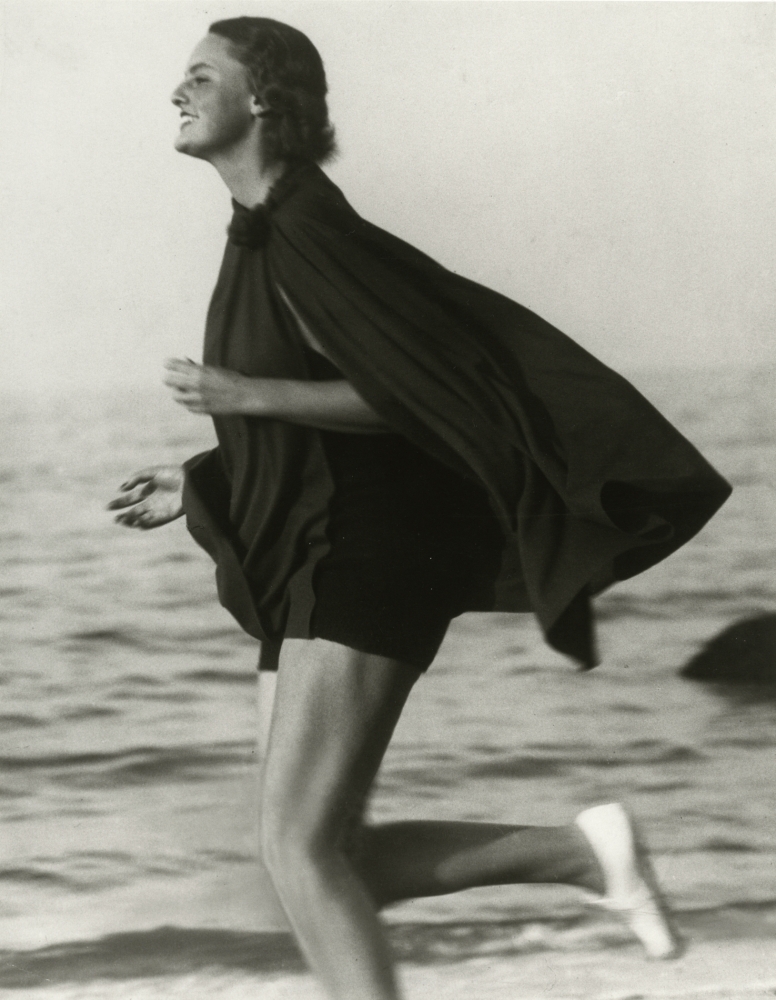
The 80s: Photographing Britain @ Tate Britain

Linton Kwesi Johnson

Johnson isn’t mentioned anywhere in this exhibition but thinking about the 1980s made me dig up favourite playlists, and I ended up writing most of this review listening to his great 1979 album, ‘Forces of Victory’.

Introduction

Sometimes you wonder whether exhibitions at the Tate galleries are really about art at all any more, but aren’t more like polemically woke sociology lectures, with art, photography, sculpture and other evidence used merely as illustrations for a familiar set of well-worn, ‘radical’ themes.

This exhibition contains rooms or sections devoted to immigration, race, race riots, racism, the Black Experience, the Black Body, the Queer Black Body, feminism, identity, gender, colonialism, imperialism, immigration, sectarianism, pollution and environmentalism. As you can see, these look like the topic tabs on the Guardian website or a list of fashionable humanities subjects at any modern university.

As to the lived experiences of anyone not a left-wing activist, not a feminist, not Black or Asian, and not gay or lesbian during the 1980s, these are less in evidence than the subjects I’ve just listed and where they do appear, it’s mainly to be mocked and ridiculed.

I visited with a friend and we loved the first room because it is packed with a Greatest Hits selection of political issues from the 1980s: photos of anti-racism demonstrations (by Syd Shelton and Paul Trevor), of Rock Against Racism gigs, of the Miners Strike (by John Harris and Brenda Prince), of Greenham Common (by Format Photographers), protests about Section 28 and AIDS, all leading up to the Poll Tax riots – yes, all the usual suspects, shot in vivid black and white, which took us both back to our heady student days.

But as the exhibition progressed her enthusiasm turned to puzzlement and then irritation and, by the end, she was so fed up with being lectured about identity and gender and race and queer Black bodies that she gave up. She described it as the worst exhibition we’ve been to this year and I came to agree. If you read all the wall captions (as I’m addicted to doing), it felt like being trapped in a lift full of woke humanities lecturers all talking at the same time.

‘No title’ from the series Strictly by Jason Evans (1991) Tate © Jason Evans

The central problem with this exhibition

I naively thought the exhibition would be a portrait of the 1980s, that the curators would make an honest attempt to give a balanced account of this troubled decade and the wide range of social and cultural changes it witnessed, as captured in photography – that it would be a visual history of the decade.

Very wrong. What the curators have done is to make a personal selection of just the radical photographers from the period who covered what they think are the important issues (then, as now), the disruptors, the radicals, the subversives. And, as mentioned, although they initially touch on many of the obvious issues of the time (the Winter of Discontent, Thatcher, Miners Strike, unemployment, inequality, Greenham Common, poll tax) this is not where the curators’ hearts lie.

The curators are far more concerned with contemporary woke issues of gender and ethnicity than with genuinely trying to reach back and understand what it was like to live through the 1980s, as my friend and I (and, obviously, scores of millions of other Brits) did.

The result is an exhibition which feels top heavy with the woke curatorial concerns of our own day – gender, race, colonialism, immigration, inequality – but feels like it misses out important aspects of the decade in they’ve chosen to cover.

While the wall labels are fairly neutral and factual about the political history (Callaghan government; winter of discontent; days lost to strikes; Thatcher elected; deindustralisation; working class poverty; anti-nuclear protests) the actual exhibits are utterly one-sided, with a plethora of photos, pamphlets and posters decrying the authorities, the police, the government, for their racism, lack of concern for the poor, inequality, tax and regulation changes to benefit business and the middle classes, and so on.

While all these criticisms are true, they fail to take account of the key fact of the decade which is that Mrs Thatcher was, and continued to be, phenomenally popular with about 40% of the population. Here’s how many voted for her three Conservative administrations.

  • 1979: 13,697,923 (44%)
  • 1983: 13,012,316 (42%)
  • 1987: 13,760,583 (42%)

Lots and lots of people thought Britain had gone down the drain in the 1970s, thought the Labour governments of Wilson and Callaghan were in hock to the trade unions who, despite all their promises, seemed to be continuously on strike, while all manner of public services collapsed – that Britain was becoming a failed state or Third World country.

In this narrative, Thatcher not only saved Britain from endless decline under Labour, but went on to remodel the entire economy, letting unprofitable nationalised industries go to the wall while privatising other state monopolies in order to enable international investment (for example, modernising the dire railway network or allowing greater innovation in telecoms). The deregulation of the City of London allowed British banks and investment companies to compete more aggressively around the world and become phenomenally successful. Selling council houses to their owners (as per the 1980 Housing Act) allowed millions of poor people to feel the pride and security of owning their own home for the first time. And, on the patriotic front, her staunch attitude in the Falklands War and victory against quite daunting odds, allowed tens of millions of Brits to feel proud about their country again.

I personally disagree with a lot of this or can point out the obvious criticisms of most of these policies – but 40% of the population enthusiastically agreed with it, saw the world this way, voted for her, and hero-worshipped her.

And my point is simple: None of that is in this exhibition. This is an exhibition of radical feminists, Black and Asian civil rights marchers, gay rights activists, of campaigners against race hate and misogyny and unemployment and nuclear weapons etc. It is like a collection of all the fringe groups you find at a Labour Party conference vying for the attention of those in power who are always too busy to listen, today as 40 years ago.

The large number of people who were relieved by the breaking of union power, the end of permanent strikes, the people who made fortunes in the City or found their pay doubling in newly privatised companies or suddenly owned a home for the first time in their lives or felt the government was (unlike labour) seriously backing them in the war against the IRA, all the people who benefitted from the booming North Sea oil industries in Aberdeen or working on the rigs, all the people who were encouraged by the new spirit of entrepreneurism to set up their own business and prospered – none of them are here.

To be clear, and to bend over backwards for the curators, the main wall labels which introduce each room and give the historical facts behind each theme are broadly objective historical summaries, albeit of the predominantly leftish issues they’ve chosen to discuss. It’s the selection of photos and objects which are unrelentingly one-sided, tendentious and biased and it is, of course, these which make the main impact on the visitor.

For example, the exhibition includes a photo by Anna Fox of this jokey cutout of Mrs Thatcher which has been splattered with orange or something. But to really convey the atmosphere of the decade it should have included many more images of Thatcher, including some of the terrifying ones of her at her most domineering. Now I think about it, the show could have had an entire section devoted just to images of Mrs Thatcher, showcasing all the photographic and image manipulation styles of the day, from adoring Conservative posters to satirical photomontages by Peter Kennard or photos of the Spitting Image puppet of her. That would have been interesting, funny and thought provoking but no. Just this image of the cutout spattered with soup. Disappointing. Missed opportunity. Photos of the woman who dominated a decade.

Friendly Fire, target (Margaret Thatcher) by Anna Fox 1989 © Anna Fox

The relentlessly left-wing perspective of the curators quickly comes to feel so narrow. Can it really be true that every single photographer, photographic studio or collective during the entire 1980s was vehemently left wing, concerned only with radical causes, with ‘pushing boundaries’ and ‘subverting’ all the usual suspects (gender norms, heteronormative stereotypes, racist myths etc)? Can the entire decade‘s photographic output really have been so narrow, repetitive and obsessed with the same handful of left-wing themes and issues?

Facts about the exhibition

This is a vast show: ten rooms, 16 themes, over 70 ‘lens-based artists and collectives’ are represented by over 550 art works and archive items: lots of ‘radical’ photography magazines such as Ten.8 and Camerawork; lots of posters, leaflets, handouts, Greenham Common posters and flyers and badges, anti-racism pamphlets, posters etc. It is massive. Prepare to be overwhelmed and exhausted.

No reasonable human being can be expected to fully process and assess 550 photos and objects at one go – so the curators are either assuming people will go back a second time (probably a good idea) or will hop from one section to another, or will skim through and not give anything enough attention (all too likely).

The negative affect of this jumble-sale overcrowding is exemplified by the sections devoted to the black-and-white documentary photography of two photographers I revere, Tish Murtha and Chris Killip. I raved about their depictions of dirt-poor working class communities when I first saw them in shows at the Photographer’s Gallery entirely devoted to their work, when they had a devastating impact on me. Tish Murtha, in particular, was a photographer of genius.

But here, half a dozen of their (outstanding) photos are wedged in between 6 by someone else, 9 by someone else, 4 by someone else, 7 by someone else, a section about Asian identity, another about the Black Experience, some stuff about pollution in Devon, a sequence of seaside snaps… and so on and so on until the whole thing becomes a blur. They both deserve a better environment and more respect.

Critch’ and Sean by Chris Killip (1982) Tate © Chris Killip

It’s the difference between walking through a landscape, stopping to give every tree and plant time and attention – and driving through the same landscape in a car, noticing the occasional standout feature against the general blur.

Chronological slippage

The exhibition is so huge that it overflows its own boundaries. It is everywhere referred to as ‘The 80s’ and yet the first photo dates from 1976 and the last one from 1993. That’s a 17-year spread, not a ten-year one. It feels bloated chronologically as well as content-wise.

Exhibition structure

At one point I drafted a long section comparing my own lived experience of the 1980s (including going on protest marches as a student, then living in the Brixton depicted in some of these photos, clubbing, protesting, walking through one of the Brixton riots etc) with the depictions given here but it got too long and irrelevant. Instead here is a boiled-down version of Tate’s own exhibition guide (which you can read in full here).

As you can see, the opening sections tick all the boxes, contain interesting facts and seem set fair to give you an interesting historical overview of the decade. It’s only slowly that the curators’ obsession with race and gender become more prominent and you begin to wonder, and then become irritated by, the absence of so many other things.

First a list of what is in the exhibition. Then my list of what, in my opinion, has been omitted.

1. Documenting the decade

Protests and riots from the 1976 Grunwick strike through the Miners Strike, National Front rallies met with anti-racist demonstrations, the Clash playing their famous Rock Against Racism gig in Victoria Park, the election of Mrs Thatcher and the ideology of Thatcherism, Greenham Common (obviously), the poll tax riots.

Paul Simonon of the Clash at a Rock Against Racism concert, Victoria Park, East London, April 1978, photo by Syd Sheldon/White Riot, in The 80s: Photographing Britain at Tate Britain

2. Anti-racist movements

The 1948 British Nationality Act allowed everyone born in Britain or its Empire to become a ‘Citizen of the United Kingdom and Colonies’ and tens of thousands came to fill job vacancies. Regrettably, sometimes tragically, this triggered hostility and racial discrimination, marking the beginning of decades of racist rhetoric, rioting and civil rights activism. 1968 Enoch Powell’s river of blood speech. By the mid-1970s, the far-right, anti-immigration National Front was England’s fourth largest political party. So the show has many photos of their rallies and protests by opponents (and posters, badges and flyers), including quite a few about the so-called Battle of Lewisham which took place on 13 August 1977.

Darcus Howe addressing the anti-racist demonstrators, Lewisham, 13 August 1977 by Syd Shelton (1977) Tate © Syd Shelton

Was 1977 in the 1980s? No. Why is it in the exhibition? Because this isn’t an exhibition about the 1980s: it is an exhibition about radical causes the curators support, and which had their origins in the 1970s.

Also, a bit of digging revealed that quite a few of the black-and-white protest photos in this first room are loans from the National Portrait Gallery a mile up the road. Handy. And they’re not just dusty old photos from the archive but are, in fact, star entries in the National Portrait Gallery’s Schools Hub. This includes the Darcus Howe photo and the photo of Jayaben Desai by David Mansell.

3. The Miners’ strike

In March 1984, the National Coal Board announced plans to close 20 collieries, putting 20,000 jobs at risk. The National Union of Mineworkers, led by Arthur Scargill, responded with a series of year-long strikes. Observed across England, Scotland and Wales, the strikes put industrial issues and workers’ rights on the national agenda. Many dramatic photos including the famous one of a mounted policeman wielding a baton against photographer Lesley Boulton at the Battle of Orgreave, 1984.

4. Greenham Common

On 5 September 1981, a group of women marched from Cardiff to the Royal Air Force base at Greenham Common in Berkshire. The site was common land, loaned to the US Air Force by the British Government during the Second World War and never returned. The group called themselves Women for Life on Earth. They were challenging the decision to house nuclear missiles at the site. When their request for a debate was ignored, they set up camp and the site became a women-only space. The camp lasted for 19 years although it was after only 6 years, in 1987, that Soviet President Mikhail Gorbachev and US President Ronald Reagan signed a treaty which paved the way for the removal of cruise missiles from Greenham.

Greenham Common, 14 December 1985 by Melanie Friend (1985) reprinted 2023. © Melanie Friend, Format Photographers

I smiled when the curators proudly explained that Gorbachev subsequently paid tribute to the role ‘Greenham women and peace movements’ played in this historic agreement as if they, the curators, were partly responsible for its achievements. And I also liked the implication that you should always believe what a Russian politician says.

The massive political exhibition which filled the same Tate Britain galleries before this, Women In Revolt! Art and Activism in the UK 1970 to 1990, also featured an entire room about Greenham Common. My friend jokingly suggested that maybe every Tate exhibition should have a section devoted to Greenham Common: The Pre-Raphaelites and Greenham Common. Victorian sculpture and Greenham Common.

5. Poll Tax

The community charge, commonly known as the ‘poll tax’, was introduced by Margaret Thatcher’s Conservative government in 1989 in Scotland, and 1990 in England and Wales. This flat-rate tax on every adult replaced previous taxation based on property value. The tax was accused of benefitting the rich and unfairly targeting the poor. The national anti-poll tax movement began on the streets of Glasgow and led to a series of anti-poll tax actions across the UK. Many demonstrations saw clashes between police and protestors, and resulted in rioting. The fallout from the tax triggered leadership challenges against the prime minister and, in 1990, Thatcher resigned. In 1991, following vehement national opposition, John Major’s Conservative government announced the poll tax would be replaced by council tax.

So news photos of anti-poll tax marches, some of which turned into riots, ‘ordinary people’ carrying placards, burning cars in Trafalgar Square. Ah, those were the days.

Nidge and Laurence Kissing by David Hoffman (1990) © David Hoffman

6. The Gay Rights Movement

In 1967, the Sexual Offences Act partially decriminalised sexual acts between two men. It was the result of decades of campaigning but did nothing to address the discrimination gay and lesbian communities continued to face. So photos of LGBTQ+ people protesting for equal rights.

In 1981 the UK saw its first identified cases of AIDS. By 1987 the HIV/AIDS epidemic was a global health crisis. The public focus was largely on gay men who were being infected in much greater numbers than the general population, fuelling anti-gay rhetoric in politics and the press. Queer activists organised in opposition to the resulting homophobia, as well as Conservative ‘family values’ campaigns. Do you remember some media labelling it the gay plague? Bigotry on a national scale. Lots of photos of anti-homophobia and AIDS awareness marches.

7. (Political) Landscapes

This is the first and, as it turns out, pretty much the only section which isn’t about political protest, gender awareness and Black issues. But don’t imagine it’s pretty photos of the British Isles. It, also, takes a heavily ‘theoretical’ i.e. politicised approach to its subject.

This section points out how the entire concept of ‘landscape’ is socially, culturally and politically constructed, and how the British tendency to see the countryside as cosy and reassuring often conceals the way the land has been a battlefield for rights to common land and to roam.

Also, in line with the gloomy focus elsewhere in the show, there’s an emphasis on landscapes as places of deindustrialisation and ruins, and as degraded by pollution and fly tipping.

That said this room contained some of the best sets of images, neither part of the obvious political issues of the first few rooms nor of the gender and race obsession of the second half of the exhibition. Having walked through the whole exhibition twice I found myself gravitating towards this room for the understated, sometimes elusive quality of its photos.

For example, I liked the red river sequence by Jem Southam, a set of 12 colour photos of the country around a stream in west Cornwall. None of them individually are ‘great’ photos but the fact there’s 12 of them collectively creates a great sense of location and strangeness. And the dramatic black-and-white study of a standing stone on Orkney by Albert Watson.

Orkney Standing Stones by Albert Watson (1991) © Albert Watson. Courtesy Hamilton Gallery

But the pull of politics is unavoidable. Nearby are upsetting images from the Troubles in Northern Ireland, namely The Walls by Willie Doherty, and the disturbing series Sectarian Murder by Paul Seawright. This records the sites where murdered bodies were found, after the bodies had been removed and they had returned to their normal, litter-strewn banality.

Even this apparently bucolic image by Paul Graham contains the tiny detail of a Union Jack high up in the tree which, in its little way, throws the shadow of 800 years of history across the green fields and blue sky.

Union Jack Flag in Tree, Country Tyrone by Paul Graham (1985) © Paul Graham

8. Remodelling history

Extensive coverage of radical feminist photographers Jo Spence and Maud Sulter who set out to ‘challenge photography’s sexist and colonial past’, and its relationship to class politics.

Remodelling Photo History: Revisualization by Jo Spence (1982) Tate © The Jo Spence Memorial Archive

There’s a surprising amount about these two figures, Spence and Sulter, including a separate section on Spence’s collaboration with artist Rosy Martin to develop photo-therapy. As with other Tate exhibitions, maybe there’s so much of it simply because Tate owns their archive and needs a pretext to display a decent amount of their work. (We’ll see the same is true of the unexpected prominence given to an American photographer, Lyle Ashton Harris, at the end of the show. Tate owns them so this is a prime opportunity to dust them off and display them.)

9. Black women

There’s a separate section devoted to Maud Sulter who’s quoted as saying, ‘Black women’s experience and Black women’s contribution to culture is so often erased and marginalised’, and so set about rectifying this in series of photos of her dressed up in period costume looking like an extra from Bridgerton.

Zabat, Terpsichore, 1989 from Zabat by Maud Sulter (1989) © Estate of Maud Sulter. All rights reserved, DACS/Artimage 2023. Image courtesy of Street Level Photoworks, Glasgow

10. Image and Text

A section on the use of text in photos, texts designed to amplify or undermine the central image. There is much citing of the artist and theorist Victor Burgin who, the curators tell us, was very influential during this period. He’s represented by some of his series of large, poster-sized photos which include ironical texts, titled ‘UK 76‘. 1976? But I thought this was an exhibition of photography from the 1980s? No. As with all the photos of anti-National Front marches, the Battle of Lewisham and so on, the curators bend their own rules and boundaries when it suits them. (As with the Jason Evans photo at the top of this review, and Albert Watson’s Orkney Standing Stones, both from 1991 and so spilling over the other end of the boundary.)

This section also included some big poster-sized images of rubbish new townscapes with official-sounding quotes from brochures pasted on top (which I liked very much). And it’s the section with the satirical images of office workers by Anna Fox (with mockingly ironic text) and Kroll’s sequence of posh chaps in private clubs (with mockingly ironic text) which I’ll describe below.

10. Reflections of The Black Experience

This is the biggest room in the exhibition. It takes its name from ‘Reflections of the Black Experience’ which was an exhibition held at Brixton Art Gallery in 1986, commissioned by the Greater London Council’s Race Equality Unit. It was followed by D-MAX: A Photographic Exhibition in Bristol.

Both exhibitions played an important role in the development of the Association of Black Photographers, which is now called Autograph ABP. Established in 1988, Autograph’s mission was to advocate for the inclusion of ‘historically marginalised photographic practices’. Working from a small office in Brixton, the agency delivered an ambitious programme of exhibitions, publications and events. Autograph is now one of my favourite small galleries in London, which I’ll discuss below.

There’s lots in this big room, including photos of Brixton from the later 1980s, when I lived there. The display that made the most impact on me was the brilliant series of Handsworth self portraits. This project was set up by Derek Bishton, Brian Homer and John Reardon in which they set up a makeshift studio in Handsworth, a multicultural part of Birmingham, and invited people to take self portraits of themselves. Over 500 people took part and the joy of people messing about, as solo shots, in pairs or larger family groups, is infectious. Once again, though, as throughout the show, works are included from outside the nominal time range because, well, they’re good.

Ting A Ling, from Handsworth Self Portrait, 1979 © Derek Bishton, Brian Homer and John Reardon

11. (Political) Self portraiture

You might have thought this would feature a fascinating range of self portraits by people across society throughout the ten years of the 1980s but no, this is Tate and so only a handful of social groups really count, namely radical feminists, Black activists and LGBTQ+ people. In the curators’ words:

In the nineteenth century, photography was a valuable tool for colonial powers. Ethnographic images of Indigenous Peoples and landscapes were distributed through postcards and magazines. They ‘othered’ subjects and created racist stereotypes that legitimised the mission of empire. The photographs on display here challenge this colonial gaze. They present nuanced, multi-dimensional representations of Black and Asian British selfhood.

So the self portraits in this section are entirely concerned with subverting imperialist, colonialist stereotypes. They link up with the series in the last room by Grace Lau of him or herself dressing up as types from the decade in order to subvert gender norms etc.

From the series ‘Interiors’ by Grace Lau © Grace Lau 1986

Black activists or gender activists. Little attempt to consider the myriad other types of self portrait taken outside these areas, by anybody else, at any other part of the decade.

12. Community

This room hosts series from half a dozen photographers who went to live with communities around the UK to share their experiences and create accurate depictions. Most are in black and white with a 100% left-wing focus on poverty, crappy housing, unemployment, aggressive policing and racial stereotypical. It includes outstanding photos by Chris Killip which, for some reason, didn’t hit me as hard as when I saw his one-man show at the Photographers’ Gallery. I think being set next to the work of 3 or 4 other photographers (for example, the equally as good Sirkka-Liisa Konttinen) doing more or less the same, attenuated all of them.

13. Colour photography

A room full of big, blaring, gaudy colour photos. Apparently, Britain’s first exhibition of photography taken on colour film was Peter Mitchell’s 1979 show at Impressions Gallery in York. During the 1980s technological developments continually improved the quality of colour photography and this room brings together sequences of giant colour photographs by Martin Parr, Paul Reas and Tom Wood. Because they are almost entirely very unflattering photos of very ordinary white people I came to think of it as the Chav Room or the White Trash Room (fuller explanation below).

14. Black bodyscapes

In case you didn’t get enough Blackness in the opening room about anti-racist protests, in the room about Black women or the massive room about The Black Experience, here is a room devoted to the Black Queer Experience. The assembled photographs of Rotimi Fani-Kayode, Ajamu X and Lyle Ashton Harris ‘explore masculinity, sexuality and Blackness’.

Fani-Kayode was described by Ajamu X as ‘the most visible, out, Black, queer photographer’ of the 1980s’. Ajamu X’s desire to document ‘the whole of Black queer Britain’ has been dubbed ‘Pleasure Activism’. Harris describes his photographs as a celebration of ‘Black beauty and sensuality’. The photos of Ajamu (black and white) and Fani-Koyode (moody, shadowy colour) are, in their different ways, staggeringly impactful.

Body Builder in Bra by Ajamu X (1990) Tate © Ajamu X

15. Celebrating subculture

The final room. You might have thought that a documentary look at the ‘subcultures of the 1980s’ might have covered some of the movements closely associated with ever-changing fashions of pop music such as post-punk, industrial music, Goths, New Romantics, synthpop and, later, Madchester, acid house, raves and so on. These affected how people dressed, thought about themselves, danced, partied, affected not just styles of music but graphics, album art, posters and many other types of visual content.

But no. None of that is here. Tate curators only know two subjects, race and sex, gender and ethnicity, and so they ignore all the pop cultures I’ve listed. Instead, at the mention of ‘subculture’ their thoughts immediately go to gender issues, to LGBTQ+, and to the furore surrounding the notorious Section 28 of the Local Government Act.

The wall labels go into great detail about how Section 28 prohibited local authorities from ‘promoting homosexuality’ and triggered a wave of protest from gay and lesbian communities. They tell us how Section 28 forced many LGBT groups to disband and saw literature depicting gay life removed from schools and libraries, but that it also galvanised the Gay Rights movement. People took to the streets in a series of marches and so, with thumping predictability, the exhibition ends with lots of photographs of people protesting, marches, banners etc, very much as in the first room, or the Greenham Common room, or the Black Experience room.

If you’re maybe a little bored by the subject of gay activism, tough, because not far away there’s photos by Tessa Boffin who ‘subversively reimagines literary characters as lesbians’, while nearby Grace Lau ‘documents members of various fetishist sub-cultures’.

To be crystal clear, none of this is ‘bad’ in itself, some of it is very good. It’s just that by this stage the visitor who’s been reading all the wall labels is exhausted by the curators’ obsessive harping on just the same two or three subjects to the exclusion of everything else.

End of exhibition summary

I suppose I could stop here, having given you a good summary of what there is to see and my own negative response to it. And you might be wise to stop reading here. But several things triggered me so much I needed to work them through in print.


Omitted subjects

As explained, my friend and I got increasingly frustrated as we looked for evidence of the other, non-political, non-woke aspects of the 1980s which we and millions like us like us experienced. Without trying too hard I made a list of the domestic and international events, music, style and commercial changes which I associate the decade with.

Take sport. There’s nothing about sport at all. Apparently there was no sport during the 1980s and no sports photography. Even if you wanted to ‘keep it Tate’ and make sport as political as possible, they could have mentioned the disastrous Bradford City stadium fire, the legislation which followed forcing all football grounds to become all-seated, and the resulting accusations that the sport was losing its working class fanbase and becoming embourgeoisified. And there were lots of other sporting events, highlights and scandals. But not a hint here.

Pop music. There’s one photo of The Clash performing at a Rock Against Racism gig in Victoria Park and that’s it. Nothing else: no industrial rock, post-punk, synth pop, New Romantics, no Smiths and, at the end of the decade, no Madchester, no ecstasy, no raves, no ambient music. There’s a wall of style magazines at the end, sections on the impact of, for example, i-D magazine, but somehow the curators’ focus purely on design manages to omit the extraordinary output of a decade many consider the greatest era in British pop history. Where’s Wham for God’s sake?

This was the decade when MTV arrived in the UK (1981) and its reliance on pop videos changed the dynamic of how people consumed pop. Same with cable TV generally, and the arrival of Sky TV (1984) with its crazy aerials. I appreciate these aren’t photographic but someone must have taken photographs of them and of this huge transformation of the cultural and visual landscape. Not here.

No jazz. No classical music. None. They didn’t exist during the 1980s or if they did, no one took any photos of them. Whereas I remember in the early 1980s transitioning away from pop music altogether and listening to the likes of Courtney Pine, Loose Tubes or Andy Shepherd. OK they’re not photographers, but it felt like a big cultural shift at the time and surely someone took photos of them.

World music same. Lots of young people got fed up with boring old rock music and sought new sounds from around the world. WOMAD (World of Music, Arts and Dance) was founded in 1980 and the first WOMAD festival was held in Shepton Mallet 1982. Nothing here.

Live Aid, remember that, Saturday, 13 July 1985? Not here, not a whisper, not so much of the event itself, but as the invention of really epic mass charity events which it invented. It was based around images because of Bob Geldof’s response to Michael Buerk’s reporting of the Ethiopia famine. I know that’s TV reporting, but there were lots of photographs of it (of the famine and of the concert). Why is Greenham Common included but Live Aid, which was a vastly bigger event and, arguably, more socially transformative, not? All curators are feminists. 39 iconic photos of Live Aid at London’s Wembley Stadium

Fashion photography? No. None. There’s a wall about style magazines but this is chiefly about the magazine design itself: I saw nothing recording the drastic new looks which appeared in the early 1980s, the New Romantics, Blitz nightclub, big hair, big shoulder pads which became crazy fashionable. According to this exhibition, never happened. 38 Iconic ’80s Fashion Photos.

The royal wedding On Wednesday 29 July 1981 Prince Charles married Lady Diana Spencer. It was a huge social and media event. If you think about it, royal photography is a specialised area or genre all to itself. As with Mrs Thatcher, the curators could have done an intellectually reputable section on how royal images are created, curated, marketed and disseminated, mocked and satirised. 70 Rare Photos From Princess Diana’s Wedding.

The Brighton bombing on 12 October 1984. See the relevant photos by brilliant photojournalist John Downing.

Architecture The 1980s was the great decade of postmodernism in architecture with its flagship building, Lloyds of London. Surely there were photographers specialising in the built environment across the UK and in particular this completely new look which swept across Britain? Not according to this exhibition. A Spotter’s Guide to Post-Modern Architecture.

Foreign reporting? Live Aid was of course a response to the Ethiopian famine and, in particular, the work of photojournalist Mohamed Amin, but there is no photography of events outside the UK in this exhibition. I take the point that the curators decided to limit their scope to the UK, but images of the major foreign stories of the decade were published in the UK and many taken by British photographers. So why aren’t they included here? How Mo Amin Inspired Change in Ethiopia

Chernobyl? No. No British photography of any aspect of it.

The Mujahideen in Afghanistan? Signature images of the decade were the reports on the evening news by some BBC or ITV journalist wearing a keffiyeh or pakol hat while Islamic freedom fighters fired off a Stinger missile in the background. Did no British photographers take any photos of this ten-year war? If they did, why are they excluded from this exhibition? To take one example from hundreds, the Afghan War photos of Scottish photographer David Pratt.

The fall of the Berlin Wall, 9 November 1989. That was a massive, world historic event with photos and footage beamed into every home. The curators can quote Gorbachev when it suits their agenda, when he’s praising the Greenham women, but on none of the other vast issues of the 1980s, namely the collapse of communism and the Soviet Union in which he was the prime actor.

Photos linked to film and theatre, glitz, actors, red carpets – forget Hollywood, just here in the UK? No. Didn’t happen during the 1980s. None here.

One of the biggest domestic stories of the decade was the deregulation of the City of London, nicknamed the Big Bang, which transformed the worlds of finance, banking and insurance, and made lots of people very rich, with far-reaching consequences for the British and maybe global economies. There’s text about it in the room labels but not a single image. Surely someone took photos of the changing culture in the City of London? No? Why not?

North Sea oil? Nada. Did no British photographer take photos of oil workers, Aberdeen, the creation of the refining infrastructure in that boom town? No photographer made a project of recording all this?

And what about The Falklands War (2 April to 14 June 1982) which had a seismic impact on British society and politics – footage of ships setting sail, news photos of battles, muddy paratroopers yomping through the long grass, looking shattered after a firefight, guarding nervous Argentinian captives, the celebrations when the ships arrived back in Portsmouth or Southampton? Even, if you are a Tate curator and insist on taking a left-wing view of the war, surely there was a world of anti-war photos, posters, and what not. Here are 30 Photographs From The Falklands Conflict they could have borrowed from the Imperial War Museum. But no, nothing, zip. Zilch.

Summary

Can you see why I became increasingly dismayed, and then irritated, by how many issues, events, music and fashion styles, new industries and technological innovations that were absolutely central to the 1980s the Tate curators left out because they didn’t fit their handful of woke concerns?

Omitted ethnic groups

As I’ve shown there is plenty of stuff about Black photographers, Black resistance, Black identity, Black photographic practice, Black selfhood, Black representation and much more and yet there are other ethnic groups in the UK – where are they?

From the series Revival, London by Roy Mehta (1989 to 1993) Courtesy of the artist and L A Noble Gallery

It’s not that extensive coverage of Black issues is ‘wrong’, it’s that the curators’ monomaniacal obsession feels like it comes at the neglect of all the other issues, types of people, professions and experiences alive in 1980s UK. Here are some wall labels to recreate the experience:

Frustrated by the misrepresentation of Black people in British mainstream media of the period, Zak Ové used his camera to challenge this visual discourse.

Dave Lewis‘s photographs of Black British communities in South London emphasise the diversity of experiences within these communities.

Marc Boothe‘s photographs sought to challenge traditional documentary practices and introduce viewers to a ‘Black aesthetic’.

Suzanne Rodan‘s candid shots capture moments of everyday life within Black and South Asian communities in 1980s London.

In Impressions Passing Roshini Kempadoo manipulates photographic prints to reflect how racist imagery is perpetuated in modern media.

Ajamu‘s portrait photographic series Black Bodyscapes focuses on intimate sexual desires.

Autoportrait is a series of nine self-portraits which challenge the under-representation of Black women in British fashion and beauty magazines.

Magenta Dress with Pink Tulips by Joy Gregory (1984) Courtesy of the Artist © Joy Gregory. All rights reserved, DACS

To be fair, there’s also quite a lot in the early rooms about the Asian experience, starting with the very first photos of the 1976 Grunwick strike which was triggered by Asian women walking out of the Grunwick Film Processing Laboratories in Dollis Hill. In that first room there are photos of Asians protesting about racism, against police violence (again, from the 1970s). The ‘Representing the Black Experience’ room also contains images of many Asians. The Communities room has some quieter photos celebrating Asian communities, religious festivals and so on.

Outside police station, Bethnal Green Road, London E2, 17 July 1978. Sit down protest against police racism, 1978 by Paul Trevor © Paul Trevor

I smiled when I saw the section devoted to Indian-born Canadian photographer Sunil Gupta. Gupta also has a wall dedicated to him at the Barbican exhibition of contemporary Indian art, and had no fewer than three sections dedicated to him in the Barbican’s epic exhibition about Masculinity.

Why is Sunil Gupta so popular with art curators? Because he is Asian and gay and so ticks two boxes in the curator’s diversity and inclusion checklist. No exhibition of 1980s or ’90s photography dare be without its Sunil Guptas. Now, you may love Gupta’s work but I found the photos at the Barbican and again, here, very meh. He is represented by ‘Pretended Family Relationships which juxtaposes portraits of queer couples with the legislative wording of Section 28 in order to subvert the blah blah bah. They seemed very average to me, but they are gay activism, so he’s in!

Anyway, despite the Asian presence in many of the photos, the word ‘Asian’ appears precisely once in the exhibition guide while the word ‘Black’ appears 27 times. Draw your own conclusion.

And were they any other ethnic groups in the UK in the 1980s? Apparently not. I tell you a word which doesn’t appear anywhere in the exhibition, which is ‘Jew’. Apparently there were no Jewish photographers in Britain during the 1980s and no Jews to photograph. In the ‘Community’ room there are (inevitably) Black communities, Asian communities and working class communities, but no Jewish community. Didn’t exist or no one bothered to photograph it.

In the same spirit of omission, there are no photos by or of Chinese, Arabs or Muslims. They either didn’t take photographs during the 1980s or have been omitted by the curators. Why? Hispanic communities, all the Brazilians in Stockwell, or European immigrants like the Poles, or the Somalis of Streatham, just to mention ethnic communities I live near? No. Nada.

Because feminism, Black and queer is where the money is. It’s where the academic courses and academic careers are. When I flicked through the exhibition catalogue and saw chapters titled ‘Feminist praxis’ and ‘Challenging colonialism’ I couldn’t help laughing. That’s where the money is, kids. Specialise in those areas and you’ll never be unemployed. Unlike being a trawlerman or a steel worker, being an expert in feminist praxis or post-colonial theory is a career for life.

Underground Classic (John Taylor) by Zak Ové (1986) © Zak Ové

Why Yanks?

Remember I was irritated by the lack of coverage of central events of the 1980s like Chernobyl, Afghan War, the fall of the Berlin Wall and so on while it seemed fine to have stuff about strikes or race riots from the 1970s? You could argue that those pivotal events are omitted because they’re in some sense foreign / happened abroad – which is why I was irritated by the presence of an American photographer, Lyle Ashton Harris, in the exhibition.

Why, you might well ask, are nine photos by American photographer Lyle Ashton Harris (born and works in New York) of American subjects – including one titled ‘Miss America’ – included in an exhibition about Britain and British photographers in the 1980s? Why is one entire wall devoted to four massive self portraits of the American photographer wearing bits of ballet costume?

Constructs 10 to 13 by Lyle Ashton Harris (1989) Tate

Because 1) Harris is Black and queer and, with Tate curators, Black or Queer trumps all other considerations, including the criteria of their own exhibition.

Because 2) America is like heroin to art curators. Everything ends up being about America.

And because 3) it turns out, after a bit of digging, that Tate owns these big Lyle Ashton Harris photos and so, like the room devoted to extensive coverage of Jo Spence and Maud Sulter – whose archives Tate also owns – it’s a good example of the way exhibitions are created around what a gallery already owns, or what curators can cheaply get their hands on, rather than an accurate, objective exploration of the nominal subject matter.

Conclusion

I hope you can see now why I told you this is very much not a photographic history of Britain in the 1980s – it is a selection of ‘radical’ left-wing, feminist, politically committed Black and Asian or LGBTQ+ photographers who were working from the late 1970s through to the early 1990s, some of whose work touches on social or political issues from the time, but a lot simply doesn’t. Unless you consider gay pride or feminism or anti-racism as uniquely 1980s phenomena – which, of course, they very much weren’t and aren’t.

Photos of the white working class

Amid the radical deconstructions of colonialism and the subverting of heteronormative stereotypes and celebrations of the Black Queer Body, there are some powerful photos of British working class life. Two of the best photography exhibitions I’ve ever been to were of Tish Nurtha and Chris Killip at the Photographers’ Gallery in Soho, and both are represented here by half a dozen or so photos of supernatural power. In this vast show they were, however, swamped by so many other images along similar lines, and so neither of them had the devastating power of their Photographers’ Gallery shows.

There’s a set of vividly squalid colour photos by Paul Graham of the unemployed waiting like souls in hell in smelly 1980s job centres. Ken Grant took grim photos of working class people in and around Liverpool. There’s an excellent set of black-and-white photos of working class white people on the Meadow Wall Estate in North Shields taken by Finnish photographer Sirkka-Liisa Konttinen.

Apparently it was in the 1980s that the phrase poverty porn was first used and, somehow, having so many series of stark black-and-white photos of poor people living in squalid or sad circumstances, demonstrated the law of diminishing returns. They began to seem rather samey. Again, this feels like an example of poor curatorship.

Photos of the white middle class

And what about the middle class people, the political, cultural and demographic centre of the United Kingdom? Not just the 13 million who consistently voted for Mrs Thatcher but all the people who made up the bulk of the population: the accountants or lawyers, doctor and dentists, people running family businesses or working at big corporations, the police and fire and ambulance services, people who worked in local government, the social services, in thousands of care homes, in the hundreds of thousand of charities, ordinary people? Not Black or gay or radical feminists or horribly impoverished Brits, but run-of-the-mill, ordinary people like the hundreds I saw visiting this exhibition, people like you or me?

Well, it was hard to not to conclude that these kinds of people, what you could call the white bourgeoisie, appear in this exhibition solely to be mocked and ridiculed. Anna Fox is represented by a series titled Work Stations which satirises people working in London offices. These are horribly vivid colour shots of ordinary office workers captured in the most awkward and unflattering poses, accompanied by ironic captions pinched from business articles and magazines in order to take the piss out of them and their values. Here’s a prime example. The text under the photo reads ‘Fortunes are being made that are in line with the dreams of avarice’, from Business magazine 1987.

Work Stations, Café, the City. Salesperson by Anna Fox (1988) © Anna Fox. The Hyman Collection, Courtesy of the Centre for British Photography

Next to Fox is the Old Master of colour photodocumentary, Martin Parr, represented by works from his ‘Cost of Living’ series (1986 to 1989). Parr felt the kind of people he mixed with, the comfortably-off middle class, had been systematically under-represented by 1970s and ’80s photography, so he set out to depict them. So he simply went along to art gallery openings, garden parties, Conservative party fetes, and photographed the people he saw. Because it’s Parr deploying his customary, unforgiving colour technique, all these people come out looking extraordinarily awkward and ugly, just like the people in the Anna Fox series.

The mere fact that an expert on contemporary photography believed that this huge tranche of the British population, the middle classes, the inhabitants of Middle England, was under-represented in his medium speaks volumes about the narrow ideological focus of the photography of his day. And the way both Fox and Parr’s photos are described as ‘satirical’ confirms how this huge class of people have become, as pictorial subjects, almost an outsider group in their own country.

Installation view of the ‘satirising the white bourgeoisie’ corner at ‘The 80s: Photographing Britain’ at Tate Britain, with the Anna Fox sequence at the back, Martin Parr on the right. Photo © Tate (Jai Monaghan)

Near to the Parr ‘mocking the middle classes’ photos is a selection of 9 photos from the 26 in the famous series Gentlemen by Karen Knorr. Knorr was given permission to photograph the very posh members of the most exclusive gentlemen’s clubs in London’s St James’s district. Beautifully staged and shot, she then ironically undercut the images with texts taken from news reports and parliamentary speeches (just as Fox had done with her office workers). Again, the aim is to mock and satirise.

It’s hard to avoid the conclusion that all of the depictions of the English middle classes in this exhibition are associated with irony and satire. Now, nobody takes the mickey out of the Black or Asian or women subjects – they are all portrayed as dignified or joyous or righteously angry. But posh white people? Look at the ugly, rich, privileged wankers air kissing, answering phones, stuffing their faces!

The Colour Photography room gives interesting explanations of the technological developments which made colour photography cheaper and better – but it, also, flays its white subjects mercilessly. It includes another series by Parr, his famous seaside scenes, The Last Resort, in which everyone is captured in bright colour with unforgiving candour.

Next to them are half a dozen similarly merciless photos of very ordinary people in Welsh supermarkets by Paul Reas. Like Parr’s photos, like Fox’s series, these seem so pitilessly unflattering as to be actively cruel. The Photography of Cruelty. Or maybe just mockery. Look at the poor white chavs.

Hand of Pork, Caerphilly, South Wales by Paul Reas (1988) © Paul Reas. Martin Parr Foundation

White trash, Black gods

The humiliation of white chavs and poshos in Parr and Fox and Wood’s photos is emphasised by the way that, in the rooms directly before and after them, Black people are depicted in stylish black-and-white photos which make them look dignified, noble or even godlike.

In the room before the white chavs is this set of serious, searching portraits made by Pogus Caesar. They were taken on an Ilford HP 5 camera using 35mm film to achieve a rich grainy effect as he travelled round the country taking shots of people in the street, as far as I can see, solely Black people. They’re really good. Stylish and atmospheric, they dignify and enrich their subjects.

Installation view of ‘The 80s: Photographing Britain’ at Tate Britain showing ‘Into the Light’ by Pogus Caesar (1985 to 89) (photo by the author)

The room after the white trash room is the one titled ‘Black Bodyscapes’, the one featuring photos by Rotimi Fani-Kayode, Ajamu X and Lyle Ashton Harris, photos which ‘explore masculinity, sexuality and Blackness’. I dare say these are important issues to the curators but to the ordinary visitor what you see is a set of spectacularly buff Black male bodies. Wow! Gorgeous, hunky men in prime physical condition, what’s not to lust after?

The Golden Phallus by Rotimi Fani-Kayode (1989) © Rotimi Fani-Kayode / Autograph ABP. Courtesy of Autograph ABP

(I first encountered both Rotimi Fani-Kayode and Ajamu X at the drolly titled A Hard Man is Good to Find! exhibition at the Photographers’ Gallery, and loved them both. I dare say they’re exploring this issue and subverting that stereotype but they are also extraordinarily sexy pictures of beautiful male bodies.)

Anyway, it’s impossible to miss the stark contrast between the dignified Black people in Pogus Caesar, the stunning Black nudes of Fani-Kayode and Ajamu X, and the 15 or so images of the pale, pasty, fat, badly dressed white people captured by Wood, Parr and Reas in the Chavs Room. Step into the Black room to be thrilled. Then back into the white room to be appalled. This isn’t a contrived comparison. The two rooms are right next to each other. They make for an unavoidable and extremely powerful visual contrast.

Autograph ABP versus Tate

Autograph ABP in Hoxton specialises in photography by Black photographers from around the world and is maybe my favourite small gallery in London. Everything I’ve ever seen there has been outstanding. It is a centre of photographic excellence and I was interested to read about its history in the ‘Representing the Black Experience’ room here in this show.

But it also made me wonder, why do I love Black photography at ABP but bridle at the exact same work when it is shown here in Tate Britain? Three reasons. 1) The attitude of the curators. At ABP it is taken for granted that the work is by Black photographers. There may be some stuff about combatting racism, if relevant, but quite often the labels just explain the specifics of the particular project. The ABP curators treat their artists and visitors with respect, as if they’re grown-ups.

Whereas Tate curators can’t stop haranguing their visitors about the horrors of racism and colonialism and the white gaze, as if we’re first year arts students who need to have all the evils of the world explained to us in a tearing hurry. The photographers’ Blackness or queerness becomes the primary thing about them.

This is what I meant be saying the Tate curators treat their artists and works as specimens in extended lectures on their handful of woke topics, about the evils of capitalism and colonialism and racism and sexism, explaining all these issues in words of one syllable or less as if it’s the first time their visitors had ever heard of such things.

So I’m not bridling at the photographers or their works. In other contexts I’ve really loved many of them. I’m reacting very negatively to the patronising tone of Tate’s curators.

2) Individually, many of the works here are great but something negative happens when a load of works by different photographers are all bunched together in a room demonstrating a thesis. So, for example, when I first saw Rotimi Fani-Kayode’s photos, I read the captions about the queer sensibility and undermining stereotypes of Black male sexuality etc, but I also responded to their plain weirdness. To what they look like. These are strange, disconcerting, haunting images which trigger responses beyond the verbal or easily expressed. They did what all good art does which is take you to strange places in the imagination, open doors you didn’t know were there.

But here, lumped together in one room, they feel subservient to the curators’ concerns to lecture us all about the Black Queer Body. This is what I mean by turning art into specimens, pinned like butterflies to a board to make a point.

3) Bulk. Volume. Sheer number. Same point I made about Tish Murtha and Chris Killip. Seen by themselves, their work felt seismic. Bundled together with half a dozen photographers working on the same subject (dirt-poor white communities), and making the same point (Thatcherism, inequality, poverty = bad), a lot of the power and individuality leached out of them.

Message to the curators

  1. Less is more.
  2. If you’re going to group lots of artists together, doing it by their most obvious feature (feminists, Black, queer, working class) tends to diminish their individuality and impact. Think of more imaginative, left-field ways of arranging them. Try to create surprises.
  3. If you claim your exhibition is about a subject, please make an effort to make it fully and adequately about that subject and don’t just restrict it to the handful of woke subjects dear to your hearts plus chucking in some archives you happen to own. Make it about the world, not just the same three curator obsessions (gender, ethnicity, class).

Yet another conclusion

So you can see why, by the end, I was fed up of being lectured about the wonders of queerness and feminism and the Black body and post-colonial identity, and deeply disappointed that so much of the actual history of the 1980s, the global incidents or – just to restrict it to the UK – the key social and media events, and the changing face of technology, music and style which meant so much to me personally, had simply been left out.

This is why the friend I went with thought it was the worst exhibition we’d visited all year: because of its glaring omissions of loads of the things we liked and remembered about the 1980s, because of its systematic rewriting of cultural history to be only about radical left-wing artist-activists, because of its flagrant political bias, because of its mockery of the white middle class which (I’m afraid) I belong to (just like everyone else I saw visiting this show) but, above all, because of its terrible, terrible narrowness of vision.

Well, I’ve given you a strong flavour of my own negative reaction to the thing, but I’ve also tried to give an accurate summary of the exhibition structure, objective summaries of all the rooms, and a good selection of the images, along with the curators’ own words.

This is a massive, exhausting and deeply problematic exhibition – but there’s lots of very good stuff in it and maybe you’ll have a completely different response. Go along and make your own mind up.


Related links

Related reviews

A Short History of Mozambique by Malyn Newitt (2017)

This is a very good book – scholarly, serious, authoritative. Newitt summarises the latest thinking in a whole range of issues which affect Africa’s prehistory, early modern history, colonial periods and contemporary history. It doesn’t aim to please. There are no fascinating anecdotes, colourful vignettes or pen portraits of key figures. Just the most up-to-date facts, dryly presented.

Born in 1943 (and so now 80 years old) Malyn Newitt had a long academic career during which he wrote over 20 books on Portugal and Portuguese colonialism. He was a professor in the Department of Portuguese and Brazilian Studies at King’s College London, and then deputy vice chancellor at Exeter University, before retiring in 2005. So this book is by way of being the summary of a long and distinguished academic interest in the subject.

Mozambique factsheet

The first European to land in Mozambique was the Portuguese explorer Vasco da Gama in 1498.

The coast, territory inland and coastal islands were very slowly settled and colonised by Portugal over the next 200 years. Initially the refuelling ports scattered along the west and east coasts of Africa and onto India, later reinforced with defensive forts, were all part of the same entity, the Estado da India, way stations on the sea journey to India which was where the spices and wealth were.

In the early years the main Portuguese settlement was on the Island of Mozambique, lying off the coast at the northern end of the modern country. The sea between the island and the mainland is still known as the Mozambique Channel. The Portuguese established a port and naval base on the island in 1507 and it remained an important part of their maritime estate for centuries. It became the capital of what came to be known as Portuguese East Africa until 1898, when the administrative centre was moved to Lourenço Marques in the far south of the country, ‘reflecting the shift in economic and political importance’ (p.115).

The name of the island, and so the country, is derived from the name of Ali Musa Mbiki, Muslim sultan of the island when da Gama arrived. So never a western name, then.

For centuries a handful of coastal ports and some territory further inland were part of a huge tract of coast known as Portuguese East Africa. Only at the end of the nineteenth century, as rival European nations like Britain, France and Germany staked out their claims to Africa, was this huge territory pared away and reduced to the borders of the current Mozambique, which were only finally defined in 1891.

Mozambique is bisected by the Zambezi River, the fourth longest river in Africa (after the Nile, Niger and Congo) which rises in Zambia then flows through eastern Angola, along the north-eastern border of Namibia, the northern border of Botswana, then along the border between Zambia and Zimbabwe, until it enters Mozambique.

North of the Zambezi a narrow coastal strip gives way to inland hills and low plateaus, then onto rugged highlands further west. South of the Zambezi the lowlands are broader with the Mashonaland plateau and Lebombo Mountains located in the deep south.

Until the 1960s there was no paved road link between the north and south halves of the country. A railway bridge across the Zambezi linking north and south was only completed in 1932.

In 1964 guerrilla fighting broke out and developed into what became known as the Mozambican War of Independence. It lasted for ten years. The main independence fighters were the Marxist Mozambique Liberation Front (FRELIMO) led by Samora Machal.

After ten years of conflict Mozambique gained its independence from Portugal on 25 June 1975, following the overthrow of Portugal’s authoritarian regime in the so-called Carnation Revolution of April 1974.

Soon after independence a civil war broke out which was to last from 1977 to 1992 between FRELIMO and the anti-communist insurgent forces of the Mozambican National Resistance (RENAMO). Like so many African wars it was exacerbated by the Cold War: the Soviet Union and Cuba backed the Marxist government (cf Angola and Ethiopia) while the USA, South Africa and Rhodesia provisioned, helped and trained RENAMO.

Mozambique’s capital was for centuries known as Lourenço Marques after the 16th century Portuguese explorer who explored the area. (It was only made Mozambique’s administrative centre in 1898). Soon after independence, in 1976, the city was renamed Maputo and remains the country’s capital. The distinctive thing about it is that, instead of being in the centre of the country, maybe on the mouth of the mighty Zambezi, Maputo is way down at the southernmost tip of Mozambique, less than 75 miles from the borders with Eswatini and South Africa.

Mozambique has a land area of 801,590 square kilometres, compared to Portugal’s 92,225 km².

Newitt’s book

A Short History of Mozambique is a brisk, no nonsense, 225-page overview of the subject, written in a very dry, very academic style, a very theoretical style. I’m not sure I’d recommend it to anyone as a history of Mozambique since it’s the kind of history which deals with issues and theories rather than dates and people. For example:

Newitt gives a sophisticated explanation of the concepts of language, ethnicity, empire, kingdom and tribe which Europeans have used ever since the Portuguese first landed on the coast of Mozambique to try and categorise and order and understand its inhabitants. He carefully explains why all of them are flawed and inaccurate. ‘Ethnicity’ is a notoriously slippery category. People’s identities change and even the idea of what an ‘identity’ is has changed over the period we have records for, roughly 1500 to the present.

It was interesting to learn that even right up-to-date contemporary linguists struggle with African languages. It is interesting to learn that modern linguists can’t agree a common definition of what a language is; some linguists consider some African languages as discreet languages, others consider them dialects of parent languages. This explains why even ‘experts’ consider there might be anything from 17 to 42 languages spoken in Mozambique. Just as confusing is the notion that ‘most Africans speak more than one local language or dialect’ (p.19) with the result that language isn’t a reliable indicator of ‘identity’.

You know how progressive critics complain that the Western imperialists imposed nations and categories and tribal names onto much more fluid African identities? Well, Malyn is their dream come true, deconstructing pretty much every type of western category and concept to indicate a fluidity of identity which is, by definition, hard to capture, and equally challenging to read about.

This carries on being the central theme for chapter after chapter. When he’s covering the historical records left by the earliest Portuguese traders and administrators in the 17th and 18th centuries, and even more so in the full-blown imperialist 19th century, Newitt goes to great lengths to explain that the names which westerners assigned to tribes were almost always wrong. Sometimes, to take a blunt mistake, they called tribes after native words which simply meant ‘king’ or ‘leader’. (The country of Angola takes its name from the title ngola, a formal title which was held by the kings of Ndongo and Matamba.)

Westerners assigned social structures familiar to their own history – of empires and emperors, kings and kingdoms – to societies which had completely different, alien structures and identities.

The Africans were organised in groups and social structures but modern scholars have to reach back beyond the distorted and error-ridden Portuguese records to try and piece them together. Some societies were matrilinear, but there appear to have been several types of matrilinearity. Archaeology is not much help, since Africans built so few towns and their villages, made entirely of organic materials, disintegrated back into the earth.

Incidentally, Hewitt’s history obviously focuses on the territory and towns (mostly the notable ports) of what is called Mozambique, but he is not the first to point out the arbitrariness of the borders the Europeans drew up – in Mozambique’s case, finalised in 1891 – and how the deep history of the peoples who lived in this randomly drawn territory obviously had a huge overlap with peoples in the surrounding areas.

His account gives a bewildering sense of a kaleidoscope of peoples, continually migrating, fighting, conquering and holding territory, establishing dynasties that ruled for a few generations before a handful of recurrent issues – drought and famine, flooding, invasion of outsiders – reshuffled the picture.

The result is an immensely detailed and complicated picture, consisting of a blizzard of unfamiliar names – using names the tribes in questions may not even have called themselves – which is very hard to follow. This is why I’m not recommending it as a practical history. Two names which recur are the Ngoni and the Karanga, but there are many more.

Another theme which emerges very strongly indeed is the role of slavery. Slavery was present well before white Europeans arrived. They discovered it to be an intrinsic part of many African societies’ strategies, not only of war and conquest but even of basic survival. Newitt tells us that drought and famine have been recurrent features of the huge territory now known as Mozambique and the region around it, often threatening tribes’ very existence (pages 31, 50). Thus slaves, especially women, could be seized from other groups simply to provide more breeding vessels in order for the group to survive.

What comes over is that all the African groups practised slavery before the Europeans arrived but (as in everything else in this complex account) in a multitude of ways. Some slaves were relatively high caste, and might even serve as warriors or leaders. Some were forced into menial agricultural work. There was a recurring category of sex slaves i.e. women taken from tribes defeated in war.

The capture of slaves, especially women, in warfare had always been a way in which communities that depended on agriculture rather than cattle herding increased their productive (and reproductive) capacity. (p.71)

For hundreds of years the Portuguese were just one more invader-warrior-trading group among many, in a region used to wars and incomers. Alongside the Portuguese were Arabs from the Persian Gulf. These set up trading stations manned by an Arab elite which traded heavily in slaves. For centuries before the Europeans came there had been a trade capturing African slaves and carrying them off to the Arab gulf kingdoms.

For many hundreds of years slaves had been exported from the ports of eastern Africa to markets in Arabia, the Gulf and India where they were in demand as soldiers, domestic servants and sailors. (p.52)

But the numbers were relatively small, maybe 3,000 a year. A sea change occurred when the French established plantation agriculture on the Mascarene and Seychelles islands after about 1710. The numbers jumped again in 1770. Between 1770 and 1810 around 100,000 slaves were exported. Britain abolished the slave trade in 1807, France only in 1848.

Another major shift occurred in 1840 when the Sultan of Oman relocated the centre of his kingdom from the Gulf to the island of Zanzibar. Arabs not only transhipped slaves to the Gulf but set up their own plantations which required African labour, setting in train the ethnic mix of peoples on Zanzibar which was to cause conflict at independence, hundreds of years later. As the years passed Arab slavers penetrated further inland, setting up bases of operation and converting natives to Islam (p.71). This combined with the many slaves working on Zanzibar or other Arab-owned plantations to spread Islam. Today about a third of Mozambique’s population is estimated to be Muslim.

The Royal Navy cracked down on the Atlantic slave trade from West Africa. In response business boomed on the East coast. After the Napoleonic War Brazil boomed as an exporter of coffee and sugar, and importer of slaves. Between 1800 and 1850 Brazil imported around 2,460,000 slaves, mostly from Portuguese East Africa. Under increasing pressure from Britain, Portugal finally outlawed the slave trade in 1842 (pages 62, 67) and Brazil formally ceased to import slaves in 1851.

The peak of slavery from Portuguese East Africa around 1830 coincided with a bad drought. This disrupted local societies and led to invasion from outsider tribes: Ngoni warbands from modern-day Natal and groups of Yao moving from northern to central Mozambique. These a) conquered and enslaved their adversaries b) became involved in trading to the coast.

Although the external slave trade was severely dampened in the 1850s, explorers like David Livingstone arrived to discover it was still flourishing inside Africa, as native and Islamic warlords led militias which conquered and enslaved weak tribes, then sold them on to burgeoning plantations. Maybe 23,000 mainland slaves were exported to Madagascar every year till the end of the nineteenth century.

The hectic nineteenth century

1858 to 1864 – David Livingstone’s Zambezi expedition.

1866 – Livingstone’s ‘Narrative of an Expedition to the Zambezi and its Tributaries’ becomes a bestseller and inspires a generation of British explorers.

1867 – First gold and then diamonds are discovered in South Africa.

1871 – Discovery of the Kimberley diamond mines.

1874 to 1877 – Henry Morton Stanley undertakes his epic journey, crossing Central Africa from east to west, mapping the route of the river Congo.

1875 – The French president confirms Portugal’s right to Delagoa Bay, the best deep sea port in south eastern Africa. This encouraged the Boers in the Transvaal to think of it as an outlet to the sea rather than the Cape, which was owned by Britain.

1877 – Britain annexes the Transvaal.

1879 – Portugal helps Britain in the Zulu War.

1881 – The Transvaal Afrikaners rebel against Britain, which grants them independence.

1884 – Congress of Berlin called to clarify the rights of the colonial nations in the Congo and Niger regions, turns into a general carving up of Africa.

In the late 1880s there was a race between Portuguese authorities – who dispatched explorers and agents to sign deals with natives in a bid to create a band of Portuguese territory right across central Africa – and agents working for the British buccaneer, Cecil Rhodes. Rhodes won, his people planting flags and seizing territory in what came to be called north and south Rhodesia (modern-day Zimbabwe and Zambia) thus ruining Portugal’s plans to own one uninterrupted band of territory across Africa.

Prolonged negotiations about the frontiers of British and Portuguese south Africa began in April 1890 and continued until August 1891 when the borders of modern Mozambique and Angola were almost completely finalised (p.93). Failure to achieve their much-trumpeted goal of creating a ‘rose corridor’ across Africa was perceived in Portugal as a public humiliation and rocked the Portuguese monarchy.

The early colony 1891 to 1919

You tend to think of the imperial nations as large and mighty powers engaged in fierce rivalry to gobble up even more third world countries. It comes as a bracing surprise to learn that after its diplomats had fought hard to win these two huge new territories, Angola and Mozambique, they didn’t know what to do with them. They had developed coastal ports and trade networks up the rivers and licensed companies to develop some areas (fertile highlands). But most of the territory was undeveloped, there were few roads, even fewer railways, much land remained in the hands of native rulers, and some parts had never even been explored or mapped by white men.

Moreover, Portugal was very poorly placed to take on such onerous responsibilities. It had experienced not one but two civil wars earlier in the century and was currently the poorest and arguably the most backward country in Europe. People were leaving in droves. Newitt gives the striking statistic that between 1890 and 1920 some 750,000 Portuguese emigrated to Brazil, while 170,000 went to America.

It’s fascinating to learn that Britain and Germany signed not one but two secret treaties agreeing how they would carve up Portugal’s colonies if, as most expected, the country went bankrupt.

But Portugal’s solution to its challenge was to revert to a variation of the 17th century idea of leasing out land to individual landlords or businesses to develop. On a much bigger scale the government now divided Mozambique into half a dozen territories and leased them out to commercial companies to develop. The result was very mixed.

The big story in this period was the importance of South Africa. The details are complicated but it became ever clearer to the Portuguese authorities that its neighbour to the south was rich and getting richer due to the discovery of diamonds and gold. So three things:

1) South African mines needed miners and so a large number of blacks from southern Mozambique became migrant workers in South Africa, and the government established a steady stream of income by taxing them.

2) The Portuguese built a railway from the Transvaal into Mozambique and to the deep-water port at Delagoa Bay. This became very commercially successful, as the government raked off various taxes and fees.

3) It was these very close economic connections with South Africa which led the Portuguese to move their administrative capital from Mozambique Island in the north right down to the settlement at Delagoa Bay, named Lourenço Marques. The capital’s dependence on South Africa (it even got its power from SA) was to have big implications for the future (p.115).

Mozambique developed into a reserve of migrant labour for British South Africa and South Rhodesia, while also serving as an outlet (via the railway) to the sea.

The mature colony 1919 to 1974

In 1910 Portugal’s tottering monarchy was overthrown in a revolution and replaced by a liberal republic (pages 114 and 116). This promised all Portugal’s colonies greater autonomy though nothing like democracy. Even the whites had no say in how their colonies were run and the native population had no rights at all.

These plans had hardly got going before the First World War. Portugal joined on the Allies’ side in 1916 and emerged heavily in Britain’s debt. South Africa’s General Smuts wanted to annex the entire Delagoa Bay railway and Lourenço Marques into his country.

In 1926 the Liberal republic was overthrown in a coup. After two years of uncertainty the authoritarian Estado Novo (New State) regime of António de Oliveira Salazar emerged. In 1930 this published a Colonial Act declaring Portugal and all its colonies one political entity. The colonies were expected to balance their books without subsidies from the centre.

The Crash of 1929 and the Great Depression confirmed Salazar’s regime in its theory of Autarky i.e. a protectionist policy of trading among themselves, which boiled down to: the colonies supplied raw materials, the metropole converted them to manufactured goods and sold them back. So the colony was divided up into sugar, cotton and rice growing areas, the investment in farms, the wages paid to natives, the prices sold to middle men and onto importers, all controlled and dictated from Lisbon.

The Second World War saw a spike in prices of raw commodities which greatly benefited Portugal, which carefully stayed neutral during the conflict. Using some of its profits, Portugal began to sketch out a network of health and education facilities across Mozambique.

It was only in 1942 that the last of the business concessions dividing the country into separate entities came to an end and the country came under one unified government, tax and business regime (p.147).

After much bureaucracy, a comprehensive 5-year plan was published in 1953, with two more to follow in the 1960s. Schools, hospitals, more railways, a huge dam across the river Limpopo.

All populations grow. At the First World War there were around 10,000 Europeans in Mozambique. In 1945, 31,000. By 1970, 164,000 (out of a population of 8.5 million). Half of these lived in the capital, many as administrators.

Independence movements

Ghana kicked off the rush to African independence in 1957. Between 1958 and 1962 the Salazar regime back in Portugal experienced a crisis of support and vision. A general stood in the presidential election against Salazar’s candidate and attracted a wide range of opposition movements. In January 1961 a revolt broke out in Angola. In March India unilaterally seized Goa, a move which staggered the Portuguese regime.

In June 1962 the various opposition groups in exile reluctantly agreed to come together to form Frelimo, which commenced a low-level guerrilla insurgency. Tensions between secular, left-wing modernisers and conservative, traditional ‘Africanists’. It was only at the second party congress in 1968 that the modernisers under Samora Machal triumphed. Dissidents fled abroad where some were assassinated. By 1970 Frelimo was a disciplined and effective fighting force that was successfully keeping the Portuguese army tied down.

In 1973 Frelimo moved into Tete Province and for the first time launched attacks south of the Zambezi. In the same year a Portuguese general published a book questioning the entire future of Portugal’s colonies. The army was tired of fighting in Angola and Mozambique. In April 1974 a military coup overthrew the regime.

Frelimo never succeeded in mobilising the general population let alone fomenting a mass uprising. They just fought the Portuguese army in the northern two provinces of the country for ten years with very little impact on the rest of the country, none on the capital far away in the deep south. Frelimo came into power because the Portuguese simply gave up and withdrew. But this left Frelimo lacking either military or political legitimacy (p.146).

The civil war 1977 to 1992

First of all, the transition to independence was bungled. Frelimo came into power with a programme of hard-core Marxism-Leninism with the result that 90% of the white educated population and an unknown number of the Asian business community simply left. Frelimo immediately made enemies of the white nationalist governments in South Rhodesia and South Africa. These set about training a combination of Frelimo dissidents and anti-communists into what became Renamo, short for Resistência Nacional Moçambicana i.e. Mozambican National Resistance.

Renamo’s insurgency against the Frelimo government lasted for 15 long years with atrocities committed, of course, by both sides. Peace was eventually made possible when Frelimo softened its doctrinaire communist ways in the later 1980s as the writing on the wall for the Soviet Union became clearer. Newitt doesn’t go into the relationship between Frelimo and the USSR, and how this changed with the advent of Gorbachev, which feels like a glaring omission.

Negotiations began in the late 1980s but the war dragged on because neither side was capable of ending it. Eventually Frelimo caved in to the demands of Renamo and the international community for a multiparty system and free elections.

These have actually been held, in 1994, 1999, 2004, 2009, 2014. They were accompanied by violence, international monitors say they were rigged, but in each of them Renamo won 40% or so of the vote i.e. they weren’t a complete stitch-up. As communism faded away, Frelimo converted itself into your standard African corrupt, nepotistic patrimonial government, committed to staying in power forever.

However, Mozambican politics are notable for two exceptions to African traditions. One is that tribalism hasn’t reared its ugly head. Leaders on both sides refrained from playing the tribal card which so often, in the rest of Africa, led to massacres. Instead the country’s politics continue to be dominated by what have become entrenched regional divisions, with Frelimo being seen as the part of the south and far north, Renamo holding the centre and mid-north.

Second exception is that, whereas in most African countries presidents turned themselves into dictators-for-life (Mobutu, Mugabe, Kagame, Afwerki) in Mozambique, although Frelimo is committed to eternal rule, it has actually changed presidents after each has completed his two terms.

Interesting to learn that some 50% of the government budget is funded by international donors, over $2bn in 2014 (p.210). Frelimo has become dependent on staying in office on foreign aid (pages 187, 192). In fact Newitt drily comments that, seen from one angle, Frelimo’s chief skill has been dancing to the changing whims and fashions of western aid to ensure the money keeps flowing (p.212). The Frelimo elite then channels the aid to itself and its followers, who live a luxury, First World existence in one of the poorest countries in the world.

After twenty-five years the most striking consequence of the government’s policies is the huge disparity in living standards between rich and poor. A relatively small Mozambican elite, which includes many senior members of Frelimo and the foreign business, diplomatic and NGO communities, enjoy an exaggeratedly high standard of living. The modern buildings of Maputo are grand and even ostentatious, the city hotels are clad in marble with fountain courts and air conditioning. Expensive cars are parked outside to whisk businessmen to the ministries or the banks. (p.222)

I was interested to read that Frelimo set out in 1977, under Marxist puritan Machel, to create New Socialist Man, to force peasants off their traditional land into collective farms, to ban pagan religions and old spiritual beliefs, to educate the population into zeal for the revolution. Obviously all that failed, and Newitt quotes peasants (who make up 75% of the population), interviewed by researchers, who expressed relief at being able to return to their ancestral land, worship their ancestral spirits, practice polygamy, and so on. The African way.

Why, Newitt asks, are the bottom 25 countries on the Human Development Index all in sub-Saharan Africa (with the one exception of Afghanistan)? Because of the special style of patrimonial politics which has established itself as distinctively African, meaning rule by a corrupt elite which run national budgets to benefit themselves, their cronies, and keep themselves in power. Screw their actual populations (p.204).

The 1992 Peace Accord, and the aid bonanza that followed, rapidly transformed the Frelimo elite into a patrimonial political class which, in spite of the lip-service being paid to liberal democratic ideals, was determined to hang on to power at all costs. And the costs increasingly involved not only corruption, soon to achieve gargantuan proportions, but crime, fraud and political assassinations. (199)

Newitt is entertainingly satirical about the bureaucratic, organisation-speak of the countless plans and strategies and policies unleashed on poor Mozambique by a never-ending stream of western institutions like the World Bank, the IMF and the UN with its utopian Millennium Development Goals. He quotes some of these documents purely to mock their high-minded rhetoric, which usually bears no relation to what’s happening on the ground.

Apart from killing each other, which they still do in periodic outbursts of renewed fighting between the last Renamo holdouts and government forces, the main thing happening on the ground in Mozambique is that its inhabitants, like humans all round the planet, are destroying the environment and degrading the ecosystems they rely on for their existence.

Forests are being cut down and the native iron wood and ebony has been plundered uncontrollably; illegal hunting is emptying the game parks and illegal fishing is plundering the seas; the Zambesi dams are radically altering the ecology of the river valley and illegal washing for gold is destroying whole landscapes. (p.211)

In 1964 when the war for independence started, the population of Mozambique was 7.3 million. Now it is 32 million. Human beings are like locusts, locusts with machine guns.


Credit

A Short History of Mozambique by Malyn Newitt was published in 2017 Hurst and Company. All references are to the 2017 paperback edition.

Africa-related reviews

Orientalism by Edward Said, Afterword (1995) and Preface (2003)

This blog post is a summary of the 1995 Afterword and 2003 Preface which Edward Said added to his classic work of cultural criticism, ‘Orientalism’, itself first published in 1978.

Afterword (1995)

Said starts off by remarking on the surprising success of the book, which had become a bestseller and been translated, as he wrote, into at least 10 languages, having an influence and life far greater than he ever expected.

Then he sets out to address several misconceptions. One is that the book aims to be a comprehensive attack on the West. The other is that it is an unquestioning defence of Islam or the Arab world. This second one couldn’t be further from the truth for the simple reason that he is not qualified:

I explicitly say that I have no interest in, much less capacity for, showing what the true Orient or Islam are really like. (p.331)

Nonetheless, Muslim fundamentalists apparently welcomed the book as it was a huge indictment of Western Islamophobia. Said is not thrilled to find himself in this company which he regards as being as essentialist as its opposite, Orientalism. By essentialism he means the belief in fixed, unaltered, almost Platonic ideals or essences, in Islamic fundamentalism’s case, a belief in the timeless, unchanging, eternal truths of a primeval and pristine Islam.

Whereas Said again and again says he believes the opposite. He is anti-essentialist, he is trying to deliver the anti-essentialist message that history is made by people, that ideas are created, invented, nurtured and adapted by people who are themselves the products of societies with intellectual constraints and ideological pressures and so on. This view underpins his scepticism about academic world in general and the disciplines connected with Orientalism in particular.

My objection to what I’ve called Orientalism is not that it is just the antiquarian study of Oriental languages, societies and peoples, but that as a system of thought it approaches a heterogeneous, dynamic and complex human reality from an uncritically essentialist standpoint; suggesting both an enduring Oriental reality and an opposing but no less enduring Western essence which observes that Orient from afar and, so to speak, from above. This false position hides historical change. (p.333)

(The fact that he keeps having to restate his position reinforces my experience of his book as being slippery, obtuse, imprecise and hard to understand. He’s a desperately poor communicator. He sounds good, he sounds like he’s making awesome sense, but, in the end, there’s just a handful of ideas which he restates in countless ways.)

So he spends nearly a page recapping the facts about Napoleon’s Description of Egypt, the starting point of modern Orientalism, and the subtlety of its interplay with local Arab accounts of the same events because this is what he’s trying to achieve, a subtle sense of the complex interplay of texts and ideology which are continually changing ideologies and ideas, an ongoing dialectic – before repeating that he was not about something as vulgar and simplistic, as binary, as just pitting East and West against each other, let alone creating either an anti-Western or a pro-Islamic work.

Hmm. He can tell us that he intended it to be a subtle and sophisticated account all he likes (he flatters himself that his account is ‘nuanced and discriminating’) but, to be honest, I thought Said’s book was profoundly and howlingly anti-Western, fierce criticism of Western attitudes mentioned on every page, occasionally rising up to really angry diatribes against Western prejudice and racism and colonialism. One Arab reviewer, he tells us, described the author as:

a champion of the downtrodden and abused, whose mission was to engage Western authorities in a kind of epic and romantic mano-a-mano

The second reason why he thinks his subtle, ‘nuanced and discriminating’ message has been overlooked is the brutality of contemporary politics. Little did he know that the year after it was published Iran would witness the great Islamic Revolution and that this would be followed by new depths of brutality in the Arab-Israeli conflict i.e. the 1982 invasion of Lebanon and the 1987 start of the Palestinian intifada. Then there was the 1979 Soviet invasion of Afghanistan to which the West responded by arming the mujihadeen, then the rise of Gorbachev, then the collapse of the Soviet Union, the end of the Cold War, alongside the First Gulf War against Saddam Hussein.

The thing is, Edward, if you tie your book to highly contentious issues in international affairs (Israel, Palestine, Islamic fundamentalism, Western neo-imperialism) then your book will inevitably get caught up in the maelstrom surrounding all these complex, continually changing events, with two results:

  1. People on all sides will try to co-opt you for their cause.
  2. ‘Events, dear boy, events’; the world carries on its violent unpredictable way and, if you’ve tied your text to the tiger’s tail, you’ll find yourself being dragged along behind it.

Like all his writings, this Afterword is long but goes round and round in circles, repeating that he wanted to avoid an ‘Orient-versus-Occident opposition’ and yet insisting on using the simple binary terms ‘the Orient’ and ‘the West’ that litter the main text; insisting that he thought he was offering ‘a multicultural critique of power using knowledge to advance itself’ while anyone who reads the book encounters impassioned protests against the abuse and exploitation of ‘the Orient’ and ‘Orientals’ at every turn.

He talks bravely about ‘crossing’ the barriers of the ‘imperial East-West divide’ in his own life, and seeking to rise above it, and yet…what has he just called it, what does he call it throughout the book? An ‘East-West’ divide. He insists that his analyses of each different author and each different era are distinctive, different, nuanced etc, but that’s not how I read it. Whatever distinctions he thinks he makes between eras and authors are continually being collapsed when he claims that they all are based on the same, basic latent Orientalism which underpins prejudicial views of ‘the East’ in 1780, 1860 or 1910.

In fact, the reader struggling to the end of this 350-page book emerges with a hugely expanded sense of a much deeper divide between East and West than I previously appreciated. Said’s book seems to me to exacerbate the very problem he claims to be curing.

He has an entertaining passage criticising (insulting) the eminent Arabist Bernard Lewis, an expert in the field who, nonetheless, despises the Arab world and Islam he knows so much about, and who, predictably, wrote a scathing and personal review of Orientalism when it came out. Now Said returns the favour with some biting criticism.

The second part of the Afterword is much more understandable and interesting. It is a pithy overview of developments which had taken place between 1978 and 1994 in academia, in studies of culture and history. These were the rise of feminism, black studies, post-colonial studies and subaltern studies (a history-from-below perspective applied to south Asia i.e. India, Pakistan etc).

What they all had in common was the aim of restoring the voices of types of people erased or overlooked by the traditional white European male narratives of history and culture. And, as part of this, overturning monolothic and essentialist narratives. of East and West etc. Modern developments in all these fields have all tended to show that history is far more complex, mongrel and interactive than previously thought. And Said is (justifiably) proud that his book (profoundly flawed and difficult though I, personally, found it to be) has contributed to these developments.

Preface (2003)

Born in 1935, Said was 43 when Orientalism was published, 50 years old when he wrote the Afterword, and 68 when he wrote this Preface. He says he feels old. He was to die later the same year from leukaemia.

Said begins by expressing his ongoing amazement that a book he produced as a personal project has gone on to become a worldwide (academic) bestseller, translated into 40 languages, and hugely influencing the new(ish) disciplines of post-colonial and subaltern studies.

Then, as W.H. Auden wrote, ‘Let your last thinks all be thanks,’ and so Said generously thanks colleagues and the entire American university system, specifically Columbia University, New York, his employer for 30 years. He says in his entire career he published plenty of articles about Palestine, but never actually taught anything about the Middle East. His day job was teaching comparative literature for all those years, his first love and the profession he was trained to.

Whereupon he picks up the cudgels again to repeat all his arguments. He tells us (as he did in the Introduction and in his 1999 memoir, ‘Out of Place’) that he grew up between two contradictory worlds, the Arab world and the West.

One fundamental thing I find puzzling about Said’s entire schtick is that he repeatedly says he wrote Orientalism to try and abolish the naive binary of East and West, yet he invokes it every turn, as here, in the rather tired trope of growing up ‘between two worlds’. He asserts for the umpteenth time that neither term ‘the Orient’ nor ‘the West’ have any ontological stability and yet here he is, using them both in exactly the same way he did 25 years earlier, and as we do today (2023) i.e. as if they have exactly the ontological stability he claims they don’t have.

Back to current affairs and he tells us the fairly obvious fact that 2003 was an even more politically turbulent time than 1978 or 1994. Again I bridle at this idea, it’s a classic example of two tropes ever-present in our culture. One is presentism, which is where a political commentator claims that the present moment is more critical, urgent and crisis-ridden than ever before, evah!

Check out any one of the daily articles in the liberal press wringing their hands at the prospect that Donald Trump might be elected president again and that this time it will mean the end for democracy in America. In other words, fostering the same atmosphere of panic that they all did last time, for the long year of the presidential campaign and then the gruelling four years of Trump’s presidency, when the liberal press overflowed with outraged articles about every single presidential tweet.

But of course, a properly historical perspective, such as Said is always saying we must take, militates against the view that the present is somehow uniquely and unprecedently critical and urgent: the outbreak of World War Two was a pretty critical moment, the attack on Pearl Harbour, the dropping of the atom bomb, the outbreak of the Korean War, the Suez Crisis, the Cuban Missile Crisis when the world nearly ended, I could go on.

To take one of cardinal years in Orientalism‘s publishing history, 1978 wasn’t a particularly turbulent year, but 1979 was the year of the Iranian Revolution and the Soviet invasion of Afghanistan, which are both having repercussions to this day. To look closer at the year of the Afterword, 1995, this was just a year after the Rwanda genocide, a pretty turbulent year if you lived in Rwanda, and the terrible war in Bosnia and siege of Sarajevo was still ongoing, a running sore in Europe’s conscience.

Today, as this is published, is day 579 of the war in Ukraine, I don’t know how many days into the civil wars in Syria, Yemen and Libya, a month of more into the civil war in Sudan, and month into the coup in Niger, and so on.

Plus climate change plus the Conservative government plus the collapse of the NHS plus the threat of another pandemic etc etc etc.

So my point is simple: it’s always terrible times.

The second reason this is such a tiresomely common trope is because political commentators have to make a living and so have a vested interest in persuading their editors and readers that we live in times of unprecedented jeopardy and that, if you want to understand why, you simply have to buy my article / magazine / book.

Quite obviously 9/11 was an epoch-making event which created a genuine sense of crisis around the world (or the Western world, anyway) and Said, writing in 2003, was doing so against the backdrop of a campaign of anti-Arab rhetoric being orchestrated by the Bush administration to justify its upcoming invasion of Iraq. It was a bad time for anyone trying to improve relations between ‘the West’ and ‘the Arab world’.

Trying to be even-handed, he laments that this is all taking place against a resurgence of pride and arrogance in both the West and the Arab world. It was definitely a bad time to be the kind of liberal exponent of calm and reason which Said tried to be and very bad to be the guy trying to speak up for the Arab world, or at least the Palestinian people, in the midst of such an avalanche of anti-Arab propaganda.

But, as he goes on to concede, the really interesting thing (for me) about all of this impassioned discourse is the question that, after 25 years of academic effort put into creating and teaching post-colonial and subaltern studies and the widespread dissemination of all the anti-racist, anti-colonial teachings promoted by Orientalism, had all this effort improved America’s image of the Arab world or Islam?

No, Said has to concede that, tragically – for the country soon to be invaded and ruined and for the region as a whole – the reverse is true, the situation has, if anything, gotten worse, with:

the hardening of attitudes, the tightening of the grip of demeaning generalisation and triumphalist cliché (p.xiii)

This interests me because it highlights the limitations of academic discourse, particularly the kind of critical theory Said made such a big contribution to, a discourse which overflows with bombastic claims to be ‘interrogating norms’ and ‘subverting stereotypes’ and ‘questioning prevailing ideologies’ etc etc and yet, when push comes to shove, turns out to have precisely zero effect in the wider world.

There’s something deeply comic about the massive discrepancy between the world-shattering rhetoric of so much critical theory, that it is ‘subjecting the discourse of power to radical scrutiny’ etc etc, and its actual impact on the world of power: zero.

Anyway, Said is right to nail the ignorant arrogance of the Bush administration which thought that a quick surgical invasion of Iraq could change the map of the Middle East, plant democracy and transform the entire region as if its ‘ancient societies and myriad peoples can be shaken up like so many peanuts in a jar’.

He’s right to wail that he Arabists, Islamists and ‘experts’ Bush’s White House gathered round itself were just the latest incarnation of the ‘Orientalist’ scholars who had produced 200 years of stereotypes designed to empower conquest and colonialism, who had provided power with ‘expedient forms of knowledge’ (p.xiii).

But I had the usual experience, in reading Said, of swinging from total agreement with his political analysis to coming up short and disagreeing with other aspects of his commentary.

For example, he mentions the terrible looting of Baghdad not once but twice, predictably, for an arts professor, dwelling on the ruination of the museums and their artefacts and for anyone who loves art and archaeology and history, it was of course a catastrophe.

But he irked me by implying that it was the direct fault of the invading Allies. It was the Iraqis who, the second there were no police on the street, looted everything from every possible public building, including all schools, ministries, factories, power stations, dams, water purification facilities, destroying their own country far more extensively than any conquering army could have done (see my reviews of detailed accounts of the Iraq War).

Certainly all the looting occurred because an army had invaded and overthrown the dictator, and in particular because the irresponsible moron Donald Rumsfeld ignorantly forbade the American army to take along enough military police to restore law and order to the streets once the Saddam regime was overthrown. The invading Americans certainly carry a huge burden of responsibility.

But, in the end, that invading army didn’t make the Iraqis loot their own country. When the Allies liberated France, the French population didn’t embark on an orgy of looting and destruction, burning down the Louvre and stealing everything they could from every single public building. The Iraqis did that to themselves.

Because Said sees absolutely everything through the spectacles of his obsessive monomania that ‘the West’ is responsible for everything bad that ever happened in the Middle East, his thought isn’t free, isn’t flexible enough to acknowledge real complexity. Which is ironic because it’s precisely this kind of ideological inflexibility that he continually accuses Orientalists and the West of displaying.

Said is right to castigate the intellectual bankruptcy of the American administration which, in its bottomless ignorance, not only of the country it was invading but of its own country, of the complex economic, religious, ideological and political roots of its own ideas, thought that ‘democracy’ and ‘free market capitalism’ are things you can take out of a suitcase and hand around like Smarties.

Said proceeds to name some of the guilty men, modern Orientalists who lent their ‘learning’ to neo-imperialism, singling out the egregious Bernard Lewis (see the his earlier criticism of Lewis in the 1995 Afterword) and Fouad Ajami, plus an army of journalists, shock jocks, right wing radio hosts, Fox News and so on, the vast mediascape of ignorance, prejudice and belligerence. Without the basic lies of Orientalism – those people aren’t like us, they don’t understand our values, we have to ‘liberate’ them, educate them, raise them up to be like us etc – the invasion couldn’t have happened.

This Preface is definitely the clearest thing, the most easily comprehensible 17 pages, in the whole book because a) his subject is so simple and universally known – the US invasion of Iraq is an act of gross imperialism justified by shameful lackey intellectuals – so b) his style is unusually frank and accessible; it reads more like a magazine article than the more gnarly and obtuse prose of the main text itself.

Said makes some good points. He refutes all the apologists who tell the formerly colonised people to stop belly aching about their imperial oppression and get on with building their countries (singling out the Anglo-Indian write V.S. Naipaul as guilty of this) and points out that the disastrous impacts of empire live on for generations, continuing to impact the impoverished lives of hundreds of millions of the voiceless and oppressed, in Algeria, the Congo, Iraq and Palestine. In his characteristically eccentric prose he makes the point that:

We allow justly that the Holocaust has permanently altered the consciousness of our time: why do we not accord the same epistemological mutation in what imperialism has done, and what Orientalism continues to do? (p.xvii) (cf Orientalism p.262)

That’s a telling point, and he attributes the tragic succession across the Third World of colonisation, nationalist movements, liberation, the era of military coups, insurgencies against them, civil wars, the rise of religious fanaticism and the descent into ever more brutal chaos – in his view all of these disasters were the direct result of a century or more of European imperialism, which hasn’t just altered the consciousness of our time but makes up the consciousness of our time, for everyone, for the entire world, colonisers and colonised alike.

Said tells us that he wanted to use critical analysis to reveal the cultural and intellectual power structures which enabled and then justified imperialism. He did so in the name of ‘humanism’ i.e. the hope that calm, rational enlightened study creates its own environment of sympathy and inclusiveness, undermines idées recues and idées fixes, lets people escape from the tropes and clichés, ‘the reductive formulae’ of the past, confront the realities of the present, and establish a basis on which discussion and negotiation can take place for a better future. It’s incumbent on independent intellectuals such as him ‘to provide alternative models to the simplifying and confining ones, that have prevailed in the Middle East and elsewhere for so long’ (p.xvii).

See what I mean by this is the clearest part of the book? Possibly you could read just these 17 pages and pick up virtually all you need to know about the book and Said’s political stance.

Then, unexpectedly, he shifts his ground entirely to mount a defence of philology as ‘the most basic and creative of the interpretive arts’. That’s the tradition he was raised in and he singles out as the peak of its achievement Erich Auerbach and his great book Mimesis. In this book Auerbach takes passages from the entire history of European literature, from the Iliad to Virginia Woolf, and enters into their worlds via a very close reading of the actual text, the words and their meanings and histories and connotations. That’s what Auerbach, and Said, mean by philology.

Huh. This is identical to what I feel and what I value about literature. Fully committing yourself to literary texts means entering into these other worlds, opening a space in your mind for other worlds, other peoples, other languages, other values, other stories.

Said then goes into grumpy old man mode and laments that this practice of wholesale immersion in books which he loves so much has disappeared from the academy of his time (2003). He accuses modern (2003) academia of  a) having become compartmentalised into ever smaller specialisms, while b) students are encouraged to get bite-sized snips of information off the internet and no-one reads books any more – nothing like the expansive, curious, enquiring and committed way that he, Said, obviously grew up reading. God, what would he have made of the world of TikTok and Instagram?

But then, after this charming interlude, it’s back to contemporary politics, to 2003 and the war in Iraq and Said is warning his readers against the viciously simplistic influence of the handful of zealots (Dick Cheney, Donald Rumsfeld, Paul Wolfowitz) who have taken control of the White House and disseminate the most appallingly simplistic messages about ‘Arabs’ and ‘Islam’. (See my forthcoming reviews of the wars in Iraq and Afghanistan.)

But then, in an effort to be even-handed, Said goes on to be just as hard on the Muslim world where, he says, repressive rulers (often backed by the West) crush their populations, who in response turn to simplistic slogans and rebellion, among which is an anti-Westernism every bit as stereotyped as Western Orientalism. In particular he laments the crushing of the Islamic tradition of free and flexible enquiry which he says has been replaced by fanaticism, purism and rote learning. Interesting that he concedes the charge of fanaticism which, throughout the main book, is viewed as an unjustifiable stereotype and slur. Now he’s admitting that it’s an empirical fact.

He concludes with a hymn of praise for humanism, for a humanism:

centred upon the agency of human individuality and subjective intuition, rather than on received ideas and approved authority. Texts have to be read as texts that were produced and live on in the historical realm in all sorts of what I have called worldly ways. (p.xxii)

Yes. I am in complete sympathy. That is what I try to do, how I try to approach texts, in this blog, and with the same motive: to set them in their historical context, to pay close attention to individual sentences and words, but also to be aware of how words and phrases are shaped by contemporary politics and have changed meanings over time as history has shifted our frames of reference. Paying attention to all of this, in my opinion, helps to broaden and widen and increase imaginative spaces and sympathies, for other times and places and people.

Practical criticism

See if you can identify the kind of essentialising Orientalist stereotypes about the Middle East, Arabs and Islam which Said describes, in Western (British) coverage of the recent Hamas attack on Israel (I’m just giving the BBC as a starting point):


Credit

Orientalism by Edward Said was first published by Routledge and Kegan Paul in 1978. References are to the 2003 Penguin paperback edition (with new Afterword and Preface).

Related reviews

Eyewitness: Hungarian Photography in the 20th Century @ the Royal Academy

‘It is not enough to have talent, you also have to be Hungarian.’
(Robert Capa)

This exhibition is being staged to coincide with Hungary holding the presidency of the European Union in 2011. It follows in detail the careers of five major twentieth century photographers born in Hungary, all of whom emigrated and found fame in the West, but brought with them a distinctively Hungarian sensibility.

The five are Brassaï, Robert Capa, André Kertész, László Moholy-Nagy, Martin Munkácsi, and the exhibition follows their careers, decade by decade, through the mid-twentieth century – but the exhibition also features many fascinating and striking works by their predecessors and contemporaries in Hungary in a dazzling display of over 200 striking, original and evocative works by over two dozen photographers.

Hungary 1914 to 1939

The exhibition is spread over seven rooms, the first two of which describe the culture of pre-Great War Hungary, the capital, Budapest, famous for its cafes, its booming journalism and for innovative pictorial editing. Newspapers and magazines made increasing use of photographs as the printing technology to reproduce original images a) improved b) spread.

In the late 1920s hand-held cameras using rolls of celluloid film rather than glass plates became more widely available, and allowed for the development of a new genre and profession, that of photo-journalist, able to capture newsworthy events quickly.

These early rooms include works by Angelo and József Pécsi, who incorporated techniques pioneered after the war associated with the art movement of New Objectivity: specifically, experimental lighting, cropping images, unexpected angles. Women photographers were welcomed, including Eva Besnyö. Kata Kálmán pioneered social-documentary photography. There are great photos by Károly Escher and Ferenc Haar.

All that said, Hungary was still – like much of Europe – an overwhelmingly agricultural society. One photographer in particular, Rudolf Balogh explored its rural landscapes and people. He was a leader of the Pictorialist movement, which used soft focus and special printing techniques to raise photography to the level of fine art.

Six Cattle, Hortobágy, 1930 by Rudolf Balogh

Six Cattle, Hortobágy, 1930 by Rudolf Balogh

Fleeing fascism

The Great War led to the break-up of the Austro-Hungarian Empire. Hungary became an independent country, as its nationalist wing had wished for much of the 19th century – but at the same time lost a huge amount of territory to the other new nations which were carved out in the Versailles settlement, for example the entirely new country of Czechoslovakia, and the now independent country of Poland.

In all it lost a staggering 72% of its territory and 64% of its population. Ethnic Hungarians fled from the territory incorporated in the other new nations. No longer was the country part of a huge, expansive and rich empire; now it was small and crowded and poor.

Unsurprisingly, this led to a right-wing populist backlash and, throughout the 1920s, the government became increasingly fascist, antisemitic and anti-intellectual. Those who could afford to, fled. These included all five of our photographers.

Moholy-Nagy moved to Germany in 1920 and became a pioneering teacher and designer at the Bauhaus, where he pioneered unconventional perspectives (looking down from the top of buildings, ideally at an angle) and camera-less photograms, where you place objects on photographic film, and turn on a light source, then turn it off – and when you develop the negative it has the shape and outline of whatever object or objects you placed on it. This lends itself to abstract and geometric shapes which fitted well with the Bauhaus aesthetic.

Radio Tower, Berlin 1928 by László Moholy-Nagy

Radio Tower, Berlin 1928 by László Moholy-Nagy

Munkácsi (real name Marton Mermelstein) arrived in Berlin in 1928 where he found work with the Berliner Illustrirte Zeitung, a pioneer of modern photojournalistic layouts. He described photojournalism as:

seeing within a thousandth of a second the things that indifferent people blindly pass by

André Kertész arrived in Paris in 1925 it was said he was carrying only a camera and a Hungarian flute. He quickly found work at Vu magazine and held his first exhibition in 1927, showcasing his humour and, sometimes Surreal sense of composition.

Satiric Dancer (1926) by André Kertész

Satiric Dancer (1926) by André Kertész

Brassaï (pseudonym of Gyula Halász) arrived in Paris in 1924. He was working as a journalist when André Kertész introduced him to photography which he took to like a duck to water. He quickly showed himself to have an acute eye, was taken up by the Parisian intelligentsia, and his name was made by his photographic book, Paris de nuit (1932). Henry Miller called him ‘the eye of Paris’. He spent the rest of his life in the city.

Original edition of Paris de Nuit, photos by Brassaï

Original edition of Paris de Nuit, photos by Brassaï

New York

Martin Munkácsi arrived in New York in 1934 where he got a job with leading fashion magazine Harpers Bazaar. His experience as a sports photographer and his ability to capture dynamic movement revolutionised fashion photography. Commissioned to illustrate Harper’s ‘Palm Beach’ bathing suit editorial, Munkácsi had model Lucille Brokaw run toward the camera while he photographed. This was the first instance of a fashion model being photographed in motion.

The First Fashion Photo for Harper's Bazaar (Lucile Brokaw) 1933 by Martin Munkacsi

The First Fashion Photo for Harper’s Bazaar (Lucile Brokaw) 1933 by Martin Munkacsi

He was soon at the top of a profession he had virtually invented, and his style went on to inspire up-and-coming photographers like Richard Avedon, Herb Ritts and Bruce Weber. Richard Avedon said of him:

He brought a taste for happiness and honesty and a love of women to what was, before him, a joyless, loveless, lying art. Today the world of what is called fashion is peopled with Munkácsi’s babies, his heirs.

Munkácsi’s influence in introducing ‘spontaneous’ outdoor, action photography into the stuffy world of fashion, and his influence on Avedon in particular, is made crystal clear in this juxtaposition.

Left: Martin Munkácsi (1934) Right: Homage to Munkácsi by Richard Avedon (1957)

Left: Martin Munkácsi (1934) Right: Homage to Munkácsi by Richard Avedon (1957)

When the Nazis closed down the Bauhaus, Moholy-Nagy fled, first to London, and then on to Chicago where he became Director of the New Bauhaus in 1937, although his job left him little time for photography.

Robert Capa, war photographer

Robert Capa (real name Endre Ernö Friedmann) moved to Paris in 1933. At the outbreak of the Spanish Civil War in July 1936, the editor of Vu magazine commissioned the 25-year-old Capa to go and photograph the conflict. His ability to get right to the front and capture moments of actual conflict made his reputation. When Picture Post published his Spanish photos, he was dubbed ‘the greatest war photographer in the world’. He would go on to photograph conflict in the Chinese war against Japan, in World War Two, specifically when he landed on Omaha Beach on D-Day, in the post-war Soviet Union, in Israel at its founding in 1948, and then in the IndoChina War where he was killed, stepping on a landmine, when he was only 40. Amazing life. Amazing legacy.

Robert Capa's D-Day photos, 6 June 1944

Robert Capa’s D-Day photos, 6 June 1944

In 1947 he was awarded the Freedom Medal, presented by Dwight Eisenhower. In the same year he set up the photography agency Magnum, along with fellow snappers Henri Cartier-Bresson, David Seymour and George Rodger.

Post-war

The final room traces Hungary’s sorry history from the 1940s to the 1980s. Under its military dictator, Admiral Horthy, Hungary entered the war on 26 June 1941 by declaring war on the Soviet Union, and six months later on the Allies. Once it became clear the Allies would win, Hungary tried to leave the war in 1943, and was occupied by German forces in March 1944, who installed a fascist Arrow Cross party in government and promptly started rounding up Hungary’s Jews and sending them to the death camps.

This was overthrown in 1944 by an interim government which declared war on Germany – now very much retreating before Soviet forces – and signed an armistice with the Allies in January 1945. In February 1946 Hungary was declared a republic, but two years later the Hungarian Workers Party was helped into power by the Soviet occupying forces, and imposed a copy of Stalin’s repressive communist regime.

After Stalin died in March 1953, a political thaw of sorts slowly spread through the eastern Bloc which led in October 1956 to a popular insurrection to overthrow the communist government, which the ‘liberal’ leader of the day, Imre Nagy, decided to support. Bad decision. Tanks from Russia and all the other communist bloc states invaded Hungary, crushed the insurrection.

Hungarian flag, with a hole where the communist emblem had been cut out - symbol of the 1956 revolution. Photographer unknown

Hungarian flag, with a hole where the communist emblem had been cut out – symbol of the 1956 revolution. Photographer unknown

Some 26,000 rebels were brought before the Hungarian courts, 22,000 were sentenced and imprisoned, 13,000 interned, and some 300 executed. These included Prime Minister Imre Nagy, executed after a secret trial in 1958. Approximately 200,000 fled Hungary as refugees.

The new, hard-line pro-Soviet communist government remained in power, supported by Russian tanks, until 1989.

The last couple of rooms show photographs of these dramatic events – war, revolution, insurrection, repression – and then document the decline of photography as an independent, experimental activity under harsh communist rule. Socialist Realism, heroic photos of happy peasants toiling in the fields, or workers smiling in steel factories, were what was required.

A little more individualism crept in during the 1970s, and then the trickle of information and styles from the West turned into a river with the advent of Mikhail Gorbachev as General Secretary of the Soviet Communist Party, and then a flood which, in 1989, was to tear down the barbed wire fencing the country off from the West, the overthrow of the communist authorities, free democratic elections, and the joining of the European Union.

Wedding by László Fejes (1965)

Wedding by László Fejes (1965)

This photo by László Fejes won a World Press Photo prize in 1965 but the authorities disapproved because it showed all too clearly the bullet marks from the 1956 revolution, with the result that Fejes was banned from publishing photographs for years.


Related links

Press reviews

More photography reviews

More Royal Academy reviews