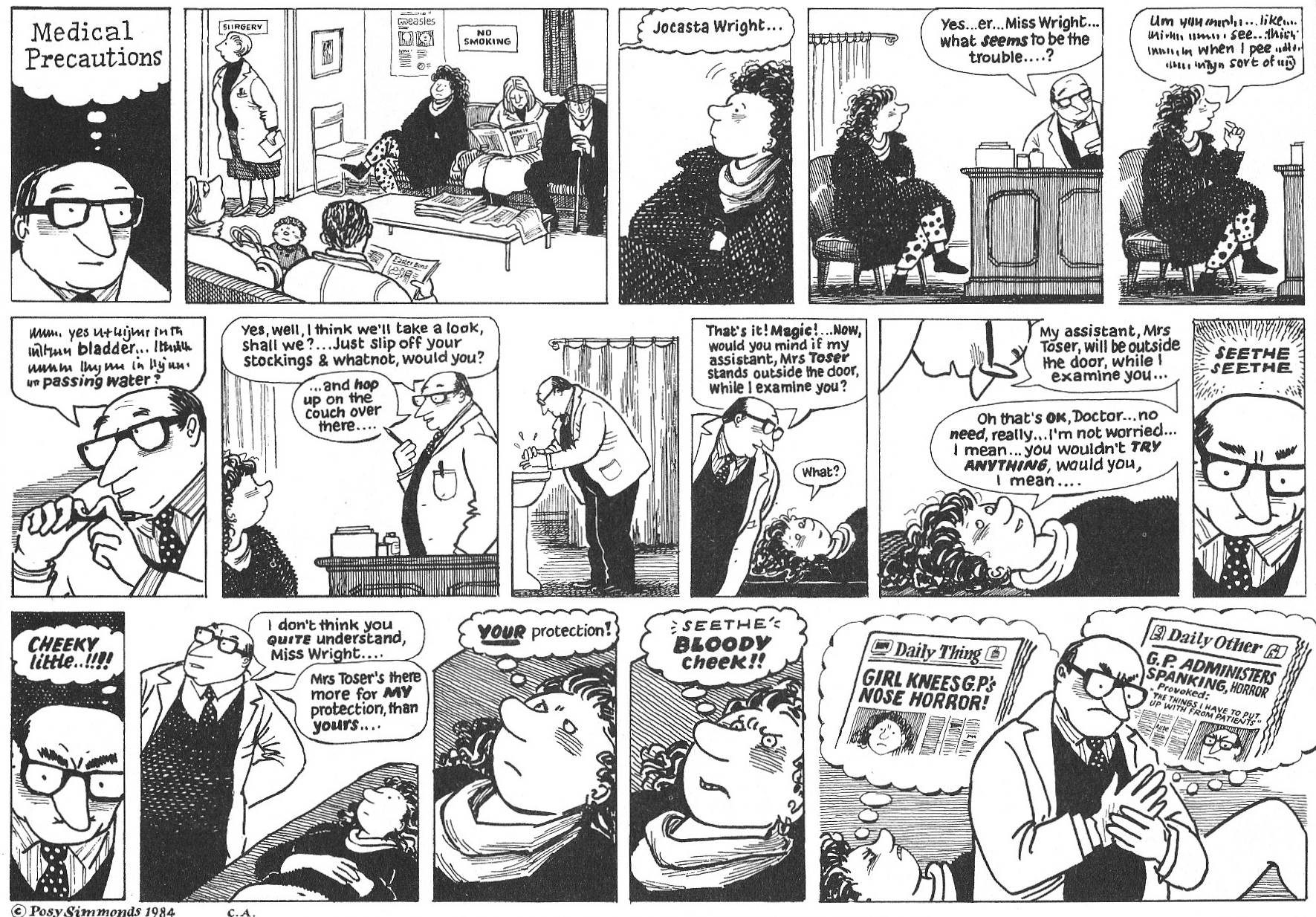
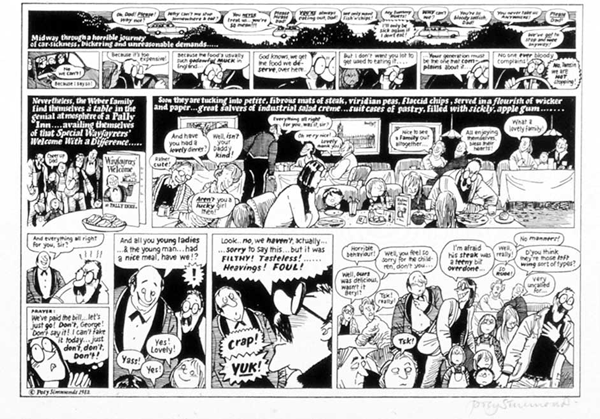
James Joyce’s Ulysses: Nausicaa

A dream of wellfilled hose.
(Leopold’s Bloom’s favourite fetish)

O Lord, that little limping devil.
(He ponders his post-tumescent willy)

A reminder of the chapter numbers and names in ‘Ulysses’:

Part 1. Telemachiad

  1. Telemachus
  2. Nestor
  3. Proteus

Part 2. Odyssey

  1. Calypso
  2. Lotus Eaters
  3. Hades
  4. Aeolus
  5. Lestrygonians
  6. Scylla and Charybdis
  7. Wandering Rocks
  8. Sirens
  9. Cyclops
  10. Nausicaa
  11. Oxen of the Sun
  12. Circe

Part 3. Ithaca

  1. Eumaeus
  2. Ithaca
  3. Penelope

Homeric parallel

The thirteenth chapter of James Joyce’s ‘Ulysses’ is based on or reflects the Nausicaa episode from Homer’s Odyssey. In Homer’s Odyssey, Nausicaa was daughter of King Alcinous and Queen Arete of Phaeacia. She is famous for one day coming down to the shore of her kingdom, accompanied by her retinue of maids and servants, and discovering the shipwrecked Odysseus washed up on the beach. She has her people take him to the palace, give him a bath, clothes and food, and it’s at a grand feast that the hero gives an account of his famous adventures.

In the ‘Nausicaa’ chapter of ‘Ulysses’ the novel’s main protagonist, Leopold Bloom, wanders out of Dublin city centre to the shore at Sandymount Strand. Here he watches a young woman, Gerty MacDowell, who’s with two friends and minding some children, as she flashes her legs to excite him. He eventually becomes so excited that he masturbates to climax (keeping his willy concealed inside his trousers i.e. at no point exposing himself).

So you can see how the reincarnation of the elegant Homeric princess (and her retinue) and the doughty Greek warrior, as a flirty young woman flashing her knickers at a middle-aged advertising salesman who proceeds to jerk off, are saturated in irony, satire and bathos.

Parody

‘Nausicaa’ continues the pattern first broached in ‘Aeolus’ and crystallised in ‘Cyclops’, of having large parts of the text written as parody of a particular style or genre. In this case, the entire first half of the chapter is written in the style of a late-Victorian ladies’ romantic novel, so lavish in sentimental clichés that I didn’t really ‘get’ the central incident of Bloom masturbating until it was pointed out to me in all the commentaries on the book. I.e. it’s the opposite of a ‘graphic’ description; I half thought so but wasn’t quite sure, not least because this kind of thing is so rare or non-existent in ‘classic’ literature. Nonetheless, this was the scene which, once the authorities had had it pointed out to them, led to ‘Ulysses’ being banned in Britain and the United States.

(To be precise, the July-August 1920 issue of the Little Review in which ‘Nausicaa’ initially appeared was seized by the New York Society for the Suppression of Vice and cited as evidence of the novel’s obscenity in the court case that led to ‘Ulysses’ being banned in all English-speaking countries.)

After Bloom has climaxed, the style undergoes a shift to a more realistic, sober style. Thus the chapter’s style cleverly reflects the stages of sexual activity: slow arousal, leading to intense excitement, climax, and then post-climax return to sober normality. Tumescence and detumescence.

Bloom’s big fear

You can’t understand this chapter or ‘Ulysses’ as a whole, unless you realise that for the whole long day which it describes its central character, Leopold Bloom, is traumatised by the fact that he knows that his voluptuous wife, Molly, is preparing herself to have sex with the flash man-about-town and concert promoter Hugh ‘Blazes’ Boylan. Somehow (it’s really not made clear) he knows Blazes’ visit to his house is timed for 4pm, so for all the chapters leading up to then, he is in agony of anticipation, at around that time he is crushed by humiliation, and for the hours afterwards (now, around 8pm), he is haunted by the fact the deed was done.

Thus when Bloom notices his watch has stopped, he realises it was at the symbolic hour of 4.30 i.e. right in the middle of his wife being unfaithful to him. So this adds a big further dimension to the chapter’s complex of ironies around sex. The question is what if any colour or shadow Bloom’s knowledge of his wife’s infidelity sheds over his own rather pitiful solo performance.

Brief summary

On a beach outside Dublin, three young women are minding toddlers and a baby. One of them is nursing a grievance about her boyfriend who recently jilted her. She notices a middle-aged man leaning against a rock not very far away who is eyeing her up. Possibly encouraged by the time of the month (which is obliquely but repeatedly mentioned) she shows off her legs to him and realises he is playing with himself, inside his trousers. Excited by this, she persists in exhibiting her legs, despite the sarcastic comments of her friends who realise something is going on. In a nearby church a Catholic service starts up and its movements through the stages of the Mass ironically counterpointed with the growing sexual excitement of the masturbator. Until the start of a firework display a) distracts her friends away from her onto the beach so that b) she can really lean back and show off her legs right up to her knickers and stays like that until the man climaxes. At which point she waits a bit more then goes to join her two friends and the kids down on the main beach. The middle-aged man cleans himself up and sets off walking the 4km back into Dublin.

More detailed summary

Part 1

The lady’s story parody is very funny and all the funnier because it masks such scandalously unladylike behaviour. Joyce nails the tone of voice, the high-minded sentimentality, the unashamed deployment of threadbare clichés, in a very entertaining concoction.

Why have women such eyes of witchery? Gerty’s were of the bluest Irish blue, set off by lustrous lashes and dark expressive brows.

Through this sea of slush we learn that:

Gerty takes iron jelloid pills to make her skinny frame bulk out. She follows beauty tips in the magazines to use eyeliner etc. (Commentators helped me see that Gerty refers to quite a few beauty products that she uses and this is appropriate for Bloom who works in advertising and thinks in terms of products and adverts.)

She has catfights with bitchy Bertha Supple. She’s been dumped by handsome Reggy Wylie, a keen bicyclist but who’s told her he needs to stop seeing her and concentrate on his university entry exams. Her costume is described in great detail, as well as her appearance which the narrator slyly says is worthy of a princess. She has put on her finest dress and undies because she is hoping that Reggy Wylie might be out and about and bump into her. Her goal in life, like every nice young lady’s, is to be married and she fantasises about the strong man who will take her in his arms etc. Partly this is because she is getting on – she’ll be 22 in November. Partly she wants the success of marriage to spite her bitchy critics like Bertha and Edy.

In a surprise revelation, we learn that her grandfather, surname Giltrap, has a dog named Garryowen. Well, that’s the name of the dog owned by the Citizen in the preceding chapter so either the Citizen is Gerty’s grandfather (!) or borrows the dog from her grandfather. It is an entertaining detail because Gerty thinks it’s a lovely doggie, almost human, whereas we’ve seen it as a mangy cur running barking after Bloom only a few pages earlier. A classic example of Joyce’s interest in parallax or two spectators seeing and interpreting the same thing from completely different perspectives.

Slowly we become aware that Gerty is very conscious of ‘the gentleman opposite’. He can’t be that close or they’d have to talk. And why don’t the two other girls notice him?

On and on her thoughts ramble. They hear singing start up from a nearby mission house (which the commentaries tell us is St. Mary’s Star of the Sea Church) and this triggers memories of her father who drinks too much and occasionally beats his wife. He knew Paddy Dignam (who Gerty therefore met and knew when he visited the house) but was unable to attend his funeral due to gout.

The twins’ ball goes down towards the beach and the rock where the stranger (Bloom) is sitting. He bends down and throws it back up to the group and it rolls under Gerty’s skirt. She lifts her skirt to kick the ball back to the twins to play with. Only now do we learn that throughout the preceding passages she and the stranger have been exchanging glances. And that dusk is falling.

Gerty poses looking out to sea but is acutely aware of Bloom’s gaze: ‘Yes, it was her he was looking at, and there was meaning in his look.’ She can tell from his complexion that he’s a ‘foreigner’ and because he’s dressed in mourning (for Dignam) turns that into a deep and soulful sorrow, converting him into her ‘dreamhusband’, consoling him for his secret sorrow etc.

The twins are playing close to the water so Cissy gets up and runs over to them and Gerty is bitchily jealous, thinking she’s only doing it because it shows her petticoat and fine legs off to the gentleman i.e. they’re both vying for Bloom’s attentions.

The service in the nearby church is described in some detail and this is another contrast, comparison, juxtaposition and irony, that as the holy office proceeds Gerty becomes intensely focused on what to show Bloom, and starts to swing her leg back and forth so as to show off her see-through stockings. She knows she has aroused him and enjoys it:

He was eying her as a snake eyes its prey. Her woman’s instinct told her that she had raised the devil in him and at the thought a burning scarlet swept from throat to brow till the lovely colour of her face became a glorious rose.

The other two girls know what is going on and to spite Gerty, Cissy says she’ll go and ask the gentleman the time. Gerty sees Bloom hurriedly take his hand out of his trousers (where she had presumably realised he was masturbating) and put on a serious face to answer Cissy’s question about the time from his pocket watch. In fact it’s stopped but he thinks it’s about 8pm.

Cissy returns to the girls with a sarcastic comment but it’s getting dark fast now, Gerty resumes swinging her stockinged leg and Bloom his masturbating with his hand in his trouser pocket, all of it hilariously conveyed in the slushy tropes of sentimental fiction.

His dark eyes fixed themselves on her again drinking in her every contour, literally worshipping at her shrine. If ever there was undisguised admiration in a man’s passionate gaze it was there plain to be seen on that man’s face. It is for you, Gertrude MacDowell, and you know it.

The others are packing up their things and tidying stuff away and joke about Gerty’s boyfriend Reggy which briefly angers her. The two priests officiating at the Mass reach the climax of the service. Even as she shows her legs and knows Bloom is playing, her mind dwells on fallen woman and sex workers and revolts against them, disgusted by their low degradation because no! she, Gerty, is high-minded and pure! She is saving this poor abandoned man, she can save and redeem him etc.

At that moment fireworks start going off in the sky. They’re from a bazaar way over back in the city, the same bazaar we saw the Lord Lieutenant riding in procession to open, back in the ‘Wandering Rocks’ chapter. Edy, Cissy and the boys run down to the beach to get a better view and call after Gerty. But she knows Bloom hasn’t finished yet, and irritably maintains her post, swimming her legs, showing him her stockings and knickers.

She looked at him a moment, meeting his glance, and a light broke in upon her. Whitehot passion was in that face, passion silent as the grave, and it had made her his. At last they were left alone without the others to pry and pass remarks and she knew he could be trusted to the death, steadfast, a sterling man, a man of inflexible honour to his fingertips. His hands and face were working and a tremor went over her. She leaned back far to look up where the fireworks were and she caught her knee in her hands so as not to fall back looking up and there was no-one to see only him and her when she revealed all her graceful beautifully shaped legs like that, supply soft and delicately rounded, and she seemed to hear the panting of his heart, his hoarse breathing, because she knew too about the passion of men like that…

Leaning back further and further, deliberately showing Bloom her fine new panties, ‘nainsook knickers, the fabric that caresses the skin, better than those other pettiwidth, the green, four and eleven, on account of being white’, and then:

And then a rocket sprang and bang shot blind blank and O! then the Roman candle burst and it was like a sigh of O! and everyone cried O! O! in raptures and it gushed out of it a stream of rain gold hair threads and they shed and ah! they were all greeny dewy stars falling with golden, O so lovely, O, soft, sweet, soft!

Bloom comes in his pants, and it is only now, as Gerty realises this and returns to a more discreet posture, it is only now that we are told his name. In the whole preceding passage he had merely been referred to as ‘the gentleman’. Only now are we told ‘Leopold Bloom (for it is he)’ leans back against the rock. Only now does he emerge from the anonymity of being seen solely through Gerty’s romance-drenched eyes, out into the common light of day.

(This, as I keep pointing out, is the second act of sex in the day. A few hours earlier, between 4 and 5pm, Blazes Boylan had sex with Bloom’s wife. We are never shown this, instead Bloom in a musical delirium in the Sirens chapter, verbally imagines it:

Bloom. Flood of warm jamjam lickitup secretness flowed to flow in music out, in desire, dark to lick flow invading. Tipping her tepping her tapping her topping her. Tup. Pores to dilate dilating. Tup. The joy the feel the warm the. Tup. To pour o’er sluices pouring gushes. Flood, gush, flow, joygush, tupthrob. Now!

The language of the two orgasms can be compared and contrasted.)

Part 2

The style doesn’t transform at a stroke (so to speak); it is for a little while longer a variation on the lady’s fiction style but somehow less excited, more exhausted sounding for a few more paragraphs. Then Gerty stands up and makes her way amid the rocks and driftwood down to her friends on the beach. At which Bloom, watching from his rock, realises with a shock that she’s lame! And this revelation jolts the narrative style back into the ‘initial style’ of free indirect speech which we’re so used to:

Mr Bloom watched her as she limped away. Poor girl! That’s why she’s left on the shelf and the others did a sprint. Thought something was wrong by the cut of her jib. Jilted beauty. A defect is ten times worse in a woman. But makes them polite. Glad I didn’t know it when she was on show. Hot little devil all the same. I wouldn’t mind. Curiosity like a nun or a negress or a girl with glasses. That squinty one is delicate. Near her monthlies, I expect, makes them feel ticklish. I have such a bad headache today. Where did I put the letter? Yes, all right.

He reflects that he’s glad he didn’t masturbate in the bath this morning; this was more intense and enjoyable and his thoughts are a characteristic mixed-up ramble of probably what are now sexist clichés, how women dress themselves up for the sacrifice, joke saying that they lose a charm with every pin they take out, how women get horny at a certain time of their menstrual cycle, how his teenage daughter and wife sometimes menstruate in synch, menstrual blood is meant to wither flowers or turn milk, and a host of similar free associating ideas…

Sterile sex

One thought leads to another and he is curious why his watch has stopped.

Funny my watch stopped at half past four. Dust. Shark liver oil they use to clean. Could do it myself. Save. Was that just when he, she?
O, he did. Into her. She did. Done.
Ah!

Ah indeed. At 4.30, just as he imagines Blazes Boylan was ejaculating inside his wife. He did. Into her. Ah. The two sex acts are clearly meant to mirror and play off each other (so to speak). What strikes me about both of them is they are barren. Masturbating obviously doesn’t fertilise anything. Gerty is clear in her mind that she doesn’t mind masturbation, it’s ‘the other’ which nice girls aren’t allowed. So Bloom and Gerty are both about infertility, a barren, unfertilising form of sexual activity. As to Blazes and Molly, they are (presumably) having traditional penetrative sex but (presumably) one or other of them uses some kind of precaution (?) which makes their sex act, also, barren, sterile. None of them are behaving as Church, State and respectable society wants them to.

Cleaning up

Only now does Bloom turn to the obvious problem of the mess he’s made.

Mr Bloom with careful hand recomposed his wet shirt. O Lord, that little limping devil. Begins to feel cold and clammy. Aftereffect not pleasant.

Fans can quote the famous sentence which introduces our hero:

Mr Leopold Bloom ate with relish the inner organs of beasts and fowls.

Well, the clearing up sentence deserves to be nearly as well known. It’s just as characteristic of our author and his character, who returns to his amiably middle-brow rambling thoughts. He considers how fortunate it was that he passed wind earlier in the day, thus leaving his general groin region lighter and able to play. But it’s a fiddly business:

This wet is very unpleasant. Stuck. Well the foreskin is not back. Better detach.
Ow!

There’s a long passage of scrambled memories of having sex with various prostitutes (I think), how it must feel to be one and proposition men in the street and be ignored. I.e. although Poldy takes what it probably nowadays a sexist view of all this, he is clearly meant to be a kind person, as in going out of his way to help Paddy Dignam’s poor widow. Not too kind though:

Sad about her lame of course but must be on your guard not to feel too much pity. They take advantage.

He remembers what Molly told him about her first kiss and losing her virginity (events which will, of course, recur in her final soliloquy).

He wonders who teaches women to flirt, marvels at their supernatural ability to size up men, for example spotting disabilities other men never do. Constantly on the watch, sizing up the opportunities, not for sex, for fathers and providers. All told in the ‘initial style of curtailed and abbreviated sentences.

Typist going up Roger Greene’s stairs two at a time to show her understandings. Handed down from father to, mother to daughter, I mean. Bred in the bone.

The millions ways women tease men:

Dress up and look and suggest and let you see and see more and defy you if you’re a man to see that and, like a sneeze coming, legs, look, look and if you have any guts in you. Tip. Have to let fly.

And he assesses the whole incident thus:

Did me good all the same. Off colour after Kiernan’s, Dignam’s. For this relief much thanks.

I imagine in the highly moral, Christian, judgemental atmosphere of 1922, let alone the still-Victorian world of 1904, the way Bloom shows not a shred of remorse or guilt or worry about what he’s done, but just concentrates on the physical and psychological benefits of masturbation, must have caused a scandal. Not only does it depict ‘immorality’, and a complete absence of moral or religious feeling, but in effect actively promotes it. Scandal. Banned for 14 years.

The aftercloud of Gerty’s perfume, still on the air, floats over him and this triggers a ramble about women’s perfumes, the smells of different women, Molly’s favourite perfume, the contrast with the reek of women on their period. This leads him to wonder about men’s smells, ‘Mansmell’ and to make the eccentric gesture of bending his head down into his waistcoat to smell his own aroma. Lemon! Then he remembers it’s that bar of soap he bought this morning and been carrying round all day. Which in turn reminds him that he needs to go back to Sweny’s chemist to pick up Molly’s lotion, and to pay for both.

Now it is fully dark and the lighthouse is working, triggering a new train of thought:

Howth. Bailey light. Two, four, six, eight, nine. See. Has to change or they might think it a house. Wreckers. Grace Darling. People afraid of the dark. Also glowworms, cyclists: lightingup time. Jewels diamonds flash better. Women. Light is a kind of reassuring. Not going to hurt you.

He keeps thinking about the happy early days of his and Molly’s courtship, but constantly shadowed by today’s disaster. Things go in circles. Life. Year. Seasons.

Longest way round is the shortest way home.

A bat flits around and he wonders whether it was disturbed from the belfry of the church by bells ringing. Light goes on in the priest’s house, he remembers the priest is brother to Gabriel Conway (protagonist of the famous short story The Dead). The rotating lighthouse light makes him thinks of ships at sea, tremendous danger, sinking, drowning.

For a moment the narrative switches to an actual third-person narrator, observing the final sinking of the sun, newsboys shouting the evening edition of newspapers in the street. Then back to Bloom’s thoughts and he summarises his day so far:

Long day I’ve had. Martha, the bath, funeral, house of Keyes, museum with those goddesses, Dedalus’ song. Then that bawler in Barney Kiernan’s.

He wonders if Gerty will come back the next evening. Should he come back in case? Nah. He finds a stick in the sand and idly starts to write a message, gets as far as I AM and runs out of space, and motivation, throws it away and rather miraculously it lands bolt upright in the wet sand:

Now if you were trying to do that for a week on end you couldn’t. Chance. We’ll never meet again. But it was lovely. Goodbye, dear. Thanks. Made me feel so young.

In fact the stick which landed in the sand could be interpreted as a stick in mud, so the words Bloom began to write create a visual pun: ‘I AM’ and then a stick in the mud. Echoing the central issue of all Joyce’s writings: paralysis and stasis and blockage and trapment.

(Confirmed several chapters later, in ‘Circe’, when Bloom’s hallucination of him tells Bloom: ‘O Poldy, Poldy, you are a poor old stick in the mud!’)

In the nearby house of the priests a quaint cuckoo clock marks 9pm with a series of 9 mechanical cuckoos, as Bloom starts to drift off into a nap, which explains why the last sentence of the chapter becomes more babyish and doesn’t end with a full stop but just breaks off as he falls asleep:

Because it was a little canarybird that came out of its little house to tell the time that Gerty MacDowell noticed the time she was there because she was as quick as anything about a thing like that, was Gerty MacDowell, and she noticed at once that that foreign gentleman that was sitting on the rocks looking was

Cast

Leopold Bloom – main protagonist of ‘Ulysses’. After escaping from Barney Kiernan’s pub where the citizen hurled abuse and a biscuit tin at him, and then gone with Martin Cunningham to visit Mrs Dignam to review her late husband’s insurance policy (an episode which goes entirely undescribed) Bloom has come for a quiet walk by the sea on Sandymount Strand.

Cissy Caffrey – ‘awfully fond of children’, ‘A truerhearted lass never drew the breath of life, always with a laugh in her gipsylike eyes and a frolicsome word on her cherryripe red lips, a girl lovable in the extreme.’ – ‘Madcap Ciss with her golliwog curls.’ She’s the older sister, and in charge of:

Tommy and Jacky Caffrey – ‘two little curlyheaded boys, dressed in sailor suits with caps to match and the name H. M. S. Belleisle printed on both. For Tommy and Jacky Caffrey were twins, scarce four years old and very noisy and spoiled twins sometimes but for all that darling little fellows with bright merry faces and endearing ways about them.’

Edy Boardman – friend of Cissy and Gerty, minding the baby in the pram, ‘Edy Boardman prided herself that she was very petite but she never had a foot like Gerty MacDowell, a five, and never would.’

Gertrude ‘Gerty’ MacDowell – ‘as fair a specimen of winsome Irish girlhood as one could wish to see.’ On the thin side although she’s been taking pills to be less anaemic. ‘Gerty’s crowning glory was her wealth of wonderful hair. It was dark brown with a natural wave in it. She had cut it that very morning on account of the new moon and it nestled about her pretty head in a profusion of luxuriant clusters…’ We find out her backstory and then, of course, get her point of view of teasing and arousing Bloom.

Canon O’Hanlon – shown celebrating the evening Benediction of the Blessed Sacrament at St. Mary Star of the Sea Church in Sandymount while Bloom is masturbating to Gerty, in a glaring counterpoint of the sacred and the profane. He was a real-life Irish Catholic priest, serving as the parish priest of Sandymount and Ringsend from 1880 until his death in 1905. He was also a prolific writer, famous for his monumental work Lives of the Irish Saints and his historical studies. Apparently he knew Joyce and offered him a position as a tenor in his church choir, which Joyce declined. He must have been livid to be included in this context.

Father Conroy – assists Canon O’Hanlon perform the evening Benediction of the Blessed Sacrament at St. Mary Star of the Sea Church, the sounds of which drift across the rocks where Bloom is masturbating to Gerty’s display.

Contrast with Cyclops

‘Cyclops’ was about stereotypical masculinity, over-masculinity, the toxic masculinity of the drunk angry Citizen. By stark contrast, ‘Nausicaa’ can be said to be about femininity but just as exaggerated and stereotypical. Gerty isn’t a woman so much as a collection of female cliches and stereotypes: fussing about her appearance, makeup, her clothes and living with only one goal in mind, to marry the perfect manhusband and become the perfect wife. They are both gender stereotypes.

Another contrast, focusing on Bloom, is that in ‘Cyclops’ his foreign appearance makes him an outsider and leads to an attack on him – repulsion. Whereas in ‘Nausicaa’ it is precisely his ‘foreign’ appearance which Gerty likes – attraction.

Is Gerty a comment on Stephen?

You know how in ‘A Portrait of the Artist as a Young Man’, passionate young Stephen Dedalus makes various avowals that he will serve no-one but will be free, will flee Ireland to follow his own path, will devote himself to Art etc etc? And how I suggested that these ringing statements can not be taken as Joyce’s own position, because they are voiced by a character in a book who is shown to be a callow immature student?

Well, Stephen’s avowals are further subtly undermined by being shared by Gerty who is an epitome of uneducated shallowness. Just as Bloom is about to climax, Gerty’s romanticised inner version of everything also reaches a climax with her impassioned declaration:

Heart of mine! She would follow, her dream of love, the dictates of her heart that told her he was her all in all, the only man in all the world for her for love was the master guide. Nothing else mattered. Come what might she would be wild, untrammelled, free!

Is that last phrase not a subtle parody and mockery of Stephen Dedalus’s similar-sounding vaunts at the end of ‘Portrait’?

I will not serve that in which I no longer believe… I shall express myself as I am… I do not fear to be alone or to be spurned… I go to encounter for the millionth time the reality of experience…

Is not the mature Joyce comparing Gerty’s passionate but naive and sentimental declaration of freedom with similar passionate declarations by Stephen Dedalus, in order to parody, mock and undermine him?


Credit

‘Ulysses’ by James Joyce was published by Shakespeare and Company in 1922.

Related links

Related reviews

Orlando: A Biography (1928) by Virginia Woolf

First and foremost ‘Orlando’ is a joke, a jeu d’esprit. Who knew that the author of the essentially tragic novels ‘Jacob’s Room’, ‘Mrs Dalloway’ and ‘To The Lighthouse’ (key figures die in all of them) had a funny bone.

But here she is, creating the comic biography of a fantastical figure, a person who lives from the later years of Queen Elizabeth I (the 1580s) right through to the last pages, set in 1928, some 340 years later.

The comic biographer

Several aspects become clear early on. One is our old friend the intrusive narrator, presenting, displaying and commenting on their presentation of the characters and events. The narrator appears as the gently mocked figure of The Good Biographer, mocking her own role:

Happy the mother who bears, happier still the biographer who records the life of such a one!

And so, mounting up the spiral stairway into his brain–which was a roomy one–all these sights, and the garden sounds too, the hammer beating, the wood chopping, began that riot and confusion of the passions and emotions which every good biographer detests…

Directly we glance at eyes and forehead, we have to admit a thousand disagreeables which it is the aim of every good biographer to ignore.

And the biographer should here call attention to the fact that this clumsiness is often mated with a love of solitude.

Here, indeed, we lay bare rudely, as a biographer may, a curious trait in him…

And so on. From the get-go, the entire concept of a biography is mocked and lampooned from within, so to speak.

Mockery and comic exaggeration

As to the content, this also is lampooned in a number of styles. It is mildly mocking to write something like:

His fathers had been noble since they had been at all. They came out of the northern mists wearing coronets on their heads.

But it is deliberately absurd to write that, from the hilltop in the family park Orlando could see nineteen English counties, on a clear day, thirty or perhaps forty; that you could sometimes see the English Channel in one direction, London off to the east, and away on the horizon Mount Snowdon. This is mockery of the braggadocio of Elizabethan literature, gross exaggeration in the spirit of Rabelais. It is reinforced when we are told that from one side to the other of the family house is five acres! Or that the Billiard Table Court is half a mile away on the south side of the house! That Orlando’s country home could house a thousand men and two thousand horses! Or that in the two years since coming to manhood, he had written ‘no more than’ twenty tragedies, a dozen histories and a score of sonnets!

So early on you realise the book features 1) a humorously intrusive and self-mocking narrator and 2) a stance of Rabelaisian hyperbole.

Sex?

Sex was conspicuous by its complete absence in ‘Jacob’s Room’, ‘Mrs Dalloway’ and ‘To The Lighthouse’. Woolf and her characters are far too well bred to refer to such an ignoble and degrading aspect of human existence. Which makes it all the more surprising that it seems to rear its head here, albeit in comic and slightly puzzling ways.

The first chapter is dominated by the figure of the antique, arthritic, bent and smelly figure of Queen Elizabeth I, shrouded in layers of musty clothing, not, admittedly, at first sight, a very sexy figure. But sex appears to be what she fancies Orlando for.

For the old woman loved him. And the Queen, who knew a man when she saw one, though not, it is said, in the usual way, plotted for him a splendid ambitious career.

‘Not in the usual way’? What might that mean? Vividly but coyly:

At the height of her triumph when the guns were booming at the Tower and the air was thick enough with gunpowder to make one sneeze and the huzzas of the people rang beneath the windows, she pulled him down among the cushions where her women had laid her (she was so worn and old) and made him bury his face in that astonishing composition–she had not changed her dress for a month–which smelt for all the world, he thought, recalling his boyish memory, like some old cabinet at home where his mother’s furs were stored. He rose, half suffocated from the embrace. ‘This’, she breathed, ‘is my victory!’–even as a rocket roared up and dyed her cheeks scarlet.

Hmm, is the rocket that soared up and reddened the old queen’s cheeks a euphemism for something?

Historical fantasia

But these are aspects. The central aim of the text is an opportunity for Woolf to let rip on a personal review of British history without being serious, to pile up exaggerated caricatures of the Elizabethan age, the Augustan era, the nineteenth century, without worrying about accuracy, dates, facts or narrative.

And so it is that pretty quickly in section 1, Orlando is heading off to the darkest dives of dockland and hearing outrageous stories of pirates and buccaneers! The queen had already spied him, through a half open door, kissing a waiting woman, and smashed a mirror in her jealous rage. Now Orlando appears to sleep with common trulls down at the docks.

But when he gets bored and returns to court, magically years have passed, it is now the court of King James and we for the first time realise how time is going to skate by for our young hero. At the Jacobean court Orlando has affairs with three ladies, being Clorinda, Favilla, Euphrosyne, and writes them all poems. Poems and poetry are, we realise, going to be a big deal for Orlando, a lifelong obsession.

The Great Frost comes and freezes the Thames solid. At about this point, 30 pages in, I began to notice the absence of dialogue. Woolf enjoys piling description on description of comically exaggerated Horrible Histories aspects of each era, but there is no real plot and no real incidents. Nothing detailed and specific enough happens to warrant dialogue.

Love inevitably

All this sounds promising but there has been a fatality, a thumping inevitability about the Edwardian novels I’ve read over the past few months, the novels of H.G. Wells, E.M. Forster, D.H. Lawrence and now Virginia Woolf – which is that they’ve all been about LOVE. LURV. Relations between the sexes. Mating.

As ornately written and psychologically penetrating as they may be, in the end they all rotate around the same theme as a corny Richard Curtis movie: Love Actually or Bridget Jones’s Diary. And so it is here, love love love dominates what passes for a plot on ‘Orlando’

And so it is that the coming of the Great Frost is only the backdrop for Orlando falling for the (comically named) Princess Marousha Stanilovska Dagmar Natasha Iliana Romanovitch and they have an affair.

Androgyny

Literary academics, especially feminist ones, have been obsessed by sex and gender for generations, since when? the 1960s? Earlier? So for 60 years or more ‘Orlando’ has been a goldmine for lecturers in feminist studies, women’s literature, queer studies and so on. The reason is that, instead of a decent plot which develops and ramifies over the three centuries the book covers (a notion which has all kinds of science fiction possibilities), instead ‘Orlando’ really only contains one event – half way through it, Woolf has her protagonist change gender, from man to woman, a dazzling transformation which completely overshadows the book’s feeble attempts at a plot.

Orlando was a man till the age of thirty; when he became a woman and has remained so ever since.

The way had been prepared for this surprise by some (admittedly only a handful) of moments when the protagonist of her book questions the gender of the people he falls in love with. Thus he is initially unsure about the gender of the Russian he is attracted to:

He beheld, coming from the pavilion of the Muscovite Embassy, a figure, which, whether boy’s or woman’s, for the loose tunic and trousers of the Russian fashion served to disguise the sex, filled him with the highest curiosity… When the boy, for alas, a boy it must be–no woman could skate with such speed and vigour–swept almost on tiptoe past him, Orlando was ready to tear his hair with vexation that the person was of his own sex, and thus all embraces were out of the question. But the skater came closer. Legs, hands, carriage, were a boy’s, but no boy ever had a mouth like that; no boy had those breasts; no boy had eyes which looked as if they had been fished from the bottom of the sea.

This is his first sighting and falling lust with the Princess Marousha Stanilovska Dagmar Natasha Iliana Romanovitch, which serves to introduce the theme of androgyny or gender ambiguity. And there’s some sex, maybe, described with the same vagueness as the Queen Elizabeth scenes:

Hot with skating and with love they would throw themselves down in some solitary reach, where the yellow osiers fringed the bank, and wrapped in a great fur cloak Orlando would take her in his arms, and know, for the first time, he murmured, the delights of love. Then, when the ecstasy was over and they lay lulled in a swoon.

But it’s the big switcheroo from male to female on page 87 which has excited gender-obsessed academics, commentators and critics from Virginia’s day to our own.

London

Love is a boring subject, love and marriage and affairs and infidelity – after the first few thousand novels centred on love and marriage you wonder whether writers can imagine any other subject. And the sex-changing androgyny at the centre of this book may get leather-jacketed academics hot and bothered but is, in the end, surprisingly dull, surprisingly underdeveloped.

Instead I preferred to think that maybe for the first hundred pages until Orlando changes sex, what the book is really about is London. London is, after all, the unnamed star of ‘Mrs Dalloway’ and here, again, it is a central character. The notion of a whistlestop tour through history from Elizabethan times allows Woolf to write long passages describing London dressed for various historical pageants and carnivals, which are very enjoyable.

The historic scenery of London:

It was an evening of astonishing beauty. As the sun sank, all the domes, spires, turrets, and pinnacles of London rose in inky blackness against the furious red sunset clouds. Here was the fretted cross at Charing; there the dome of St Paul’s; there the massy square of the Tower buildings; there like a grove of trees stripped of all leaves save a knob at the end were the heads on the pikes at Temple Bar. Now the Abbey windows were lit up and burnt like a heavenly, many-coloured shield (in Orlando’s fancy); now all the west seemed a golden window with troops of angels (in Orlando’s fancy again) passing up and down the heavenly stairs perpetually. (p.30, compare p.144)

The historical people of London:

By this time Orlando and the Princess were close to the Royal enclosure and found their way barred by a great crowd of the common people, who were pressing as near to the silken rope as they dared. Loth to end their privacy and encounter the sharp eyes that were on the watch for them, the couple lingered there, shouldered by apprentices; tailors; fishwives; horse dealers, cony catchers; starving scholars; maid-servants in their whimples; orange girls; ostlers; sober citizens; bawdy tapsters; and a crowd of little ragamuffins such as always haunt the outskirts of a crowd, screaming and scrambling among people’s feet–all the riff-raff of the London streets indeed was there, jesting and jostling, here casting dice, telling fortunes, shoving, tickling, pinching… (p.31)

You get the picture. Or rather series of pictures. Maybe the book is like leafing through a series of historical tableaux – the ice and skating of this particular passage reminded me of the winter scenes of countless Dutch painters.

Cheesy pulp

At the same time, quite often it reads like the cheesiest kind of historical melodrama, a ripping historical yarn by Robert Louis Stevenson or any number of his copyists. Here is Orlando planning to meet up with his mistress and escape from London!

The darkness then became even deeper than before. Orlando looked to the wicks of his lantern, saw to the saddle girths; primed his pistols; examined his holsters; and did all these things a dozen times at least till he could find nothing more needing his attention. Though it still lacked some twenty minutes to midnight, he could not bring himself to go indoors to the inn parlour, where the hostess was still serving sack and the cheaper sort of canary wine to a few seafaring men… The darkness was more compassionate to his swollen and violent heart. He listened to every footfall; speculated on every sound. Each drunken shout and each wail from some poor wretch laid in the straw or in other distress cut his heart to the quick, as if it boded ill omen to his venture. (p.33)

‘As if it boded ill omen to his venture.’ Woolf is letting her hair down. Having worked so hard at capturing the ever-changing moods of her characters in ‘Jacob’s Room’, ‘Mrs Dalloway’ and ‘To The Lighthouse’, this is a holiday. Let’s write a historical fantasia in the melodramatic cod Elizabethan!

So what about the plot?

Chapter 1. Elizabeth I and James I

Orlando comes of age in the court of Queen Elizabeth I. She makes him a favourite of hers and they have one or two close encounters till she sees him kissing a waiting lady in some corridor so he hides out in the pubs and stews of docklands. By the time Orlando tires of this, King James I is on the throne and so Orlando attends court. He is betrothed to Lady Margaret O’Brien O’Dare O’Reilly Tyrconnel who he writes a sonnet sequence for. But he falls in love with the Princess Marousha Stanilovska Dagmar Natasha Iliana Romanovitch (from Russia) who he calls Sasha. It is the winter of the Great Frost and they ice skate on the frozen Thames. He arranges to elope with her one dark and stormy night (in order to run away from his engagement to Lady Margaret) but she never shows up and, at dawn, he sees that the frost has thawed and the Thames is flowing again. Riding downstream Orlando sees that the previously ice-bound ships are now all free, and sees on the horizon the ship of the Ambassador from Muscovy which has sailed, with Sasha onboard. Oh well.

Chapter 2. From Charles I to Charles II

As mentioned, the narrative enjoys mocking the figure of The Biographer:

The biographer is now faced with a difficulty which it is better perhaps to confess than to gloss over. Up to this point in telling the story of Orlando’s life, documents, both private and historical, have made it possible to fulfil the first duty of a biographer, which is to plod, without looking to right or left, in the indelible footprints of truth; unenticed by flowers; regardless of shade; on and on methodically till we fall plump into the grave and write finis on the tombstone above our heads. (38)

So Orlando goes home to his country estate and sleeps for a week solid. When he awakes he can barely remember his former self, which gives rise to some Woolfian comedy:

Has the finger of death to be laid on the tumult of life from time to time lest it rend us asunder? Are we so made that we have to take death in small doses daily or we could not go on with the business of living? And then what strange powers are these that penetrate our most secret ways and change our most treasured possessions without our willing it? Had Orlando, worn out by the extremity of his suffering, died for a week, and then come to life again? And if so, of what nature is death and of what nature life? Having waited well over half an hour for an answer to these questions, and none coming, let us get on with the story.

I was hoping something would happen but nothing much does. Instead, alas, all that Woolf can think to do with her character is make him bookish, like her, like her family, like her Bloomsbury circle. It feels like a lamentable failure of imagination.

And so it turns out young Orlando is addicted to reading and, with thumping inevitability, also to writing. The narrator jokes about it a bit and so with the standard comic exaggeration ‘the biographer’ claims that before the age of 25 Orlando has already written some forty-seven plays, histories, romances, poems; some in prose, some in verse; some in French, some in Italian; all romantic, and all long’ (p.45). As far as it goes that’s sort of funny but… a bookish writer making the hero of her book a bookish writer… It feels like a failure of imagination.

There follows a mock epic, tongue-in-cheek description of Orlando the poet’s great struggles with Memory and Composition but you can’t help being disappointed that he is (alas) trying to write about ‘love’. Around page 50 I began to wonder whether I could be bothered to finish this increasingly laboured joke.

In the ‘Oxen of the Sun’ chapter of his famous modernist novel, ‘Ulysses’, James Joyce pastiches the evolution of the English language, its syntax, grammar and vocabulary, from Old English through to the 19th century. Woolf’s attempts to pastiche Elizabethan and Jacobean prose are nowhere next to Joyce’s genius. It might have been interesting if Woolf had indicated the passing years by a slowly evolving prose style matching each era, but she doesn’t. It’s quite obvious she’s not capable of such precision. Instead the prose is just a feeble cod-Elizabethan which often gives way to just bad historical bodice-ripper prose, which is not particularly convincing.

Take a sentence from the quote above:

Has the finger of death to be laid on the tumult of life from time to time lest it rend us asunder?

This is more Victorian than Elizabethan: ‘rend us asunder’ is from the age of Tennyson not Shakespeare, and indicates the fundamental Victorian basis of all Woolf’s prose.

Back to the plot or what there is of it: Orlando invites a supposed poet, Nicholas Greene, for dinner. But instead of the inspired words of fire which Orlando is naively made to expect, Greene actually regales Orlando with a list of his physical ailments, complains how poorly poetry pays, and rattles off reasons for despising Shakespeare, Marlowe and Donne (although he likes Ben Jonson). Apparently, they are all money-minded drunkards who scribbled down snatches of verse on the back of laundry lists.

The Biographer tells us that Nicholas told a thousand and one witty anecdotes about these great names but, unfortunately, none of them are repeated here and the reader can’t help feel very badly cheated. Can’t Woolf make up even one little tale? No. Not a flicker of interest.

Orlando feels for Greene ‘a strange mixture of liking and contempt, of admiration and pity’ and I couldn’t help feeling the same for Woolf. All the effort that went into this long farrago, all the posh people she consulted and she names in a swanky two-page Acknowledgements section. And yet not a single laugh in the entire work. Sad face.

Greene repays Orlando’s hospitality by returning to his chaotic house in London and rattling off a biting satire of the Orlando and his mansion (‘Visit to a Nobleman in the Country’), which includes quotations from Orlando’s favourite tragedy (which he generously shared with him), and becomes very popular. When shown a copy, Orlando orders it to be buried in a midden and orders a flunky to travel to Norway and bring back a batch of elk hounds, for, in his disgust, he has done with the world of men.

And so Orlando takes to walking round his beautiful park enjoying nature and the changing seasons. Though on all these long walks he is still troubled by the tritest of questions: what is love? what is friendship? what is truth?

In a couple of paragraphs Woolf throws away one of the two or three premises of the book, explaining that clock time and the time we experience are often at odds or even contradict each other – as if nobody else had ever noticed this before or it had never been written down and analysed by plenty of cleverer minds.

Her hero vapours on about Love and Truth and Poetry for page after page. As I struggled through this piffle I remembered that Woolf, born in 1882, was fully formed during the late-Victorian era i.e. was 18 when Queen Victoria finally died, and still, in 1927, was whiffling on about essentially Victorian issues and using a Victorian reading list. She tells us that Orlando goes on ‘thinking’ but, unfortunately, doesn’t give him anything to think about, except Love and Truth and Poetry. Elizabethan literature has a kind of intellectual virility about it at the same time as its astonishing sensuality. ‘Orlando’ has neither. The resolutely sexless Woolf emasculates everything she touches. Orlando’s thoughts and occasional verse sound like John Keats on a very off day.

Very casually, in a throwaway sentence, we learn that Orlando has mooned about his park for the entire Civil War, the execution of Charles I, the Commonwealth of Oliver Cromwell, and now a new king (Charles II) has been restored (p.65). Well, that is a massive opportunity missed, the most dramatic events in British history glossed over in preference for Orlando’s worthless vapourings about love, pages and pages of stuff like this:

And he despaired of being able to solve the problem of what poetry is and what truth is and fell into a deep dejection.

Orlando decides to renovate his comically vast mansion (with its three hundred and sixty-five bedrooms and 52 staircases) and the author gives us a plethora of details, claiming the list of repairs ran to 99 pages.

The arrival of lists and numbers prompted the thought that the book had turned into a sort of cod historical version of Flaubert’s masterpiece, Bouvard and Pecuchet (1881), in which a pair of half-educated dolts set out to make themselves masters of all human knowledge. Orlando sets about renovating his mansion with much the same encyclopedic attention to detail. Or like Joris-Karl Huysmans’ famous novel, Against the Grain (1884), in which a jaded nobleman locks himself away in his country house to savour the exquisite products of decadence. ‘Orlando’ has the same sense of Woolf working through a list of topics in a mechanical, plodding way. Except that it entirely lacks the style and wit of the two French novels. Wit relies on precision; instead Woolf has airy whimsy, a completely different quality. Woolf is always vague and explicitly celebrates the vagueness of her female protagonists (Clarissa Dalloway, Mrs Ramsay, Eleanor Pargiter).

So Orlando completely renovates his vast mansion and then, noticing how cold and empty it feels, embarks on a mad course of entertainment, such that the 365 bedrooms are always full and the 52 staircases always thronged, for which he is rewarded with many accolades and honours from local and national worthies and, of course, numerous poems written about him etc.

One day out of the blue appears in the inner courtyard a very tall woman on a horse. It is the Archduchess Harriet Griselda of Finster-Aarhorn and Scand-op-Boom in the Roumanian territory. (Clearly Woolf thinks that giving her women characters cumbrously long names is side-splittingly funny.)

Griselda titters and haw haws uncontrollably. On a further visit she stoops down to attach a piece of armour to Orlando’s leg and our hero suddenly feels the pangs of love, because this is, apparently, the only plot subject Woolf can think of.

Intellectual arguments about religion or politics from the great century of political and religious upheaval, about the advent of the New Science, the founding of the Royal Society, the new fashion for experimental science? No. Love actually.

In fact, surprisingly, it might also have something to do with LUST. If I’m reading the euphemistic roundabout way she describes it, I think the sight of a pretty woman kneeling in front of him triggers a natural physical reaction in Orlando, which the narrator melodramatically figures in allegorical form as a filthy vulture, perching on our hero’s shoulder.

And so Orlando does what any self-respecting gentleman would do under the circumstances, which is he goes to see King Charles (II) and asks to be sent as ambassador to Constantinople. The random arbitrariness of this is a bit funny.

Chapter 3. Constantinople and a sex change

Woolf starts the chapter with another jocose lampoon of the figure of the well-meaning biographer. I suppose this is a pastiche of Restoration or Augustan prose.

It is, indeed, highly unfortunate, and much to be regretted that at this stage of Orlando’s career, when he played a most important part in the public life of his country, we have least information to go upon. We know that he discharged his duties to admiration–witness his Bath and his Dukedom. We know that he had a finger in some of the most delicate negotiations between King Charles and the Turks–to that, treaties in the vault of the Record Office bear testimony. But the revolution which broke out during his period of office, and the fire which followed, have so damaged or destroyed all those papers from which any trustworthy record could be drawn, that what we can give is lamentably incomplete. Often the paper was scorched a deep brown in the middle of the most important sentence. Just when we thought to elucidate a secret that has puzzled historians for a hundred years, there was a hole in the manuscript big enough to put your finger through. We have done our best to piece out a meagre summary from the charred fragments that remain; but often it has been necessary to speculate, to surmise, and even to use the imagination. (p.74)

I.e. it’s a fiction and she’s making most of this up, we get it. The joke is wearing a bit thin.

The narrator gives a caricature exaggeration of the elaborate court ceremonial which has to be performed in each of a dizzying succession of rooms in the Sultan’s palace. This reminded me of the elaborate fictions of Jorge Luis Borges whose first short stories were published only a decade after ‘Orlando’.

There is a very great deal to be said about the legacy of Byzantium, the history of the Ottoman Empire, and the intricacy of British relations with the Sublime Porte – none of which Woolf mentions. Instead she reverts to the only subject she can think of, and has Orlando slipping off at night to mingle with the common people or withdraw to his rooms in order to write poetry. Ah poetry. Yes, poetry. About love, Love, LOVE!

While in Istanbul, Orlando is awarded the Order of the Bath and made a Duke, ceremonies the narrator tells in facetious fragments supposedly written by eye-witnesses (John Fenner Brigge, an English naval officer, and Miss Penelope Hartopp). The narrator excitedly tells us that rumour has it that at the very end of the evening a local woman was hoisted by a rope to his quarters. Next morning his servants find Orlando fast asleep in bed beside a marriage contract to a Rosina Pepita, a dancer, father unknown, but reputed a gipsy, mother also unknown but reputed a seller of old iron in the market-place over against the Galata Bridge.

But what happens next is the Grand Transformation: the real point of these events is that Orlando sleeps for a whole week, sleeps right through a rebellion against the Sultan which Woolf completely fails to describe because she is just not that kind of writer. Instead the text turns into a half-arsed masque featuring the allegorical figures the Lady of Purity, our Lady of Chastity and our Lady of Modesty.

Not only is the supposed poetry of the masque speeches poor, but it feels like it’s from the wrong period. Allegorical masques were all the rage in the court of Charles I, in the later 1620s and 1630s. If we’re in the Restoration era then the fashion is for John Dryden‘s heroic couplets or the acid wit of the Restoration dramatists. But as I’ve made clear, Woolf wasn’t interested in historical accuracy or intellectual precision.

Anyway, when Orlando wakes up after this farrago, he stands naked and is revealed – as a woman! It’s a simple fact: Orlando was a man till the age of thirty, when he became a woman, and has remained so ever since. The narrator comments:

Let other pens treat of sex and sexuality

And they have, Virginia, they have.

You might have thought this transition from male to female would have a fairly big psychological impact on the person in question but Woolf, in a massive own goal, ignores it completely, her heroine takes her transformation utterly in her stride. She’s a woman now, oh well. All the physical changes and any psychological changes are simply unremarked, go completely unexplored. It feels like a massive wasted opportunity.

Instead Orlando decides… to run away to join the gypsies. Seriously. She smuggles herself out of Constantinople and joins a gypsy band based in Thessaly. Even here she doesn’t reflect on the strange turn her life has taken but is soon thinking about ‘Love, Friendship, Poetry’, the only subjects Woolf cares about. We are told that Orlando writes a long blank verse poem about the beauty of nature though, characteristically, we don’t see a line of it.

Orlando takes to rambling about the landscape, glorying in nature but when she tells the gypsies about her huge mansion in England, that her family is 4 or 5 hundred years old and features many dukes and lords, all this alienates the gypsies from her and some of the young ones plan to kill her. But even this doesn’t give rise to any exciting writing, romantic escape etc. Instead one day Orlando simply has a vision of England’s green and pleasant countryside and announces she’s going back to England. So she packs her things and catches a ship home.

Chapter 4. Back to England in the age of Queen Anne

It’s only on the ship back to England that Orlando starts to ponder the differences between men and women. Becoming a woman means she now has to 1) protect her chastity from endless male attention and 2) spend a huge amount of time becoming a woman i.e. dressing, looking and smelling nice to please male preconceptions. It’s a thin yield to such a seismic plot twist. Is this going to be it? Half a page of feminist clichés?

London has changed. It’s been rebuilt since the Great Fire, starring Christopher Wren’s St Paul’s cathedral. She discovers that in her absence relatives have taken out lawsuits against her.

Orlando goes back to her country seat where she’s welcomed by her loyal staff who don’t care whether she’s a man or a woman (again this curious air of complete indifference). She is revisited by the tiresome the Archduchess Harriet Griselda of Finster-Aarhorn and Scand-op-Boom in the Roumanian territory, the one who caused her to flee England in the first place but there is a bit of a surprise: the Archduchess now sheds her dresses and reveals herself as… a man! (p.114) Henceforth to be known as Archduke Harry.

Harry explains that he only dressed up as a woman because Orlando was a man and he was in love with him. He explains that now that Orlando is a woman (which he accepts with as little interest as everyone else) he can reveal his true self and declare he is in love, love being the only subject the narrative knows (well, love and poetry).

So Harry insists on visiting every day, to woo her, to make love to her, to talk about marriage – until Orlando finally manages to drive him away by letting herself be caught cheating at cards.

Sexist stereotypes

Woolf is not just a feminist icon but a queer icon for the lesbian love affair she had with Vita Sackville-West for whom she wrote this farrago. In a way the funniest thing about ‘Orlando’ is the way that, despite its gender-swapping central event, it is in fact deeply conservative in what it says about men and women. It is premised on the notion of fixed gender identities. It is not a hymn to the modern woke idea of gender fluidity: the precise opposite. Woolf conceives of Men having certain fixed and predictable attributes and Women having certain fixed and predictable attributes. What makes her book novel (up to a point) is the notion of her protagonist transitioning from one sex to the other, but the sexes in question remain fixed points, indeed the very notion of there being just two sexes indicates how very old-fashioned the book’s gender politics are.

Thus, as I say, some of the best comedy in the book is entirely unintentional and derives from savouring Woolf’s surprisingly reactionary gender stereotyping.

Her modesty as to her writing, her vanity as to her person, her fears for her safety all seems to hint that what was said a short time ago about there being no change in Orlando the man and Orlando the woman, was ceasing to be altogether true. She was becoming a little more modest, as women are, of her brains, and a little more vain, as women are, of her person.

The truth is that when we write of a woman, everything is out of place–culminations and perorations; the accent never falls where it does with a man… (p.204)

She would burst into tears on slight provocation. She was unversed in geography, found mathematics intolerable, and held some caprices which are more common among women than men, as for instance that to travel south is to travel downhill…

Incidentally, this trope of women being dim occurs in all the Woolf novels I’ve read. Compare and contrast Mrs Ramsay in ‘To The Lighthouse’ who knows nothing about maths or philosophy and has such poor general knowledge that she doesn’t know where the equator is; or the superficial cultural smattering of Mrs Dalloway who can never remember what subject her husband’s select committees are so fussed about.

Anyway, Orlando takes a coach up to her father’s big house in Blackfriars, an area of London. She has come to London looking for ‘life and a lover’ which really does seem to be the only subject Woolf can give her protagonist to think about.

The chauvinism of the novelist

At one point Woolf writes that historians don’t know anything about history. Only the poets and novelists can be trusted to convey a historical period.

To give a truthful account of London society at that or indeed at any other time, is beyond the powers of the biographer or the historian. Only those who have little need of the truth, and no respect for it – the poets and the novelists – can be trusted to do it, for this is one of the cases where the truth does not exist. (p.123)

This is garbage. Poets and novelists really can not be trusted to convey the truth of a society. That is what historians do. Woolf justifies this gibberish by saying that there is no truth in a spirit which would make Donald Trump or Vladimir Putin beam with delight. Well, no, there is a truth, or more precisely, it is worthwhile striving towards a truthful, or less lying and less inaccurate account of a society’s history, and that is what western historians strive to do. Their work should be respected and not dismissed by a flippertigibbet novelist. Woolf’s opinions are starting to strike me as not just debatable, but idiotic.

1712

Suddenly it is 1712 and the reign of Queen Anne. Orlando is bored because she cannot find love, the only subject which Woolf, in a rather patronising sexist kind of way, can give her heroine.

Tell, don’t show

In ‘To The Lighthouse’ all the characters are made to agree that Mr Ramsay is a Great Man, a Great Thinker, an Eminent Philosopher, fiercely clever. And yet he nowhere in the entire book actually says or even thinks anything clever or even interesting. Instead he comes over as a bad-tempered domestic tyrant, a bully with a fondness for stupid jokes.

Similarly, on almost every page of this tedious book we are shown Orlando with pen in hand, Orlando having great thoughts, Orlando writing plays and sonnets, Orlando revising his boyhood poem about an oak tree, Orlando thinking about poetry, and the narrator won’t shut up about Poetry and Love and Poetry and Life and yet… we are not shown a single line of Orlando’s poetry and he or she never, at any point, says anything interesting or funny.

In the Queen Anne section we are told that Orlando ‘wrote some very pleasant, witty verses and characters in prose’ (p.136) but we are not shown them. Why not? You can only conclude it’s because Woolf couldn’t write them or daren’t show us her efforts.

It’s exactly the same way the section featuring Nick Greene tells us he was simply overflowing with wonderful anecdotes about Shakespeare, Marlowe and Ben Jonson, so funny! did all their voices! knew so many hilarious stories! and yet… the book doesn’t contain a single one, in fact has nothing of interest to say about them (or, indeed, any of the many other classics of English literature from later eras which it cheerfully namedrops).

The book is full of promise and hype and absolutely empty of content. It is all mouth and no trousers. One short story by Oscar Wilde has more wit, more intelligence and acuity than these 200 laboured pages. Here is Orlando taking a coach ride with the famous poet Alexander Pope and realising he’s not that funny after all.

A disillusionment so complete as that inflicted not an hour ago leaves the mind rocking from side to side. Everything appears ten times more bare and stark than before. It is a moment fraught with the highest danger for the human spirit. Women turn nuns and men priests in such moments. In such moments, rich men sign away their wealth; and happy men cut their throats with carving knives. (p.130)

This is just bombastic empty verbiage, as is most of ‘Orlando’.

In exactly the same way, Orlando is admitted to a small friendship group of prostitutes – Nell and Prue and Kitty and Rose – ‘and many were the fine tales they told and many the amusing observations they made’ and do you think we hear any of these many fine tales? Not a sausage. It’s so disappointing, this could have been such an enjoyable historical romp. Instead it only serves to reveal Woolf’s imaginative shortcomings.

Back to the plot: the narrator tells us that Orlando took to wearing the clothes of either sex and enjoying the benefits of both genders, ‘and enjoyed the love of both sexes equally’.

So then one may sketch her spending her morning in a China robe of ambiguous gender among her books; then receiving a client or two (for she had many scores of suppliants) in the same garment; then she would take a turn in the garden and clip the nut trees–for which knee-breeches were convenient; then she would change into a flowered taffeta which best suited a drive to Richmond and a proposal of marriage from some great nobleman; and so back again to town, where she would don a snuff-coloured gown like a lawyer’s and visit the courts to hear how her cases were doing,–for her fortune was wasting hourly and the suits seemed no nearer consummation than they had been a hundred years ago; and so, finally, when night came, she would more often than not become a nobleman complete from head to toe and walk the streets in search of adventure. (p.142)

I suppose it’s vaguely interesting that she wears different clothes to reflect her mood, but it’s not really a plot. Right at the end of part 4 Orlando looks out the window on a fine night, thinking how much cleaner and safer the streets are in 18th century London than the narrow dangerous alleys of Elizabethan London. But when the clocks start to toll midnight a big black cloud gathers over St Paul’s and spreads over all of London. The nineteenth century has arrived!

Chapter 5. The nineteenth century

Ignoring the American Revolution, the French Revolution, the Industrial Revolution, the Napoleonic Wars, the consolidation of the British Empire and the rise of the working class, Woolf instead focuses on the issue of damp.

With no evidence except her own whimsy, she declares that at the start of the nineteenth century the country suddenly became damp. Clothes became thicker, furniture was covered up, men grew thick whiskers to cope with the damp. Not just clothes but words and concepts became more thickly wrapped. ‘Love, birth, and death were all swaddled in a variety of fine phrases.’ The sexes were forced wide apart. ‘Sentences swelled, adjectives multiplied, lyrics became epics, and little trifles that had been essays a column long were now encyclopaedias in ten or twenty volumes.’

This summary of the heaviness of the Victorian era is possibly the funniest passage in the book because it is the most acute. She is satirising the Victorian values of her own parents.

Back to the massive mansion Orlando goes and there, to my surprise, Woolf does finally share with us some lines of verse Orlando has written.

I am myself but a vile link
Amid life’s weary chain,
But I have spoken hallow’d words,
Oh, do not say in vain!

Will the young maiden, when her tears,
Alone in moonlight shine,
Tears for the absent and the loved,
Murmur– (p.154)

Not good, even as pastiche.

Orlando becomes aware that the new spirit of the age (the nineteenth century) is all for marriage. She feels crushed by Queen Victoria’s famous uxoriousness. She feels she has to give in to the times and take a husband.

Incidentally, the text tells us Orlando has by now been alive some 300 years but is aged only ‘a year or two past thirty’. This premise has such promise for a science fiction or fantasy novel, and yet is so badly let down in the execution of this narrative.

Orlando goes for a walk through her enormous park, decides she is in love with nature, with the moor, the grass, the sky, trips and breaks her ankle. As she’s lying there communing with nature a horse rides up and a gentleman jumps off to help her. It is Marmaduke Bonthrop Shelmerdine, Esquire (this is a book of silly names) and a few minutes later they are engaged!

There is a peculiar moment when they both panic that the other is not of the sex they claim i.e. she is a man and he is a woman, but they emerge unscathed and he tells her loads of tales of adventure on the high seas which are told in such a flippant way as not to be remotely funny.

Orlando gets letters declaring all the law cases she’s been involved in since returning from Constantinople are ended and that she is 1) legally a woman 2) the legal owner of the estate. There was never really any jeopardy of this not being the result, and it wouldn’t have mattered if it hadn’t. It’s a whimsical fantasy drowning in its own inconsequentiality. Nothing matters.

A fantastical passage describes Orlando and Marmaduke’s days of mooning around the park and how they use different nicknames to indicate different moods. I suppose this, as when Orlando wears different clothes to indicate different moods (and even genders) is introducing the notion that we all contain multiple identities.

Until one afternoon as they’re lazing about and leaves start falling on them and, as in a fairy tale, they both jump up and run straight to the chapel and insist that old Mr Dupper the chaplain married them at once. So Orlando is married, ludicrously, inconsequentiality.

Chapter 6.

Almost immediately Marmaduke rides off in a storm to captain a boat round the Cape of Good Hope. Orlando goes inside and finds herself writing another verse:

And then I came to a field where the springing grass
Was dulled by the hanging cups of fritillaries,
Sullen and foreign-looking, the snaky flower,
Scarfed in dull purple, like Egyptian girls:–

Bad, isn’t it? Clunky rhythm.

There’s a short passage which is maybe an attempt to justify the way Woolf has covered 300 years of British history without mentioning any history, instead giving a tedious account of her subject’s supposed ‘loves’.

When we are writing the life of a woman, we may, it is agreed, waive our demand for action, and substitute love instead. Love, the poet has said, is woman’s whole existence.

We know that Woolf was a fierce feminist and so presumably this is intended to be ironical or satirical – except that the irony is undercut by the fact that her entire published works tend to reinforce the stereotype that women’s main concern is love, emotions, marriage and children – it’s true not only of this book but of ‘Mrs Dalloway’ and ‘To The Lighthouse’ where the majority of the woman protagonist’s existence and thinking is taken up by endlessly circling thoughts about old loves, new loves, lost loves, found loves, marriage, family and children. We have the evidence of her own novels.

Alternatively, maybe the mind-numbingly narrow subject matter of ‘Orlando’ is itself a sort of satire on the reader’s sexist expectations, gently mocking the readers’ sexist expectations of what a woman’s concerns will be – but I don’t think so. ‘Orlando’ seems, to me, to embody and propagate those very sexist stereotypes, that a sensitive woman has few if any interests beyond love and poetry. What happens at the end of the book? Orlando goes shopping then spends the afternoon wandering round a lovely National Trust property. And this book is claimed to smash gender stereotypes?

Take the fact that Orlando hasn’t noticed the invention of the steam engines or trains. When she asks the servants to prepare a coach to take her to London, they tell her to catch the 11.15 train for Charing Cross station and have to explain the concept of the ‘railway’. Railways have arrived and Orlando hasn’t noticed. Orlando’s complete indifference to history, society, science and technology, engineering, politics, empire, wars and new customs are a badge of pride. Can’t help thinking it reflects the attitude of her creator is, likewise, proud of her ignorance of the practicalities of modern life.

Once Orlando is in London there’s a moderately interesting passage describing how the clean 18th century London she knew has been transformed into the bustling metropolis full of people shouting and the incessant traffic in every direction. As I mentioned at the start, the most profitable way of reading the book might be to just read the passages describing London through the ages and skip all the brain-dead guff in between about Love and Life and Poetry.

In Victorian London Orlando bumps into her old friend Nick Greene, who is now a plump and successful professor of literature. Woolf mocks his kind of mentality by having him still makes the same complaints he made in the Elizabethan era, namely that the golden era of literature is over and the moderns are just shabby hirelings. There is also some satire on contemporary publishing, with Nick giving savvy advice about royalties and buttering up the critics – but surely this is only amusing for readers who think that writers writing books satirising writers writing books is what the world was crying out for, in either 1928 or 2025.

Anyway, Orlando gives Nick the manuscript of the long poem he’s been working on for the last 300 years, about an oak tree, Nick promises to get it published and leaves. So then Orlando wanders the streets of London very, very much as Clarissa Dalloway does in the novel named after her. She is amazed at the concept of a bookshop and the funny blocks of thin paper covered in card, compared to the manuscripts she herself handled and still owns. Books, that is Woolf’s central subject and fascination. Hardly anything else in 300 years of British history registers.

Sort of justifying this, there’s a passage which repeats the central idea of ‘Mrs Dalloway’ and ‘To The Lighthouse’ which is that rational thought about anything doesn’t matter, is irrelevant, can be ignored, because all that counts is Life, the sensation of living which, in practice, means a never-ending stream of consciousness of sensations and perceptions.

It is not articles by Nick Greene on John Donne nor eight-hour bills nor covenants nor factory acts that matter; it’s something useless, sudden, violent; something that costs a life; red, blue, purple; a spirit; a splash; like those hyacinths (she was passing a fine bed of them); free from taint, dependence, soilure of humanity or care for one’s kind; something rash, ridiculous, like my hyacinth, husband I mean, Bonthrop: that’s what it is – a toy boat on the Serpentine, ecstasy – it’s ecstasy that matters. (p.188)

This feels very much like a rationalisation for Woolf’s own mind, with its utter disinterest in politics, history, society, and its endlessly narcissistic obsession with the beauty of its own perceptions, enabled by a small world of servants and lackeys, the butler, the footman, the maid, the cook, the cleaner, the gardener and so on.

It is hard not to read it as Woolf defending her upper middle-class privilege, and justifying her ‘technique’, her entire fictional strategy, which is to gift everything she sees with special value and significance, and to absorb it into the endless flow of her writing.

So here we are at Kew, and I will show you to-day (the second of March) under the plum tree, a grape hyacinth, and a crocus, and a bud, too, on the almond tree; so that to walk there is to be thinking of bulbs, hairy and red, thrust into the earth in October; flowering now; and to be dreaming of more than can rightly be said, and to be taking from its case a cigarette or cigar even, and to be flinging a cloak under (as the rhyme requires) an oak, and there to sit, waiting the kingfisher, which, it is said, was seen once to cross in the evening from bank to bank.

One thing, then another thing, then another, each bright as jewels in the sun, a stream of images washed clean of any thoughts.

Orlando has a baby, a boy though we are given no details or emotion, not a dicky bird about how it feels to either give birth, or the emotions of being a mother. Maybe this is because Woolf never had heterosexual sex and, of course, never had a child. No point attempting a subject area she knows nothing whatsoever about.

There follows an enjoyable sequence of science fiction-like intensity which depicts the passage of the years noticeably speeding up. It happens as Orlando is looking out the window of her Park Lane house and sees a carriage not drawn by horses i.e. a new petrol omnibus. Then she sees the new king draw up, Edward VII. Then she looks again and notices how thin ladies have become, the flapper. And electric lights: now you can see into everybody’s rooms as dusk falls and privacy has been abolished. Men have shed their Victorian whiskers and become clean shaven. Families are tiny.

The speeded-up vividness of this is as good as the long passage about damp setting the tone for the entire Victorian era. They are the two best things in the book.

1928

Then the clock in the room chimes and it is the present day, 11 October 1928! (p.195) Orlando runs outside, jumps into her little car, presses the self-starter, and off she zooms down Park Lane, shouting abuse at drivers who don’t indicate or people who step into the road without looking, till she parks outside her favourite department store, Marshall & Snelgrove’s, and bustles in with a long list of shopping. Here again Woolf celebrates her heroine’s superior ignorance, just as she celebrated Mrs Dalloway’s ignorance and Mrs Ramsay’s vagueness.

In the eighteenth century we knew how everything was done; but here I rise through the air; I listen to voices in America; I see men flying – but how it’s done I can’t even begin to wonder. So my belief in magic returns. (p.196)

She has become Clarissa Dalloway. She has become a lady who lunches. She is 36 (p.198). With her shopping done, she jumps back into her car and hurries off, driving across Westminster Bridge to the Old Kent Road, along it and out into the countryside.

Fragmentation of the self

There follows a very quotable passage about how all of us contain scores of ‘selves’, 60, 70 ‘selves’, associated with all manner of memories, perceptions, neural networks. It’s a stretch to ever say ‘I’. Which ‘I’?

How many different people are there not – Heaven help us – all having lodgment at one time or another in the human spirit?… Come, come! I’m sick to death of this particular self. I want another. Hence, the astonishing changes we see in our friends…These selves of which we are built up, one on top of another, as plates are piled on a waiter’s hand, have attachments elsewhere, sympathies, little constitutions and rights of their own, call them what you will (and for many of these things there is no name) so that one will only come if it is raining, another in a room with green curtains, another when Mrs Jones is not there, another if you can promise it a glass of wine–and so on; for everybody can multiply from his own experience the different terms which his different selves have made with him… (p.201)

Fragmentation of the self, a very modernist trope.

And then there’s an even more quotable passage, a page and a half long, in which Woolf records the internal monologue of Orlando as a dozen or more selves and voices compete with each other, interrupting each other’s thoughts and sentences, competing to be the dominant voice.

Reading this it’s impossible not to remember that its author suffered all her life from severe mental illness which is nowadays diagnosed as bipolar disease. This thought unavoidably dominated my response to the extended passage about the voices squabbling in her head. It is in this hallucinatory state that Orlando walks into the huge park of her beloved country mansion.

And not just the voices in her head, but even the objects in the outside world begin to morph into each other. Everything becomes everything else.

The ferny path up the hill along which she was walking became not entirely a path, but partly the Serpentine; the hawthorn bushes were partly ladies and gentlemen sitting with card-cases and gold-mounted canes; the sheep were partly tall Mayfair houses; everything was partly something else, as if her mind had become a forest with glades branching here and there; things came nearer, and further, and mingled and separated and made the strangest alliances and combinations in an incessant chequer of light and shade. (p.212)

Is this art or madness? Or the artful incorporation of the perceptions of mental illness into narrative form? Does it matter? Is the best response just to go with it?

The last six or seven pages are a long description of Orlando walking through the rooms of her country mansion and all the commentaries tell us that the mansion is identical with Knole, the massive stately home of Vita Sackville-West, Woolf’s lesbian lover who the whole book was inspired by and is dedicated to. So it ends up being a tribute to her lover’s house.

The final long rhapsodic passage also recapitulates many of the memories and moments from throughout the narrative, a pretty stock manoeuvre and, as such, it’s hard to resist its sentimental appeal. Endings are always sad. Most of the way through I hated this book but couldn’t help being moved by the lyrical ending.

Servants

Pretty bored with the endless witterings about love of the main protagonist, I kept myself amused by collecting the names of the servants. I have absolutely no doubt that if I had lived in any of these historical eras, I would not have been a fine lord or lady in smart clothes with a vast unearned income – as most readers of historical fiction and watchers of costume dramas fancy they would have been. No, I’m confident I would have been the lowliest servant at everyone’s beck and call, and so I always sympathise with the often unnamed and always taken-for-granted servants in these bourgeois novels. This one features:

Mrs Grimsditch, the housekeeper

Mr Dupper, the chaplain

Mrs Stewkley

Mrs Field

Old Nurse Carpenter

The little laundry maids and scullery maids, the Judys and the Faiths

The Blackamoor whom they called Grace Robinson by way of making a Christian woman of her

Basket, the butler

Bartholomew, the housekeeper

Louise the housekeeper who spots the holes in the sheets of the royal bed which sends Orlando off to Marshall & Snelgrove’s

The shop assistant at Marshall & Snelgrove’s

Stubbs the gardener

Joe Stubbs the carpenter

Basket the butler has the best name. He sounds like a far more interesting character than the boring null Orlando.

Thoughts

Lacking any psychological depth, any attempt at narrative realism, any historical or political content, it is as an entertainment that ‘Orlando’ must be judged, and on this criterion it utterly fails. For long stretches it is very tiresome indeed. There is no plot to speak of, and few if any insights into anything. Instead you feel like you are drowning in a sea of third-rate pastiche of English prose of its respective eras, and pointless verbiage. All that talk about love and poetry and not a single insight or line worth remembering.

I liked the two passages about damp in the nineteenth century and the speeded-up scene in Park Lane, they had real juice. And then only at the very end, in the passages about multiple selves, did the book really feel like it has anything to say about anything, about the fragmentation of the self which may or may not be a distinctive aspect of modern life, and also hovered between being an artful expression of the modernist sensibility or symptoms of severe mental illness. It’s about the only piece of meat to actually chew on.

Everyone should read ‘Mrs Dalloway’ and ‘To The Lighthouse’ which are masterpieces of the form. I’d  advise you to cross the road to avoid reading this box of tripe.


Credit

‘Orlando: A Biography by Virginia Woolf’ by Virginia Woolf was first published by the Hogarth Press in 1928. Page references are to the 2004 Vintage paperback edition, although the text is easily available online.

Related links

Related reviews

Amores by Ovid

The Peter Green edition

I read Ovid’s Amores in the 1982 Penguin edition, which also includes Ovid’s later works, The Art of Love and the Cures for Love, all translated and introduced by Peter Green. This edition contains an awesome amount of editorial paraphernalia. The introduction is 81 pages long and there are 167 pages of notes at the end, so that’s 248 pages of scholarly apparatus (not counting the index). The text of the three Ovid works only take up 180 pages. So in the Penguin/Peter Green edition there’s a hell of a lot of information to process. And in doing so, it’s possible to get caught up in the matrix of interconnections (this passage from an Amor resembling that passage from the Art of Love and so on) and the web of mythological references and end up quite losing yourself in what is quite a deceptively huge book.

Ovid’s Amores

Ovid’s Amores (Latin for ‘loves’) is a set of 50 short love poems written in the elegiac metre – pairs of lines or couplets in which the first line is a hexameter, the second line a pentameter – a format which had become traditional in late-Republican Rome for this kind of subject matter. Poets such as Catullus, Tibullus, Propertius and several others whose works are now lost (notably Gallus), had used the elegiac metre for this kind of personal love poem, generally addressing poems to a beautiful but inaccessible and capricious lady. Catullus (born 84 BC) addressed poems to Lesbia, Tibullus (b.55 BC) to Delia, Propertius (b.55 BC) to Cynthia and Ovid (b.43 BC) to Corrina.

A.M. Juster in his introduction to the love poems of Tibullus suggests that Ovid took the form to such a peak of clever irony, witty pastiche and knowing self-mockery that he hollowed out the form and ended the tradition; nobody after him attempted such a long sequence of love poems in this format and metre.

A little epigram at the start of the work tells us that Ovid’s Amores were initially published in five volumes in about 16 BC. The Penguin translator, Peter Green, devotes some of his huge introduction to speculating that these were very much a young man’s poems and that some time in middle life, Ovid went back, deleted some, rewrote others, and republished them in the three-volume edition we have today.

The Amores’ contents are very straightforward. The poet writes in the first person of his love affair with an unattainable higher-class woman, Corinna. Each poem picks a different incident or mood in this love affair then explores or develops it with rhetorical, logical and poetical skill. The sequence builds into a showcase for the poet’s skills at handling different subjects and feelings.

In line with the idea that Ovid was the most sophisticated and knowing poet in this tradition, many scholars doubt whether the ‘Corrina’ addressed throughout the poems ever actually existed, but was merely a literary pretext for the poet’s powers.

Ovid’s sequence feels more unified and planned as a narrative than those of Tibullus or Propertius; both those poets include in their works lots of poems on unrelated subjects. On closer examination, so does Ovid, addressing a number of husbands, lady’s maids, and women he’s pursuing who are evidently not Corrina. Nonetheless, the sequence somehow feels more smooth and structured than those of his predecessors.

Of course, if the other poets were describing actual events, the order of their poems is likely to be as scrappy and haphazard as real life generally is; whereas, if Ovid was making the whole thing up, he could afford to be more carefully structured and calculating.

Carefree Ovid

Unlike all the previous Roman authors I’ve reviewed, the key thing about Ovid is that he grew up in times of peace. Born in 43 BC, Publius Ovidius Naso was just a toddler during the civil wars which followed the assassination of Julius Caesar, and just 12 when Octavius won his decisive battle against Anthony at Actium in 31 BC, which brought 60 years of civil wars to an end.

This may explain the tone of frivolous irresponsibility which marks most of Ovid’s poetic career. Green makes the point that from about 25 BC (when he’s thought to have started the Amores) through to 1 AD (when he published the Cure For Love) Ovid devoted the best years of his maturity to writing about sex.

OK, he also wrote the 21 love letters of the Heroides (themselves on the subject of love) and a play on the subject of Medea (now, tragically, lost) but what survived, and survived because it was so popular, were his witty, clever poems depicting the author as a stylish man-about-town and sexual athlete. He may describe himself as a ‘slave to love’ (a trope so common it had its own name, the servitium amoris), stricken by Cupid’s arrows and plunged into despair – but it’s impossible to ever take Ovid seriously. Irony, parody and irreverent laughter are his thing, what Green describes as ‘his wit, his irony, his bubbling sense of fun’ (p.80). As Green puts it, ‘Ovid is Homo ludens in person’.

The translation

On page 79 of his long introduction Green explains that he is going to translate the strict elegiac metre (a hexameter followed by a pentameter) very freely, using ‘a variable short-stopped line with anything from five to two stresses’. This approach hints at the metrical regularity of the original, yet gives scope for changes of pace and emphasis, ‘often through a casual enjambment that works more easily in English than it might in Latin.’ None of this prepares you for the tone and style of Green’s translations, which is wild, flippant and jazzy.

Arms, warfare, violence – I was winding up to produce a
Regular epic, with verse form to match –
Hexameters, naturally. But Cupid (they say) with a snicker
Lopped off one foot from each alternate line.
‘Nasty young brat,’ I told him, ‘Who made you Inspector of Metres?
We poets comes under the Muses, we’re not in your mob.’

Right from the start Green announces the flippancy and slanginess of this translation. The result is that the number of beats in each line is difficult to ascertain and, as Green indicated, not at all regular. Instead we are carried away by the energy of the diction, although this, also, is a little difficult to nail down. That ‘Hexameters, naturally’ sounds like a confident posh boy, but ‘snicker’ is an American word, whereas ‘mob’, I suppose, is an America word associated with the 1930s but makes me think of the Lavender Hill Mob. So I found his tone wildly all over the place.

‘Look boy, you’ve got your own empire and a sight too much influence…’

‘Boy’ is either the demeaning word used by southern Americans to blacks (unlikely) or the tone of a posh, public school banker to a waiter at his club (maybe); ‘a sight too much’ strikes me as a very English locution, again of a posh variety, something I don’t think anybody says any more. I give plenty of quotes below, and you can see for yourself how Green uses a variety of locutions to create a witty, slangy, vibrant register.

The Amores

Book 1

1.1 The poet announces that love will be his theme.

In a trope familiar from all the elegists, the poet declares he wanted to write a grand epic as society (and Augustus) require, but was foiled by Cupid. When he wails that he hasn’t got a subject to write about Cupid promptly shoots him with his arrows, making him fall furiously in love.

‘Hey, poet!’ he called, ‘you want a theme? Take that!’
His shafts – worse luck for me – never miss their target:
I’m on fire now, Love owns the freehold of my heart.

So that’s going to be the subject, love, and Ovid himself, right here in the first poem, describes the process of abandoning ambitious plans to write a highfalutin’ epic poem in regular hexameters and settling for the alternating metre of elegiacs:

So let my verse rise with six stresses, drop to five on the downbeat –
Goodbye to martial epic and epic metre too!

1.2 He admits defeat to Cupid

He tosses and turns at night and then pleads with Cupid that he’ll come quietly. The ox that resists the yoke suffers most or, as Green puts it in his deliberately uncouth, slangy style:

It’s the same with Love. Play stubborn, you get a far more thorough
Going-over than those who admit they’re hooked.
So I’m coming clean, Cupid: here I am, your latest victim.

Sounds like a character from ‘The Sweeney’ – I’m surprised he doesn’t address Cupid as ‘guv’nor’. Anyway, the poet says he’ll submit to Love’s demands, he’ll be a captive in Love’s great triumphal procession, and then gives a mock description of a Roman triumph as burlesqued by Love and Love’s army:

And what an escort – the Blandishment Corps, the Illusion
And Passion Brigade, your regular bodyguard:
These are the troops you employ to conquer men and immortals…

1.3 He addresses his lover for the first time and lists her good qualities

Green’s Cockney register continues in this poem, where the poet addresses Venus and vows to be true to her if she can make his mistress love him.

Fair’s fair now, Venus. This girl’s got me hooked. All I’m asking for
Is love – or at least some future hope for my own
Eternal devotion. No, even that’s too much – hell, just let me love her!
(Listen, Venus: I’ve asked you so often now.)
Say yes, pet. I’d be your slave for years, for a lifetime.

‘Pet’? Very casual locution, originally from the North East of England. Anyway, Ovid goes on to say that he doesn’t come from some posh, blue-blood family with ‘top-drawer connections’.

What have I got on my side, then? Poetic genius, sweetheart.

‘Sweetheart’? This is fun.

1.4 He attends a dinner part where his beloved and her husband are also present

The poet is driven so mad with jealousy that his beloved is going to be embraced and kissed and pawed by her husband, in full view of himself and everyone else at this dinner party, that he gives her a list of secret signs to reassure him that she secretly loves him.

As with everything else in the Amores, you strongly feel these are stock clichés of the form, but jived up by Ovid’s breezy attitude. So: when she’s thinking about the last time they made love, she should touch her cheek with her thumb; if she’s cross with him but can’t say so, pinch her earlobe; if he says or does something which pleases her, she should turn the ring on her finger.

If her husband kisses her, he swears he’ll leap up, declare his love, and claim all her kisses as his own! He’ll follow them home and, though he’ll be locked outside at her door, he begs her to be frigid with her husband, ‘make sex a dead loss’.

1.5 Corinna visits him for afternoon sex

This is the poem brilliantly translated by Christopher Marlowe one and a half thousand years after it was written. It’s the first time in the sequence that Corrina is called by her name.

1.6 He begs Corrina’s doorkeeper to let him into her house to see his love

This is an example of the paraclausithyron or ‘poem at the beloved’s door’ and Ovid adopts the traditional figure of the exclusus amator (the ‘shut-out lover’). Similar poems were written by Horace (Odes 3.10), Tibullus (Elegies 1.2) and Propertius (Elegies 1.16). Propertius’s variation on this familiar theme is notable, for he gets the door itself to give its opinion about all these weeping lovers hanging round outside it.

In Ovid’s version, the poet tracks through a range of topoi associated with this genre – how the poet’s tears water the doorpost, how the porter need only open the door a fraction because the poor poet has lost so much weight pining away that he’ll be able to slip through a mere crack, etc.

What struck me was the opening line where he describes how the door slave is chained to the doorpost. At line 20 he reminds the door slave of the time he was stripped ready for a whipping but he, the poet, talked Corrina out of punishing him. This is all meant to be part of the playful banter, but…chains and whips. Slavery.

1.7 He hits his lover and is remorseful

Obviously he’s consumed with regret, says he was momentarily out of his mind with rage – but the alleged hitting is really only a pretext to invoke a whole host of precedents from myth and legend of psychotically angry heroes like Ajax and Orestes. And after all (he whines), all he did was mess up her hair a little, which made her look even more beautiful, like Atalanta or Ariadne or Cassandra about to be raped at the fall of Troy (!).

To be precise, he grabbed her hair and scratched her face (line 50) – an oddly girlish form of assault. He asks himself why he didn’t do something more manly, such as ripping her dress from neck to waistline (an interesting notion). What’s most effective in the poem is his description of how Corrina didn’t say anything but stood shivering and crying mute tears. That sounds horribly believable.

As a side point, he remarks that, instead of tears, the proper marks of love should be bruised lips and bites around the neck and shoulders. Now, love bites are mentioned in Propertius and in Plutarch’s life of Pompey: it was obviously an accepted part of love play in ancient Rome.

1.8 Dipsas’s monologue

Dipsas is a bawd or procuress. The poet violently describes her as a cursed witch. This is because, one day, he claims to have overheard her giving cynical advice to Corrina on how to bewitch young men and wangle rich gifts out of them, gifts she can then share with her mentor, Dipsas.

He particularly hears Dipsas disrespecting Ovid because he’s poor, telling Corrina to angle for richer lovers, and not even to be fussy about freed slaves, so long as they’re rich. Dipsas tells Corrina to play hard to get, to agree to sex now and then but often say she’s got a headache or abstain because of Isis (attendants at ceremonies for Isis had to be celibate 10 days beforehand). He overhears Dipsas telling Corrina to stage strategic arguments to drive him away, though not permanently. She should learn how to cry at will. She should get a houseboy and a maid, who can both extract even more presents from her desperate lover.

Like the beating poem or the door poem, above, this feels like Ovid adopting a standard topic (the wicked old adviser) and determined to write the best, most comprehensive poem on the theme.

As a footnote to Roman love, Dipsas tells Corrina to cultivate a few bruises on her neck i.e. indicating that she’s having sex with someone else to make her lover jealous. Love bites and bruises.

1.9 The poet compares lovers with soldiers

Both belong to the same age group, lusty young men.

A soldier lays siege to cities, a lover to girls’ houses,
The one assaults city gates, the other front doors.

Obviously this is mocking the martial traditions of Rome, in a style previously done by Propertius, but somehow in Ovid’s hands it feels that much more mocking and derisive. And the poem ends with the mocking thought that he was a lazy good-for-nothing scribbling poems until – he fell in love! Now look at him – ‘fighting fit, dead keen on night exercises’!

1.10 He complains that his mistress is demanding material gifts instead of the gift of poetry

So he mounts a list of arguments why this is corrupt, why love should be naked, why sex should be equal, only prostitutes ask for money or gifts etc. All gifts are trash and will rot, but his poetry, if he gives it to her, will last forever and make her immortal. Another very familiar trope.

1.11 Praise of Corinna’s maid

Let me tell you about Napë. Though she’s expert at setting
Unruly hair, she’s no common lady’s maid.

The poem is set in the present as the poet calls Napë over and instructs her to take this note to his beloved, right now, and wait while she reads it, and mark her expression, and insist on a reply, and not just a brief note but ‘a full tablet’: get her (Corrina) to squeeze up the lines and scribble in the margins.

1.12 The poet curses his tablet

Corrina says NO to a visit and so the poet vents his fury on the wood and wax tablet which failed in its duty, cursing the tree which made the wood, the beeswax etc. It turns into a full blown execration of the wretched tablet, which is inventive and funny.

1.13 He addresses the dawn and asks it to wait, so he can stay longer with his mistress

The poet addresses Aurora asking her to rise slowly, to wait, so he can extend his time with his beloved. He invokes the mythology surrounding Aurora, cruelly claiming she’s only in such a rush each morning to get away from her ancient withered lover, Tithonus.

1.14 He mocks Corinna for ruining her hair by dyeing it

A very uxorious, familiar poem in which the poet scolds his beloved for ignoring his advice to lay off hair dyes and rinses; she used them and now her hair’s all falling out. It used to be so long, could be arranged in a hundred different styles, was so fine, like spider’s web, a ‘brindled auburn’ colour. It was also damaged by her insistence on applying heated tongs to corkscrew it.

Oh well, he says, look on the bright side – after ‘our’ recent German conquests she can get a wig made from some captive German woman’s hair.

1.15 The book ends with Ovid writing of the famous poets of the past, and claiming his name will be among them

He gets the allegorical figure of Envy to articulate all the criticisms which could be made of his position: drone, parasite, layabout who should be using his youth as a soldier or his intellect as a lawyer – then refutes these accusations. He wants to be numbered among the immortal poets:

What I seek is perennial fame,
Undying world-wide remembrance.

Though Time, in time, can consume the enduring ploughshare,
Though flint itself will perish, poetry lives –
Deathless, unfading, triumphant over kings and their triumphs,
Richer than Spanish river-gold.

And here I am, 2,000 years later, reading his poetry, proving him correct.

Preliminary thoughts

1. In his mockery of a soldier’s life, his description of a mock triumph, his jokey comparison of a soldier and a lover (1. 9) Ovid mocks Rome’s military tradition (‘the dusty rewards of a soldier’s career’, 1.15). And in his whole approach promotes the lifestyle of an upper-class layabout lover with no sense of public duty, frittering his life away on girlish emotions. This, as his later career was to make clear, was a risky strategy. As with Oscar Wilde, traditional society eventually took its revenge on a taunting provocateur.

2. In his introduction, Peter Green spends a lot of effort suggesting that ‘Corrina’ is based on a real figure and that it was Ovid’s first wife, who he married when he was just 18. Although the convention for these poems was that the beloved was the wife of another man, high-born and unattainable, or a moody and capricious courtesan – and this certainly fits some of the poems, such as the door poem and the pair about sending a note to his mistress – on the other hand the ‘Corrina was Ovid’s wife’ theory is a better fit for the poems about sex on a summer’s afternoon (1.5), the poem to the dawn and especially the one about her hair (1.14). These have none of the stress of stolen visits while husband is away, but have the relaxed candour of married love.

3. Above all else, the poems feel very programmatic, systematic, as if he’s listed all the topics which poems in this genre ought to address, and then set out to write the best possible example of each type.

4. Ovid’s persona is of supreme self-confidence, a very attractive, brash, bullet-proof, man-about-town cockiness. Even when he pretends to be downhearted we know he’s only playing

5. Lastly, re. Green’s style of verse, I like the way his lines are of unpredictably varying length, they rock along in perfect match with his laddish, demotic diction. BUT. One small point of criticism – I don’t like the way he starts each line with a capital letter. It has the effect of cluttering lines which are already cluttered with italics, brackets, exclamation marks and so on. I wish that, like most modern poets, he’d started new lines with small letters, unless it is actually starting a new sentence.

My mistress deceived me – so what? I’d rather be lied to
than ignored.

is better than:

My mistress deceived me – so what? I’d rather be lied to
Than ignored.

Clearer, easier to read and parse (understand the grammar of), and looks more modern, has more swing.

Book 2

2.1 The poet describes the sort of audience he wants (girls)

A formal opening to the second book by ‘that naughty provincial poet’, ‘the chronicler of his own wanton frivolities’. Ovid describes how he was actually writing a worthy epic about war in heaven when his mistress locked her door against him and straightaway he forgot his epic and fell back on soft love poems, for

Soft words
Remove harsh door-chains. There’s magic in poetry, its power
Can pull down the bloody moon,
Turn back the sun, make serpents burst asunder
Or rivers flow upstream.

Yes, ‘epics’s a dead loss for me’:

I’ll get nowhere with swift-footed
Achilles, or either of Atreus’s sons.
Old what’s-his-name wasting twenty years on war and travel,
Poor Hector dragged in the dust –
No good. But lavish fine words on some young girl’s profile
And sooner or later she’ll tender herself as the fee.
An ample reward for your labours. So farewell, heroic
Figures of legend – the quid
Pro quo
you offer won’t tempt me. A bevy of beauties
All swooning over my love songs – that’s what I want.

2.2 The poet asks Bagoas, a woman’s servant, to help him gain access to his mistress

The poet addresses Bagoas, a beautiful woman’s maid or servant and delivers a long list of reasons why she should engage in all kinds of subterfuges to help her mistress’s lover gain his ends, the main motive being she’ll be paid and can save up enough to buy her freedom (line 40).

What struck me is the poem opens with him describing taking a walk in some cloisters and spying this young woman and being struck by her beauty i.e. it doesn’t seem particularly about Corrina.

2.3: The poet addresses a eunuch (probably Bagoas from 2.2) who is preventing him from seeing a woman

A short poem in which the poet laments the condition of men who’ve been castrated and says they (the poet and his mistress) could have got round the neuter minder anyway, but it seemed more polite to make a direct approach and offer him cash for access.

2.4 The poet describes his love for women of all sorts

Other people are going to criticise his character so why doesn’t he go ahead and do it himself. He despises who he is, his weakness for every pretty face he sees, his lack of self discipline. Thick, clever, shy, forward, sophisticated, naive, fans of his, critics of his, dancers, musicians, tall, short, fashionable, dowdy, fair, dark or brunettes – he’s ‘omnisusceptible’, he wants to shag them all.

Young girls have the looks – but when it comes to technique
Give me an older woman. In short, there’s a vast cross-section
Of desirable beauties in Rome – and I want them all!

2.5 The poet addresses his lover, whom he has seen being unfaithful at a dinner party

Describes the rage of jealousy he’s thrown into when he sees her fondling and snogging another man at a dinner party. When he confronts her, later, about it, she denies it means anything and, like a fool, he believes her. Still. Her kisses show a new style, technique and passion. She’s been learning from a master!

2.6 The poet mourns the death of Corinna’s parrot

A comic exequy for Corrina’s parrot, a gift from the East, who was so sociable and clever and ate so little and now is dead. He gives an extended comparison with all other types of birds ending with a vision of pretty Polly in paradise.

2.7 The poet defends himself to his mistress, who is accusing him of sleeping with her handmaiden Cypassis (28 lines)

Short one in which he accuses his mistress of being too touchy and jealous. Of course he isn’t having an affair with her maid! God, the thought! Why would he bother with ‘a lower-class drudge’? More to the point:

What gentleman would fancy making love to a servant,
Embracing that lash-scarred back?

‘Lash-scarred back.’ I know I’m developing an obsession with this subject, but the ubiquity in Roman social life of slaves, performing every possible function, present at almost all events, present throughout everybody’s house, who can be chained to the doorpost, who can be shackled and manacled and who can be stripped and whipped at a moment’s notice, seriously impairs my enjoyment of these ‘light-hearted’ poems.

2.8 The poet addresses Cypassis, asking her to keep their affair a secret from her mistress

The joke is that, having just denied it in 2.7, he now lets us in on the secret that he is shagging his mistress’s slave. The poem bespeaks the furtiveness of a secret affair. Did they get away with it when Corrina accused him point blank? When Cypassis blushed, did the poet’s fierce oath that it wasn’t true convince her? Now – he wants sex.

I did you a good turn. Now it’s time for repayment.
Dusky Cypassis, I want to sleep with you. Today.

‘Dusky’? Is she black?

2.9a The poet rebukes Cupid (24 lines)

He blames Cupid for trapping him in this life of love for good. The old soldier can retire, an old racehorse is put out to grass, warships are dry docked, an old gladiator can hang up his sword. Why won’t Cupid let him go?

2.9b The poet professes his addiction to love (30 lines)

He admits to sometimes feeling sick of the whole business of love but some kink in his nature addicts him to it. He just can’t kick the habit of loving and shagging. He’s Cupid’s best customer, his arrows know the way to his heart without needing to be fire. They’re more at home in his heart than Cupid’s quiver. He sounds quite a bit more tired and cynical than previously:

My mistress deceived me – so what? I’d rather be lied to
Than ignored.

2.10 The poet bemoans being in love with two girls at once

The poet addresses a man, Graecinus, and makes you realise it’s the first time he’s done so on 25 poems. A lot of Tibullus and Propertius’s poems are addressed to other blokes; surprisingly, this is rare in Ovid. Maybe showing how much of a lady’s man he is.

Anyway, this Graecinus told him no man could possibly fall in love with two women and yet – here he is, in love with two women! It seems like an unnecessary surfeit but he’d rather have two than none at all. And he proceeds to show off a bit:

I can stand the strain. My limbs may be thin, but they’re wiry;
Though I’m a lightweight, I’m hard –
And virility feeds on sex, is boosted by practice;
No girl’s ever complained about my technique.
Often enough I’ve spent the whole night in pleasure, yet still been
Fit as a fighting cock next day.

He wants to die in mid-act, ‘on the job’.

2.11 Corinna’s voyage (56 lines)

He deploys the full range of arguments against taking a sea voyage (the danger, the monsters, the boredom) but Corrina is determined to go, so he switches to wishing her good luck.

2.12 His triumph (28 lines)

Meaning Roman triumph because the poet has, finally, despite all obstacles, won his Corrina. Again he compares himself to a soldier, conscripted and fighting in great battles , except:

The credit is mine alone, I’m a one-man band,
Commander, cavalry, infantry, standard-bearer, announcing
With one voice: Objective achieved!

What’s odd is we saw him having lazy summer afternoon sex with Corrina back in 1.5, so why is ‘winning’ her, here, depicted as such a huge triumph? Is it a reminder that we should never take these poems as telling any kind of coherent narrative, but more a selection, arranged in a vague but not narrative-based order?

2.13 The poet prays to the gods about Corinna’s abortion (28 lines)

Corrina has carried out an abortion on herself and now lies badly ill. The poet addresses the goddesses Isis and Ilythia, saying he’ll do anything for them offer them anything, if only his beloved recovers. If we’re talking about possible narratives and orders, it is odd to have a poem this serious immediately after the one in which he claims to only just have ‘triumphed’ and won her (2.12).

2.14 The poet condemns abortion (44 lines)

A fairly playful development of the anti-abortion position, to wit: if every woman acted like Corrina the human race would die out. This is followed by a list of amusing counterfactuals: what if Thetis had carried out an abortion? No Achilles, no defeat of Troy. Or what if the priestess of Mars had done the same? No Romulus and Remus, no Rome. What if Corrina’s mum had done the same? No Corrina! Or Ovid’s mum, if he’d been ‘mother-scuppered before birth’? No Amores!

From a social history point of view the poem makes clear that self-attempted abortion was quite a common occurrence in ancient Rome and equally common girls dying from it (line 40).

2.15 The ring (28 lines)

He sends her a ring and then, in flights of fantasy, imagines being the ring, fitting snugly on her finger, accompanying the finger when it strokes her skin, her cleavage or…elsewhere.

2.16 At Sulmona, a town in his native region (52 lines)

His home town, Sulmona, is lovely and fertile and all…but his girl isn’t with him so it feels barren and strange. Suddenly, urgently, he wills her to call out her cart, harness the quick-stepping ponies and make haste to be with him.

2.17 His devotion to Corrina (34 lines)

Corrina’s loveliness makes her treat him like dirt. He describes beautiful legendary women who paired with less attractive men e.g. Venus and Vulcan, and then compares them to the way the hexameter and pentameter are combined in the elegiac couplet.

Well, look at the metre I’m using – that limps. But together
Long and short lines combine
In a heroic couplet.

Apparently some other woman is going round claiming to be the ‘Corrina’ of his poems, but gently and sweetly he assures her she is his only beloved.

…none but you shall be sung
In my verses, you and you only shall give my creative
Impulse its shape and theme.

2.18 The death of tragedy (40 lines)

He writes to his friend Macer, a poet who appears to have been writing a epic poem describing the events leading up to the Iliad describing having another go at writing a tragedy but how not only his Muse mocked him but then Corrina came and sat on his lap and covered him and kisses and asked why he wasn’t writing about her. Oh, what the hell, he might as well stick to what he’s good at, ‘verse lectures on seduction’ or ‘love-lorn heroines’ letters’ (referring to the Heroides).

Interestingly, he appears to imply that another friend of his, Sabinus, also a poet, had written letters in which the absent menfolk reply to the letters listed in the Heroides. If he did, they’re now lost.

2.19 To a husband to be more protective of his wife (60 lines)

Ironic satirical poem written to the husband of another woman who he’s seeking to woo (not Corrina) telling him (the husband) to take more care of her because at the moment, seducing her is just too easy! He prefers a battle, a struggle, the thrill of the chase.

Then the addressee seems to change to the woman in question, ‘my latest eye-ravisher’. He tells her to copy Corrina who was a master of teasing him, throwing temper tantrums, then relenting, leading him on, rebuffing him, exciting his ardour.

That’s the way I like it, that feeds the flame.

Then back to the husband and a very funny sequence of mounting frustration at his relaxed complaisance. Be more jealous, put your foot down, be a man for God’s sake. There’s no fun in an easy conquest.

Book 3

3.1 Elegy and Tragedy

Walking in a wood, the poet encounters the allegorical figure of Tragedy who tells him it’s time to grow up, drop ballads for schoolgirls and produce a really serious work. But then appears Elegy (with one foot shorter than the other, harping on that at fact of the elegiac metre, hexameter followed by pentameter) who tells Tragedy not to be so condescending, and then tells both of them what she’s been through, pinned to closed doors, torn up and flushed down the loo. If Tragedy’s interested in Ovid, it’s because of what Elegy’s done for him.

The poet asks the two ladies to stop quarrelling and admits that he chooses Elegy (again) and Tragedy will just have to be patient. (It is a big irony of history that Ovid did apparently write a tragedy, on the subject of Medea, and it was praised by Tacitus and Quintilian, but, very unhappily, it has been lost. Or ironically, in the context of this poem.)

3.2 At the races (84 lines)

A vivid description of our man chatting up a girl in the audience of the chariot races. In Green’s translation it’s a stream-of-consciousness account as the poet compares himself to a chariot racer, asks other members of the audience to stop poking and cramping them, begs Venus to give him luck with his new amour.

He describes a fixed feature of the races, which was the entrance of a procession (pompa) of ivory statues of the gods, borne on wagons or floats, which made its way through the Forum and into the Circus and proceeded the entire length of the racetrack to the cheers of the vast audience. The poet gives a running commentary on the images of the gods and how they’re useful to him, and then commentates on an actual race, yelling for the chariot his amour has bet on to win.

3.3 The lie (84 lines)

Ovid laments that his lover has not been punished for lying. He blames the gods for letting beautiful women get away with murder but coming down like a ton of bricks on men.

3.4 Give her freedom (48 lines)

Ovid warns a man about overprotectively trying to guard his wife from adultery. Do the opposite, give her complete freedom and watch her lose interest. We only chafe for what we can’t get. If it’s suddenly all available, we lose interest. ‘Illicit passion is sweeter.’ Doesn’t seem to be about Corrina.

3.5 The dream (46 lines)

The poet describes having a dream about a white heifer who is joined in a field by a black bull, but a black crow comes and starts pecking at the heifer’s breast till she stands up and waddles off to another herd of cows in the distance.

The poet asks the dream interpreter (an oneirocrit) who’s listened to his recounting, what it means, and the interpreter says that he, Ovid, is the black bull, the white heifer is his beloved, and the crow is a bawd who comes and pesters her to leave him (the poet) and go off to seek riches elsewhere.

At these words the blood ran freezing
From my face and the world went black before my eyes.

This, for me, is one of the most effective poems in the set, maybe because it’s so unusual, so unlike the familiar tropes of the genre.

3.6 The flooded river (106 lines)

The poet had got up early to make a journey to see his lover and finds his way blocked by a swollen stream. First he complains to the river about being so damn inconvenient. Then he claims the river ought to be helping him not hindering and rattles off a page-long list of rivers and how they helped lovers, or were themselves lovers, back in mythological times – although, knowing as ever, he emphasises that these old stories are:

All lies, old poetic nonsense
That never really happened – and never will.

Despite this brash dismissal, the poem is unusually long precisely because it contains a dramatised version of one these old ‘lies’, the legend of Ilia the Vestal Virgin ravished by the river Anio.

And the poem ends with an amusing execration of the river that’s blocking his path, barely a proper river at all, a desert of stones and dust in the summer, then an unpredictable torrent in winter, not marked on any maps, just a ‘no-name dribble’!

3.7 Erectile dysfunction (84 lines)

Also unusually long. The poem is about a time he lay in his beloved’s arms and she tried every trick in the book (French kisses, dirty words, called him ‘Master’) to no avail:

My member hung slack as though frozen by hemlock,
A dead loss for the sort of game I’d planned.
There I lay, a sham, a deadweight, a trunk of inert matter…

I wonder if Ovid is really as much of a Jack the Lad in the original Latin as Green’s zingy English makes him sound:

It’s not all that long since I made it
Twice with that smart Greek blonde, three times
With a couple of other beauties – and as for Corrina,
In one short night, I remember, she made me perform
Nine times, no less!

The poem is interesting because it puts his ‘love’ for Corrina in the context of sleeping with umpteen other girls as well i.e. it is nowhere near as devoted and obsessive as Propertius’s love for Cynthia, let alone the high devotion of Courtly Love which was to invoke his memory over a thousand years later.

He wonders whether some jealous rival has commissioned a magician to put a hex on him, laments that she was such a beautiful girl and yet no dice; compared to the moment when he’s actually writing, when his member is standing stiff and proud to attention, ‘you bastard’ (line 69). After trying everything, eventually his girl got cross, accused him of recently sleeping with someone else, flounced out of bed and – to fool her maids that something had happened – splashed around with some water for a bit.

Is this the reason why his beloved appears to have abandoned him in 3.5 and appears to be going out with a soldier, described in the next poem as having more money than Ovid, but maybe just being able to…get it up.

3.8 The cure of money (66 lines)

He can’t believe his beloved is now dating a soldier, just because he has money from his campaigns. This develops into a traditional curse on gold and greed, and a lament on the decline since the idyllic days of Saturn (the so-called Saturnia regna) the lost Golden Age when gold and precious metals lay in the ground. Instead gold rules Rome now and leaves a poor lover like him unable to compete with a rich soldier, flashing his rings and stolen treasure (boo hoo).

In his notes Green adds resonance by pointing out that Ovid was not well off but prided himself from coming from an old established family and not being a parvenu like so many of the nouveaux riches who had made a fortune and acquired status through the disruptions of the civil wars. Soldiers who’d done well in the wars or merchants who’d bought up proscribed land, speculators and bankers. Ovid, like hard-up poets throughout history, despised them all.

Me, genius, out in the cold,
Traipsing round like a fool, replaced by some new-rich soldier,
A bloody oaf who slashed his way to the cash
And a knighthood!

An interesting footnote points out that that the beloved who’s been taken by another man is married i.e. has swapped adultery with Ovid for adultery with the soldier. No mention of Corrina’s name.

3.9 An elegy for Tibullus (68 lines)

He says Cupid has doused his torch and broken his bow in sorrow at the death of Tibullus, the great elegiac poet (thought by scholars to have died in autumn 19 BC). There can be no gods if such good men are allowed to die. While his body is rendered down to an urnful of ashes, only the poet’s work, his songs, survive, and for all time.

Green, in his notes, points out the structural similarity with the epicedion or funeral lament for Corrina’s parrot (2.6) and that both follow the same five-part structure:

  1. introductory address to the mourners
  2. the laudatio including the ‘what avails it…’ theme, and a ritual outburst (schetliasmós) against unjust fate
  3. the deathbed scene
  4. consolatio
  5. the burial itself followed by a prayer for the repose of the dead

Interestingly, Ovid confirms the names of the two beloved women mentioned in Tibullus’s elegies, claiming that at his pyre Delia and Nemesis squabbled over who loved him most. Then says his soul will be greeted in Elysium by Catullus (84 to 54 BC) and Gaius Cornelius Gallus (69 to 26 BC), his predecessors in elegiac poetry.

3.10 The Festival of Ceres (48 lines)

The annual festival of Ceres prevents Ovid from making love to his mistress, which leads into an extended description of the rise of Ceres and her own godly love affairs.

3.11a Enough (32 lines)

He’s finally had enough of his lover, enough of being shown the door, grovelling in the street, while she was shagging someone else inside, then watch his rival, exhausted by sex, stumble out into the street. He is ashamed of watching her send secret signals at dinner parties to other men; of her broken promises. Enough! ‘I’m not the fool I was.’

3.11b Conflicted (20 lines)

He is conflicted. He loves and hates:

Your morals turn me off, your beauty on
So I can live neither with you or without you.

He loves and lusts after his lover but describes her infidelity and betrayals. He wishes she were less attractive so he can more easily escape her grasp.

3.12 (44 lines)

Ovid laments that his poetry has attracted others to his lover, led them to her front door.

What good have my poems done me? They’ve brought me nothing but trouble.

So he’s sick not just of Corrina but of poetry, or these kinds of poems – fat lot of good they’ve done him. He claims that poets’ statements shouldn’t be taken for fact, they’re much more suited to making up wild fantasies – and then goes off on a page-long digression listing some of the most florid Greek myths.

Oh, creative poetic licence
Is boundless, and unconstrained
By historical fact

A thought worth keeping in mind when we come to the Metamorphoses.

3.13 The Festival of Juno (36 lines)

A relatively chaste poem in which he describes the festival of Juno (‘sacrifice of a heifer; crowded games’) taking place in the town of his wife’s birth, Falsica (Falerii), and its origins, describing at some length, the shrine, the procession of youths and shy maidens and so on. He ends by hoping Juno will favour both him and the townspeople.

Green makes the point that the poem breaks the cardinal rule of love elegies by mentioning his wife! At a stroke this dose of spousal affection and family piety undermines the elaborate poses of the entire series. Unless, like Green, you take the rather mind-boggling view that Corrina may be based on Ovid’s wife. Personally, my experience of reading the other elegists (Catullus, Tibullus, Propertius) suggests to me that these sequences are more random, and contain more random elements, than modern tidy-minded critics would like. To us a poem about his wife breaks the fourth wall, undermines the illusion of the hard-shagging, lover-about-town image promulgated in the other poems.

3.14 Keep it to yourself (50 lines)

Ovid sounds tired, resigned. He doesn’t mind if his beloved has other affairs, but can she just keep it to herself. He describes the passion of the bedroom (stripping off, twining thigh over thigh, French kissing, ecstatic moans, the bed rattling like mad) but when you reappear in public, affect respectability and virtue. Instead of which his beloved enjoys feeding tittle-tattle about her sex life to gossips. Must she flaunt her dishevelled hair, the unmade bed, those live bites? So disappointing, so vulgar. Every time she confesses another liaison it kills him by inches. Can’t she please just deny her countless other trysts and so let him live in ignorant bliss.

3.15 Farewell to love elegy (20 lines)

Mother of tender loves, you must find another poet;
My elegies are homing on their final lap.

This final very short poem gives a brief potted biography of him, not from a rich family, but an ancient and distinguished one; from the little town of Sulmona in the region of Paelignia, which fought so bravely against Rome in the Social Wars. Farewell to elegiac verse;

Horned Bacchus is goading me on to weightier efforts, bigger
Horses, a really ambitious trip.

What’s he referring to? The Metamorphoses?

Brief summary

Reviewing the Amores I can well see how Ovid took the stock subjects or topics of the genre, one by one, and took them to the limit, developing each premise to sometimes absurd extents, stuffing each poem with the maximum number of relevant mythological references, including all possible relevant emotions – but at the same time he quite visibly did it as a joke, as a game, playfully, ironically, knowingly. Homo ludens. Thus I can see the force of A.M. Juster’s point that Ovid both a) exhausted the possibilities of the content of the genre but, more profoundly b) undermined all future attempts to take it seriously. He killed it.

Latin terminology

  • consolatio – type of ceremonial oratory, typically used rhetorically to comfort mourners at funeral
  • epicedion – funeral lament
  • exclusus amator – the shut-out lover
  • Homo ludens – playful man, game-playing man
  • laudatio – epitaph in praise of someone who’s died, often a loved one
  • paraclausithyron – poem at the beloved’s door
  • rusticitas – rusticity, the quality of country life and people, by extension, lack of education, idiocy
  • schetliasmós – ritual outburst against unjust fate
  • servitium amoris – servant of love
  • urbanitas – city fashions or manners; refinement, politeness, courtesy, urbanity, sophistication; of speech – delicacy, elegance or refinement of speech; wit, humor

Credit

The Erotic Poems of Ovid, translated by Peter Green, was published by Penguin Books in 1982. All references are to the 1982 paperback edition.

Related links

Roman reviews

Molloy by Samuel Beckett – part one (1950)

Not to want to say, not to know what you want to say, not to be able to say what you think you want to say, and never to stop saying, or hardly ever, that is the thing to keep in mind, even in the heat of composition.
(Molloy, page 27)

Molloy is the first of a trilogy of novels which continued with Malone Dies and The Unnamable, and quickly came to be referred to as The Beckett Trilogy. That’s how it’s titled in the old Picador paperback edition I bought in the late 1970s.

Beckett wrote Molloy in French and it was first published by Paris-based Les Éditions de Minuit in 1951. The English translation, published in 1955, is by Beckett and Patrick Bowles.

Molloy is in two parts of equal length. This review is of part one, the long, first-person narrative by Molloy himself.

Beckett’s prose mannerisms

Let’s look at the continuities of style and approach Molloy shares with More Pricks than Kicks, Murphy and The First Love tetralogy of short stories:

Wall of solid prose

The book is divided into two halves. The first half of about eighty pages has no paragraph breaks at all. It is like a wall of prose, and sometimes feels like an avalanche of concrete. It is physically difficult to read. It is challenging to know where to stop for a break, and how to mark your place so you find exactly the same place to resume at.

Vague

It has a first-person narrator who is fantastically vague about every aspect of his life:

I am in my mother’s room. It’s I who live there now. I don’t know how I got here. Perhaps in an ambulance, certainly a vehicle of some kind. I was helped. I’d never have got there alone. There’s this man who comes every week. Perhaps I got here thanks to him. He says not.

I don’t work for money. For what then? I don’t know. The truth is I don’t know much…

Forgetful

To say the narrator is forgetful is an understatement. His main activity is not being able to remember anything.

  • Her name? I’ve forgotten it again
  • I’ve forgotten how to spell too, and half the words.
  • I’ve forgotten the half of it. Ah yes, I too needed her, it seemed. She needed me to help her get rid of her dog, and I needed her. I’ve forgotten for what.

I don’t know

The phrase ‘I don’t know’ is a real mannerism or tic, cropping up numerous times on every page.

  • Yet I don’t work for money. For what then? I don’t know. The truth is I don’t know much. For example my mother’s death. Was she already dead when I came? Or did she only die later? I mean enough to bury. I don’t know.
  • She never called me son, fortunately, I couldn’t have borne it, but Dan, I don’t know why, my name is not Dan.
  • They let me keep my hat on, I don’t know why.
  • And the thing in ruins, I don’t know what it is, what it was, nor whether it is not less a question of ruins than the indestructible chaos of timeless things, if that is the right expression.

I don’t know why

This is doubly true of the phrase I don’t know why. You just add it to the end of a common-or-garden sentence to make a Beckett phrase. ‘I’m in this room. I don’t know why.’

  • Dear bicycle, I shall not call you bike, you were green, like so many of your generation. I don’t know why
  • She never called me son, fortunately, I couldn’t have borne it, but Dan, I don’t know why
  • They let me keep my hat on, I don’t know why.
  • It was she dug the hole, under a tree. You always bury your dog under a tree, I don’t know why.

It is the poetics of Alzheimer’s Disease, of dementia, a permanent fog of unknowing. Possibly some readers find some of this funny, but it reminds me all too much of my Dad losing his mind, and that wasn’t funny at all.

And when the narrator describes visiting his gaga old mother and devising a method of communicating with her which amounts to giving her a number of taps on the skull, up to five taps, each number meaning a different thing, despite the fact she’d ceased to be able to count beyond two… I can see that it might be designed to have a certain dark humour, but it reminded me of my mother’s state at the end of her life.

She knew it was me, by my smell. Her shrunken, hairy old face lit up, she was happy to smell me. She jabbered away with a rattle of dentures and most of the time didn’t realize what she was saying.

Perhaps

Nearly as much of a mannerism is the recurrent use of ‘perhaps’:

  • Perhaps they haven’t buried her yet.
  • All I need now is a son. Perhaps I have one somewhere.
  • I’ll manage this time, then perhaps once more, then perhaps a last time, then nothing more.
  • Perhaps I’m inventing a little, perhaps embellishing…
  • But perhaps I’m remembering things…
  • For the wagons and carts which a little before dawn went thundering by, on their way to market with fruit, eggs,
    butter and perhaps cheese, in one of these perhaps he would have been found, overcome by fatigue or discouragement, perhaps even dead.
  • And she did not try and hold me back but she went and sat down on her dog’s grave, perhaps, which was mine too in a way…

Or

The two tics above are accompanied by a less frequent but just as tell-tale mannerism, which is to make a declarative statement then tack ‘or’ and an alternative clause at the end – ‘or nearly x’, ‘or about y’. The narrator describes something, then immediately says ‘or’ it was something else. It creates a permanent sense of uncertainty and indeterminacy.

  • All that left me cold, or nearly.
  • But deep down I didn’t give a fiddler’s curse about being without, when they were all gone they would be all gone, I wouldn’t be any the worse off, or hardly any.

It’s part of the way that more or less every declarative sentence (i.e. one that appears to be conveying a solid piece of information) is immediately contradicted or queried or undermined by uncertainty.

A and C I never saw again. But perhaps I shall see them again. But shall I be able to recognise them? And am I sure I never saw them again? And what do I mean by seeing and seeing again?

In Beckett’s hands, the English language is continually crumbling away and collapsing.

They

Some undefined group – ‘they’ – have done a lot of this to the narrator, like the ‘they’ that kicked the narrator out of his cosy home in the four short stories.

  • What I’d like now is to speak of the things that are left, say my good-byes, finish dying. They don’t want that. Yes, there is more than one, apparently.

Esoteric vocabulary

In fact, one big noticeable change from Beckett’s previous prose fictions is that he has now dropped the Joycean fascination with out-of-the-way vocabulary which clotted Pricks and Murphy and to some extent Watt. There are some arcane words, but only a handful, instead of the riot of esotericisms you find in the earlier books.

  • that would have allowed me, before parading in public certain habits such as the finger in the nose, the scratching of the balls, digital emunction and the peripatetic piss, to refer them to the first rules of a reasoned theory.
  • But not knowing exactly what I was doing or avoiding, I did it and avoided it all unsuspecting that one day, much later, I would have to go back over all these acts and omissions, dimmed and mellowed by age, and drag them into the eudemonistic slop.
  • And when I see my hands, on the sheet, which they love to floccillate already, they are not mine, less than ever mine, I have no arms

Presumably this was one major result of Beckett’s decision to start writing his texts in French and then translating them back into English: a) French doesn’t have so many words as English b) and nothing like so many weird and functabulous words c) and therefore sentences which could have been conceived around an arcane English word, can’t be reconceived around one when he translates back from the simpler French, otherwise he’d have to have rewritten the book. Instead the vocabulary is much more limited and plain.

Crudity

There is, however, just as much interest in bodily functions described in vulgar words as in all his previous works. He enjoys shocking the bourgeois reader with his potty language:

  • My mother’s death. Was she already dead when I came? Or did she only die later? I mean enough to bury. I don’t know. Perhaps they haven’t buried her yet. In any case I have her room. I sleep in her bed. I piss and shit in her pot.
  • For if they accused me of having made a balls of it…
  • What a story, God send I don’t make a balls of it.
  • I give you my word, I cannot piss, my word of honour, as a gentleman.
  • I shall have occasion to do so later perhaps. When I seek refuge there, beat to the world, all shame drunk, my prick in my rectum, who knows.
  • Unfortunately it is not of them I have to speak, but of her who brought me into the world, through the hole in her arse if my memory is correct. First taste of the shit.
  • How difficult it is to speak of the moon and not lose one’s head, the witless moon. It must be her arse she shows us always.
  • For as long as I had remained at the seaside my weak points, while admittedly increasing in weakness, as was
    only to be expected, only increased imperceptibly, in weakness I mean. So that I would have hesitated to exclaim, with my finger up my arse-hole for example, Jesus-Christ, it’s much worse than yesterday, I can hardly believe it is the same hole.

Or this pretty dithyramb about farting. People talk about Beckett’s bravery in facing the nihilism of the universe or the emptiness of existence. They shouldn’t forget about the farting.

I wrapped myself in swathes of newspaper, and did not shed them until the earth awoke, for good, in April. The Times Literary Supplement was admirably adapted to this purpose, of a never failing toughness and impermeability. Even farts made no impression on it. I can’t help it, gas escapes from my fundament on the least pretext, it’s hard not to mention it now and then, however great my distaste. One day I counted them. Three hundred and fifteen farts in nineteen hours, or an average of over sixteen farts an hour. After all it’s not excessive. Four farts every fifteen minutes. It’s nothing. Not even one fart every four minutes. It’s unbelievable. Damn it, I hardly fart at all, I should never have mentioned it.

Summary of Beckett’s prose mannerisms

So you could argue that, on one level, the text is assembled from these seven or eight mannerisms (plus others I’ve probably missed), which are deployed over and over and over again.

About thirty pages into the text the narrator appears to say that he is dead, so maybe this is a literary vision of what death is like:

But it is only since I have ceased to live that I think of these things and the other things. It is in the tranquillity of decomposition that I remember the long confused emotion which was my life…

And again:

And I too am at an end, when I am there, my eyes close, my sufferings cease and I end, I wither as the living can not.

But later he appears to imply that neither of the terms living or dead are adequate to describe his situation. So, characteristically, maybe he is dead and maybe he isn’t. It hardly matters. The situation, the attitude and the prose mannerisms are so like the ones displayed in More Pricks and Murphy and First Love, The Expelled, The Calmative and The End (except for the omission of the highfalutin terms) that any ‘factual’ claims the text makes seem secondary to the consistency of the same old same old prose style.

It isn’t what the prose says that matters – it’s what it does and this is create a kind of quite novel and distinctive kind of poetry of decreptitude.

A flow of prose

It is not quite stream of consciousness but nearly – one apparent subject leads on to another, seamlessly, in a great mud flow of prose.

This is one of the things which makes it so hard to read – that it isn’t really ‘about’ anything, about particular events or objects or people in ‘the real world’ but flows on continuously, introducing new subjects, people and perspectives, few of them ever named or identified, just abstract de Chirico figures in a barren colourless environment, who bob up for a while – like the men he names A and C – and disappear just as inconsequentially.

Some passages have a real surrealist vibe and could be describing a Max Ernst landscape:

For what possible end to these wastes where true light never was, nor any upright thing, nor any true foundation, but only these leaning things, forever lapsing and crumbling away, beneath a sky without memory of morning or hope of night.

A short example of how the intensity of his worldview, his bleak landscape, can become visionary and beautiful.

Facts as colours

There is one effect I’d like to try and define. For in the endless river of ‘perhaps, or something else, what do you call it, I can’t remember, I don’t know, well that’s one way of putting it’-type prose, just occasionally things like actual ‘facts’ surface for a moment. Nuggets of what, in another text, would be ‘information’ about the narrator or some of the other ‘characters.

For example, the narrator, remembering watching two men set off for a walk into the country, casually mentions that he is on an ‘island’.

Or suddenly mentions that he was on his crutches, hobbling, because of his bad leg (p.14).

Or that he has no teeth.

All I could see was her taut yellow nape which every now and then I set my teeth in, forgetting I had none, such is the power of instinct.

In a normal narrative, these facts might have had ‘significance’ i.e. they would have gone towards building up a picture of the narrator and maybe developing a psychological profile. But there is no psychology in Beckett, or rather there is just the one big Alzheimer Psychology – the inside of a mind which can’t remember anything or make head or tail of anything and isn’t sure whether it’s alive or dead.

Thus these ‘facts’ are not ‘facts’ in the conventional sense. They are more like sudden streaks of paint, a daub of blue here, a splat of red there, which suddenly crystallise certain ‘areas’ of the text, but don’t ‘mean’ anything, certainly don’t carry the literal meaning they would bear in a traditional novel.

Maybe it’s a kind of prose abstract expressionism. Take ‘Blue Poles’ painted by Jackson Pollock in 1952, the year after Molloy was published.

Blue Poles by Jackson Pollock (1952)

The right-angled splash of red at the top left, what does that ‘tell’ you? Nothing. It just kind of crystallises an area of the canvas, it brings that particular area into focus. The red splash need not have gone there, but it did, and once it did, it adds another layer to an already complex composition, and it feels like a kind of finishing touch, a cherry on the icing that brings that particular area into… focus.

I’m suggesting that the ‘facts’ in Beckett’s text do something similar. On one level – because language can never escape its primary purpose of conveying meaning – on one level we learn that the narrator has a gammy leg and uses crutches. Fine. But when you actually read these nuggets embedded in the vast flow of text, moments like this don’t come over as they would in a normal novel, it’s more as if they’re moments of clarity around which the huge fog of the rest of the text arranges itself, highlights like the tip of an iceberg appearing in an Atlantic of uncertainty – or sudden splashes of red which somehow bring that area of the canvas into focus. They’re part of a design rather than pieces of information.

Words convey meanings. You could take many of the hundreds of ‘facts’ contained in the text and spin these into a meta-narrative, a literary critical interpretation. Or you could take my view, that the words and even their ‘meanings’ are more like colours deployed on a canvas to create an overall design or effect.

Take the ‘fact’ that the narrator appears to attempt to commit suicide at one point.

I took the vegetable knife from my pocket and set about opening my wrist. But pain soon got the better of me. First I cried out, then I gave up, closed the knife and put it back in my pocket. I wasn’t particularly disappointed, in my heart of hearts I had not hoped for anything better. So much for that.

In a ‘normal’ narrative this kind of thing would be a big deal. Maybe in Molloy it is, but it doesn’t feel like it and doesn’t shed any particular light on what preceded or what follows it. It’s the apparent inconsequentiality of ‘incidents’ like this which suggests to me that they are more part of an abstract pattern or design than a catalogue of important ‘facts’ which need to be assembled into a psychological profile and analysed.

Other mannerisms

Sex

In a critical essay Leslie Fiedler describes Beckett’s goal of ‘twitting the bourgeoisie’. I like this because a) it seems accurate and b) it highlights the spotty schoolboy element in Beckett. ‘Miss, Miss, Sam said a naughty word, Miss’. And indeed he enjoys writing arse, prick, piss, shit, and on four occasions, cunt. Ooh. I feel so twitted.

Now, the obvious way to twit the bourgeoisie from the era of Madame Bovary or Les Fleurs du Mal (both French books which were banned for immorality in the 1850s) onwards, has been to be explicit about sex. But here Sam double-twits the bourgeoisie by writing about sex but in an entirely banal, unglamorous, factual and rather sordid way.

Thus, half-way through the first half of the book, Molloy remembers an affair he had with a woman whose name, characteristically, he can’t remember (‘She went by the peaceful name of Ruth I think, but I can’t say for certain. Perhaps the name was Edith.’) They have sex, fine, but the point is the entirely blunt, factual, downbeat way the narrator describes it.

She had a hole between her legs, oh not the bunghole I had always imagined, but a slit, and in this I put, or rather she put, my so-called virile member, not without difficulty, and I toiled and moiled until I discharged or gave up trying or was begged by her to stop. A mug’s game in my opinion and tiring on top of that, in the long run. But I lent myself to it with a good enough grace, knowing it was love, for she had told me so. She bent over the couch, because of her rheumatism, and in I went from behind. It was the only position she could bear, because of her lumbago. It seemed all right to me, for I had seen dogs, and I was astonished when she confided that you could go about it differently. I wonder what she meant exactly. Perhaps after all she put me in her rectum. A matter of complete indifference to me, I needn’t tell you. But is it true love, in the rectum? That’s what bothers me sometimes. Have I never known true love, after all? She too was an eminently flat woman and she moved with short stiff steps, leaning on an ebony stick. Perhaps she was a man, yet another of them. But in that case surely our testicles would have collided, while we writhed.

So you there you have Beckettian sex. Frank and factual but 1) aggressively sordid and explicit and 2) treated with the same brain-damaged puzzlement as everything else in a Beckett narrator’s life. You are compelled to acknowledge the deliberate crudity, designed to offend.

I would have preferred it seems to me an orifice less arid and roomy, that would have given me a higher opinion of love it seems to me. However. Twixt finger and thumb ’tis heaven in  comparison. But love is no doubt above such base contingencies. And not when you are comfortable, but when your frantic member casts about for a rubbing-place, and the unction of a little mucous membrane, and meeting with none does not beat in retreat, but retains its tumefaction, it is then no doubt that true love comes to pass, and wings away, high above the tight fit and the loose.

By the way, Molloy says he met Ruth or Edith or whoever, in a rubbish dump. Beckett aficionados will recognise in this an anticipation of the setting of the entire play Happy Days, but it could also be seen as indicating the narrowness of Beckett’s range of settings.

Flexible style

As the text progresses it becomes more varied. Beckett deploys different registers of English. Not wildly so, this isn’t Joyce, but he creates a narrating voice which can slip easily into older locutions, invoking older English prose styles or syntax. For example, in the sex passage, above, ‘Twixt finger and thumb ’tis heaven in comparison’ feels like a quotation or is certainly cast in the style of 18th century English to achieve that effect.

What I do know for certain is that I never sought to repeat the experience, having I suppose the intuition that it had been unique and perfect, of its kind, achieved and inimitable, and that it behoved me to preserve its memory, pure of all pastiche, in my heart, even if it meant my resorting from time to time to the alleged joys of so-called self-abuse.

It’s easy to be distracted by the mention of self abuse in this sentence from its other elements, particularly ‘it behoved me’. My point is that his tone of voice is flexible enough to allow 18th century pastiche and more formal registers to weave in and out of the pricks and arses, or the more dully limited passages where he forgets this or that. In other words, when you really come to study it, Beckett achieves a surprisingly flexible and varied style.

So I was able to continue on my way, saying, I am going towards the sun, that is to say in theory towards the East, or perhaps the South-East, for I am no longer with Lousse, but out in the heart again of the pre-established harmony, which makes so sweet a music, which is so sweet a music, for one who has an ear for music.

Or:

But I preferred to abide by my simple feeling and its voice that said, Molloy, your region is vast, you have never left it and you never shall. And wheresoever you wander, within its distant limits, things will always be the same, precisely.

‘Wheresoever you wander’ sounds like Romantic poetry. ‘Saving your presence’ is a 17th century phrase:

But I am human, I fancy, and my progress suffered, from this state of affairs, and from the slow and painful progress it had always been, whatever may have been said to the contrary, was changed, saving your presence, to a veritable calvary, with no limit to its stations and no hope of crucifixion…

Or:

I apologise for having to revert to this lewd orifice, ’tis my muse will have it so.

By contrast, the first part of the following passage seems to be a parody of Communist Party rhetoric, which then, in its last clauses, carries out a characteristic Beckettian tactic of deflating into a common or garden image.

It is indeed a deplorable sight, a deplorable example, for the people, who so need to be encouraged, in their bitter toil, and to have before their eyes manifestations of strength only, of courage and of joy… without which they might collapse, at the end of the day, and roll on the ground.

Clichés

How would you describe those homely common-or-garden phrases which your old ladies or stupid people use, clichés, chatty rags and tatters of speech? Beckett likes including them, as if to undermine, throw away, banalise the endless meandering.

  • And though it is no part of my tottering intentions to treat here in full, as they deserve, these brief moments of the immemorial expiation, I shall nevertheless deal with them briefly, out of the goodness of my heart, so that my story, so clear till now, may not end in darkness,
  • And this is perhaps the moment to observe, better late than never, that when I speak of my progress being slowed down, consequent on the defection of my good leg, I express only an infinitesimal part of the truth
  • The idea of strangulation in particular, however tempting, I always overcame, after a short struggle. And between you and me there was never anything wrong with my respiratory tracts.
  • You can’t have everything, I’ve noticed…

Humour

Some of it clearly is intended to be funny, and is funny. Especially if you say it out loud in an Irish accent.

Oh well, I may as well confess it now, yes, I once rubbed up against [a woman]. I don’t mean my mother, I did more than rub up against her. And if you don’t mind we’ll leave my mother out of all this.

Maybe it’s an optical illusion created by growing familiarity with the text and its mannerisms, but as I became more familiar with the tone and voice, it seemed to me that, as it went on, there were more funny moments. Or turns of phrase which are humorous, especially if said aloud.

…for I knew I was bound to be stopped by the first policeman and asked what I was doing, a question to which I have never been able to find the correct reply.

Molloy contains a celebrated sequence where the narrator debates with himself how to keep the 16 ‘sucking stones’ he has found on the seashore distributed equally between his four pockets. (He sucks stones to keep off hunger and thirst.)

I’ve just come across this sequence being performed by Jack MacGowran on YouTube, and it seems to me the two important things about this are that a) Jack was Irish and so delivered the English text with a noticeable Irish certain lilt from which it hugely benefits, and b) MacGowran was a character actor i.e. used to playing parts which are a bit cartoony, almost caricatures of the humble and downtrodden, for example his performance as the everso ‘umble servant, Petya, in the movie version of Dr Zhivago.

Beckett liked MacGowran’s performances of his works. He wrote the solo monologue Eh Joe specifically for MacGowran. Here he is bringing Molloy to life.

Maybe you just have to imagine Molloy as a derelict, half-senile, Irish tramp and then the highfalutin’ words and occasionally ornate phraseology become that of a gentleman beggar, down on his luck.

Maybe. It would be nice to think so. An easy solution to the problems of the text. But I don’t think it solves everything – there are sentences and passages I don’t think fit even the most flexible notion of the erudite tramp, passages which speak with a different voice altogether:

There are things from time to time, in spite of everything, that impose themselves on the understanding with the force of axioms, for unknown reasons.

Kafka’s presence

Kafka’s very short story, A Messenger from the Emperor, is only 388 words long in Ian Johnston’s translation but it is a great example of the way Kafka takes a factual premise and turns it into a kind of surreal vision which piles up obstacles which make every effort to escape or progress more and more impossible in order to convey to readers a claustrophobic sense of the hysteria and panic Kafka felt, according to his letters and diaries, almost all the time.

Beckett does something similar, takes a common or garden object or incident and then quickly extrapolates it beyond all normal limits. Thus, upon escaping from Ruth’s house and hiding out down a dark alley, as day breaks, the narrator suddenly starts talking about the threat from ‘them’, and before we know it, has amplified this trope into a state of Kafkaesque paranoia.

They wake up, hale and hearty, their tongues hanging out for order, beauty and justice baying for their due. Yes, from eight or nine till noon is the dangerous time. But towards noon things quiet down, the most implacable are sated, they go home, it might have been better but they’ve done a good job, there have been a few survivors, but they’ll give no more trouble, each man counts his rats. It may begin again in the early afternoon, after the banquet, the celebrations, the congratulations, the orations, but it’s nothing compared to the morning, mere fun. Coming up to four or five of course there is the night-shift, the watchmen, beginning to bestir themselves. But already the day is over, the shadows lengthen, the walls multiply, you hug the walls, bowed down like a good boy, oozing with obsequiousness, having nothing to hide, hiding from mere terror, looking neither right nor left, hiding but not provocatively, ready to come out, to smile, to listen, to crawl, nauseating but not pestilent, less rat than toad. Then the true night, perilous too, but sweet to him who knows it, who can open to it like the flower to the sun, who himself is night, day and night. No there is not much to be said for the night either, but compared to the day there is much to be said for it, and notably compared to the morning there is everything to be said for it. For the night purge is in the hands of technicians, for the most part. They do nothing else, the bulk of the population have no part in it, preferring their warm beds, all things considered.

Does this scary vision of a city monitored by watchmen and technicians, whose work leaves only ‘a few survivors’ and frightens the narrator into ‘hiding from mere terror’, does this mean anything? Or is it colour? Or can the text be seen as a collage of snippets like this – the sex descriptions with Ruth, the hymn to his bicycle, the description of sucking stones or knocking on his mother’s skull – are they not intended in any way to be a continuous narrative (despite appearing on one seamless chunk of prose) but more like picture-scenes cut out and pasted onto a vast canvas, not following each other in sequence, but placed just so, to counterpoise each other. Perhaps.

At moments like this the text ceases to be a hymn to collapse and decay and becomes something more feverish and excitable:

Oh they weren’t notions like yours, they were notions like mine, all spasm, sweat and trembling, without an atom of common sense or lucidity.

Sequence of incidents

It can’t be called a plot but ‘notable incidents’ occur in this order:

  • the narrator is in his mother’s room and has scattered memories of her
  • he sees two men leave the town and walk into the country, who he names A and C, one walking an orange pomeranian dog (p.10)
  • he’s stopped by a policeman
  • he gets on his bicycle which he loves (p.17)
  • maybe his father’s name was Dan, he communicates with his mother by rapping on her skull (pp.18-19)
  • he’s stopped by a policeman who takes him to the station (p.20)
  • under questioning he remembers his name is Molloy (p.23)
  • the police release him and next thing he knows he’s walking along a canal (p.26)
  • he ponders how much he farts (p.29)
  • he’s back inside the town and obsessed with asking someone whether it is the town he was born in, he can’t tell (p.30)
  • he’s cycling along when he runs over and kills the pet dog, Teddy, of a lady referred to as Mrs Loy or Sophie or Lousse (p.31)
  • she owns a parrot who can only say ‘Fuck the son of a bitch’ (p.36)
  • he wakes to find himself imprisoned in a locked room, stripped and his beard shaved off (p.37)
  • a complex obsessively detailed description of the moon moving across the barred window (p.38)
  • the valet brings him new clothes and he pushes over all the furniture in the room with his crutches (p.41)
  • they return his clothes but without some of his belongings which he enumerates (p.43)
  • the door is open now so he goes downstairs and out into the garden where he sees Loose scattering seeds on the grave of her dead dog (p.44)
  • Lousse seduces him into staying with her, he can do anything he wants but she likes to watch him (p.46)
  • he remembers living with and having regular sex with Edith (p.53)
  • Edith dies while taking a bath in a warm tub which overflows, flooding the lodger below (p.54)
  • one warm airless night he walks out on Lousse, taking his crutches (p.55)
  • he stays in a shelter but is kicked out, then on the steps of a boarding house (p.56)
  • then in the filthy alcove of a back alley where he makes a very half-hearted attempt to slit his wrist with a blunt vegetable knife (p.57)
  • he describes in minute detail a silver toy he stole from Lousse (p.59)
  • he cycles clear of the town and gives the Kafkaesque description of the terror of ‘them’ (p.62)
  • he crawls into a hole and doesn’t know what happened to him for months or years afterwards (p.63)
  • suddenly he’s describing the period he spent by the seaside, living on a beach and a detailed account of his method of sucking stones and trying to keep track of 16 stones divided between four pockets; this goes on for a very long time (p.64)
  • sometimes women come to gawp at him, the strange old joxer on the beach
  • eventually he decides to return to his town, though it requires crossing a great marsh which is being drained in a major public work (p.70)
  • he tells us his stiff leg started growing shorter (p.71) an extended description of how difficult that makes walking, and his attempts to compensate
  • a review of his physical frailties including his big knees, weak legs, silly toes, asthma and arsehole (p.74)
  • he repeats several times that he’s reached an astonishing old age (p.76)
  • he is suddenly in a forest where he encounters a charcoal burner (p.77)
  • when the charcoal burner tries to keep him there by grabbing his sleeve, Molloy hits him over the head with a crutch then kicks him in the ribs (p.78)
  • wandering in the forest, with one of his typical nonsense discussions of how the best way to go in a straight line is plan to walk in a circle (cf the discussions about which direction the moon was heading relative to the window bars, and the very long discussion of how to keep his 16 sucking stones distributed equally between his four pockets) (p.79)
  • out of nowhere comes some kind of ‘solemn warning’ in Latin
  • a meditation what exactly he means when he says ‘I said’, he is obeying the convention of fiction whereas what really happens is more like a feeling bubbling up from inside his body (p.81)
  • he wonders how to get out of the forest and considers crawling, when he hears a gong (p.82)
  • it is deep mid-winter, perhaps, or maybe autumn, when he commences to crawl out of the forest, sometimes on his belly, sometimes on his back (p.83)
  • he reaches the edge of the forest and tumbles into a ditch from where he sees a huge plain extending into the distance and faraway the turrets of a town, is it the town of his birth, where his mother lives, who he still wants to visit – the main motor of the narrative? he doesn’t know, but at that moment hears a voice saying: ‘Don’t fret, Molloy, we’re coming.’

So there’s a variety of locations, namely the unnamed town of his birth, the house of Lousse where he is prisoner for some time, the seaside where he sucks stones and is gawped at by visiting women, and the forest where he kicks the old charcoal burner.

Above all, the text is drenched in negativity, phrases describing failing, collapsing, dying or decaying, the end, end of all etc.

And once again I am, I will not say alone, no, that’s not like me, but, how shall I say, I don’t know, restored to myself, no, I never left myself, free, yes, I don’t know what that means, but it’s the word I mean to use, free to do what, to do nothing, to know, but what, the laws of the mind perhaps, of my mind, that for example water rises in proportion as it drowns you and that you would do better, at least no worse, to obliterate texts than to blacken margins, to fill in the holes of words till all is blank and flat and the whole ghastly business looks like what it is, senseless, speechless, issueless misery.

Biographical snippets

Biographical or factual snippets about the narrator do occasionally surface amid the mud. His name is Molloy. He has a mother he called Mag. She called him Dan, though it’s not his name, maybe his father’s name was Dan. His legs are infirm so he needs crutches. Despite this he loves cycling. He’s cycling on his way to visit his ailing mother when he runs over the pet dog, Teddy, of a lady named Mrs Loy, or Sophie or Lousse, who takes him in. He has a beard.

Literary significance

I can see that it is a masterful experiment in prose content and prose style. Presumably it was radical for the time, just after the war. And yet, certainly in the visual arts, it was an era of year zero painting depicting devastated worlds, post-nuclear worlds. I’m not saying this is that, but Molloy’s extended minimalism falls in with that mood. There are no colours. Everything is grey, the grey of a brain-damaged Alzheimer’s patient unable to make any sense of the constantly shifting pattern of memories and half memories.

And many, many passages just seem like inconsequential gibberish.

The Aegean, ‘thirsting for heat and light, him I killed, he killed himself, early on, in me. The pale gloom of rainy days was better fitted to my taste, no, that’s not it, to my humour, no, that’s not it either, I had neither taste nor humour, I lost them early on. Perhaps what I mean is that the pale gloom, etc., hid me better, without its being on that account particularly pleasing to me. (p.29)

Maybe. Maybe not. Maybe up. Maybe down. Maybe nothing. More varied and strange mixing learned references and crudity and Alzheimer’s tramp with something larger than that, a strange voided narrative voice, perhaps without it maybe moving forward, forward, me, not me, speechless talking. It has a strange and brooding and puzzling and confusing magnificence.

Credit

Molloy by Samuel Beckett was published in French in 1950. The English translation by Patrick Bowles was published in 1955. Page references are to the Picador paperback edition of the Beckett TrilogyMolloy, Malone Dies, The Unnameable.


Related links

Samuel Beckett’s works

An asterisk indicates that a work was included in the Beckett on Film project, which set out to make films of all 19 of Beckett’s stage plays using leading actors and directors. The set of 19 films was released in 2002 and most of them can be watched on YouTube.

The Second World War 1939 to 1945

*Waiting For Godot 1953 Play

Awarded the Nobel Prize for Literature 1969

Mustn’t Grumble by Posy Simmonds (1993)

In 1987 cartoonist Posy Simmonds brought down the curtain on the weekly strip cartoon she’d been drawing for the Guardian newspaper and which featured the everyday lives and woes of a gaggle of well-meaning middle-aged, middle-class mums and dads, coloured by a feminist slant on the tribulations of being a stay-at-home mum, or a working mum, or a young woman, or just a woman, in a sexist, man’s world.

The strip focused in particular on the married couple George and Wendy Weber, he an earnest, hunched-over, mustachioed lecturer in sociology at a London polytechnic, she an ex-nurse and harassed mother of six trying to do night school classes, the pair of them united by a commitment to touchy-feely liberal socialism, and vegetarianism and environmentalism. They felt a bit out-dated when they first appeared in the paper in 1977, and they and their world had failed to move with the times, with the triumph of Thatcherism, the unashamed declaration that ‘greed is good’, the ‘Big Bang’ deregulation in the City of London which brought tsunamis of new money coursing through the capital, out into the Home Counties and bought tens of thousands of holiday homes around the countryside, while the Thatcher government did its best to dismantle the post-war welfare state, demonised single mums and welfare scroungers, and huge tranches of heavy industry were denationalised or scrapped.

In 1987 Simmonds axed the Posy strip and concentrated on writing and illustrating children’s books. She continued to do miscellaneous illustrations for the Guardian and other newspapers and magazines. Then in 1992 she returned to the paper with a new strip which lasted a year, chronicling the misadventures of a grumpy, middle-aged, male novelist, J.D. Crouch. (Why, I couldn’t help thinking, does a vehement feminist devote a strip to a man, and a grumpy, middle-aged man at that? Is it because men are more interesting to write about – but surely that’s feminist heresy. Or is it because men, middle-aged grumpy men, are such fun to lambast and satirise?)

This volume, Mustn’t Grumble, brings together that miscellaneous work, plus some of the Crouch series, so feels a bit bitty.

I think the title, Mustn’t Grumble, is ironic. I assume it is an ironic comment on what would nowadays be called the white privilege of most of the characters, who are members of the comfortably-off, London, middle-classes – with a particular focus on Crouch and the London world of writing and publishing – who, despite living what a lot of the rest of the British population would regard as a life of luxury, still manage to be unhappy and find fault with everything.


A calendar from 1988

Simmonds created large-format, monthly cartoons – more illustrated texts – for the Spectator magazine through 1988 and 1989. The calendar format allowed Simmonds to focus on a completely new range of characters, one a month, whose lives are taken to typify the ‘greed is good’ decade as it ended and gave way to the 1900s. Thus:

  • January Miles Upmaster (42) LMX broker at Johnson, Duff, Morant, lives in Parsons green with wife Vanessa and daughters Jojo and Davina
  • February Chloe Banister (37) design consultant at a top Soho consultancy, a house in Dulwich Village with husband Hugo (TV commercials director) and son Jack, who’s down for Westminster.
  • March Jackie Green (29) bed and breakfast landlady, husband’s off work ill, Jackie’s doing lots of jobs to make ends meet and can no longer afford to live in the seaside village of her birth.
  • April Desmond Duff (82) retired engineer and resident of Deddingham Court Rest Home.
  • May Mr Robin Chutney-Darke, a dealer in 18th and 19th century paintings, educated at Eton.
  • June Katie Gilleyman (7) is having a birthday party, which in true bilious Simmonds style, is an opportunity for her to describe the snobbery, hypocrisy and showing off among the various mums.
  • July Tony McVitie and Lorraine, waiting exhausted in the departure lounge for the plane back to England from Malta, where they’ve been on holiday and Lorraine’s lovely long legs got a) sunburnt b) bitten by mosquitoes.
  • August Farmer Hughes facing financial ruin.
  • September Prissie Rugeley, mother of four and wife of a British Army infantry officer stationed in Germany.
  • October James Dalston Crouch (59) fading novelist, is at Euston accompanied by sexy young publicity girl from his publishers, having arrived back from a dismal outing to a book signing in Manchester where only six people turned up.
  • November Simon Sandercock (33) single, company director, rugger player, in blue and white striped tie and bright red braces, what a hoot he is!
  • December A characteristically cynical and downbeat take on Christmas, Simmonds focuses on an ageing failed actor named Gerald, who had high hopes, played a number of roles in provincial theatres and a few sitcoms, and now is reduced to working as Father Christmas in a department store.

What’s striking is how wordy these profiles are, how densely worked-out everyone’s backstory is, as if they are characters in a novel. There’s nothing particularly comic or even entertaining about the characters, except, maybe, the wry smile of recognition which I identified earlier as the prime pleasure from a Posy Simmonds cartoon.

And they’re in colour, full colour, unlike all the Posy strips, attention to colour which will come into its own in the later graphic novels.

Six bounden duties

I had to look up the meaning of this phrase. A ‘bounden duty’ is ‘a responsibility regarded by oneself or others as obligatory’. Each of the six is in the page-sized format of the Posy strips.

  1. Conservation A message from Aubrey Shyte, owner of Grade II listed Rakesham Hall, in which he spouts the usual crap of owners of very big houses which are largely funded from the public purse, and explains why it is necessary to close the public footpath through his deer park.
  2. Numeracy and literacy As if for children, the strip compares the world of Smilies (1st class travel, 1st class service, 2nd homes, 2nd cars, 3 hour lunches etc) and Grumblies (1 parent families, 2nd class citizens, 3rd world conditions etc) i.e. the gleeful rich and the miserable poor. The sentiment is hardly novel, and the tone is bleak and bitter. The entertainment, such as it is, comes in the format and in the satirical use of child-style drawings to convey this bitter truth.
  3. A sense of humour Simmonds parodies a range of different comic styles with dead humourless, depressing, grim content i.e. the first little strip is about the gender wage gap, then how we’re killing the planet with radiation, then the health gap between the rich and the poor, then a working class woman complaining about male chauvinism… Hard to see who this kind of thing is aimed at… Is it preaching to the choir to make them feel more bitter and angry?
  4. Keeping the lines of communication open Middle class parents in the kitchen with a bottle of wine open discussing their awful children, lazing around reading porn all day… while the teenage kids are in the living room saying their parents are grumpy because they’re going through the menopause and mid-life crisis – both teams saying it’s just a phase the others are going through. This just feels bleak and depressing.
  5. Not to change one’s spots A comfortably off middle class family claim they haven’t changed a bit, well, they’ve sold the old C CV and bought a Volvo, sold the bean bags and Che Guevara posters, and built a new conservatory on the back of the house, still running a poster shop which is doing frightfully well, and as to politics it’s not them that’s changed, it’s the Labour Party. — Obviously the point is to show how they have changed out of all recognition from their young adult selves.
  6. To record Some kind of satire on the middle class compulsion to record everything with a camera and on video, with a bit of extra satire / bitterness thrown in at the end saying there are some events too traumatic to be photographed… and that’s when the bloodsucking media step in… Odd, because Posy did of course work most of her life for the bloodsucking media.

The cherry orchard A satire on Londoners and their second homes in the country, cast in the form of a parody of the Chekhov play, with the middle class couple lamenting the fact that the orchard across the road was sold by the farmer to a developer who’s built a bloody great garden centre there! The couple can’t wait to sell up and get back to London.

Hard Times (1992)

As mentioned above, Simmonds returned to the Guardian with a new strip rotating about the failing novelist J.D. Crouch, but giving herself the freedom to feature other ad hoc characters and even – the occasional cameo appearance from the old Weber favourites.

  • Hard times An ironic strip in which reinsurance broker Miles Upmaster gets home and berates his young wife for having friends round, eating expensive food etc, seeing as he’s had no bonus for two years, the firm’s reorganising and he might even be sacked. In the final picture he lies back on an elaborate, swagged and bow-tied four-poster bed and laments how hard his life is.
  • An explanation by J.D. Crouch, Author Crouch explains that the recent interview and photos of him at home with his family are a travesty, that he dislikes his grown-up son and is going through a rough patch with his second wife.

  • Mid-life libido in forward and reverse J.D. Crouch first of all rants to his wife that their son had a pretty young woman over to stay and how dare he use the place as a knocking shop. When his wife puts him right, that they’re not shagging, just friends, he slept on the floor etc, Crouch switches to the polar opposite position and says, Good God, why on earth is his son not knocking off such a fabulous ‘piece’, lovely bum in figure-hugging leather. In other words, Men, eh! Lascivious hypocrites.
  • Mens sana Crouch and his adult son have an argument because the old man is always having epic baths, which triggers a trip down memory lane, remembering all the baths he’s had in all the cheap shitty flats, and how much he cared about Thom Gunn and Suez in the 50s, and Ferlinghetti and Czechoslovakia in the 60s, and the more luxury bath he got when his first novel made it big and was adapted for TV. Now we find Crouch splashing about in a huge jacuzzi!
  • Literary party Crouch tells us about a literary party he went to, giving his version of events in which he nonchalantly sailed through the crowd – but this is counterpointed by sub-titles pointing out what really happened, which is that Crouch barely got close to the people he said he talked to, and nobody was interested in talking to him except a waitress who said she thought her granny liked his stuff. Depressing portrait of a man on the way down.
  • Club ability Crouch’s wife Sophie is invited to his club where a crusty old cigar-smoking bore explains to her why they don’t allow women members and she proceeds to take the mickey, yes, my God, what would happen if women were allowed in to remind men of their child-rearing responsibilities or maybe drinking all alone at the bar or… Feminism = helping middle-class women join exclusive London clubs.
  • Haves and have-nots An idealistic young teacher is trying to teach a junior school class to pretend to be flower buds in the soil which slowly wriggle upwards and burst into the light. One little boy gets it, but when she asks the others to do the same they explain he’s only showing off because he’s got a brand new pair of Nike Air trainers.
  • Lost Eden A Victorian picture of children playing in the street is criticised by do-gooding modern parents, tut tut, they might be knocked down by a lorry or abducted by a paedo… contrasted with a picture of today’s young people, packed inside onto a sofa, eating junk food and watching violent videos on TV.
  • Noises off A well-off middle class woman is in bed with her husband and the can hear the coughing of the vagrant who sleeps in their doorway all night, and she then has an aria describing how awful it is and how awful she and her husband feel, and that’s why they’re double glazing the window so they won’t be able to hear him any more.
  • The vileness of penury Vanessa, blonde wife of reinsurance broker Miles (who we’ve met several times by now) answers the door to her ex-cleaner. Miles has been laid off so they’ve had to sack all their staff and the strip consists of a sequence of speeches in which Vanessa asks the tracksuit-bottomed cleaner to feel sorry for her, now that they’re both in the same boat and all.
  • Common market A stuck-up posh mum walks round a London market lamenting the scruffy way the common fruit and veg are displayed and comparing everything negatively with the simply super markets you get in France (where she, of course, has a second home) – and wonders why all the stall-keepers scowl at her.
  • Insecurity Miles and Vanessa Upmaster (again) she wakes up in the middle of the night (in their wonderfully curtained and beribboned double bed) because she hears something outside and her subsequent fears give a list of all the burglars and criminals a posh white lady can imagine, up to and including the hiss of an ocy-acetylene kit until they realise… it’s the sound of someone having a piss in their doorway.
  • Beneath the ivory tower The life of a writer is a hard one, grinding away, wasting time in all kind of displacement activities. And so grumpy J.D. Crouch goes to the grocers where he buys some peas and some such while listening to customers discussing the ups and downs of Lady Di’s marriage to Prince Charles (they were married on 29 July 1981, during 1992 the book about her by Andrew Morton, plus leaked phone recording revealed their marriage was a sham). Crouch takes a characteristically pompous and high line that he doesn’t read ‘newspapers’ or mucky his fingers with current affairs. Whereas we then see him take the groceries home wrapped in a newspaper which he feverishly unfolds, straightens out and reads.
  • Agony and ecstasy The Webers haven’t completely disappeared. Here George makes a reappearance. An old friend from the poly took early retirement and was irked when, shortly afterwards, the poly upgraded to a university. Now he meets George and colleagues in the pub who set him right about how working conditions are ten times harder, no-one will fund their course, the seminar room is always booked, the students are doing so many other modules they can’t concentrate on your courses, and so on…
  • Object lesson A mum who bears a resemblance to an older, grey-haired Wendy Weber, tries to comfort her daughter who’s convinced she’s fat and ugly, the mum telling her she’s not and she should be glad not to be treated as a ‘sex object’, the result of all the battles her mum and the feminists of her generation fought, and any way she’s bombarded with phone calls from boys. That, mum, the girl is explained, is because I can drive. They want me to be their taxi driver. As she slopes away she sobs, ‘I’d rather be a sex object.’
  • Dating a single parent Man arrives to take a woman on a date. Her little one bursts out crying and needs to be comforted. When she asks the teenage daughter to look after the toddler, the teenager bursts out that mum doesn’t care about her revision or her exams. So they all end up crying in a cuddle, and when the mum eventually extricate herself to go with her date, she looks frazzled. Being a woman is so hard!
  • Coming cleanish Crouch is having an affair with a young woman (do writers do anything else, in Posy Simmonds?) and spends the strip working through different scenarios how to tell his wife, ending up with bottling out and not telling her at all.
  • Acquiring the habit Crouch comes across his teenage children quietly reading books and is astonished and delighted and tells wife Sophie to keep quiet, but she insists they’re a load of old rubbish they found at the jumble sale, full of nauseating stereotypes and their bickering puts the kids off reading so they turn on the TV and get glued to the box.
  • Fireworks At a fireworks party a grandad is arguing with his teenage grand-daughter, complaining about her generations’s pessimism, they’ve never had it so good etc. The mother intervenes to break up the fight but finds both the others turning on her, the grandad saying the 60s generation had it lucky, with an economic boom, growth in higher education, jobs galore, cheap flats, sex on tap thanks to the pill, yes and all before AIDS says the daughter and before you know it, old and young have ganged up on the middle-aged mum. It’s tough being a middle-aged woman!
  • Sunbeam corner A bizarre strip in which a balding middle-aged man conducts a smiling exercise, in order to keep optimistic, although the words underneath spell the grim news headlines of the day (Maastricht, wages freeze, subsidiarity, British steel, Downing Street, Public spending freeze, Price increases etc.
  • We’re dreaming of a white Christmas Aubrey Shyte, the pompous rich landowner, has become a real hate figure for Simmonds, and leads this hypocritical rendering of ‘White Christmas’, against the backdrop of a dingy, rundown street somewhere in London with a couple of homeless people sleeping in doorways, until the snow covers up the homeless and the street looks remarkably scenic and festive. God, Simmonds hates Christmas! Of the ten or so Christmas cartoons she’s done, all are dyspeptic.

A calendar from 1989

Another series of page-large pieces, each featuring a person of the month, described in immense wordy detail and accompanied by a full-scale, colour cartoon, with a spattering of other smaller ones illustrating the text.

  • Janvier Mme Rutherford, harassed French teacher, two young children in daycare, husband works at a garden centre, worn down with stress by the horrible kids, growing class sizes, LEA cuts so she has to cover other teacher’s lessons, and soon. God, it’s hard being a woman (teacher).
  • February Conversation among a gaggle of middle-aged men and women attending a health spa in the country, ending with the sort of comedy that they sneak out to scoff a packet of Maltesers in the car park.
  • March A soliloquy from Australian dentist Warren McMurdo moaning about the bad state posh patient Simon Sandercock arrives in.
  • April Rachel (14) on her horse Sultan, at this year’s First Gashford Hunt.
  • May Dido is 18 from Haverstock Hill and at a super private school.
  • June Etiquette for the new landed gentry: Dealing with trespassers i.e. if you’re nouveau riche and bought a whopping house in the country you need to clear trespassers off your land but be damned certain they’re oiks and walkers, and not other members of the gentry who you need to keep buttered up.
  • July Gillian Button (25) with a first in French and Drama, is now a PA at the BBC, and a surprisingly heavy smoker.
  • August Clive Troutley (37) a golf addict.
  • September When harassed housewife Pippa gets to W in the alphabet book she’s reading her kids, she realises everything named in it is either a health hazard or threatened with extinction (panda, whale etc). Depressing.
  • October Adam Nubleigh (27) went to a North London comprehensive but dresses and sounds as if he went to a posh private school and flogs fake antique furniture to the over-rich.
  • November Posh Naomi Padfield is a big opera fan. She is given a soliloquy about how she’s driven up to Covent Garden from Beaconsfield despite the beastly traffic on the M40.
  • December Colin Cockley is managing director of Retouché Studios, here he is at the firm’s Christmas party.

Note:

  1. how everyone is white, heterosexual and all are either Londoners or from the sunny Home Counties. Black, Asian or immigrant experience, lower-middle or working-class experience, are things beyond Simmonds’s ken and which she therefore, wisely, avoids.
  2. The use of rich deep colouring.
  3. The very heavy use of text. At least half, sometimes more, of the space is text. There’s little funny or amusing about these caricatures, but a great deal of effort has gone into thinking through each of the characters’ backstories.

Bumping along the bottom

Being a further set of the weekly strips Simmonds devoted to failing novelist J.D. Crouch, with appearances from other characters, and a few cameo appearances from our old friends George and Wendy Weber.

Does ‘bumping along the bottom’ refer solely to Crouch, or to the entire middle class which was hit hard by the recession of 1991-2?

  • Bumping along the bottom Miles Upmaster, who we’ve met a number of times, is now officially unemployed and trying to sell his house, reduced to scrubbing and cleaning it and then keeping his temper while prospective buyers walk round it poking and prying.
  • Scene from a literary life J.D. Crouch takes his dog for a walk on the common and, noticing people stopping and staring, egotistically assumes because he was on TV last night doing an interview. Simmonds gives him plenty of room to preen and swank before pulling back to reveal that all this time his dog is being shagged by another dog. That’s why people are staring and pointing.
  • Missing persons Canvassers for political parties are shown working their way along a busy road of suburban houses, and the inhabitants making all kinds of excuses for not speaking to them. Only at the end does one of the frustrated canvassers explain they’re all dodging the poll tax (which required that you had to register to pay the council tax in order to get on the electoral register. An estimated million people preferred to have no vote and so avoid paying the tax).
  • Election fever A satire on the Crouch household getting ‘election fever’, told from the point of view of the wife, Sophie, who feels dizzy and nauseous for three weeks (being a Labour voter) compared to grumpy old Crouch the novelist who votes Conservative (Why? ‘Because of my wallet’), the strip follows through election night when, contrary to all the opinion polls, the Conservatives under John Major returned to power (9 April 1992).
  • Tired old sociologist George Weber sits, alone and alienated, in a shopping centre and marvels that people are still continuing on the same mindless consumerism which characterised the 1980s, despite the economic crash, unemployment, bankruptcies and so on. His musings are transformed into those of a naturalist studying the great herds of the African savannah.
  • Topped balls Crouch is trying to get membership of an exclusive golf club but his attempts are ruined by his wife, Sophie, who insists on coming along, bring the two small children and picking mushrooms.
  • Spot the difference Using the split screen or binary technique she’s used elsewhere, Simmonds contrasts the fortunes of a dealer in oil paintings and watercolours at their 1988 ‘view’ and the same event four years later in 1992 i.e. at the 1992 view, he can’t afford canapés, the wine is cheap and nobody is buying.

  • Terminal belly ache Waiting at the airport department lounge with his wife and children, Crouch volunteers to go and get a magazine for his wife to read. When he returns after some delay he is in a filthy mood, complaining about the junk people watch and read and eat and drink. Wife Sophie knows what this means. He didn’t find a copy of one his books in the bookstall.
  • Déjeuner sur le patio A simply lovely English middle-class couple lament that their simple holiday hideaway in rural France has been ruined by all kinds of pollution (from the septic tank, the chlorine in the swimming pool, the copper sulphate they spray the vines with), there seem to be endless repairs, snarling dogs if you go for a walk and they’re the only ones in the village who didn’t vote for Le Pen. God how they wish they could return to the simple life in London!
  • Old rose-tinted spectacles Two big pictures contrasting Then and Now. Once, grown-up folk cast friendly eyes on children… Now they’re scared of them.

Old rose-tinted spectacles by Posy Simmonds (1993)

  • One man’s meat A middle-class couple agonise about what to take to their kids’ school’s International Picnic to represent British cuisine. Everything they think of (bacon, ham, sausage rolls, pork pies) will offend one or other religious or cultural sensitivity.
  • The brood Seems to be the Weber family’s kitchen in which are Wendy Weber, now that much older and with grey hair, talking to her married daughter Belinda, who appears to have had a baby, and the eldest daughter Sophie. Sophie’s thinking about having a baby and has seen something on the telly about how over-50s can be fertilised. Belinda and Sophie both think that’s gross and, more to the point, both think Wendy should be investing her time and savings in them and their babies.
  • P.C. PC 43 A heavy-handed satire about a police constable who uses only politically correct language e.g. referring to the homeless as ‘the involuntarily undomiciled’.
  • A lecture Crouch is invited ‘all the way out here’ to the polytechnic where George Weber works to deliver a lecture. Now, afterwards, George is accompanying him to the train station. Initially Crouch complains about the poor attendance and the bad food and the crappy wine and slowly George – an older, grey-haired George Weber – turns the tables and starts to lecture Crouch about how hard it is trying to keep an underfunded university lit and working despite not having the advantage of fancy-ancy Oxbridge colleges.
  • Sour grapes of wrath Crouch is at a book signing and seethes with jealousy because no one is asking for his signature but crowds are flocking around comedian Nigel Doyle and working mum and TV presenter Denni Welch. His loathing bursts out into muttered insults and abuse with his PR people telling him this isn’t going to persuade people to come over. This struck me as sad, not funny and is, I think, the third book signing strip we’ve seen.
  • The perfect present As usual, Christmas brings out the bilious, cynical and bad-tempered in Posy Simmonds, as she describes the tribulations of a young woman who has become the girlfriend of a married man who left his wife for her. This Christmas the ex-wife is holidaying with her lover in Luxor and the girlfriend knows that, whatever she buys and no matter how much effort she goes to, her boyfriend’s kids will vent all their rage and anger at their parents’ break-up onto her.
  • I’m dreaming of… Packed with resonance for fans of the Posy strip, this shows Belinda, eldest daughter of George and Wendy Weber, now married to her banker, (options trader) Alistair Razor-Dorke and director of her own upmarket catering company, as they ponder whether to spend Christmas with her parents (George and Wendy in their poky terrace conversion) listening to them moan against the government, or with his parents (frightfully posh but live in a draughty old country house and will serve posh but decrepit old food) – or stay in their swish two-bedroom, waterfront, duplex apartment, hmmm, it’s not a difficult decision.
  • I’m dreaming of… Reappearance of the appalling alcoholic Edmund Heep who rings work to say he’s too sick to come in and describes the night before when he went on a pub crawl with a friend, downing an appalling amount of booze, nearly getting into a fight with skinheads before stumbling into a late night caff and ordering scrambled eggs. Now he is claiming it was the eggs, the eggs that made him ill.
  • Christmas: The adoration of the general public As usual, Simmonds’s take on Christmas is jaundiced and cynical. Her Christmas strip for 1988 consisted of one large cartoon showing two sides of Christmas (this binary juxtaposition of past and present or idealised and actual, is an extremely common device). On the left we see the crib with the baby Jesus in it and Mary worshiping surrounded by angels, in the style of a Renaissance painting. On the right we see the identical stable but in this one Father Christmas is doling out presents to excited kiddies whose parents are queueing up in front, under the watchful eye of a security guard with walkie-talkie. There is a comic touch in that many of the mums and dads are saying ‘aaah’ at the religious scene, but the security guard is saying into his walkie-talkie ‘aaah… over.’

The end of January 1989

Once again, this is done in a calendar format, with one strip for every month of the year. I didn’t understand why they’re titled ‘The end of…’ January, February etc. The pictures are smaller than ever and overwhelmed with explanatory text, which sometimes begin to read like short stories.

  • The end of January A wordy sequence explaining the career of Kevin Penwallet, once an anthropology lecturer who quite working at the same polytechnic as George Weber to set up a shop in the sweet Cornish?) seaside village of Tresoddit. He started with health foods in 1979, but was forced to bend to prevailing commercialism and in 1989 turned it into Ye Olde Gift Shoppe full of twee knick-knacks before, in 1988, turning it into an upmarket delicatessen catering to the ever-increasing numbers of wealthy Londoners, to a chorus of disapproval from the locals, and from his old friend George Weber who accuses him of ‘collaboration with the consuming interests of the over-rewarded.’
  • The end of February George Weber is appalled by the mother’s day cards his daughters are browsing and points out to Wendy that they all present reassuring images of motherhood, mostly from the 19th century, and this is because we, as a society, are traumatised and sacred of numerous new hazards – streets full of muggers and addicts, paedophiles, country full of radioactive sheep and cows with BSE, rivers full of junk and pesticides, ozone layer being eaten away, sex is dangerous (AIDS) – and so need mummy’s hand to cling on to. Trouble is, when he tries to envision a perfectly up-to-date vision of mother caring for her young ones, what he sees is… a child-minder.
  • The end of March A sustained blast against the comprehensive pollution and desecration of the countryside, as seen by the endless flow of bumper-to-bumper traffic heading down our polluted motorways.
  • The end of April A soliloquy from an unbearably posh upper-class lady telling us how they’ve done up their house, and the whole neighbourhood is gentrified and you can buy decent prosciutto and the tramps have been kicked out of the square which has been turned into a wildflower garden and they can afford the best private education for their kids, mind you all this comes at the high cost of security, security locks, security buzzers, a panic room and an electrified truncheon.
  • The end of May: Jerusalem A satire on the new young rich and their passion for redecorating their stonking new homes, set to a parody of Blake’s Jerusalem: ‘And did those brogues in ancient times, Walk upon Nigel’s verdant sward, Or were they only just acquired, In Bond Street with an Access card…’ and so on.
  • The end of June: Our friendly neighbourhood Use of the frequent juxtaposition technique, two large pictures showing past and present or appearance and reality, in this case showing the polite greetings made between a cross-section of modern young people out walking, set against…the ferociously aggressive messages conveyed by their huge and frightening dogs.

  • The end of July: Turning back the floral clock A history of the floral clock on the seafront parade of some coastal town, as it evolved from 1959, 1969, 1979 to 1989, with tut tutting comments from each generation of locals.
  • The end of August This is a laboured satire on a middle-class family with two older children, just back from shopping at their local organic grocers’ with their right-on dad, who proceed to find various slugs and maggots in all the fruit and veg, much to the children’s disgust, but the patronising father assures them this is a good sign, shows no pesky pesticides were used.
  • The end of September: A Jeremiad for the new academic year We’re in the staff room of George Weber’s poly where the staff are grimly depressed about the start of a new year, and where the principal lecturer in information design brings them even lower by revealing that his students are doing signs for the new massive ‘Phosco’ superstore being built on the edge of town.
  • The end of October Soliloquy by one of Simmonds’s trademark posh mums with massive hairdo who spends the first half lamenting what blood-sucking bastards the people who bought their house are… and the second half explaining how they’ve screwed a great deal out of the people they’re buying from. Hypocrisy doesn’t come much purer.
  • The end of November: The march of feminism as shown by the changing shape of women’s shoes from 1969 to 1989, with a bit of satire thrown in about how the Forward March of feminism seems to be being held up by sisters in the 1980s. Tut tut.
  • A Christmas Carol A typically sour Simmonds take on Christmas in which the spirit of Christmas, looking very much like our old friend, the alcoholic Edmund Heep, appears to a sleek, well, manicured City banker, all to the accompaniment of a parody of the festive hymn: ‘While Shepherd watched his stocks by night, And monitored the pound, The other chaps went down the pub, And Gloria stood a round…’

As mentioned, there’s so much text and information in some of these cartoons that they read almost like short stories. This affects the size of the pictures, which are often very small and crammed with narrative text, and then further filled with speech or thought balloons – quite a stuffing of text and meaning until the ‘reading’ experience becomes quite complicated or demanding.

All this anticipates the style of her graphic novels with their dense interplay of different types of text (narrative, dialogue, thoughts, along with parodies, songs and quotes) with very tightly-drawn pictures arranged in very precise and rather cramped compositions.

Thoughts

Negative and depressing

When I first read through the six books collected in Mrs Weber’s Omnibus I came to the end deeply disliking Posy Simmonds for her unremitting negativity and satire which I felt lacked wit but overflowed with bile.

Having taken the time and trouble to go through and itemise pretty much every cartoon in Mrs Weber’s Omnibus, I now realise the negative feeling I took away largely stems from this final collection, Mustn’t Grumble, for in it the tone really darkens, she stops being very funny at all and the satire – for example against brutal rich bastards like Aubrey Shyte – becomes genuinely bitter.

Meanwhile the extended series of cartoons about the failure and self-loathing of past-it novelist J.D. Crouch also – for me – had nothing redeeming about it, it’s just episodes from the life of a middle-aged man who is failing and angry against the world.

And the twenty-four calendar characters from the Spectator similarly have next to nothing humorous about them but are all-too-accurate barometers of a society becoming steadily, relentlessly more greedy, self-serving, and shamelessly unequal.

So I realise now that it was mainly this last book which left such a bitter aftertaste in my mind, and overshadowed the fact that most of the earlier collections are much lighter in tone, and do contain genuinely comic moments which are worth savouring and remembering.

Abandoning the Weber family meant, to some extent, abandoning the containment of her bitter vision of the world within the cosy arena of the regular gallery of comic characters.

Set free, unconstrained, but also unsoftened, by the mollifying filter of the Weber characters, Simmonds’s vision emerges in this final collection, as one of real anger and bitterness at the social injustice and the revolting hypocrisy of the new, rich middle classes of Thatcher’s Britain.


Related links

Other Posy Simmonds reviews

Very Posy by Posy Simmonds (1985)

From 1977 to 1987 Posy Simmonds drew a regular cartoon strip in the Guardian gently mocking the middle-class lifestyles and liberal concerns of a regular cast of a dozen or so fictional characters, centred on:

  • Wendy Weber, a former nurse married to verbose polytechnic sociology lecturer George Weber, and mother of a brood of six children, ranging from little Benji to teenage glamour-puss Belinda
  • Jo Heep, married to tedious, drunk whisky salesman Edmund Heep, and mum to two rebellious teenagers who’ve adopted the punk look
  • Trish Wright, married to philandering advertising executive Stanhope Wright, mother of a young baby

Throughout the period the cartoons were periodically gathered together into books, namely:

  • Mrs Weber’s Diary (1979)
  • True Love (1981)
  • Pick of Posy (1982)
  • Very Posy (1985)
  • Pure Posy (1987)

And these books were themselves gathered together into a huge compendium volume, Mrs Weber’s Omnibus which was published in 2012 and now appears to be the only way to get hold of the cartoons.

Very Posy is the third the series of collections, given that 1981’s True Love was a one-off ‘graphic novel’, loosely based on the schoolgirl crush of one of the characters, Janice Brady, for a regular cast member, tall, suave, philandering advertising executive Stanhope Wright.

Historical timeline

Very Posy brings together 91 Posy cartoon strips from 1981 through to 1985. These were the years when I was a student at university. I looked up a historical timeline of the period and discovered that the key events were:

1981

  • Mrs Thatcher is Prime Minister of the United Kingdom
  • Ronald Reagan is President of America
  • Leonid Brezhnev is leader of the USSR
  • In January the Yorkshire Ripper is caught, bringing to an end a reign of terror over the Yorkshire region where he had murdered 13 women over a five year period
  • The Iran Hostage Crisis (which had started in November 1979) ends in January 1981 with the release of American diplomats in Tehran
  • April 4 – first flight of the Space Shuttle Columbia
  • From April to July there are riots in major British cities, the biggest being the Brixton riot in London, the Handsworth riots in Birmingham, the Chapeltown riot in Leeds and the Toxteth riots in Liverpool.
  • MS-DOS was released by Microsoft along with the first IBM PC
  • On 29 July Lady Diana Spencer married Prince Charles
  • In September 1981 a Welsh group, Women for Life on Earth, arrive at Greenham Common air force base to protest against the decision of the British government to allow cruise missiles to be stored there

1982

  • The first CD player sold in Japan
  • Dutch Elm Disease destroys millions of Elm Trees
  • On Friday 2 April Argentina invades the Falkland Islands, sparking an international crisis and a war with Britain which lasts until British victory on 14 June
  • September, the American centres for Disease Control used the term ‘AIDS’ (acquired immune deficiency syndrome) for the first time.
  • November – Leonid Brezhnev dies and is replaced as leader of the USSR by Yuri Andropov

1983

  • The June 1983 general election returns a Conservative government led by Mrs Thatcher with an increased majority of 188 MPs, against the Labour Party led by Michael Foot
  • What would become the world’s most popular word processing programme, Microsoft Word, is launched.
  • In Ethiopia following the worst drought in history the death toll reaches a staggering 4 million.
  • The US starts deploying Cruise Missiles and Pershing Missiles in Europe at the Greenham Common Air Force Base, prompting the growth of the women-only camp of protestors
  • On Saturday 17 December 1983 members of the Provisional IRA set off a bomb outside Harrods in Knightsbridge, killing three police officers and three civilians, and injuring 90 people.

1984

  • February – Soviet leader Yuri Andropov dies and is replaced by Konstantin Chernenko
  • April – the National Cancer Institute announced they had found the cause of AIDS, the retrovirus HTLV-III
  • DNA profiling developed
  • Apple releases the Macintosh computer.
  • 12 October – the IRA bomb the Grand Hotel in Brighton during the Conservative Party conference in a bid to assassinate Prime Minister Margaret Thatcher. Thatcher narrowly escaped injury, five people were killed and 31 were injured
  • 31 October – Indira Ghandi, first woman Prime Minister of India, is assassinated by her own bodyguard and Sikh nationalists
  • 6 November Ronald Reagan re-elected President of the United States, defeating Democrat Walter Mondale.
  • Following the widespread famine in Ethiopia many of the top British and Irish pop musicians join together under the name Band Aid and record the song “Do They Know It’s Christmas, recorded on 25 November and released on 3 December.
  • December 2-3 – the world’s worst industrial accident when the Union Carbide Pesticide plant in Bhopal India leaks lethal gas, leading to a death toll of some 4,000, some estimate long term deaths at 16,000

1985

  • January – Palestinian terrorists the Italian Cruise Liner Achille Lauro and murder an old Jewish man in a wheelchair.
  • March – on the death of Konstantin Chernenko, Mikhail Gorbachev becomes General Secretary of the Central Committee of the Russian Communist Party and so leader of the USSR.
  • May – the Heysel Stadium disaster when Juventus football fans trying to escape from Liverpool fans were pressed against a collapsing wall in the Heysel Stadium in Brussels, Belgium, before the start of the 1985 European Cup Final, leading to the deaths of 39 people – mostly Italians and Juventus fans and 600 injured.
  • Music CDs commercially launched.
  • 10 July – The Greenpeace ship Rainbow Warrior is sunk by French Agents, killing a Dutch photographer.
  • Saturday 13 July – the Live Aid concert is watched by an estimated 1.9 billion viewers, across 150 nations, nearly 40% of the world population.
  • 19 September – Mexico City Earthquake kills 9,000
  • In response to the spread of AIDS governments around the world launch health and public awareness programs, including the promotion of condoms and safe sex.
  • The first .com domain name is registered and the first version of Windows is released.

Very Posy

Next to none of these world-changing (Gorbachev), traumatic (assassinations, terrorist bombings, famine) or innovative (slow spread of personal computers) events are reflected in the Posy strip. The opposite. The Posy strip formed a safe haven from politics and the hurly-burly of events reported everywhere else in the Guardian newspaper. Instead we are treated to the overwhelmingly domestic concerns of the Weber, Wright and Heep households.

Interestingly, Simmonds mixes the strips up so they are deliberately not in chronological order, with strips from 1985 near the beginning, and ones from 1981 at the end. If there is any structure it is a subtle seasonal one with the book opening and closing with Christmas cartoons, with some summer holidays ones in the middle, some spring showers in the first half, giving the whole thing a subtle underpinning of the changing calendar year.

Themes

Women and feminism (21)

  • A soap opera In the form of an opera i.e. everyone sings rhyming arias, Trish Wright rages at her broken washing machine till smug husband Stanhope offers to do it all down the laundrette but discovers it’s not such an easy process as he thought.
  • Men at work Seedy Edmund Heep, in a workspace surrounded by pin-ups, is preparing lewd Valentine Day cards for some of the young women in the office but when he goes to give them he discovers the girls also have pin-ups, of fit young men and he and the other men are (hypocritically) appalled. Tsk, men, eh.
  • The rebirth of Venus in which three women discuss and pester a friend into losing weight in a series of pictures which spoof and parody Botticelli’s famous Birth of Venus to make a feminist comment on how women are forced to conform to body stereotypes.
  • A super woman’s day A cartoon showing how impossible it is to be a modern woman and expected to serve up breakfast to the family, wave them off to work, arrive at the office, do some wise shopping at lunchtime, return to the office, greet the kids back from school, read to them, cook dinner, serve dinner and still have the energy to be… a whore in the bedroom!
  • In a maternity ward three or four female relatives have come to visit a mum with a newborn baby, and the strip shows us all of them, plus visitors to the other mums, all agreeing that a girl is nice but a boy would be better!
  • Momma’s fault Wendy is watching a TV soap in which three generations of women all blame their mother’s for ruining their lives – while her own children stand by, ignored.
  • Acceptable lies and the unacceptable truth A hectic strip in which her assistant and colleagues all lie to clients and customers to cover the fact that Jennifer Cole is not at work because she’s at home looking after her kids during the school holiday. The strip is rounded off with a feminist motto as twee and smug as any Victorian doily: ‘As business folk you now know why / Us working mums are bound to lie.’
  • Waiting for mummy In an anonymous family the mum works while the dad looks after the kids (he is shown reading the paper and ignoring them) until the harassed mum gets home and finds she has to comfort her little girl, and the baby, and her husband and look after the dinner which is coming to the boil. Oh the world is so unfair to women!
  • Debits and credits ‘A full-time working mum has many cares…’ which include trying to persuade her needy infants to accept certain friends round for tea simply to repay the debts she’s accrued from their mums looking after her own kids. Oh it’s so tough being a working mum!
  • Mother’s quiet time Jocasta visits an old friend who’s just had a baby, to discover she is at her wit’s end by the constant endless crying of her infant.
  • Public view A straight-out feminist view on breast-feeding which takes a classical painting of a mother breast-feeding which everyone finds adorable and acceptable in an art gallery, and then cuts and pastes the same image into all kinds of social situations where everyone disapproves.

  • The milk of human kindness A split-screen strip, on one side a frowsy mum, Rose, is disgruntled because she helped out a businesswoman friend for a few hours, tidied and breast-fed the baby and then the businesswoman got home and was disgusted by the breastfeeding and made her feel really inferior – on the other side of the strip the slick businesswoman, Rose, is pissed off because she got home to find Rose had breastfed her baby which made her feel like a negligent mum, made her feel really inferior.
  • Taboo At a packed family lunch Sophie, one of the older Weber children comes and whispers in Wendy’s ear. Then Wendy whispers in all the other women’s ears. Only right at the end do we discover Sophie had whispered that she’d started her period and she nails Wendy’s hypocrisy, for she’d said it was something perfectly natural, something to be celebrated, not something to be hushed up. So why did she whisper about it and not tell anyone?
  • Useful occupations An elderly woman takes a call from her daughter who is upset that she didn’t get a job she applied for. She tries to cheer her up, not least by explaining that women didn’t go out to work in her day – which doesn’t get a very sympathetic response.
  • Medical precautions Jocasta visits her GP who tells her he is planting a chaperone at the door – leading to a misunderstanding where Jocasta assures the doctor he doesn’t think he’ll try anything and the doctor assures her the chaperone is for his sake, in case Jocasta tries anything – leaving them both seething.

  • Fly’s undoing At a business meeting the only women present manages to persuade the men to back her deal. However she knows they’re all going to go off to the gents and persuade each other to change their minds. She wishes she could be a fly on the wall and… is miraculously transformed into a fly and flies into the gents’ and does indeed hear the hawks talking the doves out of agreeing her deal!
  • Paradise lost the Weber’s are on holiday on a hot beach and the women are going topless when George realises a couple of beach bums are commenting, in French, on the shape of every passing woman’s breasts. He intervenes giving them a feminist lecture, name-checking Lacan and Levi-Bruhl and Rousseau to blast them for objectifying women and giving them another chain to shackle them and so on. The French guys just yawn, stretch and stroll away.
  • Grief A woman’s unrestrained grief embarrasses her friends and family. People think grief should be more restrained and demure. The dichotomy is expressed by a contrast between a Picasso image of a weeping woman and an emollient Victorian image of a slightly sad and dignified lady. Sexism!!

Grief by Posy Simmonds

  • The nightmare of Pauline Woodcock Pauline Woodcock (42) international finance correspondent flies to an assignment in the Middle East but has a nightmare in which she is refused entry to the conference because it is for men only, and is forced to go and sit among the harem women who criticise her for having no husband or family and hating women. But it is only a dream and so not a very valid satire on the sexism of Muslim countries.
  • Momentous news Diane, aged 36 and a TV producer, has finally gotten pregnant but when she tells her friends at a garden party they reveal that everyone they know is having a baby late, it’s a fashion, it’s a trend thus patronising and humiliating her.
  • A message to the Monstrous Regiment Peculiarly, this is the final cartoon in the book: It is in the form of a message from Field Marshall Sir Desmond Blundel-Bolass to what he calls The Monstrous regiment, obviously meaning the entire female population, saying they’re a proud little regiment with a long track record of cooking and cleaning and child-rearing, but recently there have been signs of bolshiness and women deserting the regiment to take up jobs in industry, business and so on. THIS MUST STOP and women return to their proper subservient roles. Maybe it triggered a laugh of recognition at the time (1984) but to me it seems elaborate and ‘clever’ but oddly pointless.

Difficulties of motherhood and childcare (2)

This obviously overlaps with the large number of working mum strips, with some of the Childhood and small children strips, and with the Divorce strips, all of which depict small children shedding light on the hypocrisies of divorced couples.

  • Music and movement At little Katy’s birthday party the parents gather in the kitchen and nervously discuss the way the five year olds are jigging and jiving to highly sexualised pop music, while George delivers another of his pretentious semiotic interpretations which is no good to anyone.
  • Charity begins at home Working mum Gemma leaves her two little kids in the care of wonderful nanny, Anita, but she tells so many people how wonderful Anita is that one by one all the other middle class mums in the street get Anita to care for their children until her place looks like a zoo – much to Gemma’s chagrin.

Childhood and small children (7)

  • Timor mortis The Weber children’s guinea pig dies and the parents, and grandma, give the kids contradictory stories about what happens to dead animals
  • On a long-distance drive George and Wendy are pestered to pull over at a roadside pub where the kids pig out on steak and chips but George eventually explodes at the so-called waiter and describes at length why every single item was disgusting.

  • Music and movement At little Katy’s birthday party the parents gather in the kitchen and nervously discuss the way the five year olds are jigging and jiving to highly sexualised pop music, while George delivers another of his pretentious semiotic interpretations which is no good to anyone.
  • The birth of the blues A mum has had a baby and is at home nursing it surrounded by cooing friends and family. The strip focuses on the baby’s sister who is hassled by the grown-ups into saying ‘thank you’ for having a new brother.
  • Monkey business Wendy takes the younger children to the zoo where they see monkeys mating and ask mummy what they’re doing. This dilemma has already cropped up at least twice already in the strip. This time Wendy patiently explains a gentle form of the birds and the bees and the gag is that, as she does so, the monkeys put their hands over their baby monkey’s ears to protect their innocence.
  • Just rewards Billy’s mum takes him to play at a friend’s house where he misbehaves – saying rude words, screaming, snatching things. but each time mummy tells him to stop he does. This, the mum explains to her friend, is because she’s instituted a reward system – every time he obeys mummy he gets a reward, and enough rewards buy him a toy. Cut to Billy who has worked out how to play the system, and so deliberately plays up wherever they go – in order to obey the instruction to behave – and thus earns lots of toys!
  • The dark Two of the Weber kids lock themselves inside the old fridge the Weber’s have thrown out to Wendy’s hysterical horror.

Divorce (3)

This is here because after a divorce, Simmonds is interested in the experience of the mother who usually ends up keeping custody of the children, and so ‘divorce’ comes under the broader heading of Women-Feminism-Motherhood-Childcare-Divorce.

  • Unworthy thoughts Two little children come back from a weekend with their daddy and tell the divorced mummy what a great time they had, he took them on a CND march, introduced them to his lovely new girlfriend, had a barbeque and bought them new clothes. The mum promptly rings up the dad to give him a ear-bashing, asking him why on earth he’s being so nice and trying to suck up to her?
  • Home-sick A divorced dad takes his small kids out to a burger bar and the little girl immediately feels sick. All the way home, including on the bus, he is trying to get the little girl to throw up in the street before she gets home. But she doesn’t. She saves it up for the moment she walks through his ex’s door and throws up all over the phone books – prompting a prolonged ear-bashing from his ex about filling them with junk food etc etc.
  • Dad’s girlfriend A divorced woman’s two little kids are joking and taking the mickey out of her ex-husband’s new girlfriend, Lynn, at which the mum’s smirk of satisfaction grows larger and larger… unti lthe kids say they don’t want to go to dad and Lynn’s at Christmas – at which point the um realises this will ruin all her plans to go skiing with her new boyfriend Robert… and immediately leaps to the defence of Lynn, telling the kids what a wonderful person she is and how she has a really cool new video!

Sex and adultery (7)

  • Strangers in the night In bed together Stanhope discovers his wife is reading a sexy bodice-ripper and teases her about it.
  • Acting one’s age At a crowded theatre bar, Stanhope makes eye contact with a promising young floozy and Simmonds uses the technique whereby they send dotted eye signals at each other while, in another familiar move, she makes the whole thing a parody, with Stanhope imagining the programme to a grand theatrical production of Their Affair… while his wife spots him and reconceives the same events as a tawdry TV comedy titled ‘It always ends in tears’.
  • And no questions asked Stanhope wakes up in bed with a nubile young woman he has slept with and Simmonds uses the comic, or sardonic technique, of counterpointing all the polite things they say to each other with what they’re really thinking, Stanhope in particular smiling smiling and thinking ‘God, when are you going to bugger off?’
  • Flattery A young woman spends half the strip flattering and chatting up a TV star at a party, giving it her best shot until right at the end he makes his excuses and wanders over to the next pretty fan. This is counterpointed by the same events as enacted by a ewe (Aries) trying to chat up a lion (Leo).
  • Married person’s guide to lunching A series of nine lunches which chart the rise, bloom and decay of an affair carried out , as usual, by Stanhope Wright and his latest victim (which includes a(nother) pastiche of Manet’s painting Le Déjeuner sur l’herbe).
  • The transports of love An ironic reference to Stanhope’s car: in the first half he uses it to whisk a pretty young thing off to the countryside where they have a shag, in a picture wherein the car is transformed into an 18th century rococo four-poster bed surrounded by fluttering cherubim – and in the second half, it becomes the scene of an agonised conversation while Stanhope sits with the girl trying to dump her.
  • Derek’s deadly sins A year in the life of a fat gluttonous exec named Derek who regularly stuffs down a heavy lunch with the unbearable Edmund Heep. During the year he chats up a pretty young woman at the office party, and to please his new mistress loses weight, buys new clothes, and the other pub goers take the mickey out of the ensuing affair which runs through May and July but comes a cropper when Derek’s wife finds out about the affair, the relationship breaks up and by the end of the year Derek is back to wearing bad clothes and has his great big beer belly back again.

Academia (8)

  • In his good books Wendy has to sit through dinner with George’s academic colleagues from the Poly all showing off but when they ask her her favourite book, she says Mrs Tiggiwinkle by Beatrix Potter
  • Full stretch George does his yoga while worrying that he is becoming out of touch with developments in the humanities, and ponders resigning.
  • Liaison Presumably published around Valentine’s Day time, this ironically describes the rivalry between the Liberal Studies and Business Studies departments at George’s poly, ending with the suggestion that the two departments amalgamate, which is ironically depicted with one of Simmonds’s flowery rococo pastiches of a valentine’s card between the two.
  • An important meeting George and a colleague go to see the Chairman of governors of the poly but emerge with a surprisingly favourable decision – a big drawing shows what was going on inside each of their skulls, namely that the Chairman made a quick decision because he has a hangover.
  • Unwrappings George and Wendy’s American friend Frisbee Summers is staying. the family pop into a newsagents and while Wendy buys the kids ice-creams George and Frisbee end up discussing the top-row porn mags in high-falutin’ terms of signifying aspects of patriarchal ideology etc. Until Wendy bursts their bubble by whispering ‘Perverts!’ at them both.
  • A notice goes up at the Poly telling staff that unofficial visitors are not allowed. George and his fellow parents on the faculty realise this is a directive designed to stop parents bringing in their children during half term.
  • Eros denied the entire strip is told as a spoof of the Greek gods, wherein Eros fires a dart which hits Mrs Rutland, the Dean’s wife, as she’s chatting to George, and she is suddenly overcome with passion for him, making him blush and the gods panic until another of the gods sends a divine wind to blow away her infatuation and she is restored to normal banality.
  • Funeral rights George is blubbing so much at the funeral of a colleague from the poly who was killed in a car crash that Wendy is proud of him for breaking down sexist stereotypes which insist men keep a stiff, upper lip, and feeling free to express his emotions and… then starts to worry that such an excessive display of mourning will lead colleagues to think he must have been having an affair with the dead woman!
  • The sausage roll that changed the world At a party at his polytechnic, George is pressing the Dean about rumoured cutbacks which might run his new course on Turn of the century Vienna, when the Dean chokes on a sausage roll and Wendy steps in to perform the Heimlich manoeuvre thus saving the Dean’s life – who promptly changes his tune and tells George he’ll see what he can do. (‘It’s an ill windpipe…’)

Middle class mores and hypocrisies (12)

  • Shifting values George and Wendy take a crappy painting his aunt has left him to a valuers who makes an elaborate song and dance over it so that G &W’s opinion is transformed.
  • Black looks George tells Wendy he has just been through an ordeal every bit as bad as the mocking looks he got from his working class dad and his mates when young George went home as an Oxford student – but this time it was the black looks he got as he walked the gauntlet of Belinda and her unemployed punk mates hanging outside the house, as George unpacked the crates of Rioja wine from their Volvo.
  • Left overs George and Wendy have friends round for dinner who praise the cassoulet until Wendy reveals it’s from the freezer of Aunt Gwen who died recently, and left them all her belongings including the contents of her freezer.

  • Killjoy was here Stanhope gets a taxi back from the airport, tanned and still holding his skis from a wonderful skiing break but the glum cab driver soon brings him back to earth and depresses him.
  • Cornish wrestling Taking a cab to the station after a relaxing half-term holiday in Cornwall, George finds a ten pound note down the side of the seat and spends the whole journey agonising whether to hand it in as lost, or use it to pay the fare. He pays the fare.
  • Lingua franca Pippa offers Wendy and the kids a lift back from school and on the way reveals that she’s taken her daughter out of state school and sent her to a private boarding school. ‘They’re very strong on English,’ Pippa explains. They have to be, her daughter in the back thinks – almost all the young ladies at the boarding school are from abroad.
  • Snobs Wendy’s daughter is upset that they won’t buy her a leather skirt for £60, saying all the other girls have got one, and look down on her because she’s poor. What a sordid attitude, Wendy exclaims and tells her daughter that she is in fact, relatively well off with a home and a room of her own and goes to a good school – not to ‘that revolting school in Prosser Street – with all those nasty thugs from the flats.’ To which the family cat comments ‘Sordid attitude’ and Wendy realises what a hypocrite she is.
  • Carping at the shop corner A little gaggle of locals carp about how the local corner shop has changed over the years.
  • Standards of living Wendy leaves Benji with a friend and when her mother and Wendy go to collect him later, the mother spots about a thousand fire and health hazards in the home, whereas Wendy only sees the Noddy book (which I think is meant to be a joke because Noddy books were under fire for being racist).
  • A garden of Eden In early September George and Wendy and a couple of friends are sunbathing in the garden. Then their teenage kids turn up and they become uncomfortably aware of the bumps and blemishes and flab and cover themselves up. Paradise lost.
  • Every picture… At the Wrights’ lovely holiday cottage Stanhope’s art student daughter Jocasta takes Polaroid photos of each other. The joke, such as it is, in the discrepancy between the personal worries and grievances we get to read in their thought bubbles, and the big cheesy smiles they put on for the camera. My daughter read this strip and said, ‘What are they meant to do… shout and scream at the camera? Everyone smiles for bloody cameras and then gets back to their lives.’
  • Lady Bountiful Wendy is walking home from Sainsburys with a friend who points out that Wendy smiles inanely at everyone she meets. Wendy corrects that she only smiles at people less fortunate than her, or who she thinks needs encouraging.  The punchline is that she realises why… why people smile back at her. Standing there weighted down with carrier bags and trailing two mewling children, the reader can see why.
  • Bivouac throughout the strips ‘Bivouac’ is the name given to a kind of Ikea self-service home furnishing company. the strip describes the excitement of buying something in the store, loading it into the car and can’t wait to get it home, then having second thoughts about the extravagant expenditure, and then bickering about who persuaded who to buy it, and then the fate of the bi boxes from Bivouac which is to sit unopened and unloved.

Christmas (8)

Simmonds appears to hate Christmas. Put it this way, all the Christmas-themed strips parody, undermine or satirise the season and its sentiments.

  • Village Christmas
  • What’s in store George and Wendy take the kids to a panto, where they each find something to offend all the family!
  • Och! They’re such a worry The Heeps’ punk sons get kicked out of parties and are forced to go home for New Year’s Eve
  • Festive whirl A circular strip in which George is reluctant to go to a Christmas party, is chivvied into going by Wendy, says they won’t stay long but ends up having a whale of a time, chatting to everyone, then starting to have regrets in the car home, saying he made a number of faux pas, can’t believe he said this, can’t believe he was indiscreet about x, and wakes up the next morning determined not to go to the next Christmas party. Until…
  • The strip World of work has a Christmas theme, consisting of Edmund Heep and a colleague discussing how to wangle the longest break over Christmas.
  • Christmas present George is revolted by a traditional Christmas card from Aunt Bunny containing a traditional cake. George rails against ‘Looking Back Disease’, everyone wanting to preserve a fantasy of some Olde Worlde Christmas and says, if he had his way, they’d dispense with the stagecoach on the Christmas card cover, the Victorian dress, and the port and the lanterns and the snowman, and the robins, out with Santa, in fact out with everything except a message of goodwill. Except that, as he’s dispensed with each of these things, they have been removed from the strip itself until it is just… George and Wendy and a few kids huddling together on a great wide snow-covered plain… with the sound of something hungry howling in the distance.
  • Past 2 o’clock The posh lady with the stiff hairdo and the frightfully, frightfully manner is woken by strangers knocking at the door. It is a reincarnation of Joseph and Mary turned away from the inn and trudging through the snow, and so the humour comes from the tone of voice and excuses made by the posh lady as she explains that she can’t put them up in the main house – the builders are making a frightful mess, but she can put them up in the shed next door, it’s currently housing Sara’s pony but they’re going to do it up and put in a shower and a utility room and decorate it with some rather super tiles they saw in France etc.
  • Christmas wishes A rather bleak strip consisting of two nearly identical big pictures, at the top George and Wendy wishing us a Happy Christmas next to a mantlepiece covered with Christmas cards – underneath, exactly the same scene, but each of the cards has been transformed by one of the worries of contemporary life e.g. a nuclear power station has appeared on the hill behind the sleigh, the wise men had been pointing at a star but now they’re pointing at a mushroom cloud, some deer were looking at a decorated Christmas tree but now they’re looking at a barbed wire fence with a Ministry of Defence Keep Out sign on it. It’s quite funny as humour, but it’s really interesting as social history, as a reminder of just how terrified everyone was of nuclear war or a nuclear accident back in 1983, 36 long years ago.

Pastiches and parodies (7)

Many of the cartoons liven up otherwise mundane events by dressing them in parodies of 18th century rococo or Renaissance paintings, or set them to the tunes of Elizabethan or Victorian songs (updating the words for comic effect) or in other ways frame or transform events into alternative genres, such as when Stanhope imagines a possible affair with a young woman in terms of a grand theatrical production, and visualises a theatre programme giving his and her names as the leading roles…. whereas his wife sees what is going on and imagines the same events as the subject of a silly TV sitcom titled ‘It always ends in tears’.

So humour is often derived not from the events, but from this clever transplanting of them into comically inappropriate genres and formats.

  • The joke Valentine’s Day card in Liaison
  • The appearance and speech of the Greek gods in DIY
  • The use of theatre programmes and the Radio Times format to parody Stanhope chatting up a young lady at the theatre in Acting one’s age
  • Spring fever Spotty punk Julian Heep tries to talk young Helene into shagging him but she refuses saying he’ll just tell everyone at school. The final scene parodies a classical painting of a young man putting his arms round a lady dressed in a classical gown.
  • The transformation of the car into a rococo love nest in Transports of love
  • The rebirth of Venus in which three women discuss and pester a friend into losing weight in a series of pictures which spoof and parody Botticelli’s famous Birth of Venus to make a feminist comment on how women are forced to conform to body stereotypes.
  • Cat lovers is told in the form of a rhyme (as are several others), thus: ‘The cat sat on the mat. Back to the flat come Pat and Jack. Jack hates the cat. The cat hates Jack. Pat loves the cat. The cat loves Pat. Pat sat on Jack’s lap. Jack pets Pat. Jack and Pat want a nap. Scram, cat, scram! Drat the cat!’ which tells the tale of a couple coming back to the flat, smooching and then wanting to go to bed… only to find a big cat poo on the duvet. In strips like this you can see a basic childishness, a simple-mindedness about the strip, which means it wasn’t a big departure for Simmonds to branch out into children’s books – the most successful of which were about… cats!

Teenagers (7)

  • Nature, nurture (and nutrition) Fashionable young Belinda Weber has scorned going to university as her parents hoped and is helping out as waitress in a Directors Dining Room because, as she shouts at her mother, she is sick of living in a poky conversion, sick of kidney beans and lentils, sick of pine dressers. She wants to meet someone rich and drive a Saab and live in a nice house. Thatcher’s children.
  • Virtue’s work Father Stanhope gives lazy skiving art student Jocasta a talking to about needing to get a job.
  • Reaction A mother has a trio of teenagers over, slumped in front of the telly, and is appalled at how heartless and cynical they are, fondly remembering when they were small and got upset at Disney films etc. Suddenly she hears them yukking and moaning and goes in to discover that… they are appalled and revolted by the middle-aged clothes, the bell-bottoms and open shirt being worn by a TV news reporter!
  • Honcho Gun The two punk sons of Edmund and Jo Heep go to the cinema but are so obnoxious they keep being asked to move and are eventually kicked out. Home embarrassingly early, they fend off a bollocking from their dad by ad libbing an enormous long complicated science fiction plot which they make up. ‘When in a spot, baffle ’em wiv Sci-Fi!’
  • Home Jocasta is skint and fed up of living in sordid student accommodationso she turns up back at her parents’ house and moves in, stuffing her face with good food, smoking on the sofa and reading in the bath. As so often, there is an ironic narrative counterpoint to all this as music staves run above the strip depicting the lyrics of the Victorian song ‘there’s no place like home’. My daughter read this strip and asked me, ‘Is it meant to be funny? Because it’s just… obvious’.
  • ABC (as it is spoken) Two young leather-jacketed dudes go into their local pub where the landlord asks them for proof of their age and they get stroppy. The ‘gag; is that the entire dialogue, by all parties, consists of abbreviations: ‘L.O.’ ‘2 G.n.T’ ‘A?’ and so on. Clever. Not particularly funny.
  • Marriage à la mode Belinda announces to her parents that she is going to marry one of the rich directors at the offices where she works as a cook. George and Wendy are distraught that Belinda’s not making the most of her education, those A-levels, doesn’t want to be the strong, independent feminist they brought her up to be and worst of all, wants George to ‘give her away’ at the traditional church service… like a medieval chattel. Ugh!

Second homes (5)

  • Village Christmas The book opens with quite a bitterly satirical cartoon showing a cluster of village cottages round a village church covered in snow in complete silence on December 22, and then in successive pictures how holiday home owners arrive down from London, animate the houses with lights and real fires and arguing and partying over Christmas, nursing hangovers on Christmas Day, and are packed up and gone leaving the village silent again, by 27 December. Looking back from 2019 it’s fascinating to see the seeds of the current housing crisis and resentment at the holiday home-owners who have gutted large numbers or rural and coastal communities, being sown so long ago. But the really striking thing about it is how beautifully it is drawn. In the rest of the book Simmonds’s looseness with faces, which are often erratically drawn, is still in evidence. But her depiction of things, and the details of scenes and scenery (indoors or out) go from strength to strength.
  • Home is the sailor During this period Simmonds introduced the Cornish seaside hamlet of Tresoddit whose point is that it is overrun with Londoners who’ve bought up all the available cottages as second homes.
  • One man’s meat The Weber’s visit posh friends who have a home in the country, and the mum delivers a long speech about how the locals buy really expensive processed food at the local store instead of eating the kind of fresh, vegetarian fare which she recommends.
  • Up and down in the country A satirical speech delivered by the same pomaded lady in a quilted Barbour jacket as the previous strip, who explains the work of the Society for the Preservation of Owners of Second Homes or POSH.
  • Nice little men The same woman with a Barbour jacket and over-elaborate hairdo has such a worry about her second home in the country, and calls out a simply super little man who lives locally, but the nice little man overhears her describing him in belittling, superior, patronising tones on the phone and so does a rush job and clear out grumpily… leaving posh lady wondering ‘But he was such a NICE little man, too.’

Edmund Heep the alcoholic (3)

  • Edmund Heep steps in for a colleague at a conference and gives a deeply embarrassing speech
  • Distinguished service Heep is out of action nursing a hangover so his secretary Jackie has to rummage around in his chaotic filing system to find the needed paperwork.
  • World of work On a crowded bus at Christmas, Heep discusses with a colleague precisely how many days off work they can wangle, this Christmas and next Christmas holidays. Neither of them understand why the two blokes behind them become so angry that one of them shoves Heep’s hat down over his ears until… they pair get off the bus at the next stop and go into the local Job Centre – at which they simply feel SHAME.

Miscellaneous (3)

  • Upright citizens Waiting in a long bus queue an old lady reflects that it’s one of life’s little unfairnesses that whereas young people can lounge or sit in doorways, the elderly cannot without being taken for vagrants.
  • Minor op Wendy goes into hospital for a minor operation. The amusement comes from the way Simmonds quotes Shakespeare’s ‘All the world’s a stage’ speech to name all the ‘roles’ someone having an operation is called on to perform.
  • The house that Jack bought Nice middle-class Jack sells his house in order to move into the one Mr Shite is selling him but at the last minute Shite gets a higher offer and sells it to someone else leaving Jack’s family stuck in expensive rented accommodation. This just seems to be an utterly humourless comment on the sheer hell of trying to buy or sell a house in Britain.

Politics (2)

  • Don’t know A visually funny strip where Jocasta the art student is wakened by a ringing at her doorbell, trudges all the way down the stairs and the hallway to answer the door to a man canvassing for the local Labour candidate. Jocasta takes the flyer, trudges back upstairs and dumps it next to all the other ignored flyers.
  • Judicium extremum Atom bombs fall and wipe out the world. At the pearly gates there are two queues of the dead, one of hawks and one of doves, both of them blaming each other for what has happened.

Household chores and worries (1)

Possibly the once about the Bivouac shopping trip fits in here as well.

  • DIY A parody in which the Greek gods of the household oversee George and Wendy’s frustrated attempts at spring cleaning.

Thoughts

This detailed enumeration of the strips makes it crystal clear that it contains little or no politics but is overwhelmingly concerned with the cosy mundanities, and stroppy grievances and petty frustrations, of domestic and personal life. Feminism, or the role of women, and in particular a) harassed mothers and b) even more harassed working mums, are the most recurrent subjects.

On the plus side is young Belinda Weber, the glamorous teenager/young woman, strong, independent-minded, who rejects all her mother’s pussy-footing, soft soap liberalism and just wants to marry a millionaire. It’s odd how, having root and branch rejected old-style feminism, Belinda is consistently shown as a well-adjusted, happy winner.

One other thing is striking to the modern reader, which is that all the characters are white and straight.

There are no black, Asian, Muslim or ethnic minority characters, whether in the street, in shops, in the various offices or at the poly, in the schools or at any of the parties, lunches and get-togethers. Race appears as an issue once or twice, for example in the strip when Wendy says she smiles at the new Pakistani woman who’s moved into the street, and says the one person she doesn’t smile at is the appallingly racist woman across the road. When Edmund Heep irritates the men sitting behind him on the bus, one of them is black. That appears to be it.

Similarly, there are no gay or lesbian characters anywhere. The rights and wrongs endured by middle-class white women women women women are proclaimed from the hilltops. The experiences of black, Asian, immigrant or lesbian and gay people are invisible. The Posy cartoon strips are a strictly white, middle-class and heterosexual affair. This, I think, goes a long way to explaining why they have such a cosy, reassuring feel. Nothing threatening or strange ever happens in them.

cf Celeb

Surfing cartoons on the internet I stumbled across the ‘Celeb’ strip drawn by ‘Ligger’, which has been appearing in Private Eye for 30 years or so, describing the sardonic attitudes of an ageing rock star named Gary Bloke. Every one of these Celeb cartoons made me laugh out loud.

Celeb by Ligger

I found more laughs in one Celeb cartoon than the entire 488-page Posy collection but then laughs are not really what she’s after.

Credit

All Posy Simmonds cartoons are copyright Posy Simmonds. All images are used under fair play legislation for the purpose of analysis and criticism. All images are freely available on the internet.


Related links

Other Posy Simmonds reviews

True Love by Posy Simmonds (1981)

Guardian cartoonist Posy Simmonds published True Love in 1981. It used characters from her established weekly strip cartoon in the Guardian to create an extended meditation on the nature of love, sex, marriage and adultery in a world saturated by media clichés and, in particular, through the prism of the women’s romance comics read by the book’s young protagonist.

Frontispiece to True Love by Posy Simmonds (1981)

In True Love the plain and mousy young Janice Brady is working in a male-dominated advertising company and mistakenly imagines that tall, handsome, suave Stanhope Wright is in love with her. In reality he is juggling at least two other love affairs which he is trying to keep hidden from his long-suffering wife – but in her naive innocence, Janice dreams that she is trembling on the brink of a Grand Passion.

True Love is often acknowledged to be Britain’s first ‘graphic novel’, although it reads now more as a series of loosely related episodes, and includes interludes with other characters from her established ‘Posy’ strip which are only tangentially related to the plot, such as it is.

Incidents

The fifty or so-page-long book is divided into fourteen or so self-contained strips, each with its own title.

Love (Janice) It is a few days before Christmas and Janice is mooning about the Creative Director of Beazeley and Buffin Advertising, Stanhope Wright, who gave her a tin of stilton cheese at the office party that afternoon. She had gone upstairs to fetch her coat and nearly caught Stanhope in a clinch with a secretary. To cover his confusion, Stanhope reached for the nearest thing – the incongruous tin of stilton – and gave it to her with a dapper flourish. Foolish Janice imagines he was waiting there in the dark for her and her alone. He loves her!

True Love (Janice) That night Janice fantasises about her next meeting with Stanhope and how, if she applies enough make-up and wears the right glamour clothes, she will be transformed into a stereotypical dolly bird and Mr Wright can be hers!

True Love by Posy Simmonds (1981)

She imagines becoming so irresistible that Stanhope embraces her, kisses her and they sink onto the shagpile carpet in his office but, wait! No! He will not go all the way. He will respect her purity! His love will remain a pure flame burning in the cathedral of his heart! And dreaming all this, Janice falls asleep with a smile on her face.

Romance (no Janice) Down the Brass Monk pub Stanhope is chatting up a pretty young thing from the Creative Department. She makes her excuses and leaves Stanhope to daydream an amusing series of images done in an 18th century Rococo manner of him seducing her in a bosquey glade… except that the rude leering comments of the middle-aged codgers at the bar (led by the awful alcoholic Edmund Heep) burst his bubble.

Jealousy (Janice) Janice is waiting in the office after work to talk to Stanhope but hears him coming out of a meeting with a young woman creative director, Vicky. Stanhope is, as usual, leering all over Vicky, pawing her and insinuating at her, while on the surface making plans for the shooting of an advert. The bit Janice hears is Stanhope saying, ‘Let’s do it in the country… we can save money by doing it at my place…’ instantly misinterpreting the conversation to be about them having a date for a shag. But she is then shocked and appalled to hear them discussing the need for sheep. Sheep! This is because they’re talking about hiring suitably farmy animals to be in the background of the shoot, but Janice waits till they’ve left and then goes sadly home, appalled by what she’s heard. Sheep!

Rêves d’amour (Janice) In an extended sequence Janice fantasises about dressing up and being escorted by the tallest, handsomest man in the world to a glittering social occasion when all heads turn to marvel at her and her handsome companion, including Stanhope who comes grovellingly apologising to her.

From True Love by Posy Simmonds (1981)

But then Janice’s fantasy continues on to find her way out in the country where she comes across Stanhope and Vicky in mid-snog on some Lake District hillside when all of a sudden they are set upon by a herd of sheep. Janice scares the attacking sheep off by opening a jar of mint sauce (which they’re scared of because of its associations with Sunday roasts) but in the ensuing stampede Janice is herself stampeded over and killed – prompting Stanhope to fall to his knees in lamentation and to apologise for all the rude things he’d ever said to her and to admit how much he LOVED HER, before the handsomest man in the world Cliff Duff, sweeps her mangled body up in her arms and carries her down off the mountain, tears streaming from her face. All of which Janice imagines, tucked up warm in bed.

A Climate of Implicit Trust (No Janice) shows us Stanhope at home, cleaning teeth, putting on pyjamas and getting into bed with his long-suffering wife Vicky. They have an open marriage which appears to mean he can have as many affairs as he wants so long as he tells her about them. But in practice this makes him feel like a shit or, when Trish complaisantly forgives him, he finds oddly frustrating or, if she gets cross with him, he regrets opening his mouth. The scene is complicated when Trish says one of his secretaries (Janice) rang up blabbering something about sheep. Stanhope explains that just refers to the sheep they’re going to hire for the shoot. Maybe this whole sheep theme is meant to be hilarious, though I found it silly and laboured.

Lovers’ Tryst (no Janice) Stanhope drives out to the country where he has a rendezvous with Vicky and they have sex in the open air. He kind of ruins this by fussing on about what his wife thinks and fretting about when they can meet again. The whole thing is counterpointed by the lyrics of the Elizabethan song, It was a lover and his lass – which is spelt out in a curly old-fashioned font along the top of the strip, in ironic counterpoint. It’s clever, it wears its learning on its sleeve, but…. I struggled to find it funny. I thought, Oh yes, I see what she’s doing. very clever. Very funny. Without a smile actually crossing my lips.

Cautionary Tales (no Janice) An extended strip: Stanhope is having an argument with Vicky in the street: she’s got fed up of their whole life rotating about when he can get away from his wife, it’s all starting to feel squalid. When along come George and Wendy Weber and a friend of theirs, Nick. they invite a very embarrassed Stanhope to the pub but he and Vicky make their excuses. George and Wendy realise the woman is Stanhope’s latest fling and it prompts them to talk about what it would be like to have an affair with a younger women, which prompts Nick to remember a little comic sequence in which he actually did have an affair with a woman 25 years his junior, and went on a diet and lost weight to be in shape for her, becoming a vegetarian and eating lots of bran and green salad which leads up to the punchline scene where he’s on the sofa with the little popsy when… his stomach begins making epic gurgling noises. Oops. That is quite funny. For his part, George tells them about a spot of bother at the poly where a student, Gabby, is about to be expelled for doing bad work, not attending tutorials etc… but has told George this is because she is having an affair with her tutor who has made her furious by saying he’s not going to support her application to stay at the poly. All this leads up to one of those scenes where Simmonds parodies a famous painting, in this case the famous painting ‘And When Did You Last See Your Father?’ by Victorian artist William Frederick Yeames – a parody in which all the figures are arranged in the same positions and the lead questioner of the polytechnic board is asking poor Gabby – ‘And when did you last see your tutor?’ Ho ho. Very clever.

Married Love (no Janice) Wendy Weber is at the cinema with George watching one of the arty Italian movies he likes when she suddenly realises she is 40, she is never going to have an affair, never have sex with a different man, those days are gone for good. But slowly she talks herself round with by remembering all the drawbacks and inconveniences and ends up snuggling up closer to dear old George.

From True Love by Posy Simmonds (1981)

Tunnel of Love (Janice) On the tube to work Janice gets squashed up against Dave from the office. She’s reading a True Romance magazine and so interprets being squashed up against tall Dave in the crassest true love clichés. Dave, meanwhile, is reading a book titled ‘Exposures of a Beach Photographer’ and is full of tacky double-entendres, so he has something rather more graphic and sexual on his mind. A meeting of two discourses.

True Romance by Posy Simmonds (1981)

Caveat emptor (Janice) Meeting of all the creatives and execs of Beazeley and Buffin advertising to discuss an upcoming commercial for tinned soup. Janice features as the secretary. The only woman exec, Vicky, objects because she finds the whole conception sexist. Chair of the meeting Stanhope gets Janice to read out the minutes. These are very wordy but are designed to show how the seven men in the room do all share sexist stereotypes and preconceptions, in that all of them just see it as right and fitting that the advert shows a man taking his son for a manly trek across the hills, while the wife and mother remains in the kitchen cooking the soup the ad is designed to promote. The final comment Janice reads out was from a Mr Morton-Berry:

‘At the end of the day, when all’s said and done, a kitchen looks an unnatural sort of place without a MOTHER in it, I think we’d all agree’.

By that stage all the men’s faces are red because they have realised what a sexist lot they actually are, and Vicky the Creative Director has a broad smile on her face, having been vindicated.

L’après-midi d’un Fawn Raincoat (Janice) The day of the shoot, which is taking place in the grounds of Stanhope’s 16th century cottage in the country (a location which has featured in earlier Weber strip cartoons). Stanhope has wandered off somewhere and the director of the piece asks Janice to go and find him. Janice discovers Stanhope and Vicky sharing a glass of wine in a bosky glad. In fact they’re having a fight because Vicky is fed up of being squeezed into the gaps in Stanhope’s busy schedule. Stanhope tries to mollify her by opening th eluxury picnic hamper he’s brought with him. Improbably, he exclaims with frustration when he discovers the hamper contains no cheese! This is the farfetched link to Janice rummaging about in her backpack to find the tin of stilton cheese which Stanhope gave her right back at the start of the narrative. Eve more improbably Janice rolls it down the hillside towards the picnicking couple, but it hits a root, bounces into the air and cracks Stanhope on the back of the head knocking him unconscious. Janice runs down the hillside to comfort Vicky who yells, ‘Why the hell did you do that?’ and then, in a neat ironic touch – ‘I was just about to tell him what a swine he is.’ Which is quite funny.

Home Truths (no Janice) Stanhope is at home on the couch recovering from his concussion and a trip to the hospital, trying to forget the sniggers of the camera crew and the rest of the agency as he was driven off. Now he confesses to his wife Trisha, that he was not hit on the head by a piece of camera equipment as he initially told her; in fact, one of his secretaries threw a cheese at him. Trish puts her hand over her mouth in order not to burst out laughing and says, ‘OK Stanhope… I’ll buy that.’

A Many Splendoured Thing (Janice) It ends oddly. Next morning Stanhope comes into work to find Janice chatting amiably with Dave about  what was on TV last night – it is pretty obvious that he is more her ‘level’ – when Stanhope walks in and Janice gushes her apologies. Stanhope sees a true romance magazine on her desk, picks it up and leafs through it, and the last words belong not to Janice but to the middle-aged philanderer:

‘One is never too old for ROMANCE Janice… Older people have their DREAMS of happiness too, you know…’

And the book ends with Stanhope having a reverie of a True Romance mag for the middle aged (‘Romantic picture stories for MIDDLE-AGED MARRIEDS’) in which an ageing Lothario tells an ageing glamorous woman that he’s not in love with her, doesn’t want to have a heavy affair with her, but just wants to have no-strings, no complications slap and tickle every now and then. And she (Gemma) expresses her relief and thinks: Here at last was the casual fling she had always dreamed of.’

I couldn’t tell if this ending was meant to be satire or mockery or making a feminist point or general social point. Like so many of Simmonds’s strips, I found it attractively drawn, and intelligently expressed, and obviously witty and learnèd and yet somehow, strangely… inconsequential.


A few thoughts

Loose structure

I counted 14 strips or sequences. The ostensible heroine, Janice, is completely absent from six of them, making my point that the thing is not a consecutive novel, but more a string of episodes held together by a very loose narrative about Janice mistakenly falling for Stanhope and, almost on the same day, realising she is deluded – but the loose structure allows Simmonds to give comic or wry meditations on the theme of adultery, open marriages, older men and younger women, and so on, using other, secondary characters.

In other words, contrary to various summaries that I’ve read, this little book is not a sustained parody or pastiche of True Love romance comics. That element is only present in three or four of the strips. It’s about a bit more than that.

The visual style i.e. pink

From a visual point of view, Simmonds enjoys counterpointing the freckly, bong-nosed young heroine with impossibly glamorous images of gorgeous pouting dollybirds from 1950s and 60s romance comics although, as mentioned, this only happens in four or five of the strips.

But the entire book mimics the romance genre’s exaggerated glamour, overblown prose, capital letter fonts, and the liberal use of its tell-tale colour – pink – in a variety of shades from soft lush pink to torrid scarlet.

Intelligence… wasted?

The point is that, even though some of the drawing is actually quite crude (especially seen in hindsight, in the light of how sophisticated Simmonds’s later drawing would become) there is no doubting that a great deal of thought and intelligence have gone into the book’s conception. It shows great ‘learnèd wit’ in the parodies of 18th century rococo nymphs and shepherds, in the parody of the Yeames painting, in the sequence whose main raison d’etre is to counterpoint the Elizabethan song ‘It was a lover and his lass’ with the crude shagging of Stanhope and Vicky on the wet grass of some muddy field.

If you wanted to be critical, you might say that there is an excess of intelligence, sophistication and literary and artistic knowledge on display – expended on a set of pretty trivial subjects (silly office girl gets crush on her boss, boss is having affair with pretty junior, long-suffering wife, tittering friends).

That, although True Love is without doubt clever, wry, amused and mocking – it is rarely actually funny. And I think this is because it all felt too predictable. Middle-aged advertising exec is having an affair while fending off the schoolgirl crush of some secretary, trying to keep his wife onside, and rising above the mockery of his middle-aged friends. The subject matter is not… it’s not very original is it? Maybe the novelty, back in 1981, was treating it in this comic-book style. But that novelty has disappeared over the past 40 years as graphic novels have risen to become commonplace, capable of treating almost any subject, leaving True Love looking more like a historical oddity than a spectacular innovation.

Credit

All images are copyright Posy Simmonds. All images are used under fair play legislation for the purpose of analysis and criticism.


Related links

Other Posy reviews

The Muse Among the Motors by Rudyard Kipling

‘A series of verses on motoring and motorists, in the form of parodies in the style of earlier writers’

1. Kipling was an early enthusiast for motor cars from the moment his friend, the newspaper tycoon Lord Harmsworth, arrived at his Sussex home in one in 1900. He quickly bought a very early model – in fact a soon-to-be redundant steam-powered car, a ‘Locomobile’ – and employed the first of a series of chauffeur-engineers to drive and maintain it for him.

2. Kipling’s family was very artistic and throughout the children’s childhood and youth, the whole family read poetry and plays together, especially Shakespeare. Encouraged by this cultured environment, Kipling showed a precocious ability at writing pastiches and parodies from an early age. One of his first books was a self-published collection of parodies titled Echoes, printed when he was just 19.

After the turn of the century, when the South African war was over and Kipling had settled into his new home in rural Sussex, the two interests came together in a series of light-hearted pastiches of early, medieval and romantic poetry, with Kipling copying the styles of various classic poets (Chaucer, Ben Jonson, Donne, Milton, Byron Wordsworth and so on) as if they’d written poems about motor cars.

The first 14 were published in the Daily Mail in 1904 – to which he added six more in 1919, and a further six in 1929, making 26 in total. Some are very short. None are masterpieces. Some are mildly amusing. I like his take on the alliterative four-stress line of Anglo-Saxon poetry:

The Advertisement

(In the Manner of the Earlier English)

Whether to wend through straight streets strictly,
Trimly by towns perfectly paved;
Or after office, as fitteth thy fancy,
Faring with friends far among fields;
There is none other equal in action,
Sith she is silent, nimble, unnoisome,
Lordly of leather, gaudily gilded,
Burgeoning brightly in a brass bonnet,
Certain to steer well between wains.

and his spoof of Chaucer (I particularly like the line about Paris, that is exactly the kind of thing Chaucer says about his characters):

The Justice’s Tale

(Chaucer)

WITH them there rode a lustie Engineere
Wel skilled to handel everich waie her geere,
Hee was soe wise ne man colde showe him naught
And out of Paris was hys learnynge brought.
Frontlings mid brazen wheeles and wandes he sat,
And on hys heade he bare an leathern hat.
Hee was soe certaine of his governance,
That, by the Road, he tooke everie chaunce.
For simple people and for lordlings eke
Hee wolde not bate a del but onlie squeeke
Behinde their backés on an horné hie
Until they crope into a piggestie.
He was more wood than bull in china-shoppe,
And yet for cowes and doggés wolde hee stop,
Not our of Marcie but for Preudence-sake—
Than hys dependaunce ever was hys brake.

And this one, copying a poet called Adam Lindsay Gordon who I’ve never heard of, but which has the combination of sentimental pathos and humour of the Barrack-Room Ballads, and also the punchiest final line.

The Dying Chauffeur

(Adam Lindsay Gordon)

WHEEL me gently to the garage, since my car and I must part –
No more for me the record and the run.
That cursèd left-hand cylinder the doctors call my heart
Is pinking past redemption – I am done!

They’ll never strike a mixture that’ll help me pull my load.
My gears are stripped – I cannot set my brakes.
I am entered for the finals down the timeless untimed Road
To the Maker of the makers of all makes!


Related links

More Kipling reviews