Howards End by E.M. Forster (1910)

‘What a mercy it is to have all this money about one!’
(Margaret Schlegel unwittingly expressing the fundamental premise underlying all Forster’s fiction, Howards End, page 182)

‘Howard’s End’ immediately feels better than ‘The Longest Day’. That felt like a late-Victorian novel wasting a huge amount of space on the relatively worthless character of one callow, useless Cambridge undergraduate in a text littered with the worst of Forster’s dreamy, pagan visions. ‘Howard’s End’ immediately feels like a return to a story, a strong narrative with multiple characters having lots of interactions, the elements which made ‘A Room with a View’ so entertaining. It is also Forster’s longest, most complex novel, with a wide range of subjects and themes, from gentle social comedy to bitter tragedy.

Three families

There’s a good enough plot summary on the Wikipedia page. Rather than produce my own version, this blog post is more of a list of the book’s themes and issues, or the ones which struck me.

In essence, ‘Howards End’ describes the interactions of three families:

The Schlegel sisters

The main focus of the novel is on the grown-up Schlegel sisters, Margaret (29) and Helen (21), arty and cultured. Their mother Emily died giving birth to their brother Theobald (Tibby). For five years they were raised by their father but then he died and so Emily’s sister, Juley Munt (Mrs Munt, Aunt Juley) moved into their home, Wickham Place, London, to look after them. When Margaret (‘a sensitive woman’) came of age and started to run the household (i.e. manage the servants) Aunt Juley returned to her home in Swanage where she is a leading light of local literary and arts societies, although she spends much of the novel on extended visits. During the course of the novel Tibby comes of age and attends Oxford.

The Wilcox family

Brisk no-nonsense philistines led by successful businessman Mr Henry Wilcox, married to dreamy gardening Mrs Ruth Wilcox (51), and their grown-up children, stern Charles, Evie and ineffective Paul. After a rocky start Mrs Wilcox and Margaret develop a strange friendship. A third of the way through Mrs Wilcox dies, having concealed her illness (cancer?) from her husband and children. The remaining two-thirds of the novel chronicle the unlikely falling in love of the apparent opposites, in both age and temperament, of Henry Wilcox (mid-50s) and Margaret Schlegel (late 20s).

The Basts

Poor Leonard Bast is a gauche young man who works as a clerk in an insurance company but has aspirations to Art and Culture, pathetically trying to achieve the cultural capital privileged Margaret and Helen were born into.

He is trapped in a relationship with a hard-core working class woman, Jacky who, at the start of the novel, has lost her looks, dresses like a slattern, and thereafter goes steadily downhill, turning Len’s home life into a nightmare of endless sordid arguments. Later on, Forster describes Jacky as ‘bestially stupid’ (p.224).

The boy, Leonard Bast, stood at the extreme verge of gentility. He was not in the abyss, but he could see it, and at times people whom he knew had dropped in, and counted no more. He knew that he was poor, and would admit it: he would have died sooner than confess any inferiority to the rich. This may be splendid of him. But he was inferior to most rich people, there is not the least doubt of it. He was not as courteous as the average rich man, nor as intelligent, nor as healthy, nor as lovable. His mind and his body had been alike underfed, because he was poor, and because he was modern they were always craving better food. Had he lived some centuries ago, in the brightly coloured civilizations of the past, he would have had a definite status, his rank and his income would have corresponded. But in his day the angel of Democracy had arisen, enshadowing the classes with leathern wings, and proclaiming, ‘All men are equal — all men, that is to say, who possess umbrellas,’ and so he was obliged to assert gentility, lest he slipped into the abyss where nothing counts, and the statements of Democracy are inaudible.

Not quite in the abyss, but whenever he appears, to the sensitive noses of the Schlegel sisters he trails ‘odours of the abyss’ (p.124).

Counterpoints and ironies

A whole host of issues, or social codes and conventions, are raised and dramatised by the book. These include the contrast between the hard factual Wilcox family and the dreamy arty Schlegel ladies, which is also a contrast between their German blood (their father fought in the Franco-Prussian war then emigrated to England from the Fatherland) and the Wilcox’s pure Englishness. There are continual comparisons between men and women, conceived almost as separate species with separate ways of looking at everything. There’s the contrast between young vivacious Helen and her older, more serious sister Margaret. The contrast between all the above and the hapless working class man, Leonard Bast, perched on the edge of the abyss. The contrasting attitudes towards the working classes of the Wilcox men (keep them at a distance) and the Schlegel sisters (try to help and elevate them). On a geographical level, the perennial contrast between London and the countryside (at Howards End in Hertfordshire, Oniton Grange in Shropshire, or Aunt Juley’s place in Swanage).

All these contrasts are continually being sounded, like an orchestra playing an extended piece of classical music based on multiple themes or motivs, which are continually sounding then reappearing, in new combinations, between different characters, in difference circumstances. In music this is called counterpoint but, because words have meanings, the orchestration of a long novel like this amounts to sets of interlocking ironies, where different systems of values, personal affections, codes of behaviour, expectations and opinions are constantly clashing and interacting.

Readers identify with sensitive ladies

The main focus is on the Schlegel sisters, nice upper middle-class young women, rentiers living on unearned incomes, who’ve never done a day’s work in their lives but who they and their friends simply assume, in that Bloomsbury way, are everso special, intelligent, cultured, sensitive etc.

Emily’s daughters had never been quite like other girls.

‘Helen is a very exceptional person – I am sure you will let me say this, feeling towards her as you do – indeed, all the Schlegels are exceptional.’ (p.32)

‘My niece is a very exceptional person, and I am not inclined to sit still while she throws herself away on those who will not appreciate her.’

Admittedly, those passages can all be dismissed as Aunt Juley’s entirely biased opinion of her brilliant nieces, but this next passage describing wafting Mrs Wilcox in a similarly privileged vein, is the narrator’s opinion:

She seemed to belong not to the young people and their motor, but to the house, and to the tree that overshadowed it. One knew that she worshipped the past, and that the instinctive wisdom the past can alone bestow had descended upon her — that wisdom to which we give the clumsy name of aristocracy. High born she might not be. But assuredly she cared about her ancestors, and let them help her. (p.36)

Many readers love ‘Howards End’. Only a little way into the book, it occurred to me that this is because readers, specifically women readers, are encouraged to identify with the characters in book, specifically the sensitive ladies, Helen and Margaret and Mrs W, who are repeatedly described as ‘special’, gifted with special insights and above all, depths of feeling, which any female reader might be flatter to identify with.

Not out of them are the shows of history erected: the world would be a grey, bloodless place were it entirely composed of Miss Schlegels. But the world being what it is, perhaps they shine out in it like stars.

Away she hurried, not beautiful, not supremely brilliant, but filled with something that took the place of both qualities — something best described as a profound vivacity, a continual and sincere response to all that she encountered in her path through life. (p.25)

What lady reader of Great Literature would not feel that she, also, possesses ‘a profound vivacity, a continual and sincere response to all that she encountered in her path through life’? And what older female reader wouldn’t sympathise with the calm wisdom of tall, elegant, other-worldly Mrs Wilcox, trailing around her beautifully tended garden, effortlessly dispensing the wisdom of her ancestors?

The rentier mentality

As privileged rentiers (people who live off investments) the Schlegel sisters and Miss Munt can afford an attitude of disliking and condemning everything about the ghastly modern world because they make no contribution to it and have no responsibility for it.

At one point Margaret explains that she and Helen each have an unearned income of £600 a year and brother Tibby, when he comes of age, will have £800. Most significantly, she admits that the sisters’ thoughts are determined by their financial and class position.

‘And all our thoughts are the thoughts of six-hundred-pounders, and all our speeches… Last night, when we were talking up here round the fire, I began to think that the very soul of the world is economic, and that the lowest abyss is not the absence of love, but the absence of coin.’ (p.73)

Presented as some great intellectual breakthrough, like so many of the sisters’ trite thoughts about ‘society’ or ‘life’, the realisation that just possibly having or not having money is more important than ‘love’ is characteristically thick. Into these dense, pampered middle-class minds, a vaguely socialist concern for ‘equality’ sometimes creeps in but not when it counts. It’s a frivolous dabbling. When push comes to shove they both (a little unexpectedly and crudely) worship money, riches, wealth (see below).

Snobbery and comedy

The book is riddled with English class snobbery. In ‘A Room with a View’ English snobbery, and especially snobbery about Art and Love, were very amusingly skewered in the range of preposterously snooty English guests staying at the Pension Bertolini in Florence.

One of the problems of ‘The Longest Journey’ is that the compulsion Forster apparently felt to write ceaselessly about Art and Philosophy and Life and Love or to pop in passages comparing everyone to the pagan gods, was mostly restricted to commentary on poor Rickie Elliott who is, ultimately, too feeble a character (‘a milksop’, as his aunt’s servant describes him) to bear such a heavy freight of meaning.

By happy contrast, here in ‘Howard’s End’, a lot of this satirical and/or classical material is distributed out among multiple characters, so the purple patches feel more rationed and, when they occur, relate to a wider range of characters and so feel more fully dramatised. In ‘The Longest Journey’ Forster was too close to his central protagonist (a transparently autobiographical figure). Here he returns to the distance from all the characters which allows him to be more consistently ironic and so entertaining.

Thus Aunt Juley (Mrs Munt) is an enjoyable satire on the busybody upper middle-class rentier who considers themselves an expert on Art and Literature. Here she is quizzing Margaret Schlegel:

‘What do you think of the Wilcoxes? Are they our sort? Are they likely people? Could they appreciate Helen, who is to my mind a very special sort of person? Do they care about Literature and Art? That is most important when you come to think of it. Literature and Art. Most important.’

But instead of actually making Aunt Juley an expert on Literature and Art, the whole point is that she is as expert in names but empty of thought as all the snobs in ‘A Room with a View’. When Forster tells us she is a leading light in the literary world of Swanage, it is a deft piece of social put-down. This is drily comical (or maybe ironic) and once someone is established as a comic character it gives you permission to smile at everything they say and do. And out from Aunt Juley radiates irony and droll amusement at most of the other characters, creating the gently comic note which colours most of the proceedings. And, on a different level, the sisters’ pampered, thoughtless lifestyle along with their complete inability to manage anything effectively whenever called upon, makes them figures of fun. Forster intends them seriously, maybe even tragically, but they are absurd.

The focus on personal relationships

If the Bloomsbury Group had an ideology it was that personal relations – family, friendship and love – trumped everything else, certainly all those dusty old Victorian notions of Duty and Progress. But it is a limited worldview and they knew it. Forster dramatises it in the contrast between the men of the Wilcox family, Charles senior and junior, and the drifting sensitive Schlegel sisters. Contact with the Wilcox family and its manly menfolk early in the narrative, make Helen realise there’s a big world out there:

‘The truth is that there is a great outer life that you and I have never touched — a life in which telegrams and anger count. Personal relations, that we think supreme, are not supreme there. There love means marriage settlements, death, death duties. So far I’m clear. But here my difficulty. This outer life, though obviously horrid, often seems the real one — there’s grit in it. It does breed character. Do personal relations lead to sloppiness in the end?’

But in the morning, over breakfast, she saw the younger Wilcox son she had rashly fallen in love with, Paul, completely daunted by his brisk businesslike family, realised how weak and fragile his facade was and so (rather illogically) concludes that personal relationships are all that matters.

‘I remember Paul at breakfast,’ said Helen quietly. ‘I shall never forget him. He had nothing to fall back upon. I know that personal relations are the real life, for ever and ever.’

She is relieved to realise she was right all along, she and Margaret and Aunt Juley and all the sensitive spiritual types they invite to their house and enjoy bantering with over dinner cooked and served by the faceless servants, they’re all right to more or less ignore the wider world and gossip about their personal affairs.

This basic premise of the Bloomsbury worldview is repeated umpteen times, in different wording, as if a great truth was being worked out.

It is private life that holds out the mirror to infinity; personal intercourse, and that alone, that ever hints at a personality beyond our daily vision. (p.91)

‘I believe in personal responsibility. Don’t you? And in personal everything…’ (p.232)

‘Nothing matters,’ the Schlegels had said in the past, ‘except one’s self-respect and that of one’s friends.’ (p.322)

It’s not surprising that these pampered characters – never having to work for a living, never having to apply or be interviewed for jobs, never having to worry about commuting, about office politics, never holding any responsibilities for anything at all, with nothing to occupy their minds except their personal relationships – should come to the amazing conclusion that the only thing that matters in the world is… personal relationships!

What is surprising is that, given that they only have one job to do i.e. to manage their handful of significant relationships (with a small family and a small number of friends) they manage to make such a complete horlicks, such an almighty mess of it!

Margaret Schlegel is depicted as the sterner, brainier of the two sisters (she enjoys ‘a reputation as an emancipated woman’, p.156), and yet she makes howlingly embarrassing errors at every point of her relationship with the Wilcox family, over and over again: dispatching Aunt Juley to Howard’s End to sort out Helen’s rash engagement; angering Charles Wilcox so much that they aren’t talking by the end of the drive to the house; writing a clumsily offensive letter to Mrs Wilcox about keeping Paul and Helen apart; visiting her to apologise and promptly smashing her photo of her son’s wedding; then having a massive argument with her in the cab back from Christmas shopping – Margaret Schlegel is depicted as a clumsy, incompetent social disaster! The novel routinely transcribes her conversations with Helen or Aunt Juley as if she is dropping pearls of wisdom and yet time after time we see, in practice, that she’s the last person to take advice from.

The phrase is given to Helen a lot later in the book, when Margaret tells her Mr Wilcox has proposed to her. Helene is appalled and her repetition of the idea has an air of desperately clinging to a notion which no longer suffices.

‘They were all there that morning when I came down to breakfast, and saw that Paul was frightened — the man who loved me frightened and all his paraphernalia fallen, so that I knew it was impossible, because personal relations are the important thing for ever and ever, and not this outer life of telegrams and anger.’ (p.177)

I suppose from one angle the novel is a test of this thesis, an experiment in characters and plot which put it to the test and repeatedly find it failing but don’t exactly come up with anything better.

The shallowness of Edwardian feminism

The Schlegel sisters are portrayed, in detail, with much sympathy, as typically know-nothing feminists. They ‘care deeply’ about politics although they don’t understand actual politics as practiced by politicians. They know nothing about business.

‘Mr. Bast, I don’t understand business, and I dare say my questions are stupid, but can you tell me what makes a concern ‘right’ or ‘wrong’?’

They know nothing of economics except that they love capitalism. Here is a typically laughable exchange between the great social critics, Margaret Schlegel and her Aunt Juley:

AUNT JULY: ‘Do tell me this, at all events. Are you for the rich or for the poor?’
MARGARET: ‘Too difficult. Ask me another. Am I for poverty or for riches? For riches. Hurrah for riches!’
AUNT JULEY: ‘For riches!’ echoed Mrs. Munt…
MARGARET: ‘Yes. For riches. Money for ever!’

They know nothing of working class people i.e. the majority of the population, and they understand nothing about the economics, politics, military importance of the British Empire which helps fund their pampered lifestyles and empty-headed beliefs.

Imperialism always had been one of her difficulties. (p.197)

They did not follow our Forward Policy in Thibet with the keen attention that it merits, and would at times dismiss the whole British Empire with a puzzled, if reverent, sigh.

‘Puzzled’, that’s the key word. It’s all a bit complicated, isn’t it? Best go back to lecturing everyone about how wonderful Beethoven is and the importance of the personal life. Although they occasionally fret about it, the Schlegel sisters are proud of their wilful ignorance of the world outside the tiny circle of their family, friends and acquaintances.

The only things that matter are the things that interest one.

But Forster tells us that these pampered, blinkered, ignorant young women do believe in fine abstract qualities.

Temperance, tolerance, and sexual equality were intelligible cries to them…

From time to time Margaret, the brainier one, does realise how pampered, blinkered and empty her way of life is, she realises she lives in a delightful irrelevant backwater.

There are moments when virtue and wisdom fail us, and one of them came to her at Simpson’s in the Strand. As she trod the staircase, narrow, but carpeted thickly, as she entered the eating-room, where saddles of mutton were being trundled up to expectant clergymen, she had a strong, if erroneous, conviction of her own futility, and wished she had never come out of her backwater, where nothing happened except art and literature, and where no one ever got married or succeeded in remaining engaged. (p.156)

Anyway, it’s the Edwardian era and the Schlegel sisters hold forth about ‘equality’ in a world they are proud to say they understand absolutely nothing about, at dinner parties and at meetings of their little women’s group. But when push comes to shove, they submit to the opinions and decisions of their menfolk – as Margaret, for all her emancipated freethinking, in essence submits to Mr Wilcox’s character and requirements, ‘Margaret, so lively and intelligent, and yet so submissive’.

He had only to call, and she clapped the book up and was ready to do what he wished. (p.255)

And well before the end of the book she has become her soulless husband’s main supporter, a Melania to his Donald:

‘It certainly is a funny world, but so long as men like my husband and his sons govern it, I think it’ll never be a bad one — never really bad.’ (p.269)

A note on the suffragettes

The suffragettes dominated newspaper headlines throughout the Edwardian decade.

But there were cogent arguments against giving women the vote, particularly the progressive Liberal argument that, since the vote would only be given to better-off women, any government which gave women the vote would in effect be handing the Tories a permanent majority and thus bring to a grinding halt all the Liberals’ hopes for broader social reform, fairer taxes, establishing a welfare state and so on.

Anyway, once she has married brisk, businesslike Mr Wilcox, Margaret realises that she has to learn to ‘manage’ him through lateral manoeuvres and psychological tricks rather than straightforward argument. And at one point she is reminded of one of the anti-suffrage arguments put forward by women of her own class.

Now she understood why some women prefer influence to rights. Mrs Plynlimmon, when condemning suffragettes, had said: ‘The woman who can’t influence her husband to vote the way she wants ought to be ashamed of herself.’ Margaret had winced, but she was influencing Henry now, and though pleased at her little victory, she knew that she had won it by the methods of the harem. (p.228)

Margaret’s biological clock

Apparently the phrase biological clock was first coined in 1978. For centuries before that women experienced (I think) social and personal psychological pressure to hurry up and get married. Half way through the book Forster has the elder of the two sisters, Margaret, become acutely aware that she’s getting old. This is by way of explaining why she quite suddenly finds herself susceptible to Mr Wilcox. Forster seeds the issue, preparing us for the plot development.

‘Really, Meg, what has come over you to make such a fuss?’
‘Oh, I’m getting an old maid, I suppose.’ (chapter 7)

At Southampton she waved to Frieda: Frieda was on her way down to join them at Swanage, and Mrs Munt had calculated that their trains would cross. But Frieda was looking the other way, and Margaret travelled on to town feeling solitary and old-maidish. How like an old maid to fancy that Mr. Wilcox was courting her! She had once visited a spinster — poor, silly and unattractive — whose mania it was that every man who approached her fell in love. How Margaret’s heart had bled for the deluded thing! How she had lectured, reasoned, and in despair acquiesced! “I may have been deceived by the curate, my dear, but the young fellow who brings the midday post really is fond of me, and has, as a matter fact—’ It had always seemed to her the most hideous corner of old age, yet she might be driven into it herself by the mere pressure of virginity. (p.164)

She is descending into what Forster, describing raddled Jacky, describes as ‘the colourless years’, the long years of female invisibility that so many modern women complain about – what has, in fact, like so many aspects of modern life, acquired a snappy American name, invisible woman syndrome.

All of which explains the overwhelming sensation of relief she experiences when Mr Wilcox gets round, a few pages later, to proposing to her.

An immense joy came over her. It was indescribable. It had nothing to do with humanity, and most resembled the all-pervading happiness of fine weather. (p.168)

As she sat trying to do accounts in her empty house, amidst beautiful pictures and noble books, waves of emotion broke, as if a tide of passion was flowing through the night air. (p.169)

A Victorian anecdote painting, The Old Maid’s Relief. But also begging the question, Can Forster be expected to really understand the social and biological and psychological pressure a young Edwardian woman was under to marry?

Dismissing the lower classes

The upper middle-class womenfolk put themselves in the hands of the upper middle-class men partly because the latter know how to deal with the lower orders. This is the point of the scene at Hilton station, where Aunt Juley first encounters dashing young Charles Wilcox. ‘He seemed a gentleman… He was dark, clean-shaven and seemed accustomed to command,’ which he demonstrates by giving the lazy oiks who man the parcel office a good talking to!

‘Hi! hi, you there! Are you going to keep me waiting all day? Parcel for Wilcox, Howards End. Just look sharp!” Emerging, he said in quieter tones: ‘This station’s abominably organized; if I had my way, the whole lot of ’em should get the sack.’

A bearded porter emerged with the parcel in one hand and an entry book in the other. With the gathering whir of the motor these ejaculations mingled: ‘Sign, must I? Why the — should I sign after all this bother? Not even got a pencil on you? Remember next time I report you to the station-master. My time’s of value, though yours mayn’t be. Here’ — here being a tip.

As in ‘A Room with a View’, Forster lets his characters condemn themselves out of their own words. This is the deft irony everyone likes about Forster. This skewering of its characters is a big part of the novel’s appeal. Because of my obsession with history, I can see this commanding young man blowing his whistle and unhesitatingly ordering his men over the top of the trenches four years later.

In the drive from the station, Charles Wilcox has to stop to pick up items from various local businesses and tells Aunt Juley to stop her incessant questioning about Helen.

‘Could you possibly lower your voice? The shopman will overhear.’
Esprit de classe — if one may coin the phrase — was strong in Mrs. Munt. She sat quivering while a member of the lower orders deposited a metal funnel, a saucepan, and a garden squirt beside the roll of oilcloth.
‘Right behind?’
‘Yes, sir.’ And the lower orders vanished in a cloud of dust. (p.34)

I understand that this is irony but, it seems to me, irony concealing actual belief. Forster mocks Charles Wilcox’s dismissive attitude to the lower orders but, as the novel progresses, it turns out all the other characters have more or less the same attitude and so, in the end, does Forster himself.

Having just read H.G. Wells’s social novels, I have been sympathising with his young men and women who work long hours in haberdashers and drapers shops, serving people exactly like Charles Wilcox and being treated with exactly the same dismissive scorn.

Forster’s classical compulsions

A third of the way through the novel the winsome, dress-trailing, ancestor-attuned Mrs Wilcox dies. There is a funeral attended by the family who leave after the ceremony is over.

Only the poor remained. They approached to the newly-dug shaft and looked their last at the coffin, now almost hidden beneath the spadefuls of clay. It was their moment….The funeral of a rich person was to them what the funeral of Alcestis or Ophelia is to the educated. It was Art; though remote from life, it enhanced life’s values, and they witnessed it avidly.

How does Forster know? Expert on the rural poor, was he? Of course not. In fact, look at the last two sentences. What he’s done is assimilate the rural poor to his values, somehow making this event (as so many other things in these workshy pampered people’s lives) all about Art and Literature. It’s as if Forster and his friends couldn’t think of anything at all apart from Literature and Art. Sometimes it feels as if absolutely everything that happens to everyone can only be seen and expressed through the prism of Art and Literature, and has to have some reference to classical or English literature dumped on it. Alcestis. Ophelia.

The result is a continual softening and blurring of everything. Everything is made genteel. The trouble with the author mocking Aunt Juley’s insistence on making everything about Literature and Art is that when Forster wants to make everything about Literature and Art, it’s difficult to tell the two apart. The mockery he has aroused about Aunt Juley rebounds on its author.

Later on in the story, Mr Wilcox tells Margaret that the insurance company Leonard Bast works for, the Porphyrion Fire Insurance Company, is about to go bankrupt. A day or two later the sisters invite Leonard round and gently try to warn him about this but he bridles at ladies claiming to know more than he does about his own place of work. So far, so psychologically plausible. But then look at what Forster does to the scene when Margaret asks Len point blank whether the company is financially sound.

Leonard had no idea. He understood his own corner of the machine, but nothing beyond it. He desired to confess neither knowledge nor ignorance, and under these circumstances, another motion of the head seemed safest. To him, as to the British public, the Porphyrion was the Porphyrion of the advertisement — a giant, in the classical style, but draped sufficiently, who held in one hand a burning torch, and pointed with the other to St. Paul’s and Windsor Castle. A large sum of money was inscribed below, and you drew your own conclusions. This giant caused Leonard to do arithmetic and write letters, to explain the regulations to new clients, and re-explain them to old ones. A giant was of an impulsive morality — one knew that much. He would pay for Mrs. Munt’s hearth-rug with ostentatious haste, a large claim he would repudiate quietly, and fight court by court. But his true fighting weight, his antecedents, his amours with other members of the commercial Pantheon — all these were as uncertain to ordinary mortals as were the escapades of Zeus. While the gods are powerful, we learn little about them. It is only in the days of their decadence that a strong light beats into heaven. (p.145)

‘His amours with other members of the commercial Pantheon’? Forster knows nothing about finance or business and so adopts his classic tactic, the tactic we see him adopt in all his novels, which is to draw the reader away from the specifics into a ridiculous but prolonged simile comparing an insurance company with the gods of ancient Greece.

It is a retreat from reality into fog. It is an escape from financial expertise into Aunt Juley’s genteel world of Literature and Art. To go back to the funeral, Forster is happier wittering about Alcestis and Ophelia than actually conveying the sights and sounds of a country burial. Imagine what Thomas Hardy or D.H. Lawrence would have made of it. But with Forster it’s all Alcestis and Ophelia. This habit is central to Forster’s mentality: the escape into the vague.

Earlier, in chapter 11, Charles Senior and Junior have a disagreement about Margaret Schlegel and Forster deftly shows us how they come around to reconciling their different perspectives. But what makes it really Forsterian is the punchline to the scene.

Charles and his father sometimes disagreed. But they always parted with an increased regard for one another, and each desired no doughtier comrade when it was necessary to voyage for a little past the emotions. So the sailors of Ulysses voyaged past the Sirens, having first stopped one another’s ears with wool.

Does he think roping in Ulysses and the Sirens really helps us understand the father and sons’ relationship because it doesn’t, really. Sometimes it feels as if Forster cannot leave his own scenes well alone but is compelled to add a little classical reference, just to make it twee and whimsical, more homely, something Aunt Juley could happily put on her mantlepiece next to the nice little statuette from Greece.

And, towards the end, this description; first half vivid, second half tripe:

The hedge was a half-painted picture which would be finished in a few days. Celandines grew on its banks, lords and ladies and primroses in the defended hollows; the wild rose-bushes, still bearing their withered hips, showed also the promise of blossom. Spring had come, clad in no classical garb, yet fairer than all springs; fairer even than she who walks through the myrtles of Tuscany with the graces before her and the zephyr behind. (p.264)

The unthinkable poor

Forster is permanently aware of his own limitations, the limitations of his class and is quite open about them.

We are not concerned with the very poor. They are unthinkable, and only to be approached by the statistician or the poet. This story deals with gentlefolk, or with those who are obliged to pretend that they are gentlefolk.

Well, the very poor were not ‘unthinkable’ to Dickens or – closer to Forster’s time – to Kipling in his London stories, to the novels of Arthur Morrison or Somerset Maugham. Just to Forster. Why were they ‘unthinkable’ to Forster? Because he knew nothing about them? Because they gave no scope to the witterings about Art and Life which his bourgeois women so enjoy and Forster so enjoys repeating at such length?

All this might be taken as lightly whimsical, self-deprecating irony except that at frequent moments he means it. He really states that

The intrusive narrator

Forster is considered a 20th century classic and yet it’s easy to overlook the way he directly addresses the reader as unashamedly as any 18th or 19th century author, in a very retro way.

To Margaret — I hope that it will not set the reader against her…

If you think this ridiculous, remember that it is not Margaret who is telling you about it; and let me hasten to add that they were in plenty of time for the train…

Take my word for it, that smile was simply stunning…

Not only intrusive but deliberately casual. With a breezy upper middle-class nonchalance. The first words of the long novel are:

One may as well begin with Helen’s letters to her sister…

Oh well, if one simply has to write a novel, one supposes this is where one might as well start. It sets a tone of slightly puffed-out, shoulder-shrugging defeatism about the whole thing.

becomes the Commentator p.107

Wisdom writing

Stepping back, right out of the realm of literature, it’s odd how many writers consider themselves experts on human psychology and litter their texts with words of wisdom and special insights. Looking back years later, Forster described ‘Howard’s End’ as containing ‘a goodly amount of wisdom’. By this I imagine he mostly means the wisdom implicit in the plot, in the dovetailing storylines, in the central one of Margaret’s clear-eyed acceptance of Mr Wilcox’s proposal. But I suppose he also means the regular passages where he shares some ‘insights’ about human nature, routinely doled out on every page.

The affections are more reticent than the passions, and their expression more subtle…

There are moments when the inner life actually ‘pays’, when years of self-scrutiny, conducted for no ulterior motive, are suddenly of practical use. Such moments are still rare in the West; that they come at all promises a fairer future.

The question is, whether any of this kind of thing actually is ‘wisdom’ or just rhythmic truisms? Pretty mental scenery? Or just not true at all?

Some leave our life with tears, others with an insane frigidity; Mrs. Wilcox had taken the middle course, which only rarer natures can pursue. She had kept proportion. She had told a little of her grim secret to her friends, but not too much; she had shut up her heart —almost, but not entirely. It is thus, if there is any rule, that we ought to die — neither as victim nor as fanatic, but as the seafarer who can greet with an equal eye the deep that he is entering, and the shore that he must leave.

Do you feel that you ought to die ‘as the seafarer who can greet with an equal eye the deep that he is entering, and the shore that he must leave’? Or is it just lulling rhetoric, very close to the motto in a birthday card?

It is so easy to talk of ‘passing emotion’, and how to forget how vivid the emotion was ere it passed. Our impulse to sneer, to forget, is at root a good one. We recognize that emotion is not enough, and that men and women are personalities capable of sustained relations, not mere opportunities for an electrical discharge. Yet we rate the impulse too highly. We do not admit that by collisions of this trivial sort the doors of heaven may be shaken open.

I freely admit to not understanding this. Maybe it is too subtle for me. Or maybe it’s hogwash. But in its fine-sounding obtuseness, it is very characteristic of Forster, and very characteristic is the way it starts off sound reasonable but ends with bombastic rhetoric about ‘the doors of heaven’.

Same in the following passage which starts off reasonably enough, stating that real life is confusing and we waste our energy on all kinds of plans that never come off. But the conclusion? About Greeks and romance?

Looking back on the past six months, Margaret realized the chaotic nature of our daily life, and its difference from the orderly sequence that has been fabricated by historians. Actual life is full of false clues and sign-posts that lead nowhere. With infinite effort we nerve ourselves for a crisis that never comes. The most successful career must show a waste of strength that might have removed mountains, and the most unsuccessful is not that of the man who is taken unprepared, but of him who has prepared and is never taken. On a tragedy of that kind our national morality is duly silent. It assumes that preparation against danger is in itself a good, and that men, like nations, are the better for staggering through life fully armed. The tragedy of preparedness has scarcely been handled, save by the Greeks. Life is indeed dangerous, but not in the way morality would have us believe. It is indeed unmanageable, but the essence of it is not a battle. It is unmanageable because it is a romance, and its essence is romantic beauty.

The essence of life is romantic beauty? Really? Or is this just another pretty sentiment, to go on a piece of embroidery Aunt Juley can hang on her wall, or can be a polite topic at one of Helen and Margaret’s discussion groups? Like many other pretty doilies, all of which follow the same patter of starting in the present moment and moving towards gassy generalisations, and then the invocation of some classical gods of figure from English Literature, preferably Shakespeare:

How wide the gulf between Henry as he was and Henry as Helen thought he ought to be! And she herself — hovering as usual between the two, now accepting men as they are, now yearning with her sister for Truth. Love and Truth — their warfare seems eternal. Perhaps the whole visible world rests on it, and if they were one, life itself, like the spirits when Prospero was reconciled to his brother, might vanish into air, into thin air. (p.228)

A few pages later here is an example of Helen’s philosophising:

To Helen the paradox became clearer and clearer. ‘Death destroys a man: the idea of Death saves him.’ Behind the coffins and the skeletons that stay the vulgar mind lies something so immense that all that is great in us responds to it. Men of the world may recoil from the charnel-house that they will one day enter, but Love knows better. Death is his foe, but his peer, and in their age-long struggle the thews of Love have been strengthened, and his vision cleared, until there is no one who can stand against him. (p.237)

Only connect

The book is littered with passages about Love, that subject so many scores of thousands of novelists have felt compelled to enlighten us about.

Margaret greeted her lord with peculiar tenderness on the morrow. Mature as he was, she might yet be able to help him to the building of the rainbow bridge that should connect the prose in us with the passion. Without it we are meaningless fragments, half monks, half beasts, unconnected arches that have never joined into a man. With it love is born, and alights on the highest curve, glowing against the grey, sober against the fire. Happy the man who sees from either aspect the glory of these outspread wings. The roads of his soul lie clear, and he and his friends shall find easy-going.

Do you understand what that means? Have you built a rainbow bridge to connect your prose and your passion? This is the prelude to the famous passage explaining the motto and central motif of the novel, which is ‘only connect’. Connect what? The passion and the prose.

Only connect! That was the whole of her sermon. Only connect the prose and the passion, and both will be exalted, and human love will be seen at its height. Live in fragments no longer. Only connect, and the beast and the monk, robbed of the isolation that is life to either, will die. Nor was the message difficult to give. It need not take the form of a good ‘talking’. By quiet indications the bridge would be built and span their lives with beauty. (p.188)

Inevitably, it’s hurrying men (the ones who do the work and run the businesses and manage the Empire and make the products which Helen and Margaret so blithely take for granted) who fail to connect. Silly men.

Her evening was pleasant. The sense of flux which had haunted her all the year disappeared for a time. She forgot the luggage and the motor-cars, and the hurrying men who know so much and connect so little. (p.204)

A rude joke

I was flabbergasted when, in chapter 17, it is revealed that Mr Wilcox had had slatternly Jacky Bast as a mistress while he was still married to the saintly Mrs Wilcox. Firstly flabbergasted by the way this bumbling narrative about sensitive ladies suddenly lurched into gaudy Victorian melodrama. But then a crude joke occurred to me: only a few pages earlier Margaret had been complaining at length that men don’t connect enough, specifically connecting ‘the prose and the passion’. Well, here was a prime example of a ‘prosey’ man all-too-solidly connecting the ‘passionate’ Jacky. He connected alright but in the wrong way. He had not connected Margaret’s Mills and Boon notions of ‘passion’ and ‘prose’, but his **** to Jacky’s **** and that, to the supposedly freethinking, emancipated, independent woman, Margaret, was as unacceptable as to all her Victorian forebears.

I laughed when Margaret – staggered and appalled at this revelation that her intended had a mistress, furiously pondering and cogitating – thinks her way all the way through to the amazing conclusion that:

Men must be different, even to want to yield to such a temptation. (p.238)

Men must be different from women when it comes to sex!? She figured that out all by herself. And she’s the brainy one.

But, in fact, Margaret cannot bear to face the facts and so takes refuge from reality, as women have from time immemorial, in spiritual tripe, described in a typical Forster paragraph which begins fairly rationally and ends with the gods in heaven.

Are the sexes really races, each with its own code of morality, and their mutual love a mere device of Nature to keep things going? Strip human intercourse of the proprieties, and is it reduced to this? Her judgment told her no. She knew that out of Nature’s device we have built a magic that will win us immortality. Far more mysterious than the call of sex to sex is the tenderness that we throw into that call; far wider is the gulf between us and the farmyard than between the farmyard and the garbage that nourishes it. We are evolving, in ways that Science cannot measure, to ends that Theology dares not contemplate. ‘Men did produce one jewel,’ the gods will say, and, saying, will give us immortality. (p.238)

‘We are evolving, in ways that Science cannot measure, to ends that Theology dares not contemplate.’ This is the most complete tripe.

And then, in a sequence which surely recalls the tritest clichés of 18th and 19th century novelettes, Margaret’s response to the revelation that her intended is a man of flesh and blood who’s had sex is to decide that she will devote her life to making Henry ‘a better man’ (p.240).

Pity was at the bottom of her actions all through this crisis. Pity, if one may generalize, is at the bottom of woman. When men like us, it is for our better qualities, and however tender their liking, we dare not be unworthy of it, or they will quietly let us go. But unworthiness stimulates woman. It brings out her deeper nature, for good or for evil. Here was the core of the question. Henry must be forgiven, and made better by love; nothing else mattered. (p.240)

Is this true, about women? Was it ever true or is it sentimental hogwash? As to the brainy one in the family, the most liberated feminist, deciding she will devote her life to making Wilcox ‘better by love’…

It unwittingly hilarious that after this torrent of Mills and Boon clichés, at her titanic intellectual achievement of realising that men are men, and then her melodramatic decision to devote her life to redeeming her man… that after this torrent of scientific illiteracy and desperate clichés, Margaret (and Forster) take it upon themselves to comment on Henry’s ‘intellectual confusion’ (p.240). Henry strikes me as being the only clear-headed character in the book.

London

‘Howards End’ contains numerous descriptions of London which are worth recording. The endless building:

Their house was in Wickham Place, and fairly quiet, for a lofty promontory of buildings separated it from the main thoroughfare. One had the sense of a backwater, or rather of an estuary, whose waters flowed in from the invisible sea, and ebbed into a profound silence while the waves without were still beating. Though the promontory consisted of flats—expensive, with cavernous entrance halls, full of concierges and palms—it fulfilled its purpose, and gained for the older houses opposite a certain measure of peace. These, too, would be swept away in time, and another promontory would rise upon their site, as humanity piled itself higher and higher on the precious soil of London.

And rebuilding:

Here he stopped again, and glanced suspiciously to right and left, like a rabbit that is going to bolt into its hole. A block of flats, constructed with extreme cheapness, towered on either hand. Farther down the road two more blocks were being built, and beyond these an old house was being demolished to accommodate another pair. It was the kind of scene that may be observed all over London, whatever the locality—bricks and mortar rising and falling with the restlessness of the water in a fountain, as the city receives more and more men upon her soil. Camelia Road would soon stand out like a fortress, and command, for a little, an extensive view. Only for a little. Plans were out for the erection of flats in Magnolia Road also. And again a few years, and all the flats in either road might be pulled down, and new buildings, of a vastness at present unimaginable, might arise where they had fallen.

And pulling down:

They mean to pull down Wickham Place, and build flats like yours.’
‘But how horrible!’
‘Landlords are horrible.’
Then she said vehemently: ‘It is monstrous, Miss Schlegel; it isn’t right. I had no idea that this was hanging over you. I do pity you from the bottom of my heart. To be parted from your house, your father’s house – it oughtn’t to be allowed. It is worse than dying. I would rather die than – Oh, poor girls! Can what they call civilization be right, if people mayn’t die in the room where they were born?

Which all produces an endless flux (see also the Home section, below):

‘I hate this continual flux of London. It is an epitome of us at our worst — eternal formlessness; all the qualities, good, bad, and indifferent, streaming away — streaming, streaming for ever. That’s why I dread it so. I mistrust rivers, even in scenery. Now, the sea —’

London relentlessly expanding:

Over two years passed, and the Schlegel household continued to lead its life of cultured but not ignoble ease, still swimming gracefully on the grey tides of London. Concerts and plays swept past them, money had been spent and renewed, reputations won and lost, and the city herself, emblematic of their lives, rose and fell in a continual flux, while her shallows washed more widely against the hills of Surrey and over the fields of Hertfordshire. This famous building had arisen, that was doomed. Today Whitehall had been transformed: it would be the turn of Regent Street tomorrow. And month by month the roads smelt more strongly of petrol, and were more difficult to cross, and human beings heard each other speak with greater difficulty, breathed less of the air, and saw less of the sky. Nature withdrew: the leaves were falling by midsummer; the sun shone through dirt with an admired obscurity.

To speak against London is no longer fashionable. The Earth as an artistic cult has had its day, and the literature of the near future will probably ignore the country and seek inspiration from the town. One can understand the reaction. Of Pan and the elemental forces, the public has heard a little too much — they seem Victorian, while London is Georgian — and those who care for the earth with sincerity may wait long ere the pendulum swings back to her again. Certainly London fascinates. One visualizes it as a tract of quivering grey, intelligent without purpose, and excitable without love; as a spirit that has altered before it can be chronicled; as a heart that certainly beats, but with no pulsation of humanity. It lies beyond everything: Nature, with all her cruelty, comes nearer to us than do these crowds of men. A friend explains himself: the earth is explicable — from her we came, and we must return to her. But who can explain Westminster Bridge Road or Liverpool Street in the morning — the city inhaling — or the same thoroughfares in the evening — the city exhaling her exhausted air? We reach in desperation beyond the fog, beyond the very stars, the voids of the universe are ransacked to justify the monster, and stamped with a human face. London is religion’s opportunity — not the decorous religion of theologians, but anthropomorphic, crude. Yes, the continuous flow would be tolerable if a man of our own sort—not anyone pompous or tearful — were caring for us up in the sky.

(Note the typical Forsterian escalation, starting from an ordinary situation then moving via his favourite god, Pan [see his short stories] to an absurd vision of God in his heaven.)

London stations:

Like many others who have lived long in a great capital, she had strong feelings about the various railway termini. They are our gates to the glorious and the unknown. Through them we pass out into adventure and sunshine, to them alas! we return. In Paddington all Cornwall is latent and the remoter west; down the inclines of Liverpool Street lie fenlands and the illimitable Broads; Scotland is through the pylons of Euston; Wessex behind the poised chaos of Waterloo. Italians realize this, as is natural; those of them who are so unfortunate as to serve as waiters in Berlin call the Anhalt Bahnhof the Stazione d’Italia, because by it they must return to their homes. And he is a chilly Londoner who does not endow his stations with some personality, and extend to them, however shyly, the emotions of fear and love.

London at dusk:

London was beginning to illuminate herself against the night. Electric lights sizzled and jagged in the main thoroughfares, gas-lamps in the side streets glimmered a canary gold or green. The sky was a crimson battlefield of spring, but London was not afraid. Her smoke mitigated the splendour, and the clouds down Oxford Street were a delicately painted ceiling, which adorned while it did not distract. She has never known the clear-cut armies of the purer air. (p.129)

Margaret looking for a new home:

But London thwarted her; in its atmosphere she could not concentrate. London only stimulates, it cannot sustain; and Margaret, hurrying over its surface for a house without knowing what sort of a house she wanted, was paying for many a thrilling sensation in the past. She could not even break loose from culture, and her time was wasted by concerts which it would be a sin to miss, and invitations which it would never do to refuse. (p.155)

Against the modern world

As privileged rentiers, the Schlegel sisters and Miss Munt can afford a hoity-toity attitude of disliking and condemning everything about the ghastly modern world. What comes across is that this is Forster’s attitude, too. See the passages about London, above. Or his entertainingly consistent hatred of motor cars (and modern advertising).

Awakening, after a nap of a hundred years, to such life as is conferred by the stench of motor-cars, and to such culture as is implied by the advertisements of antibilious pills.

The railway station for Howards End:

Was new, it had island platforms and a subway, and the superficial comfort exacted by business men.

Business men, yuk! Cars recur whenever Forster’s feeling bilious about the modern world:

The Schlegels were certainly the poorer for the loss of Wickham Place. It had helped to balance their lives, and almost to counsel them. Nor is their ground-landlord spiritually the richer. He has built flats on its site, his motor-cars grow swifter, his exposures of Socialism more trenchant. But he has spilt the precious distillation of the years, and no chemistry of his can give it back to society again. (p. 154)

A motor-drive, a form of felicity detested by Margaret, awaited her… But it was not an impressive drive. Perhaps the weather was to blame, being grey and banked high with weary clouds. Perhaps Hertfordshire is scarcely intended for motorists… ‘Look out, if the road worries you — right outward at the scenery.’ She looked at the scenery. It heaved and merged like porridge. Presently it congealed. They had arrived. (p.199)

MR WILCOX: ‘You young fellows’ one idea is to get into a motor. I tell you, I want to walk: I’m very fond of walking.’ (p.319)

Nostalgia for the Middle Ages

Everything new tends to be bad, an attitude which crops up in a hundred details and throwaway remarks. A little more striking is the several places where Forster appears to be pining for the good old Middle Ages where everyone knew their place and there was none of this ghastly modern muddle. When the Schlegel sisters have to leave Wickham Place, Forster laments:

The feudal ownership of land did bring dignity, whereas the modern ownership of movables is reducing us again to a nomadic horde.

And speaking of poor Leonard:

Had he lived some centuries ago, in the brightly coloured civilizations of the past, he would have had a definite status, his rank and his income would have corresponded. But in his day the angel of Democracy had arisen…

Ah, the angel of Democracy, curse of the modern world.

The authentic earth

Forster despises the motor car partly because it disconnects its passengers from The Earth. Surprisingly for such an etiolated townie, in Forster contact with The Earth implies authenticity. Racing through the landscape so fast that it becomes a blur indicates rootlessness and disconnection.

She felt their whole journey from London had been unreal. They had no part with the earth and its emotions. They were dust, and a stink, and cosmopolitan chatter… (p.213)

The sense of flux which had haunted her all the year disappeared for a time. She forgot the luggage and the motor-cars, and the hurrying men who know so much and connect so little. She recaptured the sense of space, which is the basis of all earthly beauty, and, starting from Howards End, she attempted to realize England.

The feudal ownership of land did bring dignity, whereas the modern ownership of movables is reducing us again to a nomadic horde. We are reverting to the civilization of luggage, and historians of the future will note how the middle classes accreted possessions without taking root in the earth, and may find in this the secret of their imaginative poverty.

We need to reconnect with The Earth and this is the feeling Margaret has when she finally visits Howards End, abandoned by its tenant, in the dark, in the rain. Alone in the darkened house she hears the beating of the building’s ancient heart which is, of course, the heartbeat of England, too.

Moving house / finding a home

In his afterword to ‘A Room with a View’, Forster casually mentioned that all of his fictions are about people trying to find a home. In an increasingly migrant, transient world, that was a shrewd issue to make so central to his stories, yet easy to overlook in all the guff about Art and Love.

Quite clearly Howards End possesses powerful symbolism as some kind of ‘heart of England’ emblem and its disputed ownership is similarly symptomatic of rapidly changing social and class boundaries.

But the Schlegel sisters are also themselves radically homeless. The home where they were born and brought up was never owned by the family but just leased. And when the lease expires half way through the novel there is a great deal of upheaval and upset. The theme is briefly expressed in Margaret’s conversation with Mr Wilcox on the Thames Embankment.

‘Do remind Evie to come and see us — two, Wickham Place. We shan’t be there very long, either.’
‘You, too, on the move?’
‘Next September,’ Margaret sighed.
‘Every one moving! Good-bye.’ (p.143)

And this simple exchange is very deftly placed as the characters look out over the River Thames at the turning of the tide, subtly symbolising the way that nothing ever says the same, everything is in a continual state of flux, one of the novel’s key words.

‘I hate this continual flux of London. It is an epitome of us at our worst — eternal formlessness; all the qualities, good, bad, and indifferent, streaming away — streaming, streaming for ever. That’s why I dread it so. I mistrust rivers, even in scenery. Now, the sea —’

Margaret was silent. Marriage had not saved her from the sense of flux. London was but a foretaste of this nomadic civilization which is altering human nature so profoundly, and throws upon personal relations a stress greater than they have ever borne before. Under cosmopolitanism, if it comes, we shall receive no help from the earth. Trees and meadows and mountains will only be a spectacle, and the binding force that they once exercised on character must be entrusted to Love alone. May Love be equal to the task! (p.257)

Oniton

It’s at Oniton Grange Mr Wilcox has bought in a remote corner of Shropshire, that he hosts Evie’s wedding, and whither Helen rashly brings Leonard Bast and his wife Jacky, who drunkenly recognises Henry as her seducer.

The relevance of Oniton to the ‘moving house’ theme is that, 1) never having liked it (damp, miles from anywhere) and 2) associating it with the revelation of his infidelity, Wilcox sells it. Thus Margaret, who had arrived with such high hopes and a fervent desire to put down roots and become known in the neighbourhood, is again disappointed. And Forster turns it into one of his many, many moralising passages, in this case lamenting the fundamental rootlessness of modern people.

She never saw it again. Day and night the river flows down into England, day after day the sun retreats into the Welsh mountains, and the tower chimes, ‘See the Conquering Hero’. But the Wilcoxes have no part in the place, nor in any place. It is not their names that recur in the parish register. It is not their ghosts that sigh among the alders at evening. They have swept into the valley and swept out of it, leaving a little dust and a little money behind.

The novel ends with the sisters inheriting or moving into Howards End as if it were the most natural thing. Their superior spiritual life, their emotional depth and so on, simply entitle them to it. They alone ‘see life steadily and see it whole’ (as they tiresomely repeat) and value the heart’s affections and understand emotion and know how to use the pronoun ‘I’, and so they deserve it.

Eustace Miles

The gender food gap. Mr Wilcox invites Margaret to Simpsons in the Strand, a place dressed up to the nines to portray Olde England, serving chops and steak to imperial administrators. Mr Wilcox knowledgably recommends saddle of mutton with cider. Man = meat and money. By way of return. Margaret invites Wilcox to dine at Eustace Miles, which she describes as ‘all proteids and body-buildings’ and people coming up to ask you about your aura and your astral plane. Woman = vegetarianism and spiritualism.

I was intrigued by all this and so looked up Eustace Miles to discover that he was a noted food faddist and writer about numerous health diets. Look how many books about health and diet he published during the Edwardian decade, 20 by my count!

I was struck by the title of ‘Better Food for Boys’ (1901). One hundred and twenty-three years after Miles was campaigning for a better diet, Britain is experiencing what some commentators call an obesity epidemic and government agencies I’ve worked in spend a fortune on campaigns to encourage healthier eating among the general population while the problem gets steadily, obstinately worse.

Like talk of vegetarianism, saving the environment, avoiding war, gender equality, socialism, political reform, improving education – you realise that these issues have been around, have been written about, talked about, promoted and debated, for over a hundred years and yet we’re still wasting vast acreage of newsprint, digital spaces, social media and so on, worrying about them.

At some point you are forced to conclude that these are just the permanent background noise of our society, like traffic congestion or the drone of airplanes overhead. They will always be here. People will always complain about them. Nothing will change.

Imperialism

I was surprised that the British Empire plays a small but non-negligible role in the story. The younger Wilcox son, Paul, is scheduled to go out to Nigeria to work in some business, and there are scattered references, later on, to the wretched heat and the impossible natives that he has to deal with. And Henry Wilcox himself is said to have made his fortune in West Africa, something to do with rubber. Here’s the full paragraph in which we get most detail. As you can see, Forster is more interested in sly digs and sarcasm than bothering to understand anything. And he makes it crystal clear that his posh ladies find it all far too complicated, an irritating distraction from their core activity of endlessly discussing each others’ feelings.

The following morning, at eleven o’clock, she [Margaret] presented herself at the offices of the Imperial and West African Rubber Company. She was glad to go there, for Henry had implied his business rather than described it, and the formlessness and vagueness that one associates with Africa had hitherto brooded over the main sources of his wealth. Not that a visit to the office cleared things up. There was just the ordinary surface scum of ledgers and polished counters and brass bars that began and stopped for no possible reason, of electric-light globes blossoming in triplets, of little rabbit hutches faced with glass or wire, of little rabbits. And even when she penetrated to the inner depths, she found only the ordinary table and Turkey carpet, and though the map over the fireplace did depict a helping of West Africa, it was a very ordinary map. Another map hung opposite, on which the whole continent appeared, looking like a whale marked out for blubber, and by its side was a door, shut, but Henry’s voice came through it, dictating a ‘strong’ letter. She might have been at the Porphyrion, or Dempster’s Bank, or her own wine-merchant’s. Everything seems just alike in these days. But perhaps she was seeing the Imperial side of the company rather than its West African, and Imperialism always had been one of her difficulties.

Of course, as a good Liberal Forster was against the British Empire, and all the preposterous swank surrounding it, the gaudy ceremonies and the maps and the jingoistic boasting, and the no-nonsense practical talk of business men like Mr Wilcox. It forms into one aspect of the recurring comparison between Germany and Britain, namely that these cultured nations have manoeuvred themselves into a ridiculous rivalry (just how ridiculous would become clear four years later).

That when Margaret marries Henry Wilcox, she begins to enjoy the trappings of wealth derived from exploiting Africa’s resources and people troubles neither character nor author at all. The soul and the spirit and the holiness of the heart’s affections, seeing life steadily and seeing it whole, that’s what fills Margaret’s pampered mind, no matter that vast amounts of actual life are completely hidden from her blinkered view. Here are her thoughts in the days after Leonard’s sudden death:

Yet life was a deep, deep river, death a blue sky, life was a house, death a wisp of hay, a flower, a tower, life and death were anything and everything, except this ordered insanity, where the king takes the queen, and the ace the king. Ah, no; there was beauty and adventure behind, such as the man at her feet had yearned for; there was hope this side of the grave; there were truer relationships beyond the limits that fetter us now. As a prisoner looks up and sees stars beckoning, so she, from the turmoil and horror of those days, caught glimpses of the diviner wheels. (p.320)

At such moments the soul retires within, to float upon the bosom of a deeper stream, and has communion with the dead, and sees the world’s glory not diminished, but different in kind to what she has supposed. (p.322)

With people who think like this, no rational communication can really be held. But many people love the deep ‘spirituality’ and emotional depth of the Schlegel sisters and think life is all about shimmering emotions and arranging flowers in vases. Different strokes.

The ropes of life

Forster repeatedly uses the image of ‘the ropes’ of life to denote control of society and the economy. It is, therefore, always associated with the clear-headed practical Wilcox men. It is a striking image which, at the same time, conveys his characteristic ignorance, and lack of interest, in how things actually work.

The Wilcoxes continued to play a considerable part in her thoughts. She had seen so much of them in the final week. They were not ‘her sort,’ they were often suspicious and stupid, and deficient where she excelled; but collision with them stimulated her, and she felt an interest that verged into liking, even for Charles. She desired to protect them, and often felt that they could protect her, excelling where she was deficient. Once past the rocks of emotion, they knew so well what to do, whom to send for; their hands were on all the ropes…

‘Oh, Meg, that’s what I felt, only not so clearly, when the Wilcoxes were so competent, and seemed to have their hands on all the ropes.’

Which is just how head of the Wilcox clan, Henry Wilcox, feels about himself:

The man of business smiled. Since his wife’s death he had almost doubled his income. He was an important figure at last, a reassuring name on company prospectuses, and life had treated him very well… With a good dinner inside him and an amiable but academic woman on either flank, he felt that his hands were on all the ropes of life, and that what he did not know could not be worth knowing.

For Leonard Bast, who’s outside everything, the ropes symbolise all the mysterious elements of cultural capital which he’ll never achieve or understand:

Those Miss Schlegels had come to it; they had done the trick; their hands were upon the ropes, once and for all.

There was the girl named Helen, who had pinched his umbrella, and the German girl who had smiled at him pleasantly, and Herr someone, and Aunt someone, and the brother — all, all with their hands on the ropes. They had all passed up that narrow, rich staircase at Wickham Place, to some ample room, whither he could never follow them, not if he read for ten hours a day.

Can a middle-aged gay man describe the feelings of a young straight woman?

Obviously that’s what the art of fiction is all about, creating characters beyond your own experience and persuading the reader that they’re ‘real’. Personally, I struggle with the notion of ‘character’ in any work of fiction. Some characters in Shakespeare and Dickens appear ‘real’ to me, almost all the others I’ve ever encountered feel like cyphers created for the plot.

Back to Forster, can a gay middle-aged man depict a straight young woman in love? No. I don’t think he can. The feelings of Margaret for Mr Wilcox and Helen for Leonard Bast are both carefully prepared and sensitively described and I don’t really believe either.

I’m not alone. Many critics at the time and since have criticised the completely improbable notion that beautiful young Helen would be so overcome with Leonard Bast’s plight that, not only would she drag him and his ragged wife all the way by train to rural Shropshire in order to confront Mr Wilcox, but that then, with his wife staying in the same hotel and likely to return from Evie’s wedding party at any moment, under these fraught circumstances she impulsively has sex with him. Given the awesome social and psychological strictures against sex of any kind, given Helen’s fastidious character and all the sisters’ Bloomsbury talk about Art and Literature and Spirit and Romance, given Margaret’s disgusted recoil from the revelation that Henry had a working class mistress, the thought that Helen gives Leonard a mercy fuck is as wildly improbable as a spaceship landing in the middle of the story.

It feels, in these scenes, as if Forster twists and distorts his own characters in order to create a melodramatic climax to his novel, just as he did in the similarly garish climaxes of ‘Where Angels Fear To Tread’ and ‘The Longest Journey’.

It’s one of the oddities of this odd writer that, after 300 pages of middle-class ladies wafting in and out of book-lined rooms, vapouring about Art and the Spirit, a plotless ambience which could trail on for years, maybe forever, the only way he can think of bringing these domestic ramblings to an end is by the twin shocks of wildly improbable sex or sudden, grotesque violence. His brutal climaxes leave a harsh metallic flavour in the mind which sheds a strange shadow over all the sensitive thoughts and fancies which preceded them for hundreds of pages.

An anti-man novel

No, is the short answer. Forster does the ever-changing moods of the wafting, sensitive Schlegel sisters so well that Howards End remains vibrant and alive to this day. But look at the men in it! Tibby, their brother, is an unfeeling, asocial nerd who is always described from the outside. Leonard Bast is a cypher, a valiant attempt at understanding the respectable working classes which doesn’t succeed. Charles Wilcox is depicted as an unfeeling brute. And Henry Wilcox, despite the acres of words devoted to him, never really becomes real. He remains the type of the brisk, no-nonsense, self-deceiving and emotionally undeveloped Business Man.

And pretty much all the other male figures receive short shrift, too. It becomes really clear at the end just how much Margaret / Forster dislikes them. She dislikes the Wilcox’s chauffeur, Lane. She makes a point of disliking the local doctor called to attend Leonard’s corpse, Dr Mansbridge (odd name), describing him as ‘vulgar and acute’. He is quickly transformed into a symbol of Forster’s dislike of science in general.

Science explained people, but could not understand them. After long centuries among the bones and muscles it might be advancing to knowledge of the nerves, but this would never give understanding. One could open the heart to Mr. Mansbridge and his sort without discovering its secrets to them, for they wanted everything down in black and white, and black and white was exactly what they were left with.

‘Mr. Mansbridge and his sort’ eh? Damn these doctors and scientists, coming up with cures for everything all the time. Don’t they realise that the only way to be is to live off other people’s labour and ponce around in long skirts, picking flowers and talking about your soul? Anybody who doesn’t realise this obvious truth is so ghastly and so vulgar.

I thought this anti-man animus really came to the fore in the last few pages. As well as hating doctors and scientists, Margaret also, of course, hates her husband, his son and everything they stand for. Thus the speech she delivers to Henry telling him what an insensitive brute he is for not letting Helen spend the night at Howards End is actually an attack on all men.

It was spoken not only to her husband, but to thousands of men like him — a protest against the inner darkness in high places that comes with a commercial age. Though he would build up his life without hers, she could not apologize. He had refused to connect, on the clearest issue that can be laid before a man, and their love must take the consequences.

Men, men, men! refusing to connect the passion and the prose, the only thing that matters. What a ghastly little man he is.

With unfaltering eye she traced his future. He would soon present a healthy mind to the world again, and what did he or the world care if he was rotten at the core? He would grow into a rich, jolly old man, at times a little sentimental about women, but emptying his glass with anyone. Tenacious of power, he would keep Charles and the rest dependent, and retire from business reluctantly and at an advanced age. (p.323)

‘Rotten at the core’. When Margaret asks Henry to talk to her, and sit on the grass, Forster makes even this little thing a way of complaining about men.

The Great North Road should have been bordered all its length with glebe. Henry’s kind had filched most of it.

Greedy bastards. When Henry offers to say something, her response is hard.

She knew this superficial gentleness, this confession of hastiness, that was only intended to enhance her admiration of the male. (p.324)

Fear the male. Resist the male. Hate the male. Men exploiting the world. Men filching the land. Men playing their emotional games. Men demanding to be worshipped. Oh why why why can’t men be more like spiritual sensitive Margaret, vivacious caring Helen, or Mrs Wilcox wafting through the garden of her ancestors? At its climax, I couldn’t help feeling the book was asking, Why can’t horrible beastly men be more like lovely sensitive women?

The blinkered bourgeois hypocrisy of this view is beautifully expressed in the last scene, set fourteen months after Leonard’s death, with Helen and her baby and Margaret now installed in Howards End. The scene opens with them lazing in the garden, enjoying the tranquility and thinking about flowers and life and eternity, as they do. Meanwhile, in the background, men work. The labouring men who kept the estate and all Edwardian estates functioning, are hard at work. The text tells us that Tom’s father is cutting the big meadow with a mowing machine while another (unnamed) labourer is ‘scything out the dell holes’.

These men are doing hard physical labour to provide lovely settings for pampered middle-class ladies to spend all day long, from morning to night, talking about their fine feelings. Margaret and Helen never have done, and never will do, a day’s work in their lives.

Margaret did not reply. The scything had begun, and she took off her pince-nez to watch it.

Watching other people, watching working class men, work. And yet these parasites take it upon themselves to dislike the male servants and despise businessmen and yawn at the empire, dismissing and mocking the men who labour night and day to provide them with their lives of luxury, ‘gilded with tranquillity’, as Forster admiringly puts it (p.326).

The sentimental reader sighs with satisfaction that the spiritual sisters have finally inherited Howards End as spiritual Mrs Wilcox, and the entire Spirit of England, always intended them to.

‘There are moments when I feel Howards End peculiarly our own.’ (p.329)

In direct contrast, I note that Margaret and Helen acquire this idyllic rural home only after the central male characters have been killed (Leonard), imprisoned (Charles) or broken (Henry). And a fleet of male servants and labourers are conveniently in place to silently serve them. It is as corrupt as the ancient Roman pouring special wines for his pampered guests surrounded by the slaves who make his whole life of luxury possible.

Howards End is traditionally seen as a novel about the triumph of two sensitive spiritual sisters over terrible adversities. I see it as their triumphant conquest of Men. Forster knows this. When, on the last page, Henry Wilcox, broken in spirit by the imprisonment of his son, announces to the rest of his family that he is giving Howards End to his wife, Margaret feels not happiness or relief but triumph.

Margaret did not answer. There was something uncanny in her triumph. She, who had never expected to conquer anyone, had charged straight through these Wilcoxes and broken up their lives.

Leonard dead. Charles in prison. Henry a broken man. Margaret’s victory is usually seen as a victory of sensibility over philistine materialism but she senses it represents something bigger. She has won the battle of the sexes at which point you wonder, Is this what the entire novel has been about all along? Effete gay E.M. Forster’s profound hatred of active, purposeful straight men.

Forster’s prose

I suppose E.M. Forster is a big writer, part of the canon, a classic, and much loved by his fans. But I don’t think I read a single sentence which I enjoyed. Lots of scenes are very acutely imagined and described – days later I remember Margaret arguing with Charles Wilcox in the car and Margaret arguing with Mrs Wilcox in the Christmas shopping trip. Margaret could start an argument with a brick wall. But Forster’s writing, as prose, I often found commonplace. Arguably it comes most alive, is at its most Forsterian, when it launches into those long gassy paragraphs which end up citing Alceste or Ulysses or God, the great intellectual-sounding flights of fancy which are, more often than not, the ripest tripe.


Credit

Howards End by E.M Forster was published by Edward and Arnold in 1910. References are to the 1982 Penguin paperback edition.
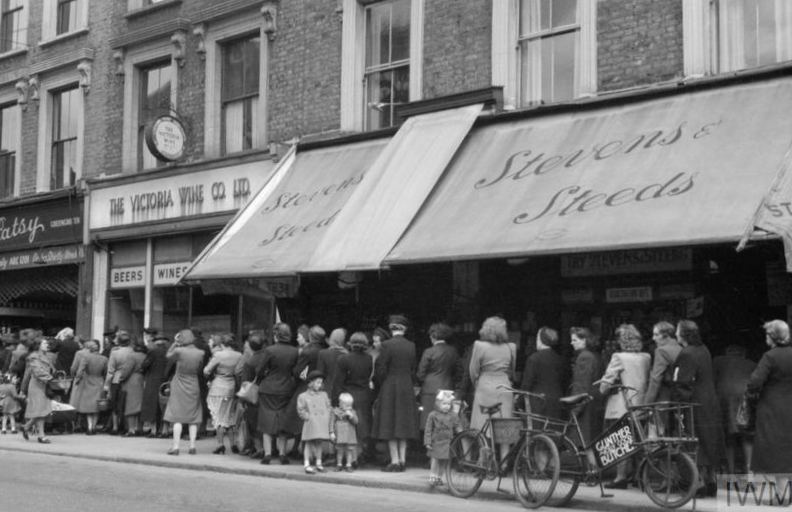
Related links

Related reviews

Tono-Bungay by H.G. Wells (1909)

This is a long novel narrated in the first person by 40-year-old George Ponderevo, describing in a deliberately ramshackle, digressive way, his boyhood and early manhood, his doomed early marriage and, above all, his involvement with his uncle Edward Ponderevo who shot to fame and fortune – in a ‘comet-like transit of the financial heavens’ – on the back of the quack medicine he invented and which gives the book its title, ‘Tono-Bungay’.

Three categories of H.G. Wells novel

Wells wrote a terrifying amount, over 100 books, sometimes publishing three books in a year, not to mention the numerous short stories and countless magazine articles.

Gilbert Phelps, in his introduction to the Pan paperback edition, says you can divide Wells’s novels into three categories: the scientific romances; the social comedies; and the novels of ideas. He ‘went off’ as a novelist precisely as the first flush of his extraordinary science fiction gave way to the third category, his increasingly long-winded novels addressing various social issues and designed to put the world to rights.

Phelps suggests that ‘Tono-Bungay’ holds a special position in Wells’s oeuvre as containing elements of all three categories in a kind of equipoise. 1) The narrator is presented as a devotee of scientific knowledge, an innovative engineer working on the (very new) technology of flight and the book contains serious technical accounts of manned flight (in gliders and propelled balloons), as well as a surprising amount about radioactivity in the late episode about ‘quap’.

At the same time the book contains 2) a lot of social comedy i.e. a lot of the characters are grotesques and caricatures created for comic effect. There’s a lot of Dickensian boisterousness, especially in the early chapters.

And all this is entwined with sustained attempts at 3) broader social analysis. In his way, Wells attempts to get to the root of hidebound Little England and its uptight social hierarchies, its small-minded snobbishness. Later on, the book becomes an anatomisation of modern business and finance, the sham values of advertising, the ghastly need for social acceptability of the nouveaux riches, all described in punishing detail. To summarise:

In effect [Tono-Bungay] was the watershed between Wells the predominantly creative artist and Wells the predominantly propagandistic writer.
(Gilbert Phelps in the Introduction, p.xviii)

Autobiographical

I read Tono-Bungay when I was a student and have a vague memory of the exuberant character of his uncle and its commentary on Edwardian England which I found politically energising. Rereading it thirty years later I have a completely different view. On this reading the social analysis seems to me weak and vague, the character of Uncle Edward only appears intermittently and the entire quack medicine storyline lacks detail and conviction. What comes over to me this time is that it is extremely autobiographical; the strong feeling that in his Edwardian novels Wells is writing his autobiography again and again, that it is the only ‘serious’ story that he has.

What I mean is that Love and Mr Lewisham (1900) is about a young man who escapes from drudgery working as a bullied teacher in a rubbish little private school when he wins a scholarship to study at the science college in South Kensington but is distracted from his studies when he falls in love with a beautiful but poor and rather dim young woman and ends up dropping out altogether in order to marry her. This is what happened to Wells, who escaped drudgery as a teacher in a nonky little school to study Biology at the Normal School of Science (later, Imperial College) in South Kensington, but fell in love and married his cousin who turned out to be dim and conventional.

The hero of Kipps (1905), after a promising education finds himself condemned to drudgery in a haberdasher department store in Kent just like Wells was before he managed to escape to London, as Kipps escapes by inheriting a fortune, as in a fairy story.

So Tono-Bungay feels like Well’s third go at using the material of his own life, and this time it feels closer than ever to his actual life story and maybe this explains why it often feels more vivid and, at moments, more fierce and angry, than its predecessors.

For in real life, when his family fell on hard times his mother was forced to go back into service as a housekeeper in the big country house at Up Park in Sussex where Wells as a boy observed all the snobbery of the late Victorian era, both above and below stairs – and this is precisely the plot of the first part of Tono-Bungay. It describes the boyhood of the narrator, young George Ponderevo, whose mother is housekeeper in the big old country house of Bladesover, allowing him to view the snobbery of the old lady who owns the place, and of the fleet of servants who run it, at first hand.

Bladesovery

George’s mother is housekeeper at Bladesover, a grand old country house belonging to a terrifying old lady, Lady Drew, and her forbidding friend and companion, Miss Somerville, and it’s here that young George is brought up below stairs to know his place in a fixed and centuries-old hierarchy.

Bladesover is deliberately built up into a symbol of England with its snobbishness and narrow-mindedness and conservatism, which is to become a reference point or touchstone for the rest of the book.

Bladesover illuminates England; it has become all that is spacious, dignified pretentious, and truly conservative in English life.

The narrow-minded, snobbish, philistine, bigoted, Brexit, Daily Mail, conservative England which endures down to the present day, 125 years later. The narrator calls this blinkered mindset Bladesovery.

His mother sets the tone: her husband ran off, possibly to Australia, and abandoned her with the baby, with the result that she is fierce and embittered, and has destroyed every trace of her perfidious partner. Young George never even finds out his father’s name let alone what he looked like.

His mother has become narrow, crabbed, confined to the dark spaces below stairs with the other narrow-living, dignified staff, replicating the snobbery of their betters upstairs. Against all this stuffiness and fixity young George instinctively rebels. He is:

‘Disobedient,’ said my mother. ‘He has no idea of his place…’

‘You must be a good boy, George,’ she said. ‘You must learn…. And you mustn’t set yourself up against those who are above you and better than you…. Or envy them.’ ‘No mother,’ I said.

So these opening chapters describe the narrator’s boyhood as the son of the housekeeper in a rural grand house in Kent and vividly depict the elaborate social system whereby everyone is born into a ‘place’ and expected to remain there for life, victims of ‘that snobbishness which is the distinctive quality of English thought’.

True to form George rebels and causes trouble and after a climactic incident, he is exiled from the house, sent off to stay with his mother’s cousin to work in his seedy little bakery in horrible Chatham. This man, Nicodemus Frapp, represents the servile tradition perfected, and is a sort of caricature of incompetent simplicity. He is a Christian but made to represent a small-minded English type of intolerance and narrow-mindedness. George has to sleeps in same bed as Fripp’s two sons, which leads not to furtive teenage sex, as you might expect in a modern novel, but to the boys having fiery debates about the existence of God where George finds himself goaded into mocking the boys’ ignorant faith which eventually leads to a big fight and George runs away, walking the 20 or so miles back to Bladesover and presenting himself, unrepentant, to his exasperated mother.

It’s at this point that he is sent to live with another cousin of his mother’s, Edward Ponderevo, a pharmacist in Wimblehurst, 26 or 7, married, impatient, ambitious, with a joking supportive wife, Susan – Uncle Edward and Aunt Susan, and thus the Bladesover part of the book ends and the young adult part begins.

Critique of Bladesovery

When I was a student I think I thrilled to Wells’s repeated skewering of the Little England mindset, the kind of provincial ignorance I myself had to run away from in order to embrace the bigger world of ideas and experiences.

Wells puts some effort into trying turn Bladesover into a theory of British society. This has at least two distinct aspects.

1. Static analysis

The first is the static analysis or historical theory, the notion that Bladesover represents the fundamental social structure of England and the historical theory that it has been this way since the Glorious Revolution of 1688. In the narrator’s view, English society was crystallised around the rule of the Whig landed gentry who owned all the land, who ran it from big houses, around whom was a constellation of other roles and jobs – the wide array of servants who served them in their homes, and then the professions (doctor, lawyer, architect and so on) who serviced their needs from local towns or cities. The entire paraphernalia of politics, the House of Commons and House of Lords, the awards system and so on, everything was constructed around the needs and demands of the landed aristocracy and had been so from 1688 to the time when the protagonist is a boy at Bladesover in the 1880s (p.80).

The cultural result of all this is that the aristocracy own culture, can afford to be cosmopolitan, have broad horizons and so on, while virtually everyone else is indoctrinated into the naive and blinkered belief that British is best, that this is the greatest country in the world, that foreigners with their silly languages and fancy cooking are ghastly and so on and so on, the Daily Mail, Daily Express mentality.

The serfs have completely assimilated the social structure which entirely benefits their betters, and aggressively champion their own subjugation – just like poor Northerners in our time fooled into voting for the Conservative party, the party of oligarchs and millionaires and non-doms. They love their own enslavement and react violently against anyone who suggests they think for themselves. They have the Daily Mail to do their thinking for them, to tell them who to hate and why – which is, broadly speaking, anyone who wants to change any aspect of the present most excellent state of the country.

Thus it is that, at various moments throughout the book, the narrator reverts to his theory of Bladesovery to explain this or that aspect of hidebound, snobbish English society (p.150). Even when he goes up to London to stay with his Uncle, who’s moved there, he, at first, sees the vast capital as an extended Bladesover, the Bladesover system devised to provide a golden life for aristocrats and their hangers-on in the law and the city, and drudgery for everyone else…

There have been no revolutions, no deliberate restatements or abandonments of opinion in England since the days of the fine gentry, since 1688 or thereabouts, the days when Bladesover was built; there have been changes, dissolving forces, replacing forces, if you will; but then it was that the broad lines of the English system set firmly. . . . The fine gentry may have gone; they have indeed largely gone, I think; rich merchants may have replaced them, financial adventurers or what not. That does not matter; the shape is still Bladesover…

2. Dynamic analysis

Having established, and repeatedly embellished, this reading of the theoretical, historical framework of British society, the novel then goes on to describe George’s dawning realisation that the system is, in fact, falling to pieces, and chronicles his slow, slow disillusion with the state of English society.

Specifically, George starts out as a very young man thinking everywhere will be as ordered and structured as life at Bladesover. Even after his personal life starts going awry he continues to work on the assumption that there is someone, somewhere, in control:

I still clung to the idea that the world of men was or should be a sane and just organisation…

Only slowly does he realise that no one’s in control and all is mess and muddle.

Just as I had always imagined that somewhere in social arrangements there was certainly a Head-Master who would intervene if one went too far, so I had always had a sort of implicit belief that in our England there were somewhere people who understood what we were all, as a nation, about. That crumpled into this pit of doubt and vanished…

‘I’ve had false ideas about the world,’ I said…

And:

Everybody who is not actually in the shadow of a Bladesover is as it were perpetually seeking after lost orientations. We have never broken with our tradition, never even symbolically hewed it to pieces, as the French did in quivering fact in the Terror. But all the organizing ideas have slackened, the old habitual bonds have relaxed or altogether come undone… (p.13)

This realisation is demonstrated by the whole story of Tono-Bungay, which is only a kind of glorified cough medicine but becomes a worldwide bestseller due to his uncle’s genius for publicity and advertising. Uncle Edward comes up with amazingly catchy jingles, places hoardings with his striking logo all round towns and cities, branches out into a huge range of other household products and objects (Tono-Bungay Lozenges and Tono-Bungay Chocolate, Tono-Bungay Mouthwash). He is, you realise at some stage, a kind of epitome of American can-do commercialism plonked down into stuffy late-Victorian society (as far as I can make out, the key events all happen during the 1890s).

And as young George watches at first hand his uncle create a commercial and financial giant from what is, in essence, a set of advertising jingles and slogans, it’s then that he realises that, if the city and lawyers and the wealthy, if entire provincial cities and towns can be taken by storm by this patently fraudulent product, then maybe nobody knows what’s going on and nobody’s in charge. Maybe all of society with its pomp and circumstance and Jubilee celebrations is a hollow sham.

He goes from thinking the world is planned and organised with someone somewhere supervising its moral nature, to realising it’s chaos. Thus when his uncle manages to raise a huge sum in the City on the strength of his fraudulent products:

£150,000 – think of it! – for the goodwill in a string of lies and a trade in bottles of mitigated water! Do you realise the madness of the world that sanctions such a thing? (p.129)

And:

At the climax of his Boom, my uncle at the most sparing estimate must have possessed in substance and credit about two million pounds’-worth of property to set off against his vague colossal liabilities, and from first to last he must have had a controlling influence in the direction of nearly thirty millions. This irrational muddle of a community in which we live gave him that, paid him at that rate for sitting in a room and scheming and telling it lies. For he created nothing, he invented nothing, he economised nothing. I cannot claim that a single one of the great businesses we organised added any real value to human life at all. Several like Tono-Bungay were unmitigated frauds by any honest standard, the giving of nothing coated in advertisements for money. (p.184)

And:

Civilisation is possible only through confidence, so that we can bank our money and go unarmed about the streets. The bank reserve or a policeman keeping order in a jostling multitude of people, are only slightly less impudent bluffs than my uncle’s prospectuses. They couldn’t for a moment ‘make good’ if the quarter of what they guarantee was demanded of them. The whole of this modern mercantile investing civilisation is indeed such stuff as dreams are made of. A mass of people swelters and toils, great railway systems grow, cities arise to the skies and spread wide and far, mines are opened, factories hum, foundries roar, ships plough the seas, countries are settled; about this busy striving world the rich owners go, controlling all, enjoying all, confident and creating the confidence that draws us all together into a reluctant, nearly unconscious brotherhood…

The flags flutter, the crowds cheer, the legislatures meet. Yet it seems to me indeed at times that all this present commercial civilisation is no more than my poor uncle’s career writ large, a swelling, thinning bubble of assurances; that its arithmetic is just as unsound, its dividends as ill-advised, its ultimate aim as vague and forgotten; that it all drifts on perhaps to some tremendous parallel to Uncle Edward’s individual disaster… (p.186)

So George goes from thinking the world is a hugely amplified model of the structured, ordered, supervised society of one grand country house, to realising it is an enormous sham, populated by chancers and frauds, with no bedrock or anchor at all, except everyone blindly trusting in the old forms and traditions.

The power of advertising

Thus the book isn’t so much ‘about’ the fake product as the tremendous power of ‘modern’ advertising and the passages Wells writes describing the coming of age of mass advertising in the 1890s are fascinating social history.

I was particularly struck when he writes that modern advertising isn’t so much about just promoting and selling stuff – it’s about creating new ideas and possibilities which people can buy into. When the book’s resident cynic, Bob Ewart, visits Uncle Edward’s bottling operation, he makes the profound point that advertising doesn’t flog this or that product, it offers its consumers the dream of a better life.

‘It’s the poetry of the customer too. Poet answering to poet – soul to soul. Health, Strength and Beauty – in a bottle – the magic philtre! Like a fairy tale….Think of the people to whom your bottles of footle go…Think of the little clerks and jaded women and overworked people. People overstrained with wanting to do, people overstrained with wanting to be…. People, in fact, overstrained…. The real trouble of life, Ponderevo, isn’t that we exist – that’s a vulgar error; the real trouble is that we don’t really exist and we want to. That’s what this – in the highest sense – just stands for! The hunger to be – for once – really alive – to the finger tips!

‘Nobody wants to do and be the things people are – nobody. YOU don’t want to preside over this – this bottling; I don’t want to wear these beastly clothes and be led about by you; nobody wants to keep on sticking labels on silly bottles at so many farthings a gross. That isn’t existing! That’s – substratum. None of us want to be what we are, or to do what we do. Except as a sort of basis. What do we want? You know. I know. Nobody confesses. What we all want to be is something perpetually young and beautiful – young Joves – young Joves, Ponderevo, pursuing coy half-willing nymphs through everlasting forests… (p.130)

And again:

‘Advertisement has revolutionised trade and industry; it is going to revolutionise the world. The old merchant used to tote about commodities; the new one creates values. Doesn’t need to tote. He takes something that isn’t worth anything – or something that isn’t particularly worth anything – and he makes it worth something. He takes mustard that is just like anybody else’s mustard, and he goes about saying, shouting, singing, chalking on walls, writing inside people’s books, putting it everywhere, ‘Smith’s Mustard is the Best.’ And behold it is the best!’

And plans to control and manipulate the media:

He had some amazing perceptions of just how modern thought and the supply of fact to the general mind may be controlled by money. Among other things that my uncle offered for, he tried very hard to buy the British Medical Journal and the Lancet, and run them on what he called modern lines [i.e. to promote his fraudulent products] (p.192)

Plenty of literary critics have written about Wells. I wonder if there’s an essay somewhere by someone who works in advertising and assesses just how spot-on Wells’s analysis was, and whether much has changed in the 130 years since the book’s setting in the 1890s.

Socialism, or not…

George doesn’t become a full-on socialist and socialism is represented in the novel by his boyhood friend, Ewart, who grows up to be a middling to poor sculptor, just about scraping a living, so hardly a shining beacon. Ewart represents total cynicism; he thinks all of society and its values are a sham and so he lives outside them. This is represented by his simple decision to live in sin with one of his models, who herself calmly accepts the fact that he periodically goes on big debauches, getting epically drunk and/or sleeping with prostitutes. Ewart can do this with no hesitation because he has seen through ‘society’ and realised all its values are shams simply designed to keep the proles in line.

But you can see how Wells came to his political opinions and why they aren’t, in fact, socialist; you can see why he joined, but then fell out with, the Fabians. A dictionary definition of socialism is: ‘a political and economic theory of social organization which advocates that the means of production, distribution, and exchange should be owned or regulated by the community as a whole’ i.e. public ownership not private ownership.

But where Wells’s heart really lies is in the notion that the old raddled fraudulent society needs to be torn down and rebuilt on the basis of Reason and Science. It is Science which becomes young George’s god and he imagines it is leagues of rational, educated, detached and objective scientists who Wells will run the rational society of the future. As George’s flying assistant, Cothope, puts it:

‘We scientific people, we’ll have to take things over and stop all this financing and advertisement and that.’ (p.293)

Uncle Edward

But Lord! they’ve no capacity for ideas, they don’t catch on; no Jump about the place, no Life. Live!—they trickle, and what one has to do here is to trickle too—Zzzz.”
“Ah!” said my mother.
“It doesn’t suit me,” said my uncle. “I’m the cascading sort.” (p.46)

Interesting to learn that even down the social scale, in the 1890s a provincial chemist is aware that America is more vibrant exciting and go-ahead than sleepy England:

I’d like to let a dozen young Americans loose into it,” said my uncle. “Then we’d see.”

America! I wish to Heaven, George, I’d been born American—where things hum.

Uncle goes bust on speculation, sells the pharmacy, takes a job in London. George continues studying. Aged 19 he makes his first visit to London (p.69). His uncle invites him to join him in the Tono-Bungay venture. It is the early 1890s.

Marion

Like Mr Lewisham, George gets a scholarship to study Science in London and, just like Mr Lewisham, allows himself to fall in love with an unsuitable woman, in George’s case uneducated, banal, lower class Marion, neglects his studies for her and fails his exams.

The long chapter about Marion is quite harrowing because it is a very powerful description of a sensual intelligent but completely inexperienced young man projecting onto a shallow silly woman all his longing for romance, intellectual companionship and pure lust – while she is a familiar type of sluggish, conventional narrow-minded, reluctant, delaying, ‘not where people can see’ type of prude.

She was young and extraordinarily conventional – she seemed never to have an idea of her own but always the idea of her class – and I was young and sceptical, enterprising and passionate; the two links that held us together were the intense appeal her physical beauty had for me, and her appreciation of her importance in my thoughts. There can be no doubt of my passion for her. In her I had discovered woman desired. The nights I have lain awake on account of her, writhing, biting my wrists in a fever of longing!

Well, after an agonising courtship in which Marion reveals herself as narrow and unimaginative and petty-minded, they get married, George hoping all the time that, once they’re married, Marion will blossom into the adventurous, cosmopolitan, erudite and wildly sexual personality which he has projected onto her but, of course, she doesn’t. She stays the frigid lump she was all through their courtship and on their wedding night, when he tries to have sex, she cries, unable to cope with the dirty, horrid thing he’s doing to her and which her mother and all her friends have warned her against all her life – which, of course, brings all George’s fantasies crashing down.

Driven by forces I did not understand, diverted altogether from the science, the curiosities and work to which I had once given myself, I fought my way through a tangle of traditions, customs, obstacles and absurdities, enraged myself, limited myself, gave myself to occupations I saw with the clearest vision were dishonourable and vain, and at last achieved the end of purblind Nature, the relentless immediacy of her desire, and held, far short of happiness, Marion weeping and reluctant in my arms. (p.151)

Having taken time to describe their agonising courtship, Wells briskly deals with their sad, humiliating married life:

Each time I returned to Ealing, life there seemed more alien, narrow, and unattractive—and Marion less beautiful and more limited and difficult—until at last she was robbed of every particle of her magic. She gave me always a cooler welcome, I think, until she seemed entirely apathetic. (p.155)

And quickly summarises what happened next, which is he has a fling with a woman who works in the typing pool and he becomes aware of following him with her eyes, Effie Rink.

She looked up at me without a word, with her face flushed and her eyes alight, and I bent down and kissed her lips. She leant back to put an arm about me, drew my face to her and kissed me again and again. I lifted her and held her in my arms. She gave a little smothered cry to feel herself so held. Never before had I known the quality of passionate kisses. (p.157)

Startlingly for an Edwardian novel, he says that after they’ve exchanged glances on numerous occasions, he finally summons up the courage to speak to her and then, abruptly, kisses her and…it’s what she wanted and she returns the kiss! And so they quickly have a passionate affair, running off for a week of sensual delight at Cromer. And with a certain inevitability, as soon as he gets home, Marion confronts him with his infidelity (one of her relatives spotted him in Cromer) and he confesses and so, with surprising calm, they discuss and arrange a divorce, and after a few more pages tying up loose ends, she passes out of his life and the story.

The point is, this is what happened – as a very young man Wells rushed, in 1891, into a marriage with his cousin, Isabel Mary Wells who turned out to be utterly unsuitable for an effervescently intellectual super-ambitious writer. After only a few years he fell in love with a much more suitable candidate, one of his students, Amy Catherine Robbins, so that he divorced Isabel in 1894 and married Amy in 1895.

So it’s hard not to feel that the Marion chapter (Part Two, Chapter 4) is a deeply-felt and only thinly-veiled record of his miserable courtship and failed marriage and it has a lot of force and power. I read it in one go and felt quite unnerved and depressed by it.

Boyhood vividness

It’s a while since I mentioned how autobiographical the book is but I intended, back in the Bladesover section, to make an important point which is, the boyhood scenes are best. The other scenes have interest – Ewart’s analysis of advertising is shrewd and the long chapter about his marriage to Marion pierces the heart, the account of Uncle Edward’s rise to nouveau riche status – but the first fifty or so pages about being a boy at Bladesover are, arguably, the most fresh and vivid and memorable.

The boy’s-view of the old spinsters who own the place and the petty snobberies of the staff, and his description of his boyhood crush on a little girl he was allowed to play with, Beatrice, and once got to kiss amid the ferns in the house grounds – all have the freshness and power of a good children’s story. Some of it is very funny in a way none of the subsequent scenes, humorous though they may intend to be, are actually funny. (I learn from the introduction that critics routinely describe these scenes to the boyhood scenes in Dickens’s David Copperfield and, I’d add, Great Expectations.)

And the same was true of Kipps. The best part of Kipps is the descriptions of him being a small boy running wild over Romney Marshes with a best friend his own age, pretending at playing cowboys and Indians on the beach, around old shipwrecks or ruined towers, it sounds paradisiacal.

Simple point: the most vivid bits of these two autobiographical novels are the scenes of boyhood.

Victim of life

This is all the more poignant because the adult George paints himself throughout the book as a victim, as a pawn of life, in thrall to forces he completely fails to understand.

I wondered if my case was the case of many men, whether in former ages, too, men had been so guideless, so uncharted, so haphazard in their journey into life.

At times my life appeared before me in bleak, relentless light, a series of ignorances, crude blunderings, degradation and cruelty. I had what the old theologians call a ‘conviction of sin’.

With the dismaying result that:

There were moments when I thought of suicide.

Many passages in the ‘adult’ section of the book are like this and serve to highlight the comedy and freshness of the boyhood scenes. And it’s against his hopeless failures in his private life that he turns to a belief in Science as something hard and objective which can save him.

In the end of this particular crisis of which I tell so badly, I idealised Science. I decided that in power and knowledge lay the salvation of my life, the secret that would fill my need; that to these things I would give myself. (p.168)

Science, with her order, her inhuman distance, yet steely certainties, saved me from despair. (p.169)

And so it is to the science of Aeronautics that George comes to devote his time and researches (pages 181, 218, 230 and Part 3 Chapter 3).

Scientific truth is the remotest of mistresses; she hides in strange places, she is attained by tortuous and laborious roads, but she is always there! Win to her and she will not fail you; she is yours and mankind’s for ever. She is reality, the one reality I have found in this strange disorder of existence. She will not sulk with you nor misunderstand you nor cheat you of your reward upon some petty doubt. You cannot change her by advertisement or clamour, nor stifle her in vulgarities. Things grow under your hands when you serve her, things that are permanent as nothing else is permanent in the whole life of man. That, I think, is the peculiar satisfaction of science and its enduring reward… (p.233)

One wonders how much Wells’s own promotion of the Creed of Science and Technology was based, like George Ponderevo’s, on personal failure and despair and a search for personal certitude, the same kind of disillusionment with traditional society and search for a grand transnational Order to properly run the world which, of course, fuelled the rise of totalitarianism between the wars…

Topics

The book is stuffed with long passages about society and other topics which make for sort-of interesting reading, but, at the same time, you can feel the prolixity which was to make his later novels feel more and more garrulous. Wells knew it and has his narrator try to excuse it right at the start:

I warn you this book is going to be something of an agglomeration. I want to trace my social trajectory (and my uncle’s) as the main line of my story, but as this is my first novel and almost certainly my last, I want to get in, too, all sorts of things that struck me, things that amused me and impressions I got – even although they don’t minister directly to my narrative at all… I want to get in all sorts of things. My ideas of a novel all through are comprehensive rather than austere….

Just the fact that these passages have to be quoted at such length indicates the sense of Wells unbelting himself, letting himself go, the pithy brevity of the early sci fi stories giving way to middle-aged spread.

England as one vast landed estate run for the benefit of the landed aristocracy

It is this idea of escaping parts from the seventeenth century system of Bladesover, of proliferating and overgrowing elements from the Estates, that to this day seems to me the best explanation, not simply of London, but of all England. England is a country of great Renascence landed gentlefolk who have been unconsciously outgrown and overgrown. The proper shops for Bladesover custom were still to be found in Regent Street and Bond Street in my early London days in those days they had been but lightly touched by the American’s profaning hand—and in Piccadilly. I found the doctor’s house of the country village or country town up and down Harley Street, multiplied but not otherwise different, and the family solicitor (by the hundred) further eastward in the abandoned houses of a previous generation of gentlepeople, and down in Westminster, behind Palladian fronts, the public offices sheltered in large Bladesoverish rooms and looked out on St. James’s Park. The Parliament Houses of lords and gentlemen, the parliament house that was horrified when merchants and brewers came thrusting into it a hundred years ago, stood out upon its terrace gathering the whole system together into a head.

London as the Bladesover template gone cancerous

I said at the outset of my first book that I find in Bladesover the clue to all England. Well, I certainly imagine it is the clue to the structure of London…I am most reminded of Bladesover and Eastry by all those regions round about the West End parks; for example, estate parks, each more or less in relation to a palace or group of great houses. The roads and back ways of Mayfair and all about St. James’s again, albeit perhaps of a later growth in point of time, were of the very spirit and architectural texture of the Bladesover passages and yards; they had the same smells, the space, the large cleanest and always going to and fro where one met unmistakable Olympians and even more unmistakable valets, butlers, footmen in mufti. There were moments when I seemed to glimpse down areas the white panelling, the very chintz of my mother’s room again.

I could trace out now on a map what I would call the Great-House region; passing south-westward into Belgravia, becoming diffused and sporadic westward, finding its last systematic outbreak round and about Regent’s Park. The Duke of Devonshire’s place in Piccadilly, in all its insolent ugliness, pleases me particularly; it is the quintessence of the thing; Apsley House is all in the manner of my theory, Park Lane has its quite typical mansions, and they run along the border of the Green Park and St. James’s. And I struck out a truth one day in Cromwell Road quite suddenly, as I looked over the Natural History Museum. ‘By Jove,’ said I, ‘But this is the little assemblage of cases of stuffed birds and animals upon the Bladesover staircase grown enormous, and yonder as the corresponding thing to the Bladesover curios and porcelain is the Art Museum and there in the little observatories in Exhibition Road is old Sir Cuthbert’s Gregorian telescope that I hunted out in the storeroom and put together.’

And:

And the more I have paralleled these things with my Bladesover-Eastry model, the more evident it has become to me that the balance is not the same, and the more evident is the presence of great new forces, blind forces of invasion, of growth. The railway termini on the north side of London have been kept as remote as Eastry had kept the railway-station from Wimblehurst, they stop on the very outskirts of the estates, but from the south, the South Eastern railway had butted its great stupid rusty iron head of Charing Cross station, that great head that came smashing down in 1905—clean across the river, between Somerset House and Whitehall. The south side had no protecting estate. Factory chimneys smoke right over against Westminster with an air of carelessly not having permission, and the whole effect of industrial London and of all London east of Temple Bar and of the huge dingy immensity of London port is to me of something disproportionately large, something morbidly expanded, without plan or intention, dark and sinister toward the clean clear social assurance of the West End. And south of this central London, south-east, south-west, far west, north-west, all round the northern hills, are similar disproportionate growths, endless streets of undistinguished houses, undistinguished industries, shabby families, second-rate shops, inexplicable people who in a once fashionable phrase do not ‘exist.’ All these aspects have suggested to my mind at times, do suggest to this day, the unorganised, abundant substance of some tumorous growth-process, a process which indeed bursts all the outlines of the affected carcass and protrudes such masses as ignoble comfortable Croydon, as tragic impoverished West Ham. To this day I ask myself will those masses ever become structural, will they indeed shape into anything new whatever, or is that cancerous image their true and ultimate diagnosis? (p.82)

A city of Bladesovers, the capital of a kingdom of Bladesovers, all much shaken and many altogether in decay, parasitically occupied, insidiously replaced by alien, unsympathetic and irresponsible elements; and with a ruling an adventitious and miscellaneous empire of a quarter of this daedal earth complex laws, intricate social necessities, disturbing insatiable suggestions, followed from this. Such was the world into which I had come, into which I had in some way to thrust myself and fit my problem, my temptations, my efforts, my patriotic instinct, all my moral instincts, my physical appetites, my dreams and my sanity. (p.83)

(At exactly the same time, in Howards End, E.M. Forster describes London as a cancerous growth and I came across the contemporary Tory leader Lord Rosebery doing the same, in Roy Hattersley’s history of The Edwardians, page 350: ‘a tumour, an elephantitis, sucking into its gorged system half the life and blood and the bone of rural districts.’)

The nouveaux riches

I don’t know whether it is due simply to my changed circumstances, but it seems to me there have been immensely disproportionate developments of the hotel-frequenting and restaurant-using population during the last twenty years. It is not only, I think, that there are crowds of people who, like we were, are in the economically ascendant phase, but whole masses of the prosperous section of the population must be altering its habits, giving up high-tea for dinner and taking to evening dress, using the week-end hotels as a practise-ground for these new social arts. A swift and systematic conversion to gentility has been going on, I am convinced, throughout the whole commercial upper-middle class since I was twenty-one.

So it was we recognised our new needs as fresh invaders of the upper levels of the social system, and set ourselves quite consciously to the acquisition of Style and Savoir Faire. We became part of what is nowadays quite an important element in the confusion of our world, that multitude of economically ascendant people who are learning how to spend money. It is made up of financial people, the owners of the businesses that are eating up their competitors, inventors of new sources of wealth, such as ourselves; it includes nearly all America as one sees it on the European stage. It is a various multitude having only this in common: they are all moving, and particularly their womankind are moving, from conditions in which means were insistently finite, things were few, and customs simple, towards a limitless expenditure and the sphere of attraction of Bond Street, Fifth Avenue, and Paris. Their general effect is one of progressive revolution, of limitless rope.

They discover suddenly indulgences their moral code never foresaw and has no provision for, elaborations, ornaments, possessions beyond their wildest dreams. With an immense astonished zest they begin shopping, begin a systematic adaptation to a new life crowded and brilliant with things shopped, with jewels, maids, butlers, coachmen, electric broughams, hired town and country houses. They plunge into it as one plunges into a career; as a class, they talk, think, and dream possessions. Their literature, their Press, turns all on that; immense illustrated weeklies of unsurpassed magnificence guide them in domestic architecture, in the art of owning a garden, in the achievement of the sumptuous in motor-cars, in an elaborate sporting equipment, in the purchase and control of their estates, in travel and stupendous hotels. Once they begin to move they go far and fast. Acquisition becomes the substance of their lives. They find a world organised to gratify that passion. In a brief year or so they are connoisseurs. They join in the plunder of the eighteenth century, buy rare old books, fine old pictures, good old furniture. Their first crude conception of dazzling suites of the newly perfect is replaced almost from the outset by a jackdaw dream of accumulating costly discrepant old things.

This made me think of The Times newspaper which aims, in our day, to be the Bible of this class, overflowing with supplements titled ‘Class’ and ‘Style’ and ‘Travel’, guides for the rich on how to spend their money with ‘class’ and ‘style’. Nothing whatsoever has changed.

The affluent society

The American economist John Kenneth Galbraith coined the phrase The Affluent Society in the title of a book he published in 1958, but Wells was describing its existence in the 1890s:

In these plethoric times when there is too much coarse stuff for everybody and the struggle for life takes the form of competitive advertisement and the effort to fill your neighbour’s eye, when there is no urgent demand either for personal courage, sound nerves or stark beauty, we find ourselves by accident. Always before these times the bulk of the people did not over-eat themselves, because they couldn’t, whether they wanted to do so or not, and all but a very few were kept “fit” by unavoidable exercise and personal danger. Now, if only he pitch his standard low enough and keep free from pride, almost any one can achieve a sort of excess. You can go through contemporary life fudging and evading, indulging and slacking, never really hungry nor frightened nor passionately stirred, your highest moment a mere sentimental orgasm, and your first real contact with primary and elemental necessities, the sweat of your death-bed. (p.234)

Here, as in Galbraith, it strikes me as a comfortably middle class concern

The imperial class

I had a near view of the machinery by which an astounding Empire is run, rubbed shoulders and exchanged experiences with bishops and statesmen, political women and women who were not political, physicians and soldiers, artists and authors, the directors of great journals, philanthropists and all sorts of eminent, significant people. I saw the statesmen without their orders and the bishops with but a little purple silk left over from their canonicals, inhaling, not incense but cigar smoke. I could look at them all the better because, for the most part, they were not looking at me but at my uncle, and calculating consciously or unconsciously how they might use him and assimilate him to their system, the most unpremeditated, subtle, successful and aimless plutocracy that ever encumbered the destinies of mankind.

John Buchan wouldn’t have agreed.

The absurdity

Regarding the vast unfinished palace Uncle Edward was having built for him on Crest Hill, George is stricken with the futility, not only of the individual life, but of the entire system whereby people slave their lives away to provide the improvident rich with their heedless luxuries.

For this the armies drilled, for this the Law was administered and the prisons did their duty, for this the millions toiled and perished in suffering, in order that a few of us should build palaces we never finished, make billiard-rooms under ponds, run imbecile walls round irrational estates, scorch about the world in motor-cars, devise flying-machines, play golf and a dozen such foolish games of ball, crowd into chattering dinner parties, gamble and make our lives one vast, dismal spectacle of witless waste! So it struck me then, and for a time I could think of no other interpretation. This was Life! It came to me like a revelation, a revelation at once incredible and indisputable of the abysmal folly of our being. (p.294)

Turns of phrase

As I’ve often said, I prefer reading older literature because of the unexpected turns of phrase and thought you come across. Wells is usually dismissed as a literary writer because he was slapdash and too often propagandist in intent, but pound for pound his texts include a surprising amount of unexpected and delightful turns of phrase.

I remember these women as immense. No doubt they were of negotiable size, but I was only a very little chap and they have assumed nightmare proportions in my mind. They loomed, they bulged, they impended.

He exfoliated and wagged about novel and incredible ideas. (p.53)

accident in a butter tub p.144

My uncle was my best man, and looked like a banker—a little banker—in flower.

He was an aquarium-faced, long, blond sort of chap (p.177)

He smoked and was fragmentary for a time, fending off my questions… (p.188)

[The polite ladies of Beckenham] all sat about in the summer-house and in garden-chairs, and were very hatty and ruffley and sunshady. (p.198)

Plus ca change…

Another interesting thing about older books is repeatedly being surprised by how little issues and attitudes have changed in the past 130 years. I was struck that George sends Effie a message reading ‘How goes it?’, a phrase I’d have thought was much more modern and slangy (p.170).

I was amused when, after he’s broken up with sensual free spirit Effie, she, in her Bohemian way, falls for a poet:

She married a year or so ago a boy half her age – a wretch of a poet, a wretched poet, and given to drugs, a thing with lank fair hair always getting into his blue eyes, and limp legs.

I was struck how the image of the outsider poet, the poète maudit, coming down to our times in the image of the leather-clad rock’n’roll rebel, drug addict etc – far from being a modern invention has remained so consistent over such a long period.

The radioactive interlude

So most of the novel is extremely homely, set in a country house, a sleepy Sussex town, slovenly Chatham, hotels and apartments around London and then…as the novel reaches its climax, as the wolves start to close in on the fraudster Ponderevo and his business empire starts to crumble, something really weird happens.

Uncle Edward and George agree that the latter must take ship in a dirty old brig, the Maud Mary, and sail, with the shifty captain and surly crew, to an island off the West coast of Africa, here to take aboard as much radioactive ‘quap’ as they can carry. What? The explanation is that Uncle Edward’s London office has been besieged for years by all sorts of people trying to interest him in their get-rich-quick schemes and one that always stood out was a poor explorer, Gordon-Nasmyth, who said he’d come across deposits of radioactive sludge piled up around a lagoon on an island, Mordet Island, off the African coast. Our guys do a scientific analysis of the sample Gordon-Nasmyth brought along and find in it several rare metals. The project hangs fire until Uncle Edward’s fortunes begin to slide and the plan to get the ‘quap’ is a desperate last throw of the dice – if George can return with enough of it, they can extract it, sell it and cover all their debts.

Originally, the plan had been for Gordon-Nasmyth to go but at the last minute he manages to be badly injured in an accident and so our boys decide that George himself should go. The ship is rotten, the captain is a secretive Romanian Jew, George is locked up in a small sweaty cabin with him and the monosyllabic first mate for 50 days, madly seasick.

And when they do find the ‘quap’ is really is radioactive, having scorched the lagoon and surrounding area and burning the hands of the crew who reluctantly set about wheelbarrowing it up plans and dumping it in the ship’s hold.

This whole episode is really bizarre and departs madly from the homely and broadly comic tone of the rest of the book. It feels like a science fiction short story Wells didn’t know what to do with and so inserted here, regardless of its incongruity and strangeness.

As he describes the heat of the tropics, the smell of rotting vegetation, and the occasional black faces they see peeping out of the foliage, I wondered if it was some kind of pastiche of Joseph Conrad, especially his most famous novella, Heart of Darkness. I wondered why on earth Wells made the captain of this knackered old cargo ship a Romanian Jew, which seems a bizarre choice in itself, but when he went into detail about the man’s heavy foreign accent and Continental habit of accompanying his talk with face and hand gestures, I wondered if this was meant to be a satirical portrait of Conrad, who Wells knew, and notorious for his heavy Polish accent.

As if this mad trip to Africa to collect radioactive sludge wasn’t bizarre and random enough already, Wells piles on an even more random and inexplicable event. The boat is anchored for weeks as the loading takes place and so George gets into the habit of wandering beyond the zone blasted by the waste, into the jungle, for an increasing amount of time each day, eventually taking some food and making a day of it.

It was during one of these little explores that he comes across a black man standing stick still in a clearing staring at him. There’s a moment as they both stare at each other then the native turns and starts to run. On impulse, to prevent him alerting his tribe and bringing others and maybe attacking his little European crew, George puts his rifle to his shoulder, fires and hits the black man square in the back. Running over, he sees he’s killed him with one shot.

What? Why? Why on earth has George the sceptical engineer, the man whose confused feelings we are encouraged to sympathise with throughout the book, suddenly transmogrified into a racist murderer? It’s true that throughout the book we’ve had continual satirical analysis of the rotten state of England which has two or three times expanded into jokey comments about the ramshackle adventitious British Empire…is this…is this entire African adventure meant as some kind of extended satire on the folly of Empire, very much like ‘Heart of Darkness’?

George buries the body in quicksand but that night is haunted by guilt at what he’s done and returns to the spot the next day only to find it’s been dug up and half eaten by some jungle animal, so he buries it again. Another night of guilt and when he goes back to the spot next day he finds the body has been dug up again but this time by human hands and entirely removed. This puts the Fear into him and when the ship’s crew rebel at the work they’re doing, effectively going on strike and demanding they leave, George is quick to agree.

In the event this is a wise decision because only a few hours after weighing anchor and starting to steam north they encounter a gunship from another European power (it is never explained which European nation claims ownership of this territory, only that removing the ‘quap’ as they do, is illegal and risky).

Anyway, they manage to throw off the other ship in a storm and fog but then the episode reaches a kind of quintessence of futility. For the ship starts to leak, in George’s opinion because its powerful radioactive cargo slowly disintegrates the wooden staves of the hull. They have to man the bilge pumps continually for seasick storm-ridden days until everyone is sick to death and exhausted and only too happy to agree when the captain says they must abandon ship.

After a day in open rowing boats they are picked up by another European ship, the Union Castle liner, Portland Castle, where they are fed and watered and given new clothes and George reads in the newspapers that his Uncle Edward has finally been declared bankrupt.

At which point the narrative returns to England and the rather sleepy provincial English tone of the novel but leaving this reader completely bewildered at this thick slice of exotica, at this bizarre sci fi-and-murder episode I’ve just experienced. It’s weird.

The flight to France

But it’s followed by something almost equally bizarre, namely George and Edward’s aerial flight to France. In the later part of the novel George tells us less and less about Uncle Edward’s complicated business empire and more and more about his use of the money he acquires to set up extensive workshops, hangars and engineering facilities where he, along with trusty assistant Cothope, work on projects for manned flight.

These passages include an extended description of the sensation of lying in an early design of glider and it swoops over the Surrey countryside. And George was working on a new, expanded version of a dirigible of his own design, including his own lightweight motor. So this is a zeppelin-type balloon with a small space for a couple of passengers to lie in and a motor-driven propeller at the back to move it and steer with.

So, long story short, when he gets back to England, and travels down to Surrey to meet with Uncle Edward the latter is, for the first time in his life, broken and speechless. A sustained campaign by his rivals, in particular a certain press baron named ‘Lord Boom’ (modelled on Lord Northcliffe?) have exposed the rickety basis of Edward’s empire and it’s all collapsing. Not only that but he sheepishly admits to George that he’s lied under oath and in signed affadavits – in other words, he could be arrested and gaoled for fraud.

So this is all the rational or logical pretext for what happens next, which is bonkers. And this is that George bundles Edward and some supplies into his prototype dirigible and flies him to France. In the event this fraught trip is described in rather too much detail for the prevailing winds blow them down rather than across the Channel and it’s only by extreme effort that George manages not to get blown out into the Atlantic and instead manages to crash land them on the coast near Bordeaux. But that isn’t the end of this section, far from it.

They are looked after by kindly French peasants and then make their way across country to a small village which I got the impression was close to the Spanish border (‘There is a background of the Pyrenees, of blue hills and sunlit houses, of the old castle of Luzon and a noisy cascading river..’).

Here they find accommodation in a peasant inn and Uncle Edward, worn down by his worries and the exertions of the journey, sickens and dies. But even this simple plot development is really stretched out, taking many days and involving a bizarre coterie of characters, including the local doctor, a Catholic nun, and an English Anglican vicar who spends some of his time catering to English tourists abroad.

Why? Why this ridiculous science fiction, Heath Robinson contrivance of an escape? And why flee as far as the Pyrenees? And why subject us to an extended description of the argy-bargy this all causes among the people tending dying Edward?

A set of whys to add to all the questions about the entire African ‘quap’ episode, which also feels as if it’s been parachuted in from a different genre altogether. It is a weird exotic conclusion to the life story of someone who had, up until that moment, been a kind of quintessence of little Englander provincialism and, as such, feels wildly inappropriate.

And it would never have been a proper ‘escape’ as the authorities get wind of a dying foreigner and about the time Uncle Edward expires they turn up to arrest George.

Losing Beatrice

But that’s not all. Third in this trilogy of weirdness is the very final section which describes the frustratingly unsatisfactory end of George’s love affair with Beatrice. You might recall that right back at the start of the novel (which feels like years ago) George, as a little boy growing up in Bladesover House, had a crush on a little girl from the ruling class who he was allowed to play with, Beatrice, and this led up to a stolen kiss in the bracken. In fact it triggers the next stage in the plot because Beatrice is often accompanied by a slightly bigger boy, her cousin Archie, and one day jealous banter escalates into fighting. George is getting the best of it when the house’s owner, old Lady Drew, and her companion come round the corner, are appalled, all sides agree that George started the fight because he is an ill-mannered oik, and this is what triggers him being banished from Bladesover and sent to stay with his awful cousin Frapp in miserable Chatham (from where he eventually runs away).

Anyway, towards the end of the entire book, this Beatrice re-enters, on horseback, accompanied by the son (Lord Carnaby) of the posh local landowner (Lady Osprey). Long story short, George and Beatrice reconnect, and she swears, repeatedly, that she loves him, she has always loved him etc etc, but she cannot be his. This all happens over the few months leading up to George’s ill-fated expedition to Africa so that when he leaves there’s much kissy-kissy and declarations of love.

The thing is she refuses to marry him, constantly putting him off, telling him she’ll explain why and so on when the time is right, one day, not now, but darling we have this evening etc.

What, I think, eventually emerges is that she has been corrupted by society: she was brought up in a grand house, enjoying all the freedoms and privilege, and she now, I think, if I have deduced form her frustratingly oblique explanations, become the mistress of Lord Carnaby (I don’t understand why she hasn’t just married him). The point being that her role of Carnaby’s mistress keeps her in fine clothes and big rooms and horses to ride. If she ran away from Carnaby to be with George, well, George has just lost his fortune and is facing possibly legal proceedings… So she’d be throwing away all the advantages of a wealthy lifestyle to live with poor engineer George and… well… she thinks she’d change, she wouldn’t be the same, she would come to hate him for ruining her life.

So I think the entire point of the Beatrice storyline is to ram home Wells’s point about the corrupting and strangling effect of wealth and social convention on Pure Love.

Last point: destroyers

At the very very end of the novel we clearly discover what has been hinted at a few times earlier that, having lost the fortune which allowed him to experiment with powered flight, George has moved into a job designing destroyers i.e. warships. And not for the British, who scorned his homemade solutions, but for whoever pays the highest fee. The novel ends with an extended description of George taking the first of this new breed of destroyer, the X2, on its maiden voyage down the Thames to the North Sea.

This, also, can be given a satirical, political interpretation: namely that a man who has vaunted his fine feelings and delicate sensibilities and shared the inner truth of his love affairs and been such a shrewd critic of English society and its snobberies and pretensions and ramshackle empire, who came to London with such earnest hopes to contribute something positive to society, who had earnest conversations about socialism and a new world – that this idealist ends up working not for the betterment of mankind but building weapons of destruction (itself to be seen in the context of the arms race between Britain and Germany).

So society is based on a confidence trick; the worlds of finance and business are a sham; the whole show is only kept on the road by only empty snobbery and showy ceremonies; true love is always strangled and frustrated; and even the most idealistic of men ends up designing weapons of war and death in order to survive. These are just some of the more obvious themes which emerge from this ramshackle pot-pourri of a novel.

Conclusion

It’s a powerful book, full of all sorts of treats such as the many topics which I’ve quoted at length – but you can’t help being bewildered by its wild swings of tone and subject matter, especially in the final sections, which I’ve just summarised.

It’s a big absorbing novel full of interesting ideas, the vivid scenes of childhood, the upsettingly powerful description of a failed marriage but – what is the Joseph Conrad-style Africa section doing in it? Or the science fiction dirigible escape? And the final section about his frustrated love for Beatrice felt like it dragged on forever leaving me, by the end, exhausted and relieved that this long rambling, all-over-the-place narrative had, at last, finally, ended.


Credit

Tono-Bungay by H.G. Wells was published in 1909. References are to the 1982 Pan Classics paperback edition.

Related links

H.G. Wells reviews

The Edwardians by Roy Hattersley (2004)

Executive summary

Half-way through this hefty 600-page popular history, author Roy Hattersley gives a handy little summary of the era under discussion. Most historians agree that:

  • ‘the Edwardian period’ stretches from the death of Queen Victoria in 1901 to the outbreak of the First World War in 1914
  • it was named and typified by its obese jolly king, a sociable hunting, shooting and cigar-smoking man known for his numerous affairs and mistresses, ‘Edward the Caresser’ as Henry James nicknamed him
  • its dominant political figures were:
    • Arthur Balfour (Conservative Prime Minister 1902 to 1905)
    • Herbert Asquith (Liberal Prime Minister 1908 to 1916)
    • young radical firebrand David Lloyd George (driving force behind the People’s Budget, the Parliament Act and the National Insurance Act which laid the foundations for the welfare state)
    • Winston Churchill was on his way up
    • while Joe Chamberlain, associated with jingoism, the Boer War and protectionism (‘imperial preference’), was on the way out
  • it was a decade troubled by explosive social issues such as women’s suffrage, Irish independence, trade union rights and the arrival of the Labour Party as a political force, destined to supersede the Liberals after the war
  • society was transformed by scientific and technological inventions, on the theoretical level the discover of atomic and subatomic particles and Einstein’s theory of relativity, on the technology level, the rise of the motor car, the telephone and wireless, and the first manned airplane flights

There you have it, in a snapshot.

Dating the Edwardian era

Strictly speaking the Edwardian period refers to the reign of King Edward VII, king from the day his mother, Queen Victoria, died (22 January 1901) to the day he passed away (6 May 1910) to be replaced by his son, King George V (reigned 6 May 1910 to 20 January 1936).

However, like pretty much all historians of the period Hattersley stretches the definition of ‘Edwardian’ forwards to include the four years leading up to the Great War (commenced August 1914). And also, because he feels obliged to explain the origins and course of the Boer War (11 October 1899 to 31 May 1902), which was still ongoing when Edward came to the throne and which requires a description of the Jameson Raid (December 1895), Hattersley at various points goes back before his theoretical starting date to explain the deeper origins of this or that issue.

In other words, the dating is quite fluid, not only when it comes to politics but to social history as well, Hattersley reaching, in his chapter on poverty, back to the many reports on the subject published during the 1890s (for example, Charles Booth’s Life and Labour of the People of London 1889 to 1903); or going back to early roots of the suffragette movement which can said to have started in the 1880s; or of the Labour movement, which can be dated all the way back to Henry Hyndman founding Britain’s first left-wing political party, the Democratic Federation, in 1881; or, regarding the Irish Question, having to dig back into the 1880s to describe the secession of the Liberal Unionists who disagreed with Gladstone’s ill-fated policy of Home Rule for Ireland. And so on.

Subverting a straw man

On the cover, on the back, in the blurb and repeatedly within the text, Hattersley and his publishers say this book tackles and refutes the notion that Edwardian England was one long summer of boaters, bathers and village pubs, attacking the notion that the period ‘is often seen as a golden sunlit afternoon, personified by its genial and self-indulgent king’, before the Armageddon of the First World War.

The trouble is that this is what absolutely every book about the Edwardian era claims to do, using the same straw man to assert its novelty and originality. In fact not just histories but anyone who’s read the introduction to novels by H.G. Wells or Arnold Bennett or E.M. Foster reads the same ‘golden summer’ straw man being knocked down in the same way as the author sets out to correct our misconceptions to tell us that the period 1901 to 1914 was in fact crammed with scientific, technological and consumer product innovations and packed with fraught social and political issues, some of which I’ve listed above. It’s the standard trope invoked by all historians of the period.

The book announces its tone of superior gossip with a gorgeous description of Queen Victoria’s funeral (Saturday, 2 February 1901) and then a gossipy portrait of King Edward, his biography, personality and the courtiers and advisers who surrounded him. Initially, I thought maybe the whole thing was going to be a gossipy survey of Edwardian people. It was only on reading further that I realised that each of the 20 chapters, despite their vague and sometimes misleading titles (I’ve added clearer indications of their subject matter in brackets), is devoted to a specific social and political issue and examines each one in some detail.

It’s a romp, it’s a guilty pleasure, it’s good popular history packed to the gills with fascinating factoids – but still, coming to this book from the works of professional historians like Richard Shannon or Eric Hobsbawm is like falling off a cliff in terms of intellectual substance, historical authority and serious analysis.

1. A Cloud Across The Sun (Victoria’s funeral)

Detailed description of the immense and impressive procession of the body of Queen Victoria through London en route to her final resting place in Windsor. The total number of soldiers involved in taking part in or policing the procession was larger than the British Expeditionary Force sent to France at the start of the Great War. Most people were stunned for nobody knew any other monarch than Victoria who had reigned for 63 years. Generations had been brought up to associate the very word ‘Victorian’ with Britain’s world leading position. Her death triggered much soul searching. Educated commentators were uneasily aware that Britain was slipping. America and Germany were overtaking her in terms of industrial output (p.67, 467) and Germany’s Navy Law of 1898 set it on a course to match or exceed the Royal Navy’s firepower (p.15). Imperial anxiety as the old era ended.

2. The Spirit of the Age (Edward’s character)

Edward was 60 when he came to the throne and was (surprisingly) badly prepared for the job. Successive prime ministers (Gladstone, Disraeli) tried to suggest useful jobs and opinions where he could get a feel for the nation he was set to rule but either Victoria or the Prince himself vetoed them.

He had a state income of £100,000. The whole country knew about Edward’s louche reputation. He had been named in a number of scandalous court cases and was well known to enjoy gambling, the horses, yachting and the high life. He was addicted to baccarat. The serious and high-minded (the kind of people who leave written texts such as sermons, newspaper articles, writers’ diaries etc) deplored his character and worried about the moral falling off which his rule would bring. The Marlborough House set.

But the thing about the written records is they tend to preserve the opinions of the worthy, high-minded, literate and concerned and ignore or neglect the opinions of the vast mass of the population who left few if any records. And in this respect, I think a key thing to grasp about the English is that they welcomed Charles II with open arms, and that well-known womaniser, gambler, horse and yacht-racing addict has gone down as arguably the most popular British king ever. So, away from the hand-wringing editorials, there might have been a great portion of the fun-loving proletariat who admired a merry monarch. (Compare and contrast the ongoing popularity of Boris Johnson – inexplicable to liberals and worthy Tories – an adulterer, drinker and shambling liar, but still admired by many for being a bloke you could go down the pub and have a laugh with).

And indeed Hattersley goes on to say that Edward’s much higher profile than his reclusive mother – photos in the press and reports of him opening Parliament or at racing meetings or holidaying in the South of France – associated him with the new taste for leisure and relaxation. Edward epitomised a new age of leisure.

Edward was very fat due to overeating. His chest and waist measured 48 inches. Hattersley gives mind boggling details of a typical royal meal, which usually had at least 14 courses. His coronation had to be postponed to a sudden flaring up of appendicitis and the consequent operation and was eventually held on 9 August 1902.

Edward hated to be alone and was an insatiable socialiser. He was liable to descend on the grand country houses of the aristocracy with little warning, an event which entailed huge disruption. After a string of extra-marital liaisons in 1892 he met Alice Keppel, the daughter of an admiral, and she became his official mistress for the rest of his life.

He was a menace in foreign affairs, acting tactlessly with the touchy Kaiser, but was personally involved in the great diplomatic triumph of his reign, the Entente Cordiale with France, which he did a lot to cement by a personal visit to Paris during which he undertook a lot of engagements with great enthusiasm and was eventually cheered by the French crowds.

Edward revived the state opening of Parliament in all its meretricious pomp and hollow ceremonial, which had been allowed to lapse by his reclusive mother, and which continues to this day, televised to the simpering tones of royal commentators.

3. The Powers Behind the Throne (Edward’s advisers)

When Edward came to the throne Britain was an imperial oligarchy, ruled by groups of aristocratic or mercantile families. Hattersley gives an entertaining tour of the political class, starting with the lingering influence of the Liberal ‘Grand Old Man’ Gladstone who had died in 1898, and the Conservative Lord Salisbury, Prime Minister when Edward acceded, who resigned a year later in July 1902, to be succeeded by his nephew, Arthur Balfour.

The Edwardian Prime Ministers

  • Lord Salisbury (Conservative) 1895 to 1902
  • Arthur James Balfour (Conservative) 1902 to 1905
  • Henry Campbell-Bannerman (Liberal) 1905 to 1908
  • Herbert Henry Asquith (Liberal) 1908 to 1916

(See section on ‘Politicians’, below.) This fusty world of faineant plutocrats was to be shaken up by the two firebrands, Winston Churchill and David Lloyd George.

The chapter morphs into a consideration of Edward’s closest personal advisers, being: Arthur Hardinge, Francis Knollys, Reginald Brett, military adviser Admiral Fisher.

4. The Condition of England

Named after the bestselling analysis of British society published in 1909 by Liberal politician and cabinet minister Charles Masterman.

Masterman copied the method of Matthew Arnold’s Victorian tract, ‘Culture and Anarchy’, by assigning the classes and groups of people in Edwardian England new generic names:

  • the Conquerors (the old aristocracy)
  • the Suburbans (the middle middle-class)
  • the Multitude (the masses)

In the event Hattersley doesn’t dwell on Masterman’s analysis but uses it as a jumping off point for statistics about Britain’s economic decline, her stalling industrial growth, the shrinking of productive agriculture, the reliance on the informal economics of empire. He then goes on to summarise a bevy of reports and surveys which came out during the decade giving hard evidence of the dire poverty of about half the population, especially agricultural workers (‘Social surveys proliferated in Edwardian Britain’, p.74).

Lots of detail about the pay and wages of workers in different sectors, in different parts of the country with special attention to women.

5. Unfinished Business (the Boer War)

Hattersley’s account of the Boer War, with as much or more about its impact on domestic politics i.e. its fractious impact on an already split Liberal Party (because some Liberals were imperialists and some were anti-imperial Radicals). Milner’s miscalculation in thinking the Boers could be intimidated into submitting to Britain. The reasonableness of Paul Kruger’s position in not wanting his small culturally homogeneous country swamped by outsiders who, if given the vote, would support Britain’s policies. The chaotic conduct of the war. The concentration camp policy: in the 13 months between January 1901 and February 1902, to Britain’s eternal shame, 20,000 internees died, mostly women and children. Lloyd George was a rare voice fiercely denouncing the war, while the imperialist Liberals set up something called the Liberal Imperial Council.

6. A Preference for Empire (the tariff campaign)

‘Victory’ in the Boer War cost the British Exchequer some £222 million. This money had to be recouped. Of all UK politicians Joseph Chamberlain was most associated with the war, ‘Joe’s War’. Massively popular after the victory, he now launched a campaign for imperial protectionism i.e. to create a free trade zone between Britain and the white dominions (Canada, Australia, New Zealand, post-Boer War South Africa) and impose tariffs on imports from all other countries.

Hattersley gives his interpretation of the wild enthusiasm which greeted Joe’s campaign: it was widely seen as a cure for what an increasing number of people were realising was Britain’s industrial eclipse.

Manufacture was in decline. The Industrial Revolution had, in reality, ended more than half a century earlier. The consequences of failure to innovate and invest were just working their way through into the economy. Declining industries longed to be protected by a tariff. (p.109)

In 1903 Chamberlain made a big speech for ‘imperial preference’ which was seen as a proclamation that ‘the British Empire must stand together against the world’ (p.109). The government of the day was Conservative, led by Prime Minister Arthur Balfour, but it only had a majority because of its coalition with the Liberal Unionist defectors from the Liberal party. Now the core principle of old school liberalism was the free trade which had made Britain great in the mid-Victorian period.

In fact Hattersley neglects the detail and implications of protectionism to focus on giving an intricate and quite confusing account of the problems Balfour faced keeping his cabinet and his government together, which boiled down to the timing and way of announcing the resignation of various dissidents. Chamberlain resigned because protectionism wasn’t being implemented fast enough but Tory free traders also resigned in opposition to the policy and detestation of the former Liberal Chamberlain’s influence. Balfour dealt with the ongoing crisis with silky subtlety from 1902 to 1905 and then resigned government at the end of 1905. A general election was held in January 1906 and the Liberals stormed home in a landslide. The Liberals were, in fact, deeply divided over various issues, centrally the question of Irish Home Rule, but managed to unite around their anti-protectionism and ran a campaign highlighting the fact that tariffs would raise the cost of food.

Hattersley skimps on this, a key fact brought out in other accounts I’ve read. Instead he is obsessed with the minutiae of what Balfour promised the Duke of Devonshire who upset a trio of colleagues by not resigning alongside them, with details of meetings and dinners and promises and pledges among the Tory elite. No doubt that’s how politics actually works, but this aspect of Hattersley’s account is for politics addicts.

7. Uniting the Nation (social reforms)

Having painted in the background, this is the chapter in which Hattersley gets round to explaining the changes which he’s been claiming were so central to the Edwardian decade. At their core is one thing, a revolution in the political culture of the nation. Victoria’s entire reign was dominated by a laisser-faire philosophy of free trade and unfettered competition and the devil take the hindmost. Classical liberalism thought the state ought to be small and had just two duties, to uphold the law at home and protect from foreign enemies. When it came to the vast majority of the British population which were either poor or very poor or utterly destitute, the almost universal assumption was that their poverty was their own responsibility. Victorian moralists blamed the plight of the poor on their own indigence, immorality, laziness and so on. The only recourse for the poor and unemployed was the workhouse which, since the Poor Law of 1832, was purposely designed to be as inhumane as possible in order to act as a deterrent, and a spur to the indigent poor to try harder.

During the Edwardian decade this political philosophy underwent a swift and amazing revolution. A series of reports by charities and investigators during the 1890s revealed depths of poverty and squalor in all Britain’s cities but also in the countryside that had never been appreciated before. These findings were incorporated into a series of royal commissions which in turn led to a flurry of acts which fundamentally altered the attitude of the state to the poor from judgemental vengeance to support and responsibility.

  • 1902 registration of midwives
  • 1906 Education Act stipulating the supply of school meals
  • a system of medical inspection of schools
  • 1907 borstals were established for young offenders
  • 1908 act made neglect a criminal offence for the first time

Why? The pop history answer is that the Boer War revealed the shocking health of the stunted wretches conscripted from Britain’s slums. Also, the influence of the growing number of Labour MPs, in the 1906 election Labour won 53 seats.

But what really comes over in this chapter is that we were copying Germany which was already decades ahead of us. This was especially true in the area of supporting the unemployed, creating a national insurance tax to pay the unemployed a minimum dole, and creating labour exchanges to help people back into work. Conservatives were persuaded of these lefty measures because they improved the efficiency of the economy as a whole. And far from being radical experiments, Britain copied the tried and tested methods which were already propelling Germany’s economy ahead of ours on every measure. To compete against its rivals, Britain needed a better educated, better fed workforce that wasn’t allowed to rot and lose its skills when laid off by capitalism’s regular slumps. Hence the unemployed workmen’s act and powers to set up labour exchanges (p.130).

It’s startling to learn that a young William Beveridge went to study Germany’s welfare provision in 1905 and was so impressed by what he saw that he brought back to Britain a version of the Bismarckian system which was to form the basis of the hugely influential report published during the war and which, famously, formed the basis of the Welfare State created by the Labour government under Clement Attlee (p.465).

Some of the child and family laws were passed under the Conservatives before 1905, but the working men’s legislation was driven forward by Winston Churchill during his so-called New Liberal phase. Churchill drove forward prison reform, a bill improving conditions in coal mines, a bill limiting the number of hours people could work in shops,

8. Who Shall Rule?

The clash between the old ruling class and the new liberals came to a head in the great constitutional crisis triggered by Lloyd George’s 1909 budget which imposed new taxes on the rich in order to fund old age pensions and welfare policies and which the House of Lords, dominated by rich landowners, promptly rejected. The Liberal government led by Prime Minister Herbert Asquith, First Earl of Oxford, threatened to flood with Lords with Liberal peers while radical firebrand David Lloyd George toured the country giving rabble rousing speeches, backed up by Winston Churchill, still in his fierce new Liberal phase.

Hattersley gives a fairly detailed account of the political machinations, in the middle of which King Edward died (6 May 1910) and was replaced by his son, George V. The Liberals proceeded to win two general elections (in January and December 1910) (admittedly with Labour and Irish Nationalist support) which persuaded the new sovereign, very reluctantly, to accede to Asquith’s threat, which in turn led the Lords to back down and pass Lloyd George’s Budget and the National Insurance Bill.

Hattersley delivers one of those pithy summaries which I remember my history teachers at school used to extract and turn into an essay question, namely: Victoria handed over to her successor the poisoned chalice of the Boer War, and Edward VII handed over to his successor the Peers-versus-the-People crisis.

9. Ourselves Alone (Irish Home Rule)

After decades of frustration among Irish nationalists, the question of Irish Home Rule returned to the agenda in Westminster because, in the 1910 general election called by the Liberal Party to prove their mandate for Lloyd George’s inflammatory budget of 1909, Conservatives and Liberals both won about 270 seats and so the balance of power was held by the Irish Nationalists with their 82 MPs.

It took the sclerotic process of Whitehall to get it together, but the 1912 Home Rule Bill was the price the British Liberals paid the Irish Nationalists for their support in getting the Budget and the act to reform the House of Lords through (p.187).

Hattersley goes back to recap the background. After the fall of its charismatic leader Charles Stewart Parnell 1890, named in a divorce case as an adulterer, the struggle for Irish independence went into abeyance.

‘The era of constitutional possibilities for Irish nationality ended on the day that Charles Stewart Parnell died.’ (Arthur Griffith, quoted on page 182)

Hattersley namechecks the key players and the numerous organisations set up to campaign for home rule, including Michael Davitt and Arthur Griffith (founder of Sinn Fein and editor of The United Irishman), John MacBride and James Connolly, Roger Casement (revealer of the horrors of Belgium’s colony in the Congo and later gun-runner for the IRA), James Larkin (leader of the Irish Transport and General Workers Union), John Redmond (leader of the Nationalist Party in Parliament), Michael Collins, along with the upper class women, Maud Gonne and Constance Gore-Booth, memorialised by the great poet W.B. Yeats.

Ireland was wretchedly badly run by the British, with rural and urban poverty even worse than on the mainland. The nationalist cause was boosted by Britain’s appalling handling of the Boer War, in which another small people was bullied and butchered by an overweening empire.

I read a lot of this stuff as an undergraduate as background to Yeats’s poetry, and periodically over the following years. Rereading it all in detail, I was struck not by the Irish fight for independence which, in a sense, that is simple and logical, like any other colonial struggle against imperial masters. What always impresses me is the strength of the opposing force, the rise of Unionism in Ulster, led by the brilliant and charismatic lawyer, Sir Edward Carson, the hundreds of thousands of northern Protestants who signed petitions, the 100,000 men who joined the proto Ulster army, the mass smuggling in of guns and ammunition, and the acquiescence of senior officers in the British Army in what Churchill bluntly called treason i.e. actions against the express wish of the elected British government and the King (p.188 ff.).

Hattersley shows how the partition of Ireland between an Irish nationalist south and west and a different entity in the Protestant north was originally one of many solutions proposed in the 1910s but slowly became the most favoured, how it was defined in different ways by different factions among the Unionists but within a few years had gained traction as the least bad option.

10. Votes for Women!

Female England awoke during the Edwardian era. (p.81)

Like the Ireland chapter this one goes back a few decades to background events, for example when Millicent Fawcett founded the National Union of Women’s Suffrage Societies in 1887. But the story comes to life when Hattersley gives us biographies of the leading campaigner Emmeline Pankhurst and her daughter Christabel (nicknamed by some papers ‘the Queen of the Mob’).

I knew the suffragettes were violent hooligans who used terrorist techniques (for example, sending letter bombs to leading politicians, p.220) but Hattersley’s account brings out how wilfully violent and destructive they were. Not only throwing bricks and tiles at the Prime Minister and other cabinet members, smashing their windows, vandalising their cars or trying to burn their houses down, slashing paintings in galleries, setting fire to postboxes, rampaging along Oxford Street and Regent Street smashing every shop window with hammers (p.219), spitting at and slapping policemen (p.207), but, when it was discovered some were practicing shooting, it was feared there would be active assassination attempts a la JFK (p.216). They also damaged quite a few works of art.

It was interesting to learn how many of them were lesbians or lived in unorthodox relationships (p.217). It is typical of Hattersley’s enjoyably gossipy approach to learn that the redoubtable Edwardian composer, Ethel Smyth (1858 to 1944), not only went to prison (2 months in Holloway) for smashing the Colonial Secretary’s windows, not only wrote the stirring suffragette anthem, ‘The March of the Women’, but fell passionately in love with (the married) Emmeline P, writing: ‘I knew that before long I would be her slave’ (p.217).

Did you know it was the Daily Mail which coined the word ‘suffragette’ as a term of mockery and abuse but which the activists then adopted with pride and we have used ever since? (p.209)

But the biggest thing that struck me was the reason many Liberal and Labour politicians opposed women’s suffrage wasn’t the principle of the thing, which most approved of – it was fear of its practical consequences.

It had taken decades of fraught negotiation for the existing male electorate to come into being and it still excluded some 5 million men from the vote (always forgotten in this context). Some Labour and Liberals were against women’s suffrage because they knew that the vote would probably, at least at first, only be extended to better-off women who would promptly vote Conservative.

In other words, giving middle-class women the vote (the most feasible strategy) risked destroying radical and progressive politics in Britain for a generation (p.218). It was a cogent and powerful argument, even if making it earned you a slap in the face from Christabel Pankhurst.

In 1912 and ’13 and ’14 bills were drafted to extend the franchise, to which greater or lesser measures of female suffrage were added, and which variously passed or failed in the Commons or in Committee stage but everyone accepted that suffrage was going to happen sooner or later. And then the Great War broke out, putting any further development on the women question – as with Irish independence – on hold but making some sort of solution inevitable once the fighting had finished.

In fact it was before the war ended (in November 1918) that, in January 1918, the Representation of the People Act was passed, giving the vote to men aged over 21, whether or not they owned property, and to women aged over 30 who occupied land or premises with a rateable value above £5, or whose husbands did, thus extending the local government franchise to include women aged over 21 on the same terms as men. As a result of the Act, the male electorate was extended by 5.2 million to 12.9 million and the female electorate went from 0 to 8.5 million, or 2 in 5 adult women.

(It was not until the Representation of the People (Equal Franchise) Act 1928 that women gained full electoral equality with men, the act giving the vote to all women aged over 21, regardless of any property qualification, adding another five million women to the electorate.)

Since 1928 there have been 24 general elections, of which Labour have won 10. From the little research I’ve done, until recently women voters on the whole voted Conservative although that has changed recently (see article on gender divide in general election voting).

11. United We Stand (the trade unions)

The complicated history of trade unions in the Edwardian era. The Taff Vale train dispute case of 1901 recognised trade unions as legal entities but this was the opposite of a Good Thing for it meant that employers could now take trade unions to court if it could be proved that strikes or picketing had adversely affected their business. And not just claim compensation from union funds but sue individual union officials into the bargain (pp.222 to 224).

Hattersley explains that the Trade Union Congress and most unions had regarded politics as peripheral to their core activities of protecting members and campaigning for better pay and conditions, But the potentially crippling implications of the Taff Vale case made them all realise they needed representation in Parliament to defend their interests.

So this chapter traces the earliest history of the Independent Labour Party (founded 1893), the Labour Representation Committee (founded 1900) and its early luminaries, particularly the two key figures of Keir Hardie and Ramsay MacDonald. This leads up to the foundation of the Labour Party proper in 1906, which broke through in that year’s January general election to win 29 seats on 4.8% of the vote (p.234).

Of course Hattersley’s lifelong involvement with the Labour Party, most notably as deputy leader under Neil Kinnock from 1983 to 1992, gives him unprecedented insight into Labour’s traditions and contemporary working. As such it is more than ordinarily interesting when he writes that the party – ‘then, as now, despised theory’, ‘more interested in practice than theory’ – has always been a very soft-left party with little or no theoretical underpinning (p.237).

In fact, the book is sprinkled with asides which sound like the wisdom of practical experience in the field, wry familiarity with the quirks and foibles of Parliamentary politics:

  • [Balfour] took refuge in the expedient employed by uncertain prime ministers down the ages… (p.131)
  • The TUC, always happy to accept half a loaf, was delighted… (p.152)
  • It was a tactic the Tory party was to employ time and time again in an attempt to obstruct the work of elected governments. (p.158)
  • General elections are rarely fought on issues of the parties’ choice… (p.167)
  • Speakers’ judgements on such matters are rarely challenged with success… (p.220)
  • Like so many private members bills it was then buried at the Committee stage and forgotten. (p.231)
  • The new Labour members, euphoric as new members always are… (p.234)
  • The Select Committee Inquiry endorsed the status quo as Select Committee Inquiries often do. (p.282)
  • Select Committees of the House of Commons usually contain one or two Members whose enthusiasm outruns their discretion. (p.457)

Back to the Labour party, it was somehow symbolic that the party’s first leader and Moses, the illegitimate, poorly educated Scotsman, Keir Hardie, made powerful speeches about injustice but knew nothing about economics and had very few practical policies for bringing about the ideal world he depicted in his rousing speeches. Plus ça change…

The detailed series of legal cases which hampered then liberated the Edwardian trade unions, with the explanation of Liberal party support, the advent of the new Labour Party MPs, and the trend for the sometimes very small unions to amalgamate into huge mega-unions based on a specific trade (mining, railwaymen etc) all give a strong sense of a social movement emerging from legal, political and financial weakness, to staking its claim to become a major component of British domestic history for the rest of the century.

12. Useful Members of the Community (education)

It was quite an eye-opener to learn that the central issue in trying to improve education in this country, from 1870s till the 1900s, was religion. To be precise, the majority of schools were run by the Church of England so when any government tried to set up a state-run, nationwide system of primary schools, it had to address two massive problems: 1) the Church of England’s powerful concerns that reforms would mean it losing its influence over the nation’s youth; and 2) the vehement opposition of non-conformists, who strongly objected to Anglican schools being subsidised by their local taxes.

Some non-conformists refused to pay their local taxes under the new system introduced in 1902 and were prepared to go to prison to defend the principle. In fact, the provisions for local authority funding of schools antagonised the large non-conformist community so much that this issue alone goes a long way to explaining why the Tories, who’d brought the Act in, were slaughtered in the 1906 election.

Everyone knew that Britain needed to bring its education system up to the standards of Germany (many British educationists had toured Germany and had realised the German system was way better than ours – just like their industries, businesses, health and welfare systems were streets ahead of ours, p.465). This chapter is a good example of the yawning gulf between political theory and practice; of the way a really simple aim and intention which most of the political class agreed on, could end up requiring endless, torturous negotiations, drafts and redrafts, defeats in the House of Commons and Lords, and so on, before a half-workable compromise finally gets passed.

Just working through the battle of vested interests and the hangover of historic structures and organisations in this one area, education, helps you understand why so many aspects of Britain’s social and economic structure are so compromised, messy, half-cocked and inefficient.

It was also the era when the Workers Education Association was founded (1908), the northern universities received their charters (Birmingham 1900, Manchester and Liverpool 1903, Leeds 1904, Sheffield 1905).

In a parallel stream, the wildly successful Boy Scout movement was founded by General Robert Baden-Powell, hero of the siege of Mafeking, the first camp being on Brownsea Island in 1907. One of the small group of men who founded a movement which they lived to see sweep the world.

13. Ideas Enter the Drawing Room (theatre)

Drawing room drama replaced by theatre of ideas, copying abroad (as usual), in this case Ibsen, and our own provocateur George Bernard Shaw (‘the most famous iconoclast and atheist of his age’, p.370). But first Hattersley conscientiously gives us the owners of London theatres, the price of tickets in London and the provinces, the lives of the great actor managers (Irving) and leading ladies (Ellen Terry, Mrs Patrick Campbell), the quality of middle-brown ‘respectable’ drawing room drama, the advent of musical comedy epitomised by the success of The Merry Widow.

And then the fight against the state censor of plays, the Lord Chamberlain, led by John Galsworthy who, according to Wikipedia:

became known for plays with a social message, reflecting, among other themes, the struggle of workers against exploitation, the use of solitary confinement in prisons, the repression of women, jingoism and the politics and morality of war.

With mention of the plays of Harley Granville-Barker, The Voysey Inheritance and Waste. Throw in the works of George Bernard Shaw and that’s quite a lot of plays about contemporary issues.

But the decade contained the seeds of change. The 1900s saw the first displays of moving pictures and by 1910 buildings had opened devoted to the showing of moving pictures, much more immediate and much cheaper than even the cheapest musical comedy and variety.

14. Literature Comes Home (Edwardian literature)

With the death of Aubrey Beardsley and the imprisonment of Oscar Wilde the Aesthetic Movement petered out. Hattersley quotes Yeats, pre-eminent poet of the Celtic Twilight and then Irish nationalist movement, remarking that around 1900 ‘Everyone got down off their stilts’. The trouble with overviews of the literature by historians or politicians is that they are not professional literary experts, and so they tend to make the obvious points in the obvious ways, writing the same opinions as a thousand other ‘histories of literature’. So: with the end of the Boer War Kipling moved to Britain, settled in Sussex and radically changed his subject matter from tales of the dry and dusty hills of India to stories about England, Puck of Pook’s Hill and the like. The Poet Laureate Alfred Austin and Sir Henry Newbolt supplied a continuation of Kiplingesque patriotic poems but without the subtlety.

If you’re looking for a common thread among the poets it is probably different flavours of patriotism, from Newbolt at the jingo end, through Robert Bridges, GK Chesterton, young Rupert Brooke, and then a flotilla of minor figures, each with one or two anthology poems – Walter de la Mare, John Masefield, poets who would be gathered together in the Georgian anthologies of 1912 and subsequent years.

Hattersley makes the dubiously journalistic claim that one ‘great’ novel was published each year:

1900 – The Way of All Flesh by Butler, Lord Jim by Joseph Conrad

1901 – Kim by Rudyard Kipling

1902 – The Wings of the Dove by Henry James

1903 – The Ambassadors by Henry James

1904 – The Golden Bowl by Henry James, Nostromo by Joseph Conrad

1905 – Where Angels Fear to Tread by EM Foster, Kipps by H.G. Wells

1906 – The Man of Property by John Galsworthy

1907 – The Secret Agent by Joseph Conrad

1908 – The Old Wives Tale by Arnold Bennett, A Room with a View by E.M. Foster

1909 – Tono-Bungay and Ann Veronica by H.G. Wells

1910 – Howard’s End by EM Foster, The History of Mr Polly by H.G. Wells, Clayhanger by Arnold Bennett

The New Woman was a recurring theme in fiction and a flurry of woman writers, admittedly popular writers, such as Maria Corelli, Baroness Orczy, Ethel M Dell, Elinor Glyn, children’s writers Frances Hodgson Burnett, E. Nesbit and Beatrix Potter.

What emerges from Hattersley’s brisk review is a sense of an emerging, educated, intelligent middle class, of the rise and rise of the New Woman, of the lives of working people described with a new seriousness, in Wells and Bennett up to a point, but with sensitivity and insight of genius in the novels of DH Lawrence who emerged just at the end of the period (Sons and Lovers, 1913).

15. The End of Innocence (sport)

With increased leisure time, caused in part by government legislation limiting working hours, went the growth of sport: football, cricket, tennis, athletics, rugby league and union, were all put on a more professional basis, paid, and new stadiums and halls built to accommodate growing crowds. Sport became business. London hosted the 1908 Olympic games. The conflict between gentlemen and players, based on snobbery and a wish to keep the classes distinct i.e. gentlemen unsullied by commerce. The first celebrity sportsmen such as Bob Crompton of Blackburn Rovers and W.G. Grace. The aim of gentlemen, in sport as in every other aspect of life, was to demonstrate ‘effortless superiority’. Contemporary commentary is littered with words like ‘chivalry’ and ‘honour’, words associated with the medieval ruling class. The MCC and other sporting bodies, like the House of Lords, could be relied on to resist the encroachment of commercialisation i.e. working class players being paid, for as long as possible.

Meanwhile in other nations, such as America, sportsmen specialised in one game and practiced intensively, sometimes with the support of a ‘coach’ (p.323). Or the advent of American jockeys who used a new posture, ‘the forward seat’, to win (p.331). In sport, as in industry and commerce Britain’s addiction to amateurism, hobbled by class war, condemned it to long-term mediocrity.

Horse racing has always relied on gambling. In 1906 the government tried to regulate it. In 1908 the sport established a new definition of ‘thoroughbred’, mainly with a view to excluding the threat from American-bred winners.

Surprisingly, given the general chauvinism, women progressed in two sports, gold and tennis, although these remained robustly middle class (as they are to this day). Popular men’s sports, on the other hand, steadily became more working class, football and rugby union being two examples, and boxing, the longest establishment popular sport.

Hunting, of course, remained the preserve of the aristocratic elite, surrounded by all manner of preposterous traditions, like chivalry ultimately dating back to the Norman conquest and subjugation of Saxon serfs. As a Saxon serf I have all my life cordially despised the aristocrats who subtly or not so subtly have asserted their superiority over me, John Buchan’s Lord Leithen, Siegfried Sassoon in his memoirs. No surprise that the resistance to Asquith and Lloyd George’s People’s Budget in the House of Lords was led by fox-hunting aristocrats like Willoughby de Broke (with his floridly Norman name). They were, and are, the class enemy.

So many of these social aspects remind me of what H.G. Wells in Tono-Bungay calls the Bladesover system, the way English society was structured around the grand houses of the landed aristocracy in the 17th and 18th centuries, with a constellation of professions (lawyers, doctors, bankers and brokers) servicing them, and had provided the social, cultural, mental and even geographic structure of Britain up till his own time, the only change being the stepping of new businessmen or financiers into various places as the actual aristocracy became defunct, but everyone working to keeping these archaic structures of thought and ceremonial in place. ‘The new middle class hunters wanted to conform…’ (p.337)

I was forced to play lots of sports at school: I disliked cricket because of the boredom and snobbery, really disliked rugby because of the sadistic pleasure big boys took in stomping everyone else, quite liked hockey because there was little physical contact and some skill, really liked rowing especially sculling because you could disappear down the river on your own; and in breaks played football on the tarmac playground, often with small tennis-sized balls.

16. Gerontius Awakes (art, architecture, music)

Another portmanteau chapter, which is interesting enough but feels like a dutiful ticking of obvious boxes. In 1901 commenced the redesign of the Mall from the statue of Victoria (1901) to Admiralty Arch (1911).

John Singer Sargent was friends with Monet but eschewed foreign experimentalism and made himself the Reynolds (i.e. the highly paid portrait painter of the rich) of his day. Hattersley quotes the avant-garde art critic Roger Fry describing Sargent as: ‘as gentle as a man as he was striking and undistinguished as an illustrator and non-existent as an artist’ (p.358), one of the few moments which ruffles the stolid flow of Hattersley’s dutiful nods to all the obvious greats.

The great composer of the day was Edward Elgar, condemned for ever to be remembered for his Pomp and Circumstance marches, written 1901 to 1907. ‘Land of Hope and Glory’ took music from one of the marches and incorporated words by A. C. Benson in 1902. Notes on Delius, Holst (lots of folk songs, St Paul’s suite 1912), Percy Grainger and the young Vaughan Williams (The Lark Ascending 1914). A little later, in 1916, Hubert Parry would set Jerusalem to music. Celebrations of Englishness comparable to the very English settings of Foster, Wells, Saki, Kipling in Pook’s Hill mode and all those Georgian poets.

Architecture characterised by the Edwardian Baroque. Edwin Lutyens, Giles Gilbert Scott and, in Scotland, Charles Rennie Mackintosh. The influence of Alfred Waterhouse on commissions of large public buildings. The Ritz Hotel. The RAC club in Pall Mall. Royal London House, Finsbury Square. Westminster Cathedral (John F. Bentley).

The garden suburb movement, Ebenezer Howard. Letchworth. Hampstead. the prophets thought it would appeal to all classes but like all high-minded movements it attracted the professional middle classes.

The Camden Town school of art, correlative of Zola’s naturalism. Yuk.

In 1910 Grafton art gallery hosted an exhibition of recent French painting (Gauguin, Matisse) which caused a scandal. The critic Roger Fry could only think to label them all post-impressionists, an unsatisfactory label which has stuck (p.356). It highlighted the philistinism of the ruling class and the sensationalising vulgar sensationalising of the press, led by the Times.

The first Futurist manifesto 1909, the second one 1910. Committed to replicating the machine energy of the age.

17. Would You Believe It? (philosophy and religion)

Summary of G.E. Moore’s Principia Ethica which had such a dynamite impact on the Bloomsbury Group. Hattersley summarises it as claiming that morality is relative, changes according to time and place. This was perceived by the Bloomsburies as a huge liberation from Christian morality which insists that moral values are universal and (incidentally), strict and repressive. Moore gave them a theory which underpinned their already existing practice of passionate friendships and cliques. And non-traditional sexual relations i.e. gays and lesbians and other genders in between. Hattersley tags on a brisk explanation of Bertrand Russell’s work on sets and categories, explaining that both Moore and Russell were anti-Christian. From the heights of academia came an attack on the ideology Oxbridge was invented to guard. Backtracking a bit to The Golden Bough, the pioneering work of anthropology which theorised that all human societies progress from pagan polytheism through monotheism and finally achieve the objective rational thought of science.

The life and extraordinary discoveries of New Zealander Ernest Rutherford i.e. discovering that the atom is not the smallest unit of matter but is itself made up of component parts.

Second half of the chapter is about the Christian churches: the part erection of the Catholic Westminster Cathedral; the divisions in the Church of England between High Church at one end and Modernists seeking to reconcile the creed with all the discoveries of science, at the other; the Methodists and other nonconformists. No mention of Jews, Muslims etc…

18. Hardihood, Endurance and Courage

There were four Polar expeditions during the Edwardian decade. Hattersley describes in detail all four of them: Scott’s first 1902-3, Shackleton’s in 1907-8, Scott’s second in 1910-12, Shackleton’s second 1914.

Scott’s diary and the example of Oates are routinely trotted out as examples of British pluck, but reading any account impresses you more with the bad decisions, bad planning, lack of resources and shambolic amateurishness of the attempt. When you read that some of Scott’s companions questioned the quality of the horses and provisions before they even set sail but decided to defer to their captain and social superiority’s judgement (p.406), you hear the genuine voice of deference to idiots which led Britain to near disaster in the Boer War and to catastrophe in the First World War.

Plus the amazing adventures in Central Asia of Marc Aurel Stein, archaeologist of Buddhism (pages 396 to 397), and Colonel Sir Francis Younghusband’s expedition up from British India to Tibet (394 and 5).

19. Halfpenny Dreadful (newspapers)

Riveting chapter about the explosion of newspapers, magazines and journals at the end of the nineteenth century, and the creation of a particular type of populist paper at the turn of the century, focusing on the career of Alfred Harmsworth, later made 1st Viscount Northcliffe (1865 to 1922), creator of the Daily Mail (in 1896) and the Daily Mirror. His career is set against George Newnes’s creation of Tit-Bits magazine in 1881. Newnes mentored and trained a generation of journalists in what came to be called The New Journalism. Harmsworth was one, another was Cyril Arthur Pearson, who founded the Daily Express in 1900.

Hattersley says there were two types of New Journalism, one which aimed to report politics and the news but in a much more accessible format than the solid wall of prose of The Times; and the other sort which didn’t care about serious news at all and was packed with trivia and celebrities.

How with the outbreak of the Boer War, Harmsworth deliberately made the Daily Mail the newspaper of empire, the jingo paper, taking an attitude of unremitting criticism of the (Conservative) government for its comprehensive mismanagement of the war, thus letting our boys down.

Between 1866 when the Companies Act eased the rules of limited liability and 1914 4,000 newspaper companies were formed in London and the provinces. Between 1900 and 1914 ten evening newspapers tried their luck in London.

I didn’t know the Daily Mirror was set up in 1903 to target women readers, had an all-women staff and a woman editor. It only lasted a year. In the end the chapter is all about Harmsworth and ends with his mounting campaign to warn the government about the dire military and naval threat from Germany. Interestingly, he became obsessed with German interest in the very new technology of flying, which he thought the British Army was ignoring.

20. The Shape of Things To Come (new technologies)

Britain pioneered the canal and the steam railway but was badly behind by the time the two next transport innovations came long, electric trams and motor cars. The Americans and Germans pioneered electric tram cars in the 1850s. It took 50 years for them to appear on British streets. And the Germans, French and Italians were all ahead of us in car design. Where had all the engineers gone? And the investors willing to take a punt?

The 1900 Century Road Race to publicise cars (whose diminished legacy is the annual London to Brighton race). Henry Royce the engineer and Charles Rolls the salesman, a partnership made in heaven. the company went from strength to strength, but Rolls used his share of the profits to invest in airplanes. Lord Northcliffe took up the cause of air flight in The Daily Mail and offered prizes for manned flights across the Channel and from London to Manchester. He was taken for a flight by Orville Wright.

Senior politicians became interested. Louis Bleriot won the prize for crossing the Channel in 1909. Northcliffe arranged a reception at the Savoy and Bleriot’s plane was exhibited at Selfridge’s.

The great race from London to Manchester between plucky Brit Claude Graham-White who, of course, lost to his French rival Louis Paulhan. More competitions followed. Charles Rolls was killed in one (12 July 1910).

Ships: a thorough look at Royal Navy shipbuilding, first the companies and yards around Britain, then the revolutionary introduction of turbine-driven ships in the early 1900s. Commercial liners and the construction of the two huge ships the Mauretania and Lusitania. The Blue Riband competition for crossing the Atlantic fastest. The White Star Line commissions two huge superliners to be named the Olympic and the Titanic. On 14 April 1912 on her maiden voyage the Titanic hit an iceberg in mid-Atlantic and sank, drowning 1,515 people.

The chapter begins to free associate because as it sank, the Titanic sent desperate SOSs out by the newish technology of radio, being picked up by the Carpathia which steamed to the rescue, arriving 80 minutes after Titanic sank and rescuing 700 souls. Impressive technology.

And it leads Hattersley into an account of the scandal of government officials trading in shares on Marconi’s Wireless company as other members of the government were awarding the company the contract to build the Imperial Wireless Chain agreed by the 1911 Imperial Conference. Muck-raking scandal. Accusations of libel. Court cases. Commission of inquiry etc.

Epilogue: The Summer Ends in August

A recap of the very bad personal relationship between Edward VII and his sister’s son (i.e. nephew) Kaiser Wilhelm II, starting with the latter gatecrashing the elaborate ceremonial surrounding the funeral of Victoria. Wilhelm comes over as a tactless idiot, for example the interview insulting Britain he gave to the ‘New York World’ while he was a guest in Britain.

It broadens out to become quite a detailed account of the political, diplomatic and military build up to the outbreak of the Great War, seen exclusively through the prism of British-German relations, and more narrowly still, the erratic, angry, aggrieved behaviour of Wilhelm. It’s a sequence of events, featuring the Entente Cordiale, the naval arms race, the building of the Dreadnoughts, the Agadir and Fashoda crises, and the two Balkan wars, which was drummed into me at school for my history GCSE.

As to one of the most over-determined events in global history, Hattersley’s take is that Germany was determined on war by 1913 i.e. none of it was accidental. Germany had collected almost all her foreign debts while leaving her creditors waiting so that the Bundesbank held record gold reserves. Woodrow Wilson’s emissary to Europe, Colonel House, toured the capitals and reported back that the German Army was determined to attack and conquer France according to the Schlieffen Plan before turning on Russia. According to Hattersley Germany was just waiting for a pretext and the Serbian terrorists supplied it.


Politicians

Tory Prime Minister Arthur Balfour, ‘the most influential Tory in Edwardian England’, was languid and ineffectual, ‘personified the dedicated dilettante’ (p.84).

Joseph Chamberlain was a Unitarian by birth and a troublemaker by nature. (p.255)

Radical Joe Chamberlain banged the drum for a more imperialist foreign policy. He was one of the loudest supporters for the catastrophically mismanaged Boer War (1899 to 1902) in which some 20,000 women and children died in Britain’s concentration camps (p.99; described at length in chapter 5; incompetence p.90).

Chamberlain went on to aggressively support the idea of an imperial customs union, more to bind the empire together than for the economics. The widely reported fact that such a union would almost certainly increase the cost of foodstuffs helped the Conservatives lose the 1906 general election by a landslide (chapter 6: ‘A preference for Empire’).

Two new young stars lead the Liberal government, pro-Boer, anti-imperial, anti-establishment David Lloyd George, and temporary radical Liberal, Winston Churchill.

I was surprised at just how radical Lloyd George was: he told suffragettes that if women had the vote there’d be none of these stupid wars; he declared India would never be properly governed till it was given its independence (p.102).

Issues

Edwardian society was riven by disputes about: the Boer War; imperial tariff reform; the controversial 1902 Education Act; votes for women; Irish Home Rule. The 1906 Liberal government went on, in 1909, to propose a Budget designed to raise taxes on the rich and landowners in order to fund radical social reform, namely the provision of old age pensions, national insurance and unemployment benefit. When the bastion of privilege, the House of Lords, rejected the bill, it led to a constitutional crisis in which the Liberals called and won two elections in 1910, and persuaded King Edward to threaten the Lords with creating hundreds of Liberal peers who would flood the Lords and ensure the budget went through (570, to be precise, p.168) . In order to avoid this outcome the Lords voted reluctantly to pass the budget.

Poverty

If you like social history and poverty porn, chapter 4: ‘The Condition of England’ is entirely devoted to the appalling poverty revealed by the many reports, studies and surveys published during the 1890s and 1900s, which lay behind Lloyd George’s righteous anger and his and Churchill’s radical proposals to improve the lives of the poor. Millions of Britons lived in squalid one-room shacks or tenements, slept in the same beds, didn’t have enough money to feed or clothe themselves. A 1904 report concluded that about a third of all British children went hungry every day.

The theme is renewed in chapter 7: ‘Uniting the nation’, a thorough description of the 1906 Liberal government’s attempts to develop social policies, and includes the fascinating factoid that William Beveridge, the young Oxford social scientist, was sent to Germany to learn what he could about their system of national insurance, unemployment benefit, labour exchanges and so on. Here, as in so many other things, we copied the more advanced Europeans (p.465).

International rivalry

One of the leading anxieties of the age was fear of international competition, economic and military. As anyone with a passing interest in history knows, the Edwardian period was obviously one of increasing rivalry and tension between the great powers of Europe, who developed a network of alliances and pacts which, when triggered by the assassination of the Archduke Ferdinand in Sarajevo on 28 June 1914, fell like dominoes to trigger the First World War.

Whether this sequence of events was ‘inevitable’, whether the war was the inevitable result of commercial and imperial rivalries, or of the alliance system, or of the creation of a large ambitious German state in the centre of Europe, or, on the contrary, was the result of a handful of miscalculations and misunderstandings, the kind of spats which had been defused and managed in the past and could easily have been defused and resolved in this instance, are issues which have kept, and will keep, historians happily occupied till the end of civilisation.

As to the commercial rivalries, it is probably a little less known among the general population than the First World War but, again, anyone with an interest in modern history knows that by around 1900 Britain had been definitively overtaken in terms of production and gross domestic product by its main rivals, Germany and America (pages 67, 109, 465). Only Britain’s ‘invisible’ exports of financial and banking services, largely to the colonies, kept Britain’s balance of payments from being in the red, based on the fact that the pound sterling was the global currency of choice (p.68). That and the large amount of goods we were able to sell to protected colonial markets, the most important of which was India.

It was this commercial anxiety which explains the appeal to many businessmen, politicians and commentators of Joseph Chamberlain’s impassioned campaign for an imperial customs union from 1903 (described at inordinate length in chapter 6: ‘A preference for Empire’). Joe wanted:

to make the empire a worldwide customs union which was held together by bonds of trade as well as the ties of history. (p.111)

Hattersley gives us an eventually mind-numblingly detailed account, not of the policy itself, but of the extraordinarily complicated political manoeuvring it triggered within the Conservative cabinet, 1902 to 1905. All of which proved pretty pointless because tariff reform, like everything else the Tories stood for, was swept away in the Liberal landslide election of January 1906, and soon afterwards Chamberlain himself suffered a crippling stroke (July 1906) and was forced to withdraw from public life.

Speed of change

Like so many historians of this era, Hattersley lists the dramatic advances made in practical technology (electric lights, the early telephone, bicycles, the swift spread of the motor car), in science (X-rays, radioactivity) and theoretical physics (no history of the period is complete without perfunctory reference to the world-shaking theories of Einstein and Freud) without really conveying their social impact. They are listed but not really assessed…

The endurance of deep structural issues

As regular readers of this blog know, one of the things which strikes me most about reading history or old novels is the continual reminder that problems, issues or ideas which we like to think of as new and exciting but have in fact been around for over a century. And the fact that they’ve been around for so long strongly suggests they are somehow hard-wired into the human condition or into the societies we inhabit.

Thus when you read about politicians’ and businessmen’s and commentators’ anxiety about Britain’s technological and industrial failings, and about the poor shape of British education compared to leading rivals on the continent (Germany, the Scandinavian countries) being expressed in 1901, and realise exactly the same sentiments are common now, one hundred and twenty years later, it can’t help but make you wonder whether these kind of issues are too deeply engrained in British society ever to be changed.

This came over when reading the chapter about the challenge facing Edwardian politicians of trying to solve the very widespread and horrifying poverty, ill health and pitiful life expectancy of the poor of their time. The debate about the ‘deserving’ and ‘undeserving’ poor, about whether the poor bear any responsibility for their poverty or are victims of a system which chews them up and spits them out as it requires, about how much financial help the state should give the unemployed, destitute and long-term, sick, what kind of support the unemployed need to get into work, debates about trying to improve basic wages – all these are debates we are still having today. And that, in my opinion, is because we still live under the kind of laissez fair (nowadays called neo-liberal) capitalist economic system that the Edwardians lived under.

This really came into focus when I searched the internet to find out more about ‘The Condition of England’, a searing indictment of Edwardian Britain published in 1909, by Charles Masterman, radical Liberal Party politician and intellectual (discussed by Hattersley on pages 65 and 66).

On the internet I came across an article about it written in 2009 by David Selbourne, ‘political philosopher, social commentator and historian of ideas’, in the New Statesman. Selbourne highlights the issues raised in Masterman’s book solely to reflect on how little has changed in the subsequent 100 years, these issues being:

  • the Edwardian period was one of astonishing technological change (telegraphs, telephones, electricity, bombs and aeroplanes)
  • yet ‘moral progress’ had not kept up with material growth, and the ever-growing wealth of some, their ‘vulgarised plutocracy’, ‘extravagance’ and ‘ostentation’ went hand in hand with gross poverty and ‘monstrous inequality’
  • between the super-rich and the immiserated poor lie what Masterman termed the ‘suburbans’, members of the commercial and business classes, respectable but ‘lacking in ideas’, comfortable in villas with ‘well-trimmed gardens’, perpetually complaining about being ‘over-taxed’, hostile to the Labour Party, objecting to welfare for ‘loafers’ – what Disraeli in the 1870s called ‘villa Toryism’, the basis of the Daily Mail reading class which is still so powerful today
  • Masterman complains that he lived in a society dominated by money, ‘organised on a money basis, with everything else a side-show’; ‘the people in England and America’ are ‘writhing in the grasp of a money power more and more in the hands of enormous corporations’, a complaint you read every day in 2024
  • Masterman sees religion as becoming ‘irrelevant to the business of the day’ which has, probably, been true for decades
  • Masterman sees the institution of the Family ‘breaking in pieces’ under the strain of daily existence
  • Masterman complains about the ‘vacuous vulgarity’ of the ‘cheap and sensational press’ which actively deceives and excites their mass readership, betraying its duty to the truth
  • as for ‘socialism’, Masterman claims there is little real interest in it; whereas the rich may ‘lie awake at night listening fearfully to the tramp of the rising host’, then as now, the ‘people’ has far more pressing issues on its mind: ‘how to get steady work, the iniquities of the “foreigner” and… which football eleven will attain supremacy in some particular league’
  • and the Labour Party? ‘They may perhaps stand for the working man in opinion’, says Masterman, but ‘the majority of them are certainly remote from him in characteristic’, while ‘a Labour leader, if successful, tends to become conservative’
  • Masterman even complains about the ‘strange mediocrity’, the poor quality of British leaders in ‘high positions in church and state’, something I read about in the press almost every day

In other words, Masterman’s analysis of Britain 1909 can appear, at first glance, like an astonishing anticipation of Britain 2021, except that… it isn’t, as I so often insist, an anticipation: It is an indication of how much hasn’t changed in a century and surely a demonstration of the deep economic and social structures which make up England, which are not somehow extraneous to English society, which are not additional extras which can be easily tweaked if only we elected the right politicians – but which make up the fundamental essence of English society and the English character.

Errors

A couple of errors leaped out at me. George Eliot’s novel ‘Middlemarch’ was not published in 1891-2 (p.308) but 1871-2, and General Gordon was not killed in Khartoum in 1865 (p.341) but 1885. The Russian Revolution did not take place in 1916 (p.359). The Christian states of the Balkans did not form a secret alliance in 1914 (p.475) but in 1912 on the eve of the First Balkan War.

Maybe the proofreader had become as overwhelmed with factoids as I felt.

Conclusion

Most of this is familiar – not necessarily a lot of the details, but certainly the general shape of all the issues. The book is packed with information but the reader gets to the very end and discovers that they really haven’t learned that much. The Edwardian decade was an era of rapid social, cultural and technological change and fraught with a number of political crises? Well, which decade of the twentieth century wasn’t?

Gaps

Having made it to the end of this 480-page marathon one glaring omission stood out – the British Empire. There should have been a chapter about the empire, probably divided into white and non-white i.e. a summary of political and economic developments in Canada-Australia-New Zealand; and then ditto for the non-white colonies starting with India (the partition of Bengal, the founding of the Muslim League) and then Africa (for example, the amalgamation of various colonies into Nigeria), maybe others in the Caribbean or elsewhere. The book was only published 20 years ago but already, with our greater than ever awareness of imperial sins, and the relentless multiculturalisation of Britain, this feels like a glaring absence.


Credit

The Edwardians by Roy Hattersley was published by Little Brown in 2004. All references are to the 2007 Abacus paperback edition.

Related reviews

Radical Joe: A life of Joseph Chamberlain by Denis Judd (1977)

‘The great problem of our civilisation is still unsolved. We have to account for and grapple with the mass of misery and destitution in our midst, co-existent as it is with the evidence for abundant wealth and teeming prosperity.’
(Joseph Chamberlain in 1885, quoted on page 122)

Joe Chamberlain was to become the only politician in British history to split two parties and destroy two governments of which he was a member.
(The Edwardians by Roy Hattersley, page 105)

Joseph Chamberlain (1836 to 1914) shot like a charismatic meteor across the late-Victorian and Edwardian political scene.

Chamberlain made his name as a Liberal reforming mayor of Birmingham, where he cleared the slums and introduced municipal control of gas, water and electricity supplies, rousing loyal support and bating entrenched interests with his fire-breathing, radical oratory. He entered the House of Commons in 1876 at the relatively advanced age of 39, as a Liberal Party MP for his home turf, Birmingham. He rose quickly and after just 4 years the Liberal leader, Gladstone, gave him a cabinet position as President of the Board of Trade in 1880.

What is enjoyable and interesting about Judd’s biography is he takes you right into the nitty-gritty of the local administration of a dirty, polluted but relentlessly growing late-Victorian city like Birmingham, and then into the knotty detail of Chamberlain’s Parliamentary career. He gives you a powerful sense of how difficult it is to get into any position of power, how challenging it is to formulate meaningful policies, and then of the struggle to co-opt support and create coalitions ready to take on often very entrenched interests, if you want to change and improve things.

Reforming acts

Take, for example, the acts Chamberlain supervised as President of the Board of Trade, 1880 to 1885:

  • a Grain Cargoes Bill for the safer stowing of cargoes
  • a Seaman’s Wages Bill for fairer wages
  • an Electric Lighting Bill which enabled municipalities to set up electricity supplies either themselves or through private companies
  • a Bankruptcy Bill which created a body of official receivers in order to investigate and speed up bankruptcies, where necessary
  • a Merchant Shipping Bill designed to stop owners sending to sea unworthy ships, known as ‘coffin ships’, in the expectancy that they would sink and the owners claim the insurance money; due to the resistance of big business, the Bill failed (pages 106 to 108)

Radical Joe

Although Chamberlain rose to prominence as a crusading, reforming mayor of Birmingham, the opening chapter of the book details the surprising fact that he was born and bred in London, first in semi-rural Camberwell, then in smart Canonbury. His father was a successful merchant with a shop in Cheapside and Chamberlain didn’t go to university but left his private school at 18 and went to work for his father’s firm. It was only when a business opportunity arose in Birmingham, to invest in a new firm being set up to exploit a new technique to mass manufacture pointed screws, that his father dispatched him to England’s second city to look into the opportunity.

Chamberlain was by all accounts an extremely effective businessman or, as his enemies put it, relentless and ruthless. But he was from the start interested in local politics, active as a counsellor and then elected mayor in 1873 where he set new standards for slum clearance, clean water and sewage facilities etc. With the same ruthless efficiency he had brought to business, Chamberlain now embarked on a systematic programme of municipal improvement; this included the building of branch and central libraries, raising money for the art gallery and other public collections to be augmented, founding public swimming pools, new parks and gardens.

Judd liberally quotes from Chamberlain’s speeches and letters which are very enjoyable, pithy, clear and forceful. (Many contemporaries testified to what Beatrice Potter called his ‘energy and personal magnetism… [that he possessed] masculine force in a superlative degree.’ p.76.)

These letters, articles and speeches show how, right from the start of his career, Chamberlain really understood the misery and poverty of many in Victorian cities. Take this excerpt from an article in The Fortnightly Review, the Liberal periodical edited by his friend and political ally, John Morley:

We are compelled occasionally to turn aside from the contemplation of our virtues and intelligence and wealth, to recognise the fact that we have in our midst a vast population more ignorant than the barbarians whom we profess to convert, more miserable than the most wretched in other countries to whom we attempt from time to time to carry succour and relief. (p.72)

And he had, right from the start, a firm belief in the ability of local and national government to physically improve the environment of the poor and, by so doing, significantly improve their lives, as expressed in a speech he gave when opening Highgate Park in Birmingham:

‘It is simply nonsense to wonder at the want of refinement of our people when no opportunity is given to innocent enjoyment. We are too apt to forget that the ugliness of our ordinary English existence has a bad influence on us.’ (quoted page 67)

It was this kind of straight-talking support of the poor, and his acts and bills which aggressively took on entrenched interests, which quickly earned him the reputation as a radical – a socialist or even a communist – although Judd makes clear he was neither. Chamberlain is quoted in numerous contexts clarifying that he thought the improvement of the lot of the poor was not only a moral good in itself but was a form of social insurance which would ensure the ongoing survival of the wealthy, propertied classes, classes which he never seriously threatened (p.117).

Nonetheless the accusation that he was a fire-breathing republican led to much popular entertainment, for example the rash of humorous cartoons when he was obliged to kiss the Queen-Empress Victoria’s hand upon taking his Cabinet post (p.102).

In July 1885 Chamberlain wrote the preface to a pamphlet titled the ‘Radical Programme’, the first campaign handbook in British political history. The Programme proposed:

  • free elementary education
  • land reform, including measures to help people buy land, taxes on unoccupied or unused land, provision of allotments and smallholdings by local authorities
  • higher rates for big landed estates
  • progressive income tax on land owned
  • an increase in direct as opposed to indirect tax
  • encouragement of local government and housing schemes
  • as well as free public education
  • the disestablishment of the Church of England
  • universal male suffrage
  • more protection for trade unions

He also proposed to separate the goal of free education for every child from the religious groups which wanted to maintain their stranglehold over it. His policy was rejected by groups on all sides, who continued to use education as a political weapon, including the National Liberal Federation, Nonconformists, Catholics, and the Church of England-supporting establishment.

The Radical Programme earned the scorn of Whigs and Conservatives alike. Chamberlain had written to his friend, John Morley, that with Radical solidarity ‘we will utterly destroy the Whigs, and have a Radical government before many years are out.’ But in the event nothing came of it. Gladstone’s Liberal government was defeated on an amendment to its budget and Gladstone resigned, to be replaced by a minority administration led by Lord Salisbury (who had replaced Benjamin Disraeli as leader of the Conservative Party when Disraeli died in 1881; Salisbury led the party from the House of Lords, with a deputy in the Commons, still a possibility in those days).

Insults and abuse

Chamberlain established from the start of his career a reputation for plain speaking which sometimes overstepped the boundaries of decorum. Before he’d even been elected as an MP, soon after being nominated to stand, he rashly denounced the then-Prime Minister Disraeli, as ‘a man who never told the truth except by accident; a man who went down to the House of Commons and flung at the British Parliament the first lie that entered his head.’ (p.75). He was quickly forced to apologise.

During the intense period of manoeuvring between the various factions of both the Liberal and Conservative Parties which led up to the 1884 Reform Act, Chamberlain notoriously declared in a speech that Salisbury was ‘himself the spokesman of a class – a class to which he himself belongs, who toil not neither do they spin’ (p.118). In response, Salisbury branded Chamberlain a ‘Sicilian bandit’ and his deputy in the Commons, Stafford Northcote, called Chamberlain ‘Jack Cade’.

1. Home Rule

Chamberlain’s first big contribution to history was to split the Liberal Party in 1886 over Home Rule for Ireland. In early 1886 a new Liberal administration was elected and Gladstone made widely known his determination to push through a bill permitting home rule for the Irish. Chamberlain vehemently objected, on the basis that it would weaken the power of the British House of Commons and introduce fractures into the foundations of the wider British Empire. Chamberlain’s alternative was a plan for a federal system for not only Ireland but Scotland too, which would create an Irish devolved administration with powers over internal affairs. It was a masterpiece of compromise which satisfied none of the parties involved.

After a lot of manoeuvring, Chamberlain led a group which came to be called the Liberal Unionists out of the Liberal Party proper and into independent existence, thus severely weakening Gladstone’s Liberal government. There then followed years of complex machinations, but Chamberlain’s Liberal Unionists as they came to be known, by their very nature, came into closer tactical alliances with the Conservative Party and eventually merged with them.

2. Liberal Imperialism

Chamberlain’s second massive contribution was to become the cheerleader for British Imperialism during the peak of jingoistic enthusiasm from the mid-1890s to the middle Edwardian years. (The British Empire didn’t reach its geographic peak until after the Great War when Britain awarded itself various colonies belonging to the defeated Germans and also adopted ‘mandates’ in the Middle East.)

Secretary of State for the Colonies

When a Conservative government was returned after the 1895 general election with the help of Chamberlain’s bloc of 50 or so Liberal Unionists, the new leader, Lord Salisbury, offered Chamberlain a cabinet position. To many people’s surprise, Chamberlain turned down more senior departments and chose the Colonial Office, becoming Secretary of State for the Colonies, an office he held for the next eight years.

It is fascinating to read about how the British Empire was actually administered. In modern cultural discourse it is dismissed as one big evil monolith but, of course, it was a lot more complicated than that, run, like most British affairs, in a ramshackle, amateurish way. The Indian Empire was run by a separate office, the Secretary of State for India and, anyway, Chamberlain never showed much interest in it. His responsibility was for 11 self-governing colonies of white settlement with a European population of 11 million, and a jumble of crown colonies, protectorates and chartered territories, with a population of around 40 million (p.187).

Chamberlain’s Liberal Imperialism was an extension of the Radical reforming approach he’d brought to Birmingham. He thought that by wise investment, the disparate territories clumped together as ‘the Empire’ could be made more economically efficient and productive, its people educated and provided better jobs, housing, amenities, infrastructure and so on. He was a hard-working and diligent colonial secretary (notably unlike many of his predecessors) but his tenure is remembered for two policies which were out and out failures.

1. The Boer War

Chamberlain encouraged the ill-fated and derided Jameson Raid of December to January 1895, a force of 500 British soldiers led into the Boer-held Transvaal in expectation that the large number of British labourers working in its gold mines would rise up, join them, and together the Brits would seize government from the properly constituted Boer government. Not only was this a shameful attempt at a coup, but a shambles and dismal failure. How much exactly Chamberlain a) knew about it b) encouraged the conspirators, is unclear to this day. But the fact that establishing his role was one of the aims of the subsequent British government enquiry shows there was widespread belief that he was involved.

His continued support of the parties who wanted to take on and conquer the Boer republics (the Transvaal and the Orange Free State) so as to absorb them into an unambiguously British country of South Africa, meant that when the Boer War commenced in October 1899, many critics saw it as ‘Joe’s War’. Thus his name became associated with the military disasters of the first six months of the war, with the humiliating failure to end it, with its long drawn-out two years of guerrilla fighting, with the shameful policy of rounding up Boer farmers’ wives and families into concentration camps which were so appallingly run (by the shambolic British army) that some 28,000 died of hunger and disease. Not a good look for someone who had once been a radical, reforming politician, always on the side of the poor.

What makes the Boer War all the more of a pitiful shambles was that, within a few years, the Boers were restored to full power over their own republics. It need never have been fought at all.

2. Tariff reform

As to tariff reform, Judd details the complexities of Chamberlain’s decisions, first to commit himself wholeheartedly to trying to create a tariff or customs union between the nations of the empire, and secondly, once he’d made this decision, the very complicated negotiations with Arthur Balfour, who had taken over leadership of the Conservative Party in 1902. These led Chamberlain, ultimately, to resign from the Conservative cabinet and to set up a well-funded and well-organised national campaign for tariff reform.

Judd shows in sad detail how it was doomed, for at least two reasons. Chamberlain, like plenty of other British politicians, businessmen and commentators, had realised that British business was being out-performed by its international rivals, America and Germany. His solution was to unite the white imperial nations – Britain, Canada, Australia, New Zealand – into a customs union to encourage mutual trade and create a powerful economic and agricultural bloc which could hold its own against competitors. The only problems were:

a) Economic reality

  • Experts showed him that trade between the colonies and Britain had been steadily declining i.e. we did more trade with the rest of the world and that percentage was increasing.
  • There was no getting round the fact that, if we imposed extra tariffs on goods entering the union from outside, that would increase the cost of food, seeing as most of the UK’s foodstuffs were imported. Hence the slogan developed by the Liberal opposition, ‘Big loaf, little loaf’, meaning big loaf under the Liberals, little loaf under the tariff reforming Tories.

So Chamberlain was forced to abandon hard facts in preference for rhetoric about the Empire as a civilising force and the power of the Anglo-Saxon peoples when united, and so on. Although he started from Radical roots, he ended up sounding as pompous as the windiest Conservative. But this kind of rhetoric about the great British Empire and the great Anglo-Saxon peoples was extremely popular. His movement distributed posters and banners and badges and placards, and held countless meetings, and was widely supported by leading newspapers of the time. It was wildly popular and it was a complete failure.

b) Political reality

Unfortunately, the other ‘white’ colonies (or the dominions, to give them their technical name) weren’t all that interested in Chamberlain’s rhetoric. A meeting was held of all the dominion leaders in London at the time of Queen Victoria’s jubilee (1887), another one was held (in Ottowa) in 1894, then Chamberlain organised another one in 1897, and arranged for them to be held at regular intervals thereafter. And so they were: 1902, 1907, 1911, 1917, 1918, 1921 and so on, being replaced, after the Second World War, by the Commonwealth Prime Ministers meeting.

But at those early meetings Chamberlain was disappointed to discover that the colonial governments were very hard bargainers indeed, cared nothing for his imperialist rhetoric, and were only prepared to negotiate tough deals to their own advantage.

The 1906 Liberal landslide

Balfour’s Conservative government was plainly running out of steam during 1905, and Chamberlain’s aggressive tariff reform campaign did it a lot of damage by attacking Balfour’s refusal to commit to it wholeheartedly. The election held in January 1906 proved a devastating defeat for the Conservative and Unionist Party, leaving them with the fewest seats in the party’s history (156), and the Liberal Party with a record landslide victory which kept them in government till the middle of the Great War.

Summary

So it’s a fascinating story, fascinating in the detail of Chamberlain’s youth and young business success, and how he parlayed that into a dazzlingly successful career in local politics leading to him becoming the superstar mayor of Britain’s second city. Fascinating to learn how, when he entered Parliament then government, he continued his radical approach with bills and acts designed to help the poor and exploited. And then fascinating to watch the distortion of these early principles when he came to apply them as Colonial Secretary, the man who had once been feared as a communist revolutionary ending up encouraging the Boer War and trying to create an entirely impractical policy of imperial union which ended up dividing the nation.

When I picked up this book second-hand I didn’t realise it was quite so old (1977). Partly because it comes from the era before critical theory became widespread in the humanities, it is a wonderfully readable account, short on politically correct carping and long on a sympathetic understanding of the Unitarian, non-conformist origins of the Chamberlain family. The older reader such as myself is perfectly capable of recognising the racism and the sexism prevalent throughout the age and often found in Chamberlain’s attitudes, without having it made the centre of the account to the neglect of the other important aspects of his political theory and practice. The sympathetic way Judd handles Chamberlain’s non-conformist origins makes it all the more poignant when we read the letters in which he confessed to close friends how the death of his wife in childbirth had made him question and then completely reject his native religion.

The art of the possible

More interestingly, like the Richard Shannon book I read recently only more so, Judd’s account takes you deep into the nitty-gritty of real, actual politics, which is the art of the possible and how this, in practice, comes down to endless number-crunching – how policy-makers are mainly concerned with: a) how many people will vote for them at a general election; b) what number of MPs they will gain in the election; and then c) how to mobilise these numbers in order to get actual bills passed into law.

(It was, apparently, Bismarck who said that: ‘Politics is the art of the possible, the attainable — the art of the next best’.)

It is eye-opening to read so many accounts of the back-room horse-trading and negotiations, of the creation of coalitions, of the offers and counter-offers and endless behind-the-scenes negotiations which were required to get even the simplest piece of legislation passed through Parliament.

It makes you realise the immense distance between, on the one hand, the grand and rousing rhetoric of politicians’ speeches and articles and party manifestos and the broad hopes of commentators and critics on the Left or Right for sweeping social change, for Noble Principles and Grand Visions – and, on the other hand, the extremely cramped and narrow room for manoeuvre most actual governments and politicians in power have to operate within.

Immersing yourself in the clotted realities of the politics of this faraway era, and studying Chamberlain’s brilliant but ultimately frustrated career, really helps you understand why politics so consistently ends in disappointment. Chamberlain’s sorry career suggests that the high hopes of all commentators, of both left and right, are always going to be disappointed.

Remember the high hopes which greeted the election of Tony Blair and New Labour in 1997? How is he regarded now? Remember the high hopes of Gordon Brown’s supporters that, when he assumed the leadership, we would finally have a proper democratic socialist government. How did that pan out? Remember the Liberals going into coalition with the Conservatives telling their supporters how it would allow them to implement lovely Liberal policies? How did that end up for them?

And then the past five years of Brexit mayhem, 2016 to 2021, including the hilarious decision of Theresa May’s advisers to go for a snap general election in April 2017, promising it would lead to ‘strong and stable’ leadership – but which in fact led to a hung parliament in which she was entirely dependent on the support of the tiny Democratic Unionist Party to stay in power? And then faced a series of no confidence votes until she was replaced by Boris Johnson, the same Boris Johnson who sacked all his moderate MPs and bulldozed through the worst possible Brexit deal, which we will all now have to live with for a generation?

Politics = disappointment.

In fact it was in an essay precisely about Joseph Chamberlain that Enoch Powell MP wrote his often-quoted judgement:

‘All political lives, unless they are cut off in midstream at a happy juncture, end in failure, because that is the nature of politics and of human affairs.’

So Chamberlain is not just disappointing politician but, in Powell’s view, the epitome of the politician who had all the gifts, who worked hard, who had deeply held principles and yet… whose political career fizzled out in failure and disappointment.

Two divorces

The book features two high-profile divorces from the period.

Dilke and the Crawford divorce

Sir Charles Wentworth Dilke, Second Baronet (1843 to 1911) was an English Liberal, Radical politician and good friend of Chamberlain’s. He helped the passage of the Third Reform Act and supported laws giving the municipal franchise to women, legalising labour unions, improving working conditions and limiting working hours, as well as being one of the earliest campaigners for universal schooling. In July 1886 the MP Donald Crawford sued his wife, Virginia, for divorce, citing Dilke. At the trial in February 1886, the judge found in Crawford’s favour.

Two months later, determined to clear his name, Dilke reopened the case but was subject to a withering cross-examination from which he emerged much worse off. Virginia alleged that Dilke had introduced her to every type of French vice and even that he had introduced a serving girl into their bed. The result was that Dilke’s name became a byword for lurid sexual scandal and he became the butt of music-hall songs. Dilke lost his seat in the 1886 general election, the Queen demanded he be stripped of his membership of the Privy Council and his career as a high-flying politician was over.

What is, in a way, most striking about the whole story is that modern historians now think Dilke was actually having a long-term affair with Virginia’s mother, and it was this fact which made so many of his answers during the cross-examination evasive or contradictory – and that he knew the family in the first place because his younger brother, Ashton, was married to one of the other Crawford daughters. In other words, Dilke was accused of having an affair with his brother’s wife’s married sister, but made a hash of denying it because he was in fact having an affair with his brother’s wife’s mother! (p.142)

Parnell and the O’Shea divorce

Charles Stewart Parnell (1846 to 1891) was an Irish nationalist politician who was Leader of the Home Rule League from 1880 to 1882, then leader of its successor, the Irish Parliamentary Party, from 1882 to 1891.

It is vital to an understanding of the politics of the period to realise just how much the issue of Irish Home Rule dominated British politics from, say, 1880 right up to the outbreak of the Great War, and the fact that the bloc of 80 or so Irish MPs who sat in the House of Commons often held the balance of power. Parnell rose to become leader of this bloc and the decisive figure in Irish nationalism, the man who Gladstone and all English politicians had to negotiate with.

Parnell was at the peak of his power when, in December 1889, one of his most loyal lieutenants, Captain William O’Shea, sued his wife, Katharine O’Shea, for divorce and named Parnell as co-respondent. In fact, political society had known that O’Shea and his wife had been separated for years and that Parnell was her lover. In 1886 he moved into her home in Eltham and had three children with her (!). Political leaders knew all about the situation and accepted it; Mrs O’Shea even acted as liaison in 1885 with Gladstone during proposals for the First Home Rule Bill. However, the wider public, and the devoted members of Parnell’s Irish Parliamentary Party knew nothing.

Parnell assured his followers that he had nothing to hide and would be exonerated in the divorce proceedings, and loyal supporters, not only in Ireland but in faraway America, held meetings, passed resolutions, created posters and leaflets and bullishly supported their Chief. So it came as a devastating shock to all these people, many if not most of them devout Catholics, when the full details of Parnell’s living in sin with a married woman came out in the divorce case in November 1890. Supporters were dumbfounded and heart-broken. The Catholic hierarchy in Ireland condemned him. Gladstone, as always having to cater to the very strong nonconformist faction of the Liberal Party, was also forced to abandon Parnell as his negotiating partner.

The crunch came at a committee meeting in Whitehall where senior figures in his party tried to expel him, he refused to go, and so the majority of anti-Parnellites left to form the Irish National Federation. The bitterness of the split tore Ireland apart, set back the cause of Irish independence by decades, and resonated well into the next century (p.145).

The record from Charles Parnell to Matt Hancock shows that: a) politicians are just normal people like you and me, with messy complicated private lives, and b) how rubbish British society, or political and media society, has always been at dealing with fairly straightforward relations between the sexes i.e. how ‘scandalous’ the Press still find the crushingly banal idea of a politician having an affair. Compared to how badly they’re screwing the entire country, who cares who they’re screwing in their private lives.


Credit

Radical Joe: A life of Joseph Chamberlain by Denis Judd was published by Hamish Hamilton in 1977. All references are to the 1993 University of Wales Press paperback edition.

Related reviews

Austerity Britain: A World to Build 1945–48 by David Kynaston (2007)

David Kynaston (b.1951) has written about 16 history books on broadly three topics: cricket, the City of London, and Britain after the Second World War. His post-war histories (to date; the plan is to take them up to 1979) have been published as three volumes, each of which – rather confusingly – contains two ‘books’:

Should one review the portmanteau volume – Austerity Britain (692 pages long in its current Bloomsbury paperback edition) – or the two ‘books’ it contains? I’ve chosen the latter option, because each of the ‘books’ is so dense and packed with information that they require separate posts.

Approach

What makes the books so delightful and addictive is that they are an oral history. Rather than the stats and graphs of an economic history, or the acts and votes of a political history, or the treaties and negotiations of a diplomatic history, Kynaston’s account quotes at length from diaries, letters, journals and accounts kept by the widest range of people alive during the period, as they react to events large and small, national, international and parochial.

Fairly regularly he stops to consider this or that ‘issue’ – rationing, nationalisation, town planning – in what you might call the traditional historical way, describing key publications or speeches in that area. But then he swiftly returns to the more gossipy main stream of his approach, to quote housewives, workers, local officials.

The result is to be led through the key events and debates of the period, but to see it overwhelmingly in human terms, in the words of the people who shed and led debate but also the reactions of the ordinary man and woman in the street.

Some of the voices

The Famous

  • Neil Kinnock, future leader of the Labour Party, aged 3 when the war ends in 1945
  • Patrick Stewart, 5, moved along by a policeman for singing outside a polling booth in 1945
  • Bill Wyman, bassist with the Rolling Stones, starts grammar school, 8
  • Glenda Jackson, aged 9 when the war ends, starts grammar school in 1947
  • Alan Bennett, 11, spent VE Day in Guildford
  • Kenneth Tynan, drama critic to be, now Birmingham schoolboy, 18
  • Humphrey Lyttleton, 24
  • ultra-royalist James Lees-Milne, diarist, architectural historian, worked for the National Trust, 36
  • Cyril Connolly, editor of Horizon literary magazine, 41
  • Noel Coward, playwright, aged 45
  • J.B. Priestley, novelist and radio broadcaster, 50
  • J.R.R. Tolkien, 53, commenting on the insanity of the atom bomb
  • Harold Nicholson, British diplomat, author, diarist and politician, 58
  • Violet Bonham Carter, Baroness Asquith of Yarnbury, politician and diarist, 58

There are hundreds more but this gives a flavour. Kinnock is quoted as remembering the prefab house his parents moved into. Bill Wyman remembers how going to grammar school in 1947 cut him off from his working class roots, though the boys at his new school teased him for being poor. Lees-Milne is very posh and quoted liberally throughout with his generally negative reactions to the Labour government.

Connolly, as a magazine editor and essayist, wrote reams of material, but Kynaston quotes him, fascinatingly, commenting on the way the great wall of left-wing / communist solidarity among artists, writers, poets and so on during the 1930s simply evaporated after the war and had quite disappeared by 1947. The problem was that they finally had a ‘socialist’ government and there wasn’t a man or woman in ‘the movement’ who wasn’t bitterly disappointed at the reality (p.235). The same sentiment is expressed by George Orwell, who in his long essay, The Lion and the Unicorn (1942), wrote confidently about the general public’s swing to the Left and the notion of central planning but, by 1946, had become disillusioned (pp.45, 173).

All this was exacerbated by the Berlin Airlift, the coup in Czechoslovakia, and the general start of the Cold War. I hadn’t realised that this led to actual legislation banning car carrying communists from public office, with the ruin of many a career.

There are also extensive quotes from key players in politics, from the diaries or letters or speeches of men like Clement Attlee (Labour Prime Minister), Hugh Gaitskell (Minister of Fuel and Power), Aneurin Bevan (Minister of Health overseeing the creation of the National Health Service), Ernest Bevin (Foreign Secretary who oversaw the independence of India, Israel etc), Herbert Morrison (Deputy Prime Minister), Stafford Cripps (Chancellor of the Exchequer).

Slowly you get a feel for their personalities, achievements and disagreements. Around them swim all kinds of minor figures, private secretaries, and MPs, and policy makers such as Michael Young, who wrote Labour’s 1945 manifesto (Let Us Face The Future), coined the term meritocracy and went on to play a key role in setting up the Consumer Association and the Open University.

The Obscure

Kynaston takes his lead from Mass Observation, set up in 1937 by three Cambridge graduates, anthropologist Tom Harrisson, poet Charles Madge and filmmaker Humphrey Jennings. Mass Observation aimed to:

record everyday life in Britain through a panel of around 500 untrained volunteer observers who either maintained diaries or replied to open-ended questionnaires (known as directives). They also paid investigators to anonymously record people’s conversation and behaviour at work, on the street and at various public occasions including public meetings and sporting and religious events. (Wikipedia)

Kynaston relies heavily on material from the M-O archive now held at the University of Sussex. This takes many forms. M-O carried out tailored surveys on specific issues throwing up statistical results of the numbers in favour or against particular policies. Their contributors often reported on conversations overheard on the street, on the buses or tube, at the theatre etc. And other contributors kept detailed diaries. The most famous of these was Nella Last (1889-1968), who wrote over two million words about everything she died, heard and observed, from 1939 to 1966, making her one of the single largest contributors to M-O.

But Kynaston quotes from a large number of other diarists and recorders, including:

  • Michael Burns, grew up in Tolworth
  • Lawrence Daly, coalminer
  • Alice ‘Judy’ Haines, a young married mother of two living in Chingford
  • Anthony Heap, a middle-aged local government officer from St Pancras
  • Mary King, retired teacher
  • Gladys Langford, deserted by her husband, living alone in the Woodstock Hotel
  • Ernest Loftus, headmaster of Barking Abbey School
  • Edith Palmer, ex-pat’s daughter, late-20s, arriving in England from Kenya
  • Mrs Michael Pleydell-Bouverie who spent three years on behalf of the Daily Mail speaking to ‘the Women of Britain’ about homes and housing
  • Kenneth Preston, a middle-aged English teacher at Keighley Grammar School
  • Marian Raynham, a housewife from Surbiton
  • Henry St John, son of a sweetshop owner, living in Bristol
  • Sir Raymond Streat, head of the Cotton Board
  • Rose Uttin, housewife from Wembley
  • Mrs Madge Waller

Post-war issues

So what do these people comment on and discuss? A huge array of issues and problems which faced Britain right from the moment war ended (Victory in Europe 8 May 1945, Victory in Japan and the final end of the war, 15 August). As stated, Kynaston is not a conventional historian of diplomacy or economics. Issues appear insofar as they impinged on the minds of his huge cast of Britons. None of them are pursued in detail and, after 300 pages, I realised that he rarely comes to a conclusion about any of them. Instead we are presented with a variety of opinions, from top politicians and expert down to housewives and coalminers – and then he moves on.

Domestic affairs

  • Rationing
  • The General Election 5 July 1945
  • The Labour government’s attempts to:
    • nationalise industry
    • set up a National Health Service (launched, after much struggles with the doctors, on 5 July 1948)
  • The housing crisis
  • Education  (everyone accepted the 11-plus, the division between grammar and technical schools, and nobody touched the public schools which were [and are], according to Kynaston, ‘the single most important source of political, social and economic privilege’, p.153)

International affairs

  • Surrender of Germany, suicide of Hitler
  • Atom bombs dropped on Japan
  • Berlin Blockade and airlift
  • June 1947 Marshall Plan
  • February 1948 communist coup in Czechoslovakia

But most of the people Kynaston quotes have little or no interest in international affairs. After initial relief that the war is over, and then shock at the revelation of the atom bomb, most people sink back into their customary indifference to international affairs (and to politics generally).

Britain might as well not have an empire at all. The independence of Israel and India/Pakistan are not mentioned. Decades ago I read the comment by the Trinidadian historian C.L.R. James, that the tragedy of the British was that all their history took place abroad – by which he meant in the empire.

One of the biggest aspects of the book is the way the British Empire is almost completely absent from it. The people Kynaston quotes are struggling to make ends meet, to find somewhere to live, find a job, and then find food to eat. He quotes a survey of 2,000 adults made in 1948 which revealed that only 49% could name a single British colony. The majority of those surveyed could not name a single British colony.

And so, since so few people knew or cared about the empire, Kynaston devotes much space to popular radio programmes (Woman’s Hour, first broadcast on 7 October 1946 on the BBC’s Light Programme, the popular comedy It’s That Man Again), to the very slow spread of television (only 50,000 sets in 1945). There is more about the Grand National than there is about Gandhi, more about Stanley Matthews (the footballer) than Stalin.

In this book nobody travels abroad (nobody can afford it) but plenty of people have a summer holiday at Margate or Morecambe or at Billy Butlin’s new holiday camps (first one at Skegness in 1936).

Kynaston gives us the results of the key test matches and FA Cup Finals for 1945, 46, and 47, as well as the Epsom Derby, and reports from greyhound races and boxing matches – while all kinds of high-minded middle-class commentators lament that the average working man seems more interested in a pint, a packet of fags and the sports results than he does about the Iron Curtain.

The intellectuals and the masses

This reflects what, for me, is the main impression of the book, which is the enormous divide between the relatively small educated liberal intelligentsia – the policy makers and politicians and thinkers and writers and architects and planners – and the vast majority of the population, still very working class, often illiterate or, as Kynaston puts it:

the profound cultural mismatch between progressive activators and the millions acted upon (p.267)

Kynaston shows how all of the 1945 Labour government’s policies were not just controversial but opposed by large number of people, even the working people the Labour Party claimed to represent. For example, efforts to pass laws guaranteeing the trade unions representatives on boards of the new nationalised industries (a policy followed in Germany) were rejected by the unions. Why? Because they preferred to negotiate wages from a position of freedom and strength (p.229) It was a mindset which, arguably, crippled British industry for generations.

Similarly, it is fascinating to read how many ordinary people (not just the usual suspects, Tory MPs and toff writers), really hard core working class people, were suspicious of, or actively against, the welfare state, the new system of national insurance and the National Health Service.

The gaping chasm between well-meaning left-leaning university-educated intellectuals and ‘the masses’ is probably best demonstrated in the area of housing. Vast amounts of Britain’s housing stock was destroyed by German bombing. But a fair percentage of what survived was desperately rundown slums, particularly in the industrial cities – London’s East End, Manchester, Birmingham, Glasgow and so on contained acres of slums, houses with no running water, gas or electricity, millions of people living with no indoor toilet.

The chasm comes about when the planners and architects put their heads together to solve the problem. There was debate and argument at all levels, but roughly speaking, people wanted houses with a little garden of their own, and the planners wanted to put them in blocks of flats. People wanted their bombed out city centres to be restored to how they were before the war. Urban planners and go-ahead young architects wanted, on the contrary, to demolish what old buildings were left, and create sweeping new town centres, dominated by pedestrian precincts and car parks, surrounded by ring roads. As he writes of the brave new plan devised to demolish and rebuild central Plymouth:

There was little or no local consultation, with all objections overruled. (p.36)

The opening of the book is devoted to arguments about how to rebuild Britain and, through the thicket of specific details about new schemes for Plymouth or Hull, one gets a really clear feel for the divide between those who know best what the people want, and the people themselves – not least, of course, because Kynaston’s whole book is devoted to the people’s voices. He quotes one of the founders of Mass Observation, Tom Harrison:

worried most by the way that planners and others associated with the matter talked as if they were winning over the general public when they were only winning over each other. He had never met any group of people who ‘scratched each other’s backs’ more than planners did. (p.47)

In Bristol the local retail association organised a poll which showed that only 400 were in favour of the new Broadmead shopping centre, while 13,000 opposed it. The planners ignored this and all other opposition, and went ahead and built it.

This Great Divide, this sense of a mass population profoundly alienated from their lords and masters, grows as the book progresses from the May 1945 General Election through to its end point, 5 July 1948, the day the National Health Service was inaugurated. Intellectuals at the time were agonisingly aware of it. Various papers and reports guesstimated that ‘the thinking minority’ ranged from 20% down to a mere 5% of the population (p.55). How could they break out of their bubble to really engage with the great unwashed (an expression coined around 1830 by the novelist Edward Bulwer-Lytton)?

Ronald

Maybe the single biggest surprise is the couple of pages devoted to the four months spent by American actor, Ronald Reagan at Elstree Studios making a war movie called The Hasty Heart (pp.314-315). Reagan was appalled by the filthy London smogs and rundown hotels, and – although he went out of his way to praise the director and all the other technicians he worked with – it was a grim first-hand sight of socialism in action which, in his view, amounted to stoppages dictated by the militant trade unions, six-hour queues at hospitals, gaunt impoverished passersby and mile after mile of slate-roofed council houses in the rain.

So far so anecdotal: but Kynaston goes on to say that Reagan himself, writing twenty years later in the 1970s, pointed to this trip to Britain – to seeing the ‘natural’ economic order of free markets replaced by rationing and state interference at every level, and the resulting lack of all basic facilities in a culture dominated by the petty tyrannies of trade union shop stewards and local government officials – as a defining moment in his journey to the Right.

So that, considering Reagan’s centrality to world politics during the 1980s and the role he played in the collapse of the Soviet Union, of communism, and even of full-blooded socialism as a viable political programme, there’s a case for saying that these few months in rainy Hertfordshire changed the history of the world.

General impoverishment

Kynaston devotes pages to political debates about Marshall Aid, about the end of Lend-Lease, about the currency crisis and devaluation of sterling, and so on.

But by far the biggest and most enduring subject of the book is RATIONING, the rationing of food and clothing, which not only continued after the war, but got worse, a lot worse. From the poshest in the land down to a variety of housewives, Kynaston’s quotes convey the sheer numbing crushing effect of days and months and year after year of shortages of meat, bacon, milk, sugar, butter, even of bread.

Demobbed soldiers, or visitors from abroad (including the American playwright Tennessee Williams), or British children arriving in Britain back from the colonies (Cliff Richard arriving from India in 1948, aged 8) all noticed how pale and underfed the population looked. For years after the war the gas supply was weak and the electricity was turned off at certain times of day. Witnesses like Harold Nicholson testify that even in the best London clubs, the food came in minuscule portions and was barely edible.

And then in February 1948 the population was afflicted by the coldest winter of the 20th century. Young Roy Hattersley remembers sledging down the middle of usually busy streets (p.199) but thousands of the elderly and the infirm died. And millions had to dig a path from their back doors to their outside toilets.

There are thousands of wonderful anecdotes, gems and insights throughout the book – but the predominating image is of impoverishment and endurance.

The queue for rationed food - symbol of post-war Britain

The queue for rationed food – symbol of post-war Britain

P.S. Obscure novelists

A lot of the people Kynaston quotes are, inevitably, writers, a self-selecting cohort since he is himself a writer dealing with written records which ‘writers’ dominate.

Your ears prick up at the famous ones (Graham Greene, Noel Coward, Doris Lessing) but he also introduces us to a cocktail party of less well-known writers from the period, a list which has the effect o making you realise how selective ‘literary history’ is, picking out the half dozen ‘serious’ writers from each era or decade, and letting plenty of other authors drop into obscurity.

It is one of the many many pleasures of the book to come across forgotten authors he mentions, and google them and toy with tracking down and reading their (mostly forgotten) works:

  • Ruby Mildred Ayres b.1881 – one of the most popular and prolific romantic novelists of the twentieth century
  • Ethel M. Dell b.1881 – author of over 30 popular romance novels
  • Naomi Jacob b.1884 – author and actress
  • Ivy Compton-Burnett b.1884 – novelist
  • Angela Thirkell b.1890 – author of a series of 19 novels set in Home Counties ‘Barsetshire’
  • James Lansdale Hodson b.1891 – journalist and novelist
  • Sylvia Townsend Warner b.1893 – novelist and poet
  • Elizabeth Bowen b.1899 – Irish novelist and short story writer
  • Mollie Panter-Downes b.1906 – novelist and writer of Letters from England for the New Yorker magazine
  • Pamela Hansford Johnson, Baroness Snow b.1912 – novelist, playwright, poet, literary and social critic
  • Denton Welch b.1915 – writer and painter
  • Sid Chaplin b.1916 coal miner who wrote novels about mining communities in the North-East
  • Joan Wyndham b.1921 – rose to literary prominence late in life through the diaries she had kept about her romantic adventures during the Second World War

Related links