
عُمان
Oman
About Oman
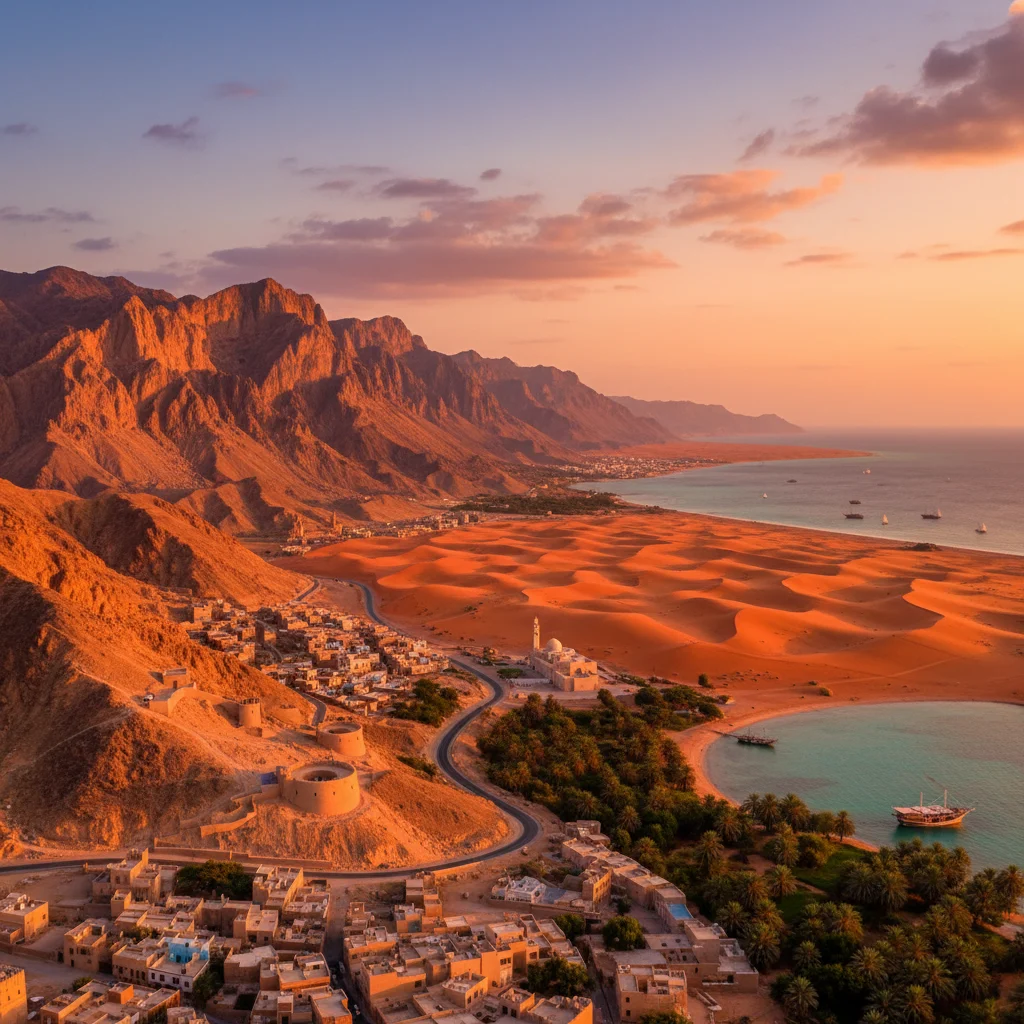
Oman is a sultanate on the southeastern coast of the Arabian Peninsula, known for its dramatic landscapes ranging from desert dunes to lush wadis and rugged mountains. With a history spanning thousands of years as a maritime trading power, Oman blends ancient traditions with modern development while maintaining its distinctive cultural identity.
Quick Facts
Capital
Muscat
Population
5,106,626
Region
Asia · Western Asia
Currency
Omani Rial (OMR)
Languages Spoken

Arabic
العربية
Did You Know?
Oman was the first Arab country to have a non-oil-based economy as a strategic goal, diversifying into tourism, logistics, and fisheries.
The Frankincense Trail in Dhofar is a UNESCO World Heritage Site, connecting Oman to 5,000 years of international trade.
Oman has some of the oldest human settlements in the Arabian Peninsula, dating back over 100,000 years.
The Royal Opera House Muscat is the first opera house in the Arabian Peninsula, showcasing both Western and Arabic performances.
Famous Landmarks

Sultan Qaboos Grand Mosque
One of the largest mosques in the world, featuring a stunning Swarovski crystal chandelier and the second-largest hand-woven carpet ever made.
Read more
Nizwa Fort
A 17th-century fort with a massive circular tower, once the center of trade, religion, and politics in the Omani interior.
Read more
Wadi Shab
A breathtaking canyon with turquoise pools, waterfalls, and caves accessible only by swimming through narrow gorges.
Read more
Wahiba Sands
A vast desert of golden-orange dunes stretching for 180 km, home to Bedouin communities and incredible stargazing.
Read moreCuisine

Shuwa
A festive dish of marinated lamb slow-cooked underground in banana leaves for up to 48 hours, traditionally prepared for Eid celebrations.
Read more
Halwa
A sticky, sweet confection made from dates, rosewater, saffron, and nuts — Oman's most famous dessert, often served with Omani coffee.
Read more
Majboos
Spiced rice cooked with meat (usually chicken or lamb), dried limes, and a blend of baharat spices — the everyday staple of Omani cuisine.
Read more
Omani Coffee (Kahwa)
Lightly roasted coffee flavored with cardamom and rosewater, served in small cups as a symbol of hospitality.
Read moreMusic & Arts

Omani music reflects the country's diverse geography and maritime heritage. Traditional performances often feature drums, the rababa (stringed instrument), and call-and-response singing.
Traditional Arts
Events & Festivals

Muscat Festival
January - FebruaryAn annual celebration showcasing Omani heritage with traditional music, dance, crafts, food, and fireworks across multiple venues in Muscat.
Read more
Eid al-Fitr
End of RamadanThe joyous festival marking the end of Ramadan, celebrated with family gatherings, traditional Shuwa feasts, new clothes, and gift-giving.
Read more
Khareef Festival
July - SeptemberCelebrating the monsoon season in Salalah when the desert transforms into a lush green paradise. Features cultural shows, concerts, and carnival rides.
Read more
National Day
November 18Oman's biggest patriotic celebration with spectacular parades, fireworks, traditional performances, and buildings draped in red, white, and green.
Read more
Tour of Oman
FebruaryA professional cycling stage race through Oman's dramatic landscapes — from coastal roads to mountain summits — attracting elite international riders.
Read moreTravel Phrases
السلام عليكم
As-salaam alaykum
Peace be upon you (greeting)
شكراً
Shukran
Thank you
مرحباً
Marhaba
Hello / Welcome
كيف حالك؟
Kayf halak?
How are you?
إن شاء الله
Inshallah
God willing
ما شاء الله
Mashallah
God has willed it (expressing admiration)
Lifestyle & Customs

Hospitality
Omani hospitality is legendary. Guests are always offered dates, coffee (kahwa), and halwa. Refusing refreshments is considered impolite.
Read more
Traditional Dress
Men wear the dishdasha (white robe) with a kummah (cap) or mussar (turban). Women wear colorful dresses with a headscarf or abaya in public.
Read more
Frankincense Heritage
Oman has been the world's primary source of frankincense for over 5,000 years. It remains central to daily life, used in homes, mosques, and ceremonies.
Read moreEtiquette Tips
Accept coffee and dates with your right hand
Refuse hospitality when offered
Dress modestly in public, covering shoulders and knees
Take photos of people without permission
Remove shoes before entering a home or mosque
Point the soles of your feet toward anyone
Greet people warmly and ask about their family
Rush through conversations — patience is valued
Explore more countries in Western Asia





Learn Arabic to connect with Oman
Start learning Arabic with videos, exercises, and AI-powered tools on SubLearn.
Start Learning