localhost/wordpress/wp-admin
localhost/wordpress/wp-admin - When you work with WordPress on your own machine, the URL http://localhost/wordpress/wp-admin is the gateway to your local WordPr.
When you work with WordPress on your own machine, the URL
http://localhost/wordpress/wp-admin is the gateway to your
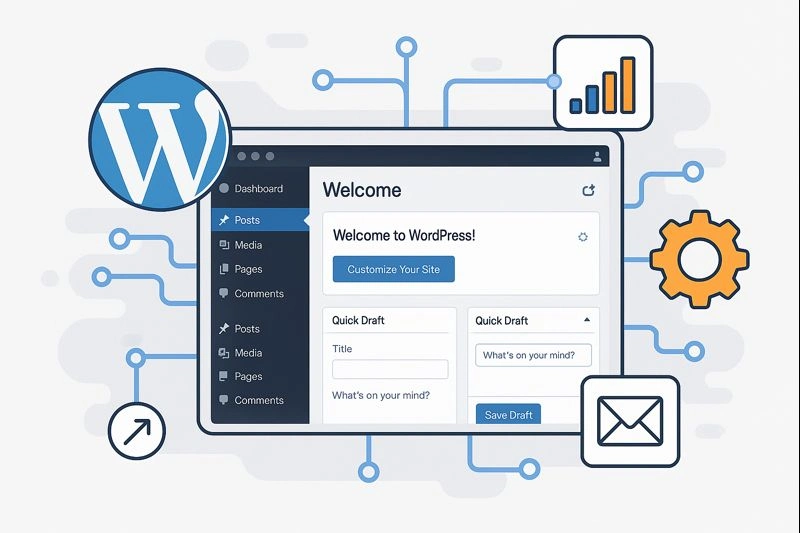
local WordPress admin dashboard. From this panel you control everything:
posts, pages, themes, plugins, users, settings and developer tools – without
affecting any live website.
This in-depth guide explains:
- What localhost/wordpress/wp-admin actually is.
- What it is used for in local development.
- Which stacks and applications typically use this path.
- What you can do inside the local WordPress admin area.
- How to correctly set up
localhost/wordpress/wp-adminfrom scratch. - How to solve common problems and errors on the local WordPress dashboard.
What Is localhost/wordpress/wp-admin?
The URL http://localhost/wordpress/wp-admin points to the
administrator backend of a WordPress site that is installed in the
/wordpress subdirectory of your local web server's document root.
Broken down, the components look like this:
| Component | Example | Description |
|---|---|---|
| Protocol | http:// |
Plain HTTP (no SSL) used on local environments by default. |
| Host | localhost |
Your own machine (loopback, typically 127.0.0.1). |
| Path (folder) | /wordpress |
Subdirectory inside htdocs / www where WordPress is installed. |
| Admin area | /wp-admin |
WordPress backend used for site management and configuration. |
In most cases, the login page you actually hit first is
http://localhost/wordpress/wp-login.php. After successful login,
WordPress redirects you into /wp-admin/, where the dashboard and
all management screens live.
What Is localhost/wordpress/wp-admin Used For?
On a local machine, /wp-admin is the central control panel for your
development copy of a WordPress site. Typical usage includes:
- Content management – create, edit and delete posts, pages, categories, tags.
- Design customization – switch themes, edit menus, customize widgets and headers.
- Plugin management – install, update, activate, deactivate and remove plugins.
- User & role management – manage administrators, editors, authors, subscribers.
- Settings & configuration – control URLs, permalinks, reading/discussion settings, media options, etc.
- Development & testing – experiment with custom code, hooks, shortcodes, Gutenberg blocks, etc.
- Migrations & staging – prepare a site locally before deploying to a live domain.
Because everything is local, you can safely test plugins, themes, and configuration changes
on localhost/wordpress/wp-admin without breaking a production website.
Which Stacks Use localhost/wordpress/wp-admin?
The path itself is purely WordPress-specific. However, it is typically used together with popular local server stacks and tools:
1. Local Server Stacks
- XAMPP (Apache + MySQL + PHP) – WordPress extracted into
C:\xampp\htdocs\wordpress. - WAMP – WordPress in
C:\wamp64\www\wordpress. - MAMP – WordPress in
/Applications/MAMP/htdocs/wordpress(macOS) or equivalent. - LAMP – WordPress in
/var/www/html/wordpresson Linux distributions. - Laragon / other dev environments – similar structure with a
wwworhtdocsdirectory.
2. Specialized WordPress Tools
Some tools use virtual hosts or custom domains (like https://mysite.local)
instead of localhost/wordpress, but the admin path stays /wp-admin.
- Local WP / DevKinsta / DDEV / Lando (custom local domains with
/wp-admin). - Docker-based setups with containers mapped to
localhostand custom ports.
In plain, file-based setups, the classic URL is exactly
http://localhost/wordpress/wp-admin.
What Can You Do Inside localhost/wordpress/wp-admin?
The local WordPress admin area offers almost the same functionality as a live site, but with the advantage that you can break things, test ideas and roll back quickly.
1. Content & SEO Structure
- Create and edit posts and pages using the block editor (Gutenberg) or classic editor.
- Organize content with categories and tags.
- Draft SEO-friendly titles, headings, slugs and meta descriptions (via SEO plugins).
2. Themes, Design & Layout
- Switch between installed themes or upload new ones as
.zipfiles. - Customize theme options via Appearance > Customize.
- Manage menus, widgets, logo, favicon and site identity.
3. Plugins & Functionality
- Install plugins from the official repository or upload custom extensions.
- Test caching, security, forms, e-commerce and membership plugins locally.
- Deactivate or delete conflicting plugins without risk to a live audience.
4. Users, Roles & Permissions
- Create different test accounts (administrator, editor, author, subscriber).
- Simulate permissions and role-based access control.
- Validate login, password reset and profile management workflows.
5. Development, Debugging & Performance
- Enable debugging in
wp-config.phpand track PHP notices and warnings. - Test custom themes, child themes and code snippets.
- Measure page load times with local dev tools and optimize before deployment.
// Example: enable debug mode on localhost
define( 'WP_DEBUG', true );
define( 'WP_DEBUG_LOG', true );
define( 'WP_DEBUG_DISPLAY', false );
How to Correctly Set Up localhost/wordpress/wp-admin
To access http://localhost/wordpress/wp-admin, you need a full local WordPress
environment: web server, database server, PHP and a WordPress installation in the
/wordpress directory.
1. Install a Local Web Stack
Use any of the following (or similar) bundles:
- XAMPP – Apache, MariaDB, PHP and Perl.
- WAMP – Windows-based Apache, MySQL, PHP stack.
- MAMP – macOS/Windows stack with Apache and MySQL.
- LAMP – Linux with Apache, MySQL/MariaDB, PHP.
After installation, start the web server (Apache) and database server (MySQL/MariaDB).
2. Create a Database for WordPress
Via http://localhost/phpmyadmin (or a similar tool), create a new database:
| Field | Example value |
|---|---|
| Database name | wordpress or wp_local |
| Username | root (default on many stacks) |
| Password | Empty or a password you set for root |
| Host | localhost |
3. Download and Place WordPress in /wordpress
- Download WordPress from the official website.
- Extract the archive into your web root:
- XAMPP:
C:\xampp\htdocs\wordpress - WAMP:
C:\wamp64\www\wordpress - MAMP:
/Applications/MAMP/htdocs/wordpress - LAMP:
/var/www/html/wordpress
- XAMPP:
-
Make sure the folder is exactly called
wordpressif you want the URL/wordpress/wp-admin.
4. Configure wp-config.php
Copy wp-config-sample.php to wp-config.php and edit the database settings:
/** The name of the database for WordPress */
define( 'DB_NAME', 'wordpress' );

/** MySQL database username */
define( 'DB_USER', 'root' );

/** MySQL database password */
define( 'DB_PASSWORD', '' ); // or your password

/** MySQL hostname */
define( 'DB_HOST', 'localhost' );
Save the file, then proceed with the installation.
5. Run the WordPress Installation Wizard
- Open
http://localhost/wordpress/in your browser. - Choose your language and click “Continue”.
- Enter:
- Site Title
- Admin Username
- Admin Password
- Admin Email
- Click “Install WordPress”.
- After installation, click “Log In” to access
/wp-login.php.
Once logged in, WordPress redirects you to
http://localhost/wordpress/wp-admin/, where the dashboard is located.
6. Example Local Admin Login Credentials
| Field | Typical Local Value |
|---|---|
| Login URL | http://localhost/wordpress/wp-login.php |
| Username | admin or a custom user you defined |
| Password | Your chosen password (can be strong but stored in a password manager). |
How to Solve Common localhost/wordpress/wp-admin Problems
Working with WordPress locally often surfaces configuration and URL issues that you might not see on a clean hosting setup. Below are frequent problems and how to fix them.
1. 404 or Redirect to Home Instead of /wp-admin
Symptom: When accessing /wp-admin or /wp-login.php, you get a 404
error or are redirected to the homepage.
Possible causes:
- Incorrect
siteurl/homesettings in the database. - Broken
.htaccessfile or permalinks configuration. - Moved the folder (e.g. renamed
/wordpress) without updating URLs.
Solutions:
-
Fix URLs via
wp-config.php:define( 'WP_HOME', 'http://localhost/wordpress' ); define( 'WP_SITEURL', 'http://localhost/wordpress' ); -
Regenerate
.htaccess:- Go to Settings > Permalinks.
- Click “Save Changes” without modifying anything.
-
Ensure
mod_rewrite(Apache) is enabled on your local server.
2. Too Many Redirects / Login Loop
Symptom: After entering credentials, you are redirected back to the login page repeatedly.
Common causes:
- Incorrect
siteurlorhomevalues (HTTPS vs HTTP, wrong path). - Cookie or session issues on the browser.
- Plugin conflicts affecting authentication.
Fix steps:
- Clear browser cookies for
http://localhost. - Temporarily disable all plugins by renaming the
wp-content/pluginsfolder. - Enforce correct URLs in
wp-config.phpas shown above.
3. Lost Admin Password on Localhost
Symptom: You cannot remember the password for your local admin user, and email delivery might not be configured on localhost.
Solution via phpMyAdmin:
- Open
http://localhost/phpmyadmin. - Select your WordPress database (e.g.
wordpress). - Open the
wp_userstable. - Edit the row for your admin user and change the
user_passfield. - Set the function to MD5 and enter your new password in plain text.
Alternatively, you can create a new admin user via a small PHP snippet or direct SQL insert.
4. “Error Establishing a Database Connection”
Symptom: Visiting http://localhost/wordpress/ or /wp-admin shows
a database connection error.
Likely causes:
- Incorrect database name, user, password or host in
wp-config.php. - MySQL/MariaDB server is not running on localhost.
- Database or user was deleted or changed.
Checklist:
- Verify database credentials in
wp-config.php:define( 'DB_NAME', 'wordpress' ); define( 'DB_USER', 'root' ); define( 'DB_PASSWORD', '' ); define( 'DB_HOST', 'localhost' ); - Start the MySQL/MariaDB service from your stack control panel.
- Check with phpMyAdmin that the database actually exists.
5. White Screen of Death (Blank Page)
Symptom: /wp-admin or the frontend shows a blank white page with no error.
Typical causes:
- PHP errors or fatal errors hidden because debug mode is off.
- Broken plugin or theme.
- Insufficient memory limit in PHP.
Fix approach:
-
Enable debug logging in
wp-config.php:define( 'WP_DEBUG', true ); define( 'WP_DEBUG_LOG', true ); define( 'WP_DEBUG_DISPLAY', false ); -
Disable plugins by renaming the
wp-content/pluginsfolder toplugins_old. - Switch to a default theme (e.g. Twenty Twenty-Four) by renaming your current theme folder.
-
Increase PHP memory limit (for local dev you can go higher):
define( 'WP_MEMORY_LIMIT', '256M' );
6. CSS Not Loading / Broken Layout in wp-admin
Symptom: The WordPress dashboard loads without styles (plain HTML, broken design).
Causes:
- Wrong site URL or home URL causing admin CSS to load from a non-existent path.
- Browser or proxy caching old paths.
- Mixed HTTP/HTTPS configuration on localhost.
Solutions:
- Force correct URLs via
wp-config.phpusingWP_HOMEandWP_SITEURL. - Clear browser cache and hard-refresh the admin page (Ctrl+F5 / Cmd+Shift+R).
- Make sure you are using http:// consistently on localhost unless you set up SSL.
Related Articles
-
localhost:4200
localhost:4200 - When you see http://localhost:4200 in documentation or tutorials, you are almost certainly looking at the default address of an Angular develop.
-
localhost/wordpress
localhost/wordpress - The URL http://localhost/wordpress is the classic address for a local WordPress installation on a developer’s machine. When you install Wo.
-
localhost/xampp
localhost/xampp - The URL http://localhost/xampp is the default web path for the XAMPP Dashboard, a local administration interface installed with the XAMPP pack.
-
localhost:8080
localhost:8080 - When you see http://localhost:8080 in a browser or configuration file, it refers to a web service running on your own machine, bound to the TCP.
-
localhost:3000
localhost:3000 - URLs like http://localhost:3000 appear constantly in modern web development tutorials, documentation, and project readme files. This address us.
-
localhost:8000
localhost:8000 - The URL http://localhost:8000 is one of the most commonly used addresses in local web development. It points to a web server running on your ow.
-
localhost:5774 (Dapodik)
localhost:5774 (Dapodik) - The address http://localhost:5774 is specifically associated with the Aplikasi Dapodik (Data Pokok Pendidikan), an official Indonesia.
-
localhost:9000
localhost:9000 - The URL http://localhost:9000 is frequently used by developers when running local services such as PHP-FPM (FastCGI), Node.js applications, Web.
Reviews
No approved reviews yet.