Celebrating Black History Month

This week in North Philly Notes, we highlight twenty classic Temple University Press titles for Black History Month.

The African American Jeremiad: Appeals for Justice in America, by David Howard-Pitney

Begun by Puritans, the American jeremiad, a rhetoric that expresses indignation and urges social change, has produced passionate and persuasive essays and speeches throughout the nation’s history. Showing that black leaders have employed this verbal tradition of protest and social prophecy in a way that is specifically African American, David Howard-Pitney examines the jeremiads of Frederick Douglass, Booker T. Washington, Ida B. Wells, W.E.B. DuBois, Mary McLeod Bethune, Martin Luther King, Jr., and Malcolm X, as well as more contemporary figures such as Jesse Jackson and Alan Keyes. This revised and expanded edition demonstrates that the African American jeremiad is still vibrant, serving as a barometer of faith in America’s perfectibility and hope for social justice.

Black Communists Speak on Scottsboro: A Documentary History, by Walter T. Howard

On March 25, 1931, Alabama police detained nine young African American men at a railroad stop not far from Scottsboro. In the process, they encountered two white women-who promptly accused the young men of raping them. Soon after, all-white juries found the nine youths guilty and eight of them were sentenced to death. Although many Americans were outraged by the injustices of the case, the loudest voices raised in protest were those of members of the American Communist Party. Many white Communists spoke out, but black Communists took the lead in organizing public protests and legal responses. As this surprising book makes clear, they were acting at the direction of the Communist International (Comintern) which had directed them to address the “Negro problem.” Now, with the opening of formerly inaccessible Communist party archives, this collection of primary documents reveals the little-known but major roles played by black Communists in the case of “the Scottsboro Boys.”

Black History in the Philadelphia Landscape: Deep Roots, Continuing Legacy, by Amy Jane Cohen

Black Philadelphians have shaped Philadelphia history since colonial times. In Black History in the Philadelphia Landscape, Amy Cohen recounts notable aspects of the Black experience in Philadelphia from the late 1600s to the 1960s and how this history is marked in the contemporary city. She charts Charles Blockson’s efforts to commemorate the Pennsylvania slave trade with a historical marker and highlights Richard Allen, who founded Mother Bethel A.M.E. Church. Showing how increased attention to the role of African Americans in local and national history has resulted in numerous, sometimes controversial, alterations to the landscape, Cohen guides readers to Black history’s significance and its connections with today’s spotlight on racial justice.

Black Identity Viewed from a Barber’s Chair: Nigrescence and Eudaimonia, by William E. Cross Jr.

Throughout his esteemed career, William Cross has tried to reconcile how Black men he met in the barber shop “seemed so normal,” but the portrayal in college textbooks of Black people in general—and the Black working class in particular—is self-hating and pathological. In Black Identity Viewed from a Barber’s Chair, Cross revisits his ground-breaking model on Black identity awakening known as Nigrescence, connects W. E. B. DuBois’s concept of double consciousness to an analysis of how Black identity is performed in everyday life, and traces the origins of the deficit perspective on Black culture to scholarship dating back to the 1930s. He follows with a critique showing such deficit and Black self-hatred tropes were always based on extremely weak evidence.

Black Venus 2010: They Called Her “Hottentot”, edited by Deborah Willis

Black Venus 2010 traces the so-called “Hottentot Venus,” Saartjie Baartman’s memory in our collective histories, as well as her symbolic history in the construction and identity of black women as artists, performers, and icons. The wide-ranging essays, poems, and images in Black Venus 2010 represent some of the most compelling responses to Baartman. Each one grapples with the enduring legacy of this young African woman who forever remains a touchstone for black women.

BLAM! Black Lives Always Mattered!: Hidden African American Philadelphia of the Twentieth Century, Charles L. Blockson Afro-American Collection

African American history has produced countless exceptional heroes, leaders, and role models. The graphic novel, BLAM! Black Lives Always Mattered!, tells the inspiring stories of 14 important Black Philadelphians, such as opera singer Marian Anderson, civil rights leader W.E.B. Du Bois, and “Father of the Harlem Renaissance,” Alain Locke.

The City on the Hill from Below: The Crisis of Prophetic Black Politics, by Stephen H. Marshall

Within the disciplines of American political science and political theory, African American prophetic political critique as a form of political theorizing has been largely neglected. In The City on the Hill from Below, Stephen H. Marshall interrogates the political thought of David Walker, Frederick Douglass, W.E.B. Du Bois, James Baldwin, and Toni Morrison to reveal a vital tradition of American political theorizing and engagement with an American political imaginary forged by the City on the Hill.

The Civil Rights Lobby: The Leadership Conference on Civil Rights and the Second Reconstruction, by Shamira Gelbman

As the lobbying arm of the civil rights movement, the Leadership Conference on Civil Rights (LCCR)—which has operated since the early 1950s—was instrumental in the historic legislative breakthroughs of the Second Reconstruction. The Civil Rights Lobby skillfully recounts the LCCR’s professional and grassroots lobbying that contributed to these signature civil rights policy achievements in the 1950s and ’60s.

The End of Empires: African Americans and India, by Gerald C. Horne

Martin Luther King Jr.’s adaptation of Gandhi’s doctrine of nonviolent resistance is the most visible example of the rich history of ties between African Americans and India. In The End of Empires, Gerald Horne provides an unprecedented history of the relationship between African Americans and Indians in the period leading up to Indian independence in 1947. Horne tells the fascinating story of these exchanges, including the South Asian influence on the Nation of Islam and the close friendship between Paul Robeson and India’s first prime minister, Jawaharlal Nehru.

Envisioning Emancipation: Black Americans and the End of Slavery, by Deborah Willis and Barbara Krauthamer

Envisioning Emancipation illustrates what freedom looked like for black Americans in the Civil War era. From photos of the enslaved on plantations and African American soldiers and camp workers in the Union Army to Juneteenth celebrations, slave reunions, and portraits of black families and workers in the American South, the images in this book challenge perceptions of slavery. They show not only what the subjects emphasized about themselves but also the ways Americans of all colors and genders opposed slavery and marked its end. Filled with powerful images of lives too often ignored or erased from historical records, Envisioning Emancipation provides a new perspective on American culture.

If There Is No Struggle There Is No Progress: Black Politics in Twentieth-Century Philadelphia, edited by James Wolfinger

Philadelphia has long been a crucial site for the development of Black politics across the nation. If There Is No Struggle There Is No Progress provides an in-depth historical analysis—from the days of the Great Migration to the present—of the people and movements that made the city a center of political activism. The editor and contributors show how Black activists have long protested against police abuse, pushed for education reform, challenged job and housing discrimination, and put presidents in the White House.

Mediating America: Black and Irish Press and the Struggle for Citizenship, 1870-1914, by Brian Shott

Mediating America explores the life and work of T. Thomas Fortune and J. Samuel Stemons as well as Rev. Peter C. Yorke and Patrick Ford—respectively two African American and two Irish American editor/activists in the late nineteenth and early twentieth centuries. Historian Brian Shott shows how each of these “race men” (the parlance of the time) understood and advocated for his group’s interests through their newspapers. Yet the author also explains how the newspaper medium itself—through illustrations, cartoons, and photographs; advertisements and page layout; and more—could constrain editors’ efforts to guide debates over race, religion, and citizenship during a tumultuous time of social unrest and imperial expansion.

The Parker Sisters: A Border Kidnapping, by Lucy Maddox

In The Parker Sisters, Lucy Maddox gives an eloquent, urgent account of the tragic kidnapping of these young women. Using archival news and courtroom reports, Maddox tells the larger story of the disastrous effect of the Fugitive Slave Act on the small farming communities of Chester County and the significant, widening consequences for the state and the nation.

The Possessive Investment in Whiteness: How White People Profit from Identity Politics, Twentieth Anniversary Edition, by George Lipsitz

George Lipsitz’s classic book The Possessive Investment in Whiteness argues that public policy and private prejudice work together to create a possessive investment in whiteness that is responsible for the racialized hierarchies of our society. Whiteness has a cash value: it accounts for advantages that come to individuals through profits made from housing secured in discriminatory markets, through the unequal educational opportunities available to children of different races, through insider networks that channel employment opportunities to the friends and relatives of those who have profited most from past and present discrimination, and especially through intergenerational transfers of inherited wealth that pass on the spoils of discrimination to succeeding generations. White Americans are encouraged to invest in whiteness, to remain true to an identity that provides them with structured advantages.

Silent Gesture: The Autobiography of Tommie Smith, by Tommie Smith and David Steele

At the 1968 Olympics in Mexico City, Tommie Smith and his teammate John Carlos came in first and third, respectively, in the 200-meter dash. As they received their medals, each man raised a black-gloved fist, creating an image that will always stand as an iconic representation of the complicated conflations of race, politics, and sports. In this, his autobiography, Smith fills out the story around that moment–how it came to be and where it led him.

Slavery and Abolition in Pennsylvania, by Beverly C. Tomek

In her concise history Slavery and Abolition in Pennsylvania, Beverly Tomek corrects the long-held notion that slavery in the North was “not so bad” as, or somehow “more humane” than, in the South due to the presence of abolitionists. While the Quaker presence focused on moral and practical opposition to bondage, slavery was ubiquitous. Nevertheless, Pennsylvania was the first state to pass an abolition law in the United States.

Tasting Freedom: Octavius Catto and the Battle for Equality in Civil War America, by Daniel R. Biddle and Murray Dubin

In Tasting Freedom Daniel Biddle and Murray Dubin chronicle the life of the charismatic black leader, Octavius Catto, a free black man whose freedom was in name only. A civil rights pioneer–one who risked his life a century before the events that took place in Selma and Birmingham, Catto joined the fight to be truly free–free to vote, go to school, ride on streetcars, play baseball, and even participate in Fourth of July celebrations.

Un-American: W.E.B. Du Bois and the Century of World Revolution, by Bill V. Mullen

Un-American is Bill Mullen’s revisionist account of renowned author and activist W.E.B. Du Bois’s political thought toward the end of his life, a period largely dismissed and neglected by scholars. He describes Du Bois’s support for what the Communist International called “world revolution” as the primary objective of this aged radical’s activism. Du Bois was a champion of the world’s laboring millions and critic of the Cold War, a man dedicated to animating global political revolution.

Upon the Ruins of Liberty: Slavery, the President’s House at Independence National Historical Park, and Public Memory, by Roger C. Aden

The 2002 revelation at Philadelphia’s Independence National Historical Park that George Washington kept slaves in his executive mansion in the 1790s prompted an eight-year controversy about the role of slavery in America’s commemorative landscape. When the President’s House installation opened in 2010, it became the first federal property to feature a slave memorial. In Upon the Ruins of Liberty, Roger Aden offers a compelling account that explores the development of this important historic site and the intersection of contemporary racial politics with history, space, and public memory. 

Zora Neale Hurston and a History of Southern Life, by Tiffany Ruby Patterson

A historian hoping to reconstruct the social world of all-black towns or the segregated black sections of other towns in the South finds only scant traces of their existence. In Zora Neale Hurston and a History of Southern Life, Tiffany Ruby Patterson uses the ethnographic and literary work of Zora Neale Hurston to augment the few official documents, newspaper accounts, and family records that pertain to these places hidden from history.

The Cost of Beauty Bias in India

This week in North Philly Notes, Srirupa Chatterjee and Shweta Rao Garg, coeditors of Female Body Image and Beauty Politics in Contemporary Indian Literature and Culture, write about their awareness that the beauty ideal is a societal construct.

“I have read that Indian women bleach their skin to appear lighter. Is that true?” 

“You should reduce a bit, else no one will marry you!”

When asked, we invoke colonialism, colorism, and a caste bias to explain the light-skin preference in India. But we may not confess that perhaps some of us bleached our skin as teenagers or had even used the highly controversial but bestselling Indian face cream, Fair and Lovely*, for years! Nor would we confess that we were asked to avoid tea and coffee out of the irrational fear of making our skins darker. 

Similarly, India has no dearth of older men and women admonishing younger girls to appear slim and pretty. Fat shaming in schools and colleges is rampant and goes unchecked. Ironically, in a tropical country where women’s bodies are genetically wired to be voluptuous, girls and women are perpetually reminded of the desirability of the slim body. No doubt, many of us have at various periods, practiced stringent diet regimes and succumbed to exercise mania to obtain popular body proportions. 

The beauty bias runs deep, and while we often subscribe to it, we rarely own up to it!

We grew up in India in the 1990s, when the country was ushering in economic liberalization. We were bombarded with images of Euro-American bodies through satellite television and print and digital media. We saw increasing airtime given to beauty contests. We even celebrated in 1994 when both Miss Universe and Miss World were women of Indian origin. The pageants perhaps had a momentous influence on our adolescent selves. We knew what a universal beauty ideal was and realized, with some despair, how impossible it was for us to attain those ideals realistically.

Beauty pageants were indeed not the first exposure we had to beauty bias. Women and girls have been routinely scrutinized over skin tone, weight, and youthfulness, to name a few, in our communities. We were keenly aware that girls who were not conventionally “good looking” could be perceived as a liability by their parents for being rejected by the marriage market. Looks matter in cases where dowry is concerned. Furthermore, if a girl child is disabled, then the premium goes up many notches.

An awareness that the beauty ideal is a societal construct came quite late for us. We studied feminist scholars and read feminist fiction and films to understand how women and females with alternate sexual identities are conditioned to internalize self-loathing. Our lived experiences with our body image in many ways pushed us to pursue academic interests in exploring the vexed issue of body image in creative ways.  

Body image issues could seem like a trivial issue when women in India grapple with burning problems, beginning with domestic violence, female foeticide, and caste-based violence to income inequality, nutritional inequality, and so on. However, if we were to look at the scale of the number of women who suffer body shaming and the emotional cost of beauty labor, the count would far outweigh the tactile and material forms of violence and injustice mentioned. And this being the case, the implications of body shaming being a trivial matter vanishes.   

In Female Body Image and Beauty Politics in Contemporary Indian Literature and Culture, we bring together essays by expert feminist scholars of the field that analyze literary texts, memoirs, magazines, blogs, advertisements, and Bollywood films, among others. We chose essays from the post-liberalization era to the present. These essays showcase how body image shapes women’s lives and identities in contemporary India. They also explore how the subject position of women, their age, fertility, caste, sexual orientation, sexual expression, physical ability, and class have unequal repercussions on a body image.

In conclusion, we claim that “body positivity” has been a buzzword on social media in India and worldwide. On one hand, young women are handed down the message that accepting one’s body is essential; on the other, celebrity culture and social media fetishize hard-to-attain beauty standards mediated with expensive beauty regimes, surgical interventions, extreme diets, and image manipulation.

Would we have grown up differently if we knew how beauty politics manipulate us and what body positivity truly entails? We surely may have been more comfortable in our bodies or our skins. Our book, then, starts the crucial conversation toward understanding the cost of beauty bias in India, and aspires to a day when women and girls feel more empowered in their bodily selves. 

 *Now Glow and Lovely

Celebrating Women’s History Month

This week in North Philly Notes, we showcase titles for Women’s History Month. Use promo code TWHM24 for 25% off all our Women’s Studies titles. (Sale ends April 1, 2024.)

Gendered Places: The Landscape of Local Gender Norms across the United States, by William J. Scarborough, reveals how distinct cultural environments shape the patterns of gender inequality

Political Black Girl Magic: The Elections and Governance of Black Female Mayors, edited by Sharon D. Wright Austin, examines the crucial role that Black women have carried out in the cities they govern

Solidarity & Care: Domestic Worker Activism in New York City, by Alana Lee Glaser, shows how intersectional labor organizing and solidarity can effectively protect workers in the domestic work sector and other industries

Forthcoming Titles:

Proper Women: Feminism and the Politics of Respectability in Iran, by Fae Chubin, provides an intersectional analysis of Iran’s feminist activism through an ethnographic study of an NGO-led women’s empowerment program (May)

Female Body Image and Beauty Politics in Contemporary Indian Literature and Culture, edited by Srirupa Chatterjee and Shweta Rao Garg, initiates a much-neglected and much-needed discussion of the politics of Indian women’s body image and self-identity (May)

Refounding Democracy through Intersectional Activism: How Progressive Era Feminists Redefined Who We Are, and What It Means Today, by Wendy Sarvasy, theorizes a useable radical past for intersectional activists today (June)

Celebrating Asian American and Pacific Islander Heritage Month

This week in North Philly Notes, we showcase some of our recent Asian American and Pacific Islander titles.

In the Critical Race, Indigeneity and Relationality series

Ocean Passages: Navigating Pacific Islander and Asian American Literatures, by Erin Suzuki

In her pathbreaking book, Ocean Passages, Erin Suzuki explores how movement through—and travel across—the ocean mediates the construction of Asian American and Indigenous Pacific subjectivities in the wake of the colonial conflicts that shaped the modern transpacific. Ocean Passages considers how Indigenous Pacific scholars have emphasized the importance of the ocean to Indigenous activism, art, and theories of globalization and how Asian American studies might engage in a deconstructive interrogation of race in conversation with this Indigenous-centered transnationalism.

In the Asian American History and Culture series

Giving Back: Filipino America and the Politics of Diaspora Giving, by L. Joyce Zapanta Mariano

Giving Back shows how integral this system of charitably giving back to their families, their communities, or social development projects and organizations back home is for understanding Filipino diaspora formation. Joyce Mariano “follows the money” to investigate the cultural, social, economic, and political conditions of diaspora giving. She takes an interdisciplinary approach to reveal how power operates through this charity and the ways the global economic and cultural dimensions of this practice reinforce racial subordination and neocolonialism. Giving Back explores how this charity can stabilize overlapping systems of inequality as well as the contradictions of corporate social responsibility programs in diaspora.

Graphic Migrations: Precarity and Gender in India and the Diaspora, by Kavita Daiya

In Graphic Migrations, Kavita Daiya provides a literary and cultural archive of refugee stories and experiences to respond to the question “What is created?” after decolonization and the 1947 Partition of India. She explores how stories of Partition migrations shape the political and cultural imagination of secularism and gendered citizenship for South Asians in India and the United States. Daiya analyzes literature, Bollywood films, Margaret Bourke-White’s photography, digital media, and print culture to show how they memorialize or erase refugee experiences. She also engages oral testimonies of Partition refugees from Hong Kong, South Asia, and North America that address the nation-state, ethnic discrimination, and religious difference. Employing both Critical Refugee Studies and Feminist Postcolonial Studies frameworks, Daiya traces the cultural, affective, and political legacies of the Partition migrations for South Asia and South Asian America.

Illegal Immigrants/Model Minorities: The Cold War of Chinese American Narrative, by Heidi Kim

In the Cold War era, Chinese Americans were caught in a double-bind. The widespread stigma of illegal immigration, as it was often called, was most easily countered with the model minority, assimilating and forming nuclear families, but that in turn led to further stereotypes. In Illegal Immigrants/Model Minorities, Heidi Kim investigates how Chinese American writers navigated a strategy to normalize and justify the Chinese presence during a time when fears of Communism ran high. Kim explores how writers like Maxine Hong Kingston, Jade Snow Wong, and C. Y. Lee, among others, addressed issues of history, family, blood purity, and law through then-groundbreaking novels and memoirs. Illegal Immigrants/Model Minorities also uses legal cases, immigration documents, and law as well as mass media coverage to illustrate how writers constructed stories in relation to the political structures that allowed or disallowed their presence, their citizenship, and their blended identity.

Prisoner of Wars: A Hmong Fighter Pilot’s Story of Escaping Death and Confronting Life, by Chia Youyee Vang, with Pao Yang, Retired Captain, U.S. Secret War in Laos

Retired Captain Pao Yang was a Hmong airman trained by the U.S. Air Force and CIA to fly T-28D aircraft for the U.S. Secret War in Laos. However, his plane was shot down during a mission in June 1972. Yang survived, but enemy forces captured him and sent him to a POW camp in northeastern Laos. He remained imprisoned for four years after the United States withdrew from Vietnam because he fought on the American side of the war. Prisoner of Wars shows the impact the U.S. Secret War in Laos had on Hmong combatants and their families. Chia Vang uses oral histories that poignantly recount Yang’s story and the deeply personal struggles his loved ones—who feared he had died—experienced in both Southeast Asia and the United States. As Yang eventually rebuilt his life in America, he grappled with issues of freedom and trauma.

The Refugee Aesthetic: Reimagining Southeast Asian America, by Timothy K. August

The refugee is conventionally considered a powerless figure, eagerly cast aside by both migrant and host communities. In his book, The Refugee Aesthetic, Timothy August investigates how and why a number of Southeast Asian American artists and writers have recently embraced the figure of the refugee as a particularly transformative position. He explains how these artists, theorists, critics, and culture-makers reconstruct their place in the American imagination by identifying and critiquing the underlying structures of power that create refugees in the contemporary world. August looks at the outside forces that shape refugee representation and how these expressions are received. He considers the visual legacy of the Southeast Asian refugee experience by analyzing music videos, graphic novels, and refugee artwork. August also examines the power of refugee literature, showing how and why Southeast Asian American writers look to the refugee position to disentangle their complicated aesthetic legacy.

The United States of India: Anticolonial Literature and Transnational Refraction, by Manan Desai

The United States of India shows how Indian and American writers in the United States played a key role in the development of anticolonial thought in the years during and immediately following the First World War. For Indians Lajpat Rai and Dhan Gopal Mukerji, and Americans Agnes Smedley, W.E.B. Du Bois, and Katherine Mayo, the social and historical landscape of America and India acted as a reflective surface. Manan Desai considers how their interactions provided a “transnational refraction”—a political optic and discursive strategy that offered ways to imagine how American history could shed light on an anticolonial Indian future. Desai traces how various expatriate and immigrant Indians formed political movements that rallied for American support for the cause of Indian independence. These intellectuals also developed new forms of writing about subjugation in the U.S. and India. Providing an examination of race, caste, nationhood, and empire, Desai astutely examines this network of Indian and American writers and the genres and social questions that fomented solidarity across borders.

Observations on the anniversary of the Partition of India

This week in North Philly Notes, Kavita Daiya, author of the forthcoming Graphic Migrationswrites about global media representations of migration on the 73rd anniversary of the Partition of India.

What do the Google commercial “Reunion,” the Bollywood film Raazi (Agree), Shauna Singh Baldwin’s award-winning novel What The Body Remembers  and the oral history project 1947 Partition Archive all have in common? They all do transnational memory work and remember the mass migrations of the 1947 Partition of India.

This past weekend marked the 73rd anniversary of the decolonization and division of India, and the end of British colonialism. It also marked the creation of two independent nations: Pakistan came into being on August 14, 1947, and India became a new secular democratic nation on August 15, 1947. The partitioning of India in 1947 generated the world’s largest mass migration in under nine months: between 12 and 16 million people migrated across the newly etched borders.

Graphic MigrationsIn my forthcoming book Graphic Migrations, I describe the legacies of this pivotal moment in British and South Asian history, with a focus on migrant and refugee experiences. As such, this book uncovers the effects of this Partition on both India and the South Asian diaspora in North America. I am especially interested in how different media represent the precarity of migrants’ and refugees’ lives, as well as their descendants. I map how this precarity is memorialized across media, in ways that create empathy and solidarity for the shared humanity of migrants and citizens.

For example, I analyze South Asian American fiction by writers including Shauna Singh Baldwin and Bapsi Sidhwa as well as Hindi art films like Shyam Benegal’s Mammo; Bollywood cinema, as well as the new genre I call “border-crossing” advertising. In addition, I discuss graphic narratives from Vishwajyoti Ghosh’s This Side, That Side: Restorying Partition, the Digital Humanities oral history project 1947 Partition Archive as well as photography by Margaret Bourke-White and Annu Palakunnathu Matthew. This book’s archive is thus eclectic and cross-media, capturing how the Partition migrations are inscribed or erased in public culture in India and its diaspora.

Graphic Migrations is poised at the intersection of Asian American Studies and Postcolonial Studies. It draws upon and extends new directions in Asian American Studies, especially Critical Refugee Studies.  These new directions take a transnational lens to understand how twentieth century conflicts and displacement in Asia have shaped Asian American history. My book’s feminist orientation means that gender is a central part of the story I tell. Talal Asad’s influential theory of the secular in Formations of the Secular is also central here, given that the Partition focalized religious difference. Central to this book’s story is the inspiration of the noted political philosopher Hannah Arendt’s brilliant analysis of statelessness, which, as she argued in The Origins of Totalitarianism, was the defining feature and product of the twentieth century.

My book considers several issues that emerge out of the 1947 Partition and its transnational impact. It explores the complexities of statelessness in India as well as South Asia, and asks: Why has this momentous displacement not been widely memorialized, until recently? How did refugees’ stories, labor, and losses shape ideas about religion, secularism, and belonging in public culture? How were female refugees’ experiences different, and with what consequences? What alternative modes of imagining community and planetary cohabitation, including ‘the secular,’ do stories about statelessness offer us today?

Graphic Migrations is timely and relevant now. More people than even before are migrating or displaced because of war, conflict, poverty, environmental devastation, and other reasons. By one estimate, there are 10 million stateless people, and there are 272 million migrants in the world today. This raises urgent issues about human rights and social justice for nations around the world, who must work together to end statelessness.

My book is a profound reminder of the contemporary stakes of studying the experiences and impact of decolonization and nation-formation in 1947 South Asia, in a transnational feminist mode.

Stories of solidarity and resistance from the South Asian American past

This week in North Philly Notes, Manan Desai, author of The United States of Indiawrites about a network of expatriate Indian and American intellectuals.

In 1916, fresh off a tour across the United States, the exiled Indian nationalist Lajpat Rai penned what he described as a “Hindu’s Impressions and a Study” of America from his adopted home in Berkeley, California. After visits with prominent figures like W.E.B. Du Bois, Margaret Sanger, and Booker T. Washington, and stops throughout the country, Rai concluded that “the problems of the United States were very similar to those that face us in India.” As unlikely as that comparison seems, Rai was not alone in making it. During his time in the U.S., Rai became a part of a network of expatriate Indian and American intellectuals, who actively imagined themselves as part of a shared project of anticolonialism. For the Americans with whom Rai and other Indian expatriates formed lasting friendships and alliances, the encounter with the Indian cause had shifted their perspective and left a lasting impression. Agnes Smedley, a working-class radical from Missouri who was mentored by Rai, would later write that her acquaintance with the Indian expatriate scene had led her to apprehend world events “through the eyes of men from Asia—eyes that watched and were cynical about the phrases of democracy.” W.E.B. Du Bois himself held onto the promise of Indian decolonization for decades to come, declaring in 1947 that India’s independence was “the greatest historical date of the nineteenth and twentieth centuries.” By comparing one another’s conditions, this band of writers came to reconsider not only how “the problems” of the U.S. and India were similar, but how such friendships and affinities formed across national and racial lines could foster new visions for a decolonized future.

United_States_of_IndiaThe United States of India reconstructs this network of expatriate Indian and American intellectuals, and examines vision they shared, during and immediately after the First World War. Organizations like the New York-based India Home Rule League, the radical San Francisco-based Gadar Party, the Friends for Freedom of India, and national student groups, produced periodicals, newsletters, pamphlets, and books, advocating for the rights of Indians under colonial rule as well as Indian migrants in the U.S.

But one of the critical goals in this book is to take seriously the contradictions that such comparisons opened up, how imagining one form of freedom at the expense of another. To return to Rai, for instance, we might ask: How could a white settler nation at the cusp of global dominance actually resemble a British colony in the East? What real comparison could be drawn from the structures of colonial dominance in India and the metropolitan world of the U.S.? What gets left behind in such comparisons?

These contradictions are particularly important when considering the relevance of early histories of South Asian America to our contemporary moment. To name just a few explored in the book: We see how in navigating discriminatory laws, Indian immigrants like Bhagat Singh Thind formally made claims to whiteness, but in doing they espoused a “racist response to racism,” as Sucheta Mazumdar describes it, that reinforced a system of white supremacy. We see how upper-caste Indian writers would acknowledge the violence of the caste system (from which they benefited), but just as quickly disavow it by foregrounding their experiences of racism in the United States and India. Lajpat Rai, who could be so sharp and cutting in his critiques of colonialism, also upheld Islamophobic ideologies and forms of Hindu nationalism that we see horrific repercussions of today.

As important as it is to engage the stories of solidarity and resistance from the South Asian American past, it may be an even more critical task to engage its contradictions, because they continue to persist and shape our present.

Why Everyday Life Matters

This week in North Philly Notes, Ulka Anjaria, author of Reading India Now, explains the importance of reading literature to understand the Indian present and its political futures.

The Indian general elections are once again upon us. Like the upcoming U.S. election, this one too is fraught with anxiety about whether the country will re-elect the right-wing party of its incumbent prime minister. As part of legitimate fears about a global right-wing turn, this is the brief period when Indian politics becomes global news. But what is happening in India between globally-significant elections? What is the daily life of this fast-changing country beyond institutional politics, what are the stories that might never make global headlines? How are people coming to terms with recent changes – not only at the voting booth, but as they imagine their everyday lives?

When I spent a fellowship year living in Mumbai in 2015-16, one of the many things I was struck by was how distant both scholarship and the news media are from everyday life in India. There were several disturbing and violent, national-level events that occurred that year, such as the assassination of Kannada writer M. M. Kalburgi in August and the Award Wapsi movement that followed, where dozens of writers protested the government’s increasing indifference to mob violence by returning their national literary awards. A beef ban was instituted in Maharashtra, exposing the encroachment of Hindu hegemony on eating practices in the supposedly secular nation. Rohith Vemula, a Dalit student, committed suicide in Hyderabad, revealing the continuing casteism that plagues even university campuses. But in between these events, daily life went along at an everyday rhythm, much as it does around the world. Looking around to see where I could begin to read about this everyday rhythm, I found that it was largely absent in the news media and in scholarly accounts. While the news media, in both India and abroad, focuses mostly on party politics and violent events, scholarship tends to take a longer view, uncovering the influence of historical forces such as colonialism and Partition on the Indian present. While both of these are important tasks, I found that I had to turn to literature, specifically contemporary Indian literature, to begin to understand the contours of the Indian present.

Reading India Now_SMFor in fact, India is experiencing a massive expansion of its publishing industry, with some anticipating that India will be the world’s largest English-language publisher within a decade. This means that whereas in the 1980s and 1990s, many Indian authors had to gain legitimacy by publishing first in the US or UK, now Indian publishers have made it much easier to publish as an Indian writer. This has resulted in an expansion of what genres authors can publish in, such as fantasy fiction, mysteries and detective fiction, romance, chick lit, self-help fiction, graphic novels, and so on. Most of these new works are geared toward Indian readers rather than, as was in the past, international ones. This is coinciding with an expansion of the English-language readership in India beyond those who are western-educated, to first-generation English readers who might otherwise be reading in the bhashas (Indian vernacular languages).

Reading India Now, looks at the implications of this publishing boom for rethinking what is important in the study of India. Much of this new fiction is written for young people trying to make their way in a new India, and are thus local stories for local readers. As such, they do not often engage with historical analysis or with who is in power, but address issues of more local importance: what is the meaning of success, what are the possibilities and limitations of the new capitalist economy, what are the new social and sexual mores of the new India, and so on. If read as complex works rather than just simplistic, market-oriented fictions, these new books tell us a huge amount about the kind of daily life that never makes the headlines.

Reckoning with Independence and Partition in India, 70 Years On


This week in North Philly Notes, Kavita Daiya, author of Violent Belongingswrites about participating in the inaugural panel of a landmark event held Aug 4-6, 2017 in Mumbai, India, called “Remembering Partition.” 

“Remembering Partition” revolved around the memories and legacies of the 1947 Partition of India during decolonization from British rule. The 1947 Partition was a unique event: within a span of nine months, the British decision to divide India left approximately two million dead and between 12 and 16 million people displaced. As India celebrated the seventieth anniversary of its independence on August 15, 2017, this event was intended to be a public invitation to remember that this independence came with a price: the price of partition, paid by the millions who lost homes, lives, families, and belonging in 1947.

“Remembering Partition” was the first, three-day long, sustained, multi-disciplinary and public dialogue that reckoned with the Partition, ever held—in India or the world.  Envisioned and curated by the Lab’s visionary director Parmesh Shahani, “Remembering Partition” was hosted by the Godrej India Culture Lab in a cutting edge campus in suburban Mumbai, and involved over seven exhibits of art installations, refugees’ letters, objects, and fashion that explored the Partition experience; it also presented panel presentations and dialogue over three days with scholars, writers, filmmakers, artists, fashion designers, actors, activists, and Partition witnesses who shared memories of the mass migrations during 1947.

The speakers included Indians, Pakistanis, and Bangladeshis from a range of fields, like Sharmeen Obaid, Lalita Ramdas, Salima Hashmi, Nandita Das, Vishwajyoti Ghosh (editor of  This Side, That Side: Restorying Partition), Anusha Yadav (The Indian Memory Project), Nina Sabnani, Tanvir Mokammel, and Ramesh Sippy. In addition, local and global thought leaders and innovative producers from different industries and walks of life attended. Many speakers highlighted feminist and queer perspectives of the Partition; others also reflected on the enduring legacies of the Partition, from India-Pakistan conflict to Kashmir—something that I pointed to in Violent Belongings. The panels at this event drew over 600 attendees every day, from across four generations; it was standing room only at the state-of-the art auditorium. People from all walks of life, from scholars and artists, to activists, senior citizens, students, and school children showed up to hear and participate in this important, and long-overdue dialogue on the 1947 Partition.

A slideshow of images from the events can be found here:

This slideshow requires JavaScript.

My panel “Archiving Partition,” inaugurated the event on August 5.  Speaking along with activists like Guneeta Bhalla (founder of the 1947 Partition Archive), Aanchal Malhotra, and Mallika Ahluwalia, I discussed the archive of literature, film, and journalism my book examines, to explore the cultural representation of Partition from 1947 till 2007.  I discussed why Partition urgently continues to resonate today for both India, as well as South Asian America. Issues explored in my talk included the lessons learned from the refugee experience of the Partition, and how revisiting Partition could enable us to reinvent “the politics of the present.”  

daiyacomps.inddIn Violent Belongings, one of the things I pointed out was how the institutional censorship of refugees’ voices in the early independence period, meant that until the 1990s, the experience of millions of Partition refugees was largely marginalized, if not ignored, in Indian history.  This silencing was both acknowledged and undone in this interdisciplinary dialogue  “Remembering Partition,” which extended and complemented activities like the “Voices of Partition” events with Partition witnesses regularly organized by Bhalla’s transnational, oral history online archive 1947 Partition Archive since 2013 in India, the United States, Pakistan, and the UK.

This was a great start to a robust and path-breaking three days of dialogue and artistic exploration that honored Partition refugees’ experience, identified Partition’s many legacies, and pointed to new directions in memorializing the most momentous event in the modern history of the Indian subcontinent. Gender-based violence and how women were differently impacted by the Partition were central to the story told by Violent Belongings. This focus was complemented by the art installation at this event “Well of Remembrance.”  The installation, which partially recreated a brick well with a white fabric suspended from the ceiling, memorialized the fact that thousands of women jumped into wells during Partition to avoid sexual violence, and lost their lives in the process.  The fabric symbolized the long scarves or sarees women often wore in northern India, as if it was falling into the well.  The installation served as a stark reminder of the differential price that women paid in this geo-political and religious conflict created by the British division of the Indian subcontinent.

Temple University Press’ Fall 2017 Catalog

This week in North Philly Notes, we showcase the books from Temple University Press’s Fall 2017 Catalog.

“A Road to Peace and Freedom”

“A Road to Peace and Freedom”
The International Workers Order and the Struggle for Economic Justice and Civil Rights, 1930–1954

Zecker, Robert M.

The history of the International Workers Order’s struggle to enact a social-democratic, racially egalitarian vision for America

430 pp • 6×9 • Fall 2017
paper 978-1-4399-1516-5
cloth 978-1-4399-1515-8

Against Capital in the Twenty-First Century

Against Capital in the Twenty-First Century
A Reader of Radical Undercurrents
Edited by Asimakopoulos, John and Richard Gilman-Opalsky

A broad, nonsectarian collection of anti-capitalist thinking, featuring landmark contributions both classic and contemporary

390 pp • 6×9 • Fall 2017
paper 978-1-4399-1358-1
cloth 978-1-4399-1357-4

Against the Deportation Terror

Against the Deportation Terror
Organizing for Immigrant Rights in the Twentieth Century

Buff, Rachel Ida

Reveals the formerly little-known history of multiracial immigrant rights organizing in the United States

382 pp • 6×9 • Fall 2017
paper 978-1-4399-1534-9
cloth 978-1-4399-1533-2

Believing in Cleveland

Believing in Cleveland
Managing Decline in “The Best Location in the Nation”

Souther, J. Mark

Do reforms that decentralize the state actually empower women?

210 pp • 6×9 • Fall 2017
paper 978-1-4399-1397-0
cloth 978-1-4399-1396-3

Biz Mackey, a Giant behind the Plate

Biz Mackey, a Giant behind the Plate
The Story of the Negro League Star and Hall of Fame Catcher
Westcott, Rich
Forewords by Monte Irvin and Ray Mackey III

The first biography of arguably the greatest catcher in the Negro Leagues

160 pp • 5.375×8.5 • Fall 2017
cloth 978-1-4399-1551-6

Communities and Crime

Communities and Crime
An Enduring American Challenge

Wilcox, Pamela, Francis T. Cullen, and Ben Feldmey

A systematic exploration of how criminology has accounted for the role of community over the past century

282 pp • 6×9 • Fall 2017
paper 978-1-59213-974-3
cloth 978-1-59213-973-6

The Cost of Being a Girl

The Cost of Being a Girl
Working Teens and the Origins of the Gender Wage Gap

Besen-Cassino, Yasemin

Traces the origins of the gender wage gap to part-time teenage work, which sets up a dynamic that persists into adulthood

238 pp • 6×9 • Fall 2017
paper 978-1-4399-1349-9
cloth 978-1-4399-1348-2

Exploiting the Wilderness

Exploiting the Wilderness
An Analysis of Wildlife Crime

Warchol, Greg L.

A contemporary criminological analysis of the African and Asian illegal trade in wildlife


208 pp • 6×9 • Fall 2017
paper 978-1-4399-1367-3
cloth 978-1-4399-1366-6

From Slave Ship to Supermax

From Slave Ship to Supermax
Mass Incarceration, Prisoner Abuse, and the New Neo-Slave Novel

Alexander, Patrick Elliot

The first interdisciplinary study of mass incarceration to intersect the fields of literary studies, critical prison studies, and human rights

266 pp • 6×9 • Fall 2017
paper 978-1-4399-1415-1
cloth 978-1-4399-1414-4

Latino Mayors

Latino Mayors
Political Change in the Postindustrial City
Edited by Orr, Marion and Domingo Morel
With a Foreword by Luis Ricardo Fraga

The first book to examine the rise of Latino mayors in the United States

312 pp • 6×9 • Fall 2017
paper paper 978-1-4399-1543-1
cloth 978-1-4399-1542-4

Love

Love
A Philadelphia Affair

Kephart, Beth

From the best-selling author of Flow comes a love letter to the Philadelphia region, its places, and its people

New in Paperback!
176 pp • 5.5×8.5 • Fall 2017
paper 978-1-4399-1316-1
cloth 978-1-4399-1315-4

On the Stump

On the Stump
Campaign Oratory and Democracy in the United States, Britain, and Australia Scalmer, Sean

The story of how the “stump speech” was created, diffused, and helped to shape the modern democracies of the Anglo-American world

236 pp • 6×9 • Fall 2017
paper 978-1-4399-1504-2
cloth 978-1-4399-1503-5

Phil Jasner

Phil Jasner “On the Case”
His Best Writing on the Sixers, the Dream Team, and Beyond

Edited by Jasner, Andy

Three decades of reporting by famed Philadelphia Hall of Fame sportswriter Phil Jasner

264 pp • 6×9 • Fall 2017
cloth 978-1-4399-1494-6

Philadelphia

Philadelphia
Finding the Hidden City
Elliott, Joseph E. B., Nathaniel Popkin, and Peter Woodall

Revealing the physical and cultural intricacies of Philadelphia, from the intimate to the monumental

200 pp • 7.875×10.5 • Fall 2017
cloth 978-1-4399-1300-0

Rulers and Capital in Historical Perspective

Rulers and Capital in Historical Perspective
State Formation and Financial Development in India and the United States

Chatterjee, Abhishek

Explains the concomitant and interconnected emergence of “public” finance and “private” banking systems in the context of state formation in the eighteenth and nineteenth centuries

188 pp • 5.5×8.25 • Fall 2017
cloth 978-1-4399-1500-4

Selling Transracial Adoption

Selling Transracial Adoption
Families, Markets, and the Color Line

Raleigh, Elizabeth

Examines cross-race adoptions from the perspectives of adoption providers, showing how racial hierarchies and the supply and demand for children shape the process

274 pp • 6×9 • Fall 2017
paper 978-1-4399-1478-6
cloth 978-1-4399-1477-9

Suffering and Sunset

Suffering and Sunset
World War I in the Art and Life of Horace Pippin

Bernier, Celeste-Marie

A majestic biography of the pioneering African American artist

New in Paperback!
552 pp • 6.125×9.25 • Fall 2017
paper 978-1-4399-1274-4
cloth 978-1-4399-1273-7

Tasting Freedom

Tasting Freedom
Octavius Catto and the Battle for Equality in Civil War America

Biddle, Daniel R. and Murray Dubin

Celebrating the life and times of the extraordinary Octavius Catto, and the first civil rights movement in America

New in Paperback!
632 pp • 6×9 • Fall 2017
paper 978-1-59213-466-3
cloth 978-1-59213-465-6

Toward a Pragmatist Sociology

Toward a Pragmatist Sociology
John Dewey and the Legacy of C. Wright Mills

Dunn, Robert G.

An original study that mines the work of John Dewey and C. Wright Mills to animate a more relevant and critical sociology

198 pp • 5.5×8.25 • Fall 2017
cloth 978-1-4399-1459-5

We Decide!

We Decide!
Theories and Cases in Participatory Democracy

Menser, Michael

Argues that democratic theory and practice needs to shift its focus from elections and representation to sharing power and property in government and the economy

360 pp • 6×9 • Fall 2017
paper 978-1-4399-1418-2
cloth 978-1-4399-1417-5

Why Veterans Run

Why Veterans Run
Military Service in American Presidential Elections, 1789–2016

Teigen, Jeremy M.

Why more than half of American presidential candidates have been military veterans—and why it matters

320 pp • 6×9 • Fall 2017
paper 978-1-4399-1436-6
cloth 978-1-4399-1435-9

Click here to download the catalog (pdf).

Why Partition survivors in the US believe it’s vital to keep talking about the trauma of 1947

This week in North Philly Notes, we repost an essay on Partition survivors in the U.S. by Violent Belongings author Kavita Daiya that was recently published on the website Scroll.in

Last week, in the birthplace of America ­– the city of Philadelphia – Indian and Pakistani Americans gathered to share memories of the birth of India and Pakistan.

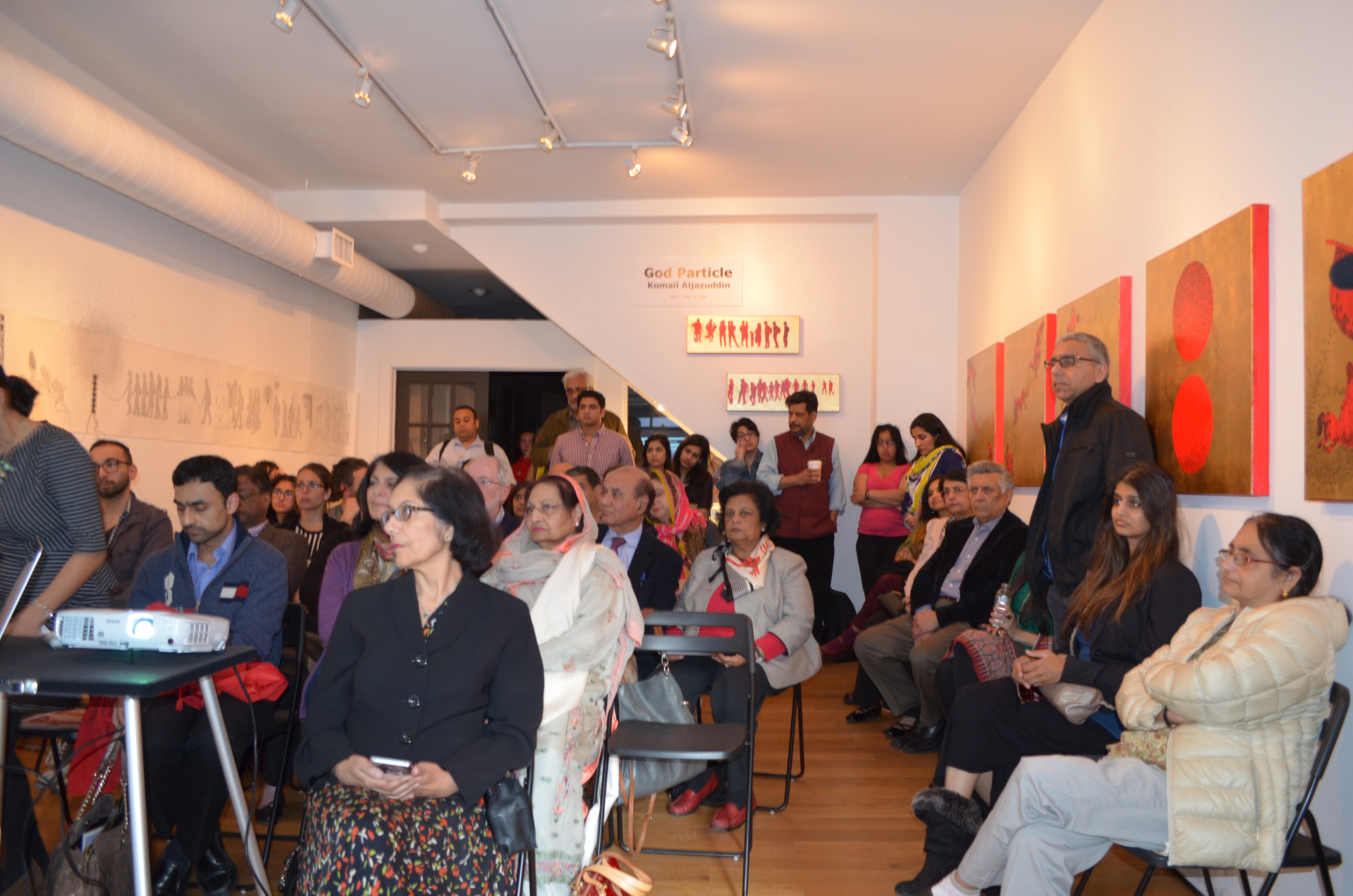
The unique community event was aimed at generating a new public dialogue on the 1947 Partition migrations through storytelling and memory. In the intrepid gallery called Twelve Gates Arts, devoted to South Asia-related arts, the event Voices of Partition presented witness testimonies from both India and Pakistan. Co-hosted by online digital video project, The 1947 Partition Archive, and part of a global series,Voices of Partition was an unexpected success – a flood of RSVPs meant that the gallery had to double its seats; people were standing, sitting on the floor in the aisles, just squeezing into the space to listen.

daiyacomps.inddFragmented memories

Three local South Asian American senior citizens – Hindu and Muslim – shared their memories of migrating as children across the new and bloody borders of India and Pakistan. Sagar and Reena Banka were originally from Lyallpur and Lahore, and Khurshid Bukhari was originally from Patiala. They described their fragmented, episodic memories of how they heard about ethnic violence in August 1947, how their parents decided to leave their homes, and how they slowly rebuilt their lives, in the shadow of homes and friends lost, in new countries. Many commonalities emerged across their stories: All said their parents thought that they were moving temporarily – until things calmed down. None imagined today’s closed borders, and the wars the two countries have fought.

Unlike other moments of collective historical trauma like the bombing of Japan during World War II or the Holocaust, the Partition experience has not been institutionally memorialised, said Guneeta Bhalla, founder and director of The 1947 Partition Archive, in her framing remarks. Approximately two million people were killed, and over 12 million displaced, within nine months during the division of India. But there is no equivalent to the Hiroshima memorial, or the Holocaust memorial, for Partition.

This inspired Bhalla to start gathering and recording witness testimonies in 2010. Today, the archive has gathered 2,500 testimonies, has offices in five countries, and its goal is to gather 10,000 stories by 2017 from a generation we are fast losing to age. Supported by grant funding as well as private citizens from three continents, the project indicates the global impact of Partition’s migrations. Steadily, this archive is creating a historical record of the price that millions of ordinary people paid for freedom in 1947.

Forging new bonds

As the gentle and eloquent speakers narrated their experiences and shared old black and white photos, a new and palpable emotional community was forged between the speakers and their multi-generational audience. The witnesses shared what they remembered of that harrowing time-colored by their childhood. They recalled the stigma of being derisively called “fugees” – because many didn’t know how to pronounce the word refugee. They also reflected on the lessons of that experience of becoming refugees.

DaiyablogSagar Banka said their experience was mirrored today in the Syrian refugees’ reception in Europe. He urged the audience that while Syrians were being derided in the media as refugees, people needed to recognise that they are more than that label. They are, as his father was, teachers, or perhaps doctors, engineers, lawyers… human beings. Pointing to his and his wife’s contributions to American society, he called for a more humane and inclusive response to today’s refugees so that they would also have an opportunity to become contributing members of society.

Bukhari’s harrowing tale of a narrow escape from Amritsar, to which her Patiala-based family had fled after increasing violence, ended with her reminiscing about a certain kachori stall in Patiala. She said, “Oh, I would love to eat those kachoris again.” Someone from the audience warmly replied, “I’m from Patiala, and that kachori-wala is still there!” In the question and answer session, others in the audience, who had also migrated in 1947, started sharing their stories, their journeys. A 21-year-old South Asian American young man noted that when he discovered that his grandfather had migrated to Pakistan during Partition, it had transformed his sense of his identity: “I guess we were refugees. Refugees.”

Delhi calling

What emerged in this diasporic gathering of those who once were refugees was an eagerness to remember that experience without rancour toward the other religious community. For instance, Sagar Banka affirmed that beyond religion, it was the Punjabi language that, here in the US, bound him in closer friendships with Pakistani Punjabis. The shared familiar itineraries of beloved cities (Lahore, Dehradun, Patiala) and schools spun new inter-religious, inter-national emotional bonds in this contingent community, flecked with the red and gold paintings of the Lahore-based artist Komail Aijazuddin.

Daiyablog2Established in 2011, the goal of Twelve Gates Arts is, in its founder Aisha Khan’s words, to “create and promote projects that cross geographic and cultural boundaries. The gates refer to the fortified gates that walled many ancient cities such as Delhi, Lahore, Jerusalem, and Rhodes – inside which lay the heart of each city’s art and culture. Through this Voices of Partition event, Bhalla and Khan opened the gates of our political borders and divided cultures. The dialogue allowed people, through the sharing of remembrances past, to not only see that Indians and Pakistanis have much more in common than our politicians would like us to acknowledge, but also to forge new relations of peace between us”.

This Voices of Partition is not the first event, nor will it be the last. On April 24, The 1947 Partition Archive will host its first Voices of Partition event in India in Delhi. They had hoped it would attract 100 attendees – they have over 1,000 waiting to register. On Facebook, they have 4,500 interested in attending. It seems this submerged history is still very much alive today, and people want to tell and hear these refugee stories. They will need a bigger venue.

Kavita Daiya holds the NEH Chair in the Humanities at Albright College for the academic year 2015-2016. She is the author of Violent Belongings: Partition, Gender, and National Culture in Postcolonial India

Design a site like this with WordPress.com
Get started