
Six months ago, Mr Pilot and I started Baby-Led Weaning to introduce solids to Squirm. Although I wrote a short update soon after we started, I haven’t actually revisited the topic since. Now that Squirm is a year old, I thought it would be a great time to revisit Baby-Led Weaning and talk about both the positives and negatives of using this method to introduce solids.
If you want a quick run down of Baby-Led Weaning, check out my post here
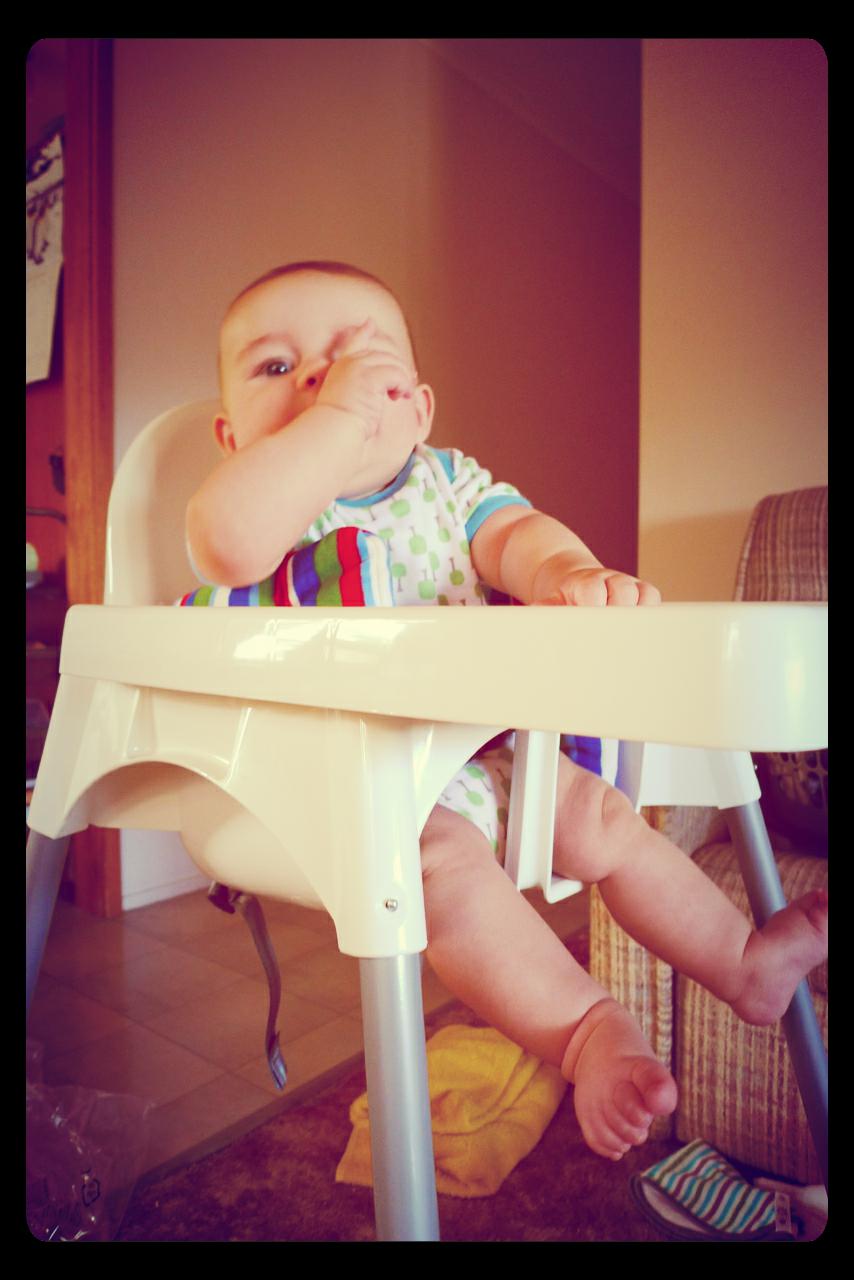
Six months after introducing solids, I’m pleased to say that Squirm eats almost everything that we eat. He eats three solid meals a day, plus snacks, as well as breast milk. He’s been exposed to a wide range of food, and seems to enjoy almost all of them. Like most adults I know (myself included) he goes through periods where he likes some foods more than others, though there are a few favourites all the time (sultanas are always welcome).
The Positives
- The different food. Squirm happily eats lots of different flavours, including some which I don’t like! It’s been really exciting watching him eat new things and seeing how he’ll react to them
- His dexterity. It’s been great watching Squirm move from picking up food with a full palm to delicately picking up beans and pieces of rice with his finger and thumb. He’s working on using cutlery at the moment.
- The cost. BLW has cost us very, very little. We buy slightly more fruit and vegetables than we did before and there’s a few snacks Squirm prefers, but we haven’t had to spend money on anything other than the kind of food we usually eat
- Time – I don’t spend any extra time making food for Squirm, and he eats at the same time as me
- The health aspect – because we want Squirm to eat healthy food, Mr Pilot and I are eating healthier. There’s more fruit and vegies in our diet and less salt and premade meals. I’m also more likely to eat three good meals a day, rather than skipping breakfast and snacking through the day
- Being able to eat out – Squirm just shares whatever Mr Pilot or I am eating.
- My Confidence – because I read up on BLW before I started, I had a good understanding of the difference between choking and gagging. I also knew what to do if Squirm happened to choke. Although he gagged a little in the beginning, I was able to be pretty calm about it and let him work it out
- Squirm’s confidence – He’s so eager to try new and different food!
- Squirm’s attitude to food – he really loves eating. He watches us prepare food, stands next to his chair when we put the food on the tray and makes the best eating noises. I know there might be issues as he moves further into toddler-hood, but for now he loves food in all its different textures, shapes and flavours, and that’s an excellent thing!
The Negatives
- Cleaning up – After every meal we need to clean Squirm’s tray and the mat underneath. Although this is getting easier as less food drops (or is thrown) to the floor, it’s still a job to do three times a day
- Finding healthy food – although we cook a lot from basic ingredients, I feel like I’m on an endless search to find food with less salt or sugar. It definitely opens your eyes to the amount of ‘stuff’ in our food. I wish I had the time/a decent oven to make more from scratch, but I can’t see that happening too soon unless the oven fairy and the Thermomix fairy want to come for a visit with some presents for me 🙂
So that’s how Baby-Led Weaning has worked for us. If you’re interested in reading more, I cannot recommend Gil Rapley’s books (Baby-Led Weaning and The Baby-Led Weaning Cookbook) enough. It’s definitely a great way to introduce solids and I’m so glad I discovered it!

 Adventures of a Subversive Reader