I’m an inveterate introvert. Never got fully socialized like most people. Yet a constant in my psychological substrate has been wanting attention. (Maybe why I write stuff like this.)
This isn’t some psychosis; rather actually a human universal. What’s up with that? Chris Hayes’s 2025 book, The Siren’s Call, elucidates it. Hayes is an MSNBC host. His subtitle is How Attention Became the World’s Most Endangered Resource. Mainly about how, in varied contexts, people’s attention is valued and assiduously sought.

So he analyzes what attention means in human affairs, and how it works. Starting with the picture of a cocktail party, sporting chatter all over. You try to focus attention on what the people directly around you are saying, shutting out other sounds. We are exceptionally good at such concentration. But suppose there’s a loud crash of a dropped drinks tray — your brain instantly breaks out of its focus on the conversation and attends to that noise.
Evolution is behind this. Ability to focus on chosen stimuli to the exclusion of distractions is obviously advantageous, helping individuals survive, and thrive socially, with our social cooperativeness also being a key adaptive advantage. Yet in a world full of dangers, to fully tune out the background can prove fatal. So the tray crash does break through your conversational concentration and grabs your attention.

But what about seeking attention to oneself? An interesting experiment involved earphones giving different word streams in each ear. The subject was instructed to heed only those on the right. Questioned afterward, they were accordingly unable to report anything about the left-side words. Tuned out completely — with a single exception. If on the left, the subject’s own name was uttered, that got through.
So even while the brain is consciously focused on the right-hand words, a part of the brain is still actually listening to the left side. That makes sense, it’s vigilant for something like the sound of that crashed tray, which might signal a danger. But words, in general, don’t rise above that threshold. Except, again, for the seemingly weird exception of your own name.
Which signals some attention being paid to you. Which we’re also evolutionarily programmed to deem very important. We all can’t help but crave the attention of others.

It gets back to our distant ancestors’ change to walking upright. Yes. Because, you see, the needed bodily architecture meant hips couldn’t be too wide. That meant babies’ heads couldn’t be too big, to fit through the female birth canal. Big-headed babies would too often kill the mother in childbirth. Yet we also needed big brains, another key evolutionary adaptation. The solution was earlier birth, before a fetus’s head grew too big.
But that meant human babies born helpless and staying that way for an extended time, compared to most other animals. A kangaroo-like pouch might have helped, but that wasn’t on the cards for us, anatomically. So a human child won’t survive without a lot of care from adults. And to get that care, getting their attention helps.

That’s why people are so fixated on attention to themselves, from others. We’re genetically programmed for that, by our evolutionary peculiarities. That’s why, in that earphone experiment, the subject’s own name was the only linguistic signal that broke through. It explains why even such an introvert as me craves attention. And why the nation is now plagued by the most extreme example of an individual insatiable for attention.


 By the time Jill at last grasped the situation, she was so incapacitated that taking action was becoming increasingly difficult. She sat immobilized in front of the phone. The part of her brain responsible for numbers had been particularly hard hit. In intermittent moments of relative lucidity, she somehow managed to locate a card with her doctor’s number, and even to dial it. But then could not speak.
 Very generally, our two brain halves differ; the left is considered to be the rational side, housing our cognitive skills, while the right brain is the artistic, creative, intuitive side. Note that while normally, one cannot really separate the two, experiments cutting the connection between them (e.g., to control epilepsy) reveal that in some ways there really are two separate personalities inhabiting the one skull.
 Buddhist meditation practice also aims for a kind of annihilation of the self, and this too Jill experienced. She even writes of losing proprioception – the brain’s monitoring of the body. The boundary between one’s body and what’s outside it is something second nature to us, but for Jill that melted away. She describes it as feeling fluid rather than solid (a feeling that didn’t go away for years). I was reminded of the Buddhist asking a hot dog vendor, “Make me one with everything.”
 She talks of the brain constantly engaged in reminding you who you are, what your life is about, how you fit into the world, etc. – an unremitting effort like that of a performer keeping a row of plates spinning atop sticks. Jill’s brain stopped doing it, and her very selfhood dissolved away.
 Her mother moved in to help her. Another challenge was the total loss of her number sense. When her mother asked her, “What’s one plus one?” Jill pondered before responding: “What’s a one?”
 And the way she saw things now, those characteristics reflected her left brain having exercised dominance over the right brain; but that dominance was not beyond her control. She says her stroke revealed that it was actually up to her to decide the relationship between the two sides of her brain in shaping her personality. This may be easier said than done, but Jill seems to feel she has done it, and that it is possible for anyone to do it.
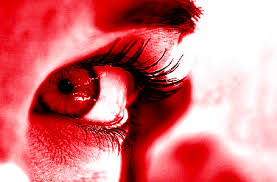 We are designed to focus in on whatever we are looking for. If I seek red in the world then I will find it everywhere. Perhaps just a little in the beginning, but the longer I stay focused on looking for red, then before you know it, I will see red everywhere.”


 The Rational Pessimist
