Advent Calendar Book Reviews: Day 7 – The Monster at the End of this Book by Jon Stone

In the lead up to Christmas, I’ll be sharing short reviews of great books and who they’d be perfect for. Find the master list here

Day Seven – The Monster at the End of This Book by Jon Stone

monster1

Genre – Picture Book

There was, apparently, a whole range of Sesame Street books written – but while I remember this one from my childhood, I don’t remember any others. This is the one which managed to break beyond the fact it ‘belonged’ to a television show, and reached out to children (including my sister and myself) in a very real way.

I think the secret lies with two things – there’s the breaking of the fourth wall (much like ‘Don’t Let the Pigeon‘) which lets Grover talk directly to us – to tell us that there’s a monster at the end of the book and that he’s scared of that. Then there’s the ‘interactive’ aspect (like Tap the Magic Tree), where turning the page ‘destroys’ walls and other means to try and stop the reader from turning the page. Plus there’s a really jovial feeling with this book, although Grover is scared, the reader knows that everything will probably be ok at the end.

We actually have this one as a board book, and Squirm loves looking through it – it’s exactly the right size for his little hands and it’s quite a sturdy book.

Highly recommended for toddlers and preschoolers – it’s also brilliant for parents to read aloud and children to turn the pages!

monster2

Advent Calendar Book Reviews: Day 6 – The Pigeon books by Mo Willems

In the lead up to Christmas, I’ll be sharing short reviews of great books and who they’d be perfect for. Find the master list here

Day Six: The Pigeon books by Mo Willems

dontletthepigeondrivethebus

Genre – Picture Book

It all started with Don’t Let the Pigeon Drive the Bus. This mischievous pigeon, who would do almost anything in his quest to convince you to let him drive the bus, worked his way into my heart. I felt for him, wanted to make him happy, even while I denied his bus driver dreams. Then I refused to let him stay up late, and um-ed and ah-ed about letting him have a puppy, and -sadly- laughed at his pain when he came across a duckling even more persuasive than he was.

Mo Willem’s Pigeon is a child favourite for a reason. He breaks the fourth wall and pleads directly with the reader. The illustrations are so basic (try drawing the pigeon – it’s quite easy) but so emotive – you know exactly what the Pigeon is thinking all the time. My toddler loves him, Grade 3 students who looked at it in detail loved him, my Grade 5,6 and 7 students loved him, all the adults I know love him.

If you know a child who hasn’t met the Pigeon yet, you really, really need to buy a copy of one of the books for them. Go on, you know you want to. Your mother would do it. Please!

Highly recommended for absolutely everyone

url

Advent Calendar Book Reviews: Day 5 – CHERUB by Robert Muchamore

In the lead up to Christmas, I’ll be sharing short reviews of great books and who they’d be perfect for. Find the master list here

Day Five: CHERUB by Robert Muchamore

the-recruit

Genre – Young Adult Fiction Novels

I can’t believe I’m still recommending these – but there’s a very good reason for that! The books, which now make a lengthy series (plus a follow on, prequel type series)  follow James – an impulsive, somewhat troubled 11 year old who gets into a tonne of trouble after the death of his mother. James is headed for a worrying future, when he wakes up and finds himself in a strange environment, surrounded by kids who can’t talk to him.

Turns out that CHERUB wants him. And what’s CHERUB? Well it’s a spy agency where the spies are all children and teenagers.  And the series follows them through their adventures, their ups and downs and just what teenaged spies do in their rest time.

These books were always huge successes with Year 7s in my classroom. There’s some more adult stuff in the later books, so parents might want to read them before passing them onto their kids.

Highly recommended for teenagers and nearly teenagers. Plus anyone who likes spy books.

Divine_Madness_cover

Week 5: Watercolours (52 Weeks of Provocations)

Provocation 5 : Watercolours

You can find more information about provocations here 🙂

Provocation 5 - Introducing Paints - Adventures of a Subversive Reader

Background Information

We’ve played with watercolours before, but back before Squirm was walking. Now he is walking and he is a little taller, I was able to pull out an easel and allow Squirm to explore watercolours in a whole new way

Materials

  • Watercolour paints (from Big W)
  • A selection of brushes
  • Water and water container
  • Easel (from Ikea)
  • Big pieces of paper (Mine were left over from when I was teaching, but you can get great pieces of big paper from Storage places)
  • Table
  • Mirror
  • Various pencils and crayons

Set Up

At first I just set up the easel with the watercolours and water on the ground. This was successful, but meant that Squirm needed to do a lot of crouching and standing. The next day, I placed the easel next to the table and set up the watercolours, mirror, water and pencils and crayons on the table. This was much more successful. I gave Squirm a new piece of paper each time, though some had writing on the back from my classroom days. I made sure the watercolours were wet before Squirm began

Provocation 5 - Introducing Paints - Adventures of a Subversive Reader

Experiences

Squirm seemed to remember the watercolours from when we’d played with them before. To start with he stuck with his brushes, putting them in the paint and making long strokes on the paper. Some of the time he put the brush in water between colours, other times he didn’t. Later on he experimented with using a crayon to dip in the paint instead of a brush, and he tried some small twigs as well. He mostly kept his lines to one part of the page, though he would paint over my lines if I made any. On one of the days, he enjoyed the fact that he would use the water and the paint to make a hole in the paper.

Provocation 5 - Introducing Paints - Adventures of a Subversive Reader Provocation 5 - Introducing Paints - Adventures of a Subversive Reader Provocation 5 - Introducing Paints - Adventures of a Subversive Reader Provocation 5 - Introducing Paints - Adventures of a Subversive Reader

What Next?

Art, art and more art 🙂 The easel was a massive hit, so I’m sure we’re going to use it for drawing, pasting, and painting with different types of paints. Squirm also seemed more receptive to art experiences – this has carried over into drawing which he does most days. There’s a wonderful post at How We Montessori with different art activities, which I’m definitely going to use for ideas.

Provocations are experiences offered to a child, based on past knowledge or interests, with the aim of extending the child’s ideas.

Our provocations present a small range of materials – some which are part of Squirm’s every day life, others which are new to him, or only known from other provocations. The aim is to present them in a thoughtful and (hopefully) attractive way, and to allow Squirm to investigate them in any manner he wishes. These provocations will remain in place for around a week, and then a new provocation will be presented.

Advent Calendar Book Reviews: Day 4 – Cathy Cassidy Books

In the lead up to Christmas, I’ll be sharing short reviews of great books and who they’d be perfect for. Find the master list here

Day Four: Books by Cathy Cassidy

scarlette

Genre – Middle School Fiction Novels

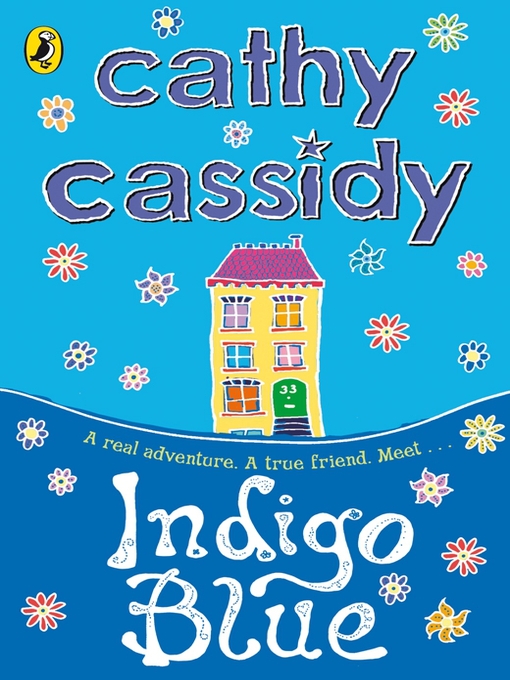
One of my wonderful students introduced me to the author Cathy Cassidy. She was adamant that I would enjoy her books – and she was absolutely right.  Cathy Cassidy writes about interesting kids, from diverse and different backgrounds. They have challenges thrown at them and usually there’s a romance involved in some way or another, and things end up mostly ok by the end. They’re great escaping books – not too heavy, but not too light, and a great insight into the lives of other kids.

These books would be brilliant for children aged from around 9 or 10 (she has written a series for younger kids too). They would probably mostly appeal to girls, although the stories are quite universal for all kids. They aren’t terribly well known in Australian, although they were readily available in some bookshops a few years ago

Highly recommended for girls aged 9 – 15

indigo

Squirm’s Book Reviews: Imagination Edition

Each week I review books we’ve read with Squirm. Find other reviews here

Imagine a Day by Sarah L Thomson and Rob Gonsalves

imagine-a-day

Imagine a day . . . . . . When you can dive
down through branches
or swim up
to the sun

This beautiful book matches simple, poem like text with some of the most amazing art work I’ve seen in a picture book. The art work – the real star of this book – takes the reader into a magical world where things aren’t exactly as they seem. Instead bridges are actually made of people, standing tall on top of each other; blue balloons can turn grey skies blue, and children can build cities out of alphabet blocks.

The illusions in the painting almost creep up on you, and you can spend ages looking at them and trying to work out just how the artist has created them. It would be an amazing book to use with art activities, especially if you took time to look at other art illusions like these. Squirm was too little to really understand the illusions, but he loved the colourful art, and the poem-like quality of the text lulled and calmed him as he went off to sleep.

(You can find Rob Gonsalves’ Official Facebook page – with lots of art – here)


Where the Wild Things Are by Maurice Sendak


Where_The_Wild_Things_Are


When Max wore his wolf suit and made mischief of one kind or another, his mother called him a wild thing and sent him to bed without eating. But then Max finds himself in his little boat, sailing across the seas to where the Wild Things are.

I can’t believe I haven’t reviewed this book before! It’s an absolute classic and there’s a very good reason why. The art work, while relatively simple (especially compared to Gonsalves’ work!) is wonderfully evocative, and the sparse text allows plenty of room for imagination, while allowing older children to read along. And of course, there’s the wonderful ending, when Max comes home to a hot supper – that moment which reminds the parents reading it, just what it was like to be a child.

There’s a few books I think every child should experience, and this is definitely one of them. If you haven’t got a copy yet, head out and get yourself one!

Advent Calendar Book Reviews: Day 3 – That’s Not My . . . Series

In the lead up to Christmas, I’ll be sharing short reviews of great books and who they’d be perfect for. Find the master list here

Day Three: That’s Not My . . . Series

thats-not-my-monster

Genre – Baby/Toddler/Preschooler Board Book

These wonderful books (and there’s a lot of them) have a familiar refrain. From the front cover we are introduced to the premise – That’s not my . . . because it’s coat is too furry or feet are too scratchy or it’s wheels are too bumpy. Accompanying the words is a lovely textured section which just invites the reader to reach out and touch. This is repeated page after page until the last page when we meet ‘my’ robot or frog or puppy or penguin.

Squirm absolutely adores these books – he was gifted his first ones and then we managed to add to our collection thanks to the 5 for $20 deal at Big W. They’re wonderful to read together, but Squirm has also really enjoyed reading them on his own – they’re just the right size for him to handle and turn the pages, and because the pages are thick, he hasn’t been able to damage them by chewing them!

If you can get your hands on some of these, I can’t recommend them enough. They also make wonderful presents if you know any babies or toddlers who love sensory experiences!

Highly recommended for babies and toddlers. And people who like sensory experiences!

Understanding That My Child Is Not Me

We’d been having problems with swimming lessons. Squirm used to love them and was doing really well. Then, all of a sudden, they became the worst things in the world. Squirm wouldn’t do any of the skills he’s learned and he was upset the whole lesson. I was on the verge of finishing lessons (a tricky thing involving 4 weeks notice) when I turned to Google for advice.

Turned out that it wasn’t uncommon for children of Squirm’s age to go through this sort of thing. While I was happy that it was normal, knowing that didn’t help me deal with it. But one comment on a forum did – the commenter suggested taking time to adjust before the lesson started.

Of course! The realisation hit me like a tonne of bricks. After all, Squirm usually felt better about swimming by the end of the lesson. Turning up early was such an easy thing to do and it fit in with other things we are starting to notice in Squirm.

Squirm doesn’t always do well in intense situations – noise and chaos are not always his friends. Shopping centres have a limited time before Squirm loses it, so I plan trips on how few shops we can visit. When Squirm meets up with adults other than Mr Pilot or myself, it takes him time to adjust and warm up to them – even if he sees them regularly. We’ve noticed that he does best when we approach situations slowly – when we give Squirm time to warm up to the environment and the people around him.

Sometimes it’s difficult to remember this. Although I have a certain amount of social anxiety leading up to an event, I’m usually fine when I get there. I usually find someone to talk to quickly, even in situations where I don’t know anyone. It’s natural for me to put myself right in the middle of things – but I need to remember that it’s not natural for Squirm.

I need to give him the time he needs to adjust to new environments, sit with him in a quiet spot and talk him through what is going on. I need to let him take in people from a bit of a distance before insisting that he ‘talks’ with them. I need to honour his personality and his needs – and remember that those are different from my own.

Taking our time worked wonderfully with swimming. We arrived about 15 minutes earlier than usual, and watched the water while he got ready. Luckily the child in the class before ours was away on that day, so we were able to sit quietly next to the pool and just chill out talking about the lovely water and how good it would feel. And the lesson was a huge success – a 180 degree turn around from the last few weeks before. Sometimes it really pays to take our time.

Understanding That My Child Is Different To Me: Adventures of a Subversive Reader

Advent Calendar Book Reviews: Day 2 – Caps for Sale by Esphyr Slobodkina

In the lead up to Christmas, I’ll be sharing short reviews of great books and who they’d be perfect for. Find the master list here

Day Two: Caps for Sale by Esphyr Slobodkina

Adventures of a Subversive Reader: Caps for Sale

Genre – Junior Picture Book

There once was a peddler who sold caps of different colours. However, he was different from other peddlers because he wore them on his head. One day, when sales were bad, he sat down to rest under a tree. Only that tree contained some very mischievous monkeys who had a fondness for caps.

This classic picture book is a big favourite in our house. The illustrations are relatively simple, with a muted colour palette. Squirm loves reading the part with the monkeys and the way they interact with the hapless peddler. I’d imagine as children got older they would be happy to join in with telling the story and supplying the actions – especially if they’d heard it a few times.

Highly recommended for babies, toddlers, preschoolers and early primary – they can all get something out of this lovely book.

7 Ways to Encourage Science with Toddlers and Preschoolers

7 Ways to Encourage Science - Adventures of a Subversive Reader

It was the toy car which brought it to my attention. Squirm has become more and more interested in his toy cars and making them move. One day I noticed that he was picking them up and moving them onto the lino to play with them – he’d noticed that they rolled better on the lino than the carpet.

It struck me that he was exploring friction and forces – he was exploring science. And this wasn’t the only time he’d been exploring science – he explores gravity when he drops something and biology when he examines the ants crawling on the path in front of him or watches a bird preening. In fact, a lot of the time, his world is one big science exploration. I guess it’s probably the same for a lot of toddlers – which  amazes me and thrills me.

As an upper primary teacher I know this fascination with science doesn’t hold out. Students might enjoy experiments, but they’re not always interested in repeating them. Or finding out the ‘whys’ behind it. Or applying their knowledge to other situations. And it often gets bogged down in important, but rather dull lessons about scientific method and how to write up experiments. Or is held hostage to safety concerns or (sadly) a lack of resources in the schools.

Teaching science is hard. Often these are massive, complex concepts which are continually being researched and examined at university level. As a teacher you have to understand them and then work out a way for kids to explore them, without being spoon fed any of the information. Resources are tight (both for experimenting and for explaining) and time is limited. Teachers who excel at teaching science should be celebrated.

But maybe we, as parents, could help these teachers out a bit. Maybe we can play our part to preserve the curiosity and exploration which is evident in our toddlers. Here are a few simple ideas to honour science with our children:

1. Give them space and time to explore

Exploration doesn’t happen in 10 or 20 minute blocks. Children need the chance to observe the world around them and to figure out what interests them. Offering extended times to just play independently – inside or outside – gives children the time they need to explore and process different ideas.

2. Respect their questions

According to my mother, I was the kind of child who had hundreds of questions about everything. It’s important to let children know that their questions are valid and worth asking – after all a good scientist is curious about how things work and how they could work better

3. Offer opportunities for tinkering

Offer opportunities to pull things are and put them back together, to play with different materials and to make grand plans for mundane materials. This TED talk looks at a program devoted to tinkering:

And TinkerLab is a wonderful website with tonnes of ideas. But for younger toddlers, tinkering could be as simple as offering a range of household materials to play with or even a cardboard box. Squirm ‘discovered’ the cardboard box that my new frying pan came in the other day. He realised that he could manipulate the lid in different ways until it made a great slide to roll blocks and other toys down.

4. Give children opportunities to share their learning

One of the things my students used to find hardest was writing up their experiments. It can be extremely difficult to share what we do or what we observe, so it is great if children get into the groove of sharing their experiences and understandings from the beginning. They might want to talk about it, or record their voices on the computer, or they might be a visual person who likes to draw what they understand. An adult can also scribe their ideas for them. Sometimes the act of writing things down or listening to their ideas might spur them on to further exploration or clarification

5. Help them to extend their understanding

The jump from experimenting or observation to concepts can be a hard one to make. If you have a child who is really into a scientific topic, then you might like to extend them with the help of your local library. Lots of libraries have great non fiction sections for kids, and books will often explain different concepts and give children ideas for new explorations.

6. Invite science into your house

Make science a part of your life the same way you might make reading or writing part of your life. Have books about science topics or scientists. Talk about cool things you’ve seen in nature, or the awesome science you saw on the news. You can even get music about science, like the awesome Here Comes Science from They Might Be Giants. This is my favourite song and video from that CD

7. Go out and find science

As well as the science you find naturally around you, there’s also awesome places with tonnes of science information and exploration. Squirm and I recently visited a local nature centre which had lots of science information, science books and microscopes for children to look through, as well as a cool nature walk. When I used to take students to the Queensland Museum, one of their favourite areas was the Discovery Centre which had drawers of animal poo! There’s lots and lots of places where you can discover science when you get out and look for it!