Subversive Reader Reviews: The Happiness Show (AWW2013)

Book reviews and AWW posts can be found here.

AWW2013 – Book 13

The Happiness Show

Adventures of a Subversive Reader: The Happiness Show

Catherine Deveny
Adult Contemporary Fiction

iBooks e-book

~

Lizzie is happy. She has two lovely children, a wonderful partner, a job she enjoys and a great best friend. Life is going along pretty well. Things are looking even better when she finds out that her TV pitch – a show about happiness – is being sought by the BBC. Suddenly she’s on the plane to London, only to find out that the producer’s brother-in-law is her long lost holiday fling, Tom. All of a sudden Tom and Lizzie find themselves lusting after each other, even when other things around them are going haywire.

I really disliked this book. It felt too convenient, too smug and too cynical. Everyone’s perfectly flawed, the main character is a massive Mary Sue, with men lusting after her left, right and centre and everything always working out for her, and the whole book is based on the notion that it’s ok to cheat on your partner as long as they don’t find out about it. The characterisation of a few characters seemed to waver as the book progressed, making characters do things because it was convenient. It almost seemed as if the characters were simply there for the author to play with, rather than an organic story being told.

I’m getting a little annoyed with the number of books I’ve read with a cynical approach to relationships. It seems like cheating is the latest ‘in thing’ in some areas of writing, with everyone either cheating on their partners or thinking about cheating on their partners. Maybe I’m living in a ‘less enlightened’ part of the world, but I’m not seeing cheating going on everywhere I look around me, and people definitely aren’t being as open about it as these characters are, if they are cheating.


awwbadge_2013

Subversive Reader Reviews: Georgiana (AWW2013)

Book reviews and AWW posts can be found here.

AWW2013 – Book 12

Georgiana

Adventures of a Subversive Reader: Georgiana

Libby Hathorn
Children’s Historical Fiction

Library Book, Moreton Bay Regional Libraries

~

Georgiana is a historical fiction about the real life botanist and early Western Australian settler, Georgiana Molloy. It follows her journey, and the journey of another family who is settling along with them, as they travel to Western Australia, soon developing the town of Augusta. Although it briefly goes into her time near the Vasse River, most of the book concentrates on her time in Augusta.

While the subject of Georgiana Molloy is certainly fascinating, I found most of the book very tedious to read. There’s no doubt that it was an incredibly well researched book – but sometimes it felt like I was reading more facts than story. It also slipped uneasily between historical fiction and memoir for a lot of the book, which made it difficult to read, and quite wearing to the reader. I felt like I was constantly being told the same thing about Georgiana, though this did ease up by the end. Additionally, the story of the other family (which I assume was the fiction part of the story) felt quite over-dramatic and at odds with the story of Georgiana and her family.

Georgiana really was a remarkable woman. She took on a demanding role as Magistrate’s wife (and often Magistrate while her husband was away) and set up house in a brand new, challenging settlement. She experienced horrific losses, with one child dying soon after birth and her son dying after falling in a well. She had an extremely difficult time recovering after childbirth, but still managed to become a well regarded botanist. Her story is amazing, and I would love more Australian children to learn about her. Unfortunately, I don’t think this will be the book that will do that.

On a side note, Australia is not particularly good at providing good biographical books about notable people in our history. When we taught biographies to grade 7s in 2012, we desperately wanted to include a number of Australian choices for the students to write about. However, they were extremely limited in the research they could do – confined to websites and books which were incomplete or written for an adult audience. There’s a fabulous series of biographies for children from the United States – the Who Was . . . series – which tells the story of notable people in an engaging and entertaining fashion. It would be awesome to see Australian writers take on a project like this – and it would be a great way to share people like Georgiana Molloy.

awwbadge_2013

Project 365 Books: Week Four

I’m undertaking a 365 project for the first time. My theme for the year is books! Eventually you’ll find all the posts under this tag. At the moment I’m aiming to be posting them on Friday, but Friday, Saturday and Sunday might be interchangable!

Week Four

Adventures of a Subversive Reader Week 4

The Daily Photos

18/365 The Amazing Illustrations of an Amazing Book

18/365
The Amazing Illustrations of an Amazing Book

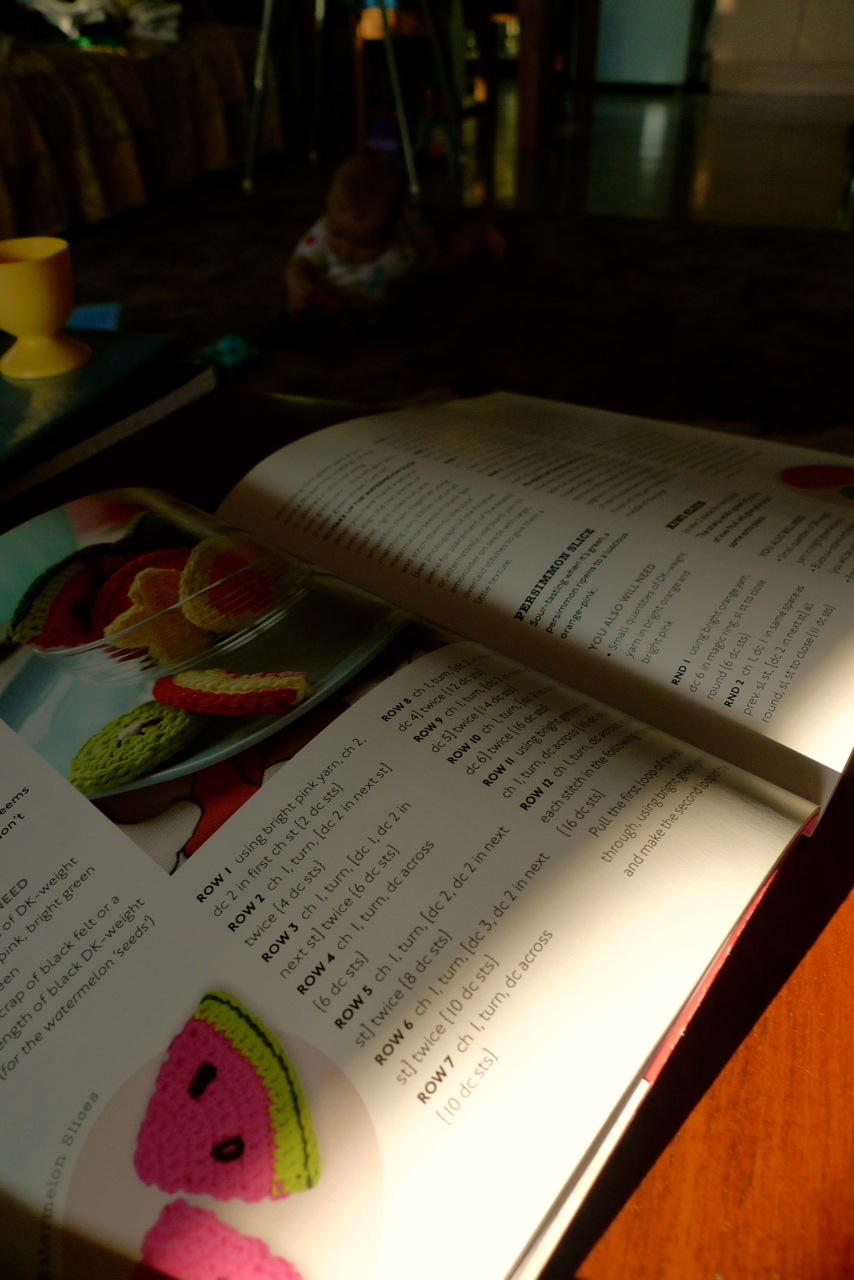
19/365A little crochet reading for my morning

19/365
A little crochet reading for my morning

I missed a day! Poor old 20/365 😦

21/365Another thick fantasy book . . .

21/365
Another thick fantasy book . . .

22/365 Planning some cooking for the day

22/365
Planning some cooking for the day

23/365Knuffle Bunny meets Global History

23/365
Knuffle Bunny meets Global History

24/365Looking through a big pile of children's books

24/365
Looking through a big pile of children’s books


How to Make a Felt Board

So, earlier this week, I felt a tad bit crafty, and wanted to do something that I could mostly complete in a day (around naps, long lunches and longer milk feeds). I decided to pull out something I’d been planning for a little while and hadn’t done anything about – a felt board.

While Squirm is too young to manipulate the pieces himself, I thought a felt board could be another source of visual literacy, especially if I started with the nursery rhymes we’ve been enjoying every day. Before I could start cutting out felt pieces, though, I needed to make the board itself:

How to Make a Felt Board: Adventures od a Subversive Reader

How to make a felt board

Materials

  • Canvas (we used a fairly large one from a discount shop)
  • Large piece of felt big enough to cover the canvas and wrap over the sides (Spotlight sells felt on the roll – we chose blue because it can be sky or sea)
  • Scissors
  • Hot glue gun

Method

1. Lay the felt down on a flat surface. Lay the canvas on top and cut the felt to shape – leaving enough felt on the sides to wrap around (Or measure it out)

Felt Board: Adventures of a Subversive Reader Felt Board: Adventures of a Subversive Reader

2. Use the hot glue gun to attach the felt to one side of the canvas

3. Pull the felt tight and glue the felt on the opposite side

Felt Board: Adventures of a Subversive Reader Felt Board: Adventures of a Subversive Reader

4. It’s probably best to cut wedges from the corners now, to get them to lay flat. I didn’t do this very well, though

Felt Board: Adventures of a Subversive Reader

5. Glue the pieces over the back of the canvas

Felt Board: Adventures of a Subversive Reader

6. Glue down the other two sides, making sure to pull the felt tight

Felt Board: Adventures of a Subversive Reader

7. Enjoy your new felt board!

Felt Board 8

What can you do with your felt board? Well I started by making some ground for it – cutting a piece of green felt in half and then cutting ‘grass’ from the top. Then you let your imagination go wild . . . in our house, that meant nursery rhymes!

A nearly finished felt board set . . .

A nearly finished felt board set . . .

Stay tuned for patterns and tutorials for different felt board pieces!

Do you remember felt boards as a kid? What nursery rhyme would you make?


Linked up at:

one project link party

Baby-Led Weaning: Week One

Read more about Baby-Led Weaning here . . .

We’d really been hoping to hold off on introducing solids until Squirm was six months old, but it seems that he had his own opinions on that. There’s a number of signs which indicate that babies are ready for solids, including sitting with little or no support, effectively reaching out and grabbing things, taking objects to their mouth quickly and accurately and making gnawing and chewing motions. Squirm had been doing all of these, plus trying to grab for things from our plates and gnawing on the dining table . . . and he’d started to get really, really upset when he saw people eating and he wasn’t joining in.

So we offered him a piece of cucumber, which went straight in his mouth and was gnawed on – and we were all systems go with baby led weaning.

It’s been nearly a week now, and Squirm has been joining us for most breakfasts, lunches and dinners. He pretty much shares what we’re eating, though there’s some food we don’t yet give him for safety reasons. Of course he has much smaller versions of our food! So far he’s tasted a bit of – well almost everything! He’s had bread, yoghurt, cream cheese, weet bix and fruit for breakfast, savoury pancakes, tomato, cucumber and chicken at lunch, vegetables, salad food, rissoles, lamb, salmon and pesto at dinner. Most of the time he doesn’t swallow much, if anything at all – but he has an awful lot of fun picking the food up, squeezing it, putting it near his mouth and moving it around the tray!

What have we discovered so far?

1. Ikea High Chairs are the BEST

Squirm loves his cheap high chair from Ikea. We’ve bought the tray that goes with it, which is perfect for putting his food on (we’ll move him to a plate later) and the whole thing is light to move around (we place it on a plastic mat at meal times) and really quick and easy to clean. If you’re buying a high chair and anywhere near an Ikea, I highly recommend it!

2. The Mess is Big, But Could Be Much Worse

Because Squirm was really ready for solids, we’re finding most of the food is going from the tray to his mouth, so he’s not getting nearly as much on his face as I thought it would. He often drops it back on the tray, or on the floor (thus the mat), but since we’re mostly doing chunked pieces, it’s easy to pick up off his mat (which we clean each time) and pop it back on his tray. His hands get the dirtiest because he likes hitting the food on his tray, and of course he’s using them to eat. The couple of times we’ve been away from home, I’ve made sure to offer less messy food.

3. We Don’t Really Need to Help Him

We put a small range of food on Squirm’s tray and he usually chooses what he wants to eat and puts it up to his mouth to taste – sometimes he grabs two different things in different hands! A couple of times we’ve held food up to him to show him, especially if his attention has wandered, and sometimes he figures out how to do things from watching us. The big surprise was that he can actually handle a spoon pretty well if we put food on it. It started when he kept lunging for my yoghurt, so I popped a bit on a spoon for him, which he then popped straight in his mouth! Most of the time the right end of the spoon goes in the mouth, but part of the time the food goes elsewhere, or he bites on the wrong end – adds to the hilarity.

4. He Likes Food that I’m Still Learning to Like

I’ve moved to natural yoghurt to try and avoid some of the sugars and additives of flavoured yoghurt, but even with fruit in it, I’m still getting used to the taste. Because it’s the only yoghurt Squirm’s ever known he seems to love it. He also enjoys some surprising food like mushrooms, rissoles with cumin and pesto.

5. I’m Cooking Better and Eating Better

Because I want Squirm to have a big range of good food, I’m needing to cook a bigger range of food, from scratch. Too many prepared meals and bases are high in salt, which is probably the number one thing to avoid with baby-led weaning, so that forces me to cook from scratch. Then there’s foods, like salmon, that I’ve never thought about cooking before, but which I was able to cook the other night (with help from the Baby-Led Weaning Cookbook)

Because I eat most of my meals with Squirm, I’m also eating better. I’m not eating on the run, but sitting down and enjoying food with him. He copies Mr Pilot and I when we eat, so we’re really enjoying the family time together.

6. It Takes Time

Although Squirm’s pretty quick at picking up the food and putting it near his mouth, he really takes his time with it. He nibbles, sucks, gnaws, moves the food around his tray and takes his time to finish eating – but that’s ok – he’s constantly learning about food! It does mean I need to organise our time a little bit better though, or I feel like we get nothing done during the day!

feeding 2

What was the first week like when you introduced your child to solids?

Squirm’s Book Reviews: A Toy Edition

Each week I review books we’ve read with Squirm. Find other reviews here

Knuffle Bunny Free by Mo Willems

Adventures of a Subversive Reader: Knuffle Bunny Free

Knuffle Bunny Free is the third, and (I assume) final book in the Knuffle Bunny series. This time, Trixie has grown up even more and is heading on a plane with her parents to visit her grandparents in Holland. Unfortunately, she leaves Knuffle Bunny behind on the place, and by the time she and her father realise it, the plane is on its way to China!

As much as I love the first two in the Knuffle Bunny series, I think I love this one the most. It’s a little poignant, you know that Trixie’s growing up and that there’s not too many more stories for the two of them left. It was lovely moving out of Trixie’s neighbourhood in the illustrations, and the distinctive drawing on black and white photograph works as well in Holland as they do in New York. I think this would be a great picture book for children around six or seven, but definitely enjoyable for those younger or older.

When you’ve finished reading, it would be very cool to learn more about Holland, or some of the other places mentioned in the book. You could even use Google Maps to plan your own ‘trip’ to visit places. You could find images of different places around the world and use image editing software to turn the images to black and white, before adding your own drawings, to imitate the illustrations in the book. Knuffle Bunny Free could also inspire some interesting conversations about favourite toys that different people have – if your family has good photographs, you might be able to make a photo album of toys during the years. Alternately, your child could take photos of their own special toys and create a photo album about them.

The Boy and the Toy by Sonya Hartnett

Adventures of a Subversive Reader: The Boy and the Toy

(AWW 2013 Squirm Challenge: Book 11)

A Steampunk style picture book! I don’t think I need to tell you much more for you to understand how much I loved this one. But because I’m nice, I will tell you more!

“One day a man invented the best toy in the world”

This inventor, gave the toy to his son to keep him company before setting off on a journey. It turns out that the toy is rather amazing, and can do all sort of things. Unfortunately he’s also a rather jealous toy who wants the boy to spend all of his time playing with him. The boy knows he needs to contact his father for help, but how can he distract the toy long enough to do that?

This is a whimsical book, really, with an old fashioned feeling as that father goes away and leaves the son and the toy to look after themselves. The pictures, slightly muted in colour, add to this feeling, along with the presence of air ships and inventors and strange towering houses with spiral staircases! I love that there’s no lengthy introduction to this world, we just land there in the story, and the reader is allowed to just go with it.

If you’ve got a child who loves creating, this would be the book for them. You could use recycled materials to create your own toy, or could create a puzzle like the boy in the book does. You could draw plans for creative houses or work out other ways of distracting the toy so you can send a letter.


What’s your favourite book about toys?

Six Ways to Spend More Time With Nursery Rhymes

“Pussycat pussy cat, where have you been?”
“I’ve been to London to visit the Queen.”
“Pussycat pussycat, what did you there?”
“I frightened a little mouse under her chair”

Nursery Rhymes often seem nonsense little things, short and silly and sometimes a little bit disturbing. And they seem to be going out of fashion – a lot of early years teachers report that many children don’t know any of the nursery rhymes which would have been universally known when we were children. Yet nursery rhymes are vital to reading development!

Nursery Rhymes introduce new words and ideas to children and show how words can sound the same but have different meanings. They introduce ideas like alliteration and rhyme as well as rhythm and patterns. Think of the simple rhyme Jack and Jill:

Jack and Jill went up the hill
To fetch a pail of water
Jack fell down and broke his crown
And Jill came tumbling after

Within four lines there are four ‘rarer’ words which children may not come across in their day to day interactions (I even remember asking what crown meant as a child). There’s alliteration (Jack and Jill), rhymes (Jill and hill, down and crown, water and after – it’s actually a pretty complex rhyme structure), there’s rhythm and patterns (think about where you pause when you say or sing it) and even the mathematical ideas of up and down (there’s probably a safety message in there too, as well as a discussion about why people might need to fetch that pail in the first place instead of just turning on a tap)Four lines, much more complex than you’d ever think when you first looked at it!

On top of that nursery rhymes allow you to create a safe bond with your child, especially those rhymes with actions and gentle touch.

While it’s easy to dictate ‘teach your children nursery rhymes’ the reality is that life is busy and it can be hard enough to fit in that all important story without thinking about fitting in nursery rhymes on top of that. Plus you’ve got to learn them again!

Never fear – here’s some easy ways to share nursery rhymes with your child!

Six Ways to Spend More Time With Nursery Rhymes

6 ways to spend more time with nursery rhymes

1. Check out your local library

Most libraries have some form of rhyme program for babies and toddlers, although they come under a million names. Ask your local library what they do and if they don’t have anything, ask if it’s possible to start one. These rhyme times are great since they usually mix spoken and sung rhymes, sometimes have the words to help you jog your memory and usually have actions to go with the rhymes. If you can, try a few different libraries – they all seem to do it differently!

2. Look for nursery rhymes in books

Mem Fox’s Good Night, Sleep Tight has seven nursery rhymes through it, but there are also plenty of other books which contain nursery rhymes. You could try reading one each day with your child or you could read the whole lot all at once!

good-night-sleep-tight

3. Listen out for nursery rhymes

I found an awesome nursery rhyme audio book at Audible.com – great for longer journeys. A quick search of audiobooks or CDs would be sure to come up with plenty of nursery rhymes to listen to.

50nurseryrhymes

Our favourite nursery rhyme audio book

4. Make your own nursery rhyme book

Grab a nice notebook and create your own book – a great way to record those long lost nursery rhymes when you hear them again. It also becomes something special for your children

5. Make up your own versions of the rhymes

You know the rhyme: Mary, Mary Quite Contrary? Well here’s the version I say to Squirm:

Squirm, Squirm, Quite Contrary
How does your garden grow?
With beautiful plants and shiny black ants
And pretty birds all in a row

(Obviously, I use his actual name there). We tend to say the two together – first Mary, Mary, then Squirm, Squirm. We do the same thing with Pat-a-Cake, putting different letters and names in.

6. Sneaky rhyme time

When I was teaching we talked about sneaky reading – where you sneak in a few moments of reading wherever you can. We became masters of finding reading time when we were waiting for assembly to begin! Rhyme time with your child can be the same – you can sneak a rhyme in whenever you can, you don’t need to wait for a certain time of the day. Squirm and I often share rhymes when I’m changing him and drying him after his bath. We’ve also shared rhymes when we wait at the doctors or when we’re waiting in lines at the shops. Any time can be rhyme time!

What’s your favourite nursery rhyme? How do you share them with your children?

The Great Library Tour: Carina Library

Adventures of a Subversive Reader: Carina Library

I’ve been looking for smaller libraries while the school holidays persist (the bigger ones can be a bit tricky with parking), so Carina – just down the road from Carindale, seemed like a perfect choice. Like a number of other Brisbane City Libraries, Carina is situated right next to a park, which gives the library a lovely, airy feel. It’s not a particularly big library, but manages its space very well, and doesn’t feel cluttered.

The children’s section is situated at the front of the library, with a clever use of shelving to create a separate area. The children’s section has a fairytale theme with a little castle to sit and read in (it’s gorgeous!), a lovely big mural on the wall and even frogs on the rug! There’s a lovely couch to sit in, small baskets of board books and other small books, and beautiful, clearly labeled low book shelves for the picture books. I also love the display shelf with a range of newer books on display – we read a really good one from there!

The rest of the library is also well organised, with plenty of community and library information around. One thing that was particularly good was how easy it was to get in and see library notices on the wall.

We were lucky to organise our trip to Carina to coincide with the Rhyme Time. It was an awesome experience, with an excellent community feel. The rhyme time followed a logical progression, through welcome songs, tickling rhymes, action rhymes, lap jogs, movement song and then back down to quiet songs to end the time. It was beautifully put together, and kept the energy going right through to the end. I especially liked the way the babies were welcomed by name, the way parents were encouraged to make eye contact with their babies and the way the rhymes and actions were demonstrated with a teddy bear. The regular visitors obviously knew the rhymes, and made those who didn’t know them all feel very welcome. (I also loved the actions for Hickory Dickory Dock – we’ve been singing it here ever since!)

It’s a lovely library, with really friendly staff and a nice park out the back – I thoroughly recommend dropping by and experiencing a small community library feel.

Adventures of a Subversive Reader: Carina Library Adventures of a Subversive Reader: Carina Library

The best parts of Carina Library

  • The themed kids area – I love a good themed area!
  • The amazing baby rhyme time
  • How easy it is to read information on the walls
  • The lovely display shelf of kids books

Important Information about Carina Library

The corner of Mayfield Road and Nyrang Street, Carina

Website

Open Monday, Tuesday, Friday and Saturday

Parking is available at the side of the library.

AWW Challenge 2013: Week Three

Follow my journey through the AWW 2013 challenge here

Adventures of a Subversive Reader: Kip

This week showed a little slowing down on the challenge, as I needed to spend time on the Coursera course I started this week. I also got stuck on a book, which I enjoyed near the finish, but which held me up for quite a while.

I’ve officially finished the challenge, now, having read more than ten books and reviewed more than six. However, my unofficial challenge is to keep reading and reviewing throughout the year – so you won’t get rid of me that quickly!

I’m really enjoying the vast range of books this has opened up to me. In less than three weeks I’ve read about Ancient Roman monsters, exiles from a fantasy land, about early Western Australian botanists, children exploring tunnels under Sydney and stunning short stories from Tasmania and the world beyond. I’ve been swept away on writing that sings and rolled my eyes at ideas that don’t.

I’m continuing to find Squirm’s challenge more of a challenge. Picture books don’t necessarily get the same coverage as other books in Australia, and when they do, they tend to be by well known authors, such as Mem Fox and Jackie French. I’ve had some luck with author descriptions, but this is another part often missing from picture books. When I’m looking through stacks of books in the library, I don’t have a computer with me to check if the author is Australian, and even if I did, that can be a bit of a hit and miss affair. Then there’s the old – what makes Australian, Australian discussion.

When I have successfully found Australian Women Writers for Squirm’s challenge, I have thoroughly enjoyed them. There tends to be a bit of a twist in the work of Australian picture books, a complexity which you can discover if you’re willing to look that little bit closer. Kip, by Christina Booth, had that in it (and introduced me to a writers/illustrator I really want to read more of).

Subversive Reader Books Read and Reviewed

Squirm’s Books Read (Week Two and Three)

Camera-Obscura-Lomer-Kathryn-EB9780702240485

Subversive Reader Reviews: The Anatomy of Wings (AWW2013)

Book reviews and AWW posts can be found here.

AWW2013 – Book 11

The Anatomy of Wings

Adventures of a Subversive Reader: The Anatomy of Wings

Karen Foxlee
Adult Contemporary Fiction

Library Book, Moreton Bay Regional Libraries

~

Ten year old Jennifer, and everyone else who lives in their small, mining town, are trying to get to terms with the sudden death of her older sister, Beth. Only, Jennifer and her best friend think they know how to work it out – they’ll use a seemingly random collection of items to investigate what happened in the lead up to the tragic event. Only when they work it out, will Jennifer find her singing voice again.

What unfolds is a forward and backward and around the corner look at Jennifer, Beth, their family and the tiny community they live in. Sometimes the reader finds themselves in the present time, in a house full of sleeping mourners, other times the reader finds themselves in the past, watching as Beth makes a series of decisions which take her further and further along a path which leads towards her end. Then there are the moments of learning about the neighbours and the lives they live, when we realise that grief is not a thing isolated to one event or one family, and how the lives of people in small towns interact and get complicated all together.

This is another lyrical read, another book which feels like music as you read it. I found it pretty easy to move around in time and places, and easily followed the story line, even when it felt like the story line shouldn’t be easy to follow. I love the thread of the lost singing voice, especially with such lyrical writing. I also love the way that birds are woven through the story. It’s one of those books where the more you think about it, the more of it you remember and fall in love with it again.


awwbadge_2013