
Call 024 77360 144
We are available 8am-4pm Mon-Fri
RYSE 3D
At RYSE 3D, post-processing transforms printed parts into production-ready components. Using advanced techniques like vapour smoothing, bead blasting, painting, and dyeing, we enhance surface quality, durability, and appearance—bridging the gap between additive manufacturing and traditional production standards.
High-Quality, Production-Ready Surfaces
Fast & Cost-Efficient Turnaround
Broad Material Compatibility
Functional & Aesthetic Excellence

RYSE 3D’s Post-Processing & Finishing service takes 3D-printed parts and brings them to production-ready quality — in appearance, feel and performance. Utilising advanced finishing techniques like vapour smoothing, dyeing, bead blasting, painting and coatings, we transform parts printed via FDM or MJF into components that look, perform and integrate like traditional manufacturing parts.
Our in-house workflows bridge the gap between “just printed” and “ready for use”, giving designers, engineers and manufacturers the power to deliver end-use parts without compromising on surface quality, durability or aesthetics.

Vapour smoothing is an advanced post-processing technique that transforms the surface quality of 3D printed polymer parts. Using a precisely controlled solvent vapour environment, the process gently softens and reflows the outermost material layer, causing the microscopic peaks and valleys formed during printing to chemically fuse together. This results in a smooth, glossy surface finish that closely resembles injection-moulded components.
Beyond aesthetics, vapour smoothing delivers significant functional improvements. The sealed surface enhances part strength and impact resistance while reducing porosity — making components more resistant to moisture, chemicals, and dirt. These properties are particularly valuable for applications requiring durability, hygiene, or liquid tightness.
Our vapour smoothing process is compatible with a range of thermoplastic materials, including ABS, ASA, PA (nylon), and TPU. The technique maintains dimensional accuracy and fine detail while providing a consistent, professional-grade finish across complex geometries and internal features.
Ideal for consumer products, automotive interiors, functional prototypes, and end-use parts, vapour smoothing not only elevates the appearance of 3D printed parts but also extends their performance and lifespan in demanding environments.

Vibro polishing is a mechanical surface finishing process that uses abrasive media, water, and controlled vibration to refine and smooth the exterior of 3D printed components. During the process, parts are placed in a vibratory tumbler along with selected abrasive media that gently rubs against the surface as the machine oscillates. This controlled abrasion removes fine surface irregularities and build artefacts while preserving the part’s dimensional accuracy and critical features.
The result is a uniform, satin-like finish that enhances the tactile quality and visual appeal of printed parts. By homogenising surface textures, vibro polishing improves the consistency of appearance across large production batches and prepares parts for additional finishing operations such as painting, electroplating, or coating.
This process is particularly well-suited to Multi Jet Fusion (MJF) and Fused Deposition Modelling (FDM) parts, where it effectively reduces visible layer lines and improves overall surface uniformity. It can also be tuned through media type, vibration intensity, and cycle duration to achieve specific aesthetic or functional outcomes — from mild smoothing to more aggressive polishing.
Vibro polishing offers an efficient, scalable, and repeatable method for enhancing surface quality, making it ideal for both prototyping and end-use production parts where a refined, professional-grade finish is essential.

Shot peening, also known as bead blasting, is a mechanical surface treatment process that enhances both the appearance and performance of 3D printed and machined components. The process involves bombarding the part’s surface with high-velocity spherical media—such as glass beads, ceramic beads, or steel shot—propelled by compressed air or centrifugal force. Each impact creates a small, controlled deformation on the surface, which in turn induces beneficial compressive stresses within the material.
These compressive stresses help to relieve residual tensile stress from manufacturing, improving fatigue strength and extending the component’s operational lifespan. In addition to these mechanical benefits, the repeated impacts of the media effectively smooth and homogenize the surface, removing minor imperfections, powder residue, or oxidation layers.
The resulting finish is a uniform, smooth matte texture with a refined, non-reflective appearance. This makes shot peening and bead blasting ideal for functional prototypes, tooling, and industrial-grade parts where consistent surface quality, improved durability, and enhanced mechanical performance are essential.
By adjusting parameters such as media type, size, velocity, and exposure time, the process can be precisely tailored to achieve specific outcomes—ranging from gentle cosmetic smoothing to more aggressive surface strengthening. Shot peening is compatible with a wide range of materials, including metals and high-performance polymers, making it a versatile and effective post-processing solution for demanding engineering applications.
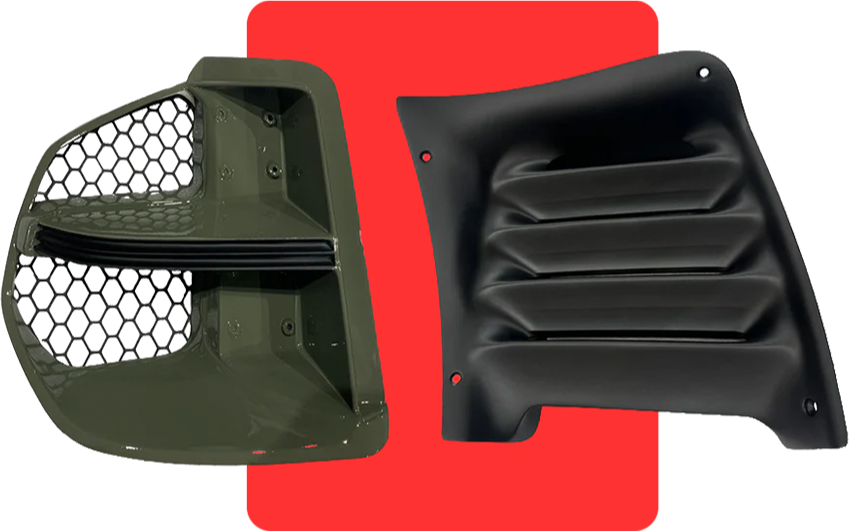
Painting and surface coating are post-processing techniques designed to enhance both the visual appeal and functional performance of 3D printed or machined parts. These processes involve the precise application of liquid or powder coatings to create a durable, uniform surface that can be customized in colour, texture, and finish to meet specific design or branding requirements.
Beyond aesthetics, surface coatings serve as protective layers that improve resistance to wear, UV exposure, moisture, and chemical attack. Depending on the material and intended application, coatings can also provide additional benefits such as electrical insulation, corrosion resistance, or improved adhesion for decals and secondary treatments.
Our finishing capabilities include a range of painting and coating methods — from manual spray painting and airbrushing for small-batch, high-detail work to automated or powder coating systems for larger production runs. We offer a variety of finishes including matte, satin, gloss, metallic, and soft-touch textures, ensuring each part achieves the desired appearance and tactile quality.
Before coating, all parts undergo meticulous surface preparation — such as cleaning, sanding, or vibro polishing — to ensure optimal adhesion and consistency across complex geometries. Colour matching and multi-layer coatings can also be applied to achieve premium, production-quality finishes suitable for consumer products, automotive components, architectural models, and industrial prototypes.
Painting and surface coating not only elevate the professional look of a part but also extend its longevity and performance in real-world environments, making them essential steps in transforming printed components into end-use-ready products.
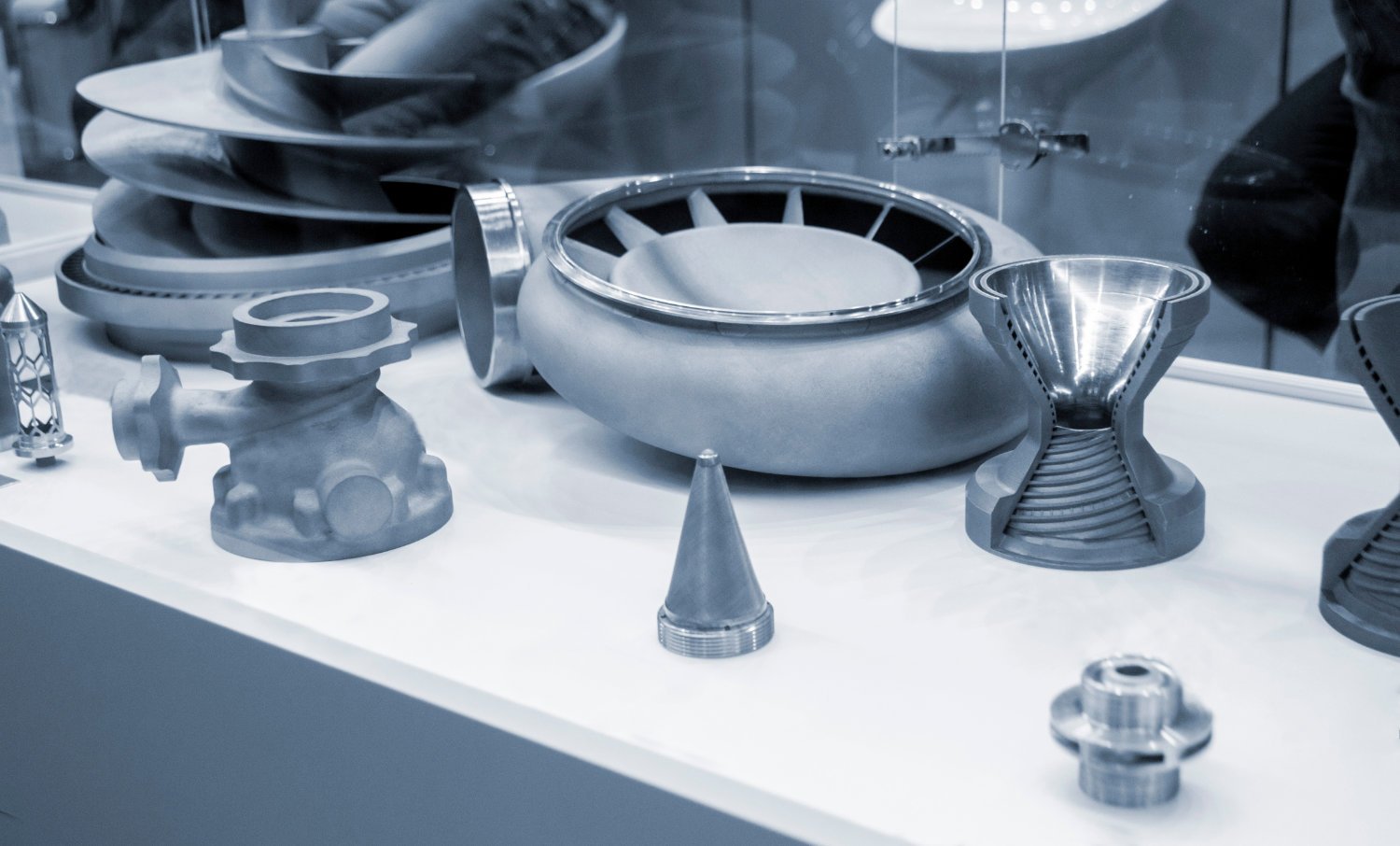
RYSE 3D’s post-processing solutions are tailored to fit a wide range of production and prototyping needs. Whether you’re creating end-use components, refining prototypes, or producing visually striking design parts, our finishing processes deliver the quality, precision, and performance required for real-world applications.
End-Use Parts from 3D Printing: Produce visible, functional components without secondary manufacturing.
Surface Finish Upgrade for Printed Parts: Enhance printed parts to final-product quality with smoothing, painting or dyeing.
Rapid Production & Prototyping: Use printing + finishing to validate parts quickly or run low-volume series with premium finish.
Tooling, Fixtures & Functional Hardware: Finish structural printed parts (e.g., housings, jigs, fixtures) to meet production demands.
Aesthetic & Branding Components: Perfect for industrial design, automotive interiors/exteriors, products needing high-quality visual finish.

After printing via FDM or MJF, parts are assessed for finishing requirements, checking geometry, supports and intended finish.

We apply bead blasting, vapour smoothing, dyeing, painting or coating depending on part material and client finish requirements.
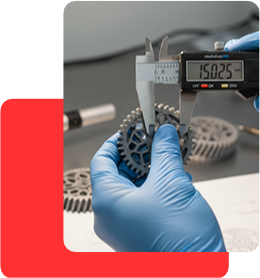
Finished parts are reviewed for conformity in surface appearance, dimensional accuracy and performance criteria.

Parts are prepared for installation into your workflow — ready for mounting, assembly or direct end-use.
Ryse 3D serves key sectors including automotive, aerospace, medical / healthcare, industrial equipment, consumer goods and more. Whether you’re producing enclosures, manifolds, jigs, fixtures or high-performance structural parts, our additive manufacturing solutions are tailored for end-use.


At RYSE 3D, we combine cutting-edge additive manufacturing with precision finishing and quality assurance to deliver parts that perform straight out of production. Our integrated approach ensures flexibility, consistency, and reliability across every project — from concept prototypes to full-scale manufacturing runs.
Post-processing is the stage after 3D printing where parts are refined to improve their surface quality, strength, and appearance. This can include processes like vapour smoothing, bead blasting, painting, and dyeing.
It transforms printed components from raw prototypes into production-ready parts, ensuring they meet functional, aesthetic, and performance standards suitable for end-use applications.
RYSE 3D supports a range of materials including PA12, PA11, ABS, ASA, and carbon-fibre-filled composites—compatible with both FDM and MJF printing technologies.
We offer vapour smoothing, bead blasting, painting, dyeing, coating, and surface sealing, depending on material type and intended use.
Yes. We provide both dyeing and painting options in a wide range of colours and finishes, including matte, gloss, and textured coatings.
All post-processed parts are inspected for dimensional accuracy and surface consistency to ensure they meet engineering or aesthetic specifications.
In most cases, finishing improves strength by sealing porous surfaces and reducing stress-concentration points. We tailor methods to maintain or enhance structural integrity.
Turnaround depends on part size, quantity, and chosen finish. Many parts can be finished within 24–72 hours after printing.
Yes. RYSE 3D can post-process parts produced by third-party printers, provided they meet material and size requirements.
Absolutely. Our post-processing methods produce production-ready components used in automotive, industrial, and consumer applications.
Yes. We handle both single prototypes and high-volume batch finishing with consistent quality and repeatability.
Yes. Our finishing services deliver smooth, visually appealing surfaces suitable for visible or branded components.
Work with RYSE 3D’s specialists to turn your designs into production-ready parts. From material advice to scalable manufacturing, our team will help you make stronger, faster, and more efficient with HP Multi Jet Fusion.
Free UK shipping on orders over £150. Secure payment.
Call +44 24 77360 144 or email [email protected]