Book review

Love in the Time of Cholera by Gabriel Garcia Marquez, 1985

Love in the Time of Cholera is a dense and complex meditation on love and the process of aging. It also contains some very troubling content, of which more later. It is not an easy read and I am still unsure whether it merits the adulation it receives in many quarters.

Set at the end of the nineteenth century in an unnamed but volatile country in the Caribbean, the novel tells the decades long love story of Fermina Daza and Florentino Ariza. As a young man Florentino falls in love with a young woman who lives with her possessive and suspicious father. So far so Romeo and Juliet. After secretly wooing Fermina for months Florentino finally secures her promise to marry him.

But the ‘affair’ is discovered. Fermina’s father refuses to consider the marriage, considering Florentino unsuitable for his daughter and takes her on a years’ long trip through the country’s interior, hoping that this will make her forget him. During the journey scenes of the long-running civil war and the ravages of cholera simply form a background to everyday life and are considered normal. When they finally returns to the city, Florentino attempts to resume the relationship, having continued to write to her using his contacts in the telegraph service. But Fermina suddenly realises that their relationship was just a childish infatuation. Shortly afterwards she marries a local doctor, Juvenal Urbino, and lives a long and moderately happy life with him, raising a family and surviving the normal traumas of married life, until his tragically comic death in old age, a death with which the novel opens.

At the funeral, Florentino, now in his seventies, renews his affection claiming he has never stopped loving her. At first she is not interested – more than fifty years has passed – but gradually he wears her down. Much of the body of the novel consists of the story of how Florentino has spent his time while waiting for Fermina to be free. His career with a riverboat company is the background to his all-consuming passion, seduction. Florentino is a prodigious and undiscriminating lover of women of all backgrounds, ages and class. He has no problem in squaring this lifestyle with waiting for his true love.

Although Florentino is the novel’s central character and sees himself as man of principles, a tragic lover waiting all his life for his one true love, in reality he is simply depraved. He sleeps with over 600 women, many of them vulnerable. One is killed by her husband after he discovers her affair. Later, he conducts an abusive relationship with a 14-year-old girl who is his ward. The author’s portrait of this abuse is as disturbing as anything written by Nabokov:

“She was still a child in every sense of the word, with braces on her teeth and the scrapes of elementary school on her knees, but he saw right away the kind of woman she was soon going to be, and he cultivated her during a slow year of Saturdays at the circus, Sundays in the park with ice cream, childish late afternoons, and he won her confidence, he won her affection, he led her by the hand, with the gentle astuteness of a kind grandfather, toward his secret slaughterhouse.”

He has no insight into how wrong this relationship is – she is a child, he is more than fifty years older than her and in a position of parental responsibility – and when he ends the abusive relationship she commits suicide. In short, he is a scumbag. The novel ends with a reconciliation between the two ‘lovers’. A boat trip into the interior of the country, ravaged by industrialisation, war and disease, provides the novel’s ending and a metaphor for aging and loss.

The novel’s title suggests this is a book about love, but it is not (any more than Lolita is a love story). Two people spend their lives apart and eventually come together in a facsimile of elderly, incontinent married love. Florentino thinks of himself as one of the courtly knights of old who would love his lady from afar, sacrificing all for just one smile. In reality he is a disturbingly lascivious paedophile, a dirty old man whose idea of love is distorted in the extreme. I finished Love in the Time of Cholera with a sense of disquiet that has only worsened the more I think about what actually happens in the book. I accept I am probably missing something, but I am keen to move on as quickly as possible to something that isn’t full of bodily functions slowly breaking down, of sexual abuse, and death.

Love in the Time of Cholera by Gabriel Garcia Marquez, 1985

Aside
Book review

The Watsons, by Jane Austen, 1803/1871

The Watsons is an abandoned fragment of a novel started by Austen in 1803 but only published in 1871. It contains themes and characters reminiscent of those in her completed works and reveals aspects of her methods of composition and construction of her novels. As a fragment of probably less than a quarter of a novel it has very little merit in its own rights, but as an insight into her working processes it is fascinating.

The epistolary format adopted in Lady Susan has been abandoned, and Austen begins experimenting with a third person narrator, although much of the narrative is told through conversation. We are introduced to the Watson family through the perspective of the youngest daughter, Emma, (who bears no similarity to the character who was to later have her own novel). Emma has been brought up by a wealthy aunt in one of those informal adoption arrangements which appears, if Austen’s portrait of the gentry of the Regency period is to be relied upon, quite common (see also Mansfield Park of course, as well as the example from real life of Austen’s older brother). Children seemed to be loaned to other families almost indefinitely largely but not exclusively for reasons of convenience. This aunt has now remarried and moved to Ireland, (in the views of the family this remarriage is highly inappropriate, already establishing the idea that making a good marriage is more important than making any kind of marriage at all) forcing Emma to return to the embrace of her now unfamiliar family. She struggles to adapt to the change in circumstances, not least because her family is significantly less well off than her aunt. We have only brief introductions but it is clear her sisters are actively seeking partners as a route out of the family home, as are almost all the daughters she was to go on to write about.

We are also introduced to the Osbornes, a titled family living nearby. Emma is quickly thrown into the social life of the community and while attending a ball in the nearby town she meets the young and rather awkward Lord Osborne. It is difficult to tell if this relationship was going to be the core of the novel – quite possibly but one can’t be sure. Emma dances with a young boy attending the ball as a kindness after he is let down by another potential partner (I don’t know enough about the social conventions of these social occasions to be able to tell whether the attendance of a ten year old, albeit one with quasi-aristocratic status, was usual or simply here as a plot device to illustrate Emma’s kindness.)

This kindness introduces a Mrs Blake, who in turn introduces Emma to her brother, Mr Howard, vicar of the parish church near Osborne Castle. It seems most likely that Mr Howard was to become Emma’s primary romantic interest – less well off than Lord Osborne, and of a lower social status, but more mature and more reliable, a classic Austen hero.

Shortly thereafter the novel ends. An Austen family memoir hints at how it was to continue:

“Mr Watson was soon to die; and Emma to become dependent for a home on her narrow-minded sister-in-law and brother. She was to decline an offer of marriage from Lord Osborne, and much of the interest of the tale was to arise from [the dowager] Lady Osborne’s love for Mr Howard, and his counter affection for Emma, whom he was finally to marry.”

Other than these glimpses of the novelist Austen was to become, there are only limited points of interest in the story for anyone other than an Austen completist. One is the author’s description of Emma:

“Emma Watson was not more than of the middle height, well made and plump, with an air of healthy vigour. Her skin was very brown, but clear, smooth, and glowing; which, with a lively eye, a sweet smile, and an open countenance, gave beauty to attract, and expression to make that beauty improve on acquaintance.”

Skin tone here is not a racial indicator but used as a mark of social standing and value. A very brown face could derive from long periods spent outdoors, something more commonly associated with farm labour, or it could derive from long periods spent abroad in the Americas. Conversely paleness was commonly associated with a withdrawn isolated but aristocratic lifestyle. But equally there were associations with healthiness or lack thereof and a robust ‘healthy vigour’ is in many cases preferable in a potential partner if children were planned. Austen notes that Emma’s skin is very brown but is nevertheless clear, smooth and glowing – in other words she looks attractive despite the brownness of her skin.

One day I might do a deep dive into this issue and see how skin tone is used to portray characters in other nineteenth century novels. The one example of a dark-skinned character that I do recall is Heathcliff, where the author repeatedly connects his dark skin with his demonic character – Nelly Dean recounts him being “as dark almost as if it came from the devil.

The Watsons, by Jane Austen, 1803/1871

Aside
Book review

Lady Susan by Jane Austen, 1794/1871

I confess I had largely written off Jane Austen’s juvenilia as stories that should probably have remained unpublished – largely I think on the basis of a very small sample size taken many years ago – but I was wrong. Lady Susan, written when Austen was 18 – in other words to all intents and purposes an adult and meaning therefore that it is hard to label Lady Susan as juvenilia anyway – is a mature, witty and sophisticated novella. It is written in the epistolary form, which quickly illustrates the shortcomings and disadvantages of the structure and is an important step in Austen’s evolution of the third-person omniscient narrative format which she perfected in her mature novels. Written in around 1794 or so the internet tells me, but not published until 1871, it is a gem!

The plot and characters

The format of the novel means that the reader has to spend time in working out the relationships of the characters. Without a narrator to spell things out for us, the clues in the opening letters give an incomplete picture. Epistolary novels were the default format for novels in the eighteenth century and Austen may have simply been following convention in adopting this style.

The novella’s central character is Lady Susan Vernon, a recent widow in her mid-thirties, (a relatively old woman in other words, for the purposes of a Georgian romantic novel) who sees herself as a liberated, independent woman. We soon find out that many of her wider family see her very differently. The story opens with a letter from our anti-heroine announcing her intention to visit her brother-in-law and his wife, Charles and Catherine Vernon, at Churchill, their country residence. Catherine’s following letter to her mother reveals that she is is far from pleased by this announcement, partly because Lady Susan had tried to prevent her marriage to Charles and partly because her guest has a reputation as a woman of negotiable affections. It is strongly implied that Lady Susan has been having a romantic liaison with the married Mr. Manwaring and is having to leave his household, where she was staying as a guest, in a hurry, the affair having been exposed. Nevertheless Charles accepts this self-invitation, less apprehensive about Lady Susan than his wife and less willing to give any credence to the rumours about his sister-in-law, his brother being Lady Susan’s recently deceased husband. (If at this point it feels like you should be taking notes then that accurately sums up the experience of reading the letters between the characters the first time around).

Catherine’s brother Reginald comes to visit Churchill and despite warnings about Lady Susan begins to be attracted to her. Lady Susan is planning to remarry once a reasonable length of time has passed since her late husband’s demise, but is keeping her options open, considering the attractions of a number of potential suitors. She also factors into her calculations the need to marry off her sixteen year old daughter Frederica to one of the several eligible young men in her sphere of influence, while reserving the choice of the crop for herself. In other words, Lady Susan is something of a monster, in the context of a romantic novel, an appalling mother and an adulteress. She is almost wholly immoral. She is also greatly charming persuasive, at least to men – other women seem to see straight through her. Her letters to her confidante, Mrs Johnson, expose her true nature and immorality, but the face she presents to the outside world is charming. It is unusual for Austen to have as her central character someone so wholly without redeeming features, even if Lady Susan can at times be a charming companion (or so she tells us), and it is obviously a mark of her development as an author that her later heroines are more complex, less two-dimensional characters. (That’s not to say that later Austen novels don’t feature characters that are close to being caricatures, but not her central figures).

The constraints of the epistolary format soon become apparent as the novel develops. Austen uses the contrast between the viewpoints of the different correspondents to allow the reader to make judgments about their trustworthiness, veracity etc, but the novel is effectively abandoned after around sixty pages with a short summary by a narrator much more recognisably Austen in tone and voice. The novella’s characterisations are more straightforward than Austen would later develop – Lady Susan is pretty (“I have seldom seen so lovely a woman as Lady Susan. She is delicately fair, with fine grey eyes and dark eyelashes; and from her appearance one would not suppose her more than five and twenty, though she must in fact be ten years older.”) but scheming and amoral; the novel’s ‘hero’, Reginald, is weak-willed, easily led and rather pathetic. There are very few letters in the novel from him and he is more a plot-device than a well-developed character. Certainly he is no Mr Darcy or Mr Knightley!

But there are many glimpses of the author Austen was to become. The language she uses is complex and nuanced. Many of the themes that dominate her mature work are present, not least a young woman’s need to make a good marriage with a man of an appropriate income. Susan is sexually liberated, immoral, and as such very much ahead of her time. She manipulates those around her shamelessly and very effectively, particularly the men in her life, and the novel’s ending suggests that she lands on her feet in the end, making a match with an impressionable, wealthy and much younger man.

I am glad I revisited Lady Susan. It provides an interesting contrast to Austen’s mature works. I do wonder whether had her health been better if she would one day have revisited the manuscript and fleshed out the narrative? Lady Susan is one of literatures lesser well known villainesses, but a compelling one nonetheless.

Lady Susan by Jane Austen, 1794/1871

Aside
Book review

There are a number of novels buried within Penelope Fitzgerald’s The Gate of Angels struggling for our attention. Juggling such a wide range of themes and structures would be difficult in a novel of conventional length, let alone one of barely 160 pages, and in the end I was not convinced that Fitzgerald pulled it off.

First there is a light academic comedy. The novel is set in 1912 at a fictional Cambridge college, St Angelicus,whereThe Gate of Angels - Wikipedia Fred Fairly, a Junior Fellow, cycles around the city, argues half-heartedly at ‘the Disobligers’, a typically pompous debating club, and falls in love. The locals are all a bit slow-witted, the police bumbling, and the academics fusty and crippled by tradition. The college has a rule that

“no female animals capable of reproduction were allowed on the premises, although the starlings couldn’t altogether be regulated”

The blind Master has such finely tuned hearing that he can detect kittens somewhere in the grounds, and wants them removed as soon as possible.

All in all very reminiscent of something by Tom Sharpe or perhaps early Kingsley Amis. I wouldn’t have minded reading this novel, but the focus swiftly moves on. 

The second element is the novel of ideas. In 1912 physics was in ferment, with Fred’s chosen specialist research field, quantum theory, challenging our ideas of matter, time and space. Not surprisingly St Angelicus is firmly in the traditionalist camp. A novel that looks at the developing ideas about the atom, the debates between scientists, the challenges to faith etc would have been interesting, and from what I can tell was Fitzgerald’s intended focus, but what we get here is only a brief discussion, passing mentions of Rutherford, Geiger and Mach, before we move on to the next component. 

Wikipedia describes The Gate of Angels as an historical novel, and there are certainly elements of this genre here as well. The first world war is imminent, and is going to tear apart everyone’s lives, reshaping the world as we knew it. Everything I have read about this period suggests that a global conflict was expected by just about everyone, and it was really only a question of when, but apart from a quick mention of “the cousins” (the Kaiser and George 5th) this component is passed over quickly enough. The struggle for women’s suffrage features, albeit largely in a comic fashion – the men in the novel are bemused by the concept.

In her biography of Fitzgerald Hermione Lee wrote that her interest in this time period derived from a perception that it was

a time of very great hope… of the coming of the 20th century, hopes of a New Life, a new world, the New Woman, a new relationship between the artist and the craftsman”

We certainly can find some of these themes here, together with the scientific debates I have mentioned, but surely this is an overly optimistic view of the period given the carnage that was to follow so swiftly?

This is also a romantic novel. Fred is involved in a collision between his bicycle and an unlit farmer’s cart. A young woman, Daisy Saunders, is also knocked unconscious in the accident, and they are taken in by a local householder and put into the same bed to recover. The intimacy of this experience causes Fred to immediately fall in love with the young woman. The novel switches to London for several chapters to tell Daisy’s unfortunate story; this is a change of pace which feels at times like a necessary diversion from the academic debates back in Cambridge. Fred’s dogged pursuit of Daisy is quiet sweet in a way, although it’s not exactly Heathcliff and Cathy. There’s also a ghost story thrown in for good measure, before the novel ends abruptly leaving the reader to fill in what we can presume is a happy ending should we choose to do so. 

So as you can see there is a lot going on here. The question I am struggling with is whether the whole is greater than the sum of its parts. The typical clichéd critical description of Fitzgerald’s novels is “polished gems”. I’m not convinced. The writing was uneven and much of the characterisation two-dimensional – a number of Fairly’s academic acquaintances are introduced, but none are developed beyond a quick sketch, and are all forgettable. This is only the second novel by Fitzgerald I have read, and reading my 2017 review of The Beginning of Spring I can see I had similar reservations. The 1990 Booker judges entirely understandably preferred A S Byatt’s much more complex and rewarding Possession. Definitely the right call.


The Gate of Angels, by Penelope Fitzgerald, 1990

Aside
Book review

“I know all about the facts of life, and I don’t think much of them.”

I think I originally read I Capture the Castle about ten years ago, and my impression at the time was that it was charmingly naive. A reread was therefore disappointing – what initially seemed sweet now grated. Much of this derives I suspect from how one reacts to the novel’s narrator, Cassandra (or Cassie, for short) Mortmain.

I Capture The Castle By Dodie Smith. 9780099845003

Dodie Smith’s I Capture the Castle

Cassie’s family is that uniquely English combination of being at once bone-grindingly poor but at the same time too posh to work for a living. They live in a castle for goodness sake, even if it is rapidly decaying into ruin. Cassandra is 17, has left school, and has little to do outside her daily chores. Her father is a writer who has only ever managed to produce one very well-received book, and since being widowed now spends all day avoiding writing – mainly reading trashy detective novels. His new wife, Topaz, is a former artist’s model, who wafts around the castle occasionally going for nude walks in the extensive grounds. Completing the family is Rose, Cassie’s older sister, Thomas, her down-to-earth younger brother, still at school, and Stephen, their lodger and unpaid servant. Stephen is naturally in love with Cassandra, but she is not interested – he is too much like a brother to her, despite his being an adonis. 

Authors from the time of Jane Austen on have had fun with immature narrators. The reader is shown just enough to confirm that the narrator’s interpretation of the events of the novel is incorrect. Piece by piece the reader is helped to work out what ‘really’ is going on – although at the same time enough is withheld to ensure there are a few surprises. Emma is a masterful example of this type of novel, and Austen is obviously a significant influence here in respect to the construction of I Capture. 

When the Cottons, a wealthy American family, become the Mortmain’s neighbours, it comes as very little surprise that there are two eligible sons, Simon and Neil, ideally suited for Cassandra and Rose. The author explicitly acknowledges the similarity between this scenario and Pride and Prejudice. (‘How I wish I lived in a Jane Austen novel!‘) The crucial difference here with anything by Austen is that however naive and innocent Cassie may be, she usually is not self-deluded. She reads people’s intentions and feelings correctly most of the time (not always, but consistently), and is often the only grow-up in the room, particularly given how infantile her father and step-mother can be. Only Thomas sees things more clearly and sensibly. Stephen appears only intermittently, but when he does he can usually also work out what is going on most of the time.

Rose decides to marry the older Cotton brother Simon, irrespective of any feelings she may have for him. Apparently there is nothing she will not do to escape the family’s poverty – nothing that is except get a job. Cassie is quick to discern that her sister is not really in love with Simon. These concerns grow all the stronger when she begins to develop feelings for him herself. The remainder of the novel charts the predictable route of the relationships between the sisters and the Cotton boys. It’s pleasant, amusing, often touching, but if you aren’t enchanted by Cassie by this point the novel is not going to work for you. She can certainly be irritating. She is gratingly positive about her situation. When upset she recommends

“Noble deeds and hot baths are the best cures for depression.”
and she faces up the family’s poverty with Pollyannaish positivity:
“I shouldn’t think even millionaires could eat anything nicer than new bread and real butter and honey for tea.”

There are scenes in the novel that invite comparisons with Cold Comfort Farm – the Mortmain home is ramshackle and with that complex layout and history that Gibbons has such fun with; middle class intellectuals are teased mercilessly; and all the castle’s characters have their own particular happy endings – Mr Mortmain starts writing again, Rose finds true love, and Stephen, like Seth before him, gets a job in the ‘talkies’. All that is of course for Cassie, whose feelings for Simon go unrequited.

When it was first published I Capture was marketed as a work for adults, but over time it has become more widely perceived as a young adult novel, dealing as it does with the coming of age experience. Cassie is a heroine young women will identify with, pouring her heart out to her diary and having innocent romantic adventures with handsome young men. This is a novel from the period when the phrase “making love” could be used by an author without any hint of sex. Published after the war but set in a period before it where there is no hint of what is to come, this works well as escapism and nostalgia, but has little else to say.


I Capture the Castle, by Dodie Smith, 1948

Aside
Book review
Possession (Byatt novel) - Wikipedia

Possession was Byatt’s breakthrough novel, the first to attract significant levels of attention and sales, not least for winning the 1990 Booker Prize. I have a lovely hardback first edition of the novel with this gorgeous painting of the “Beguiling of Merlin” by Edward Burne-Jones used to illustrate the front and back covers.

Possession is a wonderfully rich, complex literary detective story and romance. That may sound an uncomfortable combination of genres, but Byatt makes it work. The novel is set partly in the pre-Internet 1980’s, where researchers haunt the Reading Room of the ‘London Library’ in search of insights into the greats of the nineteenth century. Roland Mitchell is a postdoctoral researcher into the life and works of Victorian poet and man of letters Randolph Henry Ash (widely understood to be based on Robert Browning, although no knowledge of the poet or his work is required to appreciate the novel). Mitchell accidentally finds some previously undiscovered draft letters hidden in the pages of a book that once belonged to Ash:

‘The book was thick and black and covered with dust. Its boards were bowed and creaking; it had been maltreated in its own time. Its spine was missing, or, rather, protruded from amongst the leaves like a bulky marker. It was bandaged about and about with dirty white tape, tied in a neat bow.”

This is a find to be treasured, the equivalent of a map with a large X on it, and is the jumping off point for a frantic search for the untold story of a great Victorian love affair.

Byatt carefully recreates the detail of this literary detection, including the pleasure to be derived from the excitement of the hunt. The letters Mitchell finds are written but unaddressed to an unknown woman, and suggest a relationship of some kind. He quickly identifies the mystery woman as Christabel LaMotte, a minor Victorian poet previously not known to have been acquainted with Ash. This is the moment in Mitchell’s otherwise disappointing life that he has been looking and waiting for, a stepping stone to a new world of romance, excitement and success – if he can ‘crack the case’. He impulsively steals the letters and travels to Lincoln to consult with the leading scholar on LaMotte, Dr Maud Bailey. (Byatt gives her primary modern characters Roland and Maud distinctly archaic and literary names to emphasise their connection with their subjects, Christabel and Randoph). Bailey is a feminist academic, and Byatt has some high-brow fun with the politics of late twentieth century academia.

Mitchell and Bailey are bound together into their clandestine investigation – Mitchell knows that if he were to report his discovery to his supervisor he would have the search taken out of his hands. They target a local country house owned by descendants of LaMotte as the most likely location of any surviving private papers. The discovery of a bundle of letters found in a doll’s cot is the breakthrough they have been looking for. The correspondence between the poets reveals a blossoming friendship and tantalising clues. For a while this parallel couple – Byatt spends quite some effort spelling out the many and varied similarities between the Victorian poets and their twentieth century counterparts – take centre stage, and the novel within the novel tells the touching story of their romance. Ash is trapped in an affectionate but celibate marriage, while LaMotte’s relationship with friend and possible lover Blanche Glover is no less troubled.

In an impressive feat of literary ventriloquism Byatt creates a huge volume of letters, poems, notebooks and diaries between and about the couple. She “quotes” whole extended poems by Ash and LaMotte. I confess these left me unmoved and my eye often slide down the page in that way the brain has of refusing to cooperate with the will. For me the novel works despite these creations rather than because of them. no matter how impressive they are as an authentic recreation of the past.

Mitchell and Bailey’s discovery is uncovered, and other academics begin to track down the story. The novel builds to a climax in that most stereotypical of Victorian settings, a graveyard on an dark and stormy night. Byatt cleverly uses the drama of the still recent real-life Great Storm of 1987 to provide a suitably tempestuous setting for the finale in which the secret at the heart of the investigation is revealed.

The literary mystery drives the narrative, but it’s mainly hokum – the box of papers buried with Ash which finally reveals the ‘truth’ about his relationship with LaMotte is known about from the beginning, and all the intervening steps of discovery are in both senses of the word academic. But the investigation allows the relationship between Maud and Roland to slowly mature and finally blossom, leading to a happy-ever-after of sorts for both the twentieth century couple and their nineteenth century counterparts.

Byatt teases the reader with a progression of uses of the term ‘possession’. Yes, it is the kind of novel where pleasure can be derived from games of this kind should you choose to do so. At first the term suggests obsession: in interviews Byatt has talked about seeing

“a well-known Coleridge scholar in the British Museum Library:. ”I thought, it’s almost like a case of demonic possession, and I wondered – has she eaten up his life or has he eaten up hers?”.

Certainly an obsession with Ash and LaMotte consumes not just crime-fighting duo Mitchell and Bailey, but also most of their colleagues. Sad Dr Nest has spent her life working on the diaries and notebooks of Ellen Ash, Randolph’s wife, even though she is really more interested in the works of Randolph himself; deep-pocketed American Cropper is the novel’s true villain, with his quasi-sexual interest in objects previously owned by Ash; Professor Leonora Stern, a brash sexually predatory American LaMotte scholar (Americans don’t come out well in this novel) unwittingly provides a clue to what happened to LaMotte after her romantic holiday with Ash; and Professor James Blackadder has been editing Ash’s Complete Works in ” for over 30 years (Incidentally, I checked, and the television series Blackadder predates this novel by seven years, so the choice of name is presumably deliberately comic?).

Later ‘possession’ comes to assume its meaning of ownership of property. I learnt more about the law of copyright than I expected in what is at its heart a romantic novel, as lawyers struggle over ownership of the key papers in the narrative. Finally, at the very end of the novel, the term possession is introduced in its sexual context:

“And very slowly and with infinite gentle delays and delicate diversions and variations of indirect assault Roland finally, to use an outdated phrase, entered and took possession of all her white coolness”.

There are other literary games to be played in Possession. The text is sprinkled with unattributed quotes, reference and allusions – I am sure I only spotted a few of the many lurking there, such as the reference to Marvell’s To His Coy Mistress, or the quote from Milton (“Thrones, Dominations, Princedoms”) used in Ash’s ‘Mesuline’. All of the characters in the novel are literary people who include references like this in their everyday speech as a matter of course, but it is fun spotting them, and will no doubt one day keep a researcher/PhD student fully occupied for a few months. There are many references to 19th Century authors, poets and other public figures – George Eliot is mentioned at least three times in the first 100 pages alone. Another source of interest is the way Byatt suffuses her text with motifs – fish in particular are everywhere (I spotted references to koi, octopi, sea creatures, flying fish, electric eels and mermaids, to mention a few). The novel is also vividly flooded with colour – there are mentions of every shade of the rainbow throughout the text.

I can remember being blown away by Possession when I first read it 30 years ago. It’s not the novel I read then, obviously, but it retains a similar impact. Jay Parini in the New York Times review described it as “a tour de force that opens every narrative device of English fiction to inspection without, for a moment, ceasing to delight“ which is a wonderful summary of the novel’s achievement. I can remember being a bit cross that this novel beat Beryl Bainbridge’s wonderful An Awfully Big Adventure to the 1990 Booker Prize but on more mature reflection I can recognise the decision was just. Byatt once said that she was aiming for “the kind of warmth of a Shakespearean comedy” and I think it is fair to say that this is a case of mission accomplished.

Possession, by A S Byatt, 1990

Aside
Book review

Moon Tiger by Penelope Lively, 1987

Penelope Lively won the 1987 Booker Prize for this interesting, eminently readable but ultimately unsatisfying novel. It tells the story of Claudia Hampton, a 76-year-old historian. As Claudia lays dying in hospital she narrates the story of her life in an internal monologue. The narrative is complex, with the point of view changing constantly, and with time and place jumping across the decades and across the continents.

The novel’s title is romantic and mysterious, but the explanation when it comes – a moon tiger is a rather absurd name for an anti-mosquito candle (see picture) which burns slowly through the night – is disappointingly prosaic, involving neither moons nor tigers. The moon tiger is co-opted as a rather heavy handed symbol for the human experience – we all glow brightly and then end up as ashes – but I was still disappointed that something so romantic-sounding could be such an everyday utilitarian object.

Lively creates some vivid characters in this narrative. Claudia’s brother Gordon is for a while her incestuous lover – this is their closely-held for the rest of their lives, but is not portrayed as a damaging or harmful experience.  At the outbreak of the second world war Claudia becomes a war correspondent (as one does) and travels to Cairo, where she meets and begins an intense relationship with Tom Southern, captain of an English armoured tank division. This, we know from the comments of contemporary Claudia looking back on their time together, (although it is narrated in real time) is a doomed war-time affair, and inevitably Tom is killed at El Alamein. 

After the war Claudia meets Jasper, an artistic aristocrat with whom she goes on to have a long-term but sporadic relationship from which she has her only child, Lisa. Lisa is not the free spirit her mother considers herself to be, and their relationship is strained. Later a gay Hungarian student, Lazlo, has a walk-on part in the narrative, although one has the impression that all of life’s events for Claudia after the loss of Tom are an afterthought. This is reinforced by the novel’s finale, when Claudia is sent Tom’s wartime diary which re-emphasises the intensity of his feelings for her. Regret for what might have been her life had he survived is one of her last thoughts before the novel closes.

Despite its innovative structure, this is a very traditional novel. It is a romance, albeit an exceptionally well-written one. There’s nothing wrong with that – Pride and Prejudice is a romance, and it is one of the best novels of all time. But has Moon Tiger got anything interesting to say about human relationships? I’m not sure. Do the characters come alive at all; do they ever go beyond being characters in a novel about whom one never really cares? At one point Claudia reminisces about Lazlo going for a walk in London, and bringing home a nice bunch of flowers, which, it later transpires, he unwittingly picked from a public park. At a dinner party this might be a short, not particularly funny about how foreigners don’t understand English social conventions. But here it is an awkward anecdote, intended to illustrate  Lazlo’s naivety, but never escaping the sense that it is a made-up story intended to play a role in a narrative, rather than something that genuinely happened to someone.

The death-bed format plays a factor here, depriving the narrative of any true surprises. It is probably my failure to engage with the text fully that stopped me caring about Gordon, Lazlo, or Jasper – they felt like background characters in the play of Claudia’s life – and it was only really Claudia and Tom, in the vivid chapters telling the story of their brief moments together, where the story truly felt real. It’s worth reading for that story alone.

Standard
Book review

Pride and Prejudice in ten key paragraphs (part one)

I thought I would take a different approach to writing about this classic to end all classics, by picking out ten key paragraphs from the novel and paying them some careful attention. This analysis assumes a familiarity with the key events and characters of the novel. Incidentally, despite the misleading headline description of this post, I am not suggesting that these are the only ten paragraphs that you need to read to understand P&P – that would be ridiculous. The novel is so rich and rewardingly complex that almost any ten paragraphs plucked at random would be worth studying. But these are ten that jumped out at me on a recent rereading.austen
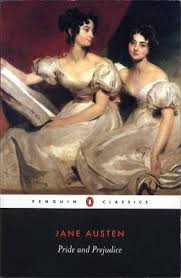
Chapter 10 – Jane, the eldest of the five Bennet sisters, has paid a visit to nearby Netherfield, in the course of which she has been caught in a rain shower. Walking instead of going in a coach is in itself significant – the Bennet’s have a coach, but it is not available. This helps precisely locate their social status – a one-coach family. Jane inevitably catches a cold, and second daughter Elizabeth has to go to Netherfield to care for her (this time the coach is available). This is just the first of several occasions when fate conspires to bring Elizabeth and Darcy together. Elizabeth is a family guest, but one with a special status, invited to care for her sister but not otherwise part of the party. This makes her a little detached from the others. It is unusual for someone to be a house-guest (i.e. staying overnight) on such a brief acquaintance.

In the evening the company gathers for dinner, followed by witty conversation and music. Elizabeth and Darcy spar; she is aware of his reputation as a gruff, unfriendly character, which was confirmed by his rudeness about her at the recent ball. But her attitudes begin to soften during the course of their conversation:

“Elizabeth, having rather expected to affront him, was amazed at his gallantry; but there was a mixture of sweetness and archness in her manner which made it difficult for her to affront anybody; and Darcy had never been so bewitched by a woman as he was by her. He really believed that were it not for the inferiority of her connections he should be in some danger.”

It is interesting to follow Austen’s masterful use of the narrative point of view here. In the first phrase the narrator gives us Elizabeth’s perspective – she is amazed by Darcy’s gallantry, confounding her earlier perception of him as someone gruff and rude. The next phrase is a more general observation about how Elizabeth is usually perceived – as both sweet and arch. We then are given Darcy’s confession – he is bewitched by her. Although we traditionally think of this romance as one in which the characters gradually fall in love, and struggle with their feelings, the reality is quite different – their mutual attraction is apparent from an early point, and from then it is only a question of navigating the various hurdles in their way, not least Darcy’s scruples about Elizabeth’s poorly connected family.

Chapter 15. Mr Collins, heir to Longbourn, the Bennet family home, comes to visit with the explicit intention of engaging himself to one of the Bennet daughters. Two preliminary points before I come to the paragraph in question. Firstly, I suspect ‘Longbourn’ is a little joke, referencing the phrase ‘long borne’, as in long suffered or tolerated. Precisely who is long suffering is another matter – most if not all of the Bennet household would probably lay claim to the phrase. The other more complex point relates to the business of the entail of Longbourn. When Mr Bennet dies the property will be left to his cousin, Mr Collins, not his daughters. This is the infamous ‘entail’.

We are given very little information about this entail – it is presented as an unfortunate fact of life about which little can be done, and Mrs Bennet is mocked for protesting about it and not understanding the details. Commentaries (I am sure correctly) claim that the practice of leaving a property to a single male heir was intended to avoid family wealth and estates being dissipated amongst numerous heirs, or going out of the family entirely through the female line. But that explanation doesn’t really help here – the effect of this will is that the Longbourn estate while preserved in its entirety is going out of the family, to a distant cousin with a different family name. If preserving the integrity of the modest estate is critical (and it is not a grand country house, after all, so the importance of this is less than it would be for Pemberly or Netherfield, for example) then Mr Bennet could simply leave the estate to his eldest daughter. It’s also unclear precisely who has imposed the entail on the estate – some commentaries suggests that the entail is like a long lease or another condition of occupation, imposed by a long-dead ancestor. But that can’t surely be right – can entails persist across the generations in the way this implies? It must be in Mr Bennet’s legal power to change the terms of his will and bequeath his property where he sees fit.

In the end of course the point becomes moot, because both Elizabeth and Jane marry well and into money, and are likely to produce a male heir to inherit Longbourn in any event.

Nevertheless, for now Mr Collins is the heir, and he is seeking to heal family rifts and keep the property in the family by marrying one of the sisters. His fancy alights on Jane, as the eldest, but when told by Mrs Bennet that she is likely to be engaged, his change of heart is swift:

Mr Collins only had to change from Jane to Elizabeth – and it was soon done – done while Mrs Bennet was stirring the fire.

Affection is as ephemeral as that, a matter of simple choice rather than anything more complex – as long as Elizabeth is young enough to bear an heir, she will do. When she declines his kind offer the change to Charlotte Lucas is made with similar speed and as little disturbance. The casual brutality of his transferable affections here tells us all we need to know about Mr Collins, one of Austen’s great comic monsters.

Chapter 24. Jane and Elizabeth are discussing Charlotte Lucas’s marriage to the insufferable Mr Collins. Jane, as always seeing the positive in any situation, says that Charlotte “may feel something like regard and esteem for our cousin”. Elizabeth’s rejection of this is absolute

Were I persuaded that Charlotte had any regard for him (Mr Collins) I should only think worse of her understanding than I now do of her heart…Mr Collins is a conceited, pompous, narrow-minded, silly man….the woman who married him cannot have a proper way of thinking”

Charlotte Lucas’s decision to accept Mr Collins’s proposal is a pragmatic decision, in which affection, regard or esteem plays no part. She needs a husband with a reasonable income and Mr Collins is available. Aged 27, without a significant income of her own, and not being regarded as a beauty, it is hard not to see Charlotte as a portrait of the choices women, not least of course Austen herself, had to make all the time in Regency England. Not everyone was lucky enough to snare themselves an English country gentleman. Despite Elizabeth’s incredulity, the signs are that Charlotte has made a comfortable life for herself in the Rosings rectory.

Mr Collins is indeed a monster, but I don’t think the reader is invited to share Elizabeth’s judgment or condemnation of Charlotte. Charlotte’s decision to settle for Mr Collins plays an important part in the narrative, as it leads Elizabeth to re-evaluate her own attitudes towards her choice of a life partner.

Chapter 28. Elizabeth has gone to Kent to visit her newly married friend, Charlotte Collins nee Lucas. A carriage stops outside the Rectory – it contains Miss Anne de Bourgh, Lady Catherine de Bourgh’s daughter, and her governess. These are two of the numerous almost invisible and silent women that people the background of this novel. While Charlotte speaks to the carriage’s occupants, Elizabeth looks on:

“I like her appearance, said Elizabeth, struck with other ideas. “She looks sickly and cross. Yes, she will do for him very well. She will make him a very proper wife”.

That Anne is intended as Darcy’s wife, by familial arrangement rather than by way of formal engagement, is not something that has publicly discussed with Maria Lucas, so Elizabeth seems to be speaking more to herself than Maria. Darcy pops into Elizabeth’s thoughts at the sight of Anne- she refers to him as “him” here, not by name. The narrator tells us plainly that Elizabeth is in denial – while she says she like’s Anne’s appearance, she is actually “struck by other ideas”. She evaluates Anne, whether she realises it or not, as a competitor, and is pleased that she is not to be feared.

This aside almost certainly goes over the head of Maria Lucas, one of Charlotte’s younger sisters who is Elizabeth’s companion on this visit. Maria Lucas is another of the walk-on parts scattered throughout the novel, and while she is given a few lines of her own, she mainly acts as a foil to the more mature, more intelligent Elizabeth.

Chapter 31. The setting for this scene is a gathering at Rosings, Lady de Bourgh’s home. Elizabeth is playing the piano, and Mr Darcy comes over to observe her play. Archly, Elizabeth says:

“You mean to frighten me, Mr. Darcy, by coming in all this state to hear me? I will not be alarmed though your sister does play so well. There is a stubbornness about me that never can bear to be frightened at the will of others. My courage always rises at every attempt to intimidate me.”

“In all this state” is an ambiguous phrase. It could mean in an agitated state, or it could mean “in all this stateliness”. There is no indication in the text that Darcy is in any kind of a state – leaving the reader to infer either he is showing his emotions, and the narrator has chosen not to describe these, or that he is perfectly composed, but that Elizabeth is teasing him. This is the matter of fact paragraph which precedes this comment:

“Colonel Fitzwilliam reminded Elizabeth of having promised to play to him; and she sat down directly to the instrument. He drew a chair near her. Lady Catherine listened to half a song, and then talked, as before, to her other nephew; till the latter walked away from her, and making with his usual deliberation towards the pianoforte stationed himself so as to command a full view of the fair performer’s countenance. Elizabeth saw what he was doing, and at the first convenient pause, turned to him with an arch smile, and said:..

One of the reasons Elizabeth is so loved by readers, is that she stands up for herself, brilliantly and fiercely against Lady Catherine, but also here when Darcy attempts to put her off her piano playing simply by his presence. We see Elizabeth’s courage rise again when someone foolishly tries to intimidate her.

Standard
Book review

Breakfast at Tiffany’s, by Truman Capote, 1958

Enjoying my new-found freedom to read what the hell I like, I decided on a whim to try this wonderfully short (less than 100 pages) novella by the author of ‘In Cold Blood‘. Turned into a memorable film with Audrey Hepburn only three years after it was published, it is one of those books that is better known in its cinematic version than as a novel.

The novel tells the story of the narrator’s brief friendship (but not romance)Tiffanys in 1940’s New York with the irrepressible Holly Golightly. Holly is an American geisha, a girl of negotiable friendship, who bursts into the narrator’s life one year, and is almost as quickly gone, flying off to Brazil to avoid having to give evidence against a gangster acquaintance. This is Holly’s story.  She is vibrant and has an enormous appetite for life:

“Be anything but a coward, a pretender, an emotional crook, a whore: I’d rather have cancer than a dishonest heart.”

In other words she is true to herself, to her appetites and instincts, even if this means that she crosses the line of what society considers acceptable. The narrator admires her from afar, and hardly emerges at all as a character; he is dubbed Fred by Holly, after her brother abroad somewhere distant fighting in the Second World War, but remains otherwise anonymous, a lens through which we watch Holly and her adventures. This technique reminded me of the way Fitzgerald uses Nick Carraway in Gatsby – an observer bearing witness to the social whirl around someone larger than life.

The film version of the novel sanitises and romanticises Holly. In the novel she has a hard edged protective outer shell, and realises that she cannot afford any sentimentality or even romance in her life. The only times this facade is pierced is when she receives news of her brother’s death, and at the end when she asks ‘Fred’ to care for her cat, a request he faithfully carries out.

Penguin published this short novella with three short stories, House of Flowers, A Diamond Guitar, and A Christmas Memory.  These are harmless enough, very different in tone from the principal story, but I can’t avoid the impression that they are padding, some odds and ends added in to give the impression of a longer novel, without adding much if anything to the main event.

Capote was a journalist, and only dabbled in novel writing: as such this is really just a sketch. You could probably watch the film in about the same time as it would take to read the novel, and I suspect it would be a more rewarding experience. Why not do both?

Standard