If A Sitting President Can Deny or Delay the Outcome of an Election …


Something has changed in America, and pretending otherwise is no longer safe. If a sitting president can deny, delay, or obfuscate the outcome of an election, then democracy itself is in jeopardy. And if one political team claims the right to question or refuse legitimate election results, then the opposing side logically inherits the same right. That is not a threat —it is a consequence. Just like in a football game, there has to be an level playing field with the same rules for both teams in order for the true winner to gain the moral highground to take the reigns of government in a democracy.


If Team Trump were to deny, delay, or obfuscate the procedures or results of the 2026 midterm elections, then Team Democracy would face a choice: accept a broken democracy, or prepare a constitutional, collective response. The publishing of said constitutional, collective response should be created now, well ahead of the midterms, so there is no chance of getting caught flat-footed in November.


One possibility is for the Democratic Governors Association — or a similar alliance of state leaders — to announce today that they are standing together to defend free and fair American elections. An Article Five–style pledge — “you come for one, you come for all” — would signal unity and strength. The purpose would be to prevent foul play and its resulting mayhem in November.

Let me lay out the logic plainly. Many Americans believe the country is already in a political war — a conflict not of weapons but of institutions, trust, and power. Democracy, once a radical idea, depends on citizens choosing representatives who argue and negotiate within agreed rules. Authoritarian systems do not operate that way.

The Founders wrote about “self-evident truths” for a reason. Evidence literally means from what is seen; video hides in the word evidence. And today’s polls reveal most Americans feel they have seen enough. With the midterms approaching, the question is not whether citizens should reject results they don’t like; they should not, of course. Elections carried out by longstanding rules, with broad participation and lawful procedures, must be accepted regardless of outcome. Americans have done this before. Many disliked prior results, but the system held because people respected the process.

The fear today is totally different: that elections may be contested not through law but through power. If attempts are made to delay or undermine the midterms, states should be prepared to respond lawfully and collectively. Governors could announce that, in the event of clear election interference, they would enact their emergency powers to protect their citizens and institutions — including reconsidering how and to whom federal tax dollars are paid and managed until constitutional order is restored.


This would not be a declaration of separation, nor the creation of a new country. It would be a conditional safeguard ; a contingency plan meant to preserve constitutional norms if they are threatened.

Such a stance might resonate with many Americans across the political spectrum. Distrust of federal power is not new; it has appeared in movements from the Tea Party to modern progressive coalitions. The idea of states asserting greater autonomy has deep roots in American history.

And here is the strategic point: if citizens know there is a peaceful, organized, constitutional backup plan, attempts to manipulate elections lose much of their power. Deterrence works when the consequences are clear and there is a feeling of reassurance. History shows that would-be strongmen respect strength. Institutions survive only when people are willing to defend them collectively.

This is not a call for chaos or refusal to accept legitimate outcomes. It is a call to prepare calmly, lawfully, and transparently ,so that no leader, from any party, can undermine the rules that make democracy possible.

Because if a sitting president can deny or delay the outcome of an election, then democracy itself is already in checkmate; and Americans of every political belief should refuse to accept that future.

Common Sense, Revisited

By Joseph Aronesty (2026)
Inspired by Thomas Paine’s Common Sense (1776)


Introduction

In January of 1776, a short pamphlet began circulating through the American colonies. It was written not for scholars or statesmen, but for ordinary citizens. Its purpose was simple and radical: to explain, in plain language, why submission to concentrated power was neither natural nor necessary.

The pamphlet was Common Sense, and its author, Thomas Paine, did not argue that King George III was uniquely wicked. Instead, he made a far more unsettling claim—that monarchy itself was a flawed system, and that placing excessive authority in any single individual inevitably corrupted both ruler and ruled.

Paine’s genius lay in his restraint. He did not rely on personal attacks or partisan loyalty. He appealed to reason, history, and human nature. His aim was not to inflame, but to prepare: to help Americans recognize patterns of power they might otherwise accept out of habit, fear, or fatigue.

The authority of the crown, Paine argued, depended less on force than on consent—consent given gradually, often unconsciously, in exchange for promises of stability and protection. Once citizens surrendered their judgment, resistance became not only difficult, but unthinkable.

Nearly two and a half centuries later, the outward forms of power have changed, but the underlying dynamics have not. Titles evolve. Justifications adapt. The language of authority modernizes. Yet the temptation toward personal rule—and the willingness of people to accept it—remains a constant of political life.

What follows is not a historical reenactment, nor an argument about personalities. It is a modern restatement of Paine’s central insight: that free societies do not lose their liberty all at once, but by failing to recognize familiar dangers in unfamiliar forms.

Paine wrote to awaken his contemporaries to patterns they were already living through. The purpose here is the same.


On the Nature of Concentrated Power

There is a persistent belief among free people that power, once granted, will restrain itself. Human history offers no support for this belief.

Power does not seek balance. It seeks continuance, expansion, and ultimately immunity from challenge. Power does not seek balance. It seeks continuance, expansion, and ultimately immunity from challenge. This eventuality is not so much a moral failing of individuals as a predictable feature of authority once it is detached from regular accountability. The problem is not that one person becomes all-powerful, but that many people slowly grow accustomed to the all-powerful.

In every age, those who seek extraordinary authority insist that the times demand it. Crisis becomes their justification. Disorder becomes their evidence. Conditions of instability are permitted—and sometimes encouraged—to argue that ordinary limits can no longer apply. What begins as a temporary measure soon hardens into habit, and habit, once accepted, becomes doctrine.

The defenders of concentrated power often argue that a strong executive is necessary to protect the nation. Yet history repeatedly shows the opposite: such power rarely protects a people from danger, but very often protects itself from the people.

Personal rule—whether it wears a crown, a uniform, or the language of popular mandate—rests on a simple inversion of responsibility. Citizens are told that judgment is a burden best surrendered. Loyalty is redefined as obedience. Dissent is reframed as weakness, or worse, betrayal.

This is how liberty erodes without being formally abolished. No proclamation announces it. No constitution need be rewritten at first. The shift occurs in tone, in expectation, in what citizens come to tolerate in the name of order. A free people does not wake one morning to discover itself unfree; it arrives there by degrees, persuaded that exceptional power is both necessary and temporary.

But power granted in exception is rarely surrendered voluntarily. Once a single figure becomes the symbol of national strength, any limit placed upon that figure is portrayed as a threat to the nation itself. Institutions designed to restrain authority are dismissed as obstacles. Laws are treated as inconveniences. Norms are mocked as naïve.

At this stage, the question is no longer whether power has overreached, but whether the public has forgotten why limits existed in the first place.

The great error is not trusting leaders, but trusting them too much—trusting them with powers that no individual, however well-intentioned, can safely hold. Free societies are not preserved by faith in men, but by suspicion of unchecked authority. That suspicion is not cynicism; it is civic maturity.

Those who argue that “this time is different” must answer a hard question: different from what? From human nature? From history? From every prior instance in which concentrated power promised stability and delivered submission?

A government of laws depends on citizens who understand that strength lies not in domination, but in restraint. When restraint is abandoned—when power is admired for its force rather than its limits—the transition away from self-government has already begun, whether it is acknowledged or not.


On Why Free People Surrender Their Judgment

The loss of liberty rarely begins with force. It begins with relief.

Democratic self-government is demanding. It requires attention, disagreement, patience, and the humility to accept that no single voice—including one’s own—is sufficient. In uncertain times, this burden feels heavy. When a confident figure offers certainty in place of complexity, many experience not alarm, but comfort.

This is the first seduction of personal rule within a democracy. People do not abandon freedom because they despise it, but because they are persuaded that freedom has become impractical. They are told that debate is weakness, that disagreement is disorder, and that unity requires obedience. The promise is simple: trust me, and you may rest.

What is surrendered first is not rights, but judgment.

Once citizens accept that independent thinking is divisive or dangerous, they begin to outsource discernment. Assertions are valued over evidence. Confidence is mistaken for competence. Repetition replaces proof. The language of strength becomes more persuasive than the substance of truth.

At this stage, loyalty undergoes a quiet transformation. It no longer means fidelity to shared principles or constitutional limits, but allegiance to a person who claims to embody them. To question the individual is presented as an attack on the nation itself. This confusion—between country and ruler—has undone republics before, always with popular consent.

Fear plays a central role, but not always in obvious ways. It is not merely fear of enemies, foreign or domestic, but fear of instability, fear of social conflict, fear of uncertainty. A population anxious about its footing becomes willing to trade liberty for reassurance, even when the reassurance is largely performative.

Those who resist this trade are often caricatured. They are labeled unrealistic, disloyal, or dangerous. In this way, caution is recast as cowardice, and submission as strength.

Another psychological comfort soon follows: identity. When political loyalty becomes personal, it also becomes tribal. Agreement signals belonging. Dissent risks exclusion. In such an environment, many suppress private doubts rather than endure public isolation. Silence multiplies, and the appearance of unanimity grows—not because conviction is universal, but because dissent has become costly.

The most effective autocrats do not demand admiration; they cultivate dependency. They position themselves as indispensable solutions to problems they continuously emphasize and rarely resolve. Each new crisis reinforces the narrative that only extraordinary authority can preserve order, and that ordinary checks are luxuries of a calmer time.

Over time, citizens who once insisted on limits begin to argue against them. Safeguards are dismissed as outdated. Independent institutions are accused of obstruction. The rule of law is reframed as an impediment to decisive action. What once protected liberty is now portrayed as its enemy.

None of this requires the suspension of elections or the abandonment of constitutional language. The words remain. The habits change.

The final psychological shift occurs when people come to believe that resistance is futile—that the trajectory is inevitable, and that adapting is wiser than objecting. At that moment, power no longer needs to coerce. It is sustained by resignation.

Yet history suggests a different lesson: that resignation, more than rebellion, is what entrenches personal rule.

A free society depends not on perfect leaders, but on citizens who retain the nerve to think, to question, and to withstand the discomfort of disagreement. When that nerve is lost—when convenience replaces vigilance—no external enemy is required. The erosion is complete from within.


On How Institutions Are Emptied Without Being Overthrown

Free societies often imagine that tyranny arrives by spectacle—tanks in streets, constitutions burned, courts shuttered. In reality, institutions are more commonly hollowed than destroyed.

The outward forms remain. Elections are held. Legislatures convene. Courts issue opinions. Yet their authority is gradually diminished, not by decree, but by disregard. When power is personalized, institutions are tolerated only so long as they comply. When they resist, they are portrayed as illegitimate, corrupt, or obstructive.

This tactic is effective because it reframes accountability as interference. Laws are no longer the expression of collective will, but impediments imposed by distant or unaccountable forces. Independent judgment is recast as sabotage. Expertise is treated as arrogance. In this environment, the erosion of institutional authority appears not as an attack on democracy, but as its defense.

Another method of hollowing is selective obedience. Rules are praised when they benefit the powerful and dismissed when they restrain them. Enforcement becomes inconsistent. Precedent is ignored. Over time, citizens learn that law is not a standard, but a tool—applied unevenly and explained afterward.

Once this lesson is absorbed, trust collapses asymmetrically. Faith in institutions declines, while faith in personal authority rises. The public, weary of complexity, begins to see institutions as theater and the individual leader as the only “real” actor.

At this point, institutional failure is not an accident; it becomes evidence used to justify further consolidation of power. The damage itself becomes the argument.


On the Myth That This Is Inevitable

Perhaps the most paralyzing belief in any republic is the belief that decline is unavoidable.

When citizens are repeatedly told that norms are obsolete, that restraint is naïve, and that past standards cannot survive modern pressures, they may come to accept erosion as adaptation. What was once alarming becomes familiar. What was once resisted becomes expected.

This sense of inevitability is carefully cultivated. Each broken convention is framed as a necessary response to unprecedented conditions. Each expansion of power is justified as an exception. The accumulation of exceptions is rarely acknowledged, and their permanence quietly assumed.

Yet history shows that inevitability is often an illusion created by momentum and fatigue. Systems do not collapse because collapse is natural, but because enough people conclude that resistance is useless. The belief that “nothing can be done” becomes a self-fulfilling prophecy.

Those who benefit from concentrated power rely on resignation. It discourages participation without provoking opposition. It replaces outrage with detachment, and engagement with cynicism. A disengaged citizenry is far easier to manage than an angry one.

The most dangerous phrase in a free society is not “this must be done,” but “this cannot be stopped.”


On the Duty of the Citizen in a Free Society

Thomas Paine understood that liberty is not sustained by declarations alone. It is sustained by citizens willing to accept the inconvenience of freedom.

Self-government demands more than periodic consent. It requires continuous attention, the courage to dissent, and the refusal to confuse comfort with stability. It asks citizens to tolerate disagreement and to defend principles even when doing so is socially costly.

The responsibility of the citizen is not to idolize institutions, but to insist that they function as intended. Nor is it to place faith in individuals who promise relief from democratic strain. The strain is the point. It is evidence that power remains contested and accountable.

Liberty does not depend on optimism, but on memory—the memory that concentrated power has always justified itself as necessary, temporary, and benevolent. A government of the people is a historical exception, not the rule. It survives only so long as citizens remember that order imposed without consent is not democracy, but quiet submission.

A free people need not be perfect. But they must remain awake.

The moment citizens surrender their judgment in exchange for reassurances, they trade a difficult freedom for an easy dependence. History offers many names for this arrangement. None of them describe a democratic republic.

Relevant Previous Posts

A Call for a Union of Governors to Protect Citizens from Federal Overreach

Resistance to Fascism: Is It Now Or Never?

Written January 8 2025, twelve days to the end of America, as we have known it.

The resistance has failed. Our cowardly president is afraid to go to war with a president-elect allied with Russia and the dictators of the world. The autocrats are out-numbered , so it is not a written alliance. It is the spoken alliance of a few sociopathic men who share the same vision for their own lives; a vision of being at the very top of the monetary chain in a country. It’s a kings dream as well; taxing the middle class to make them relatively poorer than the uber-wealthy, and render their progeny, to be more ignorant and compliant. The majority of the SCOTUS is in on the deal.

Before I knew about the 14th Amendment, sec 3, – which bars insurrectionists or those who aid or comfort them, from holding any office, including any judges or justices who aid and comfort the enemies of democracy, I wrote about the Espionage Act. It is still on the books. Julian Assange was indicted under the Espionage Act. I hold Donald Trump can be arrested under the Espionage Act as well, right up until J20.

Biden is still commander-in-chief today. He can announce a national emergency any day between now and J20, the day the earth will change forever, if he does nothing. It would be nice to hear Jack Smith’s reports, as we were told we would, but whether the Jack Smith report is aired or blocked by DOJ fear, Biden can declare war on our home-grown terrorists, which is essentially what Project 2025 will be.

Biden can broadcast his own version of FDR’s I hate war speech. He can arrest, or sequester Donald Trump for treason. He can say that he deems that Trump’s actions and words have created a national emergency that threatens all Americans. He can state, with constitutional certainty, that the 14th Amendment, sec 3. renders Donald Trump disqualified to serve, even if he was elected. He can “sorry pals” to the GOP, and tell them they should have run a candidate who was eligible to serve.

Right up until J20, Joe Biden can declare war on Trump and those allied with him within our government. Does Joe understand what Trump 2.0 will do to America? Does he think the elections of 2026 will be fair? Does he see how elections work in Russia and Hungary. They don’t. Do MAGA people see how the Russian people live under the thumb of a dictator? They don’t.

Biden can stop Trump from being president via his sworn oath to protect the Constitution and the American people as commander-in-chief. He can ask his DOD to court-martial Trump for keeping and sharing classified documents. That’s also a crime in the actual Espionage Act, copied below. He can say Trump’s current alliance with Putin, as reported in RT media, is an act of treason under The Espionage Act because we are currently in a war with Russia over the fate of Ukraine.

Does Joe Biden realize that cyber war is the only way to war against nuclear powers and that Putin has been at war versus democracy from the election of 2016 when he gave help to his recruited ally?

If Joe won’t do it, he can step down and give Kamala Harris a try, but she’d have to declare she will not seek the presidency or become the president by default. We actually will need a new special election, likely about April 1 of 2025. I believe, once MAGA people hear that, many of them will be okay with this. His cabinet picks and threats have many of his voters scared as well. In April of 2024, 75% of Americans wanted neither Trump nor Biden.

Why the Worst Is Inevitable If Trump 2.0 Is Not Stopped Before J20

Political crimes always escalate quickly when fascists take office. After all, fascism is the union of business and government, where the leaders profit from that relationship. Once the inevitable crimes against “the people” escalate, those involved in those escalated crimes must fight to stay in power forever to hide their crimes, just the way Trump did when he lost in 2020. Our resisters, our Navalny’s, will be tactically silenced because their words represent truth. By 2028, the resistance will be over after getting very bloody.

Perhaps California and key states will unite, secede, and form their own country, which might be the fastest way back to a culturally united America. Survival of the fittest states would work to unite Americans soon after the divide. Americans will have learned their lesson. It would be easier than surviving after we give autocrats military might.

It has occurred to me that Trump probably wants Greenland, so he can have his own Siberia for dems who won't bend the knee. He can't use Alaska. The dems in office will logically become the new "Jews in Nazi Germany", along with brown-skinned people. But he can't gas them. Sure, some will fall out of windows and helicopters, - sending a message. Fear will be instilled in those who just want to survive, which is what most people want and always has been. But there will be so many of resisters. So Greenland is sort of a perfect place to keep millions of the resisters. Gotta keep up with Vlad. After all, Putin replaced Roy Cohn in Trump's ambitious sociopathic brain, as the man to emulate.

January 7th, 2017

On July 27th, 2016, in Doral Florida, Donald Trump said “Russia, if you are listening, I hope you are able to find the 30,000 emails … you will be mightily rewarded by our press”. I hold that broadcasting an invitation to a known foreign enemy state to influence America’s free and fair elections was a violation of the Espionage and Sedition Act. This is why. It had better have not be okay, or this democracy will not long survive.

Though much of the Espionage Act seems to refer to communication technology we rarely use any more, and focuses on acts committed during war times, the heart and soul of the act applies today’s times. War is not defined in the Constitution and the nature of war has changed since WW1, when the Espionage Act was written into law. Cyber war against countries that have the bomb has replaced wars with bombs.

Putin is the world’s pioneer and the leading expert in cyber war. Cyber warmongers use words as weapons and install loyalists into foreign governments who can get the master the nearly same result he might desire from physical wars. Russian malware called Fancy Bear has been targeting governments and military organizations for years, especially NATO states like France and Germany.

Section 2 of Espionage Act: Link to the full 1918 Espionage Act Five minute read.

Whoever, with intent or reason to believe that it is to be used to the injury of the United States or to the advantage of a foreign nation communicated, delivers, or transmits, or attempts to, or aids, or induces another to communicate, deliver or transmit, to any foreign government, or to any faction or party or military or naval force within a foreign country, whether recognized or unrecognized by the United States, or to any representative, officer, agent, employee, subject, or citizen thereof, either directly or indirectly and document, writing, code book, signal book, sketch, photograph, photographic negative, blue print, plan, map, model, note, instrument, appliance, or information relating to the national defense, shall be punished by imprisonment for not more than twenty years. 

Tampering with or even affecting free and fair elections, by subverting the will of the American people must be defined as an injury to the US. It is the will of the American people that votes in elections. Citizens are part of our government. In a democracy, they are the most important part of the government. In a fascist country they are the least important members of the government. Citizens rights were the the reason the US Constitution was created – a government of, by and for the people.

Therefore, misinformation via broadcast media or social media cannot be categorized as protected personal free speech for this reason. Misinformation by media must be a crime, just as it is for false claims for any product. Trump asked on national TV for a known enemy to hack his opponent’s computer and release what might be found. He also suggested that person, or any would-be-hacker would be mightily rewarded.

Since Donald Trump invited Russia to hack a presidential candidate’s computer on national TV, I believe he is guilty of espionage. I believe our current commander-in-chief can, and should act immediately, citing the Espionage Act of 1918 and the 14th Amendment sec 3, and his sworn duty to protect Americans and the Constitution and arrest Trump, in the minimum sense of sequestering him with an ankle bracelet. Our commander-in-chief can declare war on those who have meddled in elections or aided insurrectionists. The same people advocate for these two positions. He can say we will have new special elections in April and that Kamala Harris will not run, but neither will anyone who has openly comforted insurrections.

I argue that inviting a foreign enemy to affect an American election does indeed do harm to the USA; that America is more than just the sum of our communal land, people and resources. The USA is also our way of governance. And the bedrock of our government is free, fair, unhampered, unhacked elections.

An invitation to commit a crime is, and must be a criminal act for the rule of law to prevail in the USA. I’d like to remind people that Charles Manson did not commit murder; he encouraged others go after his perceived enemies, and he got life for doing that when his cult members committed crimes.

Free and fair elections define our democracy. An invitation to hack any political election is therefore, a criminal, seditious act that does real harm to the United States. Should we lose free and fair elections, the USA, and the world, will never be the same. This is not hyperbole.

Your job as a citizen is to contact your representative and Senator, and tell them these words or close to it: (copy paste is fine ) Dear , Representing my will, is your job and responsibility. I want Joe Biden to use his sworn duty to protect the American people and to uphold the US Constitution and its laws, including the Espionage and Sedition and and the 14th Amendment, and arrest Donald Trump for national security reasons and bar him from holding office. I want a new special election with no one permitted to run who has openly aided or comforted insurrectionists.

Ask him to broadcast that he will also bar any in congress who come to the aid of Donald Trump, a traitor and insurrectionist, because they too will be aiding an insurrectionist and traitor, in plain view and that this includes judges and justices. Ask him to say he is cleaning house of any insurrectionists who will not distance themselves from Donald Trump, for the good of the national security.

Thank You for doing your share as a citizen and speak up to your reps. This weekend, we should start publicly protesting the transition of power to a fascist treasonous mob.

In this post below, I also speak about starting the conversation about National Divorce. That’s the other easy way back to a united America. Let the red states have their president. We will select our own. We will share the military costs based on population in the states. Their people will come running back to the real American center, which we know wants not to surrender to fascism.

Relevant previous post: “Cyber” is the New Way to War and Putin is Cyber Warfare’s First Master

This autocracy vs. democracy map has been at my blog for seven years. Trump as potus was part of the struggle you see in the map that resembles a RISK board. I do wish others would post a map like this so more people would get a visual on what is at stake. Pretty sure even MAGA people won’t like their lives better in a fasict state.

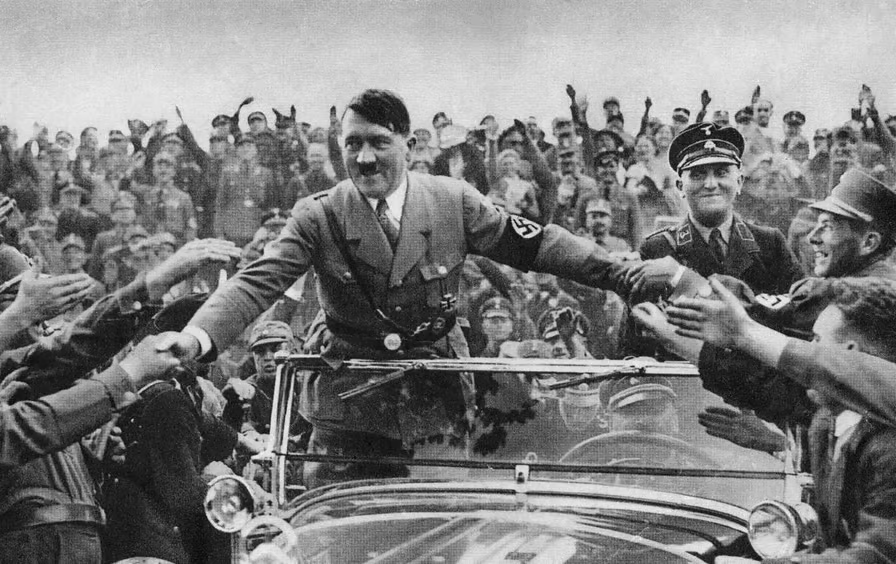
Who Voted For Hitler?

This is nearly verbatim from the Nation, by Dan Simon. I have edited it to make it more concise and easier to absorb.

The percentage of American voters who still support Trump is already vastly greater than the percentage of Germans that supported Hitler during his rise to power.

In 1928, the National Socialists—the Nazis—were a negligible, declining party. Out of his disappointment with his party’s electoral ineffectualness that year, Hitler defied conventional wisdom and changed direction, throwing his organizational muscle to the countryside instead of the cities. Two years later, in the parliamentary elections of 1930, the Nazis suddenly emerged as a force with just over 18 percent of the vote. And in 1932 they reached just over 37 percent of the vote nationally, their high-water mark, prompting Hitler to call on President Hindenburg to name him chancellor.

Hindenberg scheduled another parliamentary election instead, and in November of 1932 Hitler’s Nazi party suffered a major reversal, losing 2 million votes by comparison with its results just four months earlier. Then, in a fateful miscalculation, thinking the Nazis were now in a weakened state and thus controllable, Hindenberg proceeded to name Hitler chancellor after all.

Hitler now held sway over the police and the only electronic media of the age—radio.

In February, 1933, the Reichstag, Germany’s parliamentary building, was set on fire. The Reichstag fire became the justification for the arrests en masse of known Communists, including all Communist members of Parliament, clearing away the Nazis’ main adversary.

(This is why Trump calls January 6th a love fest and will declare in a National Holiday, if elected. )

What followed with almost blinding speed was the consolidation of power by Hitler, the building of a war machine, and then the start of Second World War itself. Within just a few months, the Nazis had asserted complete control over industrial output, finance, labor, the military, and politics in Germany.

But the key election was the one that took place on July 31, 1932, when Hitler’s Nazi party secured only 37.3 percent of the national vote. Since only three out of eight voters supported Hitler at that point, one must ask, which Germans voted for Hitler and why?

In the East Prussian town of Thalburg. In April 1930, the Social Democratic Party (the SDP) announced a major rally there on the subject of “Dictatorship or Democracy.” The Nazis announced a counter-rally on the same day at the same time. The local police then prohibited both meetings. With the goal of preventing the SPD rally achieved, the Nazis now announced that their meeting would proceed, only at a new location in a small village just outside of town.

About 2,000 people came out for it, where they saw among other stirring sights a parade of some 800 storm troopers. The local press coverage emphasized how impressed Thalburgers were by the “size and determination” the Nazis displayed.

Two years later, in the election year of 1932, by which time the National Socialists had grown to be a major, albeit minority, force in German national politics, the biggest event of the year in the East Prussia region around Thalburg was a speech by Hitler himself. The Nazi Party arranged for trains to bring people in from all over the region. It was going to be an open-air meeting with seating capacity for 100,000 people, scheduled to begin at 8 in the evening. The seats were all filled by early afternoon. When Hitler’s plane flew overhead just before 8, there was a roar of “Heil!” from the swastika flag– and handkerchief-waving crowd.

There was the impression of a surging movement. But at the time, dues-paying Nazis in Thalburg numbered only 40 souls.

( This reminds me of the Trump rallies and TV coverage. Trump also created the illusion of a surging movement early on. )

The paramilitary Storm Troopers not only provided protection at events but also, traveling from place to place for planned events, bulked up appearances. Since many of the Storm Troopers were unemployed, so the Nazis set up soup kitchens and free breakfast programs, and these locations became natural gathering places for the party’s hardcore enforcers.

Thalburg’s Socialists maintained slogans and methods which had little correspondence with reality. They maintained the façade of a revolutionary party when they were no longer prepared to lead a revolution. They never seriously attempted to mend fences with the middle class and frequently offended bourgeois sensibilities. ( This reminds me of the Democrats, who really never fixed things for the working people, though they talked as if they wanted to. )

The Communists and Socialists mainly served as a threat with which the Nazis could whip up anti-Communist fervor, much as the radical right in America today uses socialism as a pejorative term.

In the decisive July 31, 1932, election, Hitler received exactly 37.3 percent of the overall vote across Germany. He fared less well in the cities, averaging 32.3 percent in urban centers with populations over 100,000. However, in towns with fewer than 25,000 inhabitants he scored better, averaging 41.3 percent of the vote. And in some of the smallest rural communities across Germany, he scored 80 percent or more of the votes, and in several the Nazi vote was 100 percent. The rural groundswell for Hitler included people of all classes and income levels. But what is most striking is how none of the three other major parties managed to present a clear alternative.

Similarly to the unprecedented number of voters here in the 2020 US presidential election, the level of participation in the German vote increased from 1928 to 1932, from 75% to 84% percent in 1932. And everything possible was done during the Weimar years to enfranchise voters in Germany, from having elections on Sundays so as not to compete with work demands, to having ballot drop-offs at convenient locations.

At the same time, there was a shift in these years, generally, away from the traditional liberal and conservative parties, toward the parties of the left on the one hand and on the right, the Nazis, on the other. The threat of the Communists was perceived to be ever greater, even if in reality their influence was decreasing.

One gets the general sense that the major liberal and conservative parties increasingly saw Hitler and his party as a hedge against the left. In other words, the German voters of the upper classes felt that Hitler could appeal to workers who might otherwise align themselves with the Communists. And the establishment parties felt they could control Hitler, make sure he worked for them, and use him as their attack dog who, despite his violent ways (or possibly because of them), was still essentially supportive of the same German Protestant conservative values that they themselves espoused.

( The lesson here is: the biggest threats of a second Trump presidency will come from his supporters, not Trump himself.  )

Where did the voters of the Weimar period get their information about the National Socialists? Answer: from newspapers, the mainstream liberal, conservative, business, and other special interest press.

From the Munich Beer Hall Putsch of 1923—which first introduced Hitler and the Nazis to the German people—onward, the press was surprisingly indulgent of Hitler. Something like: Hitler may not always use methods we would agree with, but he has Germany’s best interests at heart, he is passionate, and he says things we agree with even though we might not come out and say them.

(History repeats or rhymes because people do not change much in 100 years. Their toys change, but their passions are pretty much the same.)

Or as one editorial put it on April 3, 1924, following his conviction on charges of treason, Hitler sought a Germany “free from the domination of international Jewry and finance capital, free from…Marxism and bolshevism.” From the outset, Hitler was presented positively across the whole spectrum of conservative and liberal newspapers as a man of action who could “effectively counter the communist threat.”

( The immigrants have replaced the communists as the others in this scenario. )

Many of the mainstream newspapers of Germany—the Fox News, CNN, NBC, Twitter, and Facebook combined of the day—all came to take a friendly attitude toward the National Socialists. They may not have supported them, but they did not condemn them outright either, treating them more as rascals whose heart was in the right place.

As for the violence, the newspapers provided an easy excuse: it was a justified response to the provocations or attacks that had come first from the other side.

The fight for the hearts and minds of Germany’s voters became an unequal one: The Nazis and their supporters conveyed a sense of extreme urgency, whereas the alternatives to the Nazis, including the Communists, social democrats, and traditional conservatives, were not able to present their own cases in ways that were either urgent or even clear.

In Berlin, the highest levels of support for the Nazis came from the upper- and upper-middle-class districts. Hitler’s Nazis commanded some 60 percent of the vote in those districts—nearly twice the national average. The disproportionate support for Hitler came from the well-heeled districts, motivated by their sense that Hitler would be their weapon against Communism; and because the Nazis had also successfully nurtured a covert anti-Semitism among the upper classes. Working class-neighborhoods were split more evenly, not strongly anti-Semitic, though susceptible certainly to the Nazi’s organizing exertions.

It is a point of some irony that the educated upper- and upper-middle-class populations, who react so enthusiastically to the claims of mass-society theories, should themselves have been the victims of a process that they, with such evident disdain, assume to be moving other people.

And then, one after another, the traditional conservative parties—including the Center Party, which had kept itself aloof from any sign of support for Hitler and his National Socialists for over a decade—began in the late 1920s and early ’30s, as the worldwide economic depression took its toll, to form alliances with the Nazis.

These alliances were characterized above all by a wishing away of the undisguised violence, including the murders of political opponents, the destruction of the property of despised groups, and other tactics, despite their being transparently visible.

And so it was that the Center Party finally capitulated to an alliance with the Nazis in March of 1933, an alliance of Catholics with Protestants, giving Hitler his first majority, which in turn allowed him to assume dictatorial powers. In a word, there came to be, if not a consensus, then at least irresistible momentum around the idea that what Germany needed wasn’t a democracy so much as a strong leader, a Führer.

Hitler is named chancellor on January 30, 1933, cements control in the March 5 elections, and secures dictatorial powers under the Enabling Act passed on March 23. Once he has been installed fully in power, among the first things he does is to outlaw the Communists and cripple the Social Democrats. At the same time, the bourgeois parties are dissolved, and the paramilitaries are consolidated.

Military expenditures increase during the 1930s by 2,000 percent. Taxes on business skyrocket, essentially doubling from 20 percent in 1934 to 40 percent in 1939, and caps are placed on profits from stocks and bonds, and interest rates. In all, state control is total and the country is put completely into war machine mode.

The greatest danger with a movement like the one embodied by Hitler’s militant Nazis does not stem from the movement itself, always a minority, but rather within the larger society and its halfhearted disavowal of the Nazis, together with a kind of secret brainwashing of the educated and well-off middle class that is vulnerable precisely because they think they aren’t.

The Nazis came to power because they had enough support from almost every demographic group, and not strenuous enough opposition from any demographic or gatekeeping group. And if your heart is sinking because of how familiar that sounds, I feel the same way.

We need to remind ourselves that in fighting for democracy what we are fighting for isn’t to have an administration that is better than Trump’s.

It’s only worth fighting for if the fight is for a future in which all people really are treated equitably, and with natural respect; where all people are entitled to a basic standard of living that includes universal health care; where we make peace also with the natural world around us and stabilize or reverse global warming and ecological despoliation; and where no one is homeless or hungry.

Unless these are the things we’re fighting for, it’s a losing battle.

These are the lessons of Hitler, and also the lessons of Trump.