by Marie Kochsiek
Decentralized technologies have the potential to create a better web: one that upholds people’s privacy, security, and self-determination. Yet, for many communities, the current web has failed to provide these foundations. Marginalized and underserved groups, those most impacted by surveillance, censorship, and systemic exclusion, stand to gain the most from decentralized tools. These tools can offer lifelines: secure identity verification, censorship-resistant communication, community-owned networks, and the preservation of cultural knowledge. We’ve seen this in action from grassroots mesh networks that keep communities connected during internet shutdowns, to decentralized archives that protect the histories of displaced peoples, to platforms that empower individuals to reclaim control over their data and narratives.
Tools are most powerful when built with, not just for, the communities they serve. This is why the Pollinator Program seeks out those who are already doing the work: past DWeb Fellows and Node leaders who continue to imagine and actively build a better web.
This July, we are thrilled to welcome a fantastic group of 12 Pollinators from eight countries across Europe, North America, South America, East Asia, South Asia, and West Africa — all of whom will be joining us at Alte Hölle, Germany for DWeb Camp: Root Systems (July 8–12, 2026) to share their knowledge, learn, and connect. Together, we will explore how decentralized technologies can foster resilience, justice, and autonomy. Our Pollinators represent a rich diversity of backgrounds: activists, technologists, artists, educators, and more. They are all united by a commitment to building a web that is truly by and for the people.
Please meet our 2026 DWeb Camp Pollinators.
Andrew

I firmly believe that everyone deserves the ability to have autonomy over their data. We should be able to choose where it lives and how it’s shared. The usefulness of protocols is building the tools and practices necessary to achieve this, regardless of the current state of the tech. Tech changes and in some domains, it changes quite rapidly. That’s a fact of life. Protocols are meant to represent stability and shared understanding such that it’s relatively immune to these changes.
Andrew is a technologist based in New York City that has always had a strong curiosity for decentralized technologies. He has worked on peer-to-peer applications focused on data autonomy and offline-first use cases since 2021, primarily in the form of data collection and mapping tools for indigenous communities at Awana Digital.
Project links: https://awana.digital/ & https://comapeo.app/
Join his session at DWebCamp 2026: Peer-to-Peer in Production
Blake

Decentralization matters because the current web concentrates power over information, visibility, and truth—often reinforcing structural inequities. Communities that are already marginalized are frequently excluded from contributing to, or being accurately represented within, the systems that shape public understanding.
Blake Stoner stands at the intersection of legacy and innovation, building infrastructure for the next chapter of civic innovation. Inspired by a lineage of public service, his work focuses on expanding how communities are seen, understood, and represented in the systems shaping society.
Stoner is the Founder and CEO of Vngle, a Civic Insights Company designing trusted systems for real-time, community-verified insight. He also serves as Board Chair of Heart of South Downtown, stewarding the revitalization of ten historic blocks in Downtown Atlanta into America’s most ambitious district for doers, creatives, and innovators. To advance nonpartisan progress, Stoner launched the Institute for Nonpartisan Innovation in partnership with the City University of New York, building collaborative research and civic technology that elevates community-powered breakthroughs. His leadership has earned national recognition, including honors from MIT Solve, American Public Media Group, and Special Congressional Recognition from the late U.S. Congressman John Lewis.
A recognized thought leader and fellow of Harvard, Stanford, USC, Columbia, and the Goldin Institute, Stoner is also part of the UCLA x National University of Singapore Global Executive MBA program, where he studies markets and shifting power dynamics across the USA and Asia. He holds an MS in Strategic Communication from Columbia University and a BA in Economics from Morehouse College.
Project links: https://www.vngle.com
Who Gets Seen? Rebuilding Trust and Visibility in the Age of AI
will be his session at DWebCamp 2026.
Billion

In an era of information monopolies and algorithmic gatekeeping, the only way to safeguard the integrity and resilience of truth is distribution of power and data sovereignty. For Cofacts, decentralization is a commitment to democratic practice, making fact-checking data remains transparent and free from the censorship or technical vulnerabilities of any centralized platform.
Billion is the co-founder of Cofacts, a project she initiated in 2016. She is a staunch advocate for marriage equality and open freedom, dedicating herself to bridging diverse communities and providing empowerment courses to combat disinformation. She is an expert in civic technology and digital democracy.
Project links: https://en.cofacts.tw/
Join her session at DWebCamp 2026: From Blood to Bits: Building a Decentralized Truth
.
Camille

My thinking has moved from decentralization as a technical question to a governance question. Who controls the keys, who can fork, who can exit. Working across civic mapping projects and local government AI, I keep returning to the same problem: the communities most affected by these systems have the least visibility into how they work and the least power to change them.
Camille Nibungco is a UX designer and civic technologist based in Los Angeles. They work across healthcare AI systems and community-centered civic tech, and they build at the intersection of complex systems and the people those systems routinely fail.
Project links: http://camillenibung.co
Human-in-the-Loop for Who?
will be her session at DWebCamp 2026.
Esther

More than ever, decentralized tools and protocols are necessary to protect the privacy and safety of vulnerable communities, such as those being currently targeted by the US fascist political regime. The rush of our professional and technical communities in computer science towards maximizing AI use has made the centralization and collection of our data by a few companies even more of a risk than before.
Esther is a postdoc in Computer Science at the University of Washington. She has deployed community networks around the world, and teaches technical networking at the Tribal Broadband Bootcamp (TBB). Since 2019, she is a Founder and Director of the 501(c)(3) nonprofit Local Connectivity Lab (LCL). Their Seattle Community Network (SCN) digital equity project builds DIY Internet infrastructure serving hundreds of users.
Project links: https://seattlecommunitynetwork.org/
Join her session at DWebCamp 2026: Seattle Community Network
.
fauno

Internet in Latin America is specially centralized from the cabling up, similar to other media, like TV and radio. We’ve been part of community networks and autonomous infrastructure (alternative hosting providers) and we’ve always put this work in the context of community media and the right to communication. Folks have been building their own stations, and we do this with servers and WiFi.
It’s a big opportunity for us all to implement distributed services in an infrastructure that’s our own.
His work and activism is focused on investigating, adapting and implementing ecological and resilient technologies, specially autonomous, collectively managed infrastructure.
In the last seven years he has been working almost exclusively on resilient web sites using Jekyll and developing a platform for updating and hosting them called [Sutty](https://sutty.coop.ar/en). In 2024, he also became an organizer and facilitator at [Escuela Común](https://escuelacomun.yanapak.org/) and developer and sysadmin at [Red Abya Yala](https://abyaya.la/).
Project links: sutty.nl, sutty.coop.ar, https://dweb.sutty.nl, and escuelacomun.yanapak.org.
Escuela Común and Red Abya Yala – local infrastructure for land defense
and Let’s host a Coopcloud server during camp!
will be his sessions at DWebCamp 2026.
Luandro

Decentralized tools matter because communities should not have to depend on distant platforms, opaque policies, or extractive business models to communicate, organize, preserve knowledge, or care for territory. For many of the communities I work with, centralization is not an abstract technical issue; it directly shapes exclusion, surveillance, fragility, and loss of control.
My perspective has evolved from seeing decentralization mainly as a technical architecture to understanding it as a social and political practice. It is about governance, legibility, maintenance, and whether people can actually use and shape the tools that affect their lives. A system is not truly liberatory if it is decentralized in theory but unusable, unaffordable, or impossible to maintain locally.
Tinker, florester and admirer of originary cultures. Luandro believes and lives a better world where communities are empowered and self-governed, people have the time and spirit to tend their human and non-human peers and tools are hacked or built for the well-being of people and the planet.
Project links: https://Awana.digital
Join his sessions at DWebCamp 2026: Peer-to-Peer, AI, Other Buzzwords, and Technologies for a Thriving Planet
and Peer-to-Peer, AI, Other Buzzwords, and Technologies for a Thriving Planet
.
LX
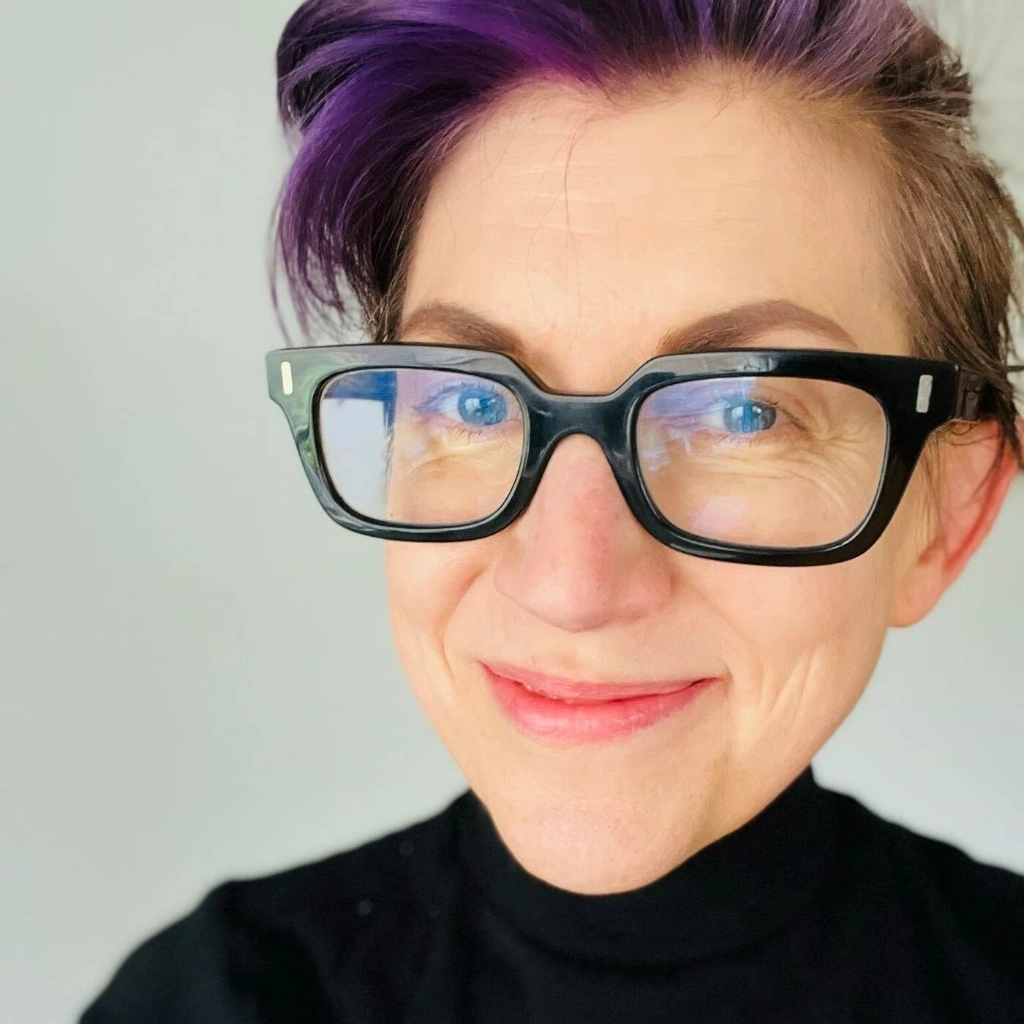
If we continue to work and play in the centralized, captured, corporate web, we will be both impeded from making change in the world that does not serve the incentives of corporations and the governments they support. We will increasingly be not only surveilled but limited in the information we can access. However, just tools and technologies will not extricate us. We have to also practice and develop social, cultural, and interpersonal approaches that are not coercive and extractive, we will need different economic models, and we will need to have the emotional capacity to be with one another, and the corporate systems work against these goals as well, leading to isolation, substituting money for care, and making their own implicit goals seem synonymous with taking action.
LX Cast is a researcher, community convener, program designer, strategist, and product leader who has worked on communication and collaboration tech serving millions of people for over a decade. LX is currently co-founder of Spacious, a peer-to-peer group audio app. They are the steward of Folk Tech, a 2026 Voqal Fellow, Curator at DWeb Camp, Chair of the Board at Tech Fleet, a board member at Prosocial Design Network, a steering committee member of the Council on Tech and Social Cohesion, a member of Aspen Institute’s Virtually Human working group, a space steward at DWeb Camp, a mentor with PDX Women in Tech, All Tech is Human, and Mentor Me Collective, and the teacher of The UX of Community. ~They work with organizations to develop communities of practice. LX is a founder at Changemaker PM, helping nonprofits develop product discovery practices. Past roles include Head of Research at Marco Polo, Sr. Product Manager at Notion, Chief Storyteller at Olark, Program Designer at AI Stewardship Practice Program, Practice Designer at the emergence network, Product Strategist at Lightningrod Labs.~ Resident Fellow in Community at Integrity Institute, a steward at Collaborative Technology Alliance, and the host of Belonging Builders. Belonging = Freedom = Responsibility is their core organizing principle. How we are with ourselves, our families and friends, our teams, our communities and our culture are interdependent and pattern one another. For this reason, they are committed to their own work in collective practice to be in right relation as a source of possibility for change.
Project links: https://folketechnology.org, https://dwebyvr.org and https://spacious.audio
Building Folk Tech
will be their session at DWeb Camp 2026.
Michael
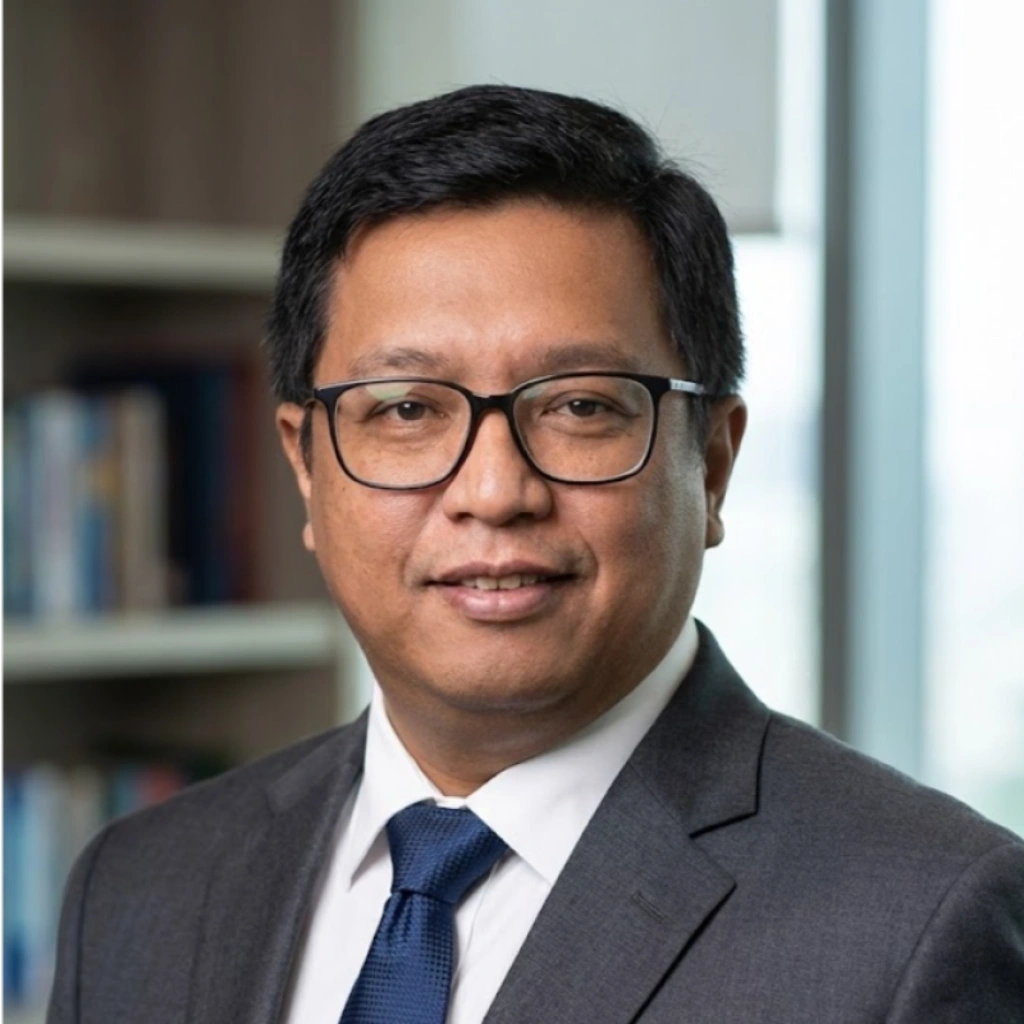
Our communities face extreme challenges: deliberate internet blackouts, severe kinetic and surveillance threats from the SAC, rugged mountainous topography, and the Monsoon factor
that destroys traditional hardware.
Developing decentralized tools is vital because centralized systems optimize for profit and control, leaving rural populations vulnerable. My perspective has evolved dramatically from purely seeking connectivity to engineering digital sovereignty and survival. Initially, ASORCOM aimed simply to bring Wi-Fi to the Siyin Valley. However, after the 2021 military coup in Myanmar, the state weaponized centralized infrastructure by cutting fiber lines and cellular towers to blind communities. Now, my focus is on building fail-graceful
systems. If a network requires external cloud authentication or state power grids to exist, it is compromised. We need decentralized protocols like LoRa mesh and HF SDR to operate below the noise floor, evading Deep Packet Inspection and surveillance by the State Administration Council (SAC). Decentralization ensures that when the outside internet is cut, local community knowledge and coordination stay alive.”
Pumsuanhang (Michael) Suantak is the Founder of eimiAI and the Founder & Director of Alternative Solutions for Rural Communities (ASORCOM). A two-time recognized DWeb Fellow, Michael dedicates his work to building resilient, decentralized technologies for marginalized, stateless, and deep-rural communities. Through ASORCOM, he facilitates the deployment of community-owned, offline-first mesh networks that thrive despite severe hardware and power constraints. With eimiAI, Michael is pioneering localized, sovereign artificial intelligence designed to break down linguistic barriers and provide accessible tech for populations traditionally ignored by centralized tech giants. He is a passionate advocate for bottom-up infrastructure, ecological awareness, and ensuring the decentralized web truly serves the rural edge.
Project links: https://eimiAI.com & https://asorcom.net
Join his sessions at DWebCamp 2026: Voices of the Edge: How to Build Low-Resource Language AI for Rural Communities
and Building Local Networks & Marginalized Public AI at the Rural Edge
.
Nádia

Especially in the global south, where we are working to establish systemic decolonization, it makes no sense to replicate centralized digital infrastructure. Both in terms of resource consumption and political organization, this model is not appropriate for the relationships we are trying to build between users and their tech.
We dream of Freirean schools where we can build and manage our systems in local contexts, so having a decentralized architecture is important for making the digital system more aligned with the social one. It is important and necessary to develop, discuss, exchange, co-create tools and protocols that enable our community to take collaborative care of the tools we own, and horizontally address the challenges we face, in terms of digital technology.
With an electrical engineering background, Nádia transitioned to the agtech field through photovoltaic irrigation systems. In contact with organic farmers and Brazilian agro-ecological movement, she started to orient her perspective towards digital systems that support collective work, while diving in the hacker culture and politics. She lives in a small farm in southeast Brazil.
Project links: https://www.tekopora.top
Social aspects of communities that build sovereign technologies
will be her session at DWebCamp 2026.
Riley

Infrastructure is political, and I believe in developing decentralized tools and protocols by and with communities who are most vulnerable to risk and repression. Right now in the US that includes communities of trans people, immigrants, and organizers, especially those of color. With technofascism on the rise, mass deportations of immigrants, transgender people having their IDs invalidated and revoked, adoption of digital identity systems and biometric surveillance, privacy protections for vulnerable communities are as urgent as ever. I see decentralization as a framework for privacy, equity, and resilience, enabling tools for democratic processes, censorship resistance, power redistribution, and community privacy.
Riley Wong is the Principal of Emergent Research, a research lab and consultancy investigating digital infrastructure for community privacy, agency, and consent. Their work explores the intersections of cryptographic tooling, cooperative governance, and community-led design, with a particular focus on how communities facing surveillance and repression can build and govern their own community infrastructure.
Riley co-founded the Community Privacy Residency in Taipei and Berlin, convening an international network of experts to co-create privacy infrastructure by and with vulnerable communities. Their background spans privacy-preserving data governance, consent infrastructure, and decentralized collective governance at Metagov, 0xPARC, and DWeb; machine learning engineering and AI ethics at Google; and award-winning investigative data journalism at ProPublica. Their work has been published or presented at MIT, Harvard Kennedy School, Yale, and Penn.
Project links: https://www.emergentresearch.net/blog/community-infrastructure-for-privacy-agency-and-consent
Join their session at DWebCamp 2026: Community Infrastructure for Privacy, Agency, and Consent
.
Senka
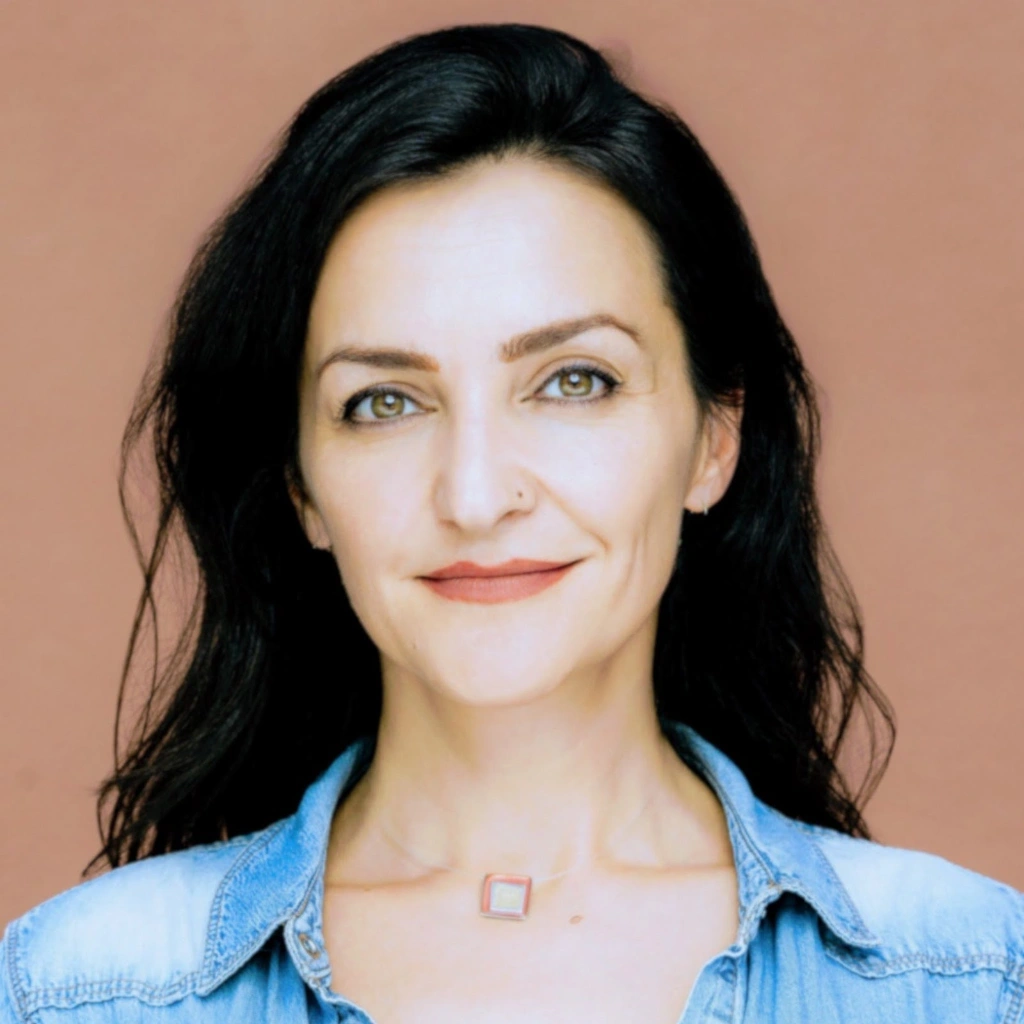
Reliable, affordable internet access depends on building equitable tech policy. The focus is shifting from grassroots advocacy into high-level government discussions regarding digital inclusion and community-centred connectivity. Integrating decentralization into these early frameworks is vital to prevent replicating old, top-down monopolies. Ultimately, decentralized networks ensure communities maintain reliable and inclusive access, even when major providers prioritize profit over people.
Senka Hadzic is a telecom engineer, researcher and public interest technologist working on affordable connectivity solutions for remote areas and disadvantaged populations. She is part of the iNethi team, a Cape Town based project enabling decentralized content distribution in community networks.
Project links: https://www.inethi.org.za/
The Art of Not Being Invisible
will be her session at DWebCamp 2026.
Shadrach

Decentralized tools and protocols give users the autonomy to decide on the platform, infrastructure, and features they want and even build their own infrastructure. Compared to corporate ones, decentralized tools are built with shared community values, such as inclusivity, trust, care, and a collaborative spirit.
For my community, decentralized infrastructure is an enabler. It ensures equitable access to the internet, civic participation, local ownership, financial inclusion, and long-term support and sustainability of community infrastructure.
Shadrach Ankrah is an IT Specialist and the Founder of the Africa Rural Internet and STEM Initiative (AFRISTEMI) based in Ghana. He works at the intersection of technical deployment and policy advocacy.
He currently focus on deploying community-owned Wi-Fi mesh networks in remote communities. These networks are built by the community, owned and managed by them, fostering accessibility and affordability, hence allowing user control. The local communities he serves are mainly remote, rural, and underserved, facing many challenges, including poor education, poor health, and ICT and infrastructure.
Project links: https://afristemi.org, https://snetgh.org, https://one4allalliance.org/ and https://isoc.gh/
Join his sessions at DWeb Camp 2026: Building the People’s Internet: Mesh Networks and Policy Advocacy in Ghana
and Root to Rise: Morning Aerobics & Movement
.
Tzu Tung

China’s interference — from the South China Sea to sustained information warfare against Taiwan — has made information protection urgent, now in direct tension with the openness decentralized communities have long championed. Decentralized communities have shifted accordingly: from encouraging open organization and surveying democratic opinion, to preserving it and building network resilience against censorship, severed cables, and legal intimidation.
War is deeply masculine in its logic, and so is much of our technical imagination. As an artist working within this landscape, the next focus is to feminize decentralized tools — in how they are conceived, narrated, and made accessible to different bodies, vulnerabilities, and ways of caring for one another.
Lee Tzu Tung (李紫 彤) is an artist and curator whose work integrates anthropological field research, political action, and economic critique. Their work explores how global majorities queer up
current authoritarian and colonial systems through open-source methods, decentralized tools, and participatory projects.
Politically active, Lee has organized Café Philo Chicago (2016– 2018), and participated in Overseas Taiwanese for Democracy. They were also a key organizer for major rallies in Taiwan’s 2016 civic movements – including Anti-Black Box Education, Equality of Same-Sex Marriage, and Passage of Time (Indigenous protest) – and have spoken out in Taiwan’s #MeToo movement.
A graduate of MIT and the School of the Art Institute of Chicago, where they received the New Artist Society Scholarship and Transmedia Storytelling Fellowship. Lee’s works have been shown widely, including at the National Taiwan Museum of Fine Arts, MIT Museum, Hyundai Motor Studio Beijing, Asymmetry Foundation UK, and Skövde Museum Sweden. They are also the founder of Tinyverse NPO, which supports transdisciplinary art and organizes Hackathon for Artists.
Project links: tzutung.com
Temple of the Wandering Daughters
will be their session at DWebCamp 2026.