Out now from wherever you get good books: 'Our Accidental Universe' - the true stories of how we stumble upon truth in the cosmos. blackwells.co.uk/bookshop/produ… (PS Special North American version - Accidental Astronomy - out in June)
Results just released from @NANOGrav and international partners show - for the first time - the signature of long-wavelength gravitational waves rippling through space. (1/n)
A team led by @jgreaves6 have found what might be signs of life high in Venus' atmosphere. They have detected phospine, a gas which on Earth is produced only by life, in quantities they say are too large to be produced any other way. (1/17)
A few weeks ago we heard about the discovery of Phosphine on Venus. This evening, someone at the @IAU_org decided they were annoyed other people were in the limelight. I wrote a response to their statement:
This appears to be a 2016 survey of about 1000 people. Same survey found 60% didn’t think dinosaurs were real. Methodology not online. In other words: likely a result of leading questions or some other framing. Don’t give this nonsense airtime.
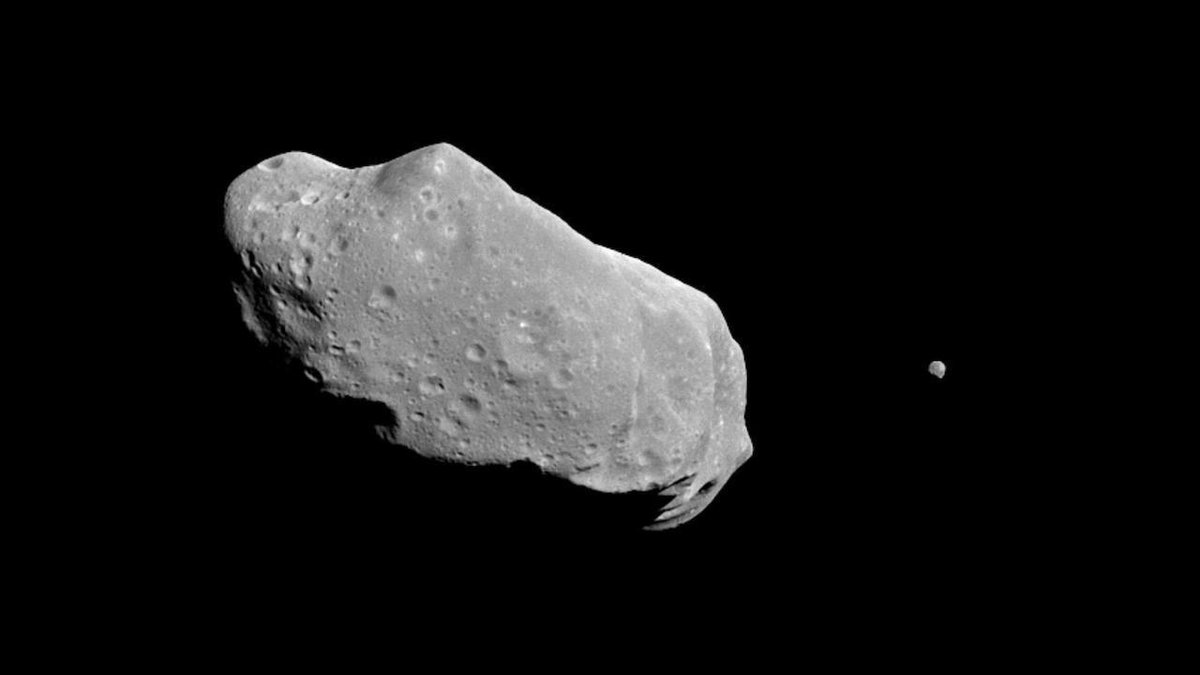
You might be hearing a lot about this asteroid which will whizz past on Saturday - but the minimum distance is about 3.5 million miles, so ignore clickbait like this.
"It was funny but it made your brain ache. A lecture's only good if it makes your brain ache a bit." - Felicity Hicks, who is 8, and who attended my recent talk in Cambridge. That's going on all the posters.
Venus hanging above a crescent Moon. Look west now if you’re in the UK - it’s good for the soul. Pretty clear Earthshine too - the dark part of the Moon slightly illuminated by light reflecting off our own planet’s atmosphere.
Some news, as they say: I'm delighted to announce my appointment as the 39th Gresham Professor of Astronomy - giving public lectures in the City of London and online, free to all, from September. (1/n)