user avatar
Lisa Feldman Barrett
@LFeldmanBarrett
Neuroscientist, psychologist, and author of "Seven and a Half Lessons About the Brain" (Amazon "Best Books") and "How Emotions are Made"
Boston, MA
Joined August 2015
Posts
  • Pinned
    user avatar
    SEVEN AND A HALF LESSONS ABOUT THE BRAIN: Best Books 2020 (Amazon + Barnes & Noble), Starred Review (Kirkus), "Must-read" (Discover Mag), "Beautiful writing" (@davideagleman), "Remarkable insights" (@DanielPink). The world's first neuroscience beach-read.
  • user avatar
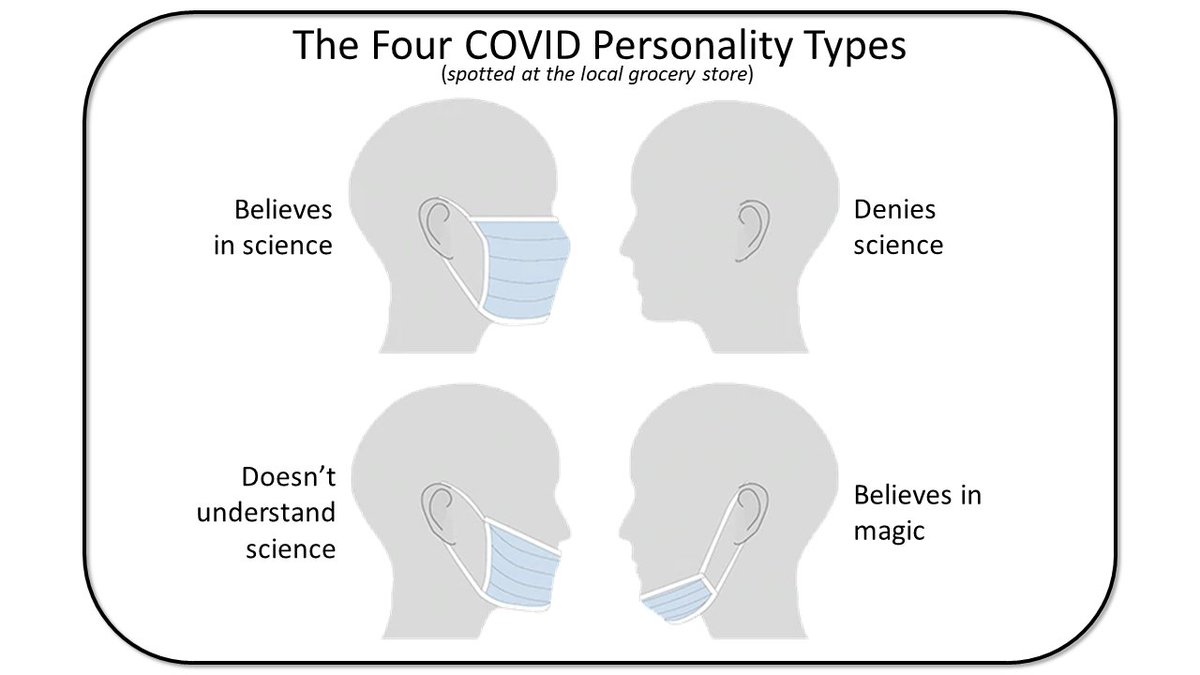
    My humorous husband @DanielJBarrett came up with this observation.
  • user avatar
    The most expensive tasks that brains do are (1) moving your body and (2) learning something new. They have a metabolic cost that may feel unpleasant. So, feeling bad doesn't always mean that something bad happened. You might just be doing something really hard.
  • user avatar
    Darwin was wrong: but some random columnist for "Scientific" American is right. Probability? Zero. More woke idiocy and thinly veiled Marxist criticism of "essentialism" masquerading as enlightened science google.com/amp/s/www.scie…
  • user avatar
    Most brain-imaging studies make 3 questionable assumptions: mental events are localizable, map uniquely to dedicated #brain circuitry, & are independent of larger context. These 19th-century views need an update. New #OpenAccess paper in @TrendsCognSci. 1/
  • user avatar
    In a social species, animals regulate each other's nervous systems, which is vital for health. Insects do it with pheromones. Mammals add sounds & touch. Humans, uniquely, can do it with WORDS. There is a real biological benefit in treating one another with kindness & dignity.
  • user avatar
    Dear friends: Yesterday, I learned that I've been awarded a Guggenheim Fellowship in neuroscience. Honors like these are never the effort of a single individual. THANK YOU to my many generous collaborators who patiently shared their expertise so I could become a neuroscientist.
  • user avatar
    00:00
  • user avatar
    People say about trauma that the body “keeps score,” making you more vulnerable to illness. But in fact, your brain keeps the score. Your body is the scorecard.
  • user avatar
    If you hide toys while a baby watches, they can remember up to 3 hiding places. But if you name the toys aloud with nonsense words ("dax," "blicket") before hiding them, babies can remember up to 6 hiding places. Even if all the toys look identical. Words have power.
  • user avatar
    The new @hubermanlab podcast is now available! Thanks so much, Andrew, for a truly enjoyable & thought-provoking discussion about the science of emotion.
  • user avatar
    Replying to @rowancheung
    This system appears to be detecting muscle movements, not feelings, and making guesses about their meaning, most likely based on Western stereotypes (like smile = happy, pout = sad, etc.).
  • user avatar
    IT'S FINISHED! I just handed my publisher the complete draft of a new book, "7½ Lessons About the Brain." It is a collection of short essays; each one covers a little-known but critical topic about the brain and human nature. To be published in late 2020.
  • user avatar
    Had a BLAST speaking with Andrew on the @hubermanlab podcast yesterday! Looking forward to the episode in a few weeks.
    I had the privilege of hosting @LFeldmanBarrett on the Huberman Lab podcast yesterday. I simply can’t wait for people to hear & learn from her. Thanks to Lisa, you’ll learn what emotions truly reflect and how we can use that knowledge to improve our mental and physical health.