
Pixel 11: In summary
- Google’s upcoming flagship range of Android phones
- Set to launch on 12 August 2026
- Tensor G6 chip could use a much more powerful CPU, but fall behind rivals on GPU capabilities
- CAD-based renders imply only minor design changes, but Pixel Glow lighting could deliver notifications when the screen is face down
- Removable batteries could be a new feature, alongside proper face scanning and a slimmer foldable phone
- Leaked wallpapers suggest a move away from bold colourways
- The phones could be using all-new camera lenses
- The Pixel 11 Pro models might ship with less RAM
Of all the handsets to debut in 2026, very few have quite as much excitement attached as the upcoming Google Pixel 11 range, and it isn’t hard to see why. Not only do these phones have the opportunity to build upon the already solid foundations of the current Pixel 10 crop, but after showing off the AI-centric features of Android 17, the expectation is that Google’s next phones will represent a major shift forward for Gemini.
With the addition of Pixelsnap (Google’s MagSafe equivalent), a telephoto camera on the base model and a wealth of software upgrades that actually help usability, the Pixel 10 range currently sets the standard as some of our favourite Android phones on the market, and when looking at the smartphone industry as a whole, Google is in a unique position to put itself forward even more.
The Samsung Galaxy S26 range, while competent, represented a very minor upgrade on what came before, and there are plenty of rumours floating around right now that Apple is looking to debut only it’s Pro level phones (as well as the folding iPhone Ultra) in September, and that the iPhone 18/18e, plus the iPhone Air 2, will be pushed back to March. By releasing four phones at once, with just the right amount of upgrades, Google could be faced with an open goal.
Of course, we’ll have to wait and see if Google can actually stick the landing with its next generation of phones, but anyone who might be considering a pre-order thankfully doesn’t have to wait to get an idea of what’s in store. There have been a large number of leaks and rumours regarding the Pixel 11 range and we’ve collated them here for your perusal.
Latest Pixel 11 rumours
All Pixel 11 phones could be set for a big camera overhaul, with a new 50Mp main lens for both the Pixel 11 and the 11 Pro Fold, whilst the Pixel 11 Pro and the 11 Pro XL will receive all-new main and telephoto lenses. After rumours of a FaceID alternative landing here, it now seems that the feature will be pushed back to next year’s phones.
When will the Google Pixel 11 be released?
In summary
- Expected to be announced on 12 August 2026
- Made by Google event will take place in New York
The Google Pixel 11 range is expected to be released in 2026, during Google’s annual summer event. The company’s Made by Google launch event will take place on 12 August in New York City.
Google used to launch new phones in October, but has now moved it forward for the last two generations.

Dominik Tomaszewski / Foundry
According to rumours, the Pixel 11 series is once again to include as many as four devices. If Google does the same as the last couple of years, the Pixel 11 Pro Fold will get a later release date than the other models.
These documents confirm the codenames for the 2026 Pixel devices, with the Pixel 11 series adopting bear-themed names, such as ‘cubs’ for the standard Pixel 11, ‘grizzly’ for the Pixel 11 Pro, ‘kodiak’ for the Pixel 11 Pro XL, and ‘yogi’ for the Pixel 11 Pro Fold.
For context, here are the launch dates of previous generations:
- Google Pixel 10: August 2025
- Google Pixel 9: August 2024
- Google Pixel 8: October 2023
- Google Pixel 7: October 2022
- Google Pixel 6: October 2021
Source: Android Authority | The Verge
How much will the Google Pixel 11 cost?
In summary
- Google is expected to raise prices this year from last year’s £799/$799
- However, models are expected to start with 256GB of storage
Pricing for the Pixel 11 is not confirmed, but the latest rumour suggests that Google, like many other brands suffering with the RAM shortage, will be passing those costs onto consumers and hiking prices this year.
The base Pixel 11 is expected to start at £879/€999 – that’s a hefty increase of £80/€100 from the Pixel 10, although storage is projected to start at 256GB, so the price will be fairer than it initially seems. The 256GB model of the Pixel 10 cost £899/€999 at launch.
The Pixel 11 Pro is expected to remain at a similar price. It’ll likely start at £1,079/€1,199 for 256GB of storage, which means it’s £20 less in Britain and unchanged in Europe.
However, the high-end models are expected to be much pricier. The Pixel 11 Pro XL is thought to be from £1,279/€1,399, making it £80/€100 more for the same amount of storage.
Meanwhile, the Pixel 11 Pro Fold is projected to go up in price from its predecessor by £50/€100, to £1,799/€1,999.
Source: Dealabs

Luke Baker
What specs and features will the Google Pixel 11 have?
In summary
- New Tensor G6 chipset with big CPU implications and only minor GPU changes
- The biggest changes could be made to the cameras, with new main lenses across the board
- Only minor design changes are expected, although Midnight and Pine colours have been teased
- Pixel Glow could deliver light-based notifications so you can avoid getting drawn into the display
- Removable batteries might appear on the Pixel 11 Pro Fold, alongside a slimmer build
- A new MediaTek modem for faster network speeds
Pixel 11: Design & Build
Given just how reluctant Google has been to massively overhaul the design of its smartphones, not since the camera bar turned into a visor for the Pixel 9 onwards, we aren’t expecting massive changes here. The latest rumours have largely confirmed this to be the case but there are a few smaller design tweaks to not only make the new Pixel phones look more svelte, but also improve their overall usability.
With Google previously stating we can expect a redesign every two or three years, it seems it’ll be the Pixel 12 series which will bring larger changes in 2027.
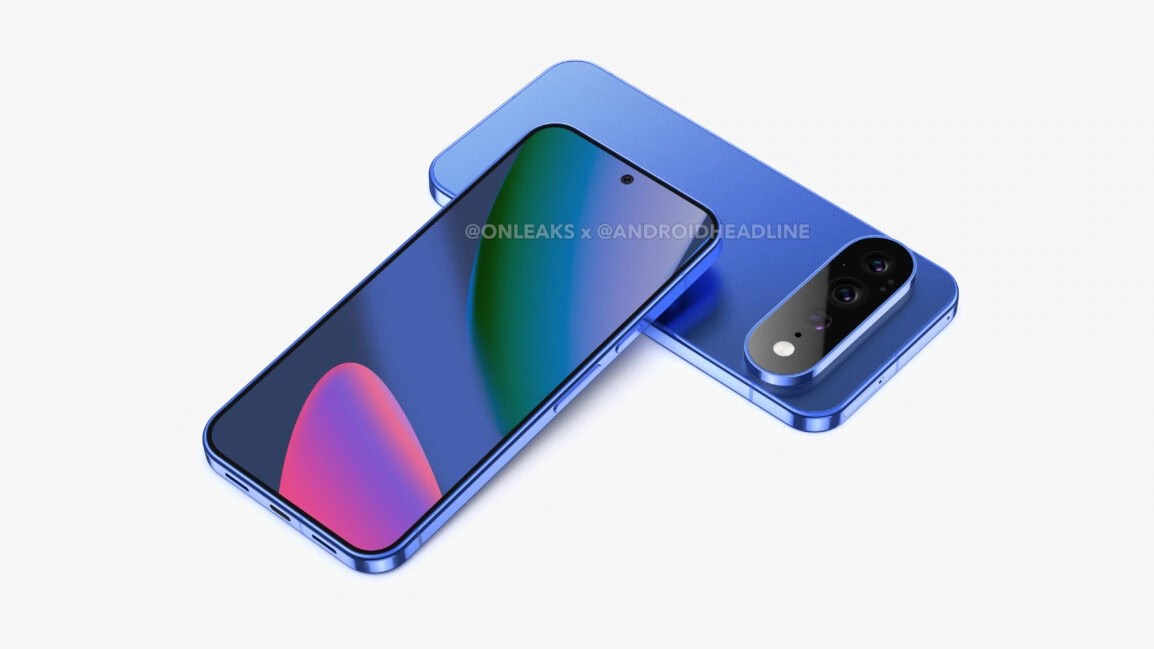
Starting with the Pixel 11 design, via CAD-based renders, it seems extremely similar to the Pixel 10 with only two design tweaks. That is a smaller bezel around the screen and an all-glass camera bar rather than a metal section around the flash.
The size is supposedly the same, apart from the phone being 0.1mm thinner. Note that the colour is for illustrative purposes, as it’s simply based on the Lavender colour of the Pixel 10a.

Onleaks / Android Headlines
Next up is the Pixel 11 Pro, which tells a similar story to the regular model. The renders appear to confirm an almost identical design with the same glossy frame as before, with the new all-black camera bar.
The main thing to note is that the temperature sensor appears to be missing from the back. This normally sits below the flash within the camera bar and could signal the loss of the unique, albeit niche, feature.

Onleaks / Android Headlines
And here’s the Pixel 11 Pro XL render showing the same thing.
Onleaks / Android Headlines
For the Pixel 11 Pro Fold, a handful of renders have appeared online showing a very similar build to the 10 Pro Fold, to the point where you might mistake one for the other at a passing glance. However, if you look closely then you’ll notice that the flash and microphone have been brought into the camera bump itself to create a uniform look.
While it’s unlikely that this move alone will result in any benefits to the camera chops of the 11 Pro Fold, it does look a lot cleaner from a design perspective.

OnLeaks x Android Headlines
What is more interesting are the renders showing the 11 Pro Fold on its side, seemingly indicating that the phone will only be 4.8mm thin when unfolded, and 10.1mm thick when closed up.
Admittedly, this is still a step behind the competition (the Galaxy Z Fold 7 and the Honor Magic V5 are just 4.2mm and 4.1mm thin when unfolded), but it’s a marked improvement on the 10 Pro Fold which felt a bit chunky in the hand.
Shifting gears to the Pixel 11 Pro XL, the initial concepts of what this phone might look like come not from a set of renders but rather case company Thinborne that has (accidentally?) unveiled its corresponding phone case a little ahead of schedule.

ThinBorne
While there’s only so much we can decipher from a case, the camera cut-out does hint at there being a slightly larger but stouter camera bump.
If true, this should stop the cameras from jutting out in your pocket, which feels like an ever-increasing problem in 2026 (you can spot the Honor Magic 8 Pro’s camera bump from a mile away in jeans). Whether this also translates into a change of sensors onboard for the Pixel 11 Pro XL remains to be seen.
In terms of colourways, the Android 17 QPR1 Beta may have given the game away as it includes two wallpapers which are supposedly tied to the Pixel 11 Pro Fold, named Lunar Tides and Tidal Swirl.
In the past, Google’s included wallpapers have usually been designed to correspond with the outer colour of its latest phones, and while Lunar Tides features a monochrome-esque style that isn’t too dissimilar to the Moonstone colourway of the 10 Pro Fold, it’s Tidal Swirl that packs a darker shade of green than what we’ve seen in the current generation of Pixel phones.

9to5Google
Diving deeper into the beta, these wallpapers are attached to codenames, with Midnight and Pine being paired with Lunar Tides and Tidal Swirl, respectively. Although it’s hard to say at this point exactly how many of the Pixel 11 devices might get the potentially fetching Pine variant, this news does bode well for anyone who prefers having a green colourway on their device.
Since those Pro Fold wallpapers leaked, we’ve seen more emerge that would indicate what’s in store for the other phones within the range, and it spells out an overall strategy that Google might be looking to move away from some of the more bombastic colours of old.
For the Pixel 11, we have four wallpapers, all of which take on a more subdued tone that feels a far cry from the almost neon-like Lemongrass Pixel 10, or the Pixel 10a in Berry.
- Black
- Green
- Red/Pink
- Purple/Grey

Mystic Leaks
It’s a similar story for the 11 Pro and Pro XL as they adhere to the same aesthetic but with a slightly different array of colours. Again, if, like in previous years, these wallpapers are meant to seamlessly blend with the colourways of the hardware, then we can expect a more sophisticated array of Pixel phones in 2026.
- Beige/Brown
- Blue/Silver
- Green
- Black

Mystic Leaks
Sources: Android Headlines (2) (3) (4) | Thinborne | 9to5Google | Mystic Leaks
Pixel 11: Display
Google is likely to continue with high-resolution OLED displays in the Pixel 11 series, with improvements to brightness, colour accuracy, and refresh rate.
The only news we have on this front is that Google is tipped to be using Samsung Display’s top-of-the-line M16 OLED panel for the Pixel 11 range, which will beat the iPhone 18 Pro phones to the punch (and Samsung Mobile’s Galaxy phones, too).
There’s little in the way of detail, but it should bring the best for brightness, colour, lifespan and power efficiency.
If Google doesn’t change the size of the displays relative to the Pixel 10 series, here’s what the screens in the Pixel 10 are:
- Pixel 10: 6.3-inch Actua OLED, 3000 nits
- Pixel 10 Pro: 6.3-inch Super Actua LTPO OLED, 3300 nits
- Pixel 10 Pro XL: 6.8-inch Super Actua LTPO OLED, 3300 nits
- Pixel 10 Pro Fold: 8-inch Super Actua Flex LTPO OLED, 3000 nits
Given current trends, the Pixel 11 series could go beyond the current cap of 120Hz refresh rates, providing smoother scrolling and more responsive interactions.

Anyron Copeman / Foundry
Source: Android Authority
Pixel 11: Performance
Just like clockwork, Google will be moving over to a new chipset for the Pixel 11 range with the Tensor G6. Although this will come as no surprise to anyone (a new Tensor chip has been a mainstay with each new generation for years), there are a few upgrades this time around that could have a huge impact on performance.
One of the first tidbits we came across was from before the Pixel 10 had even hit store shelves, with a report indicating that the new Tensor G6 would be made with a more efficient 2nm process, which could have huge implications for how well the CPU performs on a daily basis.
Going one step further, it now seems as though Google will be moving over to using Arm’s latest C1 Ultra core, which can rack up a clock speed of 4.11GHz. For comparison’s sake, that’s the same clock speed found within the MediaTek Dimensity 9500 which powers the super flagship Oppo Find X9 Pro.
Given just how much Google has been pushing forward with on-device AI operations, a more efficient Tensor chip could also give Google greater scope for more complex AI-driven tasks in the future.
Another report hints that, alongside the Tensor G6, Google will be moving away from a Samsung-branded modem (which has typically been the norm) to one produced by MediaTek.

Luke Baker
The modem in question is the MediaTek M90, which packs a handful of noteworthy features, including support for sub-6 and mmWave 5G data, alongside satellite connectivity.
The ability to establish a satellite connection during emergencies is now a commonly expected feature on flagship phones after Apple kicked off the trend with Emergency SOS, so it makes sense that Google would want to leapfrog the competition here.
It’s also worth mentioning that MediaTek’s modem could be more energy efficient when paired with the Tensor G6, paving the way for better battery life. We won’t know for sure until we get our hands on the Pixel 11 phones for testing, but it is a nice thing to imagine – especially as some of the Pixel 10 models aren’t great in this area.
Against previous rumours, it’s now believed that Google will be following the trend currently established by the likes of Apple and Samsung and ditching a 128GB model in favour of a 256GB base unit.
128GB of storage in 2026 just isn’t enough between photos, videos and must-have apps, so we’re glad that earlier rumours look less likely to come to pass.
Less positively, the latest Pixel 11 rumblings are now suggesting that although the CPU performance should be better than before, the new GPU won’t be that new at all, instead using a PowerVR CXTP-48-1536 that first hit the scene all the way back in 2021.

Luke Baker
Although the PowerVR GPU might provide a slight bump over what’s capable in the Pixel 10 range, this will still be a big letdown if it comes to pass as it ignores the criticism currently levelled at the Tensor G5. Gaming performance on any Pixel 10 phone just isn’t up to the standard of what you’d expect from a flagship device, with the latest Galaxy S26 phones running rings around them. For the gamers out there, you may want to go elsewhere for your next upgrade.
What’s interesting is that, in what is certainly a reaction to the current memory crisis being fuelled by AI development, it now seems the Pixel 11 Pro and Pro XL will ship with two different RAM SKUs, one with 12GB and the other with the usual 16GB.
For context, 16GB RAM has been the standard on Google’s Pro-level Pixels ever since the Pixel 9 Pro, so to see the company backtrack on such a core spec is telling about the current state of the industry. This might mean that the 12GB variant is necessary in order to still offer the 11 Pro and the Pro XL at the same price as their predecessors.
Sources: Android Authority | Mystic Leaks (2) (3) | Dan Nystedt | Ctee | Android Headlines
Pixel 11: Cameras
The camera setup on the Pixel 11 series is shaping up to be one of the most advanced seen on a flagship phone, with Google leveraging both hardware and AI to enhance photo and video quality.
One of the standout features expected in the Pixel 11 is a next-generation telephoto lens that supports up to 100x zoom. This impressive zoom capability, aided by machine learning algorithms in Google’s Tensor G6 processor, could aim to rival or even surpass similar features offered by competitors like Samsung.
The 100x zoom will allow users to capture remarkably detailed images and videos, even from a great distance, setting a new standard for smartphone zoom quality.
We know some of the Pixel 10 phones can do 100x Super Res Zoom so the Pixel 11 should at least match this.
We also saw the regular Pixel 10 gain a telephoto lens, albeit not to the same quality of the Pro models. Again, a triple rear camera array could now be the standard for Pixel phones.

Chris Martin / Foundry
The Pixel 11 is also rumoured to include an upgraded Cinematic Blur mode, enhancing the immersive ‘bokeh’ effect in videos. This feature is expected to support 4K video at 30 frames per second, providing a cinema-like quality that elevates video storytelling.
In addition, a new ‘video relight’ option may be introduced, allowing users to adjust lighting conditions within a recorded video, simulating real-time lighting changes to add depth and drama to scenes. This feature is reportedly powered by the Cinematic Rendering Engine in the Tensor G6, which significantly reduces the power drain typically associated with blurred video recording.

Luke Baker
Another exciting addition is the Ultra Low Light Video mode, also referred to as Night Sight video, designed to improve video quality in dimly lit conditions.
Unlike previous Night Sight video modes, which required cloud processing, this feature will reportedly operate entirely on-device, thanks to the advanced image processing capabilities of the Tensor G6 chip.
Android Authority reports that Google has designed the Ultra Low Light Video mode to perform best in environments with ambient light levels between 5 and 10 lux, approximately the brightness of a dimly lit room or candlelight.

Dominik Tomaszewski / Foundry
By bringing this process fully on-device, the Pixel 11 series might offer its users the ability to capture brighter, cleaner low-light videos without requiring an internet connection.
Although concrete specs regarding the lenses of these new phones are scarce, it now appears likely that the Pixel 11 and the Pixel 11 Pro Fold will share an all-new 50Mp main lens while the 11 Pro and the 11 Pro XL will be sharing a different but also new 50Mp main lens alongside an upgraded telephoto lens.
If these rumours come to pass then the camera department could have a significant uptick across the board, which would certainly help the new Pixels to stand out against the current crop of camera darlings from Oppo, Vivo and Xiaomi.
Sources: Android Authority (2) | Mystic Leaks
Pixel 11: Features, including Pixel Glow
A growing mountain of rumours suggests that Google will be looking to adopt its own version of Nothing’s Glyph lights, known as Pixel Glow. Of course, because we have the aforementioned renders, it’s clear that the concept won’t be using the exact same design philosophy, which is rather spread out on Nothing phones, but rather the idea of using lights to indicate certain notifications when the phone is placed face down.

Mattias Inghe
The existence of such a feature has been spotted in a beta release for Android 17, with the accompanying notes detailing that the feature “uses subtle light and color on the back of your device to inform you of important activity”. The assumption is that, based on what we’ve seen of the Pixel 11 design, Pixel Glow will be contained to either the flash section of the slightly redesigned camera bump, or the Google ‘G’ logo at the centre, but our money is on the former as the notes also mention that having flash notifications enabled will override Pixel Glow entirely.
It’s definitely a cool feature to have as it may help some people to have a healthier relationship with their smartphone. Just like with the Nothing Glyphs, these light-based notifications are meant to alert you only to matters of genuine importance, so that you are less likely to start scrolling through your phone the moment any notification appears on the screen.
Because it’ll feature multicoloured lights, the assumption is that you’ll be able to colour-code certain notifications so you can understand at a glance exactly what the phone is trying to communicate, whether it be an incoming call or a delivery alert.
Google seems fairly convinced of Pixel Glow’s ability, as the beta also implies that the concept will be headed to an upcoming laptop. Since then, we’ve seen Googlebooks announced with a ‘Glowbar’, giving us a sort of preview of what it might be like on the Pixel 11.

A sneak peek of what the idea might look like was included in the 2026 Google I/O event, wherein we can see, ever so briefly, a ring of light appear around a Pixel 10 Pro XL. It’s fleeting at best, but it feels like a potential tease from Google over what to expect – even if it was part of an AI section where not much was real.
We’ve asked Gemini to drum up a concept image for Pixel Glow, and the results are quite interesting. After several prompts, we were able to get Google’s signature colours to appear around the camera bar, and although it’s still just a visualisation of what might be, there’s definitely something to be said about the way it adds a bit of extra flair to the back of the phone.
The other option is that it is part of the ‘G’ logo, but we think this is less likely.

Chris Martin / Foundry
Although the Pixel 11 range is set to benefit from Pixel Glow, it does seem that Google is looking to take something away in exchange, namely the temperature sensor. Originally introduced way back on the Pixel 8 Pro, the temperature sensor did often feel like a half-baked concept, particularly as there was no obvious benefit to having it at launch, and it felt more like the tech was reliant on third parties to justify its existence, so we’re not that fussed that it’s being removed.
What is a shame is that, after rumours that a proper equivalent to Apple’s FaceID is in development and would debut on the Pixel 11 range, it now appears that the tech is going to miss the launch entirely and will likely be pushed back to feature in next year’s phones.
Not having a proper face-unlock will put the new Pixels, especially the higher-priced ones, at a disadvantage against certain Androids like the Honor Magic 8 Pro, which has a front-facing 3D scanner that looks not at all dissimilar to Apple’s Dynamic Island.
Sources: 9to5Google | Mystic Leaks
Pixel 11: Battery & Charging
While battery specifications for the Pixel 11 series are yet to be revealed, there is one interesting tidbit that’s made its way into the rumour mill: the possibility of a removable cell.
Largely thanks to Apple and its insistence on a uniform chassis, pretty much all companies have ditched the concept of removable batteries, even though the feature was once a staple of mobile phones at large. According to a recent patent, however, it seems as though Google is thinking about resurfacing the concept, potentially for the Pixel 11 Fold.

US Patent
Given that Pixel’s foldable phones require a lot more power in order to keep their larger internal screens powered up, having a quickly swappable battery could be a lifesaver for intensive users. There’s no telling whether or not Google is considering the feature for other phones in the Pixel 11 range but it’s something we’d love to see, especially as it would make the phones a far more viable long-term option in the face of battery deterioration.
Google may also introduce faster charging speeds and improve battery life to meet the demands of the upgraded hardware and AI functionalities.

Beyond these rumours, the larger hope is that Google may also introduce faster charging speeds and improve the overall battery life to meet the demands of the upgraded hardware and AI functionalities.
After all, the Pixel 10 series gained Qi2 magnetic wireless charging – like MagSafe – built-in, with the XL model getting 25W wireless speeds with Qi2.2.
Hopefully, all the Pixel 11 phones will get the faster Qi2.2 standard and the 45W wired speed of the Pixel 10 Pro XL.
Sources: Hypertxt
Pixel 11: Software
The Pixel 11 series’ software experience is expected to be deeply integrated with Google’s latest advancements in AI, offering features that simplify and enhance everyday interactions with the device. Thanks to a report, we get to know some of them.
One of the anticipated software enhancements is the ‘Speak-to-Tweak’ feature, which allows users to make voice-based adjustments to their photos. By simply speaking commands, users can tweak image settings such as brightness, contrast, and saturation, making photo editing more intuitive and accessible.
Additionally, the Pixel 11 series may feature ‘Sketch-to-Image,’ a tool that converts rough sketches into detailed images, similar to Samsung’s Galaxy AI. This feature is likely to be particularly useful for creative users looking to generate artwork or visual content from simple sketches.
Another software innovation, tentatively titled ‘Magic Mirror,’ is rumoured to be in development, though specific details remain unclear. This feature may introduce new AI-based customisation options for photos or videos, potentially enhancing personalisation or beautification features within the device’s photo and video editing apps.

Luke Baker
The Pixel 11 series may also debut with an array of always-on health monitoring tools, thanks to the nanoTPU technology embedded within the Tensor G6 chip.
This suite of ML-based features could include sleep apnea detection, snoring and cough detection, and even fall detection, making the Pixel 11 a powerful device for health-conscious users.
The series may also include new fitness-oriented features like ‘Running ML,’ which provides real-time feedback for runners, including coachable pacing and balance analysis, helping users to optimise their training routines.
In addition to these advancements, the Pixel 11 may extend support for Google’s ‘Quick Phrases,’ a feature allowing users to perform certain actions without fully activating Google Assistant.
The potential for enhanced Quick Phrases could streamline everyday tasks, such as answering calls or controlling smart home devices, making the Pixel 11 series phones highly responsive devices that seamlessly integrate with users’ lives.

Dominik Tomaszewski / Foundry
We now know a lot more about what Google has instore for the wider ecosystem with Android 17, which includes a big emphasis on Google AI performing tasks on your behalf, alongside features that prioritise your wellbeing like Pause Point. Google and Samsung phones will be the first to benefit from the updated software, so fans can expect to enjoy Android 17 fresh out of the box with the Pixel 11 range.
Sources: Android Authority
That’s all we know about the Pixel 11 series so far, but we’ll be updating this article all the way up to launch when new rumours and leaks arrive.