

 0086 138 3838 9622
COMPOUND FEED MILL


A compound feed mill is not defined by a single production purpose—it is built around the demand structure of modern animal nutrition industries. In real industrial projects, the same system is often serving multiple production targets: livestock feed for cattle, sheep, goats and pigs; poultry feed for broilers and layers; aquatic feed with higher conditioning and density control requirements; and in some cases, pet feed formulations that require tighter extrusion and shaping control.
This is why compound feed mill solutions are typically selected by feed manufacturers, commercial farms, agricultural cooperatives, and integrated breeding enterprises that want to stabilize their feed supply chain instead of relying entirely on external suppliers.
A properly configured compound feed production line is therefore less about isolated machines and more about how different processing stages work together under continuous load: grinding adaptability for varied grains and meals, batching precision across multiple formulations, and downstream processes like pelleting, extrusion, cooling, and packaging working as a single controlled flow. This integrated logic is what allows a modern feed manufacturing plant to support both large commercial feed factories and growing on-farm production units.
Over the past years, we’ve delivered turnkey compound feed plant solutions across Asia, the Middle East, Africa, and South America—covering everything from basic compound feed factory setups to fully automated complete feed mill plant configurations designed for multi-formula, multi-species production environments.
Discuss Your Feed Plant Layout & Pricing
Types of Feed Produced by a Compound Feed Mill
A compound feed mill is rarely built for a single product line. In most real projects, it ends up handling multiple feed forms under one roof—sometimes by design, sometimes because the customer expands later and pushes the system to do more than originally planned.
The limitation usually shows up not in the main machines, but in transitions between processes. Grinding fineness, conditioning temperature, even how the operator handles raw material changeovers… these details decide what the line can realistically produce.
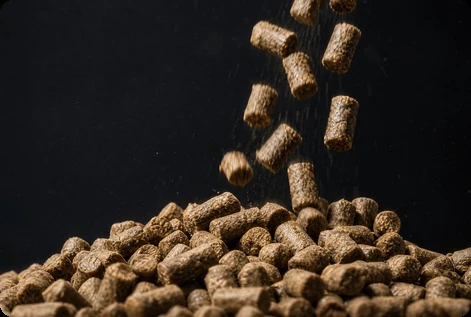
गोली फ़ीड
This is the most common output in any modern compound feed factory. The mash is conditioned with steam and compressed through a pellet mill die, typically producing pellets in the 2 mm (starter poultry) up to 14 mm (cattle feed) range.
2–14mm diameter
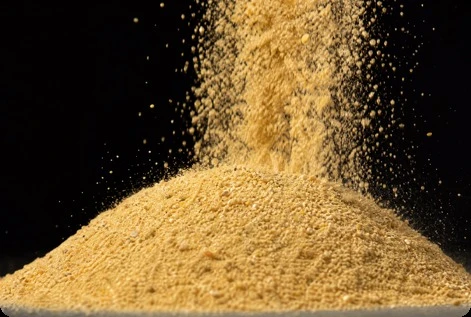
मैश फ़ीड
Mash feed is the simplest output from a compound feed mill—ground, mixed, and discharged without further processing. Particle size typically sits around 0.5–1.5 mm depending on screen selection and hammer mill configuration.
Powder Form, 0.5–1.5mm
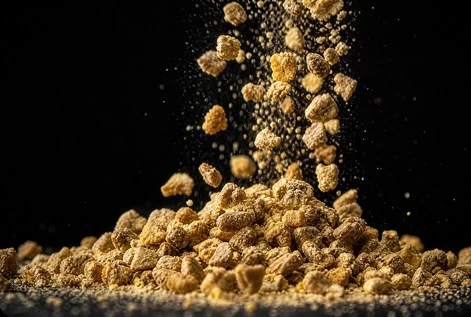
Crumbled Feed
Crumbled feed is basically broken pellets, usually produced by a crumbler after pelleting. Particle size sits around 1–4 mm depending on roller gap and target animal stage. This type is common in chick feed and juvenile livestock where full pellets are too large to digest efficiently.
1–4mm fragments

एक्सट्रूडेड फ़ीड
Extruded or puffed feed is processed under high temperature and pressure, then rapidly expanded. Particle size varies widely—typically 1–10 mm depending on die and expansion control.Aquaculture feed and pet food are the main applications.
1–25mm expanded particles
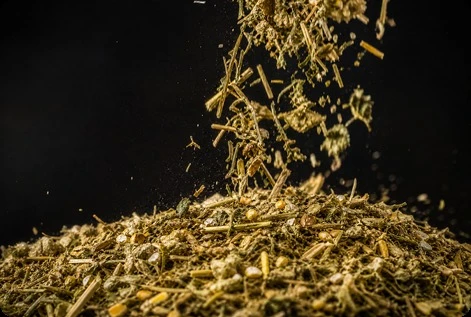
TMR Feed
TMR feed is structurally different. It includes long fiber materials—straw, silage, grass segments—mixed into a loose ration for ruminants.A livestock compound feed mill configured for TMR doesn’t behave like a normal feed line.
Total Mixed Ration, 10–50mm fiber mix
If you’re evaluating a compound feed mill setup, it’s usually worth discussing not just capacity, but how many feed forms you expect to run on the same line—pellet, mash, crumble, even livestock or fish feed combinations. That decision changes everything from layout to investment level, and it’s something worth reviewing early when planning the production line configuration and quotation.
अपनी फ़ीड प्रारूप संबंधी आवश्यकताओं पर हमारी टीम से चर्चा करें।

Compound Feed Mill videos
We have delivered a wide range of compound feed mill projects across different continents, covering poultry, livestock, aquatic feed, and pet nutrition applications.
These installations are not limited to standard layouts—each compound feed mill solution is configured according to real production demands such as raw material flexibility, automation level, pellet quality requirements, and plant space constraints.
From small commercial feed workshops to fully automated industrial compound feed factories, the following video cases represent real engineering projects delivered by our team for clients in different production environments.


【10T/H Poultry Compound Feed Mill in Afghanistan】This project was designed for a commercial poultry feed producer focusing on stable pellet quality for broiler feed. The compound feed mill system includes grinding, batching, mixing, pelleting, cooling, and screening, with emphasis on consistent pellet hardness for long-distance distribution. The client required stable operation under high dust conditions and variable corn moisture, which was addressed through reinforced dust control and adaptive batching calibration.
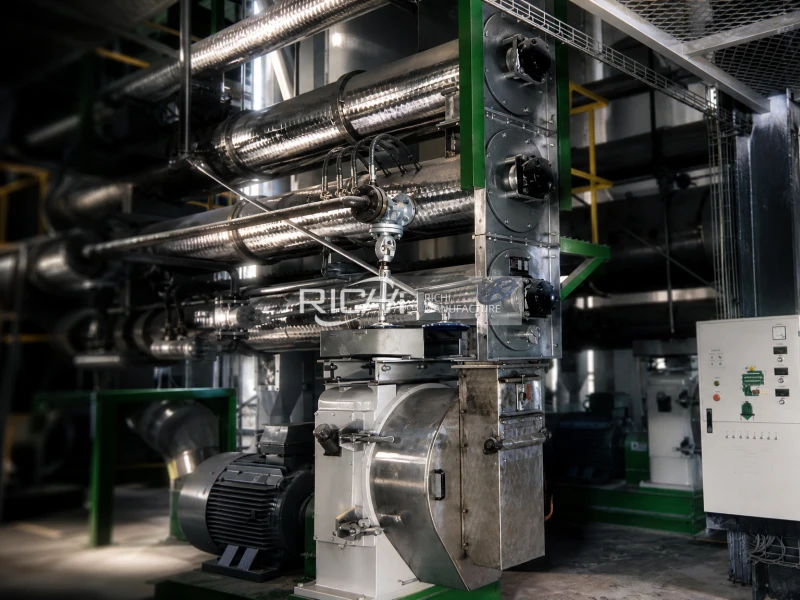
【2T/H Shrimp Compound Feed Mill in Indonesia】A compact aquatic feed production line designed for shrimp feed with strict particle size and water stability requirements. The compound feed production line integrates fine grinding, micro-pelleting, and precise steam conditioning to ensure pellet integrity in water. Special attention was given to preventing nutrient loss during extrusion and maintaining uniform density for different shrimp growth stages.

【5T/H Broiler & Pig Compound Feed Mill in Venezuela】This multi-species compound feed plant was built for both poultry and swine feed production. The system supports fast formula switching and includes an optimized batching system to reduce cross-contamination between recipes. The customer emphasized operational flexibility, so the design prioritizes quick cleaning, stable mixing uniformity, and reliable pellet durability.

【10T/H Full Automatic Livestock Compound Feed Mill in Uzbekistan】A fully automated compound feed manufacturing plant designed for cattle and poultry feed production. The project features automated raw material conveying, vertical silo storage, and centralized control. The client required minimal manual handling, so the complete feed mill plant was engineered for continuous operation with reduced labor dependency and high throughput stability.

【5-6T/H Hen & Broiler Compound Feed Mill in Zimbabwe】This installation focuses on layered and broiler feed production with stable nutrient distribution in pellet form. The compound feed production line was optimized for locally available corn and soybean meal with variable moisture levels. The system ensures consistent pellet formation even under fluctuating raw material quality conditions.
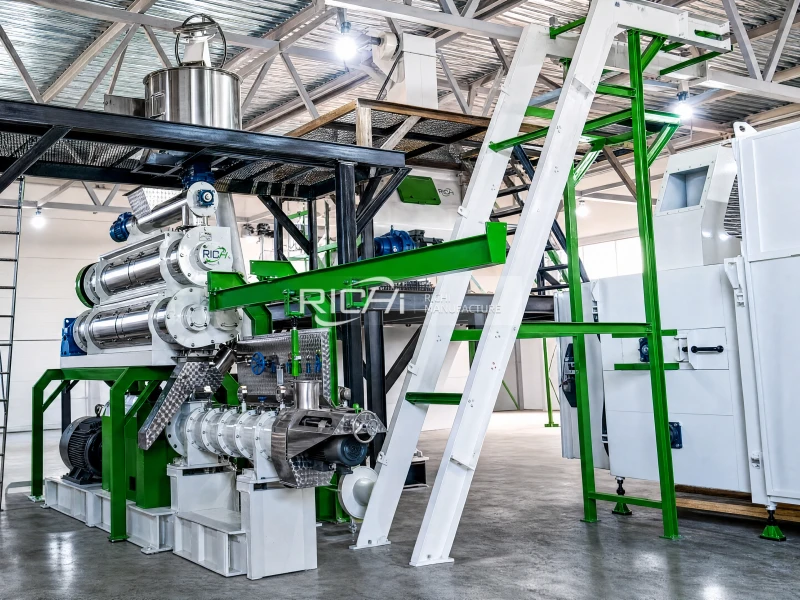
【2-3T/H Pet & Floating Fish Compound Feed Mill in Russia】A dual-purpose feed manufacturing plant designed for pet food and floating fish feed. It integrates extrusion, puffing, and precise oil spraying systems to achieve both buoyancy control and palatability improvement. The compound feed mill setup allows flexible switching between aquatic and pet formulations without long downtime.

【5-6T/H Chicken & Cattle Compound Feed Mill in Oman】This compound feed factory was designed for mixed poultry and ruminant feed production in a high-temperature environment. The system includes reinforced cooling and moisture control sections to ensure stable feed quality during storage. The layout also considers dust management and energy efficiency for long-term operation in arid conditions.

【1-2T/H Small Commercial Compound Feed Mill in Tanzania】A compact turnkey compound feed plant designed for small commercial feed producers entering industrial feed production. Despite its small capacity, the system still includes full processing stages—grinding, mixing, pelleting, and packaging—allowing the client to scale production without changing core equipment later.
Compound Feed Processing Technology
We don’t treat a compound feed mill as a fixed machine package. In real projects, it behaves more like a configurable system—changing with raw materials, production targets, and even how the client prefers to run the plant day to day. That’s why our approach starts from process design, not equipment lists.
For different compound feed production line requirements—whether it’s poultry feed, livestock rations, aquatic feed, mash feed, pellet feed or even extrusion-based systems—the process flow is rebuilt around actual conditions.
A typical compound feed mill workflow includes raw material storage (silos or warehouse systems), cleaning and impurity removal, grinding (hammer mill or roller mill depending on raw material hardness), batching and mixing, conditioning, pelleting or extrusion, cooling, screening, and final packing. But not every line uses all of them. Some skip pelleting entirely. Some add drying. Some integrate micro-additive dosing systems that completely change the front-end design.
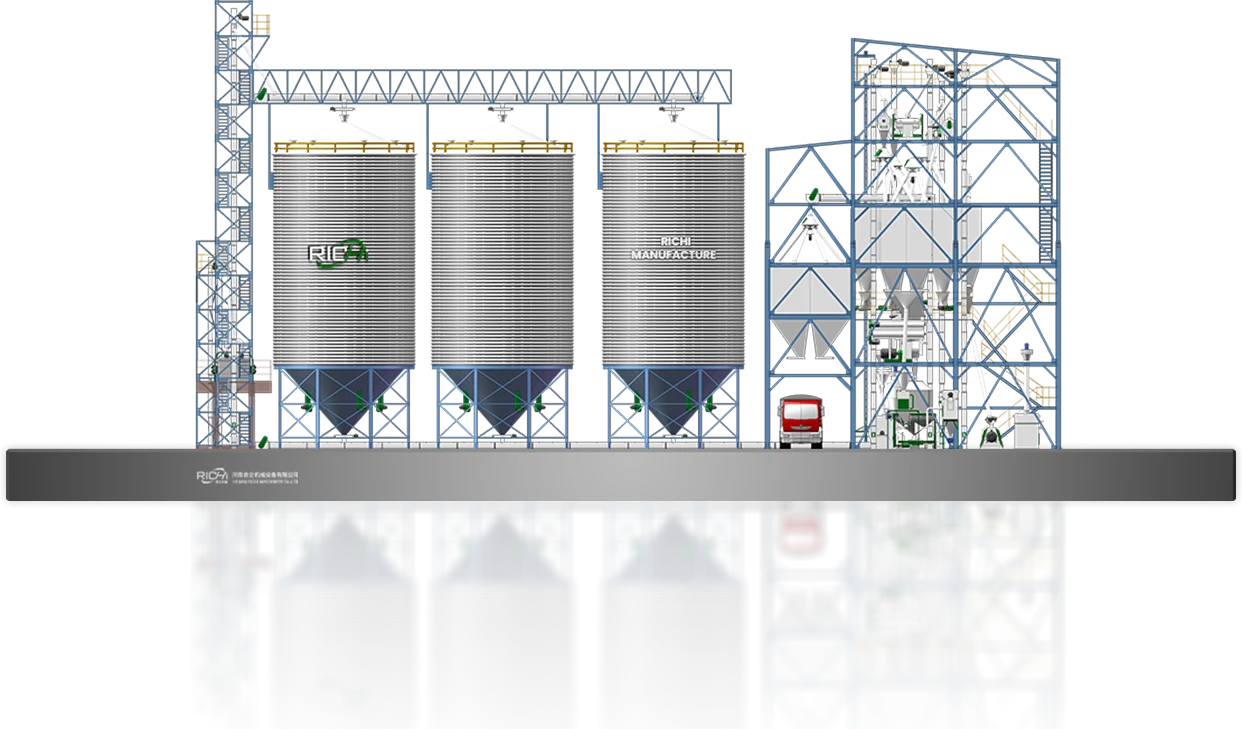
Each compound feed mill solution we design is modular by nature. That means the same system can be configured as a simple feed manufacturing plant for poultry mash feed, or expanded into a complete compound feed manufacturing plant with extrusion for aquaculture and pet feed. The modules can be combined or removed depending on production strategy. This is why two compound feed factories with the same capacity rating can look completely different inside.
We also provide full lifecycle support—not just equipment supply. From initial consultation and process simulation, to layout design, manufacturing, installation, commissioning, operator training, and long-term spare parts support. Some clients stay in contact years after commissioning when they switch formulations or expand capacity. The compound feed processing plant evolves with their business, not just at the installation stage.

साइलो प्रणाली
01

सफाई व्यवस्था
02

पीसने की प्रणाली
03
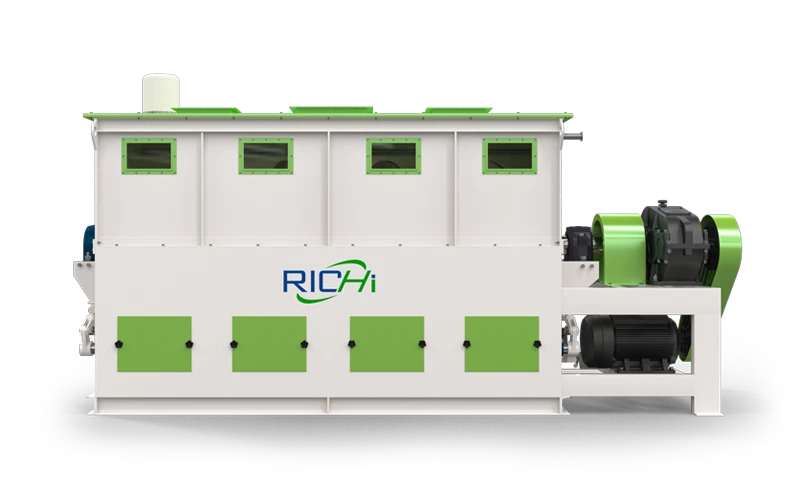
मिश्रण प्रणाली
04

पेलेटिंग प्रणाली
05
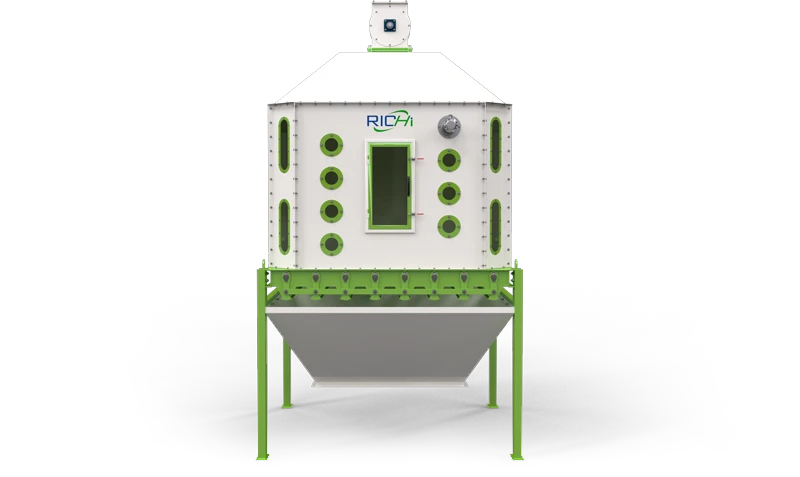
शीतलन प्रणाली
06
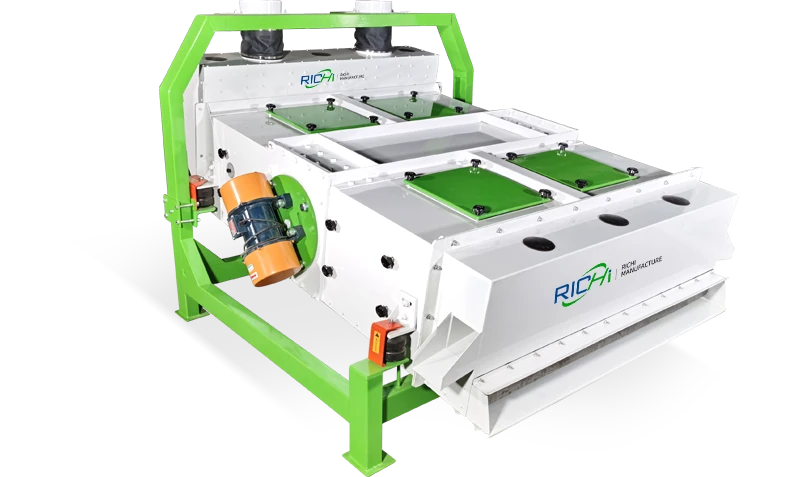
स्क्रीनिंग प्रणाली
07

पैकेजिंग प्रणाली
08

धूल हटाने प्रणाली
09

संदेश देने वाला सिस्टम
10
Custom Compound Feed Production Line Solutions
Below are real compound feed mill engineering cases showing how different production lines are designed from raw material condition, capacity target, and final feed type requirements. Each solution is built around actual plant constraints—some are greenfield projects, others are upgrades or multi-purpose production systems.

5–7T/H Compound Feed Production Line Design
This is a relatively standard compound feed mill configuration, but the raw material condition is very clean—pre-processed powder only, no high-fiber input. The workflow is straightforward: grinding → batching (manual micro-additive dosing) → mixing → pelleting → cooling → crumbling → screening → automatic packing. Bucket elevator conveying system is used throughout, simple layout, low maintenance demand.
This project was designed for a poultry feed producer focusing on broiler pellets (2–4 mm). The line was commissioned in 2024 (Middle East project) and is already in stable daily operation.

10–12T/H Automatic Compound Feed Mill Design
This compound feed mill was built around flexibility rather than single-product efficiency. Two 500T silos feed into the system. Workflow: silo storage → dual receiving pits → grinding → automatic batching system → mixing → pelleting → cooling → crumbling → screening → full automatic packaging.
The key point here is versatility. This compound feed production line simultaneously produces pellet feed, mash feed, and crumbled feed. Switching between formats is handled via bypass routing and adjustable pelletizing settings. The project was delivered for a large feed trading company in Southeast Asia (commissioned 2025). During trial runs, the biggest challenge wasn’t capacity—it was cross-contamination between feed types when switching production modes too quickly.

3–4T/H Compound Feed Manufacturing Plant Design
This is a space-driven compound feed plant design. Designed for a small livestock feed producer in Central Asia (project completed 2023). The factory height limitation forced us to avoid standard vertical layouts. Instead, we used screw conveyors + Z-type bucket elevators, keeping maximum equipment height at 5.7 meters.
Workflow: dual feed input → grinding → mixing → pelleting → cooling → crumbling → screening → manual packing. One feed stream goes directly into the grinder, the other bypasses and enters mixing—this avoids unnecessary crushing for pre-ground material.

2–10T/H Dairy Cow Compound Feed Plant Design (Crop + Grain Formula System)
This compound feed mill is built around highly variable raw materials. Inputs include chopped crop residues, low-moisture grass (<20%), and pre-ground grains (client already had a grain milling system). Everything is blended before pelleting.Workflow: grass + straw + grain mixing → pelleting → cooling → screening → packing.
Why such a wide capacity range (2–10T/H)? Because formulation is not fixed. Some batches are high-grain feed, others are high-fiber roughage feed. The production speed changes depending on fiber ratio and moisture behavior. This system was supplied to a dairy farm cooperative in Eastern Europe (installed 2024). Operators quickly noticed one thing: high-fiber batches reduce pellet output stability if conditioning steam is not adjusted in real time.
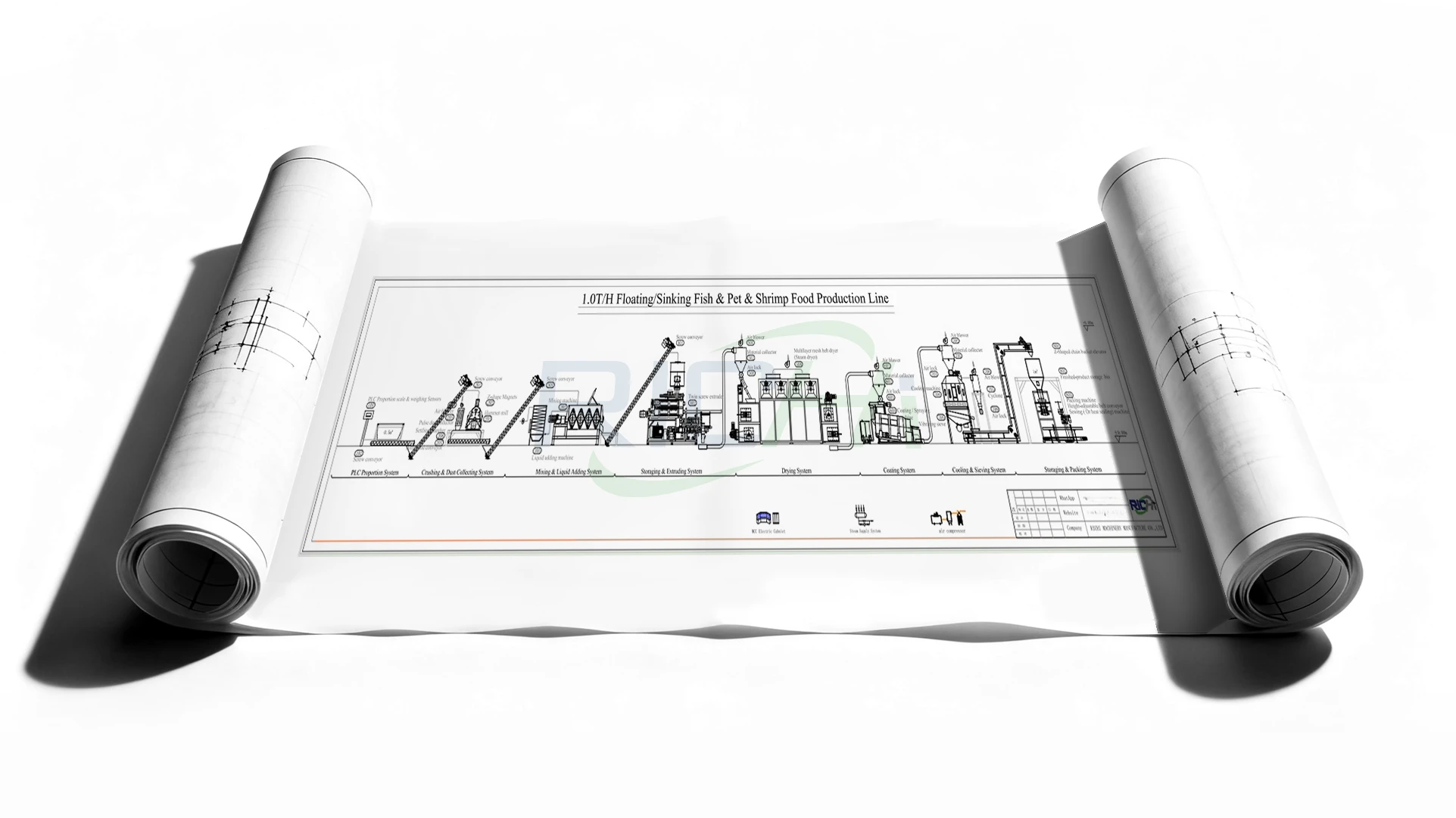
1T/H Compound Feed Processing Plant Design (Pet & Aquatic Extrusion System)
An Indonesian project using twin-screw wet extrusion technology. This compound feed mill produces pet food pellets and aquatic feed (floating fish feed, sinking fish feed, shrimp feed). The layout is compact—horizontal design with total height limited to 6 meters.
Workflow: PLC batching → grinding → mixing + liquid addition → twin-screw extrusion → belt drying → coating drum → cooling → screening → automatic packing. Extrusion stability is sensitive here. Once feed fat ratio exceeds a threshold, die pressure fluctuations become visible immediately.Commissioned in 2025, still operating with stable output around 1T/H depending on product type.

5T/H Compound Feed Pellet Plant Design (Pet Food Project – Russia)
A high-spec compound feed mill designed for premium pet food production (cats and dogs). Includes 12 × 30T silos and a total investment close to $1.4M. This is a multi-stage processing system. Workflow: storage → pre-grinding → automatic batching → mixing + liquid addition → ultra-fine grinding → second batching → extrusion → drying → screening → cooling → coating → bulk storage → transfer to external packaging line.
This system was designed for a Russian pet food manufacturer (commissioned 2024). One operational note: double grinding improves texture consistency, but it also increases energy consumption significantly. The client accepted this trade-off for premium-grade output.
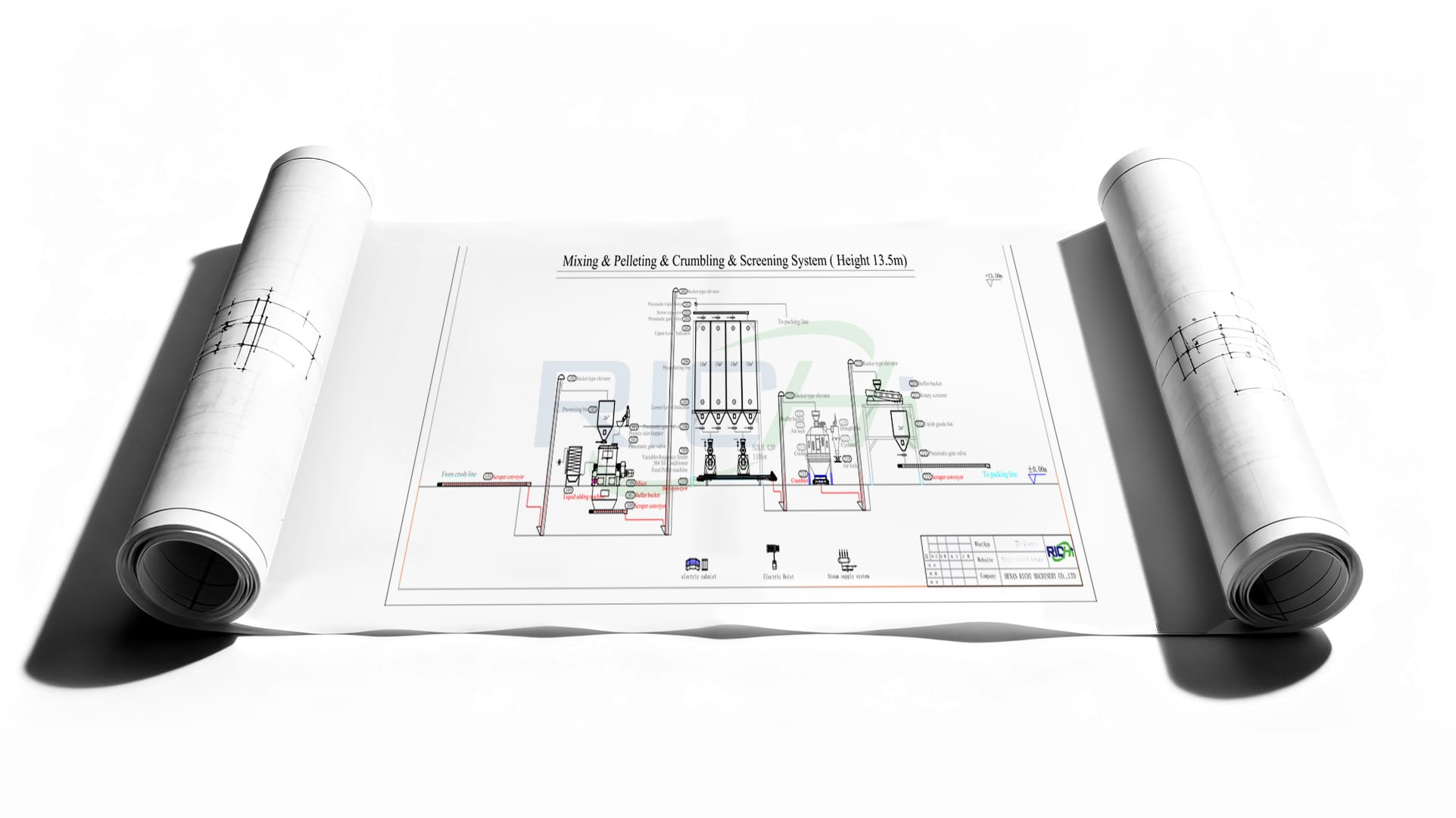
20T/H Compound Feed Production Plant Design (Retrofit Expansion Project)
This is not a full greenfield plant. The client already had grinding and packing sections. We only supplied the missing core modules: mixing, pelleting, crumbling, and screening.The challenge was space constraint inside an operating factory. Equipment had to be installed without stopping existing production.
Delivered in 2023 for a poultry feed factory upgrade in South America. A practical limitation: integration with old systems required manual balancing during early operation weeks before full automation stabilized.

35–40T/H Broiler Compound Feed Factory Design
A fully industrial compound feed mill with high-capacity silo storage (2 × 2500T). Workflow: silo discharge → cleaning → dual receiving system → grinding → 24-bin automatic batching → mixing → pelleting → cooling → crumbling → screening → packaging or bulk loading.
This system supports direct bulk delivery to farms via truck loading—no packaging required in many cases. The project was built for a large poultry integrator in North Africa (commissioned 2025). At this scale, the biggest operational sensitivity is not machines—it’s flow stability. A small batching error becomes a large inventory deviation.
Global Compound Feed Mill Projects
Across all regions, our compound feed mill projects are delivered as fully engineered systems, not standalone machines. These references also represent real global demand for compound feed production system solutions—from small farm-scale lines to large industrial feed factories. Each case below follows the same engineering structure for production capacity, raw material logic, feed type, and one practical design detail.

High Output US Plant
संयुक्त राज्य अमेरिका
20T/H compound feed mill for a US integrated feed manufacturer producing poultry, swine, and cattle feed. Raw materials include corn, soybean meal, and alfalfa pellets. Output covers mash feed and 3–6 mm pellets. Designed with high-precision batching; main focus was reducing formulation deviation during continuous 22-hour operation cycles under large-scale commercial demand.
Kazakhstan Grain Feed
कजाखस्तान
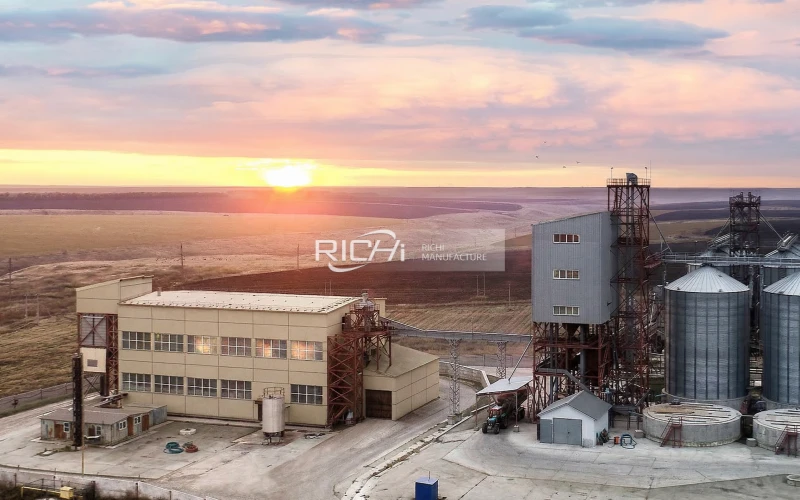
10T/H compound feed mill for a livestock farm group using wheat, barley, and sunflower meal. Produces cattle and sheep feed in pellet form (4–6 mm). Designed for high-fiber raw materials requiring stronger grinding control. Winter operation required stable steam conditioning to avoid low pellet hardness during freezing conditions.
Zimbabwe Poultry Line
जिम्बाब्वे
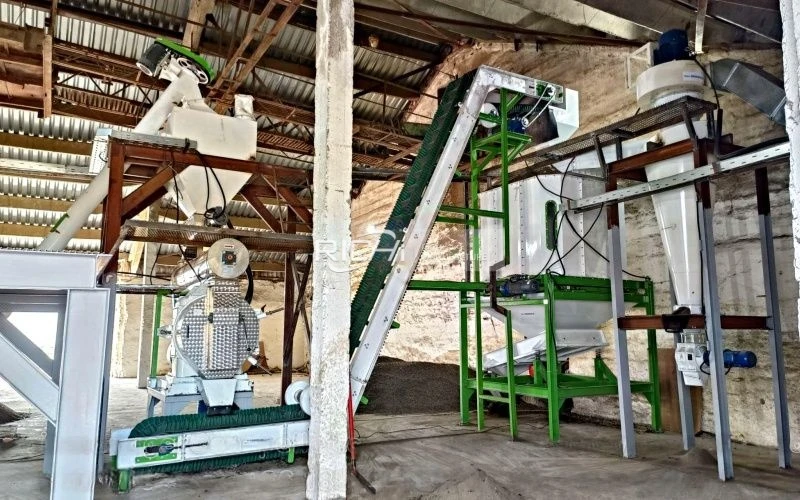
5T/H compound feed mill for poultry producers focusing on broiler and layer feed. Raw materials include local maize and soybean meal. Produces 3–4 mm pellets. Grinding adjustment required due to inconsistent kernel hardness. Cooling system stability became critical during high humidity periods affecting pellet durability.
Russia Cold System
रूस
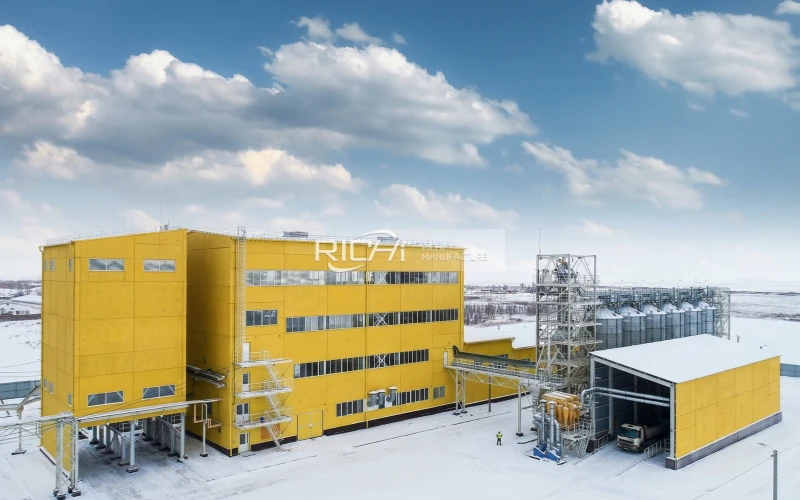
25T/H compound feed mill for a Russian livestock enterprise producing poultry and cattle feed. Raw materials include wheat, barley, and corn. Designed for cold climate operation with insulated silos. Main engineering challenge was maintaining consistent steam conditioning during sub-zero winter temperatures affecting pellet hardness.

इंडिया Expansion Line
इंडिया
30T/H compound feed mill for a large Indian feed manufacturer producing poultry and cattle feed. Raw materials include broken rice, corn, soybean meal, and wheat bran. Designed for rapid scaling production cycles. Key challenge was stabilizing mixing uniformity under frequent formula changes and high throughput demand.

France Dairy Plant
फ्रांस
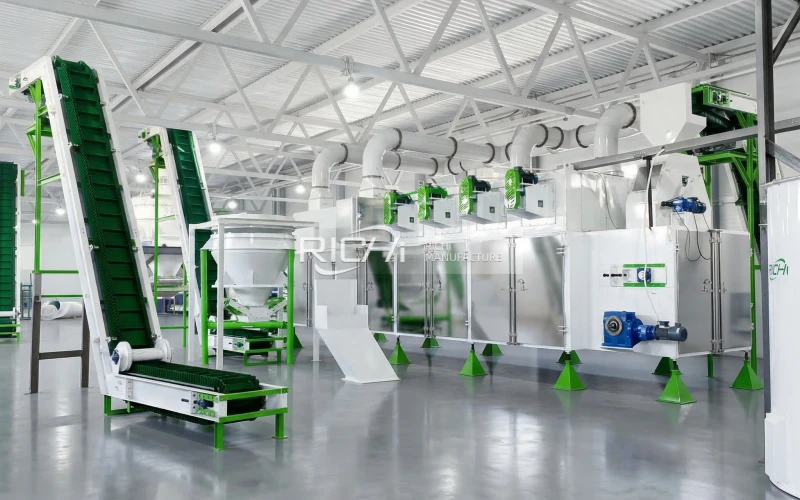
5T/H compound feed mill for a dairy cattle cooperative producing nutritionally balanced feed using maize silage, wheat, and rapeseed meal. Output is mainly 5–8 mm pellets. EU compliance required tight batching accuracy. Key issue was maintaining rumen-friendly pellet density while avoiding over-compression during pelleting stage.
Malaysia Integrated Line
मलेशिया
5T/H compound feed mill for an integrated poultry and aquaculture company. Produces pellet feed and floating fish feed using extrusion module. Raw materials include corn and fishmeal. Main engineering focus was switching between livestock pellets and aquatic extrusion without downtime loss.

Spain Pig System
स्पेन
10T/H compound feed mill for a Spanish pig and poultry feed manufacturer producing mash, pellet, and crumble feed. Raw materials include corn, wheat, and barley. Multi-recipe batching system installed for rapid feed switching. Main challenge was avoiding cross-contamination between pig and poultry formulations.

Romania EU Plant
रोमानिया
10T/H compound feed mill for an EU livestock expansion project producing mash and pellet feed. Raw materials include corn, soybean meal, and wheat. Designed for strict EU feed regulation compliance. Key focus was batching accuracy and traceability during continuous multi-formulation production cycles.

Brazil Grain System
ब्राज़िल
30T/H compound feed mill for a Brazilian agro-industrial feed producer handling poultry and beef cattle feed. Uses corn, soy hulls, and cassava residue. Produces pellet and crumble feed. One challenge was seasonal moisture variation in raw grains, requiring reinforced conditioning system stability during rainy-season operation and preventing pellet cracking during cooling stage.

Mexico Mixed Plant
मेक्सिको
5T/H compound feed mill for a mid-size Mexican livestock feed company producing mash and pellet feed for poultry and pigs. Raw materials include corn, wheat bran, and sorghum. Dual output design allows switching between mash and 4 mm pellets. Layout optimized for reduced operator workload and simplified recipe switching in daily production.

Algeria Multi Feed
एलजीरिया
8T/H compound feed mill for a diversified agricultural company producing poultry, sheep, and fish feed. Raw materials include barley, corn, and soybean meal. System alternates between mash feed and pellet feed production. Main design focus was flexibility, allowing seasonal adjustment between aquaculture and livestock feed demand.

Poland Hub Plant
पोलैंड
10T/H compound feed mill for a regional feed hub supplying multiple farms. Raw materials include corn, rye, wheat, and rapeseed meal. Produces pellet and mash feed. Designed for bulk dispatch instead of bagging. Key engineering focus was maintaining stable throughput during continuous high-volume distribution cycles.
Angola Livestock Feed Line
अंगोला
3–5T/H compound feed mill installed for a developing livestock feed supplier in Angola, designed for flexible production of poultry, swine, and small-scale cattle feed. The plant handles corn, soybean meal, cassava-based energy substitutes, and local by-product ingredients with higher variability in moisture and fiber content.
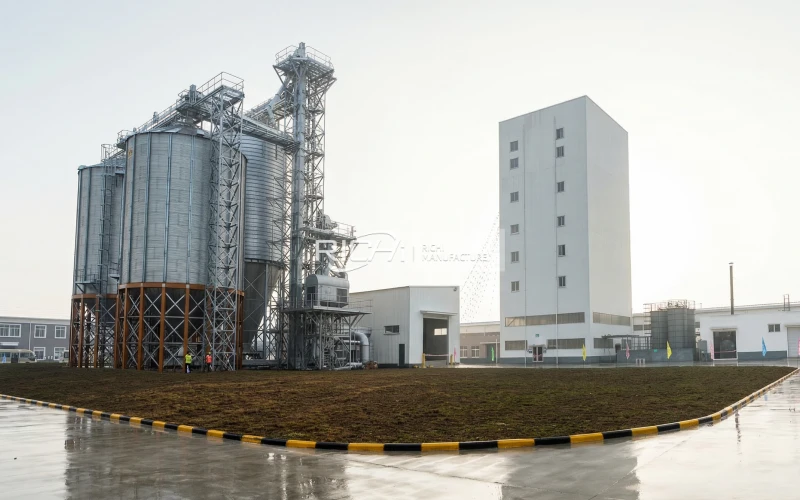
Thailand Agro Plant
थाईलैंड
12T/H compound feed mill for poultry and pig farms using corn, soybean meal, and cassava substitution. Produces pellet and mash feed. High humidity environment required stronger cooling capacity. Main issue was pellet durability loss during storage in rainy season conditions.
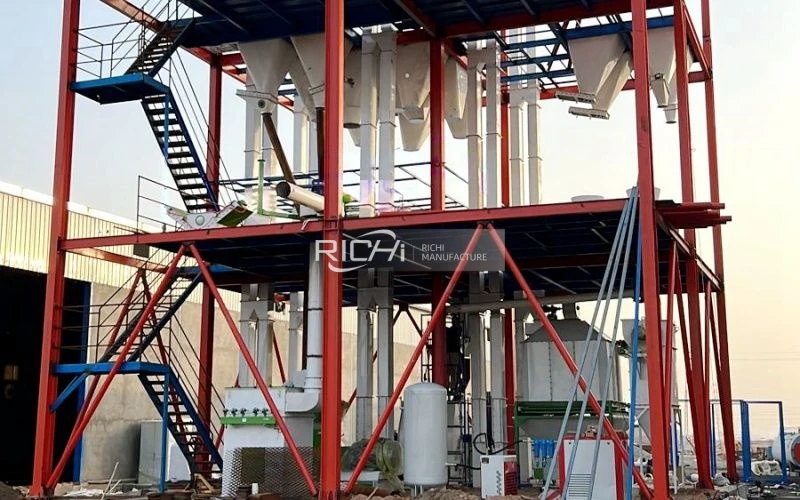
वाणिज्यिक पोल्ट्री फ़ीड संयंत्र
इराक
5T/H compound feed mill for Iraqi poultry farms producing broiler feed (2–4 mm pellets). Raw materials include imported corn and local wheat bran with inconsistent impurity levels. Extra cleaning section added to reduce dust contamination. The main issue was unstable raw material storage quality affecting grinding uniformity during peak summer temperatures.

South Africa Feed Mill
दक्षिण अफ्रीका
15T/H compound feed mill for poultry and cattle farms using maize, sorghum, and sunflower meal. Produces pellet feed in 3–6 mm range. High ambient temperature affected cooling efficiency, requiring airflow redesign in cooler section. System designed for stable operation under variable grain quality during harvest seasons.

Turkey EPC Project
तुर्की
15T/H compound feed mill for a Turkish EPC feed project producing poultry, cattle, and sheep feed. Raw materials include corn and wheat bran. Multi-output system with flexible batching design. One issue was fast-changing raw material pricing requiring frequent formula adjustment without stopping production line

Philippines Swine Line
फिलीपींस
10T/H compound feed mill for a swine feed producer using corn and rice bran. Produces 3–5 mm pig pellets. High humidity required improved storage sealing and cooling control. Main issue was pellet moisture retention during transport from cooling to packing stage in tropical climate.

Pakistan Dairy System
पाकिस्तान
10T/H compound feed mill for dairy cattle feed production using wheat straw, corn, and cottonseed meal. Produces high-fiber cattle pellets (5–8 mm). Mixing stability of fibrous materials was key challenge. Adjusted retention time improved uniformity during roughage-heavy formulations.
पोल्ट्री फीड प्लांट के चालू होने के बाद हमें जो कुछ भी सुनने को मिलता है, वह ज्यादातर हमारी तरफ से नहीं आता — बल्कि उन लोगों से आता है जो वास्तव में इसे महीनों या वर्षों बाद चलाते हैं, जब वारंटी अवधि समाप्त हो जाती है और उपकरण बस… दिन-प्रतिदिन काम कर रहा होता है। नीचे उन चार बातचीत का विवरण दिया गया है।

बिना एक भी शिफ्ट बढ़ाए 20 टन भार चलाना
Production Supervisor, Feed Plant Operator
“Stable batching and pellet quality even during long production shifts.We run poultry and beef feed on this compound feed mill. Corn and soybean meal vary a lot by batch, but the line stays consistent in pellet hardness and output.”

Ghana – 4T/H Poultry Feed Mill
Owner-Operator, Small Feed Mill
“Less blockage in humid season, overall easier daily operation.Main raw materials are maize and rice bran. We used to struggle with material flow in rainy season, but feeding and conveying are now much more stable.”

Bangladesh – 5T/H Poultry & Fish Feed Line
Technical Manager, Feed Distributor
“One line switching between poultry pellets and floating fish feed works smoothly.We produce both poultry feed and aquaculture feed. The same compound feed mill handles extrusion and pelleting with minimal adjustment.”

Peru – 6T/H Mixed Livestock Feed Plant
Plant Operations Manager, Regional Feed Supplier
“Easy formula switching without stopping production.We produce poultry, sheep, and cattle feed. Different raw materials, but batching and mixing remain stable across formulas.”

Compound Feed Mill Capacity-Based Solutions
We design and supply compound feed mill solutions across a wide production range, from small commercial setups to large industrial feed factories. Each capacity level represents a different investment scale, plant size, automation level, and production strategy.
Choosing the right capacity is not only about output—it directly affects raw material handling, labor structure, factory layout, and long-term expansion planning. Below are 10 standardized compound feed mill solutions based on production capacity, each matched with typical investment scale and suitable business models. (The price quoted here is for the equipment only and does not include the silo.)
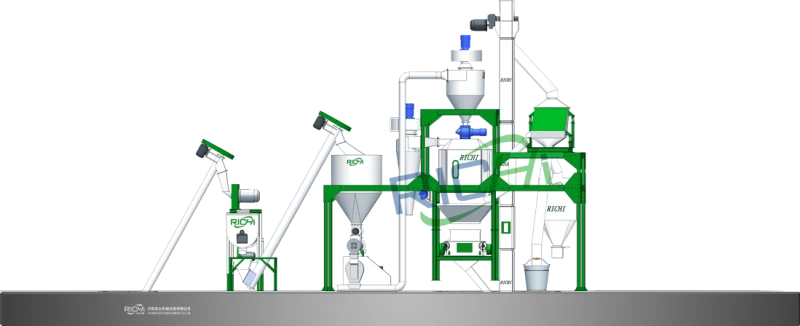
1-2 टन/घंटा की क्षमता वाली लघु पैमाने की फ़ीड मिल
This entry-level compound feed mill is suitable for small farms, startups, and local feed traders entering feed production. It supports basic mash and simple pellet feed production for poultry or pigs. Ideal for corn, wheat bran, and simple mixed formulations with manual or semi-automatic operation.
उपकरण की लागत: $10,000-50,000**
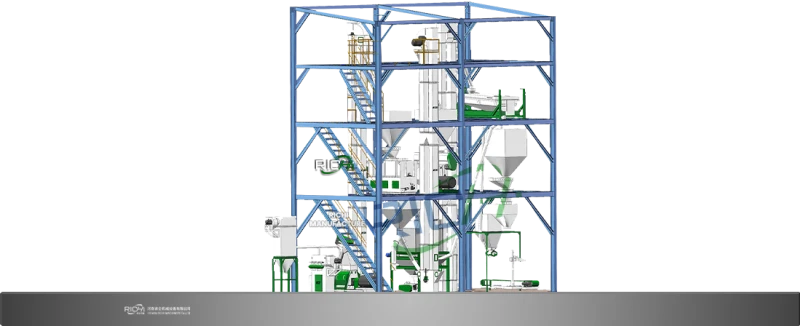
3-4 टन/घंटा पशु चारा उत्पादन संयंत्र
Designed for small commercial feed producers and family-run farms. This compound feed mill supports poultry and livestock feed production with improved batching and mixing accuracy. Common raw materials include corn, soybean meal, and rice bran with pellet sizes around 2–12 mm.
उपकरण की लागत: $50,000-120,000

5-7 टन प्रति घंटा पशु आहार पेलेट संयंत्र
A stable mid-small scale compound feed mill solution. Suitable for emerging feed factories and agricultural investors. Supports pellet, mash, and crumble feed production. Often used for poultry and pig feed using corn-soybean based formulations with moderate automation.
उपकरण की लागत: $70,000-250,000
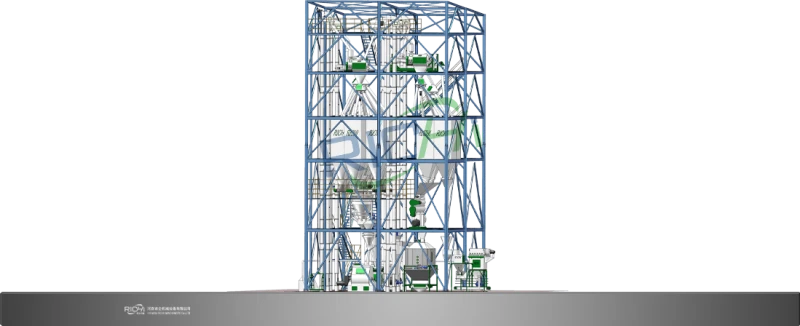
8-10 टन/घंटा पशु चारा प्रसंस्करण संयंत्र
This compound feed mill fits medium-sized feed factories and regional distributors. It supports multi-form feed production including mash and pellet feed. Raw materials include corn, wheat, and protein meals. Suitable for poultry, swine, and cattle feed production with semi-automatic control systems.
उपकरण की लागत: $150,000-300,000

12-20 टन/घंटा फ़ीड तैयारी संयंत्र
Designed for commercial feed mills and integrated farms. This compound feed mill supports continuous production of poultry, livestock, and mixed animal feed. Capable of pellet, crumble, and mash output with improved automation and batching precision.
उपकरण की लागत: $250,000-580,000

25-40 टन प्रति घंटा फ़ीड पेलेट उत्पादन लाइन
A large-scale compound feed mill system. Suitable for industrial feed manufacturers and agribusiness groups. Handles multiple raw materials including corn, soybean meal, wheat bran, and fiber inputs. Supports high-volume pellet and mash feed production.
उपकरण की लागत: $450,000-850,00
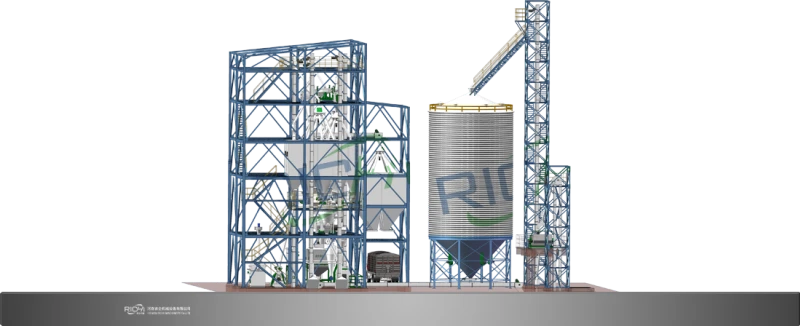
50-60 टन प्रति घंटा की क्षमता वाली वाणिज्यिक फ़ीड मिल
This compound feed mill is designed for large industrial feed enterprises. It supports continuous 20+ hour operation and multi-form feed production. Commonly used for poultry, cattle, and swine feed production with advanced automation and silo integration.
उपकरण की लागत: $900,000-1,400,000

60-80 टन/घंटा क्षमता वाला संपूर्ण फ़ीड मिल संयंत्र
A super large compound feed mill solution. Designed for national-level feed producers and export-oriented factories. Handles complex raw materials and multiple formulations with high automation, central control, and bulk storage systems.
उपकरण की लागत: $1,450,000-1,800,000

80-100 टन प्रति घंटा फ़ीड मिल कारखाना
This compound feed mill represents mega industrial scale. Used by large agribusiness groups and integrated livestock corporations. Supports continuous high-volume pellet, mash, and crumble production with full automation and silo-based logistics.
उपकरण की लागत: $2,000,000-3,000,000

100-120 टन/घंटा फ़ीड मिल इंजीनियरिंग
The highest capacity compound feed mill solution. Designed for global feed industry leaders. Supports fully automated multi-line production, large-scale raw material storage, and continuous operation for poultry, livestock, and mixed feed markets.
उपकरण की लागत: 2,500,000 डॉलर से अधिक
Compound Feed Mill Investment Cost
When planning a compound feed mill, investment is not a single fixed number—it is a combination of equipment selection, automation level, plant capacity, civil construction, and raw material strategy. Across different countries and project scales, the total investment can vary significantly depending on labor cost, local infrastructure, and production targets.
Below is a structured breakdown based on real engineering data from global compound feed production line projects, covering both equipment cost and total factory investment requirements.
Whole compound feed plant set up investment : $ 80,000 - $ 40,000,000
श्रेणीवार उपकरण लागत:
compond feed Grinding System price :
$ $ 2,000- 50,000
compond feed Mixing System Price :
$ $ 1,500- 40,000
Pelleting / Extrusion System Price :
$ $ 7,000- 200,000
compond feed Cooling System Price :
$ $ 2,000- 30,000
Crumbing & Screening System Price :
$ $ 2,000- 20,000
feed Packaging System Price :
$ $ 1,000- 40,000
feed plant Conveying System Price :
$ $ 3,000- 60,000
Raw Material Cleaning System Price :
$ $ 1,500- 25,000
धूल हटाने के उपकरण की कीमत:
$ $ 2,000- 30,000
तरल या तेल मिलाने वाली प्रणालियों की कीमत:
$ $ 1,500- 20,000
Silo Storage System Price :
$ 3,000- $ 500,000 +
नियंत्रण प्रणाली एवं स्वचालन मूल्य:
$ $ 5,000- 100,000
All above cost ranges are summarized from hundreds of global compound feed mill projects, covering small farms, commercial feed factories, and large industrial feed production plants across Asia, Africa, Europe, and the Americas.
The most accurate way to estimate a compound feed mill investment is not by general range—but by building a customized engineering plan based on your raw materials, production target, and factory conditions. We can design a full solution, optimize layout, and provide a precise equipment quotation based on your real project requirements.

Service Support for Compound Feed Mill Projects
A compound feed mill is not just equipment delivery—it’s an engineering project that only works when design, manufacturing, installation, and long-term operation are aligned. In real projects, most issues don’t come from machines themselves, but from missing coordination between process design and site conditions. That’s exactly where our service system starts.
From early-stage planning to long-term operation, we support the full lifecycle of a compound feed production line, including engineering design, equipment manufacturing, on-site installation, commissioning, operator training, and after-sales technical support.

Engineering Design & Customized Solution Development
We provide full-process engineering design for each compound feed mill project, including process flow layout, factory structure planning, equipment positioning, and customized system configuration. This is not a standard drawing package. It is based on raw material behavior, production target (pellet, mash, crumble, extrusion), plant height, and capacity requirements.

Equipment Manufacturing & Industrial Production Capability
All core equipment in our compound feed mill systems is manufactured in-house. Production is carried out in large-scale manufacturing workshops equipped with CNC processing, precision welding lines, and standardized assembly procedures. Equipment is designed for export conditions and long-term industrial operation.

स्थापना, चालू करना और ऑपरेटर प्रशिक्षण
On-site installation is not just assembly—it’s system integration. For a compound feed mill, the real adjustment starts after installation. Our engineers handle full commissioning, including system calibration and test runs under real production conditions. Operator training is carried out during this stage, not as a separate theoretical session.

After-Sales Service & Lifecycle Technical Support
A compound feed mill does not end at commissioning. Raw materials change, formulas change, even production goals shift over time. We provide full lifecycle support, including spare parts supply, technical troubleshooting, process optimization, and periodic project review.
Free Engineering Services
When investing in a compound feed mill, the most valuable part is not only the equipment—it is the engineering support that reduces risk before construction even starts. That is why we provide a complete set of free pre-engineering and technical services to help clients plan, evaluate, and design their compound feed production line with clarity and confidence.
These services cover early-stage budgeting, process design, factory layout planning, and long-term operational guidance. The goal is simple: help clients make correct investment decisions before spending money on construction or equipment.

निःशुल्क परियोजना लागत अनुमान
निःशुल्क डिज़ाइन फ़्लो चार्ट
Free 3D Rendering Design
निःशुल्क फ़ैक्टरी क्षेत्र योजना
Free Civil Engineering Drawing
Free Equipment Operation Manual
निःशुल्क संचालन मार्गदर्शन
निःशुल्क कर्मचारी प्रशिक्षण
Compound Feed Mill Equipment Supply
A compound feed mill is only as stable as the equipment behind it. In real projects, performance differences usually come from how well each section of the production line is configured—grinding stability, mixing uniformity, pellet quality, and even how smoothly material moves between systems.
That’s why we don’t treat equipment as separate units. We supply full system sets for compound feed production lines, designed to work together under real factory conditions, not just in drawings. Below is the complete equipment range used in a modern compound feed mill project.
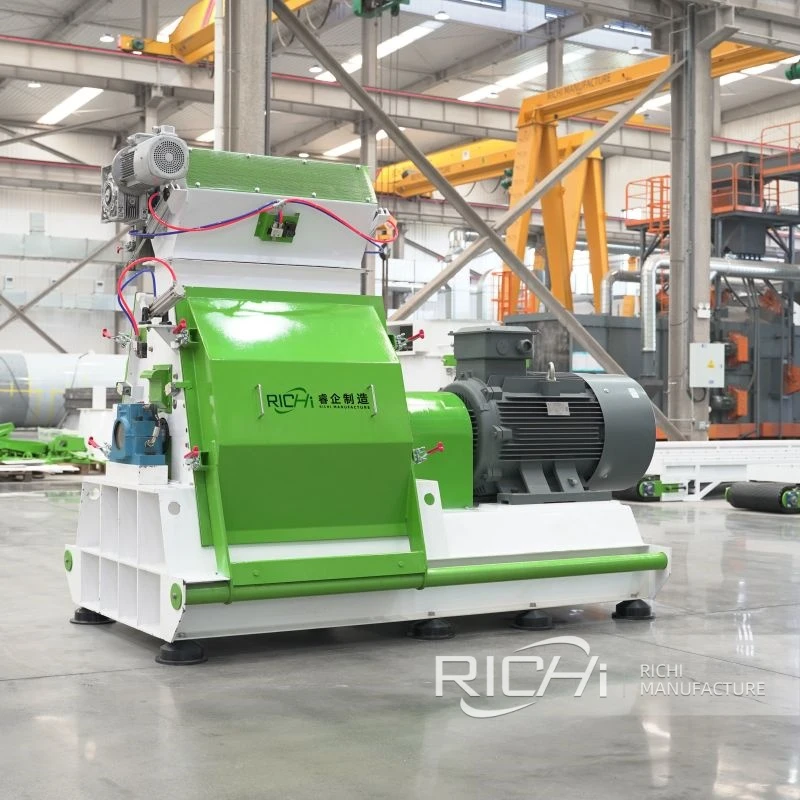


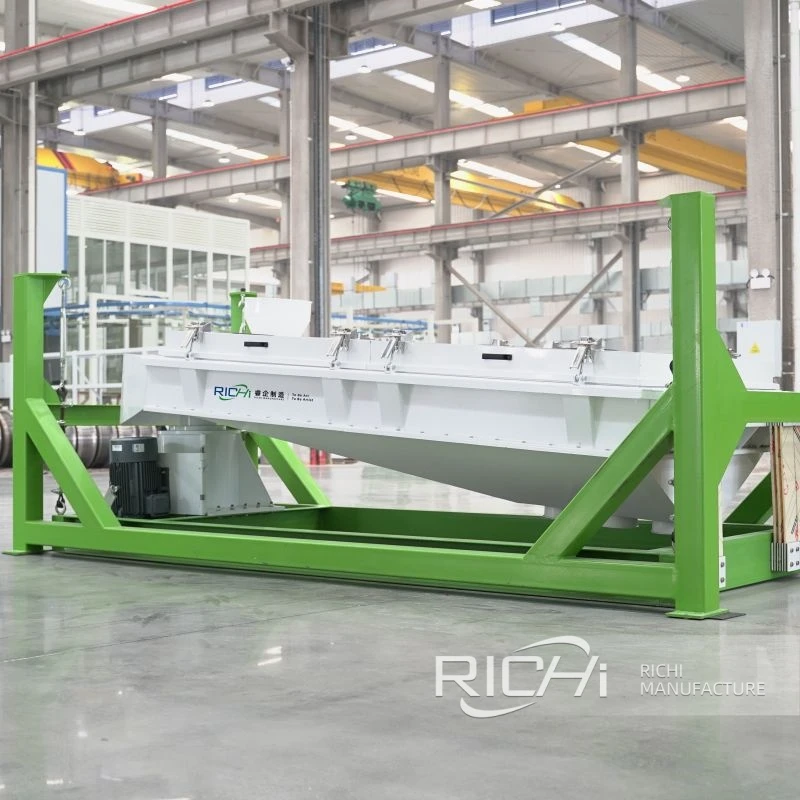

If you are planning a new compound feed mill or upgrading an existing feed line, we can configure a full equipment package based on your raw materials, plant layout, and production target.
पोल्ट्री फ़ीड उत्पादन में वास्तविक लाभ मार्जिन कहाँ है?
From a commissioning engineer’s point of view, the growth of a compound feed mill project is usually not triggered by “market excitement”, but by very practical pressure on farms and feed buyers.
Meat consumption keeps rising, raw material prices fluctuate sharply, and more livestock operations are moving away from purchasing finished feed to building their own compound feed production line for cost control. In this shift, poultry, pig, and cattle feed remain the core demand, while aquaculture and pet feed are becoming stronger secondary drivers in many regions.
Where the real opportunity appears is not only in capacity, but in how a compound feed mill is configured. A standard compound feed factory that only produces one feed type is becoming less common. Investors are now focusing on flexibility—pellet feed lines combined with mash bypass systems, and in some cases extrusion modules for fish or pet feed.
A well-designed compound feed manufacturing plant can switch between formulations within the same animal feed production line, which directly improves utilization during raw material price changes. That’s also why turnkey compound feed plant solutions are increasingly preferred: they reduce configuration risk and keep future expansion options open without rebuilding the complete feed mill plant.
Plan Your Compound Feed Mill Project
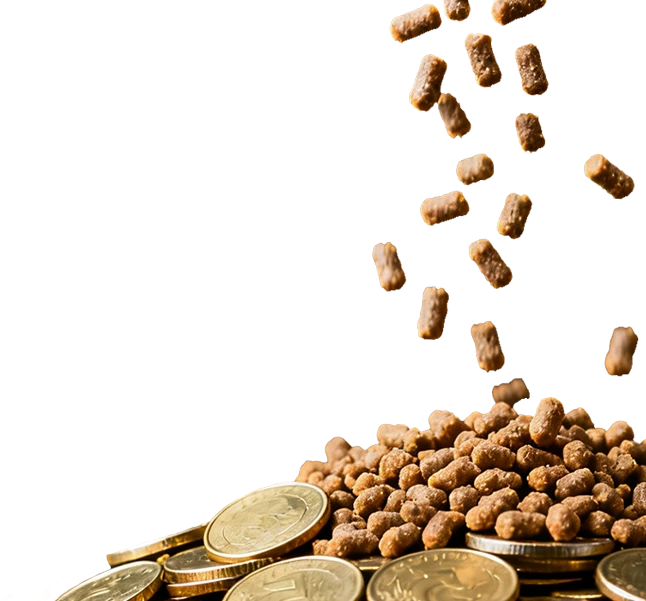
Feed Raw Materials and Compound Feed Types
A compound feed mill is designed around one reality: different customers bring completely different raw material systems and feeding formulas. Typical inputs include corn, wheat, soybean meal, rice bran, fish meal, DDGS, rapeseed meal, palm kernel meal, plus mineral premixes, amino acids, and various liquid additives such as oils and molasses. In real compound feed production line projects, we rarely deal with a single clean formula.
More often, raw materials vary in moisture, fat content, particle size, and even storage stability. That is why every compound feed plant we design is configured based on actual formulation behavior—not just theoretical recipes. Whether it is conventional livestock feed or high-fat aquatic formulations, the complete compound feed production line must adapt from grinding, batching, mixing to pelleting or extrusion without losing stability.

मकई
सोयाबीन भोजन

गेहूँ

चावल की भूसी

रेपसीड भोजन

चूना पत्थर
Premix
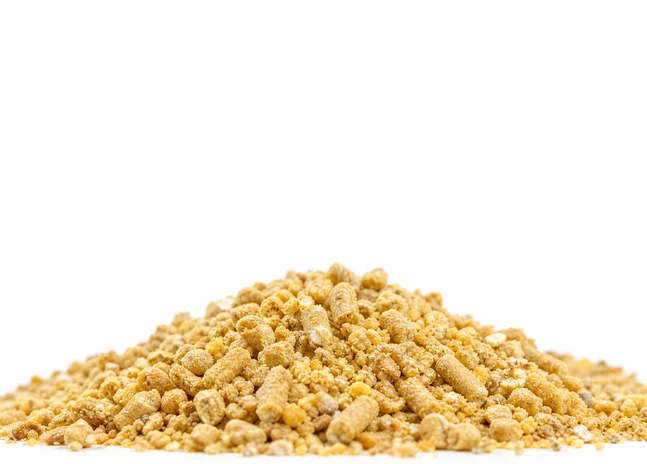
Poultry Compound Feed (Chicken, Duck, Layer Feed)
Poultry feed is one of the most stable and high-volume applications in a compound feed mill. It typically uses corn, soybean meal, wheat bran, vegetable oil, limestone powder, and vitamin premix. Pellet size is usually 2–4 mm depending on broiler or layer requirements.
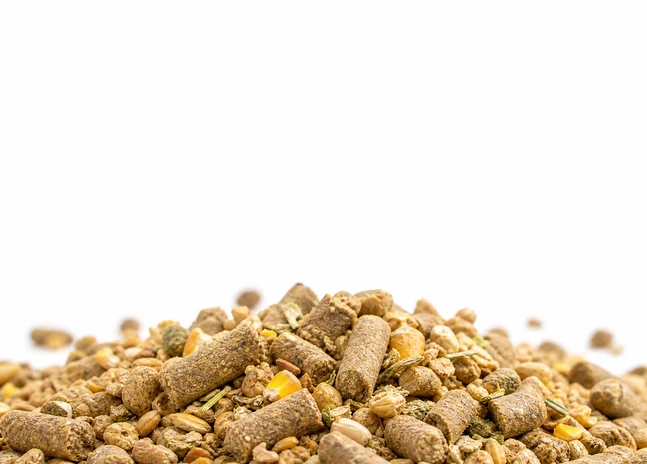
Livestock Compound Feed (Cattle, Pig, Sheep, Goat)
Livestock feed production is more flexible but less forgiving in batching accuracy. Raw materials often include corn silage powder, wheat bran, soybean meal, cottonseed meal, DDGS, and sometimes fibrous materials like alfalfa or straw meal. Pellet size ranges from 4–8 mm, with some cattle feed remaining as mash.
Discover Livestock Feed Mill System

Aquatic Compound Feed (Fish Feed, Shrimp Feed, Floating Feed)
Aquatic feed is one of the most technically sensitive applications in a compound feed factory. Typical raw materials include fish meal, shrimp shell powder, soybean protein concentrate, wheat flour, fish oil, and binders. Pellet size can be as small as 0.8–3 mm for shrimp feed, while floating fish feed requires extrusion rather than standard pelleting.
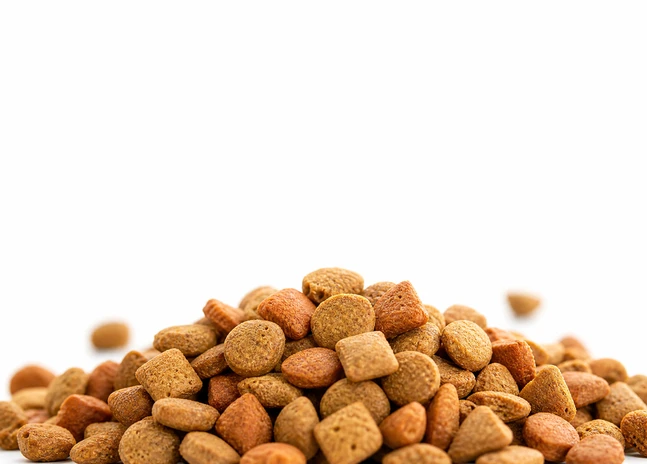
Pet Compound Feed (Dog, Cat, Small Animal Feed)
Pet feed production relies heavily on extrusion technology rather than conventional pelleting.Common ingredients include chicken meal, beef powder, fish meal, corn gluten, starch, fats, vitamins, and flavor additives. Pellet sizes vary widely—from 2 mm cat kibble to 10–15 mm dog food.
Typical Compound Feed Formulations
Broiler Feed Formula (Starter)
मकई
55% तक
सोयाबीन भोजन
28% तक
गेहु का भूसा
8%
मछली भोजन
5%
Premix
2%
नमक
0.5% तक
...
...
Pig Grower Feed Formula
मकई
62% तक
सोयाबीन भोजन
22% तक
गेहु का भूसा
10% तक
डीडीजीएस
4%
खनिज योजक
1.5% तक
Premix
0.5% तक
...
...
Dairy Cattle Feed Formula
Corn Silage Powder
30% तक
अल्फल्फा भोजन
20% तक
Corn Grain
25% तक
सोयाबीन भोजन
18% तक
खनिज मिश्रण
5%
नमक
2%
...
...
Shrimp Floating Feed Formula
मछली भोजन
25% तक
सोयाबीन प्रोटीन
20% तक
गेहूं का आटा
30% तक
मछली का तेल
5%
बंधक
10% तक
Premix
5%
...
...
Cat Dry Food Formula
चिकन भोजन
30% तक
मकई लस
20% तक
चावल का आटा
25% तक
पशु चर्बी
10% तक
विटामिन प्रीमिक्स
5%
Flavor Additives
2%
...
...
बटेर के लिए चारा फार्मूला
मकई
35% तक
गेहु का भूसा
30% तक
अल्फल्फा भोजन
15% तक
सोयाबीन भोजन
10% तक
कपास बीज चूर्ण
5%
खनिज Premix
3%
...
...
These formulations represent common industrial references used in compound feed mill projects. Actual recipes vary depending on region, livestock type, and raw material cost structure. If you want a feed formulation-based plant layout or full process design, you can directly start with your raw materials and target feed types.
compound feed mill FAQs
What is the real cost of a compound feed mill project?
+
The price depends on capacity, automation level, and feed type.
*- including weighing system , hammer mill mixer …..
*- समान क्षमता, अलग-अलग डिज़ाइन के कारण अलग-अलग कीमतें होंगी।
- 1-2t/h —- from 30,000 $ to 60,000 $
- 3-4t/h —- from 60,000 $ to 200,000 $
- 5-6t/h —- from 80,000 $ to 250,000 $
- 10t/h —- from 170,000 $ to 320,000 $
- 15t/h —- from 240,000 $ to 400,000 $
- 20t/h —- from 440,000 $ to 600,000 $
- 30t/h —- from 600,000 $ to 700,000 $
- 40t/h —- from 700,000 $ to 800,000 $
- 60t/h, price can be more than 1,100,000 $
- …. Higher capacity to 120t/h .
How do I choose the right capacity for my compound feed factory?
+
It depends on your market. Small farms choose 1–5T/H, commercial feed businesses usually go for 10–40T/H, while large industrial compound feed mill projects can exceed 100T/H. We match capacity with raw material supply and sales demand.
Can one compound feed production line produce different feed types?
+
Yes. A modern compound feed manufacturing plant can produce mash, pellets, crumble, and even extrusion feed on the same system. Many clients run poultry and livestock feed on one compound livestock feed production line to increase profit flexibility.
What raw materials can be used in a compound feed mill?
+
Corn, wheat, soybean meal, rice bran, cassava, fish meal, sunflower meal, even fiber-rich materials like grass or straw. For some compound animal feed factory projects, we also design special crushing systems for high-fiber raw materials.
Do I need a building with a high roof for installation?
+
Not always. A standard compound feed processing line needs around 6–12 meters height. But we also design compact layouts for low-ceiling factories using vertical conveying systems, especially for automatic compound feed plant projects.
Is a foundation pit required for the feed mill system?
+
Usually no deep pit is required. However, some compound feed mill plant layouts use shallow pits for intake systems or bucket elevators. We design based on your civil structure.
What is the difference between pellet feed and mash feed production?
+
Mash feed skips pelleting and is cheaper to produce. Pellet feed requires conditioning, pressing, and cooling. A compound feed pellet plant adds pellet mill and cooling system, which improves feed efficiency and storage life.
Can I upgrade my existing feed factory instead of building a new one?
+
Yes. Many clients upgrade old compound animal feed production line systems by adding batching automation, pelleting units, or dust control systems instead of rebuilding the entire factory.
What is the power consumption of a compound feed mill?
+
It depends on scale. A small compound feed manufacturing line may need 30–80 kW, while large industrial compound feed mill projects can exceed several hundred kW. We optimize motor layout to reduce energy waste.
स्थापना में कितना समय लगता है?
+
- Small complete compound feed plant: 15–30 days
- Medium compound feed production line: 30–60 days
- Large turnkey compound feed plant: 2–4 months including commissioning
Can one plant produce both livestock and poultry feed?
+
Yes. Many livestock compound feed plant projects are designed for multi-species production. Switching formulas is done through the batching system without changing hardware.
What is the difference between automatic and semi-automatic systems?
+
An automatic compound feed mill uses computer or PLC control and reduces labor cost. Semi-automatic systems require manual batching or feeding. Most modern automatic compound feed plant projects now use full automation.
Do you provide turnkey solutions?
+
Yes. We supply turnkey compound feed mill and turnkey compound feed plant solutions including design, equipment manufacturing, installation, and training.
Can the same line produce fish feed and pet feed?
+
Yes, but it requires extrusion. A compound feed processing plant with twin-screw extruder can produce floating fish feed, shrimp feed, and pet feed on the same system.
What is the lifespan of the equipment? line?
+
With proper maintenance, a complete compound feed mill can operate 10–15 years or more. Wearing parts like hammer blades and die need periodic replacement.
How do you ensure feed quality consistency?
+
We use precise batching systems, mixing control, and conditioning optimization. Even in large compound feed factory setups, uniformity control is the key engineering focus.
What countries do you usually export to?
+
We have delivered compound feed mill for sale projects to Brazil, Russia, Nigeria, Vietnam, Egypt, Saudi Arabia, Mexico, and many others with different climate and raw material conditions.
क्या मैं छोटी शुरुआत करके बाद में विस्तार कर सकता हूँ?
+
Yes. Many compound feed manufacturing plant designs are modular. You can start with 3–5T/H and later expand to 20T/H or more without replacing the entire system.
आप बिक्री के बाद क्या सहायता प्रदान करते हैं?
+
We provide lifetime technical guidance, spare parts supply, remote troubleshooting, and operator training for all compound feed mill projects.
Why choose your company instead of local suppliers?
+
Because we focus on full engineering systems, not just machines. A compound feed mill plant is only stable when design, equipment, and commissioning work together. That’s where our experience in global projects makes the difference.
What exactly does a compound feed mill include, and what types of feed can it produce?
+
A compound feed mill is a complete industrial system designed for producing different types of animal feed from raw materials through fully controlled processing steps. It is widely used in modern compound feed plant, compound feed factory, and large-scale animal feed production line projects.
It is not a single machine—it is a complete engineering system that integrates weighing, grinding, mixing, conditioning, pelleting, extrusion, cooling, screening, and packaging.
Core Process of a Compound Feed Production Line
A standard compound feed production line or complete feed mill plant typically includes:
- कच्चे माल की प्राप्ति और सफाई
- Grinding (size reduction)
- Batching & proportioning
- Mixing (uniform formulation)
- Conditioning (steam / moisture adjustment)
- पेलेटिंग या एक्सट्रूज़न
- Cooling & drying
- Crumbling & screening
- Final packing or bulk loading
These steps can be configured differently depending on feed type and customer requirements in a feed manufacturing plant.
Feed Types Produced by Compound Feed Mill Systems
A modern compound feed manufacturing plant can produce multiple feed categories in one system:
पशुओं का चारा
- Pig feed, cattle feed, sheep feed
- Form: mash / pellets (2–8 mm)
- Focus: high energy & protein balance
पोल्ट्री फीड
- Chicken, duck, goose, quail feed
- Form: pellets or crumble feed
- Common in compound feed factory projects worldwide
जलीय आहार
- तैरती मछली का चारा, डूबती मछली का चारा, झींगा का चारा
- Form: extruded pellets (1–6 mm)
- Requires extrusion system inside compound feed production line
पालतू पशु का चारा
- Cat food, dog food
- Form: expanded / extruded feed
- High-end formulation with precise moisture & fat control
Technical Capacity & Project Scope
| मद | विशिष्टता |
|---|---|
| क्षमता रेंज | 1 – 160 टी/एच |
| निवेश सीमा | 10,000 - 5,000,000 USD |
| फ़ीड प्रकार | Pellet, mash, crushed, extruded feed |
| आवेदन | Poultry, livestock, aquaculture, pets |
| प्रोजेक्ट का प्रकार | New plant / renovation upgrade |
A complete compound feed production line can be designed for both small farms and large industrial feed enterprises.
Engineering Service Scope
We are not only supplying equipment. For every turnkey compound feed plant, we also provide:
- फैक्ट्री लेआउट योजना
- प्रक्रिया डिजाइन और अनुकूलन
- उपकरण निर्माण
- स्थापना और कमीशनिंग
- ऑपरेटर प्रशिक्षण
- दीर्घकालिक तकनीकी सहायता
This ensures the compound feed mill can run stably under real production conditions, not just on paper design.
आवेदन लचीलापन
A single compound feed production line can be configured for:
- Single feed type production (e.g., poultry only)
- Multi-feed production (poultry + livestock + aquaculture)
- Multi-form production (mash + pellet + extruded feed)
- Modular upgrade systems for existing feed manufacturing plant
A compound feed mill is a fully integrated industrial solution for modern feed production. It combines flexible engineering design with scalable production capacity, allowing investors to build a profitable compound feed factory adapted to local raw materials, market demand, and investment scale.
What is compound feed and how is it classified in feed production systems?
+
संयोजित आहार is a scientifically formulated feed designed according to animal nutrition standards. It is produced by mixing different raw materials in precise ratios to meet the nutritional requirements of livestock, poultry, aquaculture, and pets at different growth stages.
In modern compound feed mill systems, compound feed is not just a product—it is the core output of a complete industrial process inside a compound feed plant, compound feed factory, or integrated animal feed production line.
It ensures balanced nutrition, stable feeding performance, and improved growth efficiency, which is why it is widely used in commercial farming and industrial livestock production.
Key Characteristics of Compound Feed
- Formulated based on animal growth stages and nutritional standards
- Balanced protein, energy, vitamins, and minerals
- High feed conversion efficiency
- Suitable for large-scale farming operations
- Produced through controlled processing in a feed manufacturing plant
Classification of Compound Feed
1. By Nutrition Function
| प्रकार | विवरण |
|---|---|
| Complete compound feed | Fully balanced feed providing all nutrients |
| फ़ीड ध्यान लगाओ | Protein-rich supplement feed |
| Concentrate mixture | Mixed nutrient base for further formulation |
| एडिटिव प्रीमिक्स फ़ीड | Vitamins, minerals, and micro ingredients |
| Super concentrate | High-density nutritional feed base |
| दूध दुहने वाला | Artificial milk for young animals |
2. By Physical Form
| प्रपत्र | विवरण |
|---|---|
| छर्रों | Most widely used in modern complete compound feed production line |
| Powder (Mash feed) | Direct mixed feed without pelleting |
| Crushed feed | Broken pellets for young animals |
| एक्सट्रूडेड फ़ीड | High-temperature processed feed (aquatic & pet) |
| तैरता हुआ चारा | Designed for fish feeding behavior |
| Liquid feed | Specialized feeding systems |
| Block feed | Solid compressed feed blocks |
Role of Compound Feed Mill in Production
Since pellet feed is the most widely used form globally, most compound feed production line projects are designed around pellet-based processing, with optional modules for mash, crumble, and extrusion systems.
A modern complete feed mill plant typically includes:
- कच्चे माल की प्राप्ति और सफाई
- पीसने की प्रणाली
- Batching & mixing system
- कंडीशनिंग सिस्टम
- Pelletizing / extrusion system
- शीतलन और स्क्रीनिंग
- पैकेजिंग प्रणाली
This modular structure allows a turnkey compound feed plant to adapt to different raw materials such as corn, soybean meal, wheat bran, cassava, fish meal, grass fiber, and special agricultural by-products.
इंजीनियरिंग अंतर्दृष्टि
In real compound feed manufacturing plant projects, feed formulation and equipment design are closely linked:
- High-fiber raw materials (grass, straw) require stronger grinding systems
- Aquatic feed requires extrusion and drying systems
- Poultry feed focuses on pellet uniformity and durability
- Livestock feed prioritizes cost efficiency and throughput
This is why every compound feed factory design must be customized rather than standardized.
Compound feed is the foundation of modern industrial animal farming. A compound feed mill transforms raw agricultural materials into precise, high-value nutritional products through controlled engineering systems. With flexible configurations, a single feed manufacturing plant can produce multiple feed types for poultry, livestock, aquaculture, and pets.
What are the main types of compound feed mill systems for livestock, poultry, aquaculture, and pets?
+
A modern compound feed mill is not a single fixed system—it is a group of customized production solutions designed according to different animal nutrition requirements, raw materials, and processing technologies.
In today’s compound feed plant, compound feed factory, and industrial animal feed production line projects, the system is always selected based on feed type and market demand.
Different animals require different feed forms, particle sizes, and processing technologies, which is why every compound feed production line or feed manufacturing plant must be engineered separately.
1. Cattle Compound Feed Mill (Beef & Dairy)
आवेदन
Beef cattle feed, dairy cow feed, grass-based and grain-based formulations
मुख्य विशेषताएं
- Supports high-fiber raw materials like grass, silage, straw
- Can process both mash and pellet feed
- Optional integration of grinding + mixing + pelleting systems
विशिष्ट प्रणाली
Fully automatic cattle feed plant / livestock feed mill setup
- Used in: large dairy farms, commercial cattle farms, feed suppliers
- Often designed as a complete feed mill plant
2. Poultry Compound Feed Mill
आवेदन
Chicken, duck, goose, quail, turkey feed production
Feed Forms
- Pellet feed (2–4 mm)
- चूर्ण चारा
- Mash feed (powder)
तकनीकी फोकस
- High pellet uniformity
- Efficient batching system
- Stable small-size grinding control
One of the most common compound feed production line configurations globally
3. Pig Compound Feed Mill
आवेदन
Feed for piglets, growing pigs, and finishing pigs
विशेषताएं
- Multi-stage formula adaptability
- Optional puffing/extrusion for piglet feed
- High protein mixing accuracy required
- Common in intensive farming regions
- Usually designed as automatic compound feed mill systems
4. Horse Compound Feed Mill
आवेदन
Horse feed with grass-based formulation
मुख्य गुण
- High fiber raw material handling
- Grass + grain mixed formulation
- Gentle grinding system to protect fiber structure
Often included in livestock compound feed plant projects
5. Pet Compound Feed Mill
आवेदन
Dog food, cat food, bird feed, rabbit feed
टेक्नोलॉजी
- Extrusion system (high temperature & pressure)
- Flavor coating & oil spraying
- Precise nutrition control
Usually designed as high-end compound feed manufacturing plant
6. Aquatic Feed Production Systems
फ्लोटिंग फिश फीड मिल
- Uses extrusion technology
- Produces floating pellets
- Common size: 1–6 mm
डूबती मछली फ़ीड मिल
- Pelletized or dense feed processing
- Controlled density formula
झींगा फ़ीड मिल
- Small diameter pellets
- High stability in water
- Optional extruder or pellet mill system
All belong to compound feed processing line with specialized aquatic modules
इंजीनियरिंग अंतर्दृष्टि
In real compound feed factory projects, multiple animal feed types are often produced in one system:
- Poultry + pig feed on same line
- Livestock + cattle feed in modular switching system
- Aquaculture + pet feed using extrusion module
This is why modern turnkey compound feed plant solutions are designed as modular systems instead of fixed machines.
Manufacturer Capability Overview
We are a professional supplier of compound feed mill systems, including:
- Livestock feed mill solutions
- Poultry feed mill systems
- Aqua feed mill production lines
- Pet feed mill manufacturing systems
These systems are widely used in global agriculture and feed industries due to:
- Application-specific engineering design
- स्थिर दीर्घकालिक संचालन
- कम रखरखाव की आवश्यकताएं
- आसान स्थापना और कमीशनिंग
- औद्योगिक परिस्थितियों में लंबी सेवा आयु
Different animal species require different feed structures and processing technologies. A modern compound feed mill is therefore a flexible engineering system that can be configured into poultry, livestock, aquaculture, or pet feed production lines. With modular design, one complete compound feed production line can serve multiple markets efficiently.
How is a compound feed mill process designed, and what are the key production stages in a complete feed manufacturing system?
+
A compound feed mill process design is the engineering foundation of any modern compound feed plant, compound feed factory, or large-scale animal feed production line. It determines how raw materials are transformed into finished feed with stable quality, controlled cost, and scalable production efficiency.
In real engineering projects, process design is not only about selecting machines—it is about matching raw materials, production goals, plant layout, and automation level into one integrated feed manufacturing plant solution.
RICHI continuously upgrades compound feed production line technology based on global market demand, especially for poultry, livestock, aquaculture, and pet feed production systems.
Standard Compound Feed Mill Process Flow
एक ठेठ complete compound feed production line includes the following key sections:
1. कच्चे माल की सफाई
Raw materials such as corn, soybean meal, wheat bran, or by-products often contain stones, dust, and metal impurities.
- Equipment: vibrating screen, magnetic separator, pre-cleaner
- Purpose: ensure safety and protect downstream machinery in the compound feed mill
2. Grinding / Crushing Section
Raw materials are crushed into uniform particle sizes suitable for mixing and digestion.
- Equipment: hammer mill, grinder
- Key requirement: adjustable particle size depending on poultry, livestock, or aquaculture feed needs
- This section directly affects efficiency of the compound feed manufacturing plant
3. बैचिंग और मिक्सिंग सिस्टम
Ingredients are accurately weighed and mixed according to formula requirements.
- Equipment: automatic batching scale, horizontal mixer
- Function: ensures nutrient balance in compound feed production line
- Important for multi-species feed factories
4. Conditioning Section
Steam or moisture is added to improve starch gelatinization and pellet quality.
- Equipment: conditioner system
- Function: improves binding and digestibility
- Essential step before pelleting in a compound feed factory
5. Pelletizing / Extrusion Section
Mixed feed is processed into pellets or extruded feed depending on application.
- Equipment: pellet mill / extruder
- आउटपुट प्रपत्र:
- poultry pellets
- पशुधन छर्रों
- floating/sinking aquatic feed
- Core production stage of a complete feed mill plant
6। शीतलन प्रणाली
Fresh pellets contain heat and moisture that must be stabilized.
- Equipment: counter-flow cooler
- Purpose: prevent mold, cracking, and deformation
- Ensures storage stability in feed manufacturing plant operations
7. Screening Section
Finished pellets are graded and separated.
- Qualified pellets → packaging
- Powder → reprocessing
- Improves product uniformity in animal feed production line
8. पैकेजिंग प्रणाली
Final feed is packed into bags or bulk systems.
- Equipment: automatic packing machine
- Options: 10–50 kg bags or bulk loading
- Final stage of complete compound feed production line
9. Finished Product Storage
Packaged feed is stored in dry and ventilated warehouses.
- Purpose: maintain feed quality and shelf life
- Supports logistics in turnkey compound feed plant
इंजीनियरिंग डिजाइन संबंधी विचार
In real compound feed mill process design, engineers must evaluate:
- Raw material type (grain, grass, fiber, mixed formulas)
- Feed form (pellet, mash, extruded, crushed)
- Capacity requirement (10T/H, 30T/H, 50T/H, etc.)
- Factory height and layout constraints
- Dust control, noise reduction, and energy consumption
- Automation level of the compound feed plant
Example Capacity Design Variations
| क्षमता | ठेठ आवेदन |
|---|---|
| 10–15 टी/एच | Medium commercial compound feed plant |
| 20–30 टी/एच | क्षेत्रीय चारा कारखाना |
| 30–50 टी/एच | Industrial compound feed factory |
| 50T/H+ | Large-scale integrated livestock feed production system |
Key Insight From Real Projects
In real engineering cases, a compound feed mill is not only defined by equipment selection but also by:
- Process stability under different raw materials
- Flexibility for multi-form feed production
- Expansion capability for future upgrades
- Balance between investment cost and long-term efficiency
Poor process design can lead to:
- unstable pellet quality
- excessive energy consumption
- उत्पादन बाधाएँ
- equipment overload
This is why every turnkey compound feed plant must be custom-engineered instead of using standard layouts.
A compound feed mill process design integrates cleaning, grinding, batching, conditioning, pelleting, cooling, screening, and packaging into one continuous system. It is the core engineering logic behind every modern compound feed production line, ensuring stable quality, efficient operation, and long-term profitability for feed manufacturers.
What are the main machines and equipment required to build a complete compound feed mill?
+
A modern compound feed mill is built as an integrated system combining grinding, mixing, pelleting, extrusion, cooling, screening, and packaging technologies. A full compound feed plant, compound feed factory, or industrial feed manufacturing plant requires different equipment modules depending on capacity, feed type, and automation level.
Below is a practical breakdown of the core machines used in a complete compound feed production line or turnkey compound feed plant.
Main Equipment for Compound Feed Mill
1. Feed Grinder / Hammer Mill
Used for crushing raw grains and materials into uniform particle size.
- Type: compound feed hammer mill
- क्षमता: 3–25 टी/एच
- शक्ति: 30–160 किलोवाट
- Function: prepares raw materials for mixing in animal feed production line
2. Feed Mixing Machine
Ensures uniform distribution of nutrients and additives.
- Capacity: 250–2000 kg per batch
- शक्ति: 4–55 किलोवाट
- Function: core batching system in compound feed manufacturing plant
3. Bale Breaker
Used for breaking compressed raw material bales (straw, fiber, etc.)
- क्षमता: 1–20 टी/एच
- शक्ति: 30–90 किलोवाट
- Application: livestock feed and roughage processing systems
4. Grass / Straw Crusher
Designed for fibrous raw materials such as hay, alfalfa, straw.
- क्षमता: 0.3–3 टी/एच
- शक्ति: 22–93 किलोवाट
- Function: supports ruminant feed production in compound feed factory
5. Feed Pellet Machine (Pellet Mill)
Core equipment for forming pellet feed.
- क्षमता: 1–48 टी/एच
- शक्ति: 22–315 किलोवाट
- Output: poultry, livestock, aquaculture pellets
- Key machine in any compound feed production line
6. Feed Extruder Machine (Twin-Screw Extruder)
Used for aquatic feed and pet food processing.
- क्षमता: 1–12 टी/एच
- शक्ति: 0.75–355 किलोवाट
- Application: floating fish feed, shrimp feed, pet food
- Essential for high-value compound feed mill systems
7. पेलेट कूलर मशीन
Cools high-temperature pellets after pelleting.
- क्षमता: 3–25 टी/एच
- शक्ति: 30–160 किलोवाट
- Function: stabilizes pellet quality in complete feed mill plant
8. स्क्रीनिंग मशीन
Separates qualified pellets from fines.
- क्षमता: 3–20 टी/एच
- शक्ति: 1.5–5.5 किलोवाट
- Ensures uniform product quality in compound feed plant
9. Automatic Bagging Machine
Final packaging system for finished feed.
- Capacity: 6–12 bags/min
- शक्ति: 1.1–5 किलोवाट
- Application: commercial feed distribution systems
10. Feed Dryer Machine (Optional Module)
Used when raw materials have high moisture content.
- क्षमता: अनुकूलन योग्य
- Speed: 3–8 r/min
- Function: improves raw material stability for feed manufacturing plant
11. Pellet Crumbler Machine
Crushes pellets into smaller sizes (especially poultry feed).
- क्षमता: 2–20 टी/एच
- Rollers: 2–3
- Application: broiler starter feed, young animal feed
12. भंडारण साइलो
Used for large-scale raw material and grain storage.
- क्षमता: 10–10,000 टन
- Function: continuous supply system for compound feed factory
System Integration Concept
In a complete compound feed production line, these machines are not used individually—they are integrated into a continuous system:
- Raw material receiving →
- पीसना →
- Mixing →
- Pelleting / Extrusion →
- Cooling →
- Screening →
- Packaging →
- भंडारण
This is the core structure of every turnkey compound feed plant.
इंजीनियरिंग अंतर्दृष्टि
A well-designed compound feed mill is not only about selecting machines but also about:
- Matching equipment with raw material characteristics
- Balancing production capacity and energy consumption
- Designing flexible layout for future expansion
- Ensuring stable long-term operation in industrial environments
That is why professional feed manufacturing plant solutions always require customized engineering rather than standard machine combinations.
A complete compound feed mill includes a full set of grinding, mixing, pelleting, extrusion, cooling, screening, and packaging equipment. These systems together form a modern compound feed production line, capable of producing poultry, livestock, aquaculture, and pet feed efficiently and continuously.
What are some real global compound feed mill project cases, including capacity, equipment configuration, and investment levels?
+
With over 30 years of engineering experience in the compound feed mill industry, we have successfully delivered numerous compound feed plant, compound feed factory, and turnkey compound feed plant projects across Asia, Africa, Europe, and the Americas.
These projects cover poultry, livestock, aquaculture, and mixed feed applications, using different configurations of compound feed production line systems depending on raw materials, automation level, and local investment conditions.
Below are selected real engineering cases of compound feed manufacturing plant installations worldwide.
Global Compound Feed Mill Project Cases
Algeria – 6–10 T/H Compound Feed Mill
- दिनांक: सितम्बर 2015
- फ़ीड प्रकार: Hen and cattle pellet feed
- निवेश: 80,000–400,000 अमेरिकी डॉलर
उपकरण विन्यास
- फ़ीड कोल्हू
- मिक्सर प्रणाली
- Granulator (pellet mill)
- ठंडा करने की मशीन
- स्क्रीनिंग मशीन
- Bale packaging system
- साइलो प्रणाली
Designed as a medium-scale compound feed factory for poultry + cattle integration.
Uzbekistan – 10–15 T/H Compound Feed Mill
- दिनांक: जुलाई 2019
- फ़ीड प्रकार: Broiler and cattle feed pellets
- निवेश: 150,000–400,000 अमेरिकी डॉलर
उपकरण विन्यास
- फ़ीड ग्राइंडर
- मिक्सर
- Pellet mill system
- Cooler + screener
- बॉयलर प्रणाली
- साइलो
A stable industrial compound feed production line for dual-animal feed production.
Peru – 5 T/H Compound Feed Mill
- दिनांक: फ़रवरी 2021
- फ़ीड प्रकार: Poultry, cattle, goat feed
- निवेश: 220,000–250,000 अमेरिकी डॉलर
मुख्य विशेषताएं
- Multi-animal feed flexibility
- Dual pellet systems
- Stable batching + cooling process
Typical mid-scale animal feed production line for mixed livestock markets.
Malaysia – 3–5 T/H Compound Feed Mill
- दिनांक: अक्टूबर 2021
- फ़ीड प्रकार: Chicken + ruminant feed
- निवेश: 60,000–65,000 अमेरिकी डॉलर
उपकरण
- फ़ीड ग्राइंडर
- मिक्सर
- अल्फल्फा पेलेट मशीन
- कूलर
- Crumbler + packaging system
Compact feed manufacturing plant with efficient space utilization.
Nigeria – 1–2 T/H Compound Feed Mill
- दिनांक: जून 2020
- फ़ीड प्रकार: Pig & cattle feed
- निवेश: 25,000–29,000 अमेरिकी डॉलर
उपकरण
- Grinder + mixer system
- पेलेट मशीन
- शीतलन + स्क्रीनिंग
- पैकेजिंग इकाई
Entry-level complete compound feed production line for small commercial farms.
Vietnam – 15–20 T/H Compound Feed Mill
- दिनांक: दिसम्बर 2020
- फ़ीड प्रकार: Pig + fish feed
- निवेश: अमरीकी डालर 500,000
कुंजी विन्यास
- Crusher + mixer system
- Pellet mill + floating fish extruder
- शीतलन + स्क्रीनिंग
- Silo + batching system
Hybrid compound feed plant combining livestock + aquaculture production.
Mongolia – 5–7 T/H Compound Feed Mill
- दिनांक: जून 2022
- फ़ीड प्रकार: सुअर गोली फ़ीड
- निवेश: अमरीकी डालर 97,160
विशेषताएं
- Pig feed extrusion system
- ग्रीस जोड़ने की प्रणाली
- कॉम्पैक्ट लेआउट डिजाइन
Efficient turnkey compound feed plant for cold-region livestock farming
Philippines – 10 T/H Compound Feed Mill
- दिनांक: सितम्बर 2018
- फ़ीड प्रकार: सुअर और मुर्गी का चारा
- निवेश: अमरीकी डालर 460,000
उपकरण
- Crusher + mixer
- Pellet mill system
- Boiler + cooling system
- Silos + screening
Standard industrial compound feed factory for poultry expansion.
Thailand – 10 T/H Compound Feed Plant
- दिनांक: जुलाई 2025
- फ़ीड प्रकार: Chicken feed + premix
- निवेश: अमरीकी डालर 120,000
Specialized compound feed manufacturing plant with ultra-fine grinding system for premix production.
Russia – 50 T/H Compound Feed Plant
- दिनांक: जून 2024
- फ़ीड प्रकार: Ruminant + poultry feed
- निवेश: अमरीकी डालर 960,000
Large-scale industrial compound feed mill with silo-based continuous feeding system.
Kazakhstan – 30 T/H Compound Feed Plant
- दिनांक: दिसम्बर 2023
- फ़ीड प्रकार: Poultry + livestock feed
- निवेश: अमरीकी डालर 1,250,000
High-capacity complete feed mill plant for commercial agriculture development.
United States – 20 T/H Compound Feed Factory
- दिनांक: मई 2019
- फ़ीड प्रकार: Cattle pellet feed
- निवेश: अमरीकी डालर 550,000
Advanced livestock compound feed plant with oil adding and fiber processing systems.
Argentina – 5 T/H Compound Feed Factory
- दिनांक: अक्टूबर 2021
- फ़ीड प्रकार: Chicken + cattle feed
- निवेश: अमरीकी डालर 184,500
Flexible compound feed production line for poultry and ruminant integration.
Zimbabwe – 5–10 T/H Compound Feed Factory
- दिनांक: अक्टूबर 2022
- फ़ीड प्रकार: Hen + cattle + goat feed
- निवेश: अमरीकी डालर 131,820
Multi-animal compound feed mill system optimized for mixed farming conditions.
Uganda – 15 T/H Compound Feed Factory
- दिनांक: जून 2022
- फ़ीड प्रकार: Cattle + aqua feed
- निवेश: अमरीकी डालर 159,070
Combined animal feed production line for livestock and aquaculture feed.
These global projects demonstrate that a modern compound feed mill can be configured for:
- Small-scale farms (1–5 T/H)
- Medium commercial feed factories (5–20 T/H)
- Large industrial systems (20–50+ T/H)
Each compound feed production line is customized based on:
- Local raw materials
- Feed types (poultry, livestock, aqua, pet)
- Budget and automation level
- Factory space and expansion goals
Can you show examples of different compound feed mill factory designs for poultry, livestock, aquaculture, and pet feed production?
+
In modern compound feed mill engineering, factory design is always customized based on feed type, particle size requirements, raw material characteristics, and production capacity. A well-designed compound feed plant, compound feed factory, or feed manufacturing plant must ensure stable processing performance while maintaining flexibility for different animal feed formulas.
Below are several real engineered compound feed production line designs developed for different global customers.
Featured Compound Feed Mill Factory Designs
10 T/H Poultry Compound Feed Mill (Chicken Feed Plant)
फ़ीड विशेषताएँ
- Medium grinding fineness: 2–4 mm screen size
- Moderate conditioning requirement (double-layer conditioner used)
- गोली का आकार: 2.5–4 मिमी
प्रक्रिया डिजाइन
- Crushing → double batching system → mixing → pelleting → cooling → screening → packaging
प्रमुख पैरामीटर
- Model: SZLH420 compound feed processing line
- Total Power: ~390 kW
- Factory Area: 16 × 11 × 26 m
- Boiler: 1 T steam system
Typical complete compound feed production line for poultry industry expansion.
16–24 T/H Rabbit Compound Feed Mill
फ़ीड विशेषताएँ
- Medium fiber feed
- गोली का आकार: 2.5–4 मिमी
- Low conditioning requirement (single-layer conditioner)
प्रक्रिया विन्यास
- Separate forage line
- Dual crushing system
- Two pelleting lines + two packaging lines
प्रमुख पैरामीटर
- Model: SZLH508 dual-line system
- Total Power: ~800 kW
- Factory Area: 18 × 18 × 29.5 m
- Boiler: 2 T steam system
High-capacity compound feed factory designed for rabbit farming industry.
50–60 T/H Cattle & Sheep Compound Feed Mill
फ़ीड विशेषताएँ
- Coarse grinding (4–8 mm)
- Large pellet size: 4–10 mm
- Low conditioning requirement
प्रक्रिया डिजाइन
- 3 crushing lines
- 2 batching systems
- 3 pelleting + 3 packaging lines
प्रमुख पैरामीटर
- Model: SZLH678 ruminant system
- Total Power: ~1670 kW
- Factory Area: 22.5 × 18 × 29.5 m
- Boiler: 4 T system
Large-scale industrial compound feed plant for ruminant production.
3–6 T/H Floating Fish Compound Feed Mill
फ़ीड विशेषताएँ
- Fine grinding: 60–100 mesh
- High oil addition requirement
- गोली का आकार: 0.6–20 मिमी
प्रक्रिया प्रवाह
Crushing → mixing → ultra-fine grinding → extrusion → drying → coating → cooling → packaging
प्रमुख पैरामीटर
- Total Power: ~450 kW
- Factory Area: 30 × 24 × 30 m
- Boiler: 2 T system
Advanced animal feed production line for aquaculture feed production.
1 T/H Pet Dog & Cat Feed Mill
फ़ीड विशेषताएँ
- High protein, high fat formula
- गोली का आकार: 2–8 मिमी
- High conditioning and extrusion requirement
प्रक्रिया प्रवाह
Batching → premixing → micro-grinding → extrusion → drying → coating → cooling → packaging
प्रमुख पैरामीटर
- Total Power: ~275 kW
- Factory Area: 9 × 13.5 × 14.5 m
- Boiler: 0.5 T system
Premium compound feed manufacturing plant for pet food production.
1.5–2.5 T/H Shrimp & Crab Compound Feed Mill
फ़ीड विशेषताएँ
- Ultra-fine grinding (80+ mesh required)
- High water stability requirement
- Small pellet size: 1–2.5 mm
प्रक्रिया डिजाइन
Double grinding + double batching + pelleting + packaging
प्रमुख पैरामीटर
- Total Power: ~605 kW
- Factory Area: 22 × 17.5 × 30 m
- Boiler: 1 T system
High-precision compound feed production line for aquaculture industry.
3 T/H Sinking Fish Compound Feed Mill
फ़ीड विशेषताएँ
- Fine grinding (0.8–2 mm screen)
- गोली का आकार: 2–4 मिमी
- High conditioning requirement
प्रक्रिया प्रवाह
Crushing → batching → pelleting → cooling → packaging
प्रमुख पैरामीटर
- Total Power: ~210 kW
- Factory Area: 9.5 × 7 × 16.3 m
- Boiler: 0.5 T system
Compact turnkey compound feed plant for sinking fish feed production.
6–8 T/H Pig Compound Feed Mill
फ़ीड विशेषताएँ
- Fine grinding (1–2 mm)
- Low-temperature pelleting
- गोली का आकार: 2–3 मिमी
प्रक्रिया डिजाइन
Crushing → batching → expansion → pelleting → packaging
प्रमुख पैरामीटर
- Total Power: ~712 kW
- Factory Area: 19 × 17.5 × 29 m
- Boiler: 1 T system
Advanced compound feed factory for piglet nutrition feed.
इंजीनियरिंग अंतर्दृष्टि
Each compound feed mill design is customized based on:
- Feed type (poultry, livestock, aqua, pet)
- Raw material structure (grain, grass, high fiber, oil-rich formulas)
- क्षमता आवश्यकता
- Factory height and layout constraints
- Energy and steam system configuration
This is why every complete feed mill plant we deliver is engineered differently instead of using standard layouts.
These featured projects show how a modern compound feed mill can be designed for poultry, livestock, rabbits, aquaculture, and pet feed production. Each compound feed production line is customized to ensure stable performance, efficient output, and long-term industrial reliability.
What is the investment cost of a compound feed mill and what factors affect it?
+
The investment cost of a compound feed mill varies widely depending on production capacity, automation level, plant design, and local construction conditions. Based on our global project experience, a typical compound feed plant / compound feed production line investment range is as follows:
| क्षमता | निवेश लागत (यूएसडी) |
|---|---|
| 1–2 टी/एच | 10,000 – 50,000 |
| 3–4 टी/एच | 50,000 – 120,000 |
| 5–7 टी/एच | 70,000 – 250,000 |
| 8–10 टी/एच | 150,000 – 300,000 |
| 12–20 टी/एच | 250,000 – 580,000 |
| 25–40 टी/एच | 450,000 – 850,000 |
| 50–60 टी/एच | 900,000 – 1,400,000 |
| 60–80 टी/एच | 1,450,000 – 1,800,000 |
| 80–100 टी/एच | 2,000,000 – 2,800,000 |
These figures are based on complete engineering cases of complete compound feed production line / complete feed mill plant projects across Asia, Africa, Europe, and South America.
Main factors influencing compound feed mill cost
1. Production scale and automation level
The scale of a feed manufacturing plant is the primary cost driver. Small-scale animal feed production line projects require fewer systems and simpler layouts, while large industrial compound feed factory projects include fully automated batching, crushing, pelleting, and silo storage systems. Higher automation means higher initial investment but lower long-term labor cost.
2. Equipment configuration and process design
Different configurations of hammer mills, mixers, pellet mills, extruders, cooling, screening, and packing systems significantly affect total price. A fully automated turnkey compound feed plant with advanced PLC control, liquid addition, and silo systems will naturally cost more than a basic setup.
3. Civil construction and plant conditions
Factory buildings, steel structures, silos, and foundation works also impact total investment. In many compound feed manufacturing plant projects, construction cost varies greatly depending on whether the client builds a new plant or renovates an existing facility.
4. Raw material and product diversity
Plants designed for multi-purpose production (poultry, livestock, aqua feed, pet feed) require more flexible configurations, increasing investment but also improving profitability and market adaptability.
मुख्य निष्कर्ष
In general, a compound feed mill investment can range from tens of thousands to several million USD depending on project scope. That is why every compound feed production line must be customized based on local raw materials, factory layout, and business goals.
From our experience in hundreds of feed manufacturing plant projects worldwide, the most successful investors are those who choose a properly designed turnkey solution instead of a standard fixed configuration.
If you are planning to build a compound feed factory or complete compound feed plant, the most accurate way to estimate cost is to share your capacity target and raw material plan—our engineering team will design a fully optimized solution and detailed quotation for you.
What are the main advantages of compound feed mill technology in modern feed factories?
+
Modern compound feed mill technology has become the core of efficient animal nutrition production. A well-designed compound feed plant / compound feed production line is not only about equipment selection, but also about factory layout, automation level, environmental control, and long-term expansion capability.
Based on our engineering experience in global feed manufacturing plant and compound feed factory projects, the main advantages can be summarized as follows:
1. Integrated and functional factory design
A modern compound feed manufacturing plant is designed as a fully integrated system, including:
- MCC power distribution room
- Central computer control room
- Micro ingredient batching room
- Maintenance and repair workshop
- Raw material receiving & storage zone
This structured layout improves workflow efficiency, reduces cross-contamination, and makes production management more stable and scalable. Even with the same factory footprint, capacity can be expanded by upgrading equipment instead of rebuilding the entire plant.
2. High-level automation and intelligent control
A modern turnkey compound feed plant uses PLC and computer control systems to manage the entire production process:
- Automatic batching and weighing
- Real-time mixing control
- Pelletizing and extrusion monitoring
- Packaging and storage management
The central control system provides:
- Fault alarms (motor overload, blockage, short circuit, silo full, etc.)
- Visual production simulation interface
- Manual/automatic switching modes
- Data tracking for every batch
This significantly reduces labor cost while improving consistency and production accuracy in every complete compound feed production line.
3. High-quality and flexible equipment configuration
A modern compound feed mill technology system includes advanced and reliable equipment such as:
- Hammer mill / grinder systems
- क्षैतिज रिबन मिक्सर
- Pellet mills and extruders
- Coolers and crumbler systems
- Vibrating screening machines
- स्वचालित पैकिंग मशीनें
- Silo and conveying systems
Different configurations allow production of:
- मुर्गे का चारा
- पशुधन चारा
- एक्वा फ़ीड
- पालतू पशुओं का चारा
- Mash, pellet, crumbled, or extruded feed
This flexibility makes the compound feed processing line suitable for multi-market operations.
4. Environmental protection and dust/noise control
In modern feed manufacturing plant design, environmental performance is a key advantage:
- Fully sealed conveying systems reduce dust leakage
- Independent dust collection units for critical machines
- Noise isolation rooms for high-vibration equipment
- Workshop air quality control (typically <10 mg/m³ dust concentration)
These improvements ensure compliance with international environmental standards and safer working conditions.
5. Stable batching and precise nutrition control
The batching system is the “heart” of every मिश्रित फ़ीड कारखाना. Advanced computer batching systems ensure:
- High accuracy of micro and macro ingredients
- Consistent feed formula quality
- Flexible recipe switching for different animals
- Stable nutritional output for livestock performance
This directly improves feed efficiency, growth rate, and farming profitability.
6. Strong adaptability and process flexibility
A modern animal feed production line can be configured with:
- Conditioning systems
- Expansion / extrusion systems
- Liquid addition systems
- Multi-stage grinding and mixing
This allows production of multiple feed types within one complete feed mill plant, including poultry, cattle, fish, shrimp, and pet feed.
7. Long-term expandability and investment protection
One of the biggest advantages is scalability:
- Small initial investment with future expansion options
- मॉड्यूलर संरचना डिजाइन
- Capacity upgrades without rebuilding factory structure
- Flexible integration of new production lines
This makes a turnkey compound feed plant a long-term and scalable industrial investment.
In short, modern compound feed mill technology combines automation, precision engineering, environmental protection, and modular expansion. It allows investors to build highly efficient compound feed production lines that are stable, scalable, and profitable.
With decades of engineering experience in global मिश्रित फ़ीड संयंत्र projects, we design systems that not only meet today’s production needs but also support future expansion and product diversification.
What is the future outlook for compound feed production and feed mill industry growth?
+
वैश्विक compound feed mill industry is entering a long-term growth cycle driven by population growth, rising protein consumption, and increasing demand for safe and high-quality animal products. A modern compound feed plant / compound feed production line is becoming a key infrastructure in global livestock and aquaculture development.
1. Strong global demand growth
As global population increases and income levels rise, consumption of meat, dairy, eggs, and fish continues to grow. This directly increases demand for:
- मुर्गे का चारा
- पशुधन चारा
- एक्वा फ़ीड
- पालतू पशुओं का चारा
As a result, the feed manufacturing plant sector is expanding rapidly, especially in developing agricultural economies.
2. Higher requirements for feed quality and safety
Modern animal farming places stronger emphasis on:
- पोषण संतुलन
- Feed safety standards
- Digestibility and conversion rate
- Disease prevention in livestock
This pushes farmers and investors toward advanced compound feed factory solutions instead of traditional small-scale mixing methods.
3. Industry trend: scale, automation, and intelligence
The future of the compound feed production line is clearly moving toward:
- बड़े पैमाने पर औद्योगिक उत्पादन
- Fully automated batching and control systems
- Smart monitoring and data-driven management
- Integrated silo and logistics systems
Large enterprises are increasingly building complete compound feed production line systems to reduce cost and improve consistency.
4. Integration with the agricultural value chain
Feed production is no longer an isolated industry. A modern animal feed production line is now closely connected with:
- Farms (poultry, cattle, pig, fish farms)
- Grain suppliers and raw material markets
- मांस प्रसंस्करण उद्योग
- Agricultural logistics systems
This creates a more efficient and coordinated agricultural ecosystem around the compound feed manufacturing plant.
5. Expansion of turnkey and diversified business models
In the future, investors prefer flexible and turnkey solutions:
- Multi-purpose feed production (poultry + livestock + aqua)
- Multi-form products (pellet, mash, extruded feed)
- Modular expansion design
- Turnkey installation and commissioning
This makes the turnkey compound feed plant model more popular among new investors and agricultural enterprises.
6. Long-term investment opportunity
Despite challenges such as raw material price fluctuation and environmental pressure, the compound feed mill industry remains a stable and high-potential sector. Governments in many countries continue to support:
- Agricultural modernization
- Food security improvement
- Livestock industrialization
This ensures long-term demand for complete feed mill plant and industrial feed production systems.
The future of the compound feed mill industry is highly promising. With continuous innovation in automation, formulation technology, and sustainable production, the compound feed plant sector will continue to expand globally.
Investors who enter early into well-designed compound feed production line projects will benefit from long-term growth in global animal protein demand and agricultural modernization.
How to build a compound feed mill project successfully from planning to feasibility?
+
Building a compound feed mill requires more than selecting equipment. A successful compound feed plant / compound feed production line project must be planned from multiple dimensions including investment cost, market demand, competition analysis, site selection, and financial feasibility. Based on global experience in feed manufacturing plant engineering, the following key factors must be carefully evaluated:
1. Total project investment cost planning
When building a compound feed factory, the total investment is not only the feed production equipment. A complete budget usually includes:
- Boiler system and thermal energy system
- Transformer, power supply, and generator set
- Civil construction and steel structure workshop
- Silos and raw material storage system
- Weighbridge and logistics system
- परिवहन और स्थापना लागत
- Taxes, permits, and insurance
- Working capital for raw materials and operation
A full turnkey compound feed plant must consider both equipment and infrastructure to avoid under-budgeting during implementation.
2. Market demand and regional analysis
Before investing in a compound feed production line, it is essential to analyze the surrounding market:
- Livestock and poultry density in the region
- Aquaculture or cattle farming development level
- Feed consumption habits and demand trends
- Availability and cost of raw materials (corn, soybean meal, wheat bran, etc.)
- Grain surplus or deficit conditions
- Future expansion potential of animal farming
A well-located animal feed production line ensures stable raw material supply and strong customer demand.
3. Market competition evaluation
A detailed competitive analysis is necessary before building a compound feed manufacturing plant:
- Existing feed mill prices and product types
- Credit and payment policies of competitors
- Customer service level in the local market
- Market share distribution
- Labor cost and availability
- Farmer purchasing behavior and loyalty
- Trend of on-farm mixing vs industrial feed purchase
This helps define your positioning in the compound feed factory industry.
4. Site selection for compound feed mill
Choosing the right location is critical for a compound feed mill project. Key factors include:
- Road access and transportation convenience
- Electricity, water, and fuel availability
- Drainage system and soil condition
- Environmental regulations and emission standards
- Local government policies, tax incentives, and subsidies
- Community acceptance of industrial feed plants
- Land cost and expansion space
A properly selected site improves long-term efficiency and reduces operating costs of a complete feed mill plant.
5. Project feasibility and cost structure
The feasibility study of a compound feed production line is based on the following calculation:
Total Production Cost = Raw Material Cost + Processing Cost + Packaging Cost + Overheads
लागत विकार:
- कच्चा माल: corn, soybean meal, wheat bran, oil cakes, premixes, minerals, additives
- प्रसंस्करण लागत: electricity, boiler fuel, labor, maintenance, wear and tear
- पैकेजिंग लागत: woven bags, automatic bagging system
- ओवरहेड्स: depreciation, salaries, financing cost, marketing, logistics
By combining production cost with selling price and capacity utilization, investors can accurately evaluate ROI for a compound feed manufacturing plant.
Successfully building a compound feed mill requires systematic planning from market research to financial evaluation. Each compound feed plant is unique, and investment decisions must be based on local conditions, raw material availability, and long-term production strategy.
With proper engineering design and a well-structured feed manufacturing plant, investors can achieve stable production, strong profitability, and long-term competitiveness in the global animal feed industry.
How should a compound feed mill layout be designed for efficient production flow?
+
The layout design of a compound feed mill is a critical factor that directly determines production efficiency, logistics cost, safety performance, and long-term expansion capability. A well-designed compound feed plant / compound feed production line must balance process flow, land utilization, and operational safety.
Based on global engineering experience in feed manufacturing plant and compound feed factory projects, layout design is always customized according to capacity, feed type, and site conditions.
1. Layout depends on production scale and process complexity
The overall structure of a compound feed manufacturing plant becomes more complex as capacity increases.
Large-scale plants typically include:
- Main production workshop (crushing, batching, pelleting, packing)
- Vertical silo system for raw material storage
- तैयार उत्पाद गोदाम
- Raw material receiving warehouse
- Auxiliary process systems (liquid addition, grinding, extrusion, etc.)
Supporting facilities also include:
- Electrical control room (MCC room)
- Boiler room and energy station
- रखरखाव कार्यशाला
- Laboratory and quality control room
- Weighbridge system
- Office and staff facilities
All these systems must be integrated into a unified complete feed mill plant layout.
2. Logistics flow is the core principle of layout design
A scientifically designed animal feed production line focuses on minimizing material movement distance:
- Raw materials → cleaning → grinding → batching → mixing → pelleting → cooling → packaging → finished warehouse
- Avoid reverse transportation and unnecessary cross movement
- Separate material flow, personnel flow, and clean flow paths
This significantly improves efficiency and reduces contamination risk in a compound feed factory.
3. Two main layout structures used in compound feed mill projects
(1) Separated layout (Independent buildings)
- Production workshop, silo system, and warehouses are built separately
- Connected by conveyors, tunnels, or corridors
- Advantages: better ventilation, easier maintenance
- Disadvantages: larger land requirement and longer transport distance
(2) Integrated cluster layout
- Main workshop and storage systems are combined in a compact structure
- High land utilization efficiency
- Short material conveying distance
- More cost-efficient for medium and large compound feed plant projects
- However, ventilation and lighting must be carefully designed
4. Expansion and flexibility are key design goals
A modern turnkey compound feed plant must consider future expansion:
- Reserve space for additional production lines
- Modular silo and equipment layout
- Upgrade capacity without rebuilding the plant
- Flexible integration of new feed types (poultry, livestock, aqua, pet feed)
This ensures long-term adaptability of the compound feed production line.
5. Safety, environment, and regulatory compliance
A professional feed manufacturing plant layout must also meet:
- Fire safety distance between buildings
- Dust control and ventilation design
- Noise isolation for heavy equipment zones
- Proper drainage and sanitation systems
- Compliance with local environmental regulations
These factors are essential for stable long-term operation.
6. Customized layout design approach
Every compound feed mill layout should be customized based on:
- Production capacity and automation level
- Feed types and raw material characteristics
- Available land shape and size
- Power supply and infrastructure conditions
- Investment budget and expansion plan
A well-designed compound feed mill layout is not just about arranging buildings—it is a complete engineering system that integrates logistics, safety, automation, and scalability.
With extensive experience in global compound feed plant and complete compound feed production line projects, we design layouts that ensure efficient workflow, reduced operational cost, and long-term production stability for every feed manufacturing plant investment.
What does a complete compound feed mill plant include?
+
A complete compound feed mill project is more than just production equipment. It is a fully integrated industrial system that combines processing, storage, utilities, and supporting infrastructure to ensure stable, efficient, and scalable feed manufacturing.
At RICHI, every compound feed plant / compound feed manufacturing plant / feed manufacturing plant is designed as a turnkey system based on capacity, raw materials, automation level, and site conditions.
1. Core production system
This is the heart of the compound feed production line:
- कच्चा माल प्राप्त करने और सफाई प्रणाली
- Grinding section (hammer mill / fine grinding system)
- Batching and dosing system (automatic weighing)
- Mixing system (horizontal or double-shaft mixer)
- Pelletizing / extrusion system (animal feed pellet mill or extruder)
- Conditioning system (steam conditioning for better gelatinization)
- Cooling system (pellet cooler)
- Crumbling system (for young animal feed)
- Screening system (remove fines and oversized particles)
- Packing and bagging system
This section determines product quality, output stability, and feed type flexibility in a complete compound feed production line.
2. Storage and material handling system
To ensure continuous operation of a compound feed factory:
- Raw material silos (grain, protein meals, additives)
- Finished product silos
- Micro ingredient and premix storage rooms
- Bucket elevators, screw conveyors, belt conveyors
- Central dust collection system for safe operation
This system is critical for large-scale turnkey compound feed plant projects.
3. Power, utility & energy systems
A modern complete feed mill plant also includes:
- Power distribution room (MCC control system)
- Boiler system (steam for conditioning process)
- वायु कंप्रेसर स्टेशन
- Electrical control and automation room
- जल आपूर्ति और जल निकासी प्रणालियाँ
These ensure stable operation of the animal feed production line, especially in high-capacity factories.
4. Auxiliary workshops and quality control facilities
To support production and maintenance:
- Laboratory (raw material & finished feed testing)
- Equipment maintenance workshop
- Instrument and electrical repair room
- Central control room (PLC / SCADA system)
These systems improve reliability and reduce downtime of the feed manufacturing plant.
5. Factory infrastructure & civil facilities
Depending on project scale, a compound feed manufacturing plant may also include:
- Administration office building
- Staff facilities (canteen, dormitory, rest areas)
- Internal roads and vehicle access system
- Fire safety system and environmental protection facilities
- Waste treatment and dust/noise control systems
- Greening and site layout planning
Key insight from RICHI इंजीनियरिंग डिजाइन
The final structure of a compound feed mill is never identical. It is customized based on:
- उत्पादन क्षमता आवश्यकताएँ
- Feed types (poultry, livestock, aqua, pet, etc.)
- कच्चे माल की उपलब्धता
- स्वचालन स्तर
- Local land and investment conditions
That is why every complete compound feed plant designed by RICHI is a tailored engineering solution, not a standard machine package
A modern compound feed factory / compound feed plant is a fully engineered system integrating:
production + storage + utilities + automation + infrastructure
This integrated approach is what makes a turnkey compound feed mill project efficient, scalable, and commercially competitive.
What is the best way to design raw material receiving and storage in a compound feed mill?
+
In a modern compound feed mill, the receiving and storage system is one of the most important sections because it directly affects production continuity, material quality, and overall automation level of the compound feed plant / feed manufacturing plant.
Raw materials come in different forms—bulk, bagged, powder, and pellets—and are transported by trucks, ships, or trains. Therefore, a well-designed system must ensure fast unloading, safe storage, and smooth feeding into the compound feed production line.
1. Bulk granular materials (corn, wheat, barley, etc.)
For high-capacity compound feed factory / complete feed mill plant projects:
- Vertical silos are recommended for storage
- Pneumatic or mechanical unloading systems are used
- Bucket elevators and conveyors transfer materials automatically
- Fully mechanized receiving eliminates manual handling
यह डिज़ाइन सुनिश्चित करता है:
- High unloading efficiency
- कम श्रम लागत
- Clean and contamination-free storage
- Continuous feeding into the animal feed production line
2. Powder materials (soybean meal, DDGS, cottonseed meal, etc.)
Powder materials have challenges such as:
- खराब प्रवाहशीलता
- Easy bridging and caking
- Difficulty in discharge
Typical solutions in a turnkey compound feed plant:
Option A (small & medium plants):
- Bagged storage
- मैनुअल या अर्ध-स्वचालित फीडिंग
- Pallet + forklift handling system
Option B (large modern compound feed manufacturing plant):
- Steel silos with anti-bridging design
- Active discharge systems (screw / vibration / fluidization)
- FIFO (first-in-first-out) control system
This is the trend for large-scale automated compound feed mill projects.
3. Special or unstable raw materials (bran, rice bran, fish meal, additives)
For materials that are not suitable for silo storage:
- Bag storage is still commonly used
- Stored on pallets in dry warehouses
- Forklift feeding into batching system
- Controlled manual or semi-automatic dosing
This method improves flexibility in multi-formula complete compound feed production line operations.
4. Key design principles for modern feed mills
A professional feed manufacturing plant / compound feed plant must ensure:
- Fast unloading speed matching production capacity
- Dust control and explosion safety system
- क्रॉस-संदूषण की रोकथाम
- Efficient logistics flow (truck → silo → batching system)
- Reduced manual labor and operating cost
- Stable integration with automation system (PLC control)
5. Engineering insight from RICHI परियोजनाओं
In real compound feed mill projects, the design is not universal. We customize it based on:
- Plant capacity (1–100+ T/H)
- Raw material types and local supply chain
- Level of automation required
- Climate conditions (humidity affects storage behavior)
- Budget and expansion planning
That’s why every complete compound feed plant / turnkey compound feed plant we deliver includes a tailored receiving and storage solution integrated into the full system
An efficient raw material system in a compound feed mill is not just storage—it is the starting point of production quality.
A well-designed system ensures:
- स्थिर आहार
- कम उत्पादन लागत
- उच्चतर स्वचालन
- Better feed quality consistency
How should intra-factory logistics be designed in a modern compound feed mill?
+
In a modern compound feed mill, intra-factory logistics is a core part of overall plant efficiency. It directly connects raw material receiving, storage, batching, production, and finished product delivery within a compound feed plant / feed manufacturing plant / compound feed factory.
A well-designed logistics system ensures that materials move smoothly with minimal labor, low cost, and high automation across the entire compound feed production line.
1. Raw material internal conveying system
For materials stored in silos or warehouses, modern compound feed manufacturing plant designs use:
- बाल्टी लिफ्ट
- स्क्रैपर कन्वेयर
- पेंच कन्वेयर
- Belt conveyors (for horizontal transport)
समारोह:
- Direct transfer from silos → batching bins → grinding or mixing system
- Fully automated feeding into the complete compound feed production line
- No manual handling required in silo-based systems
This is the standard configuration for a modern turnkey compound feed plant.
2. Finished product handling and dispatch system
Finished feed in a compound feed mill can be handled in two ways:
A. Bagged products (most common)
- Automatic weighing and packing system
- Conveyor belt transfer to warehouse
- Forklift loading for shipment
B. Bulk products (advanced large-scale plants)
- Direct flow from finished product bin to bulk trucks
- No bagging required
- Faster loading and lower labor cost
3. Internal logistics equipment used in feed mills
Inside a complete feed mill plant, material handling is usually supported by:
- Forklifts (bagged materials and pallets)
- Motorized flatbed carts
- Mobile belt conveyors
- Trolleys and pallet systems
- Automatic bag stacking machines
These tools ensure flexible operation across different production stages.
4. Main logistics operations inside a compound feed factory
Material handling in a modern compound feed plant / animal feed production line includes:
- Raw material unloading and warehousing
- Transfer to silos or storage bins
- Batching and feeding into production line
- Finished product cooling, packing, and storage
- Outbound loading and shipment
- Handling of rework or unqualified materials
Each step is designed to integrate seamlessly with automation systems in the compound feed production line.
5. Engineering principle: minimize human handling, maximize flow efficiency
The core design logic of a modern compound feed mill is:
- Reduce manual transport
- Shorten material flow distance
- Separate people flow and material flow
- Improve FIFO (first-in-first-out) efficiency
- Reduce warehouse footprint and labor dependency
The higher the level of silo automation, the lower the internal logistics cost.
6. RICHI engineering customization approach
In real projects, every feed manufacturing plant / compound feed factory has different logistics design depending on:
- संयंत्र क्षमता
- Raw material storage method (bulk or bagged)
- Finished product form (pellet or mash, bagged or bulk)
- Site layout and land constraints
- Automation level and budget
That is why every complete compound feed plant / turnkey compound feed plant we design includes a customized intra-factory logistics solution integrated into the full system.
Efficient intra-factory logistics in a compound feed mill ensures:
- Faster production flow
- कम श्रम लागत
- Higher automation level
- Reduced warehouse and handling area
- Stable operation of the full animal feed production line
A well-designed logistics system is not just transportation—it is the “circulation network” that determines the real efficiency of a modern feed mill.
What factors affect feed quality in a compound feed mill?
+
In a modern compound feed mill, feed quality is not determined by a single factor. It is the result of a fully controlled system that integrates raw material management, formula design, production process control, storage, and after-sales technical support across the entire compound feed plant / feed manufacturing plant / compound feed factory.
High-quality feed requires strict control at every stage of the compound feed production line, from incoming materials to final delivery.
1. Raw material quality control
Feed quality starts at procurement and material inspection:
- Select suppliers based on quality + cost balance
- Inspect incoming raw materials before unloading
- Take intermediate samples during unloading to avoid adulteration
- Daily inspection of batching bins to prevent misplacement or contamination
- Weekly warehouse checks for moisture, mold, temperature, and stability
In a compound feed mill, raw material control directly determines nutritional consistency and safety.
2. Formula design control
A scientific formula must consider:
- Animal species, growth stage, and performance targets
- Market competition and feeding efficiency
- Cost optimization without sacrificing nutrition
- Compatibility with processing technology in the complete compound feed production line
मुख्य सिद्धांत:
A good formula must be both nutritionally balanced and technically feasible in production.
3. Production process control
Inside the compound feed manufacturing plant, quality is controlled during production through:
नमूना निरीक्षण
- Check protein, moisture, and particle size at start, middle, and end of production
- Increase testing frequency for pellet feed products
Pelletizing control
- Monitor conditioning temperature and moisture
- Ensure proper steam conditioning for gelatinization
- Prevent overheating or under-processing
Cooling & packaging control
- Check color, smell, and texture consistency
- Compare with standard samples
- Ensure cooler system does not leak hot material
These steps ensure stable output from the animal feed production line.
4. Storage and logistics quality control
After production in a feed manufacturing plant, feed quality can still change if storage is poor:
- Strict shelf-life management for finished products
- Regular warehouse inspections
- FIFO principle (first in, first out)
- Prevent moisture absorption, mold, and caking
- Continuous monitoring during storage and transport
This ensures feed remains stable until delivery from the compound feed factory.
5. After-sales technical service and feedback system
Modern compound feed plant / turnkey compound feed plant operations also include quality feedback loops:
- Build complete customer profiles (species, scale, feeding system, etc.)
- Rapid technical response to customer complaints
- Quality problem analysis and improvement feedback
- Continuous optimization based on customer experience
- Encourage long-term customer referrals and trust-building
6. System-level view: feed quality is an integrated result
In a modern compound feed mill, feed quality reflects the entire system:
- कच्चा माल नियंत्रण
- Formula engineering
- Production automation
- उपकरण प्रदर्शन
- भंडारण और रसद
- Service and feedback
A weakness in any link can affect the final product quality.
High-quality feed production in a compound feed mill depends on:
- कच्चे माल पर सख्त नियंत्रण
- Scientific formula design
- Stable and well-controlled production process
- Proper storage and logistics management
- Continuous technical service improvement
A well-designed complete feed mill plant / compound feed production line ensures consistent quality, stable nutrition, and reliable production performance.
How should a compound feed mill handle and store feed raw materials safely?
+
In a modern compound feed mill, raw material handling and storage is one of the most critical stages affecting final feed quality, cost efficiency, and animal performance. Since feed accounts for 60–80% of livestock production cost, every compound feed plant / feed manufacturing plant / compound feed factory must ensure strict control from the moment raw materials arrive.
Poor storage can lead to mold, toxins, rancidity, and nutrient loss, which directly affects animal growth, immunity, and reproduction performance.
1. Why raw material storage quality is so important
In a compound feed mill, once raw materials deteriorate, they cannot be fully restored. Common risks include:
- Mycotoxins contamination
- Mold growth and heat damage
- Fat oxidation (rancidity)
- कीट संक्रमण
- Nutrient degradation over time
These issues can reduce feed intake, growth rate, feed conversion efficiency, and even cause reproductive failure in livestock.
2. Main storage methods in compound feed plants
(1) Bulk storage (modern standard in compound feed production line)
In large compound feed manufacturing plant / turnkey compound feed plant projects:
- Vertical silos for grains and bulk materials
- Automated conveying and aeration systems
- Mechanical unloading and feeding systems
- FIFO (First-In-First-Out) inventory control
लाभ:
- Better environmental control (temperature & humidity)
- Lower labor requirement
- संदूषण का जोखिम कम हो गया
- आसान स्वचालन एकीकरण
- कम दीर्घकालिक रसद लागत
- Better biosecurity for the animal feed production line
(2) Bagged storage (common in small and developing plants)
Used in many traditional feed manufacturing plant setups:
- Raw materials stored in woven bags
- Manual stacking on pallets
- Forklift or manual handling
सीमाएँ:
- Difficult to control temperature and humidity
- Higher risk of insects and mold
- Hard to implement FIFO system
- Higher labor and transportation cost
- Bags may become contamination sources
- Storage space is not efficiently utilized
3. Key environmental factors affecting storage
A professional compound feed factory must control:
- Moisture content of raw materials (safe level before storage)
- Temperature inside silos or warehouses
- Ventilation and aeration systems
- Storage duration (avoid long-term stagnation)
- Hygiene and pest control conditions
4. Monitoring and quality control practices
In a modern complete compound feed production line, storage management includes:
- Regular sampling of stored raw materials
- Testing for color, odor, mold, insects, and heat
- Monitoring silo condensation and leakage
- Routine warehouse inspections
- रीयल-टाइम इन्वेंट्री ट्रैकिंग सिस्टम
5. SLAM principle for safe storage management
Advanced compound feed plant operations follow SLAM management:
- Sanitation – keep storage clean and dry
- Loading – correct and controlled filling of silos
- Aeration – maintain airflow to prevent overheating
- Monitoring – continuous inspection and sampling
This significantly reduces feed deterioration risks in a complete feed mill plant.
6. Engineering insight from RICHI परियोजनाओं
In real-world compound feed mill design, storage systems are customized based on:
- Raw material type (grain, protein meal, by-products, additives)
- Local climate conditions (humidity is critical)
- Plant capacity and automation level
- Whether materials are bulk or bagged
- Investment budget and expansion planning
That is why every turnkey compound feed plant / compound feed production line designed by RICHI includes a tailored storage and handling system integrated with the full production process
Safe handling and storage in a compound feed mill depends on:
- Choosing the right storage method (bulk vs bagged)
- Controlling moisture, temperature, and time
- Implementing strict monitoring systems
- Using automated conveying and silo systems where possible
- Applying SLAM principles for long-term stability
A well-designed compound feed plant / feed manufacturing plant ensures raw materials remain stable, safe, and nutritionally effective before entering the production process.
How Do Compound Feed Mills Control Raw Material Cost and Maintain Feed Quality?
+
In a modern compound feed mill, raw material cost and quality control are two sides of the same system. Poor management directly leads to feed contamination, nutrient imbalance, production losses, and higher overall operating cost in a compound feed plant or animal feed production line. Therefore, professional compound feed manufacturing plant design always integrates strict handling, storage, and production discipline.
1. Scientific Selection and Risk-Based Storage of Raw Materials
Feed ingredients are the largest cost component in any compound feed production line, so selection and storage must follow strict rules:
Key management principles:
- Purchase based on quality + cost optimization, not just lowest price
- Reject or strictly evaluate raw materials with:
- फफूंद संदूषण
- उच्च नमी
- Unstable odor or color
- Regular supplier evaluation and sample testing before unloading
Storage control measures:
- Monitor temperature, moisture, odor, insects, and mildew risk
- Apply FIFO (First In, First Out) inventory system
- Separate storage for:
- Grain materials (corn, wheat, etc.)
- Protein meals (soybean meal, DDGS, etc.)
- Sensitive by-products (fish meal, bran, rice bran)
Important correction (industry practice update):
“Moldy raw materials must never enter production” is correct, but in real feed manufacturing plants, they must also be isolated, labeled, and disposed or downgraded under QC supervision, not casually reused.
2. Correct Handling and Feeding Operation in Compound Feed Mill
Incorrect feeding operations are a major hidden cost factor in a complete compound feed production line.
सामान्य जोखिम:
- Mixing different raw materials due to incomplete discharge
- Overlapping feeding cycles
- Dust and foreign material contamination
Standard operating rules:
- Allow equipment idle time: 3–5 minutes between batches
- Ensure full discharge before new raw material input
- Clean feeding area before and after operation
- Remove debris, ropes, packaging fragments immediately
इससे निम्नलिखित में सुधार होता है:
- उत्पादन स्थिरता
- मिश्रण सटीकता
- Final feed uniformity
3. Optimized Use of Substandard or Recovered Materials
Some by-products can be reused in a controlled way within a turnkey compound feed plant:
| सामग्री के प्रकार | अनुशंसित उपचार | उपयोग की स्थिति |
|---|---|---|
| Broken bag powder | QC inspection + classification | Only under formula approval |
| धूल की वसूली | Reprocessing or disposal | Must be contamination-free |
| Mixed residues | पहचान आवश्यक | Cannot be treated as standard raw material |
| Moldy materials | Isolation + rejection | उत्पादन में कभी उपयोग नहीं किया गया |
4. Cost Control Strategy in Raw Material Management
A professional compound feed factory reduces cost not by cheap purchasing alone, but by system optimization:
लागत चालक:
- Storage loss (moisture, mold, pests)
- Misuse of raw materials
- Inefficient logistics inside plant
- Formula deviation
Effective control methods:
- Strict batch tracking system
- Moisture-controlled warehouse management
- Automated batching system calibration
- Reduced human handling through mechanized conveying
5. Integrated Control in Compound Feed Mill Design
A modern compound feed mill designed by an experienced engineering team integrates:
- Silos for bulk raw materials
- Automated conveying (bucket elevator, scraper conveyor)
- कंप्यूटर-नियंत्रित बैचिंग प्रणाली
- Centralized dust and contamination control
- वास्तविक समय उत्पादन निगरानी
यह सुनिश्चित करते है:
Controlling cost and quality in a compound feed mill is not a single action—it is a full system involving:
- कच्चे माल का चयन
- Scientific storage design
- Controlled feeding operations
- Waste and by-product management
- Automated production coordination
A well-designed compound feed plant / compound feed production line / complete feed mill plant can significantly reduce raw material loss while improving feed consistency, animal performance, and overall profitability.
How Can a Compound Feed Mill Reduce Material Loss During Production?
+
In a modern compound feed mill, material loss directly affects production cost, profit margin, and product competitiveness. Even a small increase in loss rate (from 0.6% to 0.8%) can significantly impact large-scale compound feed plant operations. Therefore, professional compound feed manufacturing plant design focuses heavily on loss prevention across the entire production chain.
1. Strict Control of Raw Material Quality, Moisture, and Storage Conditions
Raw material handling is the first and most important stage in a compound feed production line.
Moisture control standards:
- Standard moisture level: ≤14.0% (corn and similar grains)
- If ≤14%, no deduction in procurement weight
- If >14%, pricing adjustment based on moisture ratio
Correction / improvement:
Instead of only “rejecting high-moisture materials,” modern feed manufacturing plants also apply:
- Moisture grading system (premium / standard / discounted purchase)
- Real-time moisture detection during unloading
तापमान नियंत्रण:
- High-temperature protein meals (soybean meal, peanut meal) must be cooled before storage
- Prevent “hidden moisture loss” during transport and unloading
Storage improvements:
- Use sealed silos instead of bag storage where possible
- रोकना:
- Rodent contamination
- Bird intrusion
- नमी अवशोषण
- Powder leakage
2. Loss Reduction During Processing in Compound Feed Mill
Material loss often increases during crushing, mixing, and conveying stages.
प्रमुख नियंत्रण बिंदु:
क्रशिंग चरण
- Excessive grinding increases:
- तापमान
- Moisture evaporation
- Dust loss (up to 0.4–0.7%)
- उपाय:
- Optimize hammer mill speed
- Improve air circulation control
- Avoid over-crushing
धूल नियंत्रण प्रणाली
- Regular maintenance of:
- चक्रवात धूल संग्राहक
- Pipeline seals
- Conveyor joints
- Improves both hygiene and raw material recovery
मिश्रण चरण
- Seasonal adjustment is necessary:
- Dry seasons (April–October in many regions): slight water addition (0.5–2%)
- Finished product moisture control:
- ≤12.5% in high temperature seasons
- ≤14% in normal conditions
3. Finished Product Packaging and Weighing Accuracy
In a complete compound feed production line, packaging is often underestimated as a loss source.
Key control measures:
- Calibrate packaging scales every shift using standard weights
- Use high-precision automatic bagging systems
- Reduce overfilling error (major hidden loss factor)
Packaging material improvement:
- Use laminated or coated PP bags
- रोकना:
- Powder leakage
- नमी अवशोषण
- Nutrient loss during storage and transport
4. Raw Material Handling and Internal Logistics Optimization
Efficient logistics inside a turnkey compound feed plant significantly reduces loss:
- Use FIFO (First In, First Out) system strictly
- Avoid long-term storage of sensitive materials
- Minimize repeated handling and transfer steps
- Increase silo-based bulk storage instead of bag handling
5. Equipment Maintenance and System-Level Loss Control
In a modern feed manufacturing plant, equipment condition directly affects material loss:
- Leakage in conveyors and pipelines = hidden powder loss
- Poor sealing = dust escape
- Worn hammer mills = inefficient grinding and higher waste
इसलिए:
- Regular preventive maintenance is required
- Dust recovery systems should be integrated into design
- Automated control systems reduce human error-related loss
6. Key Engineering Insight (From Feed Plant Design Perspective)
A professionally designed compound feed plant / animal feed production line can reduce material loss by:
- Improving automation level
- Optimizing conveying routes
- Reducing manual handling stages
- Enhancing sealing and dust collection systems
- Standardizing batching and weighing accuracy
Reducing material loss in a compound feed mill is not a single-point action—it is a system-wide optimization covering:
- Raw material selection and moisture control
- Crushing and mixing process optimization
- Packaging accuracy management
- Internal logistics design
- Equipment maintenance and automation level
A well-designed complete feed mill plant or compound feed factory can effectively keep total loss within industry-leading levels and significantly improve overall profitability and feed quality consistency.
How Can a Compound Feed Mill Factory Ensure Stable Processing Quality Across the Entire Production Line?
+
In a modern compound feed mill, process quality control is the core of stable production. Any deviation in feeding, crushing, mixing, or packaging can directly affect nutrient uniformity, pellet quality, and final feed performance in a मिश्रित फ़ीड संयंत्र or animal feed production line.
A well-designed compound feed manufacturing plant focuses on full-process control—from raw material intake to finished product packaging—to ensure consistency, efficiency, and safety.
1. Improve Feeding Accuracy and Centralized Control Efficiency
Feeding is the first control point in a complete compound feed production line.
Key operating requirements:
- Feed materials must be placed in designated bins or stacking positions
- Strictly confirm:
- सामग्री के प्रकार
- बैच मात्रा
- Formula allocation
- Remove impurities before feeding:
- Rope ends
- Moldy materials
- Caked or agglomerated feed
दक्षता अनुकूलन:
- Increase feeding speed under controlled conditions
- Reduce idle time of conveying equipment
- Prevent cross-contamination between raw materials
- Central control room should coordinate real-time batching
- In a modern turnkey compound feed plant, feeding is typically fully automated using silo systems and conveyor networks, significantly reducing manual error
2. Proper Operation and Maintenance of the Crusher System
The crusher is a key equipment unit in any feed manufacturing plant.
ऑपरेशन से पहले:
- Check crushing chamber for:
- Metal or foreign objects
- Hammer cracks or wear
- Screen integrity (no leakage)
- Confirm safety cover is properly installed
संचालन के दौरान:
- Wait until full operating speed before feeding materials
- Avoid feeding immediately after startup
- Monitor current load and vibration conditions
Maintenance improvements:
- Replace or reverse hammer blades regularly
- Adjust screen mesh size according to feed type
- Prevent over-grinding to reduce energy waste and material loss
3. Control Mixing Time and Uniformity
Mixing quality directly determines feed nutritional consistency in a compound feed factory.
सर्वोत्तम अभ्यास:
- Adjust mixing time based on feed formulation
- Monitor mixer discharge door for leakage
- Ensure uniformity before discharge
Many plants overlook over-mixing, which can actually reduce uniformity. Modern compound feed production lines often use standardized mixing time curves for different formulations.
4. Precise Addition of Micro Ingredients and Additives
Small ingredient dosing is one of the most sensitive steps in a compound feed mill.
नियंत्रण आवश्यकताएँ:
- Strict formula-based weighing system
- Near-zero tolerance for dosing errors
- Prevent over- or under-addition of:
- एमिनो एसिड
- विटामिन
- खनिज प्रीमिक्स
परिचालन अनुशासन:
- Coordinate between material handler and central operator
- Use automated micro-dosing systems where possible
- Maintain real-time error tracking
5. Liquid Additive System Optimization
Liquid addition is often underestimated in many feed manufacturing plants.
प्रमुख नियंत्रण बिंदु:
- Calibrate flow meters and pulse systems regularly
- Understand measurement deviation at each stage
- Add liquids after micro-ingredients stabilisation (~30 seconds delay)
Spraying system requirements:
- Must achieve fine atomized mist
- Ensure uniform distribution inside mixer
- Avoid agglomeration or sticking
6. Granulation (Pelletizing) Process Control
Pellet quality is a critical output of a compound feed production line.
परिचालन नियंत्रण:
- Adjust steam, temperature, and feeding rate dynamically
- Group production by feed type and pellet size
- Minimize start-stop cycles of pellet mill
Quality control points:
- Monitor pellet hardness and durability
- Check die and hammer wear daily
- Ensure dust removal system is functioning properly
Forced restart after blockage is strictly prohibited; it can damage the main motor and reduce equipment lifespan.
7. Packaging Accuracy and Final Quality Control
Packaging is the final quality gate in a complete feed mill plant.
प्रमुख अभ्यास:
- Daily calibration of packaging scales using electronic weighing platforms
- Avoid overfill/underfill errors
- Use correct packaging labels and batch identification
परिचालन नियंत्रण:
- Separate head and tail bags for recycling
- Take real-time product samples during packaging
- Stop production immediately if abnormal color, odor, or texture is detected
- Ensure correct packaging bag type is used for each product
Stable processing quality in a compound feed mill factory depends on strict control across every stage:
- Feeding accuracy and automation
- Crusher safety and efficiency
- Mixing uniformity control
- Micro-ingredient precision
- Liquid spraying optimization
- Pelletizing stability
- Packaging accuracy and inspection
A well-engineered compound feed plant / compound feed manufacturing plant / turnkey compound feed plant integrates automation, central control systems, and intelligent monitoring to minimize human error and ensure consistent, high-quality feed output.
How Can a Compound Feed Mill Reduce Production Costs and Process Losses?
+
In a modern compound feed mill, production cost control is not only about reducing raw material prices—it is mainly about minimizing process loss across the entire compound feed production line.
Even small inefficiencies in crushing, batching, pelleting, or packaging can accumulate into significant cost leakage in a compound feed plant or feed manufacturing plant.
1. Understanding the Main Sources of Process Loss
In a compound feed factory, production loss usually comes from multiple stages rather than a single point:
(1) Raw material impurity loss
- Industry standard impurity level: ≤1%
- Hidden impurities are removed during cleaning and screening
- These are often “invisible losses” not detected during purchasing
(2) Moisture loss during crushing
- Corn and meal raw materials lose moisture due to temperature rise in grinding
- Typical loss range: 0.5%–1%
- Higher initial moisture = higher evaporation loss
(3) Dust and powder leakage
- के कारण:
- Poor equipment sealing
- Inefficient dust collection system
- Results in direct material waste and environmental pollution
Modern complete compound feed production line designs integrate closed conveying and central dust collection to significantly reduce this loss.
2. Loss During Thermal and Mechanical Processing
(4) Pelletizing and cooling moisture loss
- Excess air volume in cooling system reduces final product moisture
- Leads to unnecessary weight loss and reduced feed palatability
(5) Dust discharge from cooling system
- Cyclone separator inefficiency can cause feed particles to be lost with airflow
- Poor airflow balance increases yield loss
3. Accuracy Control in Batching and Packaging Systems
(6) Packaging scale error
- Standard allowable error: ±50g per bag
- Overfilling = hidden cost loss
- Underfilling = customer complaints and reputation risk
(7) Batching scale accuracy
- Incorrect weighing leads to formula deviation
- Directly affects:
- पोषण संतुलन
- Feed performance
- लागत संरचना
In a modern turnkey compound feed plant, fully automated batching systems reduce human error to near zero.
4. System-Level Cost Optimization in Compound Feed Mill
A high-efficiency compound feed mill reduces production cost not only by equipment improvement but also by system engineering:
प्रमुख अनुकूलन रणनीतियाँ:
- Fully enclosed conveying system (reduces dust loss)
- Smart dust collection + recycling system
- Precise moisture control in cooling and drying stages
- Automated batching and packaging calibration
- Preventive maintenance of key equipment
5. Key Cost Control Focus Areas
Among all process losses, the most critical cost drivers in a compound feed manufacturing plant are:
| लागत कारक | प्रभाव स्तर | Control Priority |
|---|---|---|
| Moisture fluctuation | हाई | बहुत ऊँचा |
| बैचिंग सटीकता | हाई | बहुत ऊँचा |
| धूल की कमी | मध्यम ऊँचाई | हाई |
| शीतलन प्रणाली दक्षता | मध्यम | हाई |
| पैकेजिंग सटीकता | हाई | बहुत ऊँचा |
6. Engineering Perspective from Feed Plant Design
A well-designed animal feed production line or complete feed mill plant can reduce total production cost through:
- Integrated closed-loop conveying systems
- High-precision batching scales
- Optimized airflow design in grinding and cooling sections
- Advanced PLC/SCADA automation control
- Reduced manual handling and transfer steps
Production cost control in a compound feed mill is essentially process loss control. Losses occur in every stage:
- कच्चे माल की सफाई और पेराई
- Dust generation and collection
- पेलेटीकरण और शीतलन
- Batching and packaging accuracy
A professionally designed compound feed plant / compound feed production line / feed manufacturing plant ensures stable operation, minimized loss, and maximum economic efficiency through automation, precision control, and system integration.
How Can a Compound Feed Mill Control Final Feed Moisture During Production?
+
In a modern compound feed mill, the moisture content of finished feed is not controlled by a single machine, but by the coordination of multiple systems across the compound feed production line, especially conditioning, pelleting, and cooling. Stable moisture control is essential for shelf life, pellet quality, and storage safety in any compound feed plant or feed manufacturing plant.
Below is a practical breakdown of how moisture is managed in a complete compound feed production line and what should be adjusted in daily operation.
1. Key principle of moisture control
Finished feed moisture is mainly influenced by:
- Initial moisture of raw materials
- Steam conditioning efficiency
- Pellet cooling intensity
- Airflow and ventilation stability
- Seasonal environmental temperature and humidity
A well-designed turnkey compound feed plant ensures these variables are balanced through automation and precise control systems.
2. Core control points in a compound feed mill
2.1 Conditioning system (steam control)
Steam conditioning is the first major moisture adjustment point.
- Adjust boiler steam pressure:
- High-pressure steam → lower water content, higher thermal efficiency
- Low-pressure steam → higher water contribution to feed moisture
- Optimize conditioning time based on formula and pellet type
- Ensure uniform mixing of steam and mash feed
Proper conditioning improves pellet durability while preventing excessive moisture buildup.
2.2 Pellet cooling system
Cooling is the most critical stage for final moisture reduction in a compound feed manufacturing plant.
मुख्य समायोजनों में निम्नलिखित शामिल हैं:
- Cooler material level control
- Higher material level → longer cooling time → lower final moisture
- Lower material level → insufficient cooling → higher moisture retention
- Cooling airflow adjustment
- Adjust fan damper angle or VFD speed
- Stable airflow ensures consistent evaporation of surface moisture
- शीतलन समय अनुकूलन
- Must match pellet thickness, temperature, and seasonal conditions
2.3 Raw material moisture management
Before production even starts, a stable animal feed production line must control input moisture:
- Test moisture of incoming corn, soybean meal, DDGS, etc.
- Prevent high-moisture raw materials from entering production
- Store materials in dry, ventilated silos or warehouses
- Avoid long-term storage in humid environments
2.4 Seasonal adjustment strategy
Moisture control standards in a complete feed mill plant should change by season:
| ऋतु | फोकस नियंत्रित करें | विशिष्ट समायोजन |
|---|---|---|
| गर्मी | Prevent overheating & mold | Lower conditioning moisture |
| सर्दी | Improve pellet durability | Slightly increase steam conditioning |
| बारिश का मौसम | Prevent raw material moisture increase | Strengthen drying & airflow |
3. Supporting system design in a compound feed factory
A well-engineered compound feed factory or feed manufacturing plant also supports moisture stability through:
- Automated PLC control system for real-time monitoring
- Centralized cooling and dust removal system
- Precise steam boiler control system
- Closed conveying to reduce moisture re-absorption
- Online temperature and humidity feedback sensors
These systems are typically integrated in a complete feed mill plant designed by experienced equipment manufacturers.
4. Engineering insight from feed mill design practice
In real engineering projects, moisture stability is not only an operational issue but also a design issue. A properly designed compound feed plant should ensure:
- Balanced airflow in cooler and dust collection system
- Proper pellet die selection to reduce overheating
- Stable crushing particle size to avoid excessive moisture loss
- Reduced system leakage to prevent uncontrolled evaporation
This is where advanced engineering experience in compound feed production line design plays a key role in long-term product stability
Moisture control in a compound feed mill depends on coordinated management of:
- स्टीम कंडीशनिंग सिस्टम
- शीतलन प्रणाली का प्रदर्शन
- कच्चे माल की गुणवत्ता नियंत्रण
- Seasonal production adjustment
- Automation and engineering design
When these systems are properly integrated, a turnkey compound feed plant can consistently produce stable, high-quality feed with optimized moisture content, improving both storage safety and market competitiveness.
How Can a Compound Feed Mill Improve Packaging Accuracy and Reduce Hidden Losses?
+
In a modern compound feed mill, packaging accuracy is not only a quality control issue but also a direct profitability factor. Even small deviations in bag weight can lead to significant cumulative losses in a compound feed factory or any large-scale feed manufacturing plant, especially when output reaches thousands of tons per month.
1. Why packaging accuracy matters in a compound feed mill
Feed production is a low-margin, high-volume business. Therefore, even minor weighing errors become amplified.
उदाहरण के लिए:
- If each 50 kg bag is overfilled by just 50 g
- Monthly production: 3,000 tons
- Packing rate: 25 bags per ton
Loss calculation:
- 0.05 kg × 25 × 3,000 = 3.75 tons/month loss
- At $500/ton → $1,875/month direct loss
This clearly shows that even a ±0.1% deviation in a complete compound feed production line can significantly impact profit.
2. Key control points for packaging accuracy
2.1 Calibration of weighing system
The packaging scale is the core control point in any compound feed production line.
सर्वोत्तम प्रथाओं में शामिल हैं:
- Calibrate electronic scales every shift or daily
- Use certified external platform scales for verification
- Adjust target weight based on real test results
- Ensure stable zero-point before operation
2.2 Frequent sampling and inspection
To maintain precision in a compound feed plant:
- At least 2 samples per shift
- Sampling frequency increases during startup period
- Separate testing for:
- गोलीनुमा चारा
- मैश फ़ीड
- Random bag checks every 2–3 tons if conditions allow
2.3 Packaging machine optimization
A stable turnkey compound feed plant must ensure packaging equipment is properly tuned:
- Adjust feeding speed to avoid overfill inertia
- Optimize coarse and fine feeding stages
- Ensure vibration system is stable and responsive
- Prevent material bridging or inconsistent flow
2.4 Material handling and system stability
Packaging accuracy is also affected by upstream processes in a compound feed manufacturing plant:
- Ensure stable finished product flow from cooler
- Prevent dust accumulation in weighing hopper
- कण आकार वितरण में एकरूपता बनाए रखें
- Avoid moisture fluctuation that affects bulk density
3. Engineering improvements in modern feed mills
Advanced animal feed production lines and complete feed mill plants improve packaging accuracy through:
- Automatic feedback weighing systems (closed-loop control)
- High-precision load cell technology
- PLC-controlled batching and packing integration
- Anti-vibration and anti-interference structural design
- Data tracking for each batch and production shift
These technologies are typically integrated into well-designed feed manufacturing plants built for high-capacity continuous operation.
4. Operational discipline in daily production
Even with advanced equipment, operator discipline is critical:
- Avoid random parameter changes during production
- Keep packaging bags standardized (weight, thickness, sealing)
- Prevent mixed materials during changeover
- Record all deviations in production logs for traceability
Packaging accuracy in a compound feed mill is controlled by the combined performance of:
- वजन प्रणाली अंशांकन
- Sampling and inspection frequency
- Packaging machine adjustment
- Material flow stability
- Automation and control system design
When properly managed, a well-engineered complete feed mill plant or turnkey compound feed plant can reduce hidden losses, improve profitability, and ensure consistent product quality across every batch.
How Can a Compound Feed Mill Reduce Electricity Costs in Daily Production?
+
In a modern compound feed mill, electricity is one of the largest operating costs after raw materials. For a high-capacity compound feed plant or feed manufacturing plant, even small improvements in energy efficiency can significantly reduce monthly operating expenses.
Effective power management in a compound feed production line is therefore a key part of production optimization, not just cost control.
1. Why electricity consumption is high in a compound feed mill
Major energy-consuming equipment includes:
- Feed pellet machine (main load motor, often 45–160 kW)
- Hammer mill / crusher system
- वायु कंप्रेसर प्रणाली
- Conveying equipment (bucket elevators, screw conveyors)
- Cooling and dust removal systems
Improper operation or poor maintenance in a complete feed mill plant can quickly increase unnecessary energy consumption.
2. Key strategies to reduce electricity cost
2.1 Optimize production continuity
Frequent starting of large motors causes high power spikes.
सर्वोत्तम अभ्यास:
- Maintain continuous production whenever possible
- Avoid frequent stop–start operation of pellet mills
- Reduce idle running time of equipment
- Plan production batches in advance
Continuous operation in a compound feed manufacturing plant significantly reduces peak electricity waste.
2.2 Improve equipment condition and reduce mechanical resistance
Energy waste is often caused by friction and wear.
Key maintenance actions:
- गतिशील भागों का उचित स्नेहन सुनिश्चित करें
- Replace worn hammers in crushers on time
- Maintain roller and ring die condition in pellet mills
- Check belt tension and alignment regularly
- Prevent dust accumulation in bearings and motors
Worn parts in an animal feed production line can increase power consumption by 10–20% or more.
2.3 Reduce idle load and optimize production scheduling
Idle machines still consume energy without producing output.
कार्यकुशलता में सुधार हेतु:
- Reduce idle running of crushers and mixers
- Align feeding and batching schedules
- Avoid long waiting times between processes
- Operate only necessary equipment during small production runs
2.4 Use off-peak electricity pricing
Electricity tariffs often vary by time of day.
A well-managed turnkey compound feed plant should:
- Run high-energy equipment (pelletizing, grinding) during off-peak hours
- Shift non-urgent processes (cleaning, maintenance) to peak hours
- Coordinate production planning with local grid tariff structure
This alone can reduce electricity cost by a noticeable margin in large-scale operations.
2.5 Improve system efficiency through engineering design
Modern energy-saving compound feed factory systems include:
- High-efficiency motors (IE3 / IE4 standard)
- Optimized airflow design in pneumatic systems
- Variable frequency drives (VFD) for crushers and fans
- Low-resistance conveying layout in a complete compound feed production line
- Integrated automation to prevent unnecessary operation
These design improvements are typically built into advanced complete feed mill plants supplied by experienced engineering manufacturers.
3. Operational management tips
To further reduce energy waste in daily operation:
- Avoid over-crushing raw materials (reduces motor load)
- Match particle size with pellet die requirements
- Keep production batches stable to reduce repeated adjustments
- Regularly audit energy consumption per ton of feed produced
Electricity cost control in a compound feed mill depends on a combination of:
- Continuous and stable production planning
- Proper equipment maintenance
- Reduced idle and inefficient operation
- Off-peak electricity scheduling
- ऊर्जा-कुशल प्रणाली डिजाइन
When these factors are properly integrated into a compound feed plant or feed manufacturing plant, overall energy consumption per ton can be significantly reduced, improving long-term profitability and production competitiveness.
How Can a Compound Feed Mill Control Feed Storage Cost and Quality Effectively?
+
In a modern compound feed mill, storage is not just a warehousing function—it directly affects feed nutrition, shelf life, and overall profitability. For any compound feed plant or feed manufacturing plant, improper storage can lead to nutrient degradation, oxidation losses, and reduced market value of finished feed.
Therefore, storage management in a compound feed production line must balance both cost control and quality preservation.
1. Why feed storage quality is critical in a compound feed mill
Improper storage conditions can significantly damage feed quality through:
- Nutrient oxidation (vitamins, amino acids, fats)
- Microbial activity under heat and humidity
- Enzyme activation leading to nutrient consumption
- Fat rancidity and lipid oxidation
उदाहरण के लिए:
- Vitamins such as A, D, E, and B-complex are highly sensitive to oxidation
- Minerals like iron (Fe) can accelerate vitamin degradation
- Unsaturated fats (e.g., soybean oil, cottonseed oil) are easily oxidized
These issues directly reduce feed performance in any complete feed mill plant.
2. Key strategies to control storage cost and quality
2.1 Control storage environment (temperature, light, oxygen)
To maintain feed stability in a compound feed factory, storage conditions must be strictly controlled:
- Keep feed in a cool, dry, dark, and ventilated environment
- सीधी धूप के संपर्क में आने से बचें
- Minimize oxygen contact using sealed packaging or silo systems
- Prevent moisture absorption from air
Proper environmental control slows down oxidation and nutrient loss.
2.2 Optimize storage time and inventory turnover
In a compound feed manufacturing plant, long storage time increases quality risk:
- Do not store finished feed for excessive periods
- Use FIFO (First-In-First-Out) inventory management
- Separate and track storage batches clearly
- Prioritize fast turnover for vitamin-rich formulations
Additives such as vitamins and premixes should have especially strict shelf-life control.
2.3 Prevent fat oxidation and rancidity
Feed fats are highly sensitive to oxygen exposure.
सर्वोत्तम प्रथाओं में शामिल हैं:
- Store oils (soybean oil, corn oil, etc.) in sealed containers
- Avoid high-temperature storage areas
- Use antioxidant additives when necessary
- Prevent exposure during mixing and packaging
In a well-designed turnkey compound feed plant, sealed conveying systems help reduce oxidation risk.
2.4 Improve packaging and sealing system
Packaging plays a major role in storage stability in a feed manufacturing plant:
- Use moisture-proof and oxygen-resistant bags
- Ensure tight sealing after filling
- Avoid damaged or reused packaging materials
- Stack on pallets to prevent ground moisture absorption
2.5 Use advanced storage systems in modern feed mills
A high-efficiency animal feed production line typically includes:
- Fully enclosed silo storage systems
- Temperature and humidity monitoring sensors
- Aeration and ventilation control systems
- Automated inventory tracking systems
- Dust-free conveying and discharge systems
These systems are usually integrated into a complete compound feed production line designed for large-scale industrial operation.
3. Engineering perspective: how design reduces storage losses
In a well-engineered compound feed plant, storage loss is reduced through:
- Improved silo sealing structure
- Reduced dead storage zones
- Optimized material flow design
- Controlled airflow and condensation prevention
- Separation of raw material and finished product storage zones
These design principles are essential in modern complete feed mill plants built for high efficiency and low waste.
Feed storage quality in a compound feed mill depends on:
- Controlled temperature, humidity, and oxygen exposure
- Proper inventory turnover (FIFO management)
- Protection against fat oxidation and vitamin degradation
- Improved packaging and sealing systems
- Advanced automated storage design
When properly implemented in a compound feed plant or feed manufacturing plant, these measures significantly reduce nutrient loss, improve product stability, and lower long-term operational costs.
How Does a Compound Feed Mill Ensure Feed Safety and Hygiene During Production?
+
In a modern compound feed mill, feed safety and hygiene are not single-process tasks—they are integrated across the entire compound feed production line, from raw material intake to final packaging.
For any compound feed plant, compound feed factory, or feed manufacturing plant, maintaining biological and chemical safety is essential to protect animal health and ensure product competitiveness.
1. Why feed safety and hygiene are critical in a compound feed mill
Feed contamination can occur at multiple stages due to:
- Mold growth under high temperature and humidity
- Mycotoxin contamination (e.g., aflatoxin B1)
- Pesticide residues in raw materials
- Naturally occurring plant toxins
- Cross-contamination during storage or processing
उदाहरण के लिए:
- Aflatoxin B1 can be far more toxic than cyanide and arsenic, and even low concentrations can severely affect livestock immunity and productivity.
These risks make strict control essential in any complete feed mill plant.
2. Control of biological contamination
2.1 Mold prevention during storage and handling
In a compound feed manufacturing plant, mold control focuses on:
- Keeping raw materials dry and well-ventilated
- Preventing moisture accumulation in silos and warehouses
- Using first-in-first-out (FIFO) inventory rotation
- Regular inspection of stored materials for odor, heat, or discoloration
Mold control is especially important for corn, soybean meal, and bran-based ingredients.
2.2 Mycotoxin control strategy
Advanced animal feed production lines often include:
- Raw material mycotoxin testing before production
- Use of toxin binders when necessary
- Strict rejection of contaminated batches
- Monitoring of storage temperature and humidity
This significantly reduces biological risks in a complete compound feed production line.
3. Control of toxic substances in raw materials
Some raw materials naturally contain anti-nutritional or toxic compounds:
- कटे-फटे भोजन → contains free gossypol
- Can damage liver, heart, and muscle tissues if not properly treated
- रेपसीड भोजन → contains glucosinolates
- May affect thyroid function in livestock
नियंत्रण उपायों में निम्नलिखित शामिल हैं:
- Proper detoxification processing (heat treatment or fermentation)
- कच्चे माल की सोर्सिंग के सख्त मानक
- Formula balancing by professional nutritionists
- Laboratory testing before use in a turnkey compound feed plant
4. Preventing cross-contamination during production
A well-designed compound feed plant must ensure:
- Dedicated storage bins for different raw materials
- Clean conveying systems between batches
- Regular cleaning of mixers, crushers, and pipelines
- Dust control systems in grinding and batching sections
- Segregation of medicated and non-medicated feed production
These measures are standard in modern feed manufacturing plants.
5. Hygiene control in processing and equipment design
Equipment design also plays a major role in feed safety:
- Fully enclosed conveying systems to reduce exposure
- Dust collection systems to prevent airborne contamination
- Stainless steel or anti-corrosion contact surfaces
- Easy-clean mixer and pelletizer structures
- Automated cleaning and flushing systems in high-end compound feed factories
6. Storage and finished product safety control
To maintain hygiene after production:
- Store finished feed in clean, dry, pest-free warehouses
- Use sealed packaging materials to prevent contamination
- Monitor temperature and humidity continuously
- Avoid long storage cycles and ensure fast turnover
- Implement strict warehouse sanitation routines
Feed safety and hygiene in a compound feed mill are ensured through a complete system covering:
- Raw material inspection and toxin control
- Mold prevention and proper storage management
- Detoxification of naturally toxic ingredients
- Clean and sealed production systems
- Hygienic storage and packaging control
When properly designed and operated, a compound feed plant or complete feed mill plant can consistently produce safe, stable, and high-quality feed while minimizing biological and chemical risks across the entire production cycle.

