


Ceramic media can be used with a wide range of mass finishing equipment, including vibratory finishing machines, centrifugal disc finishers, rotary barrel tumblers, centrifugal barrel finishing machines, and fully automatic mass finishing systems.
Best Quality Ceramic Media Manufacturer in China
Multiple cutting grades available: light, medium, and fast cutting to match your finishing targets.
Wide selection of media geometries: various shapes and sizes for optimal coverage and consistent results.
Compatible with diverse part types: ideal for laser-cut, die-cast, and stamped components.
Low attrition, high efficiency: delivers a rapid cutting rate while minimizing media wear and operating cost.
GETan Instant Quote


Inovatec Machinery Your High Quality Ceramic Tumbling Media Manufacturer From China
Inovatec is the Leading Manufacturer of Ceramic Media based in China. You can find almost all types of Vibratory tumbling media in our show room. In the 20 years of the company’s development, we have always provided customers with good products and technical support, and sound after-sales service.
With strict production control, our vibratory media are manufactured to German quality standards. At the same time, Inovatec continues to raise the bar through innovative concepts and products—helping our clients achieve better finishing results with greater efficiency.
Inovatec offers a comprehensive range of ceramic media, available in multiple cutting grades, shapes, sizes, and compositions. It is designed to handle a wide variety of finishing tasks, including burr and flash removal (both light and heavy), edge breaking, radiusing, surface smoothing, surface preparation, and rust removal.
In addition, ceramic media helps protect parts from part-to-part contact, reducing dents and scratches during processing. It also functions as an effective compound carrier in both wet and dry finishing operations, ensuring consistent chemical distribution and stable process performance.
The application of ceramic media includes laser cut parts deburring, plastic parts deflashing, small metal parts deburring, etc.
Inovatec provides OEM services to meet a wide range of product requirements. Whether you send us a media sample for matching or mechanical parts for finishing trials, we can recommend a proven solution tailored to your application.
We also support resellers in building their own brand with custom packaging and logo printing. Contact us today to discuss your needs and receive a fast, competitive quote.

Triangular ceramic media provides smooth, consistent cutting action and is highly effective at reaching corners, recesses, and internal cavities. Its angled geometry improves penetration and contact at edges and tight features, helping deliver more uniform results on complex parts.

Straight-cut triangular ceramic media is highly effective for edge breaking and supports consistent radius formation on sharp features. It is also widely used in stone and tile finishing applications, including rock tumbling and stone polishing.

The ceramic media in angle cut cylinder shape is useful for deburring holes effectively in part.

The straight cut cylinder shape helps to prevent the part to part collision.

The angle cut tri-star shape is useful for reaching holes, slots and cavities in part for finishing.

The cone shape ceramic media makes it possible to enter the holes of a part partially without creating any kind of lodging issues.

They are also known as the tri cylinders, or the v cut cylinders. It can be used in the place of cones, triangles, and plain cylinders.

The star shape media is suitable for medium and large size parts finishing without any lodging issue.

If the part has narrow slots, then the ellipse shape is the preferred choice. It is useful for cleaning and polishing of gear wheel.

The sharp corners of the pyramid shape also help to reach the grooves and corners of the part

A uniform finish for straight parts can be achieved with the help of the ball shape media. It is also referred to as the sphere shape ceramic media, and it will have the right flow through proper surface contact.
Optional Design & Setting
Very fast-cutting ceramic media typically contains 40–50% abrasive content, providing heavy deburring and grinding performance for aggressive, high-rate material removal.
The fast cutting ceramic media has an abrasive content of 20 to 30 per cent and is a cost effective deburring solution.
The general cutting ceramic media will have 20 per cent abrasive content and is the most widely used ceramic media.
The medium cutting ceramic media is used for deburring and finishing tiles and stones.
Light cutting ceramic media is ideal for removing small burrs with little material removal.
The P grade ceramic polishing media is recommended for polishing and burnishing purpose, and it helps to improve the surface brightness of the part.

Mass Finishing Machine
Inovatec offers different types of mass finishing machines. It includes the vibratory finishing machine, centrifugal disc finishing machine, barrel tumbling machine, centrifugal barrel finishing machine, and automatic mass finishing machines. The principle of operation is different for each of these machines.

Inovatec Machinery – Leading Manufacturer & Supplier Of Ceramic Media From China
Expert support to select the right ceramic media based on your part material, geometry, and finish requirements.
Full range of options in cutting grade, shape, size, and composition for consistent, repeatable results.
Cost-saving deburring solutions optimized for fast cycle times, low attrition, and reduced total operating cost.
Reverse-engineered ceramic media to match your existing specifications and performance targets with reliable supply.
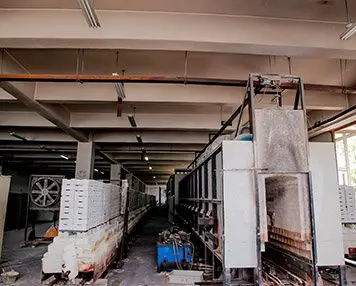
- Factory
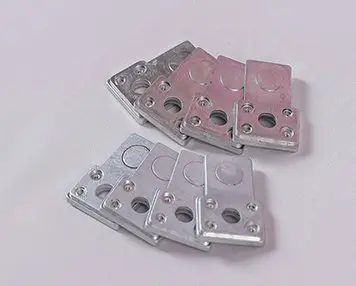
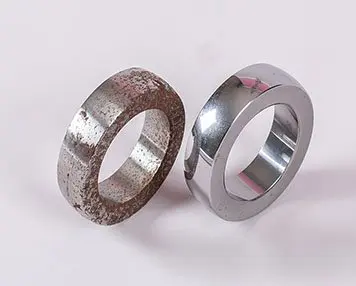
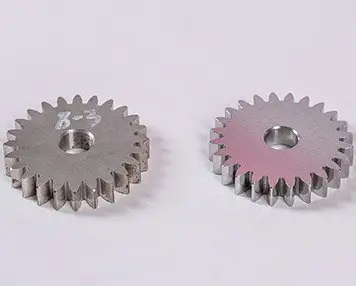
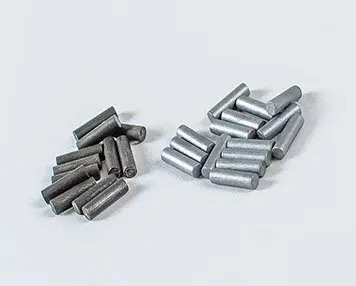
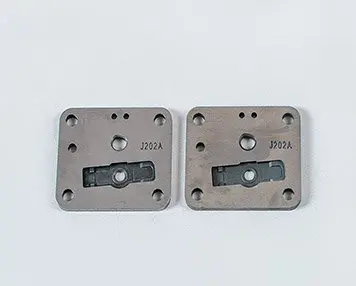
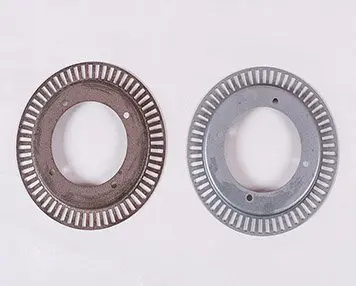
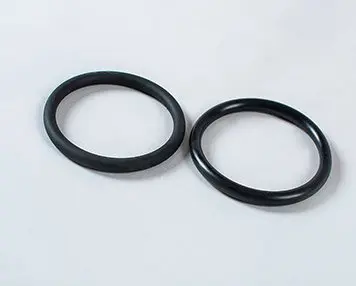
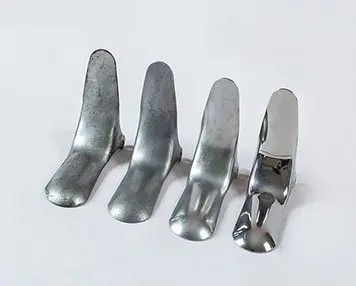
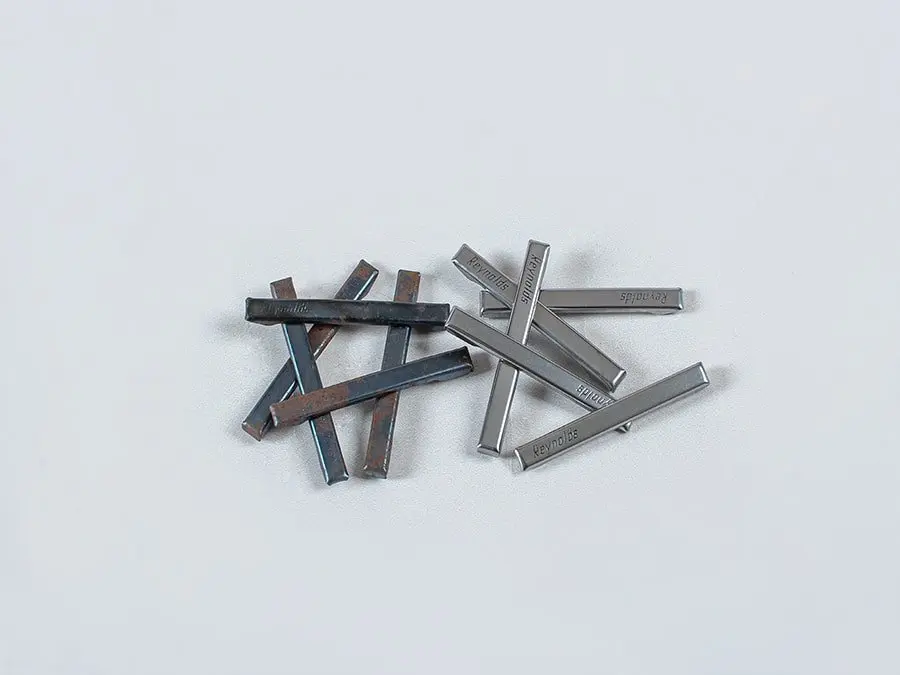
- Before and After

Frequently Asked Question
What is the MOQ for ceramic media?
Our MOQ is 100kg for each size and type. However, we highly recommend you order at least 1000 kg because below 1000kg the shipping cost is the same.
How long do you require to prepare the ceramic media?
Lead time primarily depends on the media size and shape. For example, cone-shaped media typically requires more manual processing, so production time is longer. Larger sizes (above 10 mm) can often be produced faster because we use automatic cutting equipment.
As a reference, our standard production time for 20 mm ceramic media is 15–20 days for orders of 1–20 tons. If your order includes multiple sizes and shapes, lead time may extend accordingly due to additional tooling, changeovers, and production scheduling.
How do you make the packaging?
We use pallets to package the ceramic media. 1000kg per pallets. 25kg per plastic bags.
Where is your nearest port?
Our nearest port is Shanghai, Ningbo and Yiwu. We can also ship to your warehouse in some other places.
What is your payment term?
For small order 30% in advance and balance before shipment. For bulk order, we can discuss case by case.
Ceramic Media Introduction
Ceramic media is a preformed tumbling media used for deburring, polishing, radiusing, cleaning, and rust removal. It can be manufactured in a wide range of shapes and sizes to match different part geometries and finishing goals.

What Determines Ceramic Media Performance
Ceramic media performance is primarily influenced by:
Abrasive type (brown corundum is one of the most common)
Abrasive content and grit size
Media shape and size
Finishing compound and process parameters
Mass finishing machine type (vibratory, rotary, centrifugal, etc.)
Different formulations (“recipes”) are designed for specific applications. Common cutting grades include very fast cutting, fast cutting, medium/general cutting, light cutting, and slow-to-non cutting.
In general, coarser grit media provides faster cutting but may leave a comparatively duller surface, while finer grit media helps achieve a lower Ra (smoother) finish. Results also depend on part material, media-to-part ratio, and machine energy.

Common Names and Applications
Ceramic media may also be referred to as ceramic chips, ceramic stones, or ceramic tumbling media. It is compatible with both vibratory finishing machines and rotary tumblers, and is suitable for a broad range of parts—from large cast iron components to small automotive and precision parts.
Inovatec Ceramic Media Range
Inovatec Machinery supplies a comprehensive range of ceramic tumbling media to cover most finishing requirements. Available cutting grades include:
Light cutting
Medium / general cutting
Fast cutting
Very fast cutting
Fast-cutting media is ideal for heavy burr removal, while lower-cutting grades are preferred for surface finishing and polishing. Inovatec also offers P-grade ceramic media, developed specifically for polishing applications. Ceramic media can also be used for descaling, degreasing, cleaning, and deflashing.
Our ceramic media is typically formulated from kaolin and selected abrasives. Backed by experienced engineers, Inovatec has developed 30+ media formulations for different industrial needs, including solutions for 3D-printed parts, titanium parts, general deburring, and rubber part finishing.

Shapes, Customization, and Selection Guidance
We manufacture ceramic media in many shapes, including balls, cylinders, wedges, cones, pyramids, triangles, tri-stars, tetrahedrons, and more. Custom shapes and sizes are also available based on customer requirements.
General selection guidelines:
Triangle shapes offer stronger cutting action and better edge engagement.
Spherical media provides excellent flow and gentle, uniform contact.
Smaller sizes are recommended for delicate parts and fine features.
Larger sizes support aggressive material removal and faster deburring.
Compared with organic media such as walnut shell or corn cob, ceramic media typically provides more aggressive cutting and deburring, while still delivering excellent results on many non-ferrous parts (including brass, depending on the process and finish requirement).

Quality and Manufacturing Capability
Inovatec produces over 30,000 tonnes of ceramic tumbling media annually, serving customers worldwide. Our media is manufactured under strict quality control to ensure:
Consistent shape and sizing, with predictable wear performance
High cutting efficiency with low attrition
Cost-effective performance, offering an economical alternative to premium imported media
Stable, repeatable quality supported by clean energy production processes (e.g., natural gas)
Complete Finishing Support
Inovatec delivers more than tumbling media—we provide complete finishing solutions, including media selection support, process recommendations, and equipment integration guidance, helping customers run a more efficient and cost-effective finishing operation.
Contact us today for a fast quote and professional media recommendation.

Ceramic Tumbling Media FAQ Guide
- 1. Can You Explain The Manufacturing Process For The Ceramic Tumbling Media?
- 2. What Tolerance Is Acceptable For Ceramic Media?
- 3. What Is Silicon Carbide Tumbling Media?
- 4. What Are The Different Shapes And Size Of Abrasive Media Supported By Inovatec?
- 5. What Is Meant By Light Cutting, Fast Cutting, And Medium Cutting Media?
- 6. How To Select The Right Type Of Ceramic Tumbling Media?
- 7. What Is A Ceramic Abrasive Media?
- 8. What Is The Use Of Ceramic Tumbling Media?
- 9. Can You Explain The Working Of A Ceramic Tumbling Media?
- 10. What Are The Different Types Of Ceramic Media?
- 11. Which Is The Best Ceramic Media Shape, Size, And Angle?
- 12. What Are The Different Available Shapes Of Ceramic Media?
- 13. What Type Of Machine Needs To Be Used With The Ceramic Tumbling Media?
- 14. What Are The Ingredients Of A Ceramic Media?
- 15. What Are The Advantages Of Using A Ceramic Media Over Other Types Of Media?
- 16. What Is The Typical Lifetime Of A Ceramic Tumbling Media?
- 17. What Are The Different Parts That Can Be Finished Using Ceramic Media?
- 18. How Important Is Ceramic Media To A Mass Finishing Machine?
1. Can You Explain The Manufacturing Process For The Ceramic Tumbling Media?
Quality Control Steps for Ceramic Tumbling Media
Inovatec Machinery applies strict quality controls throughout the entire manufacturing process—from raw material sourcing to final inspection—ensuring consistent performance and reliable results.


1) Raw Material Qualification & Traceability
Ceramic media is primarily made from kaolin clay and abrasives. We implement strict controls when sourcing these materials:
Every incoming batch of kaolin is tested to verify particle size distribution and composition meet our predefined standards.
Suppliers are required to deliver materials within our approved specification range.
Retained samples from each raw-material batch are stored for future verification and traceability.
2) Controlled Mixing & Batch Management
Before production, required material quantities are calculated using a computer-based formulation system to ensure accuracy and repeatability.
Mixing is performed in a large rotary mixer for 30–40 minutes to achieve uniform dispersion of both light and heavy components.
Each batch is assigned a unique batch number for full production traceability and to prevent operator errors.

3) De-Airing (Evacuation) to Prevent Defects
After mixing, the batch undergoes an evacuation / de-airing process to remove trapped air.
This step helps prevent internal voids and reduces the risk of media bursting or cracking during sintering.
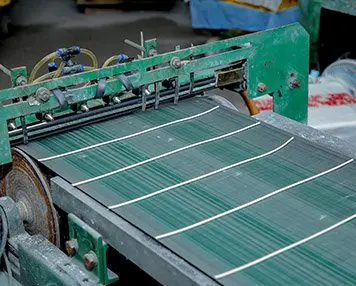
4) Precision Forming & Cutting
Media is shaped and cut using automatic cutting machines to maintain consistent dimensions within a batch.
Shrinkage ratios and moisture content are considered during formulation to achieve the target final size after sintering.
We support bevel/angle cutting at common angles such as 22°, 30°, 45°, 60°, and 68°, and can produce other angles upon request.
Dimensional tolerance is controlled to ±1 mm.

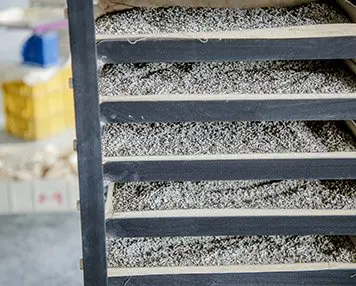
5) Natural Dehydration & Moisture Control
After cutting, media is dried under controlled conditions to remove moisture completely.
Dehydration time varies based on media size; larger media (e.g., above 20 mm) typically requires longer drying.
Proper drying is critical—residual moisture can lead to cracking during sintering.
6) High-Temperature Sintering with PLC Control
Sintering is performed in a 72-meter kiln at approximately 1360°C.
Natural gas is used as the heat source for stable and consistent temperature control.
A PLC program regulates the kiln temperature, allowing only about ±5°C variance.
The sintering cycle typically lasts around 36 hours, ensuring uniform hardness and structural integrity.
7) Post-Sintering Self-Grinding / Conditioning
After sintering, the media is conditioned in a mass finishing machine (often a vibratory finisher or centrifugal disc finisher).
Media rubs against itself for self-grinding, removing minor burrs and surface impurities.
This improves surface consistency and ensures stable performance in customer applications.
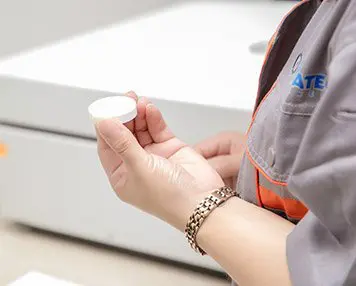
8) Final Inspection & Performance Testing Before Shipment
Only media that meets inspection standards is released for shipment. Key checks include:
Wear (attrition) test: media is tested (e.g., with brass cylinders and stainless steel media) in a centrifugal barrel machine to confirm wear rate is within the acceptable range.
Dimensional and shape inspection: size and geometry are checked with a tolerance of ±1 mm.
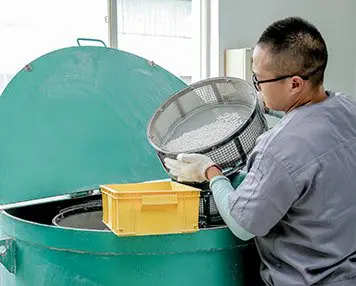
Manual sorting: broken pieces, stuck-together media, or abnormal shapes are removed.

These measures ensure customers consistently receive high-quality ceramic tumbling media with predictable cutting performance, controlled wear, and reliable batch-to-batch consistency.
2. What Tolerance Is Acceptable For Ceramic Media?
We maintain a dimensional tolerance of ±1 mm. As a result, minor variations in product size may occur, but they will remain within this acceptable tolerance range.

3. What Is Silicon Carbide Tumbling Media?
If ceramic media is formulated with silicon carbide abrasives, it is commonly referred to as silicon carbide abrasive media.
Inovatec uses two silicon carbide grades: green silicon carbide and black silicon carbide. Black silicon carbide is more widely used due to its higher durability and wear resistance.
Silicon carbide media is often selected for deburring and cutting hard-to-machine metals such as titanium and stainless steel, where higher cutting efficiency is required. To meet these demands, our engineers have developed a dedicated formulation that combines 20% silicon carbide abrasive with 30% general-cutting abrasive, delivering an increased material removal rate while maintaining stable process performance.
By comparison, standard ceramic abrasive media typically uses corundum (aluminum oxide) abrasives as the primary cutting component.

4. What Are The Different Shapes And Size Of Abrasive Media Supported By Inovatec?
Inovatec manufactures ceramic media in a wide range of shapes and sizes to suit different finishing applications. Standard shapes include balls, tri-stars, cylinders, cones, ellipses, tetrahedrons, pyramids, and arrowheads, among others. We also supply various angle-cut geometries for improved edge engagement and access to tight features.
Our minimum standard sizes include 1 mm ceramic balls and 2 × 2 mm angle-cut triangular media. Custom shapes and sizes are also available upon request to match your specific part geometry and process requirements.

5. What Is Meant By Light Cutting, Fast Cutting, And Medium Cutting Media?

6. How To Select The Right Type Of Ceramic Tumbling Media?
We’ll help you select the right ceramic tumbling media for your application. Use these guidelines to simplify the selection process:
Match your finishing objectives: Choose media that can achieve your required results—deburring, degreasing, descaling, and edge breaking—in the shortest possible cycle time.
Ensure easy separation: Select a shape and size that allows quick, reliable separation of parts and media to reduce handling time and improve efficiency.
Target a uniform finish: The media should provide consistent contact and deliver an even surface finish across the entire part, including critical features.
Prevent media lodging: Avoid shapes/sizes that can jam in slots, holes, or cavities. Stuck media increases rework time and can damage parts during removal.

7. What Is A Ceramic Abrasive Media?
Ceramic media is a widely used mass finishing media formulated from abrasive grains (typically aluminum oxide) bonded with a ceramic binder. Depending on the application, additional components may be incorporated to adjust cutting performance, wear rate, and finishing characteristics—such as silicates, silicon carbide, tin oxide, boron carbide, cerium oxide, porcelain-based additives, and alumina–zircon blends.
Ceramic tumbling media is one of the most popular choices across industries for cleaning, polishing, deburring, and surface conditioning. It provides effective cutting action for burr removal and reliable performance for part cleaning and general finishing across a wide range of materials and part geometries.

8. What Is The Use Of Ceramic Tumbling Media?
A mass finishing machine alone cannot deliver a clean, polished surface—you also need the right finishing media to achieve the required result. When running vibratory, rotary, or high-energy finishing equipment, ceramic tumbling media is a proven option to process parts and reach the target finish efficiently.
Ceramic media supports a wide range of part types, including 3D-printed parts, die-cast parts, and machined components. It can perform the full spectrum of common mass finishing operations, such as deburring, degreasing, descaling, deflashing, surface smoothing, edge breaking, radiusing, and polishing. With the correct formulation and process setup, it can also deliver micro-finishes for higher surface quality requirements.

9. Can You Explain The Working Of A Ceramic Tumbling Media?
Ceramic tumbling media is widely used across mass finishing operations. In most processes, the machine is preloaded with media before the cycle begins, and the media fill level is set according to the machine type and application requirements. Parts are then added into the chamber containing the ceramic media.
Once the machine is running, the media contacts and rubs against the parts, performing the finishing action. The intensity and type of media-to-part interaction varies by machine—high-energy systems generate greater force and typically achieve higher material removal rates, while lower-energy machines emphasize smoother finishing. The finishing action continues throughout the cycle until the machine is stopped.

10. What Are The Different Types Of Ceramic Media?
Inovatec classifies ceramic tumbling media based on cutting action. Our standard ranges include light cutting, medium cutting, and fast cutting ceramic media.
10.1 Light Cutting Ceramic Tumbling Media
Light cutting media contains a lower abrasive content, delivering gentle cutting and a bright, refined finish. It typically features a low wear (attrition) rate, which means longer service life and stable operating cost.

10.2 Medium Cutting Ceramic Tumbling Media
Medium cutting media provides a balanced cutting rate—faster than light cutting media while still maintaining good surface quality. It is commonly selected for general deburring and surface smoothing, where both efficiency and finish consistency are required.

10.3 Fast Cutting Ceramic Tumbling Media
Fast cutting media offers high material removal and is ideal for heavy burr removal and aggressive edge work. Due to its stronger cutting action, it can produce a more matte finish and typically has a higher wear rate, resulting in a shorter media life compared with lighter grades.

11. Which Is The Best Ceramic Media Shape, Size, And Angle?
There is no single “best” ceramic media—selection depends on your specific application. All Inovatec ceramic media is manufactured to consistent, high quality standards, and the optimal choice of shape, size, and angle-cut geometry should be based on your part design, material, and required finishing result.

12. What Are The Different Available Shapes Of Ceramic Media?
Inovatec supplies ceramic tumbling media in a wide variety of shapes, including cones, balls, cylinders, tri-stars, ellipses, pyramids, lens shapes, tetrahedrons, and more. Selected geometries are also available in angle-cut versions to improve edge engagement and access to tight features. Custom shapes can be produced on request to match specific part geometries and finishing requirements.
13. What Type Of Machine Needs To Be Used With The Ceramic Tumbling Media?
14. What Are The Ingredients Of A Ceramic Media?
Ceramic media is typically formulated from a ceramic binder combined with selected abrasives and additives. Common materials used include aluminum oxide (corundum), silicon carbide, and silicates, with the exact composition tailored to the required cutting action, wear rate, and finishing performance.
15. What Are The Advantages Of Using A Ceramic Media Over Other Types Of Media?
Ceramic media is valued for its long service life and cost-effective performance across a wide range of materials. It is also available in many sizes, shapes, and cutting grades, making it easy to match the right geometry to your parts and minimize lodging risks.
Key Benefits of Ceramic Media
Easy to collect and rinse after finishing
Simple cleaning and storage with minimal maintenance
No special storage containers required
Highly effective for grinding and deburring due to its hardness
Long-lasting and durable, with predictable wear characteristics
Shorter cycle times available with aggressive, fast-cutting formulations
Compatible with Raytech Compound D solution
Angle-cut cylinder and cone options improve access to tight corners and hard-to-reach features
Polyhedron geometries help reduce lodging through a wedging/anti-jam action, improving process reliability

16. What Is The Typical Lifetime Of A Ceramic Tumbling Media?
Ceramic media typically has a hardness of 7+ (Mohs), making it strong and durable compared with many other finishing media options.
Media life also depends on size: smaller ceramic media generally wears faster due to its lower mass and higher relative abrasion, while larger ceramic media typically delivers a longer service life under the same operating conditions.
17. What Are The Different Parts That Can Be Finished Using Ceramic Media?
Ceramic media features high bulk density, which makes it well-suited for applications requiring heavy cutting and grinding. It is widely used for hard materials such as titanium, carbon steel, and stainless steel, where stronger cutting action is needed for efficient processing.
Ceramic media is highly effective for deburring, supporting both light deburring and heavy deburring with aggressive material removal depending on the cutting grade and process setup. It can be applied to a broad range of parts produced by different manufacturing methods, including casting, 3D printing, forging, stamping, and more.

18. How Important Is Ceramic Media To A Mass Finishing Machine?
Ceramic tumbling media “works” through rubbing, sliding, and controlled impact against parts inside a mass finishing machine. When matched with the correct machine, compound, and parameters, it delivers both finishing results and process benefits:
What Ceramic Tumbling Media Does to Your Parts
Deburring / deflashing: Removes sharp edges, burrs, and flash—from light cleanup to heavy deburring depending on the cutting grade.
Edge breaking & radiusing: Rounds sharp corners and helps form consistent radii.
Surface smoothing: Lowers surface roughness (Ra) and improves surface texture uniformity.
Cleaning & rust/scale removal: Assists in removing dirt, oxidation, light rust, and scale (typically with compound).
Surface preparation: Creates a uniform, activated surface for coating, plating, anodizing, painting, and other downstream processes.
Polishing support: With polishing-grade media and the right compound, it can improve brightness and finish consistency.

Why Ceramic Media Improves the Process
Enhanced tumbling action
Ceramic media improves flow and contact inside the chamber, acting like rolling elements that help media reach flats, angles, curves, and cavities more effectively.
Cushioning and part protection
Media provides a cushioning effect, reducing damage from part-to-part collision and wall impact, while also stabilizing part movement for a more controlled process.
Part size balancing and uniform pressure
By filling gaps between parts, ceramic media helps “balance” the load—especially with larger parts—reducing direct part-to-part contact and applying consistent pressure for a more uniform finish.
What Determines the Final Result
Actual performance depends on:
Media grade (light / medium / fast cutting)
Media shape & size (and whether angle-cut is used)
Machine type (vibratory, rotary, centrifugal disc, centrifugal barrel, automated systems)
Compound selection and concentration
Cycle time and process settings (speed, water flow, load ratio, etc.)

Send Your Inquiry Today