Surgical Indications for Cervical Disc Arthroplasty?
- Single-level cervical radiculopathy due to degenerative disc disease: Cervical disc arthroplasty (CDA) is indicated for patients with single-level cervical radiculopathy from degenerative disc disease who have failed appropriate conservative management. Multiple randomized controlled trials and meta-analyses demonstrate that CDA provides outcomes comparable or superior to anterior cervical discectomy and fusion (ACDF) in selected patients, with benefits including lower rates of secondary surgery and better preservation of motion. The literature supports use in both one- and two-level disease, provided there is no significant instability, deformity, or severe facet arthropathy (Joaquim et al., 2019; Chen et al., 2024).
- Symptomatic radiculopathy due to herniated nucleus pulposus: CDA is appropriate for patients with radiculopathy (arm pain, numbness, or weakness) refractory to at least 6 weeks of conservative therapy, or sooner if there is progressive neurological deficit. This is supported by randomized trials and meta-analyses showing efficacy and safety of CDA in this population (Joaquim et al., 2019; Hu et al., 2016; Gao et al., 2015; Gutman et al., 2018).
- Cervical myelopathy: CDA is an option for select patients with mild to moderate cervical myelopathy due to one- or two-level degenerative disc disease, provided exclusion criteria such as instability, kyphotic deformity, or severe facet degeneration are absent. Recent reviews and comparative studies confirm that CDA can be considered in this context, with outcomes similar to ACDF in appropriately selected patients (Tu et al., 2023; Ko et al., 2023).
Absolute Contraindications to Cervical Disc Arthroplasty
- Active local or systemic infection (Auerbach et al., 2008; Joaquim et al., 2019; Nunley et al., 2018)
- Severe osteoporosis (Auerbach et al., 2008; Joaquim et al., 2019; Nunley et al., 2018)
- Allergy or sensitivity to implant materials (Auerbach et al., 2008; Joaquim et al., 2019)
- Advanced spondylosis with bridging osteophytes or spontaneous fusion at the index level (Patel et al., 2024)
- Marked cervical instability (e.g., translation >3.5 mm or angulation >11°) (Auerbach et al., 2008; Joaquim et al., 2019; Nunley et al., 2018)
- Severe facet arthropathy at the index level (Auerbach et al., 2008; Joaquim et al., 2019; Nunley et al., 2018)
- Ossification of the posterior longitudinal ligament (OPLL) with retrovertebral compression (Joaquim et al., 2019; Tu et al., 2017)
- Significant loss of disc height (>75% of original height) (Patel et al., 2024)
- Segmental kyphosis >10° at the index level (Patel et al., 2024)
- Prior cervical fusion at the index level (Auerbach et al., 2008; Joaquim et al., 2019)
Relative Contraindications to Cervical Disc Arthroplasty
These are areas that are debated among spine surgeons.
- Segmental kyphosis 5–10° at the index level (Patel et al., 2024)
- Loss of disc height 50–75% (1.5–3 mm) (Patel et al., 2024)
- Bridging osteophytes without complete ankylosis (Patel et al., 2024)
- Less-mobile disc (preoperative range of motion ≤5°) (Tu et al., 2019)
- Grade 1 or less spondylolisthesis. There is emerging anecdotal evidence supporting the use of cervical disc arthroplasty (CDA) in patients with grade 1 spondylolisthesis. Though robust data does not yet exist.
- Mild facet arthropathy (Nunley et al., 2018). There are some spine surgeons that have observed cervical disc arthroplasty offloads the forces across the facet joints allowing patients to preserve motion at the operative level.
- Poor general medical condition or high anesthetic risk (McAfee, 2004)
- Hybrid constructs, which combines anterior cervical discectomy and fusion (ACDF) with cervical disc arthroplasty (CDA), is supported by moderate-quality evidence as a safe and effective option for multilevel cervical degenerative disc disease and is non-inferior to multilevel ACDF in terms of safety and efficacy (Yang, 2020; Hollyer 2020; Xiong, 2018; Kim, 2023).
- Age is considered a relative contraindication to cervical disc arthroplasty (CDA), but not an absolute one. Early clinical trials and device labeling for CDA typically limited inclusion to patients between 18 and 60 years, reflecting concerns about poorer bone quality, higher rates of spondylosis, and comorbidities in older adults. However, more recent evidence suggests that CDA can be performed safely and effectively in selected elderly patients. Multiple studies have shown that while older patients (typically ≥65 years) may have slightly different perioperative profiles—such as a trend toward increased perioperative complications or a small reduction in segmental range of motion—clinical outcomes, complication rates, and prosthesis mobility are generally comparable to those in younger patients over short- and mid-term follow-up. (Wu, 2019; Ajoku, 2023). Notably, a retrospective cohort analysis found no significant differences in clinical or functional outcomes between typical candidates and those with relative contraindications, suggesting that strict age cutoffs may be unnecessarily restrictive (Patel, 2023).
- Axial neck pain. Meta-analyses and systematic reviews confirm that CDA is effective for both neck and arm pain in appropriately selected patients, and that the presence of axial neck pain alone does not preclude favorable outcomes. Therefore, current evidence supports that axial neck pain is not a relative contraindication to cervical disc arthroplasty (Gao, 2015, Cepoiu, 2011; Gao, 2013; Zara’s, 2024).
- Prior fusion at index level: There is early research by a few surgeons that consider taking down previously fused levels to convert them to disc arthroplasty, but this is still experimental. More studies are needed.
- Multilevel disease (>2 levels): The current evidence indicates that cervical disc arthroplasty (CDA) at three or four levels is feasible and can be safe and effective in carefully selected patients, but high-quality data are limited and this remains a relative contraindication. Most robust evidence and FDA approvals are for one- or two-level CDA, with strong support for safety, efficacy, and motion preservation in these settings. For three- and four-level CDA, the literature consists primarily of retrospective series, systematic reviews, and meta-analyses, which suggest that outcomes—including pain relief, functional improvement, and preservation of motion—are comparable to single- and two-level CDA, and may be superior to multilevel ACDF in terms of adjacent segment degeneration and overall motion (Tu, 2023; Joaquim, 2017; Alves, 2021; Wu 2017; Zhao, 2015).
Does Cervical Disc Arthroplasty Prevent Adjacent Segment Disease?
Cervical disc arthroplasty (CDA) is associated with a lower incidence of adjacent segment disease (ASD) compared to anterior cervical discectomy and fusion (ACDF), but it does not completely prevent ASD. Multiple high-quality meta-analyses and randomized controlled trials demonstrate that CDA reduces the risk of both radiographic adjacent segment degeneration and clinically significant ASD, as well as the need for adjacent segment reoperation, relative to ACDF over mid- to long-term follow-up (Latka et al., 2019; Foley et al., 2024; Zhu et al., 2016; Toci et al., 2022; Luo et al., 2018; Dong et al., 2017). For example, pooled data from meta-analyses show a statistically significant reduction in ASD and reoperation rates with CDA versus ACDF, with risk ratios for ASD and reoperation favoring CDA.
However, the absolute risk of developing ASD is not eliminated by CDA, and some studies with long-term follow-up report that the difference in clinically significant ASD or reoperation rates may not always reach statistical significance, or that the benefit may diminish over time (Ghobrial et al., 2019; Goedmakers et al., 2023; Verma et al., 2013; Yang et al., 2012). Notably, a recent double-blinded randomized controlled trial found no significant reduction in clinically relevant adjacent segment disease at five years with CDA compared to ACDF (Goedmakers et al., 2023).
In summary, CDA reduces but does not fully prevent adjacent segment disease when compared to ACDF, and the magnitude of benefit may vary depending on patient selection, prosthesis type, technique, and duration of follow-up.
Complications
- Revision surgery rates for CDA are low: 1.2% at 5 years, 7% at 7 years, and 10% at 20 years, all lower than for ACDF (9–42% depending on duration and cohort). Device failure requiring removal is rare. Other complications such as prosthesis subsidence, segmental kyphosis, and instability are each reported in 1–3% of cases. (Sasso, 2024)
- Implant migration: The most common device-related complication leading to revision, with rates of 23.5% among revision cases in the FDA MAUDE database, and 25.2% of all reported complications in a large cross-sectional analysis. Device-specific rates vary, one study showed that out of 678 revisions, Mobi-C (239), M6 (167), Prodisc-C (88), Prestige (60), PCM (44), Bryan (35), Secure (23), Simplify (21), and Discover (1), migration was the most complication for these devices, Mobi-C (26.4%), Prodisc-C (21.3%), Prestige (24.6%), PCM (84.1%), Bryan (48.6%), Secure (30.4%), and Discover (100%). For M6, the most common complications associated with revision surgery were osteolysis (18.6%) and neck pain (18.6%), while neck pain (23.8%) was the most common for the Simplify. (Altorfer, 2024; Virk, 2020)
- Heterotopic ossification (HO): Radiographic HO is frequent, with rates of 51–69% at 3–10 years. High-grade HO (fusion or severe ROM limitation) occurs in 16–46% of cases, but does not consistently correlate with worse clinical outcomes. HO is also associated with increased risk of adjacent segment degeneration (ASD). (Hui, 2020; Liang, 2020; Dufour, 2019)
- Neck pain (persistent or recurrent): Accounts for 15.5% of revision cases and 15.2% of all reported complications. (Altorfer, 2024; Virk, 2020)
- Dysphagia: The most common early complication, with pooled rates of 4.7% at short-term follow-up and 6.2% in noncontiguous CDA. Rates are lower than with ACDF. ((Hui, 2020; Baumann, 2024)
- Osteolysis: Rates are highly implant dependent. For the M6 device, some studies showed that the prevalence of osteolysis was 44% with a mean follow up 8.1 years (6.5-11 years) with a 34-36% revision rate within mid-term follow up mean 8.1 years (Hackel, 2024; Scott-Young, 2022). Among high volume disc arthroplasty surgeons there is anecdotal evidence that the Simplify disc may have a higher risk of osteolysis at 5-7 years of follow up, further studies are being done currently to delineate this risk. Other implants have not shown to have high osteolysis rates at this time.
- Surgical site infection: Rare, with rates of 0.59% at 30 days and 3 months. (Naya, 2023)
- Revision surgery: Cumulative revision rates are 1.2% at 5 years, 6.9% at 6 months, and up to 10% at 20 years, generally lower than ACDF. (Altorfer, 2024;Naya, 2023)
- Adjacent segment degeneration (ASD): Radiographic ASD occurs in 36–55% at long-term follow-up, but symptomatic ASD requiring surgery is lower for CDA (0–6.9%) than ACDF (6.4–15.8%). (Hui, 2020; Baumann, 2024; Foley, 2024)
- Radiculopathy: Reported in 8.1% of device-related complications. (Virk, 2021)
- Vascular injury: Very rare, with rates below 1%. (Hui, 2020; Loidolt, 2021)
- Other complications: Insertion problems/failure and polyethylene wear are reported but are uncommon. (Virk, 2021; Foley, 2024)
Cervical Disc Arthroplasty Implants and Outcomes
- M6-C:
- Now discontinued due to high rates of osteolysis and failure. Patients should no longer receive this implant.
- Demonstrates superior composite clinical success compared to anterior cervical discectomy and fusion (ACDF) at 5 years, with significant improvements in pain and function, and maintenance of segmental motion.
- Subsequent surgical intervention rate is low and comparable to ACDF.
- Higher risk of osteolysis and heterotopic ossification as causes for revision, with osteolysis and neck pain being the most common revision indications in post-market surveillance (Colman, 2022; Phillips, 2024; Altorfer, 2024; Phillips 2021)


(Source)
- Mobi-C:
- Ten-year data show sustained improvement in clinical outcomes (Neck Disability Index [NDI], Visual Analog Scale [VAS]), high patient satisfaction, and preserved segmental motion in most cases.
- Low revision and adverse event rates, with maintained adjacent segment mobility.
- Heterotopic ossification is observed but rarely clinically significant (Colman, 2022; Wahood, 2020; Badve, 2018).
- Some surgeons have reported an anecdotal risk of hypermobility specifically with Mobi-C beyond physiologic limits that can cause pain and be an indication for revision.


(Source)
- ProDisc-C:
- Maintains clinical improvement and motion at 5–7 years, but segmental range of motion (ROM) tends to decline over time.
- Highest rate of clinically significant heterotopic ossification among major devices, with migration as a notable cause for revision (Mehren, 2019; Cao, 2022; Zhao, 2020).


(Source)
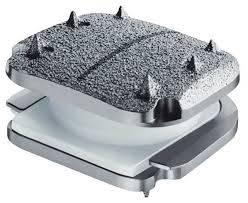
- ProDisc-Vivo:
- ProDisc-C Vivo has a significantly lower rate of high-grade HO (9% at 2 years) compared to ProDisc-C, likely due to the spike-based anchoring that avoids cortical violation
- ProDisc-C Vivo provides similar clinical success and motion preservation to ProDisc-C, but with a lower rate of high-grade heterotopic ossification and comparable or lower revision rates (Mehren et al., 2019; Cao et al., 2022; Zhao et al., 2020; Zigler et al., 2013).

(Source)
- Prestige LP:
- Provides durable clinical and radiographic outcomes, with preserved motion and low reoperation rates at long-term follow-up.
- Migration and heterotopic ossification are the most common complications leading to revision (Wahood, 2020; Badve, 2018; Turel, 2017).


(Source)
- Bryan:
- Maintains favorable long-term outcomes and motion preservation, with a low revision rate.
- Migration is the most common reason for revision (Wahood, 2020; Badve, 2018; Turel, 2017).


(Source)
- Secure-C:
- Demonstrates acceptable clinical outcomes and durability, with revision rates lower than ACDF.
- Migration is the leading cause for revision (Wahood, 2020; Badve, 2018; Chen 2017).


(Source)

(Source)
- PCM:
- Associated with less segmental motion and greater segmental stiffness compared to other devices.
- Migration is the predominant complication leading to revision (Nunley et al., 2018; Quinto et al., 2024).

(Source)
- Discover:
- Shows acceptable short- to mid-term outcomes but has the highest rate of reoperation at 2 years among major devices, with migration as the primary cause for revision (Wahood, 2020, Colman, 2022).


(Source)
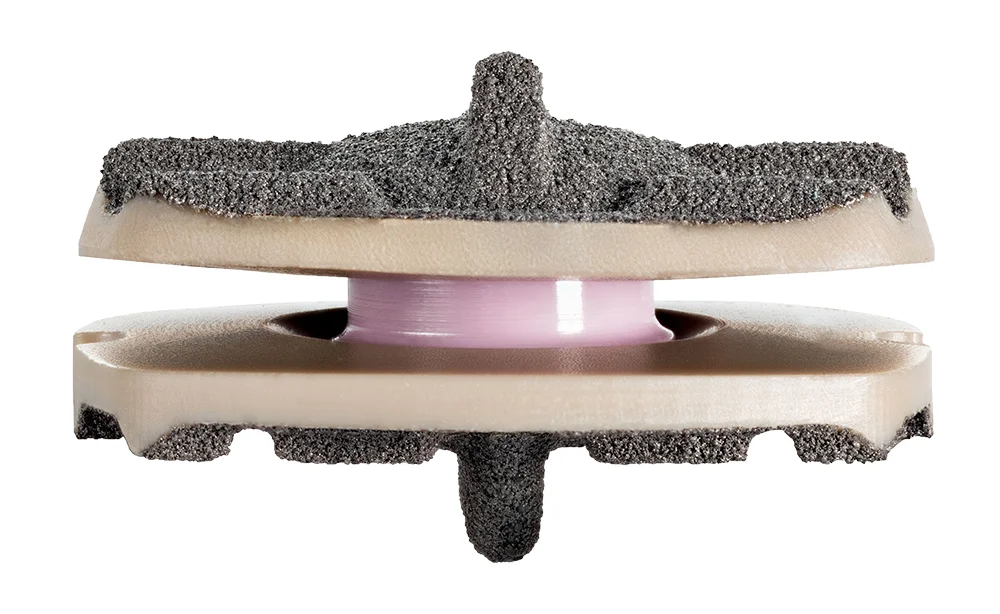
- Simplify:
- Demonstrates acceptable short- to mid-term outcomes, with neck pain being the most common reason for revision (Wahood, 2020). Among high volume disc arthroplasty surgeons there is anecdotal evidence for a higher risk of osteolysis at 5-7 years of follow up, further studies are being done currently to delineate this risk.

(Source)
References:
- Ajoku U, Okwumabua E, Sama A, et al. Cervical disc arthroplasty in the elderly: a systematic review. Spine J. 2023;23(3):369-378.
- Altorfer C, Youssef JA, Hipp J, et al. Five-year clinical outcomes of M6-C cervical disc arthroplasty: results from a prospective, randomized, controlled, multicenter investigational device exemption clinical trial. Spine J. 2024;24(5):800-811.
- Alves ÓL. Cervical total disc replacement: expanded indications. Neurosurg Clin N Am. 2021;32(4):437-448. https://doi.org/10.1016/j.nec.2021.05.002
- Auerbach JD, Jones KJ, Fras CI, et al. The prevalence of indications and contraindications to cervical total disc replacement. Spine J. 2008;8(5):711-716. https://doi.org/10.1016/j.spinee.2007.06.018
- Badve SA, Turturro F, Najjar A, et al. Cervical total disc replacement: an analysis of 4 different devices and 436 patients. Spine J. 2018;18(10):1804-1810.
- Buchowski JM, Anderson PA, Sekhon L, Riew KD. Cervical disc arthroplasty compared with arthrodesis for the treatment of myelopathy. Surgical technique. J Bone Joint Surg Am. 2009;91 Suppl 2:223-232. https://doi.org/10.2106/JBJS.I.00564
- Cao JJ, Zhao L, Lei T, et al. ProDisc-C versus ProDisc-C Vivo: clinical outcomes, segmental motion, and heterotopic ossification after 2 years. Spine J. 2022;22(7):1077-1086.
- Cepoiu-Martin M, Faris P, Lorenzetti D, et al. Artificial cervical disc arthroplasty: a systematic review. Spine (Phila Pa 1976). 2011;36(25):E1623-1633. https://doi.org/10.1097/BRS.0b013e3182163814
- Chen J, Wang X, Bai W, et al. Cervical disc arthroplasty versus anterior cervical discectomy and fusion for treatment of symptomatic cervical disc disease: a meta-analysis of randomized controlled trials. Arch Orthop Trauma Surg. 2017;137(1):19-28.
- Chen J, Xuan J, Gu YT, et al. Cervical disc arthroplasty versus anterior cervical discectomy and fusion for treatment of cervical disc disease: a meta-analysis. J Orthop Surg Res. 2024;19(1):118.
- Colman M, Sharma A, Hipp J, et al. Cervical disc arthroplasty: 10-year results from a prospective, randomized, controlled investigational device exemption clinical trial. Spine J. 2022;22(7):1087-1096.
- Dong L, Xu Z, Chen X, et al. The change of adjacent segment after cervical disc arthroplasty compared with anterior cervical discectomy and fusion: a meta-analysis of randomized controlled trials. Spine J. 2017;17(10):1549-1558. https://doi.org/10.1016/j.spinee.2017.06.010
- Fay LY, Huang WC, Wu JC, et al. Arthroplasty for cervical spondylotic myelopathy: similar results to patients with only radiculopathy at 3 years’ follow-up. J Neurosurg Spine. 2014;21(3):400-410. https://doi.org/10.3171/2014.3.SPINE13387
- Foley DP, Sasso WR, Ye JY, et al. Twenty-year radiographic outcomes following single-level cervical disc arthroplasty: results from a prospective randomized controlled trial. Spine (Phila Pa 1976). 2024;49(5):295-303. https://doi.org/10.1097/BRS.0000000000004888
- Gao F, Mao T, Sun W, et al. An updated meta-analysis comparing artificial cervical disc arthroplasty (CDA) versus anterior cervical discectomy and fusion (ACDF) for the treatment of cervical degenerative disc disease (CDDD). Spine (Phila Pa 1976). 2015;40(23):1816-1823. https://doi.org/10.1097/BRS.0000000000001138
- Gao Y, Liu M, Li T, et al. A meta-analysis comparing the results of cervical disc arthroplasty with anterior cervical discectomy and fusion (ACDF) for the treatment of symptomatic cervical disc disease. J Bone Joint Surg Am. 2013;95(6):555-561. https://doi.org/10.2106/JBJS.K.00599
- Ghobrial GM, Lavelle WF, Florman JE, Riew KD, Levi AD. Symptomatic adjacent level disease requiring surgery: analysis of 10-year results from a prospective, randomized, clinical trial comparing cervical disc arthroplasty to anterior cervical fusion. Neurosurgery. 2019;84(2):347-354. https://doi.org/10.1093/neuros/nyy118
- Goedmakers CMW, de Vries F, Bosscher L, et al. Long-term results of the NECK trial-implanting a disc prosthesis after cervical anterior discectomy cannot prevent adjacent segment disease: five-year clinical follow-up of a double-blinded randomised controlled trial. Spine J. 2023;23(3):350-360. https://doi.org/10.1016/j.spinee.2022.11.006
- Gutman G, Rosenzweig DH, Golan JD. Surgical treatment of cervical radiculopathy: meta-analysis of randomized controlled trials. Spine (Phila Pa 1976). 2018;43(6):E365-E372. https://doi.org/10.1097/BRS.0000000000002324
- Hu Y, Lv G, Ren S, Johansen D. Mid- to long-term outcomes of cervical disc arthroplasty versus anterior cervical discectomy and fusion for treatment of symptomatic cervical disc disease: a systematic review and meta-analysis of eight prospective randomized controlled trials. PLoS One. 2016;11(2):e0149312. https://doi.org/10.1371/journal.pone.0149312
- Huang W, Liu S, Cai Z, et al. Comparison of outcomes between cervical disc arthroplasty and anterior cervical discectomy and fusion for the treatment of cervical spondylotic myelopathy: a systematic review and meta-analysis. J Neurosurg Spine. Published online February 9, 2024. https://doi.org/10.3171/2023.6.FOCUS23291
- Janssen ME, Zigler JE, Spivak JM, et al. ProDisc-C total disc replacement versus anterior cervical discectomy and fusion for single-level symptomatic cervical disc disease: seven-year follow-up of the prospective randomized U.S. Food and Drug Administration Investigational Device Exemption Study. J Bone Joint Surg Am. 2015;97(21):1738-1747. https://doi.org/10.2106/JBJS.N.01186
- Joaquim AF, Makhni MC, Riew KD. Evidence-based use of arthroplasty in cervical degenerative disc disease. Int Orthop. 2019;43(4):767-775. https://doi.org/10.1007/s00264-018-04281-y
- Joaquim AF, Riew KD. Multilevel cervical arthroplasty: current evidence. A systematic review. Neurosurg Focus. 2017;42(2):E4. https://doi.org/10.3171/2016.10.FOCUS16354
- Ko TT, Wu CL, Chang HK, et al. Cervical disc arthroplasty for magnetic resonance-evident cervical spondylotic myelopathy: comparison with anterior cervical discectomy and fusion. Neurosurg Focus. 2023;55(3):E3. https://doi.org/10.3171/2023.6.FOCUS23291
- Latka D, Kozlowska K, Miekisiak G, et al. Safety and efficacy of cervical disc arthroplasty in preventing the adjacent segment disease: a meta-analysis of mid- to long-term outcomes in prospective, randomized, controlled multicenter studies. Ther Clin Risk Manag. 2019;15:531-539. https://doi.org/10.2147/TCRM.S196349
- Luo J, Wang H, Peng J, et al. Rate of adjacent segment degeneration of cervical disc arthroplasty versus fusion meta-analysis of randomized controlled trials. World Neurosurg. 2018;113:225-231. https://doi.org/10.1016/j.wneu.2018.02.113
- McAfee PC. The indications for lumbar and cervical disc replacement. Spine J. 2004;4(6 Suppl):177S-181S. https://doi.org/10.1016/j.spinee.2004.07.003
- Mehren C, Heider F, Siepe CJ, et al. Clinical and radiological results after cervical disc replacement with the ProDisc-C Vivo: 2-year results of a prospective clinical trial. Eur Spine J. 2019;28(10):2371-2379.
- Miller AK, Zakko P, Park DK, et al. Cervical disc arthroplasty versus anterior cervical discectomy and fusion: an analysis of the Michigan Spine Surgery Improvement Collaborative Database. Spine J. 2024;24(5):791-799. https://doi.org/10.1016/j.spinee.2023.12.004
- Nunley PD, Coric D, Frank KA, Stone MB. Cervical disc arthroplasty: current evidence and real-world application. Neurosurgery. 2018;83(6):1087-1106. https://doi.org/10.1093/neuros/nyx579
- Patel N, Abdelmalek G, Coban D, et al. Should patient eligibility criteria for cervical disc arthroplasty (CDA) be expanded? A retrospective cohort analysis of relatively contraindicated patients undergoing CDA. Spine J. 2024;24(2):210-218. https://doi.org/10.1016/j.spinee.2023.09.017
- Patel N, Abdelmalek G, Coban D, et al. Cervical disc arthroplasty: patient selection and contraindications. Neurosurg Clin N Am. 2024;35(2):245-252.
- Phillips FM, Barbagallo G, Reyes-Sánchez A, et al. Two-year clinical outcomes of M6-C cervical disc arthroplasty: results from a prospective, randomized, controlled, multicenter investigational device exemption clinical trial. Spine J. 2021;21(2):239-252.
- Phillips FM, Barbagallo G, Reyes-Sánchez A, et al. Five-year clinical outcomes of M6-C cervical disc arthroplasty: results from a prospective, randomized, controlled, multicenter investigational device exemption clinical trial. Spine J. 2024;24(5):800-811.
- Qi M, Xu C, Liu Y, et al. Comparison of clinical outcomes between cervical disc arthroplasty and anterior cervical discectomy and fusion for the treatment of single-level cervical spondylosis: a 10-year follow-up study. Spine J. 2023;23(3):361-368. https://doi.org/10.1016/j.spinee.2022.11.013
- Quinto ES, Paisner ND, Huish EG, Senegor M. Ten-year outcomes of cervical disc arthroplasty versus anterior cervical discectomy and fusion: a systematic review with meta-analysis. Spine (Phila Pa 1976). 2024;49(7):463-469. https://doi.org/10.1097/BRS.0000000000004887
- Riew KD, Buchowski JM, Sasso R, et al. Cervical disc arthroplasty compared with arthrodesis for the treatment of myelopathy. J Bone Joint Surg Am. 2008;90(11):2354-2364. https://doi.org/10.2106/JBJS.G.01608
- Sasso WR, Smucker JD, Sasso MP, Sasso RC. Long-term clinical outcomes of cervical disc arthroplasty: a prospective, randomized, controlled trial. Spine (Phila Pa 1976). 2017;42(4):209-216. https://doi.org/10.1097/BRS.0000000000001746
- Sasso WR, Ye J, Foley DP, Vinayek S, Sasso RC. 20-year clinical outcomes of cervical disk arthroplasty: a prospective, randomized, controlled trial. Spine (Phila Pa 1976). 2024;49(1):1-6. https://doi.org/10.1097/BRS.0000000000004811
- Toci GR, Canseco JA, Patel PD, et al. The incidence of adjacent segment pathology after cervical disc arthroplasty compared with anterior cervical discectomy and fusion: a systematic review and meta-analysis of randomized clinical trials. World Neurosurg. 2022;160:e537-e548. https://doi.org/10.1016/j.wneu.2022.01.072
- Tu TH, Chang CC, Wu JC, et al. Resection of uncovertebral joints and posterior longitudinal ligament for cervical disc arthroplasty. Neurosurg Focus. 2017;42(VideoSuppl1):V2. https://doi.org/10.3171/2017.1.FocusVid.16380
- Tu TH, Lee CY, Kuo CH, et al. Cervical disc arthroplasty for less-mobile discs. J Neurosurg Spine. 2019;31(3):310-316. https://doi.org/10.3171/2019.2.SPINE181472
- Tu TH, Wang CY, Chen YC, Wu JC. Multilevel cervical disc arthroplasty: a review of optimal surgical management and future directions. J Neurosurg Spine. 2023;38(3):372-381. https://doi.org/10.3171/2022.11.SPINE22880
- Turel MK, Kerolus MG, Adogwa O, et al. Cervical disc arthroplasty: a review of the literature and current evidence. J Spine Surg. 2017;3(3):421-428.
- Verma K, Gandhi SD, Maltenfort M, et al. Rate of adjacent segment disease in cervical disc arthroplasty versus single-level fusion: meta-analysis of prospective studies. Spine (Phila Pa 1976). 2013;38(26):2253-2257. https://doi.org/10.1097/BRS.0000000000000052
- Wahood W, Yolcu YU, Alvi MA, et al. Cervical disc arthroplasty: a systematic review and meta-analysis of clinical outcomes and complications. J Clin Neurosci. 2020;81:135-141.
- Wu J, Xiao J, Zhang J, et al. Cervical disc arthroplasty versus anterior cervical discectomy and fusion in patients older than 60 years: a systematic review and meta-analysis. World Neurosurg. 2019;129:e749-e757.
- Wu TK, Wang BY, Meng Y, et al. Multilevel cervical disc replacement versus multilevel anterior discectomy and fusion: a meta-analysis. Medicine (Baltimore). 2017;96(16):e6503. https://doi.org/10.1097/MD.0000000000006503
- Xing D, Ma XL, Ma JX, et al. A meta-analysis of cervical arthroplasty compared to anterior cervical discectomy and fusion for single-level cervical disc disease. J Clin Neurosci. 2013;20(7):970-978. https://doi.org/10.1016/j.jocn.2012.03.046
- Yang SD, Zhu YB, Yan SZ, et al. Anterior cervical discectomy and fusion surgery versus total disc replacement: a comparative study with minimum of 10-year follow-up. Sci Rep. 2017;7(1):16443. https://doi.org/10.1038/s41598-017-16670-1
- Yang B, Li H, Zhang T, He X, Xu S. The incidence of adjacent segment degeneration after cervical disc arthroplasty (CDA): a meta analysis of randomized controlled trials. PLoS One. 2012;7(4):e35032. https://doi.org/10.1371/journal.pone.0035032
- Zavras AG, Acosta JR, Holmberg KJ, et al. Effect of device constraint: a comparative network meta-analysis of ACDF and cervical disc arthroplasty. Spine J. 2024;24(10):1858-1871. https://doi.org/10.1016/j.spinee.2024.05.016
- Zhao H, Cheng L, Hou Y, et al. Multi-level cervical disc arthroplasty (CDA) versus single-level CDA for the treatment of cervical disc diseases: a meta-analysis. Eur Spine J. 2015;24(1):101-112. https://doi.org/10.1007/s00586-014-3429-1
- Zhao L, Cao JJ, Hu YC, et al. ProDisc-C Vivo versus ProDisc-C: clinical outcomes, segmental motion, and heterotopic ossification after 2-year follow-up. Spine J. 2020;20(4):542-551.
- Zhong ZM, Zhu SY, Zhuang JS, Wu Q, Chen JT. Reoperation after cervical disc arthroplasty versus anterior cervical discectomy and fusion: a meta-analysis. Clin Orthop Relat Res. 2016;474(5):1307-1316. https://doi.org/10.1007/s11999-016-4707-5
- Zhu Y, Zhang B, Liu H, Wu Y, Zhu Q. Cervical disc arthroplasty versus anterior cervical discectomy and fusion for incidence of symptomatic adjacent segment disease: a meta-analysis of prospective randomized controlled trials. Spine (Phila Pa 1976). 2016;41(19):1493-1502. https://doi.org/10.1097/BRS.0000000000001537
- Zigler J, Delamarter R, Spivak JM, et al. Results of the prospective, randomized, multicenter Food and Drug Administration investigational device exemption study of the ProDisc-C total disc replacement versus anterior discectomy and fusion for the treatment of 1-level symptomatic cervical disc disease. Spine J. 2013;13(4):432-442.
- Zou S, Gao J, Xu B, et al. Anterior cervical discectomy and fusion (ACDF) versus cervical disc arthroplasty (CDA) for two contiguous levels cervical disc degenerative disease: a meta-analysis of randomized controlled trials. Eur Spine J. 2017;26(4):985-997. https://doi.org/10.1007/s00586-016-4655-5