


Buying used pallet rack can be one of the smartest investments a warehouse makes — if you know what to look for.
For many operations, used pallet rack offers significant cost savings, faster availability, and the flexibility to expand storage without the lead times often associated with new equipment. But not all used pallet rack is equal. Structural damage, mismatched components, unknown capacities, and permitting issues can create long-term operational and safety problems if the equipment is not properly evaluated before purchase.
The goal is not simply to buy cheaper rack. The goal is to build a warehouse storage system that supports operational efficiency, inventory flow, worker safety, and future growth.
This guide explains:
- When buying used pallet rack makes sense
- What to inspect before purchasing
- Common red flags to avoid
- New vs. used pallet rack considerations
- Permit and engineering challenges
- Sustainability benefits
- Planning considerations before installation
Whether you are expanding your warehouse, relocating operations, or replacing damaged rack, understanding the realities of buying used pallet rack can help you make smarter long-term decisions.
Why Companies Buy Used Pallet Rack
Used pallet rack continues to be a popular option for warehouses because it can provide substantial value without sacrificing functionality.
In many cases, pallet rack systems remain structurally sound for decades when properly maintained. Because pallet rack is typically manufactured from heavy-duty roll-formed or structural steel, it retains much of its long-term durability and load capacity even after years of use.
For warehouses focused on controlling costs while maximizing storage efficiency, used rack can provide a strong return on investment.
Lower Initial Investment
 One of the biggest reasons companies buy used pallet rack is cost savings.
Used rack is often significantly less expensive than new equipment, especially during periods when steel prices rise and manufacturing lead times increase.
For operations expanding storage capacity or adding pallet positions quickly, used pallet rack can reduce upfront capital expenses while still providing reliable performance.
However, the cheapest rack is not always the best value. Proper inspection and planning remain critical.
Faster Availability
 New pallet rack often comes with manufacturing and shipping lead times. Used pallet rack, on the other hand, is frequently already in stock and ready for installation.
This can be especially valuable for:
- warehouse expansions
- relocations
- temporary storage increases
- rapid operational growth
- emergency replacement situations
For companies facing immediate storage challenges, used rack may provide the fastest path to increasing pallet capacity.
Sustainability Benefits
 Choosing used pallet rack is also a practical sustainability decision. Steel manufacturing requires large amounts of energy and raw materials. Reusing existing pallet rack reduces demand for new steel production and helps extend the life cycle of industrial equipment already in circulation.
In many cases, reusing steel products can significantly reduce greenhouse gas emissions compared to manufacturing new equipment.
Used pallet rack also helps reduce:
- industrial waste
- landfill disposal
- transportation-related emissions
- unnecessary raw material consumption
For companies focused on sustainability initiatives or ESG goals, used rack can support both operational and environmental objectives.
When Used Pallet Rack Makes Sense
Used pallet rack is not ideal for every project, but it can be an excellent solution in the right applications.
Growing Warehouses
Warehouses experiencing growth often need additional pallet positions quickly. Used rack can help companies expand storage without waiting for lengthy manufacturing lead times.
Secondary Storage Areas
Some operations use used rack in:
- overflow storage
- backstock areas
- secondary warehouses
- seasonal inventory zones
This allows companies to reserve new rack investments for primary operational areas.
Budget-Conscious Operations
For businesses balancing growth with capital management, used pallet rack can improve warehouse capacity while preserving budget flexibility for other operational investments.
Temporary or Transitional Facilities
Used rack is often a practical solution for:
- temporary facilities
- leased buildings
- warehouse relocations
- phased operational transitions
In these situations, minimizing upfront investment can make strong operational sense.
When Buying New Pallet Rack Is the Better Option
While used pallet rack can offer substantial value, there are situations where new rack is the better long-term investment.
What to Look for When Buying Used Pallet Rack
Proper inspection is one of the most important parts of buying used pallet rack. Even small structural problems can create serious safety risks once inventory is loaded into the system.
Structural Integrity
Minor cosmetic wear is common with used rack, but significant structural damage should never be ignored. Inspect all rack carefully for:
- rust
- corrosion
- bends
- cracks
- impact damage
- twisted uprights
Beams and Uprights
Damaged beams or uprights may indicate previous overloading or forklift impact. Check beams and uprights for:
- beam deflection
- warping
- buckling
- denting
- cracked welds
Welds and Connections
All welds and beam connections should remain intact and secure. Broken or compromised welds weaken the structural integrity of the entire system and can create major safety hazards.
Baseplates and Anchoring Areas
Damaged baseplates can compromise rack stability and anchoring performance.Inspect baseplates carefully for:
- cracks
- missing hardware
- bending
- improper repairs
Load Capacity Verification
Unknown load capacities create significant liability and permitting challenges. Whenever possible, confirm:
- manufacturer information
- load ratings
- rack model numbers
- engineering specifications
Compatibility with Existing Rack
Not all pallet rack systems are compatible. Always verify compatibility before purchasing additional used rack. Mixing components from different manufacturers can create:
- improper beam fitment
- unsafe connections
- engineering issues
- reduced structural performance
Wire Decking and Accessories
Confirm compatibility for:
- wire decking
- pallet supports
- row spacers
- rack guards
- safety accessories
Proper accessories improve:
- safety
- pallet stability
- inventory protection
- code compliance
Red Flags to Avoid When Buying Used Rack
Some used pallet rack should never be reused. Understanding the warning signs can help prevent major operational and safety problems later.
Major Rust or Corrosion
Heavy corrosion weakens steel and compromises structural integrity. Surface scratches may be acceptable, but severe rust buildup should be avoided.
Bent Uprights
Bent uprights are one of the biggest warning signs in used pallet rack. Even small upright damage can reduce load capacity and create unsafe loading conditions.
Broken Welds
Broken welds indicate significant structural stress and should never be ignored.
Evidence of Overloading
These signs may indicate the rack was overloaded beyond its intended capacity. Watch for:
- stress marks
- cracked steel
- permanent beam deflection
- twisted components
Mismatched Components
Rack systems assembled from incompatible manufacturers can create dangerous structural inconsistencies. Always verify beam and upright compatibility.
Unknown Manufacturer Rack
Rack without identifiable manufacturer information can create:
- permitting problems
- engineering challenges
- unknown load capacities
- difficulty sourcing replacement parts
Improper Previous Repairs
Be cautious of used rack showing signs of unapproved repairs or modifications. Poor repair work may compromise the structural integrity of the system.
Can Used Pallet Rack Be Permitted?
Many warehouse operators are surprised to learn that permitting used pallet rack can be more complicated than permitting new rack.
Why Permitting Matters
Many jurisdictions require permits when installing pallet rack systems beyond certain heights or load capacities.
Permit requirements often include:
- PE stamped drawings
- seismic calculations
- structural engineering
- fire code review
The Challenge with Used Rack
For engineers to approve pallet rack systems, they need accurate manufacturer specifications. This can make engineering approval difficult or impossible. With new rack, this information is typically easy to obtain.
With used rack, manufacturer data may be:
- missing
- incomplete
- outdated
- impossible to verify
Manufacturer Stamps and Model Numbers
Rack stamped with manufacturer model information is significantly easier to permit because engineers can verify capacities and structural characteristics.
Seismic Considerations
In seismic zones, engineering requirements become even more important. Unknown rack specifications may prevent engineers from approving the system entirely.
Common Types of Used Pallet Rack
Different warehouse operations require different storage systems.
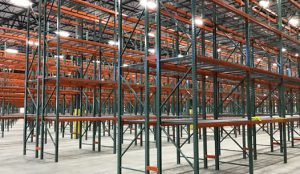
Selective Pallet Rack
Selective pallet rack is the most common warehouse storage system because it allows direct access to every pallet position.
Best for:
- high SKU counts
- fast inventory rotation
- flexible warehouse layouts
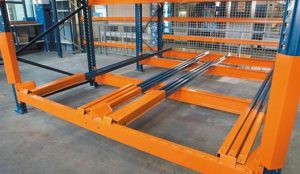
Pushback Rack
Pushback rack is a high-density system designed to store pallets multiple positions deep.
Best for:
- high-volume SKUs
- LIFO inventory systems
- maximizing storage density
 Cantilever Rack
Its open-front design allows easier loading and unloading of oversized products. Cantilever rack is ideal for storing:
- lumber
- piping
- steel stock
- long materials
 Carton Flow Rack
Carton flow rack uses gravity-fed rollers to move inventory through the system efficiently.
Best for:
- FIFO inventory rotation
- case picking
- high-throughput operations
Important Planning Considerations Before Buying Used Rack
Buying used pallet rack is not just about finding available inventory. Warehouse planning matters just as much as the rack itself.

Warehouse Layout
Poor layouts can create long-term operational inefficiencies. The rack must fit your:
- building dimensions
- traffic flow
- dock layout
- forklift operation
- inventory movement
Available Vertical Space
Many warehouses underutilize vertical cube space. Proper rack planning should account for:
- ceiling height
- sprinkler clearance
- lighting
- lift heights

Inventory Management
The right rack system depends on how inventory actually moves through your facility. Your inventory profile should influence:
- rack type
- bay sizing
- aisle widths
- storage density

Future Expansion
Planning ahead helps avoid costly reconfiguration later. Always consider:
- future pallet counts
- operational growth
- SKU expansion
- additional storage phases
Why Work with a Reputable Used Pallet Rack Dealer
A reputable dealer does more than simply sell used equipment. They help evaluate:
- rack condition
- layout compatibility
- operational efficiency
- permitting requirements
- installation planning
At Stein Service & Supply, we inspect used pallet rack carefully before resale and help customers evaluate the best storage solution for their operation.
Our team also assists with:
- warehouse planning & design
- warehouse permitting
- warehouse installation
- warehouse relocation
- warehouse safety
Need Help Planning a Used Pallet Rack Project?
The right used pallet rack system can improve storage capacity, reduce costs, and support long-term warehouse efficiency — but only if the system is
Contact Stein Service & Supply today to discuss your used pallet rack project.


