
Coursera Review 2026: Is It Worth It? (Honest Breakdown)
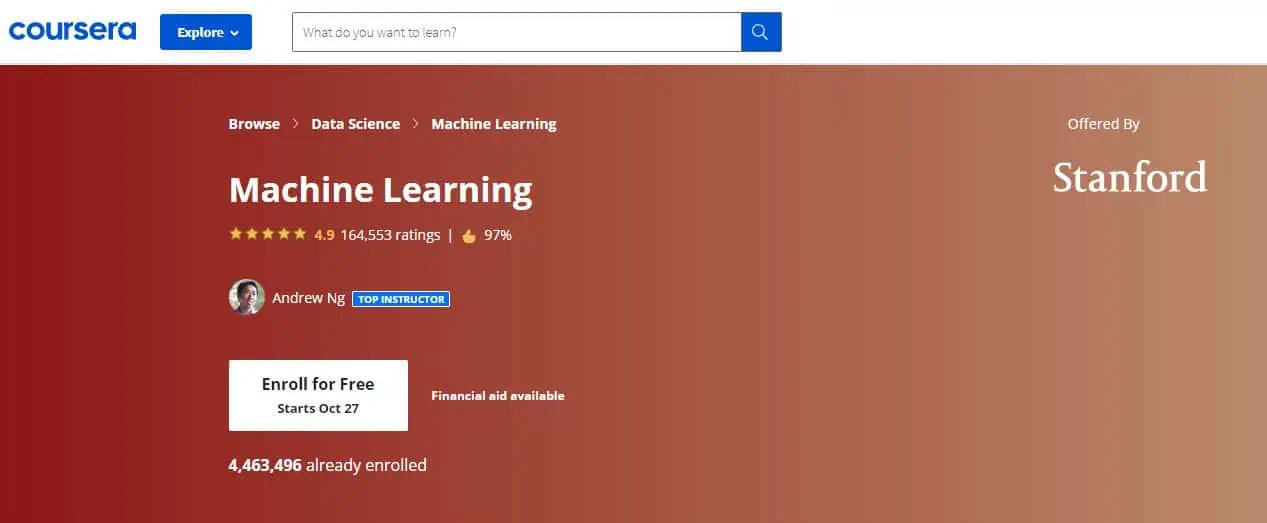
Coursera is one of the biggest names in online learning — but with so many platform options out there, is it actually worth your time and money in 2026?
I’ve spent time digging into what Coursera offers, who it’s best for, and where it falls short. Whether you’re eyeing a Google Professional Certificate, thinking about a Coursera Plus subscription, or just want to audit a few courses for free, this review will give you a straight answer.
What Is Coursera?
Founded in 2012 by two Stanford professors, Coursera has grown into one of the world’s largest online learning platforms. It partners with over 350 universities and companies — including Google, IBM, Meta, Microsoft, Stanford, Yale, and Duke — to deliver professional certificates, specializations, and full degree programs online.
Unlike Udemy (where anyone can create a course) or Skillshare (focused on creative projects), Coursera’s identity is built on institutional credibility. The courses are made by real universities and major employers, and the certificates carry actual weight with hiring managers.
In 2026, Coursera’s catalog includes:
- Individual courses (~$29–$99 each)
- Specializations (multi-course series, ~$39–$79/month)
- Professional Certificates (job-ready programs from Google, IBM, etc.)
- Coursera Plus (all-you-can-learn subscription)
- Degree programs (accredited online degrees from partner universities)
How Coursera Works
Coursera courses combine video lectures, reading materials, quizzes, peer-reviewed assignments, and hands-on projects. Most content is self-paced with flexible deadlines, so you can work around your schedule.
Free Audit Mode is available for most courses. You can watch all the video lectures at no cost — but you won’t get access to graded assignments, peer reviews, or the certificate. If you want those, you’ll need to pay for access.
Certificates are issued digitally and include a verification link you can share on LinkedIn or a resume. They’re awarded in your name alongside the university or company that created the course — so a Google Data Analytics Certificate shows up as a Google credential, not just a Coursera one.
Coursera Pricing: All Plans Explained
Coursera’s pricing structure is one of its most confusing aspects. Here’s a clean breakdown:
| Plan | Cost | Best For |
|---|---|---|
| Free Audit | $0 | Exploring content before paying |
| Individual Course | $29–$99 one-time | One specific skill or credential |
| Specialization | ~$39–$79/month | Multi-course career tracks |
| Professional Certificate | ~$49/month | Job-ready credentials (Google, IBM) |
| Coursera Plus (Monthly) | $59/month | Learners taking 1–2 courses |
| Coursera Plus (Annual) | $399/year ($33/mo) | Serious learners taking 3+ courses |
| Coursera for Business | Custom | Teams and companies |
| Online Degrees | $10,000–$25,000+ | Accredited bachelor’s/master’s |
Current offer: Coursera frequently discounts the annual Plus plan, so it’s worth checking the current price before you buy. Promotions run often, so the rate you see may be well below the standard list price.
Coursera Plus: Is It Worth It?
Coursera Plus is the platform’s all-access subscription — $399/year (about $33/month) for unlimited access to 10,000+ courses and every Professional Certificate. The short version: if you plan to complete two or more certificates in a year, it pays for itself; if you only want one course, paying per course is cheaper.
We break down the pricing, exactly what’s included, and who should (and shouldn’t) subscribe in our dedicated Coursera Plus review.
Pros and Cons
What Coursera gets right:
- Institutional quality. Content from Stanford, Yale, Google, and IBM is genuinely rigorous — not filler material you’d find on cheaper platforms.
- Google Professional Certificates. The Google certs (Data Analytics, Project Management, Cybersecurity, UX Design, IT Support) are among the most valuable affordable credentials available right now. Employers know them, hire for them, and many list them in job descriptions.
- Free audit option. You can sample virtually any course before spending a dollar.
- Financial aid. Coursera offers financial aid for learners who can’t afford courses — a real differentiator from most platforms.
- Flexible pacing. Self-paced with soft deadlines means you can finish on your schedule.
Where Coursera falls short:
- Confusing pricing. Too many tiers (individual courses, specializations, certificates, Plus, degrees) creates decision fatigue. It’s not immediately obvious what you’re paying for.
- Limited free tier. Auditing gives you videos but nothing else — no assignments, no peer reviews, no certificates. The free experience feels intentionally incomplete.
- Uneven course quality. With 350+ partner institutions, quality varies. Some older specializations haven’t been updated in years and contain stale examples.
- No offline access without downloading (and download access requires the mobile app on a paid plan).
- No lifetime access — unlike Udemy, Coursera courses require an active subscription or purchase to access. If your Plus lapses, your progress is preserved but you lose access.
Best Courses on Coursera Right Now
These are the courses and certificates worth your time in 2026 — organized by goal.
For Career Changers
Google Career Certificates — Data Analytics, Cybersecurity, Project Management, UX Design
- No degree required. Beginner-friendly. 6 months at 10 hours/week.
- Included in Coursera Plus. Direct pathway to Google job portal.
- These are the single strongest ROI credentials on the platform.
For Data Skills
IBM Data Science Professional Certificate
- 10-course series. Covers Python, SQL, data visualization, machine learning.
- ~$456 if bought course by course, or included in Plus.
SQL for Data Science (UC Davis)
- Best SQL intro on the platform. 4.6 stars, 185,000+ students enrolled.
- 14 hours, beginner-friendly.
For Tech & Cybersecurity
Google Cybersecurity Certificate
- Fastest path to CompTIA Security+ prep. 6 months, no experience needed.
- Prepares you for entry-level SOC analyst roles.
IBM Cybersecurity Analyst Professional Certificate
- 8-month, 8-module deep dive. 19,000+ completions.
- Covers threat intelligence, endpoint protection, incident response.
For AI & Future Skills
DeepLearning.AI — AI For Everyone (Andrew Ng)
- The best non-technical introduction to AI on any platform.
- 6 hours, free to audit, highly recommended before pursuing any AI specialization.
Machine Learning Specialization (Stanford / Andrew Ng)
- The gold standard ML course, updated for 2026. 3 courses, ~2 months.
- One of the most-completed specializations in Coursera history.
For Business & Leadership
Business Foundations Specialization (Wharton School, UPenn)
- Finance, marketing, operations, and leadership from one of the top business schools.
- 5 courses, ~7 months. Included in Plus.
Who Should Use Coursera?
Coursera is a strong fit if you:
- Are targeting a career change and want credentialed proof of your new skills
- Want to complete a Google Professional Certificate (they’re legitimately valuable)
- Plan to take multiple courses over the course of a year (Plus pays for itself)
- Want university-backed content with real academic rigor
- Are outside the US and want accredited international credentials
Coursera is probably not the right fit if you:
- Want to learn a single practical skill quickly (Udemy is cheaper and faster)
- Are primarily interested in creative skills like design or video editing (Skillshare is better)
- Need hands-on data/coding practice with immediate feedback (DataCamp is better for that)
- Want to learn at no cost with no strings attached (Khan Academy, freeCodeCamp)
Coursera vs. Competitors
| Coursera | Udemy | DataCamp | LinkedIn Learning | |
|---|---|---|---|---|
| Best for | Career credentials | Single skills | Data & coding | Business/leadership |
| Price | $59/mo or $399/yr | $10–$20/course | $25/mo | $40/mo |
| Certificate value | High (Google, IBM, Stanford) | Low-medium | Medium | Medium |
| Course quality | Consistent (partner-vetted) | Variable | High | High |
| Free tier | Audit mode | 30-day refund | Limited free | 1-month trial |
| Best credential | Google Career Certs | N/A | DataCamp certs | N/A |
Final Verdict
Coursera is one of the best online learning platforms available in 2026 — but only if you’re serious about finishing what you start.
The Google Professional Certificates alone justify the platform’s existence. They’re affordable, employer-recognized, and genuinely teach employable skills. If you’re planning to complete one (or more) of those, the annual Coursera Plus subscription at around $399/year (often discounted) is one of the smartest investments you can make in your career.
If you’re just browsing or want a single course, skip the subscription — audit for free or buy individual access. The free audit mode is underrated for exploring content before committing.
Overall rating: 4.4/5
Content quality: ⭐⭐⭐⭐⭐ (5/5)
Value for money (Plus): ⭐⭐⭐⭐ (4/5)
Ease of use: ⭐⭐⭐⭐ (4/5)
Pricing clarity: ⭐⭐⭐ (3/5)
Certificate value: ⭐⭐⭐⭐⭐ (5/5)
Frequently Asked Questions
Is Coursera worth it in 2026?
Coursera is worth it for learners who want structured, university-quality content with a recognized certificate. The free audit option makes it risk-free to try. Coursera Plus is worth it if you plan to complete multiple certificates, as it offers unlimited access for one annual fee.
Are Coursera certificates recognized by employers?
Certificates from top universities and companies on Coursera are generally well-regarded, especially programs from Google, IBM, Meta, and Duke. They demonstrate self-initiative and specific skills. However, they carry more weight when paired with a portfolio or practical experience.
What is the difference between auditing a course and getting a certificate?
Auditing gives you free access to most course content — lectures, readings, and quizzes — but you cannot submit graded assignments or receive a certificate. Paying for a certificate unlocks graded work, peer interaction, and the shareable credential.
How long does it take to complete a Coursera certificate?
Most professional certificates take 3 to 6 months at 5 to 10 hours per week. Specializations typically take 3 to 9 months. You can move faster by studying full-time, as all courses are self-paced.
What is Coursera Plus and is it worth it?
Coursera Plus is a subscription that gives unlimited access to most courses and certificates for an annual fee (around $399 per year). It is worth it if you plan to complete two or more certificates in a year, as individual certificates typically cost $49 to $300 each.
Weighing your options? See how it stacks up in our complete guide to the best AI tools and platforms — the LLMs, AI tools, and learning platforms worth using in 2026.
Related Articles
- Coursera Plus Review 2026 — is the all-access subscription worth it?
- Best Coursera Specializations in 2026 — top 10 ranked by career ROI.
- Best Free Coursera Courses in 2026 — top 10 to audit at zero cost.
