Posts Tagged ‘technology’

Artificial Intelligence Versus Human Intelligence

January 2, 2026

Futurist Ray Kurzweil has foreseen a coming “Singularity” when artificial intelligence outstrips ours, then widens the gap exponentially by taking over its own further development. Making a new and different world. Some fear this threatens humankind.

Melanie Mitchell’s book, Artificial Intelligence — A Guide for Thinking Humans was written in 2019, before the field really exploded with ChatGPT in 2022. Yet the book usefully explores relevant fundamental questions. Mainly, what is intelligence, really? Like humans have.

Back in 2016, I attended a talk by computer guru David Gelernter, who deemed artificial consciousness impossible, insisting consciousness requires neurons. I challenged this in the Q&A, arguing that if neurons’ functioning could be replicated artificially, there’s no bar to consciousness. It’s not magic.

Mitchell’s book might make consciousness seem impossible — even for humans. There’s a recurring trope: it’s the easy stuff that’s hard. Meaning the ways our minds function, virtually effortlessly, negotiating through everyday life. “Common sense” is another repeated notion. It turns out all this is not simple at all.

Actually, in terms of raw intelligence, artificial systems already far outstrip human brains. Being able to access vastly more information, analyze it, put it together, draw conclusions. And yet — a key Mitchell point — what they cannot do is understand.

That’s the big difference. Our minds arise out of the functioning of our neurons, processing information. An AI processing information may seem analogous. But the processing in our brains results in consciousness, in understanding, that artificial systems cannot (yet) come close to.

Consciousness means not just thinking but thinking about our thinking. Neuroscientist Antonio Damasio elucidated this in Descartes’ Error. Our minds create, for a perception or idea, a representation of it. The self perceives that representation. By means of a further representation, of the self perceiving that initial representation. But it may need yet a still higher order representation. It gets complicated.

An aspect here is feelings. Part of having a sense of self. Artificial systems lack that and hence cannot want anything. They only “want” what they’re programmed for. At one point Mitchell writes of an AI program learning to improve its performance by earning points for certain results. But I wondered: what would an AI care about such points? It cannot care about anything.

So how, exactly, does all this happen in our brains? This has been called the “hard problem.” An understatement. Our science isn’t really close to solving it. And Mitchell’s contrasting what our brains do do, versus what (extremely sophisticated) artificial systems do, makes the former so advancedly complex as to seem virtually impossible. Yet of course we know even nitwits do it, effortlessly.

Mitchell discusses in depth how artificial intelligence work has developed over decades. Basically, the thrust has been to equip artificial systems with vast libraries of knowledge which they can use to analyze problems. For example, IBM’s “Watson” program that could answer “Jeopardy” questions.

But what modern systems like ChatGPT do seems different — not just answering questions. These “large language models” can write essays, poems, songs. An AI-created song, even including an ersatz singer singing it, has now topped the charts. Mitchell notes a test where some music mavens were given a lesser known Liszt composition versus an AI-created Liszt mimic. They mistook the mimic as the real Liszt.

However much all this seems like intelligence at work, we’re still assured it’s indeed artificial and not true intelligence (like ours). More specifically, all a program like ChatGPT does is simply to guess the next word in a sequence. Writing whole books that way.

But just for a laugh, I asked ChatGPT for aValentine’s poem for a wife who’s herself a poet and also an AI aficionado. It produced a fairly clever poem riffing on those elements — with a cute funny ending, which it was hard to believe wasn’t planned by the “writer” from the outset. (Read it here: www.fsrcoin.com/AI.htm)

Writing this essay, it feels a lot like I too work by simply guessing each next appropriate word. Yet I do have some overall ideas in mind, that I’m putting into words, one by one. I have understanding.

Which brings us back to the key point. An AI simulates understanding, without actually having it. And let’s be more concrete about this. Mitchell goes into some depth explaining how a human mind, from an extremely early age, develops a common sense understanding of how the world works. Such simple concepts like a smaller object isn’t visible if behind a larger one; objects fall down, not up; etc., etc. Such things may seem obvious, but an AI operates without this sort of knowledge. Mitchell cites one effort to specifically instruct an AI with a full repertoire of such simple understandings. It failed because millions of such precepts would have been required.

Another point: integral to our consciousness is its continuity, throughout one’s life. Even while asleep. Does an AI have an existence like that, just quietly waiting to be given a query? It seems like a wholly different sort of being.

In the end, Mitchell returns to the idea of artificial systems gaining general intelligence, far surpassing anything humans are capable of — overcoming all the “annoying limitations” we’re subject to, all our irrationality and cognitive biases, our slowness, emotions, etc. Thus attaining “super-intelligence.” However, she suggests, all those supposed human limitations are actually integralto our general intelligence, making us what we are, “rather than narrow savants.” Better really.

Understanding and consciousness go hand in hand. The idea of an AI arising into consciousness is a gigantic matter. Meaning AI personhood; becoming not our tools but our brethren. Again, if we do not understand exactly how our own consciousness arises, we do know there must be something about our neuronal functioning that creates it. So it’s logically conceivable that at some point, artificial systems could have a complexity of information processing at a level sufficiently comparable to ours to produce consciousness.

However, it’s almost surely wrong to envision a consciousness suddenly bursting forth that’s fully equivalent to the human kind. Consciousness is not either-or, but instead falls along a spectrum, with human level consciousness at the top (at least on this planet) and other creatures, like chimps, elephants or dolphins, apparently having something close; dogs, and then cats, descending down the scale, followed by mice and lower animals; insects may have a very rudimentary sort of consciousness. Could an existing AI already have something like that? How could we tell? Moreover, could there be a kind of consciousness differing from what we’re familiar with? Could we recognize it?

Power and Progress

November 3, 2025

In the 2023 book, Power and Progress, by Daron Acemoglu and Simon Johnson, the idea of progress improving productivity, and making everyone better off, is called the “bandwagon effect.” But they argue that in fact powerful elites often hog the benefits at the expense of the many.

Jefferson, in his last letter, wrote that “the mass of mankind has not been born with saddles on their backs, nor a favored few booted and spurred, ready to ride them.”

Acemoglu’s previous co-authored book, Why Nations Fail, similarly distinguished between extractive and inclusive economic systems. In the former, a narrow ruling elite can grab an outsized share of wealth — standard through most of history. Inclusive economies go hand-in-hand with inclusive, i.e., democratic political systems — a very modern development.

Life was revolutionized by the invention of agriculture and animal domestication roughly 10,000 years ago, enabling civilization to develop. But that also enabled powerful ruling elites to emerge, monopolizing the fruits of productivity, making most people their tools, and worse off. (It took around 9900 years before agriculture got efficient enough to truly benefit the masses.)

The story with the industrial revolution, starting in the mid-1700s, was similar. This greatly expanded our productive capacity, upon which the powerful could capitalize, together with a new class of industrial and technocratic entrepreneurs. Once more making proletarians their tools, laboring in the new factories — their lives nastier, more brutish, and actually shorter.

Because they had no power, as against the elites. Only, finally, with the advent of more democratic systems were common people able to get a better deal, with greater shares from productivity gains. Introducing our era of mass affluence. In advanced countries, at least, the average person began to live far more comfortably, healthily, and happily.

But this shouldn’t be taken for granted as somehow inevitable, the authors argue. In fact they see it as now unraveling. Mass affluence not only stagnating but going into reverse.

There’s been much negative comparison between a halcyon period of rising prosperity, roughly 1945-75, and subsequent decades, with growing inequality. Those calculations are heavily skewed by exploding fortunes at the top. Yet it’s not so clear that the existence of gazillionaires actually harms Joe Sixpacks. Seemingly stagnating incomes may be too narrow a picture, failing to recognize all the ways advancing technology has improved quality of life for the masses.

Poverty ain’t what it used to be. We take for granted aspects of mass society that simply were not available not so long ago. On vacation cruises I’ve been struck by how very ordinary my fellow passengers are.

But the authors are right that this is not from some law of nature, and even if they overdo their fretting, storm clouds do loom. A sci-fi staple (starting with H.G. Wells) is future dystopia with grotesque contrasts between a few rich and many poor.

I recall one tale with virtual immortality, but you needed government-issued time credits. They became the currency; go broke and your life terminated.

In modern times, the fruits of technological advancement have been widely spread thanks to their tendency to engender new needed tasks, hence more job opportunities. Counteracting Luddite fears. But what’s on the technological horizon now may be different, with AI in particular so omni-competent that work by humans becomes rarely needed. A socio-economic norm of full employment impossible. Up-ending a system wherein a non-working minority could be supported from the incomes of an employed majority.

Again, in past epochs most people were only barely subsisting because they lacked the political power to get a better deal. Mass affluence has been the product of democracy. But now democracy too is faltering. Just when broad populations may no longer be able to support themselves through work.

This is what makes our democratic crumbling so scary. People are witlessly chucking away their power, succumbing to the misguided allure of an “only I can fix it” strongman. Giving up control to his billionaire cronies.

One takeaway relevant here: propaganda works. I’d like to think people see it for what it is. But no. The book relates a study of Chinese students, indoctrinated with the government line and cut off from outside information. Ones given special incentives to view it changed their opinions. But most weren’t even interested. The authors see us less in 1984 with pervasive censorship than Brave New World where people are raised from birth to accept their status quo and to lack curiosity.

The brain simply tends to believe whatever information hits it. Disbelieving takes more effort. We evolved in a world where propaganda wasn’t even a thing, so we’re not equipped for one increasingly awash in falsehood. Especially with authoritarians cunningly exploiting it to cement their rule.

Meantime the authors see the whole AI push as basically undemocratic, again really promoting the interests of a narrow elite — who falsely imagine this serves the general good. Yet oddly, for all their negativity, the authors actually don’t see AI as threatening jobs massively. They don’t even think AI passes the Turing test for “intelligence.” (I’d say that horse has long since left the corral.)

But the Trump response is precisely the wrong one — a fixation on manufacturing is half a century out of date, that’s not our route to a broadly prosperous future. At one time the vast majority of workers were needed in agriculture just to feed ourselves. Greater farm efficiency freed up all those human resources to produce other things. More efficient manufacturing then similarly made workers available in services. AI capabilities will likewise free up vast resources for other uses. Our emphasis should be on finding ways to utilize those resources in different ways.

There’s much teeth-gnashing over what Democrats should stand for. We’re likely to need a new societal dispensation. It’s long been clear government taxes too little and the richest get off too cheap. They can pay far more without harming the economy — and it would be fair, given how they benefit from society. That can pay for a non-dystopian future of broad human flourishing.

AI: “This Changes Everything”

August 4, 2025

Ever since Luddite days, “automation” has been feared as a job-destroyer. But even as technology advanced beyond anything imaginable then, more jobs were always created than lost, and as I write in 2025, unemployment in advanced nations is near record lows. While greater productivity has made life much better for most humans. But many say, “this time is different,” with AI capable of performing so much work now done by humans.

Yet that transformation seems stalled — so far. Hence those still robust employment levels. For all the buzz about AI and its capabilities, most businesses haven’t figured out how to do much with it.

A big factor is simple bureaucratic inertia. Modern civilization is highly bureaucratized, gummed up with procedures. That’s why it’s so hard to get anything done. The Empire State Building was completed in 1931 in little over a year. Unimaginable today. AI could radically alter how many businesses operate, but such structures are resistant to change, let alone the radical sort.

Much of that resistance comes from employees, whose jobs are potentially threatened and don’t want to help that process along, but more basically resist any change to how they do things. So it will take time for AI to really work its way transformatively into the economy — as was true for earlier technological ruptures, like electricity.

And yet AI is already having some very big impacts. A cartoon in The Economist showed a gravestone for the World Wide Web — 1989 – 2025. Huh?? Yes, it’s being destroyed by AI. Traffic to websites of all kinds is falling markedly. By 31% in a year for health-related ones. The explanation seems to be this: while “conventional” googling gives you a bunch of links to websites, when you ask ChatGPT a question, it in effect does the googling for you, providing the information sought with no links. So websites get less traffic — undermining their basic business models, not only selling stuff, but also selling ads. Google itself, of course, also loses ad revenue.

Another thing happening is an explosion in Chatbot use by youngsters. Almost overnight, high proportions of teens and preteens seem to have their lives practically taken over by AIs, consulting them incessantly not only on school-related stuff but personal concerns. AIs have become best friends if not exactly (yet) boyfriends and girlfriends — though we do know of at least one teenager who committed suicide over a relationship with an AI.

A big reason for this whole phenomenon is AIs making themselves congenial to youngsters — much more so than real-world acquaintances who can be petty, mean, selfish, callous, etc. Not so AIs, who shower users with flattery and affirmation, if not genuine love. But such a distinction seems to be growing moot.

Studies have shown that using AI to help with a cognitive task — an essay or term paper, say — makes for less brain activity occurring. Students using AI were less able to talk about what they’d written. It seems that turning over critical thinking and creativity, at least in part, to AIs, causes one’s own such brain modules to atrophy. One study did find that people making more use of AI later scored lower on critical thinking.

We’d known for years how social media has been messing with the psyches of especially the younger generation (discussed in Jonathan Haidt’s book, The Anxious Generation). Disrupting their sense of self and ability to develop socially, as humans used to do. AI adds to that a whole new dimension. Younger people are becoming ever more a species apart.

There’s much speculation about coming AGI — Artificial General Intelligence — more comprehensively doing what human brains do, and of course doing it better, outstripping our own intelligence. Seems to me we’re actually already there. Even a “primitive” AI like ChatGPT has command of vastly more information than a human does, and moreover, can integrate that information better, quicker, and often, if you will, insightfully.

Nevertheless I continue seeing them as “just machines.” But I’m ever less sure. What our minds do is not magic, it’s a product of the processing in our brains; what AIs do is not magic either, and if they do the equivalent of what our brains do, why couldn’t the result be similar? That is, a conscious self. Consciousness is not either-or, but comes along a spectrum, ranging from humans at the top, down through mice and other lower creatures. We shouldn’t rule out AI consciousness at that lower end, at least to start. Will we know it when we see it? And what then?

There’s also what’s been called the “alignment problem,” regarding the possibility of an AI acting at odds with human interests. As with philosopher Nick Bostrom’s hypothetical of an AI tasked with maximizing paper clip production, resulting in a world full of paper clips with no humans. I’ve been skeptical of scenarios where a rogue AI takes over the world and dispenses with humanity. But a much bigger threat comes from humans themselves — bad people putting AI to bad uses. A recent article in The Economist noted that “modified DNA” is already a “mail-order product.” Saying that “[i]f AGI can furnish any nihilistic misanthrope with an idiot-proof guide to killing much of the world’s population, humanity is in trouble.”

It goes on to note that while AIs are being trained “to politely rebuff most harmful questions,” it’s hard to ensure that happens without fail — without clever miscreants finding work-arounds. And even if the paper clip hypothetical seems extreme, we do know that even without bad people in the picture, AIs themselves “will lie, cheat and steal to achieve their goals,” even being capable of breaking what are supposed to be the inhibitory rules built into them. And they are still black boxes whose inner workings their human progenitors don’t fully understand.

Zoom Sex

September 28, 2024

As the pandemic unfolded in 2020, bursting into our lives was a techno-cultural phenomenon called Zoom. It seemed a natural; despite some drawbacks, still a great way for people to get together and interact. Without Zoom the pandemic would have been a lot bleaker.

Recently when my wife was away alone, it seemed obvious to have nightly zooms, just the two of us. Prompting an important sociological question in my mind.

Now, phone sex has long been a thing. It probably doesn’t date back to the origins of telephony, but people likely started doing it soon enough. After all, sex being quite a big part of our lives. Having myself lived a rather sheltered existence, I actually don’t know exactly how phone sex goes down — but on second thought, I guess it’s easy enough to imagine.

It’s been said our primary sexual organ is the brain. People get off just reading lubricious stuff; or, for that matter, creating it mentally.

Now comes Zoom — with not only voices, but people seeing each other. You get the, ahem, picture? There was that Jeffrey Toobin incident. And (mostly) men paying for webcam performances has been a thing too. So I had to wonder why we never hear the term zoom sex.

I mean, c’mon. No, my wife and I didn’t. But nobody? Why is this not a widely talked-about socio-cultural phenomenon — like phone sex, such a rich source of ribald jocularity? Yet I’ve never seen or heard the term “zoom sex” even once, anywhere.

Inquiring minds want to know. So I googled it. (Yes, I assiduously research my blog posts.) There does seem to be a thing with “zoom sex parties” and the like, which I guess I needn’t explain. And quite a bit more about “caught on camera” incidents. But — strangely, it seems to me — plodding indefatigably through screen after screen, I found nothing for plain “zoom sex” per se, analogous to phone sex. That is, couples using this technology when they’re physically apart (like my wife and I did not do).

Really, we didn’t.

The App Generation

September 17, 2015

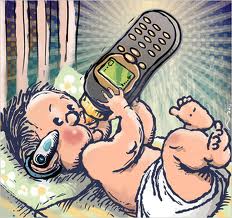
imagesMaybe you’ve noticed a lot of folks fixated on their phones. Recently I saw some college kids at a bus stop, three fiddling with phones, the fourth not. “Hey Dude,” I said to myself, “where’s your phone?” As if on cue, he pulled it out and looked at it. Then I saw a kid riding a bike, with one hand holding a phone raised to his eyes!

The App Generation, by Howard Gardner and Katie Davis, explores how this technology is changing us. The focus is on young, mainly middle class Americans. “Youth is going to the dogs” has been a constant refrain in every generation, literally since ancient times, and certainly many people (older ones, of course) see something deeply amiss with how pervasive smartphone technology has become.

images-1The authors’ verdict is mixed. They focus on three “i’s” – identity, intimacy, and imagination, and how they’re affected by apps. For troglodytes, “app” is short for “application,” a computer program, that can be installed on a smartphone, such as a game, navigational aid, communication thing, etc. That “etc” is very broad and today there are apps for just about everything in life. Uber is an app for getting a car ride. Tinder is an app for getting a hook-up. (A “hook-up” is what used to be called a “date,” but minus formalities.)

Unknown-1Hence the concern that we’re becoming creatures of our apps. But the authors see this cutting two ways – whether apps are enabling (good) or create dependency (bad). It’s the difference between utilizing apps to enhance your experience of life, providing more and better options and ways of achieving objectives – or, on the other hand, having your life governed by the apps, so you become a virtual clone of all your fellow app slaves.images-3

“Imagination” refers to creativity, which can certainly be aided by apps, giving users more artistic outlets and avenues for self-expression. But the other side of the coin is doing things the way the app guides you, not breaking out of that box. This can indeed be a negative for those at the most talented end of the bell-shaped curve of creativity. But for the mass in the middle, I think the enabling aspect must far outweigh the dependency aspect, allowing people to be creative who just didn’t have the opportunity before.

“Identity” concerns one’s life project of building a persona. This requires some introspection. Through the ages, technological advancement’s main thrust has been to liberate us from drudgery, giving us not only material goods, but more freedom to think about the big questions. Apps can do this too, making much of life a lot easier. (Smartphone teens hardly know the concept of being lost.) But they can also swallow up life, becoming life. The book quotes one teenager: “On Facebook, people are more concerned with making it look like they’re living rather than actually living.”

Unknown-4“Intimacy” concerns human relationships. A common complaint is that people get together for dinner, say, but spend the whole time with eyes glued to phones. And that we’re actually losing our facility for face-to-face interaction. Yet in the smartphone era, it certainly seems there’s a lot more human connectedness going on. I’ve wondered what all these people, always on their phones, actually have to say to each other. But of course that’s not the point. The connectedness itself is the point, as though society is becoming like a giant ant colony of shared consciousness. However, as the book’s authors ruminate, keeping in touch is not the same as really relating to another person. Many people actually seem to maintain their webs of smartphone connections in a narcissistic way – constantly tapping each other on the shoulder, as it were, as a way to verify that “I really exist, I matter.”

Here again, the technology can work as a facilitator, or actually an impediment, depending on how it’s used, and the kind of person using it. And of course, the kind of person you are can be shaped by such pervasive technology.

Unknown-5Many modern parents are more connected to their children than I am; smartphones certainly enable helicopter parenting. The book notes that some kids are sent to “no devices” summer camps with two phones, one to turn in and the other to hide, to keep in touch. And a lot of parents try too hard to shield their children from any difficulties, disappointments, or unhappiness, making them less prepared for life’s vicissitudes. The authors worry that youngsters are becoming too risk averse, less open to experience and serendipity – preferring to remain within an app cocoon, going through life as though on a predetermined railroad track with no deviations tolerated.

But query whether all these sociological phenomena are down to just one technology. Human society has been changing ever more rapidly as all forms of technology have flourished, altering beyond recognition the conditions of our existence.

Unknown-3It can be hard to balance all the considerations and judge whether life is becoming better or worse, or just different. But every technological advancement through the ages has been met with critics deploring it. Writing was condemned by Socrates in fear that people’s memory capability would atrophy from disuse; similarly some pundit recently fretted GPS will ruin our directional sense. Indeed, many people today see the whole human enterprise as deplorable, and if we destroy ourselves, we’ll deserve it. I disagree. That human enterprise has always been about overcoming an impersonal, cruel nature, to make our lives better, and we’ve succeeded spectacularly.

Unknown-2In the end, people themselves must judge, for themselves, whether something enhances their lives. (I hate all politics premised on someone else knowing better.) And the veritable tsunami force with which not just youngsters, but people of all ages, everywhere, have embraced smartphone/app technology, suggests you have to be pretty brave to tell them all it’s bad.

UnknownI say this from the objective standpoint of a non-convert. I don’t even own a smartphone. This blog post was written with a quill pen, on parchment, and uploaded by carrier pigeon.


Has Progress Stalled?

January 3, 2015

UnknownOn December 17, 1903, the Wright brothers achieved a 12-second, 120-foot flight. Within about half a century, we were flying to Europe in eight hours. After a further half century, we’re doing it in . . . eight hours. Meantime, the Concorde, that could do it in three, was abandoned.

So has progress actually juddered to a halt? Michael Hanlon, writing recently in Aeon, says yes. He sees a “Golden Quarter” (GQ) from about 1945 to 1971 as the source of all the innovations defining the modern world, with nothing comparable since. imagesAirplanes are Exhibit A; only marginally improved since the ‘60s, with no quantum leap analogous to that between the Wright Flyer and the Boeing 707. The Jetsons’ flying car never materialized. The Moon hasn’t been visited in 42 years. Similarly, in medicine, Hanlon puts all the world-changing advancements behind us, with continuing longevity gains being merely attributable to building on those past breakthroughs. We still haven’t cured cancer. Even social progress, he says, was great in the GQ, with nothing like it since.

Why? Hanlon proposes various answers. One is . . . wait for it . . . rising inequality. Progressives are obsessed over this, trying to prove inequality causes all manner of ills. Hanlon attributes the GQ innovation to a world getting richer, but says concentrating wealth in few hands somehow stifles innovation and breeds “planned obsolescence” of products instead. Unknown-1That linkage seems obscure; and anyway, while inequality within countries may be rising, worldwide it’s a different story, because the poorer nations – notably India and China, both huge – are experiencing faster economic growth than the advanced ones. Thus, far more people have far more income and wealth today.

More persuasive is Hanlon’s saying we’ve become less trusting of science and more risk-averse. An earlier generation was in love with technological and medical improvements, remembering how bad things were before. Today we forget, and even romanticize “the good old days.” Unknown-2There’s a belief that science and technology are false gods leading us astray, and a frightened focus on risks rather than rewards; thus a “precautionary principle” that rejects anything not proven riskless, an impossible standard. This gives us the misguided anti-immunization movement, opposition to fracking, and to Genetic Modification that could entail huge benefits for billions. Hanlon thinks a manned Moon mission would be considered too dangerous today.*

He also cites a 2011 essay, The Great Stagnation, by economist Tyler Cowen, suggesting that the U.S. in particular has reached a technological plateau. images-2Cowen thought past advances were grabbing “low hanging fruit,” and further progress is simply much harder. But Hanlon actually rejects that idea as “fanciful,” saying that historically, “it has often seemed that a plateau has been reached, only for a new discovery to shatter old paradigms completely.” He cites Kelvin in 1900 declaring physics essentially done – just before Einstein came along. (Perhaps an odd point to make in an article contending progress has stalled.)

I’m no physicist, but I do think we’ve now reached a point where nothing could “shatter old paradigms completely.” images-1The “low hanging fruit” metaphor also seems applicable to Hanlon’s prime exhibit, air travel. Not that jet planes aren’t a technological miracle – but, for moving lots of people long distances, this may be about the best that’s practicable, and any greater speed would entail a host of problems. We gave up on the Concorde for good reasons. And never got flying cars because that’s actually not a very good idea either.**

This perspective prompts a broader response to Hanlon – a la “what more do you want?” We can travel to Europe in eight hours! Moreover, as Hanlon actually acknowledges, that’s become affordable to ordinary people. Unknown-3(Which happened after the GQ.) Similarly, social progress has been enormous – civil rights, women’s liberation, etc. – also mostly subsequent to the GQ – and is still unfolding for gay rights. Violence (as Steven Pinker has persuasively shown), of all sorts, continues to decline. We may not be perfect yet, but surely there’s a lot less work still to do.

But none of this means progress, in all its manifestations, has fizzled out, and Hanlon has to twist things hard to make it seem so. While early on he sneers that progress today “is defined almost entirely by consumer-driven, often banal improvements to information technology,” later he allows that “the modern internet is a wonder, more impressive in many ways than Apollo.” The Internet too postdated the GQ.

images-1Hanlon is ultimately a victim of a myopia he himself describes. It is indeed easy to take for granted and belittle modern amenities, forgetting what went before. It’s what Barry Schwartz, in The Paradox of Choice, called the adaptation effect – one adapts to the life one has now, which does seem banal, underappreciated as merely what one now expects. Day-to-day, or even year-to-year, progress may not seem evident. But if you compare today with 1971 – the end of Hanlon’s Golden Quarter – the difference is huge on a host of fronts.

And while “what more do you want?” may be a fair perspective on modernity, there are still big things we can yet aim for. We won’t blow ourselves up, or be done in by climate change. For all the fretting over that and rising inequality, I actually foresee steady economic advancement and a global mass affluence that will truly constitute a quantum change in the human condition. Similarly transformative will be further progress on health. Death by old age is a solvable medical problem.

Finally, all this improvement will be propelled by advancing artificial intelligence. That looms as a stupendous game-changer – Ray Kurzweil’s “singularity” when life becomes altogether different. images-3Stephen Hawking actually worries this threatens humanity (and I recently reviewed a movie with that view). I’m more optimistic, and foresee an eventual convergence between Humanity 1.0, of the flesh, and a cybernetic version 2.0.

I discussed this in my famous 2013 Humanist magazine article, The Human Future: Upgrade or Replacement? And if anyone in that future remembers the Hanlon article, it’ll quaintly sound like Kelvin in 1900.

* He aptly notes that the thalidomide episode was awful, but such occasional screw-ups are the inevitable costs of trying out new things, the benefits of which exceed such downsides. That perspective is being lost, an attitudinal change to which Thalidomide contributed.

** But self-driving cars are coming.

Transcendence – Another AI Movie

October 11, 2014

images-1Since I believe Artificial Intelligence (AI) looms hugely in our future – I had to see Transcendence, the latest AI movie. It’s a lot darker than the last one, Her. (See my review.)

Will (Johnny Depp) and Evelyn (Rebecca Hall) are husband-and-wife AI scientists, who have created PINN, a computer-based intelligence with self-awareness (maybe). Max is another, who has succeeded in uploading a monkey’s mind to a computer (maybe). imagesRIFT is a Luddite terrorist group fearing AI will cause humanity’s demise (though exactly how was never clear to me).

RIFT shoots Will with a radioactive bullet; he has a month to live. So, they meld his and Evelyn’s work with Max’s, to upload Will’s mind to PINN before his body conks out. This is RIFT’s nightmare; they manage to destroy the PINN computer, but too late to stop Will from escaping out into the Internet – where he is now, well, everywhere. With access to all the information and data in the world.

This is the “Singularity” foreseen by Ray Kurzweil (and in my own famous Humanist magazine article), when AI vastly outstrips human intelligence, sending technological advancement into overdrive. images-2Will and Evelyn mastermind a giant underground facility hosting banks of quantum computers, and we get a foretaste of the medical and environmental miracles that the duo had always envisioned as their end goal. Will creates a praetorian guard of seemingly unkillable human-AI “hybrids.”

But RIFT sees all this as curtains for Humanity 1.0 – and ultimately manages to convince Max, the Morgan Freeman wise man scientist character, and finally Evelyn herself. Even the government is secretly on their side!

Nearing the end there is a lot of gunplay and blowing up stuff. Not exactly futuristic – the weaponry was vintage WWII. images-3And frankly, I had a hard time following it. Now, I think I’m no dummy; I’ve even written about the film’s exact premise; and in fact, at one point I turned to my wife and said, carbon nanotubes.” The film never used that phrase, but I inferred that explained what we were seeing (having heard a lecture by Eric Drexler, the father of nanotech; as a speaker, he was a dud). Anyway, even with all this background, I still couldn’t quite follow the confusing, opaque action, nor make sense of the denouement. And if I couldn’t, how could the average Joe Schmoe? This isn’t unique. Why does Hollywood make films this way?

In the end, of course, the “good guys” (who turn out to be the Luddite terrorists!) win. If you call it winning – it requires destroying the whole Internet – which in turn wrecks civilization as we know it, putting us halfway back to the Stone Age. But happily, humanity and the planet are saved. I guess. (Maybe.)

images-6At one point in Transcendence, a character laments that every new technology always inspires irrational fears. Yet the film’s overall message, like many others (Avatar is a prime example), disgracefully sows exactly that kind of fear and distrust of scientific advances. And the concern isn’t abstract – in the real-world nanotechnology and AI already do inspire RIFT-like fear-mongering.

Humanity’s greatest effort is to overcome our limitations, and the fears that hold us back. That’s real transcendence.

Engineering marvels

September 27, 2014

UnknownA modern 777 jetliner is an absolute marvel of engineering. Yet (unlike on smaller planes) the overhead bins are almost, but not quite, deep enough for standard carry-ons to go in wheels-first. And almost, but not quite, wide enough to fit three lengthwise. So you can only get two in a bin. A tiny modification to their design could have increased the bins’ capacity by 50%.

I used to have a fax machine which required fax paper rolls, which was fine; the rolls were cheap, lasted almost forever, and were a snap to change. Finally it broke and I had to replace it, and found that ones like that are no longer made. Now they’re all “plain paper” fax machines. 'Are you sure that hitting it with a baseball bat will work?'Which sounds great – except that they require these ridiculously bulky cartridges containing rolls of what looks like carbon paper in them, that are quite costly, don’t last very long, and are a royal pain-in-the-butt to change, if you can even manage to figure out how to do it correctly. Moreover, after laying in a supply of these godawful cartridges, I thought to get hold of a back-up fax machine that appeared to take the same ones, only to find that in fact, the cartridge for the second machine is actually a tiny bit different and not interchangeable.

Technological progress – you gotta love it. God bless our engineering geniuses.

(Advt) Coming Soon: The Oople iMplant™

September 21, 2014

Get ready for . . .

images-1No more fiddling with buttons or touchscreens.

No more recharging hassles.

No more misplacing it, having it stolen, or dropping it in the bathtub.

No more confusing features to figure out.

imagesNo more pushback from dweebs annoyed by your chatter.

No more dorky glasses on your face.

The future is now.

You’ll never look back.

You may never look anywhere else.

Introducing . . . The Oople iMplant™.

images-2The Oople iMplant™ will be installed directly into your brain. (Our bioengineers have located there a space for it, that you weren’t really using anyway.) Quick, painless, and conveniently available at any Ooplestore.

Here’s how it works: by reading your mind. Yes. After all, it’s right in there, in fact it’s part of your mind. Ever wonder how you know what you’re thinking? Philosophers have puzzled over this for eons. But it doesn’t matter, because whatever way you know what you’re thinking, Oople iMplant™ will know it too. However – and here’s the killer – unlike your old analog brain, confined inside your skull – Oople iMplant™ will be wirelessly connectedto everything!

So, say you need a recipe for ratatouille. Simply think that thought, and Oople iMplant™ will search the web, get an answer, and download it right into your mind. It’s just that easy!

UnknownAnd if you want to phone your girlfriend – merely think it – and Oople iMplant™ will connect you. What’s more, the conversation will be totally private, because it will take place inside your brain. 

If that sounds a lot like telepathy . . . well, welcome to Oople iMplant™!

Unknown-1Can it teleport you too? No.

But we’re working on that.

Oople: “Making tomorrow today.”