Blog Archives

Looking for books that don’t exist
What could be more frustrating? You spend years searching for a book, only to discover that actually no such book exists or has ever existed. It sounds perhaps unlikely, but in the areas of book collecting that I’ve dabbled in, it can be surprisingly common. I’ve tended to collect series of books, usually paperbacks, and often series that are poorly documented, giving rise to all sorts of problems.
Take the UK Services Editions, for example. There is a series of 231 Services Editions in Guild Books, or at least there are books numbered from S1 to S231. I have evidence for at least 217 of the books, but that still leaves another 14 books that may or may not exist. I think they do exist, but I don’t know the titles or authors and have never seen a copy, or know of anybody else who has seen one. If anyone can offer evidence of Guild Services Editions numbered S5, S13, S33, S34, S37, S39, S57, S60, S62, S70, S78, S98, S113 or S174, I’d be delighted to hear from them.
For the series of Services Editions issued by Nicholson & Watson, on the other hand, I do know the titles and authors of all of them. They’re handily listed on the back cover of each book, all twelve of them. There are though only four Nicholson & Watson Services Editions that I have ever seen and one of those is not even included in the list. After more than 30 years of looking for them, I suspect that I’ve been wasting my time. Nine of the twelve advertised books have either disappeared without trace or more likely were never issued. The four books that I have seen are none of them particularly rare and they’re printed on reasonable quality paper, making it unlikely that all copies of nine other books would have disappeared.

Penguin regularly announced books that were never issued and left gaps in their numbering sequences that were never filled. In general though, their publications are so well documented and so much researched that most of the anomalies have by now been sorted out. It’s well known for instance that there is no Penguin first printing numbered 61 (the number was used for reprints of ‘The mysterious affair at Styles’, the first printing of which appeared as number 6) and that there are no Penguin Specials numbered S23, S42, S43 and so on. Collectors are unlikely to waste too much time searching for them.
But what should they make of the announcements on the dustwrappers of early examples of Penguin Bound Editions? There is a list of the first five books issued as Bound Penguins, together with a second group of five to be issued later in 1951. Four of the second group certainly appeared, although not on the timescale suggested, but I have never seen or heard tell of a Bound Edition of ‘The archaeology of Palestine’ by W.F. Albright. I assume it never appeared, but so far as I know Penguin never issued a full list and this series is not numbered as such, so it’s hard to be sure.

Hutchinson, one of Penguin’s main competitors, had similar problems. In their ‘Crime Book Society‘ series of paperbacks, volume 66 was originally advertised as ‘Phantom in the house’ by Andrew Soutar and lists that include this title can still be found on the internet. The book that was eventually issued as volume 66 however was ‘The lone crook murders’ by Clive Ryland and I don’t know if the Soutar book ever appeared in the series. I suspect that anyone searching for it is likely to be disappointed.
In the Toucan Novels, also published by Hutchinson, volumes 25-28 are widely shown as ‘Green shoes of April’ by Rachel Swete McNamara, ‘The broad road’ by Annie S. Swan, ‘Silken Sarah’ by Margery Lawrence and ‘Blow the man down’ by Thomas W. Broadhurst. These titles appear in lists on the back of apparently much later volumes, up to volume 46, giving the impression that the books had been issued quite some time before. However so far as I can tell, none of these titles were ever published in the series and from volume 47 onwards the list was updated to show the real titles that were eventually published under those numbers.

Even more frustrating though are titles that have been deliberately invented to confuse, a practice that is far from unheard of. Lists of the early US Penguins often show as volume 556 a book called ‘The Myceniad’ by C. Everett Cooper. I don’t believe there is any book with this title, or even that the word Myceniad exists in anything other than this made-up title. So far as I know, C. Everett Cooper exists only as a pseudonym for Michael Roy Burgess, an author and bibliographer who was not even born when the early US Penguins were being published.
I think the explanation is that Burgess, in his bibliographical work, compiled a list of the US Penguins and invented this title to fill in a missing number in the series, as a way of checking whether other people were pirating his work. Any later list that included this title could be traced back to him. It’s possible that I’m doing him a disservice (sadly he died in 2013), but I suspect that book collectors have lost a lot of time looking for a book that doesn’t exist.

Westerns for the troops
The 1920s and 1930s are often thought of as the Golden Age of crime fiction. When Britain went into the Second World War at the end of the 1930s, crime novels were enormously popular and much in demand amongst the services. Not surprisingly the Services Editions, produced for the armed forces, contain a high proportion of crime novels, mostly by British writers, although with a dash of American influence.
But the 1920s and 1930s had also seen growing popularity for westerns, a much less home-grown product – although arguably the country house settings of many British murder mysteries of the period were just as alien to the average British soldier as the Arizona desert.
Collectors of Penguin Books will know that wartime crime novels are the most difficult to find – it’s presumed because they were so avidly read that they fell to pieces. But in the Services Editions there is little doubt that Westerns are the most difficult to find – and again we can only presume that that’s because of their popularity.


Collins was the most prolific publisher of paperback westerns before the war and so was in the best position to offer them in Services Editions, and there’s a review of the thirty-five or so Collins Westerns on this post.
But they were far from the only publisher responding to the evident demand for westerns from the troops. The other main series of Services Editions, from Guild Books, included around ten to a dozen westerns, possibly more, as given their rarity, westerns may well account for several of the missing books in the series, for which no copy has been recorded.


In the Guild Books series, westerns shared a category with crime, mysteries and thrillers, all in red covers, but were identified as westerns in the bottom right corner, if it wasn’t already clear from the title. Many of the separate publishers who contributed books to the series didn’t publish westerns, but George Harrap, Cassell & Co. and Robert Hale were among those who did. There was also at least one western from Collins, although it’s slightly odd that they should have contributed books to the Guild series alongside their own series of Services Editions.
I don’t think that any of the individual titles are much remembered today, if indeed many westerns are. Authors such as George B. Rodney and James B. Hendryx are barely household names in their own households, and several of the author names, such as the unlikely sounding Bliss Lomax and Amos Moore, are pseudonyms anyway.


There is though one western story in another series of Services Editions that does claim a sort of lasting fame. The Hodder & Stoughton Services Yellow Jackets series has at least four westerns in it, including ‘Bar 20’ by Clarence E. Mulford. By 1944 when it appeared, this was already a classic of the genre – first published in 1906, and the first of a series of novels by Mulford to feature Hopalong Cassidy.


So far as I know, there are no westerns in other series of Services Editions, but there is at least one amongst the Hutchinson ‘Free Victory Gift’ books. Copies of ‘Feud at Silver Bend’ by J.E. Grinstead were given a celebratory new wrapper and included in the million books given by Hutchinsons to be distributed to troops.


Peter Cheyney in Services Editions
When Services Editions were first printed in 1943, Peter Cheyney was one of the most popular and the most prolific authors in Britain. His first novel had been published only in 1936, but had been an almost immediate success and it was rapidly followed by many others. By the end of 1942 Cheyney had around fifteen novels in print.
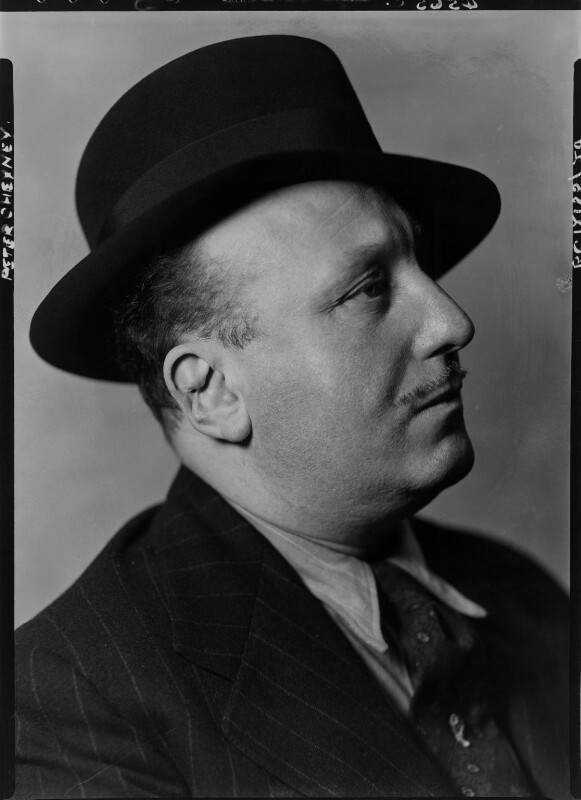
Most of them were available only in hardback through his publisher Collins, and hardbacks novels were not only expensive, but also limited by paper rationing. To achieve a wider readership they needed to appear in paperback and the natural route was through the Collins White Circle paperback series, probably the most successful of the many rivals to Penguin launched in the late 1930s and early 1940s.
‘Poison Ivy’, one of Cheyney’s early novels featuring the private eye Lemmy Caution, was the first to appear in a White Circle edition in July 1939, and four others followed over the next four years, gradually building the author’s readership. But paper rationing was a problem for paperbacks too and by 1943 the flow of new additions to the White Circle series had slowed to a trickle.
Almost the only remaining route to achieving a mass readership was through the Services Editions, which had a dedicated paper ration for a long print run, typically at least 50,000 copies. The books were then held in the libraries of battalions or other units, or passed around from hand to hand, with each copy possibly read several times. I doubt they paid the author much, but they could certainly build the readership and popularity of an author and anyway it was the patriotic duty of the author to participate in the scheme. Fortunately for Cheyney, Collins were the most enthusiastic of participants, contributing books to the multi-publisher Guild Books series, as well as running their own series.

In 1943 Collins offered ‘Poison Ivy’ to the Guild Books series as volume S61 and for their own series chose ‘Dangerous Curves’ to be included in the first batch of books. Both are now very difficult to find in first printing. As far as I know there was only one printing of ‘Poison Ivy’, but ‘Dangerous Curves’ was reprinted in 1945 and the reprint is much more common. The first printing is dated ‘Services Edition 1943’ and has no spine number, while the reprint is dated 1945 and numbered c207.

There were to be no further Cheyney novels published in Guild Books. All the later books issued were in the Collins series of Services Editions. ‘Dangerous Curves’ was quickly followed by ‘You’d be surprised’ (1943, volume c224), by ‘You can always duck’ (1944, c276) and ‘They never say when’ (1944, c284). I’m reasonably confident of the dates and numbers here, although there’s a little bit of guesswork involved as I have never seen first printing copies of any of these three. I do have a reprint of ‘You can always duck’ dated 1946.
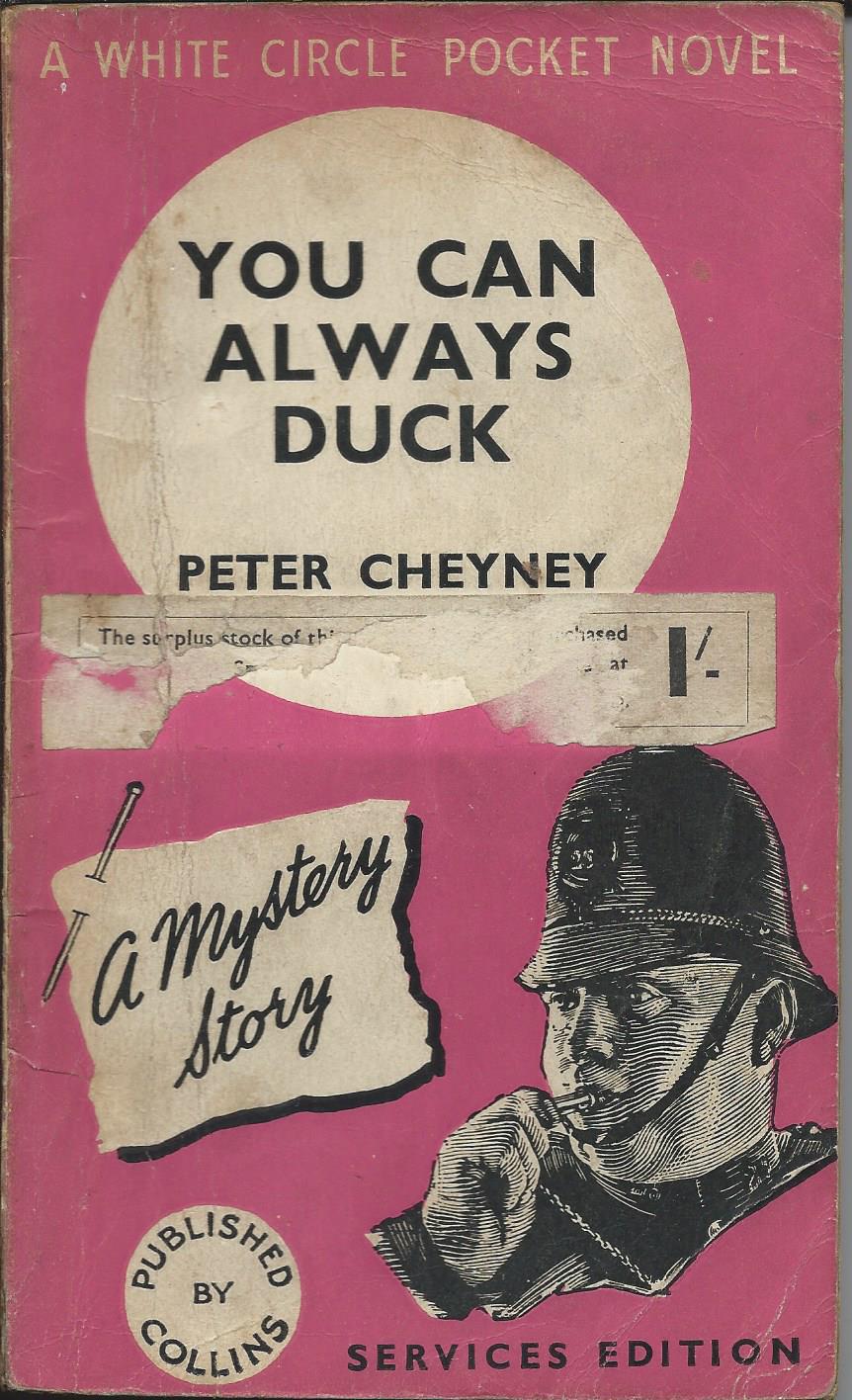
I also have first printing copies of the remaining two Cheyney novels issued in the series, which were issued together in 1945 – ‘Dark duet’ as volume c315 and ‘Sorry you’ve been troubled’ as volume c316. ‘Dark duet’ is notable as the only one of Cheyney’s ‘Dark’ series of spy stories to appear in a Services Edition. The other six novels are all detective stories featuring either Cheyney’s American FBI agent / Private eye Lemmy Caution, or his British equivalent Slim Callaghan.


A total of seven books published in Services Editions makes Peter Cheyney one of the most published authors, almost on a par with Agatha Christie. It was however a small fraction of his output and only a first indication of what was to come. His popularity surged after the war and with the end of Services Editions he went on to become the principal author of ‘mystery stories’ in the White Circle series of paperbacks as well as a mainstay of Pan Books, selling sometimes over a million books in a year.


Helping refugees – 1940s style
From soon after the start of World War II in 1939, Britain became home to significant numbers of refugees from countries occupied by German forces – French, Dutch and Polish amongst others. In response to their needs the British Council published a number of books describing different aspects of the British way of life. A series on ‘British Life and Thought’ was published by Longman Green for the British Council, starting with ten books in 1940 and including titles such as ‘The British system of Government’, ‘British Justice’ and ‘British Education’.
Perhaps the most interesting title in this series was a volume on ‘The Englishman’, written by Earl Baldwin, who had been Prime Minister only three years previously. But it may have been rivalled by a parallel volume on ‘The Englishwoman’ by Cicely Hamilton, who had been very active in the suffrage movement, writing and acting in plays on the subject as well as campaigning. The series eventually ran to 25 or more titles, continuing even after the war.


But books in English were not enough. The British Council wanted to publish books in the languages of the refugees as well, which led to a new series – the International Guild Books. This series started in 1942 with six books, three of them taken from the Longman Green series, two other short books about the British Empire from the Oxford University Press and one new book specially written for the series – ‘Come and See Britain’ by Guy Ramsey.
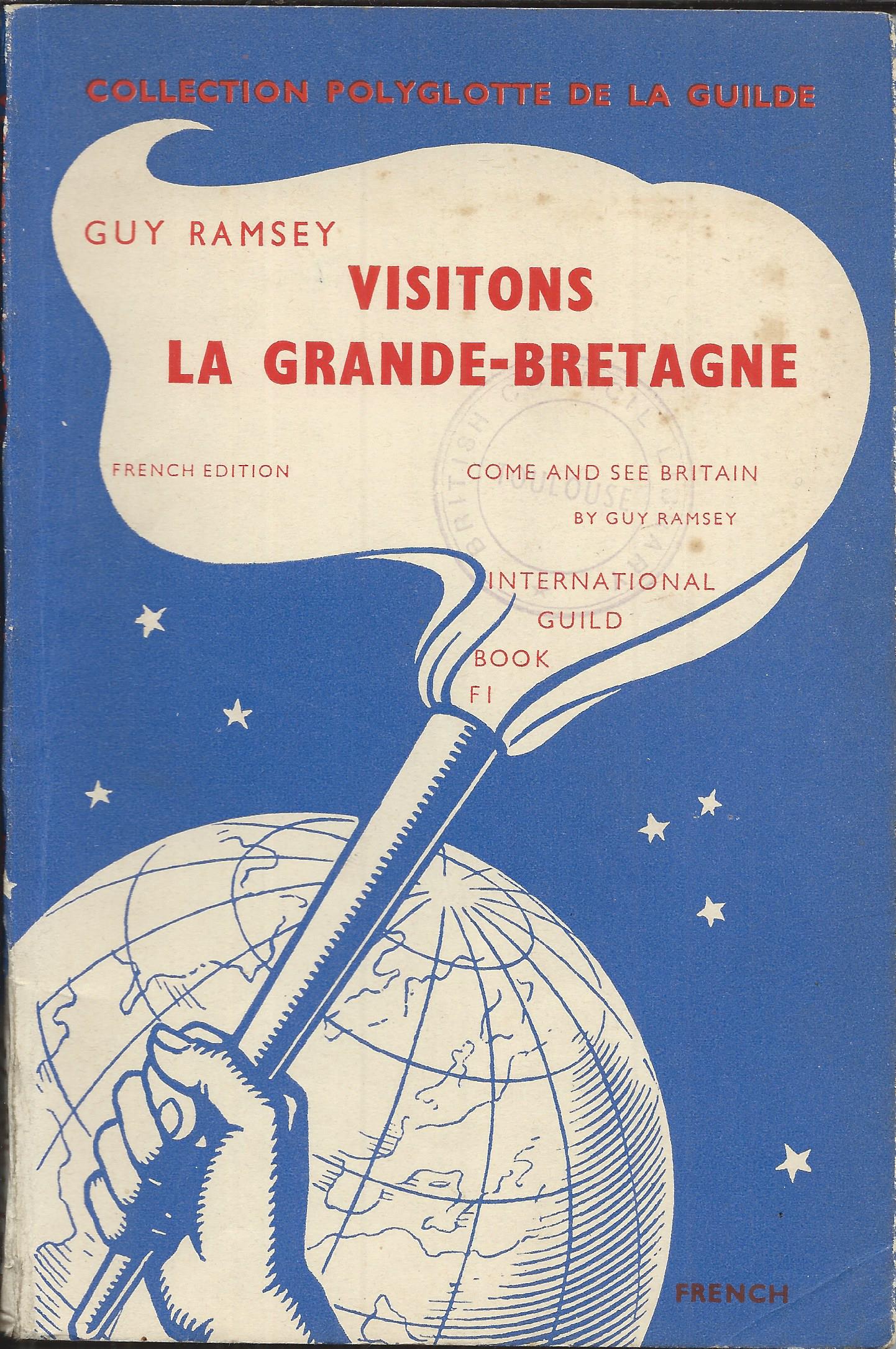
They were described as published for the British Council by Guild Books, an unusual organisation that wasn’t really a publisher at all, just an imprint of the British Publishers Guild. Its original role was as a sort of anti-Penguin front, a combined book industry response to the paperback revolution initiated by Penguin. It had come too late to be an effective competitive response, and its publication of around 50 paperbacks in 1941 / 1942 made little impression on a market that was by then struggling to adapt to wartime conditions. So by 1942 it was perhaps looking around for what to do next. That eventually led to the long series of Services Editions, which was the highpoint of the Guild’s surprisingly long existence, but in the meantime it turned its hand to British Council work.


The books were translated into up to six languages – French, Dutch, Greek, Polish, Czech and Norwegian – all languages of countries invaded by the Nazis. Guy Ramsey’s book was translated into all six languages, two others into five languages, and overall from this first group, 23 different language versions were produced. Two further books followed in 1943 in 7 language versions, and when a Greek language version of one of the first books was added in 1944 that brought the total to 31 books – seven each in Polish and Czech, five each for Greek, Norwegian and Dutch, and two in French. It’s possible that a sixth Dutch book was added later, bringing the overall total to 32, but I can’t get clear confirmation of that.

As was typical for the time, the books had a standard designed wrapper, with different colours used to signify different languages – orange (of course) for Dutch, light blue for Greek and so on. The design was based on the British Council’s flaming torch symbol, held over a globe surrounded by stars. To modern eyes it looks almost Soviet in its iconography. Dustwrappers had by this time been abandoned on paperbacks, but the covers still had the slightly odd turned-back flaps that were used around then.
They were all fairly short books – typically not much more than 80 pages or so – but on reasonable quality paper and not particularly cramped in their layout. Some books had photographs and the Ramsey book even had two coloured pages of maps. There’s no evidence of war economy standard production here. The books sold for either 9d or 1s, with the higher price generally for those with photographs. Production numbers were probably quite low, maybe only a thousand or so of each(?), although it’s hard to tell now. Certainly few have survived, but that’s generally the case for wartime paperbacks anyway, even when printed in much, much larger quantities.
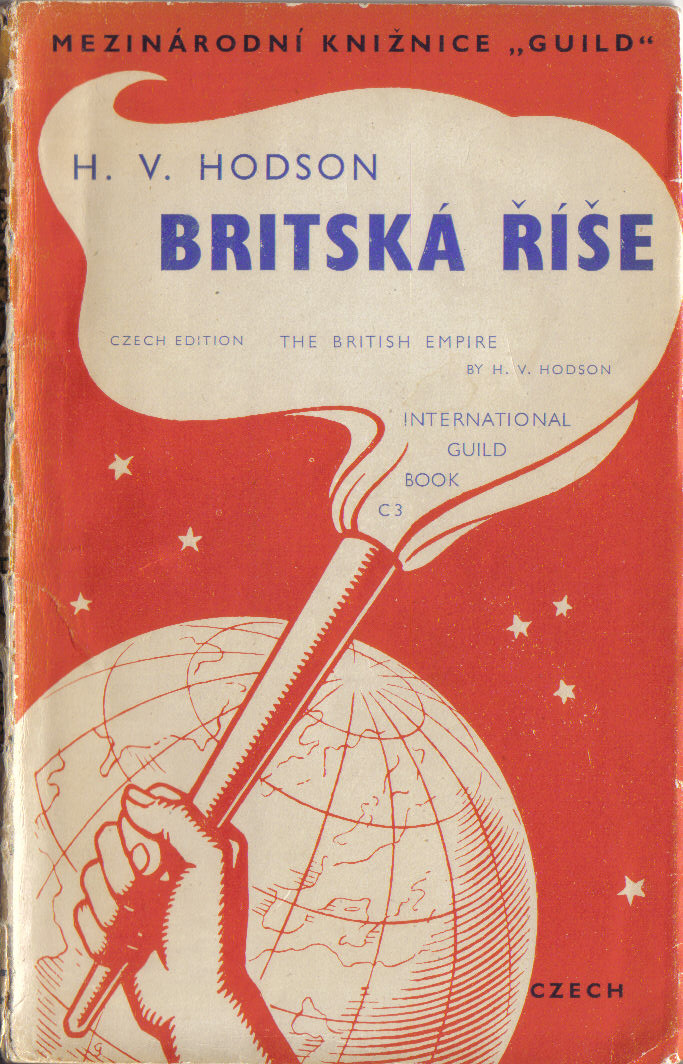
I don’t know of any significant collection of them, other than the ones I’ve put together. There are very few copies shown on the library cataloguing system, Worldcat, and only a handful to be found on internet book sites. Just another wartime paperback series on the point of falling out of recorded knowledge.

The Arsenal Stadium Mystery
Writing a detective story with football as a background seems such a good idea that it’s surprising it hasn’t been done more often. Dick Francis, and before him Nat Gould, made an entire career writing crime stories based on horse racing, but football-themed crime stories seem thin on the ground.
There is though ‘The Arsenal Stadium Mystery’, written by Leonard Gribble and first published by Harrap in 1939. It was made into a film later the same year and it’s perhaps the film that’s now better remembered than the book. My interest though comes neither from the film nor from the first printing of the book, but from its later issue as one of the early Services Editions for the British Armed Forces.

First though the story and its background. Arsenal were the dominant football team of the 1930s, winning the league title 5 times, including three consecutive wins in 1932-33, 1933-34 and 1934-35. They were managed by the great Herbert Chapman until his death in 1934 and from the 1934-35 season by George Allison. Both Chapman and Allison and many of the Arsenal team from those years would have been household names, as familiar as Jose Mourinho or Cristiano Ronaldo today. The story features all of them, with a significant role for the manager, George Allison, and the book starts with a page of autographs of all the team.

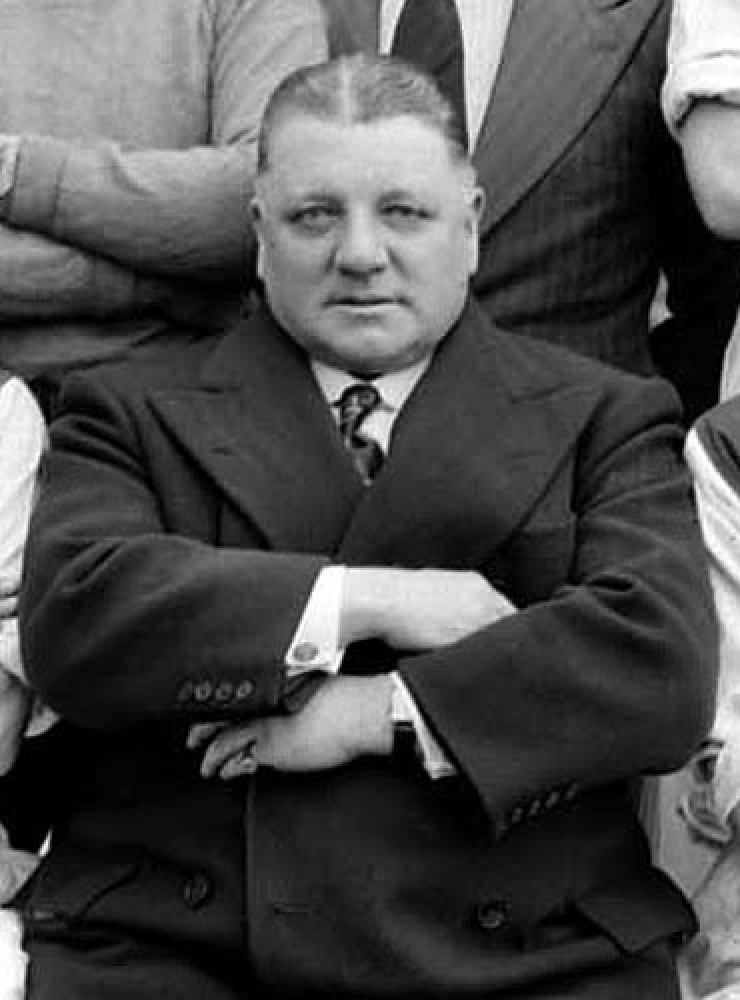
George Allison
Without giving away any plot spoilers, the obvious difficulty is that real people featuring in a detective story can hardly be either the victim or the murderer (or the detective), and if they can’t be the murderer, it’s difficult to make them credible suspects either. So inevitably they have a limited role. To provide plenty of suspects, the author has to invent a fictional team for Arsenal to play against, and a more dysfunctional team you could hardly imagine, despite the author’s insistence that building the team has been a fantastic achievement.
Having been first published in 1939, just before the outbreak of war, ‘The Arsenal Stadium Mystery’ was an obvious candidate when the British Publishers’ Guild, an association of publishers, was looking for books that could be added to its series of Services Editions – paperbacks published for distribution to the armed forces. They wanted popular fiction, including crime fiction, and they wanted up-to-date books, preferably not previously published in paperback.
The first two books to be provided by Harrap were this one, published as volume S19 in the series, and ‘Murder at Wrides Park’ by J.S. Fletcher, published as volume S20, both books appearing in 1943. The print run was probably 50,000 copies of each book, but they are both almost impossible to find now. Even the reprint of ‘The Arsenal Stadium Mystery’ printed in a wider format by The Amalgamated Press (possibly another 50,000 copies?), with spare copies sold on by W.H. Smith after the war, has almost completely disappeared. The printing history on the reprint is not updated, so still says 1943, but it is certainly later, probably 1946. The narrow first printing, printed by C. Tinling & Co. Ltd., is like all early Services Editions exceptionally rare (although sadly, probably not very valuable). My copy was found only after almost thirty years of searching.

The wider reprint edition from 1946
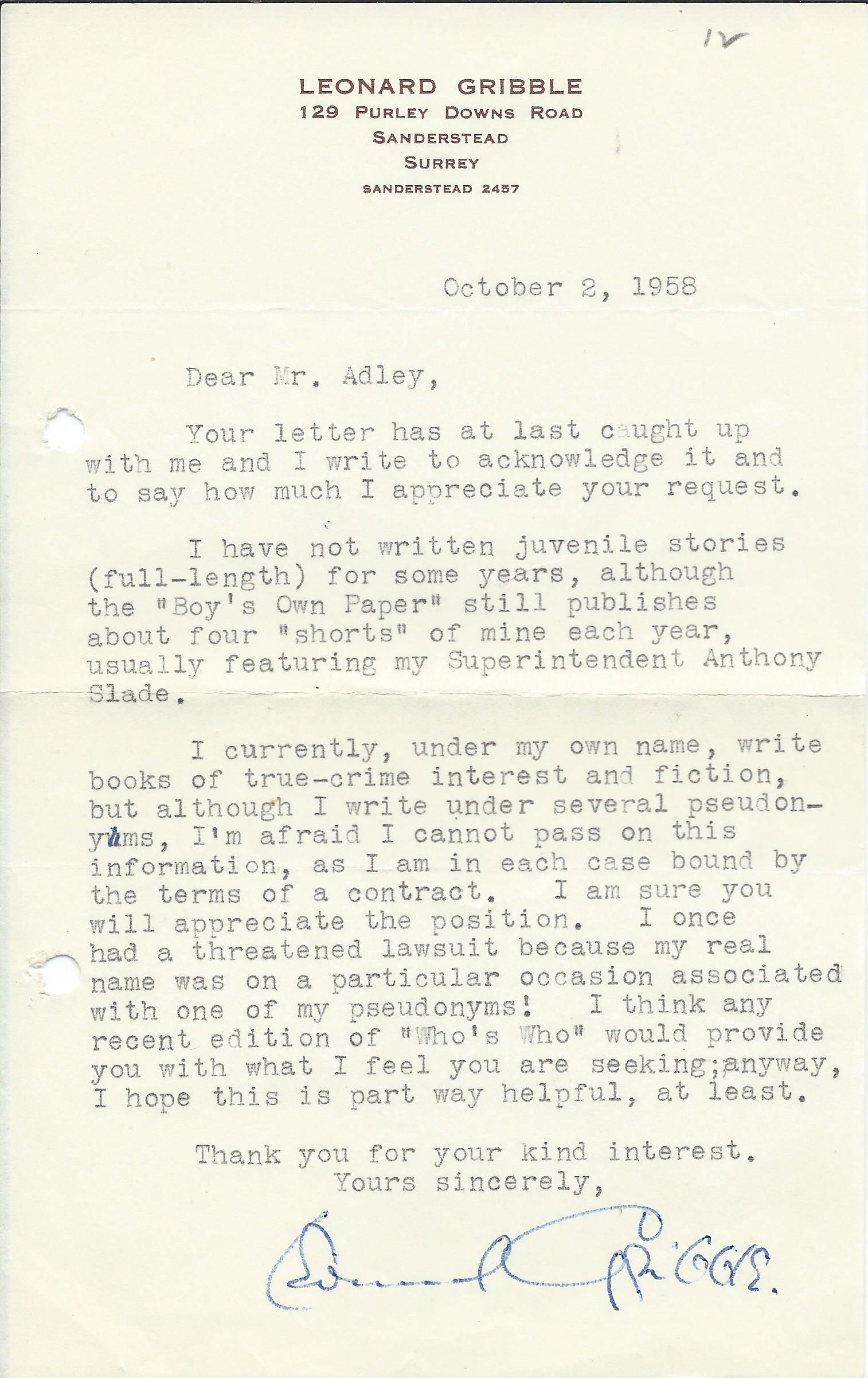
When I did find it though, it came with a letter written by the author, and dated some 15 years later. Leonard Gribble seems to be answering a letter that asked for information about the pseudonyms he wrote under. He refuses to answer, saying he is bound by contractual terms, but refers his correspondent to Who’s Who. The modern equivalent, Wikipedia, suggests he wrote under a series of names including Leo Grex, Piers Marlowe, Bruce Sanders, Dexter Muir, Sterry Browning, Louis Grey and Landon Grant. Few of his other works though achieved the success of ‘The Arsenal Stadium Mystery’, and he came back to the idea of football themed mysteries in 1950, publishing ‘They kidnapped Stanley Matthews’, again featuring Anthony Slade as the detective.

Leonard Gribble (photo: Fantastic Fiction)

Rex Stout in UK Services Editions
There seem to be surprisingly few early paperback editions of Rex Stout novels in the UK, but perhaps fittingly, one area where he was well recognised was in the Services Editions produced for the British Armed Forces. I say fittingly, because it was Stout who established the Writers’ War Board in the US, and he was heavily involved in American efforts to use books to help win both the physical war and the “war of ideas”.
His early books had been published in the UK by Cassell & Co., but by the time war broke out, like most other crime writers, he had been enticed to the Collins Crime Club, and it was Collins who were by far the largest publisher of Services Editions. The Guild Books series was longer, but as the Guild was an association of publishers, their series included books from a wide range of different companies, including both Cassell and Collins.
The first Stout novel to appear in a Services Edition was ‘Black Orchids’, a combination of two Nero Wolfe short stories that had been published in the US in 1942 and then in a Collins Crime Club edition in the UK in July 1943. The Services Edition was not long after, published in 1943 as number c218 in the Collins series (which started at c201). I’ve never seen a copy, and I’d love to hear from anyone who has one or knows of one.
The same goes for the next Rex Stout novel to appear in a Services Edition. I’ve never seen a copy of ‘The red box’, but again I know it exists as number S133 of the Guild Books series, published in 1944. This was one of the early Nero Wolfe novels, first published in the UK by Cassells. So Stout became one of the very rare authors to appear in both the main series of UK Services Editions.
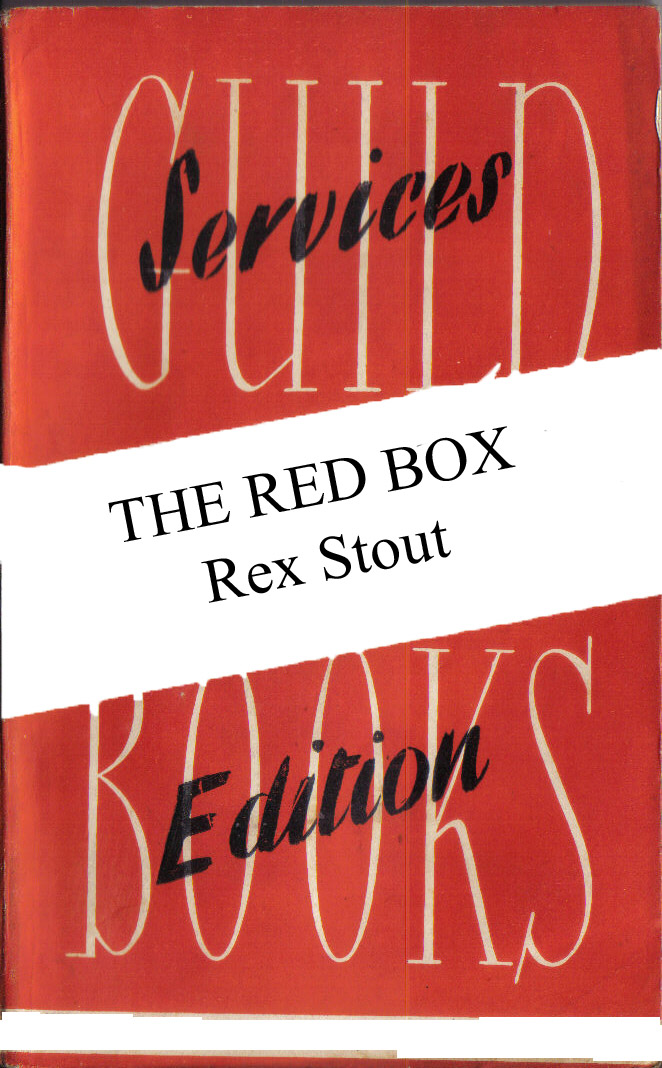
A mock-up of what ‘The red box’ might look like – if only I could find one!
After that it was back to the Collins series for two volumes published together in 1945 and featuring other private investigators. Volume c313 was ‘Alphabet Hicks’ and c314 ‘The broken vase’, both stories that had been published in the US in 1941 and then in the Collins Crime Club in 1942. Alphabet Hicks is a one-off mystery featuring Alfred ‘Alphabet’ Hicks and ‘The broken vase’ is the third Tecumseh Fox story. These two are perhaps a little bit easier to find in Services Editions, but that’s only in relative terms. Both were later published by Collins in standard White Circle paperbacks – The broken vase’ as volume 185c in 1950 and ‘Alphabet Hicks’ as 208c in 1952, and these editions are certainly easier to find.

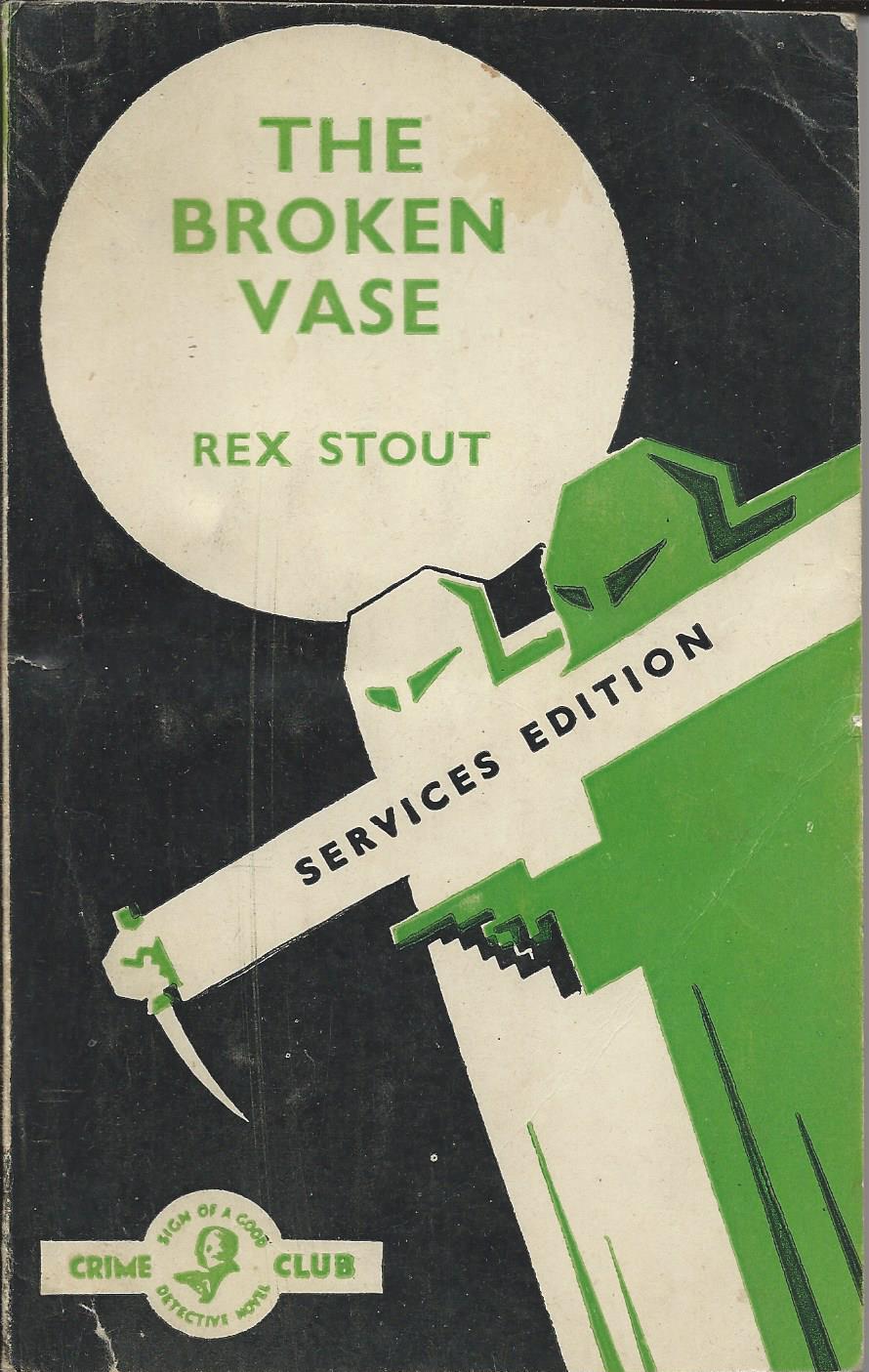
And finally in 1946, there was a Services Edition of ‘Double for death’, the first of the Tecumseh Fox novels. This had already been published in the main White Circle series, as volume 153c in 1945 and by the time it came out in a Services Edition, the programme was almost at an end. Many, if not most, of the Services Edition copies never reached the armed forces, and were released for general sale. So they’re mostly found these days with a WH Smith sticker on the front or the remains of one, authorising their sale, which at least means that they do turn up more often.

The timing of this post is to coincide with a series of posts on Rex Stout by the Tuesday night bloggers. Click on the link to see other posts by the group.

Penguin Services Editions
Penguin were really the first company to recognise the opportunity for Services Editions, when they launched their Forces Book Club in 1942. But first to recognise an opportunity is not necessarily first to find the right way to exploit it and for once, Penguin got it badly wrong. The Forces Book Club was a miserable failure, ending in September 1943 and leaving Penguin with significant quantities of unsold stock.
By that time other companies had stepped into the gap with much better designed schemes. Both Collins and Guild Books launched long-running series of Services Editions in mid-1943 while Penguin retired to lick its wounds. But by 1945 the Forces were starting to diversify their suppliers of Services Editions and there was another opportunity for Penguin to come in.
In comparison to Collins and Guild, the series of Penguin Services Editions was short – just 16 books, all issued in 1945 – and it was also quite diverse, in terms of both the format and the range of titles. Most of the books were in the standard Penguin three-stripe covers, colours depending on genre, but with ‘Services Edition’ added under a line in the middle section, and they were numbered from SE1 upwards.

The standard Penguin format for Services Editions
There are however a lot of exceptions to the general rule. There are books numbered from SE2 to SE9, but there is no SE1 (the book assumed to be SE1 is actually numbered 502) and there are two SE10s but no SE11. There is no SE14 either, or SE16 or SE17, although SE15 and SE18 exist. SE3 does not say ‘Services Edition’ on the front, while SE9 does, but without the line above it. SE18 is in its standard Penguin Classics cover, with no middle stripe, so has ‘Services Edition’ in a different place, and SE10 ‘Within the Tides’, exists in two different covers. Perhaps most oddly of all, Bernard Shaw’s ‘Major Barbara’ exists in a version shown as a Services Edition in its printing history, but otherwise identical to the normal Penguin edition and with a price of 1 shilling marked on the cover. Services Editions never carried a price as they were not for sale.


Some of the variation in formats
For a series of just 16 books, this is a lot of errors or a lot of confusion, from a company that normally paid a lot of attention to the consistency of its branding and its numbering. It almost suggests that Penguin were not taking this venture very seriously.
If one of the key errors Penguin made in the Forces Book Club series was that the choice of books was too serious and too highbrow, they seemed to have learned little in the intervening years. In fact there seems to have been little thought given to what to publish – they just took whatever was on hand at the time, and it was a thin time. By Penguin’s standards, they published relatively few books in 1945. So into the Services Editions went a new translation of Homer’s ‘Odyssey’, a Virginia Woolf, three Pelicans, and a biography of Lady Hester Stanhope. Surely no other publisher would have made a selection like that for a mass-market forces readership.

Price of 1/- on the cover, but referred to as a ‘Services Edition’ inside
Copies are still relatively easy to find, much easier than most other Services Editions, and it seems likely that a high proportion of the books were released onto the general market rather than going to service use. Penguin brought an early end to their series in 1945, while other publishers continued into 1946, so there may have been mutual agreement that it wasn’t really working. My best guess is that the edition of ‘Major Barbara’ was intended as a Services Edition, but never actually used as one – perhaps withdrawn at the last minute when a decision was taken to end the series, then bound into new covers and issued instead as a normal Penguin.
It seems odd to suggest, but did Penguin produce Services Editions just because it was their patriotic duty? It certainly seems that their heart wasn’t in it.

Agatha Christie in Services Editions
In a recent blog post, I speculated that there might be an unrecorded edition of ‘Poirot investigates’ by Agatha Christie in the Guild Books series of Services Editions. ‘Unrecorded’ here means not included in the checklists that I’ve put together of Services Editions, which certainly include some gaps. I’d love to know if anybody else does have a record of such an edition existing.
But Agatha Christie certainly did have a significant number of Services Editions issued, all the others so far as I am aware, in the Collins series. ‘Poirot investigates’ had been first published in 1924 by The Bodley Head, but Collins had been her UK publisher since publication of ‘The murder of Roger Ackroyd’ in 1926. By the outbreak of war they had built up a significant back catalogue of her books, published in the Collins Crime Club, with paperback editions in the Collins White Circle series. These might have been natural candidates for inclusion in the series of Collins Services Editions using the same White Circle branding. But the Services Editions were fundamentally not a series of classic reprints. The agreement was that they would feature at least a significant proportion of new or recent novels, so Collins looked not to the classic Christie novels of the 1920s and 1930s, but to the new work that she was continuing to produce during the war.


The first to appear in 1943 was ‘Sad cypress’, first published in the Collins Crime Club in March 1940 and not previously published in paperback at all so far as I know – it didn’t appear in the main White Circle series until 1944. The Services Edition formed part of the first batch of these books to be issued and like the others in this batch, didn’t carry any series number, although on the evidence of later lists it seems to have been allocated the number c202.
It was followed later in 1943 by ‘The moving finger’ (c219) and ‘The body in the library’ (c221). ‘The body in the library’ had first appeared in the Collins Crime Club in May 1942, but ‘The moving finger’ not until June 1943, so the Services Edition must have followed quite quickly after this. Could it conceivably even have been before it and so represent the first UK edition? I have no information on the month of issue of the Services Editions, but it seems unlikely. My best guess is that it came out a couple of months later. Either way, both books are again probably first paperback editions, not appearing in the main White Circle series until after the end of the war.
4 further crime novels followed – ‘N or M?’ (Collins Crime Club November 1941, Services Edition c244, 1943), ‘Toward zero’ (CCC July 1944, Services Edition c275, 1944), ‘Five little pigs’ (CCC January 1943, Services Edition c305, 1945) and Hercule Poirot’s Christmas (CCC December 1938, Services Edition c352, 1946).


But there was still one more to come. ‘Absent in the Spring’ was published under the pseudonym Mary Westmacott (Services Edition c360, 1946), but was one of Christie’s non-crime novels. So a total of 8 novels, even without that possible ninth book. Most I should say are now very difficult to find in first printing, with the exception of the last two – ‘Hercule Poirot’s Christmas’ and ‘Absent in the Spring’, which are a little bit easier.

Guild Books in Australia – a clue to a mystery?
Over its fifteen year history in paperback publishing from 1941 to around 1955, The British Publishers Guild tried all sorts of different ventures. Originally set up as a collective response to the success of Penguin, its high point came with the series of over 200 Services Editions from 1943 to 1946, to be followed by a long decline as it struggled to adapt to the post-war paperback market. Along the way it tried its hand at various other things, including from 1944 to 1945 a short series of paperbacks in Australia.
In doing so it was again following Penguin, which had made arrangements for some of its books to be published in Australia by the Lothian Publishing Company. The war had made it impractical to export books from the UK to Australia, so local printing made sense, as did working with a local partner. For Guild the partnership was with the Australian Publishing Co. Pty. Ltd. in Sydney and it seems to have lasted long enough to publish at least 13 books (checklist below). Whether it came to an end because of the end of the war or because of commercial failure is not clear, but it seems unlikely to have been a great success.


The series followed the format of the early UK books quite closely and used the same division into three separately coloured series according to size and price. In the UK, books were either Guild Six, Guild Nine or Guild Twelve, according to the price in pence. In Australia they were Guild Fifteen (coloured red), Guild Eighteen (light blue) or Guild Twenty-One (green), corresponding to 1s 3d, 1s 6d or 1s 9d in Australian currency. This partly reflects the discount in the Australian Pound relative to the British Pound at the time, but also some significant wartime inflation of prices.
Most of the books had already appeared in Guild editions elsewhere, several of them in the Services Editions series, but there are three books, ‘Poirot investigates’, ‘One foot in heaven’ and ‘This is the life!’ that may be first printings in Guild Books. The most intriguing of these is ‘Poirot investigates’, which in the printing history, after listing various other editions, says ‘First issued in this Edition, 1943. Australian Edition 1945’. This suggests that there was a previous Guild Books edition, and although I have never seen any other evidence of one, it’s possible that it could be one of the missing titles from the Services Edition series. I’d love to be able to confirm this theory one day by finding a Services Edition of this book. Can anyone help?

Full listing of the known Guild Books Australian Editions. There may be others!
- David Garnett – The sailor’s return (Guild 15, 1944)
- C.S. Forester – Brown on Resolution (Guild 18, 1944)
- E.M. Forster – Where angels fear to tread (Guild 18, 1944)
- Hartzell Spence – One foot in heaven (Guild 18, 1944)
- A.P. Herbert – The house by the river (Guild 15, 1945)
- Agatha Christie – Poirot investigates (Guild 15, 1945)
- George Sava – A ring at the door (Guild 18, 1945)
- David Masters – Up periscope (Guild 18, 1945)
- Hugh de Selincourt – The cricket match (Guild 18, 1945)
- Madeleine Kent – I married a German (Guild 21, 1945)
- P.C. Wren – The uniform of glory (Guild 21, 1945)
- I.A.R. Wylie – The young in heart (Guild 15, no date)
- Aubrey Wisberg & Harold Waters – This is the life! (Guild 21, no date)

More gentle propaganda
Last week’s post looked at the Guild Books Austrian Editions published from about 1946 to 1948 by an arm of the Allied Commission for Austria, as a sort of gentle propaganda. A very similar series of German Editions was published at the same time, and probably with the same purpose.

There’s no indication in the books themselves to show that there was any political motive behind their publication. The publisher is shown simply as Guild Books, but in practice this seems unlikely to be the full story. Guild Books was not a publisher, it was just an imprint of the British Publishers Guild, an association of publishers. All of its other books were published for Guild Books, but by other publishers. In the UK they were published by the original hardback publisher, the Continental Editions were published by AB Ljus Förlag, and the Austrian Editions by the Allied Commission for Austria. It seems likely that the German Editions were published by the German equivalent, the Control Commission for Germany (British Element).
There are many similarities between the Austrian and German Editions, but also some intriguing differences, and the first question is really why two separate series at all. Part of the answer may be that one of the specific aims of the Allied Commission for Austria was the separation of Austria from Germany. Issuing a single series of books for both countries would have looked inconsistent with that. The first 14 books in the German series though also appeared in the Austrian series – it was only in the later volumes that different titles started to appear.
Similarity in the titles though hides differences in book production. Basically the German books are much lower quality than the Austrian editions. The paper is mostly very poor, although a few books are better, and two books appear to have paper of different types in the same book, at least in the copies I have. The first 5 books were all sent to different printers, with resulting differences in format. The first and third books (G1 and G3) had thin covers with dustwrappers over them in the same design as the cover, while G5 had a dustwrapper over plain card covers. G2 and G4 had thicker card covers, but seem to have had no dustwrapper. I don’t think any of the later books had dustwrappers. There’s variety in the colours of the covers too, in contrast to the Austrian Editions, which were all brown.


All the printers used were in the area around Dusseldorf and Essen, which was part of the British Sector at the time. I can’t tell whether they were sold only within the British Sector, or throughout all of Germany. The series ran for at least 17 titles, but the last volume I have is numbered G19 and gives details of 4 other titles numbered G17, G18, G20 and G21, which I have never seen. I’d be very pleased to hear anything about whether or not these titles actually exist.
 paperbackrevolution