
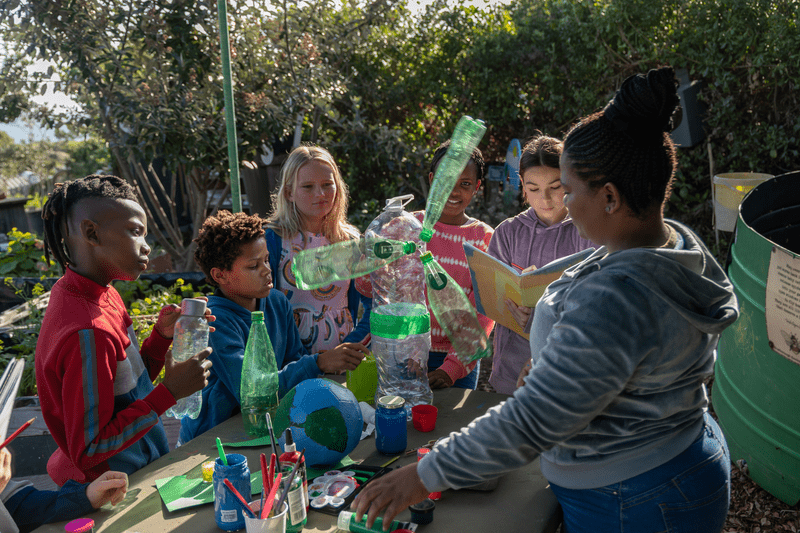
Project Description
Grade range: 7 to 10
Time considerations: 7 hours over 5 lessons + time to build student prototypes
Materials provided: Digital/printable resources
Materials needed: Will vary based on students' projects – and may be a physical product, a digital product, or a system or process.
Computers/tablets with internet access for research
Curriculum Connections - Case Study #1
- Understand real-world problems through both research and hands-on exploration.
- Sharpen critical thinking through empathy, information analysis, and informed decision-making.
- Transform ideas into action using creative thinking skills.
- Become changemakers through the use of innovative strategies, techniques, and perspectives.
- Actively collaborate in teams, learning respectfully from, and with, others.
- Develop an innovation mindset by cultivating skills and attitudes such as flexibility, perseverance, risk-taking, and learning from mistakes.
- Hone their communication skills across different contexts and audiences through reading, writing, drawing, speaking, and listening.
What will students experience?
- Understand real-world problems through both research and hands-on exploration.
- Sharpen critical thinking through empathy, information analysis, and informed decision-making.
- Transform ideas into action using creative thinking skills.
- Become changemakers through the use of innovative strategies, techniques, and perspectives.
- Actively collaborate in teams, learning respectfully from, and with, others.
- Develop an innovation mindset by cultivating skills and attitudes such as flexibility, perseverance, risk-taking, and learning from mistakes.
- Hone their communication skills across different contexts and audiences through reading, writing, drawing, speaking, and listening.
- Curriculum-aligned environmental science unit and “Global Competencies” (i.e. Critical thinking & problem solving, creativity/innovation, learning to learn/ self-directed learning, collaboration, communication, global citizenship, and sustainability).
- Free to participate.
- Design Thinking process and Problem-Based Learning structured project.
- Five ready-made lessons take approximately seven hours of in-class time.
Why Participate?
- Curriculum-aligned environmental science unit and “Global Competencies” (i.e. Critical thinking & problem solving, creativity/innovation, learning to learn/ self-directed learning, collaboration, communication, global citizenship, and sustainability).
- Free to participate.
- Design Thinking process and Problem-Based Learning structured project.
- Five ready-made lessons take approximately seven hours of in-class time.
- Be able to apply the design thinking process: empathizing, defining problems, ideating, prototyping, testing, and refining innovative solutions for a real user group.
- Be able to develop and apply innovation mindsets and skills by reflecting on their strengths, conducting research, collaborating, and communicating their design decisions and improvements.
Learning Goals
- Be able to apply the design thinking process: empathizing, defining problems, ideating, prototyping, testing, and refining innovative solutions for a real user group.
- Be able to develop and apply innovation mindsets and skills by reflecting on their strengths, conducting research, collaborating, and communicating their design decisions and improvements.
- Two case studies tackling real-world challenges linked to a UN Sustainability Goal.
Resources
- Two case studies tackling real-world challenges linked to a UN Sustainability Goal.
- Understand real-world problems through both research and hands-on exploration.
- Sharpen critical thinking through empathy, information analysis, and informed decision-making.
- Transform ideas into action using creative thinking skills.
- Become changemakers through the use of innovative strategies, techniques, and perspectives.
- Actively collaborate in teams, learning respectfully from, and with, others.
- Develop an innovation mindset by cultivating skills and attitudes such as flexibility, perseverance, risk-taking, and learning from mistakes.
- Hone their communication skills across different contexts and audiences through reading, writing, drawing, speaking, and listening.
What will students experience?
- Understand real-world problems through both research and hands-on exploration.
- Sharpen critical thinking through empathy, information analysis, and informed decision-making.
- Transform ideas into action using creative thinking skills.
- Become changemakers through the use of innovative strategies, techniques, and perspectives.
- Actively collaborate in teams, learning respectfully from, and with, others.
- Develop an innovation mindset by cultivating skills and attitudes such as flexibility, perseverance, risk-taking, and learning from mistakes.
- Hone their communication skills across different contexts and audiences through reading, writing, drawing, speaking, and listening.
- Curriculum-aligned environmental science unit and “Global Competencies” (i.e. Critical thinking & problem solving, creativity/innovation, learning to learn/ self-directed learning, collaboration, communication, global citizenship, and sustainability).
- Free to participate.
- Design Thinking process and Problem-Based Learning structured project.
- Five ready-made lessons take approximately seven hours of in-class time.
Why Participate?
- Curriculum-aligned environmental science unit and “Global Competencies” (i.e. Critical thinking & problem solving, creativity/innovation, learning to learn/ self-directed learning, collaboration, communication, global citizenship, and sustainability).
- Free to participate.
- Design Thinking process and Problem-Based Learning structured project.
- Five ready-made lessons take approximately seven hours of in-class time.
- Be able to apply the design thinking process: empathizing, defining problems, ideating, prototyping, testing, and refining innovative solutions for a real user group.
- Be able to develop and apply innovation mindsets and skills by reflecting on their strengths, conducting research, collaborating, and communicating their design decisions and improvements.
Learning Goals
- Be able to apply the design thinking process: empathizing, defining problems, ideating, prototyping, testing, and refining innovative solutions for a real user group.
- Be able to develop and apply innovation mindsets and skills by reflecting on their strengths, conducting research, collaborating, and communicating their design decisions and improvements.
- Two case studies tackling real-world challenges linked to a UN Sustainability Goal.
Resources
- Two case studies tackling real-world challenges linked to a UN Sustainability Goal.
- Students will be introduced to the Mission : Innovation Project, learn about innovation and what it takes to be an innovator, and be introduced to the Design Thinking process.
Timing: 75 minutes
Lesson 1 – Project Kickoff
- Students will be introduced to the Mission : Innovation Project, learn about innovation and what it takes to be an innovator, and be introduced to the Design Thinking process.
Timing: 75 minutes
- Students will learn about real-world problems and the people impacted by them. They will do research to learn more about the users and the problems and create an actionable question to pursue.
Timing: 115 minutes
Lesson 2 – Empathize & Define
- Students will learn about real-world problems and the people impacted by them. They will do research to learn more about the users and the problems and create an actionable question to pursue.
Timing: 115 minutes
- Students will use creative thinking to generate many ideas in response to their Action Statement.
Timing: 55 minutes
Lesson 3 – Ideate
- Students will use creative thinking to generate many ideas in response to their Action Statement.
Timing: 55 minutes
- Students will select, develop, and test a potential solution to the problem, known as a prototype. By the end of this phase, students could create shareable prototypes.
Timing: 100 minutes + Prototyping time
Lesson 4 – Prototype & Test
- Students will select, develop, and test a potential solution to the problem, known as a prototype. By the end of this phase, students could create shareable prototypes.
Timing: 100 minutes + Prototyping time
- Students will analyze the data collected during usability testing and user testing to identify ways to improve their prototypes. Interested students could revise their prototypes further and/or share their projects with others.
Timing: 35 minutes + optional additional time
Lesson 5 – Reflect & Share
- Students will analyze the data collected during usability testing and user testing to identify ways to improve their prototypes. Interested students could revise their prototypes further and/or share their projects with others.
Timing: 35 minutes + optional additional time
- Students will be introduced to the Mission : Innovation Project, learn about innovation and what it takes to be an innovator, and be introduced to the Design Thinking process.
Timing: 75 minutes
Lesson 1 – Project Kickoff
- Students will be introduced to the Mission : Innovation Project, learn about innovation and what it takes to be an innovator, and be introduced to the Design Thinking process.
Timing: 75 minutes
- Students will learn about real-world problems and the people impacted by them. They will do research to learn more about the users and the problems and create an actionable question to pursue.
Timing: 115 minutes
Lesson 2 – Empathize & Define
- Students will learn about real-world problems and the people impacted by them. They will do research to learn more about the users and the problems and create an actionable question to pursue.
Timing: 115 minutes
- Students will use creative thinking to generate many ideas in response to their Action Statement.
Timing: 55 minutes
Lesson 3 – Ideate
- Students will use creative thinking to generate many ideas in response to their Action Statement.
Timing: 55 minutes
- Students will select, develop, and test a potential solution to the problem, known as a prototype. By the end of this phase, students could create shareable prototypes.
Timing: 100 minutes + Prototyping time
Lesson 4 – Prototype & Test
- Students will select, develop, and test a potential solution to the problem, known as a prototype. By the end of this phase, students could create shareable prototypes.
Timing: 100 minutes + Prototyping time
- Students will analyze the data collected during usability testing and user testing to identify ways to improve their prototypes. Interested students could revise their prototypes further and/or share their projects with others.
Timing: 35 minutes + optional additional time
Lesson 5 – Reflect & Share
- Students will analyze the data collected during usability testing and user testing to identify ways to improve their prototypes. Interested students could revise their prototypes further and/or share their projects with others.
Timing: 35 minutes + optional additional time
Lesson Outlines
- Students will be introduced to the Mission : Innovation Project, learn about innovation and what it takes to be an innovator, and be introduced to the Design Thinking process.
Timing: 75 minutes
Lesson 1 – Project Kickoff
- Students will be introduced to the Mission : Innovation Project, learn about innovation and what it takes to be an innovator, and be introduced to the Design Thinking process.
Timing: 75 minutes
- Students will learn about real-world problems and the people impacted by them. They will do research to learn more about the users and the problems and create an actionable question to pursue.
Timing: 115 minutes
Lesson 2 – Empathize & Define
- Students will learn about real-world problems and the people impacted by them. They will do research to learn more about the users and the problems and create an actionable question to pursue.
Timing: 115 minutes
- Students will use creative thinking to generate many ideas in response to their Action Statement.
Timing: 55 minutes
Lesson 3 – Ideate
- Students will use creative thinking to generate many ideas in response to their Action Statement.
Timing: 55 minutes
- Students will select, develop, and test a potential solution to the problem, known as a prototype. By the end of this phase, students could create shareable prototypes.
Timing: 100 minutes + Prototyping time
Lesson 4 – Prototype & Test
- Students will select, develop, and test a potential solution to the problem, known as a prototype. By the end of this phase, students could create shareable prototypes.
Timing: 100 minutes + Prototyping time
- Students will analyze the data collected during usability testing and user testing to identify ways to improve their prototypes. Interested students could revise their prototypes further and/or share their projects with others.
Timing: 35 minutes + optional additional time
Lesson 5 – Reflect & Share
- Students will analyze the data collected during usability testing and user testing to identify ways to improve their prototypes. Interested students could revise their prototypes further and/or share their projects with others.
Timing: 35 minutes + optional additional time
- Students will be introduced to the Mission : Innovation Project, learn about innovation and what it takes to be an innovator, and be introduced to the Design Thinking process.
Timing: 75 minutes
Lesson 1 – Project Kickoff
- Students will be introduced to the Mission : Innovation Project, learn about innovation and what it takes to be an innovator, and be introduced to the Design Thinking process.
Timing: 75 minutes
- Students will learn about real-world problems and the people impacted by them. They will do research to learn more about the users and the problems and create an actionable question to pursue.
Timing: 115 minutes
Lesson 2 – Empathize & Define
- Students will learn about real-world problems and the people impacted by them. They will do research to learn more about the users and the problems and create an actionable question to pursue.
Timing: 115 minutes
- Students will use creative thinking to generate many ideas in response to their Action Statement.
Timing: 55 minutes
Lesson 3 – Ideate
- Students will use creative thinking to generate many ideas in response to their Action Statement.
Timing: 55 minutes
- Students will select, develop, and test a potential solution to the problem, known as a prototype. By the end of this phase, students could create shareable prototypes.
Timing: 100 minutes + Prototyping time
Lesson 4 – Prototype & Test
- Students will select, develop, and test a potential solution to the problem, known as a prototype. By the end of this phase, students could create shareable prototypes.
Timing: 100 minutes + Prototyping time
- Students will analyze the data collected during usability testing and user testing to identify ways to improve their prototypes. Interested students could revise their prototypes further and/or share their projects with others.
Timing: 35 minutes + optional additional time
Lesson 5 – Reflect & Share
- Students will analyze the data collected during usability testing and user testing to identify ways to improve their prototypes. Interested students could revise their prototypes further and/or share their projects with others.
Timing: 35 minutes + optional additional time
- Students will be introduced to the Mission : Innovation Project, learn about innovation and what it takes to be an innovator, and be introduced to the Design Thinking process.
Timing: 75 minutes
Lesson 1 – Project Kickoff
- Students will be introduced to the Mission : Innovation Project, learn about innovation and what it takes to be an innovator, and be introduced to the Design Thinking process.
Timing: 75 minutes
- Students will learn about real-world problems and the people impacted by them. They will do research to learn more about the users and the problems and create an actionable question to pursue.
Timing: 115 minutes
Lesson 2 – Empathize & Define
- Students will learn about real-world problems and the people impacted by them. They will do research to learn more about the users and the problems and create an actionable question to pursue.
Timing: 115 minutes
- Students will use creative thinking to generate many ideas in response to their Action Statement.
Timing: 55 minutes
Lesson 3 – Ideate
- Students will use creative thinking to generate many ideas in response to their Action Statement.
Timing: 55 minutes
- Students will select, develop, and test a potential solution to the problem, known as a prototype. By the end of this phase, students could create shareable prototypes.
Timing: 100 minutes + Prototyping time
Lesson 4 – Prototype & Test
- Students will select, develop, and test a potential solution to the problem, known as a prototype. By the end of this phase, students could create shareable prototypes.
Timing: 100 minutes + Prototyping time
- Students will analyze the data collected during usability testing and user testing to identify ways to improve their prototypes. Interested students could revise their prototypes further and/or share their projects with others.
Timing: 35 minutes + optional additional time
Lesson 5 – Reflect & Share
- Students will analyze the data collected during usability testing and user testing to identify ways to improve their prototypes. Interested students could revise their prototypes further and/or share their projects with others.
Timing: 35 minutes + optional additional time
- Students will be introduced to the Mission : Innovation Project, learn about innovation and what it takes to be an innovator, and be introduced to the Design Thinking process.
Timing: 75 minutes
Lesson 1 – Project Kickoff
- Students will be introduced to the Mission : Innovation Project, learn about innovation and what it takes to be an innovator, and be introduced to the Design Thinking process.
Timing: 75 minutes
- Students will learn about real-world problems and the people impacted by them. They will do research to learn more about the users and the problems and create an actionable question to pursue.
Timing: 115 minutes
Lesson 2 – Empathize & Define
- Students will learn about real-world problems and the people impacted by them. They will do research to learn more about the users and the problems and create an actionable question to pursue.
Timing: 115 minutes
- Students will use creative thinking to generate many ideas in response to their Action Statement.
Timing: 55 minutes
Lesson 3 – Ideate
- Students will use creative thinking to generate many ideas in response to their Action Statement.
Timing: 55 minutes
- Students will select, develop, and test a potential solution to the problem, known as a prototype. By the end of this phase, students could create shareable prototypes.
Timing: 100 minutes + Prototyping time
Lesson 4 – Prototype & Test
- Students will select, develop, and test a potential solution to the problem, known as a prototype. By the end of this phase, students could create shareable prototypes.
Timing: 100 minutes + Prototyping time
- Students will analyze the data collected during usability testing and user testing to identify ways to improve their prototypes. Interested students could revise their prototypes further and/or share their projects with others.
Timing: 35 minutes + optional additional time
Lesson 5 – Reflect & Share
- Students will analyze the data collected during usability testing and user testing to identify ways to improve their prototypes. Interested students could revise their prototypes further and/or share their projects with others.
Timing: 35 minutes + optional additional time
Lesson Outlines
- Students will be introduced to the Mission : Innovation Project, learn about innovation and what it takes to be an innovator, and be introduced to the Design Thinking process.
Timing: 75 minutes
Lesson 1 – Project Kickoff
- Students will be introduced to the Mission : Innovation Project, learn about innovation and what it takes to be an innovator, and be introduced to the Design Thinking process.
Timing: 75 minutes
- Students will learn about real-world problems and the people impacted by them. They will do research to learn more about the users and the problems and create an actionable question to pursue.
Timing: 115 minutes
Lesson 2 – Empathize & Define
- Students will learn about real-world problems and the people impacted by them. They will do research to learn more about the users and the problems and create an actionable question to pursue.
Timing: 115 minutes
- Students will use creative thinking to generate many ideas in response to their Action Statement.
Timing: 55 minutes
Lesson 3 – Ideate
- Students will use creative thinking to generate many ideas in response to their Action Statement.
Timing: 55 minutes
- Students will select, develop, and test a potential solution to the problem, known as a prototype. By the end of this phase, students could create shareable prototypes.
Timing: 100 minutes + Prototyping time
Lesson 4 – Prototype & Test
- Students will select, develop, and test a potential solution to the problem, known as a prototype. By the end of this phase, students could create shareable prototypes.
Timing: 100 minutes + Prototyping time
- Students will analyze the data collected during usability testing and user testing to identify ways to improve their prototypes. Interested students could revise their prototypes further and/or share their projects with others.
Timing: 35 minutes + optional additional time
Lesson 5 – Reflect & Share
- Students will analyze the data collected during usability testing and user testing to identify ways to improve their prototypes. Interested students could revise their prototypes further and/or share their projects with others.
Timing: 35 minutes + optional additional time
- Students will be introduced to the Mission : Innovation Project, learn about innovation and what it takes to be an innovator, and be introduced to the Design Thinking process.
Timing: 75 minutes
Lesson 1 – Project Kickoff
- Students will be introduced to the Mission : Innovation Project, learn about innovation and what it takes to be an innovator, and be introduced to the Design Thinking process.
Timing: 75 minutes
- Students will learn about real-world problems and the people impacted by them. They will do research to learn more about the users and the problems and create an actionable question to pursue.
Timing: 115 minutes
Lesson 2 – Empathize & Define
- Students will learn about real-world problems and the people impacted by them. They will do research to learn more about the users and the problems and create an actionable question to pursue.
Timing: 115 minutes
- Students will use creative thinking to generate many ideas in response to their Action Statement.
Timing: 55 minutes
Lesson 3 – Ideate
- Students will use creative thinking to generate many ideas in response to their Action Statement.
Timing: 55 minutes
- Students will select, develop, and test a potential solution to the problem, known as a prototype. By the end of this phase, students could create shareable prototypes.
Timing: 100 minutes + Prototyping time
Lesson 4 – Prototype & Test
- Students will select, develop, and test a potential solution to the problem, known as a prototype. By the end of this phase, students could create shareable prototypes.
Timing: 100 minutes + Prototyping time
- Students will analyze the data collected during usability testing and user testing to identify ways to improve their prototypes. Interested students could revise their prototypes further and/or share their projects with others.
Timing: 35 minutes + optional additional time
Lesson 5 – Reflect & Share
- Students will analyze the data collected during usability testing and user testing to identify ways to improve their prototypes. Interested students could revise their prototypes further and/or share their projects with others.
Timing: 35 minutes + optional additional time