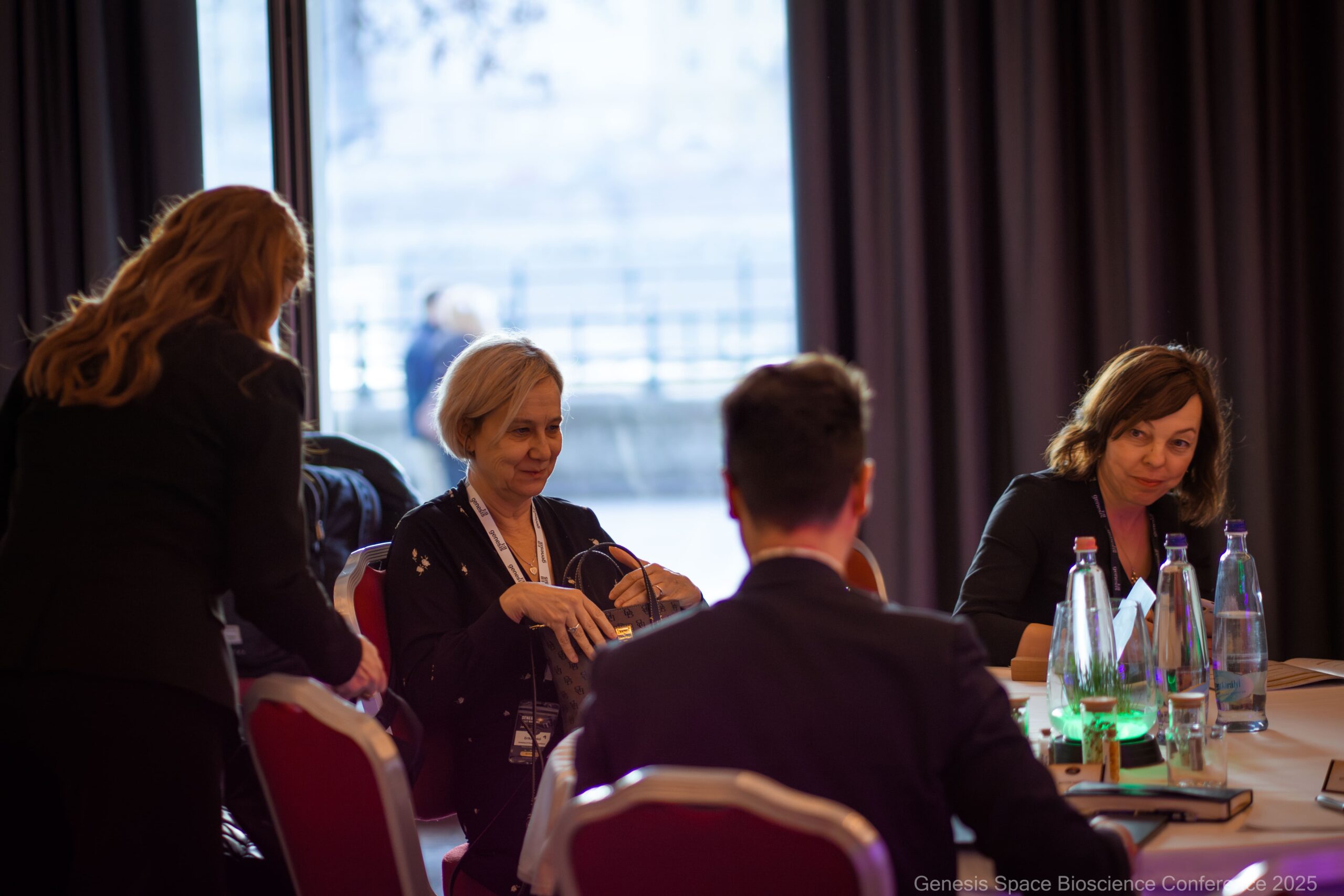
The Genesis Space Bioscience Conference (GSBC) 2025 brought together policy makers, leading scientists, research institutes, universities, and private space companies to discuss experimental designs and preliminary findings from biomedical, plant, and microbiology studies aboard MayaSat-1—our biological incubator cube integrated with the Nyx space capsule.


This playlist includes presentations and the MayaSat-1 mission premiere from the Genesis Space Bioscience Conference (GSBC) 2025, held at the Marriott Hotel in Budapest on February 15, 2025.
In October 2024, MayaSat-1 was integrated into the Mission Possible capsule. This mission will carry 980 unique biological samples, launching from Vandenberg Space Force Base aboard a SpaceX Falcon 9 rocket between February and June 2025. Once in space, Falcon 9 will deploy the capsule into low Earth orbit at an altitude above 500 km, where it will complete three orbits, passing through charged polar zones. Following its orbit, the capsule will re-enter Earth’s atmosphere and make a controlled splashdown in the open sea with the aid of parachutes. A rescue team will retrieve the capsule, securing the samples for in-depth post-mission analysis.


Size 1U CubeSat
Dimensions 10 x 10 x 10 cm
Weight 298 g/0.6 lbs
Biological payloads 980 sample slots
Commercial payload 11 item slots

Size 1U CubeSat
Dimensions 10 x 10 x 10 cm
Weight 298 g/0.6 lbs
Biological payloads 980 sample slots
Commercial payload 11 item slots

MayaSat-1 carries an unprecedented 980 biological samples, including not only seeds but also a wide array of stems, roots, algae, microbial cultures, and soil samples. These specimens represent different types of plant, fungal, and microbial life, each with unique biological properties. By observing the survival of these samples under the intense radiation, microgravity, and temperature extremes of space, Genesis SFL aims to uncover valuable insights into the fundamental resilience of life and its ability to withstand conditions far different from those on Earth.
A primary objective is to study how various life forms, from plants to microbes, adapt to the harsh conditions of space. Through post-mission analysis, Genesis SFL will investigate potential adaptations, such as genetic or structural changes, that may have occurred in response to space’s environmental stressors. In particular, plant roots, stems, and algae will be examined for signs of adaptive responses. The mission also includes soil samples containing microbial communities to determine how these microorganisms might survive and interact in a zero-gravity environment. These studies will offer critical data on the evolutionary flexibility and mutation rates of different biological entities when placed under extreme environmental pressures.
The results of this mission will have far-reaching implications for agriculture and medicine. By studying the possible generational changes in plants and analyzing mutation rates in microbial and human DNA samples, Genesis SFL hopes to gain insights into potential applications, such as developing crops better suited to extreme climates on Earth. Additionally, DNA sequencing of human samples could reveal biomarkers linked to resilience and disease resistance, potentially leading to breakthroughs in treating conditions affected by bone density and radiation exposure.
This mission serves as a proof-of-concept for conducting biological experiments in space. By integrating a variety of biological and commercial payloads into MayaSat-1, this mission sets a precedent for future missions that aim to explore the intersection of space, biology, and commercial partnerships. The findings from this mission will pave the way for longer-term experiments in space that explore not only survival but also the potential for sustainable life beyond Earth.
Thank you to all participants for contributing to this pivotal event, advancing space bioscience, and shaping the future of life beyond Earth!