Software development services
1. Requirement Analysis
Requirement Analysis is a cornerstone of any successful software development project. At FasterCapital, we understand that the foundation of any robust software solution lies in a thorough and meticulous requirement analysis process. This critical step ensures that we capture the client's needs accurately, aligning the project's objectives with the strategic goals of their business. By delving deep into the specifics of what the client requires, we can tailor our services to provide a bespoke solution that not only meets but exceeds their expectations.
Our approach to Requirement Analysis involves several key steps:
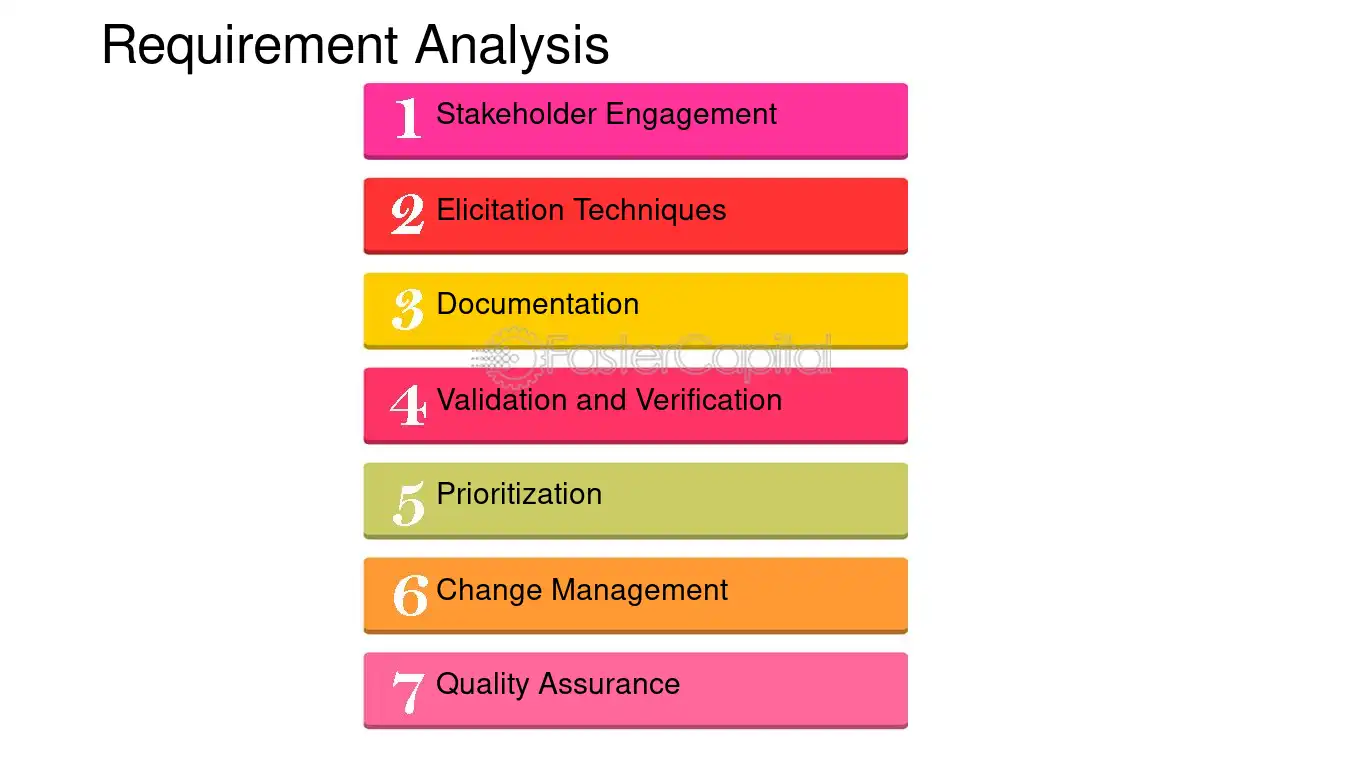
1. Stakeholder Engagement: We begin by identifying all the stakeholders involved in the project. This includes not just the client, but also end-users, and any other parties affected by the software. By engaging with these stakeholders early on, we gather diverse perspectives that inform the requirements.
2. Elicitation Techniques: Our team employs a variety of techniques to elicit requirements from stakeholders. These include interviews, surveys, workshops, and brainstorming sessions. For example, we might conduct a workshop with end-users to understand their daily challenges and how the new software can address them.
3. Documentation: All findings are meticulously documented in a Requirements Specification Document (RSD). This document serves as the blueprint for the project and includes functional, non-functional, and technical requirements.
4. Validation and Verification: We ensure that the documented requirements align with the client's business objectives and are technically feasible. This step often involves creating prototypes or mock-ups to validate ideas with stakeholders.
5. Prioritization: Not all requirements are created equal. We work with the client to prioritize requirements based on factors such as business value, cost, and complexity. This helps in planning the development phases effectively.
6. Change Management: As the project progresses, requirements may evolve. We have a robust change management process in place to assess the impact of any changes and incorporate them without disrupting the project timeline.
7. Quality Assurance: Throughout the Requirement Analysis phase, our quality Assurance team is involved to ensure that all requirements are testable and meet the highest quality standards.
By following this structured approach, FasterCapital ensures that the software development services we offer are built on a solid foundation of well-understood and well-documented requirements. This meticulous attention to detail in the Requirement Analysis phase is what sets us apart and enables us to deliver software solutions that truly empower our clients' businesses.
Requirement Analysis - Software development services
2. __Technology_Selection__
The importance of technology selection in the realm of software development services cannot be overstated. It is a pivotal step that sets the foundation for the entire project, influencing not only the performance and scalability of the application but also impacting the long-term maintenance and evolution of the software product. FasterCapital understands that choosing the right technology stack is critical to the success of any software project. With a comprehensive approach, FasterCapital assists customers in navigating the complex landscape of programming languages, frameworks, databases, and tools to find the optimal combination that aligns with their business goals, budget, and timeline.
FasterCapital's approach to Technology Selection involves the following steps:
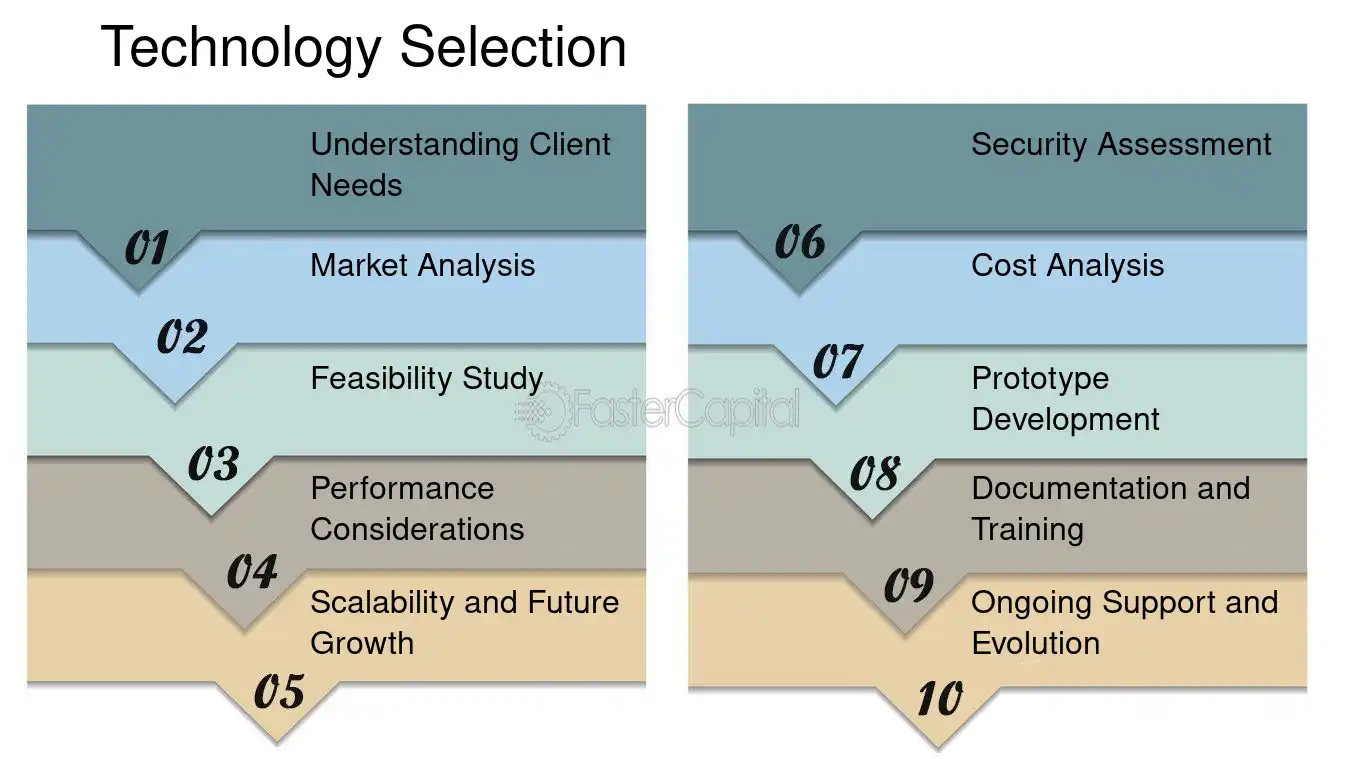
1. Understanding Client Needs: The first step is a deep dive into the client's business requirements, target audience, and desired functionalities. For example, a client looking to build a high-traffic e-commerce platform would require a robust and scalable technology stack that can handle concurrent users and transactions efficiently.
2. Market Analysis: FasterCapital conducts thorough market research to identify current trends and technologies that are well-suited for the project. This might include looking at similar successful projects and the technologies they employed.
3. Feasibility Study: A feasibility study is performed to assess the compatibility of chosen technologies with the client's existing IT infrastructure. For instance, if a client's environment is predominantly based on Microsoft technologies, a .NET framework might be more suitable than a Java-based solution.
4. Performance Considerations: FasterCapital evaluates the performance implications of each technology choice, ensuring that the final selection can deliver the required speed and responsiveness. This might involve benchmarking different databases to see which offers the fastest query times for the type of data the client will be handling.
5. Scalability and Future Growth: Technologies are assessed for their ability to scale with the business. FasterCapital might recommend a microservices architecture over a monolithic one if the client anticipates rapid growth and the need for frequent updates.
6. security assessment: Security is paramount, and FasterCapital ensures that the technologies chosen have a strong track record of security and are backed by active communities that quickly address vulnerabilities.
7. Cost Analysis: FasterCapital provides a detailed cost analysis, comparing the total cost of ownership for different technology stacks, including licensing fees, development costs, and long-term maintenance.
8. Prototype Development: Before finalizing the technology stack, FasterCapital develops a prototype to validate the technology choices with real-world scenarios, ensuring that the selected technologies can meet the project's demands.
9. documentation and training: Once the technologies are selected, FasterCapital provides comprehensive documentation and training for the client's team to ensure a smooth transition and adoption.
10. Ongoing Support and Evolution: FasterCapital remains engaged with the client post-deployment, offering support and guidance as the technology landscape evolves, ensuring the software remains current and competitive.
By meticulously working through these steps, FasterCapital ensures that the technology selection process is not just a one-time decision but a strategic partnership that supports the client's vision for the present and the future. For example, a client who initially requires a simple content management system might later need to integrate advanced AI features; FasterCapital's foresight in technology selection will have prepared the groundwork for such advancements without the need for costly rewrites or migrations. This forward-thinking approach is what sets FasterCapital apart and ensures the delivery of software solutions that are not only effective but also enduring.
__Technology_Selection__ - Software development services
3. Development Planning
Development Planning is a critical phase in the software development lifecycle, and at FasterCapital, we understand its significance. This step is not just about laying down a series of tasks to be completed; it's about setting the stage for the successful delivery of a software solution that meets and exceeds the customer's expectations. Our approach to development Planning is meticulous and tailored to the unique needs of each project. We believe that a well-crafted plan serves as a roadmap, guiding the project through its lifecycle while allowing for flexibility and adaptability to change.
Here's how FasterCapital will assist and work on Development Planning:
1. Requirement Analysis: We begin by conducting a thorough analysis of the client's requirements. This involves engaging with stakeholders to understand their needs, goals, and constraints. For example, if a client needs a custom crm system, we will determine the specific features, integrations, and user roles required.
2. Scope Definition: Once we have a clear understanding of the requirements, we define the scope of the project. This includes outlining the deliverables, timelines, and milestones. For instance, the CRM system's scope may include a contact management module, sales pipeline tracking, and reporting features to be delivered in three phases over nine months.
3. Resource Allocation: We allocate the appropriate resources, including personnel, technology, and tools, to ensure the project's success. For example, we might assign a project manager, two backend developers, two frontend developers, and a QA specialist for the CRM project.
4. Risk Management: Identifying potential risks early on is crucial. We develop a risk management plan that includes mitigation strategies and contingency plans. For instance, to mitigate the risk of delayed delivery, we might have additional developers on standby.
5. Budget Planning: A detailed budget plan is created, which outlines all expected costs and ensures the project remains financially viable. For the CRM system, this would include costs for manpower, technology licenses, and any third-party services.
6. communication plan: Effective communication is key to any project's success. We establish clear communication channels and schedules to keep all stakeholders informed and engaged. For example, we might have weekly status meetings and a dedicated Slack channel for the CRM project.
7. Quality Assurance: We integrate quality checkpoints throughout the development process to ensure the final product meets our high standards. This could involve code reviews, automated testing, and user acceptance testing for the CRM system.
8. Timeline and Milestones: A detailed timeline is created, with milestones marking significant project stages. For the CRM system, milestones might include completion of the design phase, end of each development sprint, and user training sessions.
9. Documentation: Comprehensive documentation is prepared, which includes technical specifications, design documents, and user manuals. For the CRM system, this ensures that the project is well-documented for future maintenance and upgrades.
10. feedback loops: We establish mechanisms for regular feedback from the client and end-users to ensure the project aligns with their evolving needs. For the CRM system, this might involve monthly review meetings and beta testing with a select group of users.
Through these steps, FasterCapital ensures that Development Planning is not just a formality but a foundational element that supports the entire project. By focusing on the details and maintaining a client-centric approach, we pave the way for software solutions that are robust, scalable, and truly valuable to our clients.

Development Planning - Software development services
4. __Testing_and_Quality_Assurance__
In the realm of software development, testing and Quality assurance (QA) is not just a step; it's a comprehensive approach that is integral to the creation of reliable and user-friendly software products. At FasterCapital, we understand that the success of your software is contingent upon its quality and the trust your users place in it. That's why our testing and quality assurance services are designed to ensure that every piece of code not only meets but exceeds the highest standards of software excellence.
Our commitment to quality begins with a thorough understanding of your business objectives and user requirements. From there, we craft a tailored QA strategy that encompasses a full spectrum of testing methodologies. Here's how FasterCapital will help you navigate the complexities of software quality:
1. Automated Testing: We employ cutting-edge automated testing tools to perform repetitive but necessary checks on the codebase. This ensures that new features don't break existing functionality and helps in catching bugs early in the development cycle. For example, if your application requires user authentication, our automated scripts will test various login scenarios to verify security and user experience.
2. Manual Testing: While automation is crucial, the human element cannot be overlooked. Our team of QA experts conducts manual testing to provide a nuanced understanding of the user experience, ensuring that the software is intuitive and user-friendly.
3. performance testing: We simulate high-traffic environments to test how your software performs under stress. This is vital for applications expected to handle a large number of simultaneous users, such as e-commerce platforms during Black Friday sales.
4. Security Testing: Protecting your users' data is paramount. We conduct rigorous security testing to identify and rectify vulnerabilities, safeguarding your software against potential threats.
5. compatibility testing: Your software needs to function seamlessly across different devices, operating systems, and browsers. We test your product in various environments to guarantee a consistent user experience.
6. User acceptance testing (UAT): Before the final rollout, we involve actual users to test the software in real-world scenarios. This feedback is crucial for making final adjustments and ensuring the product truly meets user needs.
7. continuous Integration/Continuous deployment (CI/CD): Our QA process is integrated into the CI/CD pipeline, allowing for continuous testing and deployment. This means that any changes made to the code are automatically tested and deployed if they pass the QA checks, leading to faster release cycles and a more agile development process.
8. post-Release support: Our job doesn't end at launch. We provide ongoing support to monitor the software post-release, ensuring any issues are promptly addressed and updates are smoothly implemented.
Through these meticulous processes, FasterCapital ensures that your software is not only bug-free but also aligns with your vision and user expectations. Our QA services are a testament to our belief that quality is the cornerstone of software excellence, and we are dedicated to delivering products that stand the test of time. Let us help you build software that your users will love and trust.

__Testing_and_Quality_Assurance__ - Software development services
5. Maintenance and Updates
In the realm of software development, maintenance and updates are pivotal to the longevity and success of any application. FasterCapital understands that software is not a static entity; it's a living, evolving product that must adapt to new requirements, changing environments, and emerging technologies. This step is crucial as it ensures that the software remains functional, secure, and efficient over time. FasterCapital's commitment to excellence is evident in their comprehensive maintenance and update services, designed to keep your software at the forefront of innovation and performance.
FasterCapital will assist customers through the following detailed steps:
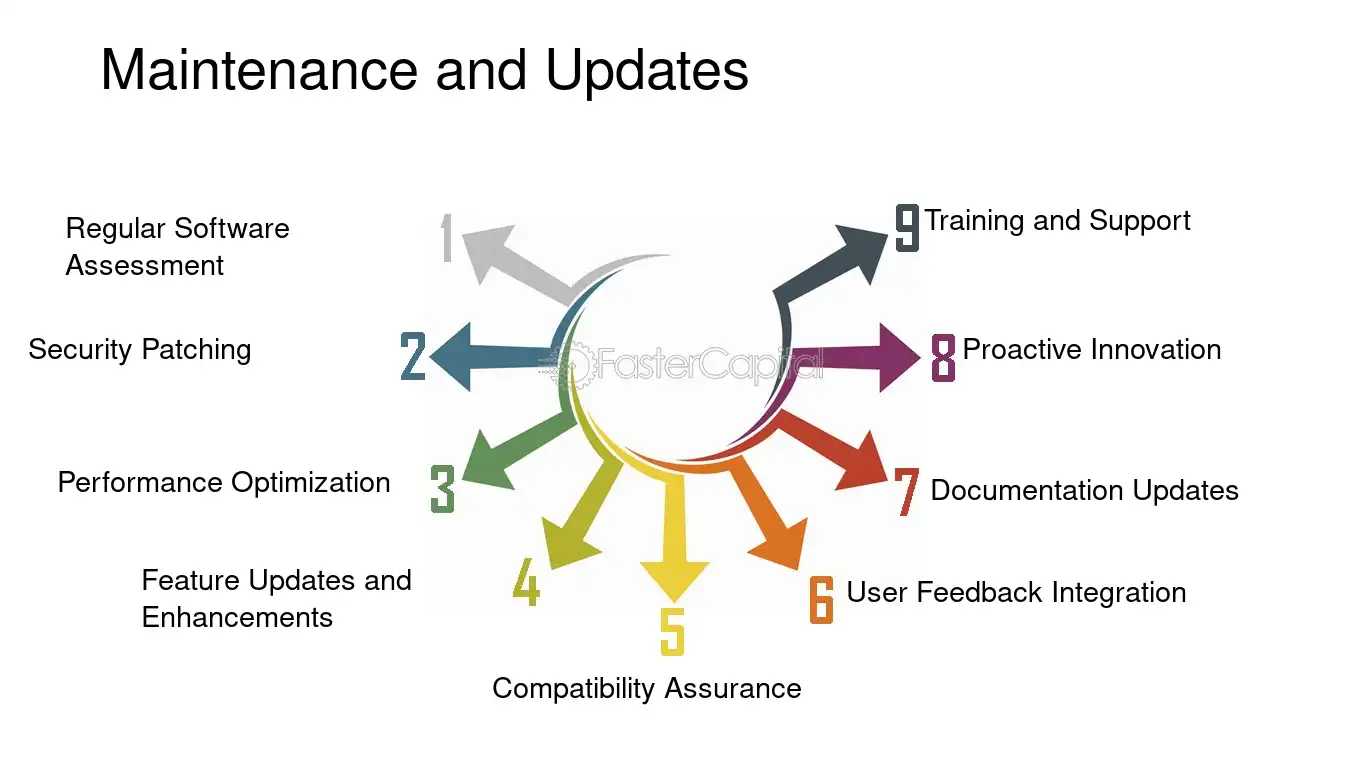
1. Regular Software Assessment: FasterCapital conducts periodic evaluations of your software to ensure it aligns with current business goals and technology standards. For example, if your e-commerce platform needs to integrate a new payment gateway to expand customer options, FasterCapital will assess and implement the necessary updates.
2. Security Patching: With cyber threats constantly evolving, FasterCapital prioritizes the security of your software. Regular security patches are applied to safeguard against vulnerabilities. For instance, if a new security flaw is discovered in a third-party library your application uses, FasterCapital will promptly update the library to the secure version.
3. Performance Optimization: To keep your software running smoothly, FasterCapital monitors performance metrics and fine-tunes the system. This might involve optimizing database queries to reduce load times, as seen when FasterCapital improved the response time of a client's customer service portal.
4. Feature Updates and Enhancements: As market demands shift, FasterCapital helps you stay competitive by adding new features or enhancing existing ones. When a retail client needed to implement AI-based product recommendations, FasterCapital seamlessly integrated this feature, significantly boosting user engagement.
5. Compatibility Assurance: FasterCapital ensures your software remains compatible with all necessary hardware and software platforms. When a new operating system version is released, FasterCapital will test and update your application to maintain compatibility.
6. user Feedback integration: Customer feedback is invaluable, and FasterCapital incorporates it into the software update cycle. If users request a more intuitive user interface, FasterCapital's design team will revamp the UI to enhance user experience.
7. Documentation Updates: With every change made, FasterCapital updates all relevant documentation to reflect the latest state of the software, ensuring that your team and end-users have accurate information at their disposal.
8. Proactive Innovation: FasterCapital doesn't just react to changes; they proactively seek out new technologies and methodologies that can benefit your software. For example, when blockchain technology became relevant for secure transactions, FasterCapital helped a fintech client integrate blockchain to ensure secure and transparent operations.
9. training and support: Post-update, FasterCapital provides comprehensive training and support to ensure your team can fully leverage the new features and improvements. After upgrading a CRM system, FasterCapital conducted workshops to familiarize the sales team with the new tools at their disposal.
Through these steps, FasterCapital ensures that your software remains robust, relevant, and responsive to the ever-changing digital landscape. Their meticulous approach to Maintenance and Updates not only extends the life cycle of your software but also maximizes return on investment by continuously enhancing its value to your business.
Maintenance and Updates - Software development services
6. __Customer_Feedback_and_Iteration__
In the realm of software development, Customer Feedback and Iteration stands as a pivotal step that can significantly influence the trajectory of a project's success. At FasterCapital, we understand that the creation of software is not a one-way street but a dynamic journey that requires continuous engagement with the end-users. It is through this iterative cycle of feedback and refinement that truly robust and user-centric software solutions are forged.
FasterCapital is committed to harnessing the power of customer insights to drive the evolution of your software. Here's how we approach this critical phase:
1. Initial Feedback Collection: Upon the preliminary release of the software, we engage with users to gather their first impressions and immediate feedback. This can involve user surveys, interviews, and usage data analysis to capture a comprehensive view of the user experience.
2. Feedback Analysis: Our team of analysts and developers meticulously reviews all feedback to identify common themes and areas for improvement. For example, if users report difficulty in navigating the software's interface, this becomes a priority for our design team to address.
3. Prioritization of Changes: Not all feedback is created equal. We prioritize modifications based on their potential impact on user satisfaction and business objectives. Critical issues that hinder user experience are addressed with urgency.
4. iterative development: With a prioritized list of enhancements, our developers set to work on implementing changes. This is done in iterative cycles, allowing for incremental improvements and the opportunity to reassess priorities as new feedback comes in.
5. User Testing: Post-implementation, the updated software is subjected to rigorous user testing to ensure that the changes have had the desired effect. This might involve A/B testing where two versions of a feature are compared to determine which performs better.
6. Release and Re-evaluation: Once the updates are polished and tested, they are released to the user base. However, our job doesn't end there. We continuously monitor user responses to ensure that the software remains at the cutting edge of usability and functionality.
7. Long-term feedback loop: FasterCapital establishes a long-term feedback loop with users to ensure that the software adapts over time to changing needs and preferences. This might involve setting up a dedicated feedback channel or regular check-ins with key user groups.
Through this structured approach, FasterCapital ensures that your software is not only built to your specifications but also evolves to meet the real-world needs of its users. For instance, when our client, a leading e-commerce platform, expressed concerns about their checkout process, we implemented a feedback loop that led to a 30% reduction in cart abandonment rates after iterative enhancements based on user suggestions.
In essence, Customer Feedback and Iteration is not just a step in the development process; it is the heartbeat of a living project, keeping it aligned with user expectations and market trends. With FasterCapital, you can rest assured that your software will be nurtured and refined to excellence, with your customers' voices leading the way.