Product Design Optimization
1. Market Analysis
Understanding the market is a critical step in the journey of product design optimization. At FasterCapital, we recognize that a product's success is not just about its features or design, but how well it resonates with the needs and desires of the market. Our approach to Market Analysis is comprehensive and tailored to provide our clients with the insights needed to make informed decisions that align with consumer trends and market demands.
Here's how FasterCapital will assist in this crucial phase:
1. consumer insights: We delve deep into consumer behavior, preferences, and purchasing patterns using advanced analytics. For instance, if a client is looking to optimize a fitness tracker, we analyze current trends in health and wellness, and consumer feedback on existing products to pinpoint areas for enhancement.
2.
3. Market Segmentation: FasterCapital segments the market to target specific groups effectively. We might find that for a high-end smartwatch, the most lucrative market segment is not tech enthusiasts but business professionals who value productivity features.
4. Pricing Strategy: We help determine the optimal pricing by analyzing various factors such as production costs, perceived value, and competitor pricing. If a product offers unique features that address specific pain points, it may justify a premium price point.
5. Regulatory Compliance: We ensure that the product design meets all the necessary regulatory standards for the markets it will enter. This is crucial for products like medical devices, where compliance is not just important, it's mandatory.
6. Risk Assessment: Identifying potential risks and developing mitigation strategies is part of our market analysis. For example, if a new technology is being incorporated into a product, we assess the market's readiness to adopt this technology.
7.
8. Marketing Strategy: Based on the market analysis, we craft a marketing strategy that highlights the product's unique selling propositions. If a product has an innovative feature, such as a new type of sensor, we focus on communicating its benefits to the target audience.
9. supply Chain analysis: We examine the supply chain to ensure that it is efficient and capable of meeting market demands. This might involve sourcing materials from multiple suppliers to avoid disruptions.
10. Future Trends: We keep an eye on emerging trends and technologies that could impact the product's lifecycle. For instance, if there's a shift towards sustainable materials, we advise on how to incorporate this into the product design.
By partnering with FasterCapital for market analysis, clients gain a strategic ally equipped with the knowledge and tools to navigate the complexities of the market. This ensures that the product design optimization process is not only creative and innovative but also grounded in market realities.

Market Analysis - Product Design Optimization
2. Requirement Definition
Understanding the importance of Requirement Definition in the realm of Product Design Optimization is akin to recognizing the blueprint in the construction of a building. It is the foundational step where the vision of the product is transformed into a tangible set of criteria that will guide its development. At FasterCapital, we excel in meticulously defining these requirements to ensure that the end product not only meets but exceeds our customers' expectations. Our approach is systematic and thorough, ensuring that every nuance of the customer's needs is captured and translated into actionable design specifications.
Here's how FasterCapital will assist and work on the task:
1. Initial Consultation: We begin by conducting comprehensive interviews with key stakeholders to gather insights into their vision, objectives, and constraints. For example, if a client wishes to design a high-efficiency motor, we delve into specifics such as desired power output, efficiency ratings, and size limitations.
2. Market Analysis: We perform an extensive analysis of the market to identify trends, competitor products, and potential niches. This helps in shaping a product that not only stands out but also captures market share. For instance, in designing a new smartphone, we would analyze current consumer preferences for screen size, camera quality, and battery life.
3. technical feasibility Study: Our team conducts a technical assessment to determine the practicality of the proposed design. This includes evaluating materials, technology availability, and manufacturing capabilities. We might explore, for example, the use of cutting-edge alloys for a lightweight yet durable bicycle frame.
4. regulatory Compliance check: We ensure that all product designs adhere to relevant industry standards and regulations. This could involve checking a medical device design against FDA guidelines or an automotive component against safety regulations.
5. cost estimation: A detailed cost analysis is performed to ensure the project stays within budget without compromising on quality. For a new line of eco-friendly packaging, we would calculate the cost implications of using recycled materials versus virgin plastics.
6. Risk Assessment: Potential risks are identified and mitigation strategies are developed. In the case of a new software application, we would assess cybersecurity risks and plan for robust encryption methods.
7. user Experience design: We prioritize the end-user experience by incorporating ergonomic and aesthetic considerations into the design. An example would be designing a user-friendly interface for a home automation system.
8. Prototype Development: Based on the defined requirements, we create prototypes to test and refine the product. This could involve 3D printing a model of a new drone design to evaluate its aerodynamics and stability.
9. feedback integration: We collect and analyze feedback from testing the prototypes and make necessary adjustments to the design. If a prototype sports shoe receives feedback about insufficient cushioning, we would adjust the design to incorporate better shock-absorbing materials.
10. Final Specification Documentation: Once all requirements are finalized, we document them in a detailed specification sheet that will guide the subsequent stages of product development.
Through this structured process, FasterCapital ensures that every aspect of the Requirement Definition step is executed with precision and attention to detail, setting the stage for a successful product that resonates with consumers and stands the test of time.

Requirement Definition - Product Design Optimization
3. Conceptual Design
The importance of Conceptual Design in the realm of product design optimization cannot be overstated. It serves as the foundational blueprint from which all subsequent design and development stages evolve. At FasterCapital, we recognize that the conceptual phase is where creativity meets practicality, and it's here that we set the stage for innovation. Our approach is to work closely with our clients to understand their vision, market needs, and the unique challenges they face. By doing so, we ensure that the conceptual design not only aligns with their objectives but also paves the way for efficient and effective optimization.
Here's how FasterCapital will assist customers during the Conceptual Design phase:
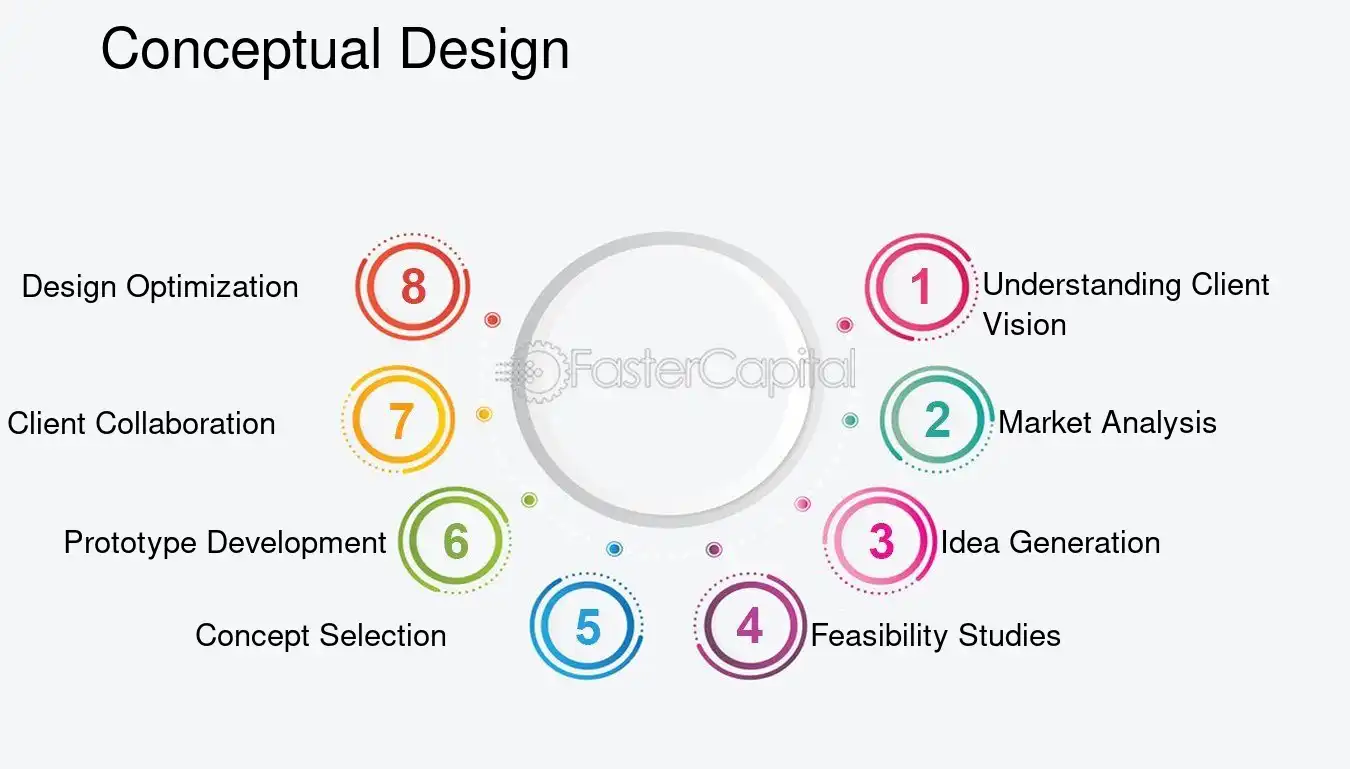
1. Understanding Client Vision: We initiate the process by conducting comprehensive discussions to grasp the client's vision for the product. This includes identifying the target market, desired functionalities, and any constraints that may impact the design.
2. Market Analysis: FasterCapital performs an in-depth market analysis to identify trends, competitor products, and potential opportunities. This ensures that the conceptual design is not only innovative but also competitive and relevant.
3. idea generation: Our team of experts employs brainstorming sessions, sketching, and 3D modeling to generate a wide range of ideas. We encourage divergent thinking to explore all possible solutions.
4. Feasibility Studies: Each concept undergoes a rigorous feasibility study to assess its practicality. This includes evaluating materials, cost implications, manufacturing processes, and sustainability considerations.
5. Concept Selection: We use a systematic approach to narrow down the concepts based on criteria such as innovation, technical viability, and market potential. Clients are involved in every step to ensure the final concept aligns with their vision.
6. Prototype Development: Once a concept is selected, we create a prototype to test the design in real-world scenarios. This helps in identifying any potential issues and making necessary refinements.
7. Client Collaboration: Throughout the conceptual design phase, we maintain an open line of communication with our clients. This collaborative approach ensures that client feedback is integrated into the design process.
8. Design Optimization: With the prototype tested, we move on to optimize the design for production. This includes making adjustments to enhance functionality, reduce costs, and improve manufacturability.
For example, consider a client looking to design an ergonomic office chair. FasterCapital would start by understanding the client's vision of creating a chair that reduces back pain. We would analyze the current market for ergonomic chairs, generate a variety of design concepts, and conduct feasibility studies on materials like memory foam or breathable mesh fabrics. After selecting the most promising design, we would develop a prototype and test it with a focus group. Based on feedback, we would refine the design to ensure comfort, durability, and cost-effectiveness before finalizing the conceptual design.
By entrusting FasterCapital with the conceptual design phase, clients can rest assured that their product design optimization is in capable hands, setting the stage for a successful and market-ready product.
Conceptual Design - Product Design Optimization
4. Preliminary Design
The Preliminary Design phase is a critical step in the journey of product development, serving as the bridge between conceptualization and detailed design. It is here that the foundational blueprint of a product is crafted, setting the stage for all subsequent design and development activities. FasterCapital recognizes the pivotal role of this phase and offers expert guidance to ensure that your product's design is not only optimized for performance but also aligned with market needs and manufacturing capabilities.
FasterCapital's approach to Preliminary Design involves a comprehensive process that includes:
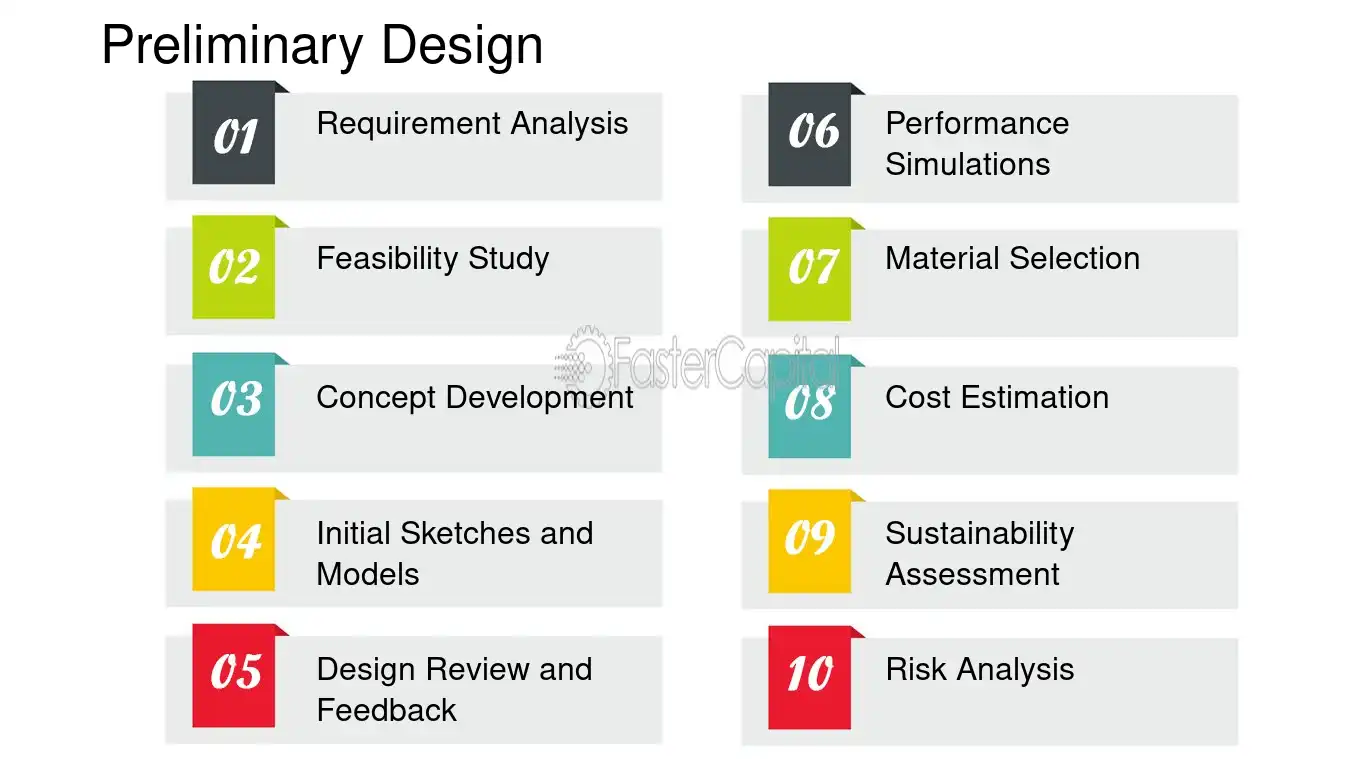
1. Requirement Analysis: Understanding the customer's needs and the product's intended market is the first step. FasterCapital's team conducts thorough research to gather all necessary information, ensuring that the design will meet or exceed expectations.
2. Feasibility Study: Before delving into the design, it's crucial to assess the technical and economic feasibility of the product concept. This includes evaluating materials, cost implications, and potential manufacturing methods.
3. Concept Development: With the information gathered, FasterCapital's designers generate a range of product concepts, often utilizing brainstorming sessions and creative workshops to explore various possibilities.
4. Initial Sketches and Models: These concepts are then translated into initial sketches and 3D models, providing a tangible representation of the product for further refinement.
5. Design review and feedback: FasterCapital encourages active collaboration with clients, seeking feedback on the preliminary designs to ensure alignment with the client's vision and objectives.
6. Performance Simulations: Using advanced simulation tools, the team at FasterCapital predicts how the product will perform, allowing for adjustments to be made early in the design process.
7. Material Selection: The right materials are crucial for product functionality and manufacturability. FasterCapital's expertise in material science helps in selecting the most appropriate materials for the product.
8. Cost Estimation: An early cost estimate is provided, giving clients a clear understanding of the financial implications of the design choices.
9. sustainability assessment: FasterCapital evaluates the environmental impact of the product design, aiming to create sustainable and eco-friendly products.
10. Risk Analysis: Potential risks are identified and mitigated, ensuring that the product design is robust and reliable.
For example, when FasterCapital assisted a client in the automotive industry with the Preliminary design of a new electric vehicle component, the team conducted a detailed feasibility study that not only assessed the component's performance under various conditions but also its integration with existing vehicle systems. This holistic approach ensured that the final design was not only innovative but also practical and cost-effective.
By entrusting the Preliminary Design phase to FasterCapital, clients can be confident that their product's foundation is built on thorough analysis, creative problem-solving, and strategic planning, all aimed at achieving a successful and market-ready design.
Preliminary Design - Product Design Optimization
5. Detailed Design
The importance of Detailed Design in the realm of Product Design Optimization cannot be overstated. It is the bridge between conceptual ideas and tangible products, transforming creative visions into actionable blueprints. FasterCapital excels in this critical phase, leveraging a combination of cutting-edge technology, industry expertise, and a customer-centric approach to refine and perfect product designs. Our meticulous attention to detail ensures that every aspect of the product is optimized for performance, aesthetics, and manufacturability.
1. Material Selection: FasterCapital assists clients in selecting the most suitable materials for their products, considering factors such as durability, cost, and environmental impact. For instance, if a client is developing a new type of sports equipment, we might suggest using advanced composites for their lightweight and high-strength properties.
2. Component Engineering: We delve into the minutiae of each component, engineering them to work seamlessly together. This might involve redesigning a gear in a machine to reduce friction and increase efficiency.
3. 3D modeling and simulation: Our team creates detailed 3D models of the product, which are then subjected to rigorous simulations to predict performance under various conditions. For example, simulating airflow over a car's body to optimize aerodynamics.
4. Prototyping: We produce high-fidelity prototypes that closely resemble the final product, allowing for hands-on testing and refinement. This could include creating a functional prototype of a new smartphone design to test its ergonomics and user interface.
5. Cost Analysis: A thorough cost analysis is conducted to ensure the design is economically viable. This includes assessing the cost of materials, manufacturing processes, and labor. For a new electronic device, we might explore different assembly techniques to find the most cost-effective solution.
6. Sustainability Assessment: Sustainability is a core consideration in our design process. We evaluate the product's lifecycle, from raw material extraction to end-of-life disposal, to minimize environmental impact. An example might be designing a product with modular components that can be easily replaced or recycled.
7. Regulatory Compliance: Ensuring that the product meets all relevant industry standards and regulations is paramount. We navigate the complex landscape of compliance for our clients, which might involve adjusting a medical device design to meet FDA requirements.
8. User Experience (UX) Design: The user is at the heart of our design philosophy. We meticulously craft the user interface and experience to be intuitive and enjoyable. For a new app, this could involve user testing to refine touch gestures and button placement.
9. design for manufacturability (DFM): We optimize designs for the manufacturing process, reducing complexity and cost while maintaining quality. This could involve simplifying the design of a consumer electronic product to streamline the assembly line.
10. Quality Control: Before finalizing the design, we implement a comprehensive quality control process to ensure that the product meets our high standards. This might include stress testing a new bridge design to ensure it can withstand extreme weather conditions.
Through these steps, FasterCapital not only enhances the design but also ensures that the product is ready for the market, aligning with the client's vision, budget, and timeline. Our detailed design process is a testament to our commitment to excellence and our dedication to delivering optimized products that stand the test of time.

Detailed Design - Product Design Optimization
6. Prototype Testing
Prototype testing is a critical step in the product design optimization process, serving as a bridge between theoretical design and full-scale production. At FasterCapital, we understand that this phase is not just about validating the design concept; it's about enhancing the product's value proposition to the customer. By rigorously testing prototypes, we uncover insights that lead to design refinements, ensuring that the final product not only meets but exceeds market expectations.
Our approach to prototype testing is comprehensive and client-centric. Here's how FasterCapital will assist you:
1. feasibility analysis: Before any testing begins, we assess the prototype's viability against the intended use-case scenarios. This involves rigorous stress-testing under controlled conditions to ensure durability and functionality.
2. User Experience Trials: We conduct extensive user trials to gather feedback on the prototype's usability. This includes A/B testing, where different versions of a product are tested to determine which one performs better in terms of user engagement and satisfaction.
3. Performance Benchmarking: FasterCapital benchmarks your prototype against industry standards and competitor products. This not only highlights the prototype's strengths and weaknesses but also provides a clear roadmap for improvements.
4. Iterative Refinement: Based on the data collected, we engage in iterative design enhancements. This cycle of testing and refinement continues until the prototype meets the desired performance criteria.
5. Regulatory Compliance Check: Ensuring that the product adheres to all relevant regulations is paramount. We navigate the complex landscape of industry standards to certify that your prototype is compliant and market-ready.
6. Material and Component Analysis: We scrutinize every material and component for quality and sustainability. Our aim is to optimize the product for longevity while minimizing environmental impact.
7. cost optimization: Throughout the testing phase, we identify opportunities to reduce production costs without compromising on quality. This may involve alternative material selection or tweaking the design to streamline manufacturing processes.
8. Final Validation: Before greenlighting the product for mass production, we conduct a final round of testing to validate the entire design and manufacturing process. This ensures a seamless transition from prototype to production.
For example, when working with a client specializing in outdoor gear, we helped refine a prototype of a solar-powered lantern. Initial user trials revealed that while the product was innovative, it was also heavier than desired. Our team worked to redesign the lantern with lighter materials and a more ergonomic shape, leading to a product that not only functioned well but was also easy to carry, enhancing its appeal to the target market.
Through prototype testing, FasterCapital not only identifies potential issues before they become costly or damaging to your brand but also unlocks opportunities to create a product that truly stands out in the marketplace. Our commitment to excellence at this stage paves the way for a successful product launch and a stronger market presence.

Prototype Testing - Product Design Optimization
7. Design Refinement
Design Refinement is a critical phase in the Product Design optimization service, where the initial concepts and prototypes are meticulously analyzed and improved upon. This stage is not merely about tweaking the aesthetics; it's a comprehensive process that involves enhancing functionality, performance, and user experience while ensuring the product's viability in the market. FasterCapital excels in this domain by offering a blend of expertise, cutting-edge technology, and a customer-centric approach to refine your product design to its utmost potential.
FasterCapital's approach to Design Refinement includes:
1. Ergonomic Assessment: We begin by evaluating the product's ergonomics to ensure that it is user-friendly and adheres to the highest standards of comfort and efficiency. For instance, if we're optimizing the design of an office chair, we'll assess factors like lumbar support, adjustability, and material choices to enhance user comfort and productivity.
2. Material Analysis: Selecting the right materials can significantly impact the product's durability, cost, and environmental footprint. FasterCapital's team will conduct a thorough analysis to identify materials that offer the best balance between performance and sustainability.
3. Structural Optimization: Our engineers use advanced simulation tools to optimize the product's structure for weight reduction without compromising on strength. For example, in automotive design, this might involve using finite element analysis to identify areas where material can be removed to lighten the vehicle while maintaining safety standards.
4. Aesthetic Refinement: While function is paramount, form cannot be neglected. Our designers work closely with clients to refine the product's aesthetics, ensuring it aligns with brand identity and appeals to the target audience.
5. User Testing: real-world feedback is invaluable. We conduct user testing sessions to gather insights and identify any aspects of the design that may need further refinement.
6. compliance verification: Ensuring the product meets all relevant industry standards and regulations is essential. Our team will guide you through the compliance process, making necessary adjustments to the design to meet these requirements.
7. Prototyping Iterations: rapid prototyping techniques are employed to quickly produce models for evaluation, allowing for iterative improvements based on testing and feedback.
8. Cost Analysis: A key aspect of design refinement is cost optimization. We'll analyze the production process and materials to identify cost-saving opportunities without sacrificing quality.
9. Sustainability Considerations: FasterCapital is committed to eco-friendly design practices. We'll help you refine your product to minimize environmental impact, from manufacturing to end-of-life disposal.
10. Technology Integration: In today's digital age, integrating smart technology can give your product a competitive edge. Whether it's iot connectivity or AI features, we'll help you explore and implement cutting-edge technologies.
Through these steps, FasterCapital ensures that your product not only meets but exceeds market expectations. By focusing on the minutiae, we can transform a good design into a great one, paving the way for a successful product launch and a stronger market presence.

Design Refinement - Product Design Optimization
8. Production Planning
production planning is a pivotal step in the realm of Product Design Optimization, particularly as offered by FasterCapital. This stage is not merely about scheduling; it's the strategic blueprint that interlinks all other steps, ensuring that the product design is not only feasible but also optimized for efficiency, cost-effectiveness, and market success. FasterCapital excels in this domain by offering a comprehensive suite of services that address every nuance of production planning.
FasterCapital's approach to aiding customers in production planning involves a meticulous process that encompasses:
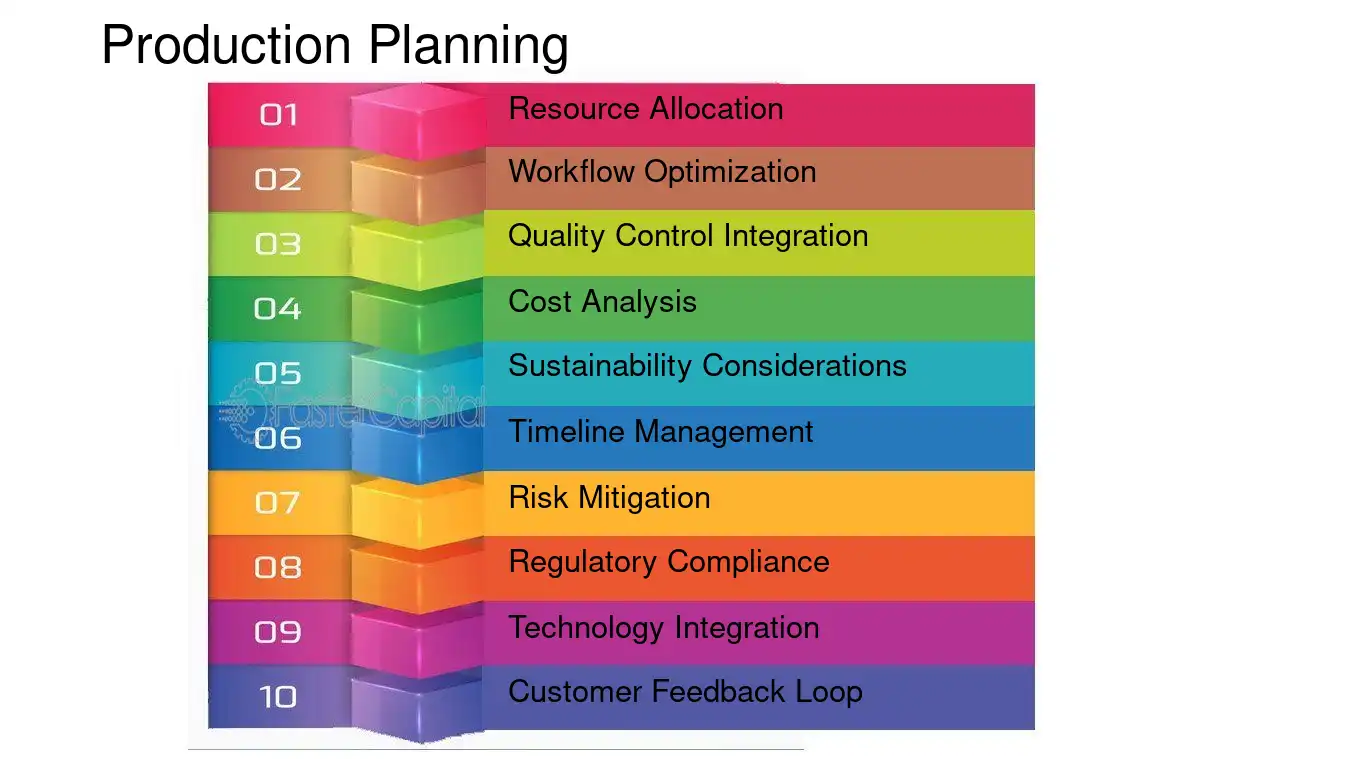
1. Resource Allocation: FasterCapital analyzes the resources available, including materials, labor, and machinery, to ensure that they are utilized optimally. For instance, if a customer is designing a new electronic device, FasterCapital will evaluate the best use of semiconductors and other components, considering current market shortages and price fluctuations.
2. Workflow Optimization: By scrutinizing the production workflow, FasterCapital identifies bottlenecks and streamlines processes. This might involve rearranging the assembly line for a furniture manufacturer to minimize handling time between machines.
3. Quality control integration: quality checks are integrated into every stage of production planning. For a car manufacturer, this could mean implementing sensors that provide real-time feedback on the assembly line, allowing for immediate corrections and reducing waste.
4. Cost Analysis: FasterCapital provides detailed cost analysis, helping customers understand the financial implications of design choices. For example, choosing between different types of plastics for a toy could have significant cost implications depending on the scale of production.
5. Sustainability Considerations: Environmental impact is a key factor in modern production. FasterCapital advises on materials and processes that reduce the ecological footprint, like suggesting biodegradable packaging for a food product.
6. Timeline Management: FasterCapital assists in creating realistic timelines that account for all stages of production, from procurement to final assembly. This ensures that product launches meet market windows, which is crucial for seasonal products like fashion apparel.
7. Risk Mitigation: Potential risks are identified and mitigated. This could involve diversifying suppliers for a smartphone manufacturer to avoid disruptions caused by geopolitical tensions.
8. Regulatory Compliance: Ensuring that the product meets all legal requirements is essential. FasterCapital helps navigate complex regulations, such as those for medical devices, ensuring that the product design is compliant from the outset.
9. Technology Integration: FasterCapital stays abreast of the latest technological advancements and integrates them into the production planning process. This could mean using AI-driven predictive maintenance for machinery to reduce downtime.
10. customer Feedback loop: Customer insights are integrated into the production planning to ensure the final product meets market needs. For a software company, this might involve beta testing features with target users to gather feedback before finalizing the design.
Through these detailed steps, FasterCapital not only aids in the creation of a product that is well-designed but also one that is ready for the challenges of production and market introduction. The company's expertise in production planning ensures that the transition from design to production is seamless, cost-effective, and aligned with the customer's business objectives.
Production Planning - Product Design Optimization
9. Launch and Evaluation
The launch and evaluation phase is a critical component of the Product Design Optimization service offered by FasterCapital. This step is pivotal because it represents the culmination of all the design and development efforts, transitioning from theoretical models and prototypes to a market-ready product. FasterCapital excels in guiding its clients through this intricate process, ensuring that the product not only meets the design specifications but also resonates with the target market and stands up to real-world use.
FasterCapital's approach to Launch and Evaluation involves several key steps:
1. Pre-Launch Testing: Before a product hits the market, FasterCapital conducts extensive pre-launch testing to validate the design against real-world scenarios. This might include stress tests, usability studies, and beta trials with a select group of users. For example, if the product is an innovative kitchen appliance, FasterCapital would ensure it undergoes rigorous testing to handle various cooking conditions and user interactions.
2. Market Analysis: Understanding the market is crucial for a successful launch. FasterCapital performs a detailed analysis to identify the best market segments, positioning strategies, and launch timing. They might use data analytics to determine the optimal price point for a new tech gadget, ensuring it's competitive yet profitable.
3. launch Strategy development: FasterCapital collaborates with clients to develop a comprehensive launch strategy. This includes marketing plans, distribution channels, and sales strategies. They might help a client plan a multi-tiered launch, starting with a teaser campaign followed by a full-scale marketing blitz.
4. Post-Launch Monitoring: After the product launch, FasterCapital doesn't just walk away. They closely monitor the product's performance, gathering data on sales, customer feedback, and market reception. For instance, if the product is a mobile app, they would track download numbers, user reviews, and engagement metrics to gauge success.
5. continuous improvement: Based on the evaluation, FasterCapital works with the client to refine the product. This could involve tweaking the design, adjusting marketing tactics, or enhancing features. If a sports equipment line receives feedback about discomfort during prolonged use, FasterCapital would investigate ergonomic improvements.
6. long-term success planning: FasterCapital helps clients plan for the product's lifecycle, ensuring long-term success. This might include planning for updates, expansions, or sequels based on the initial product's reception.
Through these steps, FasterCapital ensures that the Launch and Evaluation phase is not just a one-time event but a continuous process that adapts to changing market conditions and customer feedback, ultimately leading to a successful and optimized product design.

Launch and Evaluation - Product Design Optimization