Search
Search
The search "hotels" yielded
30 articles

Interpretive sign at Badwater Basin: flinging salt on a geopolitical wound.

Even in some of the most remote and austere nooks of the nation, it’s possible to find overt demonstrations on hot-button global issues.  And why not?  All it takes is one person with a megaphone, a can of spray paint, or whatever the instrument of choice may be to impart an inflammatory message.  Nonetheless, I

Lodging crisis?  No problem!  Let’s cut a hotel out of a cornfield.

Rarely a day goes by without a collective crie de coeur regarding the housing affordability crisis.  Less visible, perhaps in some respects because it is in some respects a niche subset, is the lodging crisis—a shortage of temporary, leased, overnight accommodations with varying amenities attached to the lodging purchase.  This shortfall, no doubt, in part

Dunbar, West Virginia: the least effective pedestrianized downtown ever?

I hate to title a blog article with superlatives, because they’re so often redolent of clickbait.  Everyone knows an example: “the biggest box office flop”, “the most dangerous bridge”, “the ugliest dog”, “the heaviest married couple”.  Guinness Breweries managed to build a spinoff empire out of its initial 1955 Book of Records, which according to

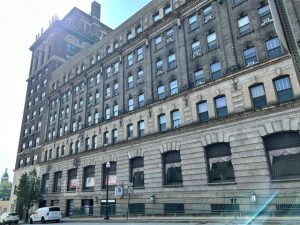
Back entrance: why some big buildings beautify their butts.

Many municipalities in northern Appalachia—which I consider to include Western Pennsylvania, much of Upstate New York, Western Maryland, Western Virginia, Eastern Kentucky, and pretty much all of West Virginia—look bigger than they are.  If one drives past them on a freeway, the density of buildings that form a skyline makes them look quite large, but,

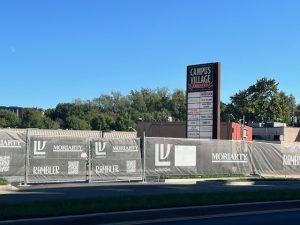
Baltimore Avenue in College Park, MD: from strip malls to super-talls.

I don’t have a reason to visit College Park, Maryland all that often, even though it’s only a handful of miles away from my current home and hosts a major academic institution.  But when I do visit, the small city reminds me what an outlier it is: a freestanding municipality encompassing a major flagship university,

A downtown without clear pedestrian advocacy: the Fort Worth example.

Many years ago—before I even had conceived of this blog—I was an intern for a university semester at WalkBoston, which was (and remains) the signature pedestrian advocacy organization for Bean Town.  Founded in 1990, it was the first of its kind in the country.  Since then (and since my internship), WalkBoston’s scope and ambitions have

Glenwood Springs: so much to do that they could only fit some of it under a bridge. (MONTAGE)

Glenwood Springs, Colorado is a fun town.  That’s its brand.  It aspires to be one of America’s most recreationally-minded small municipalities—really more of a tiny city—and it routinely makes the top 10 lists among various outdoor-centric periodicals, as I covered once before.  Sometimes it reaches a bit further, placing on lists of all-around best and

Back entrance: why some big buildings beautify their butts.

Many municipalities in northern Appalachia—which I consider to include Western Pennsylvania, much of Upstate New York, Western Maryland, Western Virginia, Eastern Kentucky, and pretty much all of West Virginia—look bigger than they are.