And Then She Fell, by Alicia Elliott

And Then She Fell is exactly what you would hope for an expect in a first novel from the author of the unforgettable memoir A Mind Spread Out on the Ground. The main character, Alice, is a young Mohawk woman married to a white university prof, Steve. From a background with some significant poverty and loss — although also one with a lot of family and community love and connection — Alice knows she is supposed to feel she has “arrived.” She’s married to a man who loves her, has financial security, is launching a career as a writer, and has just had her first child. But she’s also mired in post-partum depression that leaves her unable to feel she can love her baby, and is grieving the recent death of her mother. She feels out of place among her white suburban neighbours and among her husband’s university colleagues, unsure where she belongs.

Thus far, a pretty straightforward piece of contemporary realistic fiction. But when Alice’s inner doubts and fears begin to tip over into paranoia and hallucinations, the story shifts into something closer to the border between magic realism and horror. Like Alice herself, the reader begins questioning how much of what she sees, hears, thinks and feels is “real” and how much is delusion. Even when it’s clear that she’s having paranoid delusions, we’re reminded that the racist microaggressions that triggered her paranoia — like a neighbour accusing Alice of breaking into her own house when she locks herself out, on the assumption that an Indigenous woman can’t possibly live in their neighbourhood — are very much a part of real life.

By the time we get to the end of the book, we’re far from the realism that began the story, in an ending that depends on Alice’s time-travelling descendent going back in time to help Alice resolve the problems and choices she faces. I’ve seen this book called “surreal” and “haunting” and I would agree with both those adjectives. It’s powerful, arresting, and probably different from anything else you’ve read this year. Highly recommended.

Spare, by Prince Harry

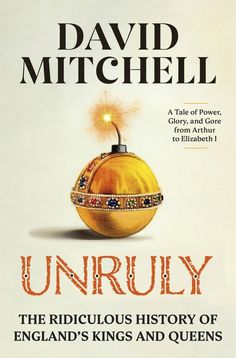
It certainly was interesting to go from my last audiobook — David Mitchell’s Unruly, a comic look at the lives and (mostly) failures of early English monarchs — to the next thing I listened to. Pretty much everyone knows that Prince Harry’s memoir is a controversial look into some dusty corners of the current English royal family, through the eyes of a member of The Firm who consciously chose to take a step back from active involvement in the business of being royal (though he is still “Prince Harry,” of course, and shows up for family events such as his grandmother’s funeral and his father’s coronation).

I feel about the royals pretty much the way I feel about baseball: ie, I understand that people care about it, though I don’t personally, and I don’t think my life would be materially different in any way if it ceased to exist. If forced at gunpoint to declare a preference in major league baseball, I’d probably say I’d rather the Blue Jays won the pennant than any other team, as they are based in Canada (though I did somewhat cheer for the Chicago Cubs there a few years ago, because I also always love a historic underdog). Most of the time, though, the existence of baseball, like that of the monarchy, has no impact on my own existence.

However, if forced to choose a side in the current Wars of the House of Windsor, I would (not even at gunpoint) say I’m Team Harry and Meghan — not uncritical supporters of theirs, by any means, but generally likely to agree that they’ve been hard done by at the hands of a ridiculous institution, some unpleasant family members, and the truly loathsome British press and paparazzi (who are, Prince Harry makes it quite clear, the real villains of his story).

I don’t know if there’s any reader so trusting and uncritical that they would read a memoir by a member of a deeply divided family and assume that everything they’re reading is objectively true. Clearly, this is Harry’s story, and he tells it the way he remembers and experienced it. For every confrontation or misunderstanding with his father, now-King Charles, or his brother William, Prince of Wales, I always thought, “Well, I’m sure Charles or William would tell quite a different version of that encounter!”

But overall, Harry’s story is compelling and believable (and reasonably well-written, for a celeb memoir — clearly this is due to the hard work of his ghostwriter, as Harry makes it quite clear throughout that reading books, never mind writing them, is not exactly his thing). I found it easy to empathize with a boy who suffered the tragic loss of his mother at age 12 and never really came to terms with it, while growing up in a family and an environment that was not really conducive to ever learning to cope with grief in a healthy way.

Of course, this is also the story of someone with a staggering amount of privilege — something Harry seems to grasp faintly, although I don’t think he ever displays any real understanding of how huge the gap between his life and the lives of most non-wealthy people is. After all, lots of people struggle with losing a parent, having the remaining parent be emotionally unavailable, not liking their step-parent, being considered dumb in school, having a relationship of mingled closeness and rivalry with their sibling, wanting but being unable to find true love as a young adult, and struggling to establish themselves in a meaningful career. (Fewer people struggle with all those things plus a frost-bitten penis, which we learn way too much about after Harry joins a polar expedition, but hey, we all have our little physical problems, living in human bodies as we do). Harry doesn’t seem to spend much time (at least in the book; I can’t speak for what goes on in his head) reflecting on the fact that most ordinary people who face these challenges have to deal with them while also working forty or more hours a week to try to afford exotic things like groceries, or rent, or going to the dentist. Harry writes about young-adult milestones like his career in the military and going grocery-shopping, but doesn’t spend any page time on the fact that for him, there’s no causal connection between these two things, and that puts him in a very rarified stratum of society.

All that being said — yes, he could be more aware of how much privilege his family’s wealth and position give him — but I’m not in the category of those who think that his problems don’t matter because he’s rich and royal. Losing your mom when you’re twelve sucks just as much if your mom is the most beautiful and idolized woman in the world, as it does if she’s an anonymous office clerk in an insurance company. There are a lot of things that wealth and privilege can shield you from, and then there are things — like loss, and grief, and loneliness — that hit people in the same way no matter what their income or family name.

Arguably, there’s one aspect of life that is worse for the royal family than for anyone else, and that’s the constant, often malicious, attention of The Press. This is tough for celebrities generally – Taylor Swift, I understand, has difficulty meeting up with a friend for lunch without the restaurant getting mobbed by photographers — but relatively few people in any society are subjected to the relentless glare of publicity as much as the key members of the British royal family are. That press coverage is often hostile, inaccurate, and involves such dogged invasions of privacy that it’s absolutely credible to say that Harry’s mother Diana was hounded to death by photographers. While there are lot of everyday troubles that Harry obviously can’t identify with, like choosing whether to put gas in your car or pay the electric bill for your apartment, I’m willing to concede that he also does have some troubles the rest of us can’t relate to.

While I don’t think Harry’s version of every royal squabble is the only accurate version — like every family, much is open to interpretation — I do think he is a man trying to do the right thing, who genuinely adores his wife and kids, and probably did the right thing by walking as far away as is possible from the weird family dynamics and the hostile press coverage associated with the House of Windsor. This wasn’t the best book or even the best memoir I’ve read this year by any means, but I am glad I listened to it.

Unruly, by David Mitchell

If there were ever a book that was lab-grown to meet all my requirements for a good non-fiction book, Unruly by David Mitchell is that book. One of my favourite English comedians, famous for his rants on a wide variety of topics, dives into my favourite subject — history with a review of English monarchs beginning well before William the Conqueror (he goes back to the Saxon kings) and ending with Elizabeth I. There’s plenty of actual history, interwoven with comedy, digressions and tangents, and of course a good few rants as well as some genuine insights into the nature of monarchy, leadership, and nationhood. And, bonus — I got the audiobook so I could have David Mitchell read it to me, which, if you like David Mitchell, is definitely the way to go.

I genuinely LOL’d several times while reading this, as well as learning a few things about some kings I didn’t know much about, particularly the early ones. I also enjoyed Mitchell’s rants and reflections. He is neither pro- nor anti-monarchy, seeing both the strengths and weaknesses of the institution, but the point of the book is not really to argue for or against the idea of having kings and queens — it’s to tell their stories with a strong bias towards the absurdity of their lives and the things that happened to them.

I was shocked to get near the end of the book and realize he was only covering English monarchs up to the end of the Tudor period. His reasoning for this is that after the time of Elizabeth I, the role of the monarch began the changes that would inevitably lead to the entirely ceremonial role that English monarchs play today, thus leading to lives that are perhaps less interesting to focus on, since their actions have far less impact on history. I can see the sense of this argument (though to be fair, if that’s the criteria I think he should have gone at least as far as Charles I before stopping, since his execution marks the most obvious break between absolute and constitutional monarchy, even if that transition was somewhat of a gradual process that began earlier and ended much later).

Despite understanding this reasoning, I wanted the book to go on and on and on making me laugh out loud, so I hope David Mitchell, against all odds, writes Unruly, Part 2. I want his take on the English Civil War and Restoration, and on the German Georges, and the Prince Regent, and Edward VIII’s abdication — the whole bit. Bring it on!

A Darker Shade of Magic, by V.E. Schwab

This was an engaging YA fantasy set partly in late Victorian (or possibly Edwardian) London, and partly in two parallel Londons, each ruled by different kinds of magic. The main character, Kell, comes from “Red London,” the more stable of the two magical kingdoms, but is one of the few people with the ability to move between worlds. In “Grey London” (that is, the London in our world) he meets a young thief called Lila Bard, and their fates become intertwined as they try to head off a magical disaster that has its origin in the violent and unstable “White London” but threatens all the realms.

I found this enjoyable and engaging while i was reading it. It’s the first of a trilogy, and while I wasn’t so compelled that I had to immediately pick up the next book to find out what happens, I very likely will go ahead and read the whole series.

The House of Eve, by Sadeqa Johnson

Much like Johnson’s first novel, Yellow Wife, The House of Eve (one of whose characters turns out to be descended from Pheby in Yellow Wife explores aspects of Black women’s history in the US that may not be widely known. This novel starts in 1948 with two young women, fifteen-year-old Ruby, a bright, ambitious high school student from a poor family in Philadephia, and Eleanor, a college sophomore pursuing her dreams at Howard University. The two girls have ambition and intelligence in common, but have never met, though their lives are destined to intersect in a way neither of them could predict.

While following the stories of both these young women I learned about classism and colorism within Black communities in this period, about the attitudes towards interracial relationships (of course, I always knew they disapproved of and for a long time illegal, but the attitude that a Black mother might have towards her daughter dating a white boy was explored here in ways I hadn’t thought of), and about the options for women who got pregnant of out wedlock in that era. As with Johnson’s last book, I found this an engaging and enlightening glimpse into a time, a place, and a community.

The Temple of Fortuna, by Elodie Harper

Most of the rave reviews I have for Elodie Harper’s Wolf Den trilogy have been covered in my posts on the first two books, The Wolf Den and The House With the Golden Door. This series about the lives of slaves and sex workers in ancient Pompeii is absolutely brilliant and engrossing; Amara was a character I could cheer for from the very first page of the series to the last; the whole series managed that tricky historical-fiction balance of making the past seem at once fresh and immediate and relatable, while at the same time starkly different from our time, with values so different we struggle to understand them. I’ve been waiting eagerly to see how the whole story would be resolved in this third volume, and absolutely nothing about it disappointed me – the ending was perfect.

With all that said, and the points I’ve made in the last two posts on these books, I wanted to talk a bit about one aspect of this novel that particularly interested me: the obliteration of Pompeii when Vesuvius erupted, and how that’s handled narratively in this novel.

If you pick up a novel set, as The Wolf Den is, in the 70s CE in Pompeii, and you know it’s the first of a series, you can be pretty confident from page one that sometime before the end of the series, likely near the end of Book 3, that volcano is going to erupt. History itself provides the foreshadowing, and there’s not a huge amount of extra foreshadowing added by the author in the first two books: occasional earth tremors, which the citizens of Pompeii dismiss as “just how things are around here.” These become more frequent and troubling when Amara returns to Pompeii from Rome in book 3, and readers know from the date that the volcano is about to blow. But the characters don’t know that, and Harper does a great job of keeping the foreshadowing light, illustrating how huge, world-changing events arrive with very little notice, and life often continues as normal right up to the exact second when it can’t anymore.

The eruption could be seen as a kind of deus ex machina in the novel: certain problems that have plagued Amara since The Wolf Den are going to become much less serious, if not eliminated altogether as a threat, once the entire city is buried under a layer of ash. Instead, readers’ concern shifts to whether Amara herself can survive and escape the disaster, and which, if any, of the people she loves might survive with her. The scenes in the immediate aftermath of the eruption brilliantly capture not only the physical experience but the desperation of suddenly becoming refugees, the pain of losing people, and the hope of going home to rebuild — which is dashed when the survivors realize what has actually happened to the city. There’s also a fascinating glimpse into the year after Vesuvius, and how the survivors who did manage to escape Pompeii built new lives for themselves in other places. A disaster that wipes out everything you own and have worked to build can also, sometimes, wipe out your past as well — and that might be just the ending your story needs.

All Adults Here, by Emma Straub

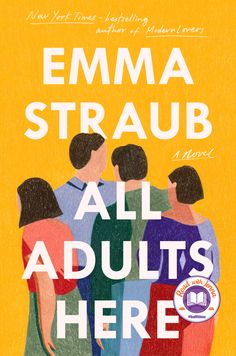
I saw a friend post on Instagram that she’d really loved Emma Straub’s This Time Tomorrow, but hadn’t liked this one as much. My experience was the opposite. Despite the high-concept time-travel element in This Time Tomorrow, which is the sort of thing I normally love, that book was “just OK” for me. All Adults Here, which has no high-concept gimmicks but is a straightforward story of a multigenerational family dealing with changes in their lives from the perspective of several different characters, absolutely grabbed my attention and held it till the last word.

The family in question is Astrid’s family; she is a woman in her 60s whose husband died young and whose three children are all grown. She feels she’s done a pretty good job of her life, of marriage and child-rearing, but when she sees an acquaintance about her own age killed in a traffic accident right in front of her, Astrid understandably starts re-thinking her life and wondering whether she has lived it to the fullest. This results in her making a few significant changes — at a time when her own adult children, and one teenage grandchild, are also going through important choices and changes.

And that’s it, really, plotwise. The traffic accident is the most dramatic thing that happens in the book, and it’s in the first few pages and happens to a character who’s not directly connected to the book’s main cast. The rest of the book is just the stuff of life — relationships starting and ending, a teenager getting into trouble at school, an affair, a pregnancy, a few long-held secrets that tumble out in awkward confrontations. It’s just life, and yet I found it all so rich and interesting. The characters are complex and well-drawn, none wholly good or bad, so that they felt to me like real people.

I’m not normally one to be underlining or annotating books or making little memes out of book quotes, but there were several times in this novel when I just had to stop and note a sentence because it felt so true and insightful — maybe not universal, but certainly something that resonated with me. Here are a few of them:

“So much of becoming an adult was distancing yourself from your childhood experiences and pretending they didn’t matter, then growing to realize they were all that mattered and composed 90% of your entire being.”

“People without children thought that having a newborn was the hardest part of parenthood, that upside-down, day-is-night twilight zone of feedings and toothless wails. But parents knew better. Parents knew that the hardest part of parenthood was figuring out how to do the right thing twenty-four hours a day, forever, and surviving all the times you failed.’

“All love settled. Not settling for something less than you deserved, just settled down, the way breath settles in a sleeping body, not doing more than necessary.”

“Astrid knew that she had failed, maybe not in the ways that she thought she had, but in so many ways she had never even noticed. This was the job of a parent: to f*ck up, over and over again. This was the job of a child: to grow up anyway.”

This last one hit particularly hard: there’s a story from the past that Astrid is carrying throughout the novel, a moment when she failed one of her children and she feels her failure has both thwarted that child’s life, and damaged their relationship. When she finally gets up the courage to speak about it, she discovers that her adult child has indeed been carrying years of hurt and resentment — over a totally different incident when Astrid said the wrong thing. Both parent and child barely remember the incident that was so weighty to the other. As a parent of adult kids I often think about the many ways I’ve messed up, failed, and hurt them — and of course am reminded, as I was by this scene in the book, that sometimes when I’ve done the most harm, I haven’t even realized the significance. And likewise, that the things I carry a lot of guilt over might not even have been that important. A powerful reminder that we all see the world only through our own eyes, and can only guess at what other people might be thinking and feeling.

I really loved this book.

Strong Female Character, by Fern Brady

Having seen (and loved) Scottish comedian Fern Brady on Taskmaster, and having read some references to her talking about being autistic and how her autism diagnosis has affected her life and her career, I knew that her memoir, Strong Female Character would not just be a piece of lighthearted fluff full of comedy-business gossip. In fact, it’s not that at all, and the fact that Fern is a brilliant comedian is almost incidental (though the book is very darkly funny in places). Really, this is a searing, sometimes painful look at what it’s like to go through childhood, adolescence, and young adulthood knowing that something is wrong with you, but being unable to understand what it is and consequently being misunderstood and mistreated by everyone, including family. Fern doesn’t get diagnosed with autism until she’s an adult already working in the entertainment industry, and she’s brutally honest about the difficulties of school, family life, the mental-health-care system, university, and work (including sex work; she put herself through university partly by working as a stripper) with undiagnosed autism.

Nor is there any sudden revelation and happy ending when she is diagnosed: the same frankness that has characterized the whole story continues post-diagnosis, when Fern finally has a label for her differences and some tools to deal with them, but still has to cope with a world and an industry that is in no way set up to make reasonable accommodations for autistic people. If you’re autistic or suspect you may be, I think you would find this interesting and probably relatable; if, like me, you’re not, it may help you to better understand some of the autistic people in your life and what accommodations they might require. Also — and this is a trivial point in such a serious book, but it was part of my reading experience — if you like Scots accents, do yourself a favour and listen to the author reading the book on audio. I highly recommend this book!

The Last Devil to Die, by Richard Osman

Once again, the latest volume in the Thursday Murder Club series provides everything we’ve come to expect from the earlier volumes: sassy senior citizens taking advantage of the fact that nobody takes them seriously as crime-solvers, a nicely twisty plot which carries on some of the story threads from the previous novels.

Along with the sly humour of this series, there’s always been a little bittersweetness to the main characters’ stories. We know that Elizabeth, Joyce, Ron and Ibrahim are smart, capable people who shouldn’t be written off just because they live in a retirement community, but the awareness that they are getting older, accepting physical limitations and the fact that they don’t have endless years stretching ahead of them, is always in the background of the stories. Here it’s much more at the forefront, as a heart-rending plot twist involving a secondary character ties in neatly to the mystery plot, but also reminds us that it’s not just the devils who die … sometimes the good guys do too.

Doppelganger, by Naomi Klein

I’ll admit it; I’m one of those people who used to get Naomi Klein and Naomi Wolf mixed up. Possibly because I’d never actually read a book by either of them. Klein’s The Shock Doctrine and No Logo, and Wolf’s The Beauty Myth, were all books that existed in the same vague space in my brain: books about important things by smart women, that I probably should get around to reading someday. The fact that both women were named Naomi made it even harder to differentiate.

And yes, I’ll further admit to the fact that once the confusion between the two became ultra-confusing — when Naomi Wolf began to lean hard into anti-vax conspiracy theories and covid denailism — I, like many other Extremely Online folks, began making use of the handy little memory device invented by a Twitter user:

(Interesting to note that this was written before Covid; Naomi Wolf’s views had apparently become problematic for Naomi Klein and her fans even then, but Wolf’s slide into conspiracy theories and embrace of right-wing views did not enter most people’s consciousness until 2020).

Rather than trying to ignore or avoid confusions between herself and Wolf, as she did for many years, Naomi Klein has tackled the confusion head-on in her new book Doppelganger. She uses the confusion between herself and Wolf, the initial similarity and later sharp divergence of their personal “brands,” as a jumping-off place to explore right-wing conspiracy thinking and the way in which it often mirrors the shared left-wing views of Klein and most of her readers.

As someone who’s much more aligned with Klein than Wolf (now that I know the difference between them), I found a lot of thought-provoking ideas in this book. There’s a chapter near the end about Israel and Palestine, and I was listening to that part of the audiobook just as the current conflict flared up. It may seem a long way from Klein vs Wolf to Israel vs Palestine, but her exploration of the way “mirroring” or “doppelganger” affects show up in the Israel/Palestine conflict was very interesting, especially from Klein’s perspective as a secular Jewish leftist. This book is well worth reading, or listening to as I did.