Everyone on This Train is a Suspect continues the main character and premise of Stevenson’s last novel, Everyone in My Family Has Killed Someone. In that book, the hapless Ernest Cunningham, who has never written a mystery novel but has written a series of how-to books instructing other writers on how to construct mysteries, finds himself in the midst of a series of gruesome deaths during a family reunion in a remote ski resort. Having lived through and solved that mystery and written about it in a best-selling book, Ernest is now invited to an exclusive event for mystery writers and fans, held aboard a luxury train crossing Australia from north to south. You won’t be surprised to learn that one of the writers is murdered, or that Ernest tries to solve the mystery and make it the basis for his next book, nor that he repeatedly breaks the fourth wall and discusses with the reader how these (allegedly) real-life events are following the rules of good mystery writing. You won’t be surprised by any of that, but if you liked the first book, you’ll enjoy this journey too.
This is … kind of a mystery novel, but also kind of not. There’s no “whodunnit?” here — if anything, it’s a reverse mystery (I’m not sure if that’s a category, but I can think of a few books that fall into this category). We know all along who’s committing the murder(s), and our sympathy is entirely with the murderer rather than the victim — the suspense comes from finding out if they’ll get away with it.
The premise is unique. Somewhere (“where” exactly is a closely guarded secret), in the 1950s, an extremely private school exists – a school whose mandate is to train students in the art of committing perfect, untraceable murders. The caveat is that the murder victims must be people deserving of death — people that not just the would-be killer, but the world as a whole, would be better off without.
The three main characters — an unsuccessful whistleblower who has discovered a fatal flaw in the airplane design his company is working on, a quiet and well-meaning nurse who is being blackmailed by another nurse, and a Hollywood star who’s being forced into inferior roles because she won’t sleep with the studio head — would all like to kill their superiors. And all of them, kin one way or another, get whisked away to the top-secret McMaster institute to perfect their skills. But when they return to their everyday lives, can they actually go through with the deeds?
I found the first part of this book — the actual studying of murder — a bit slow, but the pace and my interest picked up a lot in the second half when the actual murders were being committed. The book is quite light and obviously doesn’t take murder too seriously, but I was intrigued by how it plays with and exaggerates some of the classic mystery-novel tropes — the unlikeable murder victim that nobody really mourns, and the unbelievably clever and complicated murder plot. For a book about getting away with murder, this was quite fun.
This collection of personal essays by Canadian child actor/grown-up movie director Sarah Polley (to squash her very impressive resume down to the two things she’s likely best known for), is a powerful and thought-provoking read. It’s sort of a memoir, but rather than following a typical “this is the narrative of my life” structure, the book is made up of six separate essays, each about traumatic events in Polley’s life that impacted her both physically and mentally. From scoliosis and stage fright as a child star, to sexual assault and her decision not to go public as one of the victims in a high-profile case, to the aftermath of concussion (and the unorthodox treatment regimen from which the book gets its title), each of these pieces is thoughtful and insightful.
I recorded a podcast recently where a guest and I took a deep dive into discussing this book; I’ll link that here when it’s posted, and until then, I won’t say much more — except that this is far from a typical “celebrity memoir” and well worth reading.
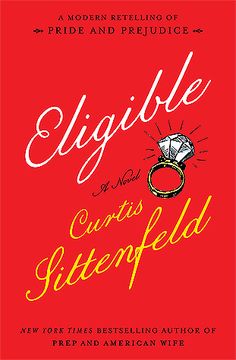
I enjoyed the previous book I read by Curtis Sittenfeld, Romantic Comedy, and I generally enjoy a good alternative take on Jane Austen, so picking up Eligible was an easy choice. In this modern re-telling, the five Bennet sisters are considerably older than they are in Pride and Prejudice, ranging in age from mid-20s to nearly 40. That does make it more noteworthy, even in 21st century American culture, that none of them has married, had kids, or is in any kind of long-term relationship. Only Liz and Jane have flown the next to live on their own, but they return home when Mr. Bennet has a heart attack, to help their hapless mother and sisters through his recovery.
From there, some things unspool as you would expect — sweet Jane meets rich and handsome Chip Bingley; snarky Liz meets aloof and disdainful (and rich) Fitzwilliam Darcy, and various hijinks ensue. Some things are different — there’s a Wickham-esque character, for sure, but he doesn’t play the same role in Lydia’s story — in fact, the crisis that in Pride and Prejudice is triggered by Lydia’s running away with Wickham, plays out very differently here. And, of course, the fact that much of the story of the Bennet family intersects with a dating-reality show called Eligible gives it a distinctly modern flair.
Although I didn’t think this was a perfect book by any means, I did enjoy reading it. One small content warning: there is a transgender character, and the way even our sympathetic heroine Liz speaks and thinks about that character involves using terms and asking questions that would be considered offensive by most trans people. However, the book is set in 2013 and was released in 2016, and I think it’s pretty accurate to how even well-meaning cis people thought and spoke about trans people 10 years ago — and Liz does make an effort to educate herself in the book and recognizes that some of her words were hurtful and not the right terms to use. Still, it’s a bit jarring to pick up and read today and realize how much attitudes have changed in a decade. Apart from that one caveat, this is a fun, light romp through a modern re-imagining of Austen.
Natalie Haynes’s A Thousand Ships was a favourite book of mine back in 2021, and I couldn’t wait to read her latest woman-centred take on Greek mythology. Another parallel here is to Madeline Miller’s Circe, where a “monstrous” woman from myth is centred in the story to provide a different perspective. Stone Blind tells the story of Medusa from the perspective of Medusa herself and her Gorgon sisters, but also tells the story of her killer Perseus, of the goddess Athena who aids him, and of Andromeda, daughter of Cassiope, who is destined to be rescued by Perseus and marry him. As with Haynes’s earlier work, there’s plenty of wry humour and a critical assessment of the male “heroes” of these myths. While I didn’t find this quite as funny as A Thousand Ships, I did find this an engaging take on the tale of Medusa, and greatly enjoyed it.
Having read a few Sally Rooney books, I might have been predisposed to think that a novel by a young female Irish writer about a complicated web of relationships among young Irish people in the early 2010s would be written in an impeccably correct but bloodless and humourless style that screamed “IMPORTANT LITERARY FICTION” while failing to make me care much about the characters and their relationships. (O’Donoghue’s writing has been compared to Rooney’s highly acclaimed work). Expecting that, I likely wouldn’t have picked it up.
However, I am a devotee of O’Donoghue’s smart, funny podcast Sentimental Garbage and I was relatively sure that her literal voice — vivid, wry, funny, bursting with life and energy — as I’ve heard it in so many podcast episodes, would translate to her literary voice, so that this novel would not just be an insightful examination of a slice of life at a specific place and time, but would also be actually, you know, fun to read. And wow, was it ever.
Rachel, the narrator, and her gay-but-not-out best friend James, burst off the page like real, flesh-and-blood people — probably because, as O’Donoghue has confirmed in a number of interviews, they are very closely based on herself and her own gay-but-not-out-at-the-time best friend with whom she shared a flat in Cork while finishing university. The dramatic twists and turns of the plot — the affairs, betrayals, and heartbreak that propel this novel’s page-turning energy — are fictional, but the sense that they are happening to real people, brought to life by a novelist with a rich and unforgettable voice, is unmistakable.
It would be remiss to mention that this is also an “issue” book, as the question of Irish women’s lack of access to abortion prior to 2018 is pivotal to the plot. However, as the best novels do, The Rachel Incident tackles heavy issues in ways that feel serious and respectful, without making reading the book in anyway a heavy or depressing experience. I loved this novel and wish more people knew about it.
Most years, I do something like a “Top Ten Books of the Year” list, to recommend books I’ve read and loved during the past year. (Other times, it’s a Top 12 or Top 15, or a list split between Top Fiction and Top Non-fiction — I’ve done it a bunch of different ways).
This year, I’m once again going to highlight some of the books I’ve loved most from the past 365 days of reading, but I’m not going to worry too much about hitting a specific number, and I’m going to break it down into various categories. The links are to my earlier blog posts on each book, so you can see in more detail why I’m recommending them.
BEST NON-FICTION (Memoir)
This category is going to be a tie, between one quite high-profile memoir that a lot of people will have read, and one that’s much more niche but meant a lot to me. Scots comedian Fern Brady’s Strong Female Character is a funny but also searing look at growing up autistic without knowing you’re autistic, and trying to find a place in the world. And Matthew Vollmer’s All of Us Together in the Endis a quiet, thoughtful (and also sometimes very funny) examination of family, grief, faith and the loss of faith, that I still find hard to recommend to people because I start to cry every time I try to say the title out loud.
BEST NON-FICTION (other than memoir)
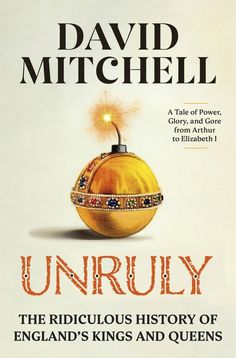
This one has to go to the hilarious and informative Unruly, David Mitchell’s irreverent look at the first several hundred years of English monarchs. As a bonus, this one and the Fern Brady memoir mentioned above also tie for “best audiobook,” as both are read by the authors, who are professional comedians and deliver wonderful performances.
BEST HISTORICAL FICTION
Always hard to narrow down the best of the best in my favourite category, but the standout for me this year was The Temple of Fortuna by Elodie Harper, the much-anticipated final volume of her Wolf Den trilogy, some of my favourite historical fiction of recent years. A close second is Emma Donoghue’s doomed lesbian coming-of-age love story, Learned by Heart. I also have to hand out a few honourable mentions in this category, to The Fraud by Zadie Smith, House of Odysseus by Claire North, and Newfoundland writer William Ping’s debut novel Hollow Bamboo.
BEST MYSTERIES
I’ve read a fair few mysteries this year, including starting the Louise Penney “Inspector Gamache” books that almost everyone I know seems to love, but that fell into the “just OK” category for me. Neither of my favourite mystery-type books were part of a series or even traditional genre-mysteries, though both had at their core the act of unravelling decades-old “cold case” murders of teenagers. Rebecca Makkai’s I Have Some Questions for You is a novel not just about solving a decades-old cold case, but also about the ethics of “true crime,” and the messiness that gets revealed when anyone begins probing into long-past mysteries. Tana French’s The Witch Elm is a genuinely creepy psychological study of a privileged man whose lucky life is falling apart around him, but it’s the discovery of a long-dead body on the family property that really kicks off his downward spiral. I’d give honourable mentions in this category to Richard Osman’s The Last Devil to Die and Benjamin Stevenson’s Everyone in My Family Has Killed Someone, both of which kept me turning pages, but neither of them had me emotionally riveted the way I Have Some Questions for You or The Witch Elm did.
BEST FANTASY (new)
There’s no contest and no need to share the honours in this category. The best new fantasy I read this year, by a large margin, was Shannon Chakraborty’s The Adventures of Amina Al-Sirafi. It’s set in the same part of the world as her Daevabad trilogy, and includes some of the same Islamic/Middle Eastern mythology (yes there are djinn; yes there is a hot djinn, did you doubt there would be?) as that series, although in a different time period, but the story is very different, focusing on a woman pirate who’s been forced into retirement before being forced back onto the seas. Amina is a great character, the world of the story is brilliant, and I can’t wait to read more.
BEST FANTASY (old)
This summer I took a deep dive into re-reading a favourite series of books that was never constructed as a series. Guy Gavriel Kay has long been, and remains, my favourite author of fantasy. He’s written several books, beginning with The Lions of Al-Rassan in 1995 (probably my all-time favourite Kay novel), that are set in a world that is a very close, but not exact, analogue of Europe, North Africa and western Asia. (For one thing, this world has two moons, a blue one and a white one). Later books set in this same world explore different time periods and different countries similar to Spain, Italy, Greece, Turkey and other nations in our own world, often drawing on real historical characters but giving them elements of magic and mythology (as well as, sometimes, very different fates from their real-world counterparts).
Seeing how this world unfolds throughout these books as Kay adds more layers and more complexity to the world is fascinating. I read the books, not in publication order but in the order the stories occurred in that world’s chronology; it was jarring to realize, for example, that the shining city of Sarantium, that world’s version of Byzantium, which is so central to the other (chronologically earlier) books in the series, does not appear at all in The Lions of Al-Rassan, because Kay presumably hadn’t thought of writing about it yet.
There are tiny common threads throughout the books — a work of art created by an artist in one book is seen centuries later by a character in another; a beloved character from one story is commemorated in a statue at the end of a street that a character in another book walks past. Throughout, these little callbacks remind the reader that one of the ongoing themes of these novels is how we, as humans, leave our mark — whether as artists, as rulers, as warriors: characters are often obsessed with how, or if, they will be remembered by history, and reading the whole collection reminds us that there’s no guarantee, in the end, that even the most famous of us will be remembered, except perhaps as a distant and distorted echo of the past. Revisiting these books was a wonderful journey.
I could go on and on with this blog post, nominating some favourite romances, science fiction, contemporary fiction … but I think I’m good with this list for now, as these were the real stand-outs for me this year. All my reviews are here on the blog, so you can scroll back from this post and see some other things I’ve read this year and what I thought about them, or get a quick visual overview of my reading year here on my Pinterest board.
I’ve now read three Emily Henry romances this year; loved two and found one just “okay.” Beach Read was in the “loved” category. I really enjoy books that take the classic romance formula and do something fresh, fun, and not completely predictable with it.
In Beach Read, we know from the get-go that January and Augustus — two successful authors in very different genres who wind up living in beach houses next door to each other for a summer — are the classic romance pairing. She writes light, fun women’s fiction with happy endings because she believes in happy endings; he writes dark, serious literary fiction because he believes the world is a dark and complicated place. But a few events in January’s own life have caused her to question her own belief in happy endings, and January’s own growth as a person and a writer runs parallel to the ups and downs of her relationship with her neighbour. There’s as much fun here in the arguments about what makes good fiction and the snobbishness of the literary world, as there is in the progress of this romance — but you can count on a happy ending!
My husband and I sometimes like the same books in the genres we share (usually sci-fi, fantasy, and mystery) and sometimes, we just don’t. A book that really grabs one of us will fail to engage the other, and that’s OK, because reading is subjective. He really loved Martha Wells’ series The Murderbot Diaries, and after he recommended them, I mentally filed them under, “Sounds interesting, will check out when I get a chance” but hadn’t gotten around to reading them. Then I heard a few more people add their recommendation that this was a really great sci-fi series, so I gave it a shot and I’m glad I did.
All Systems Red is told from the perspective of an AI robot that calls itself Murderbot, in a futuristic world with lots of space travel and space capitalism. Murderbot is technically not a murderbot, it’s a security robot, but it has managed to hack its own internal systems so that it no longer has to follow orders. Essentially, it’s a robot with free will, and all the complexities that entails. When you no longer have to do the thing you were created and designed to do, what do you choose to do instead?
Murderbot handles these weighty philosophical questions with a wry humour that is, in some ways, recognizably human (a lot of the times, its answer to “what do you choose to do instead?” is just “be left alone to watch TV,” which, OK, we get that). But we never forget that Murderbot isn’t actually human, even though it may look a bit human, and its analytical gaze at human beings and their actions/reactions is believably “other.”
There are several books in this series and the first two, at least (which are all I’ve read so far) are quite short, almost more like novellas, so it’s quite easy to zip through one and on to the next!
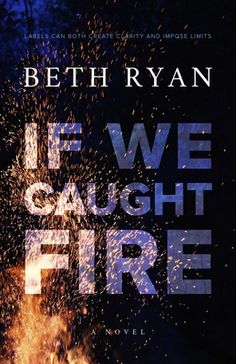
Beth Ryan’s If We Caught Fire is a thoughtful exploration of a complex family dynamic. Edie is a young adult whose parents divorced when she was younger. Although Edie continued to live with her mother, her father and stepmother (with whom her father was having an affair while still married to her mother) remain a part of her life, and she is close to her younger stepbrother. Then, when Edie is grown up and finished university, working in a veterinary clinic as she tries to decide what to do next with her life, her mother gets married again, to a man she met online. Edie’s new stepfather moves to Newfoundland, and for their wedding, her mother impulsively decides to invite Harlow, the new husband’s partially-estranged son. (It’s a lot to keep track of it, but it’s easier in the book, I promise).
Edie and Harlow quickly become friends as Harlow lingers in St. John’s after his father’s wedding. They are opposites in many ways: Edie is guarded, cautious, and reserved, while the expansive, outgoing Harlow is a risk-taker who makes connections with everyone he meets. The friendship between the two new step-siblings seems like it might be turning into romance — but things aren’t that simple, as Harlow’s brilliant exterior hides a darker side.
This is a quiet and introspective novel, a coming-of-age story in which Edie reflects back on the forces that shaped the person she is and questions who she might be in the future, while navigating a relationship with a man who seems designed to be a foil for all her own personality traits — but who is, of course, a person with his own complicated story and needs. There’s no definitive resolution at the end of this novel, but we are invited to journey with Edie through the twists and turns of an unpredictable summer. As well as a portrait of young adulthood, this novel also provides a well-evoked picture of contemporary St. John’s life among artsy young people. It felt absolutely real and believable.






 Compulsive Overreader