<?xml version="1.0" encoding="utf-8"?><feed xmlns="http://www.w3.org/2005/Atom" ><generator uri="https://jekyllrb.com/" version="3.10.0">Jekyll</generator><link href="https://zihanwangki.github.io/feed.xml" rel="self" type="application/atom+xml" /><link href="https://zihanwangki.github.io/" rel="alternate" type="text/html" /><updated>2024-10-09T22:41:54-07:00</updated><id>https://zihanwangki.github.io/feed.xml</id><title type="html">Zihan Wang</title><subtitle>PhD Student @ UCSD</subtitle><author><name>Zihan Wang</name><email>ziw224@ucsd.edu</email></author><entry><title type="html">X-Class: Text Classification with Extremely Weak Supervision</title><link href="https://zihanwangki.github.io/paper/xclass/" rel="alternate" type="text/html" title="X-Class: Text Classification with Extremely Weak Supervision" /><published>2021-06-08T00:00:00-07:00</published><updated>2021-06-08T00:00:00-07:00</updated><id>https://zihanwangki.github.io/paper/xclass</id><content type="html" xml:base="https://zihanwangki.github.io/paper/xclass/"><![CDATA[<p>Our paper “X-Class: Text Classification with Extremely Weak Supervision” is accepted by NAACL 2021.</p>

<h2 id="highlights">Highlights</h2>
<p>Our proposed model X-Class is able to assign documents to classes (e.g., sports, politics, and science) without any other supervision other than the class names themselves.</p>

<h2 id="motivation">Motivation</h2>
<p>We propose the task: Text Classification with Extremely Weak Supervision, which is to classify documents
to classes, with the plain class name as the only guidance.<br />
Our method X-Class, breaks up this task into three modules</p>
<ul>
  <li>Class-oriented Document Representation
    <ul>
      <li>We estimate both the class representation (based on the given class names),
and the document representation (guided by the class representations).</li>
    </ul>
  </li>
  <li>Document-Class Alignment
    <ul>
      <li>We apply Gaussian Mixture Models to align the document representations into clusters. The GMM is initialized with
a prior of every document assigned to its nearest class, and therefore, we know which cluster represents which class.</li>
    </ul>
  </li>
  <li>Text Classifier Training
    <ul>
      <li>We further select the confident document-class pairs from the previous step, and train a supervised text classifier
(e.g. BERT) above it.
This pipeline also illustrates our method.</li>
    </ul>
  </li>
</ul>

<p>Please refer to our <a href="https://zihanwangki.github.io/assets/xclass_paper.jpg">paper</a> and <a href="https://github.com/ZihanWangKi/XClass">github</a> for more details. You can also find our <a href="https://zihanwangki.github.io/assets/xclass_presentation.jpg">presentation</a>
and <a href="https://zihanwangki.github.io/assets/xclass_poster.jpg">poster</a> for NAACL.</p>]]></content><author><name>Zihan Wang</name><email>ziw224@ucsd.edu</email></author><category term="[&quot;paper&quot;]" /><category term="weak supervision" /><category term="text classification" /><summary type="html"><![CDATA[Our paper “X-Class: Text Classification with Extremely Weak Supervision” is accepted by NAACL 2021.]]></summary></entry><entry><title type="html">Cross-Lingual Ability of Multilingual BERT: An Empirical Study</title><link href="https://zihanwangki.github.io/paper/whymulti/" rel="alternate" type="text/html" title="Cross-Lingual Ability of Multilingual BERT: An Empirical Study" /><published>2019-12-19T00:00:00-08:00</published><updated>2019-12-19T00:00:00-08:00</updated><id>https://zihanwangki.github.io/paper/whymulti</id><content type="html" xml:base="https://zihanwangki.github.io/paper/whymulti/"><![CDATA[<p>Our paper “Cross-Lingual Ability of Multilingual BERT: An Empirical Study” is accepted by ICLR 2020 as a poster.</p>

<h2 id="highlights">Highlights</h2>
<p>We analyzed linguistic properties, model architecture and learning objectives that may contribute to the multilinguality of M-BERT. <br />
Linguistic properties:</p>
<ul>
  <li>Code switching text (or what we call word-piece overlap) is <strong>not</strong> the main cause of multilinguality.</li>
  <li>Word ordering is crucial, when words in sentences are randomly permuted, multilinguality is low, however, still significantly better than random.</li>
  <li>(Unigram) word frequency is not enough, as we resampled all words with the same frequency, and found almost random performance.
Combining the second and the third property infers that there is language similarity other than ordering of words between two languages, and which unigram frequency does not capture. 
We hypothesize that it may be similarity of n-gram occurrences.</li>
</ul>

<p>Architecture:</p>
<ul>
  <li>Depth of the transformer is the most important.</li>
  <li>Number of attention heads effects the absolute performance on individual languages, but the gap between in-language supervision and cross-language zero-shot learning didn’t change much.</li>
  <li>Total number of parameters, like depth, effects multilinguality.</li>
</ul>

<p>Learning Objectives:</p>
<ul>
  <li>Next Sentence Prediction objective, when removed, leads to slight increase in performance.</li>
  <li>Even marking sentences in languages with language-ids, allowing BERT to know exactly which language its learning on, did not hurt performance</li>
  <li>Using word-pieces leads to strong improvements on both source and target language (likely to depend on tasks) and slight improvement cross-lingually comparing to word or character based models.</li>
</ul>

<h2 id="motivation">Motivation</h2>

<p><a href="https://github.com/google-research/bert/blob/master/multilingual.md">Multilingual
BERT</a> (M-BERT) has shown surprising cross lingual abilities — even when it is trained without cross lingual objectives.
In this work, we analyze what causes this multilinguality from three factors: linguistic properties of the languages, the architecture
of the model, and the learning objectives.</p>

<p>Please refer to our <a href="https://arxiv.org/pdf/1912.07840.pdf">paper</a> and <a href="https://github.com/ZihanWangKi/mbert-study">github</a> (tentative, to be moved to <a href="https://cogcomp.seas.upenn.edu/page/publication_view/900">CCG</a>) for more details.</p>]]></content><author><name>Zihan Wang</name><email>ziw224@ucsd.edu</email></author><category term="[&quot;paper&quot;]" /><category term="multilinguality" /><category term="analysis" /><summary type="html"><![CDATA[Our paper “Cross-Lingual Ability of Multilingual BERT: An Empirical Study” is accepted by ICLR 2020 as a poster.]]></summary></entry><entry><title type="html">First place in ICPC Mid-Central Regional</title><link href="https://zihanwangki.github.io/competitive%20programming/icpc-midcentral/" rel="alternate" type="text/html" title="First place in ICPC Mid-Central Regional" /><published>2019-11-03T00:00:00-07:00</published><updated>2019-11-03T00:00:00-07:00</updated><id>https://zihanwangki.github.io/competitive%20programming/icpc-midcentral</id><content type="html" xml:base="https://zihanwangki.github.io/competitive%20programming/icpc-midcentral/"><![CDATA[<p><img src="https://zihanwangki.github.io/assets/icpc_midcentral_19.jpg" alt="Image of all UIUC teams" /><br />
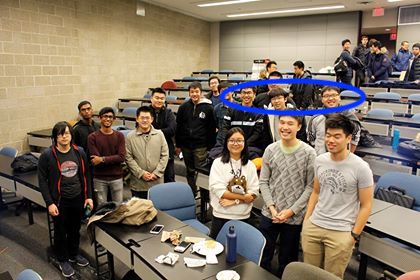
My team “UIUC-A” (teammates: Zhuolin Yang (middle in blue circle), Yen-Hsiang Chang (left), and me (right)) won icpc 
mid-central regional competition, and we are advancing to the world finals in Moscow next June!<br />
<a href="https://icpc.baylor.edu/">What is ICPC</a>   <a href="https://mcpc19.kattis.com/standings">Standings</a></p>]]></content><author><name>Zihan Wang</name><email>ziw224@ucsd.edu</email></author><category term="[&quot;competitive programming&quot;]" /><summary type="html"><![CDATA[My team “UIUC-A” (teammates: Zhuolin Yang (middle in blue circle), Yen-Hsiang Chang (left), and me (right)) won icpc mid-central regional competition, and we are advancing to the world finals in Moscow next June! What is ICPC   Standings]]></summary></entry><entry><title type="html">Champion of IEEE Xtreme 13.0</title><link href="https://zihanwangki.github.io/competitive%20programming/ieeextreme13/" rel="alternate" type="text/html" title="Champion of IEEE Xtreme 13.0" /><published>2019-10-21T00:00:00-07:00</published><updated>2019-10-21T00:00:00-07:00</updated><id>https://zihanwangki.github.io/competitive%20programming/ieeextreme13</id><content type="html" xml:base="https://zihanwangki.github.io/competitive%20programming/ieeextreme13/"><![CDATA[<p><img src="https://zihanwangki.github.io/assets/ieee_xtreme_13_TheCornInTheFields-1280x720.jpg" alt="Picture of us" />
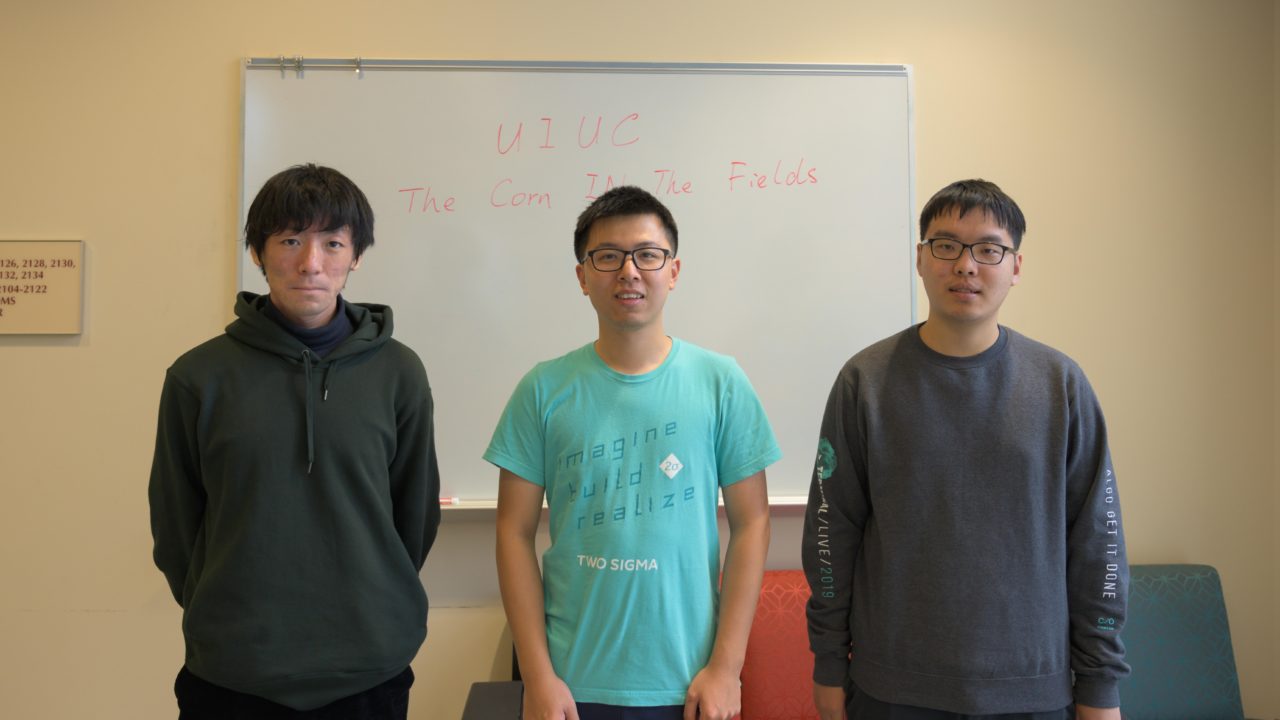
My team “TheCornInTheFields” (teammates: Jingbo Shang (middle), Wenda Qiu (left), and me (right)) won the IEEE Xtreme 13.0 competition. IEEE Xtreme 
is a well known programming competition that attracts thousands of participants worldwide. <br />
<a href="https://ieeextreme.org/">Homepage</a>   <a href="https://ieeextreme.org/ieeextreme-13-0-global-ranking/">Results</a></p>]]></content><author><name>Zihan Wang</name><email>ziw224@ucsd.edu</email></author><category term="[&quot;competitive programming&quot;]" /><summary type="html"><![CDATA[My team “TheCornInTheFields” (teammates: Jingbo Shang (middle), Wenda Qiu (left), and me (right)) won the IEEE Xtreme 13.0 competition. IEEE Xtreme is a well known programming competition that attracts thousands of participants worldwide. Homepage   Results]]></summary></entry><entry><title type="html">CrossWeigh: Training Named Entity Tagger from Imperfect Annotations</title><link href="https://zihanwangki.github.io/paper/crossweigh/" rel="alternate" type="text/html" title="CrossWeigh: Training Named Entity Tagger from Imperfect Annotations" /><published>2019-08-16T00:00:00-07:00</published><updated>2019-08-16T00:00:00-07:00</updated><id>https://zihanwangki.github.io/paper/crossweigh</id><content type="html" xml:base="https://zihanwangki.github.io/paper/crossweigh/"><![CDATA[<p>Our paper “CrossWeigh: Training Named Entity Tagger from Imperfect Annotations” is accepted by EMNLP 2019 as an oral presentation.</p>

<h2 id="highlights">Highlights</h2>
<ul>
  <li>We correct the test set of CoNLL03 NER. This higher quality evaluation set can be used in further research. The dataset is avalaible <a href="https://github.com/ZihanWangKi/CrossWeigh/tree/master/data">here</a>.</li>
  <li>We design a mistake-aware framework <code class="language-plaintext highlighter-rouge">CrossWeigh</code> that fits any NER model that supports weighted training.</li>
</ul>

<h2 id="motivation">Motivation</h2>

<p>The label annotation mistakes by human annotators brings up two challenges to NER:</p>
<ul>
  <li>mistakes in the test set can interfere the evaluation results and even lead to an inaccurate assessment of model performance.</li>
  <li>mistakes in the training set can hurt NER model training.</li>
</ul>

<p>We address these two problems by:</p>
<ul>
  <li>manually correcting the mistakes in the test set to form a cleaner benchmark.</li>
  <li>develop framework <code class="language-plaintext highlighter-rouge">CrossWeigh</code> for mistake-aware training.</li>
</ul>

<p><code class="language-plaintext highlighter-rouge">CrossWeigh</code> works with any NER algorithm that accepts weighted training instances. It
is composed of two modules. 1) mistake estimation: where potential mistakes are identified in the training
data through a cross-checking process and 2) mistake re-weighing: where weights of those mistakes are lowered
during training the final NER model.</p>

<p>Please refer to our <a href="https://zihanwangki.github.io/assets/crossweigh_emnlp19.pdf">paper</a> and <a href="https://github.com/ZihanWangKi/CrossWeigh">github</a> for more details.</p>]]></content><author><name>Zihan Wang</name><email>ziw224@ucsd.edu</email></author><category term="[&quot;paper&quot;]" /><category term="dataset/benchmark" /><category term="denoising" /><category term="named entity recognition" /><summary type="html"><![CDATA[Our paper “CrossWeigh: Training Named Entity Tagger from Imperfect Annotations” is accepted by EMNLP 2019 as an oral presentation.]]></summary></entry><entry><title type="html">Summer Intern @ UPenn</title><link href="https://zihanwangki.github.io/internship/upenn2019rintern/" rel="alternate" type="text/html" title="Summer Intern @ UPenn" /><published>2019-05-27T00:00:00-07:00</published><updated>2019-05-27T00:00:00-07:00</updated><id>https://zihanwangki.github.io/internship/upenn2019rintern</id><content type="html" xml:base="https://zihanwangki.github.io/internship/upenn2019rintern/"><![CDATA[<p>I will be a research programmer at University of Pennselviania this summer and I will work with Prof. Dan Roth on 
Named Entity Recognition on low resource languages.</p>]]></content><author><name>Zihan Wang</name><email>ziw224@ucsd.edu</email></author><category term="[&quot;internship&quot;]" /><summary type="html"><![CDATA[I will be a research programmer at University of Pennselviania this summer and I will work with Prof. Dan Roth on Named Entity Recognition on low resource languages.]]></summary></entry></feed>