<?xml version="1.0" encoding="utf-8"?>
<feed xmlns="http://www.w3.org/2005/Atom">
	<title><![CDATA[International Law and Human Rights]]></title>
	<link type="text/html" href="https://www.pgaction.org/ilhr/" />
	<subtitle type="html"><![CDATA[<section class="flex-container">
    <div class="flex-item main">

        <p>PGA’s International Law and Human Rights Program focuses on mobilizing members of parliament around the world to support and promote the prevention of serious human rights violations, including international crimes, as well as promoting the accountability of perpetrators when they do occur. International crimes include genocide, crimes against humanity, war crimes, and the crime of aggression. Violations of the right to life; the right not to be subjected to cruel, inhuman or degrading punishment; and the right not to be subjected to slavery nor forced or compulsory labor are some examples of serious human rights violations.</p>

        <p>The Program advances these objectives through its two campaigns.</p>


        <h3>Program Convenors</h3>

        <div class="elx5_2colwrap">


            <div class="elx5_2colbox elx5_artbox elx5_artboxvt">
                <figure class="elx5_content_imagebox elx5_content_imageboxlt">
                    <a href="https://www.pgaction.org/tags.html?tag=millie+odhiambo"><img src="https://www.pgaction.org/media/images/about/medium/boris-dittrich.jpg" alt="Boris Dittrich"></a>
                </figure>
                <div class="elx5_artbox_inner">
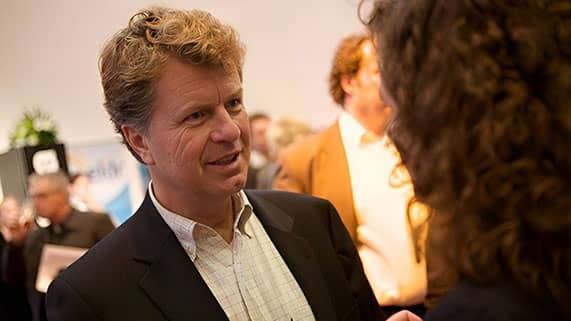
                    <p class="text-center"><a href="https://www.pgaction.org/tags.html?tag=boris+dittrich">Sen. Boris Dittrich
                        </a><br>(The Netherlands)</p>
                </div>
            </div>
            <div class="elx5_2colbox elx5_artbox elx5_artboxvt">
                <figure class="elx5_content_imagebox elx5_content_imageboxlt">
                    <a href="https://www.pgaction.org/tags.html?tag=galyna+mykhailiuk"><img src="https://www.pgaction.org/media/images/about/medium/galyna-mykhailiuk.jpg" alt="Fabio Massimo Castaldo"></a>
                </figure>
                <div class="elx5_artbox_inner">
                    <p class="text-center"><a href="https://www.pgaction.org/tags.html?tag=galyna+mykhailiuk">Hon. Dr. Galyna Mykhailiuk, MP</a><br>(Ukraine)</p>
                </div>
            </div>


        </div>

        <!--
        <h3>Past Program Convenors</h3>

        <table class="striped">
            <thead>
                <tr>
                    <td width="33%">
                        2022</td>
                    <td width="33%">
                        2021</td>
                    <td width="33%">
                        2020</td>
                </tr>
            </thead>
            <tbody>
                <tr>
                    <td>Convenor: Sen. Boris Dittrich (The Netherlands)</td>
                    <td>Convenor: Hon. Levy Nazaré, MP
                        (São Tomé and Príncipe)</td>
                    <td>Convenor: Hon. Petra Bayr, MP (Ausria)</td>

                </tr>
                <tr>
                    <td>Deputy Convenor: Dip. Esther Cuesta, MP (Ecuador)</td>
                    <td>Deputy Convenor: Hon. Kasthuri Patto, MP (Malaysia)</td>
                    <td>Deputy Convenor: Hon. Amina Maelainine, MP (Morocco)</td>
                </tr>
                <tr>
                    <td>Deputy Convenor: Hon. Bernard Georges, MP (Seychelles)</td>
                    <td>Deputy Convenor: Hon. António Rosário Niquice, MP (Mozambique)</td>
                    <td>Deputy Convenor: Mr. Ali Ehsassi, MP (Canada)</td>

                </tr>
                <tr>
                    <td>Deputy Convenor: Mr. Mark Pritchard, MP (United Kingdom)</td>
                    <td><br></td>

                    <td>Deputy Convenor: Deputy Convenor: Mr. Ali Ehsassi, MP (Canada)</td>
                </tr>
            </tbody>
        </table>
        -->

    </div>


    <div class="flex-item">
        <div class="btn ilhr mt-0 mb-50"><a href="https://www.pgaction.org/news/activity-calendars/2025.html"><i class="fa fa-4x fa-calendar">&nbsp;</i> <span>2025 Calendar of Activities</span></a></div>

        <div class="btn ilhr mb-50"><a href="https://www.pgaction.org/resources-for-parliamentarians.html#ilhr"><i class="fa fa-4x fa-file-download">&nbsp;</i> <span>Resources for Parliamentarians</span></a></div>

        <div class="btn ilhr mb-50"><a href="https://www.pgaction.org/about/who-we-are.html#secretariat-ilhr"><i class="fa fa-4x fa-address-book">&nbsp;</i> <span>Contact the PGA Secretariat</span></a></div>


    </div>


</section>]]></subtitle>
	<rights><![CDATA[Copyright 2026, Parliamentarians for Global Action - Mobilizing Legislators as Champions for Human Rights, Democracy and a Sustainable World.]]></rights>
	<updated>2026-04-30T18:55:16+00:00</updated>
	<id>urn:uuid:61eba917-a49c-6754-4c60-d91aa44924d3</id>
	<generator uri="http://www.elxis.org/" version="5.6">Elxis</generator>
	<author>
		<name><![CDATA[Ethical Sector]]></name>
	</author>
	<icon>https://www.pgaction.org/media/images/favicon.ico</icon>
	<logo>https://www.pgaction.org/media/images/logo_rss.png</logo>
	<entry>
		<title><![CDATA[Gender Apartheid – Policy Brief]]></title>
		<link type="text/html" href="https://www.pgaction.org/ilhr/gender-apartheid.html" />
		<id>urn:uuid:06379061-1432-e30e-440c-f045b5a62378</id>
		<updated>2025-09-05T08:47:00+00:00</updated>
		<summary type="html"><![CDATA[<img style="margin:5px; float:left;" src="https://www.pgaction.org/media/images/articles20/afghanistan-roundtable_thumb.jpg" alt="International Law and Human Rights" /> <p>Parliamentarians can play a critical role in advocating for the recognition and codification of gender apartheid as a crime under international law, as well as in promoting solidarity and support for the voices of Afghan and Iranian women. </p><h2>Background</h2>

<p>The call to recognize the crime of gender apartheid as a crime against humanity first emerged in the 1990s, when UN experts <a href="https://docs.un.org/en/E/CN.4/1999/58">reported</a> that the Taliban had “introduced what is in point of fact a system of apartheid in respect of women.” Yet, no concrete action led to enshrining this crime in international law, leaving a persistent accountability gap for its survivors and victims.</p>

<p>Gender apartheid is unique in its intent and institutionalized character: it aims not only to discriminate against a group based on their gender identity through inhumane acts, but also to establish and maintain a system of domination and total exclusion of that group from the social, economic, cultural, and political life of a country.</p>

<p>The Taliban’s return to power in 2021 has underscored the urgent need to recognize gender apartheid. Through state-imposed laws and institutionalized practices, Afghan women and girls are excluded from education, employment, healthcare, political participation, and any kind of public engagement. They are denied their human rights and control over their own bodies and lives. </p>

<p>Afghan and Iranian women’s rights defenders are leading the global campaign for recognition of this crime through the <a href="https://endgenderapartheid.today/">End Gender Apartheid initiative</a>. Their demand is clear: the international community must codify gender apartheid as a crime against humanity and take decisive action to dismantle and prevent gender apartheid regimes.</p>

<p>Parliamentarians can play a critical role in advocating for the recognition and codification of gender apartheid as a crime under international law, as well as in promoting solidarity and support for the voices of Afghan and Iranian women. </p>

<h2>What is gender apartheid?</h2>

<p>The crime of apartheid is an internationally recognized crime against humanity, rooted in the history of South Africa. <a href="https://www.un-ilibrary.org/content/books/9789210594844s003-c023">The International Convention on the Suppression and Punishment of the Crime of Apartheid</a> and the <a href="https://www.icc-cpi.int/sites/default/files/2024-05/Rome-Statute-eng.pdf">Rome Statute of the International Criminal Court</a> define it as the institutionalized domination of one racial or ethnic group over another. However, neither of these instruments extends the concept to include gender-based forms of apartheid.</p>

<p>UN experts and human rights advocates have documented gender persecutions and violations in countries such as Afghanistan and Iran, where state-designed, coordinated, and institutionalized mechanisms are used to oppress a specific group based on their gender. This results in their exclusion and separation from the country’s social, economic, cultural, and political life. In Afghanistan, the elimination of rights and freedoms of women and girls, imposed by Taliban laws, policies, and practices, reflects the system of apartheid based on gender. </p>

<p>The current definition of the crime of apartheid in the Rome Statute of the International Criminal Court should therefore be <a href="https://docs.un.org/en/A/HRC/WG.11/40/1">adapted to recognize gender apartheid</a>, conceptualized as: “inhumane acts committed in the context of an institutionalized regime of systematic oppression and domination by one gender group over any other gender group or groups and committed with the intention of maintaining that regime.”</p>

<h2>Why recognizing and naming gender apartheid matters</h2>

<p>Under international law, there is currently no recognition of the crime of gender apartheid. While available legal tools, such as the <a href="https://www.icc-cpi.int/sites/default/files/2024-05/Rome-Statute-eng.pdf">crime of gender persecution</a>, address the existence of serious violations depriving individuals of rights on the basis of gender, they do not account for the systematic, state-designed, and institutionalized nature of gender apartheid. Nor do they reflect the specific intent to maintain a regime of domination, which is an element that distinguishes apartheid from other crimes against humanity.</p>

<p>In the fight against impunity, crimes must be named, defined, and codified to ensure that perpetrators are held accountable, victims and survivors obtain justice and reparations, and future violations are prevented. Without codification in legal frameworks, the cycle of violence cannot be broken, leaving victims and survivors without remedies and perpetuating an accountability gap.</p>

<p>Recognizing gender apartheid as a crime against humanity would complement existing provisions on gender-based crimes and human rights violations, while creating a stronger legal framework to hold accountable regimes that seek to erase women and girls from the social, economic, cultural, and political life of a country. </p>

<h2>Ongoing developments and opportunities for recognition of the crime of gender apartheid</h2>

<p>The leadership of Afghan and Iranian women’s rights defenders has grown momentum to codify the crime of gender apartheid as a crime against humanity. The term is now increasingly used by experts, civil society organizations, parliamentarians, and other stakeholders, creating a unique window of opportunity to recognize it under international law. </p>

<h3>1) The Convention on Crimes Against Humanity</h3>

<p>The most immediate and concrete opportunity lies in the ongoing negotiations of a new <a href="https://www.pgaction.org/news/draft-resolution-crimes-against-humanity.html">UN Convention on Crimes Against Humanity</a>, where countries could ensure that <a href="https://docs.un.org/en/A/HRC/WG.11/40/1">gender apartheid is explicitly recognized and defined</a>. This process requires strong political support to avoid gender apartheid being sidelined. In November 2024, countries adopted a <a href="https://docs.un.org/A/C.6/79/L.2/Rev.1">resolution</a> mandating a Conference of Plenipotentiaries to convene in 2028 and then in 2029, to negotiate the final text of the Convention with the aim of opening it for signature and ratification thereafter. During 2026, a preparatory committee will review draft articles and consider proposed amendments, thus providing an opening to advocate for the inclusion of gender apartheid in the Convention.</p>

<h3>2) Amending the Rome Statute</h3>

<p>A parallel path to include gender apartheid as an international crime is to amend the Rome Statute of the International Criminal Court, granting the Court the mandate to investigate this crime and prosecute its perpetrators — thereby recognizing the individual criminal responsibility in the commitment of this crime. This route, however, may be lengthy and would require significant political will: any State Party to the Rome Statute may propose amendments, which must be adopted by consensus or a two-thirds majority of States Parties at the Assembly of States Parties or a Review Conference. To date, no formal amendment on this matter has been introduced, making this a crucial moment to open debate among States Parties to take leadership in advancing recognition of gender apartheid within the Rome Statute system.</p>

<h3>3) Collecting data in line with the SDGs</h3>

<p>To ensure effective monitoring and accountability, parliamentarians should call for the systematic tracking of indicators that reveal the scope and impact of gender apartheid, framed within the Sustainable Development Goals (SDGs). These include access to education (SDG 4), particularly the enrollment and attendance of girls at the secondary and tertiary levels; women’s participation in the labor force and access to decent work (SDG 8); restrictions on freedom of movement, including the enforcement of male guardianship and compulsory dress codes (SDG 5 and SDG 16); and the prevalence of punishments, arrests, and surveillance technologies used to enforce gender-based segregation (SDG 9 and SDG 16). By collecting and publishing disaggregated data on these indicators, parliaments can both identify areas where systemic oppression persists and evaluate progress toward achieving gender equality under SDG 5.</p>

<p>Given the upcoming United Nations General Assembly in September 2025 in New York, parliamentarians have a timely opportunity to advocate for the integration of these indicators into global reporting frameworks, thereby strengthening international consensus and accountability on eliminating gender apartheid.</p>

<div class="box div-light mt-40 mb-40">
    <h2>What can parliamentarians do?</h2>
    <p>Parliamentarians can open debates on gender apartheid to push the issue to the top of national and international agendas and to adopt recommendations for its legal codification and global recognition. As a parliamentarian, you can:</p>
    <h3>Advocate for the recognition and codification of gender apartheid:</h3>
    <ol>
        <li>Call on your government to support the inclusion of gender apartheid in the draft UN Convention on Crimes Against Humanity.</li>
        <li>Call on your government to initiate support for proposing an amendment to include gender apartheid in the Rome Statute of the International Criminal Court.</li>
        <li>Establish parliamentary working groups and issue parliamentary resolutions dedicated to the recognition and codification of gender apartheid at the national, regional, and international levels.</li>
    </ol>


    <h3>Promote solidarity and support:</h3>
    <ol>
        <li>Elevate the voices of Afghan and Iranian women’s rights defenders leading the global campaign to <a href="https://endgenderapartheid.today/">End Gender Apartheid</a>, notably by including them in any discussions or events related to the issue.</li>
        <li>Engage with international organizations and civil society groups to raise awareness and advocate for the inclusion of gender apartheid under international law.</li>
    </ol>


    <h3>Ensure effective monitoring:</h3>
    <ol>
        <li>Call for the systematic tracking of indicators that reveal the scope and impact of gender apartheid, framed within the Sustainable Development Goals (SDGs).</li>
    </ol>
</div>

<h2>Parliamentary actions by PGA members</h2>

<ul>
    <li><strong>In the Parliamentary Assembly of the Council of Europe:</strong> Petra Bayr, MP (Austria) and member of PGA Executive Committee, introduced a <a href="https://pace.coe.int/en/files/34509">resolution</a> adopted on June 26, 2025 urging “Council of Europe member States that are Parties to the Rome Statute of the International Criminal Court to consider proposing an amendment to the statute in order to include the crime of ‘gender apartheid’.”</li>
    <li><strong>In the Netherlands: </strong>PGA organized a <a href="https://www.pgaction.org/news/afghan-women-gender-justice.html">roundtable on gender justice for Afghanistan</a> in June 2025 bringing together Dutch Senators, Afghan parliamentarians in exile, and experts to foster dialogue on the need for gender accountability in Afghanistan and the recognition of gender apartheid.</li>

    <li><strong>In the European Parliament:</strong> Members — including PGA member Hannah Neumann, MP (Germany) — tabled a motion for a <a href="https://www.europarl.europa.eu/doceo/document/TA-10-2024-0008_EN.html">resolution</a> adopted on September 19, 2024, calling the “EU to support the recognition of gender apartheid as a crime against humanity.”</li>

    <li><strong>In Canada:</strong> on April 18, 2024, Mr. Ali Ehsassi, chair of PGA’s International Council, introduced <a href="https://openparliament.ca/debates/2024/4/18/">two petitions</a> in the Senate of Canada, on behalf of Afghan and Iranian women, respectively. The petitions demanded that international institutions recognize gender apartheid as a crime against humanity under international law, advocating for feminist principles and for universalism of human rights to be reflected in existing and emergent international law. The petitions urged other countries to take steps to adopt similar policies.</li>

    <li><strong>In the United Kingdom:</strong> In 2024, Baroness Kennedy of The Shaws LT KC, director of the International Bar Association’s Human Rights Institute (IBAHRI) and PGA member, established an <a href="https://www.genderapartheidinquiry.com/">ad-hoc parliamentary inquiry</a> on gender apartheid to examine the issue and push for government action.</li>
</ul>]]></summary>
		<author>
			<name>Fiona Servaes</name>
		</author>
		<link rel="enclosure" href="https://www.pgaction.org/media/images/articles20/afghanistan-roundtable_thumb.jpg" length="15124" type="image/jpeg" />
	</entry>
	<entry>
		<title><![CDATA[Abolition of the Death Penalty]]></title>
		<link type="text/html" href="https://www.pgaction.org/ilhr/adp.html" />
		<id>urn:uuid:1948102b-399d-c163-073a-79f487beeb69</id>
		<updated>2025-07-12T14:15:00+00:00</updated>
		<summary type="html"><![CDATA[<img style="margin:5px; float:left;" src="https://www.pgaction.org/media/images/articles20/adp_thumb.jpg" alt="International Law and Human Rights" /> <p>Every victim and every survivor has the right to see the perpetrator of a crime held to account in a court of law. But the death penalty is not a form of justice, it is an act of revenge.</p><div class="moduleTimeline">
    <section id="the-challenge">

        <h2 class="mt-0">The Challenge: Justice, not Revenge</h2>

        <h5 class="mb-30">Every victim and every survivor has the right to see the perpetrator of a crime held to account in a court of law. But the death penalty is not a form of justice, it is an act of revenge.</h5>

        <div class="container-fluid bg-red mb-30">
            <div class="container">
                <div class="row align-items-center event">
                    <div class="col-2 text-center bottom">
                        <p><time class="icon"><span class="number-only">1</span></time></p>
                    </div>
                    <div class="col-6">
                        <p><strong>The death penalty does not deter crime:</strong> there is no evidence that States with capital punishment have lower crime rates, or that crime rates increase when the death penalty is abolished. On the contrary, studies show that it is the threat of being arrested and being sanctioned – more than the severity of the sanction itself – that is the key factor in crime prevention.</p>
                    </div>
                </div>


                <div class="row timeline">
                    <div class="col-2">
                        <div class="corner top-right"><br></div>
                        <br>
                    </div>
                    <div class="col-8">
                        <hr>
                        <br></div>
                    <div class="col-2">
                        <div class="corner left-bottom"><br></div>
                        <br>
                    </div>
                    <br>
                </div>


                <div class="row align-items-center justify-content-end event">
                    <div class="col-6 text-right">
                        <p><strong>The death penalty disproportionately affects the most vulnerable populations,</strong> and notably minorities, people living in poverty, people with mental disabilities and other already marginalized groups. In some countries, the death penalty can be used as an instrument of political repression.</p>
                    </div>
                    <div class="col-2 text-center full">
                        <p><time class="icon"><span class="number-only">2</span></time></p>
                    </div>
                </div>


                <div class="row timeline">
                    <div class="col-2">
                        <div class="corner right-bottom"><br></div>
                        <br>
                    </div>
                    <div class="col-8">
                        <hr>
                        <br></div>
                    <div class="col-2">
                        <div class="corner top-left"><br></div>
                        <br>
                    </div>
                    <br>
                </div>


                <div class="row align-items-center event">
                    <div class="col-2 text-center full no-compensation">
                        <p><time class="icon"><span class="number-only">3</span></time></p>
                    </div>
                    <div class="col-6">
                        <p><strong>No judicial system is immune to error:</strong> even when due process and all judicial safeguards are duly implemented and respected, it is impossible to guarantee that new evidence will not reveal that an innocent person has been executed.</p>
                    </div>
                </div>


                <div class="row timeline">
                    <div class="col-2">
                        <div class="corner top-right"><br></div>
                        <br>
                    </div>
                    <div class="col-8">
                        <hr>
                        <br></div>
                    <div class="col-2">
                        <div class="corner left-bottom"><br></div>
                        <br>
                    </div>
                    <br>
                </div>


                <div class="row align-items-center justify-content-end event">
                    <div class="col-6 text-right">
                        <p><strong>The justice system should not have the right to kill:</strong> the death penalty is unethical and morally wrong. Carrying out executions violates the right to life of convicts, and deprives them of any possibility of rehabilitation and future contribution to the society.</p>
                    </div>
                    <div class="col-2 text-center top">
                        <p><time class="icon"><span class="number-only">4</span></time></p>
                    </div>
                </div>


            </div>
        </div>

        <p>This is why every year, an increasing number of countries decide to abolish the death penalty, thus reinforcing the global trend in favor of putting a definitive end to this cruel punishment. The progress of the abolitionist movement notably resulted in an <a target="_blank" href="https://www.foreignminister.gov.au/minister/penny-wong/media-release/record-support-global-moratorium-death-penalty-un">unprecedented support</a> for the <a target="_blank" href="https://www.undocs.org/Home/Mobile?FinalSymbol=A%2FRES%2F77%2F222&amp;Language=E&amp;DeviceType=Desktop&amp;LangRequested=False">UN 9th resolution for a universal moratorium on the use of the death penalty</a>. This crucial instrument to advance international standards was adopted on 15 December 2022, by an historic majority of 125 States in favor.</p>

        <p class="mb-30">Despite the growing isolation of States that still employ the death penalty, global executions have known a significant increase in 2023. <a href="https://www.amnesty.org/en/what-we-do/death-penalty/">Amnesty International</a> reported that in 2023, at least 1,153 individuals were executed (excluding China, where figures are kept secret), marking the highest number since 2015 (during that year, 1,634 executions were recorded by Amnesty International – China excluded). Alarmingly, this very high number of recorded executions took place in only 16 countries – the lowest number of executing countries on record according to <a target="_blank" href="https://www.amnesty.org/en/what-we-do/death-penalty/#wheredomostexecutionstakeplace">Amnesty International</a>. The majority of them took place in Iran (more than 853 executions) and Saudi Arabia (172 executions recorded).</p>

        <p class="mb-30">Furthermore, and contrary to the global trend, certain States that had abolished or implemented a long-standing moratorium on the death penalty, continue to run against this global abolitionist trend. Thus, in many countries, voices are rising, advocating for stricter criminal sentences and the revival of the capital punishment.</p>

        <p class="mb-30">In this context, it is the responsibility of the abolitionist movement to intensify its efforts towards achieving universal abolition of the death penalty.</p>


    </section>
</div>


<section id="the-response">

    <h2>The Response: The Campaign for the Abolition of the Death Penalty</h2>

    <p>In 2013, PGA launched its Campaign for the Abolition of the Death Penalty. The goal of the campaign is to ensure the right to life is upheld and to promote justice systems grounded in the rule of law, in line with <a target="_blank" href="https://www.un.org/sustainabledevelopment/peace-justice/">SDG 16</a>, particularly target 16.3. Parliamentarians have a crucial role to play in the movement to restrict the use of the death penalty and ultimately abolish it through drafting legislation; deliberating on national policies; and enlightening public opinion.</p>

    <p>For this purpose, PGA assists its members from both retentionist and abolitionist countries. It takes a step-by-step approach to further up the country’s abolitionist path, including: </p>
    <ol type="I">
        <li>
            <p><em>Improving conditions of detention on death row </em>by addressing issues like prison overcrowding, insufficient food or drinking water, lack of medical care, lack of personnel and infrastructure, deplorable sanitary conditions, physical violence, etc.</p>
        </li>
        <li>
            <p><em>Strengthened legal safeguards in capital cases, </em>including right to due process, right to appeal and clemency proceedings, right to adequate legal counsel, right to a fair trial. </p>
        </li>
        <li>
            <p><em>Reduced scope of application of the death penalty,</em> including the elimination of mandatory sentencing.</p>
        </li>
        <li>
            <p>[For retentionist countries] <em>Adoption of a moratoria</em>, including through affirming the biannual United Nations General Assembly (UNGA) resolution on a moratorium on the use of the death penalty.</p>
        </li>
        <li>
            <p><em>Abolition of the death penalty and promotion of an international norm prohibiting it</em>, through supporting the ratification, accession or adoption the Second Optional Protocol to the International Covenant on Civil and Political Rights (ICCPR-OP2).</p>
        </li>
    </ol>

</section>]]></summary>
		<author>
			<name>Ethical Sector</name>
		</author>
		<link rel="enclosure" href="https://www.pgaction.org/media/images/articles20/adp_thumb.jpg" length="8572" type="image/jpeg" />
	</entry>
	<entry>
		<title><![CDATA[Campaign for International Justice]]></title>
		<link type="text/html" href="https://www.pgaction.org/ilhr/international-justice.html" />
		<id>urn:uuid:ca5452d9-6cd7-bf7e-a82f-123d543ea996</id>
		<updated>2025-07-12T14:09:00+00:00</updated>
		<summary type="html"><![CDATA[<img style="margin:5px; float:left;" src="https://www.pgaction.org/media/images/articles20/rome-statute-icc_thumb.jpg" alt="International Law and Human Rights" /> <p>For the system established by the Rome Statute of the ICC to become truly universal and effective, Members of Parliament (MPs) play a pivotal role.</p><section id="the-challenge">

    <h2>The Challenge: Fighting Against Impunity for International Crimes</h2>
    <h5>Historical Background</h5>
    <p>The 20th century was marked by armed conflicts and the commission of crimes that shocked the conscience of humanity. In the wake of the Second World War, the Nuremberg and Tokyo international military tribunals were established to bring perpetrators to justice, moving away from the impunity-paradigm that characterized the period between the two World Wars. With the adoption of the Convention on the Prevention and Punishment of the Crime of Genocide in 1948, which provides for the establishment of an international criminal court, the United Nations General Assembly (UNGA) invited the International Law Commission (ILC) to work on the draft statute of a permanent international judicial body to try those charged with genocide and other crimes under International Law.</p>

    <p>With the advent of the Cold War, the concept of a system of international criminal justice was “frozen” for several decades. In 1989, with the fall of the Berlin wall, the UN General Assembly decided to reassign the ILC with the task of preparing for an international criminal court. The basis for this was an unanimously adopted UNGA resolution that had been drafted and tabled by the Prime Minister of Trinidad and Tobago, Mr. ANR Robinson, MP. Mr. Robinson was a member of the PGA Executive Committee who helped set up PGA’s International Law and Human Rights Program.</p>

    <p>In the 1990s, the world once again witnessed unspeakable atrocities committed in former Yugoslavia and in Rwanda. In the face of the inaction by the International Community to halt mass atrocities, the United Nations Security Council (UNSC) decided to establish ad hoc tribunals for each of these situations in 1993 and 1994. These events spearheaded the decision of the ILC to produce a draft statute for an international criminal court in 1994, which was submitted for consideration of the UN Ad Hoc Committee on an International Criminal Court (ICC) in 1995. The same year, Italy offered to the UNGA to host and sponsor a Diplomatic Conference of Plenipotentiaries for the adoption of a statute of an ICC. The UNGA accepted the offer and set up a Preparatory Committee for the establishment of an international criminal court between 1996-1998, which transmitted the text of a draft Statute to the Rome Diplomatic Conference. The Rome Conference took place from 15 June to 17 July 1998 and ended with the adoption of the Rome Statute of the ICC, which the Secretary-General of the UN Kofi Annan welcomed as a “gift of hope for future generations.”</p>

    <p>On 17 July 1998, representatives of 160 States adopted the Rome Statute of the ICC. 120 States voted in favour, 7 States against, and 21 abstained, while 12 States did not attend the final vote, which took place after midnight. This gave birth to the first permanent and independent international court capable of investigating and bringing to justice individuals who commit the most serious violations of international criminal law, international humanitarian law and human rights, namely: <strong>genocide, crimes against humanity, war crimes, and crime of aggression.</strong></p>

    <p>However, States continue to be fundamental to ensuring that perpetrators of international crimes are held accountable given that the ICC is not a supranational organization, but an international organization based on State and inter-State cooperation and enforcement.</p>

    <p>Firstly, the ICC is a court of last resort and does not substitute national courts. According to the Rome Statute, the ICC can only intervene where a State is unable or unwilling to genuinely carry out the investigation and prosecute the perpetrators. Secondly, the ICC does not have its own police force, which is why it relies on State and inter-State cooperation for the arrest and surrender of suspects.</p>

    <p>For the system established by the Rome Statute of the ICC to become truly universal and effective, members of parliament (MPs) play a pivotal role. Using their legislative prerogatives, they can advance the ratification of the Rome Statute and its amendments, the implementation of the Statute in domestic legal frameworks, and the signature of bilateral cooperation agreements with the ICC, as well as the ratification of Agreement on Privileges and Immunities of the International Criminal Court (APIC). Since the Rome Statute system is not supported by any international parliamentary body, PGA created a campaign to develop and maintain a “global” parliamentary constituency for the ICC.</p>

</section>

<section id="the-response">

    <h2>The Response: A Campaign for the Rome Statute of the ICC</h2>

    <p>In September 1998, PGA launched the <em>Campaign for the Universality and Effectiveness of the System of the Rome Statute of the International Criminal Court (ICC)</em>, today called the "International Justice Campaign." The ratification of the Rome Statute by Ghana, in 1999, was the first achievement of the Campaign. Such achievement was championed by PGA Board Member Hon. Albin Bagbin, MP (Ghana), who drafted a law to ratify the Rome Statute and proposed to the Government of Ghana to transmit it to Parliament. In his capacity as Chair of the Legal Affairs Committee, Hon. Bagbin presided over an accelerated process of approval, making Ghana the 4th State to join the Rome Statute system.</p>

    <p>The Campaign intends to promote a universal culture of upholding the Rule of Law, human rights and human dignity by fighting impunity for the commission of genocide, war crimes, crimes against humanity and the crime of aggression. These efforts are in line with <a target="_blank" href="https://www.un.org/sustainabledevelopment/peace-justice/">Sustainable Development Goal <strong>(SDG) 16,</strong></a> particularly <strong>Target 16.3</strong>, which commits governments to promote the rule of law at the national and international levels and ensure equal access to justice for all.</p>

    <p>To achieve its goal, the Campaign pursues the following:</p>

    <ul>
        <li>Promote the <a href="https://www.pgaction.org/ilhr/rome-statute/universality.html">universality</a> of the Rome Statute of the ICC system through the universal ratification/accession to the Rome Statute of the ICC and all <a href="https://www.pgaction.org/ilhr/rome-statute/amendments.html">amendments</a> to it, including those adopted in Kampala in 2010.</li>

        <li>Promote the effectiveness of the Rome Statute of the ICC system through its full <a href="https://www.pgaction.org/ilhr/rome-statute/implementation.html">implementation</a> in national legal frameworks, including:
                </li><li>The implementation of the principle of <a href="https://www.pgaction.org/ilhr/rome-statute/complementarity.html">complementarity</a>, comprising the definition of the core crimes and the general principles of international criminal law enshrined in the Rome Statute.</li>
                <li>The implementation of the various <a href="https://www.pgaction.org/ilhr/rome-statute/cooperation.html">cooperation</a> mechanisms of the Rome Statute so that the ICC can fulfill its mandate as well as the negotiation and signing of cooperation agreements between the States and the ICC.</li>
                <li class="pb-0 border-bottom-0">The protection of the <a href="https://www.pgaction.org/ilhr/rome-statute/integrity-and-independence.html">integrity</a> of the system established by the Rome Statute and the <a href="https://www.pgaction.org/ilhr/rome-statute/integrity-and-independence.html">independence and impartiality</a> of the Court.</li>
            </ul>


    <h3>Tailored Strategy</h3>

    <p>To adapt the Campaign’s efforts to the needs of specific countries, groups of countries or regions, the PGA Secretariat works with MPs at the national, regional, and international levels.</p>

    <ol>
        <li>
            <p><strong>Target countries</strong><br>
                PGA uses a peer-to-peer methodology to generate action in support of the ratification and domestic implementation of the Rome Statute, alongside other strategic initiatives aimed at fighting impunity and ensuring access to justice for victims.</p>
        </li>

        <li><strong>Regional Working Groups</strong>
            <br>
            PGA carries out closed-door political, legal, and strategic consultations with a selected group of MPs from specific regions. Experts and ICC officials are invited to provide input and participate in interactive discussions. The regional groups comprise:
            <ul>
                <li><a href="https://www.pgaction.org/ilhr/rome-statute/asia-pacific-working-group.html">Asia-Pacific Working Group</a></li>
                <li><a href="https://www.pgaction.org/ilhr/rome-statute/africa-working-group.html">Africa Working Group [at times organized according to working language]</a></li>
                <li>Latin America Working Group</li>
                <li><a href="https://www.pgaction.org/ilhr/rome-statute/mena-working-group.html">Middle East and North Africa (MENA) region Working Group</a></li>
            </ul>
        </li>

        <li><strong>Regional Parliaments</strong>
            <br>
            PGA members and staff also monitor the developments and, if possible, attend and address the following regional parliaments:
            <ul>
                <li><a href="https://www.pgaction.org/ilhr/rome-statute/acp-eu-jpa.html">Africa Caribbean Pacific-EU Joint Parliamentary Assembly</a> (ACP-EU JPA)</li>
                <li><a href="https://www.pgaction.org/ilhr/rome-statute/european-parliament.html">European Parliament</a></li>
                <li><a href="https://www.pgaction.org/ilhr/rome-statute/pap.html">Pan-African Parliament (PAP)</a></li>
                <li><a href="https://www.pgaction.org/ilhr/rome-statute/pace.html">Parliamentary Assembly of the Council of Europe (PACE)</a></li>
            </ul>
        </li>

        <li><strong>Multilateral Fora</strong>
            <br>
            At international level, PGA members and the PGA Secretariat monitor the developments and, if possible, attend and address the following multilateral fora:
            <ul>
                <li><a href="https://www.pgaction.org/ilhr/rome-statute/asp.html">Assembly of States Parties (ASP) of the ICC</a></li>
                <li><a href="https://www.pgaction.org/ilhr/rome-statute/oas.html">Organization of American States (OAS)</a></li>
                <li><a href="https://www.pgaction.org/ilhr/rome-statute/cojur.html">European Union (EU)</a></li>
                <li><a href="https://www.pgaction.org/ilhr/rome-statute/hrc.html">United Nations Human Rights Council (UNHRC)</a></li>
            </ul>
        </li>

        <li><a href="https://www.pgaction.org/ilhr/rome-statute/cap-icc.html">Consultative Assembly of Parliamentarians on the ICC and the Rule of Law (CAP-ICC)</a>
            <br>
            PGA’s CAP-ICC is held every two years and is the only global gathering of legislators focused solely on the ICC.&nbsp;Its meetings represent a unique opportunity for several hundred legislators of all continents to discuss and define strategies to advance the strategic goals of mobilizing in favour of the Rome Statute of the ICC.<p><br></p>
        </li>
    </ol>

</section>
<code class="elx5_plugin"></code>]]></summary>
		<author>
			<name>Ethical Sector</name>
		</author>
		<link rel="enclosure" href="https://www.pgaction.org/media/images/articles20/rome-statute-icc_thumb.jpg" length="16274" type="image/jpeg" />
	</entry>
</feed>