 Live Science Plus


You are now subscribed
Your newsletter sign-up was successful
Want to add more newsletters?

Delivered Daily
Daily Newsletter
Sign up for the latest discoveries, groundbreaking research and fascinating breakthroughs that impact you and the wider world direct to your inbox.
Once a week
Life's Little Mysteries
Feed your curiosity with an exclusive mystery every week, solved with science and delivered direct to your inbox before it's seen anywhere else.
Once a week
How It Works
Sign up to our free science & technology newsletter for your weekly fix of fascinating articles, quick quizzes, amazing images, and more
Delivered daily
Space.com Newsletter
Breaking space news, the latest updates on rocket launches, skywatching events and more!
Once a month
Watch This Space
Sign up to our monthly entertainment newsletter to keep up with all our coverage of the latest sci-fi and space movies, tv shows, games and books.

Once a week
Night Sky This Week
Discover this week's must-see night sky events, moon phases, and stunning astrophotos. Sign up for our skywatching newsletter and explore the universe with us!
Join the club
Get full access to premium articles, exclusive features and a growing list of member rewards.
This article was updated Sunday 11/6 2:00pm.
The periodic table of elements just got a bit heftier today (Nov. 4), as the names of three new elements were approved by the General Assembly of the International Union of Pure and Applied Physics.
These elements are so large and unstable they can be made only in the lab, and they fall apart into other elements very quickly. Not much is known about these elements, since they aren't stable enough to do experiments on and are not found in nature. They are called "Super Heavy," or Transuranium, elements.
The General Assembly approved these name suggestions proposed by the Joint Working Party on the Discovery of Elements, which is a joint body of IUPAP and the International Union of Pure and Applied Chemistry (IUPAC).
World revolves around Copernicium
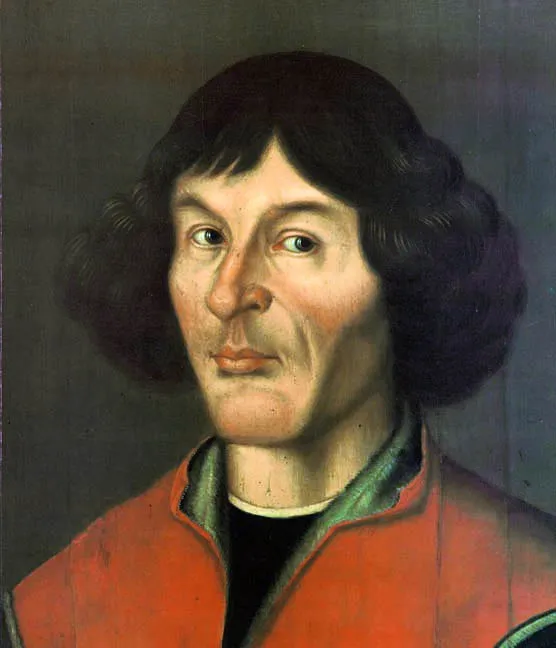
Temporarily called ununbium, copernicium, the new element 112, was named for Polish astronomer Nicolaus Copernicus (1473-1543), who first suggested that the Earth revolves around the sun, not the other way around, and starting the "Copernican Revolution." In a statement released in July 2009, Sigurd Hofmann, head of the discovery team at GSI Helmholtz Centre for Heavy Ion Research in Germany, said they named the element after Copernicus "to honor an outstanding scientist, who changed our view of the world."
Hofmann and his colleagues first created a single atom of this extremely radioactive element on Feb. 9, 1996, by smashing together zinc and lead. Since then, a total of about 75 atoms of copernicium have been created and detected. It wasn't until 10 years after the discovery and multiple repeat experiments that the working group recognized element 112.
Roentgenium, after a modern physicist
Element number 111, officially renamed roentgenium by the General Assembly, was originally discovered in 1994 when a team at GSI created three atoms of the element, about a month after their discovery of darmstadtium, on Dec. 8. The working party needed a repeat performance to officially name the element, so the team repeated its experiment in 2002 and made three more atoms.
Roentgenium was named after German physicist Wilhelm Conrad Roentgen (1845 – 1923), ridding itself of its temporary name unununium, Roentgen was the first to produce and detect X-rays, on Nov. 8 1895. He won the Nobel Prize in physics in 1901 for the work. [Nobel Prize in Physics: 1901-Present]
Darmstadtium mighty number 110
Darmstadtium, the new element 110, which took the temporary name ununnilium, was first synthesized on Nov. 9, 1994, at the GSI facility near the city of Darmstadt. It was discovered by Peter Armbruster and Gottfried Münzenberg, under Hofmann's direction. It was created by crashing a heavy isotope of lead with nickel-62, which created four atoms of darmstadtium. The experiment was repeated with nickel-64, creating nine more atoms.
Robert Kirby-Harris, chief executive at the Institute of Physics and secretary-general of IUPAP, said, "The naming of these elements has been agreed in consultation with physicists around the world and we're delighted to see them now being introduced to the Periodic Table."
You can follow LiveScience staff writer Jennifer Welsh on Twitter @microbelover. Follow LiveScience for the latest in science news and discoveries on Twitter @livescience and on Facebook.
Editor's Note: This article was updated to reflect that Copericus's nationality was Polish, not Russian.

