

Why old games are better than new games
Today's games are huge, detailed, expensive, becoming more and more realistic graphically, seem endless through hundreds of quests and hours of play, and have a huge community behind them that meet in the multiplayer game.
You can spend hours riding across the prairie, driving across an entire state or chasing criminals through Bolivia without even fulfilling a mission. But why can't games today capture the flair of games from 10 or 20 years ago to stay in our memories?
The past vs. today - a striking difference
There is a small but subtle difference between new and old games that can make game worlds fall into oblivion or burn them into your memory: The minimap or the navigation device!

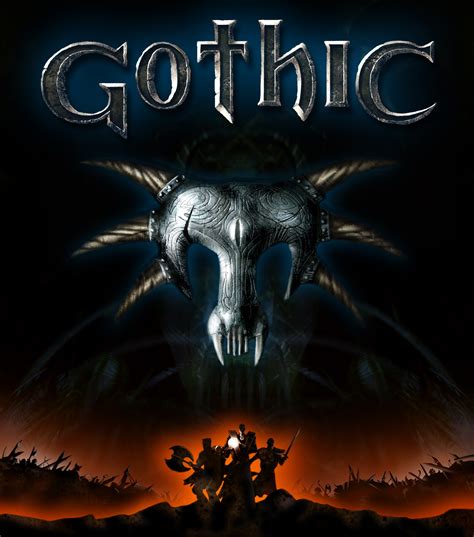
In Gothic from 2001, the place where you had to solve a quest was described in detail. You had to remember exactly who the client was, where the described place was and where the client was again.
That is, games were a cognitive challenge for gamers, which even trained the brain. Unlike today's agents.
One is led bluntly from A to B to nameless conversation partners with an arrow over the head, so that one does not overlook them. You don't know where the person you are looking for, the cave or any other place is. Instead, a short sentence in the sense of "do something" with no less information and the player immediately knows where to go and what to do.
With maps that have a size of an entire federal state, this hustle and bustle can be very frustrating, because once you have arrived, you can scan the surroundings at the push of a button and thus immediately find the treasure you are looking for or the person you are looking for only has to switch off at the push of a button combination.
Fights or stealth mode are often the only challenges in the game. The rest of the time and this takes up a large part of the time, is pointless roaming around and looking at beautiful landscapes. However, this makes it impossible to remember places, places or entire cities.
Even 15 years after Gothic I know what it looks like in the old or new camp, I know striking places in the swamp camp and the paths that connect them. I can still walk through the old camp in search of Diego when I close my eyes. I still know old names like Lares, Lee, Wolf, Xardas or the greeting of God "For Innos". I still play this game in my mind, because I got to know every place and every character and had to memorize these details.
That won't happen to me at Tom Clancy's Ghost Recon Wildlands or Assassin's Creed Origins. Even if Ubisoft's Assassin's Creed Origin takes a step in the right direction and omits the minimap. However, there is a kind of compass that shows you the direction and, worse still, it is the icon that shows the exact location of the person/place. That's why next year I don't know a single name or exactly what it looked like in Egypt or Bolivia, despite extremely in love detail. And this is solely due to the fact that you no longer have to use your own brains to remember places or people.
The game world of Gothic is far from the scale of today's maps, which is not necessary either. It is not necessary to make the cards bigger and bigger. On the contrary, the bigger the game world is, the more there is to overlook. It is more advantageous to develop a smaller world and get the player to explore the area than a huge map, in which one only steers on an arrow in the minimap or even gets the way prescribed and flies over the detailed landscape.
This small but nice difference, to leave the map out of the game, manages to integrate the player more into the environment and to let him recognize places if he passes them a second time.
Gamers do not need a babysitter
Furthermore, there don't have to be hundreds of quests to fill a game. As described above, it is enough to integrate the search for the location or the person into the quest with clues and location descriptions, especially since repetitive missions quickly become monotonous and the lust disappears after only a few hours.
The player's skills are no longer trusted, otherwise, there would be no such "help at the push of a button". It is unusual that targets are automatically aimed at, game scores are automatically saved every second and that the health automatically heals by itself.
Why are players no longer left alone on a single mission? I remember looking for Xardas tower for hours, only with the help of a detailed map which I had to open every time with "m".
The level of difficulty has become much easier and less demanding in recent years. It's not for nothing that Dead Rising 4 integrates additional levels of difficulty into the game at the request of the community. The answer is simple: publishers don't want to frustrate their customers because that would be bad for business. That's why they are quickly showered with trophies and rewards without really doing anything.
The aim is to activate the reward centre Nucleus accumbens by releasing dopamine, the happiness hormone. Even when such searches border on frustration, there are always forums for particularly difficult quests that exchange information and give tips. So thanks to the internet, you're not alone anymore.
Former hobby, today job
However, the Internet is not exclusively conducive to gaming. Of course, competing with other players on the battlefield is tempting for many gamblers.
What is destroyed, however, is the individuality of the player to identify himself as an outstanding hero in the game. One becomes only one of many, who is rarely at the top.
This makes the game extremely difficult to play. For example, why doesn't the new Star Wars Battlefront have an offline mode where you only fight bots for supremacy, as was the case with the old Star Wars Battlefront for PlayStation 2, instead of players who bought better weapons and abilities with real money?
Why are there not unrestrictedly the same modes offline as in online mode? I bought all parts of Battlefront, for months I played only the two parts for the PS2, to escape into an unreal world where you can be the only hero makes sense in games.
Instead, it is only developed to make as much profit as possible from the players. Fun is no longer important. Games are also becoming e-sports worth billions with tournaments, leagues and paid players. Not for nothing, most football clubs have their own teams for EA's Fifa.
Young people get apartments and are paid to represent their club at Fifa and do nothing more than gamble 6, 7 or 8 hours a day just to get better and better and stand out from the huge crowd of players.
Sounds like a dream come true at first, but I doubt that these guys still have fun with Fifa. For normal gamblers with the main occupation during the day, it is therefore completely impossible to advance online in league 1 without frustration.
Where did the classic co-op games go?
It is noticeable that new releases of the last few years hardly contain a classic co-op mode, as is the case with Resident Evil 5 and 6, whose story is split-screen, ALL WITHOUT INTERNET.
I understand that in times of digitization, even video games have to adapt, especially video games! and that there are many possibilities to meet in the game from home and to measure against others in the MMO.
MMO, however, has gradually replaced the classic co-op (i.e. the cooperative game together against opponents). If there is a co-op mode in today's games, then it is more co-op elements that are offered in addition to the singleplayer and online mode, as is the case with GTA 5 or Call of Duty (Zombie mode).
Why can't I play the stories of the current games together in the split-screen on ONE console? If you ask publishers, you won't get a satisfactory answer without the words "money", "margin", "profit" or "costs". An extensive co-op mode is an absolute purchase reason.
Nevertheless, games and consoles theoretically sell twice as well if everyone needs the game and the console to meet from home in the game world. That's probably why Halo 5 doesn't have a split screen anymore! I have never played Halo alone before, but always with a friend and even four of them together it is 100 times more fun than against 64 strangers.
But the trend is slowly returning to playing through the story online in co-op mode. Examples are Ghost Recon Wildlands, Destiny, or Far Cry 5, but it's absurd as mentioned above that the old Star Wars Battlefront parts are sometimes more extensive than the new ones.
The first parts offer the same offline modes as online, have a lot more worlds and heroes/rogues to choose from. I hope there will be more co-op possibilities in future games, because some titles are predestined for it like GTA, Uncharted, Call of Duty and similar series.
It is simply much nicer to experience the story with a friend, which also promotes social interaction. Nevertheless, there have been a number of really good co-op games in the last decades.
Release despite bugs

Thanks to the advantage of the game's connectivity to the Internet and the ever faster bandwidth, publishers are not in a hurry to bring a game to market error-free or the pressure of a fixed release date is simply too high for developers to eliminate the last bugs.
Finally, all gamers are connected to the World Wide Web and can download a patch as big as some games a few days later. Think of Wildlands with patches over 10 GB, which didn't change noticeably and didn't correct the errors I noticed.
This makes it impossible for the four of us to meet for a spontaneous session in Bolivia when everyone has to download an unnecessary patch for hours.
This turns spontaneous sessions into organized meetings that require anticipatory action.
Another prominent example is that of the long-awaited successor of Stronghold Crusader, whose first part appeared over 15 years ago. You wouldn't even declare such games as beta test versions anymore.
The first part was coherent and nothing was missing. Even the graphics in 2-D had more ambience than its successor, which is proof that more technology is not just better, but how to implement it. Even today, after more than 15 years, I still find little loving subtleties that I had never noticed before. Stronghold Crusader II offers a veritable firework of bugs, with the developers even going one better and simply omitting valuable tools like the architect's view (spacebar), which makes building the wall in a 3-D world more difficult than in a two-dimensional world.
This game urgently needs a 10 GB patch. The list of bug-contaminated releases continues: for example Batman: Arkham Knight, which even had to be taken off the market, or Tony Hawks Pro Skater 5, which received a day-one-patch just one day after the launch, a patch to fix all bugs, which was even bigger than the game itself.
But even after Day One patches, there are still disastrous bugs or bizarre slicks. In the past, the pressure on developers was much higher, because undiscovered bugs (and they can happen) were difficult to fix.
My suggestion
Leave out the minimap or navigation and trust the abilities of the players again. This benefits everyone, both players and developers. The developers put an enormous amount of time and love into the details of the game worlds and want to be appreciated. Games want to be discovered and explored with your own eyes and not ended as quickly as possible.