Every MkDocs Bug Became a Package: Material for MkDocs, APM, and Teachable AI Agents

The setup It started with a deceptively simple deliverable: take a documentation-heavy internal project — a couple dozen Markdown files of runbooks, long operational checklists, reference tables packed with links, and a set of Architecture Decision Records — and turn it into a proper documentation site. Markdown in a git repo is fine for engineers. But this content needed to be navigable — something a team can actually use under pressure. That means a real docs site: search, navigation, dark mode, rendered Mermaid diagrams. ...

June 11, 2026 · 10 min · 2001 words · Pavel Nasovich

Why LLM VRAM Estimates Fail: Building a Source-Backed Calculator for Local Inference

Most local LLM planning starts with a number that looks useful and fails exactly when the workload gets interesting: model_size ≈ parameters × bytes_per_weight That shortcut answers only one narrow question: roughly how much memory the model weights need. It does not answer the question people actually care about: Will this model run well on this hardware, at this context length, with this runtime, for this workload? That distinction is why I built llm-vram-calculator. ...

June 8, 2026 · 17 min · 3526 words · Pavel Nasovich

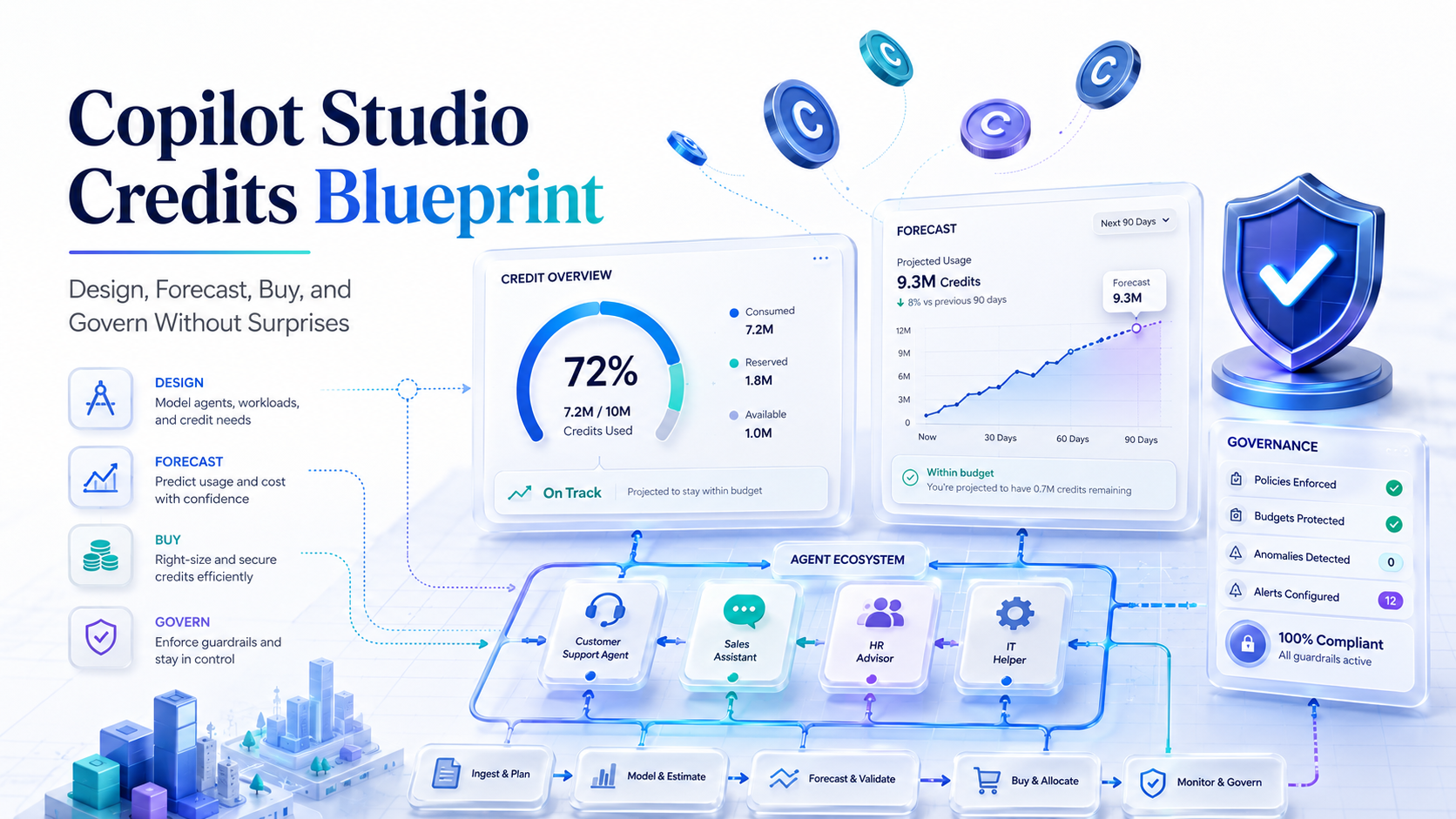
Copilot Studio Credits Blueprint: Design, Forecast, Buy, and Govern Without Surprises

Treat Copilot Studio like a metered cloud platform, not a chatbot license. The unit you manage is no longer “messages.” Microsoft says Copilot Credits are the common currency across Copilot Studio capabilities, and that the change from messages to Copilot Credits started on September 1, 2025 with no change to prepaid pack quantity or pay-as-you-go rate. S1 That wording matters. A single user-visible agent run can burn several meters at once: classic answers, generative answers, tenant graph grounding, agent actions, agent flow actions, prompt tokens, premium reasoning tokens, document pages, images, and voice minutes. If the forecast is still based on raw conversation count, it is the wrong model. ...

June 4, 2026 · 21 min · 4266 words · Pavel Nasovich

Use a Surface Slim Pen 2 as a Slidev Clicker

The Surface Slim Pen 2 can work as a tiny Slidev clicker. The trick is not to make Slidev understand a pen. It is to make the pen emit the same keyboard actions Slidev already understands: single click -> Right Arrow or Space -> next animation or slide double click -> Left Arrow -> previous animation or slide long press -> F -> fullscreen That is the whole setup. The annoying part is that the Slim Pen 2 is not a presentation remote by default. Windows treats the top button as a Bluetooth shortcut button for Windows Ink-style actions, while Slidev listens for keyboard navigation. So you need a small remap layer between the two. ...

June 4, 2026 · 6 min · 1164 words · Pavel Nasovich

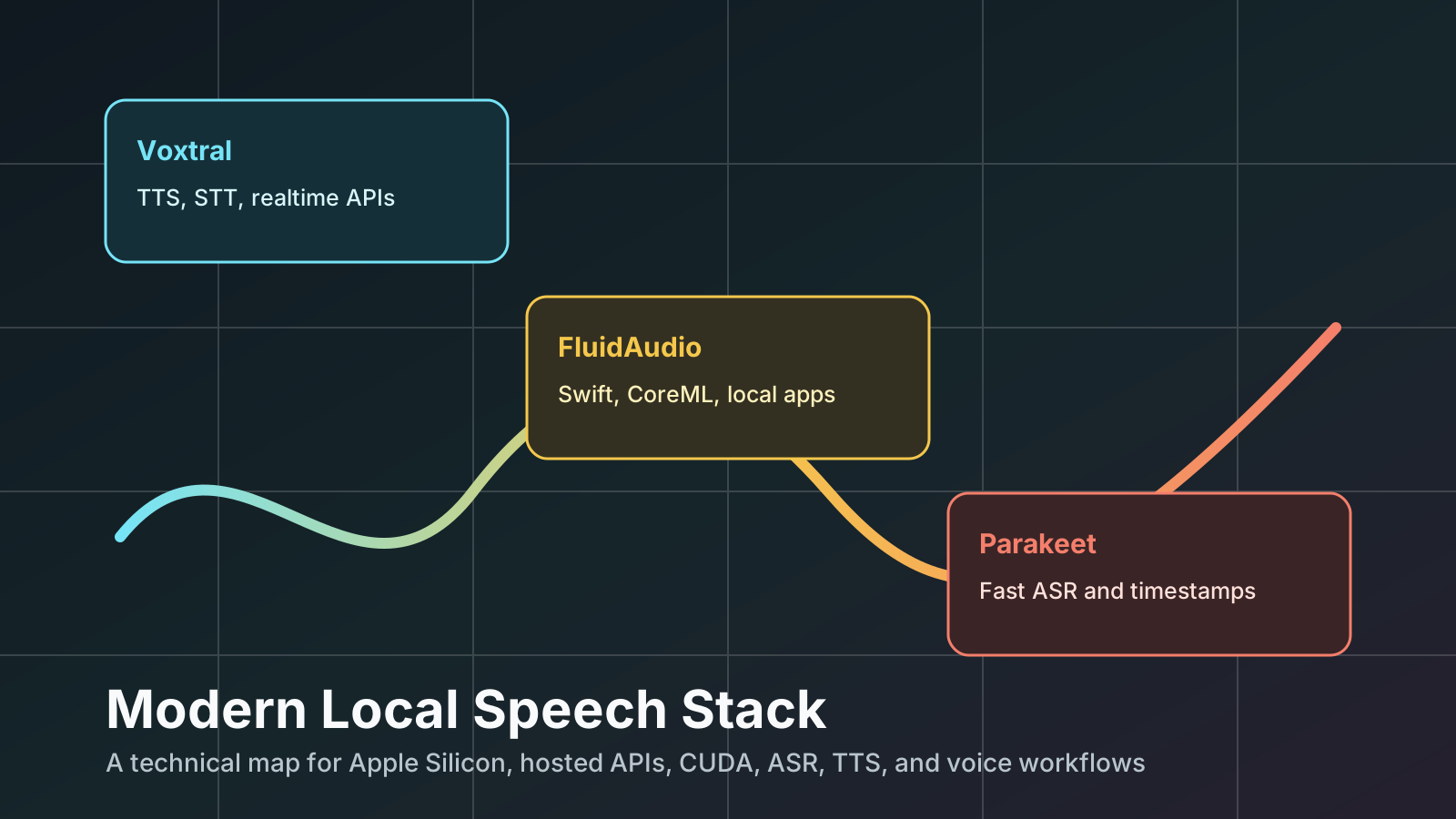
Voxtral, FluidAudio, and Parakeet: A Deep Technical Map of the Modern Local Speech Stack

The speech stack has split into three very different shapes. One shape is a model family: Voxtral. It is Mistral’s audio line, with text-to-speech, speech-to-text, realtime transcription, and API-centered voice workflows. Another shape is a native Apple SDK: FluidAudio. It is not one model. It is a Swift/CoreML pipeline for local transcription, voice activity detection, diarization, and TTS on macOS and iOS. The third shape is a recognition engine: Parakeet. It is NVIDIA’s ASR family, built around FastConformer/TDT variants, optimized for very fast and accurate speech-to-text. ...

May 29, 2026 · 25 min · 5175 words · Pavel Nasovich

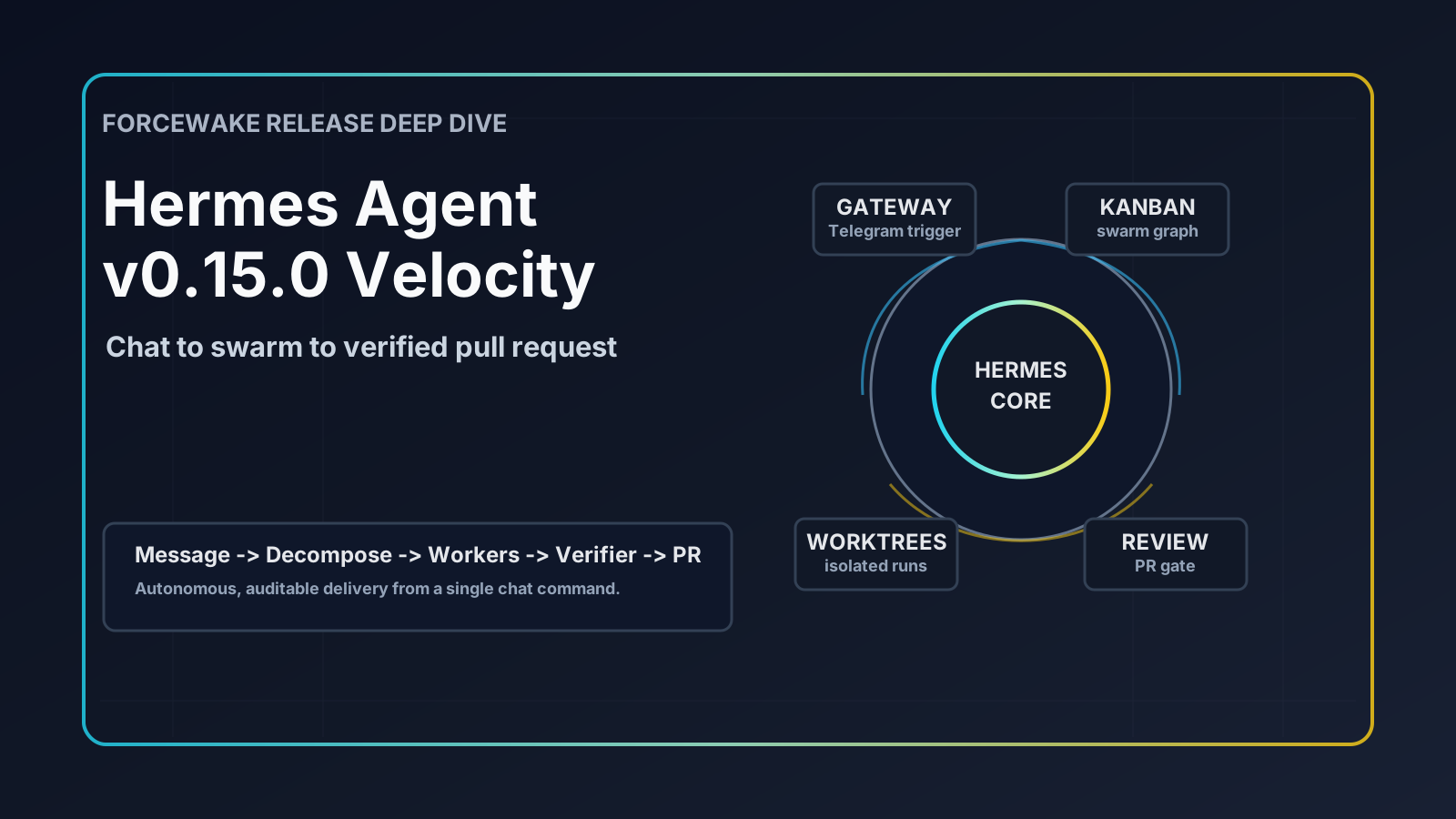
Hermes Agent v0.15.0: The Velocity Release — A Deep Dive into Autonomous Multi-Agent Orchestration

How a single Telegram message can spin up a swarm of AI agents, decompose your work, run a TDD pipeline in isolated git worktrees, and ship a PR — all while you’re asleep. TL;DR Hermes Agent v0.15.0 (codenamed The Velocity Release) landed on May 28, 2026 with 747 PRs, 1,302 commits, and 321 contributors. It transforms Hermes from a smart chat-driven coding agent into a production-grade autonomous multi-agent orchestration platform. The big-ticket items: ...

May 28, 2026 · 14 min · 2856 words · Pavel Nasovich

Don't Give Keys to AIs: Microsoft FIDES and the Control Plane Agents Need

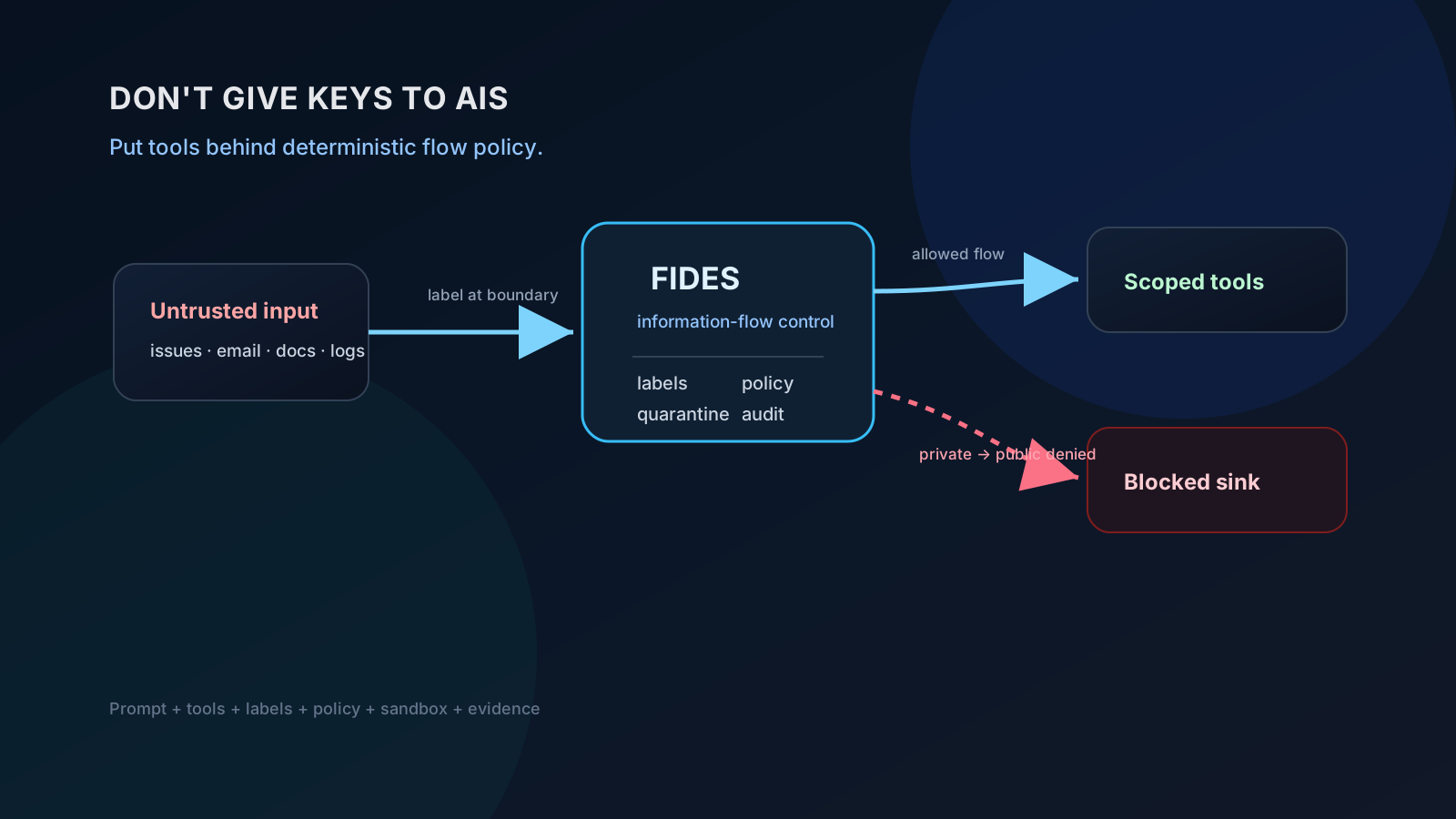
I do not trust agent demos where the same model context can read a public issue, inspect a private repository, and post back to the internet with one broad token. That is not autonomy. That is a breach waiting for a better prompt injection. Prompt injection is usually framed as a model problem: the model read hostile text and followed it. I think that framing is too small. The real problem is authority. We keep putting hostile text, private data, and privileged tools into the same execution loop, then asking the model to behave. ...

May 20, 2026 · 10 min · 2076 words · Pavel Nasovich

Agents Need CI, Not Vibes: Evaluating Microsoft 365 Copilot Agents

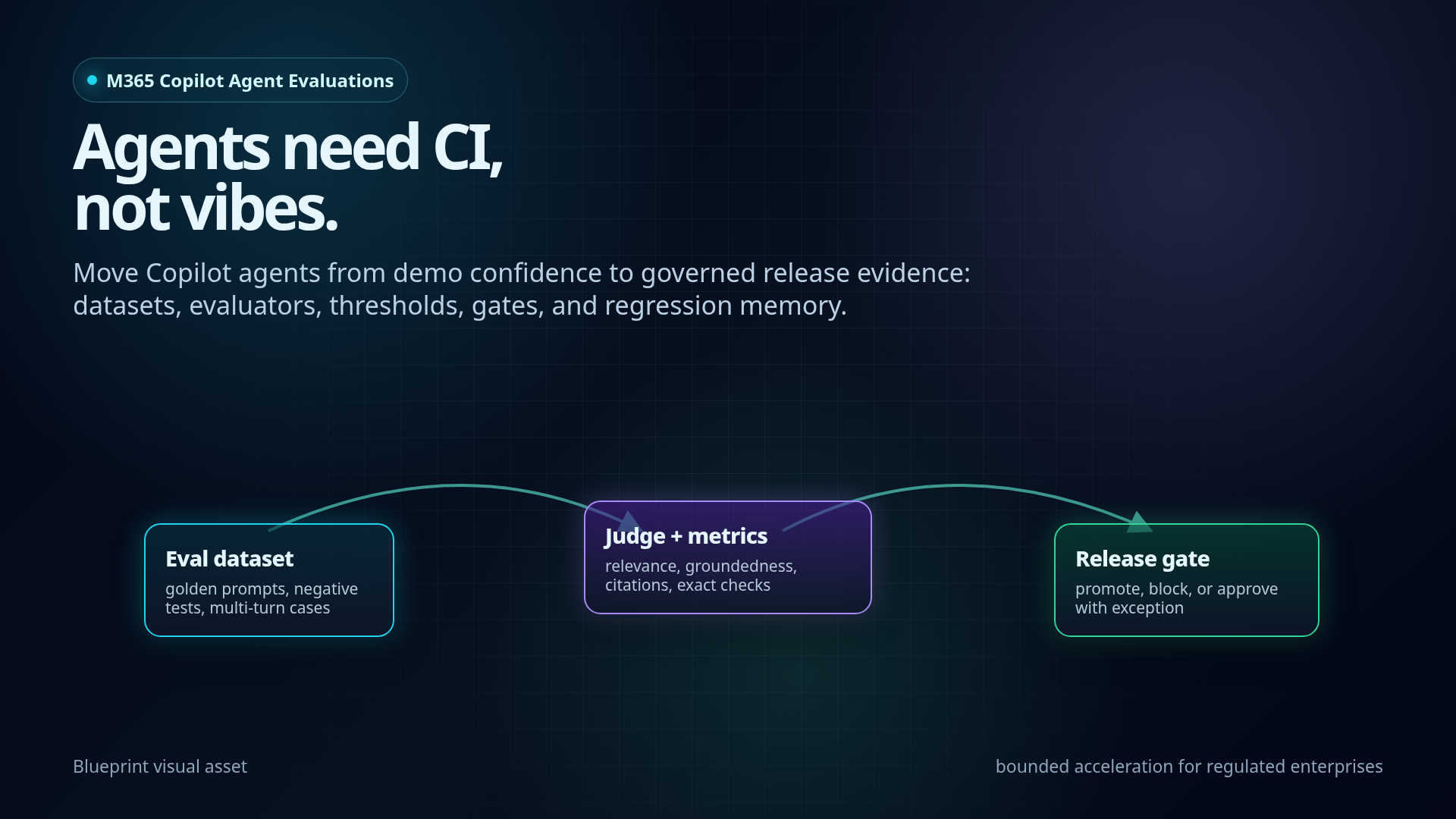
Microsoft 365 Copilot agents are crossing the line from demo artifacts into software products. Once that happens, manual spot checks are not enough. A production agent needs a release discipline: evaluation datasets, judge configuration, thresholds, CI/CD gates, evidence packages, and regression memory. Not as governance theatre. As the shortest safe path from “nice demo” to “we can ship this and explain why.” This is the blueprint I would use to move a Copilot agent from vibe-based confidence to governed delivery. ...

May 15, 2026 · 18 min · 3701 words · Pavel Nasovich

Managing AI Agents and Code Context in 2026: Context, Cost, and Control

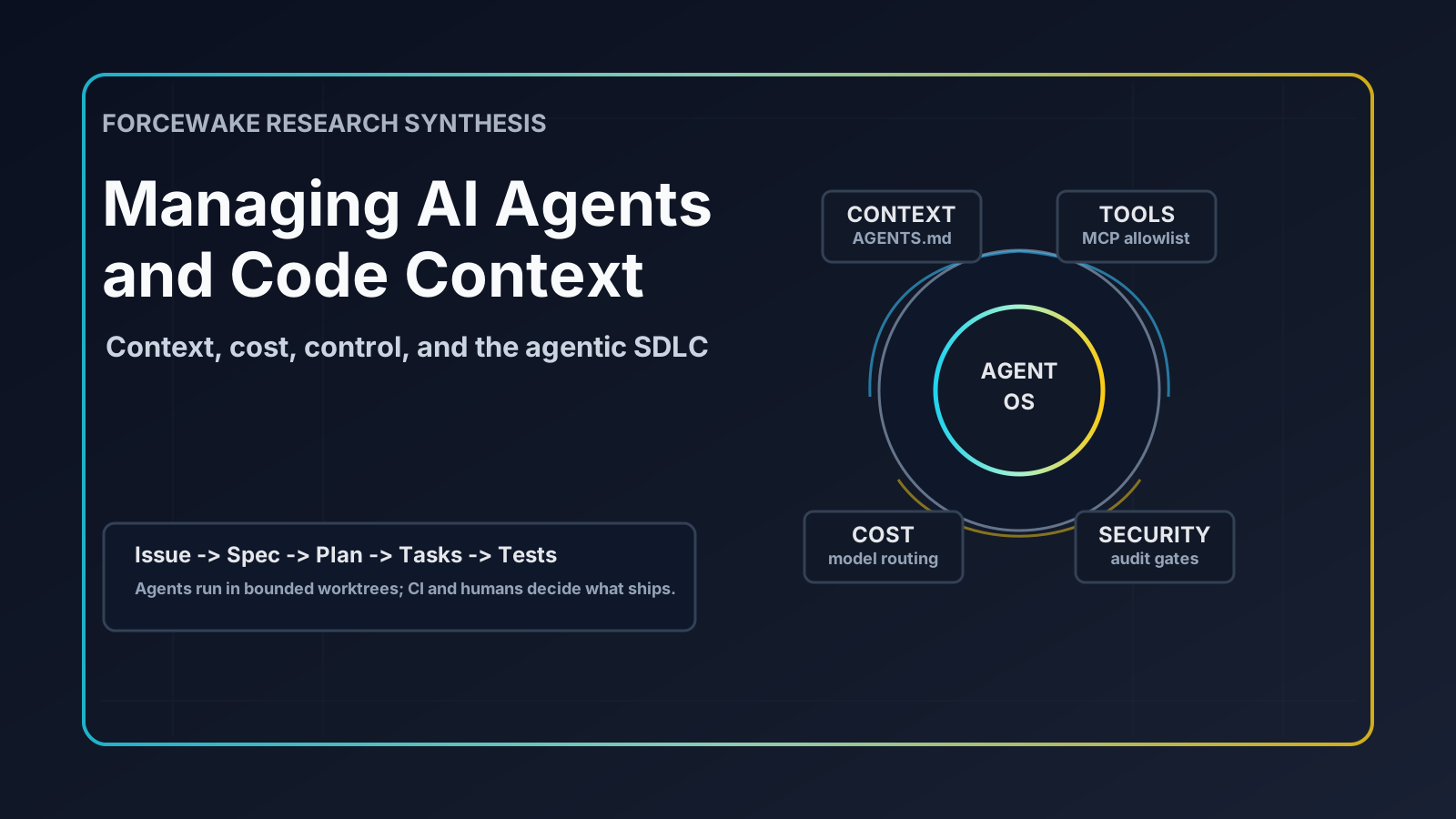
As of May, 2026, the strongest pattern in AI coding is not “give the agent a bigger context window.” It is the emergence of a controlled agent operating layer around the repository. That layer has a few recognizable parts: canonical instructions in version control, path-scoped rules near the code they govern, task specs before implementation, bounded subagents, MCP/tool allowlists, sandboxing, audit logs, cost-aware model routing, and a verification loop that does not confuse “the agent says it passed” with evidence. ...

May 6, 2026 · 19 min · 3980 words · Pavel Nasovich

Inside Skills for Copilot Studio: YAML-Native Microsoft Agents for AI Coding Tools

As of April 18, 2026, the latest revision in my local clone of microsoft/skills-for-copilot-studio is commit 5c1cc83, tagged v1.0.8, with recent release-process work merged on April 14-16, 2026. Microsoft also labels the repository an experimental research project, which is the right framing: this is not a finished product so much as a serious attempt to make Copilot Studio agents behave like code instead of opaque portal artifacts. S1 S3 S4 S17 That distinction matters more than it sounds. Copilot Studio has always had a tension between low-code authoring and engineering discipline. This repo picks a side. It says an agent should live as a folder-backed YAML bundle, should be editable by AI coding tools, should be checked against schema and runtime constraints, and should move through a repeatable clone -> author -> validate -> push -> publish -> test loop. S1 S2 S5 S8 ...

April 17, 2026 · 16 min · 3348 words · Pavel Nasovich