
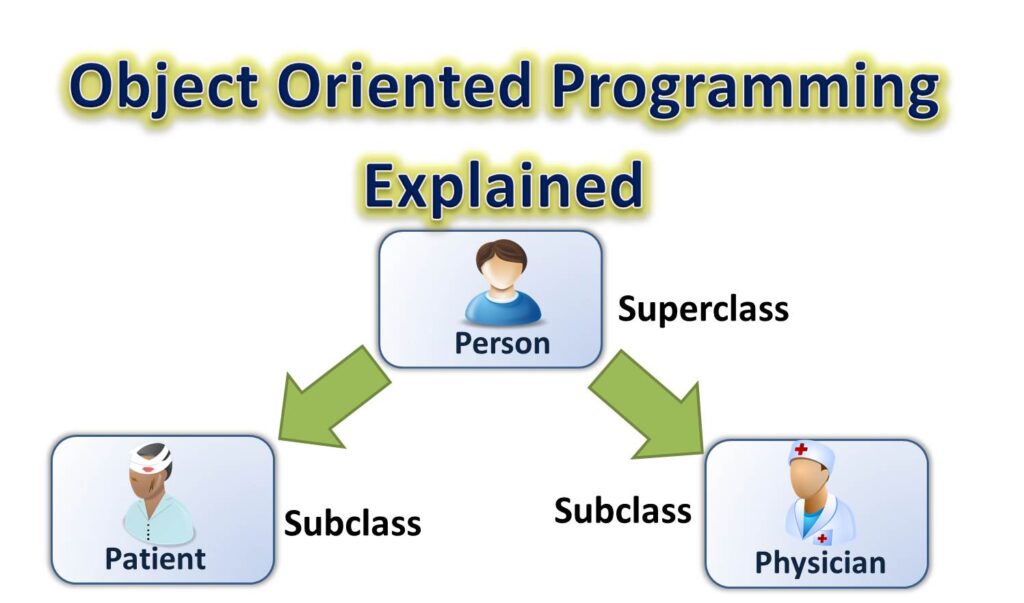
Imagine diving into the world of programming where everything revolves around real-world concepts. Object oriented programming examples bring this idea to life by allowing you to model complex systems using objects that represent both data and behaviors. Have you ever wondered how applications like social media platforms or video games manage their intricate functions?
Overview of Object Oriented Programming
Object-oriented programming (OOP) is a programming paradigm that organizes software design around data, or objects. Objects represent real-world entities and consist of attributes (data) and methods (functions). This structure allows for more manageable code and promotes reuse.
Common examples of OOP languages include:
- Java: Known for its portability across platforms, Java utilizes classes and objects extensively.
- C++: An extension of C, C++ supports OOP with features like inheritance and polymorphism.
- Python: Offers simplicity while enabling the creation of classes to model complex behaviors.
You often see OOP in real-world applications. For instance, in social media platforms, user profiles can be treated as objects containing data such as usernames and posts. Similarly, video games use objects to represent characters or items with distinct properties and behaviors.
- Encapsulation: Bundling data with methods that operate on it ensures better control.
- Inheritance: Allows new classes to inherit characteristics from existing ones, reducing redundancy.
- Polymorphism: Enables one interface to be used for different underlying forms (data types).
Incorporating these principles results in clearer structures within your codebase. Thus, understanding these concepts enhances your ability to write efficient programs that reflect real-world scenarios accurately.
Common Principles of Object Oriented Programming
Object-oriented programming (OOP) relies on several core principles that enhance software design and functionality. Understanding these principles helps in creating efficient, scalable applications.
Encapsulation
Encapsulation hides the internal state of an object and only exposes a controlled interface. This means you can manipulate the object’s data without directly accessing it. For example, consider a class named BankAccount. You might have private variables like balance and public methods such as deposit() and withdraw(). These methods control how balance changes occur while keeping the actual balance secure from external interference.
Inheritance
Inheritance allows one class to inherit properties and behaviors from another class. This promotes code reuse and establishes a hierarchical relationship between classes. For instance, if you create a base class called Vehicle, subclasses like Car or Truck can inherit attributes such as numberOfWheels or methods like startEngine(). This structure makes your code cleaner and easier to manage.
Polymorphism
Polymorphism enables objects to be treated as instances of their parent class. It allows different classes to define methods that share the same name but behave differently based on their specific implementations. For example, both a Cat class and a Dog class can implement a method called makeSound(), where cats meow, and dogs bark. By using polymorphism, you can call this method on any animal object without needing to know its exact type at compile time.
Abstraction
Abstraction simplifies complex systems by hiding unnecessary details. It focuses on exposing only relevant features while concealing implementation specifics. For instance, when interacting with a remote server through an API, you use high-level functions without needing to understand the underlying protocols used for communication. This approach enhances usability by reducing complexity for developers working with the system.
Real-World Object Oriented Programming Examples
Object-oriented programming (OOP) finds practical applications in various domains. Below are notable examples showcasing how OOP principles enhance functionality and code management.
Example 1: Banking System
In a banking system, classes represent accounts, transactions, and customers. Each account class can encapsulate attributes like balance and account number along with methods for deposit and withdrawal. For instance:
- Account Class: Contains properties such as
accountNumberandbalance. - Transaction Class: Handles methods like
executeTransaction()to perform operations.
This structure ensures data security through encapsulation while allowing inheritance for specialized accounts, like savings or checking.
Example 2: Online Shopping System
An online shopping system utilizes OOP to manage products, users, and orders efficiently. Each product can be an object with properties like name and price. The user class may include information on addresses or payment methods. Key components include:
- Product Class: Encapsulates details such as
productID,description, andprice. - Order Class: Manages order-related functionalities via methods like
calculateTotal().
Inheritance enables the creation of different types of products—like digital or physical—while polymorphism allows diverse behaviors for processing payments.
Example 3: School Management System
In a school management system, OOP facilitates organization through classes for students, teachers, and courses. Each student object might store personal information alongside enrollment details. Consider these elements:
- Student Class: Includes properties such as
studentIDand grades. - Teacher Class: Contains methods to assign homework or evaluate students.
Within this framework, inheritance supports various roles within the educational environment—like part-time or full-time teachers—while abstraction simplifies complex processes by focusing only on necessary details for each role.
Benefits of Using Object Oriented Programming
Using Object-Oriented Programming (OOP) offers multiple advantages. One key benefit is improved code organization. By organizing code into classes and objects, it becomes easier to manage complex systems. This structure not only enhances readability but also simplifies debugging.
Another significant advantage is code reusability. You can create a base class and extend it through inheritance, which reduces redundancy in your code. This leads to faster development times since you can leverage existing functionality instead of rewriting it.
Additionally, encapsulation enhances data security by restricting access to an object’s internal state. With encapsulation, you control how data interacts with the outside world, minimizing risks associated with unauthorized access or unintended modifications.
Moreover, polymorphism allows for flexible method implementation. Different classes can define methods that share the same name yet behave differently based on their respective implementations. This flexibility makes it easier to expand applications without altering existing code structures.
Lastly, abstraction simplifies complex processes by focusing on relevant details while hiding unnecessary complexity. It enables you to work at a higher level without getting bogged down by intricate details, thereby improving productivity in software development.
OOP fosters better organization, reusability, security, flexibility, and simplicity in coding practices—making it a preferred choice among developers across various programming languages like Java and Python.