
' ' or " "
THAT one star review and the tangent it sent me on
So maybe we all saw this?

If you missed it — especially if you’re a UK author, and you exist — you’re welcome. There’s so much to chortle about with this and I’m not going to go into it - the replies on Twitter did it as much justice as you can imagine. But as well as being snort-worthily hilarious it did get me to thinking about punctuation, how it can be a serious distraction and why that reviewer is all kinds of wrong about single speechmarks…

As an editor I find punctuation diverting and that’s a good thing (isn’t it?) but what you might not realise is that it can be distracting too. It can have a frustrating habit of catching the eye — usually the opposite of what we want from it. Periods, commas, and yes, speechmarks, should be more or less invisible - doing a job, guiding our reading and understanding, but toiling away without drawing attention to itself. A bit like servants in a fancy nineteenth-century manor house.
But sometimes they can’t help causing a scene, it’s usually not their fault, and these “” are (IMO) the worst for it ... they are just so … obvious.
I’m terrible for skipping over the narrative to the next bit of speech. It might be that I’m tired, or (sorry author) the scene is dragging, and often I’m more interested in what the characters are going to say next (dialogue is my thing). Those pesky speechmarks are the enablers of my skim-reading.
Punctuation, as well as other formatting/style choices, can be a huge distraction on the page, from using ALL CAPS (did your eye go there immediately?) to excess use of italics (soooo tiring on the eye), groovy fonts, bold and parenthesis. Your brain can’t help it, it’s made to spot deviations from the norm, it’s on the lookout for something interesting to latch on to and it can’t not go Ooooooh Baguet Script
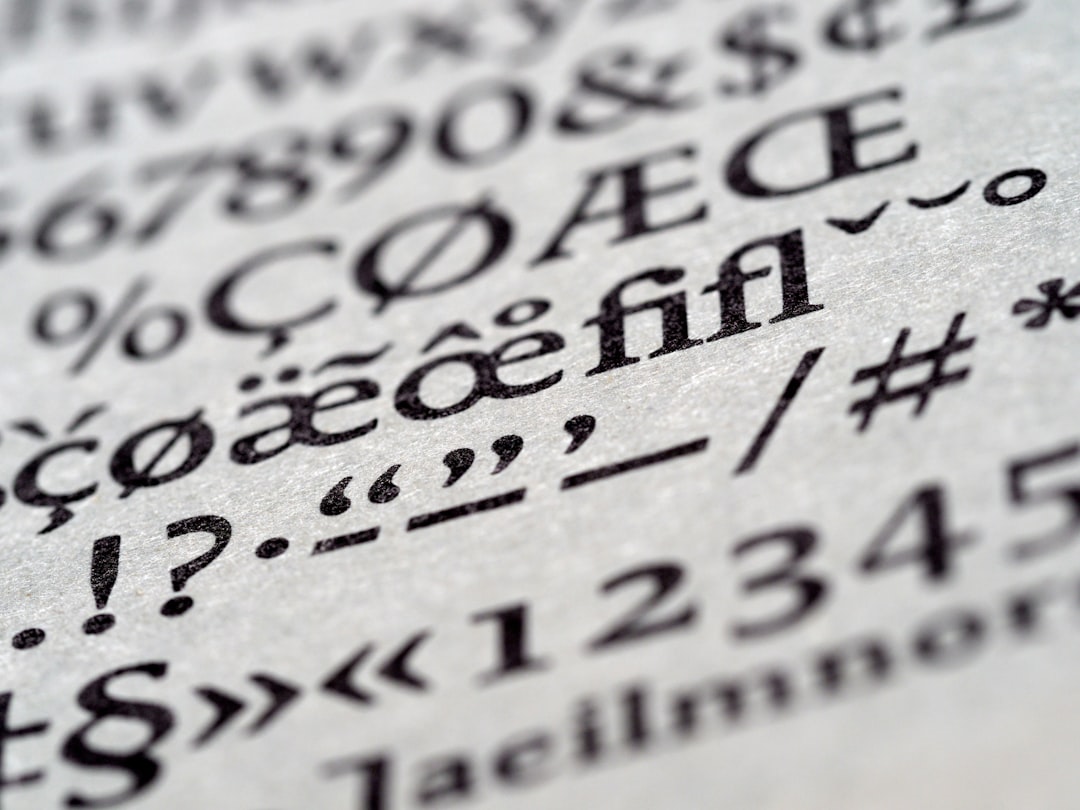
Why does this matter? Well, if you're a writer, you don’t really want readers zooming past your hard-written work. So what can you do about it?
Well, if you’re trad-published, not a lot. Your book formatting is chosen by your publisher — everything from the apparently contentious single or double speechmarks to the dash-style and typeset — and it will follow their house style. For those who don’t know (and I didn’t before I was published), house style is employed to ensure all the books released by a publisher are consistent in appearance and … well, style. Things like using a z in words ending -ise (-ize) like apologize, scrutinize, or realize (apologies to US readers if that sounds obvious); the insertion of spaces around ellipses, or not; the use of en- or em-dashes, OK or okay, leaned or leant, etc. It also covers the type used and line spacing on the page.
But, if you’re self-publishing, you have complete control over this, within the bounds of your formatting software. And, when it comes to speechmarks sorry (not sorry) but singles are less distracting than doubles. But it’s a matter of choice and expectation. If your reader is going to expect “” then that’s all fine but the alternative does not mean you’ve written bad fanfiction!!
However you’re published, you do have a certain amount of control though - make your writing engaging enough that it outshines those pesky diversions and ease up on them in the first place: italics, caps, bold etc. It can also help matters by ensuring white space on the page. This breaks up any dense text and cuts down on the brain’s hungry search for something new. Also, make sure your action beats, or the description/action between bursts of dialogue are interesting, or you may as well ditch them and stick with a simple ‘said’.
e.g.
‘He told me enough; he told me you killed him.’
Luke wonders why Vader has brought up Dad. What’s he got to do with anything, anyway? Distraction tactic perhaps? Although the impressive way his cloak blows in the wind is enough to put anyone off. (Yeah - no one is going to read this you can literally write anything here.)
‘No, I am your father.’
There are some great examples of overdoing beats in Self-Editing for Fiction Writers by Renni Browne and Dave King. I particularly like the section—using three examples—where beats change the impact of a passage of dialogue:
one with too many intrusive beats (the reader doesn’t care if he walked to the window, paused, yawned, inspected his fingernails, then turned to look back)
one with too few (what is going on? Who is saying that? I’m going back to the beginning to work out the speaker order)
and one (by Stephen King) that is peppered with beats and dialogue tags, all of which fit the flow of the narrative so fluidly that they guide the reader through without any distraction at all.
Now that, I did find diverting.

So, what else? Well, The Housetrap was published in French by Michel Lafon and is looking fabulous. I can’t wait to see it in the flesh.

And the first draft of that troublesome mystery I was struggling with in my last post is off to my editor, after a rethink of the backstory - it all makes perfect sense now … well, we’ll see.
My book recommendation for today is Finn Jones Was Here, by Simon James Green, which, despite the fun and colourful cover had me in tears on more than one occasion. For those looking to write with depth and heart about a difficult subject, with an appealingly low word count, this is a masterclass.
Eric's best friend, Finn Jones, was the world's biggest prankster. Now Eric can't believe Finn's not here anymore. ...Or is he?
Eric seems to be getting messages from beyond the grave, and as he follows Finn's wild, cryptic instructions, his hope grows that he'll find Finn laughing at the end.
The journey also brings memories - and a truth that seems impossible to accept.

As always, thanks for reading, and if there are any writing or editing tips you suddenly find you need, let me know in the comments.
If you’re editing, or about to edit, I wish you all the luck and stamina, and freshest of eyes. I’m looking forward to helping some folks out with this in June’s Writers’ Day in Bristol, with Storytale Festival’s Storytale Futures. Early bird tickets are on sale now

And, if you’ve read this far and you’d like to support this author/editor, you can buy my books anywhere books are sold; here’s a handy link to my Bookshop UK page:https://uk.bookshop.org/shop/emmaread . Leaving a review on Amazon is always super helpful to your favourite authors too, even if you haven’t bought the book there. It does magical things to the visibility algorithm and puts our books in front of fresh eyes. And, if you didn’t know, borrowing the book from your local (UK) library helps authors too, via the Public Lending Right scheme - yep we get paid per book borrowed, so go ahead and take out all your fave authors books!

See you all soon, with more news, and editing/writing tips, bye!