



The Invention
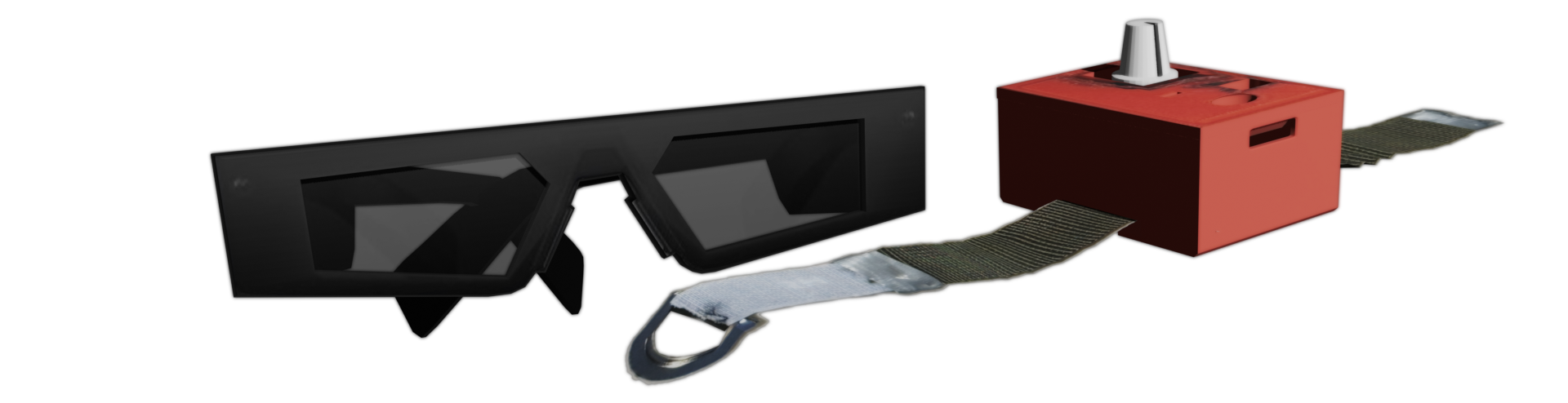
To solve historical erasure and intergenerational disconnect we built a wearable time dial to tune into different eras. We did this through an augmented reality snap spectacles app and custom watch-radio using geospatial data to view photos where they were taken and scroll through when.

The Why & Who
Every place has a story, it's just up to us to tune in. Families can import their photo albums and go on an immersive walking scavenger hunt of their lives. Displaced people can connect with their ancestors in a new way for personal discovery. Museums can use this for engaging walking tours. Be it nostalgia for memory recovery in elder care, historical education for youth, social geo-timecapsule-caching for the future, there's something for everyone with The Time Dial.


The How It Works
To scale this worldwide we would use our own servers that utilize the Flickr API to pull images filtered by geo coordinates and timestamp from photo metadata and send it to the snapchat spectacles via WebSocket based on the dial's currently selected date. The ESP32wearable will use haptics to guide you to nearby spatially anchored hotspots of 3D photos that were once taken there.

The How the Prototype Works
Reality Hack 2026 has below 0 degrees weather outside, so venturing out to demo is not a viable option, therefore we have code snippets to prove scaling feasibility, but for demonstration purposes we pull photos from Snap cloud that are sourced from The Boston Public Library's Digital Commonwealth archive of free-to-use creative commons historical photographs and two-dimensional cultural artifacts spanning 1000 years. Using the World Mesh, World Query and Spatial Anchor APIs, we procedurally placed photos across the scene as the Spectacles wearer explores the space.
The Hardware Hack!
For the hardware, we created a watch that serves as the time dial. We wanted something tactile with intentional interactions that made you feel like you were stepping back in time. For the interactions model and form factor, we were inspired by science fiction depictions of wearable time travel such as the vortex manipulator in Doctor Who. We housed the electronics in a belt like watch for maximum comfort and adjustable fit.

We used a potentiometer to tangibly scroll through the decades. An RGB LED changes color as you twist the knob to indicate time period. We also included a haptic vibration motor that reacts when the user reaches to touch a photo within the Spectacles. We wanted the user to have the ability not only to view but to hold onto the past. To reach out back in time and have time reach back.
The Challenges
The main challenge for the hardware was in the hardware-software connection as the bluetooth on-board wasn't connecting to the Spectacles. Lens Studio had a bug in the BLE code. Additionally, there were some issues in the perfboard wiring which was debugged and fixed, and establishing spatial anchors for images.


The Accomplishments & Lessons
Be it repurposed lanyards or melted plastic, our team was resourceful the entire way. We all contributed code, creativity, and stepped out of our comfort zones using tools completely new to us. Most of all we had a great time making it.
What's next?
If we are able to take home the hardware development will continue on the spectacles, otherwise we will port it to a different platform more accessible to us for potential wider release. It would be wonderful for users to be able to add their own photos to a space as well as see photos of the past as well.

Creative commons and no known restriction images sourced from the Boston Public Library's digital commonwealth collection
Background music To a wild rose, from 10 Woodland Sketches, Op. 51 by Edward MacDowell No changes to track were made, non-commercial open-source use, Creative Commons
Built With
- c++
- javascript
- lens-studio
- snapchat
- snapchat-cloud
- supabase
- typescript
Log in or sign up for Devpost to join the conversation.