The Berry Pickers, by Amanda Peters

The Berry Pickers of the title are a Mi’kmaq family who, along with many other Mi’kmaq people from Nova Scotia, make an annual trip to Maine in the early 1960s to pick blueberries. The early chapters of the novel give a sense of how this migratory work is an important piece of their lives and we get a feeling for the community that forms among these migrant workers. The family at the centre of the story is close-knit and for the most part happy, though the residential schools (which some of their children previously attended) lurk in the background as a constant thread.

A threat they are not expecting, however, strikes during a berry-picking trip in 1962, when the family’s youngest child, Ruth, disappears. No trace of her is ever found, and the family returns home, wounded by this terrible loss.

The novel is narrated partly by Joe, the brother closest to Ruth in age and the one who feels responsible for her disappearance because he wasn’t watching her at the moment when she wandered off (Joe is six and Ruthie is four at the time). The other narrator is a seemingly unrelated girl called Norma, but it doesn’t take the reader long to realize that Norma is in fact Ruthie, alive and well but growing up in a completely different world, unaware of who she really is or where she came from.

The two siblings’ stories continue on parallel lines for much of the novel as Joe tries to exorcise his guilt and grief, while Norma tries to make sense of the contradictions in her family life and her childhood memories. I found this an intriguing and satisfying book to read.

Remarkably Bright Creatures, by Shelby van Pelt

Part of a growing trend (that hopefully will grow even more) of novels featuring personal growth and maybe even a little romance for characters over 60, Remarkably Bright Creatures is the story of Tova, an elderly woman who could afford to retire but keeps her job as a cleaner at an aquarium because keeping busy helps her to cope and feel useful. Tova is grieving the death of her teenaged son 30 years ago and the more recent loss of her husband. Although she has a close-knit group of friends, she has difficulty trusting or opening up to people. But she has an unlikely bond with the octopus at the aquarium, who keeps escaping from his tank.

Octopuses (octopi?) are the “remarkably bright creatures” of the title, and Marcellus, whose tank Tova cleans, is remarkably bright even for an octopus, narrating some chapters of the book and helping, in his octopus way, to solve the mystery of Tova’s son’s drowning death all those years ago and bring her some closure. Tova’s and Marcellus’s story is interwoven with the story of Cameron, an irresponsible and rootless young man who arrives in Tova’s hometown on a quest. While the connections and the eventual resolution are pretty obvious from the beginning, I enjoyed the characters and their journey.

Blood in the Machine, by Brian Merchant

Blood in the Machine is my favourite non-fiction book that I read in 2024, and one I keep recommending to people While the subtitle is “The origins of the rebellion against Big Tech,” and the last third of the book does deal with contemporary concerns, most of the book is a in-depth historical exploration of the Luddite movement in England between 1811-1813. After you read this book, you will never again be tempted to use “Luddite” as a slur against (or a self-deprecating joke about) someone who doesn’t like or can’t use new technology. Merchant dives deep into primary sources (at least, as deep as one can in a popular, rather than scholarly, history book) to show that the original Luddites, far from having a knee-jerk anti-technology reaction, were motivated by the desire to stand up against the greed of factory owners who were introducing new technology with no concern for the impact on the lives and livelihoods of workers. The parallels to today’s situation are obvious, and may make you wish that we might see more organized labour movements and more machine-breaking today.

The Lotus Empire, by Tasha Suri

This isn’t going to be a long review, as The Lotus Empire is the third volume in a trilogy and, as is usually the case with third volumes, you shouldn’t even consider picking it up unless you’ve read the first two. If you like sweeping epic fantasy set in a world inspired by the Indian subcontinent, with two very strong and very different female protagonists who are at odds with each other but also very much attracted to each other — then you should get the first book of this series, The Jasmine Throne, and keep reading till you get to The Lotus Empire.

The main issue with finishing a trilogy is whether the author can set up a satisfying conclusion that ties off all plot points of the first two books and provides an ending that “feels right” for the main characters. Suri set herself a huge task here, since it’s clear throughout the series that any resolution that will satisfy both Malini’s and Priya’s individual goals for their nations will likely clash with each other, and will almost certainly mean they can never be together. Does Tasha Suri come up with a conclusion that will resolve the political story, the magical story, and the love story? I was not disappointed in the ending (though inevitably, invested in the characters as I was, I did have a few quibbles), but you will have to read it yourself to find out!

We Solve Murders, by Richard Osman

Richard Osman is back, this time not with another Thursday Murder Club mystery but with the first in a new series. Steve Wheeler is a retired police officer, recently widowed and carving out a quiet life in a small English village. His daughter-in-law Amy, whom Steve finds easier to talk to than his son, is a private security specialist who travels the world and lives for adrenaline. Together with the world-famous author Rosie D’Antonio, for whom Amy is currently working as a bodyguard, the Wheelers get drawn into a some high-stakes international thriller stuff that, frankly, I cannot remember any of the plot details of a couple of months after reading this book. I do remember that it was fun to read, with lots of twists and turns, including one that I managed to figure out before it was revealed.

As is often the case with mysteries and almost always the case with anything remotely resembling a thriller, I’m not really here for the plot, which I often have difficulty following (almost certainly says more about me than about the writer). A mystery or thriller will keep me engaged if the characters are engaging and believable, and this is where Richard Osman shines.

While he’s left (temporarily) the posh-retirement-village setting of the Thursday Murder novels behind, Osman still manages to match high-stakes action and offbeat comedy with a tender and insightful concern for grief and aging. While Steve Wheeler is considerably younger than the Thursday Murder Club protagonists, the end of his career and the death of his beloved wife has left him feeling like the big adventures and big emotions of life are over for him, and only small pleasures like the weekly pub quiz night remain. While there’s nothing wrong with small pleasures, the narrative arc of We Solve Murders (which will, presumably, continue in subsequent volumes) is as much about Steve learning to take risks and immerse himself in life again, as it is about international drug deals, murder, and money laundering. It’s the former, much more than the latter, that will inspire me to keep reading this series.

The Life Impossible, by Matt Haig

The first Matt Haig novel I read was How to Stop Time, which I liked a lot. Next I read The Humans, which was and remains an absolute favourite for me. Both novels used fantastic elements (a person who ages more slowly than normal so lives for hundreds of years, and an alien coming to earth and living in a human body) to explore very real questions about what it means to be human, and what is the value in a human life despite its limitations and flaws.

I was eager to read 2020’s The Midnight Library, but was a bit let down by it. The concept was intriguing, the execution OK, but the ending was absolutely predictable from the first page, so I felt less compelled and engaged than with the previous books. It seemed to me like Matt Haig’s desire to write inspirational, self-help-y type fiction was winning out over his desire to write fantastic stories. My review of it from 2020 (linked above) says that the concept was great and I enjoyed reading it, both of which are true, but I was disappointed. However, I still enjoyed Haig’s writing enough to immediately pick up next book, The Life Impossible, which was just released this fall.

Unfortunately, the sense of let-down I experienced with The Midnight Library was much worse with this book. It’s the story of Grace, a 72-year-old retired math teacher who is living alone in England, grieving the recent loss of her husband and the more distant loss of her son, when an unexpected bequest from an old friend sends her off to the island of Ibiza. This seems like a good set-up for a “you’re never too old to re-invent yourself and discover the joy of being alive” story, with a few mysterious elements early in the story promising some of those fantasy/sci-fi/magic realism elements that Haig does so well.

And really, this is exactly what you get: Grace goes to Ibiza, learns to live and love again, explores the mystery of her old friend’s death/disappearance, encounters mysterious paranormal forces, and discovers she can do more than she ever dreamed possible. As a plot summary, it’s not bad — though again, a little predictable. However, in this one I found the writing really let me down. The paranormal elements of the story felt far less like “Let’s explore this fascinating idea” and more like “Let’s throw a bunch of vaguely New Age-y ideas at the wall and sea what sticks.” And there were long passages, some from Grace’s p.o.v., some spoken by other characters, and some in books that she reads within the book, that are both woo-woo and preachy. Sadly, this one really failed to hold my attention the way the earlier Haig books I read did.

However, lots of people loved The Midnight Library and many readers seem to be liking this one, so if this is a new direction for Haig, it may be one that works well for a lot of his readers. I’m just afraid that, for this book anyway, I’m not one of those readers.

What Strange Paradise, by Omar El Akkad

This Giller-prize-winning, Canada-Reads-nominated 2021 novel opens with an image that still haunts many of us in memory: a small boy lying facedown on a beach in Turkey, dead after the sinking of a migrant boat that was trying to reach the Greek island of Kos. This is not a novel about two-year-old Alan Kurdi, whose death in 2015 was captured in images shared around the globe. But in another way, it is — because it is about all migrants, especially migrant children, and about this moment in history where we find ourselves.

The boy on the beach in What Strange Paradise is nine-year-old Amir Utu, whose family fled the war in Syria for Egypt. Amir follows his uncle onto a crowded boat that, though Amir doesn’t know it, is headed for a Greek island in hopes of finding a safe haven and a stepping stone to Europe. Unlike Alan Kurdi, Amir survives — but doesn’t find safety. On the island, a tourist-driven economy is being disrupted by the waves of refugees landing on their shores — and empathy is in short supply. When Amir meets a local teenager, Vanna, the two try to evade the soldiers who want to make sure all migrant arrivals are captured, processed, and detained in a camp.

The novel’s timeline moves back and forth between Amir and Vanna on the island, and the backstory of the voyage that led Amir there. Although the reader empathizes with Amir and wants him to find safety, this is not a simple story of black and white, good and evil (though there is plenty of evil at play). Rather, it is a novel about the complex web of motivations that lead people to become refugees, to exploit refugees, to control refugees — everyone in this story has mixed motives, except perhaps Amir himself.

The book ends with a memorable twist that is open to many different interpretations, and might change your perspective on what you’ve read in the preceding chapters. However you interpret it, this remains a heartbreaking story of the lengths people will go to to find safety, and how slim the chances are that they will actually find it.

The migrant crisis hasn’t been in headlines like it was in 2015 when Alan Kurdi died on that beach, but it hasn’t gone away, and as attitudes towards “the other” harden in many wealthy countries, decisions about how we deal with the mass movement of desperate people in search of new homes become more urgent than ever. This novel is a powerful voice to add to that conversation.

The Ministry of Time, by Kaliane Bradley

This is one of the best books I’ve read this year — immediately engaging, hard to put down, wrestling with big ideas in a compelling way. And it’s a book with heart, too: one that absolutely does not guarantee a happy ending, but does leave the reader (this reader, anyway) with a full heart.

What drew me in, of course, is that it’s a time-travel story. The first-person narrator, whose name we never learn (a device I usually hate, but it works here, trust me) is a young woman working in the UK civil service, who gets recruited into a top-secret program working with time-travellers who have been brought from various points in the past, to the present day. The narrator, whose mother was a refugee from Cambodia and whose father is English, finds points she can relate to in the experience of these refugees of history – a sense of not quite belonging in the world, of other people’s expectations not fully aligning with her self-perception.

The handful of people brought through the “time door” that the Ministry of Time appears to have either created or discovered, are all taken from crisis points in history just before their recorded deaths. The narrator is assigned as handler to Graham Gore, a member of the doomed Franklin polar expedition of the mid-1800s. From a handful of facts about the historical Gore and a single daguerrotype picture, Bradley has created a gentle, humorous, unperturbable man so real he practically walks off the page. His mix of bewilderment and curiosity about the modern world feels absolutely right, and in their odd and often funny partnership, he finds his way into the reader’s affection as surely as he does in the narrator’s.

The first two thirds of the novel are slow-paced and quiet, with the focus staying on the two main characters and the growing friendship between them — as well as some great minor characters, some of whom are also time travellers. There’s a growing mystery about what is actually going on with this time-travel program, whether someone is trying to sabotage it, what’s the real purpose behind it all — but all this remains in the background until the last third of the novel, when the pace suddenly picks up. In those last chapters the book is much more of a thriller, but it never loses its heart, its focus on the characters, and its ability to ask big, difficult questions — and at least hint at answers.

Can time travel change history? This novel’s answer to that question is one that will linger with me for a long time.

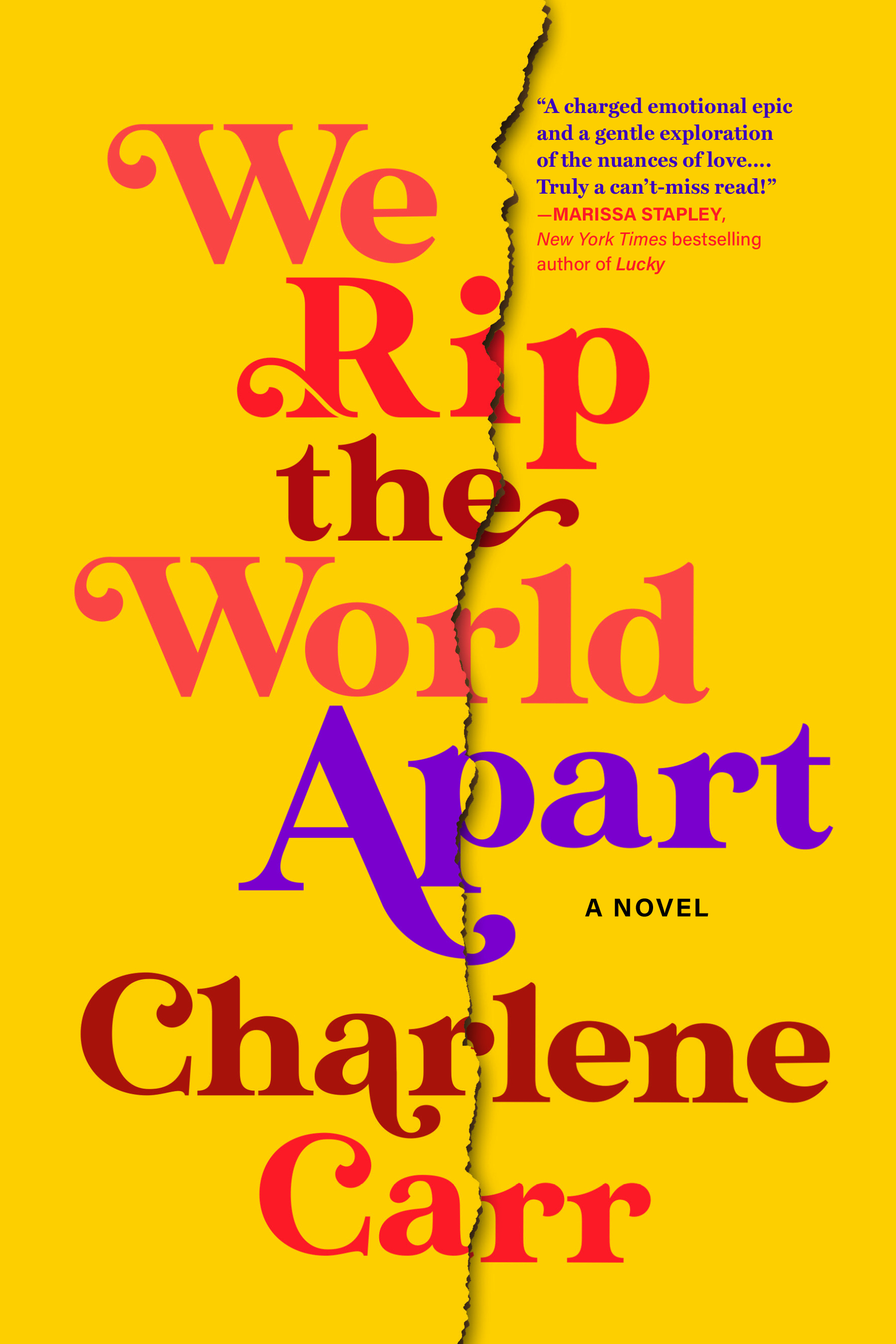
We Rip the World Apart, by Charlene Carr

This was a lovely, engaging, thought-provoking book which I read in a single sunny day earlier in the summer. It’s a multi-generational family saga about racism, parenting, the fierce love and inexplicable wounds between parents and children. There’s a present-day story of a young Canadian woman of mixed race struggling with her heritage as she questions her place in the Black Lives Matter protest movements that so many of her friends are becoming involved with, interspersed with the story of her parents’ interracial marriage and the unhealed wounds that have left such a rift in their family. This novel is deceptively light and easy to read while probing deep and thoughtful issues with care and insight.

Do You Remember Being Born? by Sean Michaels

This is a novel that was described to me as “literary sci-fi,” though I’d say there’s a much stronger emphasis on the literary than on the sci-fi. The futuristic/sci-fi element is that a famous American poet is hired for a large sum of money (an astronomical sum, to a poet) by a nameless but very huge company, to write a poem in collaboration with its AI poetry-writing software. The poem will be released to great fanfare to promote the company’s work in AI, and the poet, who has personal reasons for wanting a large chunk of cash, will gladly take the money.

This is one book where I regretted my usual decision to read it as an e-book, because in the printed book, there is apparently a textual way to distinguish between the contributions of the human writer and the AI in the poem they work on together, as well as in their online conversations, but this was not distinguished in any way in the text of the e-book, which made it hard to follow.

The poet, Marian Ffarmer, is loosely based on Marianne Moore; some of Ffarmer’s line in the book are actually from Moore’s poems, and the poetry AI program that Sean Michael’s used to create the lines the AI writes in the novel, was trained largely on Moore’s work, so it’s not surprising that it produced a passable pastiche of her writing style. For a writer and avid reader, I’m pretty bad at evaluating whether a particular piece of poetry is “good” or not — I know what moves me, what lines linger with me, but wouldn’t feel confident to say “this is a great poem,” and so was not sure how I was supposed to be reacting to the AI-written poetry in this novel. Is the AI (who is given the name “Charlotte” in the novel) actually any good? The implication is, not very, but I’m not sure I would have reached that conclusion on my own.

I found the human story of the book much more interesting — Ffarmer as a character, the way her life unfolds in backstory, particularly her struggle between being a wife/mother and being a poet, and the choices she eventually makes. The comparison to Moore is interesting here because although the fictional Ffarmer’s poetry echoes Moore’s, her biography, in most ways, does not. Also relevant, perhaps, is the fact that Marianne Moore lived from 1887-1971; assuming Do You Remember Being Born? is set in the present or very near future, Ffarmer, who is 75 when the story takes place, must have been born around 1950, which places her in a very different generation — in literary and in sociological terms. Could there even be a “famous poet” in the style of Marianne Moore, in the last quarter of the 20th century and the first quarter of the 21st? She could dress (as Ffarmer does) in the same striking tricorne hat and exhibit some of the same eccentricities, but she would be living and writing in a very different world, with different choices to make.

As for Ffarmer’s “collaboration” with Charlotte the AI, it led to some interesting questions about literature, language, humanity and the creative process — but one thing I missed was any sort of questioning about the ethics of a writer essentially training artificial intelligence to mimic human creativity. Not that that question is absent from the story — in many ways, it underpins the whole story, though Michaels himself is clearly comfortable with this kind of of experimentation, since he used it to write the book — but it was surprising to me that Ffarmer herself doesn’t spend much time wrestling with this, focusing rather on the logistics of how a human and a machine mind work together, and whether the result can be said to be truly an act of creation.