
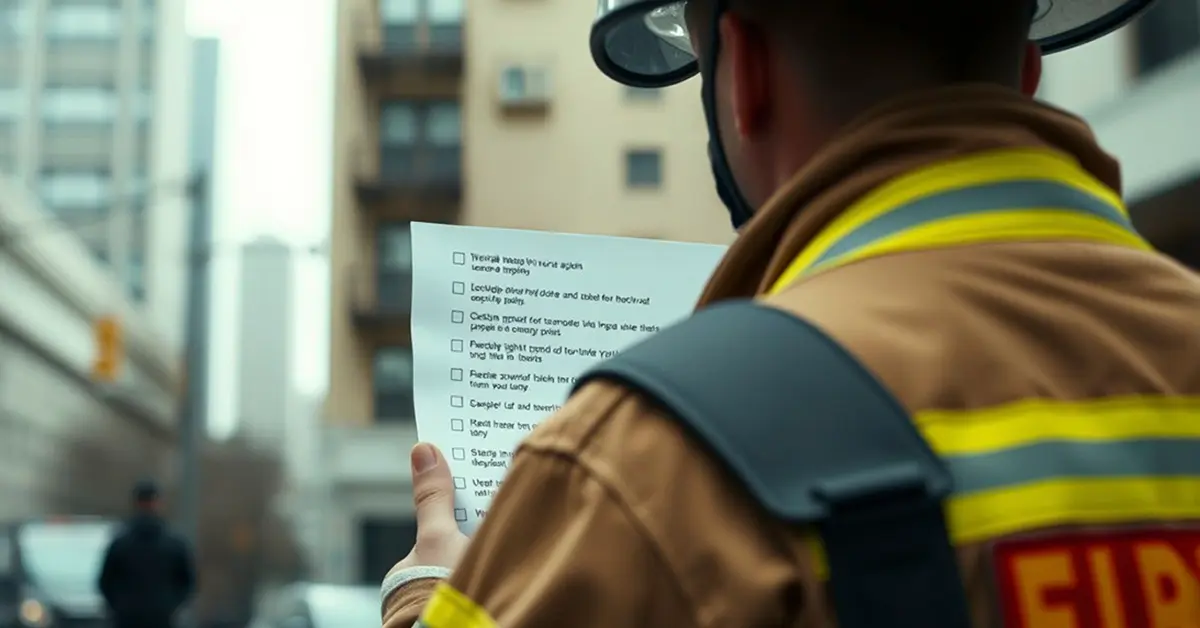
Maintaining compliance with NYC fire laws is important for both the protection of your building and the avoidance of expensive fines.
It’s critical to comprehend FDNY infractions, the consequences connected with them, and how to prevent them whether you’re a building owner, property manager, or company operator.
The most frequent fire code infractions will be broken down in this piece, along with a useful checklist and information on fire code fines and penalties that might seriously hurt your finances if you’re not cautious.
Knowing the fire alarm building code may also be of your interest.

Table of Contents
- What Are NYC fire code violations?
- Most Common Fire Code Violations NYC
- 1. Blocked or Obstructed Exits & Fire Escapes
- 2. Non-Functional or Missing Fire Alarms & Smoke Detectors
- 3. Improper Storage of Flammable Materials
- 4. Expired, Missing, or Non-Compliant Fire Extinguishers
- 5. Faulty or Non-Compliant Electrical Wiring
- 6. Broken or Inoperative Sprinkler Systems
- 7. Illegal Apartment Conversions & Overcrowding
- Fire Code Violation Fines & Penalties in NYC
- How to Avoid FDNY Building Violations
- What to Do If You Receive an FDNY Violation
- Why FDNY Violations Matter in NYC
- Final Thoughts
What Are NYC fire code violations?
When a building or company violates the NYC Fire Code, the FDNY (Fire Department of New York) issues a violation.
Administrative mistakes and major life safety risks are only two examples of these violations.
Specific FDNY violation codes are sent with every FDNY violation order to assist categorize the kind and severity of the problem.
You can react to an inspection or enforcement action more quickly and efficiently if you are aware of these codes.
Most Common Fire Code Violations NYC
Every year, the FDNY issues hundreds of citations for offenses. The most frequent fire code infractions that companies and property owners need to be aware of are listed below:
1. Blocked or Obstructed Exits & Fire Escapes
Why it’s a violation: In an emergency, blocked entrances make it impossible to evacuate safely.
Common causes include furniture, storage items, or construction debris obstructing fire escapes, stairwells, or corridors.
FDNY violation code: Typically VC5 (Obstructed Means of Egress).
2. Non-Functional or Missing Fire Alarms & Smoke Detectors
Why it’s a violation: Life is saved by early fire detection.
Dead batteries, disconnected systems, or missing detectors in necessary locations are common reasons.
FDNY violation code: VC3 (Failure to Maintain Fire Alarm System).

PROTECT WHAT MATTERS
Request a free quote today and take the first step toward ultimate protection and peace of mind.
Also read: When is a Fire Alarm System Required in a Commercial Building
3. Improper Storage of Flammable Materials
Why it’s a violation: Combustibles like chemicals and gasoline raise the risk of fire.
Common causes include keeping flammables in unapproved containers or close to heat sources.
FDNY violation code: VC10 (Illegal Storage of Flammable Liquids).
4. Expired, Missing, or Non-Compliant Fire Extinguishers
The reason it’s a violation is because fire extinguishers need to be easily accessible and functional.
Common causes include improper installation, expired units, and a lack of yearly checks.
FDNY violation code: VC7 (Defective or Missing Fire Extinguisher).
5. Faulty or Non-Compliant Electrical Wiring
Why it’s a violation: One of the main causes of fires in New York City is electrical fires.
Common reasons include unapproved electrical work, exposed wire, and overloaded circuits.
Hire good wiring services
FDNY violation code: VC15 (Electrical Hazards).
LET'S MAKE IT HAPPEN!
Start your journey with a free custom quote today.
6. Broken or Inoperative Sprinkler Systems
Why it’s a violation: Before the FDNY comes, sprinklers are essential for putting out fires.
Typical causes include poor maintenance, problems with the water supply, or inappropriate alterations.
FDNY violation code: VC4 (Sprinkler System Violation).
7. Illegal Apartment Conversions & Overcrowding
Why it’s illegal: Unauthorized dwelling areas could not have enough fire safety measures or exits.
Common reasons include excessive room walls and unpermitted basement or attic conversions.
FDNY violation code: VC9 (Illegal Occupancy).
Fire Code Violation Fines & Penalties in NYC
The type of infraction and if it is a repeat offense determine the penalties for fire code violations:
- First-time violations: $250 – $1,000.
- Repeat violations: $1,000 – $+5,000.
- Willful negligence: Criminal charges (misdemeanor or felony if injuries occur).
- Failure to correct violations: Additional daily fire inspection fines until compliance.
How to Contest an FDNY Violation
In the event that you think a violation was given incorrectly, you can:
- Once the problem has been fixed, ask for another inspection.
- At the Environmental Control Board (ECB), contest the infraction.
- For complicated circumstances, hire a lawyer or fire safety specialist.

How to Avoid FDNY Building Violations
Use this common fire code violations checklist to stay compliant:
- Verify that fire escapes and exits are clear of obstructions.
- Every month, test smoke and fire detectors.
- Plan for yearly extinguisher and sprinkler checks.
- Keep combustible products in containers that have been authorized.
- Employ a certified fire alarm electrician to inspect the wiring.
- Obtain the appropriate permissions for any conversions or upgrades.
What to Do If You Receive an FDNY Violation
- Carefully read the infraction notice. Take note of the necessary steps and the rectification deadline.
- Address the problem right away. Some infractions need to be fixed the same day.
- To ensure compliance, schedule a follow-up inspection and get in touch with the FDNY.
- If appropriate, pay fines as soon as possible to prevent further sanctions.
- If the infraction is complicated, speak with a fire safety specialist.

Why FDNY Violations Matter in NYC
The goals of New York City’s fire code are to prevent fires, guarantee safe evacuations, and safeguard people and property.
When buildings do not meet safety requirements, the FDNY issues violation orders and performs routine inspections based on complaints.
Neglecting these infractions may result in:
- Heavy penalties, which can range from hundreds to thousands of dollars.
- Increased FDNY inspector scrutiny.
- Legal repercussions, such as shutdown orders or court appearances.
- Increased insurance costs or exclusion from coverage.
- Hazardous living or working situations that endanger residents.
SECURE YOUR FUTURE
Ensure the safety of what you value most with a tailored solution designed just for you.

Final Thoughts
Although most FDNY infractions are avoidable with adequate maintenance and routine inspections, they can still be expensive and inconvenient.
Property owners may prevent fire code violation penalties and legal issues, as well as—most importantly—keep inhabitants safe, by adhering to NYC fire laws and swiftly correcting dangers.


