1. What did the IIHS nighttime tests reveal about current AEB systems?
The Insurance Institute for Highway Safety (IIHS) found that more than half of vehicles tested earned a “basic” score or no credit at all when detecting pedestrians at night. Most current systems struggle to identify pedestrians until they are illuminated by the vehicle’s headlights, which is often too late to avoid a collision.
2. Why is relying on headlights for pedestrian detection considered “plainly unsafe”?
Headlights have a limited range that, depending on vehicle speed, is often shorter than the safe stopping distance. Furthermore, the light can be insufficient or create a “washout” effect, making it difficult for optic sensors (cameras) to distinguish vulnerable road users from the background.
3. What is the “Sensor Gap” mentioned in the IIHS results?
The “sensor gap” occurs when the shortcomings of both the radar and the camera overlap. In the IIHS tests, the cameras were blinded by darkness, and the traditional radars lacked the resolution to classify pedestrians correctly, leading to a total failure to protect road users at night.
4. How does Perception Radar solve the nighttime sensing problem?
Unlike cameras, Perception Radar is unaffected by lighting conditions. It operates with equal precision in bright daylight, pitch-black night, and adverse weather like snow or rain. It provides highly detailed Free Space Mapping at long ranges, allowing the vehicle to detect pedestrians far ahead or on the side of the road long before they enter the headlight beam.
5. What causes “False Positive” and “False Negative” alarms in radar?
False positives occur when a sensor “sees” an object that isn’t there, leading to phantom braking. False negatives occur when a vehicle detects a real person but mistakenly filters them out as a “ghost” or noise. Both errors are common in radars with sparse antenna arrays that lack the density to produce unambiguous data.
6. How does a “dense antenna array” improve emergency braking?
Arbe’s Perception Radar relies on a dense, unambiguous array that captures a high-resolution image in a single frame. This minimizes ghost targets and ensures low-latency detection, which is critical for the split-second decisions required for Automatic Emergency Braking (AEB).
7. Why is high elevation resolution critical for object classification?
A vehicle must distinguish between objects that look similar from a distance, such as a road sign, a tree, or a person. Without high resolution in the elevation (vertical) dimension, a car might mistake a tree for a person and stop needlessly, potentially causing a rear-end accident. Elevation data allows for correct classification and avoids “senseless collisions.”
8. Is Perception Radar technology only for luxury vehicles?
No. Arbe is focused on making cutting-edge radar technology affordable for the mass market. The goal is to ensure that true safety is available for every vehicle class, not just elite models, which is essential for earning widespread consumer trust in autonomous technology.
9. How does sensor technology impact consumer trust in autopilots?
High-profile accidents involving autonomous features have made consumers distrustful. To earn that trust back, the industry must integrate sensors that prevent these accidents consistently. Perception Radar is identified as the only sensor capable of achieving this level of safety at a mass-market price point.
10. What is the ultimate takeaway from the IIHS nighttime findings?
The findings prove that current “camera-heavy” or “low-res radar” suites are insufficient for 24/7 safety. The industry must move toward Perception Radar to close the sensor gap, ensuring that vehicles can perceive and understand their environment in any condition, at any time.
Mind the (Sensor) Gap: Why Perception Radar is Vital for Nighttime Safety
“As we expected, most of these pedestrian AEB systems don’t work very well in the dark.” This is how Insurance Institute for Highway Safety President David Harkey summarized the results of the institute’s recent nighttime test of pedestrian automatic emergency braking (AEB) systems: more than half of vehicles earned a basic score or no credit at all in the nighttime test.
Within the test group, there were a handful of vehicles that passed with positive scores, but even those inspire little confidence. The tests were conducted at relatively low speeds – the “crossing the road” test was conducted at 12 mph and 25 mph, and the test for detecting a pedestrian walking in parallel to the road was conducted at 25 and 37 mph; this is hardly representative of the realistic range of driving scenarios. Further, all vehicles tested struggled to identify pedestrians before they entered the headlight beam. Relying on headlights for enabling vision in darkness is a plainly unsafe approach to sensing for a variety of reasons. To begin with, depending on the speed of travel, the headlight beam may be shorter than the safe stopping distance. Plus, the brightness of the lights may either be insufficient or create a washout effect, making it more difficult to see vulnerable road users. (In fact, for optic sensors, lighting that is too bright is problematic during daylight hours as well.)
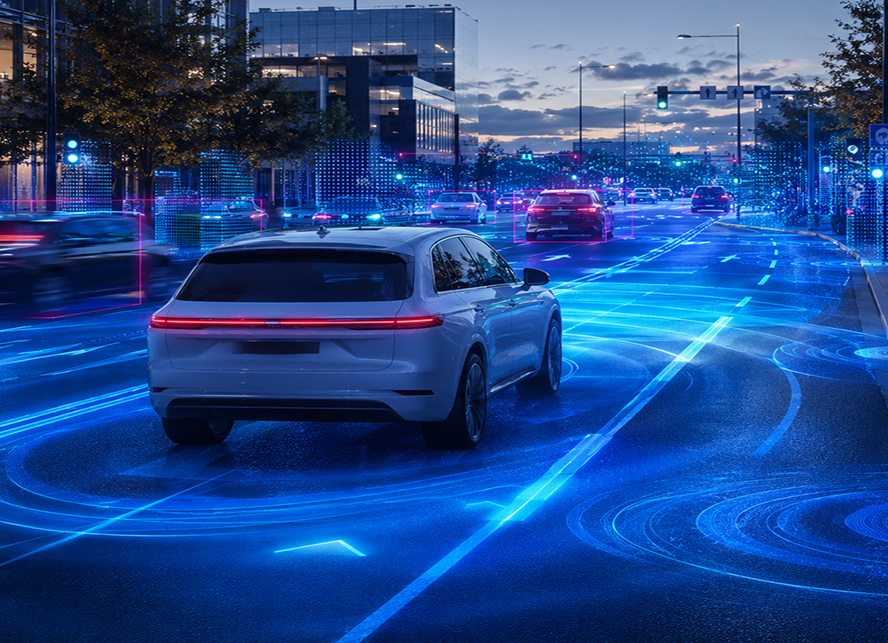
The introduction of this new nighttime testing parameter – and the poor, if unsurprising, results – highlight the importance of vehicle sensors that can detect and classify vulnerable road users in any weather or lighting conditions. The unfortunate outcome of the IIHS testing is a result of a sensor gap: the shortcomings of both the radars and the cameras installed on those vehicles overlapped, causing the failure to protect pedestrians at night. This gap can be resolved by the introduction of a Perception Radar that can operate in the bright day, dark night, snow, sleet, and rain. Perception radar offers highly detailed free space mapping at long ranges and wide field of view, which is critical for advanced detection of pedestrians on the side of the road, or far ahead on the vehicle’s path.
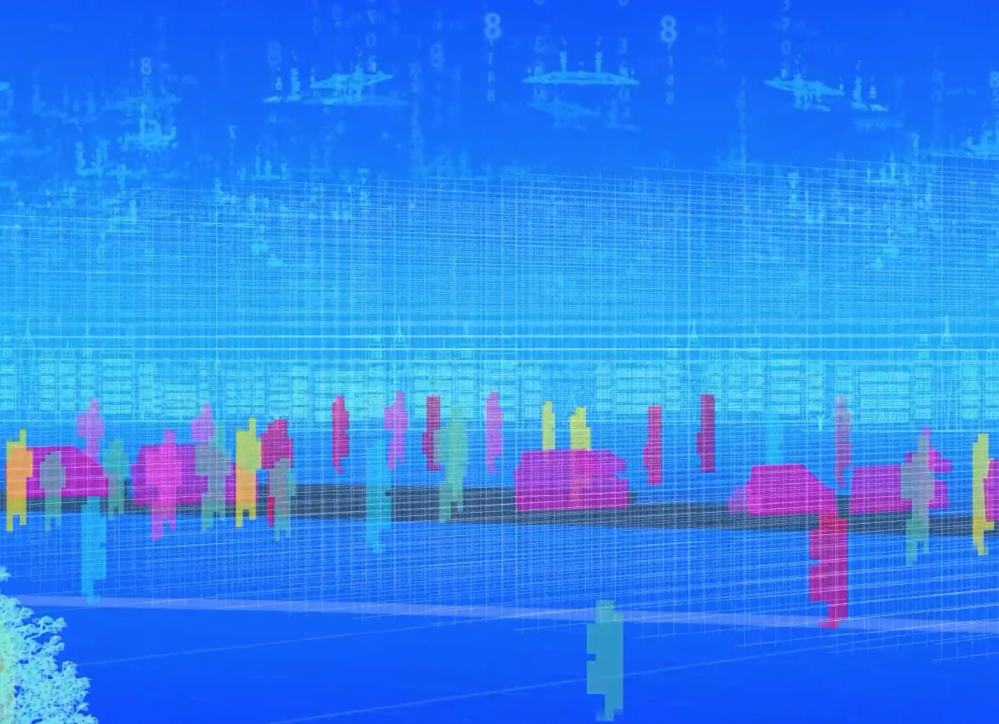
The more sparse the antenna array is, the more difficulty it has eliminating “false positive” false alarms, in which the sensor “picks up on” an object in front of the vehicle where none actually exists. On the other hand, another unfortunate possible false alarm is the erroneous filtering of a true detection, or a “false negative”: the vehicle detects an actual person in front of the vehicle, but mistakenly categorizes it as a “ghost.” Eliminating false positives and false negatives like these with low latency is critical for emergency braking, but extremely difficult to achieve. Perception Radar relies on a dense and unambiguous array in a single frame, which minimizes ghost targets at low latency with minimal dependence on the tracker.
High elevation resolution is also critical for the same reason. The vehicle must be able to determine if the detection ahead is a sign, a tree or a person who is standing ahead of the vehicle. All three objects occupy the space in front of the vehicle in azimuth, but if the vehicle thinks a tree is a person and stops needlessly, an accident may result. Having high resolution in elevation makes correct object classification possible, thus avoiding this cause of senseless collisions.
A massive segment of consumers are still highly distrusting of autonomous technology for automotive. For the market to achieve consumer trust, the autonomous driving and autopilot accidents so common in the headlines in recent years must be prevented for everyone, not just for luxury or elite vehicle classes. The best way to avoid unnecessary collisions is to integrate the right sensor technologies from the outset. Perception Radar is the only sensor that will achieve true safety for the automotive industry at a price that is relevant for the mass market. By making cutting-edge radar technology available at a price that is affordable for every vehicle, the industry will be able to ensure safety, earn consumer trust, and achieve the autonomous revolution.
Connect to learn more