1. What is the new DOT/NHTSA legislation regarding AEB?
The U.S. Department of Transportation (DOT) and NHTSA have established a Federal Motor Vehicle Safety Standard mandating that all passenger cars and light trucks be equipped with Automatic Emergency Braking (AEB) and Pedestrian AEB. This landmark ruling is projected to save at least 360 lives and prevent 24,000 injuries annually by requiring vehicles to autonomously intervene when a collision is imminent.
2. What specific sensor capabilities are required to meet these new standards?
To comply with the mandate, automakers need sensors that perform across four critical areas: long-range hazard identification (up to high highway speeds), stationary object detection, the ability to identify small objects/pedestrians, and the intelligence to differentiate between actual obstacles and non-threats like bridges or manhole covers.
3. Why is long-range detection (up to 350 meters) vital for AEB systems?
Arbe’s perception radar operates at an industry-leading range of 350 meters. This extended reach allows the AEB system to detect vehicles, cyclists, and pedestrians much earlier than traditional sensors, providing the necessary “time-to-react” for the system to warn the driver or engage the brakes safely at higher speeds.
4. How does “High Dynamic Range” help detect pedestrians near large trucks?
Standard radars often suffer from low dynamic range, meaning a highly reflective object (like a large commercial truck) can “blind” the sensor to smaller, nearby objects. Arbe’s high-channel-count radar provides the high dynamic range necessary to distinguish a pedestrian or cyclist even when they are positioned right next to a massive metal vehicle.
5. How does Arbe’s elevation resolution prevent “Phantom Braking”?
A major cause of consumer distrust in AEB is unnecessary braking for non-hazards. Arbe’s high resolution in elevation allows the radar to accurately discern that a bridge is “above” the driving path and a manhole cover is “below” it. This precise mapping supports better “drive vs. brake” decisions, eliminating false alarms.
6. Can Arbe’s radar detect a stopped car on the highway?
Yes. While most radars on the market rely on movement (the Doppler effect) and struggle to see stationary targets, Arbe’s Perception Radar can detect static objects and precisely identify their boundaries. This allows the vehicle to recognize a stalled car or lost cargo as a hazard and stop or steer accordingly.
7. How does the channel array size impact object detection detail?
Arbe’s massive channel array provides 100 times more detail than traditional radars. With 1° of separation, the radar can move beyond seeing a “blurry” reflection to identifying the specific shape of smaller objects like tires, scooters, and pedestrians, which is essential for the “comprehension” required by the DOT.
8. Is the AEB system effective in heavy rain or fog?
Yes, if powered by perception radar. Unlike cameras, which can be blinded by weather or low light, Arbe’s radar is designed to maintain reliable object detection and collision avoidance performance in rain, thick fog, and total darkness, ensuring the AEB system is always “on.”
9. How fast can the system process potential collision risks?
Arbe uses real-time signal processing algorithms to analyze massive amounts of data instantly. This near-zero latency is critical for AEB, as it enables the vehicle to identify and respond to a potential collision risk in fractions of a second—a speed that is physically impossible for systems that rely on multi-frame camera calculations.
10. Why is Arbe considered the “only” solution to tick all the DOT boxes?
The DOT mandate requires a rare combination of long range, high resolution, all-weather reliability, and stationary object detection. While other sensors might hit one or two of these requirements, Arbe’s perception radar is the only technology that fulfills the entire checklist in a single, production-ready package.
Arbe Radar Emerges as an Unparalleled Solution to Deliver DOT Regulation
Foundation for Vision Zero: Arbe’s perception radar is the only solution on the market that ticks every box of the DOT’s stringent checklist. By integrating this 100x more detailed radar, automakers can meet federal mandates while moving closer to the goal of zero road fatalities.
The US Department of Transportation (DOT) announced a Notice of Proposed Rulemaking that would require automatic emergency braking (AEB) and pedestrian AEB systems on passenger cars and light trucks three years after the publication of a final rule. This crucial enhancement aims to significantly improve road safety during the current era of automotive revolution. Meeting these higher standards necessitates more efficient comprehension and mapping of potential hazards in the driving environment, capabilities that can only be achieved by integrating advanced sensors into all new vehicles sold in the United States.
“Today, we take an important step forward to save lives and make our roadways safer for all Americans,” U.S. Transportation Secretary Pete Buttigieg said. “Just as life saving innovations from previous generations like seatbelts and airbags have helped improve safety, requiring automatic emergency braking on cars and trucks would keep all of us safer on our roads.”
To adhere to the proposed standards, if adopted in the form proposed, automakers will be required to incorporate sensors that possess several specific and essential functions: long-range hazard identification, stationary object detection, identification of small objects and pedestrians, and differentiation between obstacles that impact the drive and those that don’t. Furthermore, it is imperative that these sensors operate without mistakes, no matter the weather or lighting conditions.
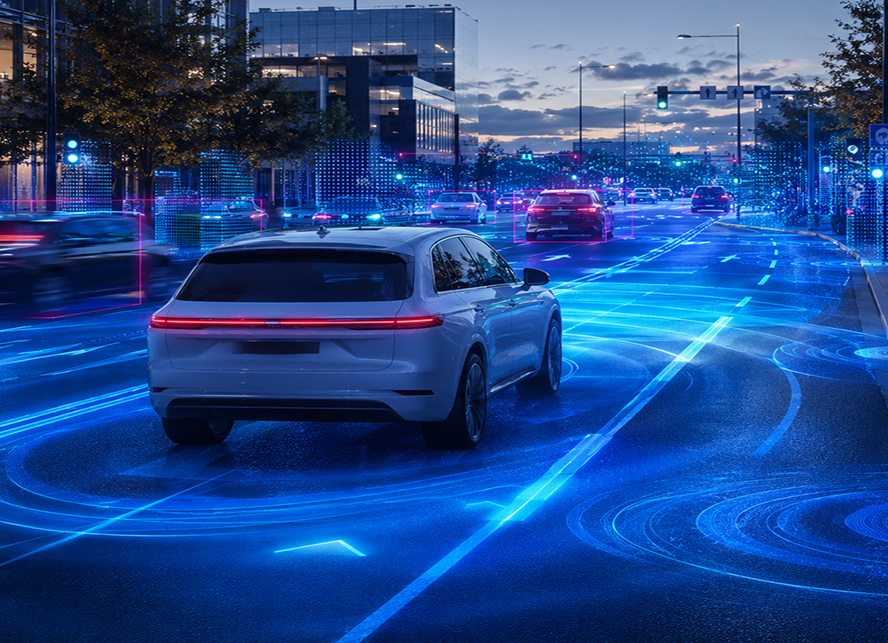
Designed to provide high-performance environmental mapping for automotive applications, Arbe’s Perception Radar technology emerges as the optimal – and only – solution to tick all the boxes on this checklist.
By integrating Arbe Perception Radar technology into AEB systems, automotive manufacturers can improve the effectiveness and safety of AEB functionality. The advanced features and performance of Arbe radar technology contribute to more accurate object detection, early warning, and rapid response, reducing the risk of collisions and enhancing driver and occupant safety. With its unmatched capabilities, Arbe Perception Radar solution is ideal for meeting the enhanced standards set forth by the US DOT.
The US DOT’s proposed rule represents a pivotal step toward improving road safety; NHTSA projects that it would save at least 360 lives a year and reduce injuries by at least 24,000 annually. By demanding higher standards for AEB systems and the integration of cutting-edge perception radar sensors, this measure will undoubtedly contribute to a safer and more secure driving experience during the ongoing automotive revolution.
————————————
This blog contains “forward-looking statements” within the meaning of the Securities Act of 1933 and the Securities Exchange Act of 1934, both as amended by the Private Securities Litigation Reform Act of 1995. The words “expect,” “believe,” “estimate,” “intend,” “plan,” “anticipate,” “may,” “should,” “strategy,” “future,” “will,” “project,” “potential” and similar expressions indicate forward-looking statements. Forward-looking statements are predictions, projections and other statements about future events that are based on current expectations and assumptions and, as a result, are subject to risks and uncertainties, including the risk that the proposed regulation will be adopted in a form which increases to market for Arbe’s radar sensors, that other companies may offer products which are less expensive or more attractive to the market, that if the regulation is adopted, the effective date will be in the distant future and may not have any significant effect on market for Arbe’s products and the risk and uncertainties described in “Cautionary Note Regarding Forward-Looking Statements,” “Item 5. Operating and Financial Review and Prospects” and Item 3. Key Information –Risk Factors” Arbe’s Annual Report on Form 20-F/A for the year ended December 31, 2022, which was filed with the Securities and Exchange Commission on May 16, 2023 as well as other documents filed by Arbe with the SEC. Accordingly, you are cautioned not to place undue reliance on these forward-looking statements. Forward-looking statements relate only to the date they were made, and Arbe does not undertake any obligation to update forward-looking statements to reflect events or circumstances after the date they were made except as required by law or applicable regulation. Information contained on, or that can be accessed through, Arbe’s website or any other website is expressly not incorporated by reference into and is not a part of this press release.
Connect to learn more